Curriculum
General Biology
1. Foundations
0/6
2. Cells & Energy
0/10
3. Genetics & Evolution
0/8
-
3.1 Mitosis & Meiosis
 Preview
-
3.1 Mitosis & Meiosis - Check yourself
 Preview
-
3.2 Classical Genetics
Preview
-
3.2 Classical Genetics - Check yourself
Preview
-
3.3 DNA, RNA & Protein Synthesis
Preview
-
3.3 DNA, RNA & Protein Synthesis - Check yourself
Preview
-
3.4 Evolution
Preview
-
3.4 Evolution - Check yourself
Preview
4. Diversity of Life
0/4
5. Animal Systems
0/4
6. Ecology & Biotechnology
0/4
3.1 Mitosis & Meiosis
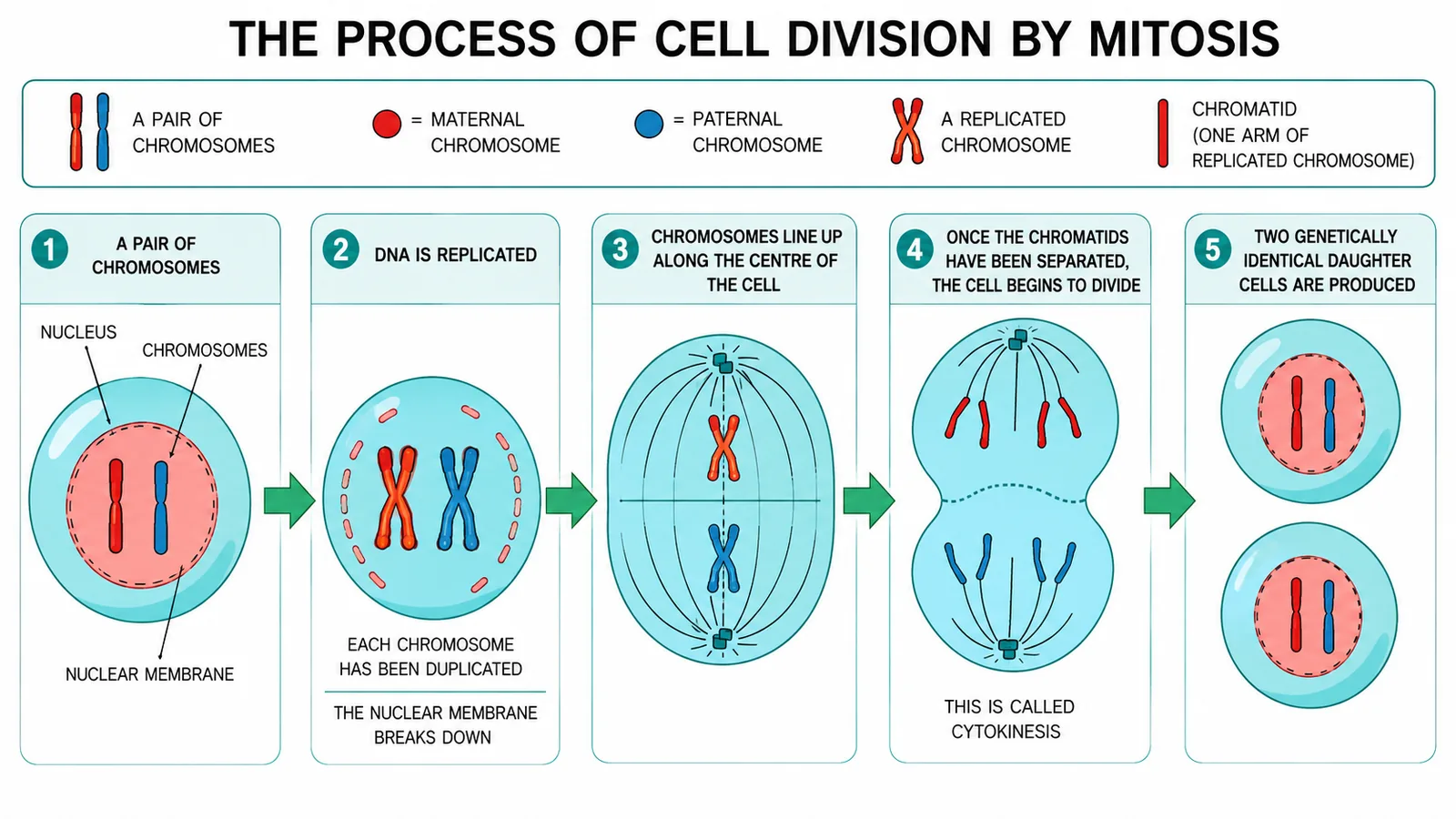
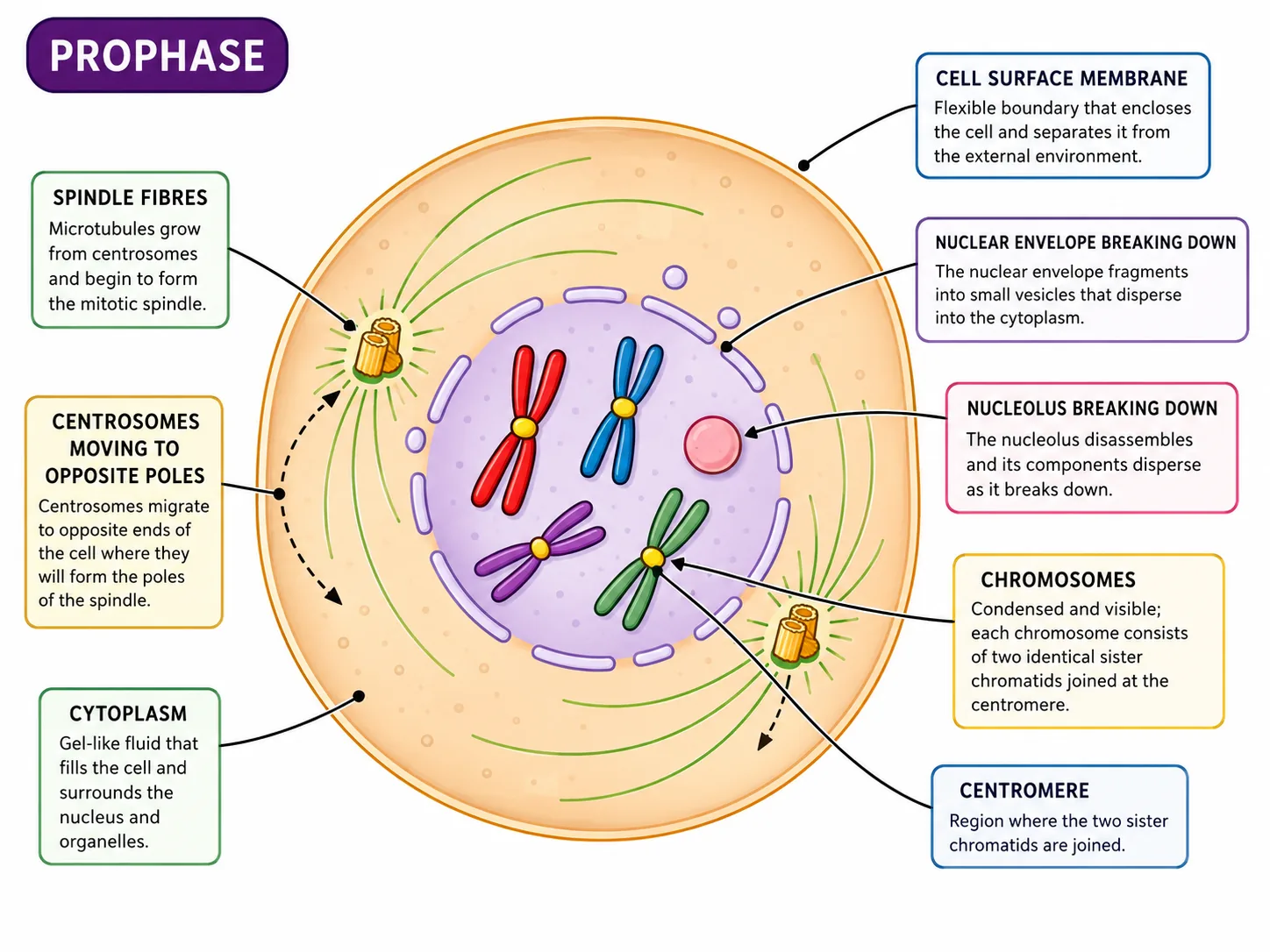
Describe the stages of the cell cycle and mitosis.








 ⤢ Enlarge


 ⤢ Enlarge

 ⤢ Enlarge


 ⤢ Enlarge
Chromatin
The complex of DNA and histone proteins that makes up chromosomes.
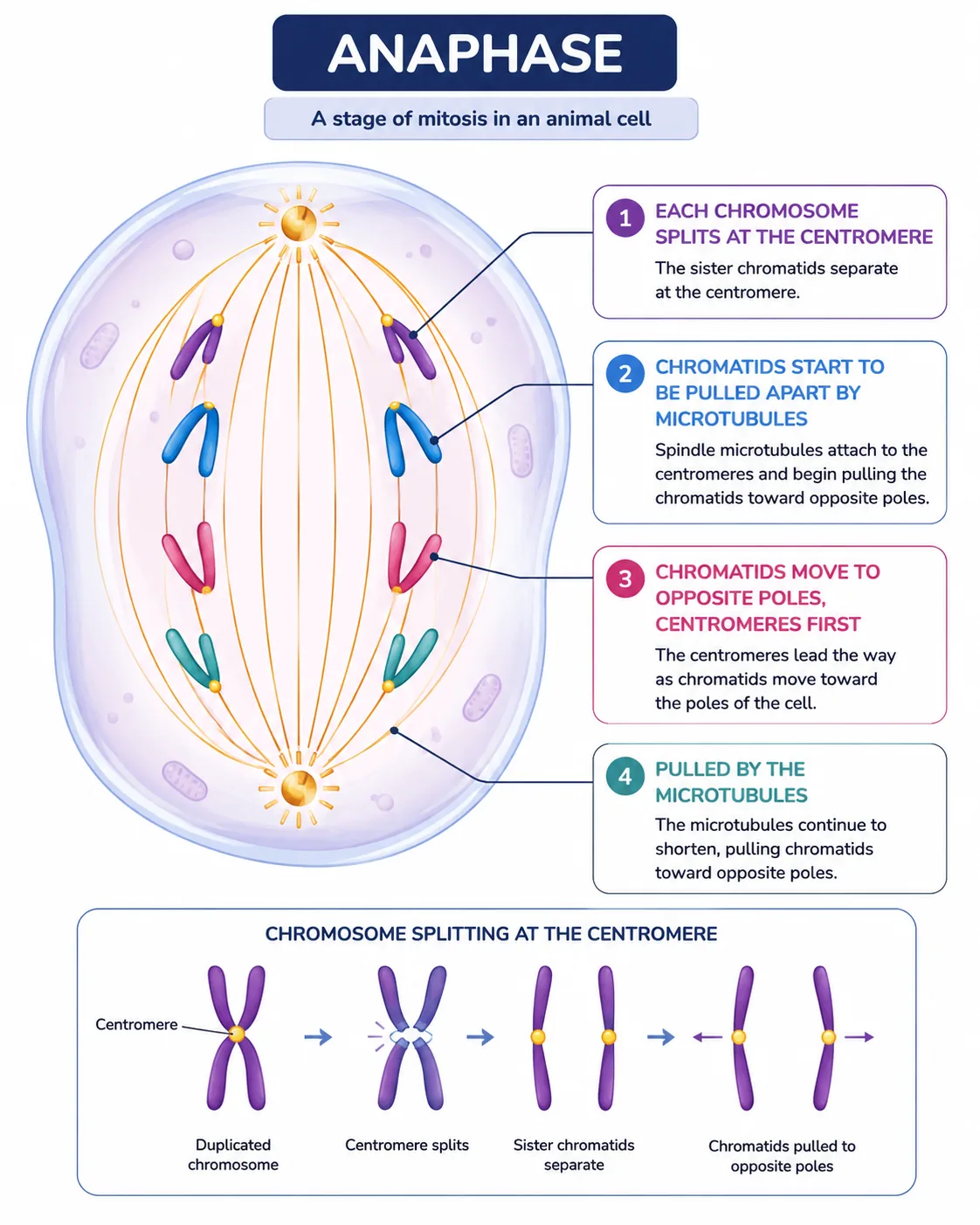
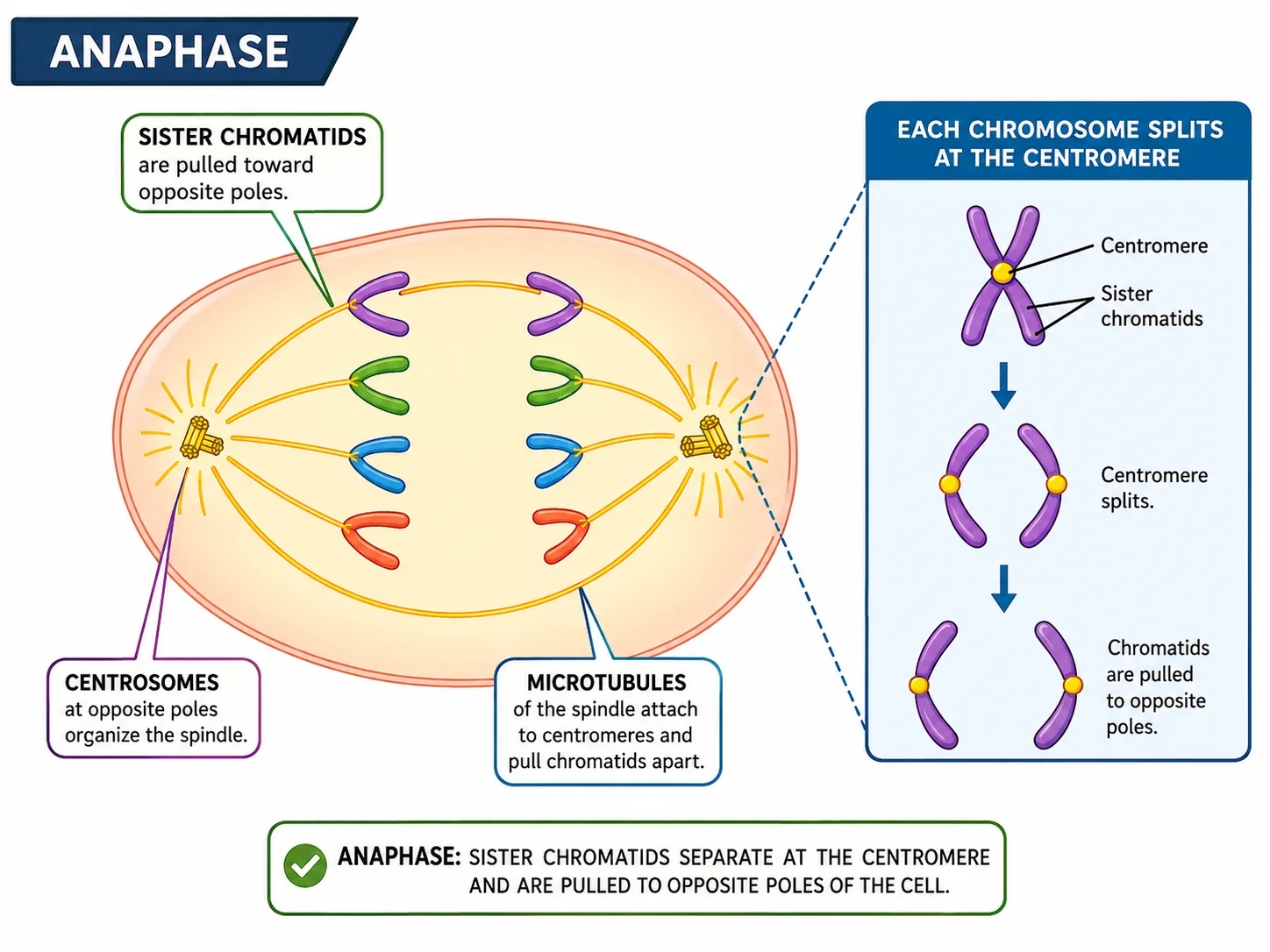
Sister chromatids
Two identical copies of a replicated chromosome joined at the centromere.
Homologous chromosomes
A pair of chromosomes, one from each parent, carrying the same genes at the same loci.
Diploid (2n)
A cell with two sets of chromosomes; in humans 2n = 46.
Haploid (n)
A cell with one set of chromosomes; human gametes have n = 23.
Cell cycle
The ordered sequence of G1, S, G2 and M phases from one division to the next.
Cytokinesis
Division of the cytoplasm to form two daughter cells.
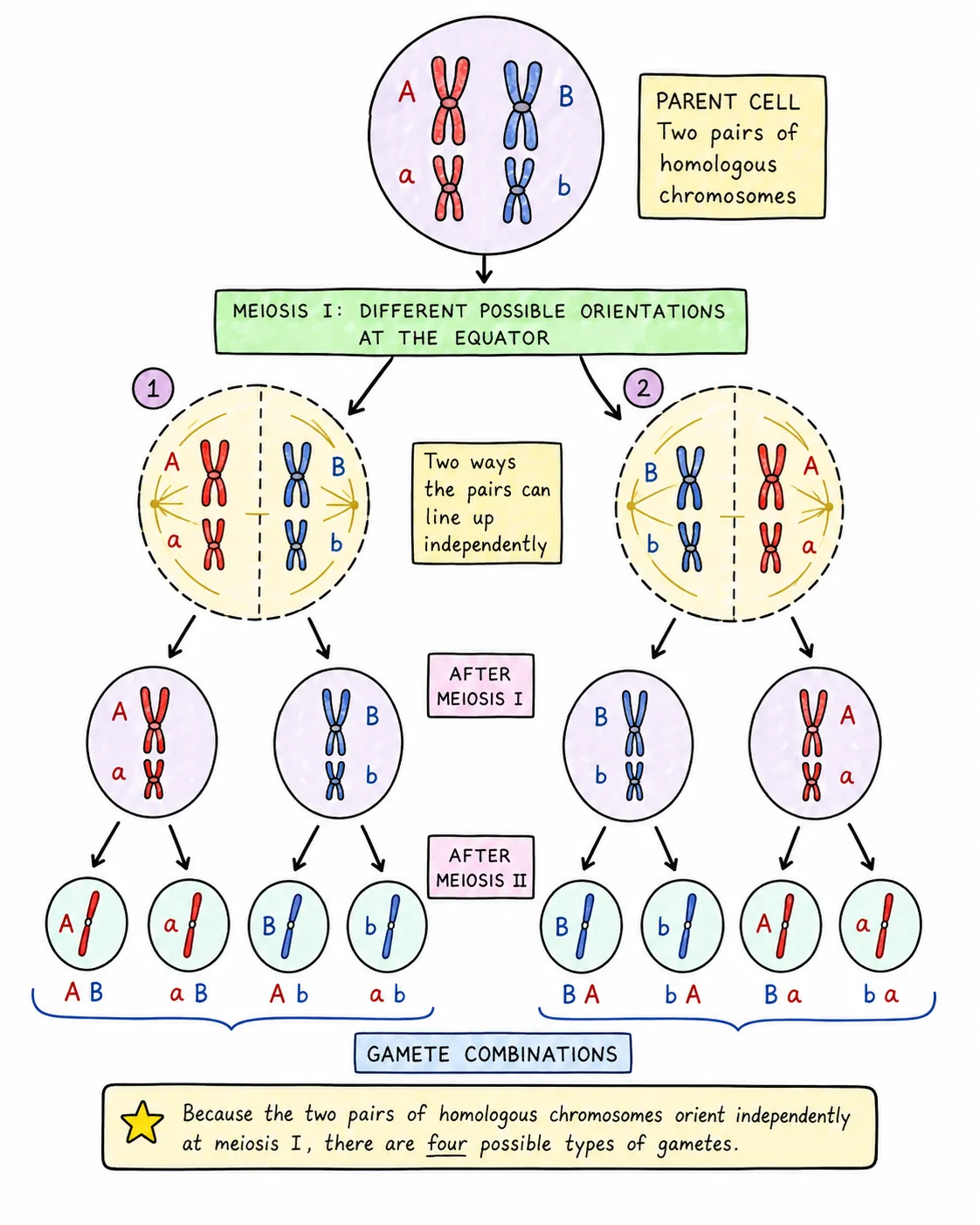
Crossing over
Exchange of segments between non-sister chromatids of homologous chromosomes during prophase I.
Independent assortment
Random orientation of homologous pairs at metaphase I, producing different combinations of chromosomes in gametes.
Nondisjunction
Failure of chromosomes or chromatids to separate properly, producing gametes with abnormal chromosome numbers.
| Feature | Mitosis | Meiosis |
|---|---|---|
| Purpose | Growth, repair, asexual reproduction | Produce gametes/spores for sexual reproduction |
| Number of divisions | 1 | 2 |
| Daughter cells | 2, diploid, genetically identical | 4, haploid, genetically different |
| Synapsis and crossing over | No | Yes, in prophase I |
| Metaphase alignment | Individual chromosomes line up | Homologous pairs line up (metaphase I) |
| Anaphase separation | Sister chromatids | Homologues (I), then sister chromatids (II) |
| Phase | Key events |
|---|---|
| Prophase | Chromatin condenses; spindle begins to form; nucleolus disappears |
| Prometaphase | Nuclear envelope breaks down; kinetochore microtubules attach |
| Metaphase | Chromosomes align at the metaphase plate |
| Anaphase | Cohesins cleaved; sister chromatids pulled to opposite poles |
| Telophase + cytokinesis | Nuclei reform; cleavage furrow (animals) or cell plate (plants) |