Curriculum
Course: General Biology
Login

Curriculum

General Biology

Text lesson

6.1 Ecology

Describe levels of ecological organisation and the major biomes.
1Key ideas2Key ideas3Key ideas4Key ideas5Key ideas6Key ideas7Key ideas8Key ideas9Key ideas10Key ideas11Key ideas12Key ideas13Key ideas14Key ideas15Key ideas16Key ideas
Key ideas
1 / 16Next ▶
Key ideas
◀ Previous2 / 16Next ▶
Key ideas
◀ Previous3 / 16Next ▶
Key ideas
◀ Previous4 / 16Next ▶
Key ideas
◀ Previous5 / 16Next ▶
Key ideas
◀ Previous6 / 16Next ▶
Key ideas
◀ Previous7 / 16Next ▶
Key ideas
◀ Previous8 / 16Next ▶
Key ideas
◀ Previous9 / 16Next ▶
Key ideas
◀ Previous10 / 16Next ▶
Key ideas
◀ Previous11 / 16Next ▶
Key ideas
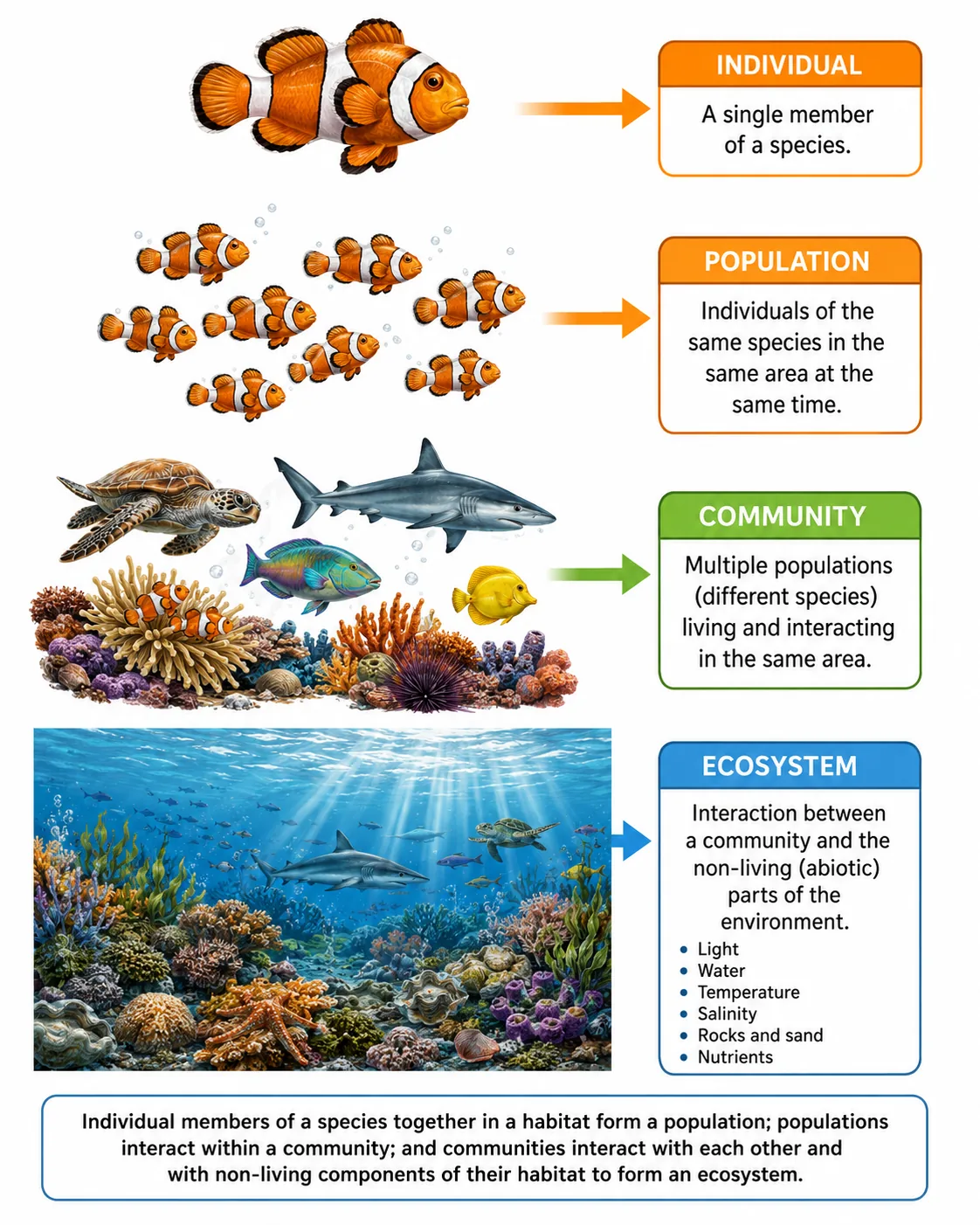
Ecological hierarchy from individual to ecosystem on a coral reef" loading= - Dr Khaled Dabour Academy⤢ Enlarge
1

1
2

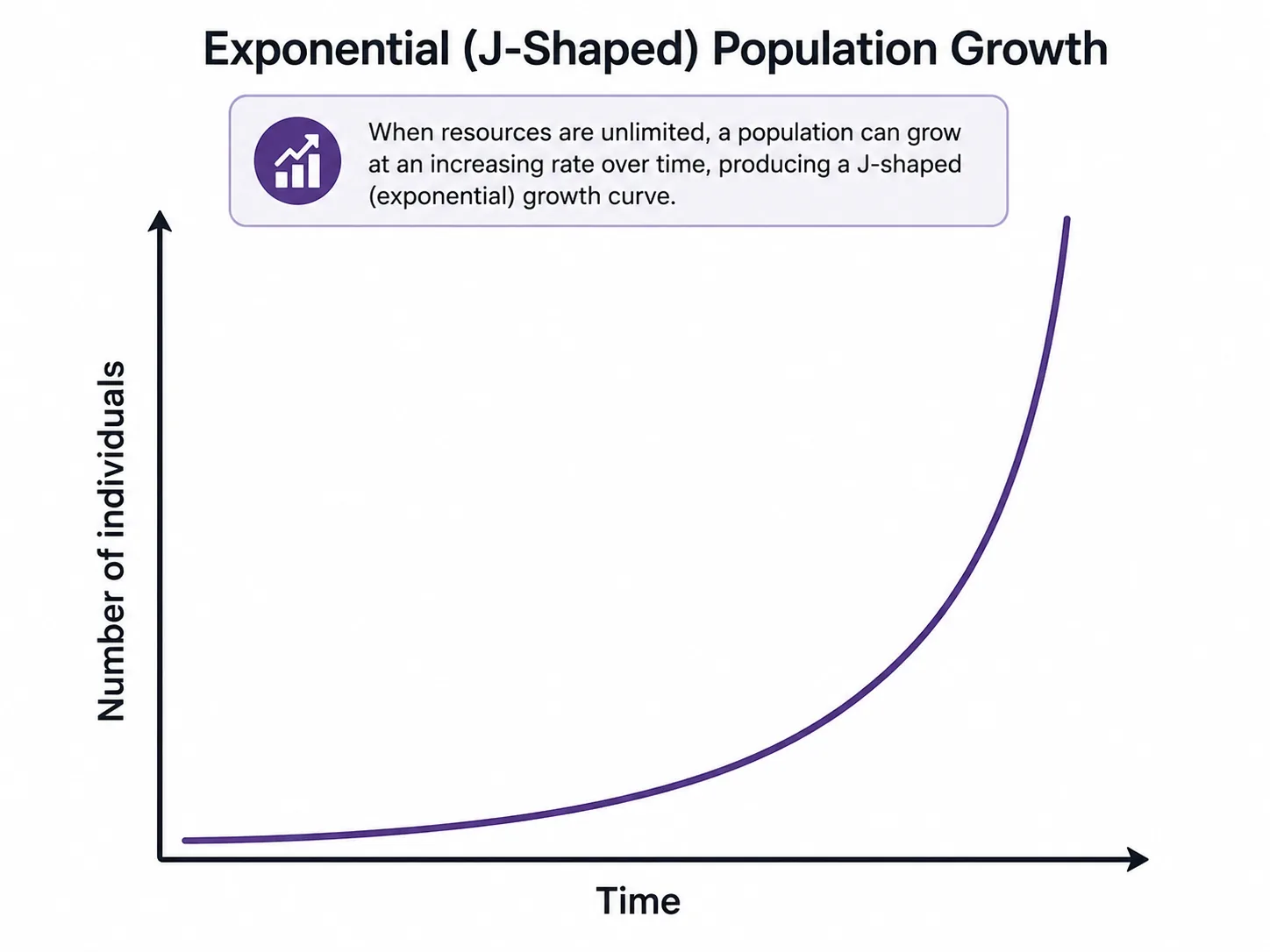
Exponential growth
3

dN/dt = r
4

max
5

N (J-shaped curve).
6

2
◀ Previous12 / 16Next ▶
Key ideas
Key ideas
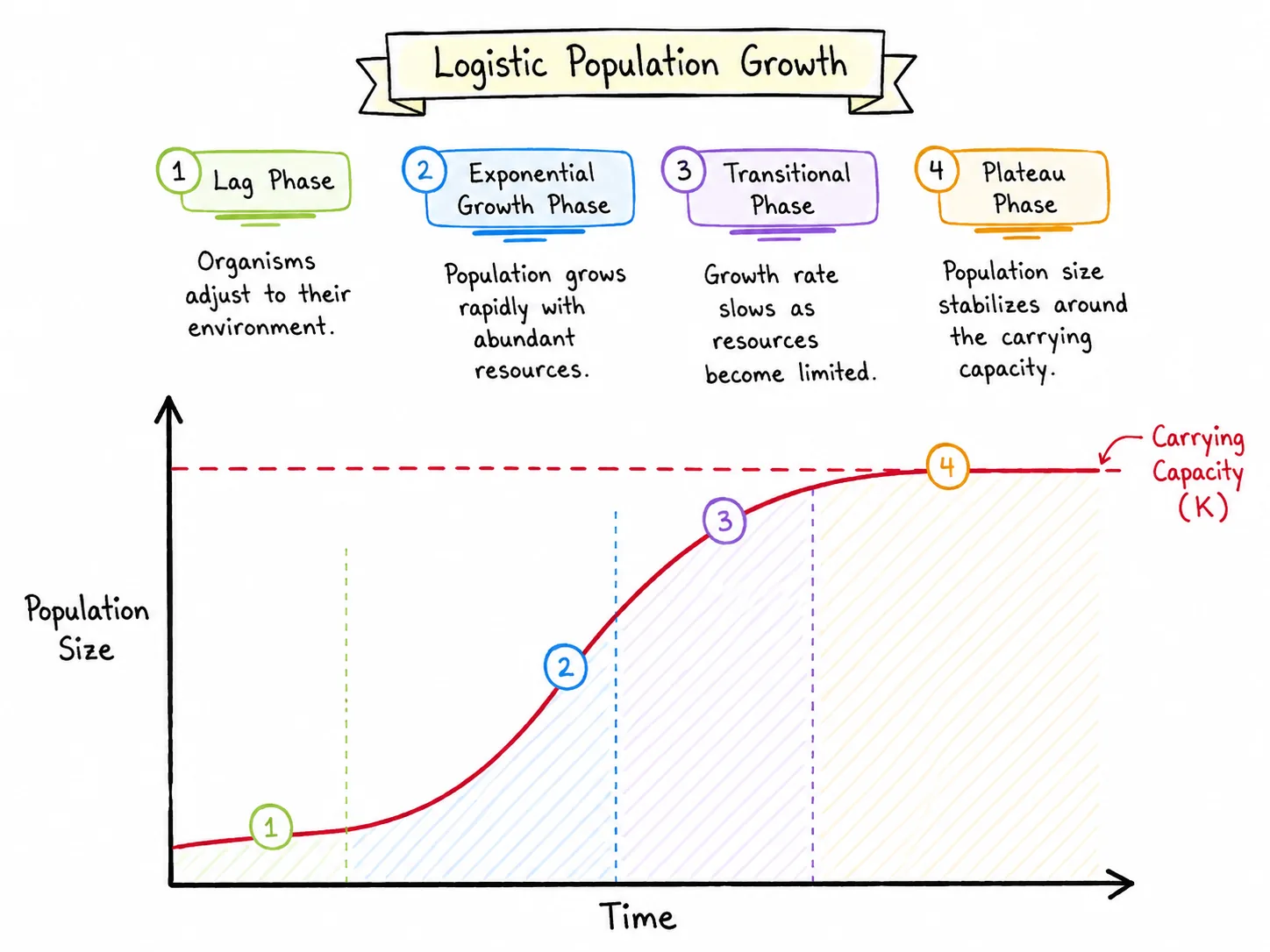
Logistic growth
N(K – N)/K (S-shaped curve)

growth is fastest at N = K/2.
3
Only about 10% of energy passes from one trophic level to the next (typical range 5-20%).
4
Energy flows one way through ecosystems

chemical elements cycle.
◀ Previous13 / 16Next ▶
Key ideas
1

5
2

Competitive exclusion principle
3

two species cannot share exactly the same niche indefinitely.
4

6
5

Density-dependent factors (disease, competition, predation) have greater effect at higher density

density-independent factors (weather, fire) do not.
6

7
◀ Previous14 / 16Next ▶
Key ideas
Key ideas
Nitrogen cycle
fixation (N
→ NH
), nitrification (NH
+
→ NO
◀ Previous15 / 16Next ▶
Key ideas
Key ideas
–
), assimilation, ammonification, denitrification (NO
→ N
).
8
Biomagnification concentrates persistent toxins (e.g. DDT, mercury) at higher trophic levels.
◀ Previous16 / 16
1Essential knowledge2Essential knowledge3Essential knowledge4Essential knowledge5Essential knowledge6Essential knowledge
Essential knowledge
1 / 6Next ▶
Essential knowledge
◀ Previous2 / 6Next ▶
Essential knowledge
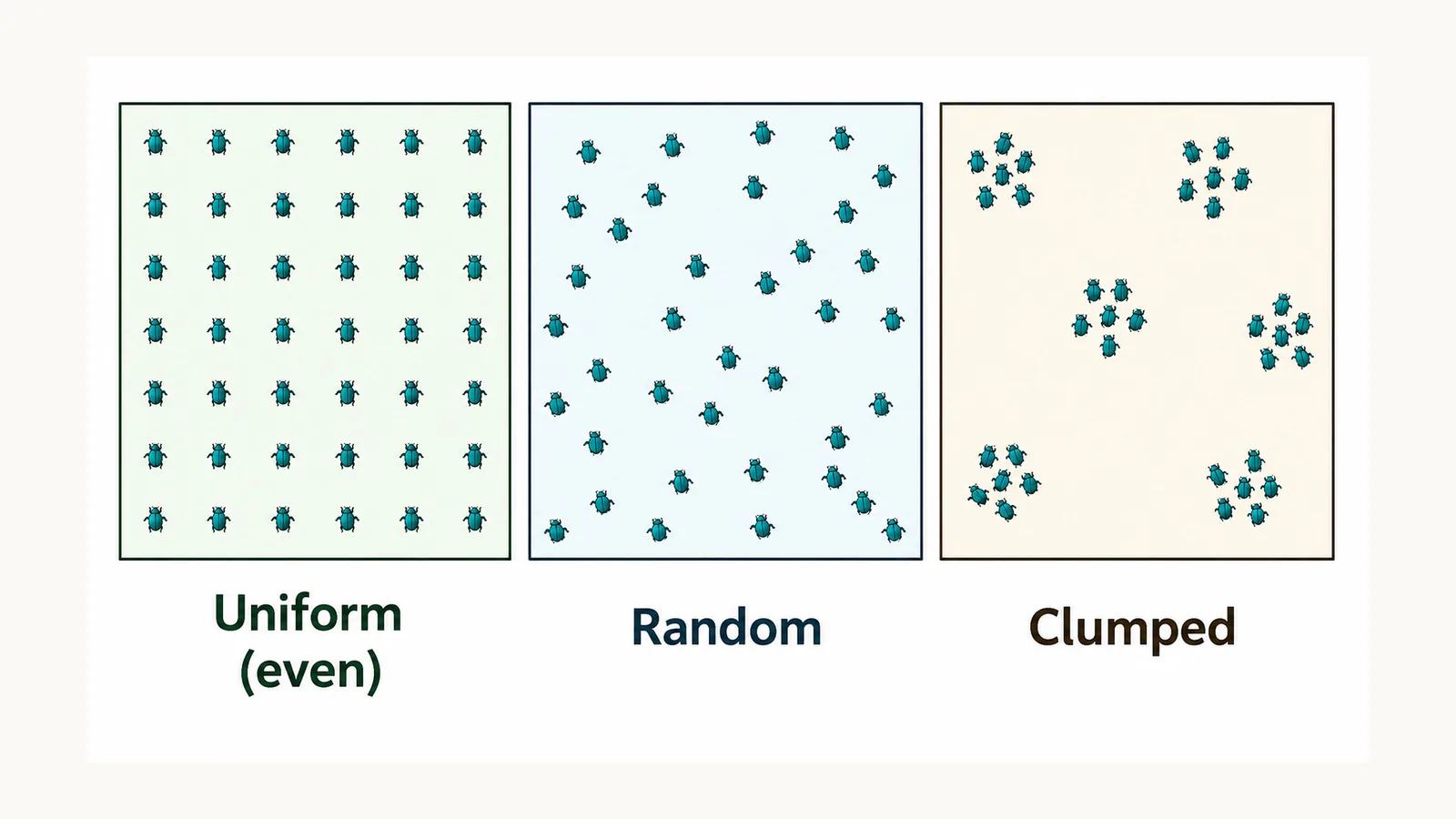
dispersion patterns landscape" loading= - Dr Khaled Dabour Academy⤢ Enlarge
Essential knowledge
Levels
organism → population → community → ecosystem → landscape → biosphere.
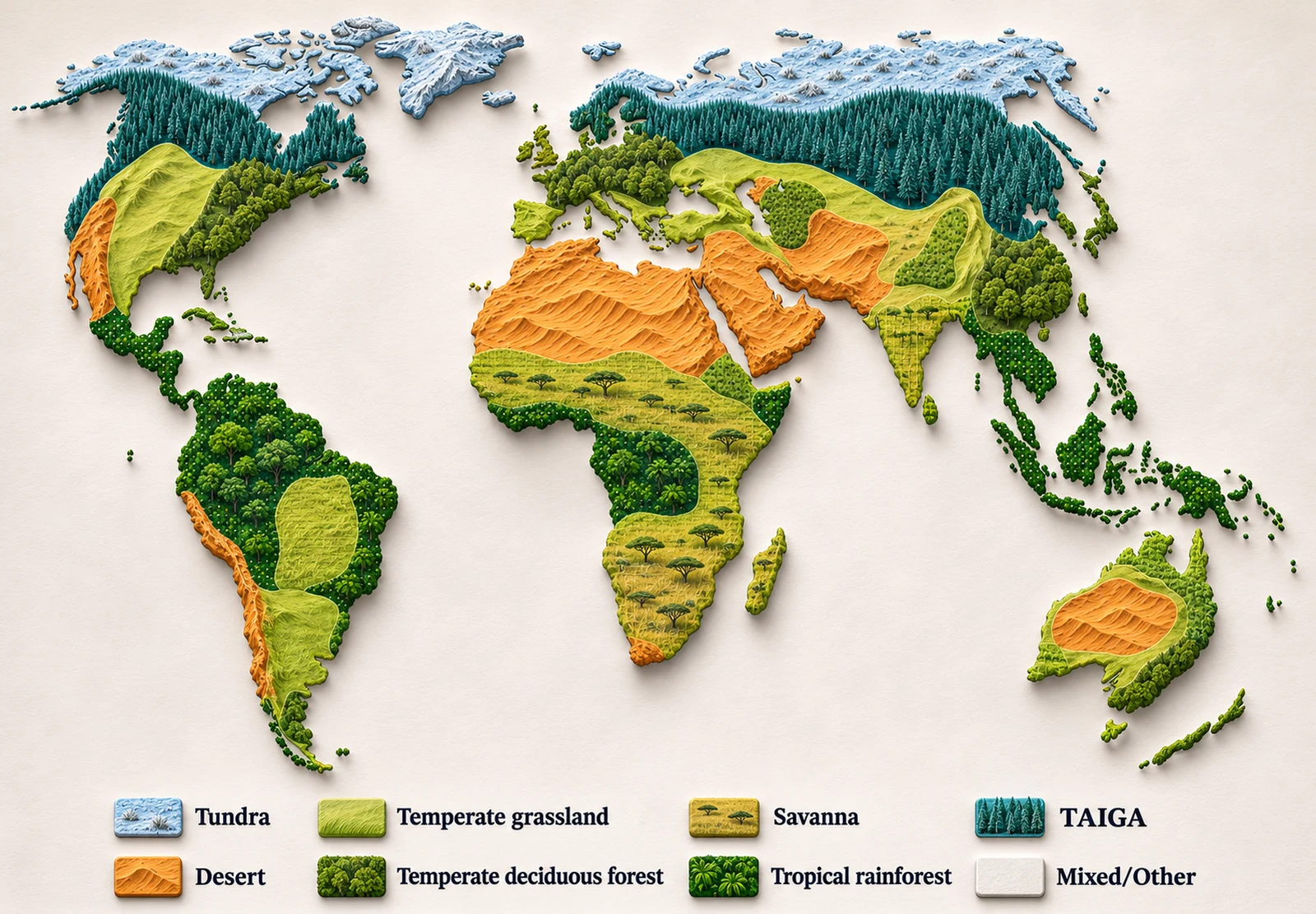
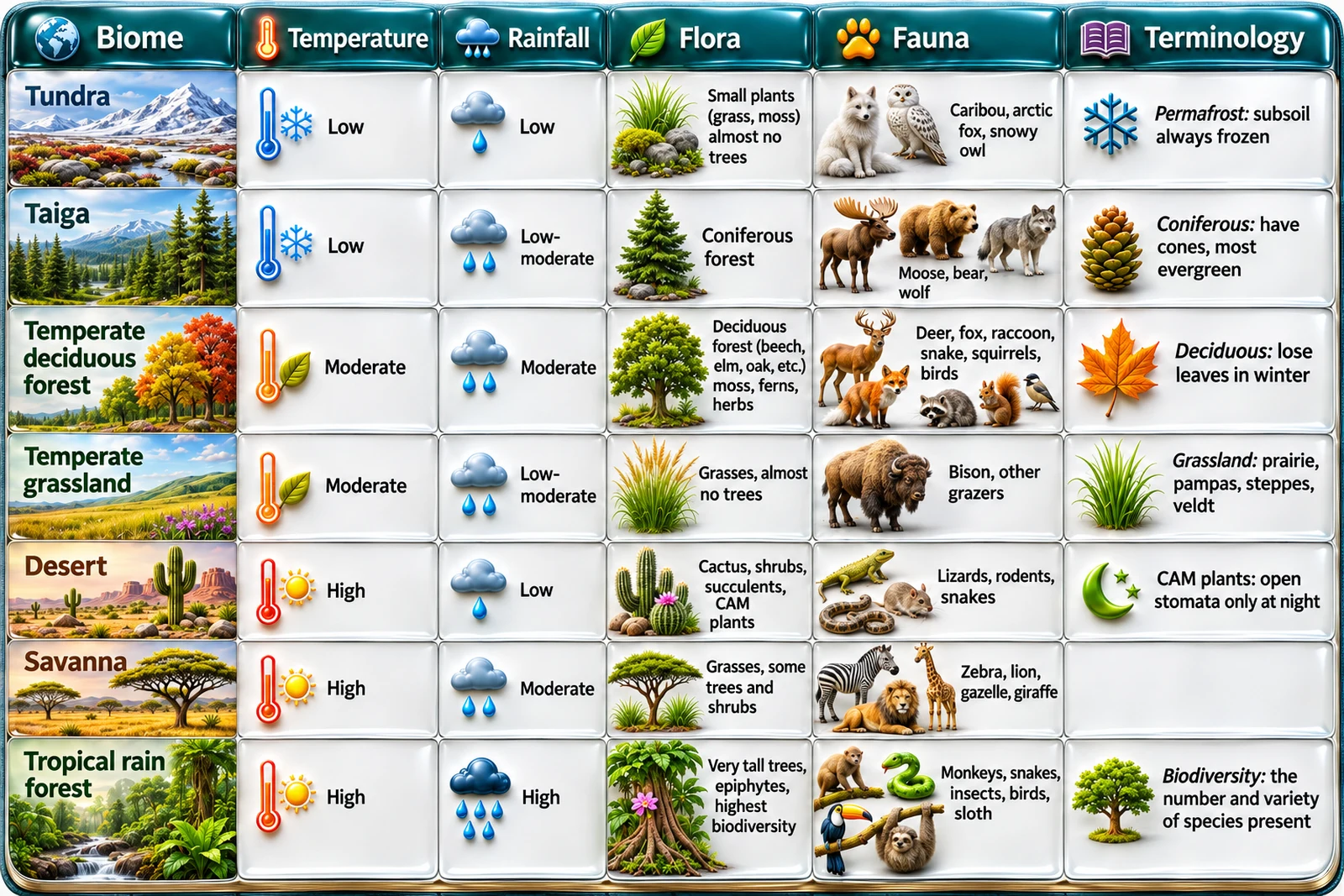
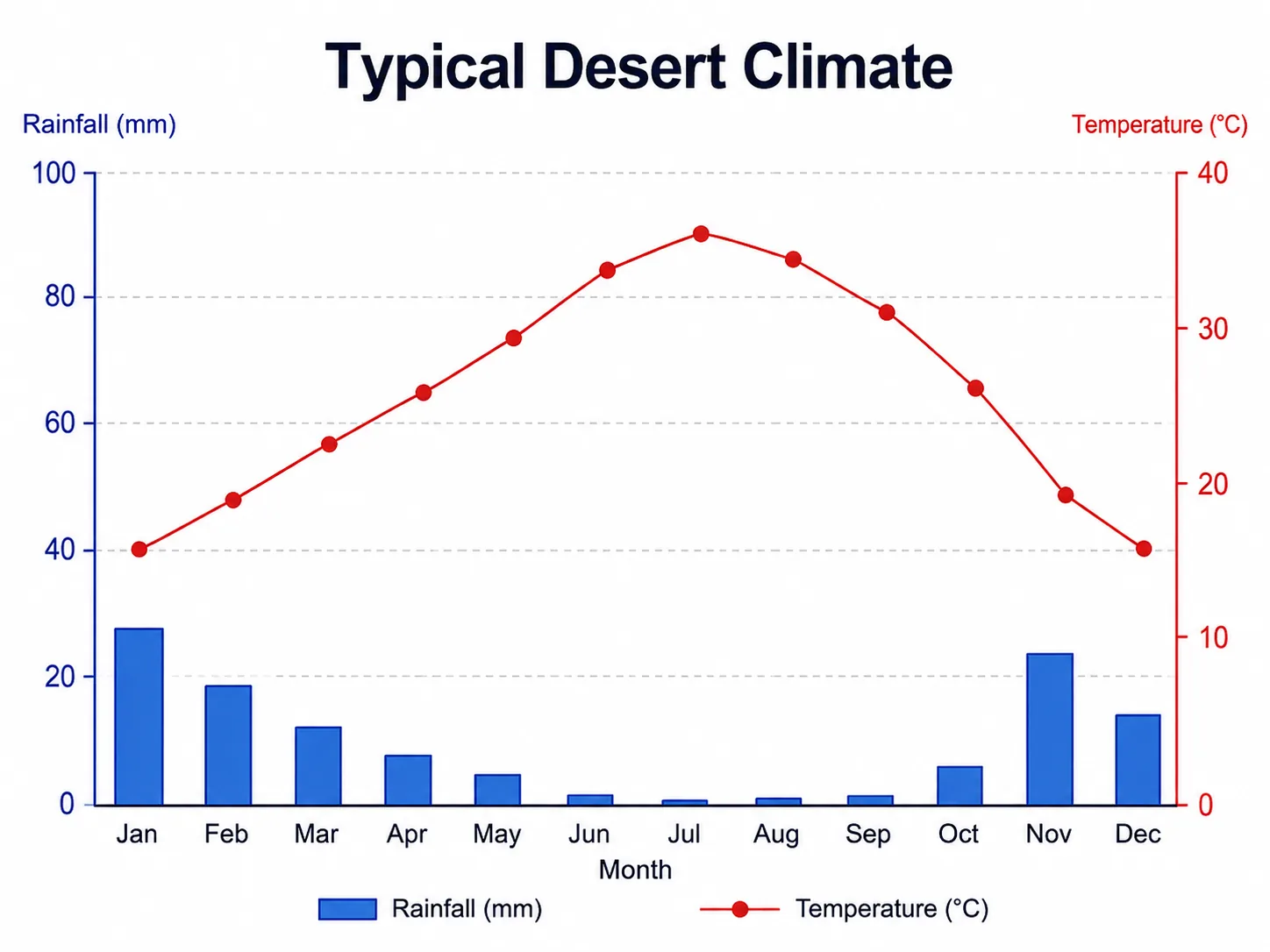
Climate determines terrestrial biomes: tropical rainforest, savanna, desert, chaparral, temperate grassland, temperate deciduous forest, taiga (boreal forest) and tundra.

(temperature and rainfall)
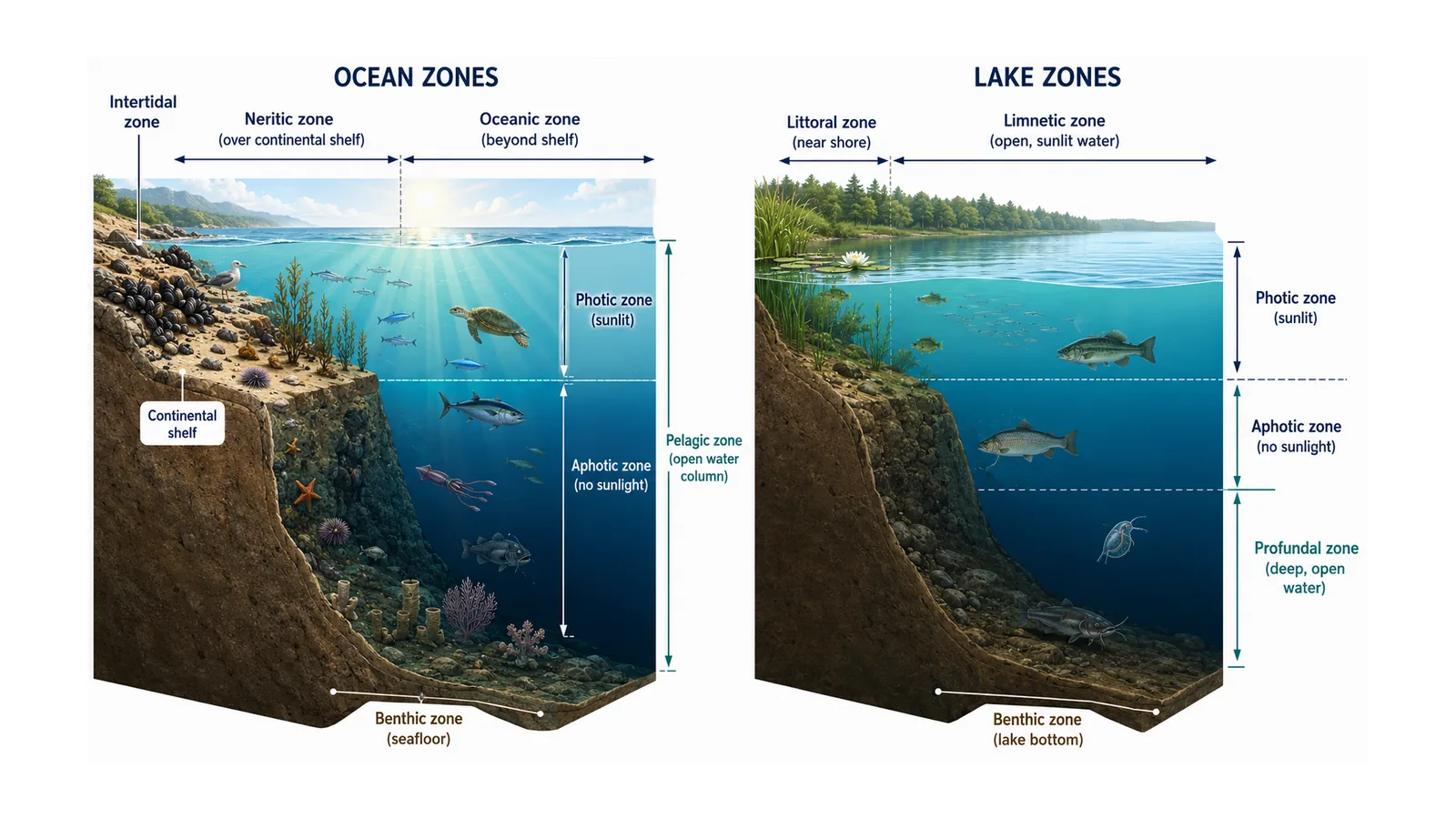
Aquatic biomes include lakes, wetlands, rivers, estuaries, intertidal zones, coral reefs and the open ocean.
Population ecology
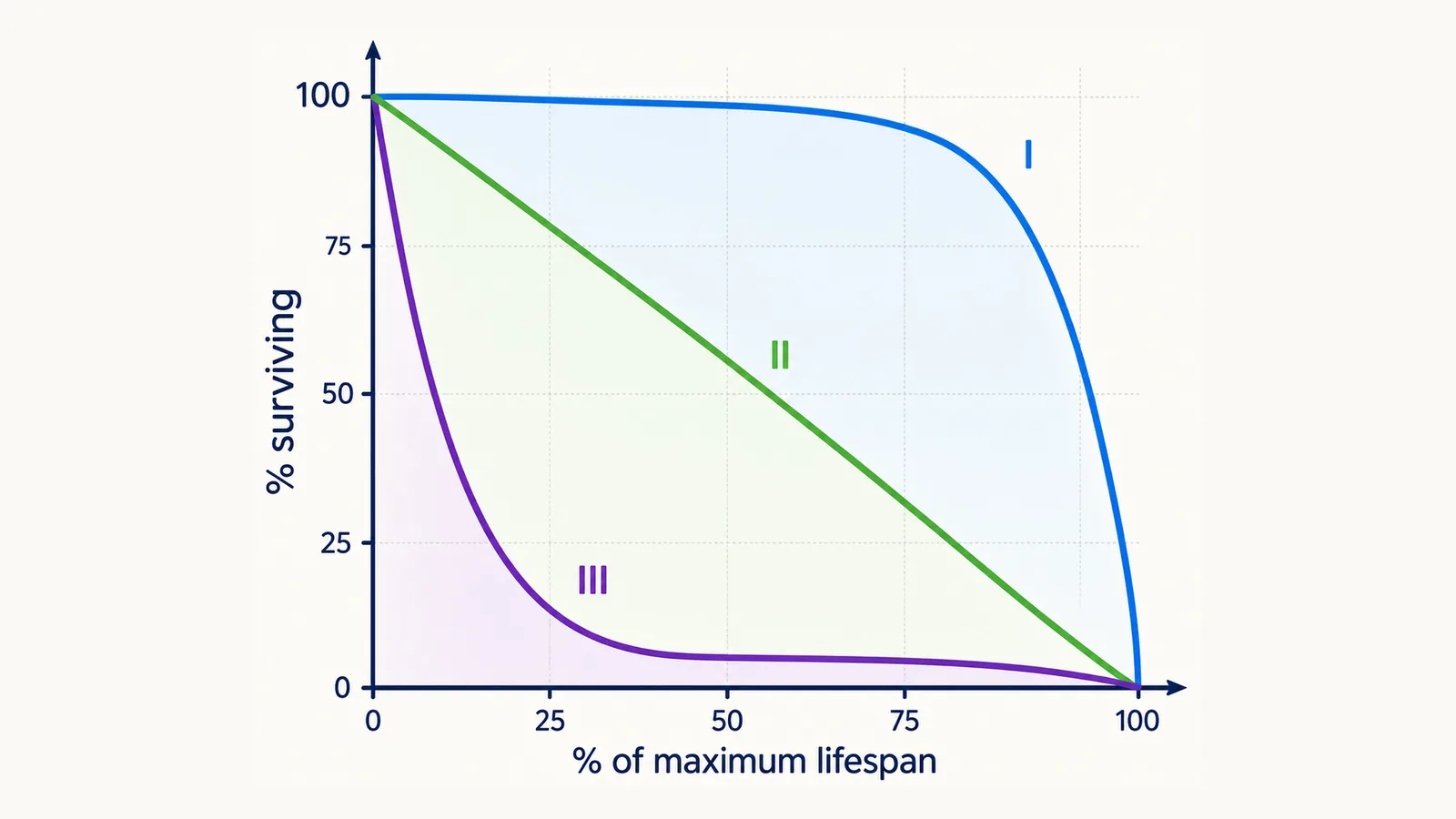
density, dispersion (clumped, uniform, random), and demography. Survivorship curves: Type I (low early mortality, e.g. humans), Type II (constant), Type III (high early mortality, e.g. oysters). Mark-recapture estimates size: N = (M x C) / R.
◀ Previous3 / 6Next ▶
Essential knowledge
1

Growth models
2

with unlimited resources growth is exponential

limited resources and density-dependent factors produce logistic growth levelling off at K. Predator-prey populations can cycle (e.g. lynx and snowshoe hare).
3

Community ecology
4

competition leads to resource partitioning and character displacement.
5

Defences against predators include cryptic colouration, aposematic (warning) colouration, Batesian mimicry and Mullerian mimicry (two harmful species resemble each other).

(harmless mimics harmful)
6

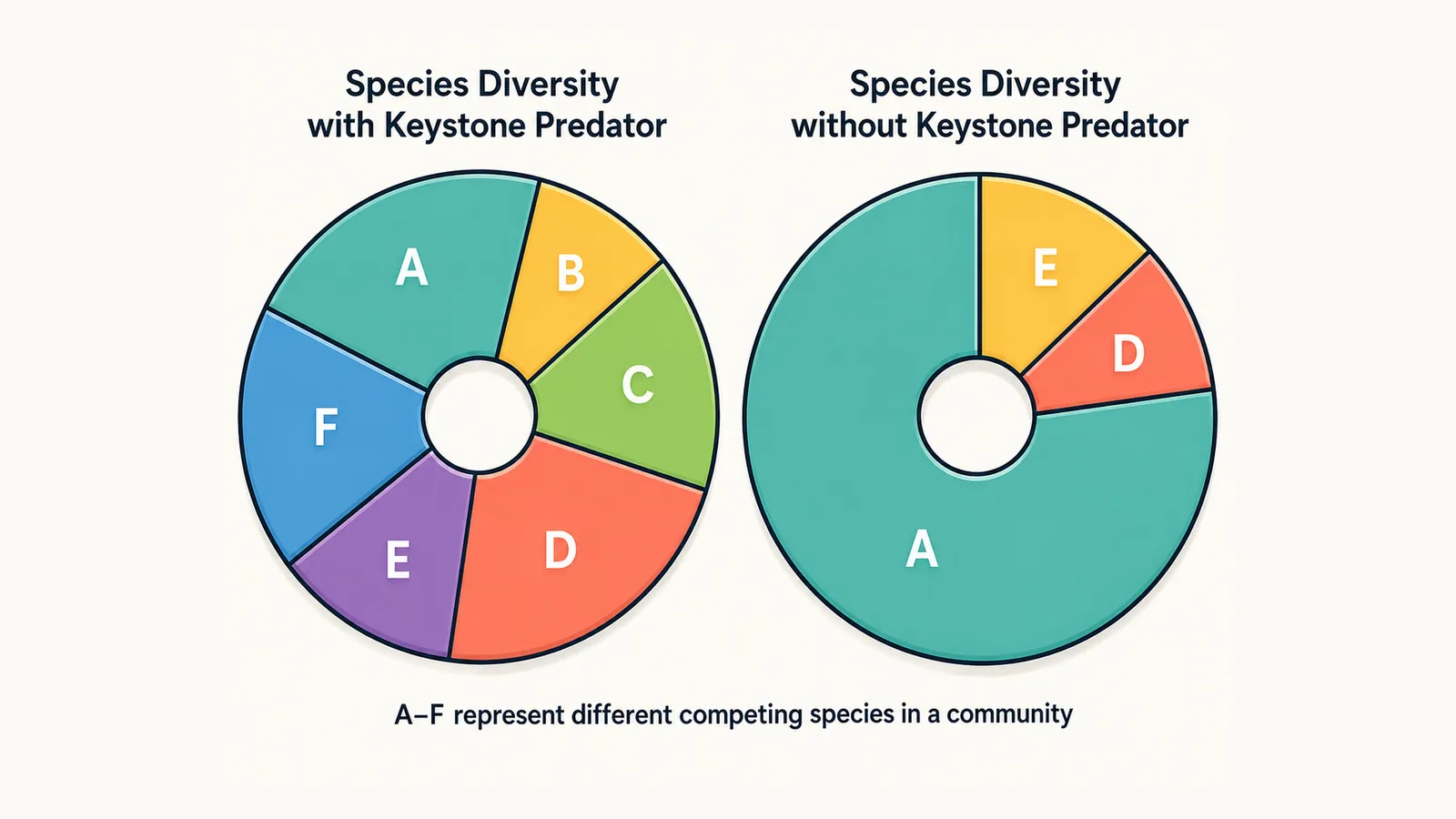
Keystone species such as the sea star Pisaster maintain diversity.
◀ Previous4 / 6Next ▶
Essential knowledge
Essential knowledge
Diversity
species diversity includes richness (number of species) and relative abundance (evenness). Intermediate disturbance often gives the highest diversity. Island biogeography: larger, closer islands have more species.
Energy flow
producers capture sunlight

consumers are primary, secondary, tertiarydecomposers (detritivores) recycle.
Ecological pyramids of energy are always upright

pyramids of biomass or numbers can be inverted.(e.g. ocean phytoplankton)
Food chains are short because energy is lost as heat in respiration and in unused or undigested material.
◀ Previous5 / 6Next ▶
Essential knowledge
Essential knowledge
Nutrient cycles
the carbon cycle links photosynthesis, respiration, decomposition and combustion

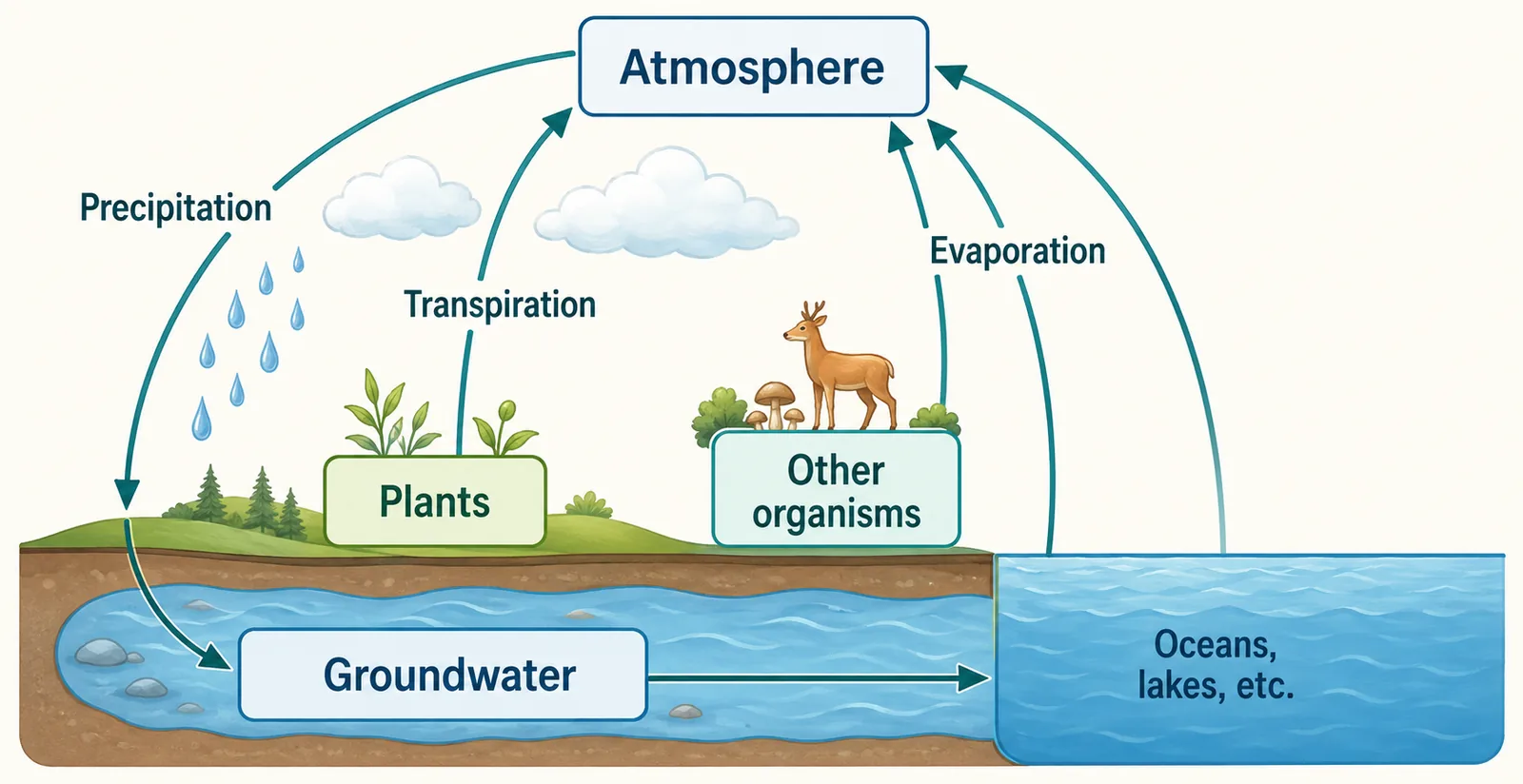
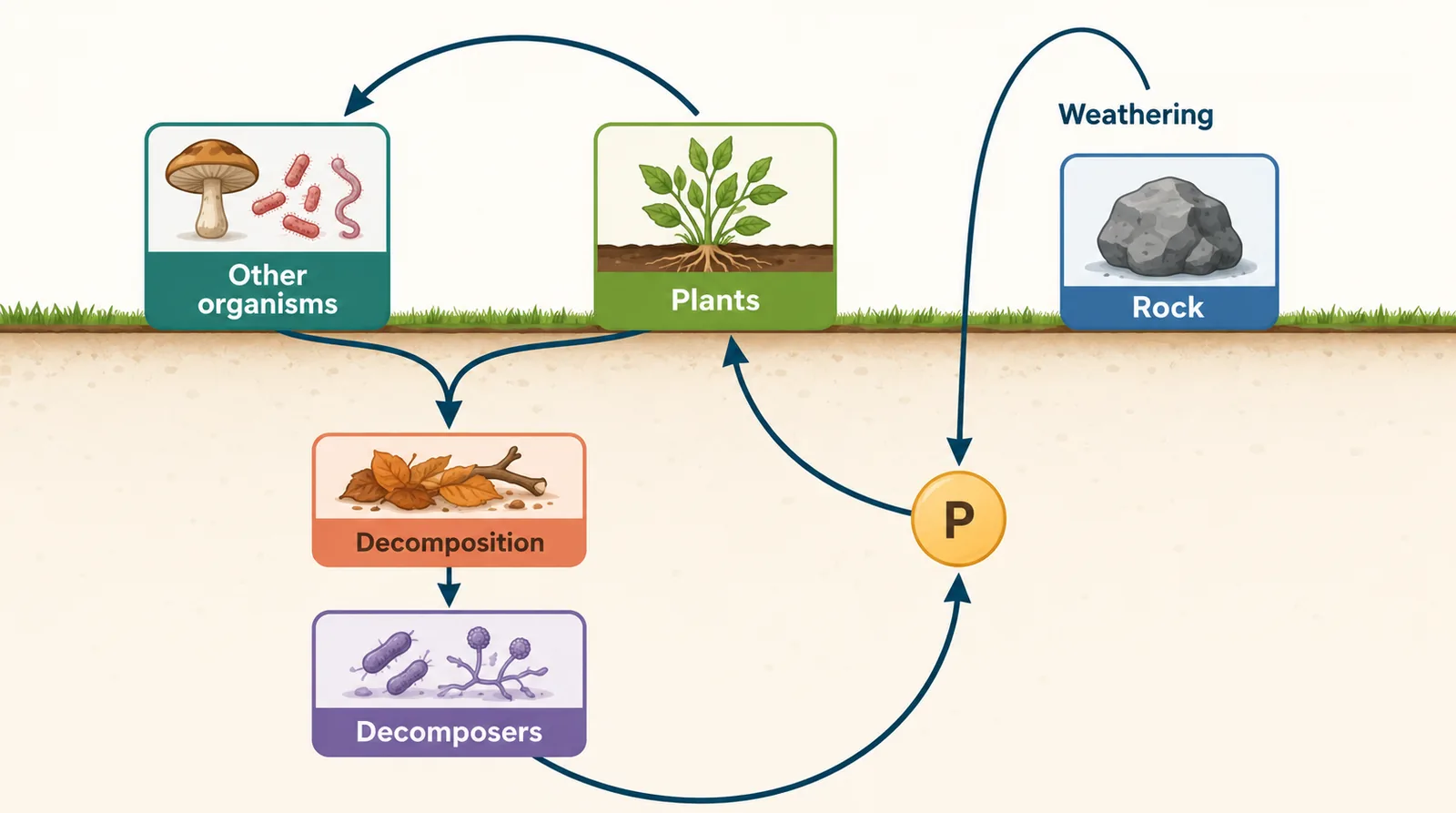
the water cycle is driven by evaporation, transpiration and precipitationthe phosphorus cycle has no major atmospheric phase and is driven by rock weatheringthe nitrogen cycle depends on bacteria.
Human impacts
habitat loss (the biggest threat), invasive species, overharvesting, pollution (eutrophication from fertiliser runoff causes algal blooms and oxygen depletion),
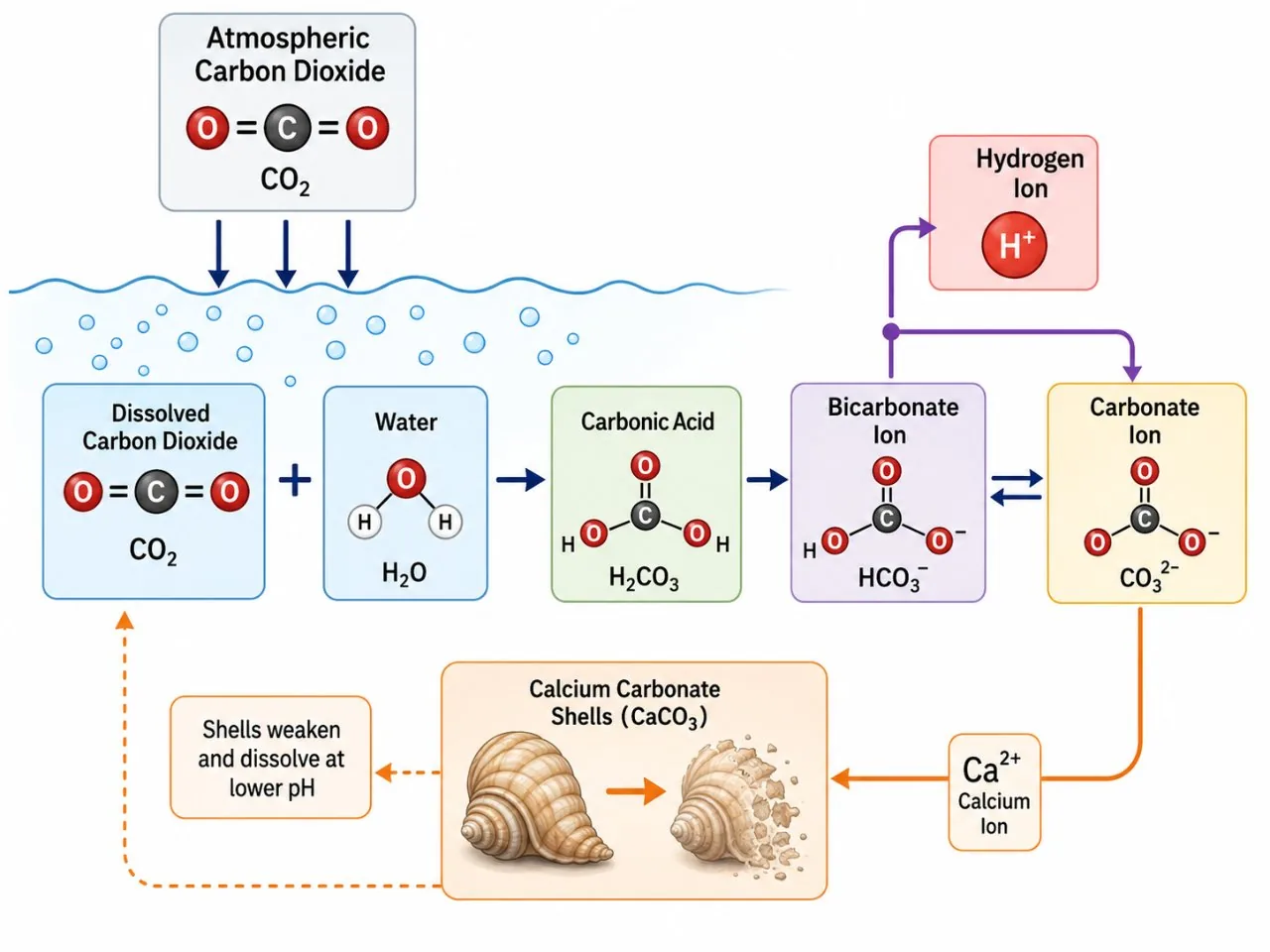
and climate change from rising CO2 and CH4 .

(greenhouse effect, ocean acidification)
Conservation uses protected areas, corridors and restoration.
◀ Previous6 / 6
1Process & sequence2Process & sequence3Process & sequence4Process & sequence
Process & sequence
1

1
2

Primary succession starts on bare rock with no soil, e.g. after a lava flow or glacier retreat.
3

2
4

Pioneer species (lichens, mosses) colonise and weather the rock, forming thin soil.
5

3
6

Grasses and small plants establish and add organic matter.
1 / 4Next ▶
Process & sequence
1

4
2

Shrubs replace them, changing light and soil conditions.
3

5
4

Fast-growing trees then shade-tolerant trees establish.
5

6
6

A relatively stable climax community forms

secondary succession (after fire, on existing soil) is faster.
◀ Previous2 / 4Next ▶
Process & sequence
Process & sequence
Energy flow through an ecosystem — write these steps in this order

each step is a marking point.
Sunlight captured by producers
Primary consumers eat producers
Secondary consumers eat herbivores
Energy lost as heat each step
Decomposers break down remains
◀ Previous3 / 4Next ▶
Process & sequence
Process & sequence
Nutrients returned to soil
◀ Previous4 / 4
1Worked examples2Worked examples
Worked examples
Worked examples
A population of 500 has r
max
= 0.2 per year and K = 1500. Calculate the logistic growth rate.
dN/dt = rmaxN(K – N)/K = 0.2 x 500 x (1500 – 500)/1500 = 100 x 0.667 = about 67 individuals per year.
Producers in an ecosystem fix 20 000 kJ/m
2
1 / 2Next ▶
Worked examples
Worked examples
/yr. Using 10% transfer, how much energy reaches tertiary consumers?
Primary consumers: 2000

secondary: 200tertiary: 20 kJ/m2/yr.
In a mark-recapture study 40 fish are marked

later 50 are caught of which 8 are marked. Estimate population size.
N = (M x C)/R = (40 x 50)/8 = 250 fish.
◀ Previous2 / 2
1Summary2Summary3Summary
Summary
1

1
2

Ecology is studied from
3

organism to biosphere
4

.
5

2
6

Populations grow
1 / 3Next ▶
Summary
1

exponentially or logistically
2

towards K.
3

3
4

Species interactions include
5

competition, predation and symbiosis
6

4
◀ Previous2 / 3Next ▶
Summary
Summary
Energy transfer is inefficient: about
10% per trophic level
5
Human activity drives
climate change and biodiversity loss
◀ Previous3 / 3
1Check yourself2Check yourself3Check yourself4Check yourself5Check yourself6Check yourself7Check yourself
Check yourself
1

Q1. In logistic growth, the population grows fastest when N equals:
2

A. K
3

B. K/2
4

C. 0
5

D. 2K
6

Show answer
1 / 7Next ▶
Check yourself
Check yourself
B. dN/dt is maximal at half the carrying capacity.
Q2. A harmless hoverfly resembling a wasp is an example of:
1
A. Mullerian mimicry
2
B. Aposematic colouration
◀ Previous2 / 7Next ▶
Check yourself
Check yourself
3
C. Batesian mimicry
4
D. Cryptic colouration
C. A harmless mimic copies a harmful model: Batesian mimicry.
Q3. Which process returns nitrogen to the atmosphere?
◀ Previous3 / 7Next ▶
Check yourself
1

A. Denitrification
2

B. Nitrogen fixation
3

C. Nitrification
4

D. Ammonification
5

A. Denitrifying bacteria convert nitrate to N2.
6

Q4. Which pyramid can never be inverted?
◀ Previous4 / 7Next ▶
Check yourself
1

A. Numbers
2

B. Biomass
3

C. Individuals
4

D. Energy
5

D. Energy is lost at each level

so higher levels always have less.
6

Q5. Remora fish ride on sharks and feed on scraps without affecting the shark. This is:
◀ Previous5 / 7Next ▶
Check yourself
Check yourself
A. Mutualism
B. Commensalism
C. Parasitism
D. Competition
B. One benefits, the other is unaffected (+/0).
Q6. Eutrophication of a lake is mainly caused by:
◀ Previous6 / 7Next ▶
Check yourself
1

A. Excess nitrates and phosphates
2

B. Acid rain alone
3

C. Loss of predators
4

D. Rising sea levels
5

A. Nutrient runoff causes algal blooms

decomposition then depletes oxygen.
◀ Previous7 / 7

Population

All individuals of one species living in an area at the same time.

Community

All the populations of different species interacting in an area.

Ecosystem

A community plus its abiotic environment, linked by energy flow and nutrient cycling.

Carrying capacity (K)

The maximum population size an environment can sustain indefinitely.

Niche

The total set of biotic and abiotic resources and conditions a species uses.

Trophic level

A feeding position in a food chain, such as producer or primary consumer.

Net primary productivity

Gross primary productivity minus energy used by producers in respiration.

Keystone species

A species with an impact on its community much larger than its abundance suggests.

Succession

The gradual change in species composition of a community over time after disturbance.

Biome

A major terrestrial or aquatic life zone defined by climate and dominant vegetation.

Species interactions
Interaction Effect (species 1/2) Example
Competition -/- Two barnacle species competing for rock space
Predation/herbivory +/- Lynx eating hares
Parasitism +/- Tapeworm in a host
Mutualism +/+ Pollinators and flowers
Commensalism +/0 Cattle egrets feeding near grazing cattle
r-selected versus K-selected species
Feature r-selected K-selected
Offspring Many, small Few, large
Parental care Little Much
Maturity Early Late
Survivorship curve Type III Type I
Environment Unstable, unpredictable Stable, near K
Command terms
Identify / Describe (FRQ)
A short, specific statement; describing requires relevant characteristics, not a single word.
Explain / Justify (FRQ)
Give the cause-and-effect reasoning or evidence; a restated fact does not score.
Calculate
Show setup, substitution and the answer with units.
Predict
State the expected outcome; add a reason only if asked to justify.
MCQ technique
Read every option; eliminate distractors that are true statements but do not answer the question; watch for NOT/EXCEPT.

Keywords the mark scheme looks for in this lesson

Keywords the mark scheme looks for in this lesson
Population · Community · Ecosystem · Carrying capacity (K) · Niche · Trophic level · Net primary productivity · Keystone species · Succession · Biome
Learn each definition in the Key words tab exactly; a missing keyword in a definition usually loses the mark.

How to get full marks (examiner guidance)

1

Answer exactly what is asked; extra correct material does not earn credit, and contradictory statements can cancel credit (AP FRQ).
2

Use precise vocabulary (e.g. “active site”, “concentration gradient”, “allele”), never “it/stuff/things”.
3

Show units and working in calculations.
4

In MCQs, predict the answer before reading the options, then eliminate.
Accepted payment methods