Curriculum
Login

Curriculum

General Biology

Text lesson

2.1 Cell Structure & Function

General Biology · 2.1

Cell Structure & Function

2.1 Key ideas

Key ideas

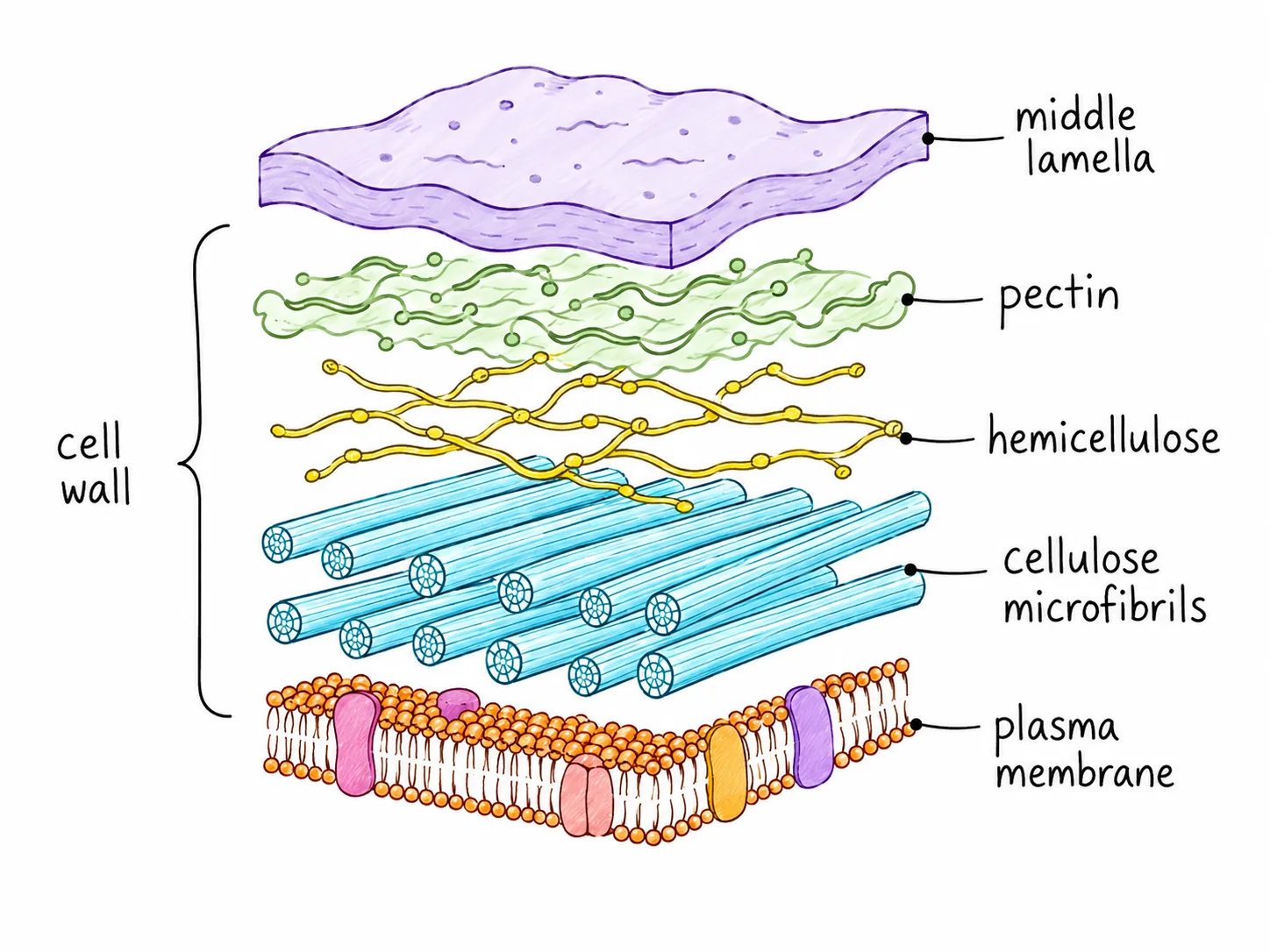
The Plant Cell Wall
The Plant Cell Wall
  1. Key ideas3Key ideas4Key ideas5Key ideas6Key ideas7Key ideas8Key ideas
  2. Key ideas
  3. ⤢ Enlarge
  4. 1 / 8Next ▶
  5. Key ideas
  6. ⤢ Enlarge
  7. ◀ Previous, 2 / 8Next ▶
  8. Key ideas
  9. ⤢ Enlarge
  10. ◀ Previous, 3 / 8Next ▶
  11. Key ideas
  12. ⤢ Enlarge
  13. ◀ Previous, 4 / 8Next ▶
  14. Key ideas
  15. ⤢ Enlarge
  16. ◀ Previous, 5 / 8Next ▶
  17. Key ideas
  18. ⤢ Enlarge
  19. 11 mm = 1000 μm
  20. 1 μm = 1000 nm.
  21. Magnification = image size ÷ actual size.
  22. 3Light microscope resolution ~200 nm
  23. electron microscope ~0.1-2 nm.
  24. SA = 6L
  25. , V = L
  26. ◀ Previous, 6 / 8Next ▶
  27. Key ideas
  28. Key ideas
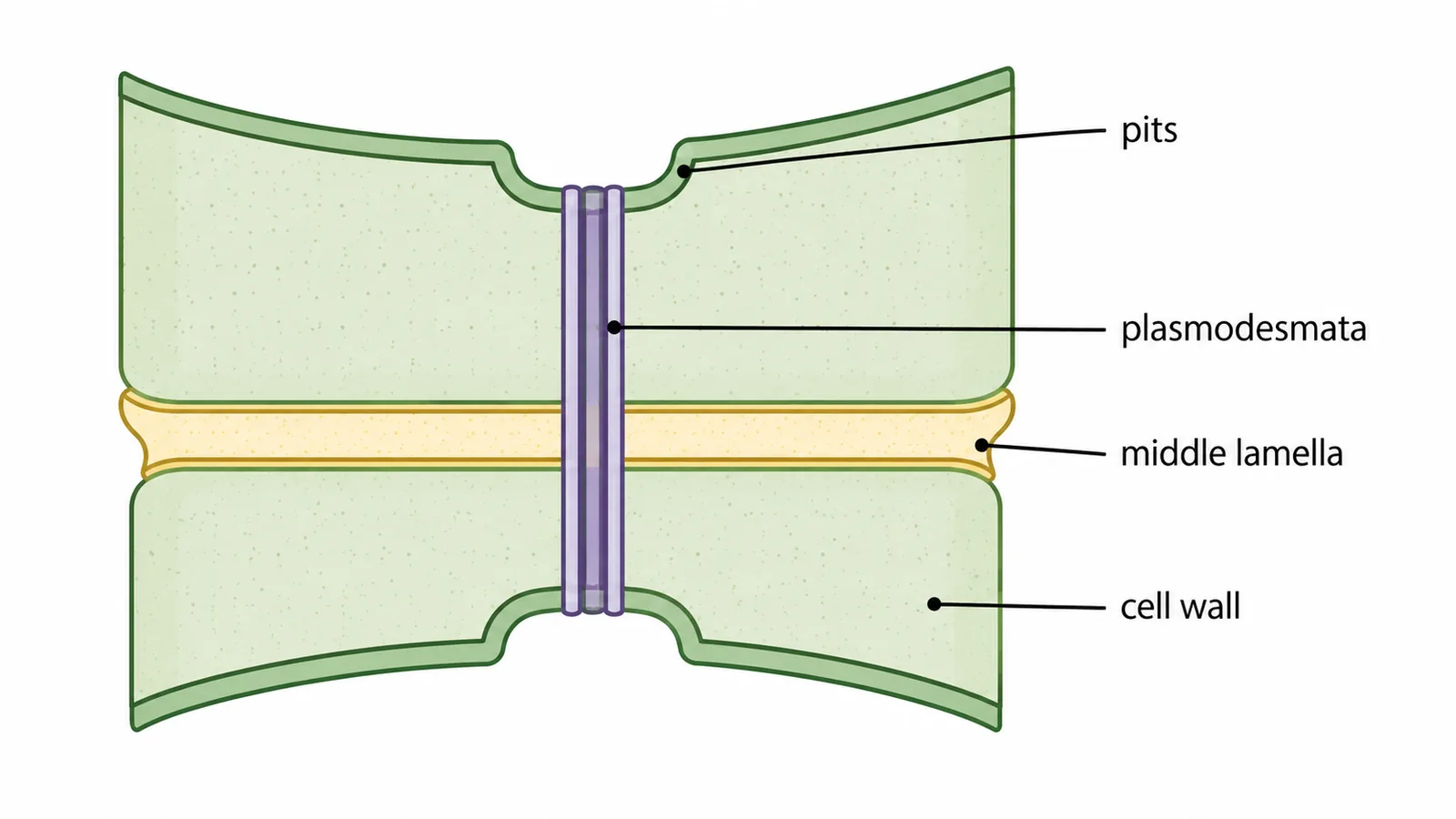
  29. V = 6/L – it falls as cells grow.
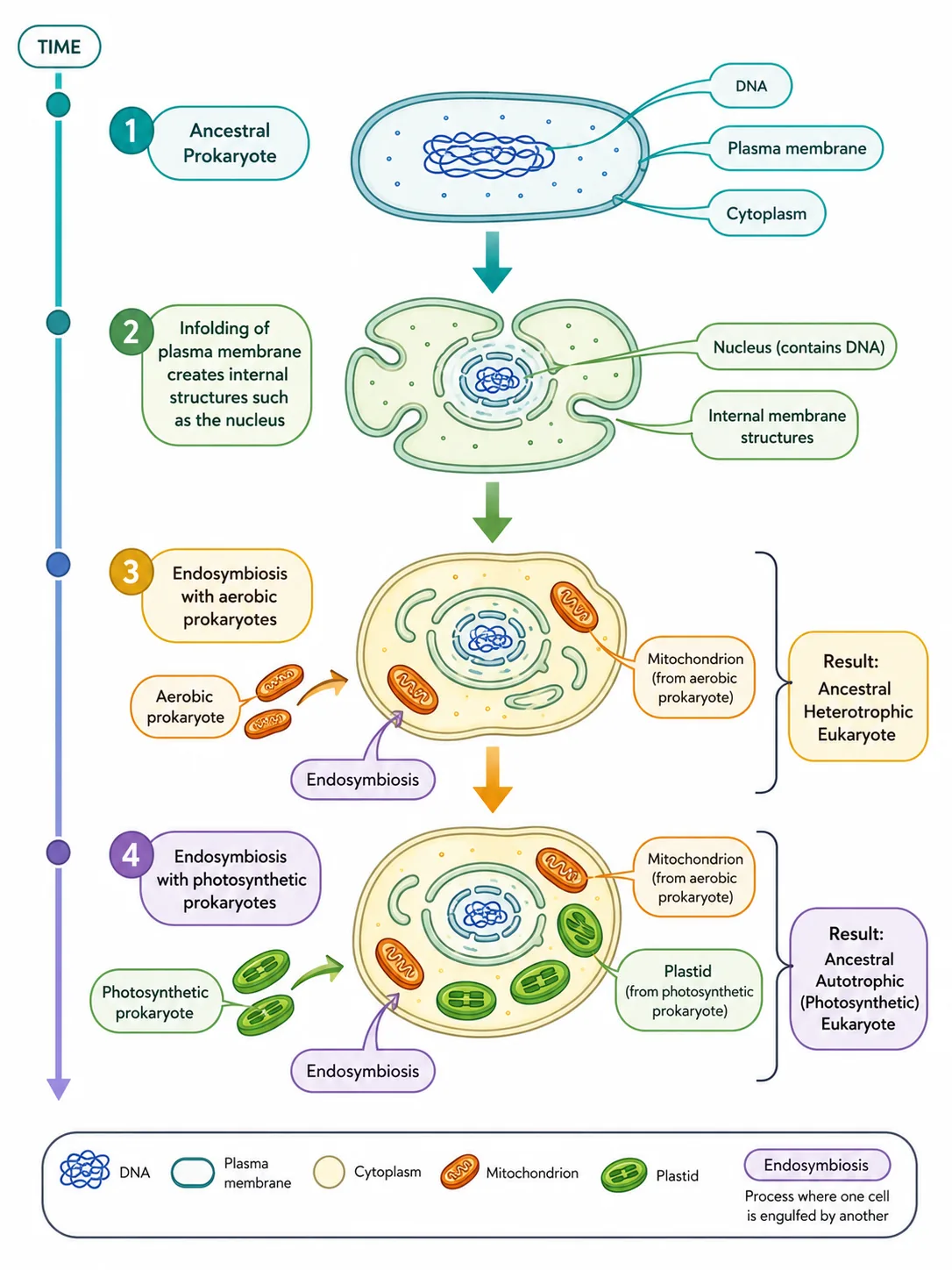
  30. Mitochondria and chloroplasts have double membranes, their own circular DNA and 70S ribosomes (evidence for endosymbiosis).
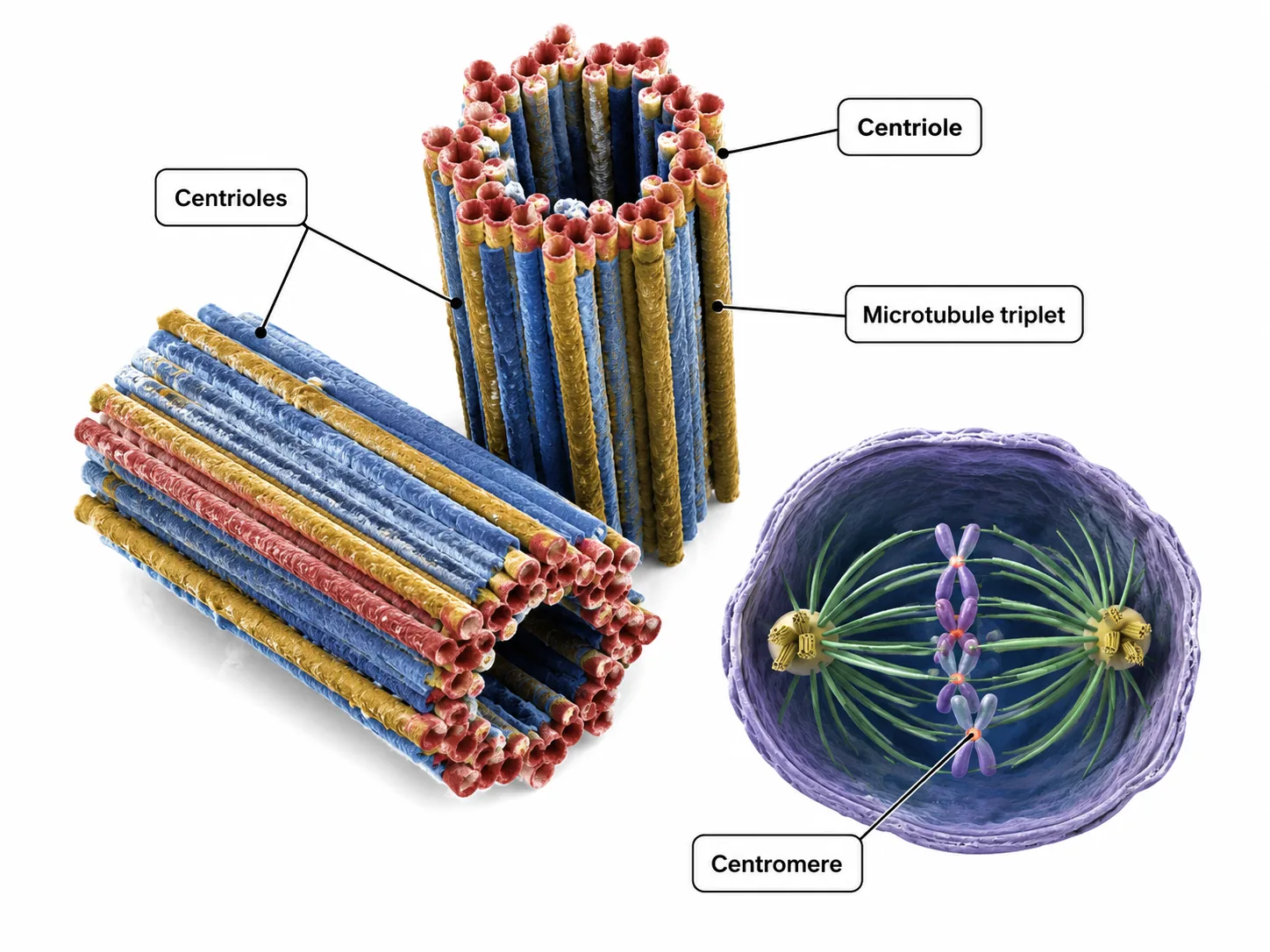
  31. Microtubules (tubulin, ~25 nm) form spindles, cilia and flagella (9+2 arrangement)
  32. microfilaments (actin, ~7 nm) drive muscle contraction and cytokinesis in animals.
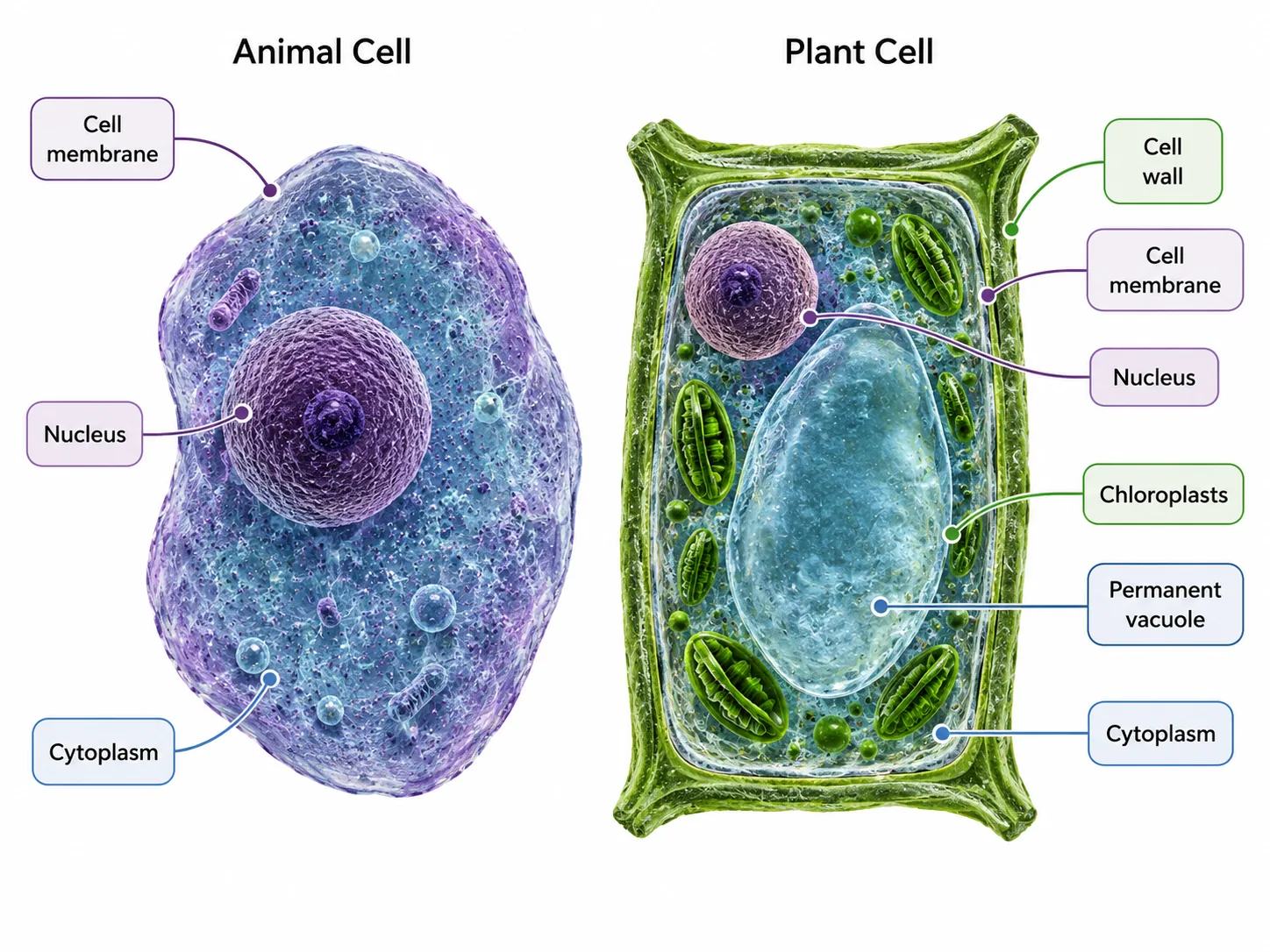
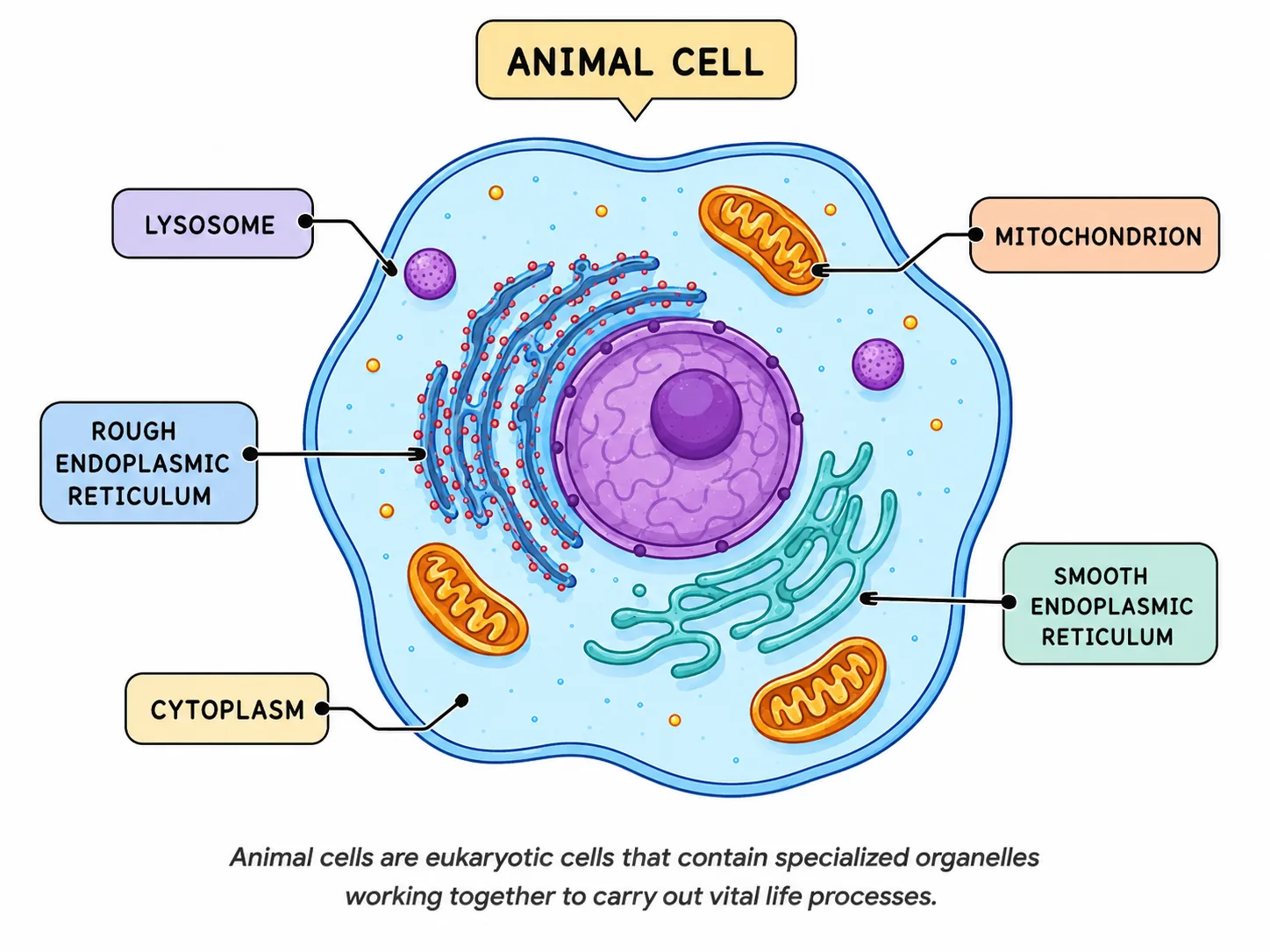
  33. Plant cells
  34. cell wall, chloroplasts, large central vacuole
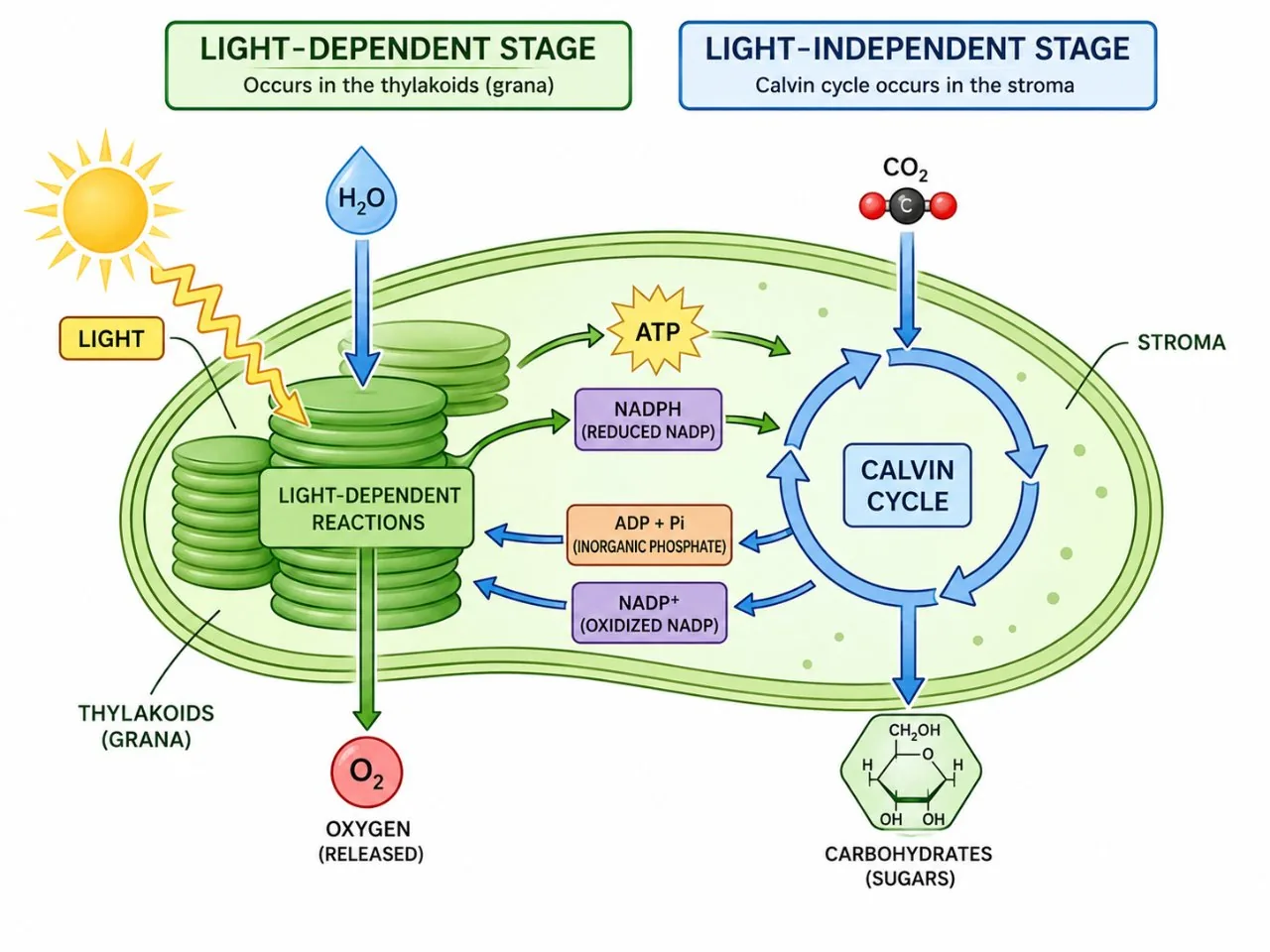
  35. centrioles, lysosomes, no wall.
  36. ◀ Previous, 7 / 8Next ▶
  37. Key ideas
  38. Cell junctions
  39. 2tight junctions (seal), desmosomes (anchor), gap junctions (animal communication)
  40. plasmodesmata in plants.
  41. ◀ Previous, 8 / 8
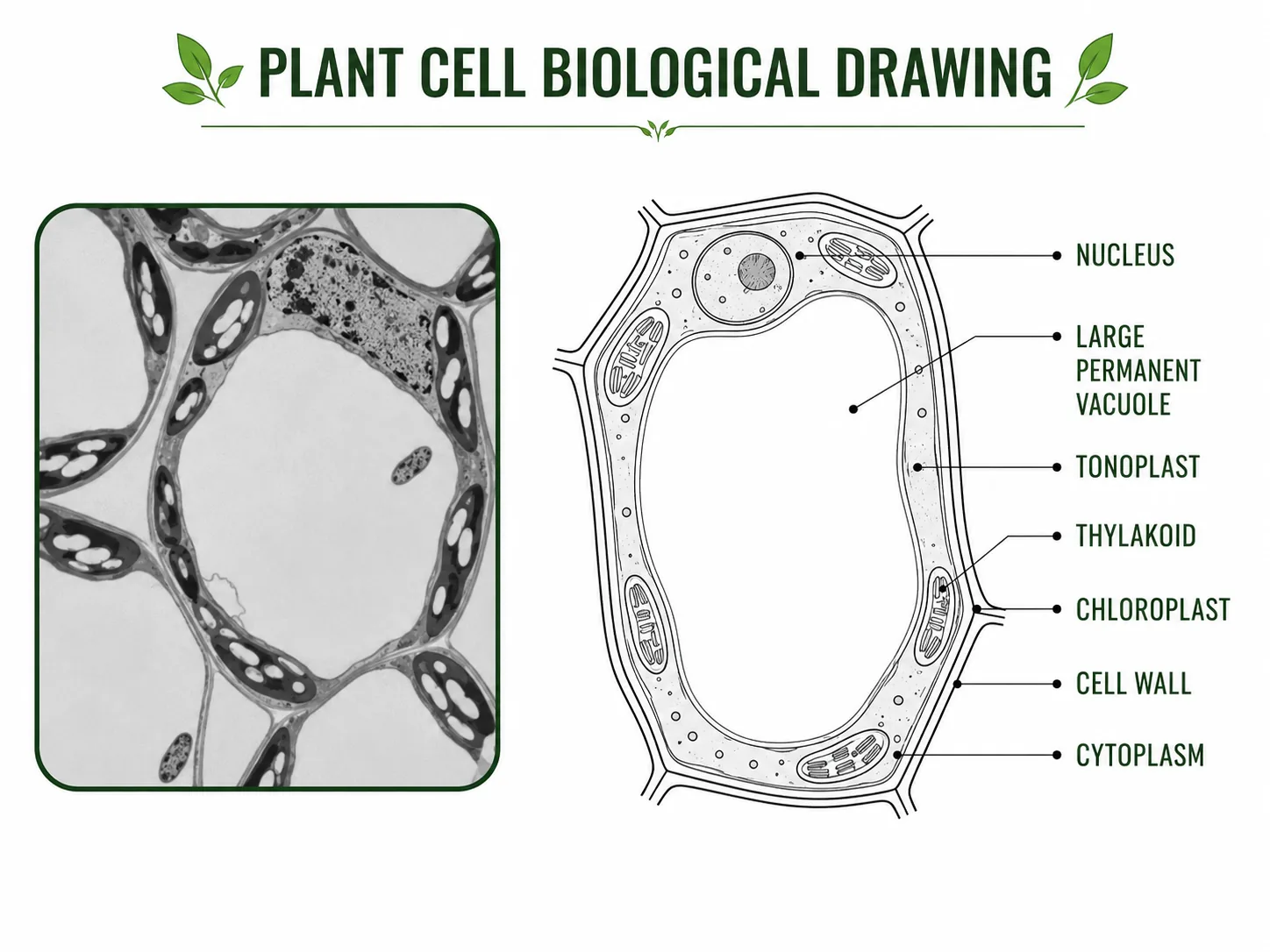
plant cell vacuole
plant cell vacuole
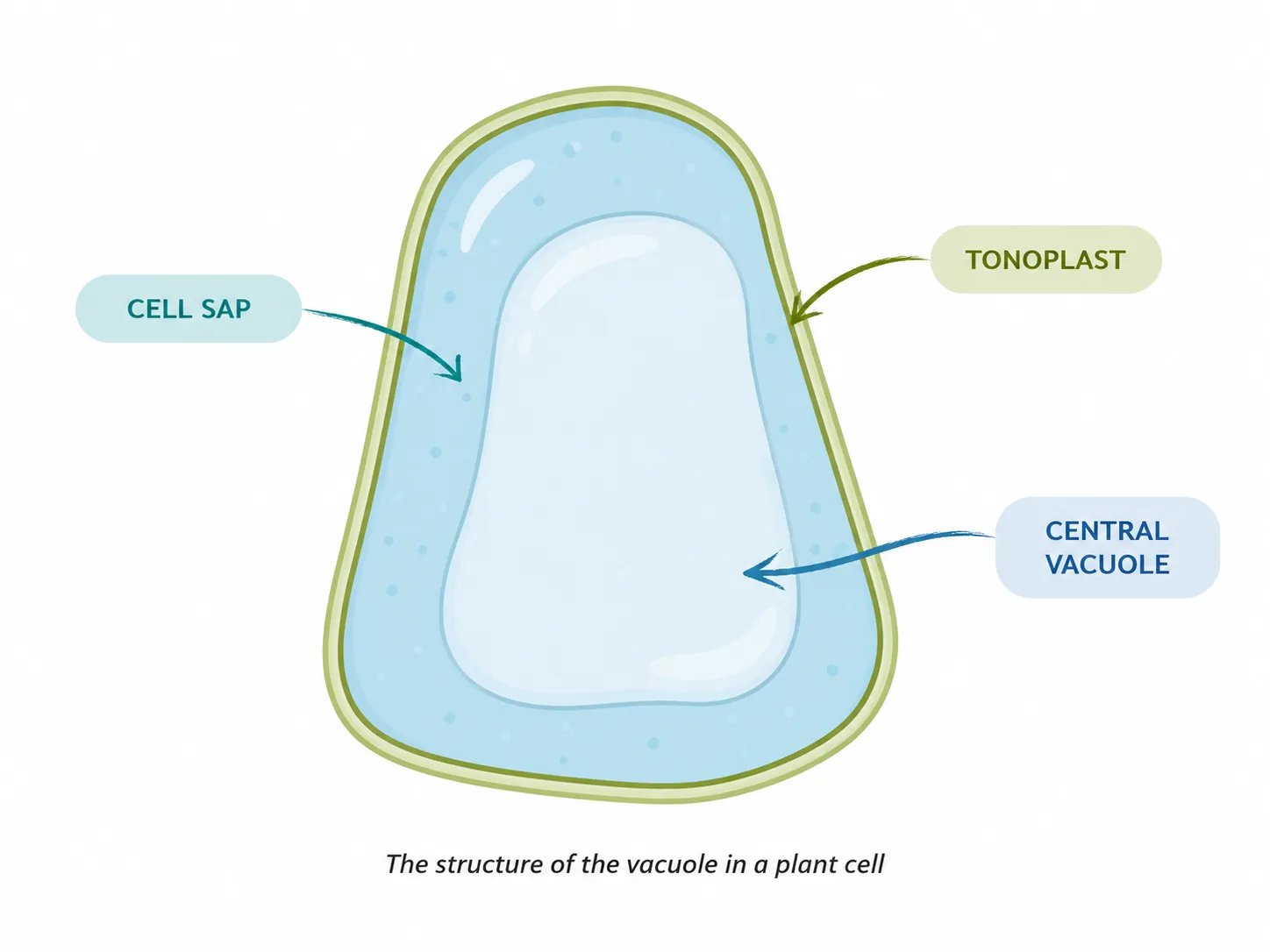
Essential knowledge→A plant cell’s large permanent vacuole holds water and keeps the cell turgid by pressing against the cell wall.
Plasmodesmata — Highways Between Plant Cells (Click-by-Click Lesson)
Plasmodesmata — Highways Between Plant Cells (Click-by-Click Lesson)→Key ideas
Animal Cell and Plant Cell
Animal Cell and Plant Cell→Key ideas
Centrioles as microtubule triplet cylinders beside a spindle cell
Centrioles as microtubule triplet cylinders beside a spindle cell→Key ideas
2.1 Cell Structure & Function · 1 / 6
2.1 Essential knowledge

Essential knowledge

Light-dependent and light-independent stages in the chloroplast
  1. Essential knowledge3Essential knowledge4Essential knowledge5Essential knowledge6Essential knowledge7Essential knowledge8Essential knowledge9Essential knowledge10Essential knowledge11Essential knowledge
  2. Essential knowledge
  3. ⤢ Enlarge
  4. 1 / 11Next ▶
  5. Essential knowledge
  6. ⤢ Enlarge
  7. ◀ Previous, 2 / 11Next ▶
  8. Essential knowledge
  9. ⤢ Enlarge
  10. ◀ Previous, 3 / 11Next ▶
  11. Essential knowledge
  12. ⤢ Enlarge
  13. ◀ Previous, 4 / 11Next ▶
  14. Essential knowledge
  15. ⤢ Enlarge
  16. ◀ Previous, 5 / 11Next ▶
  17. Essential knowledge
  18. ⤢ Enlarge
  19. ◀ Previous, 6 / 11Next ▶
  20. Essential knowledge
  21. ⤢ Enlarge
  22. Essential knowledge
  23. Microscopy
  24. light microscopes view living cells up to ~1000×
  25. transmission EM shows internal ultrastructure, scanning EM shows 3D surfaces.
  26. Resolution, not just magnification, determines detail seen.
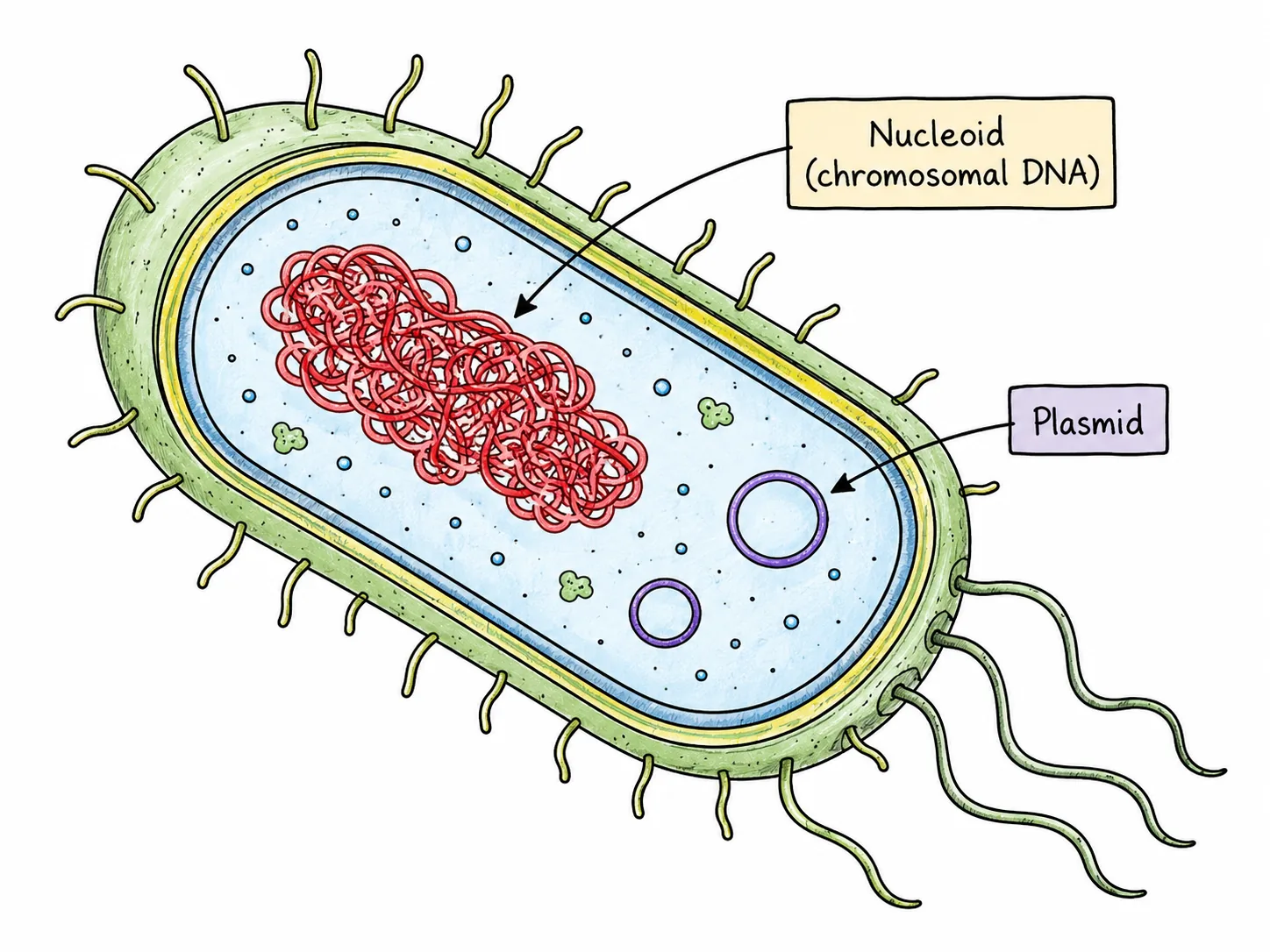
  27. Prokaryotic cells
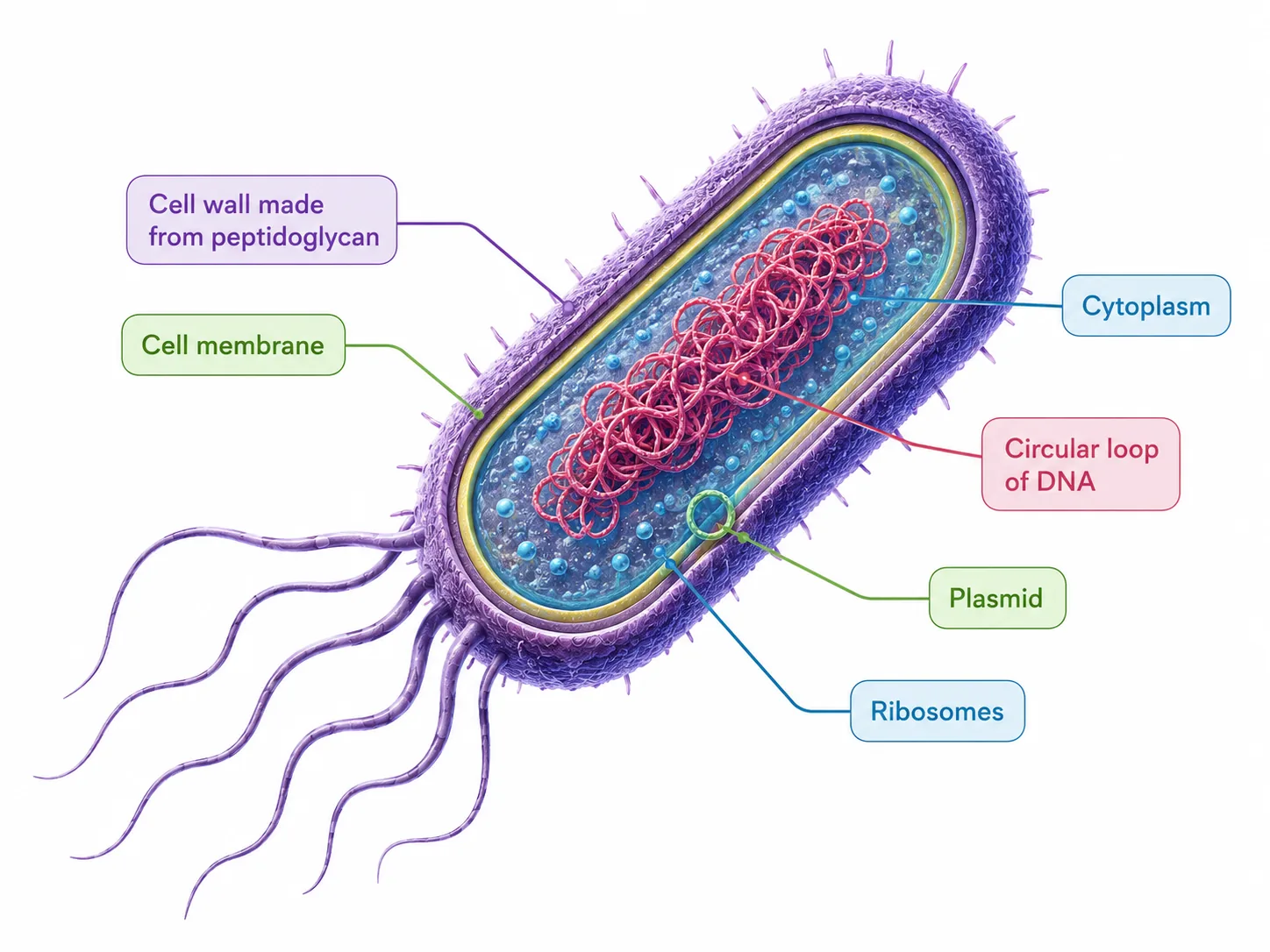
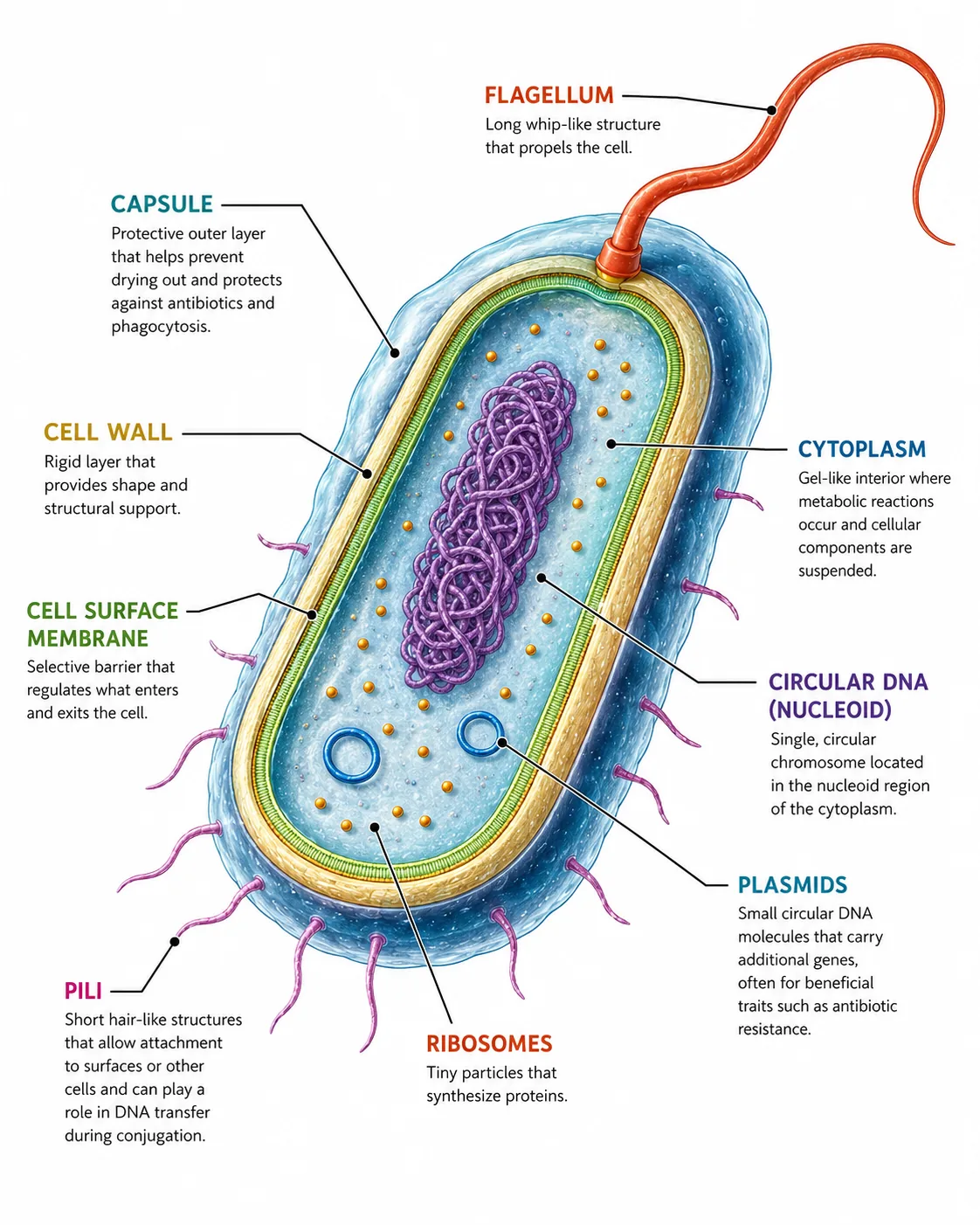
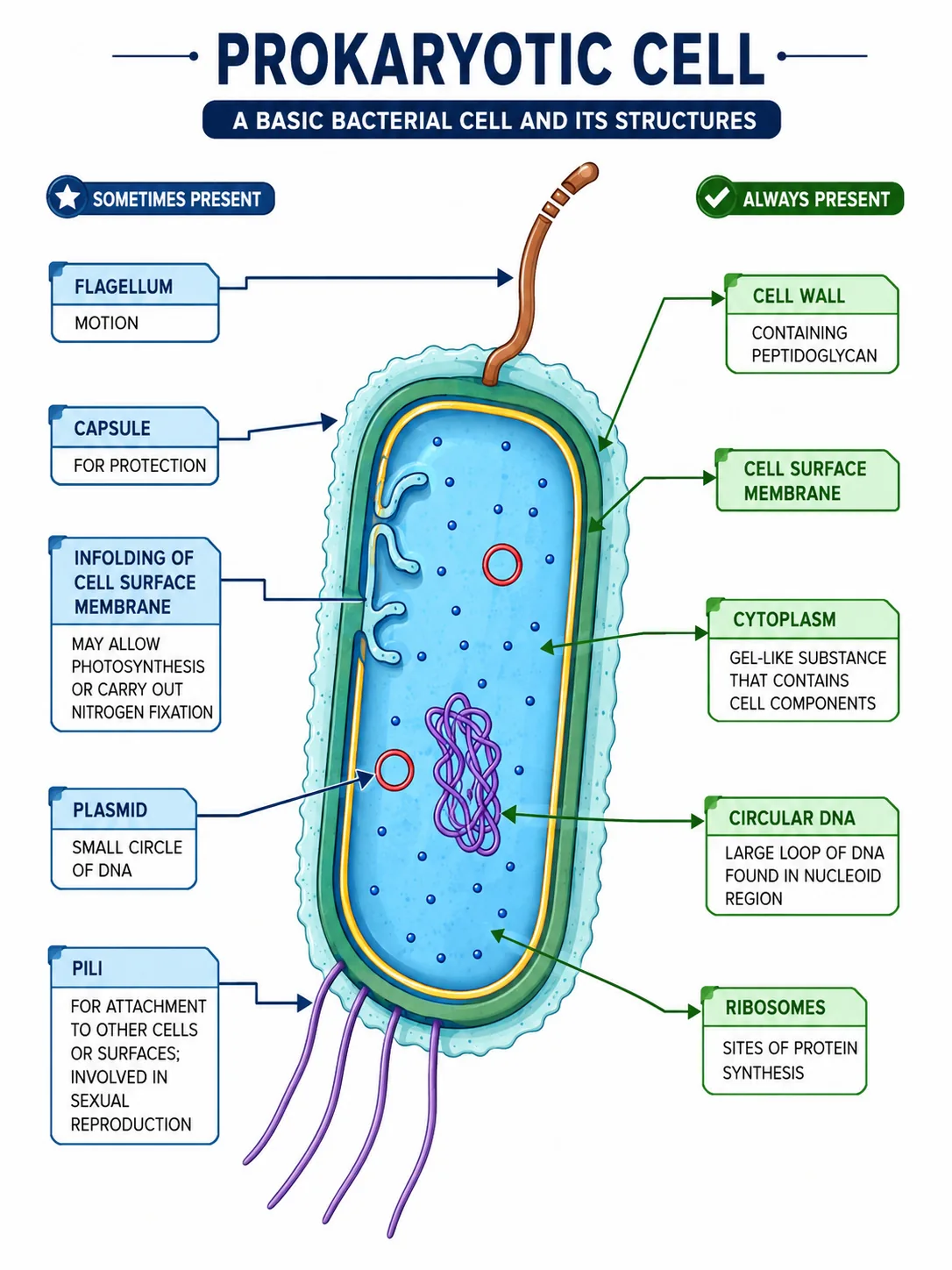
  28. contain a plasma membrane, cytoplasm, 70S ribosomes, nucleoid DNA, often plasmids, a cell wall, and sometimes a capsule, pili and flagella.
  29. They are small
  30. so diffusion is sufficient for transport.
  31. Nucleus and ribosomes
  32. the nuclear envelope is a double membrane with pores.
  33. Chromatin (DNA + histones) condenses into chromosomes at division.
  34. Free ribosomes make cytosolic proteins
  35. bound ribosomes on rough ER make proteins for membranes, lysosomes or secretion.
  36. ◀ Previous, 7 / 11Next ▶
  37. Essential knowledge
  38. Essential knowledge
  39. ER, Golgi, lysosomes, vacuoles and vesicles cooperate.
  40. Lysosomes contain acid hydrolases and carry out intracellular digestion and autophagy.
  41. Peroxisomes (not endomembrane) break down fatty acids and H
  42. O
  43. .
  44. Energy organelles
  45. mitochondria have folded inner membranes (cristae) around the matrix, increasing surface area for the electron transport chain.
  46. Chloroplasts have thylakoids stacked into grana in a fluid stroma.
  47. ◀ Previous, 8 / 11Next ▶
  48. Essential knowledge
  49. Endosymbiosis
  50. 2evidence includes double membranes, circular DNA, 70S ribosomes, division by binary fission, and DNA sequences similar to bacteria (mitochondria ~ α-proteobacteria
  51. chloroplasts ~ cyanobacteria).
  52. Cytoskeleton
  53. 4microtubules resist compression and act as tracks for motor proteins (kinesin, dynein)
  54. microfilaments bear tension and allow amoeboid movement and cytoplasmic streaming, intermediate filaments give mechanical strength (e.g. keratin).
  55. Extracellular structures
  56. 6plant cell walls (cellulose) resist osmotic bursting
  57. animal cells have an extracellular matrix rich in collagen and glycoproteins linked to the cytoskeleton by integrins.
  58. ◀ Previous, 9 / 11Next ▶
  59. Essential knowledge
  60. Cell size
  61. 2volume (metabolic demand) grows faster than surface area (exchange)
  62. so large cells cannot exchange materials fast enough. Cells stay small, divide, or increase surface with folds and microvilli.
  63. Rough ER arises from membrane folds that connect to the nuclear envelope.
  64. Smooth ER has no ribosomes on its surface and takes part in lipid synthesis and the detoxification of harmful substances.
  65. The Golgi complex is a stack of flattened membrane sacs called cisternae that modify, sort and package proteins.
  66. Lysosomes also destroy invading pathogens and trigger programmed cell death, known as apoptosis.
  67. ◀ Previous, 10 / 11Next ▶
  68. Essential knowledge
  69. Essential knowledge
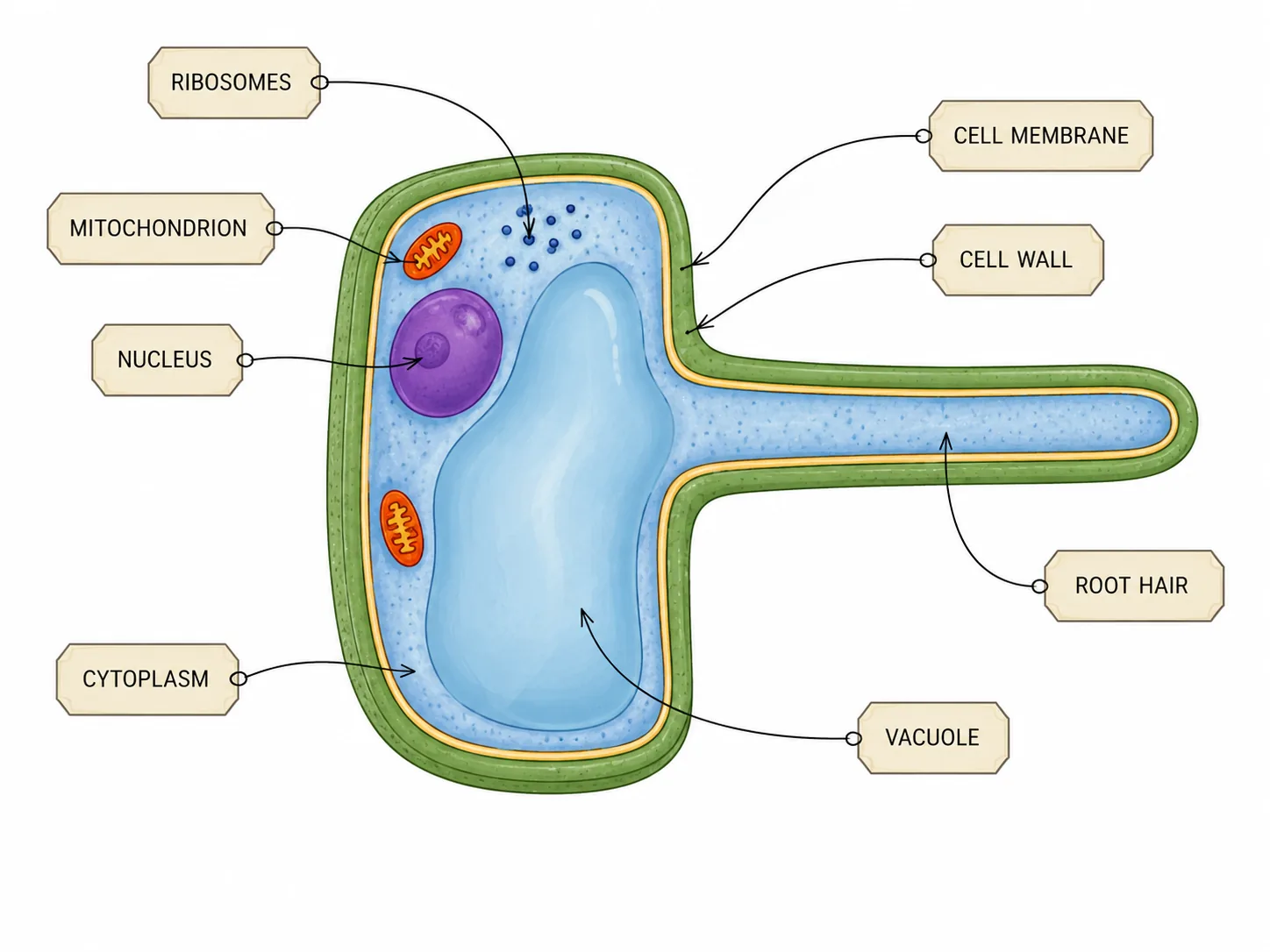
  70. A plant cell’s large permanent vacuole holds water and keeps the cell turgid by pressing against the cell wall.
  71. Animal cells have smaller, temporary vacuoles that store metabolites or transport substances.
  72. The Krebs cycle takes place in the matrix of the mitochondrion
  73. while electron transport and ATP synthesis happen on the inner membrane.
  74. The Calvin cycle of photosynthesis happens in the stroma
  75. while the light-dependent reactions take place in the grana.
  76. Metabolically active cells, such as muscle cells, usually contain more mitochondria than less active cells such as bone cells.
  77. ◀ Previous, 11 / 11
Membrane diffusion
Membrane diffusion
Membrane diffusion→Essential knowledge
Bacterium structure (flagella, plasmid, circular DNA)
  • D. Both have double membranes: Location in the cytoplasm is not evidence of bacterial origin
Labelled bacterial cell with capsule, wall, DNA, plasmids, pili and flagellum
Prokaryotic cells→contain a plasma membrane, cytoplasm, 70S ribosomes, nucleoid DNA, often plasmids, a cell wall, and sometimes a capsule, pili and flagella.
Plant Cell Biological Drawing — Click-by-Click Animation
Essential knowledge→A plant cell’s large permanent vacuole holds water and keeps the cell turgid by pressing against the cell wall.
prokaryotic cell
prokaryotic cell
Prokaryotic cellsThey are small
Check yourselfWhich structure is found in BOTH prokaryotic and eukaryotic cells?
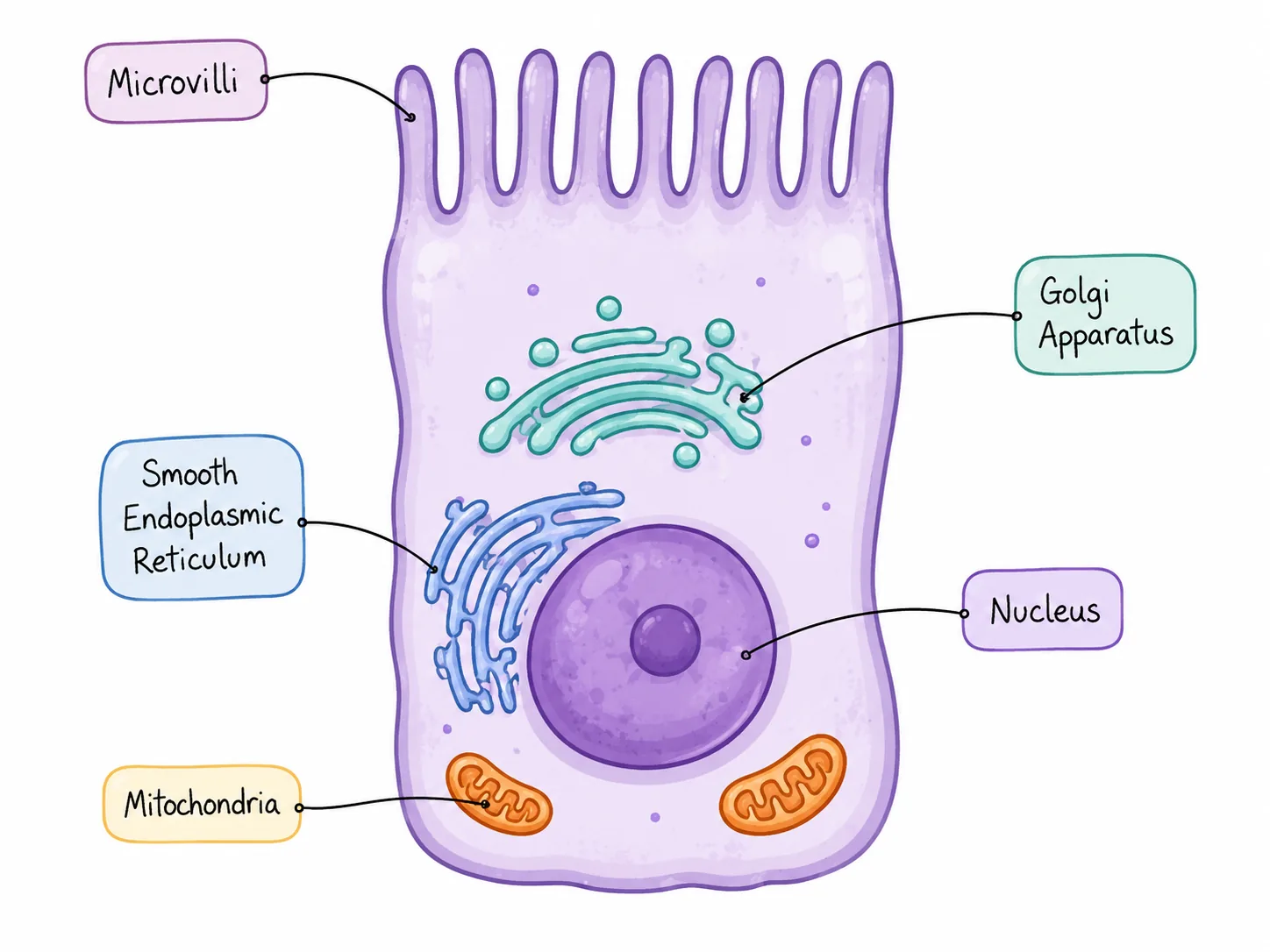
Epithelial Cell v5 — polar layout, frozen organelles, internal motion
Epithelial Cell v5 — polar layout, frozen organelles, internal motion→Essential knowledge
2.1 Cell Structure & Function · 2 / 6
2.1 Process & sequence

Process & sequence

  1. Process & sequence3Process & sequence4Process & sequence5Process & sequence
  2. Process & sequence
  3. ⤢ Enlarge
  4. 1 / 5Next ▶
  5. Process & sequence
  6. ⤢ Enlarge
  7. Process & sequence
  8. Gene in the nucleus is transcribed to mRNA
  9. which exits through a nuclear pore.
  10. Ribosome binds the mRNA and docks on the rough ER.
  11. Polypeptide enters the ER lumen, folds and gets initial glycosylation.
  12. ◀ Previous, 2 / 5Next ▶
  13. Process & sequence
  14. Process & sequence
  15. Transport vesicle buds off and carries the protein to the cis face of the Golgi.
  16. Golgi modifies and sorts the protein
  17. which leaves the trans face in a vesicle.
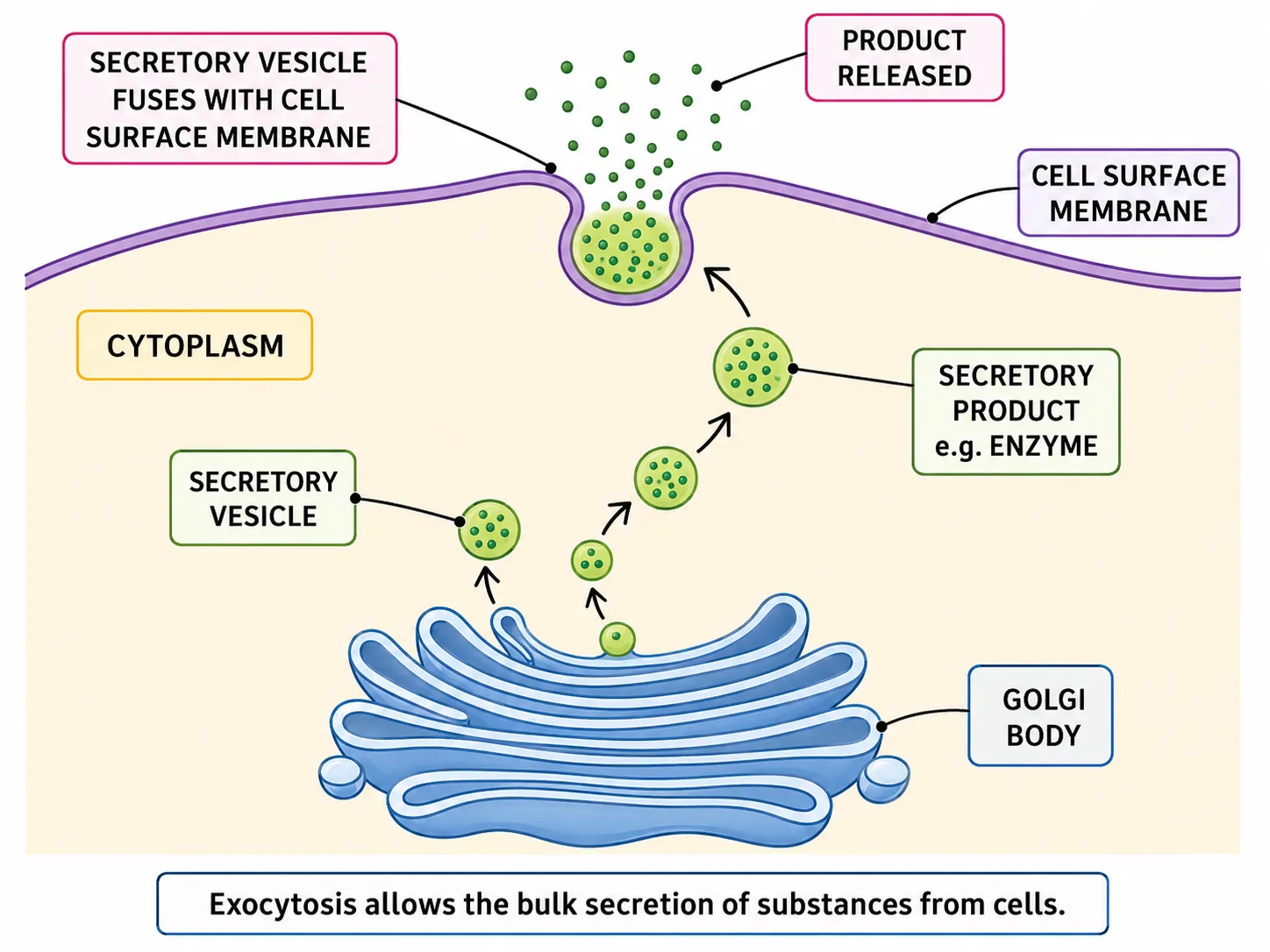
  18. Secretory vesicle fuses with the plasma membrane and releases the protein by exocytosis.
  19. ◀ Previous, 3 / 5Next ▶
  20. Process & sequence
  21. 1Pathway of a secreted protein — write these steps in this order
  22. each step is a marking point.
  23. DNA transcribed in nucleus
  24. mRNA to rough ER ribosome
  25. Protein folds in ER
  26. Vesicle to Golgi
  27. Golgi modifies and packages
  28. ◀ Previous, 4 / 5Next ▶
  29. Process & sequence
  30. Process & sequence
  31. Exocytosis at membrane
  32. ◀ Previous, 5 / 5
Exocytosis — 3D-Shaded Step-by-Step Simulation
Exocytosis — 3D-Shaded Step-by-Step Simulation→Process & sequence
2.1 Cell Structure & Function · 3 / 6
2.1 Worked examples

Worked examples

Mitochondrion electron micrograph (coloured)
Worked examples2→Compare the SA:V ratio of cubic cells of side 1 μm and 4 μm

Worked examples

⤢ Enlarge

Worked examples

  • A mitochondrion measures 30 mm long in a micrograph taken at ×15 000. What is its actual length in μm?
  • Actual size = image size ÷ magnification = 30 mm ÷ 15 000 = 0.002 mm = 0.002 × 1000 = 2 μm.

1 / 2Next ▶

Comparison aspectMain ideaKeywords
Compare the SAV ratio of cubic cells of side 1 μm and 4 μm and explain the significanceratiocubiccellsside
1 μm
  • SA = 6
  • V = 1
  • ratio 6:1
ratio
4 μm
  • SA = 6 × 16 = 96
  • V = 64
  • ratio 1.5:1.The larger cell has 4 times less surface per unit volume
  • so exchange of O2
  • nutrients and wastes by diffusion would be too slow to meet its needs
ratiolargercelltimes

◀ Previous, 2 / 2

2.1 Cell Structure & Function · 4 / 6
2.1 Summary

Summary

  1. Summary3Summary
  2. Summary
  3. Summary
  4. Cell theory
  5. : all life is cellular and cells come from cells.
  6. Prokaryotes lack a
  7. nucleus and membrane-bound organelles
  8. 1 / 3Next ▶
  9. Summary
  10. Summary
  11. .
  12. The
  13. endomembrane system
  14. makes, modifies and ships proteins and lipids.
  15. ◀ Previous, 2 / 3Next ▶
  16. Summary
  17. Mitochondria and chloroplasts
  18. convert energy and arose by endosymbiosis.
  19. A small
  20. V ratio
  21. limits cell size.
  22. ◀ Previous, 3 / 3
2.1 Cell Structure & Function · 5 / 6
2.1 Check yourself

Check yourself

  1. Check yourself3Check yourself4Check yourself5Check yourself6Check yourself7Check yourself8Check yourself9Check yourself10Check yourself11Check yourself12Check yourself13Check yourself14Check yourself15Check yourself16Check yourself17Check yourself
  2. Check yourself
  3. ⤢ Enlarge
  4. 1 / 17Next ▶
  5. Check yourself
  6. ⤢ Enlarge
  7. ◀ Previous, 2 / 17Next ▶
  8. Check yourself
  9. ⤢ Enlarge
  10. ◀ Previous, 3 / 17Next ▶
  11. Check yourself
  12. ⤢ Enlarge
  13. ◀ Previous, 4 / 17Next ▶
  14. Check yourself
  15. ⤢ Enlarge
  16. ◀ Previous, 5 / 17Next ▶
  17. Check yourself
  18. ⤢ Enlarge
  19. ◀ Previous, 6 / 17Next ▶
  20. Check yourself
  21. ⤢ Enlarge
  22. ◀ Previous, 7 / 17Next ▶
  23. Check yourself
  24. ⤢ Enlarge
  25. ◀ Previous, 8 / 17Next ▶
  26. Check yourself
  27. ⤢ Enlarge
  28. ◀ Previous, 9 / 17Next ▶
  29. Check yourself
  30. ⤢ Enlarge
  31. ◀ Previous, 10 / 17Next ▶
  32. Check yourself
  33. ⤢ Enlarge
  34. Check yourself
  35. Which structure is found in BOTH prokaryotic and eukaryotic cells?
  36. A. Nucleus
  37. B. Mitochondria
  38. C. Golgi apparatus
  39. D. Ribosomes
  40. Show answer
  41. ◀ Previous, 11 / 17Next ▶
  42. Check yourself
  43. All cells need ribosomes for protein synthesis
  44. the others are eukaryotic organelles.
  45. A cell that secretes large amounts of digestive enzymes would have abundant:
  46. A. smooth ER
  47. B. rough ER and Golgi
  48. ◀ Previous, 12 / 17Next ▶
  49. Check yourself
  50. C. chloroplasts
  51. D. central vacuoles
  52. Secreted proteins are made on rough ER and packaged by the Golgi.
  53. Which is NOT evidence for the endosymbiotic theory?
  54. ◀ Previous, 13 / 17Next ▶
  55. Check yourself
  56. Check yourself
  57. A. Mitochondria have circular DNA
  58. B. Chloroplasts have 70S ribosomes
  59. C. Mitochondria are found in the cytoplasm
  60. D. Both have double membranes
  61. Location in the cytoplasm is not evidence of bacterial origin
  62. the other features resemble prokaryotes.
  63. As a cell increases in size, its surface area to volume ratio:
  64. ◀ Previous, 14 / 17Next ▶
  65. Check yourself
  66. A. decreases
  67. B. increases
  68. C. stays the same
  69. D. doubles
  70. Volume increases with L3 while surface area increases with L2.
  71. Which cytoskeletal element forms the mitotic spindle?
  72. ◀ Previous, 15 / 17Next ▶
  73. Check yourself
  74. Check yourself
  75. A. Microfilaments
  76. B. Intermediate filaments
  77. C. Collagen
  78. D. Microtubules
  79. Spindle fibres are made of tubulin microtubules.
  80. Which organelle contains hydrolytic enzymes for intracellular digestion?
  81. ◀ Previous, 16 / 17Next ▶
  82. Check yourself
  83. Check yourself
  84. A. Lysosome
  85. B. Ribosome
  86. C. Peroxisome
  87. D. Nucleolus
  88. Lysosomes contain acid hydrolases that digest macromolecules and worn-out organelles.
  89. ◀ Previous, 17 / 17
animal cell
animal cell
  • animal cells centrioles, lysosomes, no wall.
  • animal cells have an extracellular matrix rich in collagen and glycoproteins linked to the cytoskeleton by integrins.
  • Animal cells have smaller, temporary vacuoles that store metabolites or transport substances.
endosymbiotic theory
endosymbiotic theory→Check yourself
root hair cell
root hair cell
root hair cell→Check yourself
Bacterial Nucleoid and Plasmids
Bacterial Nucleoid and Plasmids→Check yourself
2.1 Cell Structure & Function · 6 / 6
Accepted payment methods