Curriculum
Course: General Biology
Login

Curriculum

General Biology

Text lesson

1.2 Basic Chemistry for Biology

Describe atomic structure and define isotopes.
1Key ideas2Key ideas3Key ideas4Key ideas5Key ideas6Key ideas7Key ideas
Key ideas
Key ideas
About 96% of living mass is C, H, O and N (CHNOPS are the main elements).
H = 1, O = 2, N = 3, C = 4 bonds.
pH = -log
10
[H
+
1 / 7Next ▶
Key ideas
1

]

each pH unit is a 10-fold change in [H
2

].
3

What the symbols mean:
4

pH has no unit · [H
5

] = concentration of hydrogen ions (mol dm
6

−3
◀ Previous2 / 7Next ▶
Key ideas
Key ideas
)

each 1 pH unit is a ten-fold change in [H
]
] = [OH
–
] = 10
-7
◀ Previous3 / 7Next ▶
Key ideas
Key ideas
M, pH 7 at 25 °C.
Blood pH ~7.4 is buffered by the carbonic acid-bicarbonate system: CO
2
+ H
O ↔ H
CO
◀ Previous4 / 7Next ▶
Key ideas
1

3
2

↔ H
3

+ HCO
4

.
5

Molarity = moles of solute per litre of solution

1 mol = molecular mass in grams (6.02 × 10
6

23
◀ Previous5 / 7Next ▶
Key ideas
1

particles).
2

Radioactive isotopes (e.g.
3

14
4

C,
5

32
6

P) are used as tracers and for dating.
◀ Previous6 / 7Next ▶
Key ideas
Key ideas
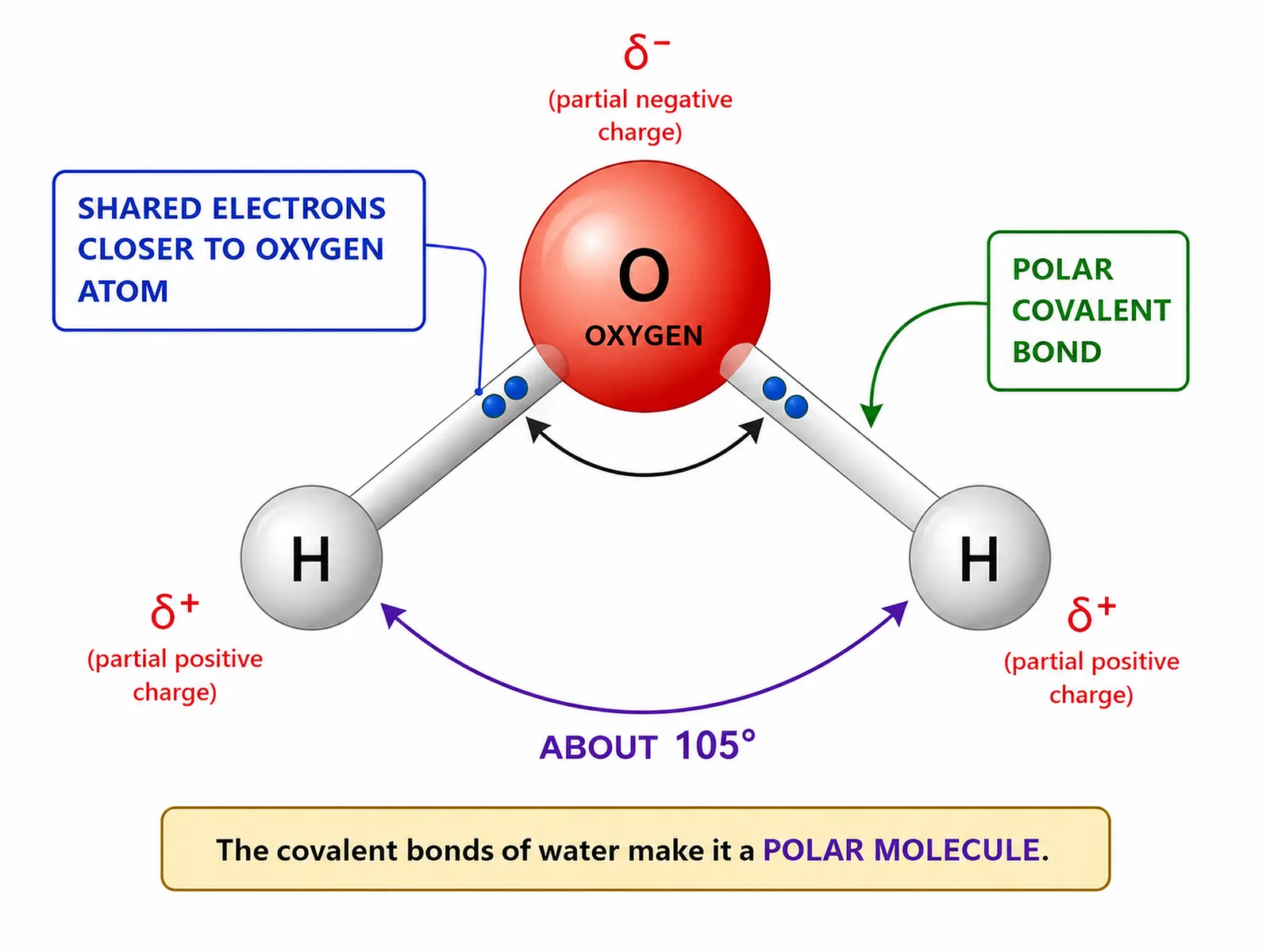
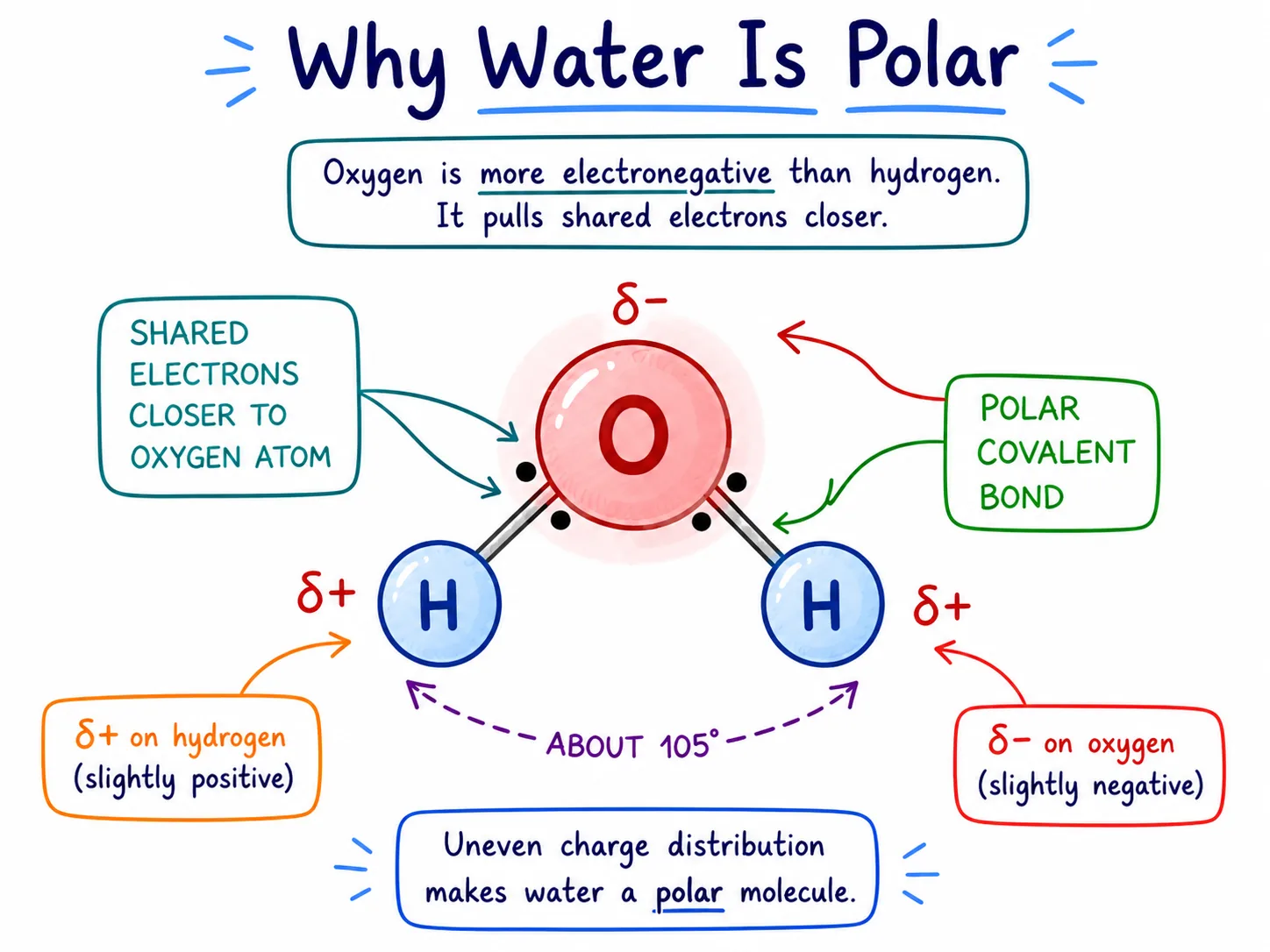
Water is polar with a bent shape (~104.5°)

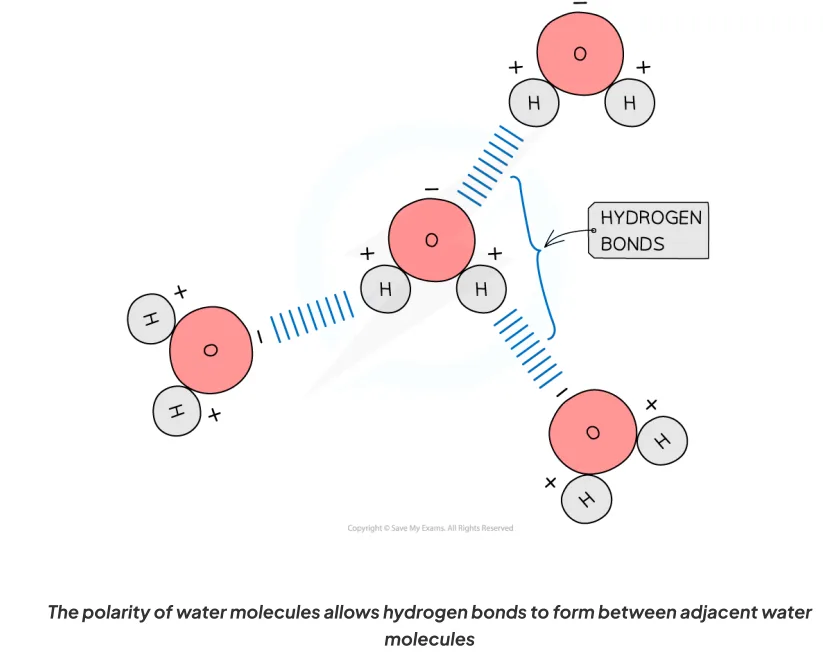
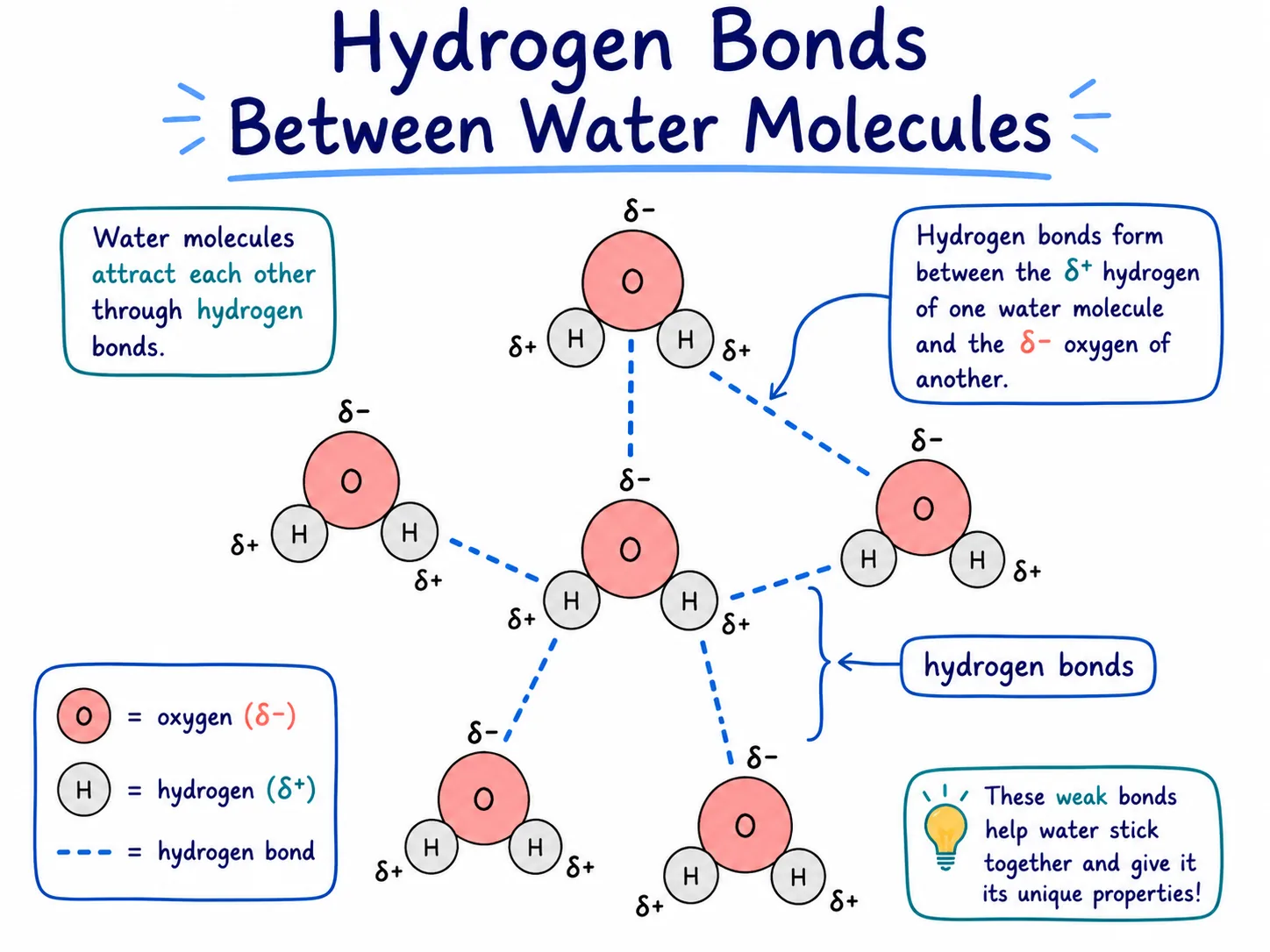
each molecule can form up to 4 H bonds.
◀ Previous7 / 7
1Essential knowledge2Essential knowledge3Essential knowledge4Essential knowledge5Essential knowledge6Essential knowledge7Essential knowledge
Essential knowledge
1 / 7Next ▶
Essential knowledge
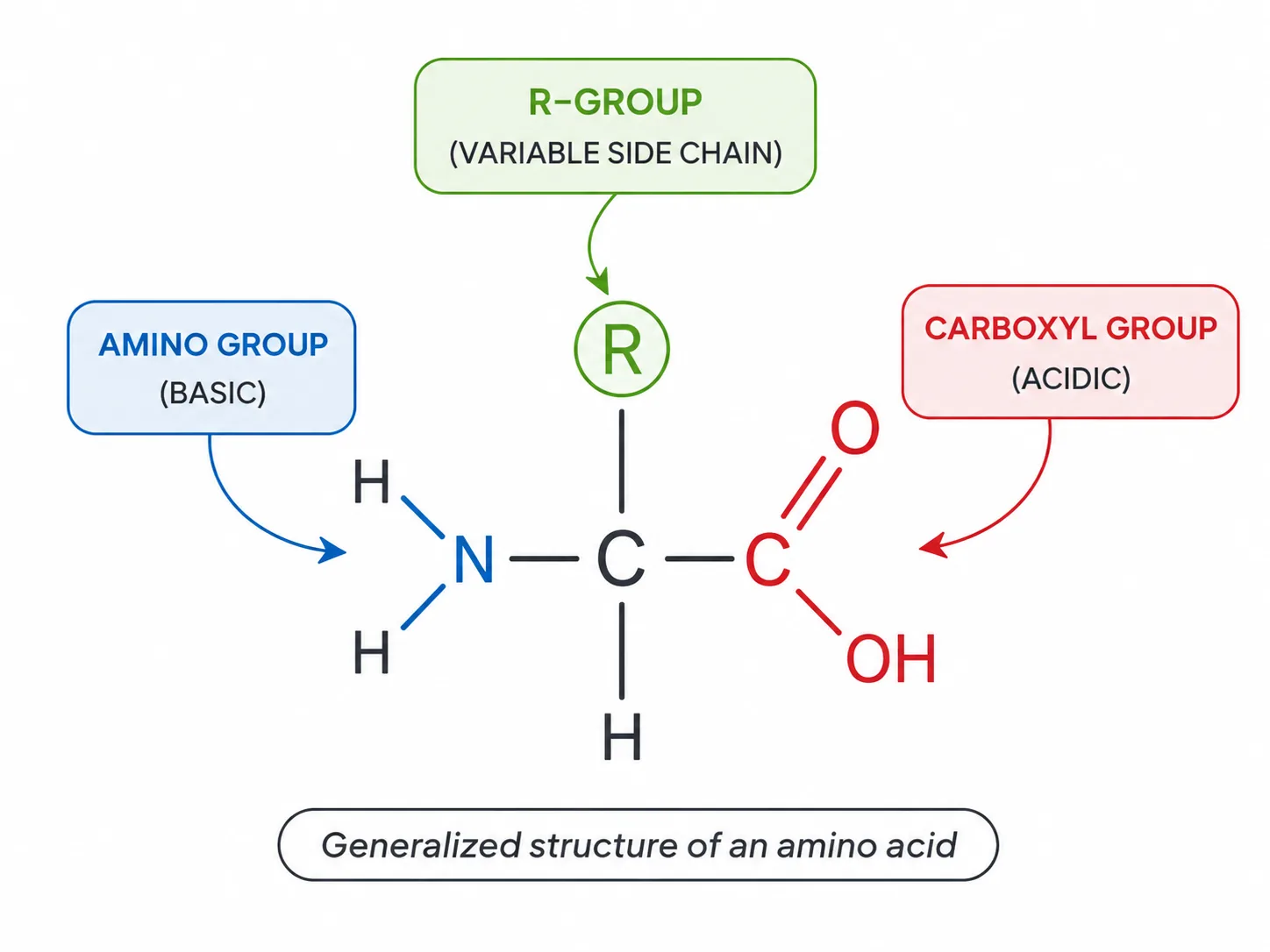
Amino acid structure with functional groups" loading= - Dr Khaled Dabour Academy⤢ Enlarge
Essential knowledge
Atoms
matter is made of elements. An atom has a nucleus of protons (+) and neutrons (0), surrounded by electrons (-). Atomic number = protons

mass number = protons + neutrons. Isotopes differ in neutronsunstable ones are radioactive and decay at a constant half-life.
Electrons and reactivity
chemical behaviour depends on valence (outer-shell) electrons. Atoms with incomplete valence shells react. Electrons further from the nucleus have more potential energy.
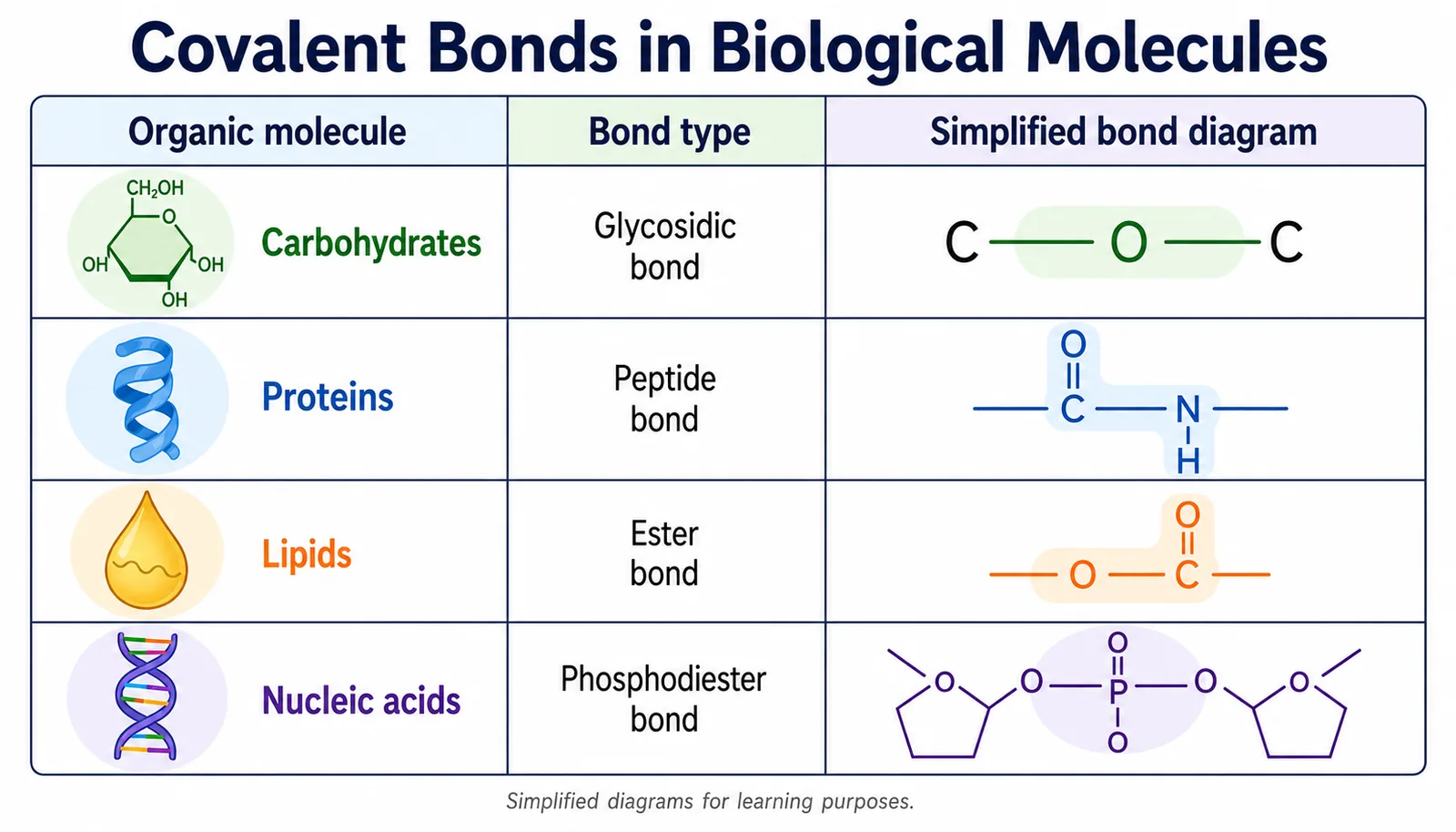
Covalent bonds
sharing electron pairs forms single, double or triple bonds. When atoms differ in electronegativity (O and N are highly electronegative), sharing is unequal and the bond is polar

giving partial charges (δ+ / δ-).
◀ Previous2 / 7Next ▶
Essential knowledge
Essential knowledge
Ionic bonds and ions
complete transfer of electrons produces cations (+) and anions (-). Ions such as Na
+
, K
, Ca
2+
◀ Previous3 / 7Next ▶
Essential knowledge
1

and Cl
2

–
3

are vital for nerve impulses and muscle contraction.
4

Weak interactions
5

hydrogen bonds, ionic attractions in water, van der Waals forces and hydrophobic interactions are individually weak but collectively shape proteins, DNA and membranes, and allow reversible binding (e.g. enzyme-substrate).
6

Water
◀ Previous4 / 7Next ▶
Essential knowledge
1

its polarity and hydrogen bonding give cohesion, adhesion, high specific heat, high heat of vaporisation, lower density of ice, and excellent solvent ability. Hydrophobic substances (oils) do not dissolve and cluster together.
2

Acids, bases and pH
3

acids donate H
4

, bases accept H
5

(or release OH
6

). pH 0-14

below 7 acidic, above 7 basic. Buffers such as bicarbonate hold pH near the optimum for enzymes.
◀ Previous5 / 7Next ▶
Essential knowledge
Essential knowledge
Chemical reactions
reactants are converted to products

atoms are conservedso equations must balance. Many reactions are reversible and reach equilibrium when forward and reverse rates are equal.
Carbon
with 4 valence electrons carbon forms 4 covalent bonds, building chains, rings and branches. Functional groups (hydroxyl -OH, carbonyl C=O, carboxyl -COOH, amino -NH
2
, phosphate -OPO
◀ Previous6 / 7Next ▶
Essential knowledge
1

3
2

2-
3

, sulfhydryl -SH, methyl -CH
4

) give molecules their properties.
◀ Previous7 / 7
1Process & sequence2Process & sequence3Process & sequence4Process & sequence5Process & sequence6Process & sequence7Process & sequence
Process & sequence
1 / 7Next ▶
Process & sequence
◀ Previous2 / 7Next ▶
Process & sequence
◀ Previous3 / 7Next ▶
Process & sequence
Hydrogen bonding" loading= - Dr Khaled Dabour Academy⤢ Enlarge
1

1
2

Identify the atomic number (protons) and mass number (protons + neutrons).
3

2
4

Place electrons in shells (2, 8, 8…) and count valence electrons.
5

3
6

Predict bonding: atoms share or transfer electrons to fill the valence shell.
◀ Previous4 / 7Next ▶
Process & sequence
Process & sequence
4
Compare electronegativities to decide nonpolar, polar covalent or ionic.
5
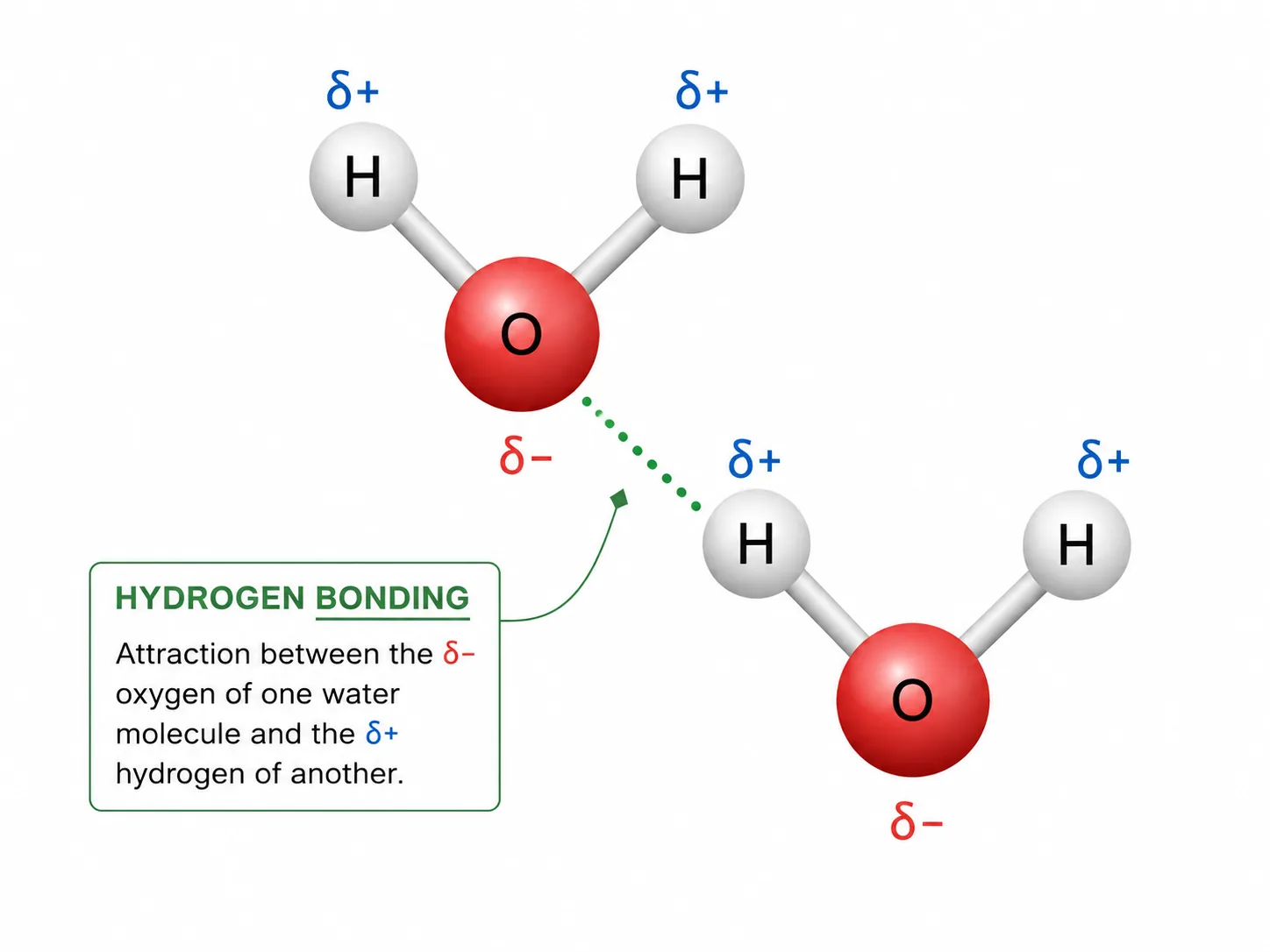
Identify partial charges and possible hydrogen bonds.
6
Predict behaviour in water: hydrophilic dissolves, hydrophobic clusters.
◀ Previous5 / 7Next ▶
Process & sequence
1

From atoms to water’s properties — write these steps in this order

each step is a marking point.
2

Valence electrons determine bonding
3

O more electronegative than H
4

Polar O-H bonds
5

Water molecule is polar
6

Hydrogen bonds form
◀ Previous6 / 7Next ▶
Process & sequence
Process & sequence
Cohesion, heat capacity, solvent
◀ Previous7 / 7
1Worked examples2Worked examples3Worked examples
Worked examples
Worked examples
A solution has [H
+
] = 1 × 10
-4
M. What is its pH, and how many times more acidic is it than a solution of pH 7?
pH = -log(10-4) = 4. Difference = 7 – 4 = 3 pH units

so [H+] is 103 = 1000 times greaterit is 1000 times more acidic.
1 / 3Next ▶
Worked examples
1

How many grams of glucose (C
2

6
3

H
4

12
5

O
6

) are needed to make 500 mL of a 0.2 M solution? (C = 12, H = 1, O = 16)
◀ Previous2 / 3Next ▶
Worked examples
1

Molar mass = 6(12) + 12(1) + 6(16) = 72 + 12 + 96 = 180 g/mol.

Moles needed = 0.2 mol/L × 0.5 L = 0.1 mol.Mass = 0.1 × 180 = 18 g glucose, dissolved and made up to 500 mL.
2

Mass number 14 – 6 protons = 8 neutrons (carbon-12 has 6).
◀ Previous3 / 3
1Summary2Summary3Summary4Summary
Summary
Summary
1
Atoms bond to reach a
full valence shell
.
2
Electronegativity differences
1 / 4Next ▶
Summary
1

decide polar vs nonpolar bonds.
2

3
3

Hydrogen bonds
4

give water its life-supporting properties.
5

4
6

pH is a
◀ Previous2 / 4Next ▶
Summary
Summary
logarithmic
scale of H
+
concentration.
5
Buffers
◀ Previous3 / 4Next ▶
Summary
Summary
keep biological pH stable.
◀ Previous4 / 4
1Check yourself2Check yourself3Check yourself4Check yourself5Check yourself6Check yourself7Check yourself8Check yourself9Check yourself
Check yourself
1 / 9Next ▶
Check yourself
◀ Previous2 / 9Next ▶
Check yourself
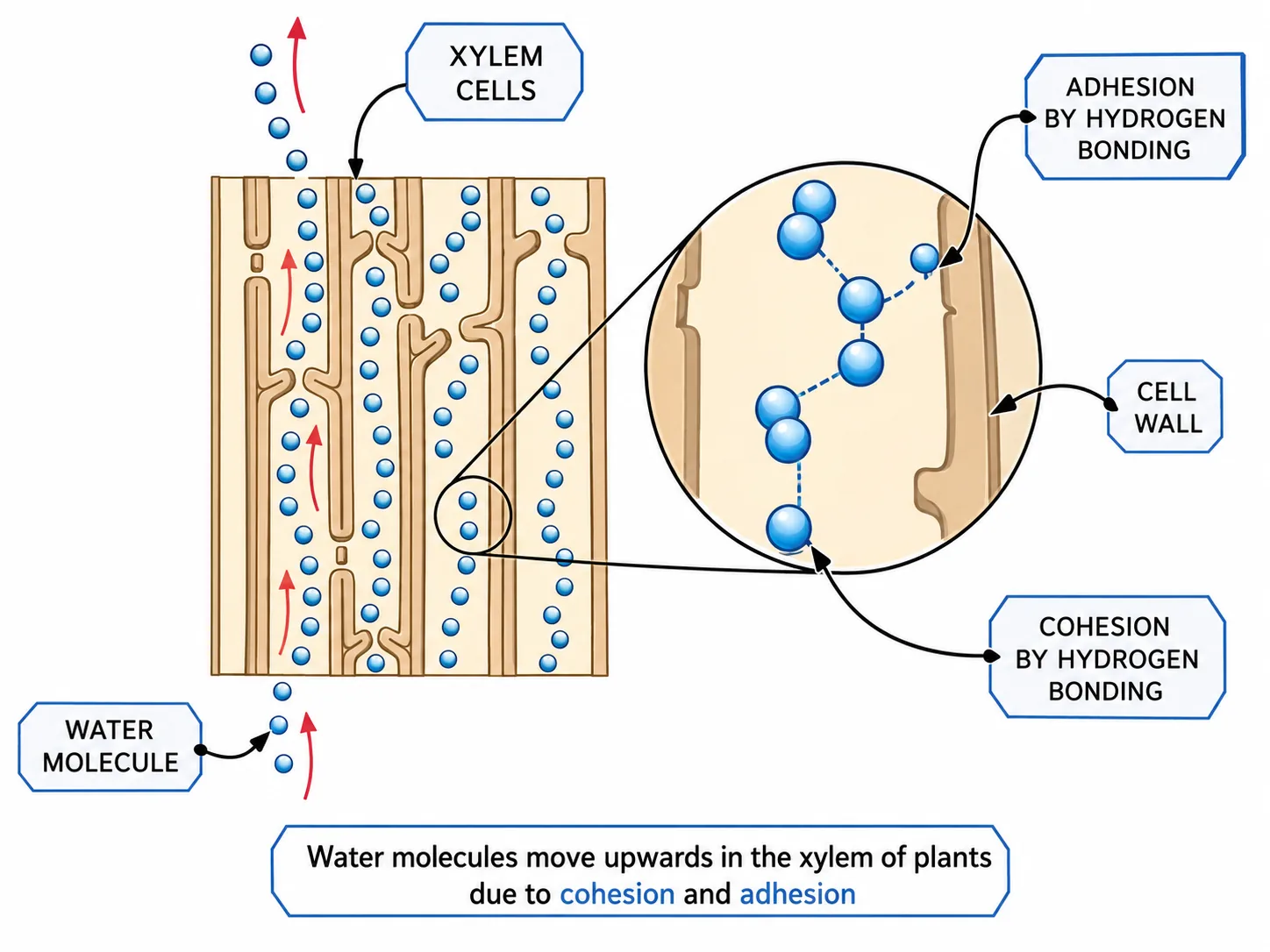
cohesion adhesion xylem rising sap" loading= - Dr Khaled Dabour Academy⤢ Enlarge
Check yourself
Q1. Isotopes of an element differ in their number of:
A. protons
B. electrons
C. neutrons
D. valence electrons
Show answer
◀ Previous3 / 9Next ▶
Check yourself
1

C. Isotopes have the same protons (same element) but different neutrons.
2

Q2. A solution at pH 3 compared with pH 5 has:
3

1
4

A. 100 times more H
5

+
6

2
◀ Previous4 / 9Next ▶
Check yourself
Check yourself
B. 2 times more H
3
C. 100 times less H
4
D. the same H
A. pH is logarithmic: 2 units = 102 = 100-fold difference.
◀ Previous5 / 9Next ▶
Check yourself
Check yourself
Q3. Which bond is responsible for cohesion between water molecules?
A. Nonpolar covalent
B. Ionic
C. Peptide
D. Hydrogen
D. Hydrogen bonds between δ+ H and δ- O of neighbouring molecules cause cohesion.
◀ Previous6 / 9Next ▶
Check yourself
1

Q4. Sweating cools the body mainly because water has a high:
2

A. density
3

B. heat of vaporisation
4

C. pH
5

D. electronegativity
6

B. Much heat is absorbed to break H bonds when water evaporates, cooling the skin.
◀ Previous7 / 9Next ▶
Check yourself
1

Q5. How many covalent bonds does a carbon atom usually form?
2

A. 2
3

B. 3
4

C. 4
5

D. 6
6

C. Carbon has 4 valence electrons and needs 4 more

so forms 4 bonds.
◀ Previous8 / 9Next ▶
Check yourself
Check yourself
Q6. Which is the best description of a buffer?
A. A substance that minimises changes in pH
B. A strong acid
C. A substance that makes a solution neutral permanently
D. An enzyme
A. Buffers take up or release H+ to resist pH change.
◀ Previous9 / 9

Element

A substance made of only one type of atom, defined by its atomic number (number of protons).

Isotope

Atoms of the same element with different numbers of neutrons and therefore different mass numbers.

Covalent bond

A bond formed when two atoms share a pair of electrons.

Electronegativity

The attraction of an atom for shared electrons in a covalent bond.

Ionic bond

An attraction between oppositely charged ions formed by transfer of electrons.

Hydrogen bond

A weak attraction between a slightly positive H (bonded to O or N) and a slightly negative O or N nearby.

pH

A measure of hydrogen ion concentration: pH = -log[H+].

Buffer

A solution that resists pH changes by accepting or donating H+ ions.

Hydrophilic

Water-loving; polar or charged substances that dissolve in water.

Specific heat

The energy needed to raise 1 g of a substance by 1 °C; very high for water (1 cal/g/°C).

Chemical bonds and interactions
Bond type How formed Relative strength Biological example
Nonpolar covalent Equal sharing of electrons Strong C-H bonds in fats
Polar covalent Unequal sharing (different electronegativity) Strong O-H bonds in water
Ionic Electron transfer, attraction of ions Strong in crystals, weak in water Na+Cl–
Hydrogen bond δ+ H attracted to δ- O or N Weak Between water molecules; DNA base pairs
Van der Waals / hydrophobic Transient charge fluctuations; nonpolar groups cluster Very weak Protein folding, lipid bilayers
Properties of water
Property Cause Biological importance
Cohesion and surface tension H bonds between water molecules Water transport in xylem; insects walk on water
Adhesion H bonds with other polar surfaces Capillary action in plants
High specific heat Energy needed to break H bonds Stable temperatures in organisms and oceans
High heat of vaporisation Many H bonds broken on evaporation Evaporative cooling (sweat)
Ice less dense than liquid Stable H-bond lattice holds molecules apart Ice floats and insulates lakes
Universal solvent Polarity surrounds ions and polar molecules Medium for metabolic reactions
Command terms
Identify / Describe (FRQ)
A short, specific statement; describing requires relevant characteristics, not a single word.
Explain / Justify (FRQ)
Give the cause-and-effect reasoning or evidence; a restated fact does not score.
Calculate
Show setup, substitution and the answer with units.
Predict
State the expected outcome; add a reason only if asked to justify.
MCQ technique
Read every option; eliminate distractors that are true statements but do not answer the question; watch for NOT/EXCEPT.

Keywords the mark scheme looks for in this lesson

Keywords the mark scheme looks for in this lesson
Element · Isotope · Covalent bond · Electronegativity · Ionic bond · Hydrogen bond · pH · Buffer · Hydrophilic · Specific heat
Learn each definition in the Key words tab exactly; a missing keyword in a definition usually loses the mark.

How to get full marks (examiner guidance)

1

Answer exactly what is asked; extra correct material does not earn credit, and contradictory statements can cancel credit (AP FRQ).
2

Use precise vocabulary (e.g. “active site”, “concentration gradient”, “allele”), never “it/stuff/things”.
3

Show units and working in calculations.
4

In MCQs, predict the answer before reading the options, then eliminate.
Accepted payment methods