Curriculum
General Biology
1. Foundations
0/6
2. Cells & Energy
0/10
3. Genetics & Evolution
0/8
-
3.1 Mitosis & Meiosis
 Preview
-
3.1 Mitosis & Meiosis - Check yourself
 Preview
-
3.2 Classical Genetics
Preview
-
3.2 Classical Genetics - Check yourself
Preview
-
3.3 DNA, RNA & Protein Synthesis
Preview
-
3.3 DNA, RNA & Protein Synthesis - Check yourself
Preview
-
3.4 Evolution
Preview
-
3.4 Evolution - Check yourself
Preview
4. Diversity of Life
0/4
5. Animal Systems
0/4
6. Ecology & Biotechnology
0/4
3.4 Evolution
Summarise Darwin’s theory of natural selection and the evidence for evolution.
 ⤢ Enlarge
 ⤢ Enlarge
 ⤢ Enlarge
Evolution
A change in the allele frequencies of a population over generations.
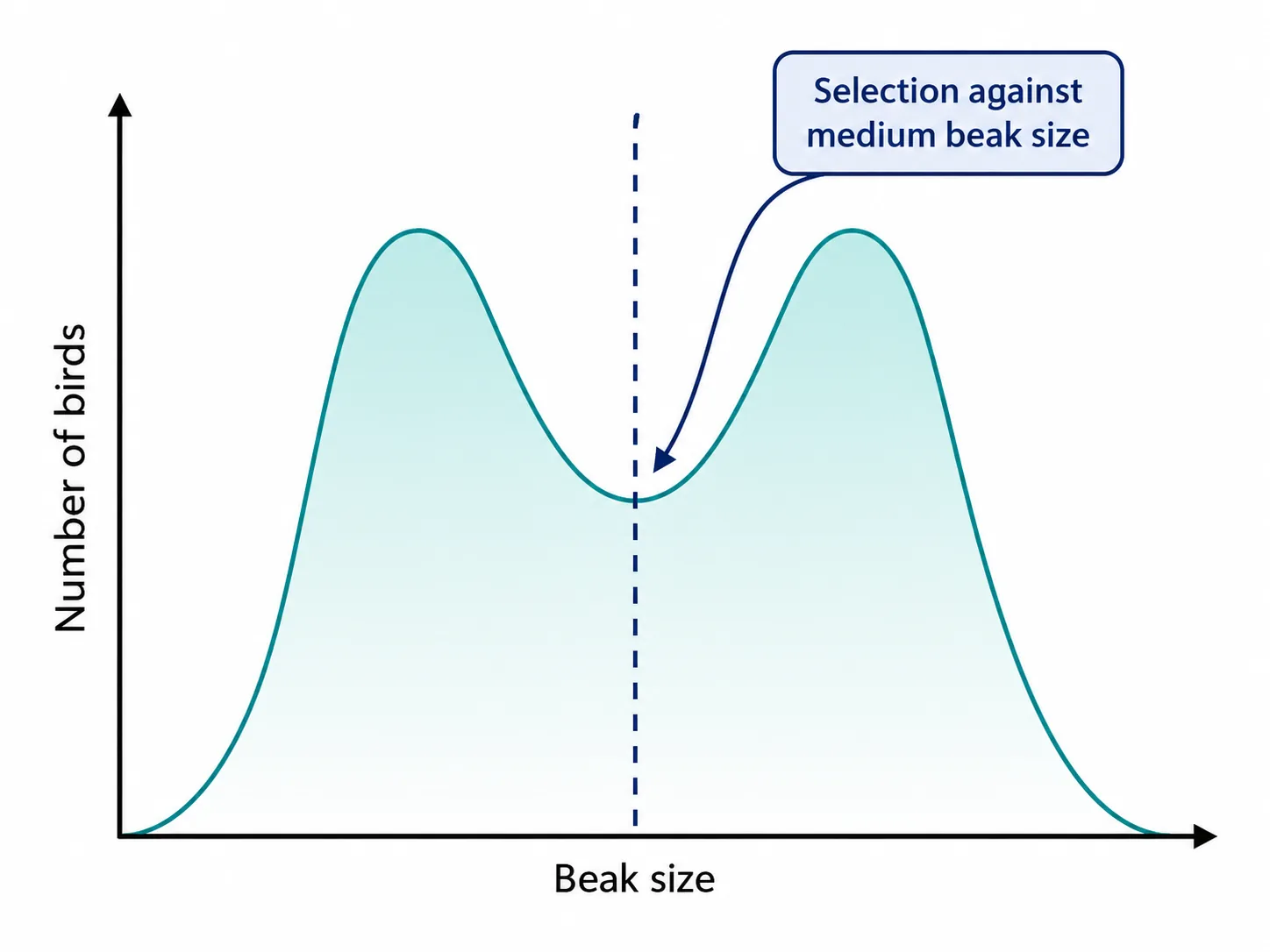
Natural selection
Differential survival and reproduction of individuals because of heritable traits that suit their environment.
Fitness
The relative contribution an individual makes to the gene pool of the next generation.
Gene pool
All the alleles of all genes present in a population.
Genetic drift
Random change in allele frequencies, strongest in small populations.
Gene flow
Transfer of alleles between populations by migration of individuals or gametes.
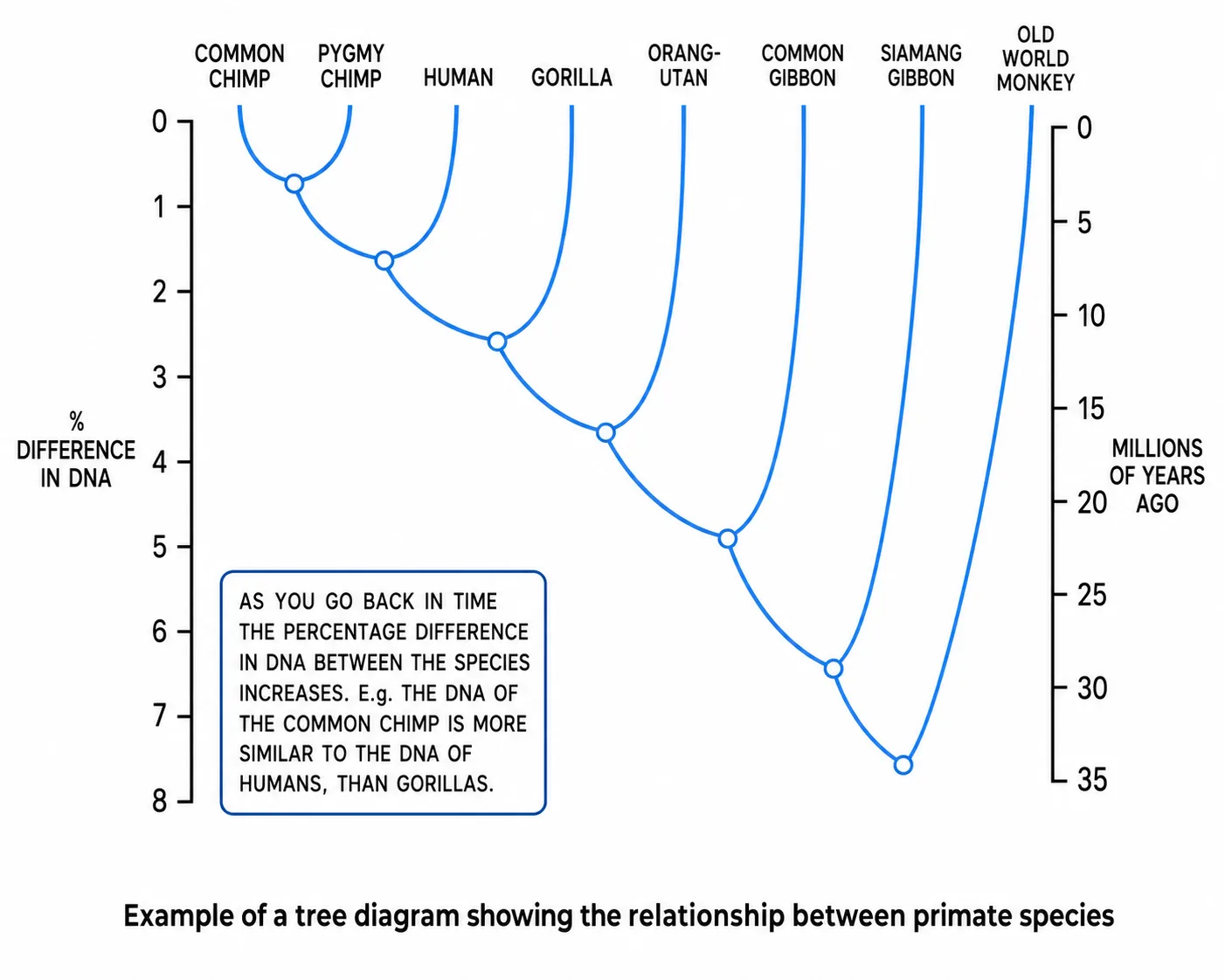
Homologous structures
Structures sharing ancestry but possibly differing in function, such as vertebrate forelimbs.
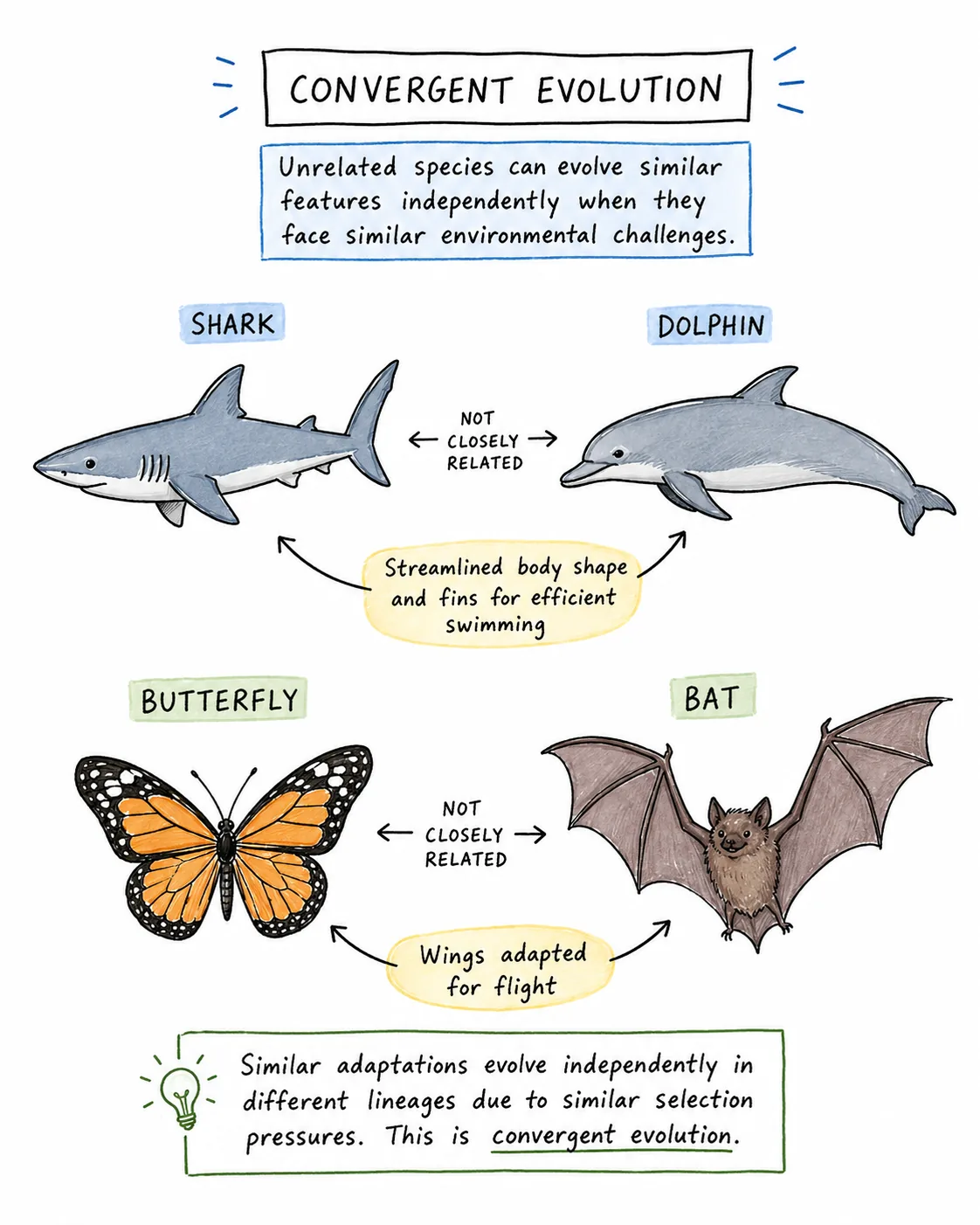
Analogous structures
Structures with similar function arising by convergent evolution, not shared ancestry.
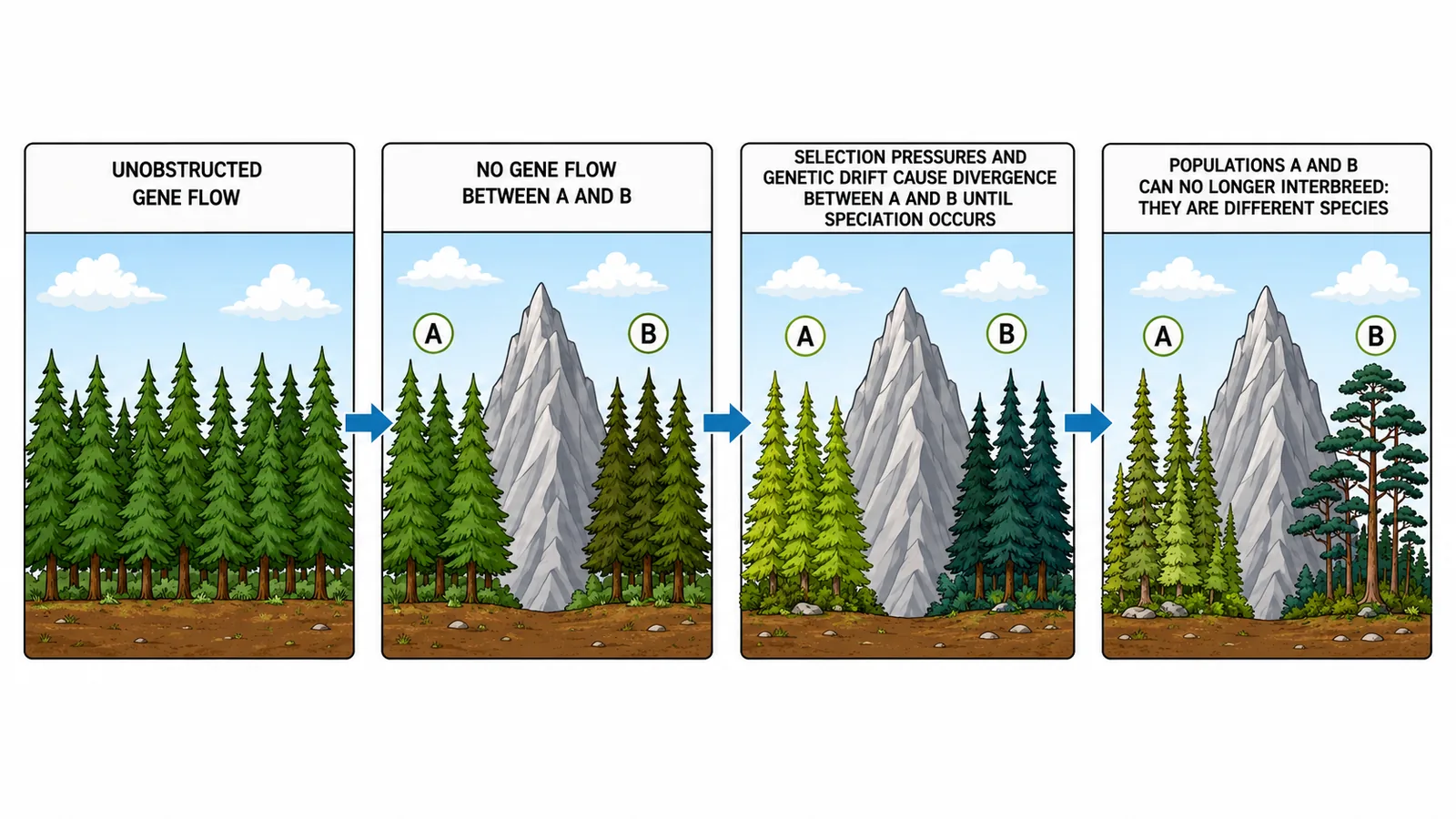
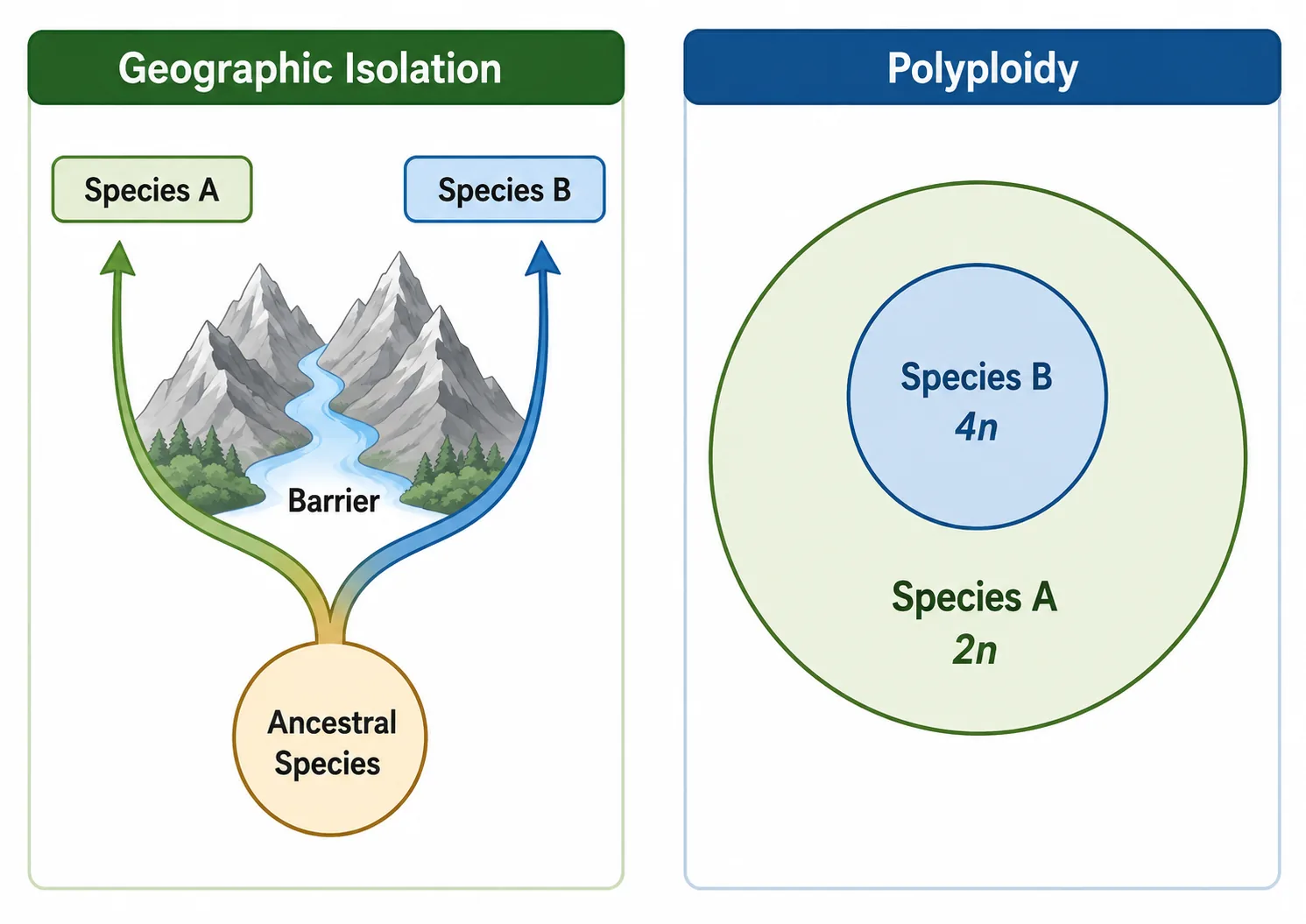
Speciation
The formation of new species when populations become reproductively isolated.
Biological species concept
A species is a group of populations whose members can interbreed and produce fertile offspring.
| Mechanism | Effect on allele frequencies | Adaptive? |
|---|---|---|
| Natural selection | Increases alleles that raise fitness | Yes, consistently |
| Genetic drift (bottleneck, founder effect) | Random change; loss of variation | No |
| Gene flow | Makes populations more similar | Not necessarily |
| Mutation | Source of new alleles; slow direct effect | No (random) |
| Non-random mating | Changes genotype frequencies, not allele frequencies | Sexual selection can be |
| Barrier | Type | Example |
|---|---|---|
| Habitat isolation | Prezygotic | Two snake species, one aquatic, one terrestrial |
| Temporal isolation | Prezygotic | Species breeding in different seasons |
| Behavioural isolation | Prezygotic | Different courtship songs in birds |
| Mechanical/gametic isolation | Prezygotic | Incompatible genitalia or sperm-egg proteins |
| Hybrid inviability/sterility | Postzygotic | Mule (horse x donkey) is sterile |