Curriculum
General Biology
1. Foundations
0/6
2. Cells & Energy
0/10
-
2.1 Cell Structure & Function
 Preview
-
2.1 Cell Structure & Function - Check yourself
 Preview
-
2.2 Membranes & Transport
Preview
-
2.2 Membranes & Transport - Check yourself
Preview
-
2.3 Energy, Enzymes & Metabolism
Preview
-
2.3 Energy, Enzymes & Metabolism - Check yourself
Preview
-
2.4 Cellular Respiration
Preview
-
2.4 Cellular Respiration - Check yourself
Preview
-
2.5 Photosynthesis
Preview
-
2.5 Photosynthesis - Check yourself
Preview
3. Genetics & Evolution
0/8
4. Diversity of Life
0/4
5. Animal Systems
0/4
6. Ecology & Biotechnology
0/4
2.5 Photosynthesis
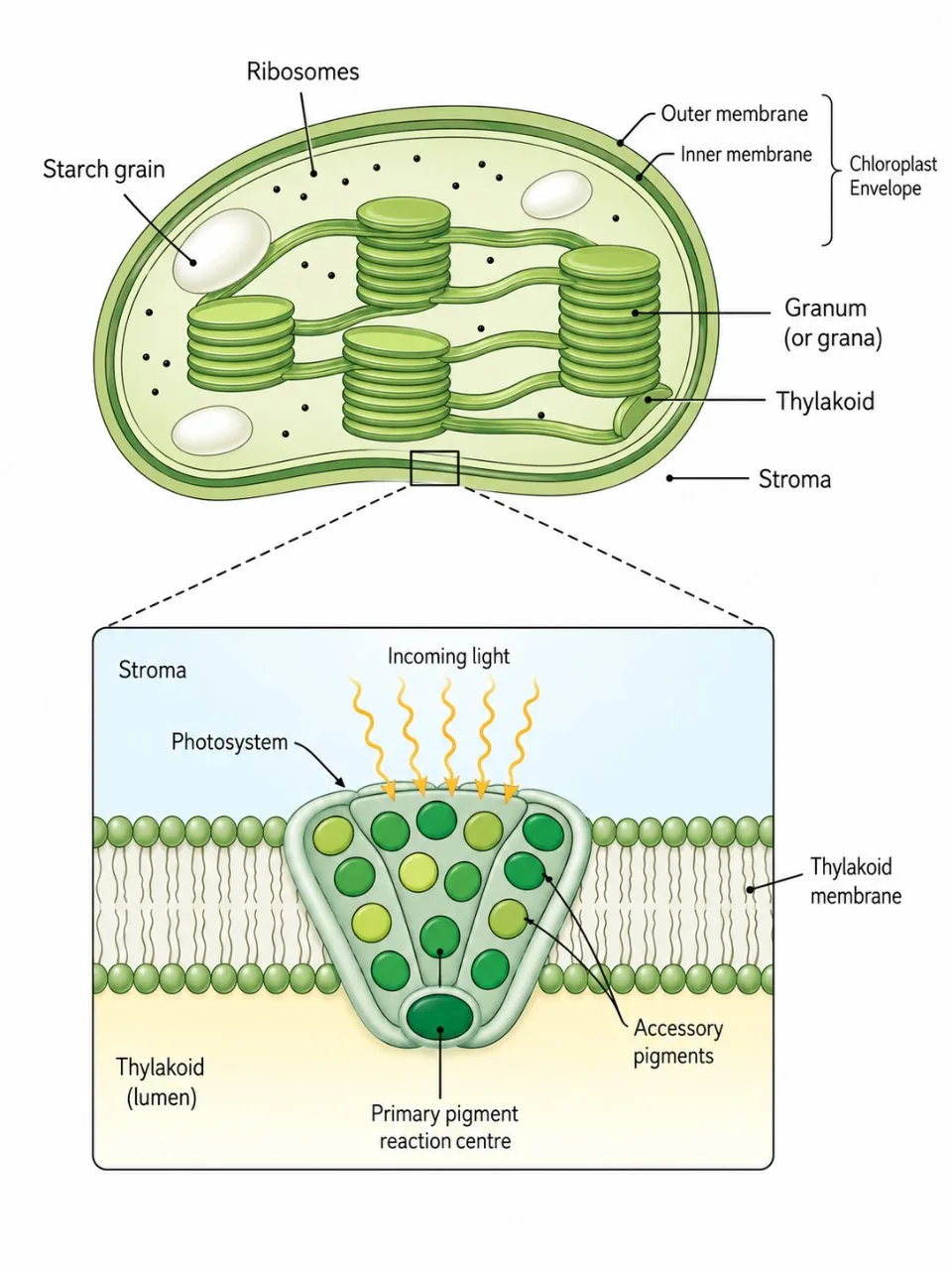
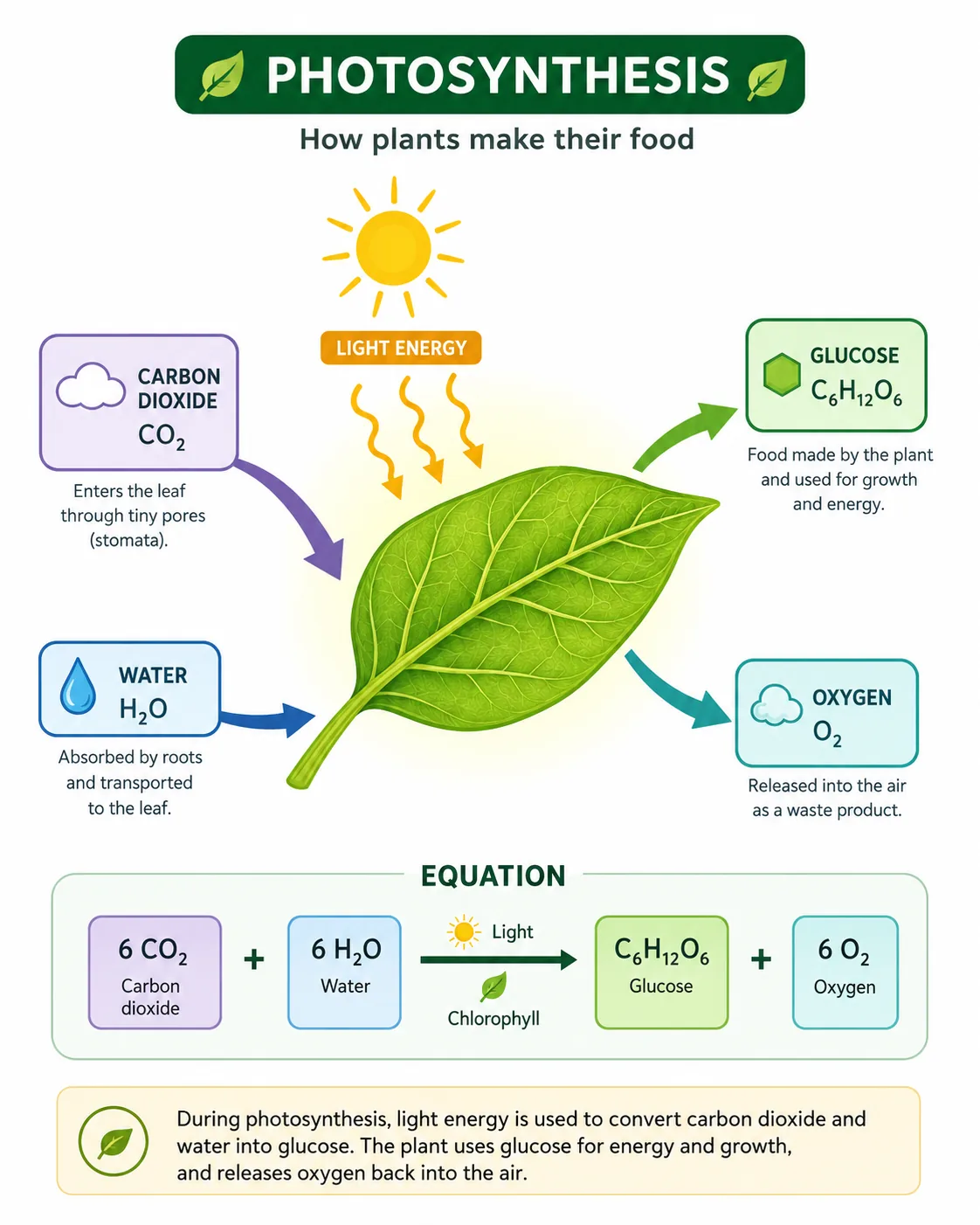
Write the balanced equation for photosynthesis and describe chloroplast structure.

 ⤢ Enlarge

 ⤢ Enlarge
Autotroph
An organism that makes its own organic molecules from inorganic sources, e.g. by photosynthesis.
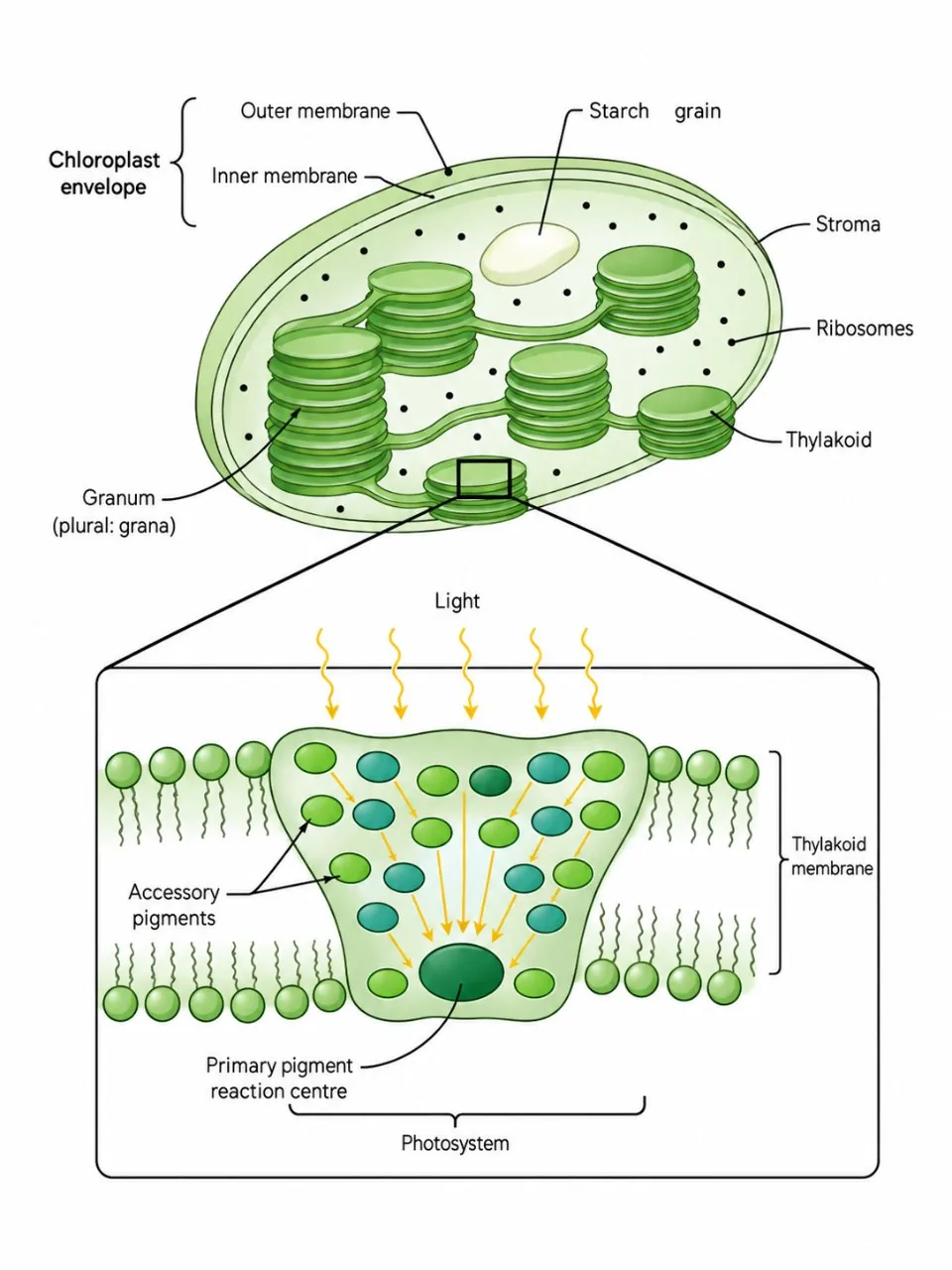
Chlorophyll a
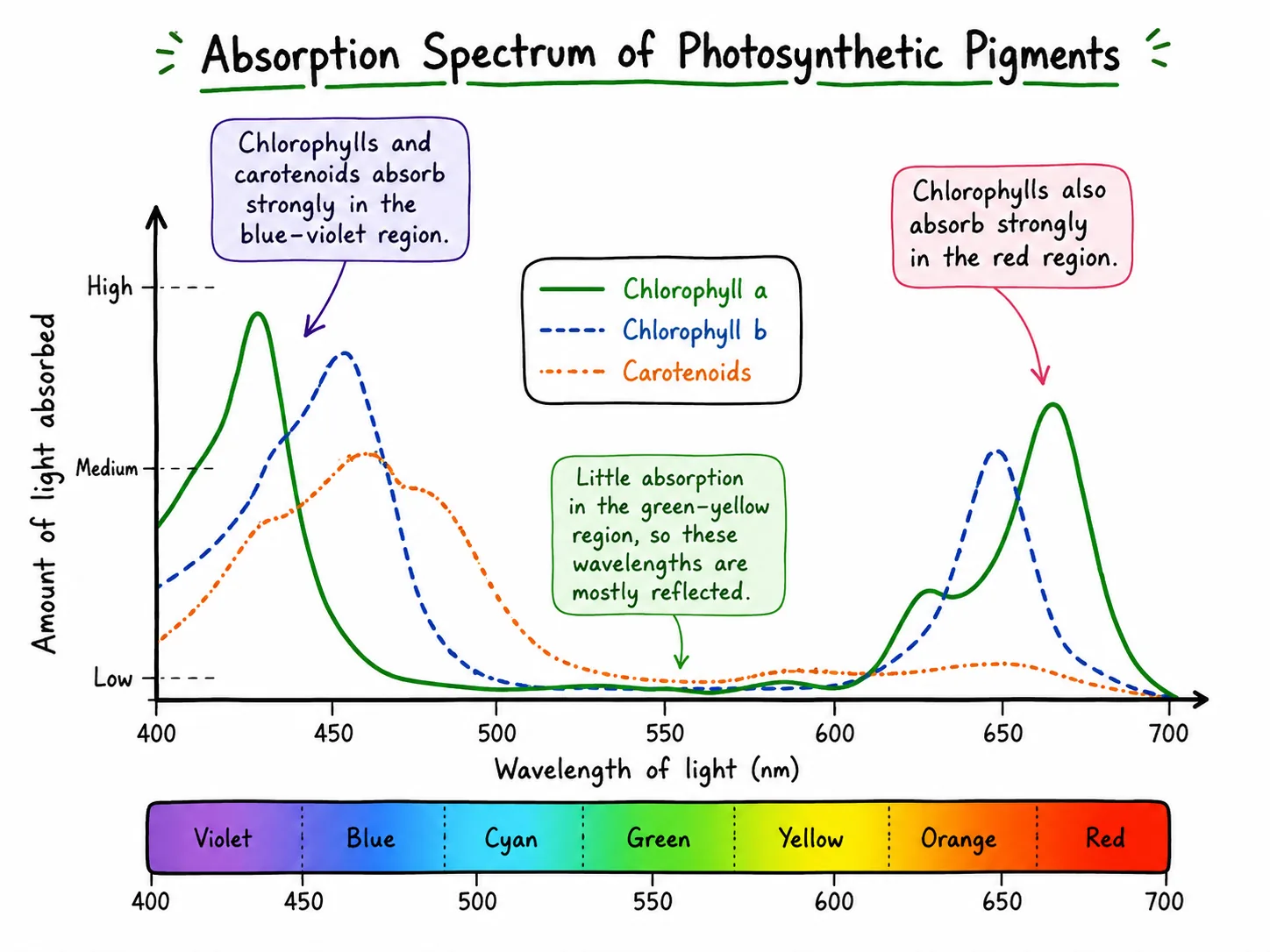
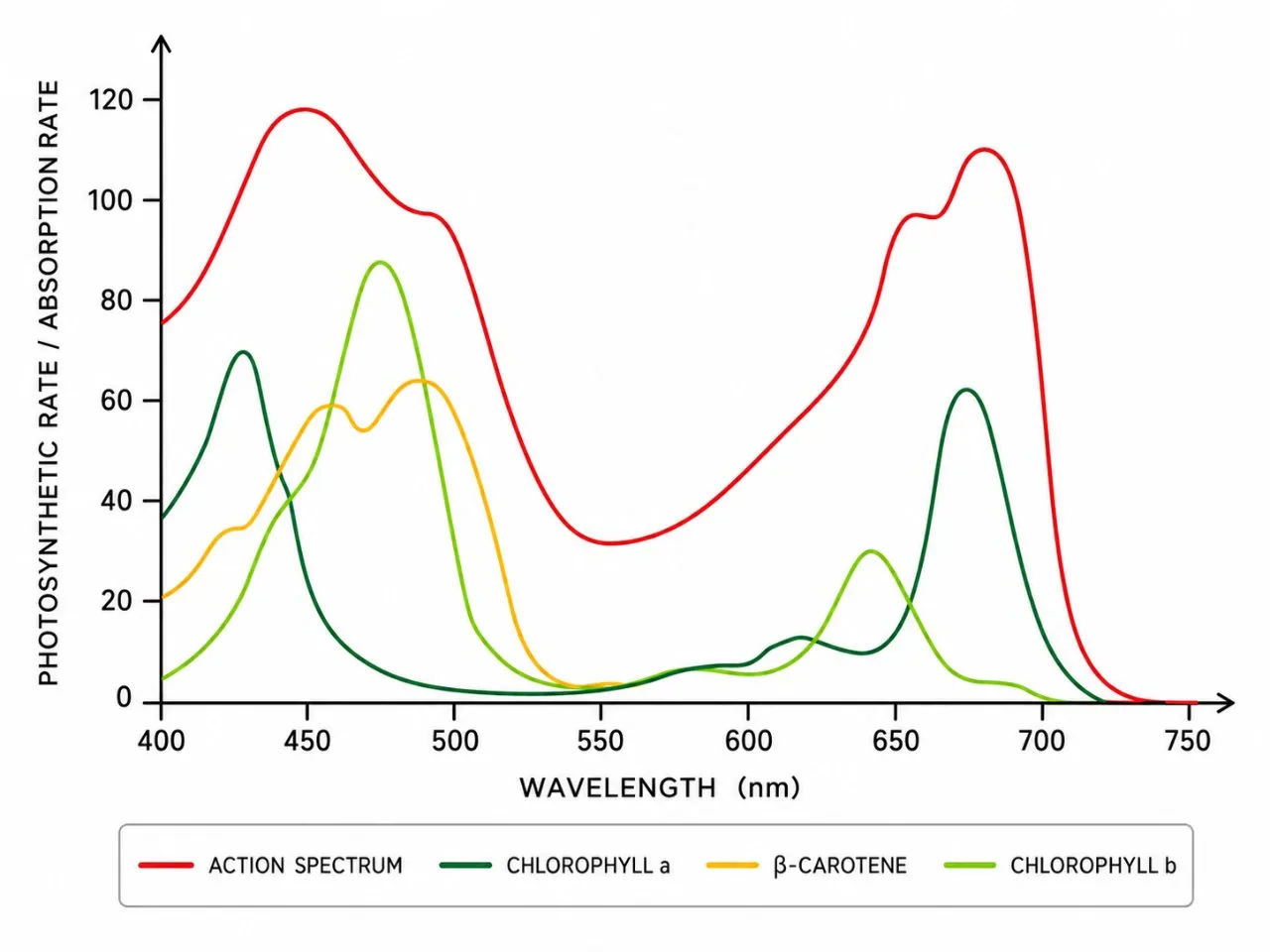
The main photosynthetic pigment that participates directly in the light reactions.
Accessory pigments
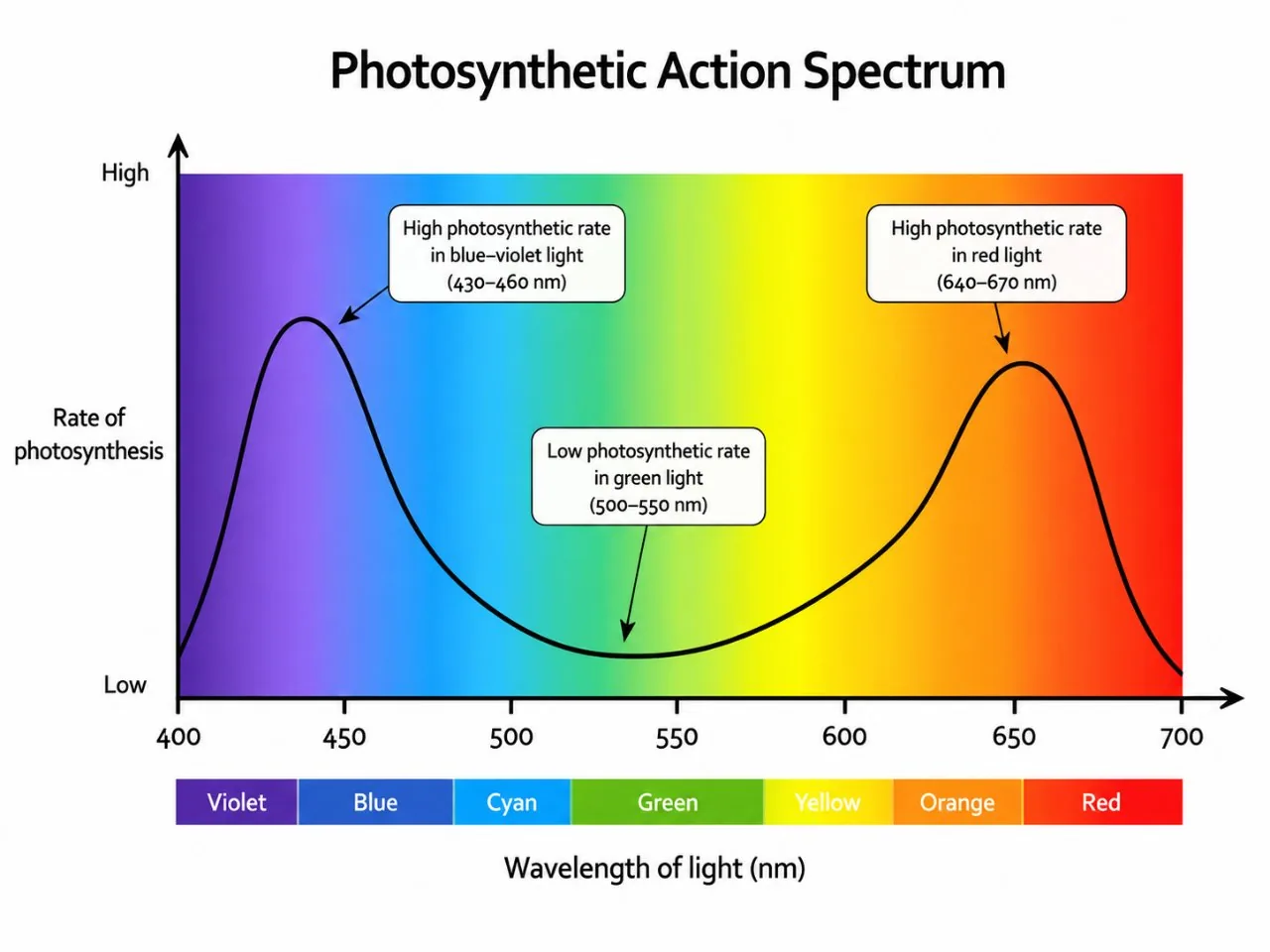
Pigments such as chlorophyll b and carotenoids that broaden the absorption spectrum and photoprotect.
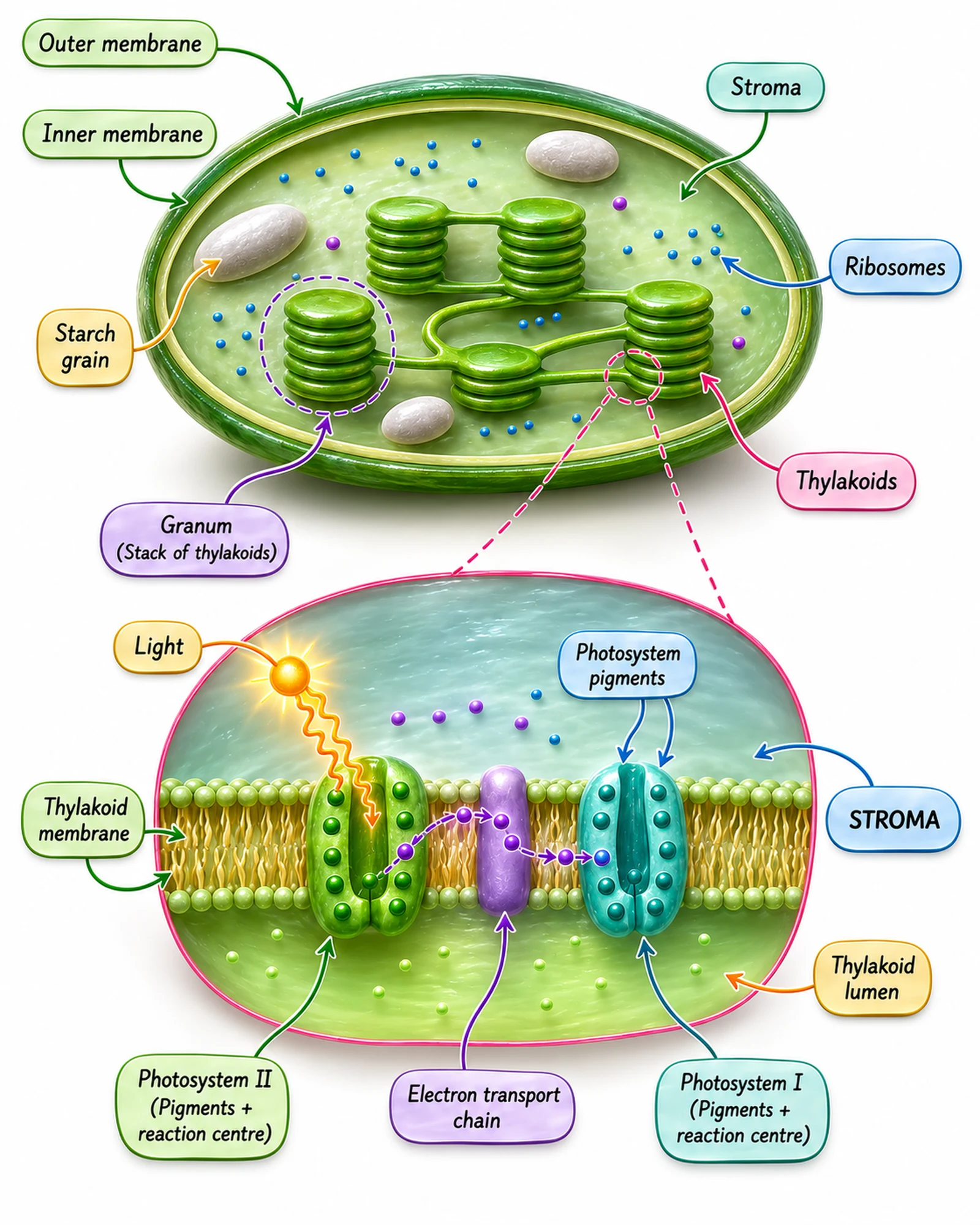
Photosystem
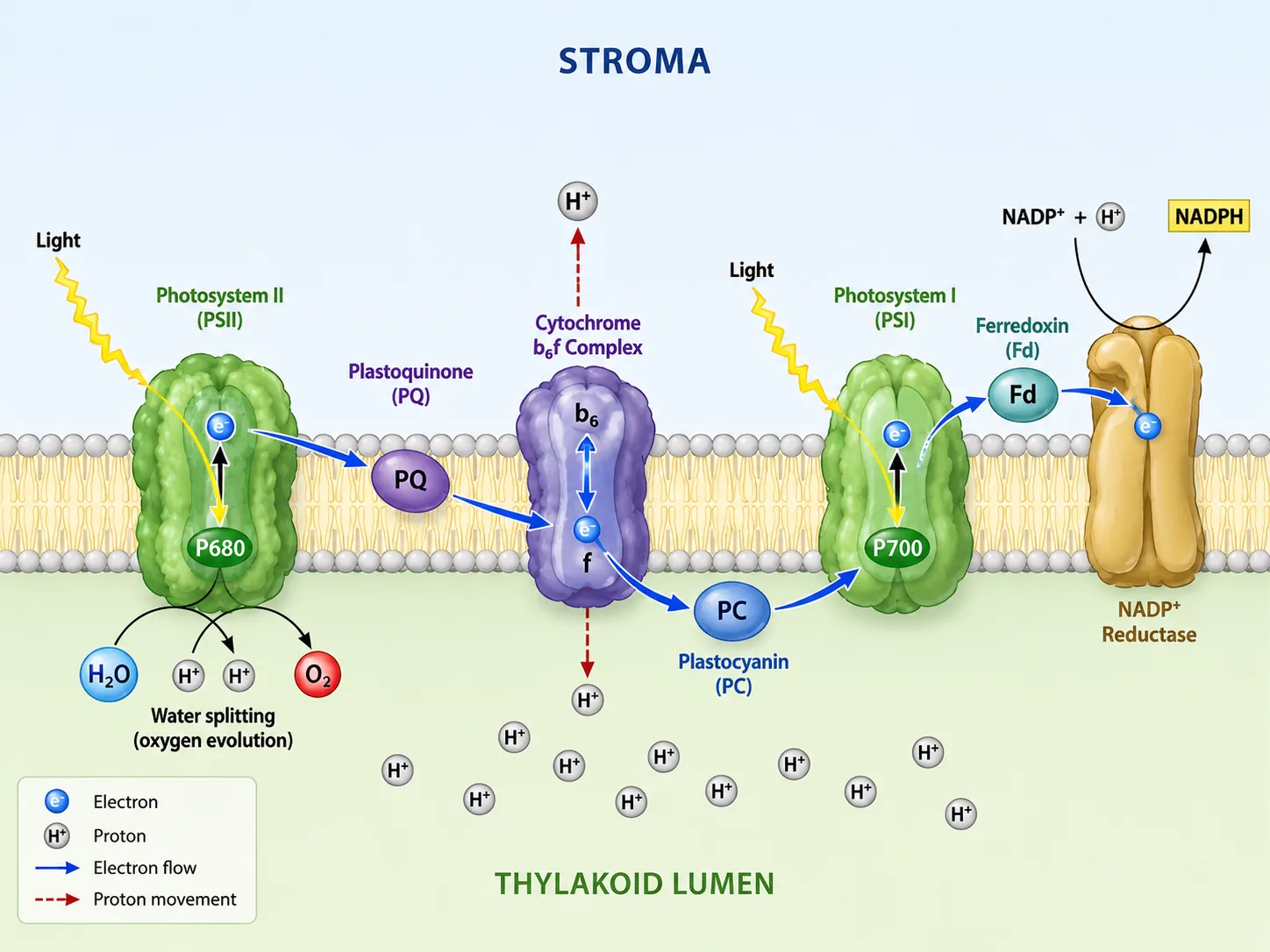
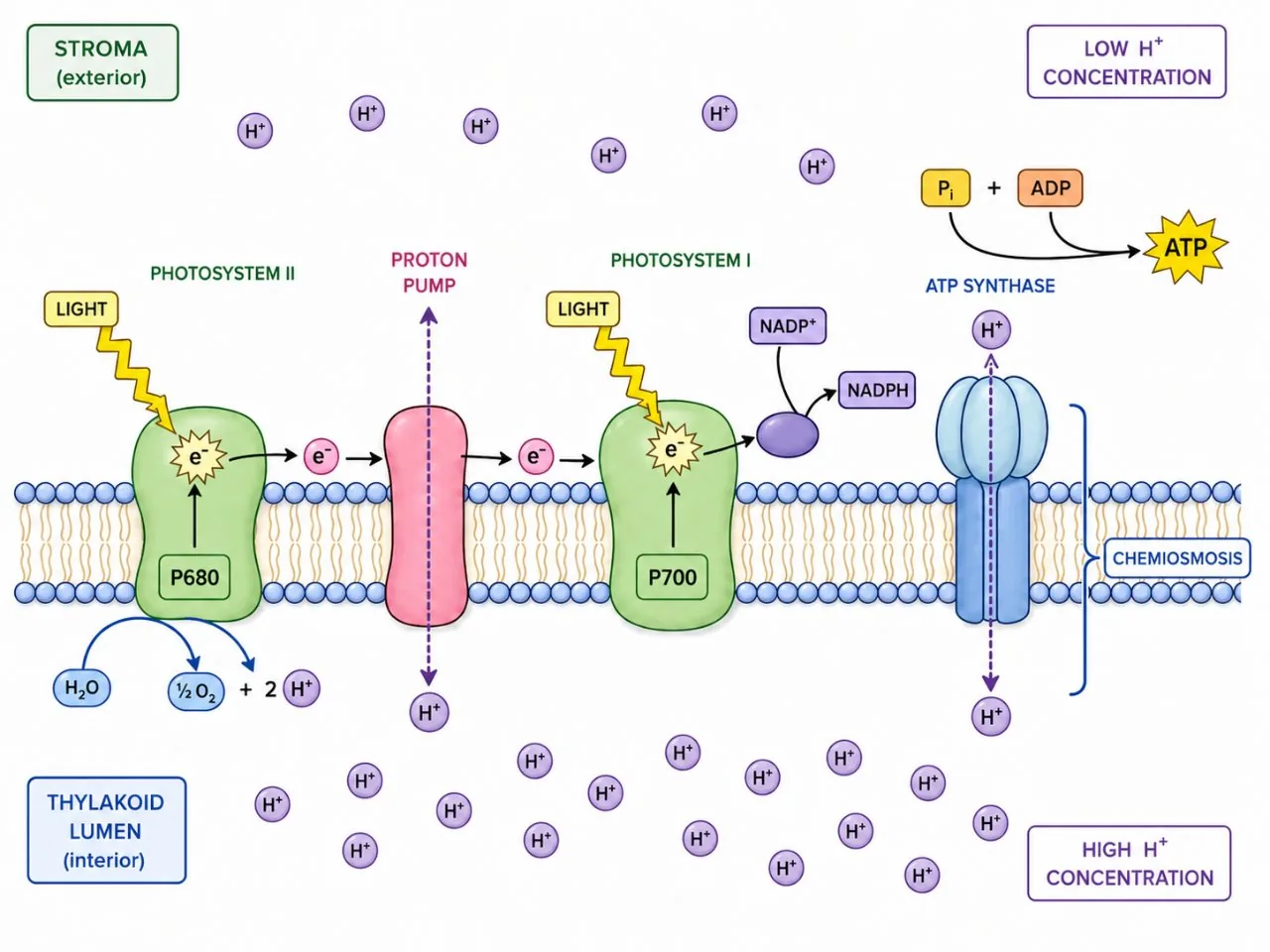
A reaction-centre complex surrounded by light-harvesting pigment complexes in the thylakoid membrane.
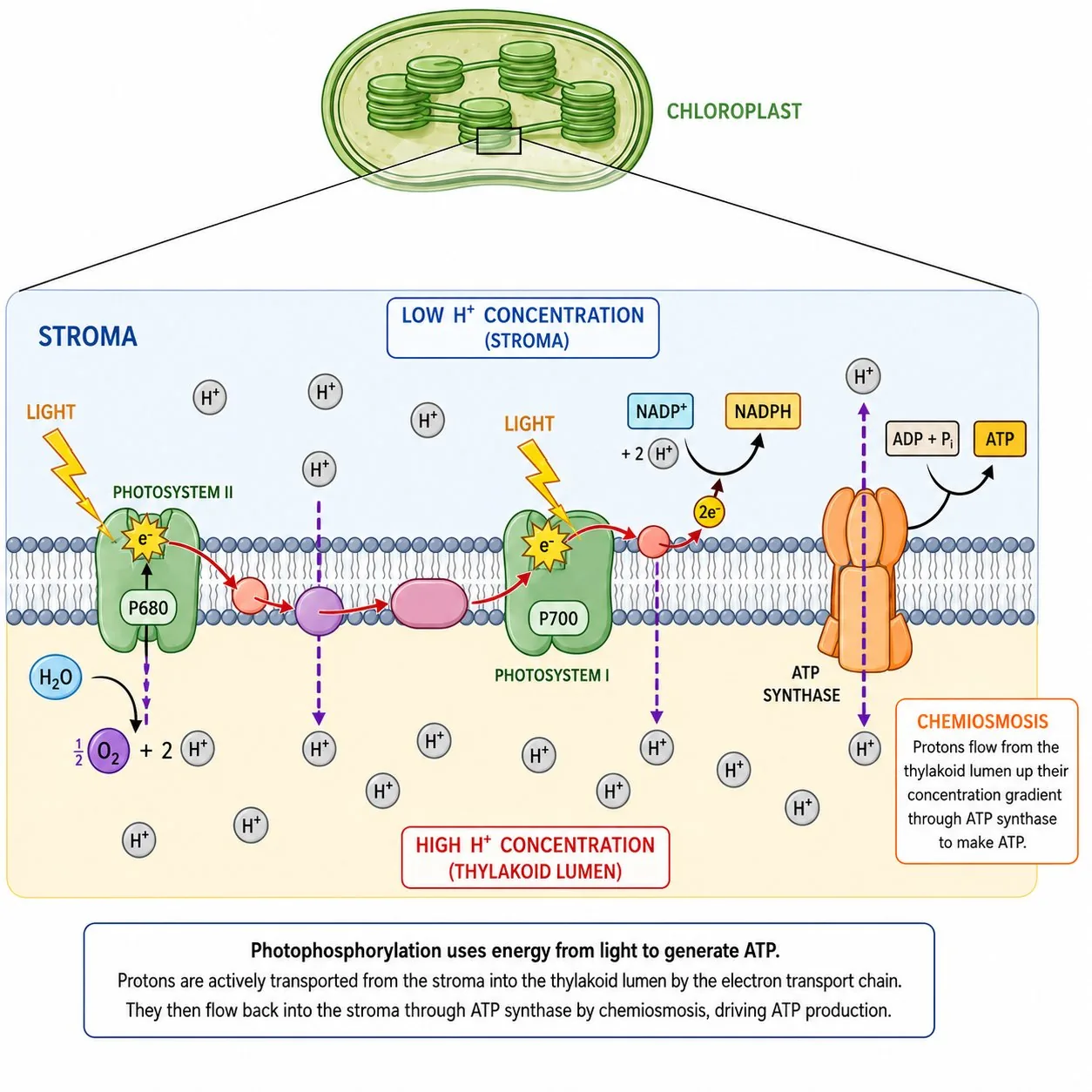
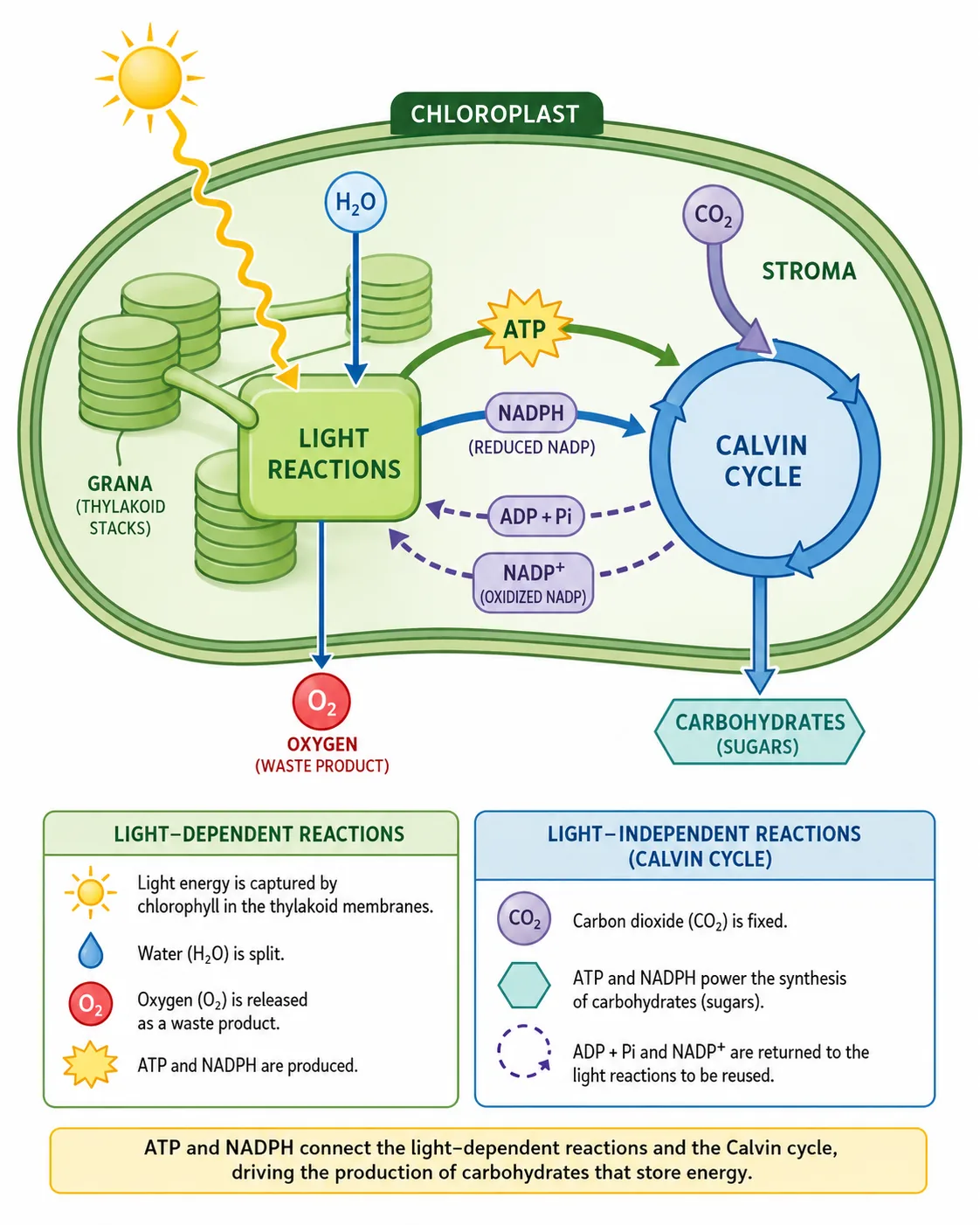
Light-dependent reactions
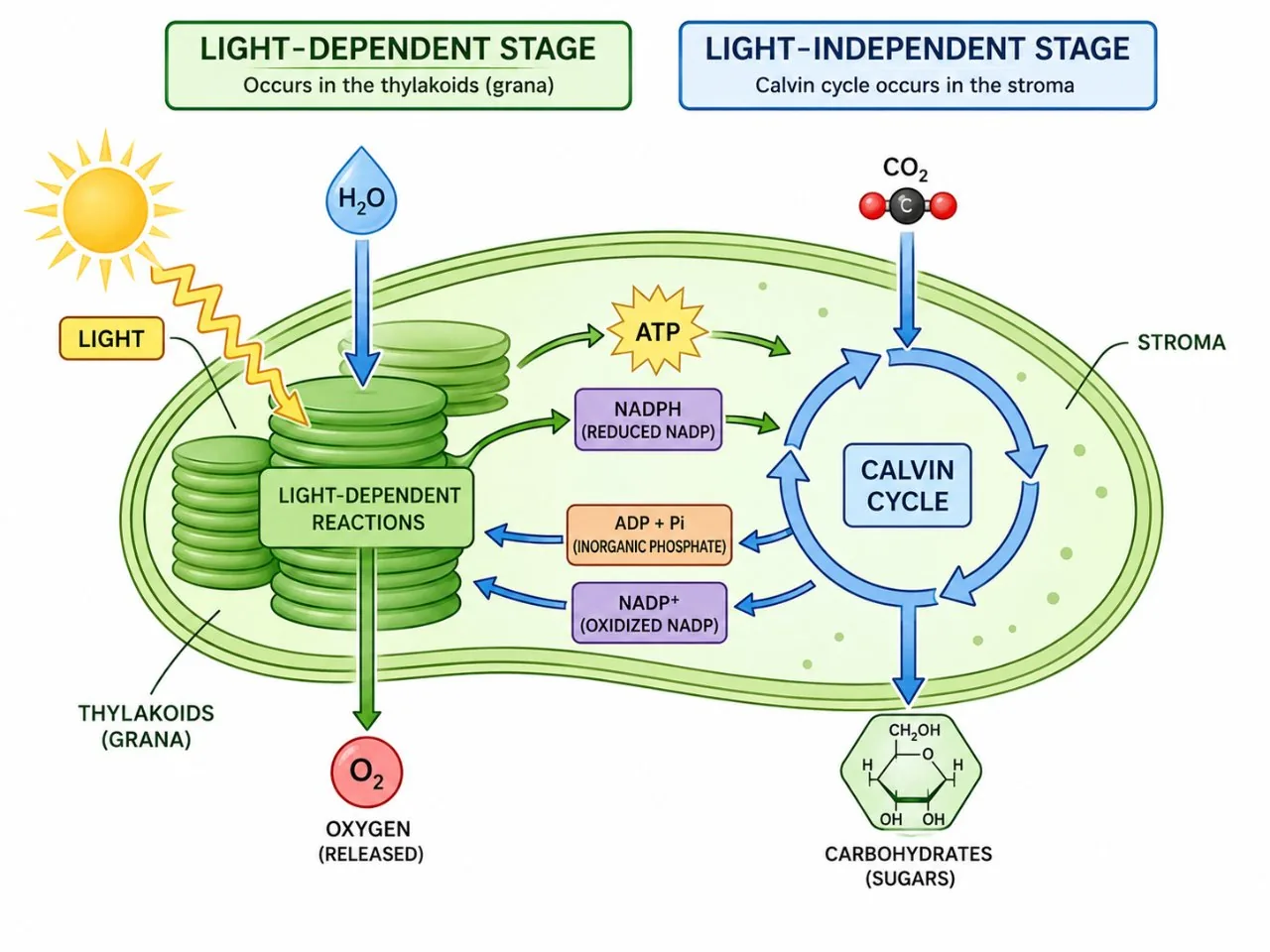
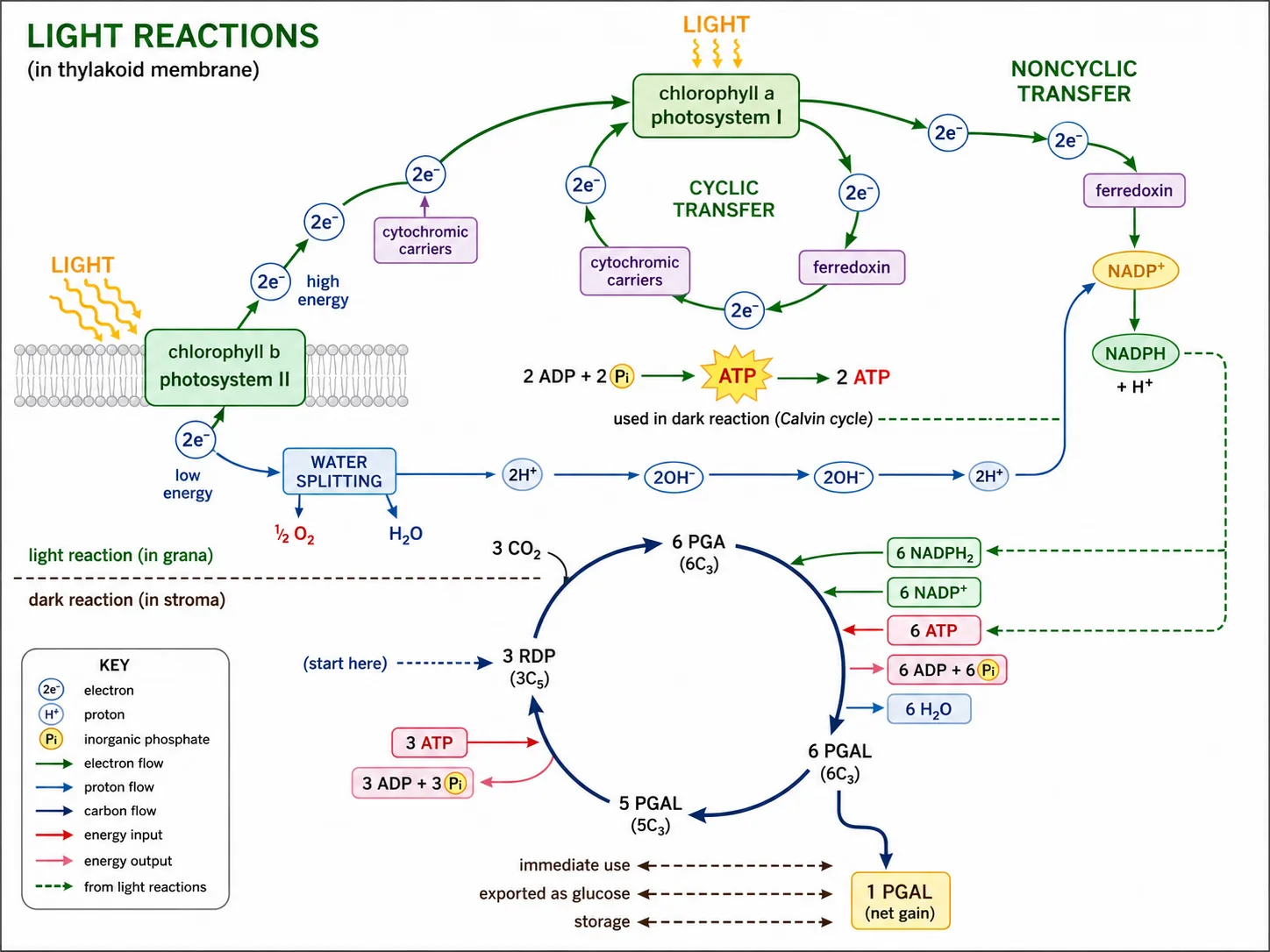
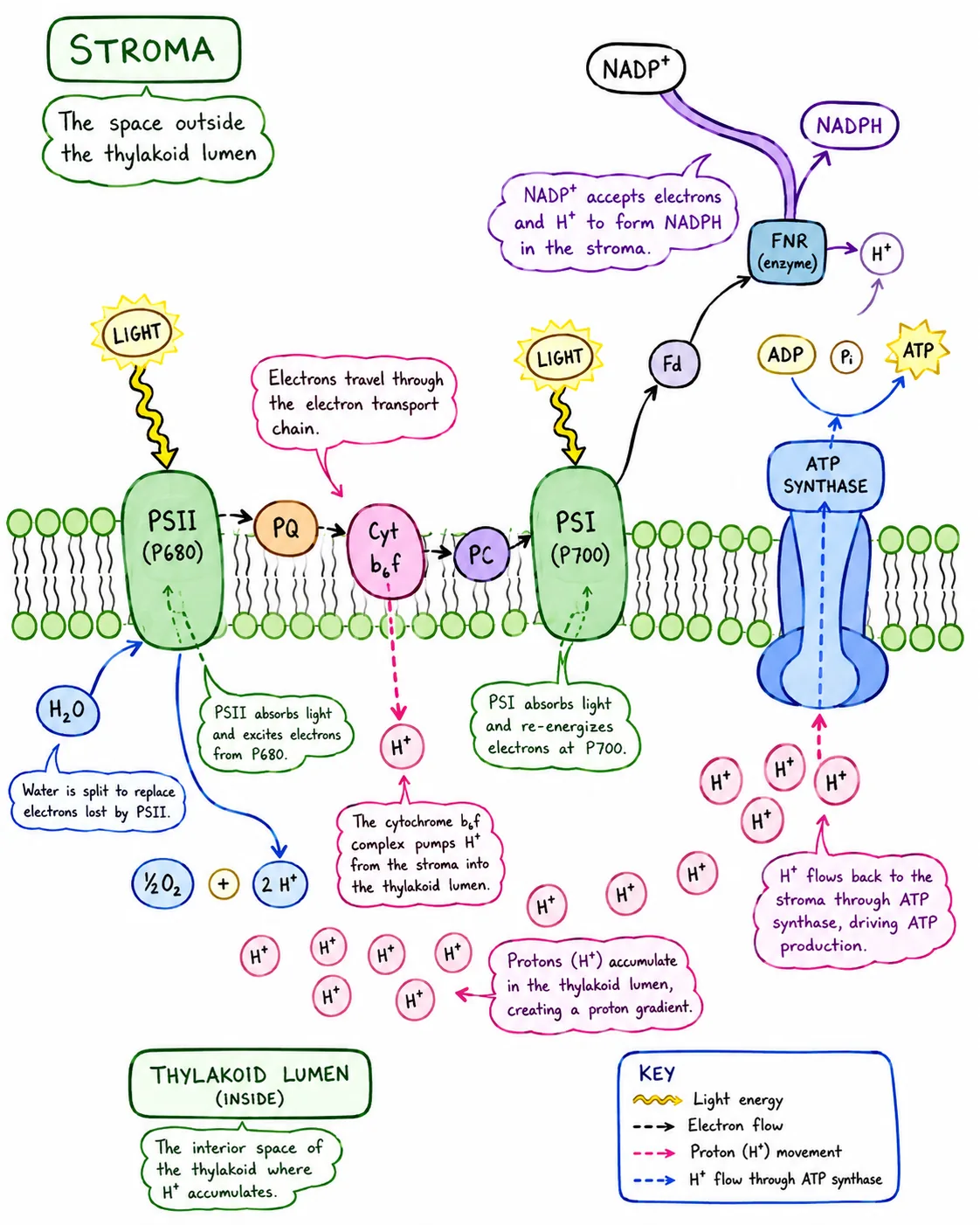
Reactions in the thylakoids that use light to split water and make ATP, NADPH and O2.
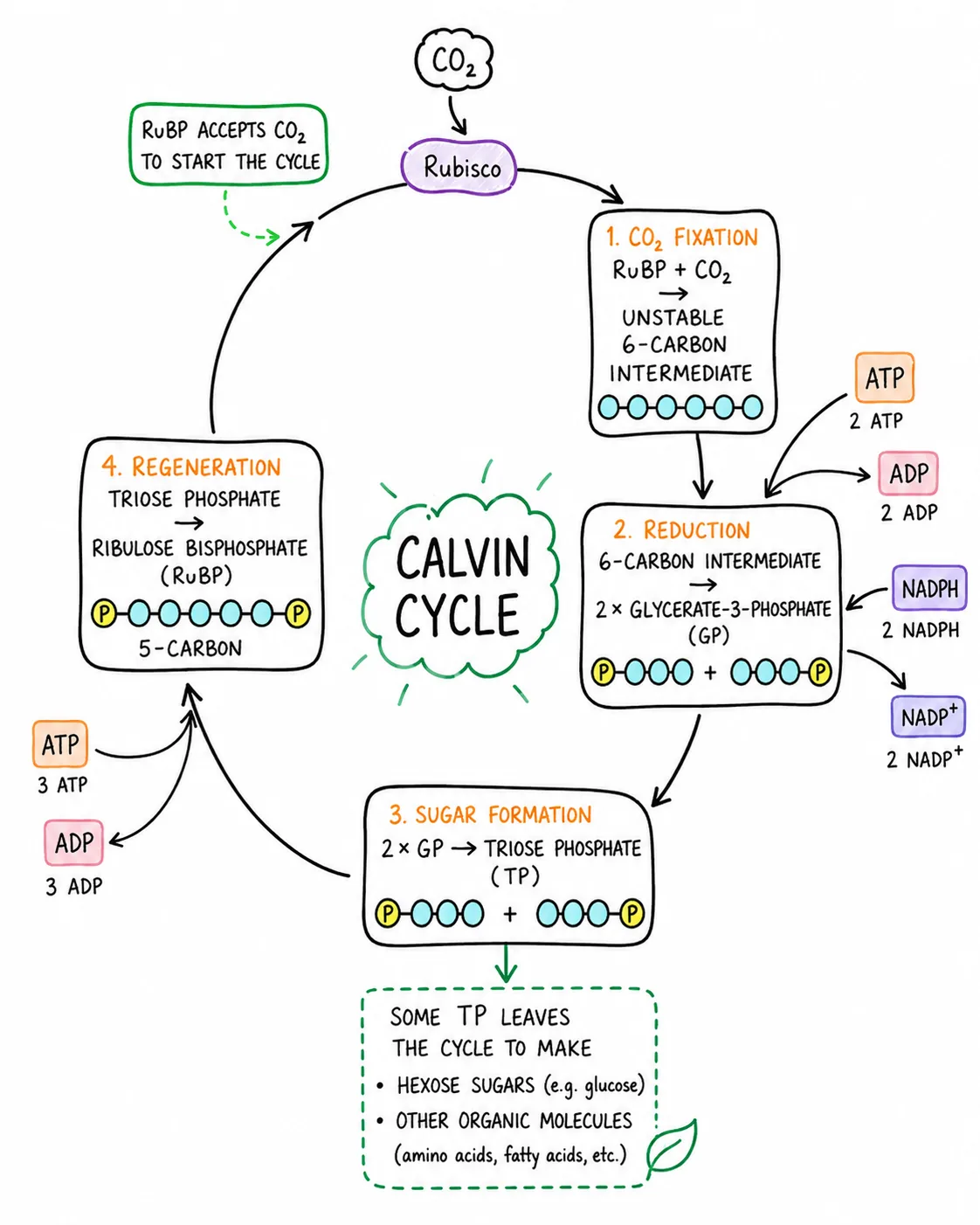
Calvin cycle
The light-independent reactions in the stroma that fix CO2 into sugar using ATP and NADPH.
Rubisco
The enzyme that fixes CO2 to RuBP in the Calvin cycle; the most abundant protein on Earth.
Photophosphorylation
Formation of ATP using light-driven chemiosmosis in the chloroplast.
Photorespiration
A wasteful process in which rubisco fixes O2 instead of CO2, releasing CO2 without making sugar.
Absorption spectrum
A graph of the wavelengths of light a pigment absorbs.
| Feature | Light-dependent reactions | Calvin cycle |
|---|---|---|
| Location | Thylakoid membranes | Stroma |
| Inputs | Light, H2O, ADP, NADP+ | CO2, ATP, NADPH |
| Outputs | O2, ATP, NADPH | G3P (sugar), ADP, NADP+ |
| Key proteins | PSII, PSI, cytochrome complex, ATP synthase | Rubisco |
| Light needed directly? | Yes | No (but depends on light reaction products) |
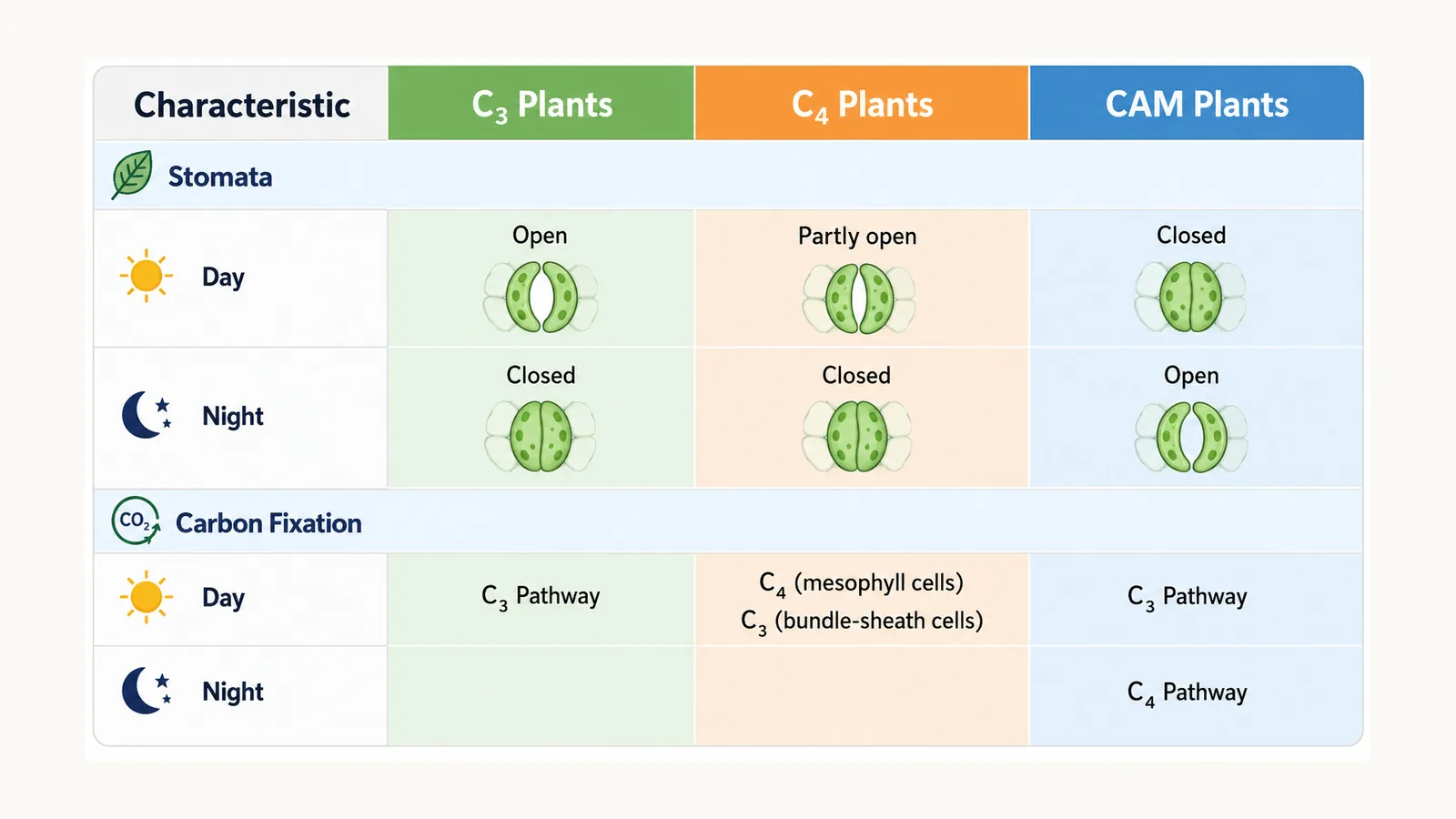
| Type | Initial CO2 fixation | Separation strategy | Example |
|---|---|---|---|
| C3 | Rubisco → 3-PGA (3C) | None; prone to photorespiration | Rice, wheat, soybean |
| C4 | PEP carboxylase → 4C acid | Spatial: mesophyll and bundle-sheath cells | Maize, sugarcane |
| CAM | PEP carboxylase at night | Temporal: stomata open at night | Cacti, pineapple |