1.2Unit 1 — Cell Biology
Transport Across Cell Membranes
5 min read 5 parts Lesson 5 of 28 Virtual lab
Part 1 of 3Structure of the cell membrane


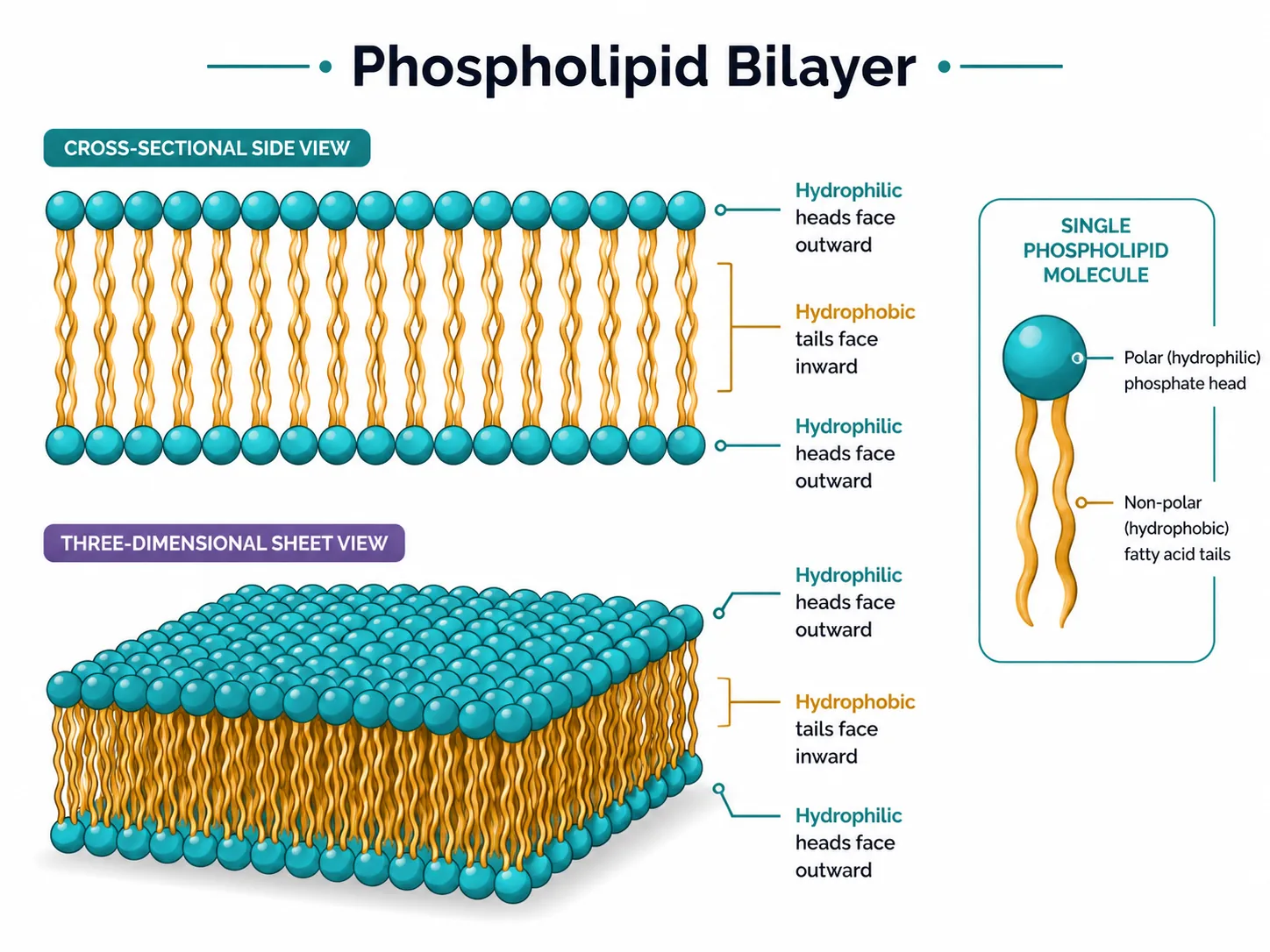


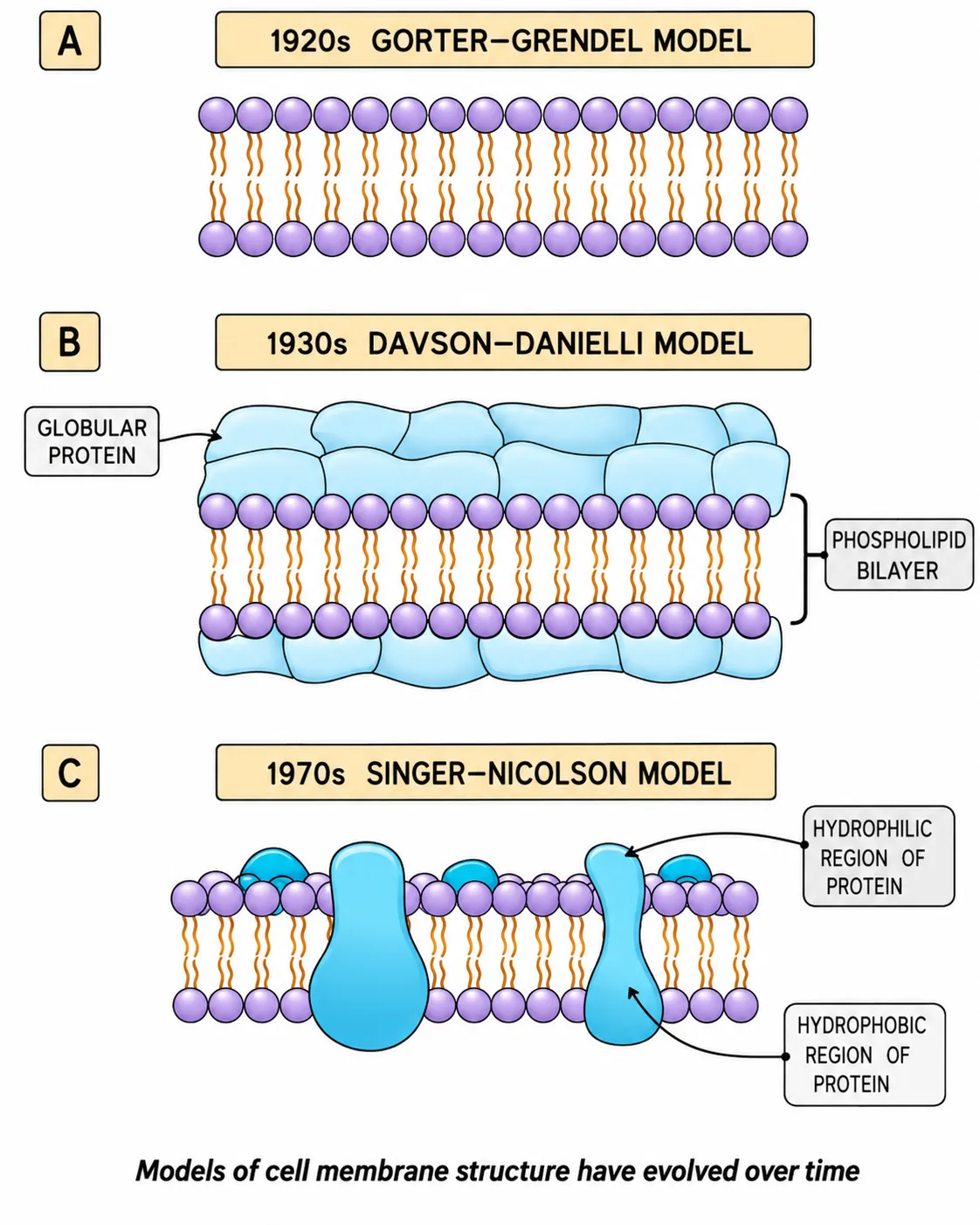


- Fluid Mosaic Model:
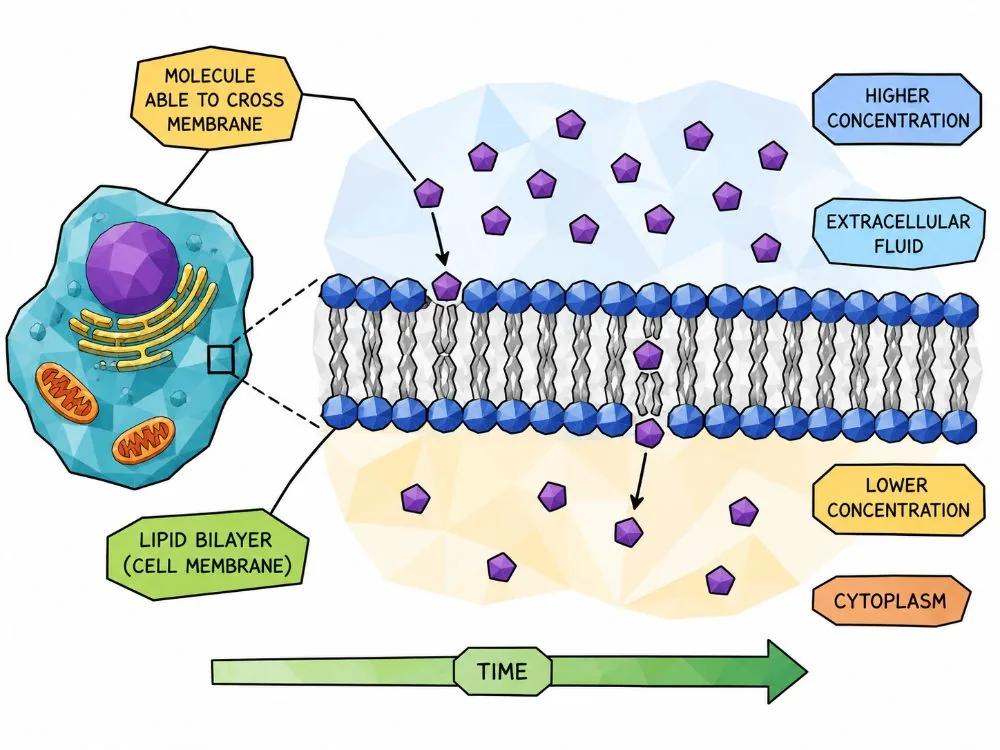
- Composed of a phospholipid bilayer with protein molecules embedded throughout.
- Phospholipids are fluid and move laterally, giving flexibility to the membrane.
- The cell membrane is selectively permeable: small soluble molecules (oxygen, carbon dioxide, water, glucose) pass through easily;
- large insoluble molecules (starch, proteins) cannot pass without transport mechanisms.
Part 2 of 3Passive transport: Diffusion and Osmosis








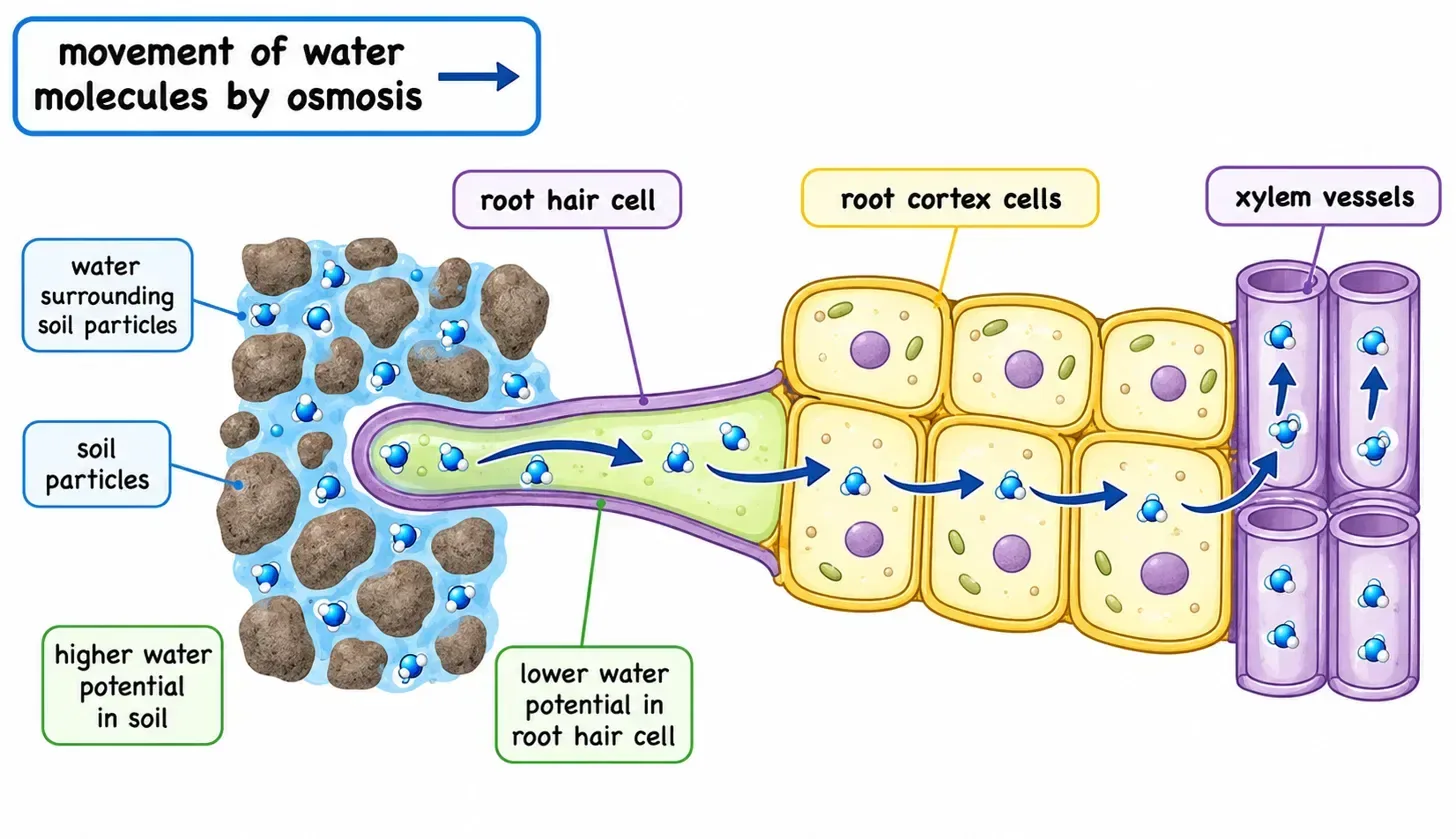


1Passive transport
Movement of substances down a concentration gradient (from higher to lower concentration) without requiring cellular energy (ATP).
- DiffusionMovement of solute molecules (e.g. O2 entering cells, CO2 leaving cells) down a concentration gradient until equilibrium is reached.
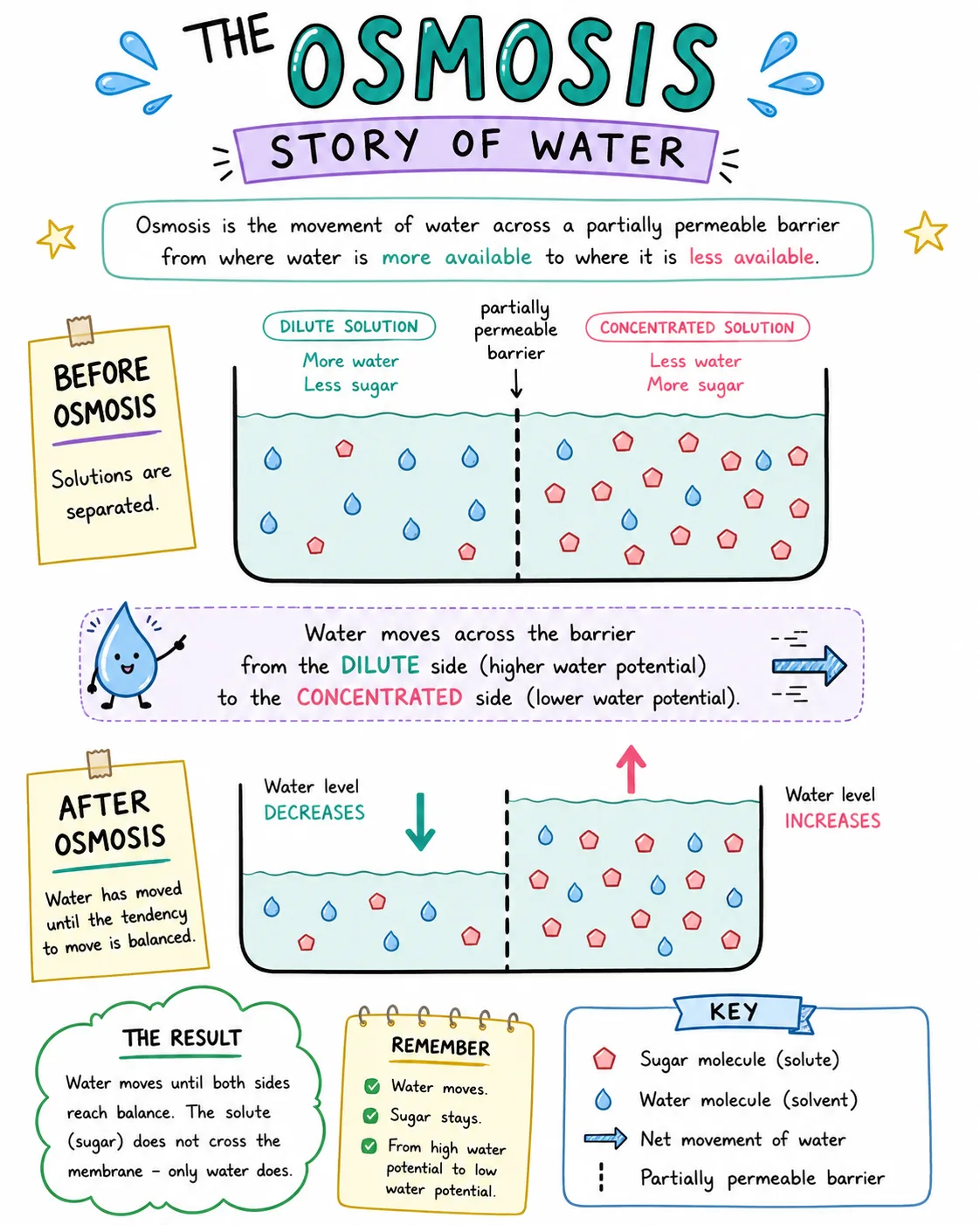
- OsmosisMovement of water molecules from an area of higher water concentration to an area of lower water concentration across a selectively permeable membrane.
2Effects of osmosis on cells
| Solution Type | Animal Cell (Red Blood Cell) | Plant Cell |
|---|---|---|
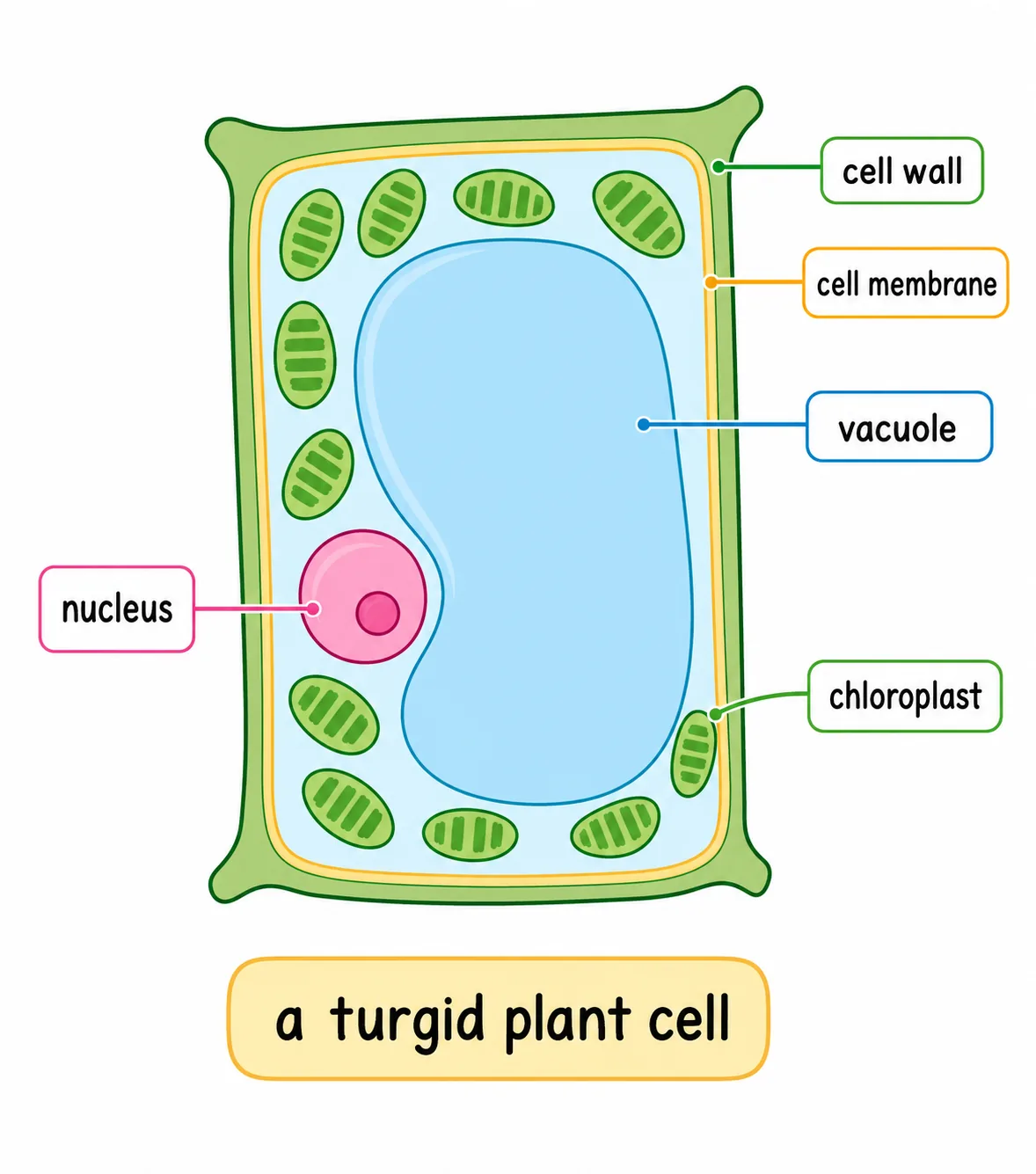
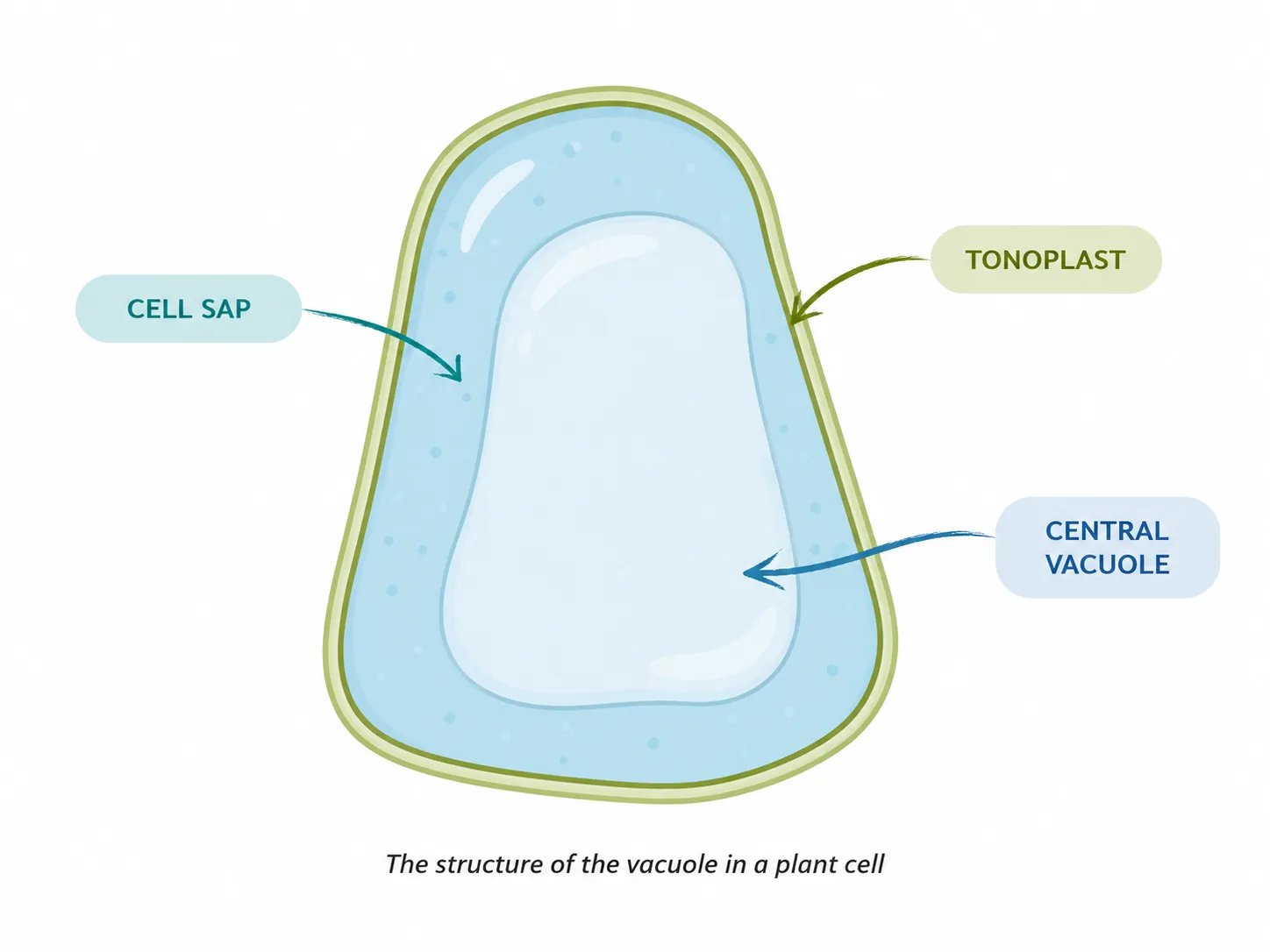
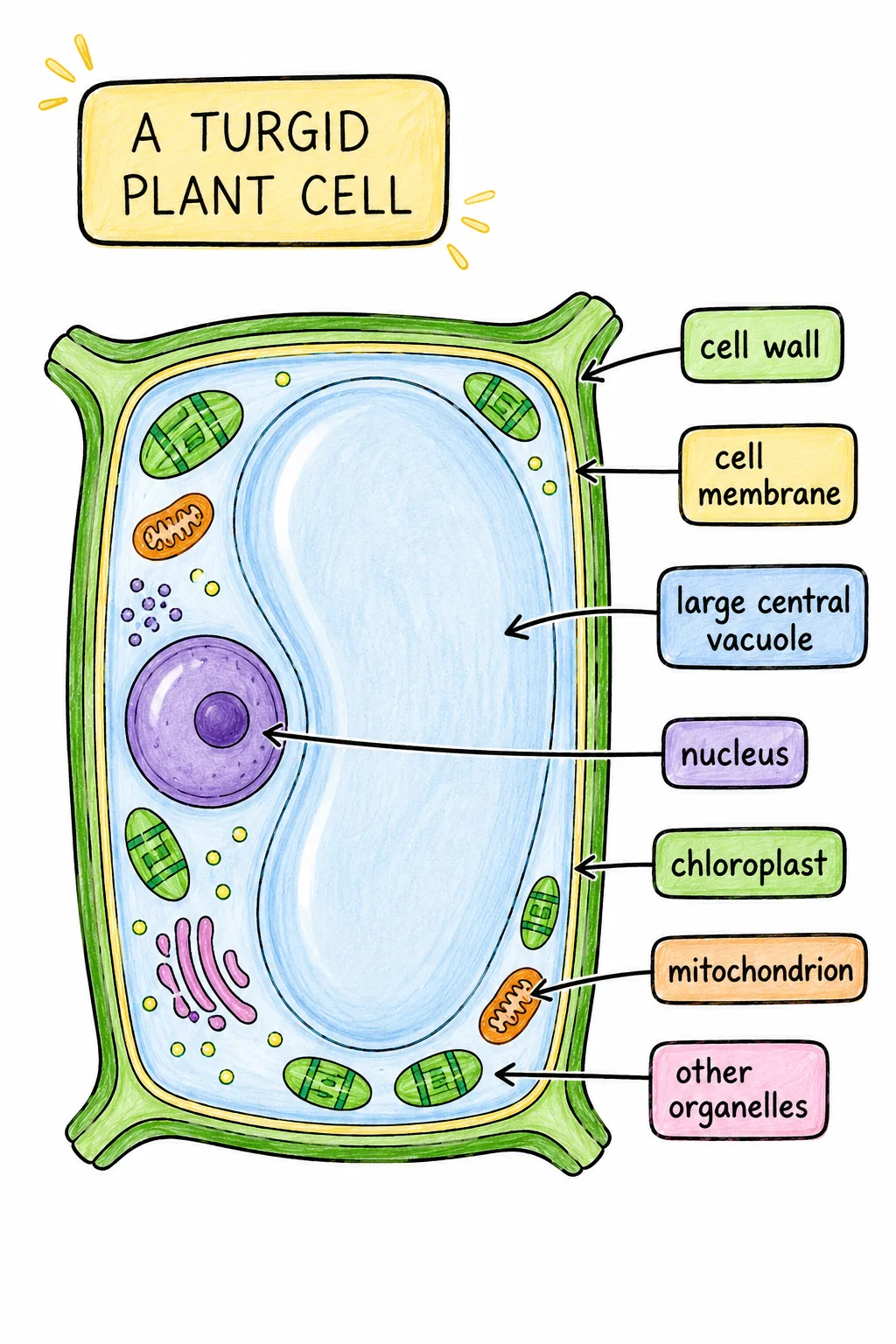
| Higher water concentration (pure water / hypotonic) | Water enters cell by osmosis; cell swells and bursts (lysis) (no cell wall). | Water enters cell; vacuole swells; cytoplasm pushes against cell wall; cell becomes turgid (cell wall prevents bursting). |
| Equal water concentration (isotonic) | No net water movement; cell shape and volume remain unchanged. | No net water movement; cell volume remains unchanged. |
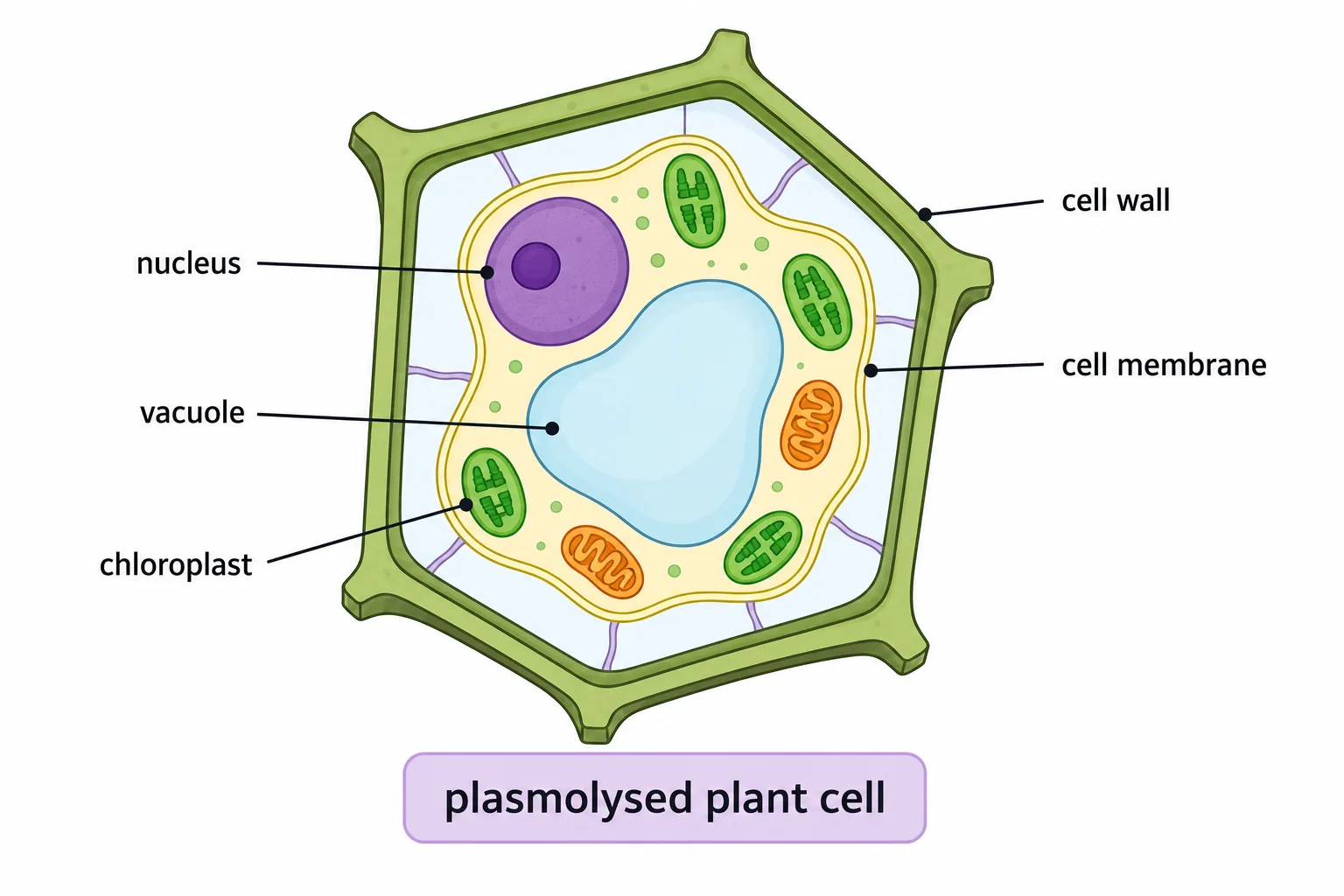
| Lower water concentration (concentrated salt/sugar solution / hypertonic) | Water leaves cell by osmosis; cell shrinks / shrivels. | Water leaves vacuole; cytoplasm pulls away from cell wall; cell becomes plasmolysed. |
Part 3 of 3Active transport





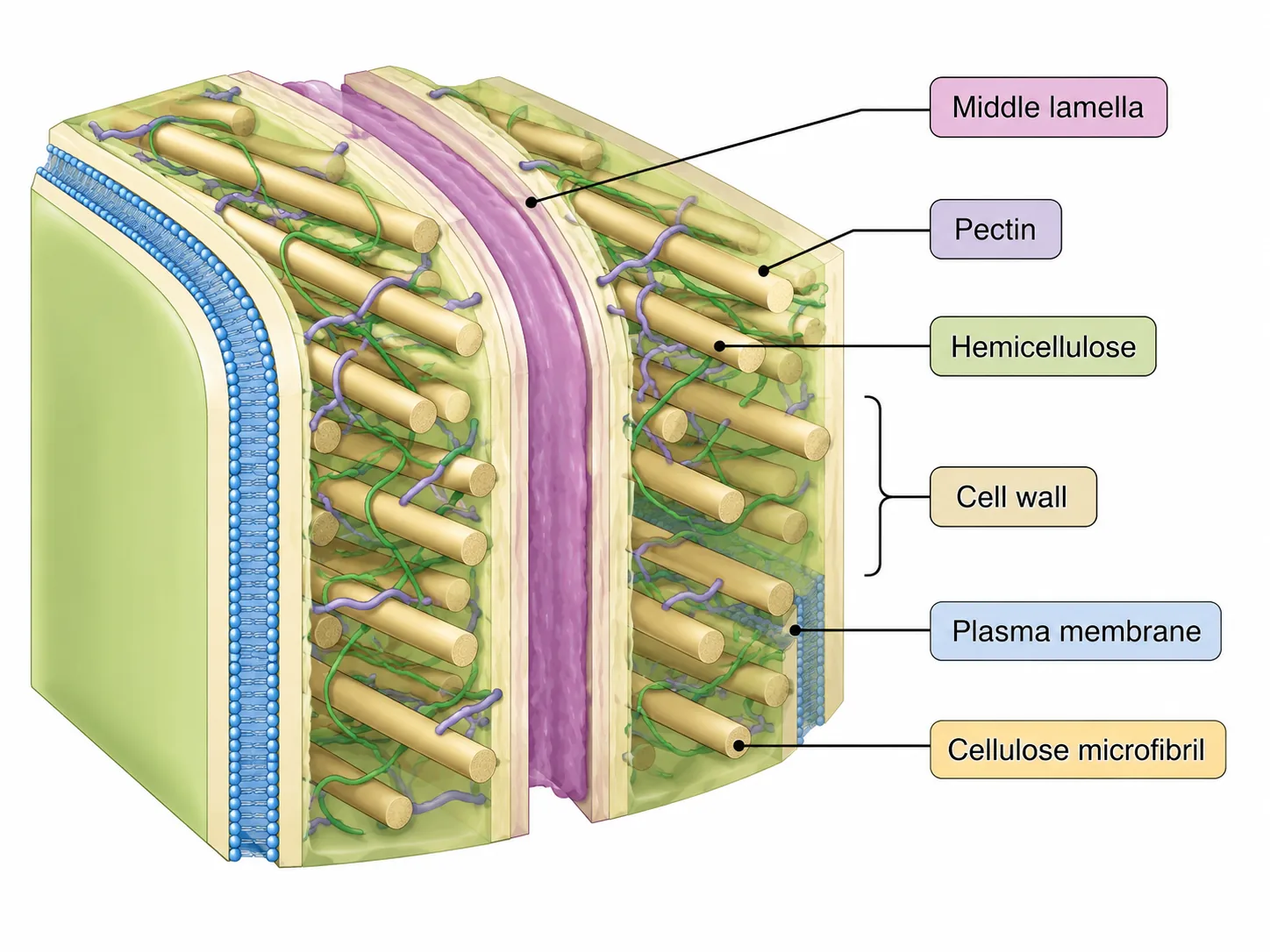


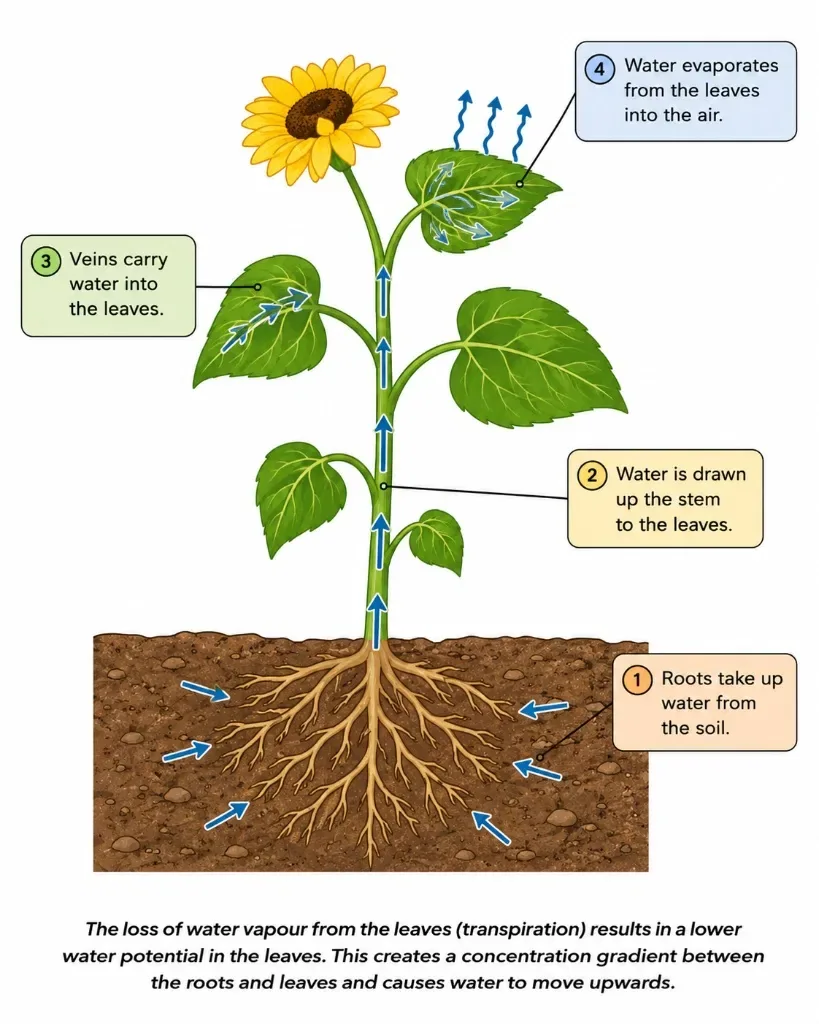


- Active transport:
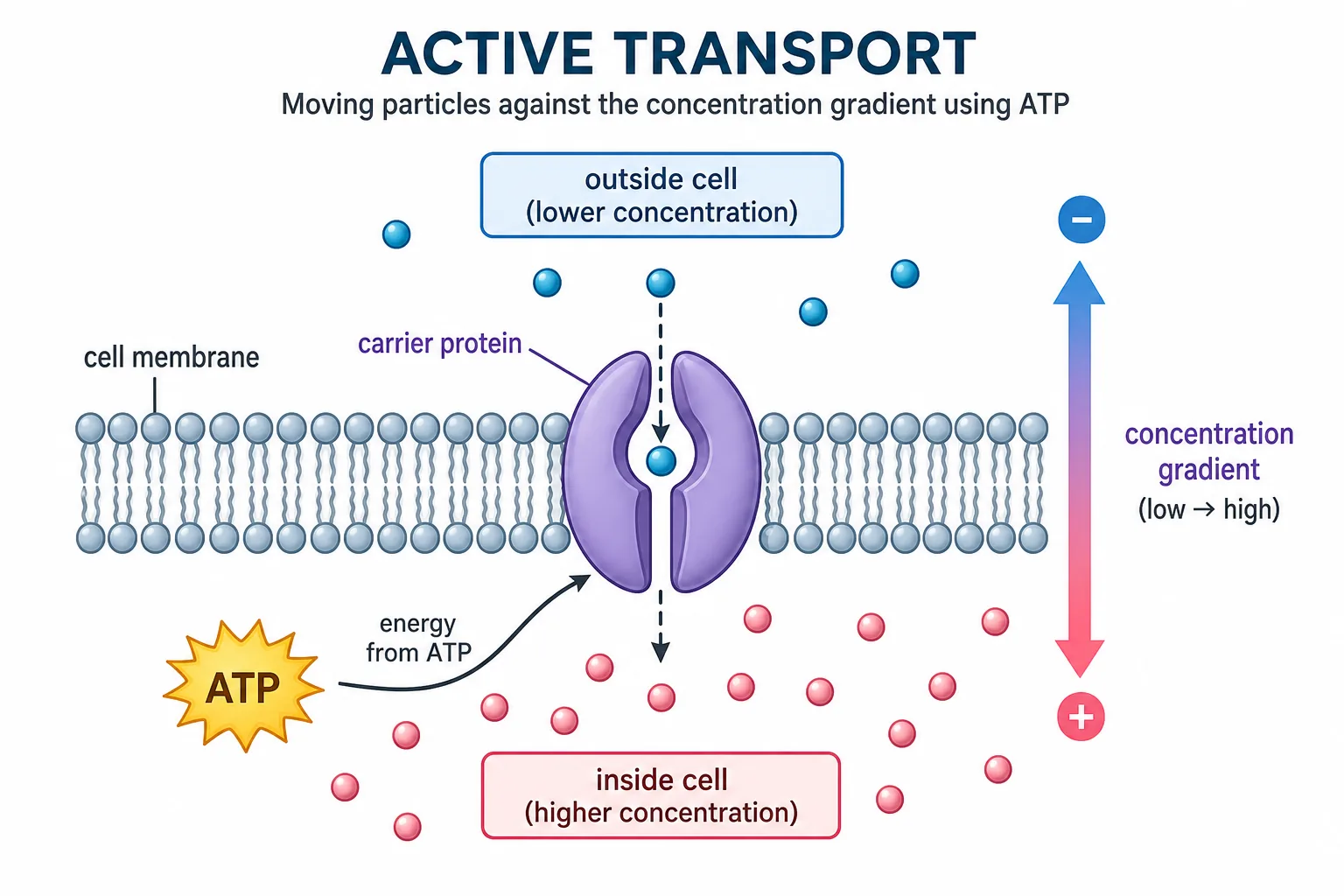
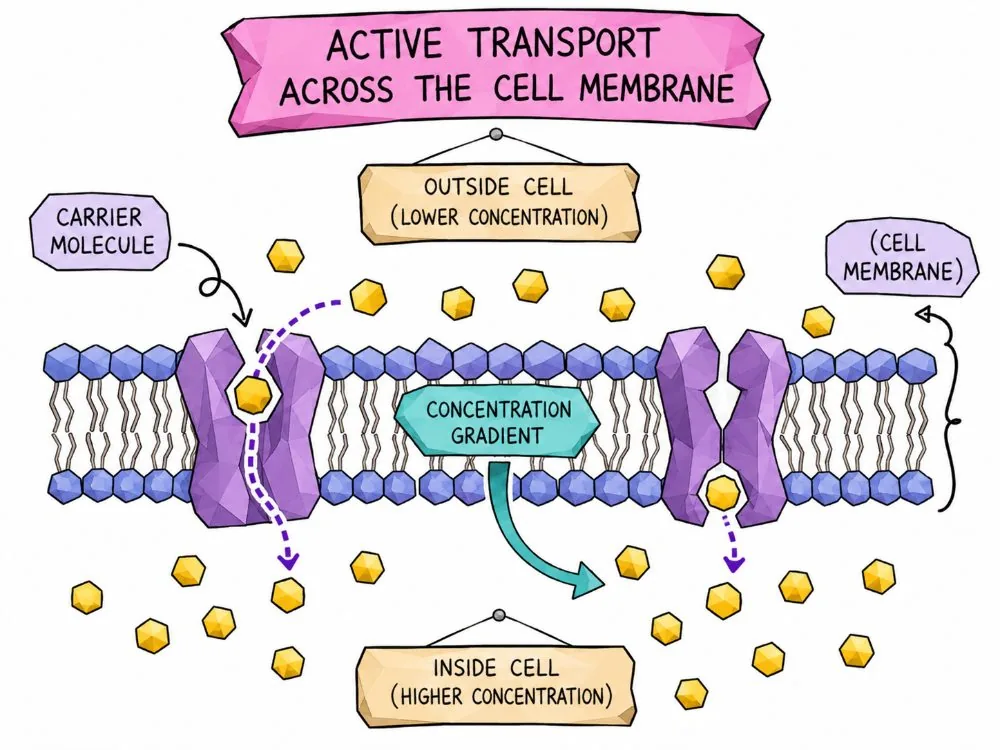
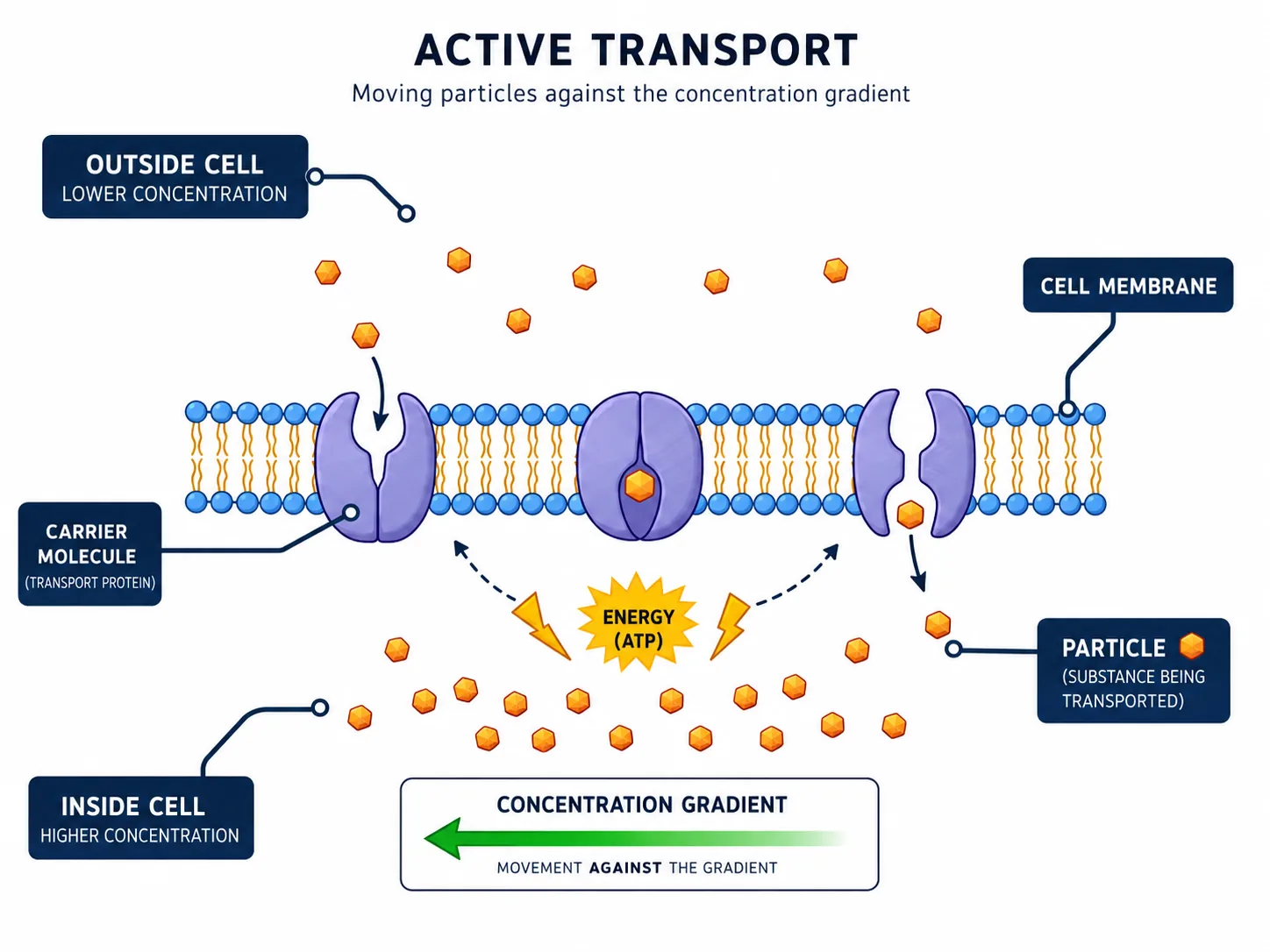
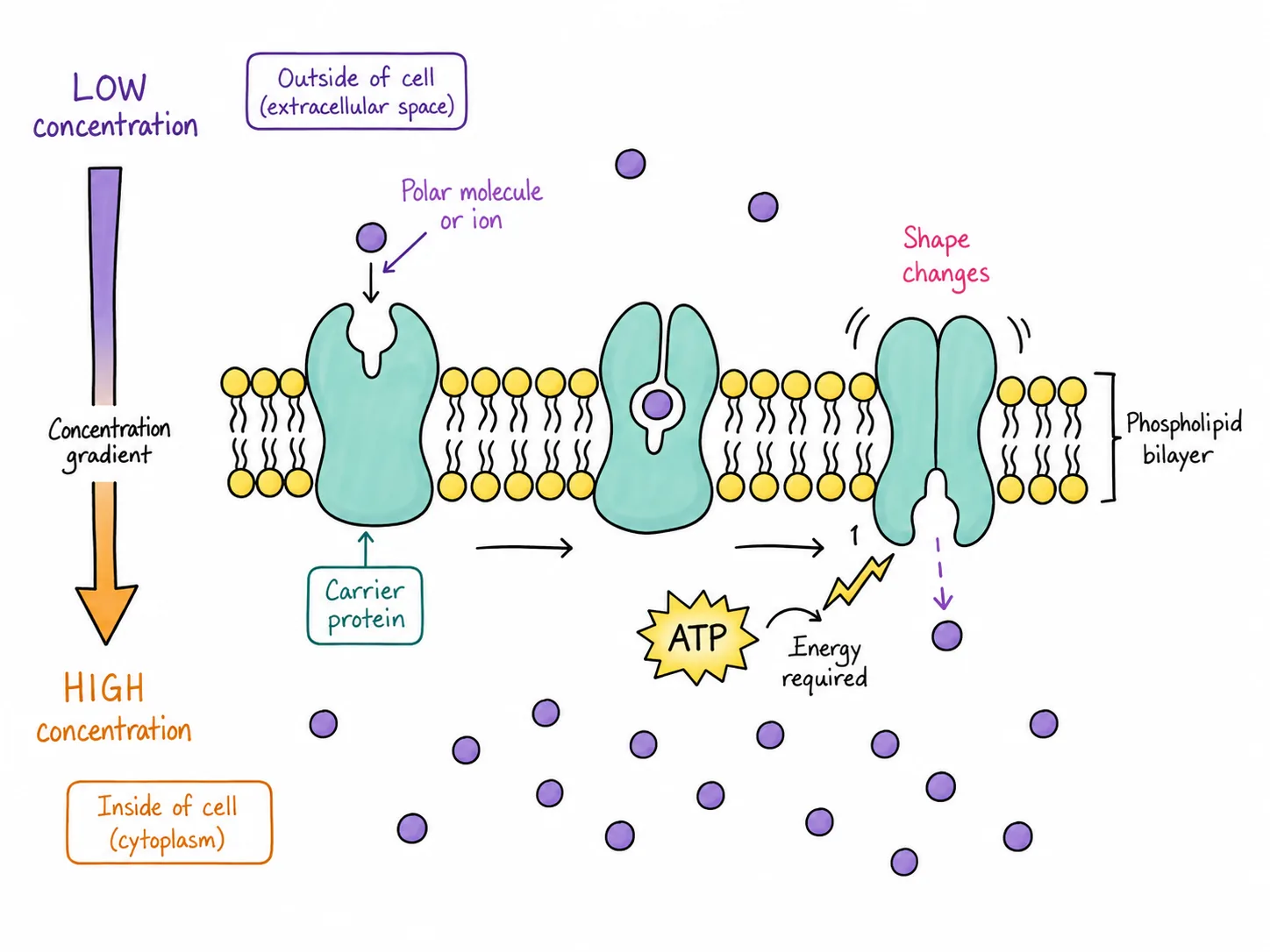
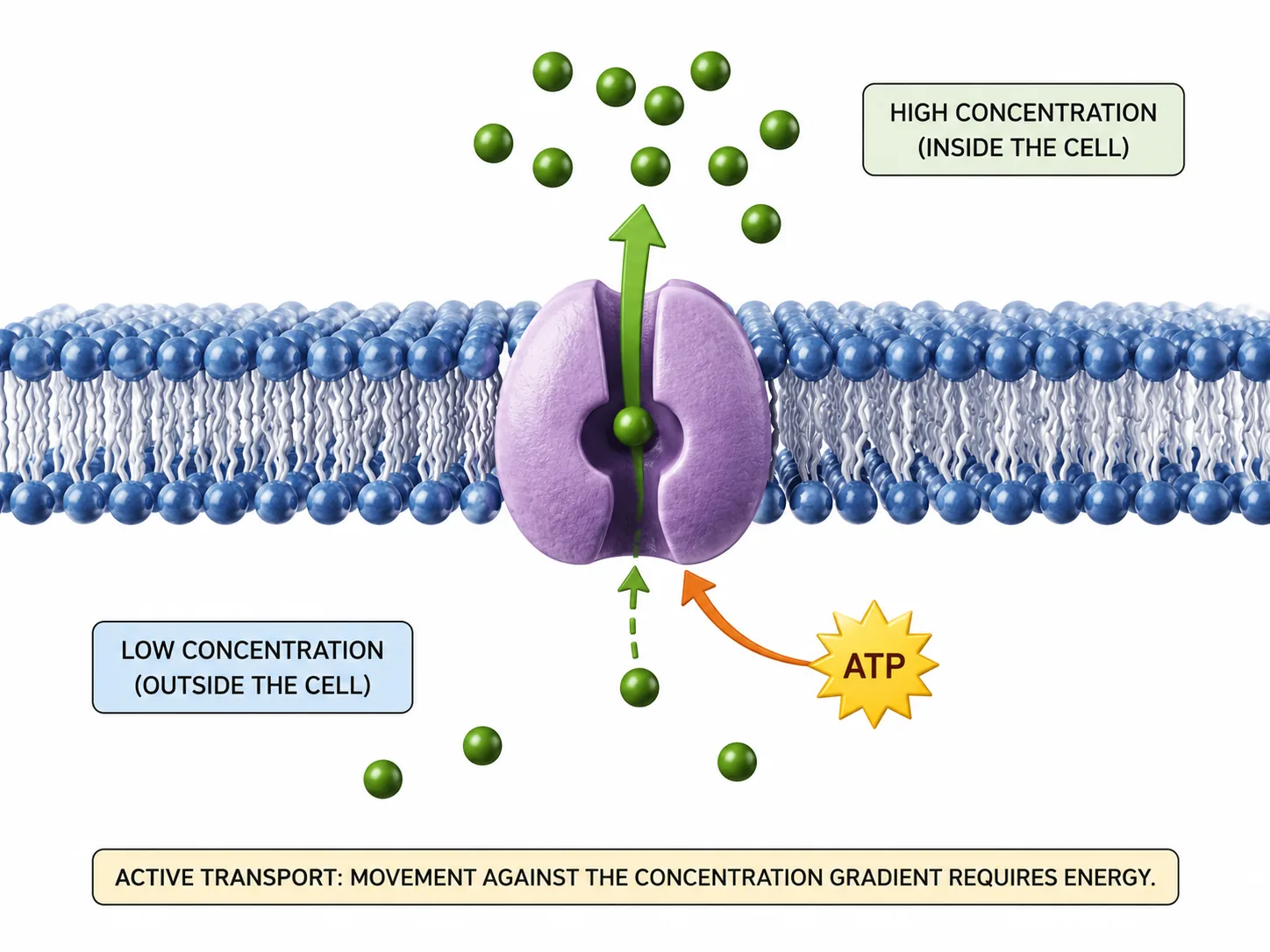
- Movement of molecules or ions against the concentration gradient (from an area of lower concentration to higher concentration).
- Requires membrane carrier proteins that actively pump molecules across.
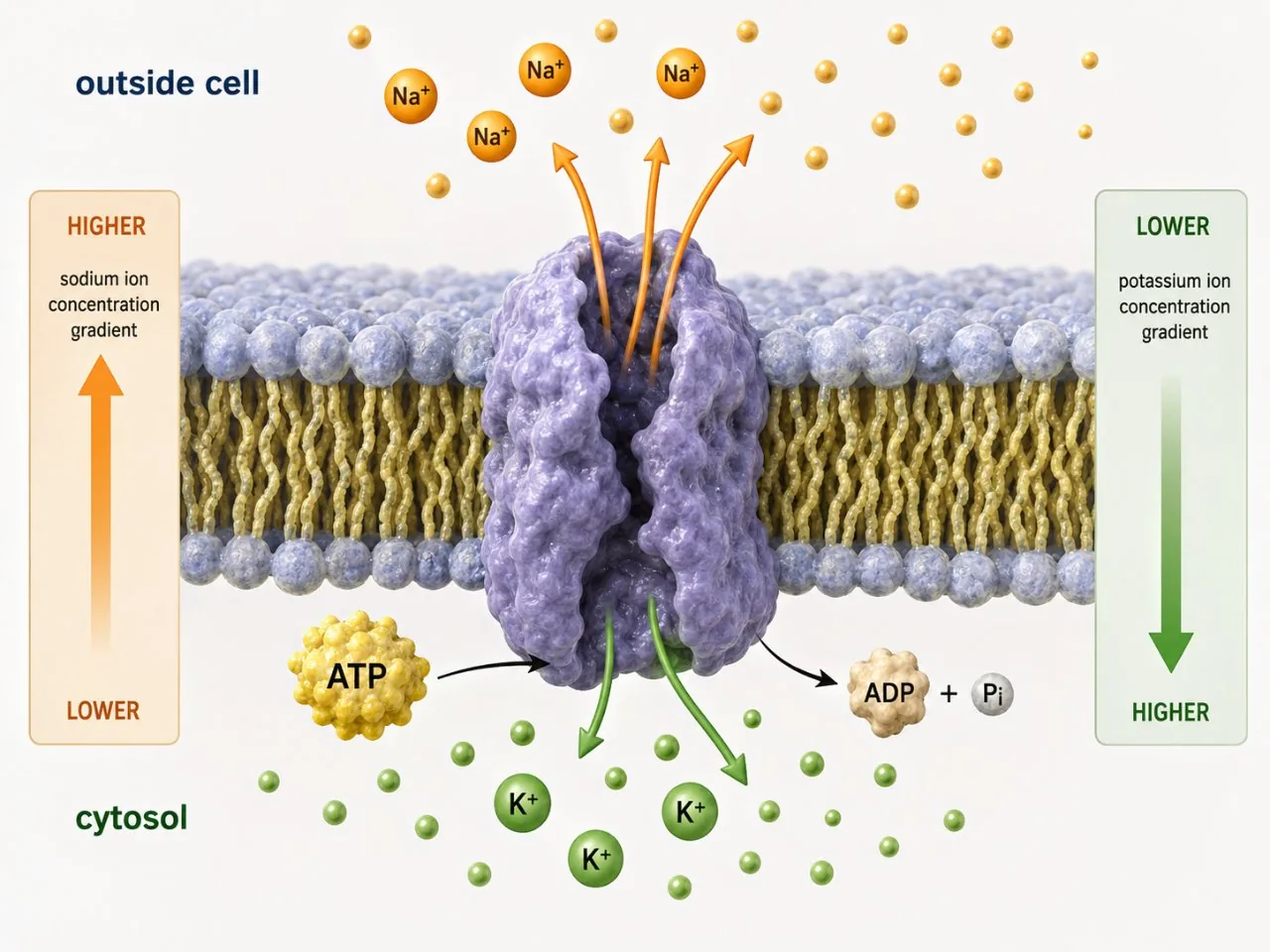
- Requires cellular energy in the form of ATP generated during cellular respiration.
- Example
- Sodium-potassium pump maintaining electrical nerve impulses;
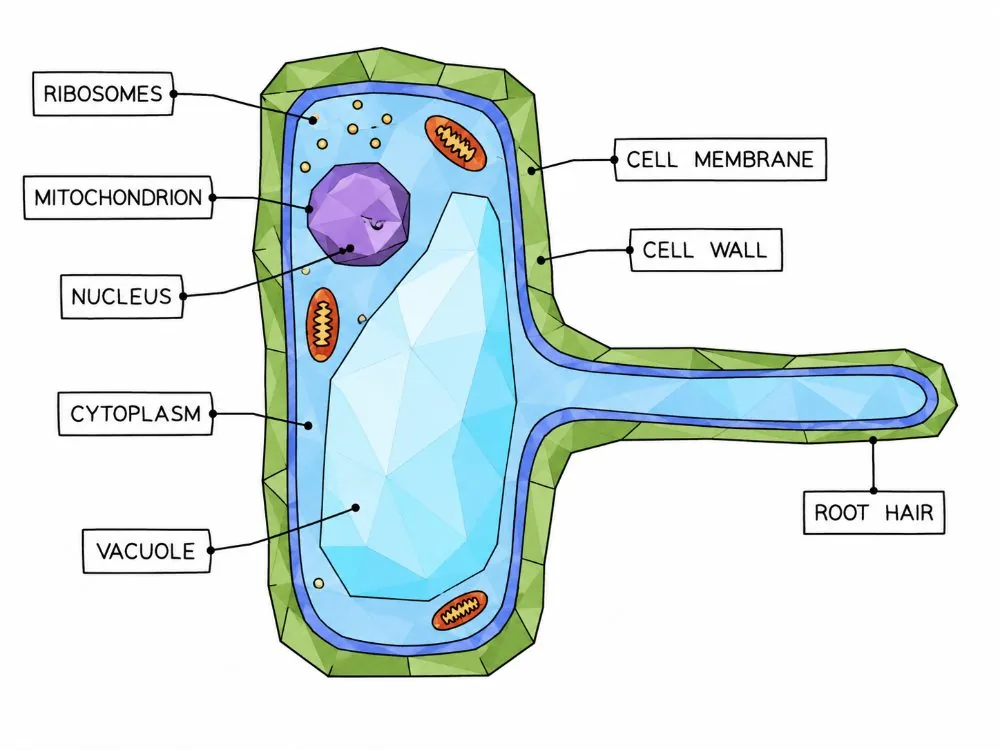
- plant root hair cells accumulating mineral ions from dilute soil water.
- Sodium-potassium pump maintaining electrical nerve impulses;
Key terms
| Term | Meaning |
|---|---|
| Selectively permeable | A membrane property allowing only certain molecules to pass freely while blocking others. |
| Osmosis | The net diffusion of water molecules from higher to lower water concentration across a selectively permeable membrane. |
| Turgid | A plant cell swollen with water so that the vacuole and cytoplasm press firmly against the rigid cell wall. |
| Plasmolysed | A plant cell in which water loss causes the cytoplasm to shrink away from the cell wall. |
| Active transport | The movement of ions or molecules across a membrane against a concentration gradient requiring ATP. |
Avoid these mistakes
Avoid these mistakes
Stating plant cells burst in pure water — plant cells never burst because their strong cellulose cell wall withstands high internal turgor pressure.
Forgetting to mention ATP when defining active transport — active transport always requires cellular energy (ATP) produced by respiration.
Cambridge 9700 AS Biology
Core Formula
Magnification Triangle & Unit Conversion
Formula: M = I / A ⇔ A = I / M ⇔ I = M × A
Units: 1 mm = 1,000 μm = 1,000,000 nm.
Rule: Convert Image size (ruler mm) to μm by ×1,000 before dividing by Actual size.