Part 1 of 2Cellular respiration and ATP



1
Respiration
Respiration is a series of enzyme-controlled chemical reactions that breakdown glucose to release chemical energy stored in the form of ATP (Adenosine Triphosphate):
ADP + Inorganic Phosphate (Pi) + Energy ⇌ ATP
2
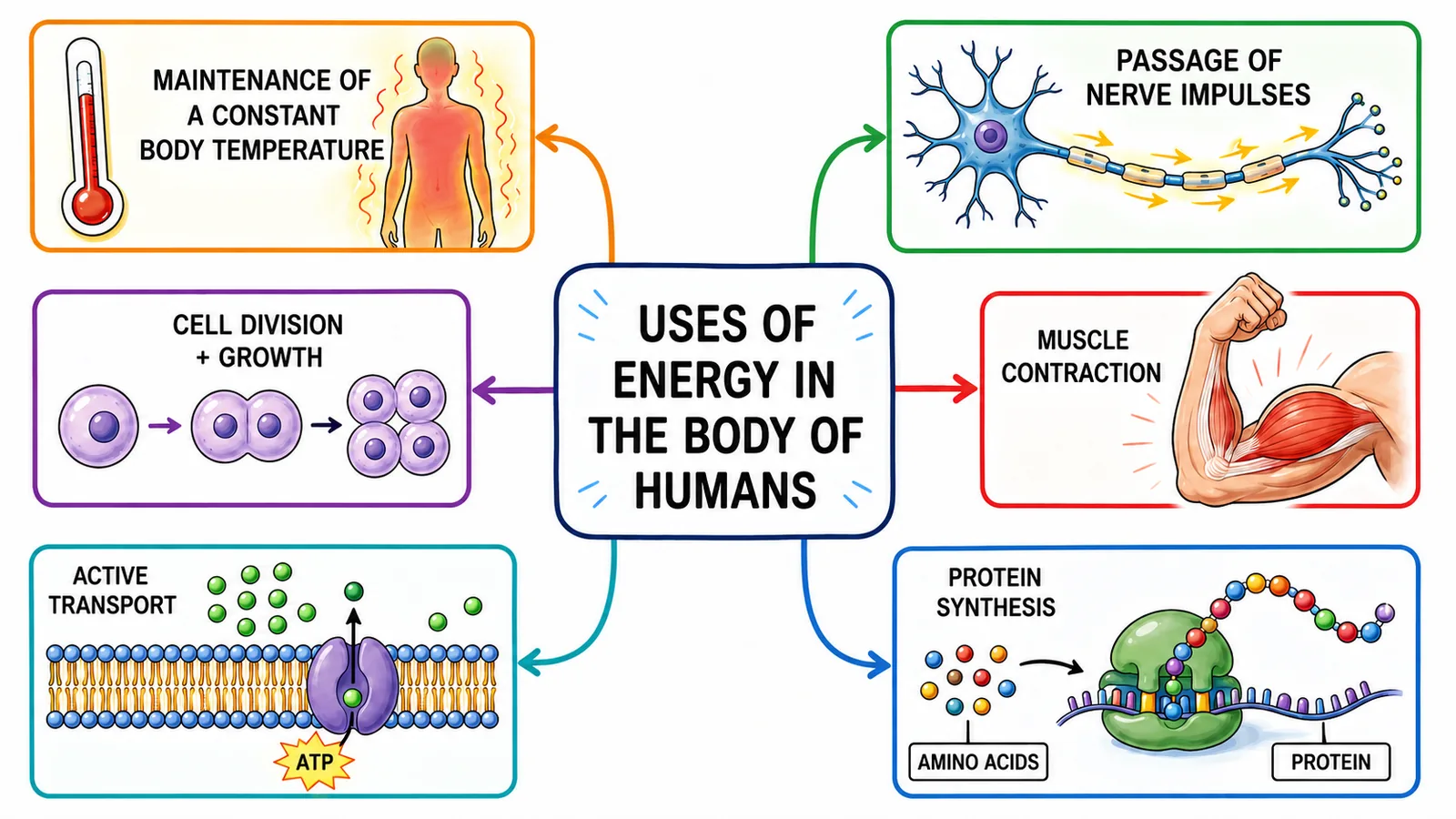
Cellular processes requiring ATP energy
- Muscle cell contraction and movement.
- Cell division (mitosis).
- Protein synthesis at ribosomes.
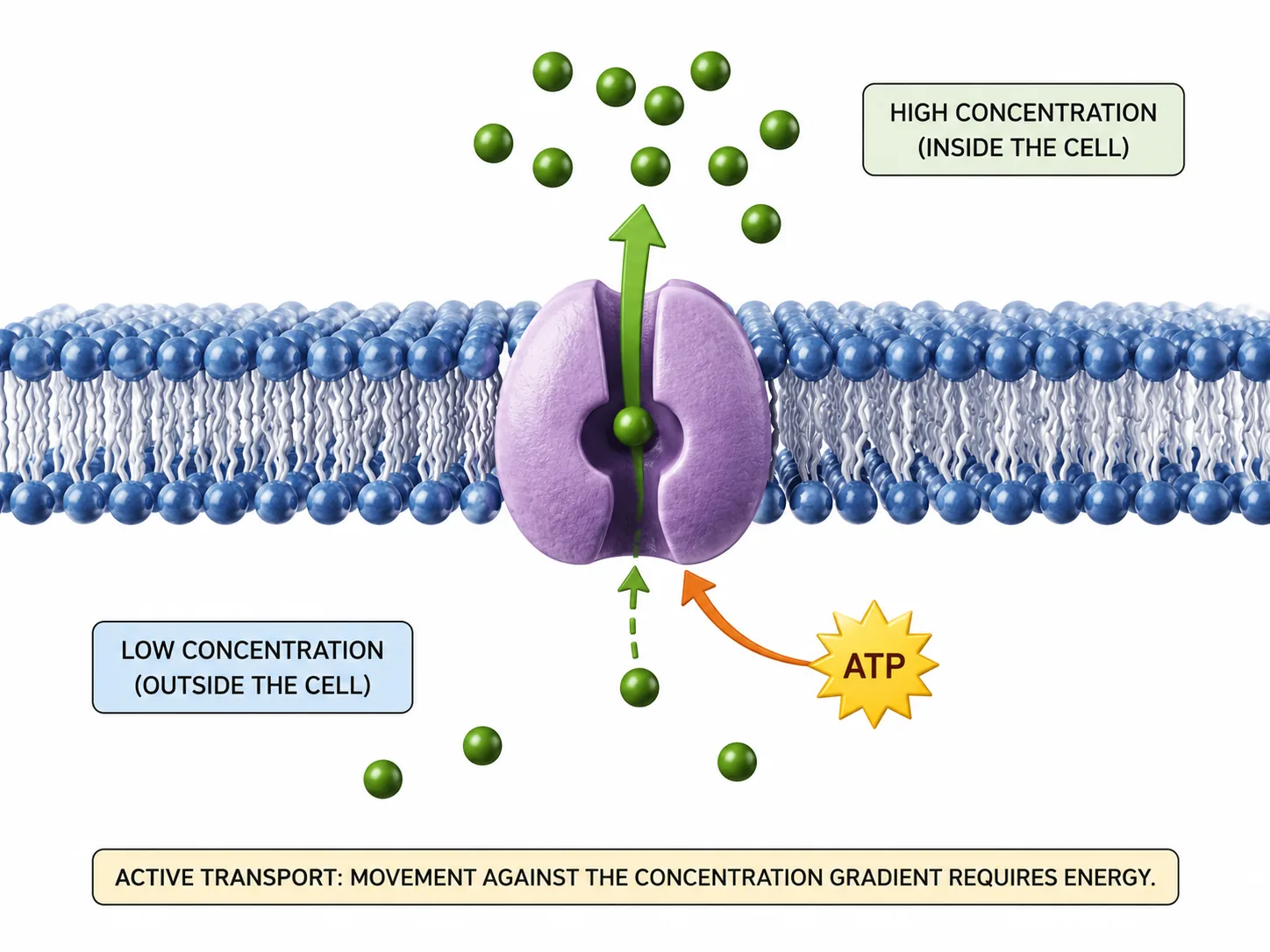
- Active transport of ions against concentration gradients.
- Transmission of electrical nerve impulses.
Part 2 of 2Aerobic respiration vs Fermentation









| Feature | Aerobic Respiration | Fermentation in Animal Cells | Fermentation in Plant & Yeast Cells |
|---|---|---|---|
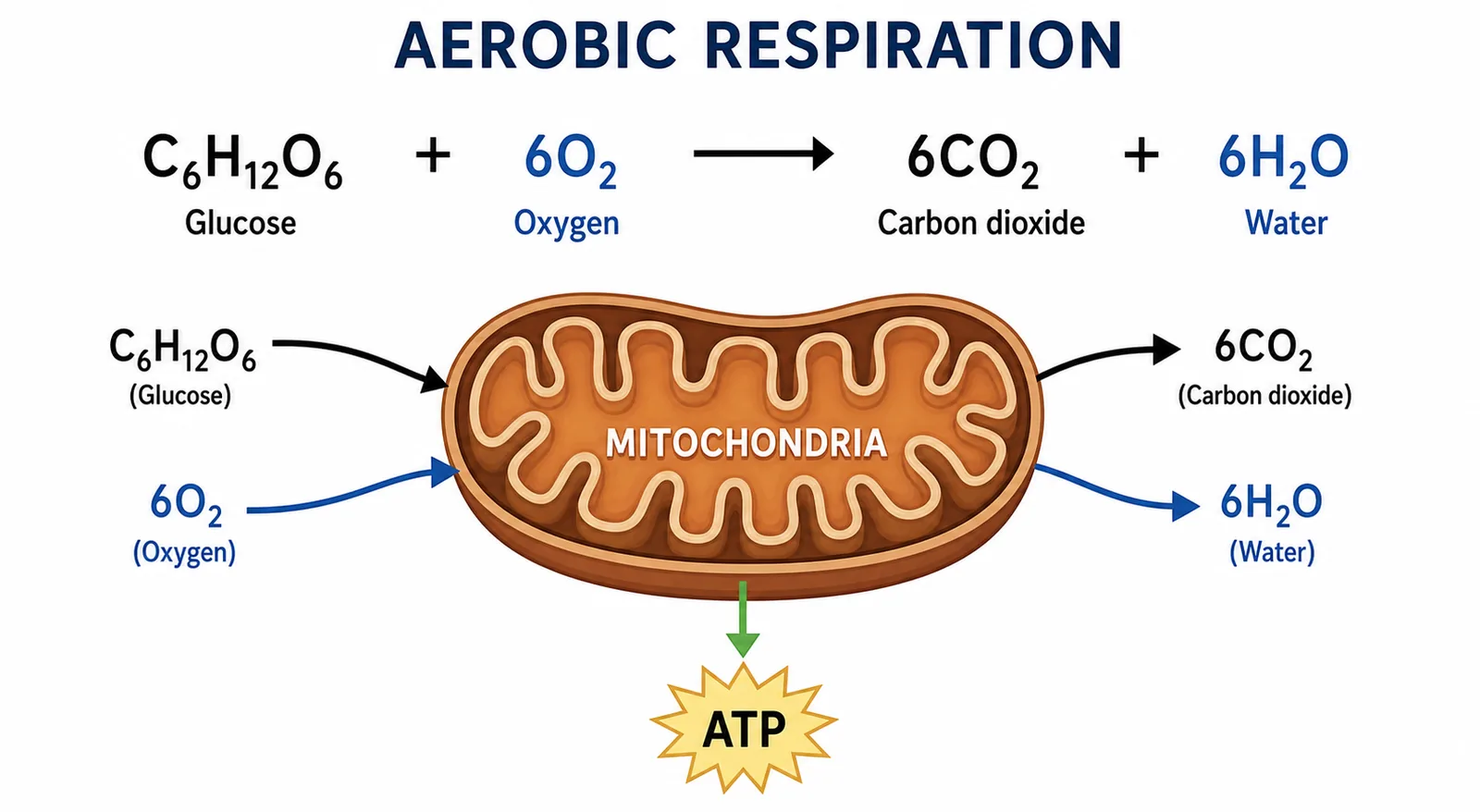
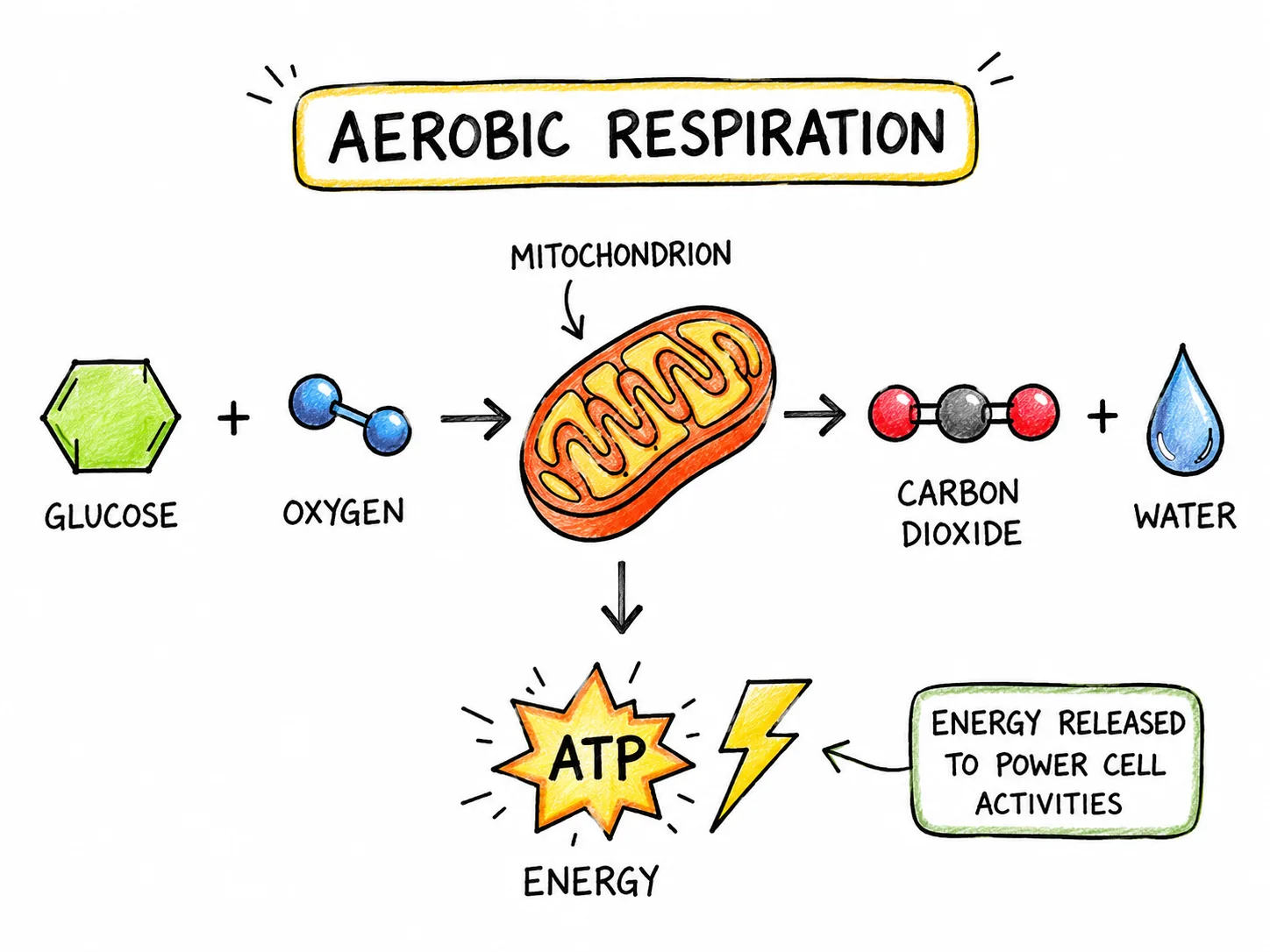
| Oxygen requirement | Requires oxygen | Absence of oxygen | Absence of oxygen |
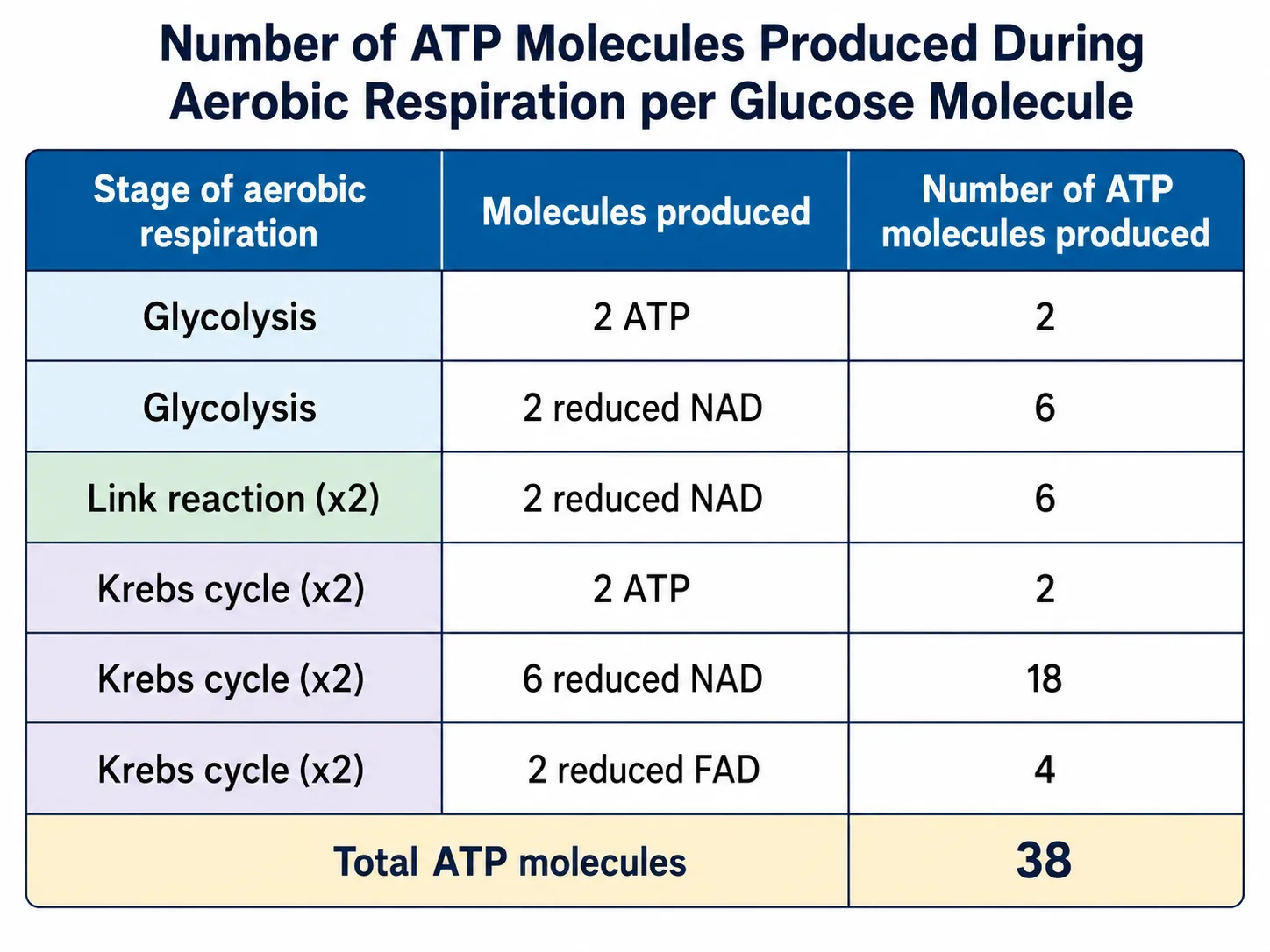
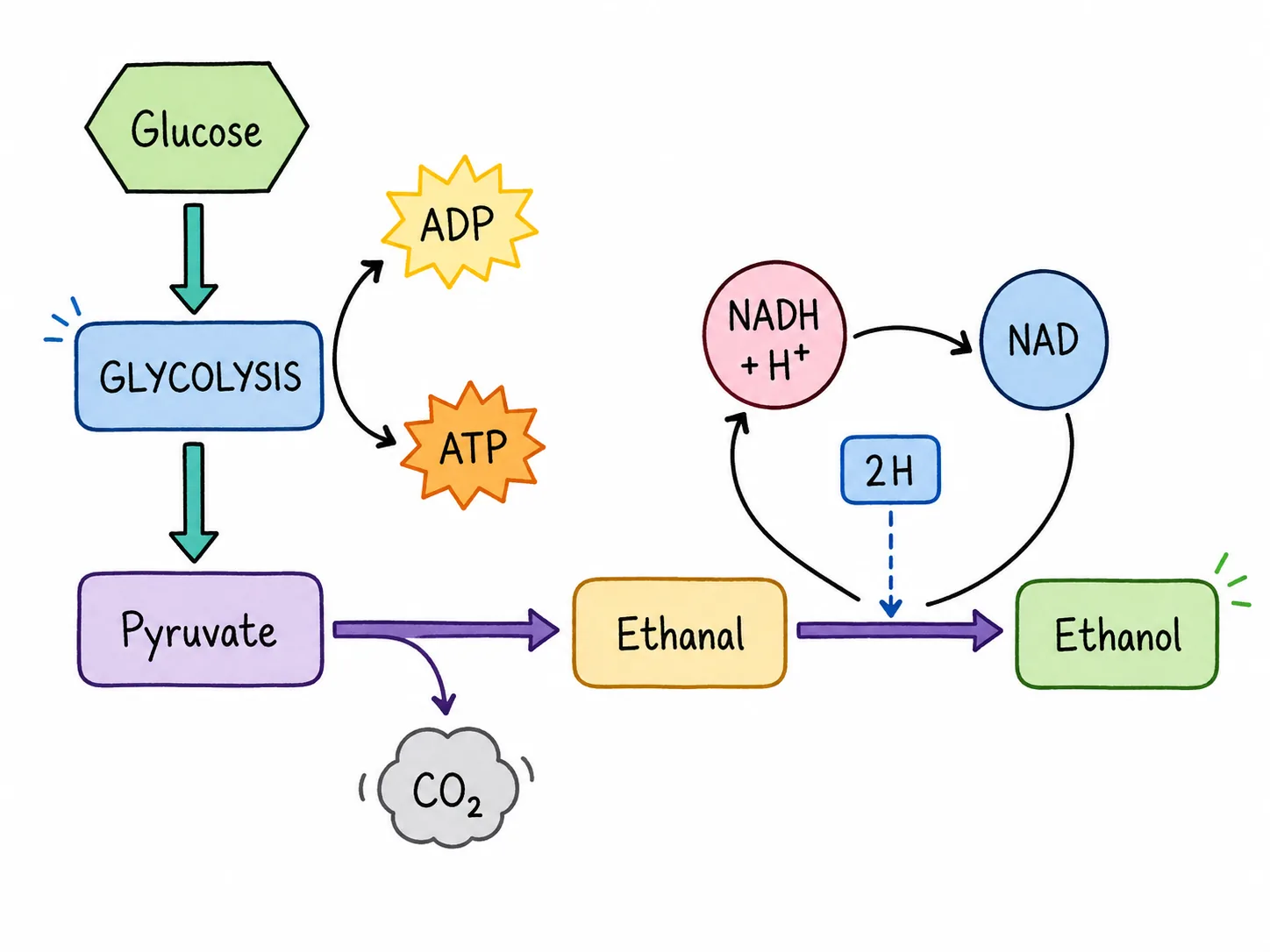
| Stage 1: Glycolysis | Occurs in cytoplasm: Glucose broken into 2 pyruvate molecules, yielding 2 ATP | Occurs in cytoplasm: Glucose broken into 2 pyruvate molecules, yielding 2 ATP | Occurs in cytoplasm: Glucose broken into 2 pyruvate molecules, yielding 2 ATP |
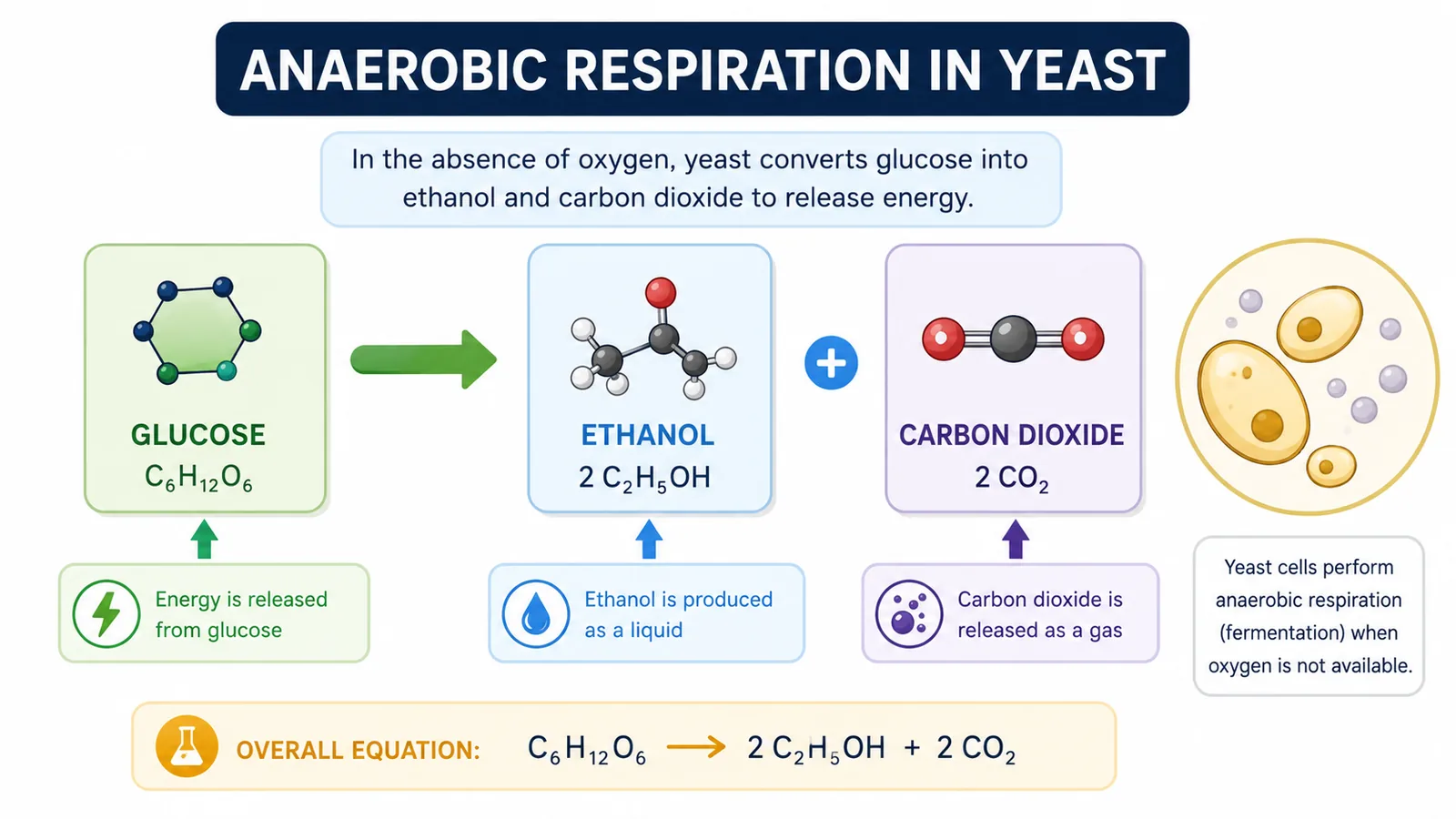
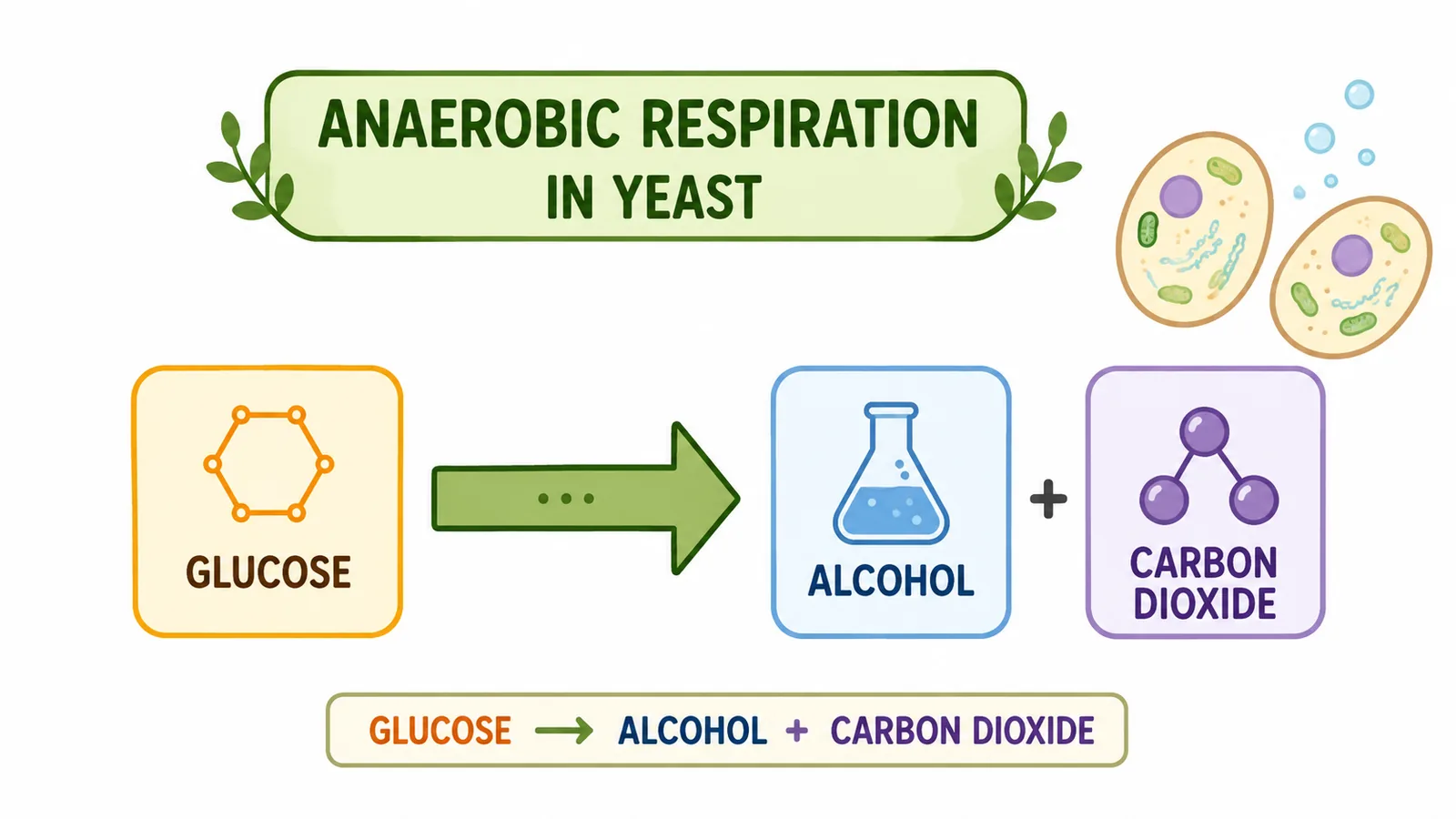
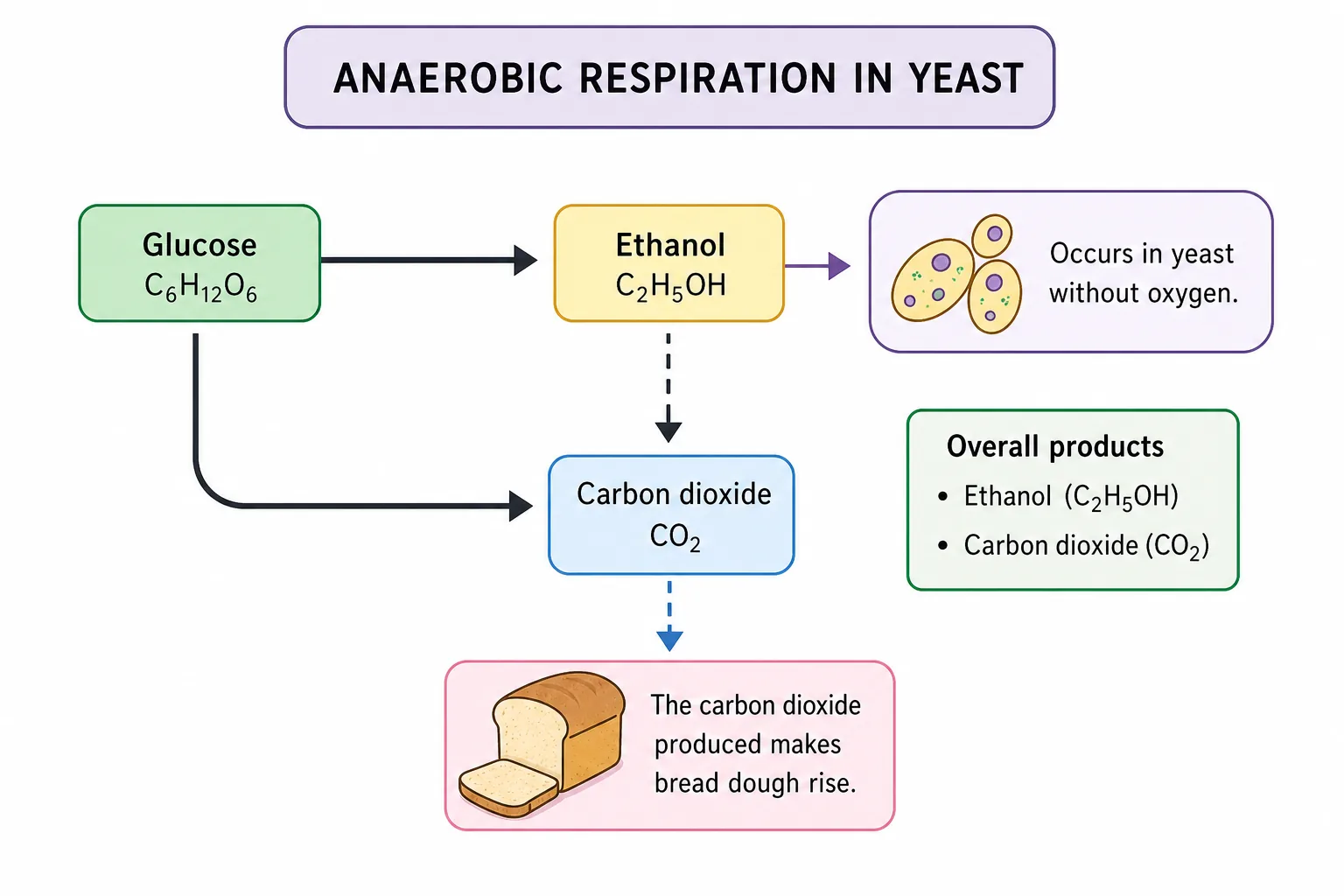
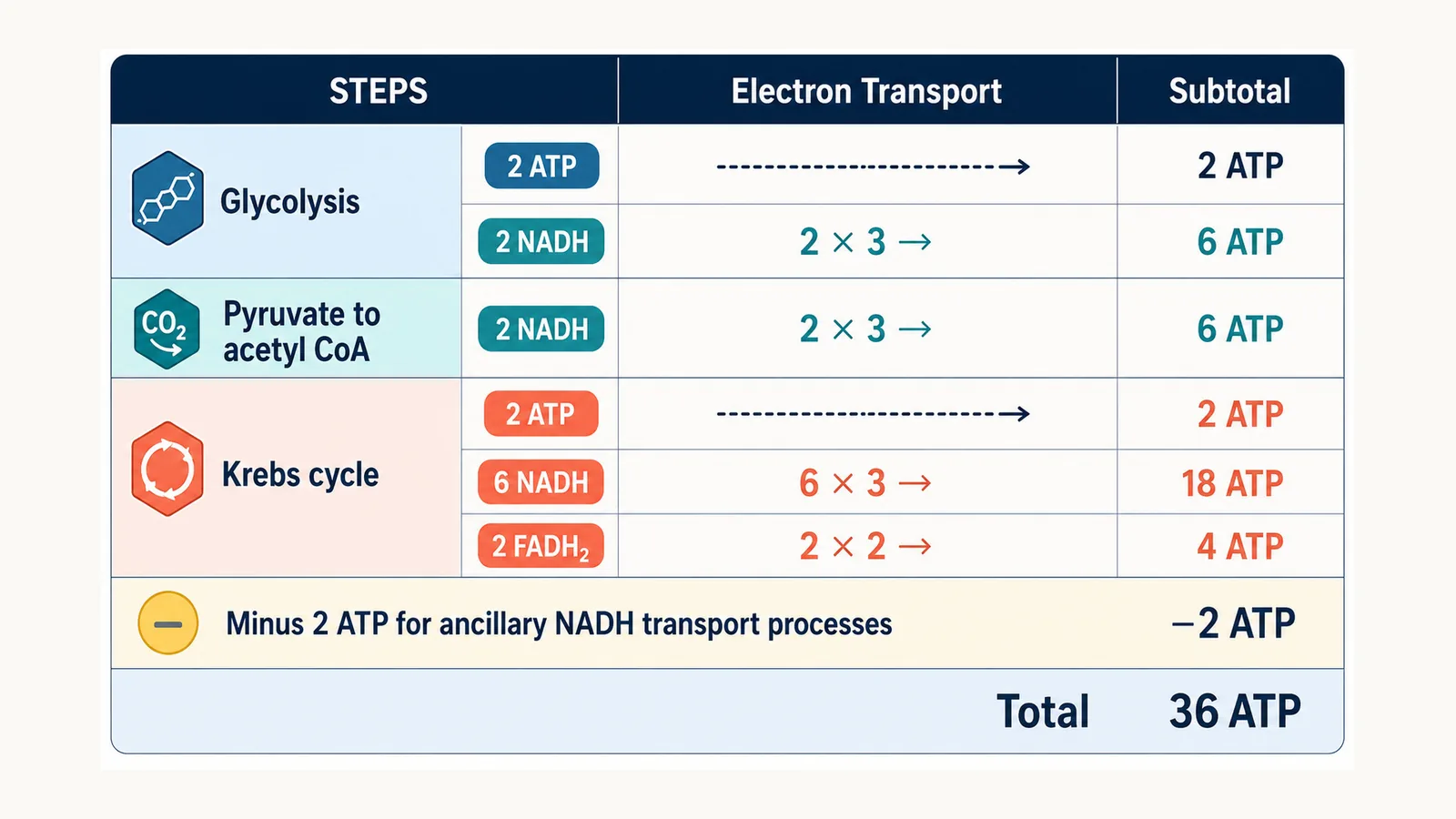
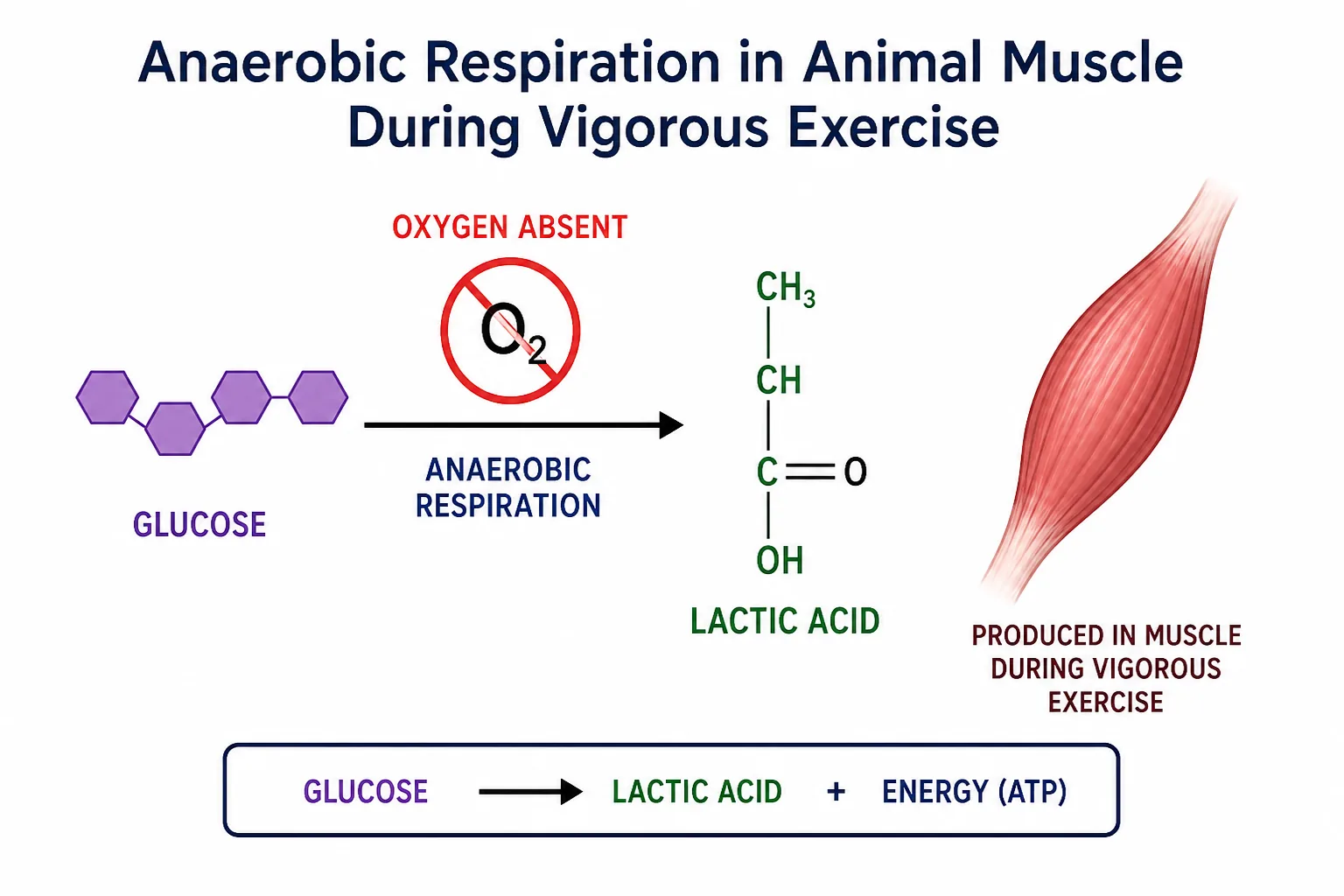
| Stage 2: Fate of Pyruvate | Occurs in mitochondria: Pyruvate completely broken down to CO2 and H2O, yielding many ATP (approx. 36 ATP) | Occurs in cytoplasm: Pyruvate is converted to lactate (lactic acid); no further ATP produced | Occurs in cytoplasm: Pyruvate is converted to ethanol and CO2; no further ATP produced |
| Total ATP yield per glucose | Large yield (~38 ATP) | Small yield (2 ATP only) | Small yield (2 ATP only) |
| Reversibility | Irreversible overall | Reversible (when oxygen returns, lactate converts back to pyruvate) | Irreversible (CO2 gas diffuses away) |
Key terms
| Term | Meaning |
|---|---|
| Aerobic respiration | The complete enzymatic breakdown of glucose in the presence of oxygen yielding large amounts of ATP. |
| Fermentation | The incomplete breakdown of glucose in the absence of oxygen producing limited ATP. |
| Glycolysis | The first stage of cellular respiration occurring in cytoplasm converting glucose to pyruvate. |
| Lactate | The metabolic product of anaerobic fermentation in animal muscle cells causing muscle fatigue. |
Avoid these mistakes
Avoid these mistakes
Stating fermentation produces no ATP — stage 1 (glycolysis) produces 2 molecules of ATP per glucose molecule even without oxygen.
Thinking stage 2 of fermentation takes place in mitochondria — fermentation occurs entirely in the cytoplasm.