1.5Unit 1 — Cell Biology
Genetic Engineering
5 min read 4 parts Lesson 21 of 28
Part 1 of 2Stages of genetic engineering






1
Stage 1: Identification & Extraction
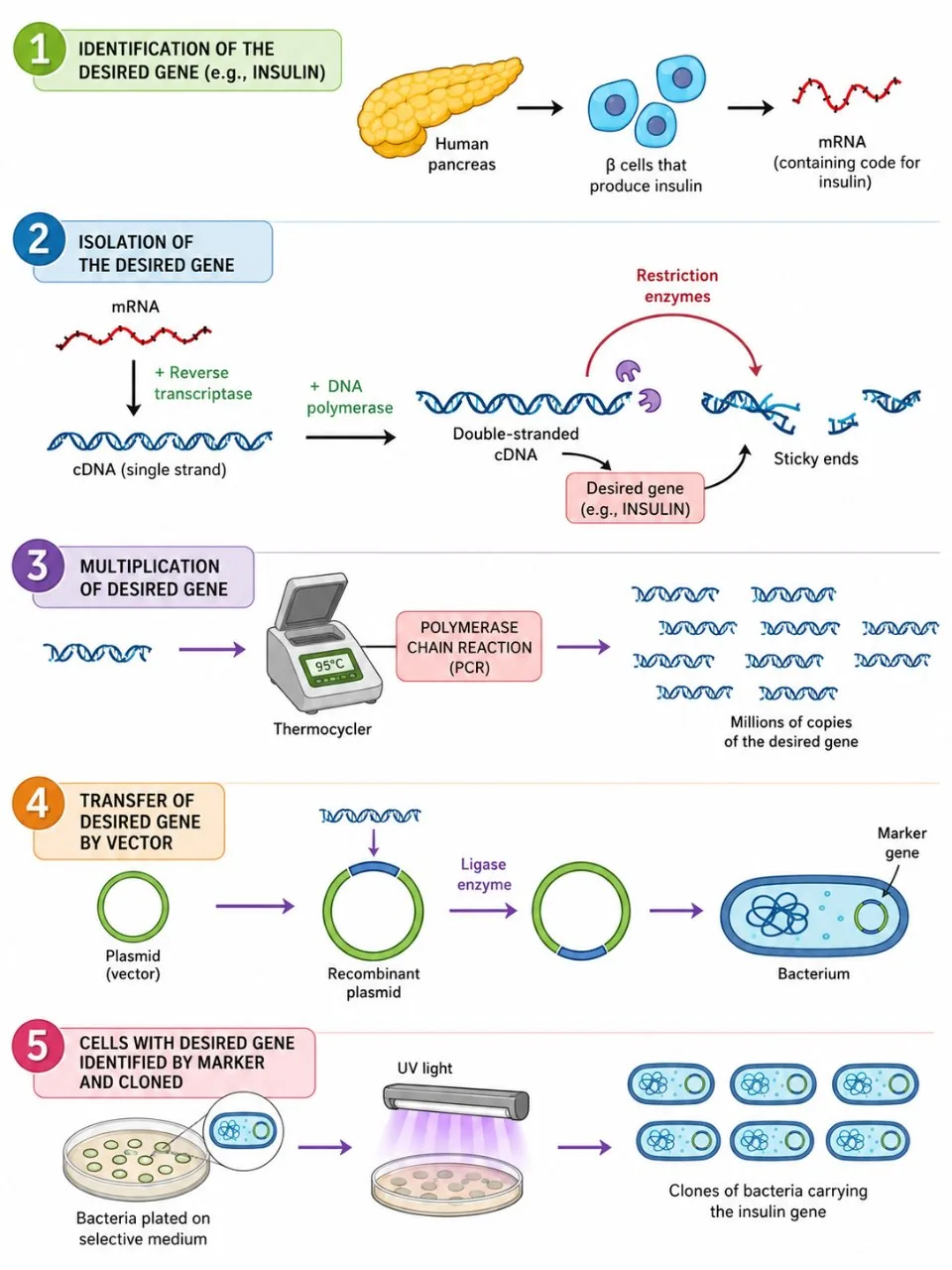
Stage 1: Identification & ExtractionThe required gene is identified on a source chromosome (e.g. human chromosome containing the insulin gene) and extracted using a specific restriction endonuclease enzyme.
2
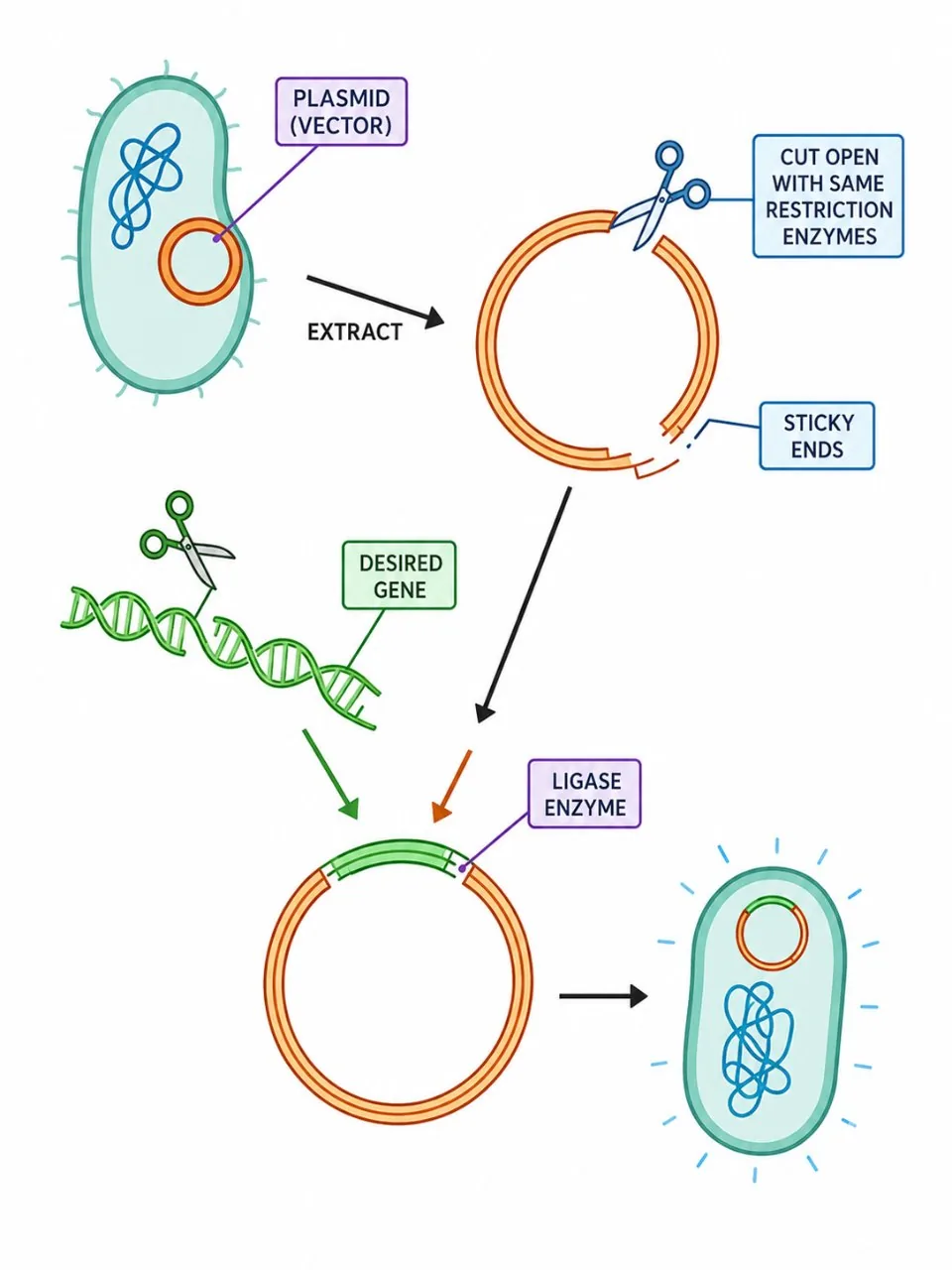
Stage 2: Plasmid Extraction & OpeningA circular plasmid vector is extracted from a bacterial host cell and cut open using the same restriction enzyme, ensuring compatible sticky ends.
3
Stage 3: Insertion & Sealing
Stage 3: Insertion & SealingThe human gene is inserted into the cut open plasmid and permanently sealed into place using the enzyme DNA ligase to produce a recombinant plasmid.
4
Stage 4: Transformation
Stage 4: TransformationThe recombinant plasmid is inserted into a host bacterial cell, creating a genetically modified (GM) bacterium.
5
Stage 5: Fermentation & Purification
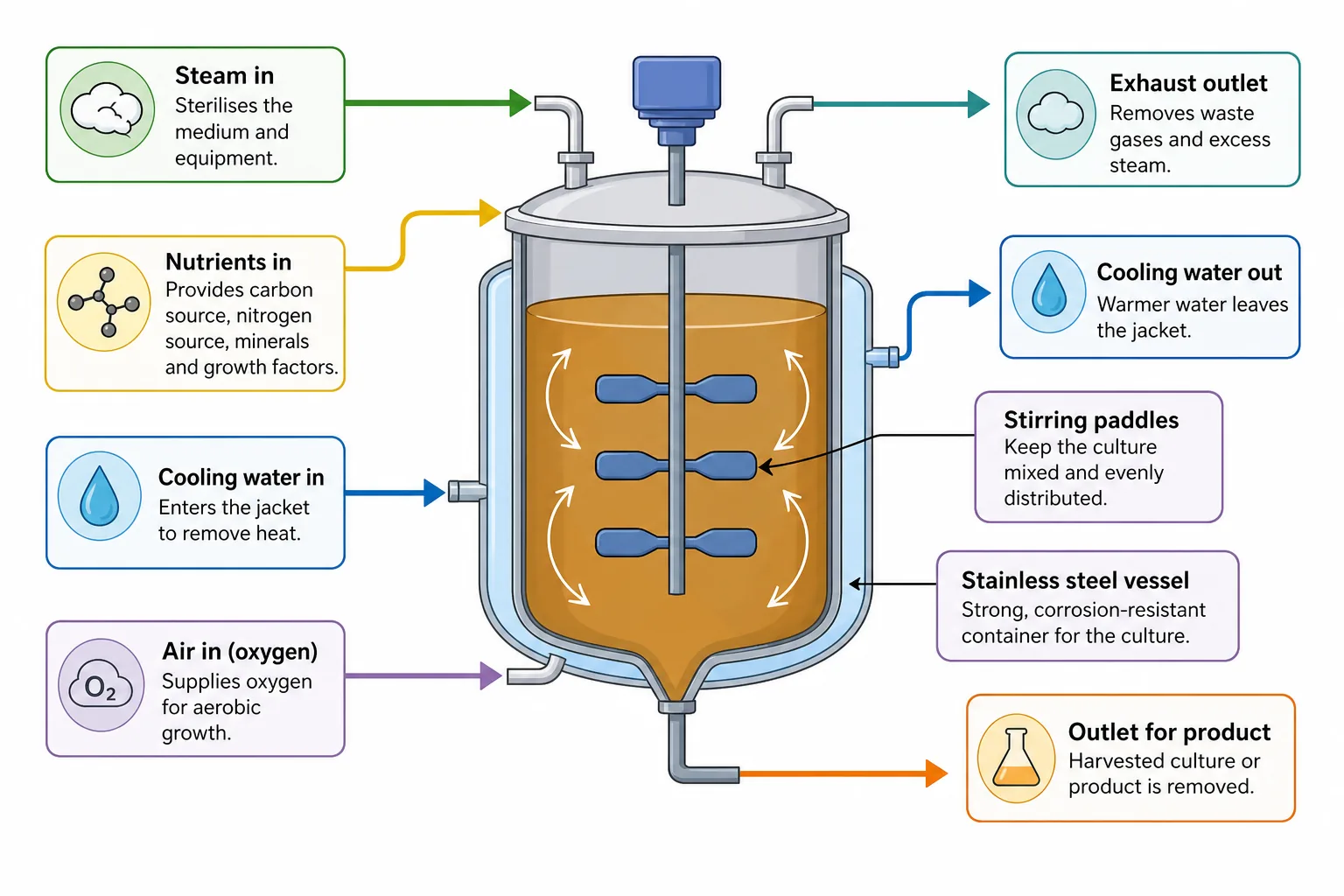
Stage 5: Fermentation & PurificationThe GM bacteria are cultured in large industrial fermenters under optimum growth conditions.
- As they multiply rapidly, they express the introduced gene,
- producing large quantities of the desired therapeutic protein,
- (e.g. human insulin or human growth hormone)
- which is then extracted and purified.
Part 2 of 2Applications and advantages





1Medical products produced by GM bacteria
- Human insulinfor treating diabetes mellitus (eliminates allergic reactions associated with older animal-derived insulin).
- Human growth hormone (HGH)for treating pituitary dwarfism in children.
- Factor VIIIhuman blood clotting protein for treating haemophilia patients.
2Advantages of using microorganisms
- Bacteria reproduce extremely rapidly under controlled conditions in fermenters.
- Large volumes of identical, pure human proteins are produced at lower cost with zero risk of animal virus transmission.
Key terms
| Term | Meaning |
|---|---|
| Genetic engineering | The artificial transfer of genetic information (DNA) from one organism into another. |
| Plasmid | A small circular loop of bacterial DNA used as a cloning vector to transfer foreign genes. |
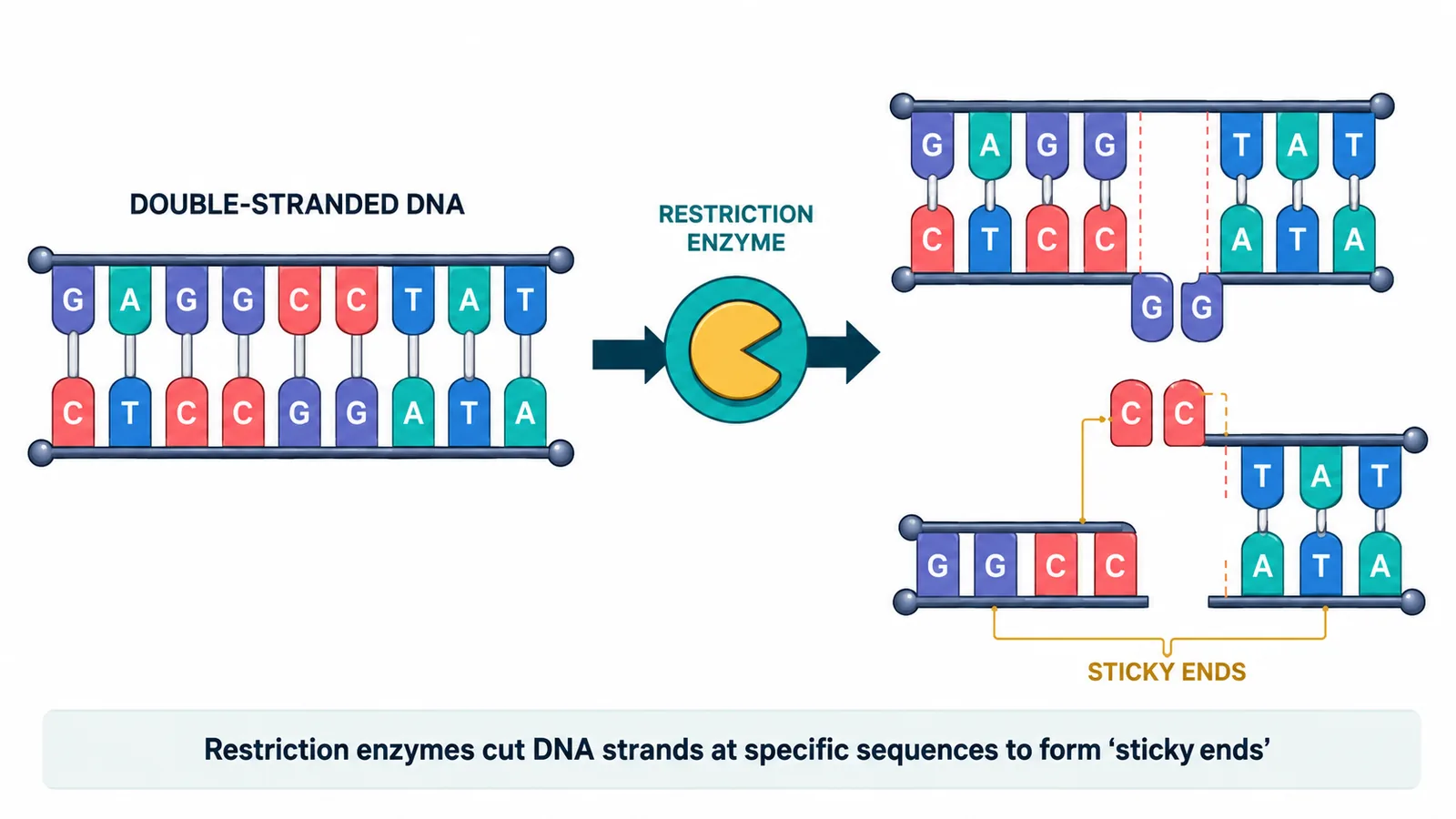
| Restriction enzyme | An enzyme that cuts DNA strands at specific recognition nucleotide sequences. |
| DNA ligase | An enzyme that chemically joins and seals DNA fragments together. |
Avoid these mistakes
Avoid these mistakes
Using different enzymes to cut the gene and plasmid — the same restriction enzyme must be used to ensure complementary sticky ends match.
Confusing the roles of restriction enzymes (cut DNA) and ligase (seals DNA together).