5.2Chapter 5: Respiration and the Respiratory System
Aerobic respiration in animals and plants — Alhussan Biology - Stage 8 Revision Notes & Topical Questions
5 min read 8 parts Lesson 2 of 12 2 quizzes
Lesson summary
Biology 5.2 Aerobic respiration in animals and plants — Alhussan International Academy — Biology (Stages 7–9) notes: Write the equation for aerobic respiration, explain where and why it happens, and compare it with photosynthesis and breathing.Life processes — animals and plants …
- Body temperature
- Energy needed
- Burning sugar
- Word equation
- Symbol equation
- Exothermic
Part 1 of 6Why energy is needed
1Life processes
- Life processes animals and plants grow, reproduce, move, excrete, replace worn-out cells and heal damaged tissues.
2Body temperature
- Body temperature mammals and birds keep the same body temperature in a hot desert, a temperate woodland or on ice and snow.
3Energy needed
- Energy needed all these processes need energy, which comes from food.
4Food
- Food plants make their own food and animals eat plants or other animals, and food provides the energy cells need for the chemical reactions of life.
Part 2 of 6Controlled release of energy
Burning sugar
- Burning sugar burning sugar in oxygen releases energy in an uncontrolled way, with a flame and hotter surroundings, which is no use to cells.
Cells
- Cells they need a controlled way of releasing the energy stored in food so they can use it to grow, move and reproduce.
Aerobic respiration
Aerobic respiration the breakdown of food molecules such as glucose using oxygen,
- which releases energy in a controlled way.
- ("aerobic" means using oxygen)
- The waste products are carbon dioxide and water.
Part 3 of 6Equation for aerobic respiration
Word equation
- Word equation glucose + oxygen → carbon dioxide + water (+ energy).
Symbol equation
- C6H12O6 + 6O2 → 6CO2 + 6H2O.
Energy
- Energy it is not usually included in the equation because it is not a substance, and it is released and not created.
Exothermic
- Exothermic energy is released to the surroundings, which is why we feel warm after exercise.
ATP
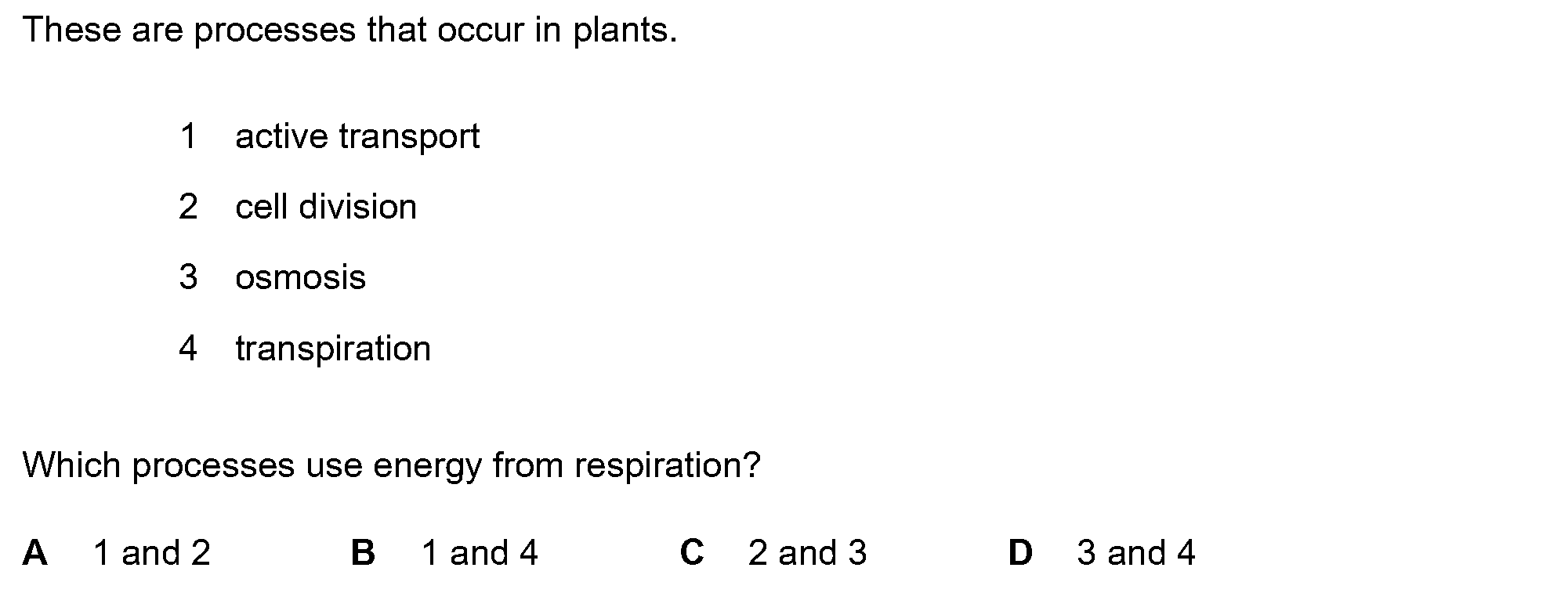
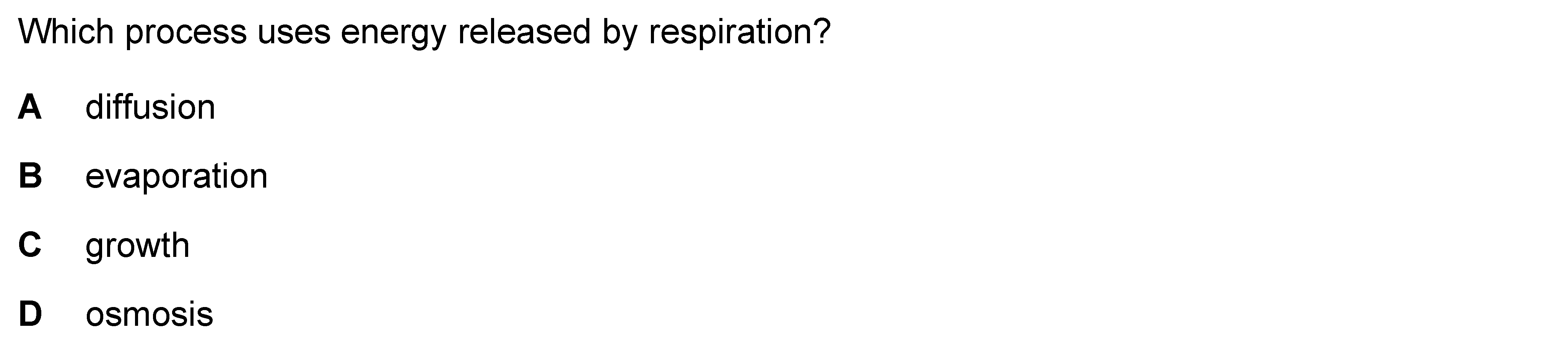
- ATP the energy is used to make ATP, a short-term energy store for muscle contraction, active transport, growth and keeping warm.
Part 4 of 6Where respiration happens
Mitochondria
- Mitochondria aerobic respiration takes place in these specialised structures in both animal and plant cells.
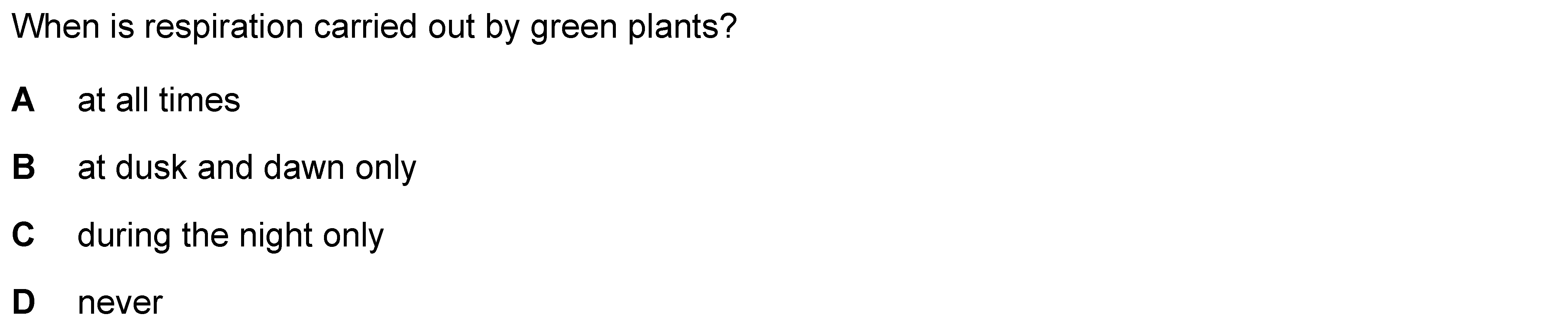
- Plants respire too, in roots, stems and leaves, day and night.
- In daylight photosynthesis produces more oxygen than respiration uses, so plants give out oxygen overall.
Numbers of mitochondria
- Numbers of mitochondria cells that use a lot of energy,
- such as muscle cells, liver cells, sperm cells and cells making seeds and fruit, have many mitochondria.
- Cells storing fats or oils have very few, because they use very little energy.
- Heart muscle has many mitochondria for this reason.
Part 5 of 6Respiration compared with photosynthesis and breathing
| Feature | Respiration | Photosynthesis |
|---|---|---|
| Reactants | Glucose and oxygen | Carbon dioxide and water |
| Products | Carbon dioxide and water | Glucose and oxygen |
| Energy | Released | Absorbed from light |
| Where | All living cells | Cells with chloroplasts |
| When | Always | Only in light |
Balance
- Balance the two processes are almost opposites and together keep oxygen and carbon dioxide in the air in balance.
Breathing
- Breathing the movement of air into and out of the lungs, which brings oxygen for respiration and removes the carbon dioxide produced.
Part 6 of 6Evidence and uses of the energy
Evidence
- Evidence germinating seeds release heat in a flask, exhaled air turns limewater cloudy and living organisms in a sealed container use up oxygen.
Practical
- Practical living peas warm up in a vacuum flask as respiration releases energy, but boiled (dead) peas do not.
- Controls are the number and mass of peas, the starting temperature and disinfecting the peas so microbes do not respire.
Uses
- Uses muscle contraction, building proteins, active transport, cell division, nerve impulses and keeping a constant body temperature in mammals and birds.
Exercise
- Exercise muscles respire faster, so breathing and heart rate increase to deliver more glucose and oxygen.
Key terms
| Term | Meaning |
|---|---|
| Respiration | Chemical reactions in cells that release energy from food. |
| Aerobic | Using oxygen. |
| Mitochondrion | The organelle where aerobic respiration mostly takes place. |
| ATP | A molecule that stores and transfers energy in cells. |
| Exothermic | A reaction that releases energy to the surroundings. |
| Glucose | A sugar that is the main fuel for respiration. |
Avoid these mistakes
1
Confusing respiration with breathing — respiration is a chemical reaction in cells.
2
Writing that energy is made — it is released from glucose.
3
Saying plants only photosynthesise — they respire all the time.
4
Swapping reactants and products with photosynthesis — check which is which.
Marked practiceQuizzes for this lesson
?What do you want to solve now?
✓Checkpoint Quiz
8 multiple-choice questions from real exam papers on this lesson.
Question 1 of 8 1:30
Question 2 of 8 1:30

Question 3 of 8 1:30
Question 4 of 8 1:30

Question 5 of 8 1:30

Question 6 of 8 1:30

Question 7 of 8 1:30
Question 8 of 8 1:30

Score: 0 / 8
Answer key
1 A2 C3 A4 B5 A6 C7 C8 C
Last updated: