5.3Chapter 5: Respiration and the Respiratory System
Anaerobic respiration — Alhussan Biology - Stage 8 Revision Notes & Topical Questions
5 min read 6 parts Lesson 3 of 12 2 quizzes
Biology 5.3 Anaerobic respiration — Lactic Acid and Fermentation — Alhussan International Academy — Biology (Stages 7–9) notes: Describe anaerobic respiration in muscles and yeast, write the equations and explain how lactic acid and oxygen debt are linked.Anaerobic respiration = …
- Aerobic summary
- When it happens
- After exercise
- Graph of oxygen uptake
- Use of lactic acid
- Anaerobic respiration = respiration without oxygen ("anaerobic" means without oxygen)
Part 1 of 4Respiration without oxygen
- Aerobic summary most of the time muscles receive the glucose and oxygen they need, and glucose + oxygen → carbon dioxide + water (+ energy).
- When it happens when oxygen is too scarce, such as in muscles during intense exercise, because muscles can store fuel but cannot store oxygen.
- A 100 m sprinter may not take a breath during the race, yet the muscles keep working using anaerobic respiration.
Part 2 of 4Anaerobic respiration in animals
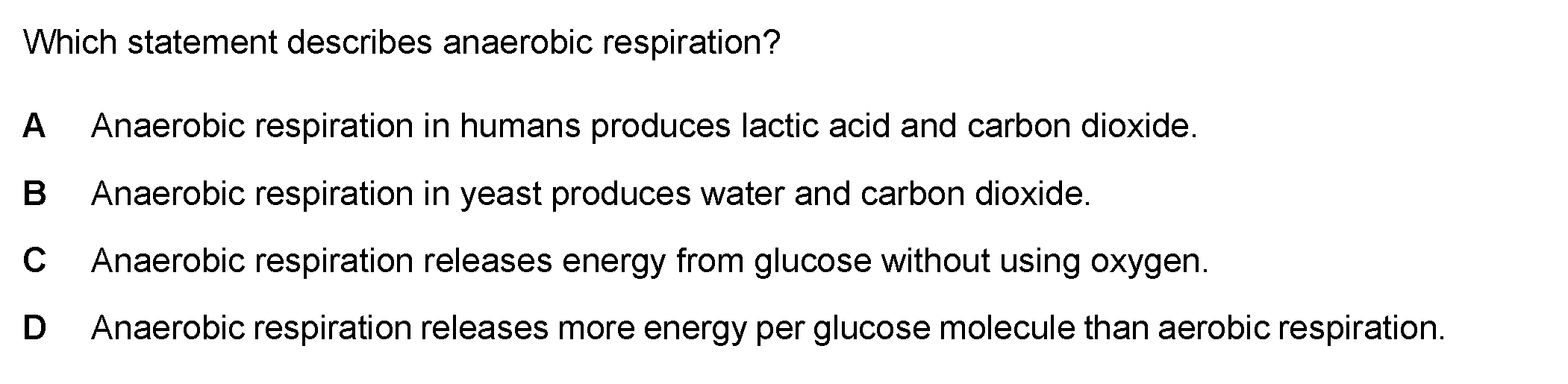
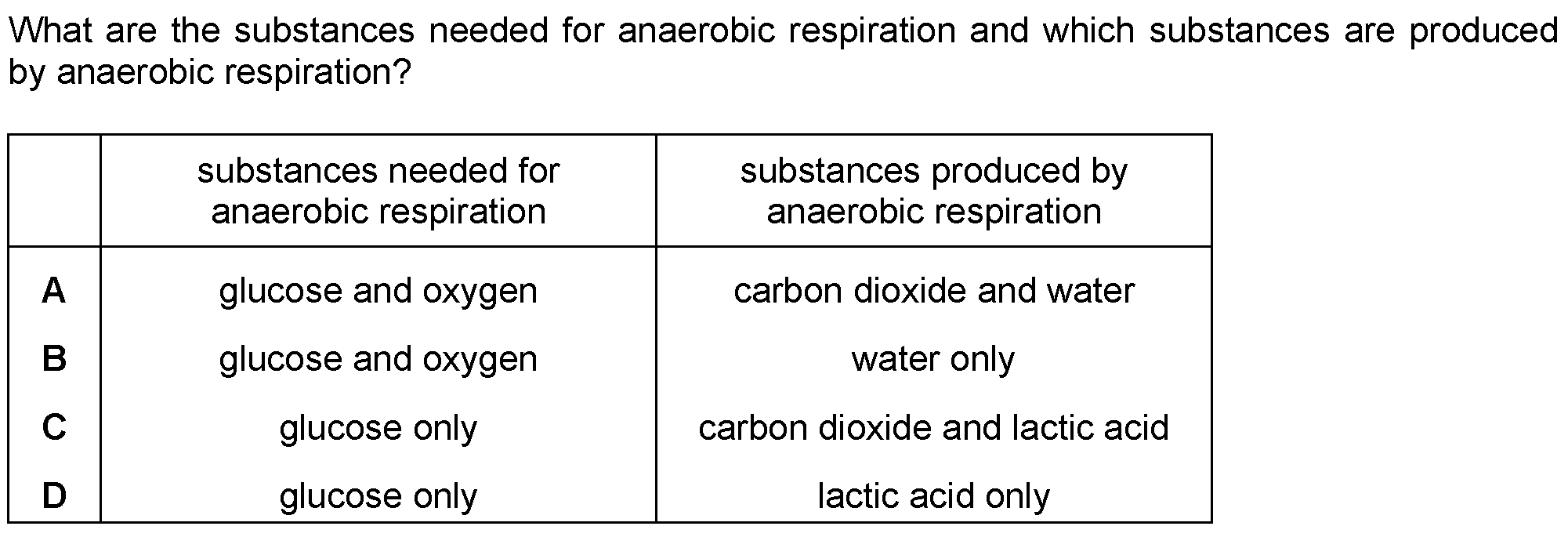
- Equation glucose → lactic acid (+ energy).
- No carbon dioxide or water is made.
- Energy the glucose is not completely broken down,
- so much less energy is released per molecule than in aerobic respiration.
- (about 2 ATP instead of about 30 or more)
- Each muscle cell uses many glucose molecules, so even a small amount of energy per molecule keeps it working.
- Speed anaerobic respiration provides energy quickly, a burst for sprinting or escaping danger.
- It cannot be used for long.
| Feature | Aerobic respiration | Anaerobic respiration |
|---|---|---|
| Oxygen | Needed | Not needed |
| Energy per glucose | A lot | Less |
| Speed of energy release | Slower | Quicker |
| Waste product | Carbon dioxide and water | Lactic acid (in muscles) |
Part 3 of 4Lactic acid and oxygen debt
- Lactic acid the waste product of anaerobic respiration, which is toxic when it builds up and causes muscle fatigue and sometimes cramp.
- After exercise breathing stays fast because the extra oxygen taken in breaks down the lactic acid in the muscles and liver into carbon dioxide and water.
- This is the oxygen debt, and once it is repaid, breathing and heart rate return to normal.
- Graph of oxygen uptake it rises during exercise, stays high in recovery while lactic acid is removed, and falls to the resting level.
- Use of lactic acid it can be changed back to glucose in the liver or used for energy when oxygen is available.
- Athletes a sprinter relies heavily on anaerobic respiration and builds a large oxygen debt,
- whereas a marathon runner works mostly aerobically at a steady pace.
- Training gives a bigger heart, more capillaries and mitochondria in muscles and bigger lung volume, so anaerobic respiration is needed later.
Part 4 of 4Anaerobic respiration in yeast and plants
- Fermentation yeast and some plant tissues,
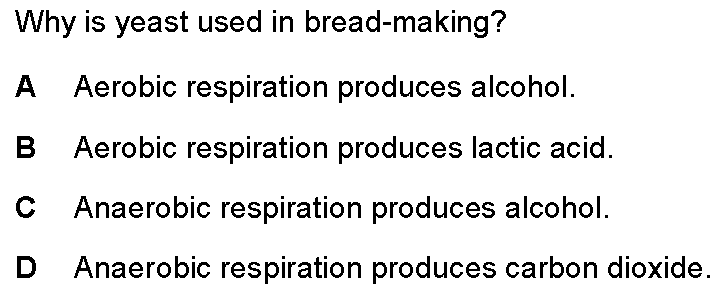
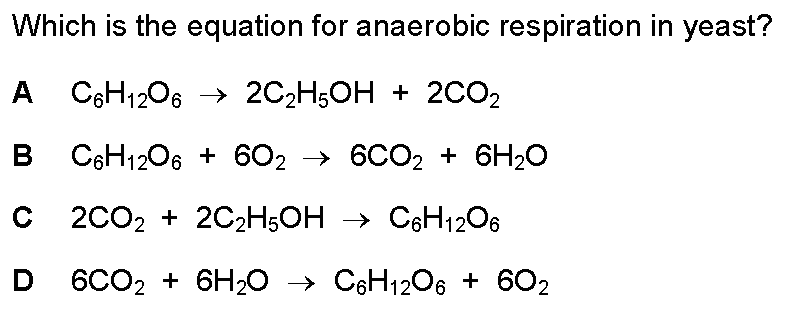
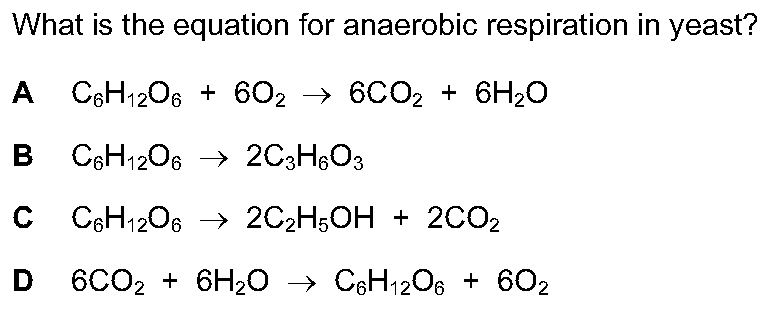
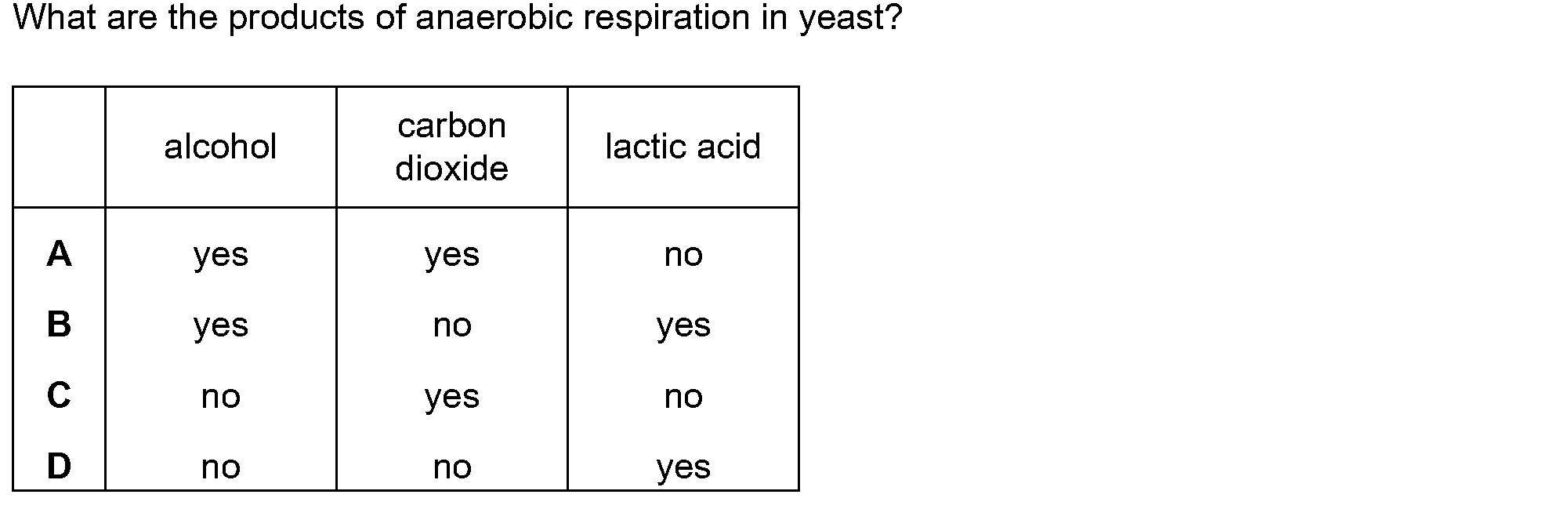
- such as roots in waterlogged soil, produce ethanol and carbon dioxide: glucose → ethanol + carbon dioxide (+ energy).
- Uses bakers use the carbon dioxide to raise dough, and brewers use the ethanol to make beer and wine.
| Feature | Aerobic | Anaerobic (animals) | Anaerobic (yeast) |
|---|---|---|---|
| Oxygen needed | Yes | No | No |
| Products | Carbon dioxide and water | Lactic acid | Ethanol and carbon dioxide |
| Energy released | Large | Small | Small |
Key terms
| Term | Meaning |
|---|---|
| Anaerobic respiration | Respiration without oxygen. |
| Lactic acid | The product of anaerobic respiration in muscles. |
| Fermentation | Anaerobic respiration in yeast giving ethanol and carbon dioxide. |
| Oxygen debt | The extra oxygen needed after exercise to break down lactic acid. |
| Fatigue | Tiredness of muscles from lactic acid build-up. |
| Ethanol | The alcohol produced by yeast fermentation. |
Avoid these mistakes
Marked practiceQuizzes for this lesson
?What do you want to solve now?
✓Checkpoint Quiz
17 multiple-choice questions from real exam papers on this lesson.
Question 1 of 17 1:30

Question 2 of 17 1:30
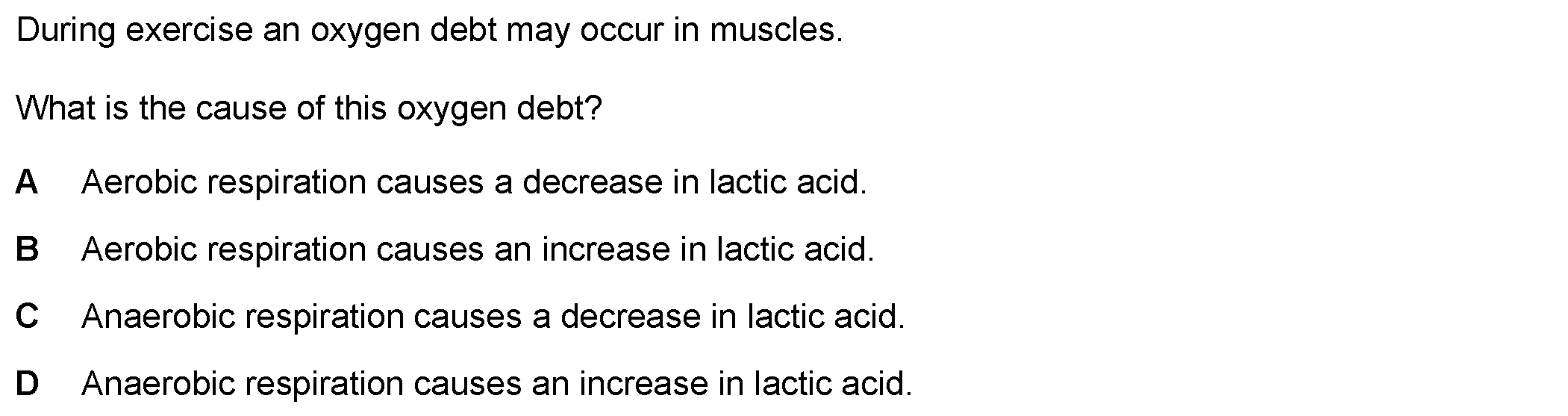
Question 3 of 17 1:30

Question 4 of 17 1:30
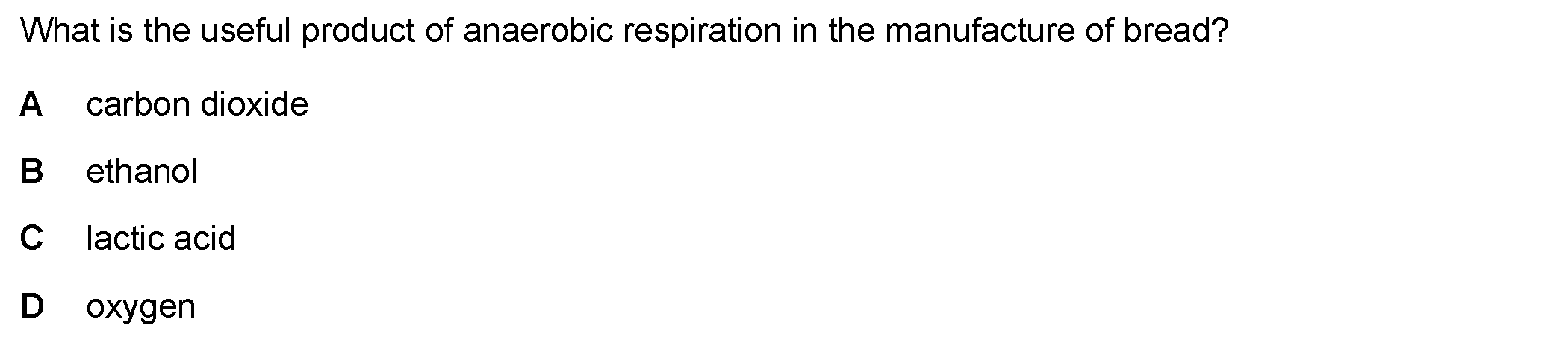
Question 5 of 17 1:30
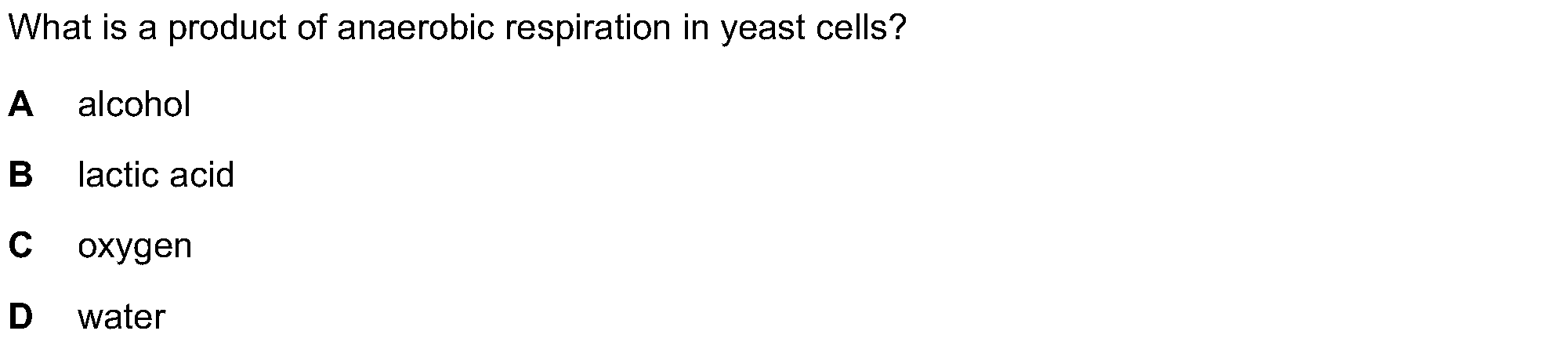
Question 6 of 17 1:30
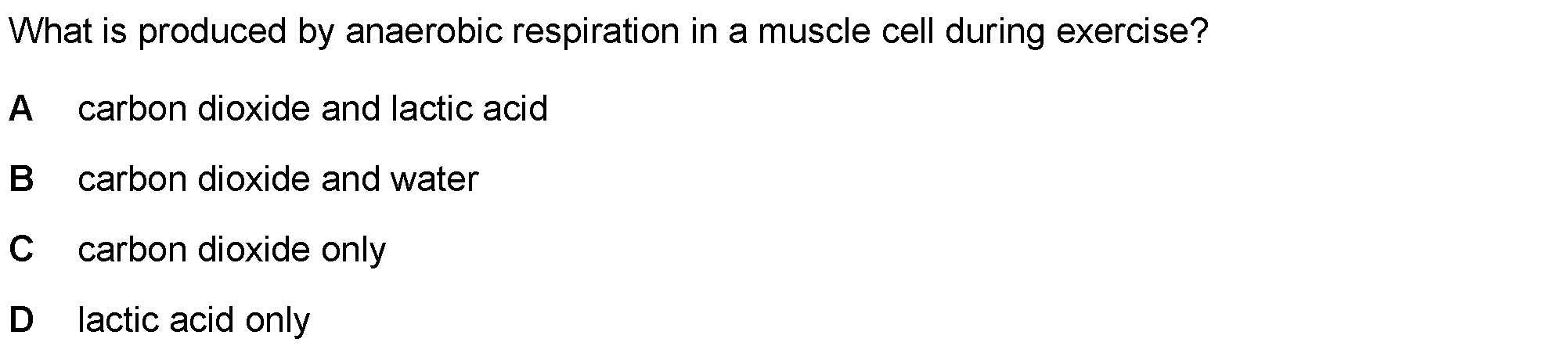
Question 7 of 17 1:30
Question 8 of 17 1:30

Question 9 of 17 1:30

Question 10 of 17 1:30
Question 11 of 17 1:30
Question 12 of 17 1:30

Question 13 of 17 1:30
Question 14 of 17 1:30

Question 15 of 17 1:30

Question 16 of 17 1:30
Question 17 of 17 1:30
Answer key
1 D2 D3 C4 A5 A6 D7 D8 C9 B10 A11 C12 B13 C14 B15 A16 A17 D
Last updated: