5.7Chapter 5: Respiration and the Respiratory System
The effect of exercise on the breathing rate — Alhussan Biology - Stage 8 Revision Notes & Topical Questions
5 min read 8 parts Lesson 7 of 12 2 quizzes
Biology 5.7 The effect of exercise on the breathing rate — Alhussan International Academy — Biology (Stages 7–9) notes: Explain why breathing rate increases with exercise and plan, carry out and analyse an investigation into it.Factors — age, size, fitness and what you are doing …
- Typical rates
- Prediction
- Sitting quietly
- Resting between trials
- Class results
- Reliability
Section 1 of 8Factors affecting breathing rate
- Factors age, size, fitness and what you are doing all affect the number of breaths per minute.
- Typical rates about 12 to 20 breaths per minute at rest, rising to 40 or more in intense exercise.
- Prediction breathing rate should increase after exercise, based on the scientific knowledge that muscles need more energy from respiration.
Section 2 of 8Why exercise increases breathing rate
- Energy contracting muscles need more energy, from respiration using glucose and oxygen and releasing carbon dioxide.
- Gases faster respiration uses more oxygen and produces more carbon dioxide in muscle cells.
- Detection carbon dioxide dissolves in blood and makes it slightly acidic, and sensors in the brain detect the higher carbon dioxide level.
- Response the brain signals the diaphragm and intercostal muscles to contract faster and more strongly,
- so breathing rate and depth of each breath increase.
- Heart heart rate rises too, so blood carries oxygen to the muscles and removes carbon dioxide faster.
Section 3 of 8Investigating the resting breathing rate
- Sitting quietly
- movement or speaking would raise breathing rate and give a false baseline.
Section 4 of 8Investigating the effect of exercise
- Resting between trials it returns the breathing rate to normal so every trial starts from the same condition.
- Variables the independent variable is the exercise, the dependent variable is breathing rate,
- and controls are the same people, room, rest time and counting method.
- (type or duration)
Section 5 of 8Analysing the results
- Class results the mean resting and after-exercise rates for each student go in a table, and a bar graph shows the effect of exercise.
- Pattern breathing rate is higher after exercise, and rises further with more intense exercise.
- Recovery the rate stays high for a few minutes after stopping, because the body repays the oxygen debt and clears carbon dioxide.
- Fitness fitter people have lower resting rates and recover faster,
- because their lungs and heart are more efficient and their muscles have more capillaries and mitochondria.
- Reliability several readings and a mean reduce random error and anomalous results,
- and whole-class data are more useful because individual differences average out and anomalies stand out.
Section 6 of 8Limitations and improvements
- Limitations counting breaths is subjective, people may breathe differently when watched, and different people exercise at different intensities.
- Improvements use a sensor and data logger or a second person to count, use several test subjects and rest completely between trials.
- Safety anyone with asthma or a heart condition may opt out, stop if someone feels unwell and make sure the exercise suits the group.
Section 7 of 8Key terms
| Term | Meaning |
|---|---|
| Breathing rate | The number of breaths per minute. |
| Tidal volume | The volume of air in one breath. |
| Heart rate | The number of heartbeats per minute. |
| Oxygen debt | The extra oxygen needed after exercise. |
| Fitness | The ability of the body to carry out exercise efficiently. |
| Mean | The average of a set of values. |
Section 8 of 8Exam technique
Marked practiceQuizzes for this lesson
?What do you want to solve now?
✓Checkpoint Quiz
1 multiple-choice + 2 written questions from real exam papers on this lesson.
Question 1 of 1 1:30
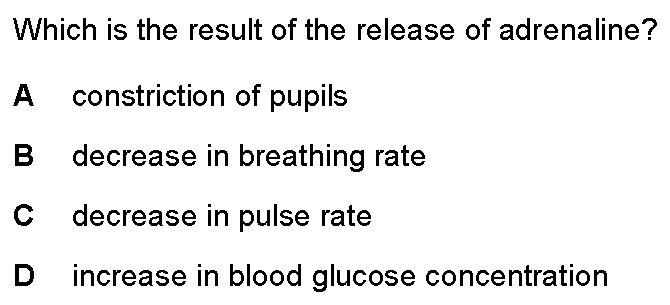
Answer key
1 D
Written question 1 of 2 · part (a)(i) (1 / 3) 3:00
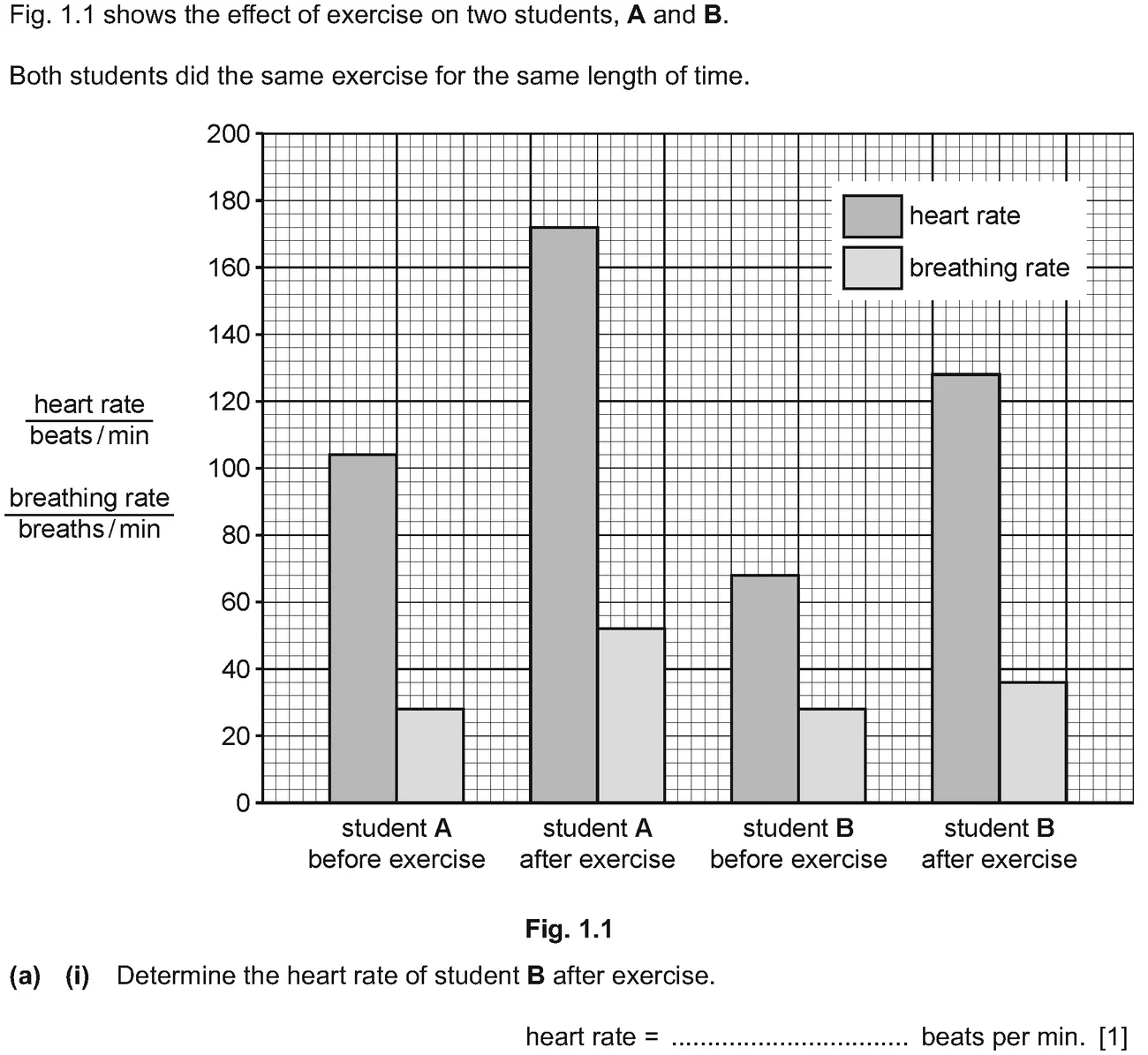
Show the answer

Written question 1 of 2 · part (a)(ii) (2 / 3) 3:00
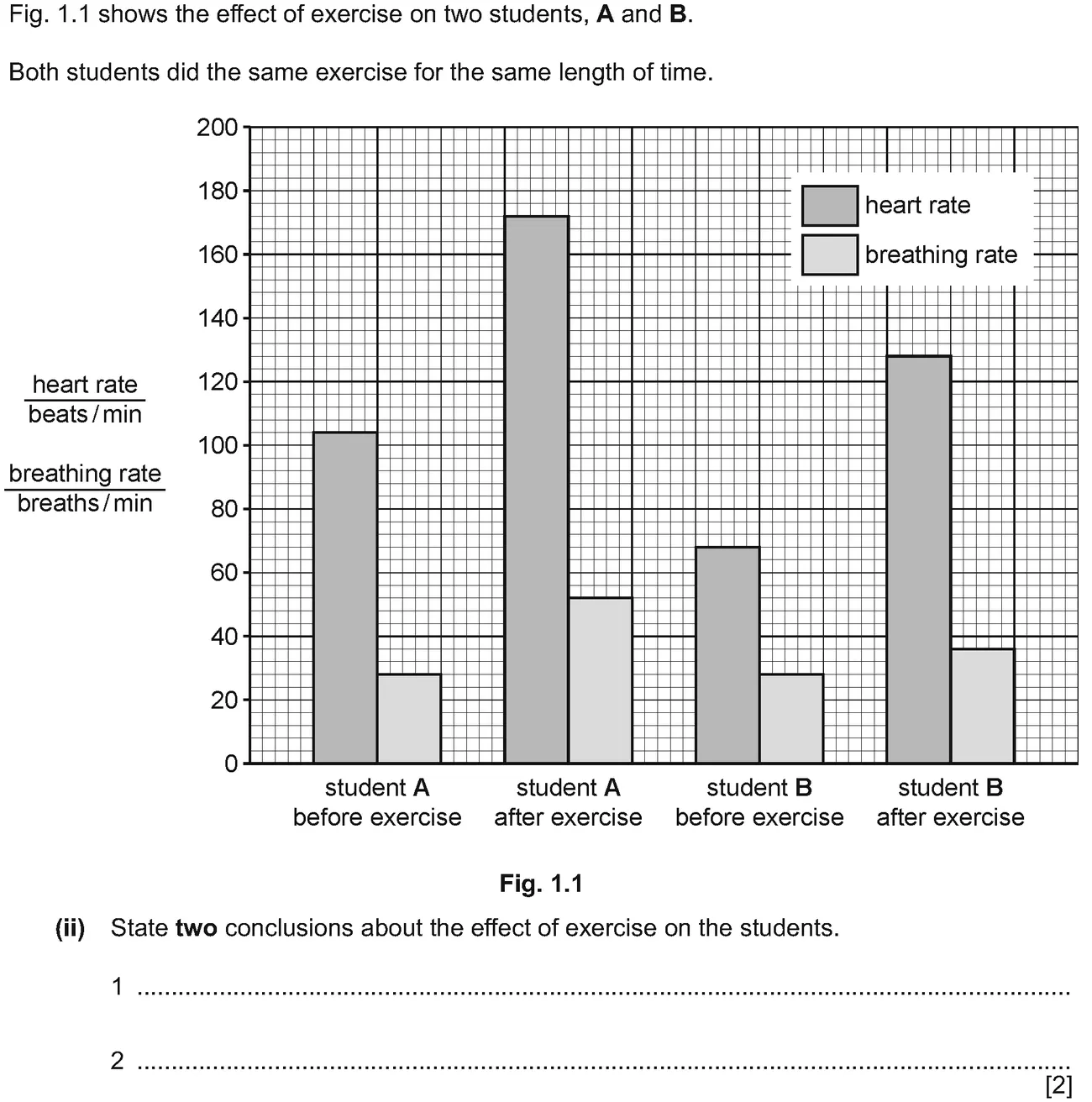
Show the answer

Written question 1 of 2 · part (b) (3 / 3) 3:00
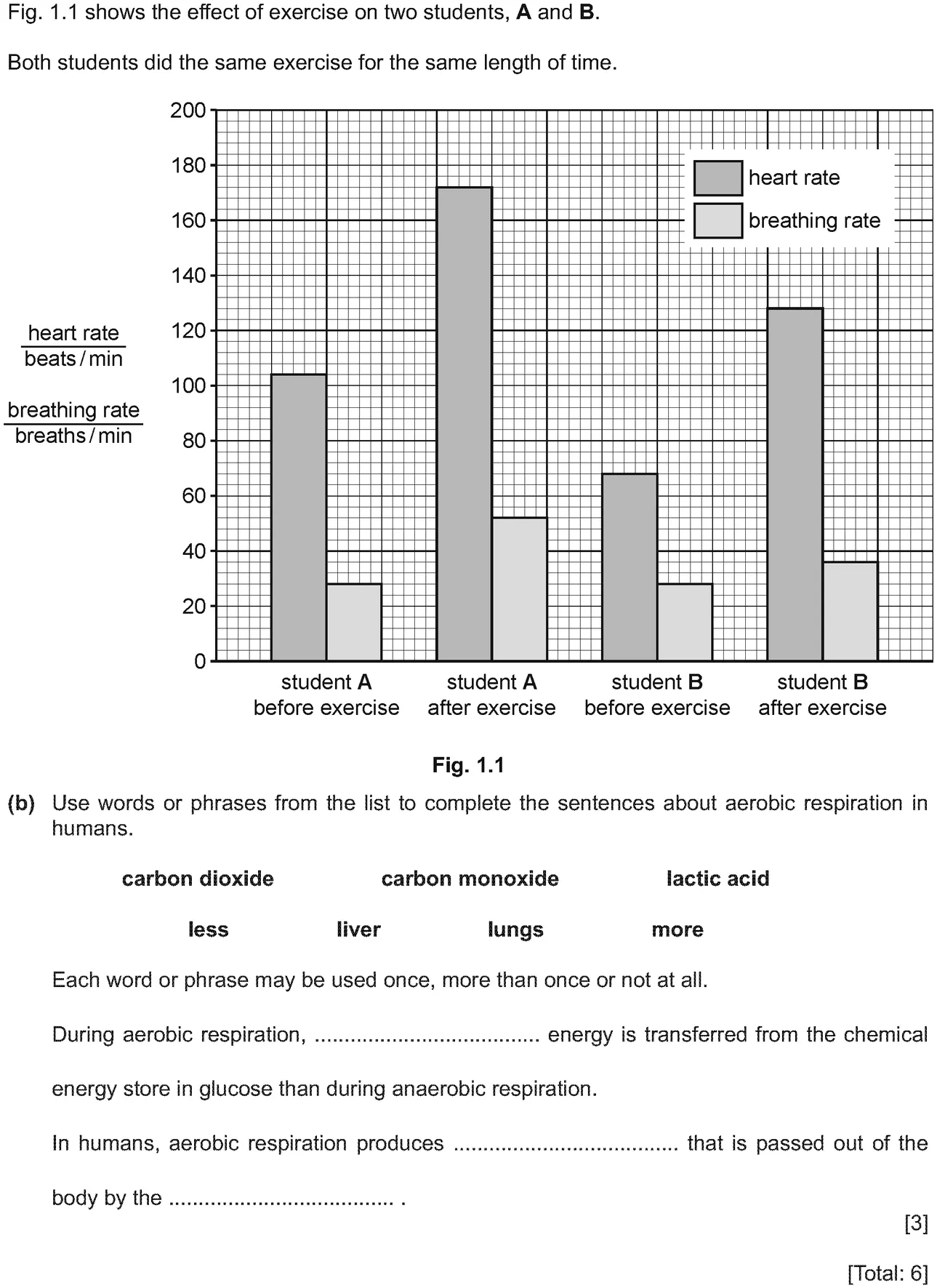
Show the answer

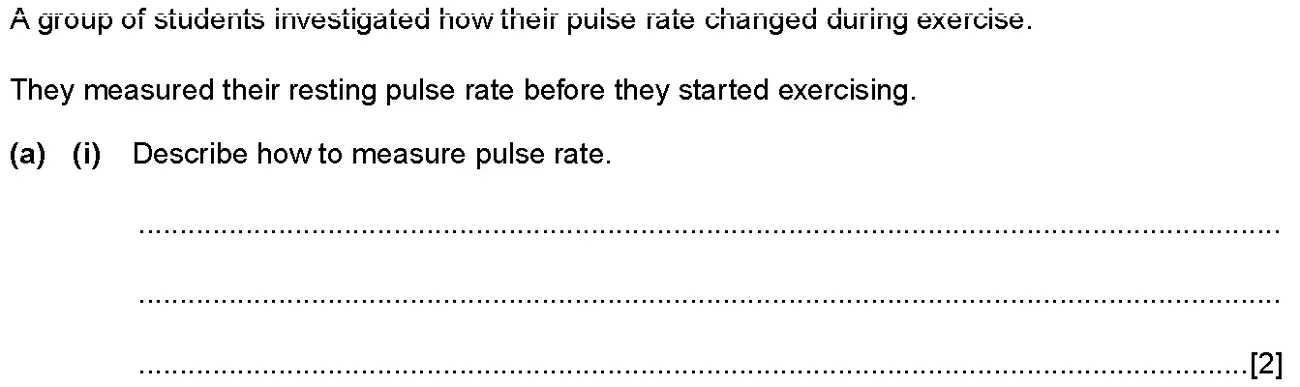
Written question 2 of 2 · part (a)(i) (1 / 7) 3:00
Show the answer
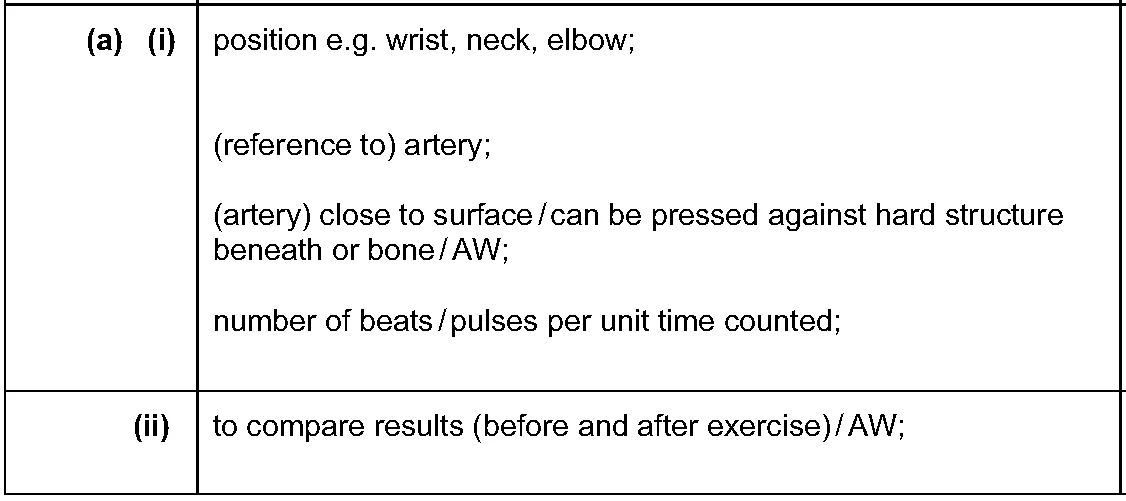
Written question 2 of 2 · part (a)(ii) (2 / 7) 3:00

Show the answer
Written question 2 of 2 · part (b)(i) (3 / 7) 3:00

Show the answer
Written question 2 of 2 · part (b)(ii) (4 / 7) 3:00

Show the answer
Written question 2 of 2 · part (c) (5 / 7) 3:00
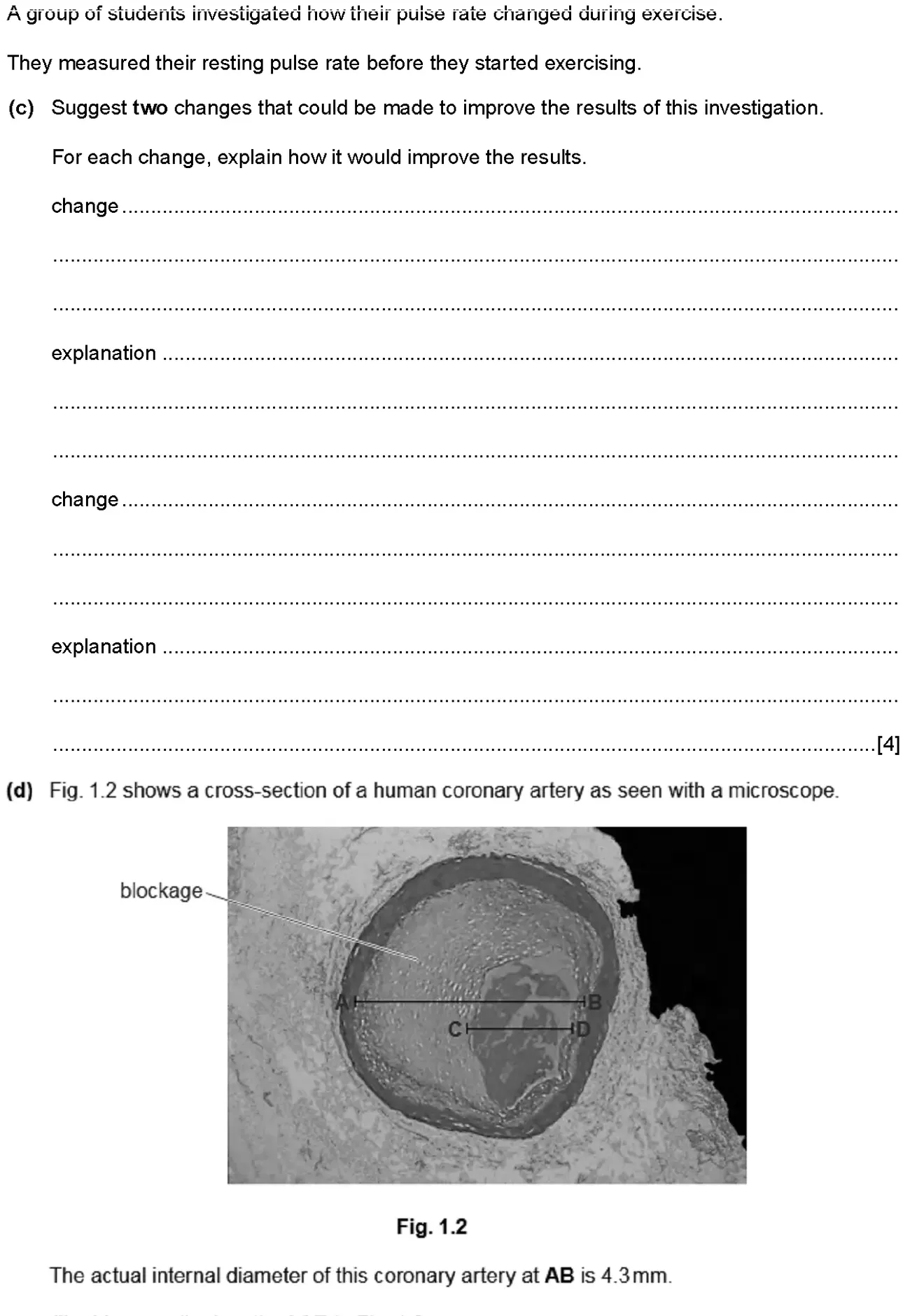
Show the answer
Written question 2 of 2 · part (d)(i) (6 / 7) 3:00

Show the answer
Written question 2 of 2 · part (d)(ii) (7 / 7) 3:00
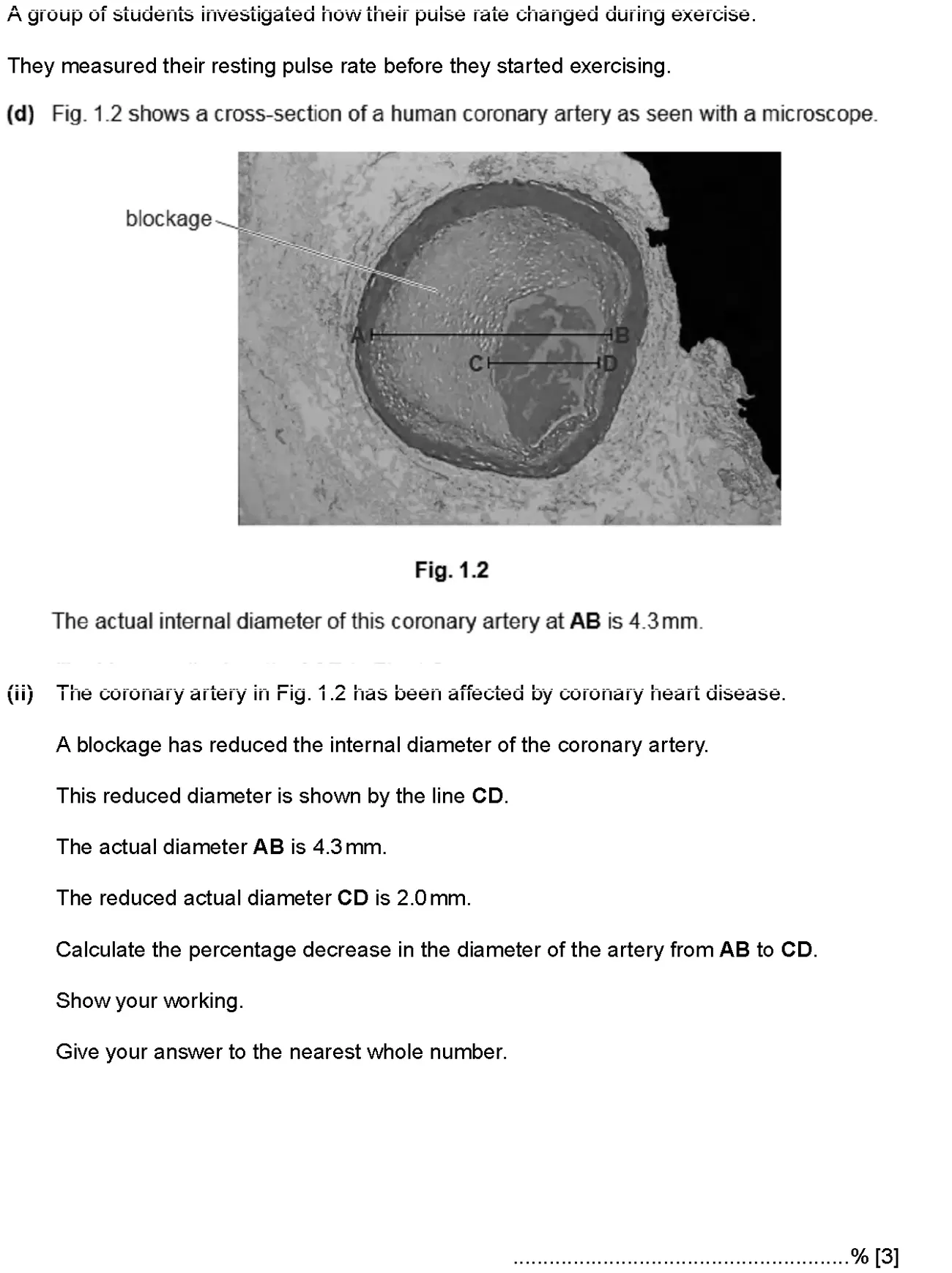
Show the answer
Each part of a written question is on its own screen. Write your answer first, then open "Show the answer" to check it against the mark scheme.
Last updated: