6.2Chapter 6: Nutrition, Health and Movement
Carbohydrates, fats and energy — Alhussan Biology - Stage 8 Revision Notes & Topical Questions
5 min read 8 parts Lesson 2 of 12 2 quizzes
Biology 6.2 Carbohydrates, fats and energy — Alhussan International Academy — Biology (Stages 7–9) notes: Compare sugars, starch, glycogen and lipids as energy foods and energy stores.Respiration — aerobic respiration releases energy from food in cells using oxygen.Main energy fo…
- Main energy foods
- Energy content
- Attraction
- Other roles
- Excess energy
- Simple sugars
Part 1 of 6Foods that supply energy
- Respiration aerobic respiration releases energy from food in cells using oxygen.
- Main energy foods carbohydrates and lipids (fats and oils) provide animals, including humans, with the energy they need.
Part 2 of 6Carbohydrates: sugars and starch
- Sugars small, soluble carbohydrate molecules such as glucose, which often taste sweet.
- They move quickly by diffusion from the digestive system into the blood, giving an energy boost.
- Dates and bananas contain lots of sugar.
- Starch a carbohydrate made by plants from lots of sugar molecules.
- Bread, rice and pasta contain lots of starch.
- It must be broken down by the body, so energy from starchy foods is released slowly.
- Potatoes, sweet potatoes, carrots and beets are starch-filled plant roots that make energy-rich food.
Part 3 of 6Lipids
- Energy content fats and oils contain much more energy per gram than carbohydrates, about twice as much.
- Structure all lipid molecules have the same basic structure, a glycerol molecule with fatty acids attached.
- Each fat or oil has a different set of fatty acids.
- Plants they store energy-rich lipids in seeds to feed the new plant when it grows.
- Many animals eat seeds and nuts to get the fats and oils they need.
- Attraction people and animals like fat- and oil-rich foods because they are good energy sources,
- and fats combined with sugars are very high in energy but rare in nature.
- (cakes, ice cream)
- Other roles fat insulates the body and protects organs.
Part 4 of 6How energy is stored
- Reason animals need energy all the time but do not eat all the time, so energy is stored for when food is not available.
- Glycogen a short-term carbohydrate energy store in the muscles and liver, made of many sugar molecules joined together like starch.
- It gives instant energy if the blood sugar level gets low.
- Fat a long-term store of energy.
- Excess food molecules are converted into fat and stored in fat cells under the skin and around organs.
- If not enough food is eaten, the body breaks down fat stores to give cells energy.
Part 5 of 6Comparison of energy foods
| Food type | Speed of energy release | Energy per gram (approx.) | Examples |
|---|---|---|---|
| Sugars | Fast | 17 kJ | Dates, bananas |
| Starch | Slow, after digestion | 17 kJ | Bread, rice, potatoes |
| Glycogen | Very fast, an instant store | 17 kJ | Muscle, liver |
| Lipids | Slowest, long-term store | 37 kJ | Oils, nuts, butter |
- Choice sugary fruit gives a quick boost, starchy food a steady supply, and fatty food packs the most energy per gram.
- Athletes they eat starchy meals before long events so glycogen stores are full.
- Excess energy any excess energy is stored as fat, so energy eaten and used must balance.
Part 6 of 6Testing for energy foods
- Starch iodine solution turns blue-black.
- Benedict's solution turns orange-red on heating.
- Lipids a smear makes translucent marks on paper, or a cloudy emulsion forms in ethanol and water.
Key terms
| Term | Meaning |
|---|---|
| Sugar | A small soluble carbohydrate. |
| Starch | A plant carbohydrate made of many sugar molecules. |
| Glycogen | The short-term carbohydrate energy store in animals. |
| Lipid | A fat or oil. |
| Insulation | A layer that reduces heat loss. |
| Respiration | The release of energy from food in cells. |
Avoid these mistakes
Marked practiceQuizzes for this lesson
?What do you want to solve now?
✓Checkpoint Quiz
2 multiple-choice + 2 written questions from real exam papers on this lesson.
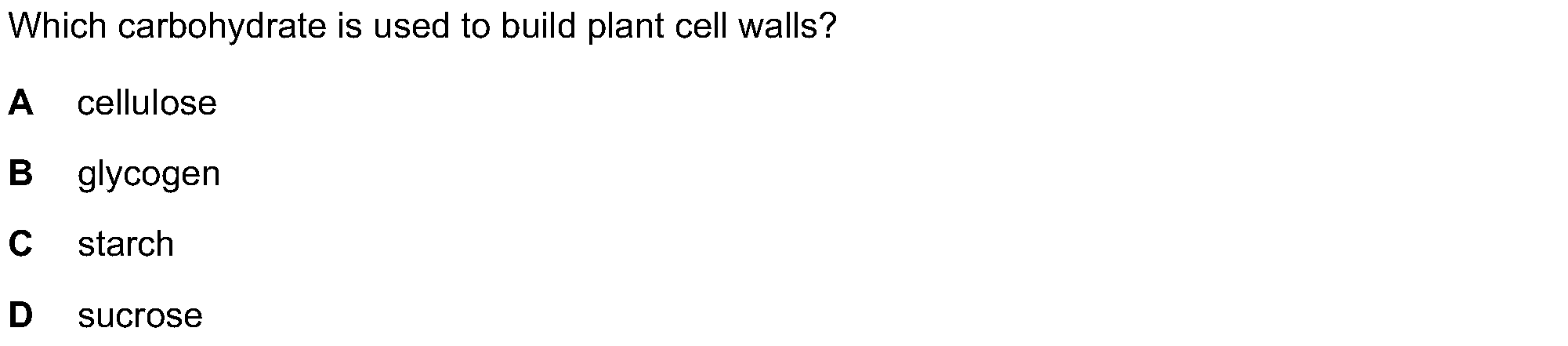
Question 1 of 2 1:30
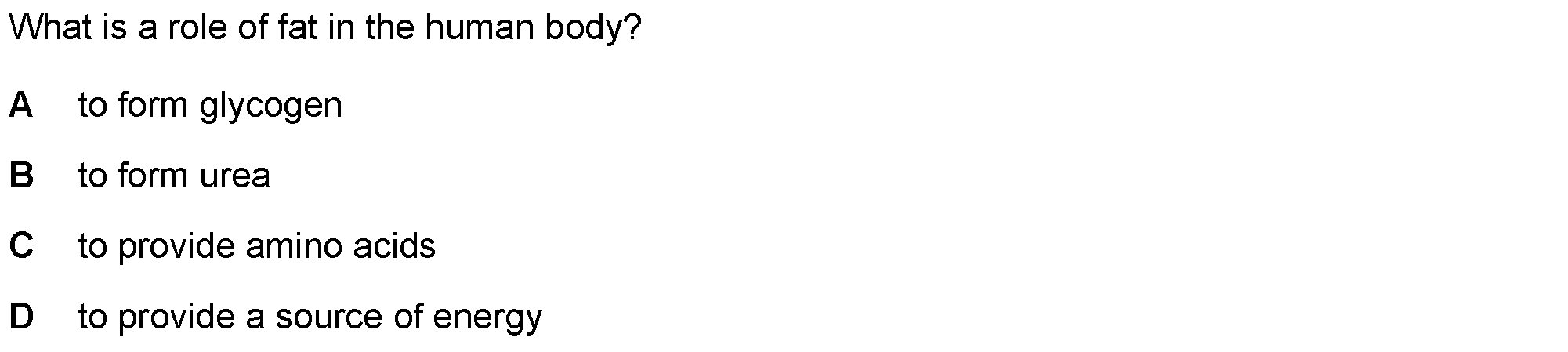
Question 2 of 2 1:30
Answer key
1 A2 D
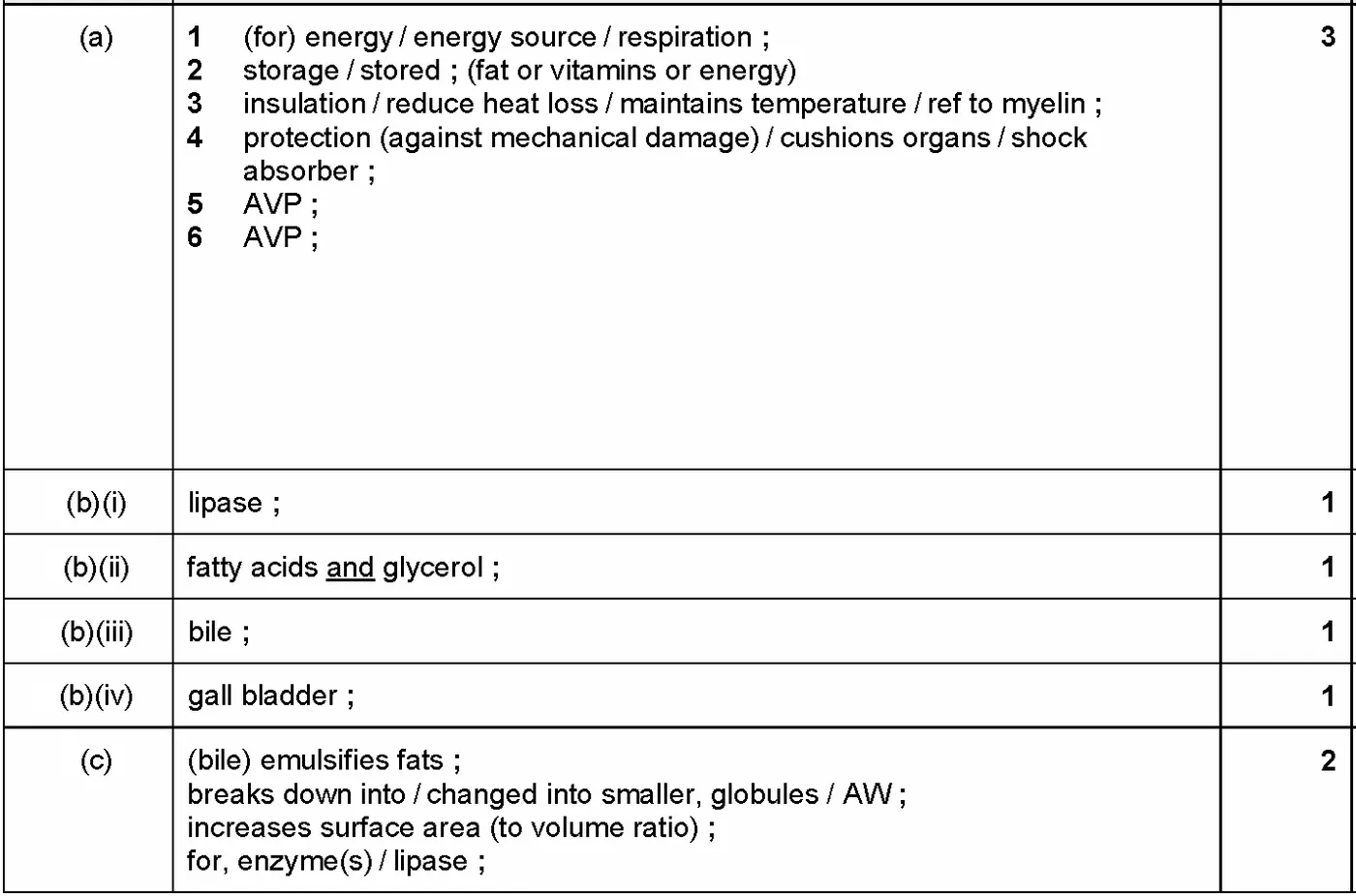
Written question 1 of 2 · part (a) (1 / 8) 3:00

Show the answer
Written question 1 of 2 · part (b)(i) (2 / 8) 3:00

Show the answer
Written question 1 of 2 · part (b)(ii) (3 / 8) 3:00

Show the answer
Written question 1 of 2 · part (b)(iii) (4 / 8) 3:00

Show the answer
Written question 1 of 2 · part (b)(iv) (5 / 8) 3:00

Show the answer
Written question 1 of 2 · part (c) (6 / 8) 3:00

Show the answer
Written question 1 of 2 · part (e) (7 / 8) 3:00

Show the answer
Written question 1 of 2 · part (f) (8 / 8) 3:00
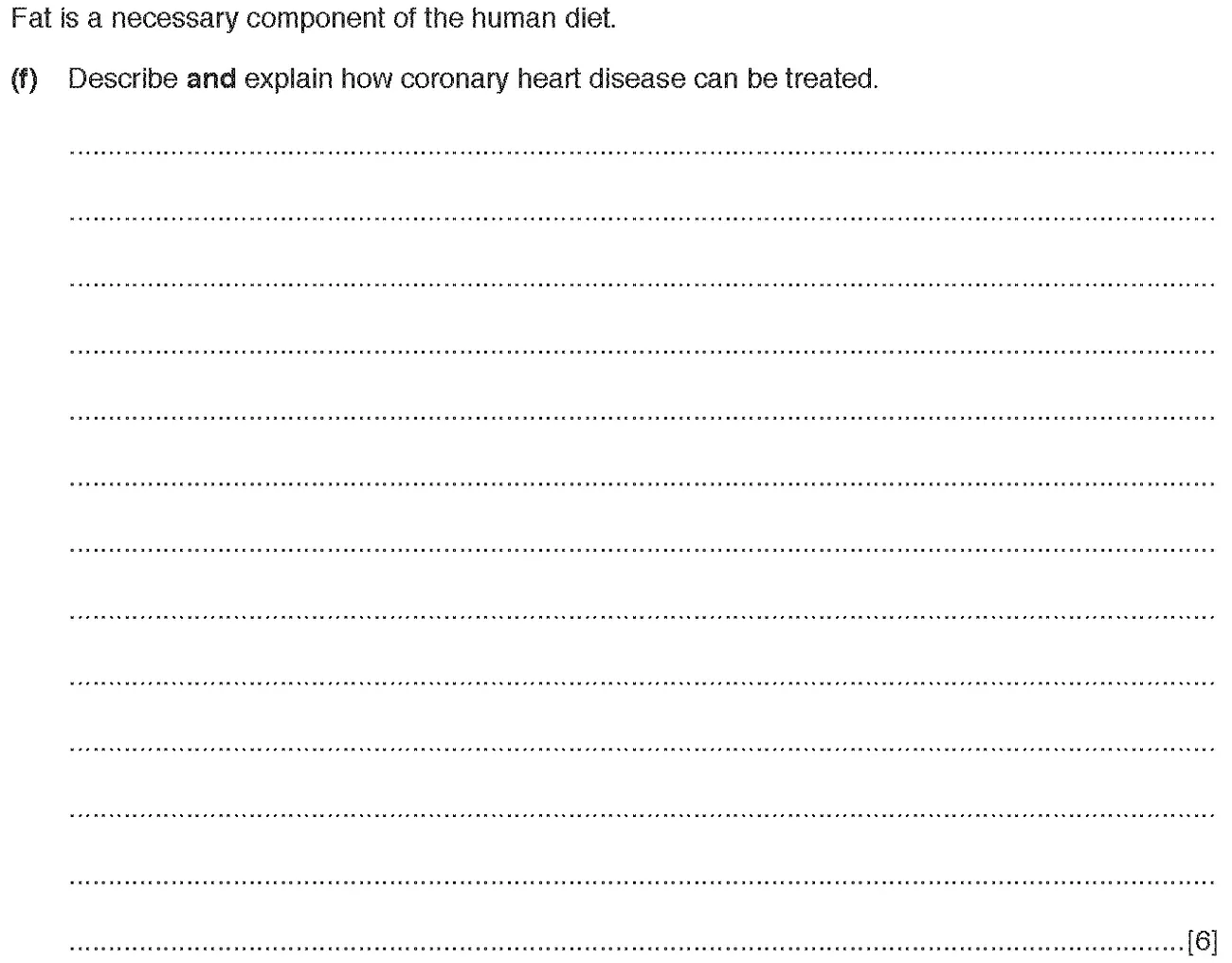
Show the answer
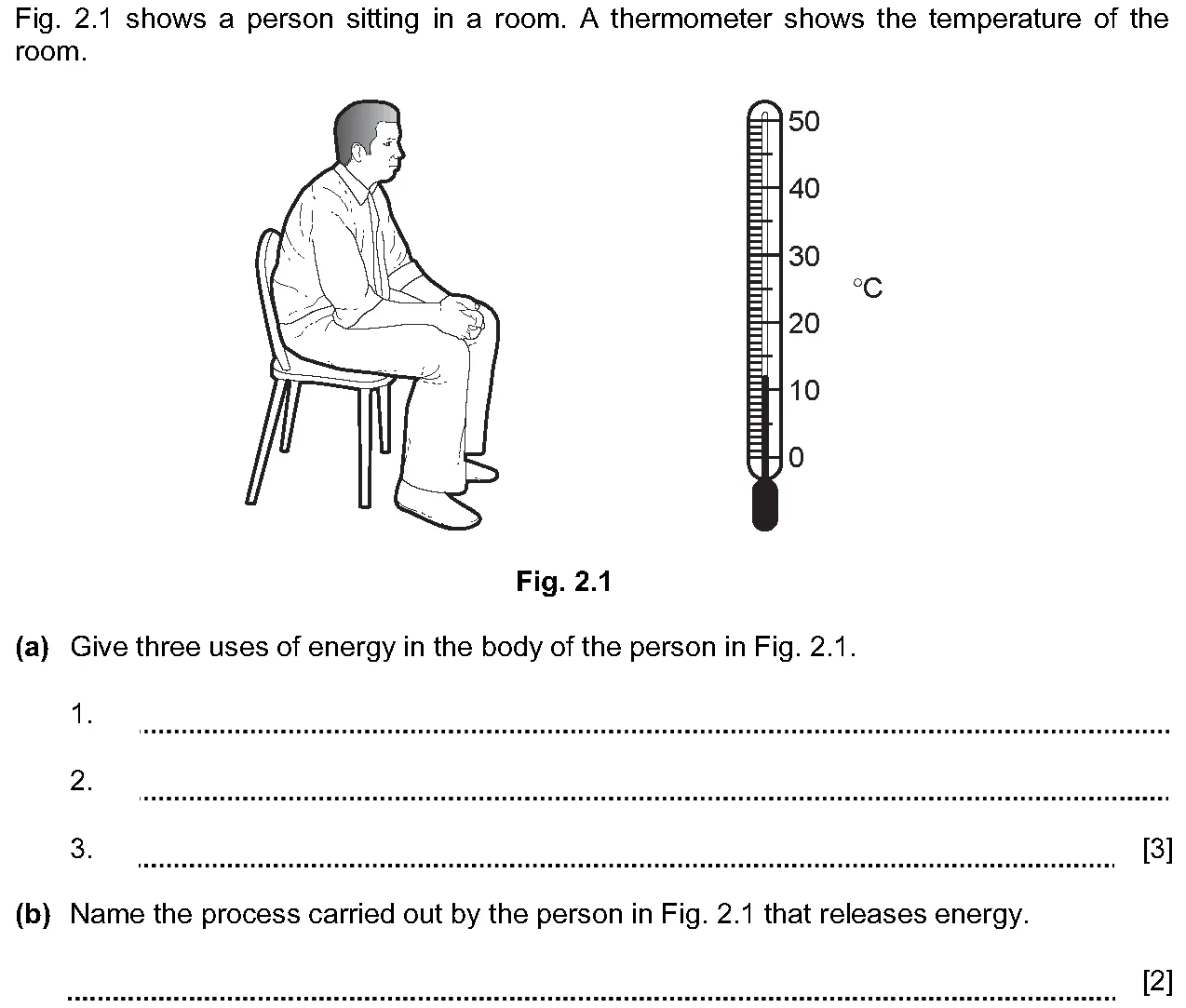
Written question 2 of 2 · part (b) (1 / 3) 3:00
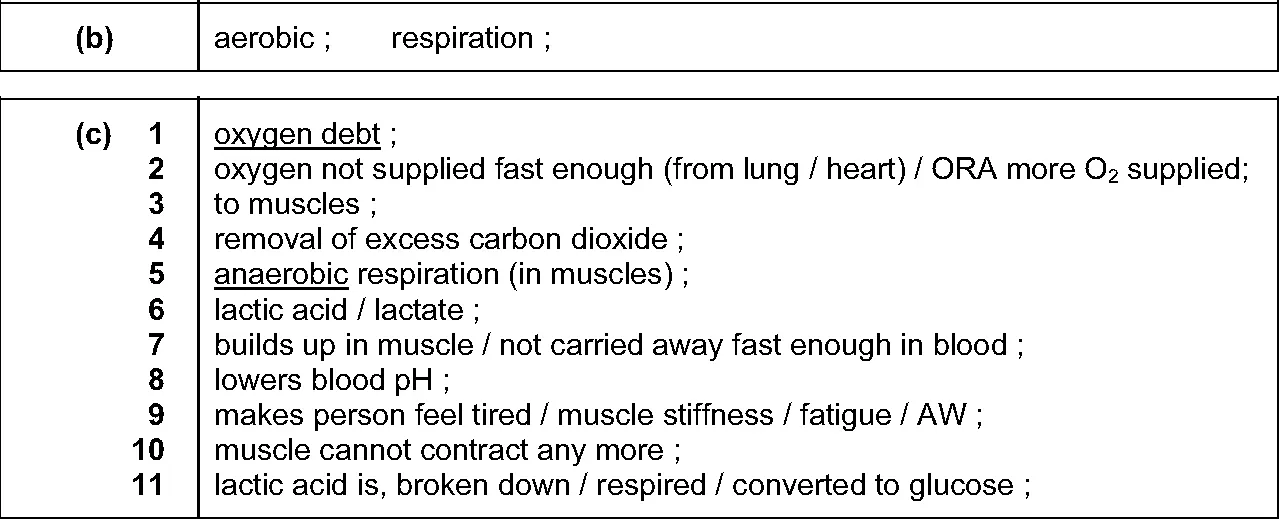
Show the answer
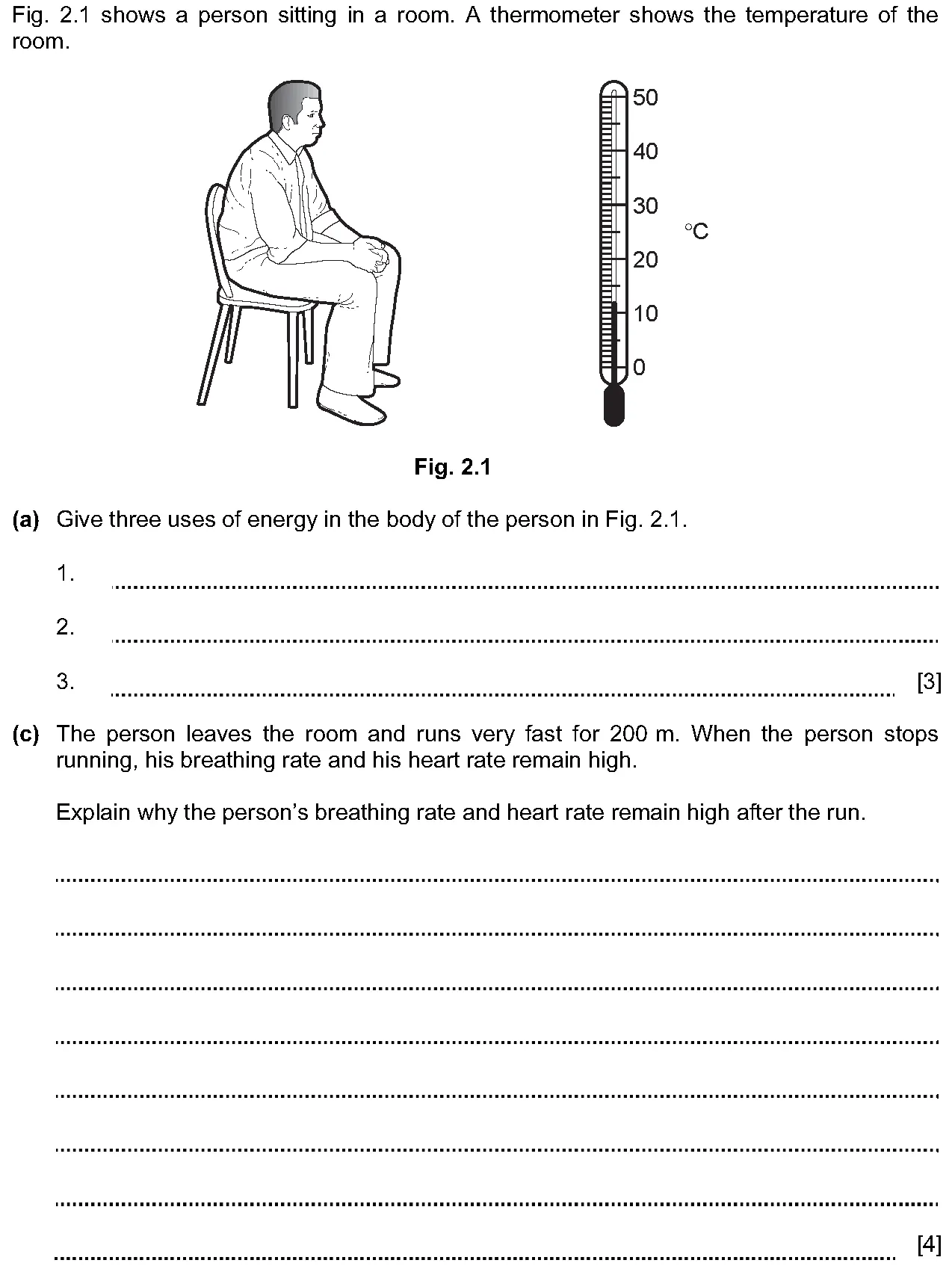
Written question 2 of 2 · part (c) (2 / 3) 3:00
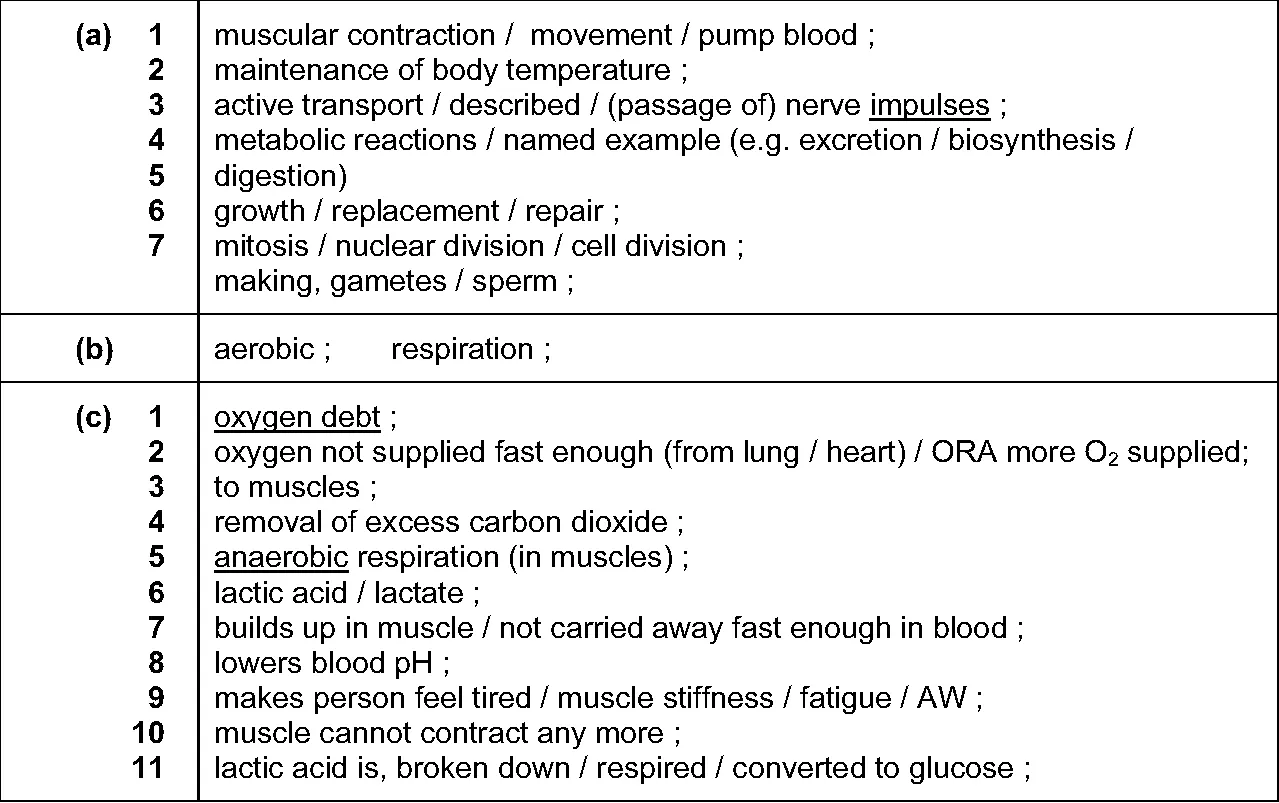
Show the answer
Written question 2 of 2 · part (d) (3 / 3) 3:00

Show the answer
Each part of a written question is on its own screen. Write your answer first, then open "Show the answer" to check it against the mark scheme.
Last updated: