6.6Chapter 6: Nutrition, Health and Movement
Starvation, obesity and health — Alhussan Biology - Stage 8 Revision Notes & Topical Questions
5 min read 8 parts Lesson 6 of 12 2 quizzes
Lesson summary
Biology 6.6 Starvation, obesity and health — Malnutrition and Deficiency Diseases — Alhussan International Academy — Biology (Stages 7–9) notes: Describe the causes and health effects of starvation and obesity and use BMI to assess body mass.Balanced diet — it means eating the ri…
- Energy balance
- Lack of exercise
- Difficulty
- High blood pressure
- Heart disease
- Benefit of weight loss
Part 1 of 6Right food and right amount
Balanced diet
- Balanced diet it means eating the right combination of foods and the right amount.
Malnutrition
- Malnutrition both too little food and too much food have serious effects on health.
Part 2 of 6Too little food: starvation
Effects
- Effects a person becomes thin, muscles waste away, energy is low and deficiency diseases develop.
- Starving children do not grow and develop healthily, and starving adults cannot work and become ill.
Causes
- Causes crop failure, natural disasters, war and poverty, and it is not a lifestyle choice.
Scale
- Scale over 10% of the world's population do not get enough food, over 800 million people are hungry every day and around 9 million people die of starvation each year.
Energy balance
- Energy balance when energy used exceeds energy eaten, the body uses up fat and then muscle.
Part 3 of 6Too much food: obesity
Cause
- Cause when we eat more than the body needs, the excess is stored as fat, and continued storage leads to obesity.
- Over-eating is a lifestyle choice for many people, although the genes inherited also matter.
Lack of exercise
- Lack of exercise in many countries few people have physical jobs and most drive rather than walk, yet cheap food is more available than ever.
Scale
- Scale globally, more people are obese than starving.
Reversal
- Reversal eating less energy or using more through exercise lowers body fat.
Part 4 of 6Health effects of obesity
1Difficulty
- Difficulty it is hard for obese people to exercise, and they are often short of breath.
2Diabetes
- Diabetes a lot of body fat makes blood sugar levels hard to control, causing tiredness and eventually blindness and even death.
3High blood pressure
- High blood pressure it stresses the heart and blood vessels and causes heart disease and strokes.
4Heart disease
- Heart disease fatty material builds up in the blood vessels and may cause a heart attack.
5Cancer
- Cancer at least 13 different cancers are more common in overweight and obese people.
6Arthritis
- Arthritis strain on the skeleton leads to wear and pain in the joints.
7Deficiency diseases
- Deficiency diseases fatty, sugary foods are often low in vitamins and minerals.
8Benefit of weight loss
- Benefit of weight loss losing weight reduces the risk of almost all the diseases linked to obesity.
Part 5 of 6Body mass index
- BMI mass (kg) ÷ height (m)2, so the height must be squared.
| BMI | Category |
|---|---|
| Under 18.5 | Underweight |
| 18.5 to 24.9 | Healthy (normal) weight |
| 25 to 29.9 | Overweight |
| 30 to 39.9 | Obese |
| 40 or over | Morbidly obese |
Risk
- Risk being underweight or obese increases the risk of some diseases.
Limitations
- BMI is only one measure, and a very muscular athlete may have a high BMI without too much fat.
Other measures
- Other measures neck circumference and the waist-to-hip ratio.
Part 6 of 6Prevention and response
Obesity
- Obesity eat a balanced diet with less sugar and fat, take regular exercise and balance energy eaten with energy used.
Starvation
- Starvation food aid, better farming and a fairer distribution of food.
Public health
- Public health food labels, taxes on sugary drinks, school meal standards and campaigns.
Evidence
- Evidence a correlation between obesity and disease does not prove cause, because age, genes and income also matter.
Key terms
| Term | Meaning |
|---|---|
| Malnutrition | Poor health from lacking or having too much of a nutrient or of energy. |
| Starvation | A severe lack of food. |
| Obese | Having so much body fat that health is affected, BMI of 30 or over. |
| BMI | Body mass index, mass divided by height squared. |
| Diabetes | A condition in which blood sugar is hard to control. |
| Deficiency disease | An illness from a lack of a nutrient. |
Avoid these mistakes
1
Saying obesity only means being large — it means too much stored fat.
2
Forgetting to square the height in the BMI formula — divide by height squared.
3
Believing malnutrition means only starvation — over-nutrition counts too.
4
Assuming BMI works perfectly for athletes — muscle raises BMI.
Marked practiceQuizzes for this lesson
?What do you want to solve now?
✓Checkpoint Quiz
4 multiple-choice questions from real exam papers on this lesson.
Question 1 of 4 1:30
Question 2 of 4 1:30
Question 3 of 4 1:30
Question 4 of 4 1:30
Score: 0 / 4
Answer key
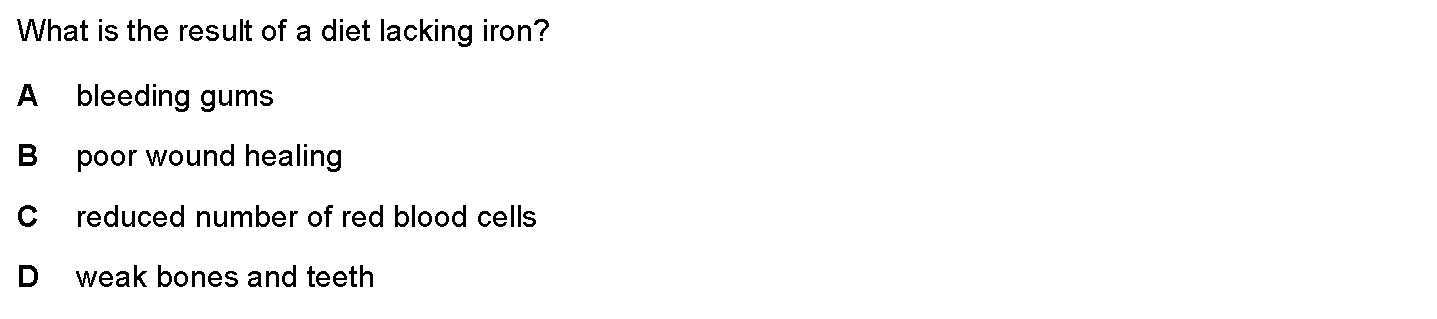
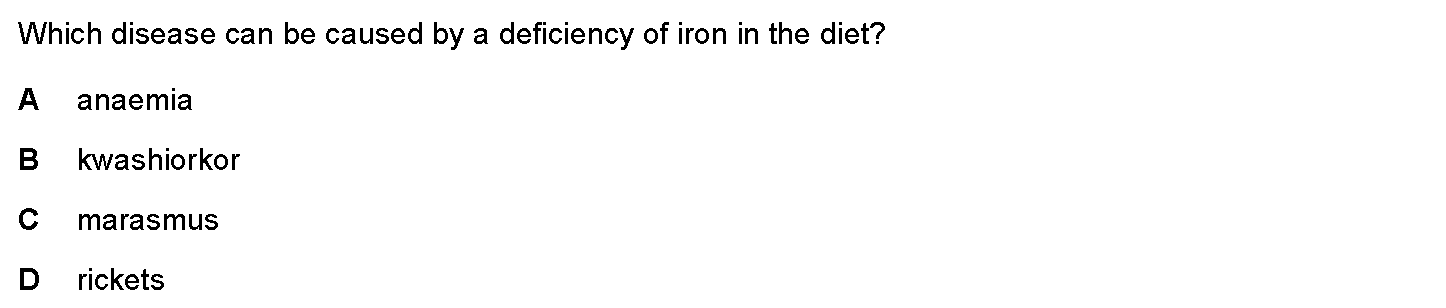
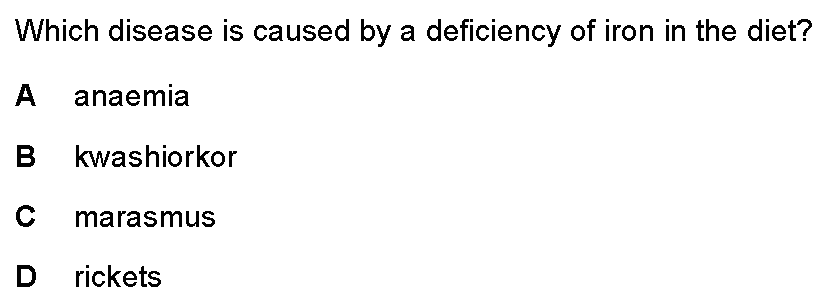
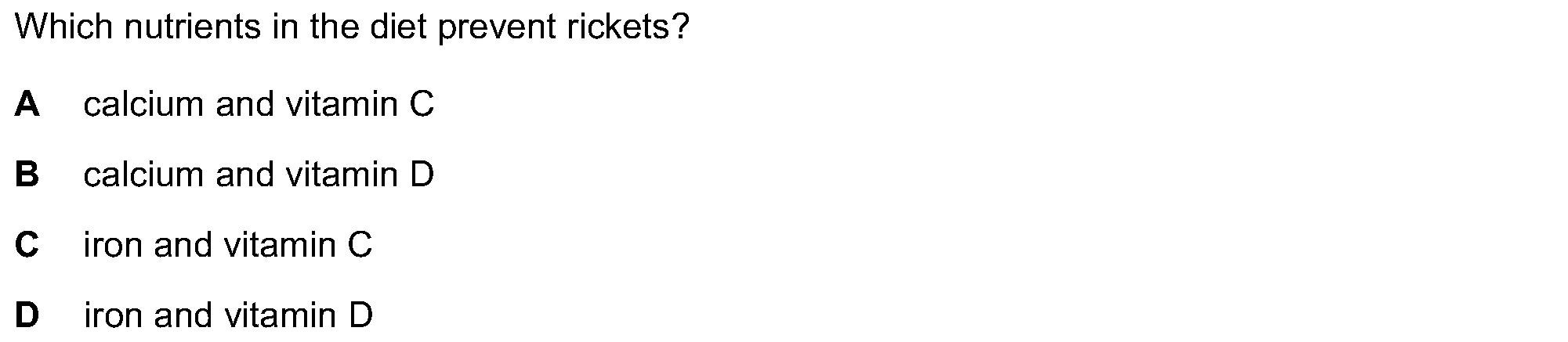
1 C2 A3 A4 B
Last updated: