6.8Chapter 6: Nutrition, Health and Movement
Building the evidence — Alhussan Biology - Stage 8 Revision Notes & Topical Questions
5 min read 8 parts Lesson 8 of 12 1 quiz
Lesson summary
Biology 6.8 Building the evidence — Epidemiology and Scientific Studies — Alhussan International Academy — Biology (Stages 7–9) notes: Explain how scientists use correlation and large studies to build evidence about health, and judge how reliable that evidence is.Early belief — t…
- First link
- Peer-reviewed
- More evidence
- Dose effect
- Conclusion
- Causal link
Part 1 of 6The smoking and lung cancer evidence
1Early belief
- Early belief tobacco has been smoked and chewed for around 500 years,
- and for most of that time people thought smoking was a good thing, with some doctors even advising it for nerves.
2First link
- First link in the 1940s the British doctor Sir Richard Doll and other doctors collected lifestyle information about their cancer patients.
- Analysing the data, Doll saw that many patients who died of lung cancer were also smokers.
- He published his findings as a peer-reviewed paper in the British Medical Journal.
3Peer-reviewed
Peer-reviewed other scientists read and evaluate the work before it is published.
4More evidence
- More evidence after his article, scientists in many countries collected more evidence of the link.
Part 2 of 6What epidemiology shows
Epidemiology
Epidemiology the study of how often diseases occur in different groups of people, and why.
Dose effect
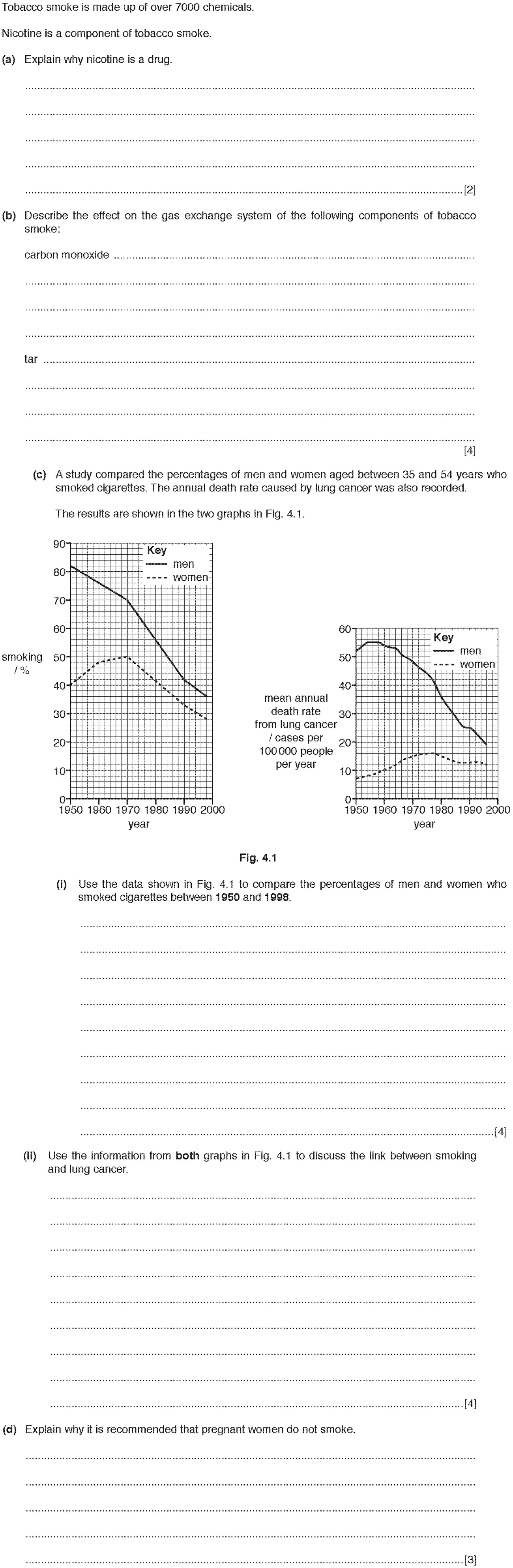
- Dose effect the more cigarettes smoked per day, the higher the risk and death rate from lung cancer.
- (about 8 times the non-smoker risk for 1–14 a day, 15 times for 15–24 and 25 times for 25 or more)
Time lag
- Time lag lung cancer rates follow smoking levels about 20 years later, so the number of deaths falls only after smoking falls.
Conclusion
- Conclusion up to 90% of lung cancers are caused by smoking, a causal link, and the remaining 10% occur in people who never smoked.
Part 3 of 6Correlation and causation
1Correlation
Correlation a relationship in which two variables change together.
2Causal link
Causal link a relationship in which a change in one variable actually makes the other change.
3Warning
- Warning a correlation alone does not prove cause, because a third factor may be responsible.
4Evidence needed for a causal link
- Evidence needed for a causal link a plausible mechanism, repeated results from different studies, a dose effect and a fall in risk when people stop.
- (tar contains carcinogens)
5Changing evidence
- Changing evidence for years the evidence came from analysing patient data,
- and later experiments showed that chemicals in tobacco smoke actually cause lung cancer.
6Genes
- Genes genetic information affects the risk,
- so a heavy smoker may live to old age having inherited protective genes, and non-smokers can still get lung cancer.
Part 4 of 6Designing a reliable study
Designing a reliable study
Large sample
- Large sample chance variation matters less.
Representative sample
- Representative sample people of similar age, sex and background so the groups compare fairly.
Control group
- Control group such as non-smokers, for comparison.
Control other variables
- Control other variables such as age and diet.
Repeat
- Repeat results that others obtain too are more reliable.
Ethics
- Ethics scientists cannot deliberately expose people to harm, so human health studies follow people who have already made their own choices.
Part 5 of 6Evaluating data and claims
Questions to ask
- Questions to ask how big was the sample, who paid for the study, was it peer reviewed and was a control used?
Individual cases
- Individual cases one person does not outweigh data from many thousands of cases.
| Stronger evidence | Weaker evidence |
|---|---|
| Large, representative sample | Few people, chosen by the researcher |
| Control group included | No comparison group |
| Repeated and peer reviewed | One study, not checked |
- Conclusions
- a conclusion should claim only what the data show.
Part 6 of 6Why people still smoke
Reading
- Reading people do not read scientific journals, so they do not see the evidence from thousands of cases.
Choice
- Choice people do not want to accept that something they like increases their risk of a terrible disease.
Industry
- Industry cigarette manufacturers do not want their products linked to millions of deaths a year.
Key terms
| Term | Meaning |
|---|---|
| Epidemiology | The study of patterns, causes and effects of disease in populations. |
| Correlation | A relationship in which two variables change together. |
| Causal link | A relationship in which one factor makes another change. |
| Sample | The group of people or items studied. |
| Control group | A comparison group that does not receive the factor being tested. |
| Peer review | Checking of scientific work by other experts before publication. |
Avoid these mistakes
1
Writing that a correlation proves one thing causes another — it shows a link only and more evidence is needed.
2
Believing a bigger sample is all that matters — it should also be representative and have controls.
3
Forgetting a control group when describing a study — a comparison group is needed.
4
Saying a study is reliable because it is published online — check whether it was peer reviewed.
Topic quiz · 158 questionsQuiz for this lesson
?What do you want to solve now?
✓Checkpoint Quiz
1 written questions from real exam papers on this lesson.
Written question 1 of 1 7:00
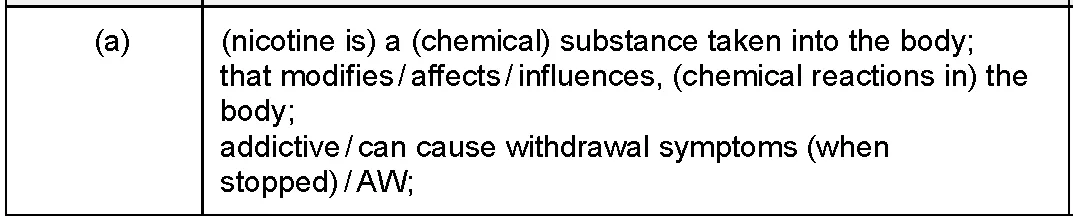
Show the answer
Each part of a written question is on its own screen. Write your answer first, then open "Show the answer" to check it against the mark scheme.
Last updated: