9.2Chapter 9: Plants and Photosynthesis
Photosynthesis — Alhussan Biology - Stage 9 Revision Notes & Topical Questions
5 min read 8 parts Lesson 2 of 9 2 quizzes
9.2 Photosynthesis — Chloroplasts, Light Energy and Word Equations — Alhussan International Academy — Biology (Stages 7–9) notes: Describe photosynthesis, write its word and symbol equations, and explain the role of chloroplasts and how plants use glucose.Photosynthesis = the pro…
- Gas movement
- Chlorophyll
- Aerobic respiration
- Starch store
- Building other molecules
- Net effect
Section 1 of 8What photosynthesis is
- Light energy is transferred to chemical energy stored in glucose.
- It makes the biomass of plants, from wood to cereal crops to flowers, and is the source of nearly all food and energy in ecosystems.
- Biomass animals must eat plants to get biomass, but plants make their own from sunlight, air and water.
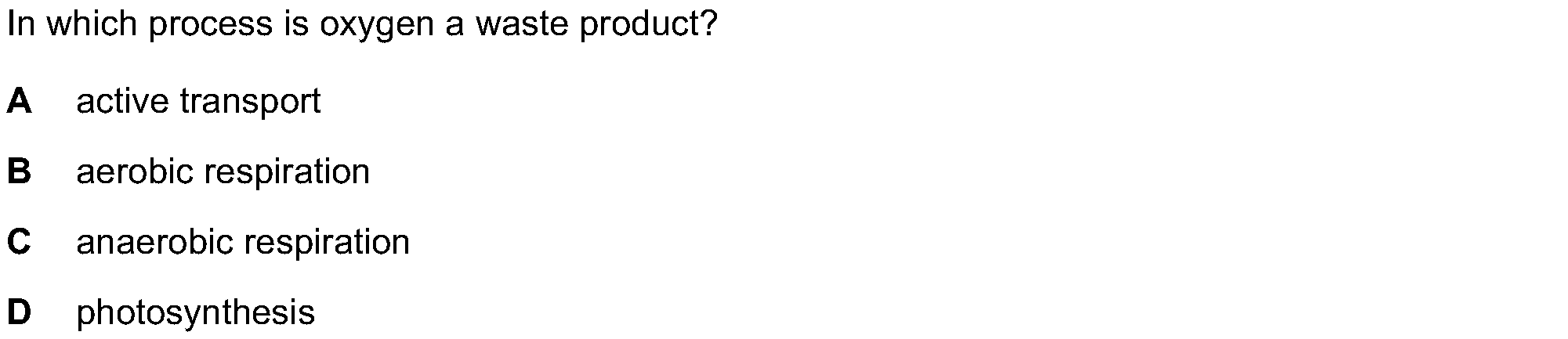
- Oxygen it is a product of photosynthesis and is used for aerobic respiration in most living things.
Section 2 of 8Equations
- Reactants carbon dioxide from the air, which is also made in aerobic respiration, and water from the soil.
- Energy light, usually from the Sun, captured by chlorophyll.
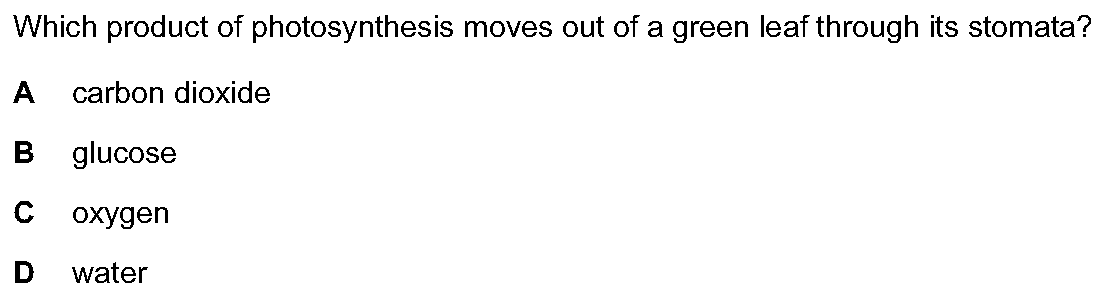
- Gas movement carbon dioxide goes into the leaf and oxygen comes out through the stomata.
Section 3 of 8Where it happens: chloroplasts
- Location photosynthesis happens in chloroplasts, found mostly in palisade cells in leaves.
- Chlorophyll the green pigment in chloroplasts absorbs red and blue light and reflects green, so leaves look green.
- Reactions light energy is used to split water molecules and to build glucose from carbon dioxide, and most reactions take place inside chloroplasts.
- Evidence a cell without chloroplasts cannot photosynthesise, and the number of chloroplasts shows how much photosynthesis a cell carries out.
Section 4 of 8What happens to the glucose
- Aerobic respiration about half of the glucose is used to release energy for all the other reactions in the cells.
- Starch store small, soluble glucose cannot be stored, so molecules join to form large starch molecules.
- Starch is stored in leaves and lasts several days without light, so cells can respire in the dark.
- Starch is also stored in root tubers such as potatoes.
- Building other molecules glucose is the building block for other carbohydrates, proteins, lipids and chlorophyll.
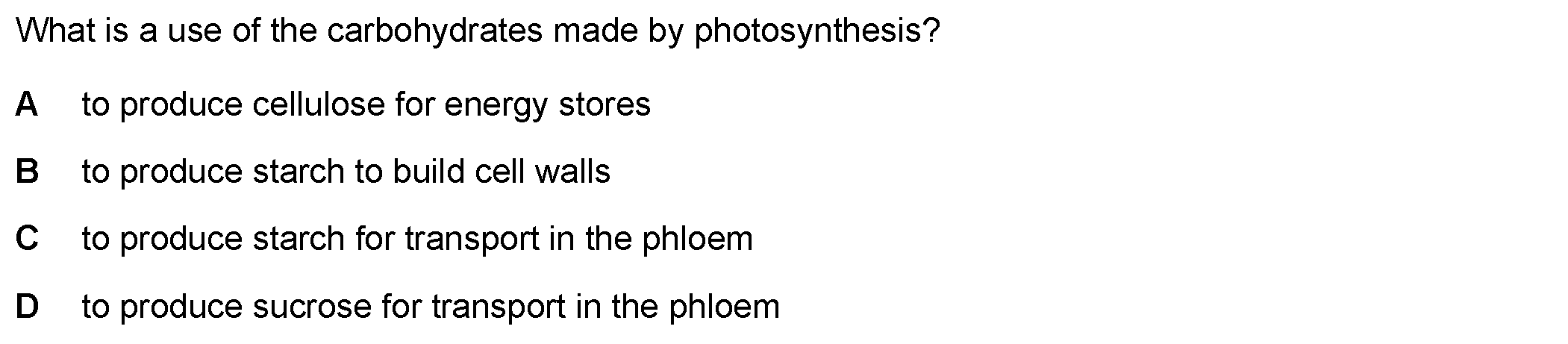
- It makes cellulose for cell walls and sucrose for transport in the phloem.
- It combines with nitrate to make amino acids and then proteins.
- It is converted to lipids (oils) in seeds.
Section 5 of 8Leaf adaptations
| Feature | How it helps |
|---|---|
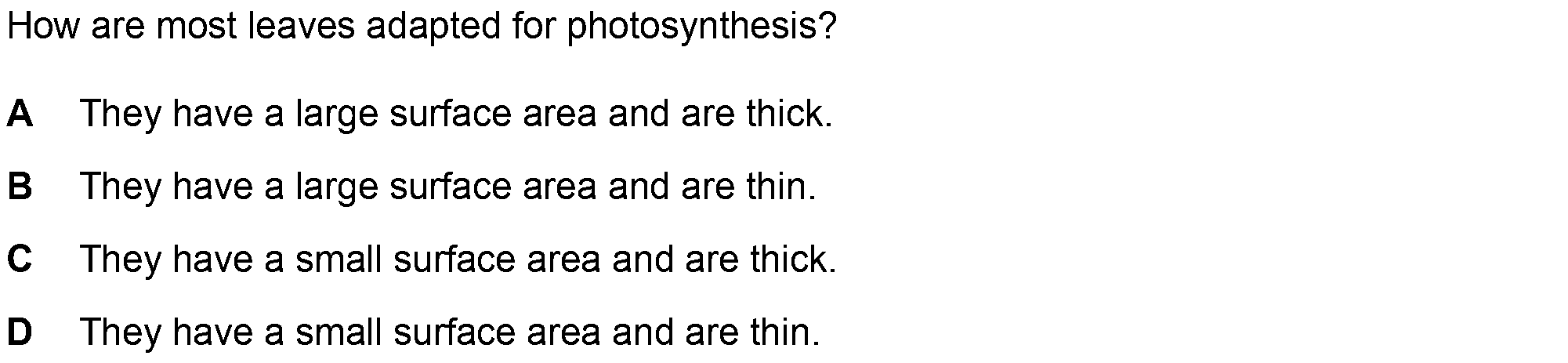
| Broad, flat shape | Large surface area to absorb light |
| Thin | Short diffusion distance for gases and light reaches all cells |
| Palisade cells near top, many chloroplasts | Absorb most light |
| Air spaces in spongy layer | Allow carbon dioxide to diffuse to cells |
| Stomata, with guard cells | Gas exchange; open in light, closed to save water |
| Veins (xylem and phloem) | Bring water, remove sugars |
| Transparent upper epidermis and waxy cuticle | Lets light through; reduces water loss |
Section 6 of 8Photosynthesis compared with respiration
- Photosynthesis it stores energy and takes in carbon dioxide.
- Respiration it releases energy and produces carbon dioxide, and goes on all the time.
- Net effect in daylight a healthy plant photosynthesises faster than it respires, so there is a net release of oxygen.
Section 7 of 8Key terms
| Term | Meaning |
|---|---|
| Photosynthesis | Making glucose from carbon dioxide and water using light energy. |
| Chlorophyll | The green pigment that absorbs light for photosynthesis. |
| Chloroplast | The organelle where photosynthesis takes place. |
| Glucose | A simple carbohydrate made in photosynthesis. |
| Starch | An insoluble carbohydrate used as a storage molecule in plants. |
| Biomass | The mass of living material. |
Section 8 of 8Exam technique
Marked practiceQuizzes for this lesson
?What do you want to solve now?
✓Checkpoint Quiz
10 multiple-choice + 5 written questions from real exam papers on this lesson.
Question 1 of 10 1:30
Question 2 of 10 1:30

Question 3 of 10 1:30

Question 4 of 10 1:30
Question 5 of 10 1:30
Question 6 of 10 1:30
Question 7 of 10 1:30

Question 8 of 10 1:30

Question 9 of 10 1:30
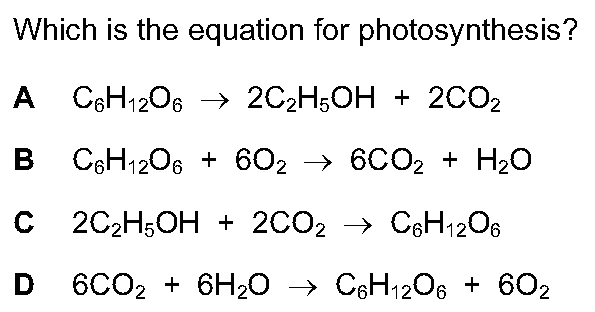
Question 10 of 10 1:30
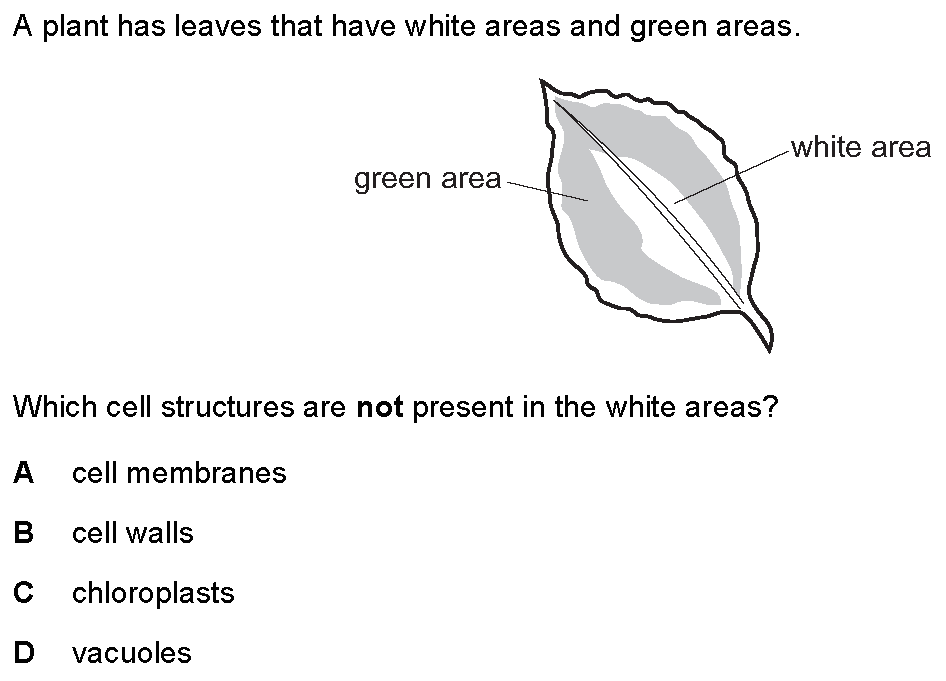
Answer key
1 C2 A3 C4 D5 B6 D7 D8 B9 D10 C
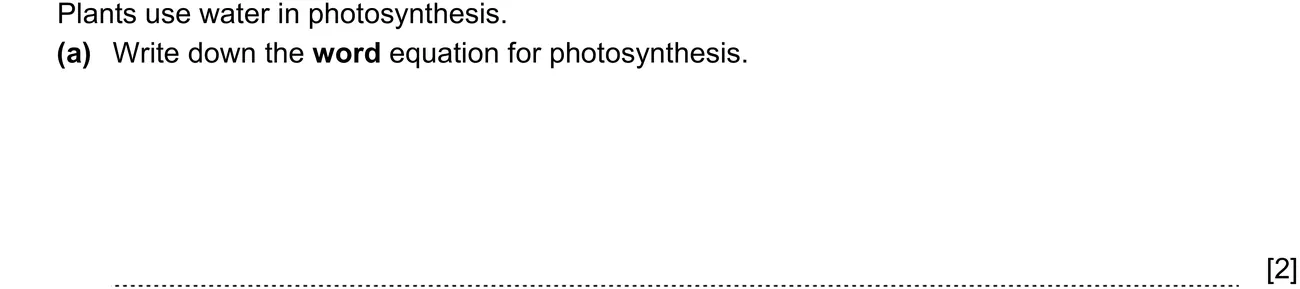




Each part of a written question is on its own screen. Write your answer first, then open "Show the answer" to check it against the mark scheme.
Last updated: