12.8Chapter 12: Chemical Reactions 3 and Rates
Making salts from acids and carbonates — Alhussan Chemistry - Stage 9 Revision Notes & Topical Questions
5 min read 8 parts Lesson 8 of 13 2 quizzes
12.8 Making salts from acids and carbonates — Alhussan International Academy — Chemistry (Stages 7–9) notes: Describe how to make a salt from an acid and an insoluble carbonate, identify the gas produced and evaluate and improve the method.General equation — metal carbonate + aci…
- Symbol equations
- Positive result
- Other gases
- Fungicides
- Reaction 1
- Reaction 2
Part 1 of 6The reaction
- General equation metal carbonate + acid → salt + water + carbon dioxide.
- calcium carbonate + hydrochloric acid → calcium chloride + water + carbon dioxide.
- copper carbonate + sulfuric acid → copper sulfate + water + carbon dioxide.
- CaCO3(s) + 2HCl(aq) → CaCl2(aq) + H2O(l) + CO2(g) and CuCO3(s) + H2SO4(aq) → CuSO4(aq) + H2O(l) + CO2(g).
- Fizzing it shows carbon dioxide is released and how the reaction is progressing.
Part 2 of 6Test for carbon dioxide
- Test bubble the gas through limewater.
- (calcium hydroxide solution)
- Positive result the limewater goes cloudy or milky because of tiny particles of insoluble calcium carbonate.
- Other gases do not confuse it with hydrogen (squeaky pop) or oxygen.
- (relights a glowing splint)
Part 3 of 6Choosing the method to make copper sulfate
- Fungicides copper sulfate is used by some farmers as a fungicide to destroy fungi that damage crops.
- Reaction 1 copper + sulfuric acid → copper sulfate + hydrogen, which needs concentrated acid and a high temperature.
- Reaction 2 copper oxide + sulfuric acid → copper sulfate + water, which can use dilute acid.
- Reaction 3 copper carbonate + sulfuric acid → copper sulfate + carbon dioxide + water, which can use dilute acid.
- Industry and school industry uses reactions 1 and 2, while school uses reaction 2 or 3 because reaction 1 is too hazardous.
Part 4 of 6Method to make a salt from a carbonate
- Stages reaction, filtration, evaporation and crystallisation.
- Evaporating basin collecting the filtrate straight into it means the solution does not need pouring from one container to another.
- Safety of carbonates they are safer than reactive metals, and add small portions so the mixture does not froth over.
- Soluble carbonates with sodium carbonate an indicator or titration is needed to find the neutral point.
Part 5 of 6Evaluating and improving the method
- Dan made a smaller mass of crystals than expected because some solution spat out during evaporation.
- Improvement heating over a water bath rather than a flame heats the solution more evenly and prevents spitting.
- The second attempt gave a greater mass of crystals.
- Rates experiment the volume of gas produced in a fixed time, or the time for fizzing to stop, can compare powdered and lump carbonate.
- 5.0 g of calcium carbonate reacting with excess acid loses 2.2 g in mass, which is the mass of carbon dioxide released.
Part 6 of 6Everyday links
- Limestone and marble buildings and statues are carbonates, and acid rain makes the stone fizz slowly and wear away.
- Indigestion tablets they contain carbonates that neutralise excess stomach acid.
- Soil calcium carbonate is added to soil to reduce acidity.
- Identifying carbonates add dilute acid to an unknown solid and test any gas with limewater.
| Reaction type | Products |
|---|---|
| Acid + metal | Salt + hydrogen |
| Acid + oxide | Salt + water |
| Acid + carbonate | Salt + water + carbon dioxide |
Key terms
| Term | Meaning |
|---|---|
| Carbonate | a compound containing the CO3 group. |
| Limewater | a solution used to test for carbon dioxide. |
| Effervescence | fizzing caused by gas bubbles. |
| Neutralise | to react an acid fully with a base. |
| Fungicide | a chemical that destroys fungi. |
| Water bath | a beaker of hot water used for gentle, even heating. |
Avoid these mistakes
Marked practiceQuizzes for this lesson
?What do you want to solve now?
✓Checkpoint Quiz
11 multiple-choice + 3 written questions from real exam papers on this lesson.
Question 1 of 11 1:30
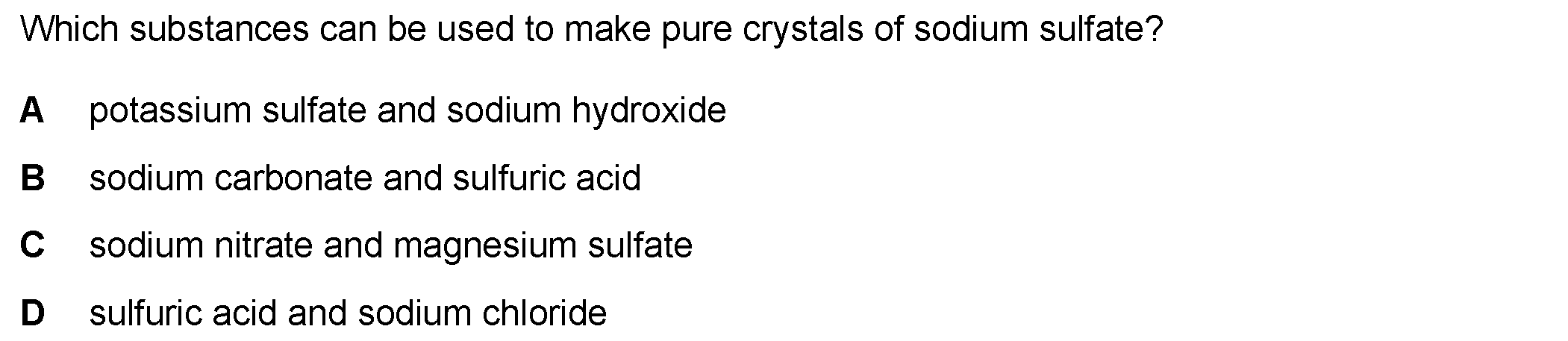
Question 2 of 11 1:30
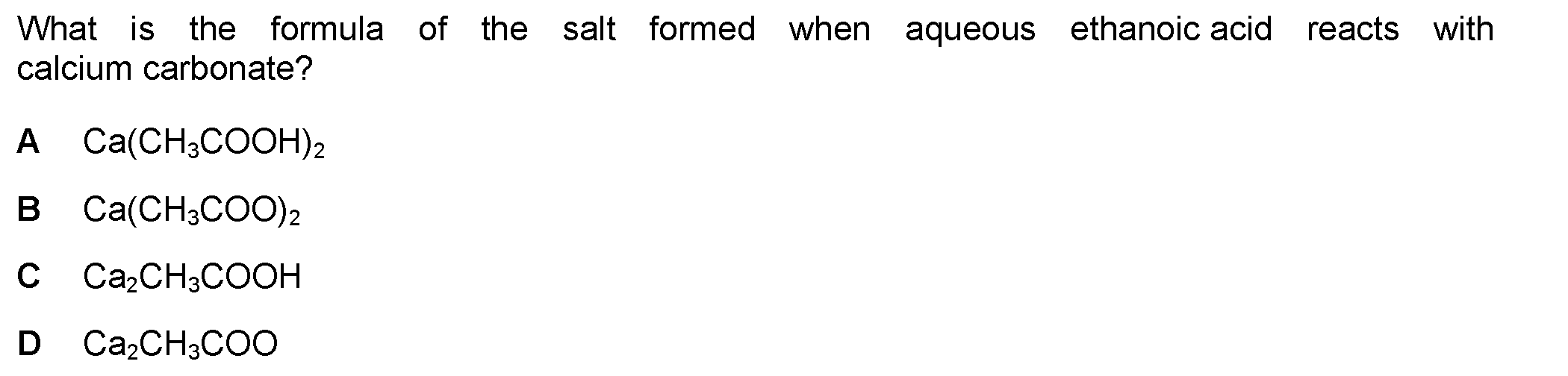
Question 3 of 11 1:30
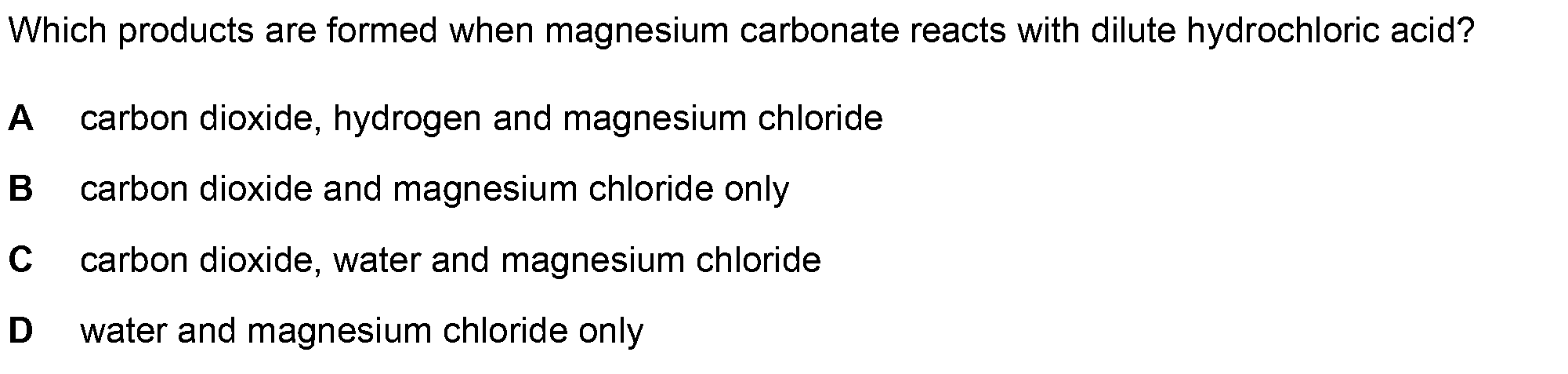
Question 4 of 11 1:30

Question 5 of 11 1:30

Question 6 of 11 1:30
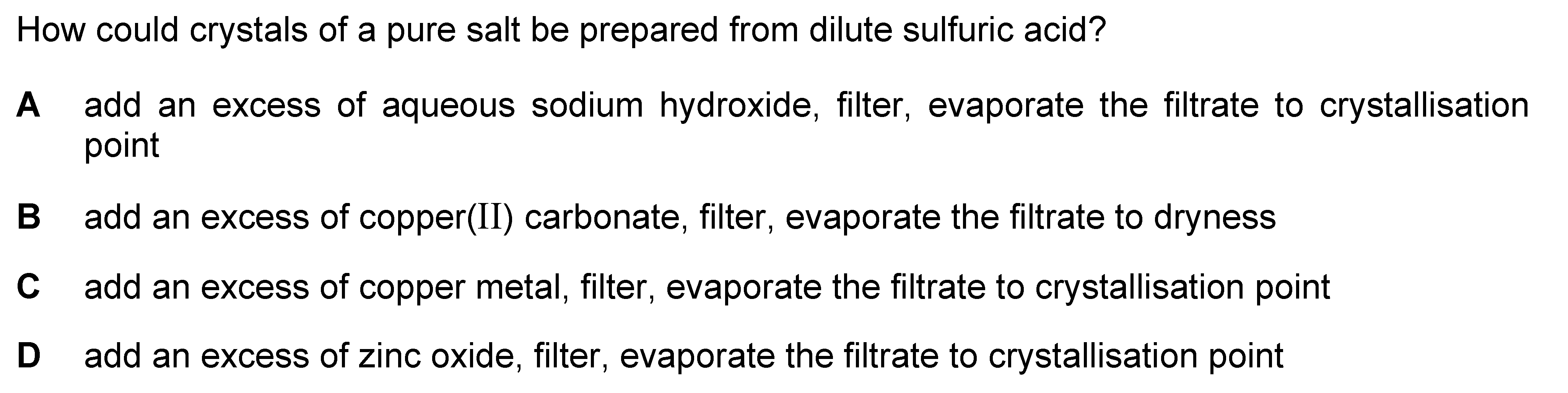
Question 7 of 11 1:30

Question 8 of 11 1:30

Question 9 of 11 1:30
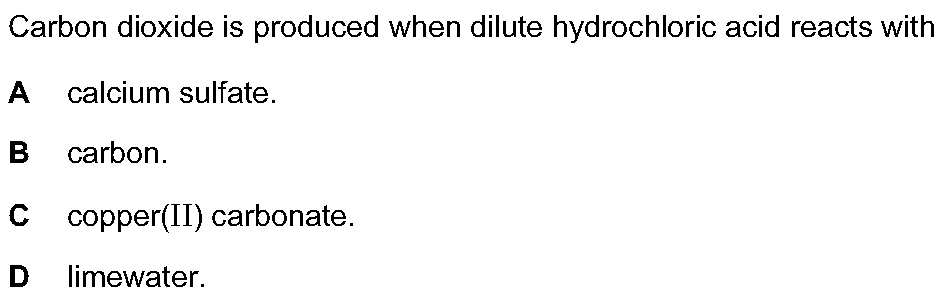
Question 10 of 11 1:30

Question 11 of 11 1:30

Answer key
1 B2 B3 C4 D5 C6 D7 B8 D9 C10 A11 A
Written question 1 of 3 · part (a) (1 / 4) 3:00

Show the answer

Written question 1 of 3 · part (b) (2 / 4) 3:00

Show the answer

Written question 1 of 3 · part (c) (3 / 4) 3:00

Show the answer

Written question 1 of 3 · part (d) (4 / 4) 3:00

Show the answer
Written question 2 of 3 7:00

Show the answer

Written question 3 of 3 · part (a) (1 / 8) 3:00

Show the answer

Written question 3 of 3 · part (b) (2 / 8) 3:00

Show the answer

Written question 3 of 3 · part (c) (3 / 8) 3:00
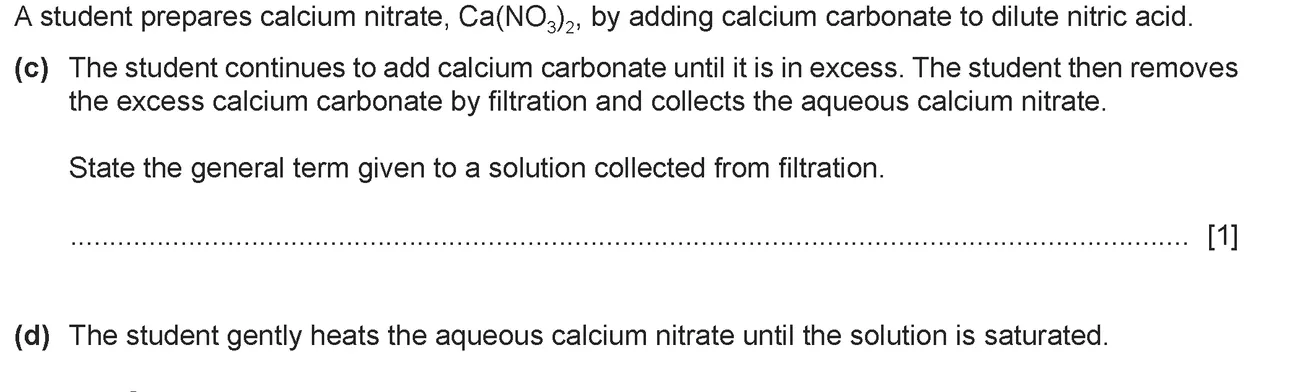
Show the answer

Written question 3 of 3 · part (d)(i) (4 / 8) 3:00
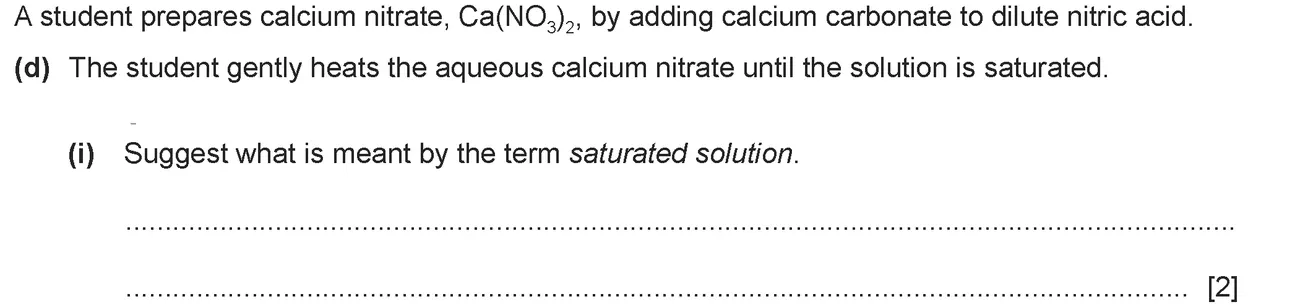
Show the answer

Written question 3 of 3 · part (d)(ii) (5 / 8) 3:00

Show the answer

Written question 3 of 3 · part (e)(i) (6 / 8) 3:00
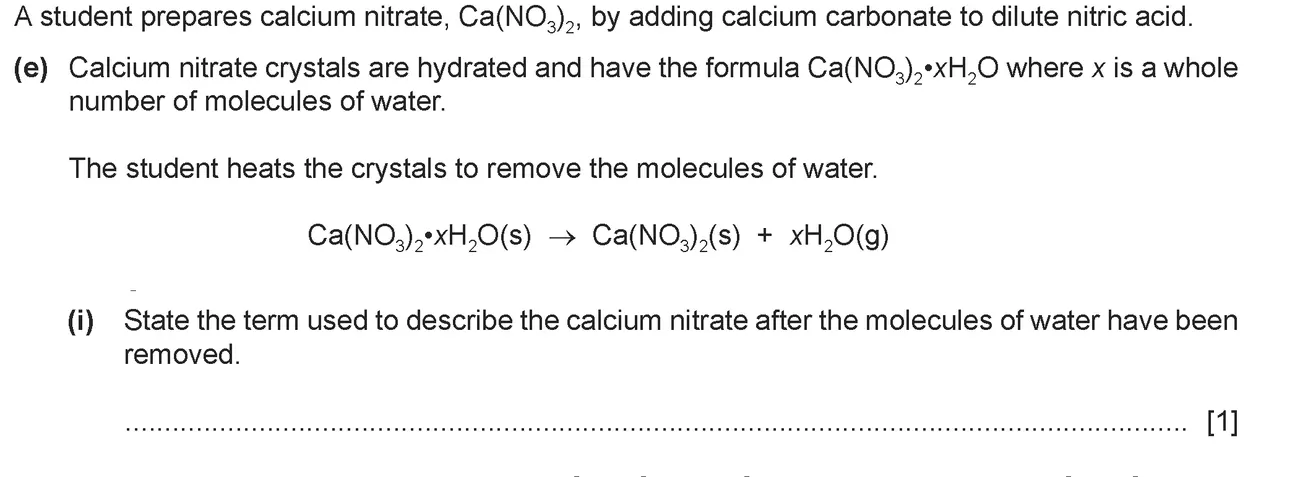
Show the answer

Written question 3 of 3 · part (e)(ii) (7 / 8) 3:00

Show the answer

Written question 3 of 3 · part (f) (8 / 8) 3:00

Show the answer

Each part of a written question is on its own screen. Write your answer first, then open "Show the answer" to check it against the mark scheme.
Last updated: