12.12Chapter 12: Chemical Reactions 3 and Rates
Surface area and reaction rate — Alhussan Chemistry - Stage 9 Revision Notes & Topical Questions
5 min read 8 parts Lesson 12 of 13 2 quizzes
12.12 Surface area and reaction rate — Powder vs Lumps — Alhussan International Academy — Chemistry (Stages 7–9) notes: Describe and explain how surface area affects reaction rate and plan a fair test.Solids — in a reaction between a solid and a liquid or gas, the reaction can on…
- Breaking up a solid
- More exposed particles
- Collisions
- Total product
- Hypothesis
- Prediction
Part 1 of 6Surface area and exposed particles
- Solids in a reaction between a solid and a liquid or gas, the reaction can only happen where they meet,
- so only the surface particles of a solid can react.
- Breaking up a solid breaking a lump into smaller pieces exposes more particles, so the surface area increases greatly.
- A 2 cm cube has a surface area of 24 cm2, and cutting it into eight 1 cm cubes gives 48 cm2, double the area for the same mass.
- Ratio a 1 cm cube has surface area to volume 6:1, while a 2 cm cube has 3:1.
- Smaller pieces always have a bigger surface area compared with their volume.
- Powder ten grams of powder has a greater surface area than one 10 g lump of the same substance.
Part 2 of 6Collision theory explanation
- More exposed particles a larger surface area exposes more particles of the solid to the other reactant.
- Collisions the frequency of collisions increases, so there are more effective collisions per second and the rate rises.
- Unchanged the particles do not move faster and the energy of each collision is unchanged.
- Total product powdered calcium carbonate reacts faster with acid than marble chips of the same mass,
- but the same total amount of gas is released in the end.
Part 3 of 6Saffron's investigation
- Question do powders react quicker than big lumps of solid?
- Hypothesis reactions happen when particles collide, only surface particles of a solid can react,
- and a mass of powder has more surface particles than the same mass of lumps,
- so a powder reacts more quickly.
- Reaction calcium carbonate + hydrochloric acid → calcium chloride + water + carbon dioxide.
- CaCO3 + 2HCl → CaCl2 + H2O + CO2.
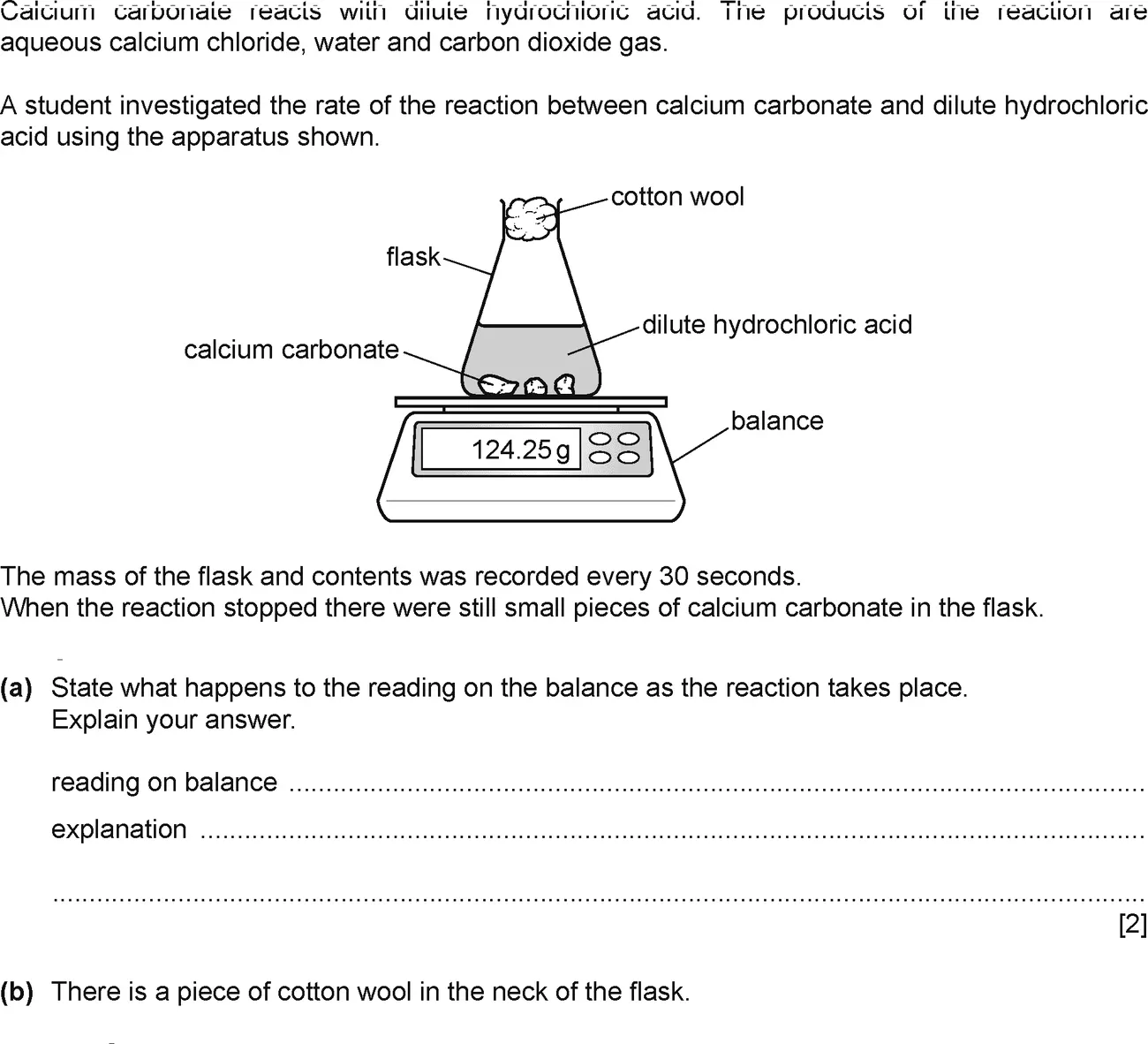
- Apparatus a conical flask on a balance with cotton wool in the neck, so the mass decreases as carbon dioxide escapes.
- Prediction the mass will decrease most quickly with the powder.
- Method add a big lump to dilute hydrochloric acid and measure the time for the mass to decrease by 1.0 g,
- then repeat with small lumps and with powder.
- Variables the independent variable is the size of the calcium carbonate pieces and the dependent variable is the time for the mass to fall by 1 g.
- Control the mass of calcium carbonate, the volume and concentration of the acid and the temperature.
- Graph a bar chart is used because the independent variable, the size of the pieces, is discrete.
- Conclusion the prediction was correct and the evidence supports the hypothesis.
Part 4 of 6Collecting gas to compare sizes
- Gas syringe method
- add the same mass of each size, such as 5 g, to 50 cm3 of the same acid at the same temperature and measure the volume of carbon dioxide each minute.
| Variable | Role |
|---|---|
| Size of pieces | Independent |
| Volume of gas at each time | Dependent |
| Mass of carbonate, acid volume and concentration, temperature | Controlled |
- Curves
- the powder gives the steepest curve, the small lumps a less steep curve and the big lumps the shallowest.
- All three level off at the same volume, since the same mass of carbonate is used and the acid is in excess.
Part 5 of 6Dust explosions
- Flour mill explosion in 1965 in London an explosion at a flour mill killed 4 people and injured 31.
- How it happens flour grains spread out in air and are surrounded by oxygen molecules, a match lights one grain,
- which lights the grains near it, and a flame flashes through the cloud.
- Other powders sugar, sawdust, coal dust, custard powder and aluminium also form explosive mixtures with air.
- Prevention factories avoid dust build-up and sparks.
Part 6 of 6Industrial and everyday links
- Grinding solid reactants are ground to powder, and catalysts are made as fine meshes or pellets with pores.
- Catalytic converters they use a honeycomb structure coated with a thin layer of metal to give a very large surface area.
- Everyday crushed tablets dissolve faster and logs split into kindling burn faster.
- Other factors concentration and temperature also affect the rate of reaction.
Key terms
| Term | Meaning |
|---|---|
| Surface area | the total area of the outside of an object. |
| Collision frequency | how often particles collide. |
| Powder | very small pieces of solid with a large surface area. |
| Gas syringe | a syringe used to collect and measure a gas. |
| Catalytic converter | a device with a large surface area coated in metal catalysts. |
| Discrete variable | a variable with values that have no in-between. |
Avoid these mistakes
Marked practiceQuizzes for this lesson
?What do you want to solve now?
✓Checkpoint Quiz
4 multiple-choice + 2 written questions from real exam papers on this lesson.
Question 1 of 4 1:30

Question 2 of 4 1:30
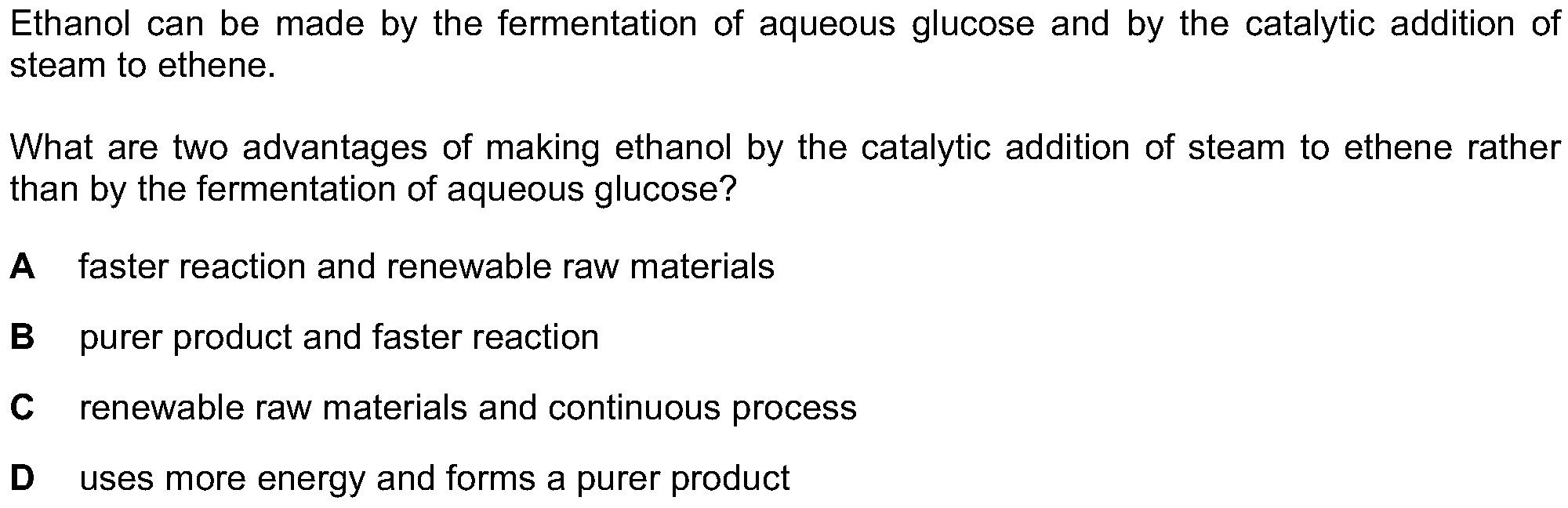
Question 3 of 4 1:30
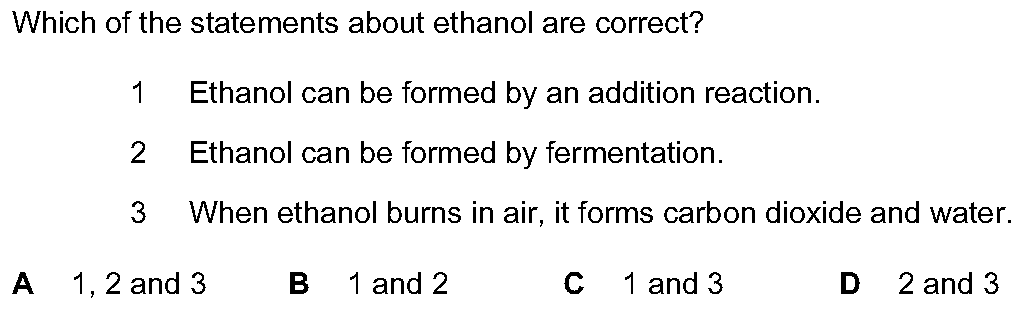
Question 4 of 4 1:30
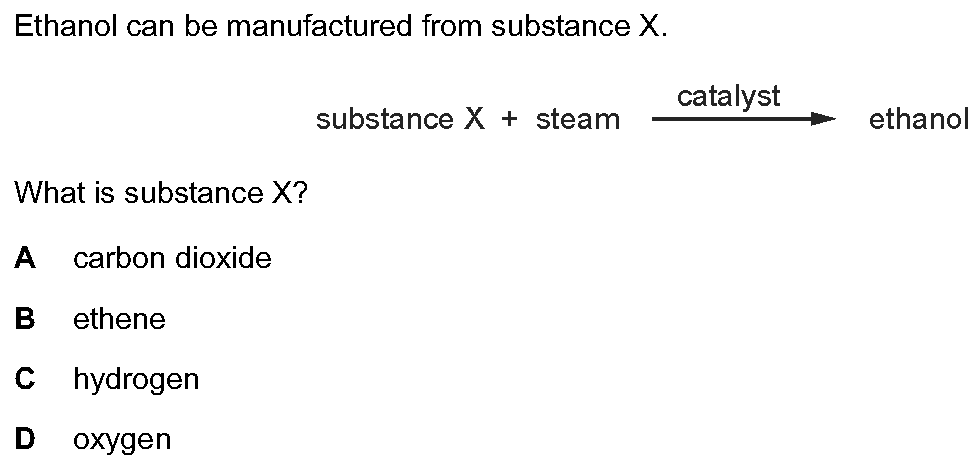
Answer key
1 B2 B3 A4 B
Written question 1 of 2 · part (a) (1 / 5) 3:00
Show the answer
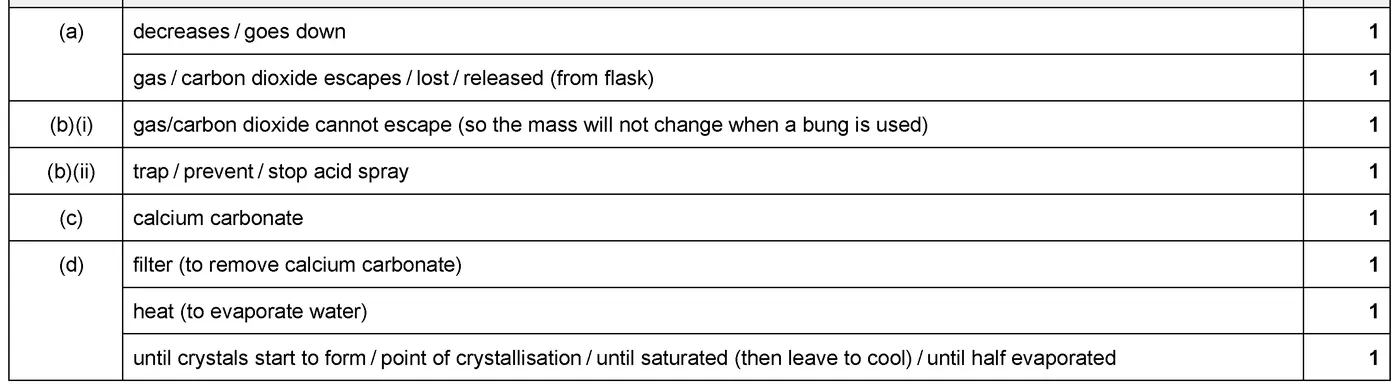
Written question 1 of 2 · part (b)(i) (2 / 5) 3:00
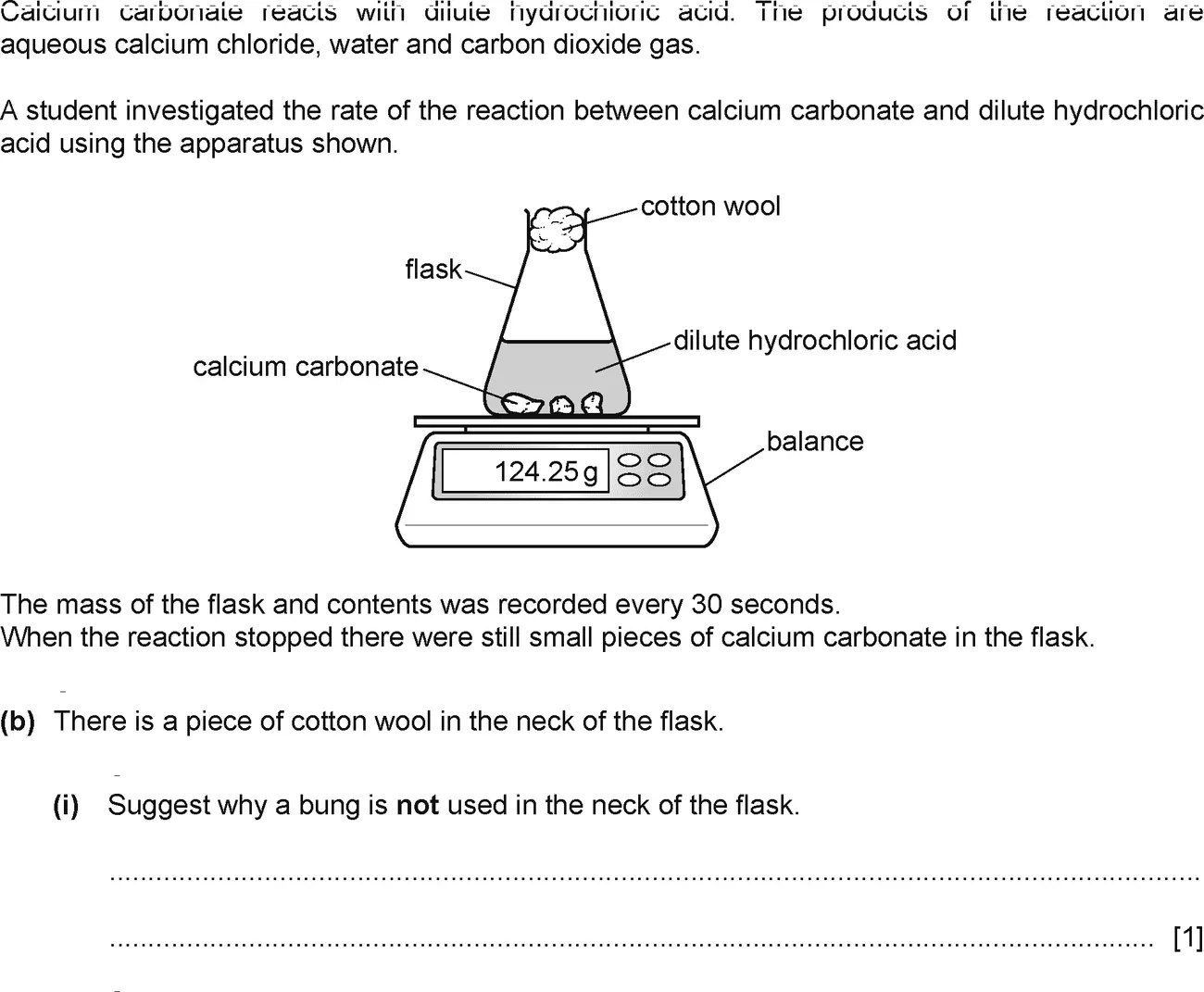
Show the answer
Written question 1 of 2 · part (b)(ii) (3 / 5) 3:00

Show the answer
Written question 1 of 2 · part (c) (4 / 5) 3:00

Show the answer
Written question 1 of 2 · part (d) (5 / 5) 3:00

Show the answer
Written question 2 of 2 · part (a) (1 / 4) 3:00

Show the answer

Written question 2 of 2 · part (b) (2 / 4) 3:00

Show the answer

Written question 2 of 2 · part (c) (3 / 4) 3:00
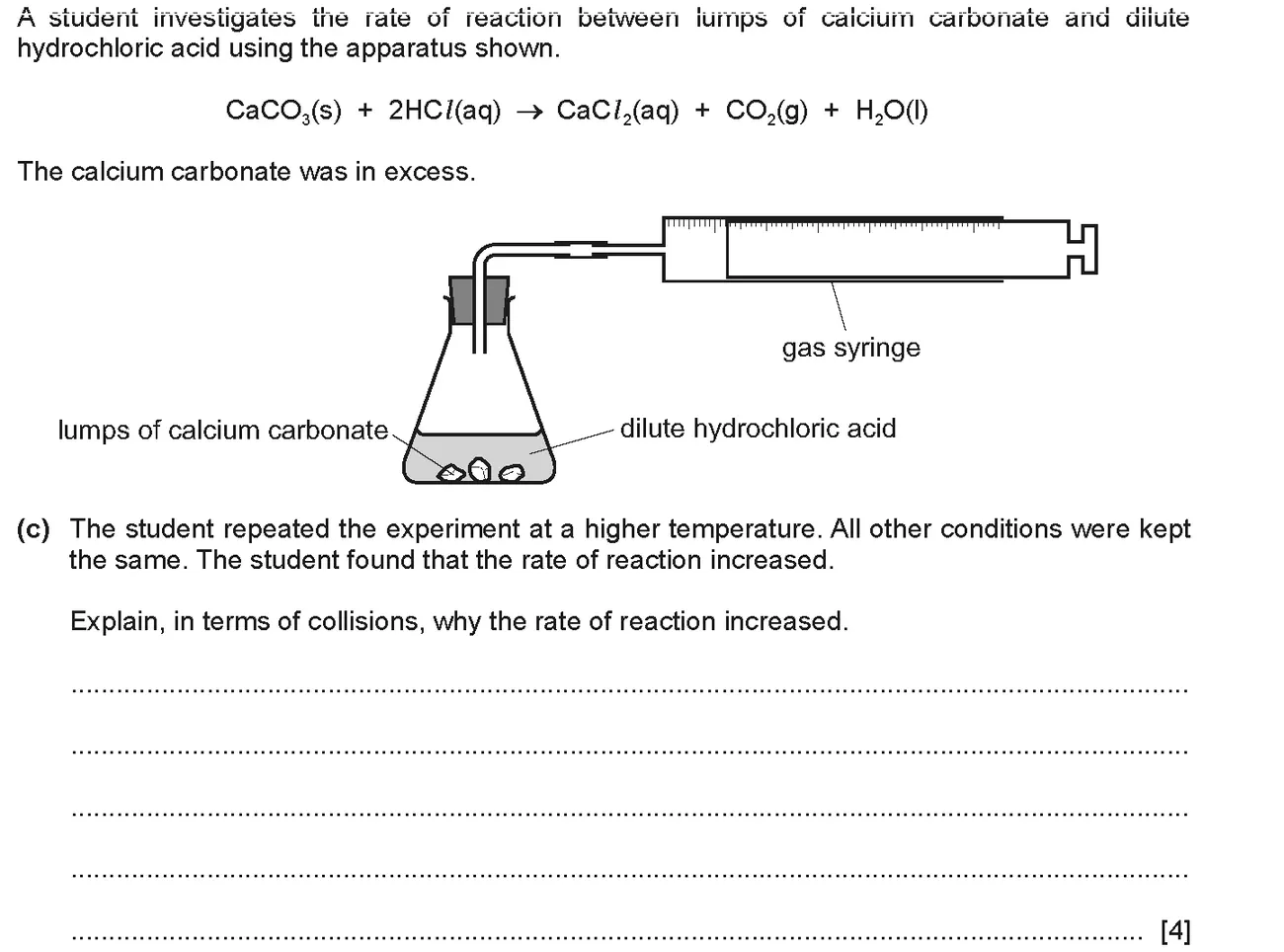
Show the answer

Written question 2 of 2 · part (d) (4 / 4) 3:00
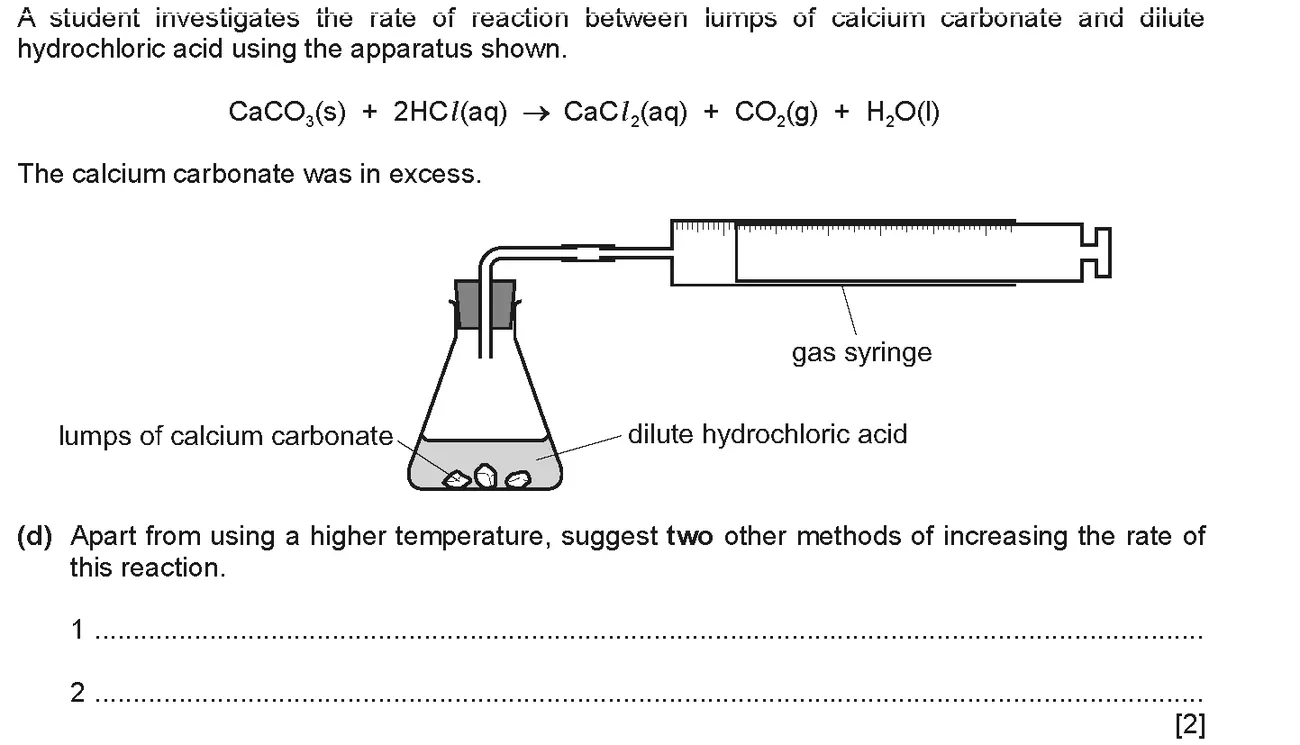
Show the answer
Each part of a written question is on its own screen. Write your answer first, then open "Show the answer" to check it against the mark scheme.
Last updated: