D2.2Theme D — Continuity and change
Gene expression — IB Biology HL Revision Notes & Topical Questions
5 min read 12 parts Lesson 6 of 18 2 quizzes
Curriculum Equation Key قوانين الرقم الهيدروجيني والاتزان الأيوني - pH & Acid-Base Equilibrium FormulasFast Exam Solution
pH = -log[H⁺] | pOH = -log[OH⁻] | pH + pOH = 14 | [H⁺][OH⁻] = 10⁻¹⁴
Word Equation & Conditions: الرقم الهيدروجيني = -لوغاريتم تركيز أيون الهيدروجين | pH + pOH = 14
Location & Specifications: الاتزان الأيوني، كيمياء 3 ثانوي، التحصيلي، و AP Chemistry.
Lesson summary
D2.2 Gene expression — IB BIOLOGY HL notes: Explain how gene expression is regulated, how epigenetics and the environment affect it, and how the lac operon controls lactase production.Gene expression = the mechanism by which the genetic code in DNA affects the phenotype.Main stag…
- Transcription factors
- Degradation
- Epigenesis
- Epigenetic tags
- Genotype versus phenotype
- Mutation versus epigenetics
Part 1 of 10Gene expression
Gene expression
Gene expression the mechanism by which the genetic code in DNA affects the phenotype.
Main stages
Gene expression
Transcription of the code into mRNA, a key stage at which expression is switched on or off.
Translation of the mRNA into protein at ribosomes.
The function of the protein product, such as an enzyme, which affects the phenotype.
Part 2 of 10Regulation of transcription and regulation of translation
Coding sequences code for polypeptides, and non-coding sequences make functional RNA such as tRNA or regulate expression.
Promoter
Promoter a non-coding sequence near a gene, and an enhancer = a non-coding region usually further from the gene.
- Neither is itself transcribed.
Transcription factors
Transcription factors proteins that bind to promoter or enhancer sequences and help RNA polymerase attach, raising the rate of transcription.
- They ensure that only the genes needed are expressed in the correct cells, at the correct time and to the appropriate level.
- This is the most common way cells control gene expression.
mRNA fate
- mRNA fate mRNA is modified, transported to ribosomes and translated, and then stays in the cytoplasm until nucleases break it down.
- In human cells this takes from a few minutes to a couple of days.
Degradation
- Degradation breaking down mRNA regulates translation, so protein is made only when necessary and used mRNA is removed.
Part 3 of 10Epigenetics
Epigenetics
Epigenesis
Epigenesis development of differentiation patterns in the cells of a multicellular organism from the zygote, determined by the genome and patterns of gene expression.
Epigenetics
Epigenetics control of genes by factors other than the DNA sequence, involving heritable changes in gene function without changes in the sequence.
Epigenetic tags
- Epigenetic tags nuclear DNA is wrapped around histones to form chromatin,
- which can be chemically modified, for example by methylation (adding a –CH3 group).
- All tags together are the epigenome, which is heritable like the genome.
- Evidence shows that epigenome changes in one generation can pass to the next, at cellular or organism level.
Genotype versus phenotype
- Genotype versus phenotype epigenetic changes leave the DNA sequence and genotype unchanged while the phenotype changes.
Mutation versus epigenetics
- Mutation versus epigenetics mutations change the genetic code, while epigenetics changes how it is read.
Part 4 of 10Genome, transcriptome and proteome, methylation as an epigenetic tag
Proteome
Proteome all the proteins made in a cell, determined by the genome, and unique to each organism.
Transcriptome
Transcriptome the range of mRNA transcripts in a cell or tissue type, set by the pattern of gene expression.
Relationship
- Relationship only the genes for the proteins needed are switched on, which avoids the energy waste of expressing every gene in every cell.
- The genome of every cell in an organism is the same, while the proteome varies between cell types.
DNA methylation
- DNA methylation a methyl group is added, usually to cytosine bases in the promoter region.
- It suppresses transcription by inhibiting the binding of transcription factors, locking genes off.
- Environmental, lifestyle and age-related factors can alter it.
Histone methylation
- Histone methylation methyl groups are added to amino acids in histone tails.
- It can activate or deactivate genes by making them more or less accessible to transcription factors.
Part 5 of 10Epigenetic inheritance
Mechanism
- Mechanism tags that remain in place through mitosis or meiosis are passed on.
- In mitosis, daughter cells have the same modifications as the parent.
- In meiosis, gametes carry the tags to offspring after fertilisation.
- This is epigenetic inheritance, so phenotypic changes can be inherited without changing the nucleotide sequence.
If tags are removed in mitosis or meiosis, epigenetic inheritance cannot occur.
Effect
- Effect tags change gene expression patterns, which decides which proteins are made and so the phenotype.
Part 6 of 10Environmental effects: air pollution
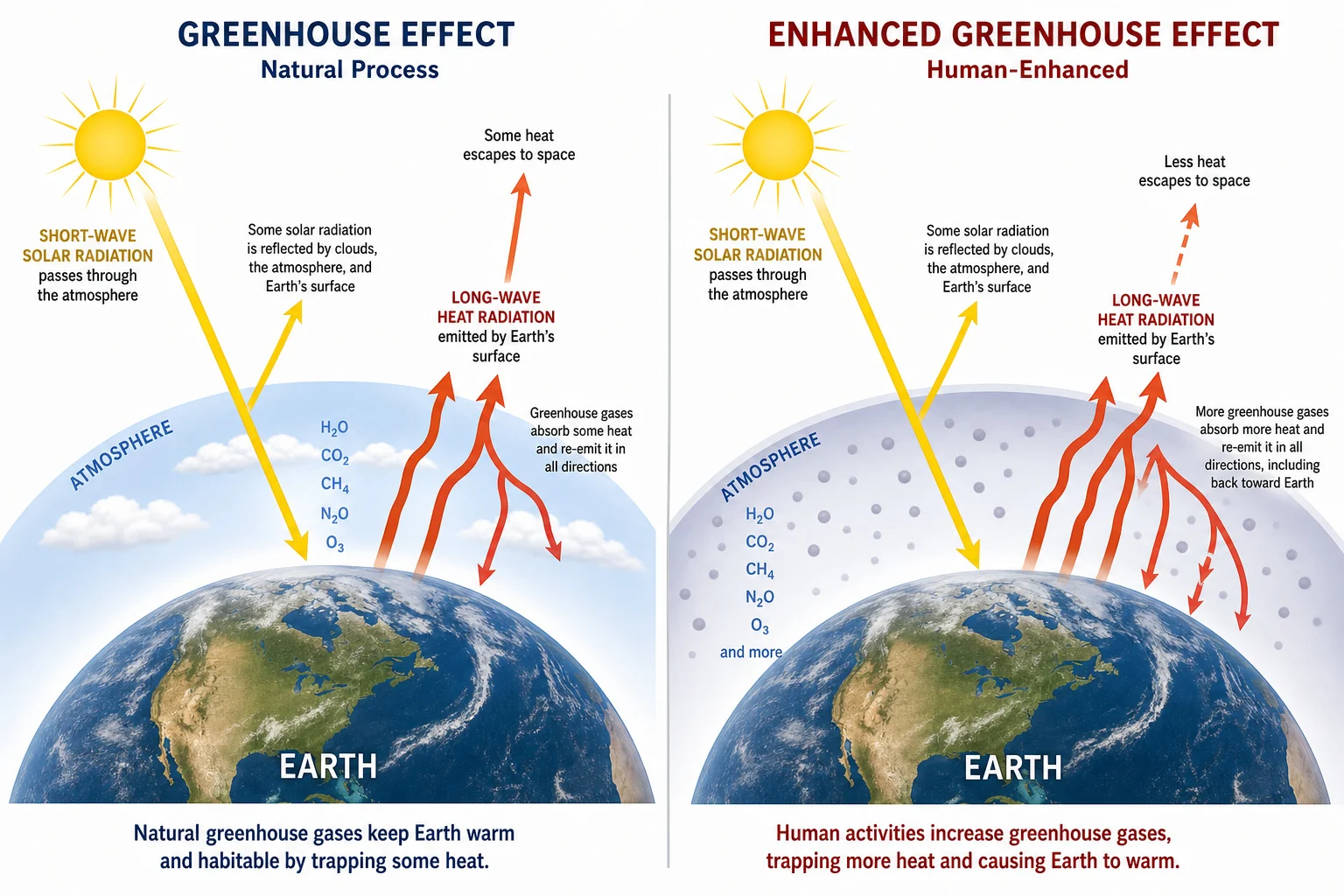
Environmental influences on gene expression include diet, temperature, chemicals and air pollution.
Air pollution
- Air pollution it is a concern in urban and industrial areas.
- Pollutants can damage lung tissue, leading to asthma or chronic obstructive pulmonary disease, and harm cardiovascular health.
- Exposure may alter methyl tags on DNA or histones and change gene expression.
- The effect may be higher inflammation and a higher risk of cardiovascular and pulmonary disease.
- Inflammation can cause scarring and thickened tissue, which slows diffusion of oxygen into the blood.
- Suggested treatments include exercise and a diet high in B vitamins.
Part 7 of 10Imprinting and tigons and ligers
Imprinting and tigons and ligers
Removal of tags in gametes
- Removal of tags in gametes during egg and sperm development in mammals, most epigenetic tags are removed to stop environmental changes to methylation being passed on.
Genomic imprinting
- Genomic imprinting some tags are kept or added in sperm and egg cells, so only one copy of a gene is expressed and the other is silenced.
- Offspring inherit two functional copies, but one imprinted copy is silenced.
- Maternal genes are silenced in sperm development and paternal genes in egg development.
Tigons and ligers
- A male tiger and female lion give a tigon, about the size of its parents or smaller.
- A male lion and female tiger give a liger, typically larger than both parents.
- Male lions pass on growth-promoting genes, female lions carry imprinted genes that discourage growth,
- and tigers of neither sex pass on growth-discouraging genes.
- A liger inherits growth-promoting genes from the lion father and no growth-discouraging genes from the tiger mother,
- so it grows larger, an epigenetic origin of the difference.
Part 8 of 10Twin studies
Twin studies
Sources of variation within a family
- Genetic factors, where differences in the genome give differences in phenotype.
- Environmental factors, such as skin colour change on sun exposure.
- Both together, such as height and weight.
Monozygotic twins come from one zygote that splits and are genetically identical,
- while dizygotic twins come from two fertilised eggs and are genetically different.
Interpretation
- Similar traits in separated monozygotic twins suggest genes are responsible, and large differences suggest environmental influence.
- Similar traits in both twin types may be due to the same environment.
- Monozygotic twins who are more alike than dizygotic twins suggests genetic factors.
- Differences between monozygotic twins can come from epigenetic changes, such as DNA methylation or histone tail acetylation.
Part 9 of 10External factors: hormones and the lac operon
Steroid hormones
- Steroid hormones oestradiol, progesterone and testosterone are ligands that affect gene expression through intracellular receptors.
Regulatory genes control structural genes, sometimes several at once.
Operon
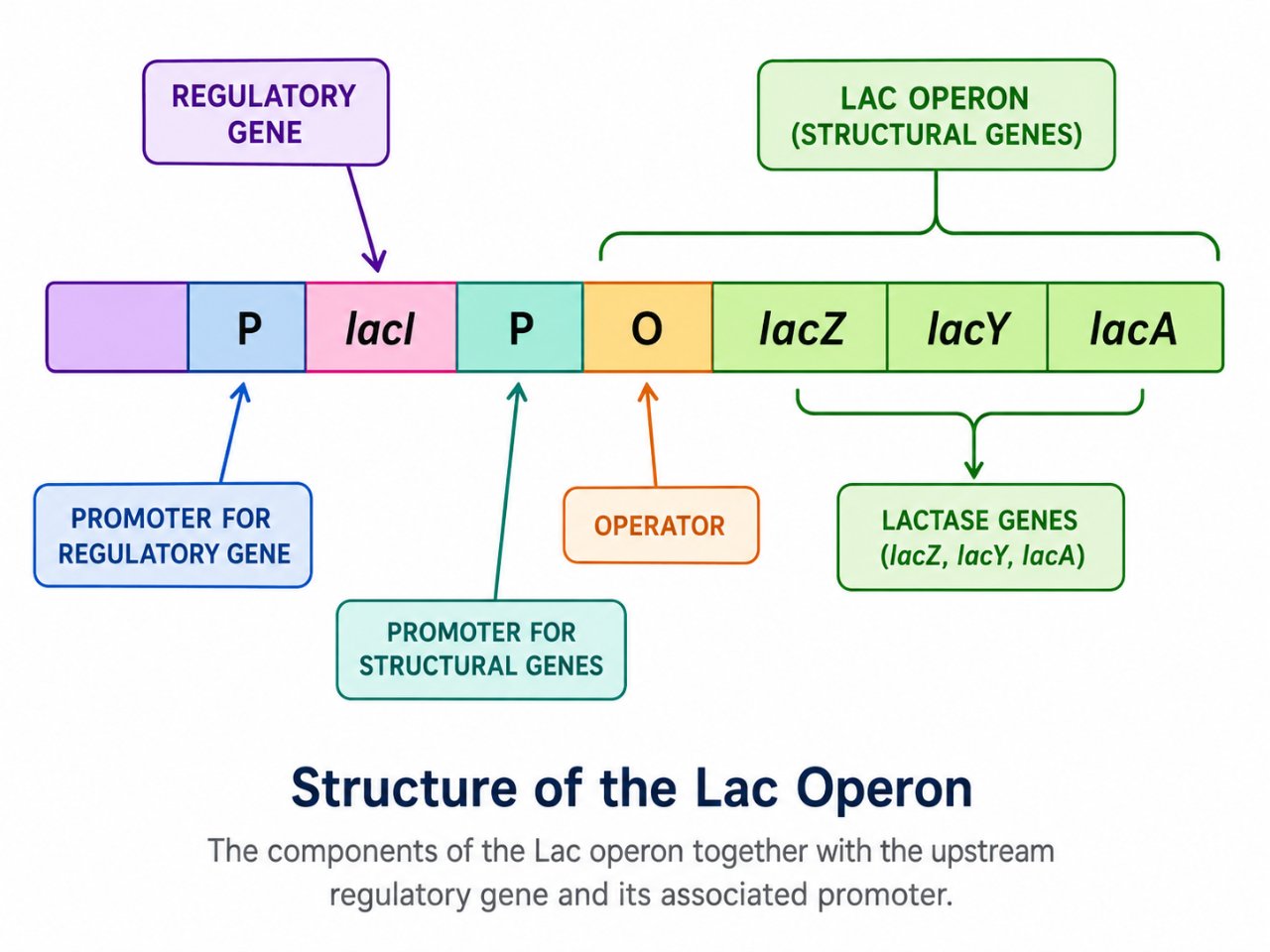
Operon a cluster of structural genes in prokaryotes controlled by the same promoter.
lac operon
- lac operon it controls the enzyme lactase and two other structural proteins.
- (β-galactosidase)
- Lactase breaks down lactose for energy, and it is inducible, made only when lactose is present, which avoids wasting energy and materials.
- The order of components is the promoter, the operator, lacZ (lactase), lacY (permease, letting lactose into the cell) and lacA (transacetylase).
- Upstream are the promoter for the regulatory gene and the regulatory gene lacI, which codes for the lac repressor protein.
Repressor protein
- Repressor protein it has two binding sites, one for the operator and one for lactose (the effector).
- Binding the operator stops RNA polymerase attaching to the promoter, preventing transcription.
- Binding lactose distorts the repressor so it can no longer bind the operator.
Part 10 of 10The lac operon with and without lactose
| Condition | Events |
|---|---|
| Lactose absent | The regulatory gene is expressed and the repressor binds the operator, RNA polymerase cannot bind the promoter, the structural genes are not transcribed and no lactase is made |
| Lactose present | Lactose enters and binds the repressor, which changes shape and leaves the operator, RNA polymerase binds the promoter, the mRNA of all three structural genes is translated and lactase breaks down lactose for energy |
Key terms
| Term | Meaning |
|---|---|
| Gene expression | use of a gene to make a product that affects the phenotype. |
| Epigenetic tag | a chemical modification, such as methylation, that affects gene expression without changing the DNA sequence. |
| Epigenome | all the epigenetic tags of an organism. |
| Transcriptome | all the mRNA transcripts in a cell or tissue. |
| Imprinting | silencing of one parental copy of a gene by epigenetic tags. |
| Operon | a group of genes controlled by one promoter. |
| Repressor | a protein that binds the operator and stops transcription. |
| Monozygotic twins | genetically identical twins from one zygote. |
Avoid these mistakes
1
Epigenetic changes alter the DNA sequence — they alter how the code is read, not the sequence.
2
Each cell type has a different genome — all cells share the genome and differ in expression.
3
The lac operon is active whenever the bacterium grows — it is switched on only when lactose is present.
4
Imprinted genes are expressed from both parents — only one copy is expressed.
Marked practiceQuizzes for this lesson
Last updated:
\n