10.3Chapter 10: Excretion in Humans
Who made the best model? — Alhussan Biology - Stage 9 Revision Notes & Topical Questions
5 min read 8 parts Lesson 3 of 6 2 quizzes
Lesson summary
10.3 Who made the best model?
- Physical model
- Strengths and limitations
- Evaluating a model
- Glomerulus
- Funnel and filter paper
- Liquid passing through
Part 1 of 6Why use models
Why use models
Physical model
Physical model a way to help predict or explain something that cannot easily be seen.
- Scientists cannot easily watch a nephron working, so they build models.
Strengths and limitations
- Strengths and limitations a model shows key features clearly but is simpler than reality.
Evaluating a model
- Evaluating a model judge which features it represents well, which it leaves out and which ideas it gets wrong.
Part 2 of 6What the kidney does in filtration
Nephrons
- Nephrons each kidney contains about a million tiny filtering units called nephrons.
Glomerulus
- Glomerulus blood enters a ball of capillaries inside a cup-shaped capsule.
- Blood is under high pressure because the vessel leaving is narrower than the one entering.
- Small molecules (water, glucose, salts, urea) are forced out into the capsule by ultrafiltration.
- Large molecules such as proteins and the blood cells stay in the blood.
Filtrate
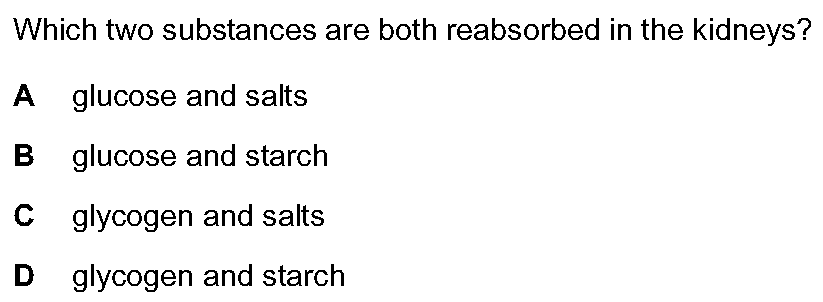
- Filtrate the filtered fluid flows along the tubule, where all the glucose and as much water and salt as needed are reabsorbed into the blood.
Urine
- Urine what remains, urea with excess water and salts, forms urine.
Part 3 of 6Ejaz's funnel model
Ejaz's funnel model
Line a funnel with filter paper and balance it on a flask.
Mix water, salt, sand and red food colouring.
Pour the mixture through the filter paper.
Mixture
- Mixture it models the blood, and salt represents urea because it is safer than toxic urea.
Funnel and filter paper
- Funnel and filter paper they model the kidney.
Liquid passing through
- Liquid passing through it models the urine.
Sand left on the paper
- Sand left on the paper it models the blood cells and large, useful molecules that are not filtered out.
Part 4 of 6Fatima's sieve model
Materials
- Materials a sieve used to strain vegetables and a mixture of dried peas and beans, salt crystals and sand.
Sieve
- Sieve it models the kidney, and the holes are where substances leave the blood.
Peas and beans
- Peas and beans they represent blood cells and large molecules the body needs.
Salt
- Salt it represents urea.
Sand
- Sand it represents water.
Result
- Result salt and sand pass through the holes, like urea and water being filtered out, while the peas and beans stay in the blood.
Part 5 of 6Other filtration models
Starch and glucose
- Starch and glucose pour a mixture of sand, starch and a glucose and salt solution through filter paper.
- Sand and large molecules stay on the paper and small molecules pass into the beaker.
- Test the filtrate with iodine solution for starch and Benedict's reagent for glucose.
Dialysis tubing
- Dialysis tubing a bag of dialysis tubing in a beaker of water is another model.
| Part of the model | Represents |
|---|---|
| Filter paper, sieve or tubing | Wall of glomerulus and capsule |
| Sand or large particles | Blood cells and large proteins |
| Water and dissolved small particles | Filtrate |
Part 6 of 6Strengths and limits of models
Strength
- Strength the models show that filtration depends on molecule size.
Limitations
- Limitations they do not show the high pressure that forces fluid out.
- They do not show reabsorption, so useful glucose is left in the filtrate instead of being taken back by active transport.
- They are much bigger and simpler than a real nephron and have no blood flow.
Improvements
- Improvements add a second stage that returns useful substances, or use a pump to apply pressure.
Judging the best model
- Judging the best model compare how many real features it represents and how accurately, not how neat it looks.
Key terms
| Term | Meaning |
|---|---|
| Model | A simplified representation used to explain something hard to see. |
| Nephron | A tiny filtering unit of the kidney. |
| Glomerulus | A ball of capillaries where blood is filtered in the kidney. |
| Filtrate | The fluid that passes out of the blood into the nephron. |
| Ultrafiltration | Filtration of small molecules from blood under high pressure. |
| Limitation | A feature a model does not show or gets wrong. |
Avoid these mistakes
1
Writing that urea stays in the blood — urea passes into the filtrate and leaves in urine.
2
Thinking all the filtrate becomes urine — most of the water is reabsorbed.
3
Saying a model is wrong because it is not exact — all models have limitations.
4
Confusing filtration, which depends on size, with reabsorption, which is selective.
Marked practiceQuizzes for this lesson
?What do you want to solve now?
✓Checkpoint Quiz
5 multiple-choice questions from real exam papers on this lesson.
Question 1 of 5 1:30

Question 2 of 5 1:30

Question 3 of 5 1:30

Question 4 of 5 1:30

Question 5 of 5 1:30
Score: 0 / 5
Answer key
1 C2 B3 A4 B5 A
Last updated: