10.2Chapter 10: Excretion in Humans
The human excretory system — Alhussan Biology - Stage 9 Revision Notes & Topical Questions
5 min read 7 parts Lesson 2 of 6 2 quizzes
10.2 The human excretory system — Kidneys, Ureters, Bladder and Urethra — Alhussan International Academy — Biology (Stages 7–9) notes: Name and locate the parts of the human excretory (renal) system, describe their functions and outline how urine is made and stored.Human excretor…
- Human excretory system (renal system)
- Renal artery
- Renal vein
- Blood flow
- Rich blood supply
- Filtration
Part 1 of 5The urinary system
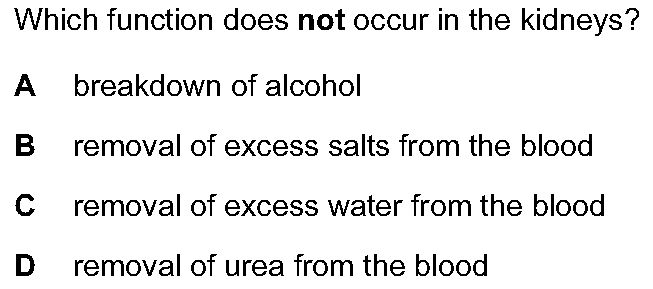
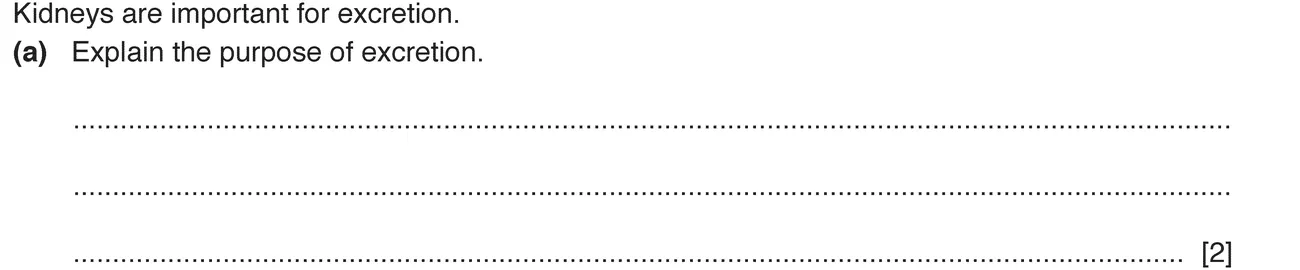
- Human excretory system (renal system) it removes urea and controls water balance, and urine flows through its parts in a set order.
- Kidneys two organs at the back of the abdomen, protected by the lower ribs, which filter the blood and make urine.
- Ureters two narrow tubes that carry urine from the kidneys to the bladder by waves of muscle contraction.
- Bladder a muscular, stretchy bag that stores urine and is emptied when it is full.
- Urethra the tube through which urine leaves the body, with a ring of muscle (sphincter) controlling release.
Part 2 of 5Blood supply and kidney structure
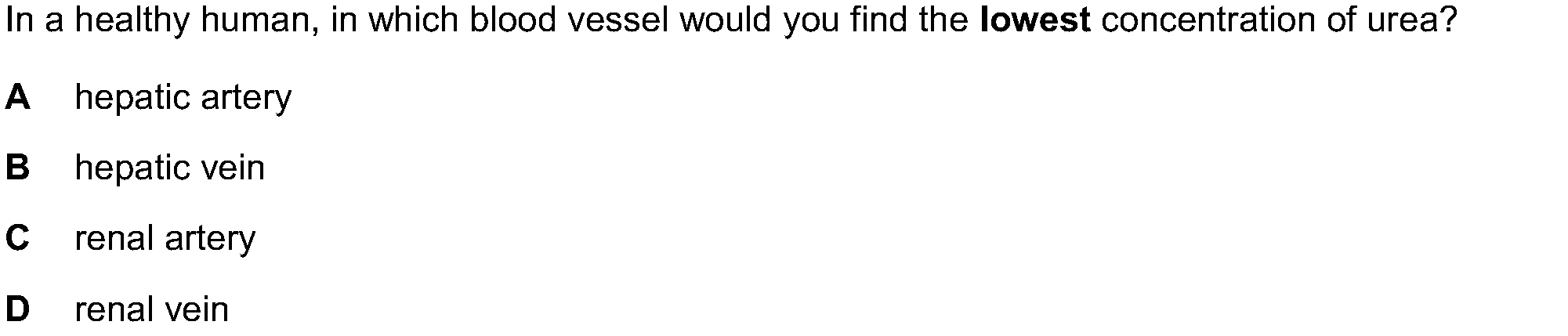
- Renal artery it brings blood containing urea from the liver to the kidney.
- Renal vein it carries away blood with much less urea.
- Blood flow kidneys receive about one fifth of the blood pumped by the heart, which shows how important their work is.
- Regions the cortex is where filtration takes place, the medulla is where water is reabsorbed, and the pelvis collects urine and leads to the ureter.
Part 3 of 5How the kidneys make urine
- Rich blood supply the blood entering carries dissolved food molecules, oxygen, salt, urea and many other substances.
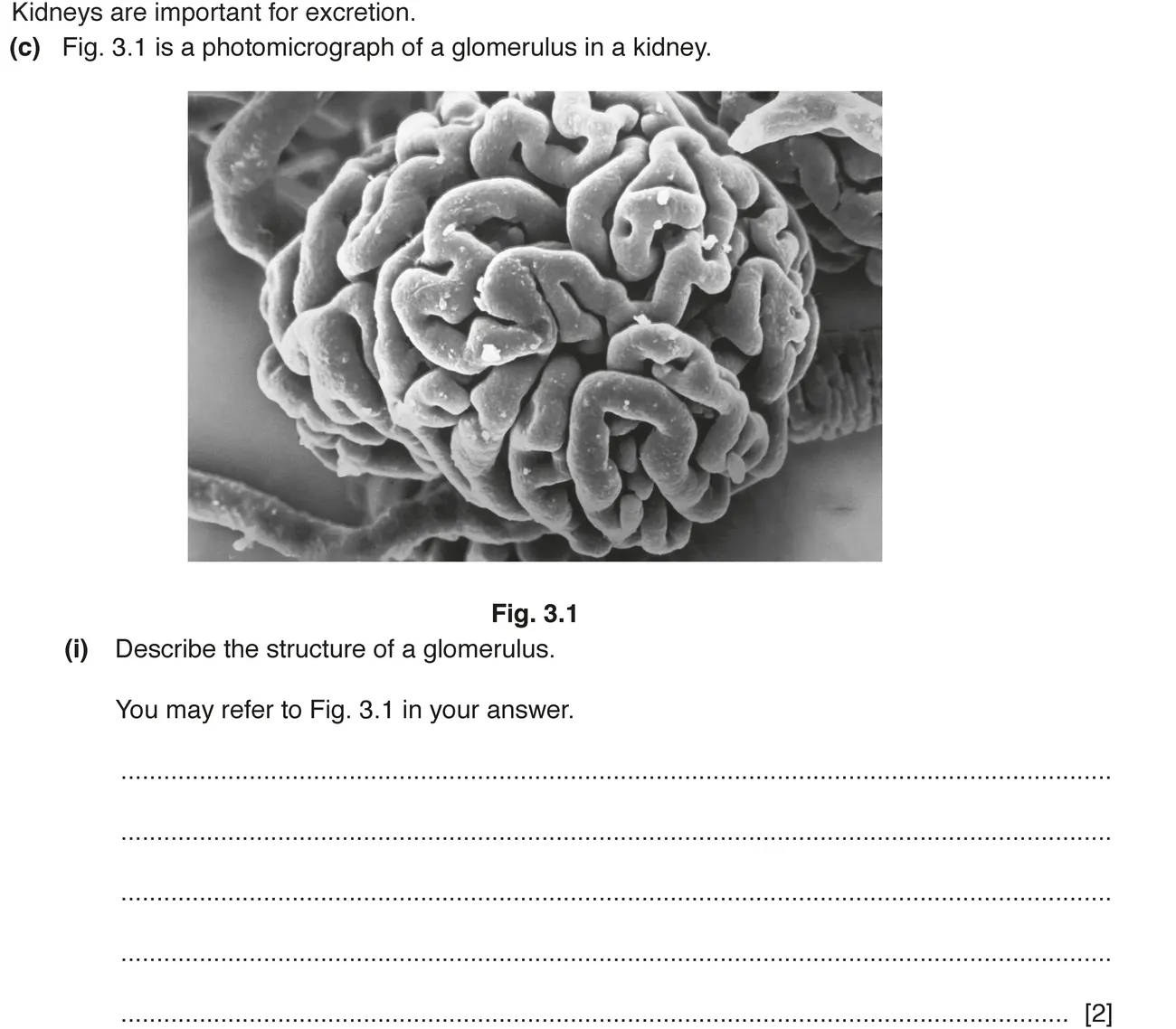
- Filtration water, glucose, salts and urea pass out of the blood at the glomerulus.
- Blood cells and big molecules the body needs stay in the blood.
- Selective reabsorption useful small molecules,
- including all the glucose, most of the water and the salts the body needs, are taken back into the blood in the tubule.
- Urine the remaining liquid, containing urea, excess water and salts, passes to the collecting duct as the yellow liquid urine.
- Volume an average adult produces about 1500 cm3 of urine every day.
Part 4 of 5Controlling water balance
- Large drink the kidneys filter a lot of water out of the blood, so lots of very dilute urine is produced.
- Little drink, hot weather or exercise the kidneys save water to keep the blood at the right concentration,
- so a small volume of concentrated, darker urine is produced.
- ADH the hormone ADH, released from the pituitary gland in response to blood concentration, adjusts how much water is reabsorbed.
- Urine colour it varies from very pale to deep yellow, and pale yellow usually means the body is well hydrated.
Part 5 of 5Urine composition and health
| Substance | In blood entering kidney | In urine |
|---|---|---|
| Urea | Present | Higher concentration |
| Glucose | Present | None (in a healthy person) |
| Protein | Present | None |
| Water | Present | Varies with need |
- Urine tests
- doctors check urine samples to make sure patients have healthy kidneys.
- Glucose in urine suggests diabetes.
- Protein in urine suggests kidney damage.
Key terms
| Term | Meaning |
|---|---|
| Kidney | An organ that filters the blood and makes urine. |
| Ureter | A tube carrying urine from a kidney to the bladder. |
| Bladder | A muscular bag that stores urine. |
| Urethra | The tube through which urine leaves the body. |
| Renal | Relating to the kidneys. |
| Selective reabsorption | Taking useful substances back into the blood from the filtrate. |
Avoid these mistakes
Marked practiceQuizzes for this lesson
?What do you want to solve now?
✓Checkpoint Quiz
2 multiple-choice + 4 written questions from real exam papers on this lesson.
Question 1 of 2 1:30
Question 2 of 2 1:30
Answer key
1 D2 A
Written question 1 of 4 · part (a) (1 / 8) 3:00
Show the answer

Written question 1 of 4 · part (b) (2 / 8) 3:00

Show the answer

Written question 1 of 4 · part (c)(i) (3 / 8) 3:00
Show the answer
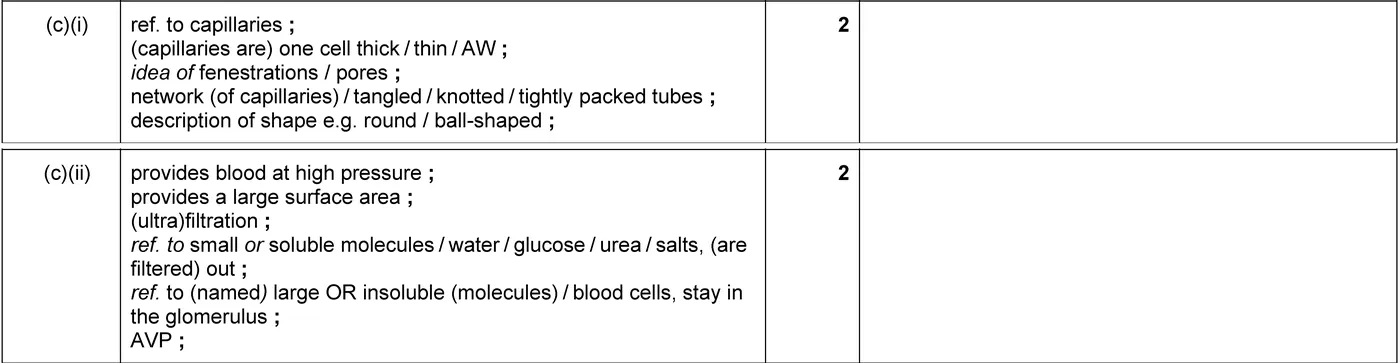
Written question 1 of 4 · part (c)(ii) (4 / 8) 3:00

Show the answer

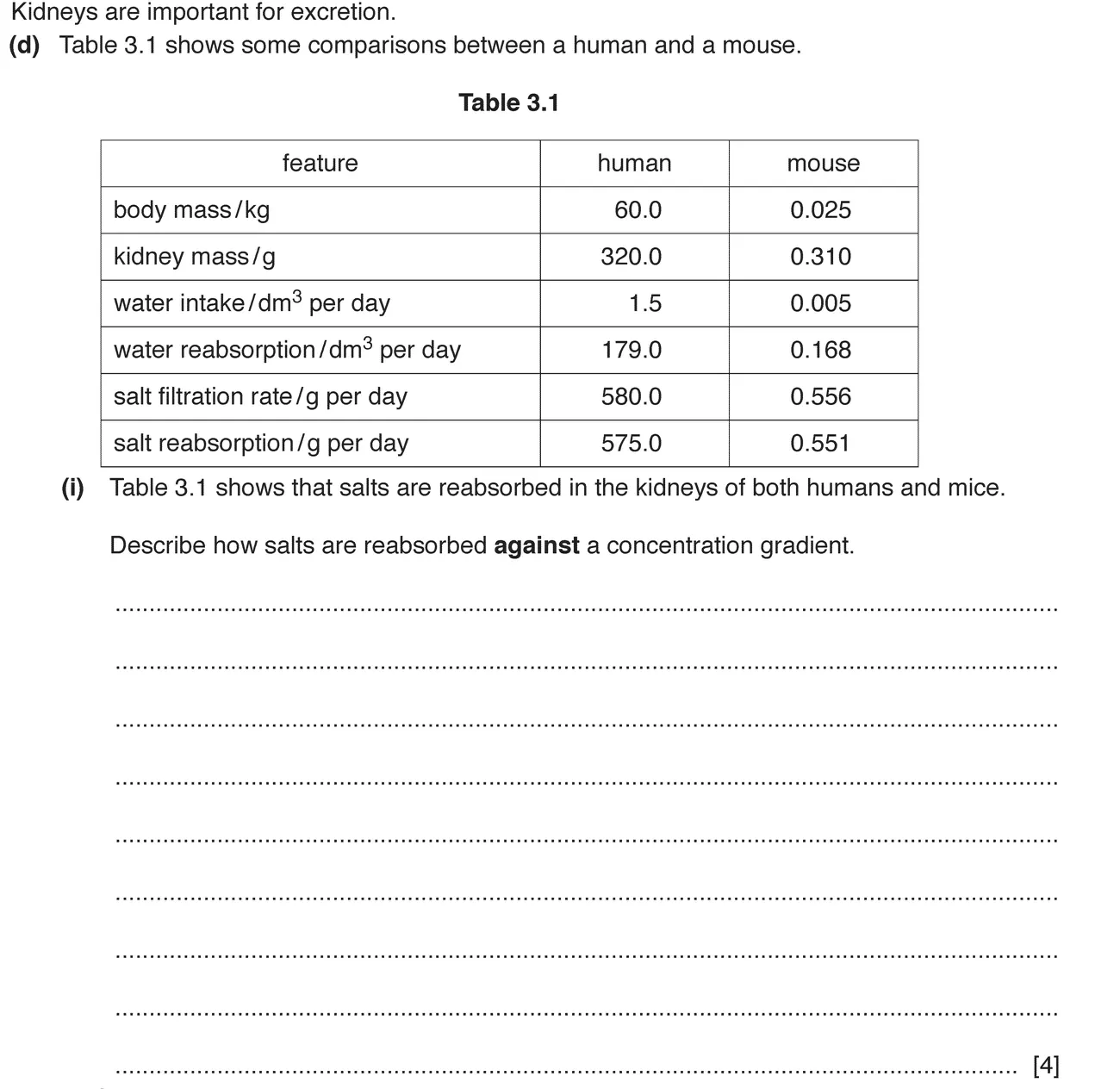
Written question 1 of 4 · part (d)(i) (5 / 8) 3:00
Show the answer

Written question 1 of 4 · part (d)(ii) (6 / 8) 3:00

Show the answer

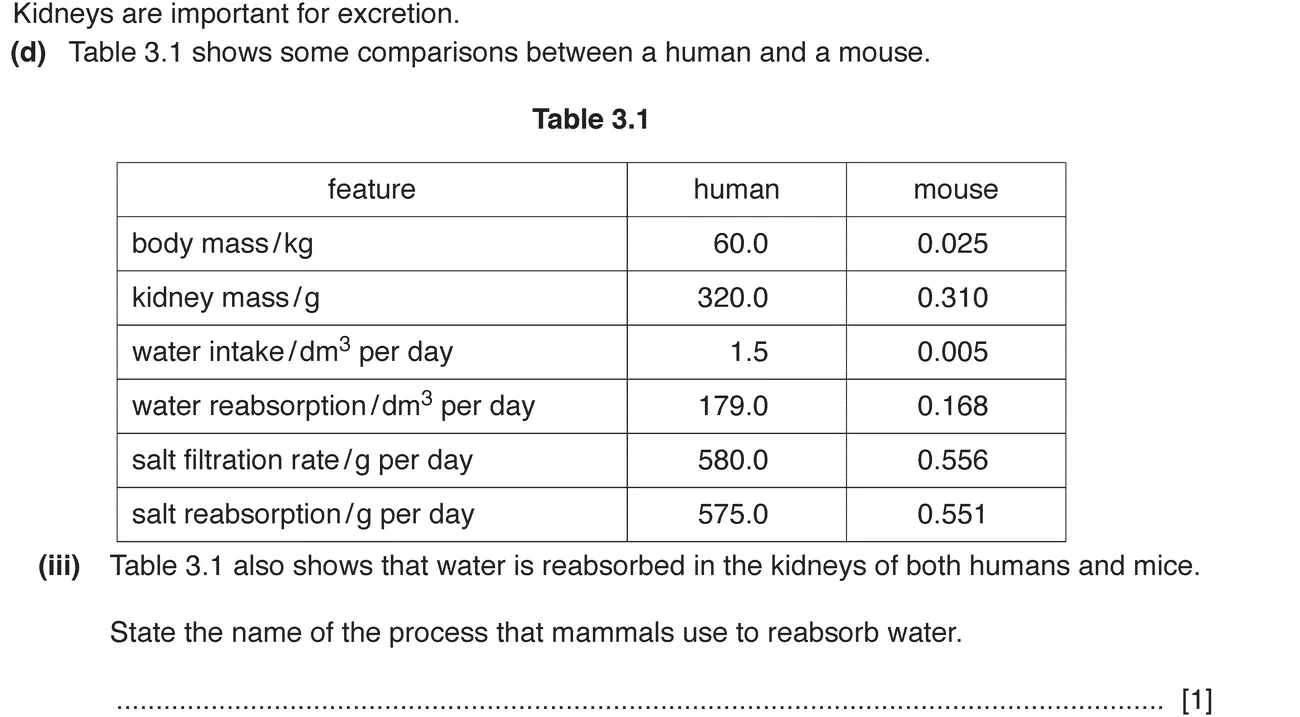
Written question 1 of 4 · part (d)(iii) (7 / 8) 3:00
Show the answer

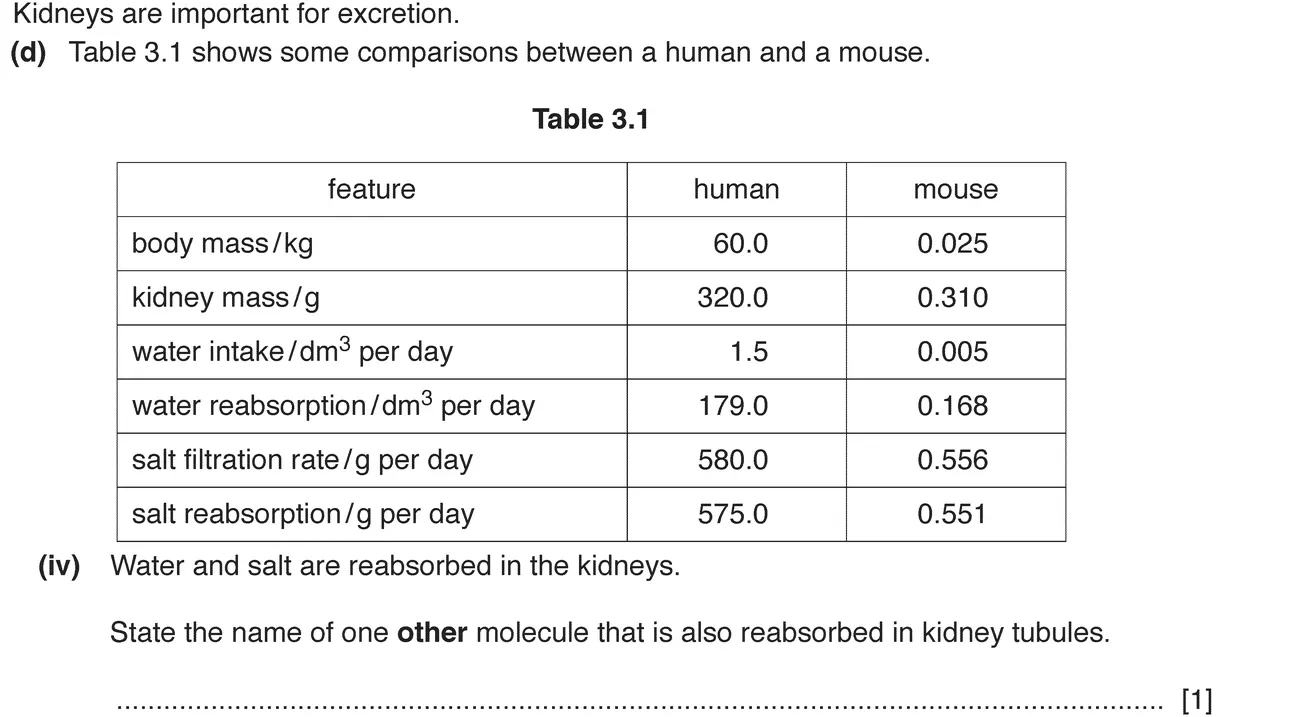
Written question 1 of 4 · part (d)(iv) (8 / 8) 3:00
Show the answer

Written question 2 of 4 · part (a)(i) (1 / 5) 3:00
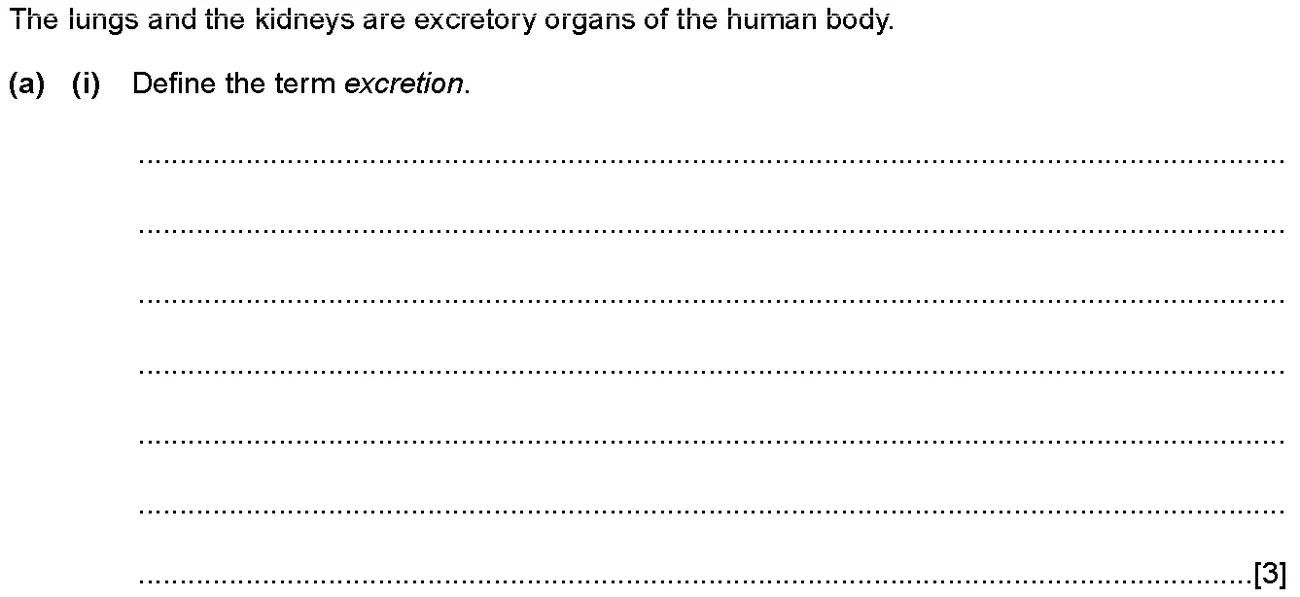
Show the answer
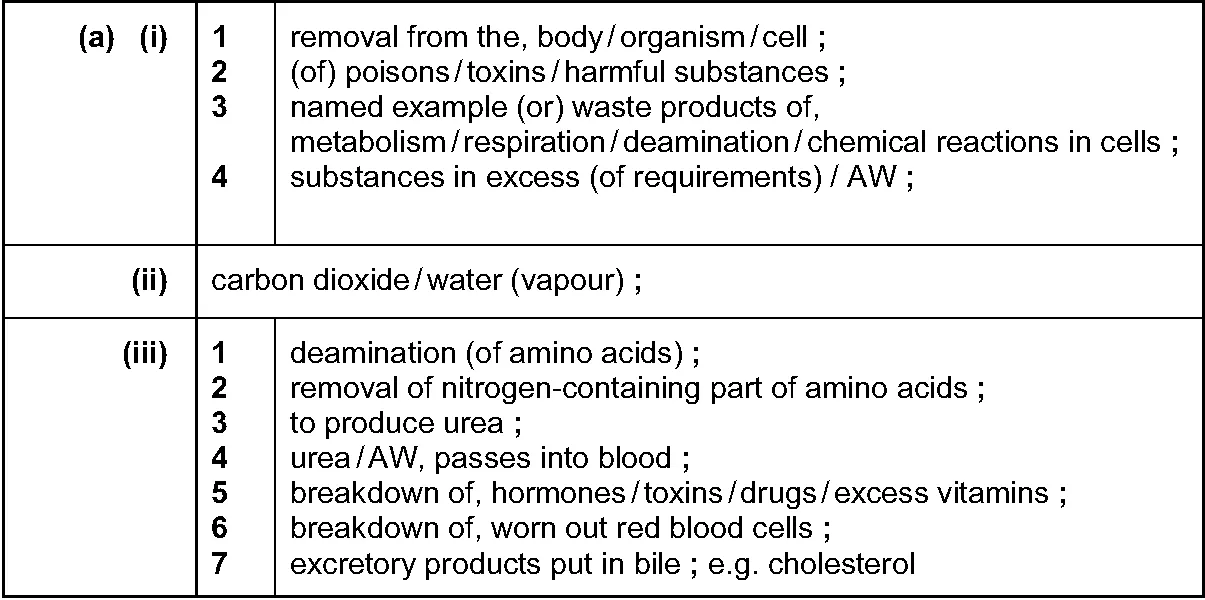
Written question 2 of 4 · part (a)(ii) (2 / 5) 3:00

Show the answer
Written question 2 of 4 · part (a)(iii) (3 / 5) 3:00

Show the answer
Written question 2 of 4 · part (b)(i) (4 / 5) 3:00

Show the answer
Written question 2 of 4 · part (b)(ii) (5 / 5) 3:00

Show the answer
Written question 3 of 4 · part (a) (1 / 5) 3:00

Show the answer

Written question 3 of 4 · part (b) (2 / 5) 3:00

Show the answer

Written question 3 of 4 · part (c) (3 / 5) 3:00
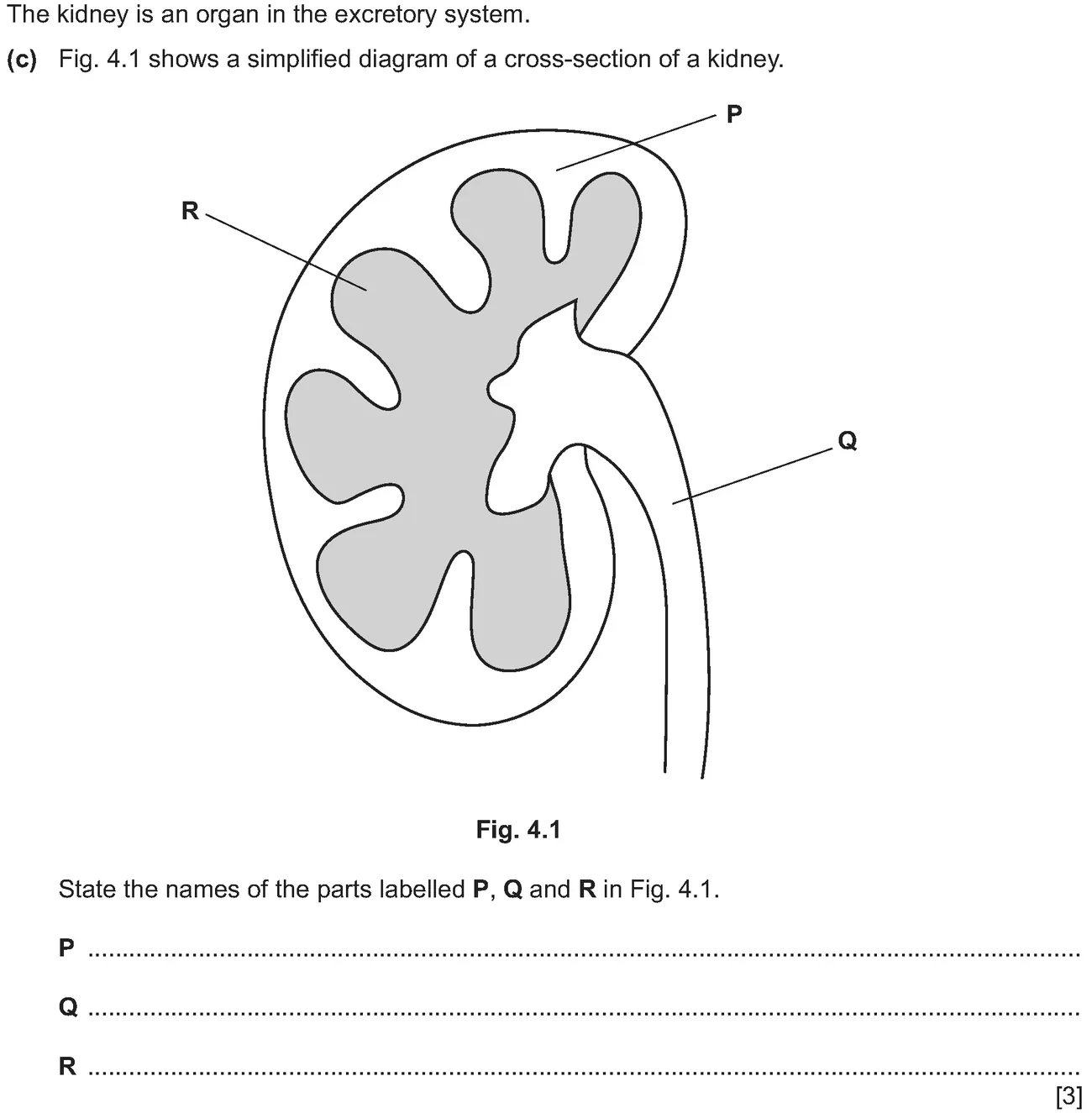
Show the answer

Written question 3 of 4 · part (d) (4 / 5) 3:00
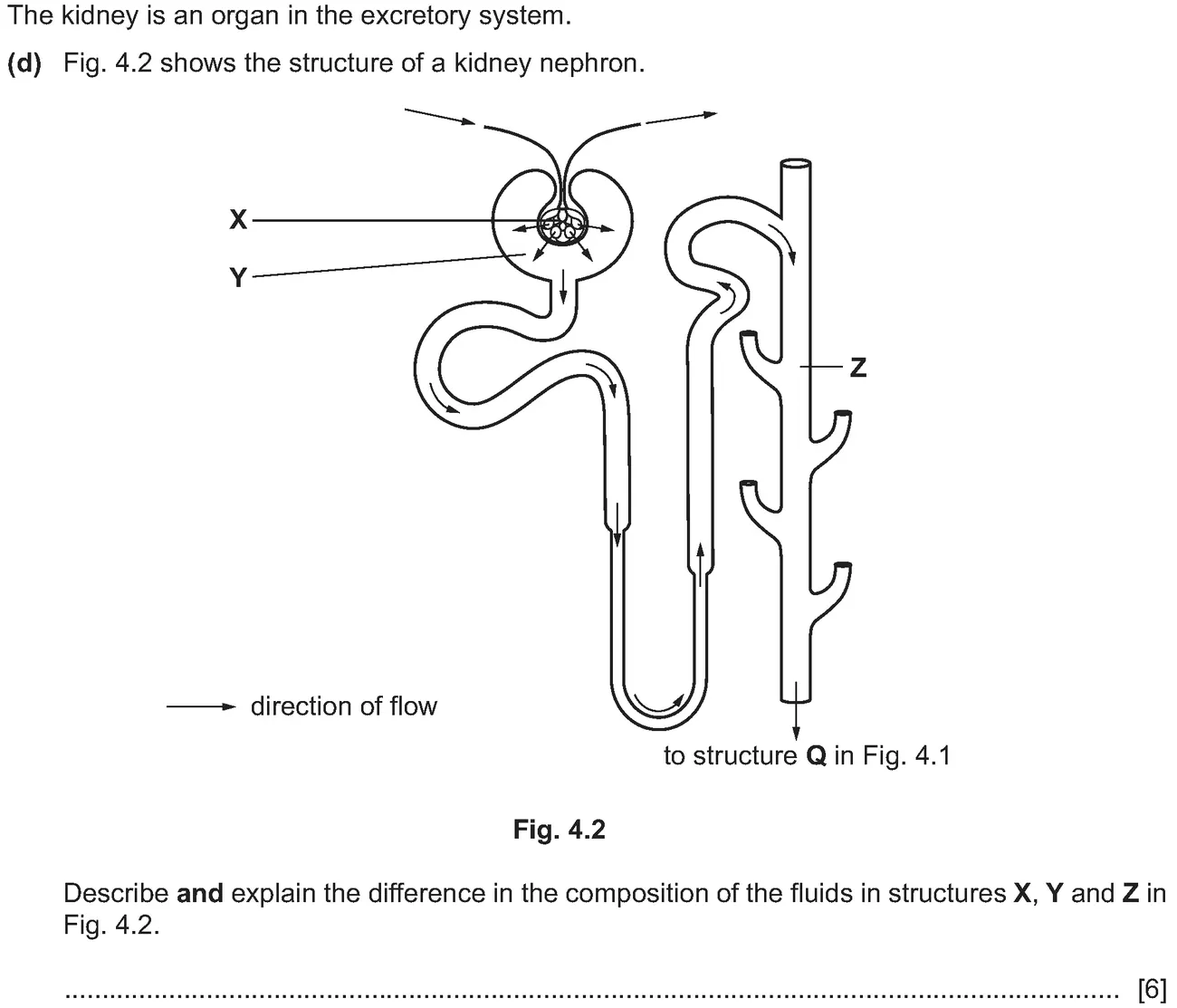
Show the answer
Written question 3 of 4 · part (e) (5 / 5) 3:00
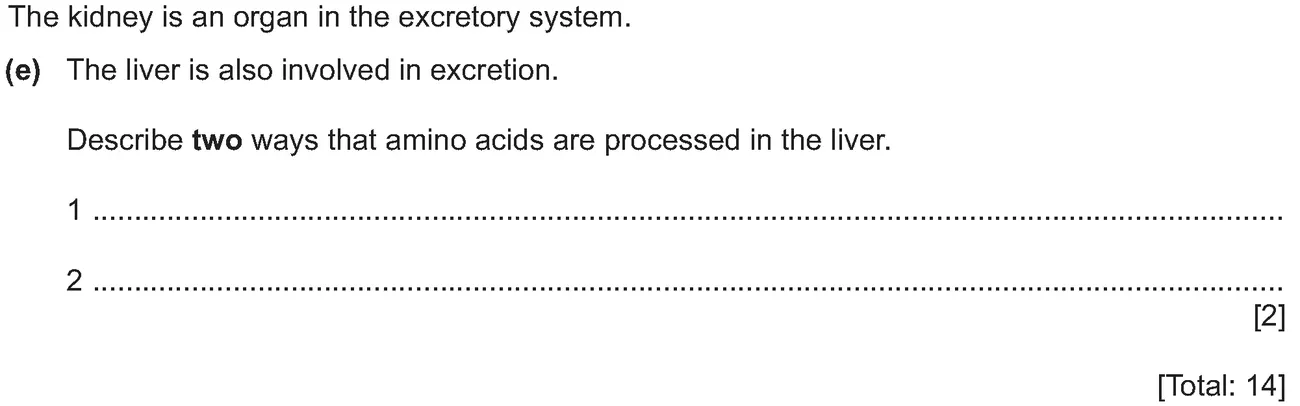
Show the answer

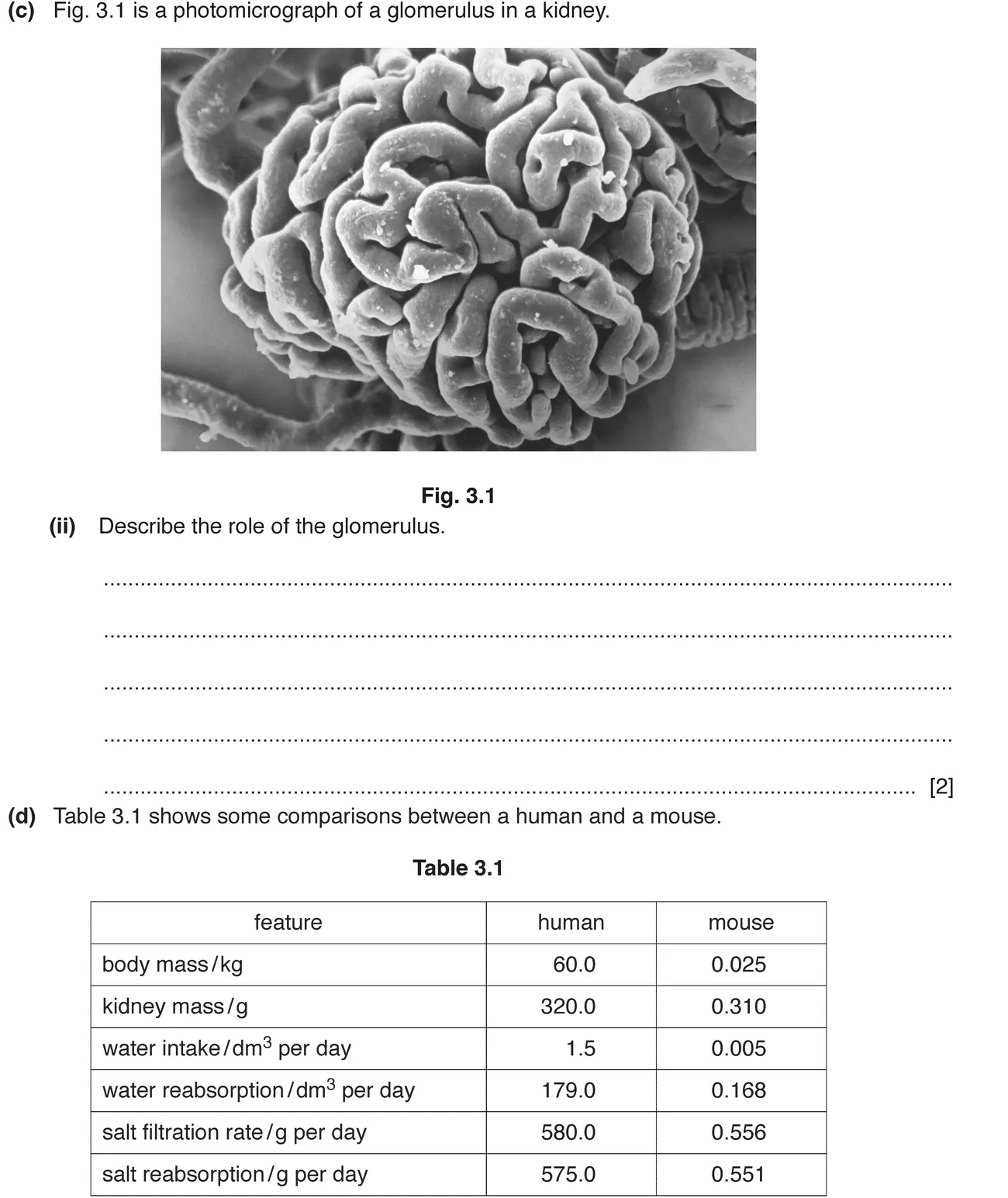


Each part of a written question is on its own screen. Write your answer first, then open "Show the answer" to check it against the mark scheme.
Last updated: