13.2Chapter 13: Variation and Natural Selection
Natural selection in action — Alhussan Biology - Stage 9 Revision Notes & Topical Questions
5 min read 8 parts Lesson 2 of 8 2 quizzes
13.2 Natural selection in action — Adaptation, Survival and Evolution — Alhussan International Academy — Biology (Stages 7–9) notes: Describe the steps of natural selection and explain how it leads to adaptation and evolution.Variation — individuals of a species differ from each …
- Population size
- Whole populations
- New species
- Wildebeest
- Early spider orchid
- Rats and warfarin
Part 1 of 6Variation and adaptation
- Variation individuals of a species differ from each other, and some differences are inherited through genes.
- Each young animal gets a different combination of genes from its parents.
- Examples are the thick fur of polar bears, the long neck of a giraffe, camouflage in the peppered moth and long roots in desert plants.
- Types structural (body shape), behavioural and physiological (such as producing concentrated urine).
- (such as migration)
Part 2 of 6Overproduction and survival
- Offspring living organisms produce many offspring, such as the seeds in a pomegranate or baby birds in a nest, and most do not survive.
- Population size the total number of each species stays approximately the same.
- Struggle individuals compete for food, space and mates, and face predators and disease.
Part 3 of 6The process of natural selection
- Charles Darwin and Alfred Russel Wallace independently proposed it in the 19th century.
- Steps five stages make up the theory.
- Variationindividuals in a population differ because of their genes.
- Overproductionmore offspring are born than the environment can support.
- Struggle for survivalindividuals compete and face predators and disease.
- Survival of the best adaptedindividuals with advantageous features are more likely to survive and breed.
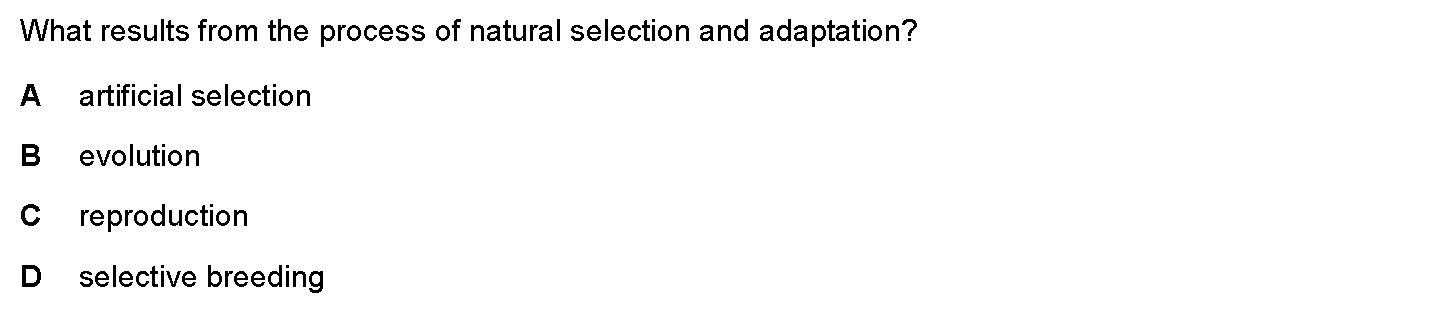
- Inheritancethey pass the advantageous alleles to offspring, so these alleles become more common over generations.
- Whole populations natural selection does not change individuals, but whole populations or even species change.
- New species repeated over a long period it may lead to the development of a new species.
Part 4 of 6Examples of natural selection
- Wildebeest those with the longest legs, strongest hearts and muscles or best eyesight are most likely to escape lions or hyenas.
- Females that make the most milk increase the chances that their calves survive.
- Puffins those with the brightest colours attract a mate and those with the biggest beaks catch more fish,
- so eventually all puffins will have bigger beaks or brighter colours.
- Early spider orchid the one that attracts the most insects has the best chance of making many fertile seeds.
- Rats and warfarin warfarin has poisoned rats since 1950, and some rats inherit a gene that makes them resistant.
- Whenever the poison is used only the resistant rats survive and breed, so in some populations all rats are resistant.
- Pitcher plants variations that let ancestors trap insects and use their digested bodies gave an advantage in mineral-poor places,
- so now all get nitrates this way.
- Lizards a variation that matches the colour of the environment made them hard for predators to find,
- so lizards of this species are now all leaf green.
Part 5 of 6The giraffe and Lamarck
- Giraffe early giraffes varied in neck length, and where food was high in trees those with longer necks reached more leaves and reproduced more.
- Their offspring inherited the genes for long necks, so the average neck length increased over many generations.
- Lamarck's idea that giraffes stretched their necks and passed on the stretch is not supported,
- because characteristics acquired in life are not inherited.
| Lamarck's idea | Darwin's idea |
|---|---|
| Features acquired during life are passed on | Inherited variation; the best adapted survive |
| Use and disuse | Natural selection |
Part 6 of 6Evolution and evidence
- New species if populations become isolated and change differently, they may eventually become new species.
- Evidence the fossil record, the similarity of DNA between related species,
- and observed examples such as antibiotic-resistant bacteria and the peppered moth.
Key terms
| Term | Meaning |
|---|---|
| Natural selection | The process by which best adapted organisms survive and pass on their genes. |
| Adaptation | A feature that helps an organism survive in its environment. |
| Evolution | Gradual change in the inherited features of a population. |
| Variation | Differences between individuals of a species. |
| Allele | A version of a gene. |
| Population | All organisms of one species in an area. |
Avoid these mistakes
Marked practiceQuizzes for this lesson
?What do you want to solve now?
✓Checkpoint Quiz
16 multiple-choice questions from real exam papers on this lesson.
Question 1 of 16 1:30
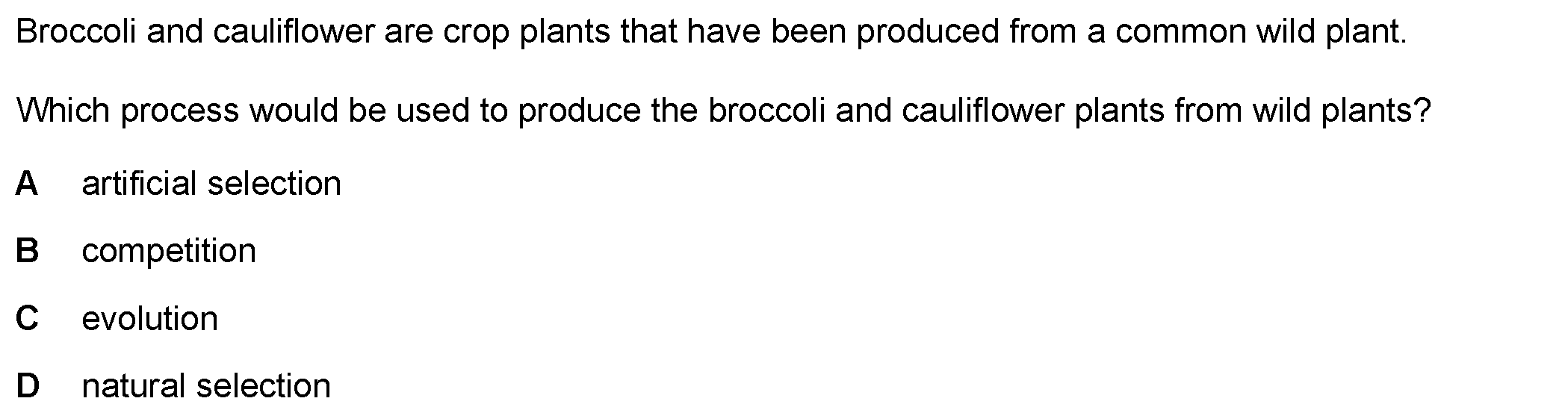
Question 2 of 16 1:30
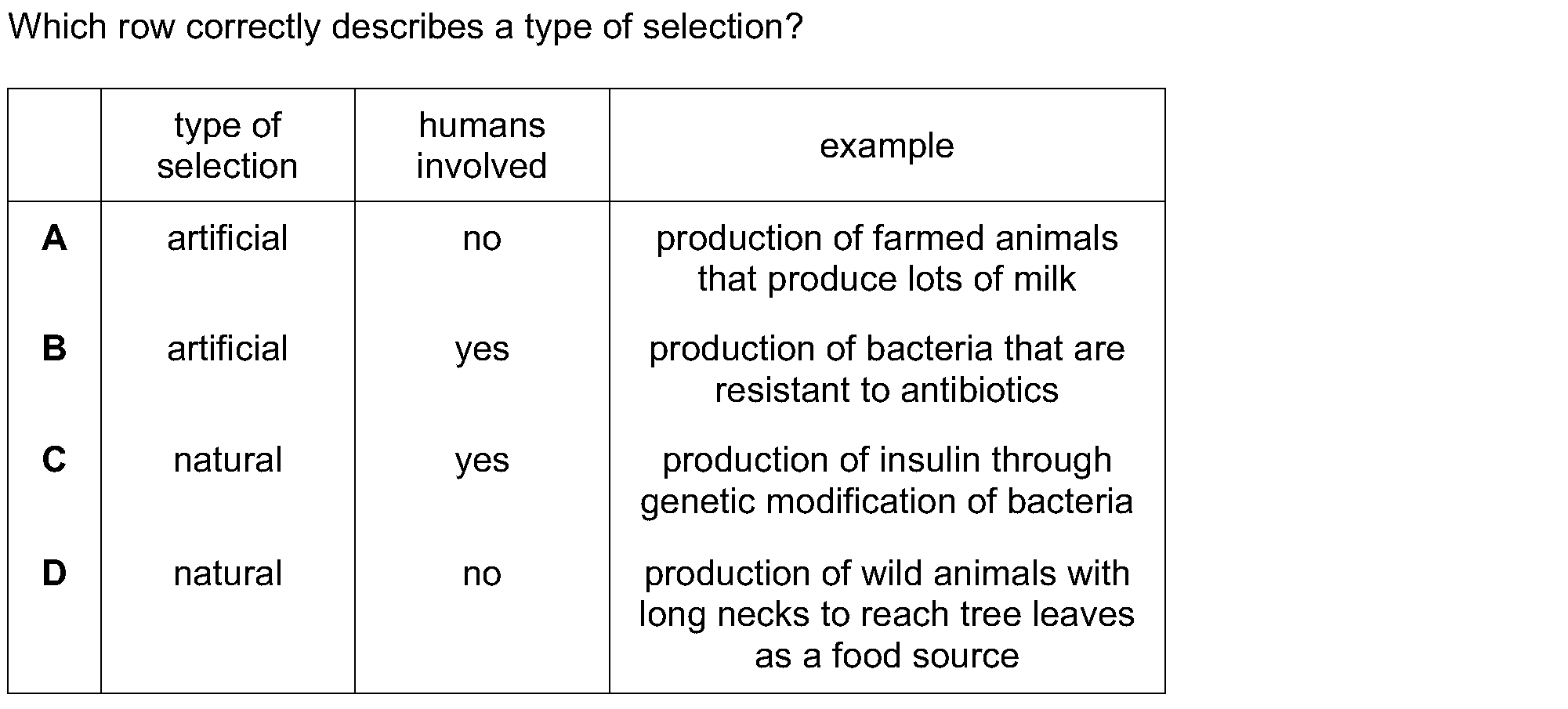
Question 3 of 16 1:30
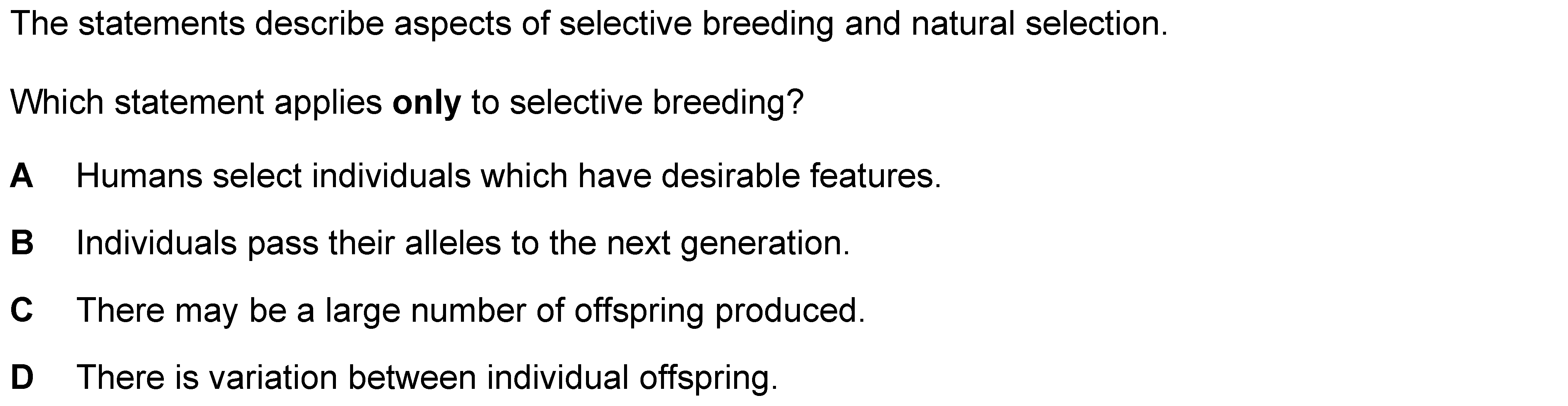
Question 4 of 16 1:30

Question 5 of 16 1:30

Question 6 of 16 1:30

Question 7 of 16 1:30
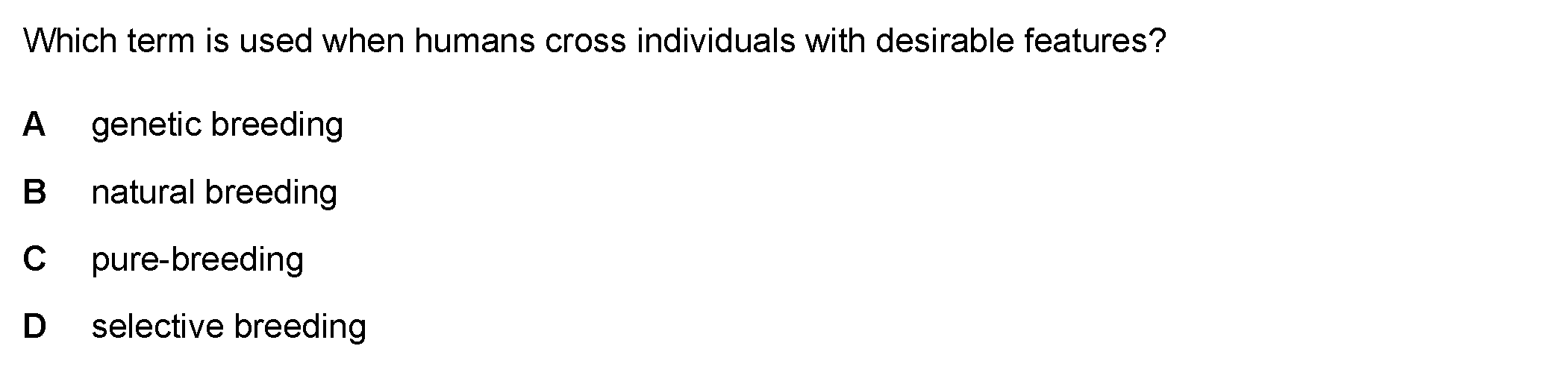
Question 8 of 16 1:30
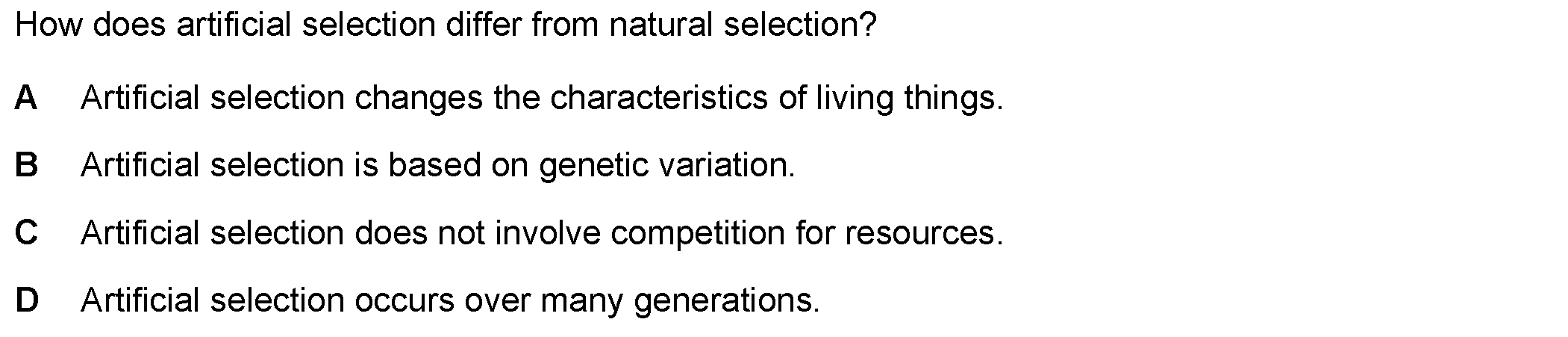
Question 9 of 16 1:30
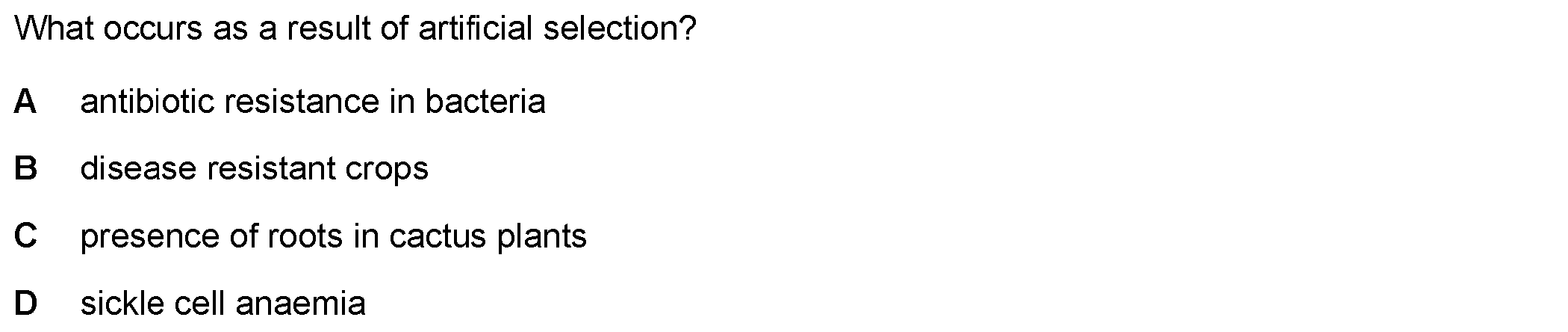
Question 10 of 16 1:30
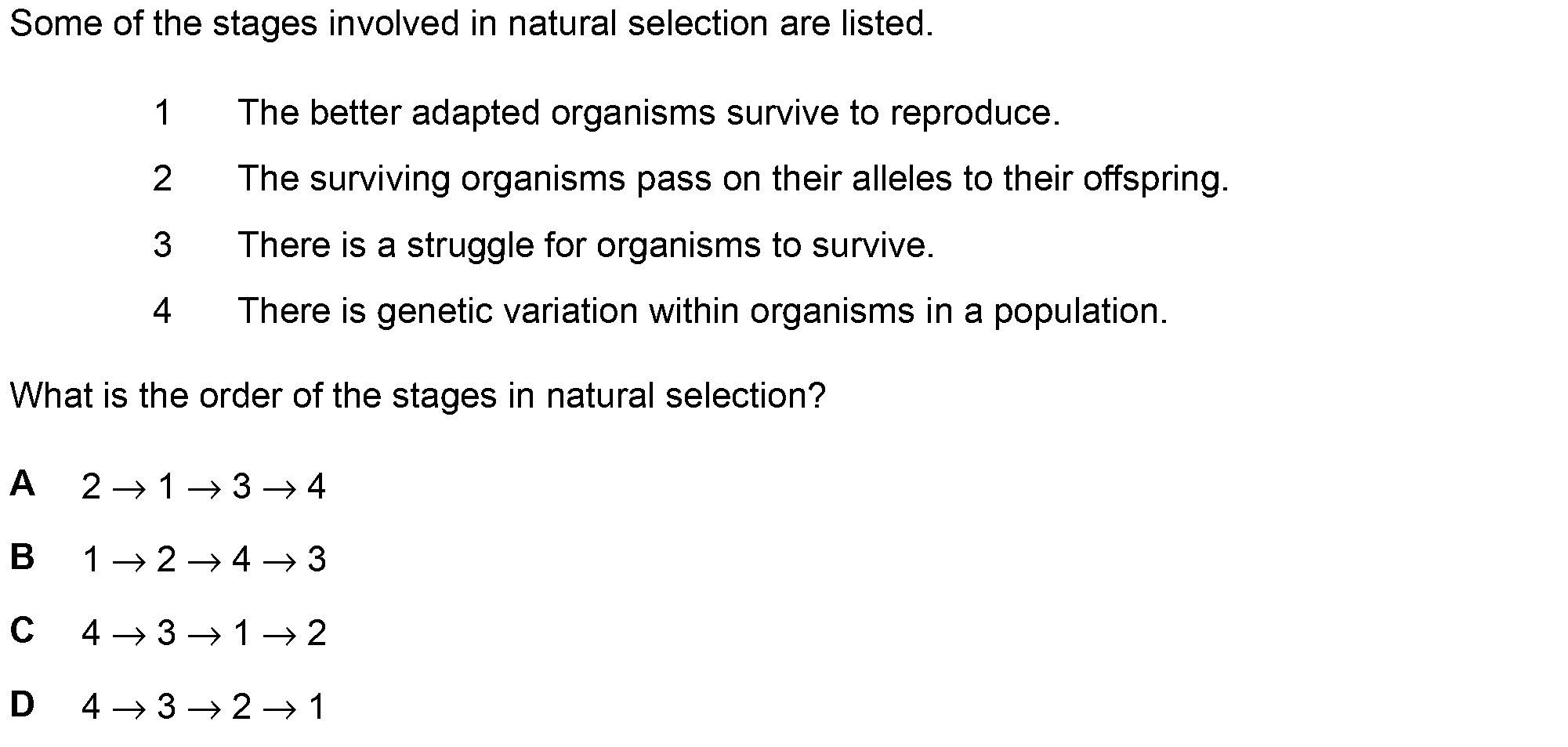
Question 11 of 16 1:30
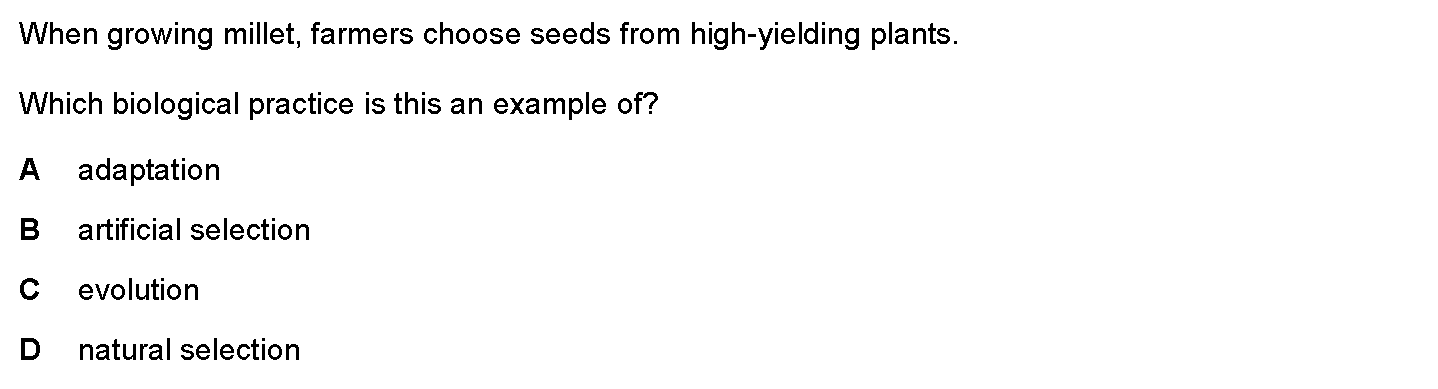
Question 12 of 16 1:30
Question 13 of 16 1:30

Question 14 of 16 1:30

Question 15 of 16 1:30
Question 16 of 16 1:30
Last updated: