13.3Chapter 13: Variation and Natural Selection
Environmental change and natural selection — Alhussan Biology - Stage 9 Revision Notes & Topical Questions
5 min read 9 parts Lesson 3 of 8 2 quizzes
Lesson summary
13.3 Environmental change and natural selection — Antibiotic Resistance — Alhussan International Academy — Biology (Stages 7–9) notes: Explain how environmental change drives natural selection and how bacteria evolve resistance to antibiotics.Adaptation — natural selection produc…
- Climate change
- Variation helps
- Original environment
- After the change
- Life cycles
- Linked species
Section 1 of 9Environmental change
Adaptation
- Adaptation natural selection produces populations that survive in their environment,
- and changes in that environment affect the organisms living there.
- Date palms and olive trees may survive in low temperatures but will not bear fruit.
Climate change
- Climate change many environments are getting hotter and drier, some are getting wetter, winters may be colder or end sooner, and rains are failing.
Variation helps
- Variation helps every population contains variation, and individuals that were different may have characteristics suited to the new conditions,
- so the population can survive.
Survival
- Survival living organisms must adapt or they will not survive, and natural selection changes populations to fit the environment.
Section 2 of 9Drought-adapted plants
Original environment
- Original environment with 25 mm of rain in the growing season most plants produce 7 flowers and an average of 28 seeds,
- but some produce 5 flowers or 3 flowers with fewer seeds.
After the change
- After the change when global warming cuts rainfall to 15 mm many plants die or fail to set seed.
- The variants with fewer flowers and seeds cope better with less water and reproduce successfully.
Result
- Result as dry conditions continue, natural selection acts until most of the population is the drought-adapted variation.
Section 3 of 9Interdependence and extreme events
1
Life cycles
- Life cycles plant and animal life cycles are often linked through feeding relationships,
- so patterns of reproduction change and food supply can fail if the environment changes.
- Many organisms in hot, dry regions depend on rains to reproduce, so delayed or failed rains threaten whole populations.
2
Linked species
- Linked species if one species changes by natural selection, other interdependent species must also adapt or die out.
3
Kestrels
- Kestrels they are small birds of prey widespread in Africa, Asia and Europe, with a diet that varies with where they live.
- They reproduce successfully when average temperature rises, because those best able to cope breed successfully.
- Extreme droughts damage kestrel populations, because there are no adaptations for severe, unpredictable drought.
4
Speed of change
- Speed of change natural selection has always allowed adaptation, but climate change is now happening very fast.
Section 4 of 9Antibiotics and bacteria
Antibiotics
Antibiotics medicines that kill bacteria or stop them growing, without harming human cells.
- They treat bacterial infections such as pneumonia but do not work on viruses, so they are no use against colds or flu.
Fast reproduction
- Fast reproduction bacteria sometimes divide every 20 minutes, so a population can evolve rapidly.
Section 5 of 9How resistance develops
1
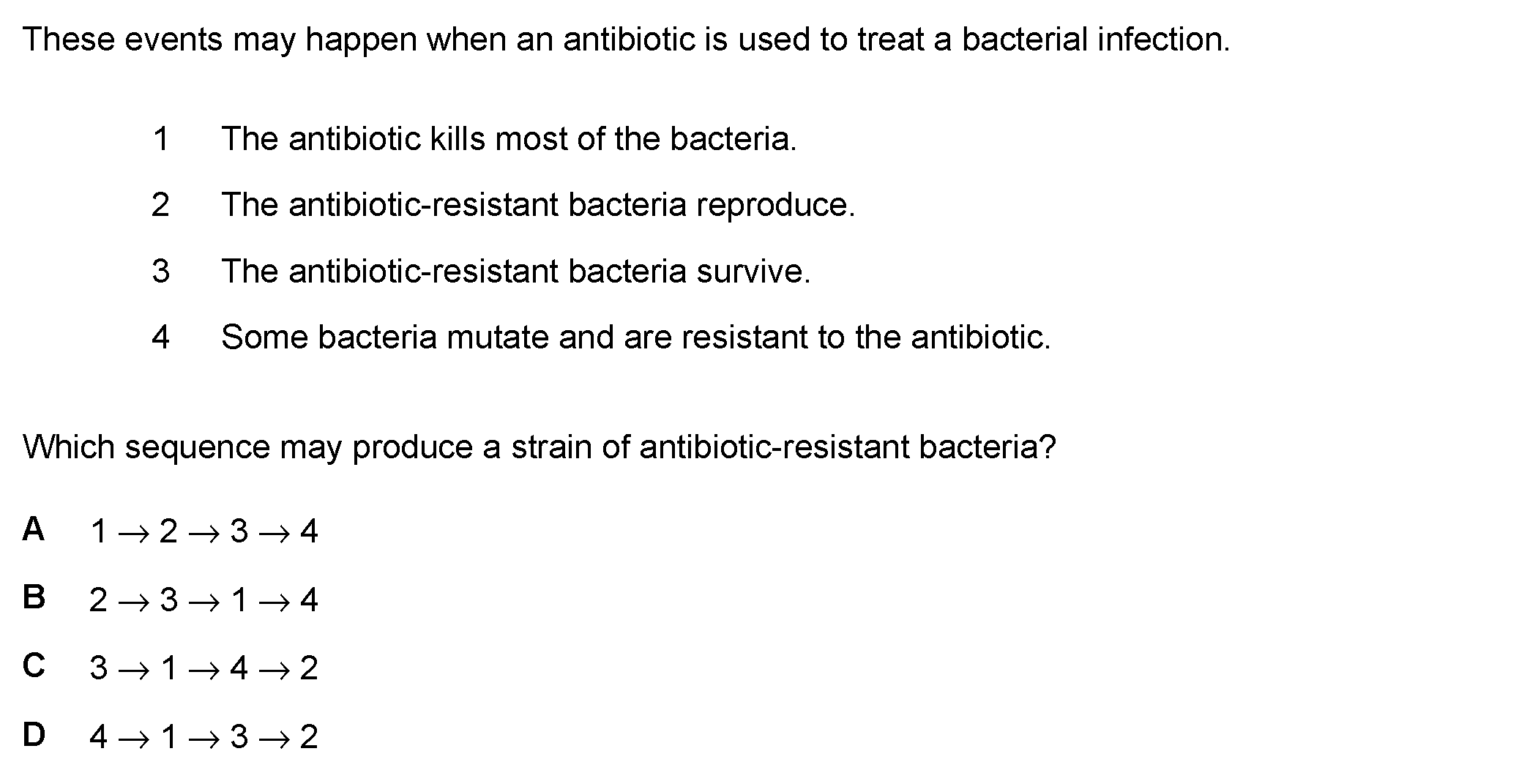
Variation caused by mutation occurs in a population,
- and a random mutation produces a resistant bacterium, for example by changing the target of the drug.
2
The antibiotic kills most non-resistant bacteria, but the resistant one survives.
3
The survivor reproduces with little competition and passes on the resistance allele.
4
The population of resistant bacteria increases, so the antibiotic no longer works well.
1Selection pressure
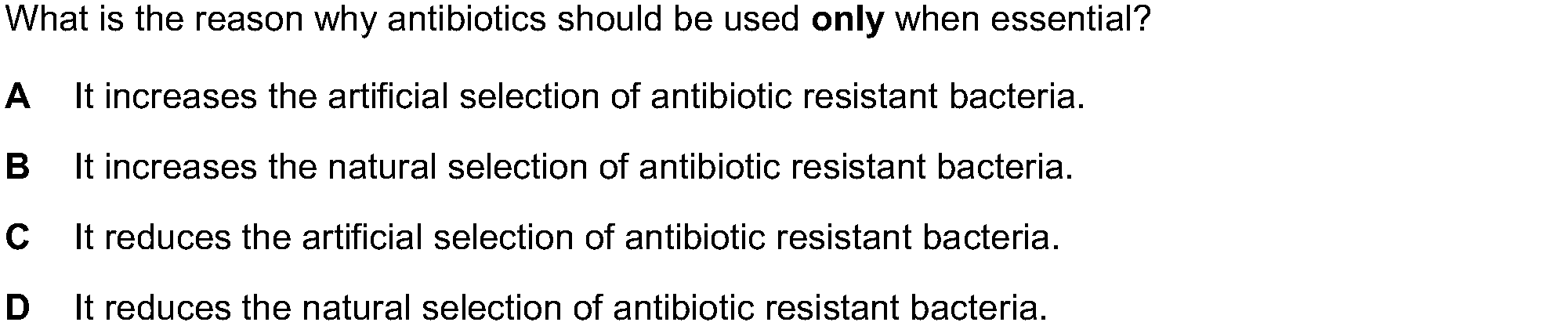
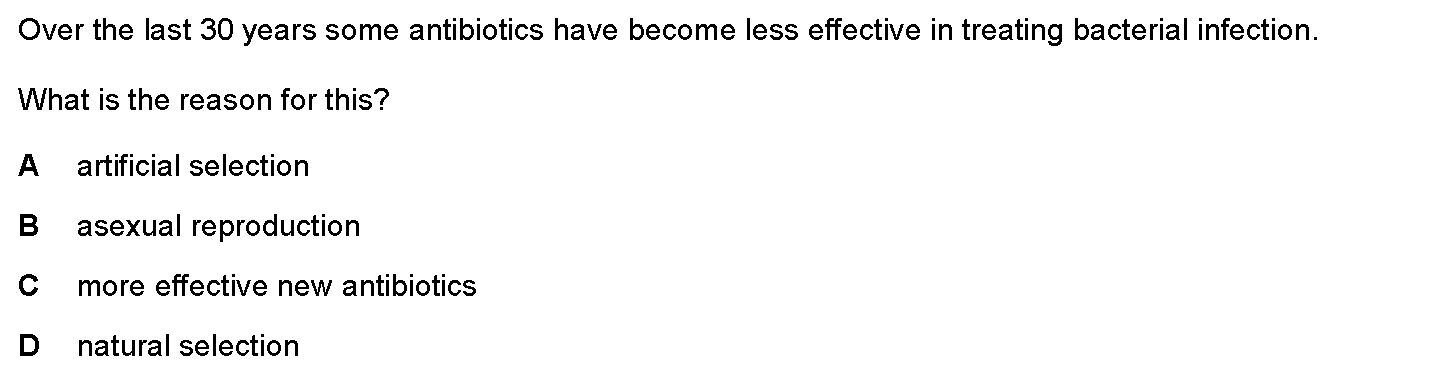
- Selection pressure this is natural selection with the antibiotic as the selection pressure.
2Plasmids
- Plasmids bacteria can pass resistance genes to other bacteria, even of different species, in small rings of DNA.
Section 6 of 9Superbugs
Superbugs
MRSA (methicillin-resistant Staphylococcus aureus)
- MRSA (methicillin-resistant Staphylococcus aureus) a well-known resistant bacterium spread in hospitals.
Tuberculosis
- Tuberculosis multidrug-resistant forms are a global concern.
Danger
- Danger infections by resistant bacteria are harder, more expensive and sometimes impossible to treat.
- The World Health Organization regards antibiotic resistance as a major threat.
- Routine operations and cancer treatments depend on effective antibiotics.
Section 7 of 9Reducing resistance
1
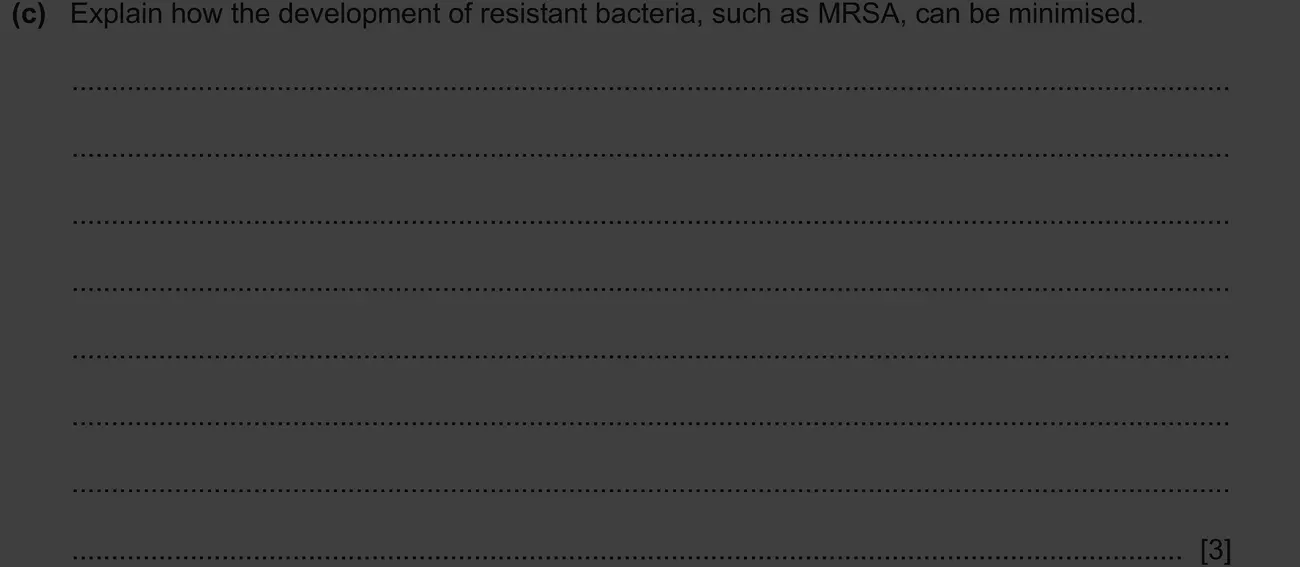
Doctors should prescribe antibiotics only when necessary and not for viral infections.
2
Patients must complete the whole course so that all the bacteria are killed.
3
Farmers should reduce routine use of antibiotics in animal feed.
4
Hospitals should use strict hygiene, such as hand washing and isolating infected patients.
5
Scientists develop new antibiotics and drug combinations, though this is difficult and costly.
| Normal evolution | Antibiotic resistance |
|---|---|
| Takes thousands of years in large animals | Occurs in years because bacteria reproduce quickly |
| Selection by climate, predators | Selection by the antibiotic |
Section 8 of 9Key terms
| Term | Meaning |
|---|---|
| Antibiotic | A medicine that kills bacteria or stops them growing. |
| Resistance | The ability of bacteria to survive an antibiotic. |
| Mutation | A random change in a gene. |
| Selection pressure | An environmental factor that affects survival, such as an antibiotic. |
| Plasmid | A small ring of DNA that bacteria can pass to each other. |
| MRSA | A hospital-spread bacterium resistant to methicillin. |
Section 9 of 9Exam technique
1
Saying bacteria choose to become resistant or that the antibiotic causes the mutation.
2
Thinking the patient becomes resistant — the bacteria are resistant.
3
Thinking antibiotics treat viruses.
4
Forgetting the speed of bacterial reproduction.
Marked practiceQuizzes for this lesson
?What do you want to solve now?
✓Checkpoint Quiz
3 multiple-choice + 1 written questions from real exam papers on this lesson.
Question 1 of 3 1:30
Question 2 of 3 1:30
Question 3 of 3 1:30
Score: 0 / 3
Answer key
1 D2 D3 D

Each part of a written question is on its own screen. Write your answer first, then open "Show the answer" to check it against the mark scheme.
Last updated: