A2.1Theme A — Unity and diversity
Origins of cells — IB Biology SL Revision Notes & Topical Questions
5 min read 13 parts Lesson 7 of 11 1 quiz
Curriculum Equation Key قوانين الرقم الهيدروجيني والاتزان الأيوني - pH & Acid-Base Equilibrium FormulasFast Exam Solution
pH = -log[H⁺] | pOH = -log[OH⁻] | pH + pOH = 14 | [H⁺][OH⁻] = 10⁻¹⁴
Word Equation & Conditions: الرقم الهيدروجيني = -لوغاريتم تركيز أيون الهيدروجين | pH + pOH = 14
Location & Specifications: الاتزان الأيوني، كيمياء 3 ثانوي، التحصيلي، و AP Chemistry.
Lesson summary
A2.1 Origins of cells — IB BIOLOGY SL notes: Describe the conditions, steps and evidence for the origin of the first cells, LUCA and endosymbiosis.Cell = the smallest unit that can carry out all the functions of lifeEvery cell is enclosed by a plasma membrane.Every cell stores ge…
- Greenhouse gases
- UV radiation
- Meteorites
- Primordial soup
- Protocell-first
- Gene-first
Part 1 of 10Cells as the smallest units of life
Cell
Cell the smallest unit that can carry out all the functions of life
- Every cell is enclosed by a plasma membrane.
- Every cell stores genetic information in DNA, which is expressed during protein synthesis.
Functions of life
- Functions of life metabolism, growth, response to stimuli, homeostasis, reproduction, excretion and nutrition
Viruses
- Viruses not cells, because they lack metabolism, need no nutrition and rely on host cells to replicate
Part 2 of 10The challenge of the first cell
1Problem
- Problem cells arise only from pre-existing cells, so the first cell had to arise without one
2Age
- Age the Earth is about 4.5 billion years old and fossil evidence of cells goes back at least 3.5 billion years
3
Steps needed to make a cell
- Simple organic compounds must be made from inorganic molecules.
- The organic compounds must be assembled into polymers.
- Some polymers must be able to self-replicate.
- Membranes must surround the polymers to make a compartment with its own internal chemistry.
4Evidence
- Evidence no direct evidence of the first cells survives, so models remain hypotheses
Part 3 of 10Conditions on the early Earth
| Condition | Early Earth | Modern Earth | Relevance |
|---|---|---|---|
| Free oxygen | Almost none | About 21% | Organic molecules were not oxidised |
| Main gases | CO2, N2, H2O, with CH4 and NH3 proposed | N2 and O2 | Supplied C, H and N |
| Ozone layer | Absent | Present | High UV energy reached the surface |
| Energy | Lightning, UV, volcanic heat | Mainly sunlight | Drove synthesis reactions |
| Temperature | Hot and very variable | Mild | Faster reactions |
Greenhouse gases
- Greenhouse gases high CO2 and methane raised surface temperatures
UV radiation
- UV radiation with no ozone it reached the surface, damaged DNA and drove the formation of organic molecules
Water
- Water oceans and tidal pools concentrated the reactants as they evaporated
Vents
- Vents deep-sea alkaline vents offered heat, minerals and chemical gradients
Meteorites
- Meteorites some carry amino acids and may have seeded the Earth with organic molecules
Primordial soup
Primordial soup the Oparin-Haldane idea that early oceans held a rich mix of simple organic compounds
- Amino acids, simple sugars, nucleotides and fatty acids could have formed from heat or UV acting on the gases.
Part 4 of 10Theories for the origin of cells
1Protocell-first
- Protocell-first cell-like compartments able to grow and divide arose first and later gained genetic material, probably RNA
2Gene-first
- Gene-first a self-replicating nucleic acid, probably RNA, arose first and variants later developed membranes and metabolism
3Metabolism-first
- Metabolism-first a self-sustaining system of chemical reactions arose first and later evolved into cells and genetic material
- Many scientists favour it because life processes need energy from metabolic reactions.
4Testing
- Testing the theories are hard to test
- Early Earth conditions cannot be copied exactly.
- The first cells were not fossilised.
Part 5 of 10Membranes and vesicles
Membranes and vesicles
Compartmentalisation
- Compartmentalisation a membrane separates the genetic material and biochemistry from the surroundings
Fatty acids
- Fatty acids likely first membrane molecules because they are amphipathic
- In water a few lipid molecules form a monolayer at the surface.
- More lipid forms bilayers with polar parts facing the water and non-polar tails facing each other.
- Bilayers spontaneously form microspheres or vesicles with hydrophobic tails inwards.
Later evolution
- Later evolution fatty acids could combine with glycerol to form triglycerides and then phospholipids, the main component of modern membranes
Part 6 of 10RNA as the first genetic material
1Needs of early life
- Needs of early life a system that could replicate itself and a way to catalyse reactions
2RNA world hypothesis
- RNA could both store genetic information and act as an enzyme
- RNA folds into ribozymes that catalyse reactions.
- DNA later took over storage because it is chemically more stable.
- Proteins became the catalysts.
3
Evidence for RNA before DNA
- RNA can assemble spontaneously from nucleotides and can replicate itself.
- Ribose can be formed from methanal, a product of the Miller-Urey experiment.
- Deoxyribose is made from ribose in an enzyme-catalysed reaction.
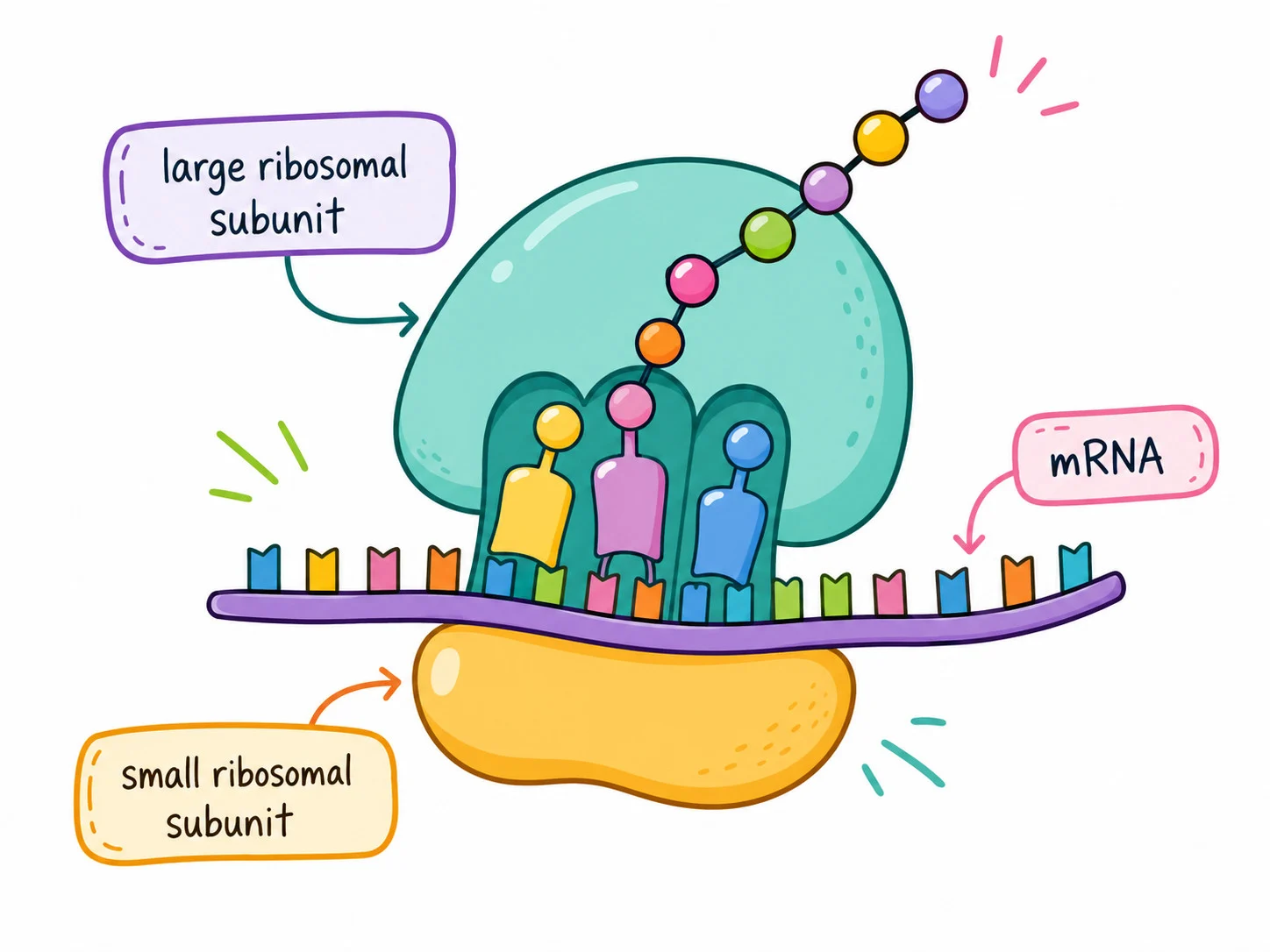
- Ribozymes can join amino acids into proteins using an RNA template, and ribosomes still use RNA as their catalytic core.
4Fragility
- RNA is chemically fragile
Part 7 of 10LUCA
LUCA
LUCA the last universal common ancestor, a single-celled organism that lived about 4 billion years ago
- It sits at the base of the phylogenetic tree of life.
Evidence
- All organisms share the same DNA bases, the same genetic code and the same amino acids in proteins.
- Several genes are shared by eubacteria and archaea, so they were inherited from LUCA.
- Organisms with similar DNA are more closely related than those with very different DNA.
Other early life
- Other early life other organisms probably existed then but left no descendants
- Descendants of LUCA outcompeted them for shared resources.
Dating
- Dating fossils and rocks are dated by radiometric methods, and the molecular clock uses the rate at which mutations accumulate
- Numbers from fossils and the molecular clock are estimates, not exact dates.
Part 8 of 10LUCA and hydrothermal vents
Habitat
- LUCA may have lived near deep-sea hydrothermal vents, where chemosynthesis can supply energy
Fossil evidence
- Fossil evidence haematite tubes in sedimentary rocks near vents in Quebec resemble structures made by modern iron-oxidising prokaryotes
- Stromatolites and microfossils also show early prokaryotes.
Gene evidence
- Gene evidence sequence data from modern vent species show a common ancestor
Likely features of LUCA
- Anaerobic.
- Converted carbon dioxide into glucose.
- Used hydrogen as an energy source instead of sunlight.
- Converted nitrogen into ammonia for amino acids.
- Thermophilic, surviving very high temperatures.
Alternative hypotheses
- Alternative hypotheses scientists continue to gather data that may support or refute this view
Part 9 of 10Endosymbiosis
Endosymbiosis
Endosymbiosis one cell living inside another, which explains the origin of mitochondria and chloroplasts
- A large cell engulfed an aerobic bacterium that became the mitochondrion.
- A later engulfed photosynthetic bacterium became the chloroplast.
Evidence
- Evidence both organelles have a double membrane, their own circular DNA, 70S ribosomes and divide by binary fission
Common origin
- Common origin it explains why all eukaryotes share a common origin
Part 10 of 10More from the specification
- Theory
- A well-tested explanation supported by a large body of evidence.
Key terms
| Term | Meaning |
|---|---|
| Primordial soup | The idea that early oceans held a rich mix of simple organic compounds. |
| Miller-Urey experiment | A 1950s laboratory simulation showing amino acids can form from simple gases with an energy input. |
| Vesicle | A small sphere bounded by a lipid bilayer that forms spontaneously from fatty acids in water. |
| RNA world | The hypothesis that early life used RNA both to store information and to catalyse reactions. |
| Ribozyme | An RNA molecule that acts as a catalyst. |
| LUCA | The last universal common ancestor from which all living organisms descend. |
| Hydrothermal vent | A crack in the sea floor releasing hot mineral-rich water, a proposed site for early life. |
| Endosymbiosis | The origin of mitochondria and chloroplasts from bacteria engulfed by a larger cell. |
Avoid these mistakes
1
Saying that the Miller-Urey experiment created life — it only made simple organic molecules
2
Thinking viruses are cells — they lack metabolism and cannot reproduce without a host
3
Saying LUCA was the only organism alive at that time — other organisms probably existed but left no descendants
4
Thinking DNA came before RNA — RNA is thought to have been the first genetic material
Marked practiceQuizzes for this lesson
Last updated:
Cambridge 9700 AS Biology
Core Formula
Magnification Triangle & Unit Conversion
Formula: M = I / A ⇔ A = I / M ⇔ I = M × A
Units: 1 mm = 1,000 μm = 1,000,000 nm.
Rule: Convert Image size (ruler mm) to μm by ×1,000 before dividing by Actual size.