Curriculum
EST II Biology
1. Molecules & Cells
0/15
2. Genetics & Biotechnology
0/7
3. Evolution & Diversity
0/7
-
McGraw-Hill SAT Biology — Chapter 7: Understanding Evolution and Diversity
 Preview
-
3.1 Evolution & Natural Selection
Preview
-
3.1 Evolution & Natural Selection (SAT Biology) - Check yourself
 Preview
-
3.2 Classification & Diversity of Life
Preview
-
3.2 Classification & Diversity of Life (SAT Biology) - Check yourself
Preview
-
3.3 Plant Structure & Reproduction
Preview
-
3.3 Plant Structure & Reproduction (SAT Biology) - Check yourself
Preview
4. Organisms: Structure & Function
0/15
5. Ecology
0/5
6. Laboratory Skills
0/2
SAT Biology — Full Book Tests and Strategy
0/8
Text lesson
McGraw-Hill SAT Biology — Chapter 7: Understanding Evolution and Diversity
McGraw-Hill SAT Biology — Chapter 7: Understanding Evolution and Diversity — SAT BIOLOGY E/M — REVISION NOTES notes: Explain natural selection and evolutionary mechanisms, classify organisms, and describe plant and fungal diversity.
1Natural selection and its evidence2Natural selection and its evidence3Natural selection and its evidence4Natural selection and its evidence5Natural selection and its evidence6Natural selection7Adaptation · Antibiotic resistance · Lines of evidence

Natural selection
 ⤢ Enlarge
Natural selection
the mechanism by which individuals with advantageous inherited traits leave more offspring.
◀ Previous6 / 7Next ▶
Adaptation · Antibiotic resistance · Lines of evidence
Adaptation
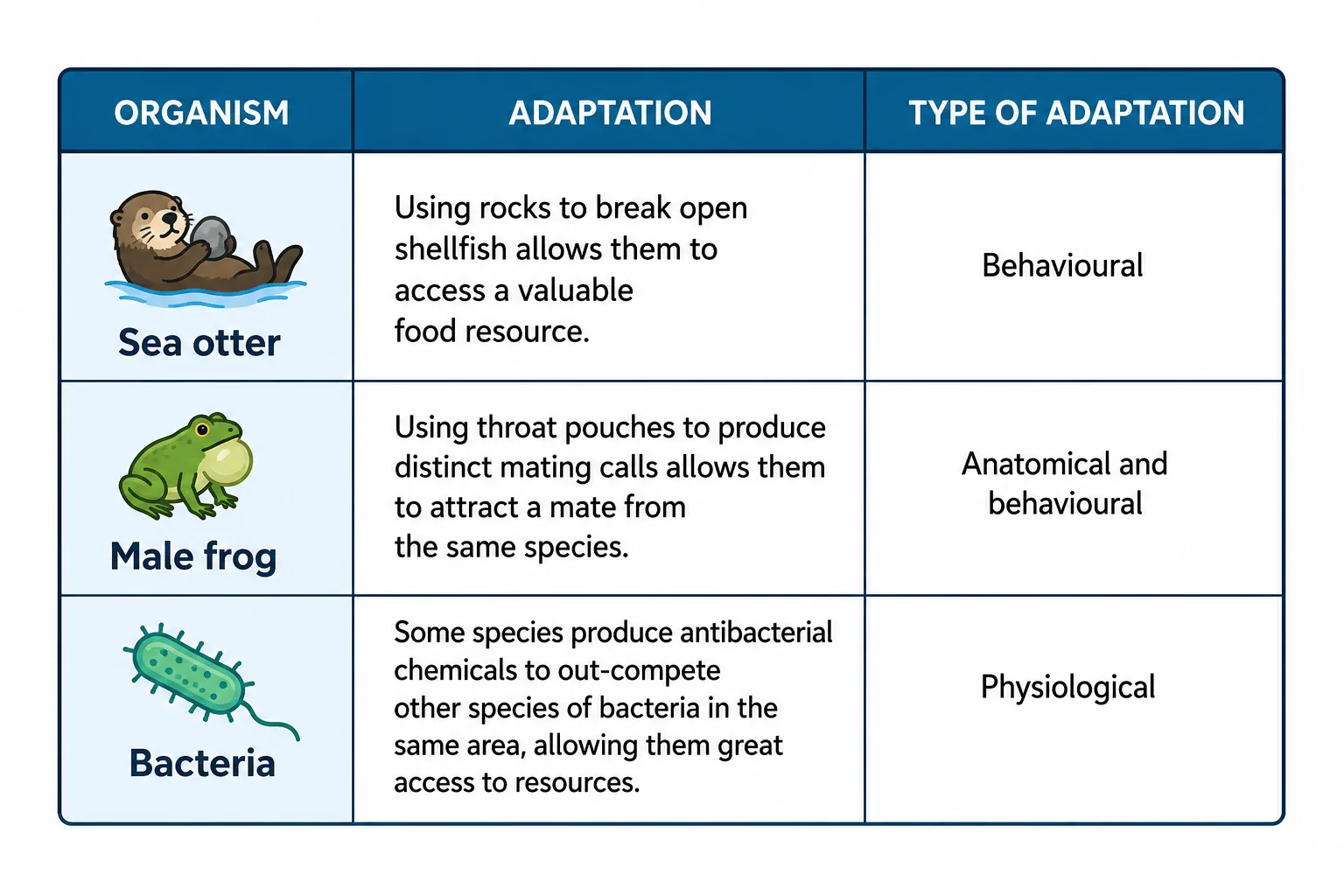
an inherited trait that increases an organism’s fitness in a particular environment.
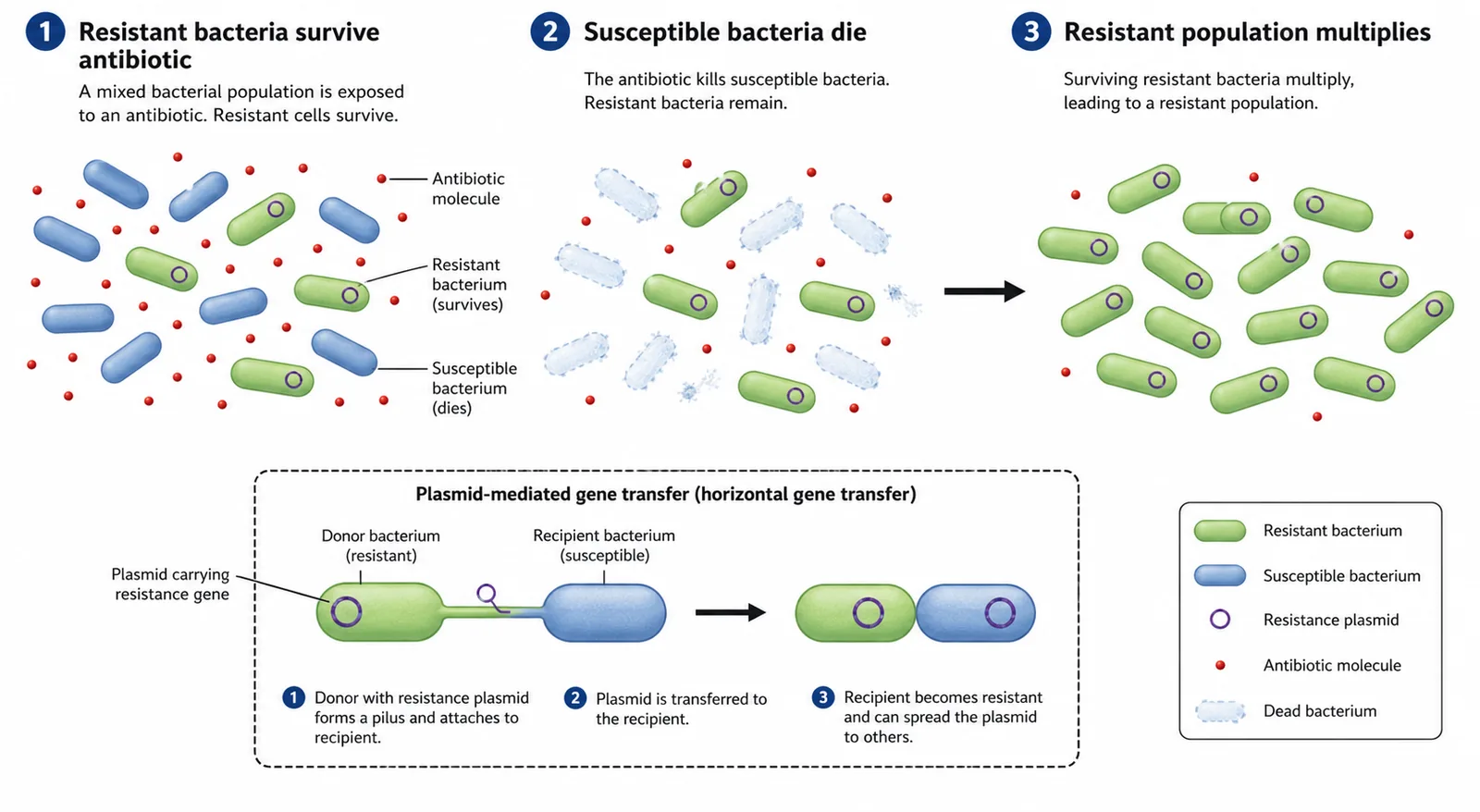
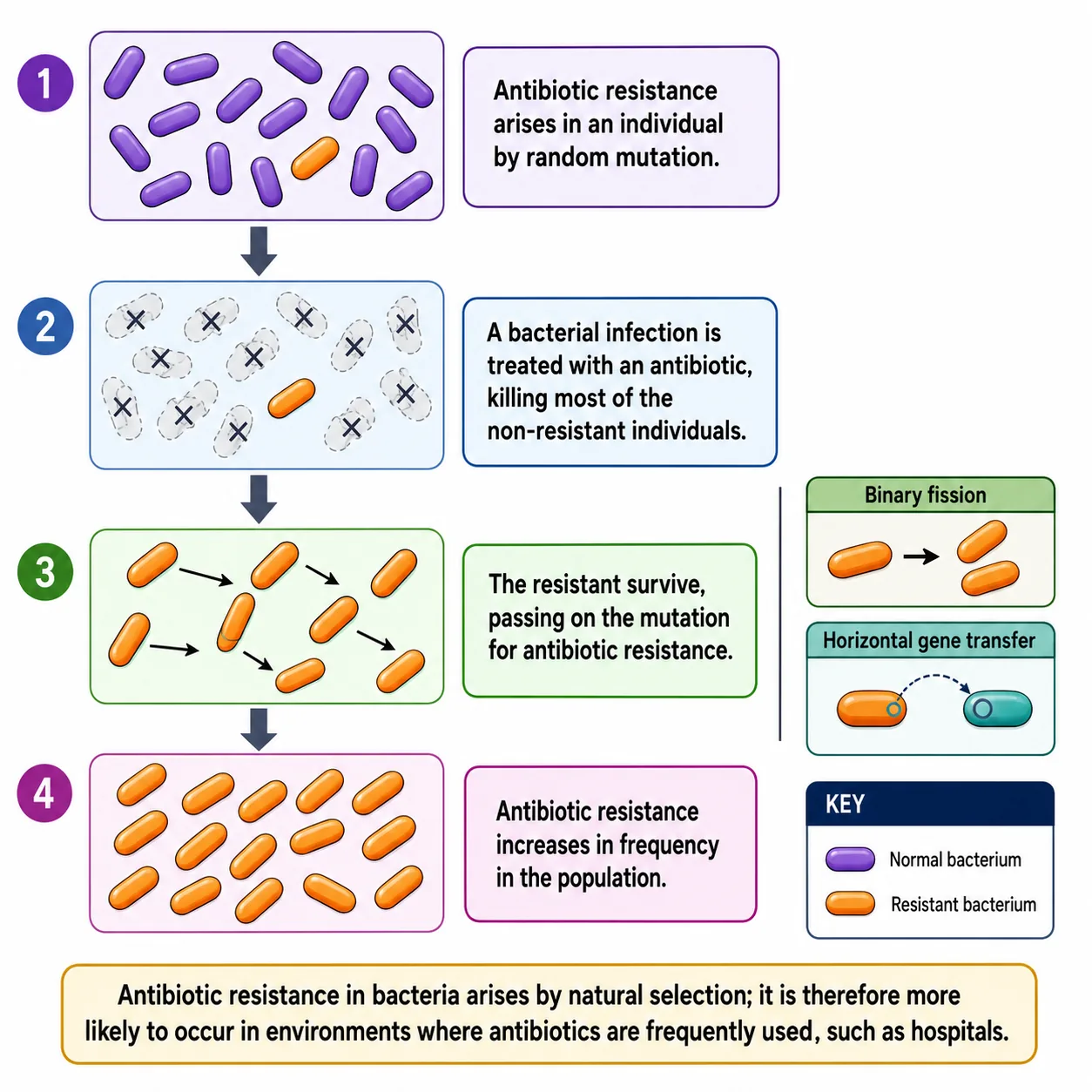
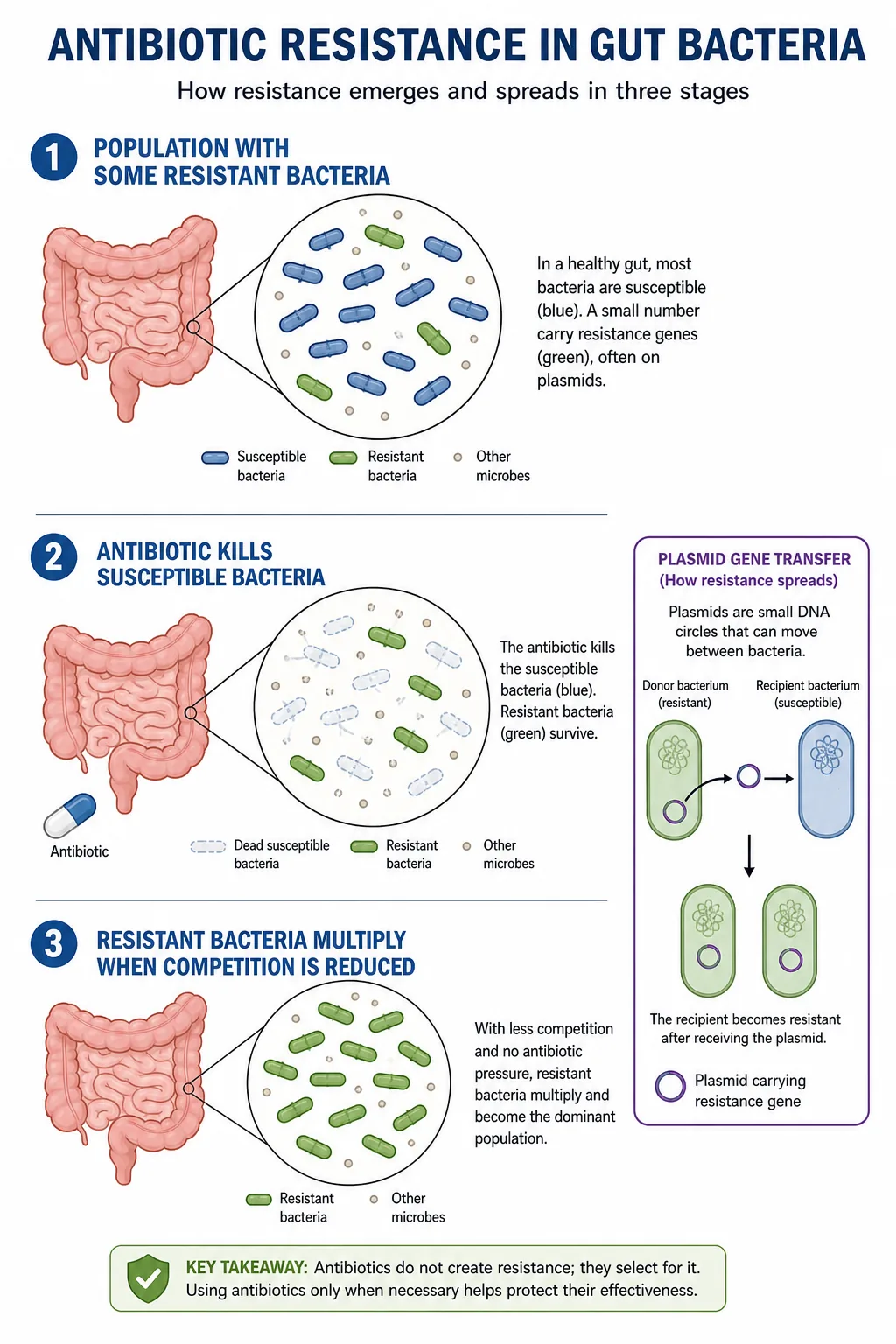
Antibiotic resistance
a population contains random variation, and a few cells may carry a mutation for resistance.
The antibiotic kills susceptible cells
so resistant cells survive and divide.
The antibiotic does not cause the mutation
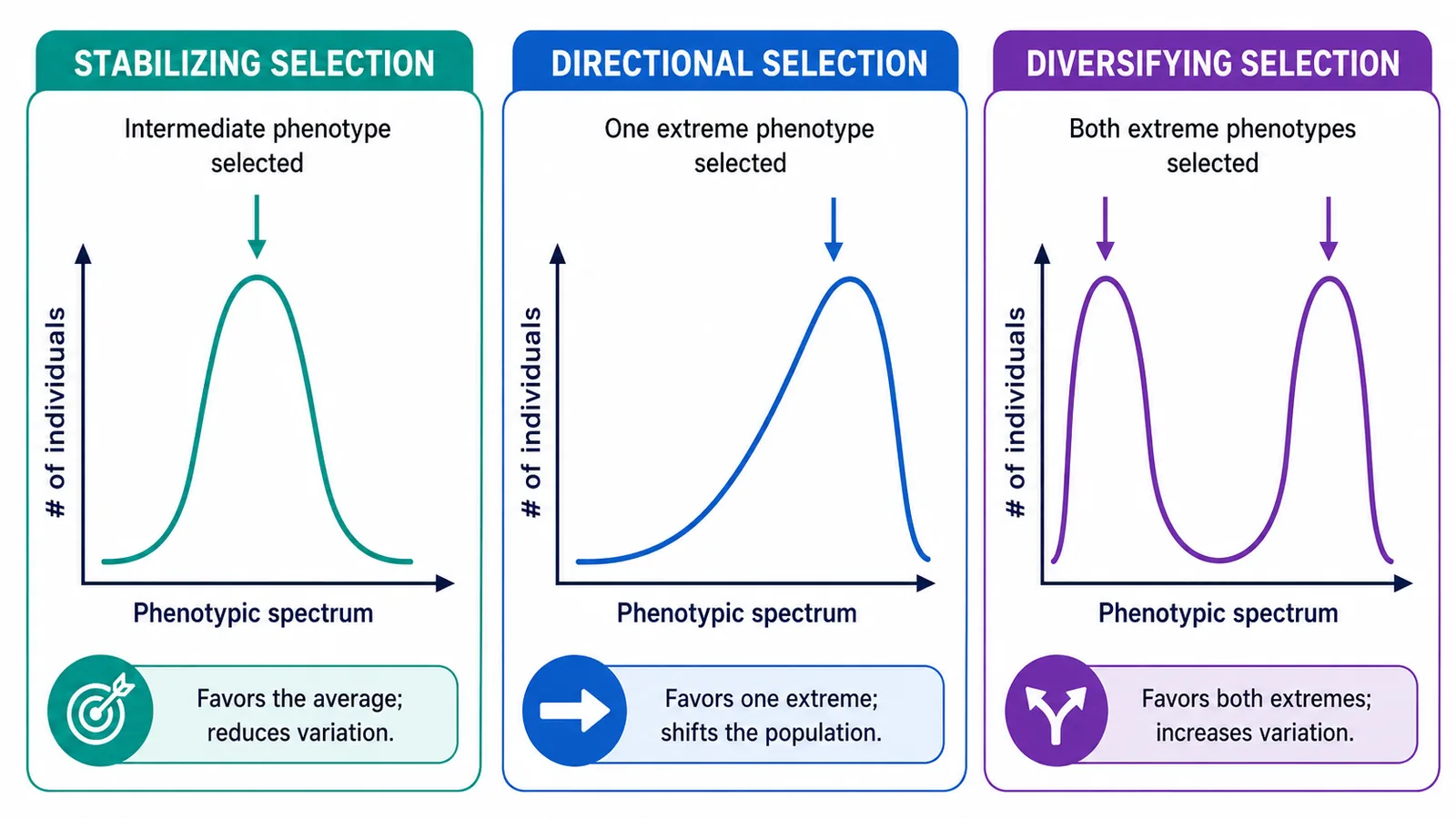
it selects for itgiving directional selection.
Lines of evidence
fossils, comparative anatomy, DNA and biogeography.
◀ Previous7 / 7
1Mechanisms and patterns of evolution2Mechanisms and patterns of evolution3Mechanisms and patterns of evolution4Mechanisms and patterns of evolution5Mechanisms and patterns of evolution6Mechanisms and patterns of evolution7Mechanisms and patterns of evolution8Mechanisms and patterns of evolution9Mechanisms and patterns of evolution

Mechanisms and patterns of evolution
 ⤢ Enlarge
1
1
2
Mechanisms natural selection, genetic drift, gene flow, mutation and non-random mating.
3
2
4
Genetic drift random change in allele frequencies.
5
The founder effect occurs when a few individuals colonise a new area
a bottleneck follows a disaster.
6
3
◀ Previous7 / 9Next ▶
Mechanisms and patterns of evolution
Mechanisms and patterns of evolution
Gene flow movement of alleles between populations makes them more similar.
4
Divergent evolution produces homologous structures.
5
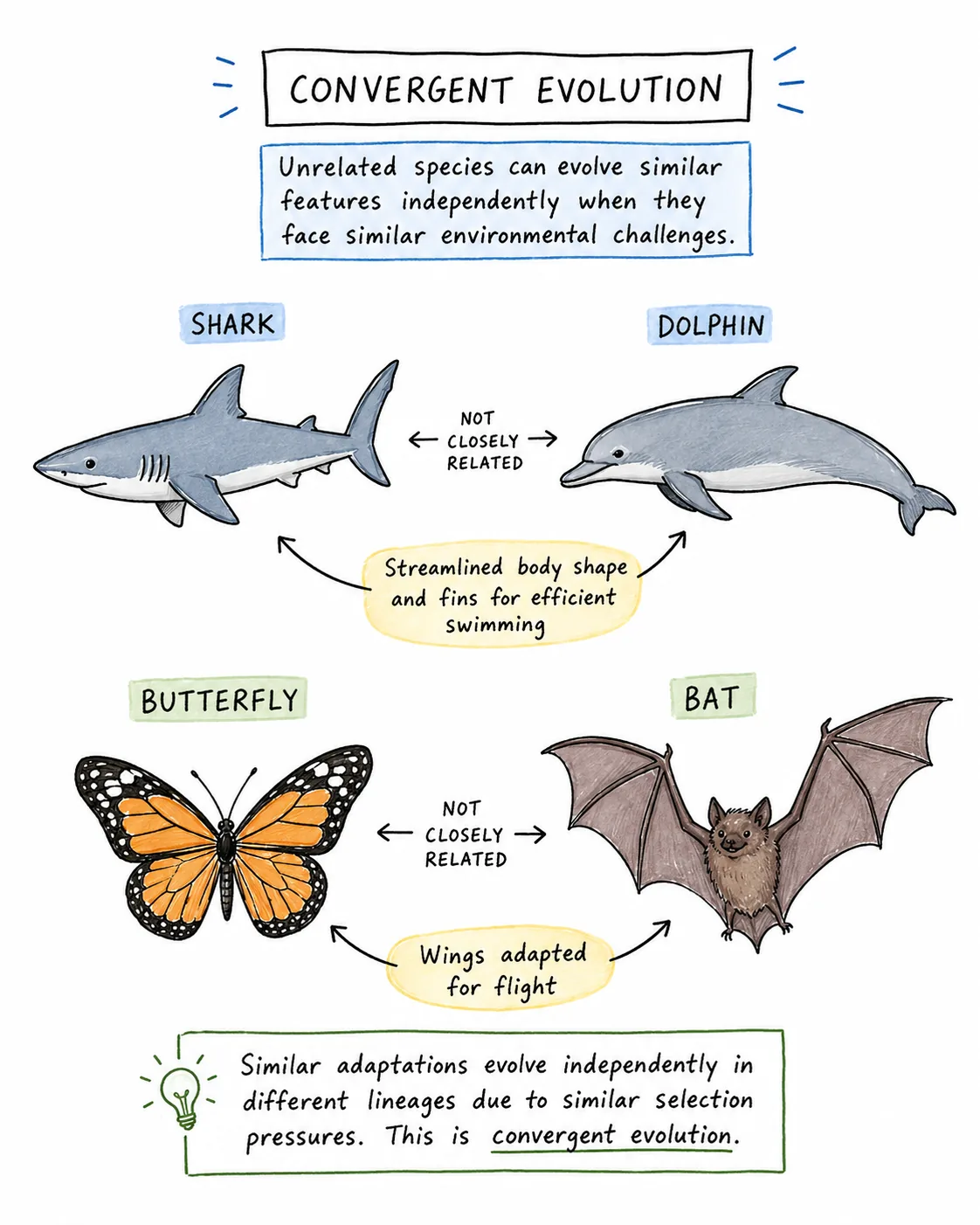
Convergent evolution produces analogous structures in unrelated species facing similar environments, such as bird and insect wings.
6
◀ Previous8 / 9Next ▶
Mechanisms and patterns of evolution
Mechanisms and patterns of evolution
Coevolution reciprocal change between interacting species, such as flowers and pollinators.
7
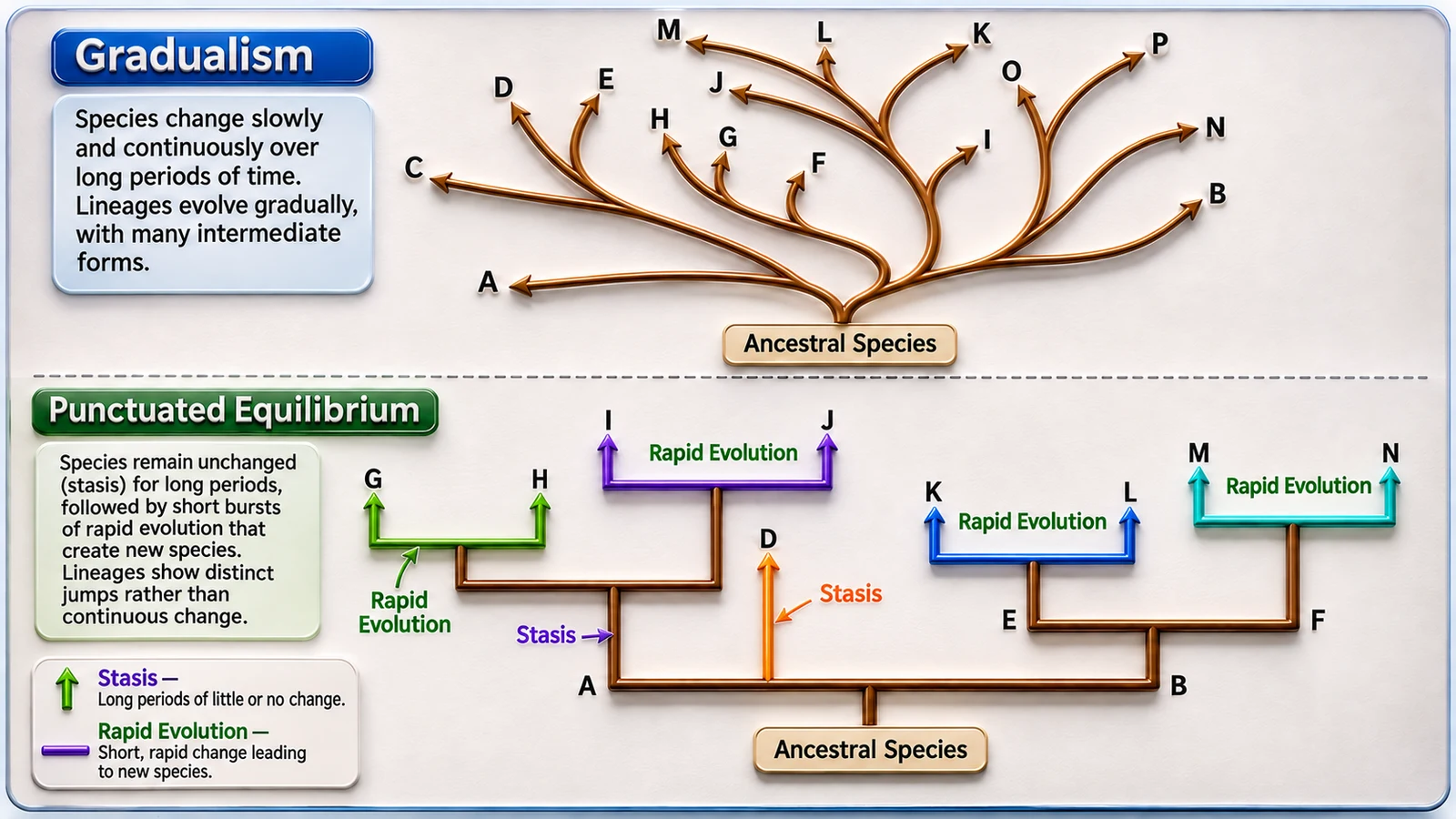
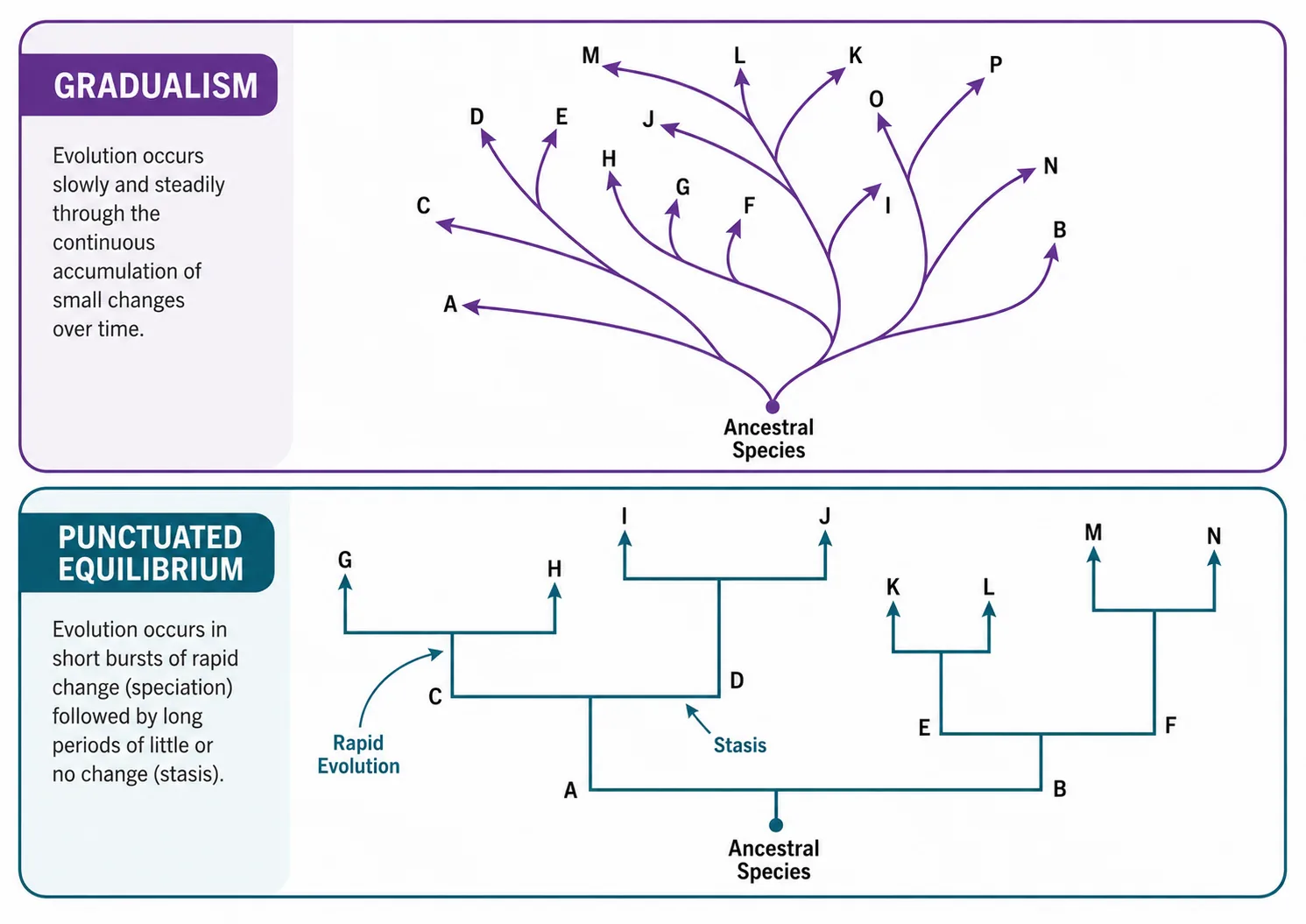
Rates gradualism proposes slow steady change
while punctuated equilibrium proposes long stasis broken by rapid change.
8
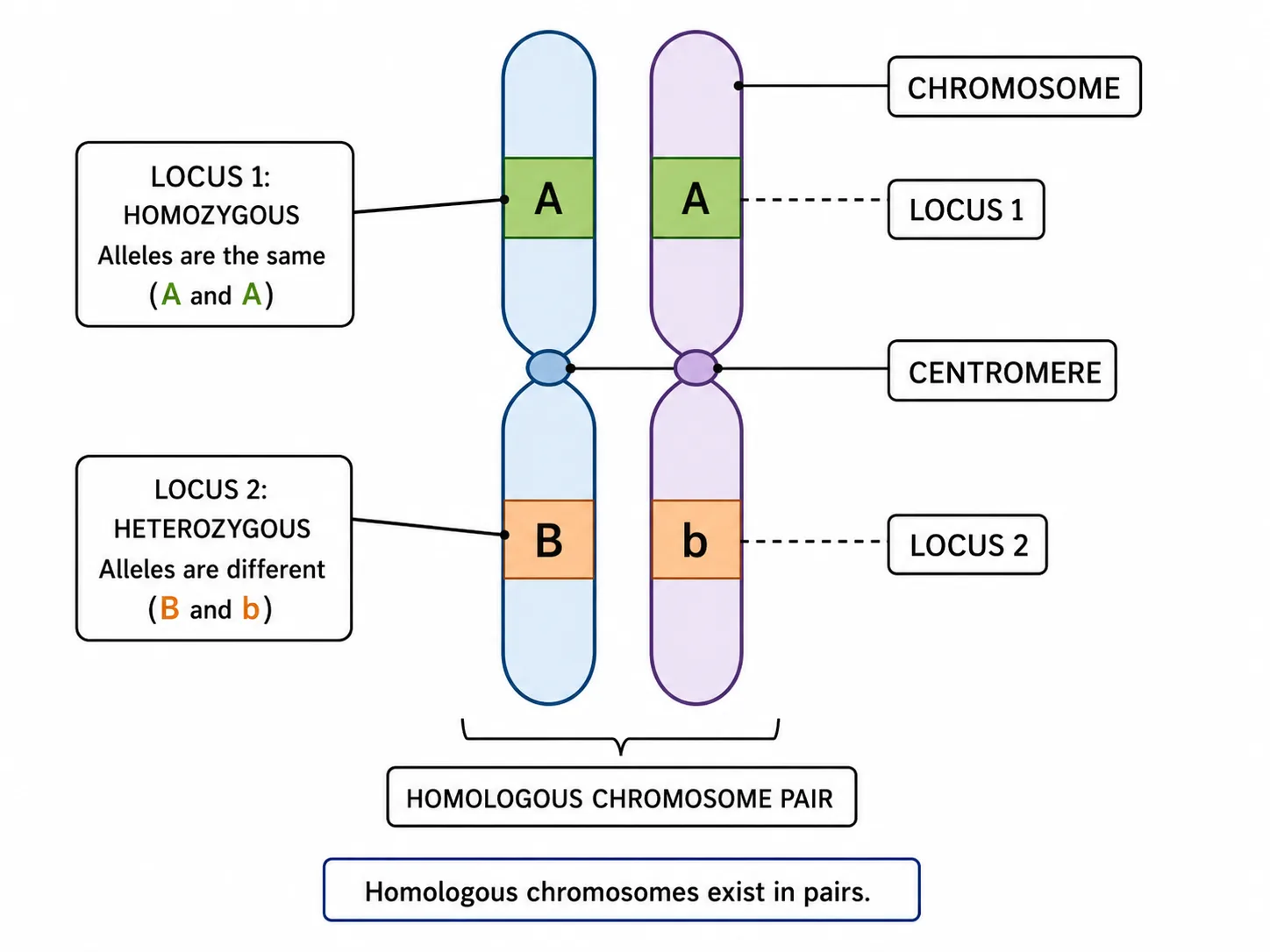
Hardy–Weinberg p + q = 1 and p2 + 2pq + q2 = 1 describe a population not evolving.
Use these to calculate allele and genotype frequencies.
◀ Previous9 / 9
1Classifying life2Classifying life3Classifying life4Classifying life5Classifying life6Classifying life7Classifying life8Classifying life9Classifying life · Classifying life

Classifying life
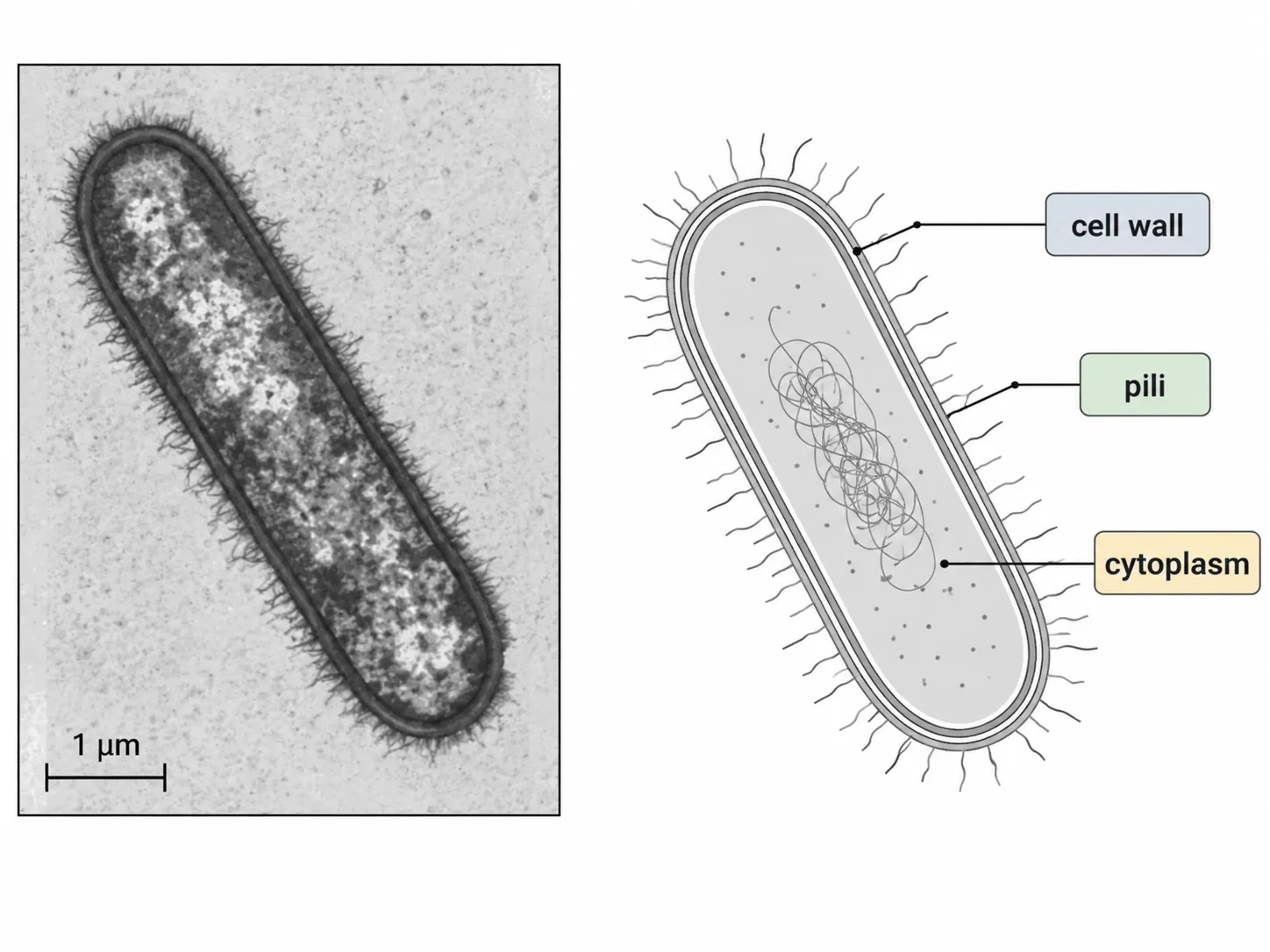 ⤢ Enlarge
1
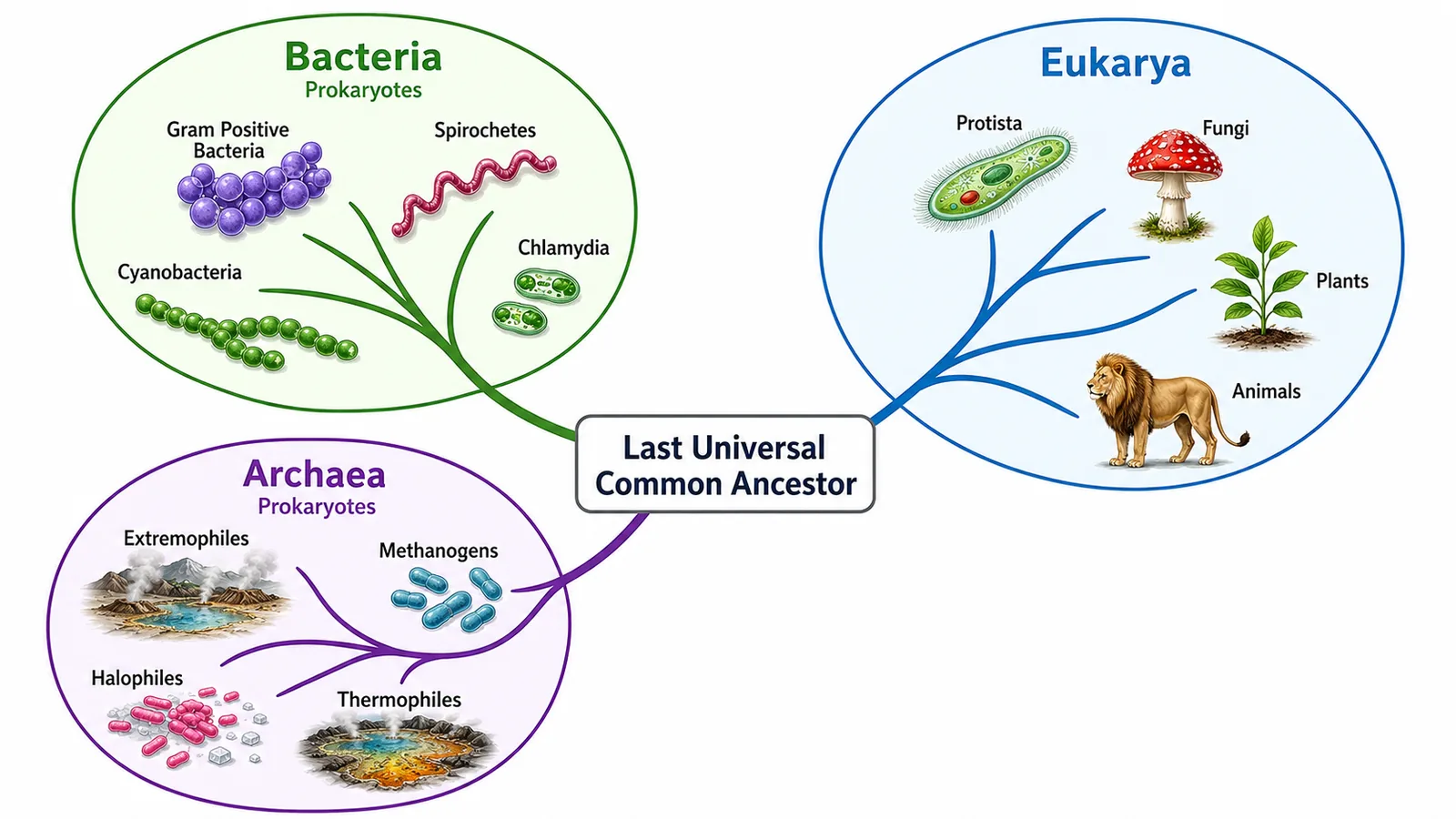
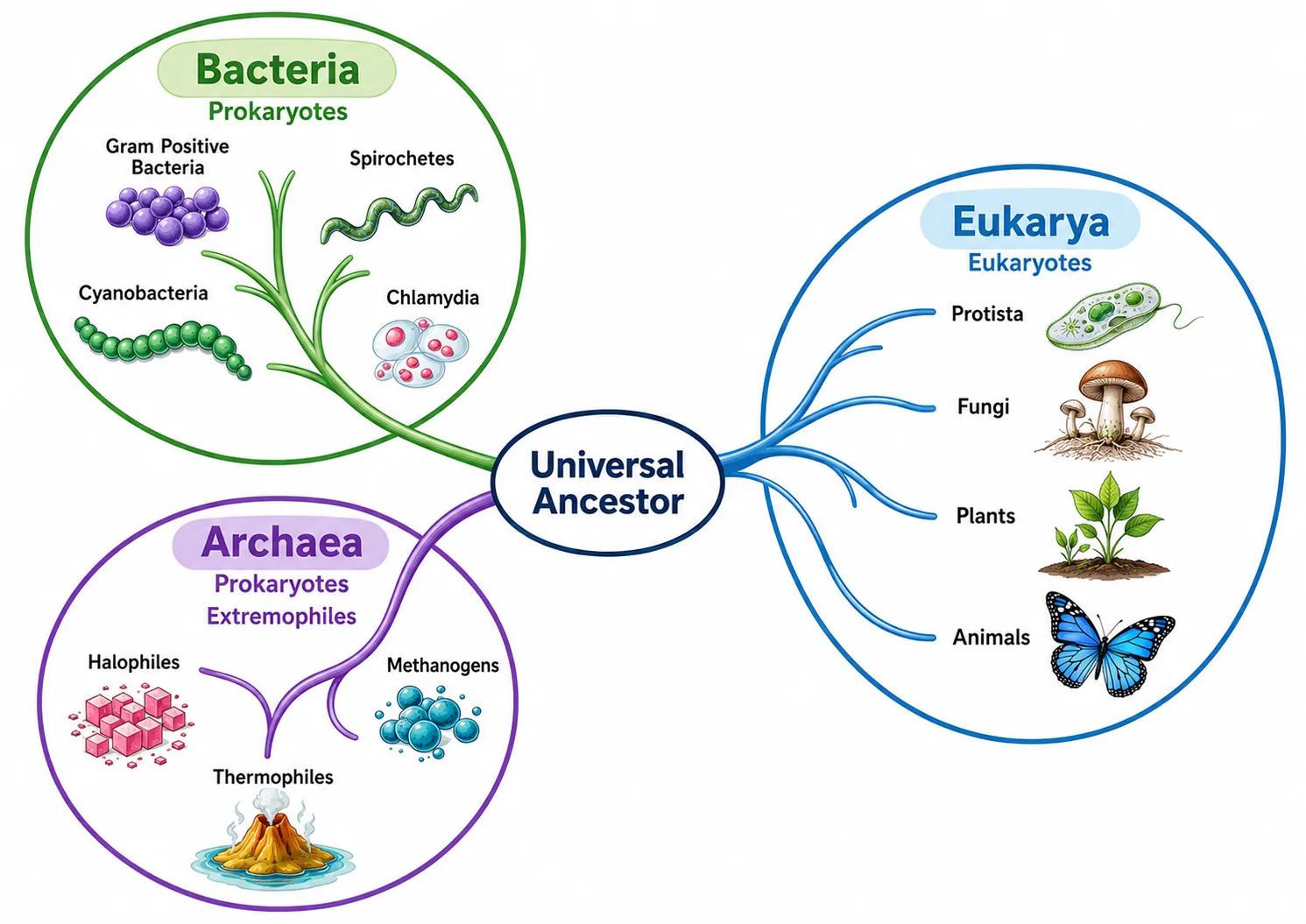
Hierarchy nested ranks from domain to species, and the more ranks two organisms share, the more closely related they are.
2
Monophyletic groups modern systematics aims to group an ancestor with all its descendants.
3
1
4
Observe the organism’s characteristics: cell type, nutrition and body plan.
5
2
6
Place it in a domain: Bacteria, Archaea or Eukarya.
◀ Previous7 / 9Next ▶
Classifying life
1
3
2
Assign kingdom
then phylum and class using shared derived features.
3
4
4
Continue to order, family and genus.
5
5
6
Give the species a binomial name, italicised, with a capital genus.
◀ Previous8 / 9Next ▶
Classifying life · Classifying life
Classifying life
6
Test relationships with DNA comparisons and build a cladogram.
Classifying life
Shared derived character a novel trait found in a group and its common ancestor but not in more distant groups.
Coelom a fluid-filled body cavity fully lined by mesoderm.
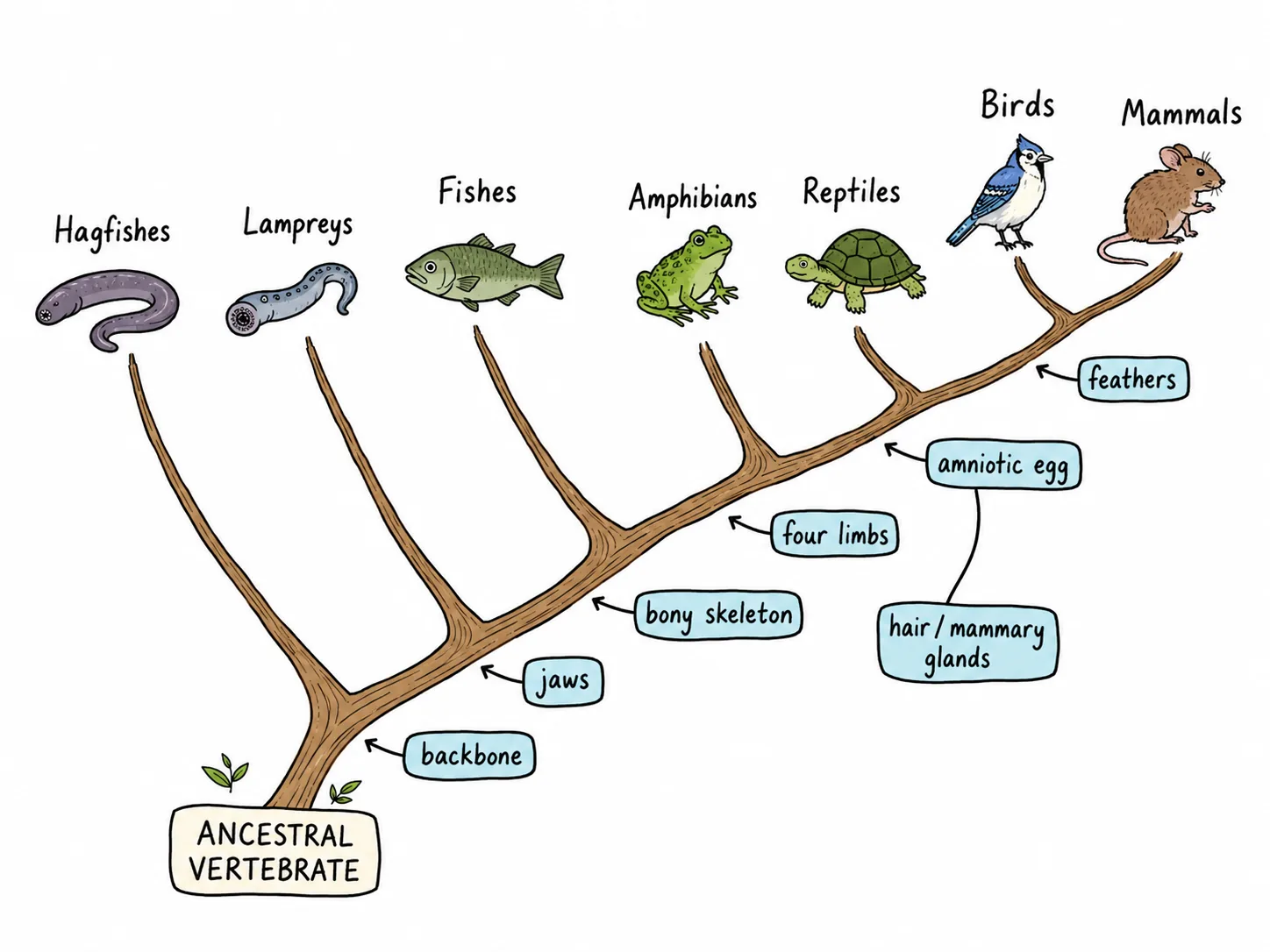
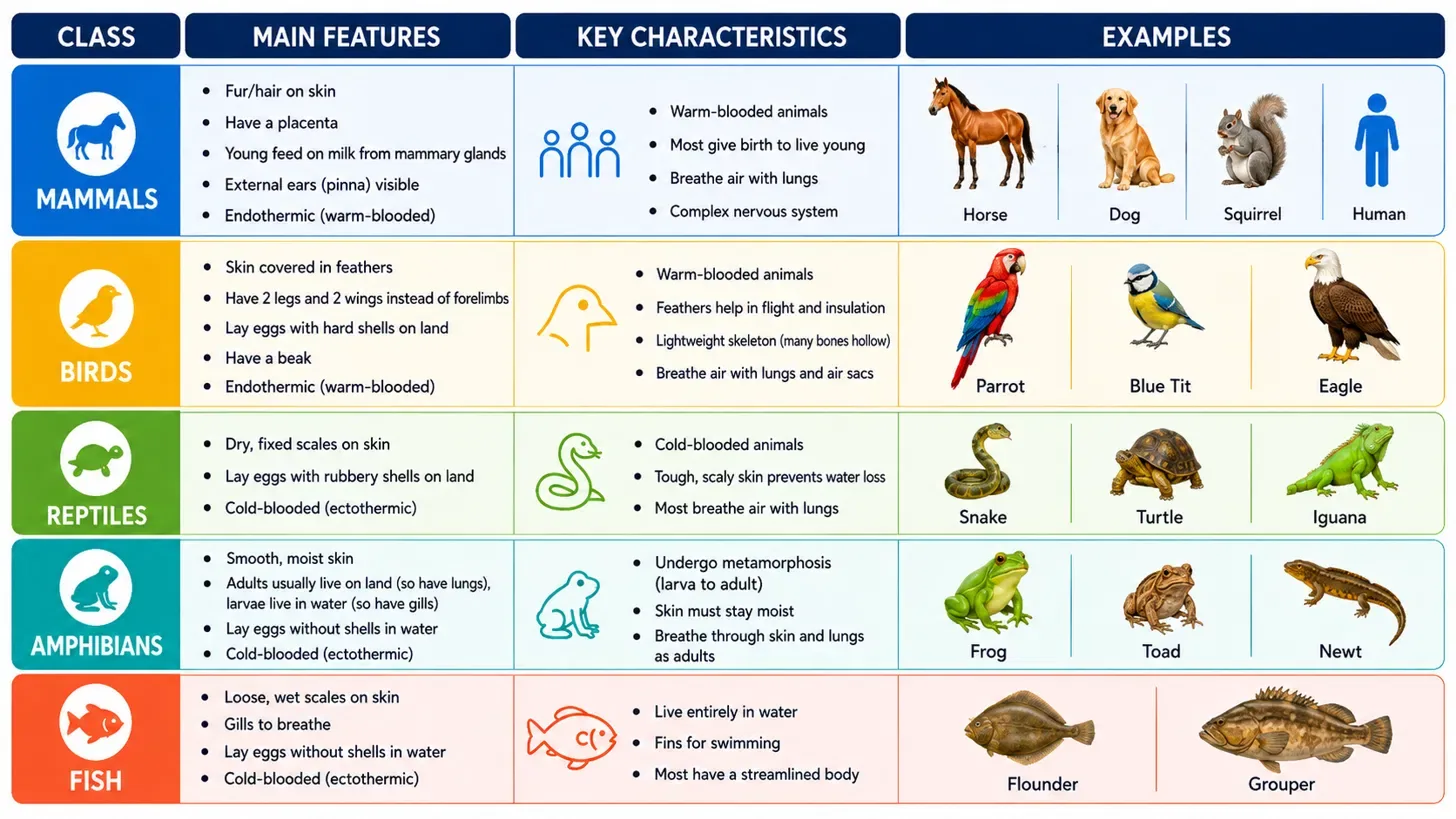
Vertebrate classes fish, amphibians, reptiles, birds and mammals
the amniotic egg let reptiles, birds and mammals reproduce on land.(including birds in cladistics)
◀ Previous9 / 9
1Fungi and plant diversity2Fungi and plant diversity3Fungi and plant diversity4Fungi and plant diversity5Fungi and plant diversity6Fungi and plant diversity7Fungi and plant diversity8Fungi and plant diversity9Fungi and plant diversity10Fungi and plant diversity


Fungi and plant diversity
 ⤢ Enlarge
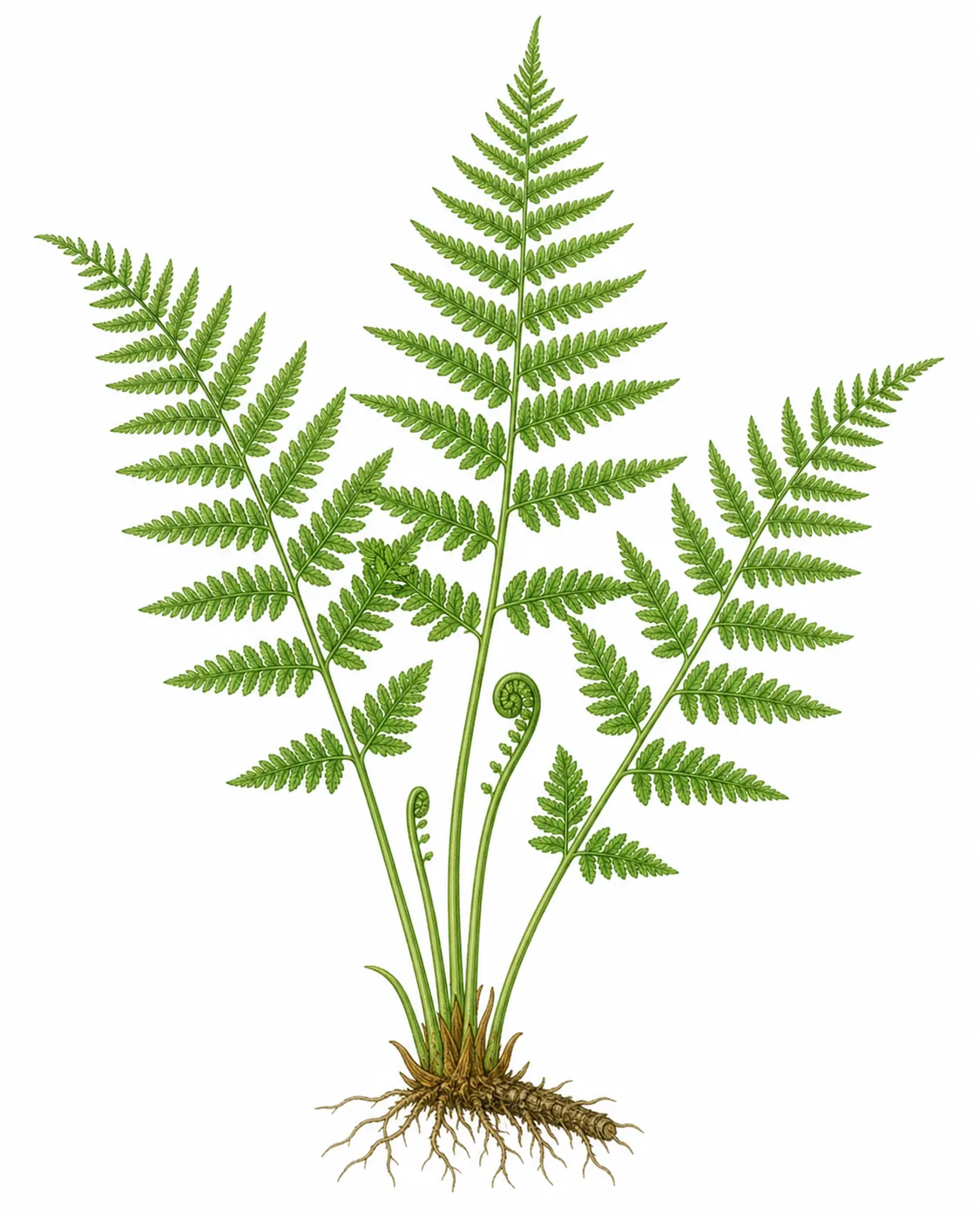
Fungi
are mostly multicellular (yeasts are not), made of hyphae forming a mycelium, digest food externally and reproduce by spores.
Symbioses
fungi form mycorrhizae with plant roots and lichens with algae.
Plant life cycles
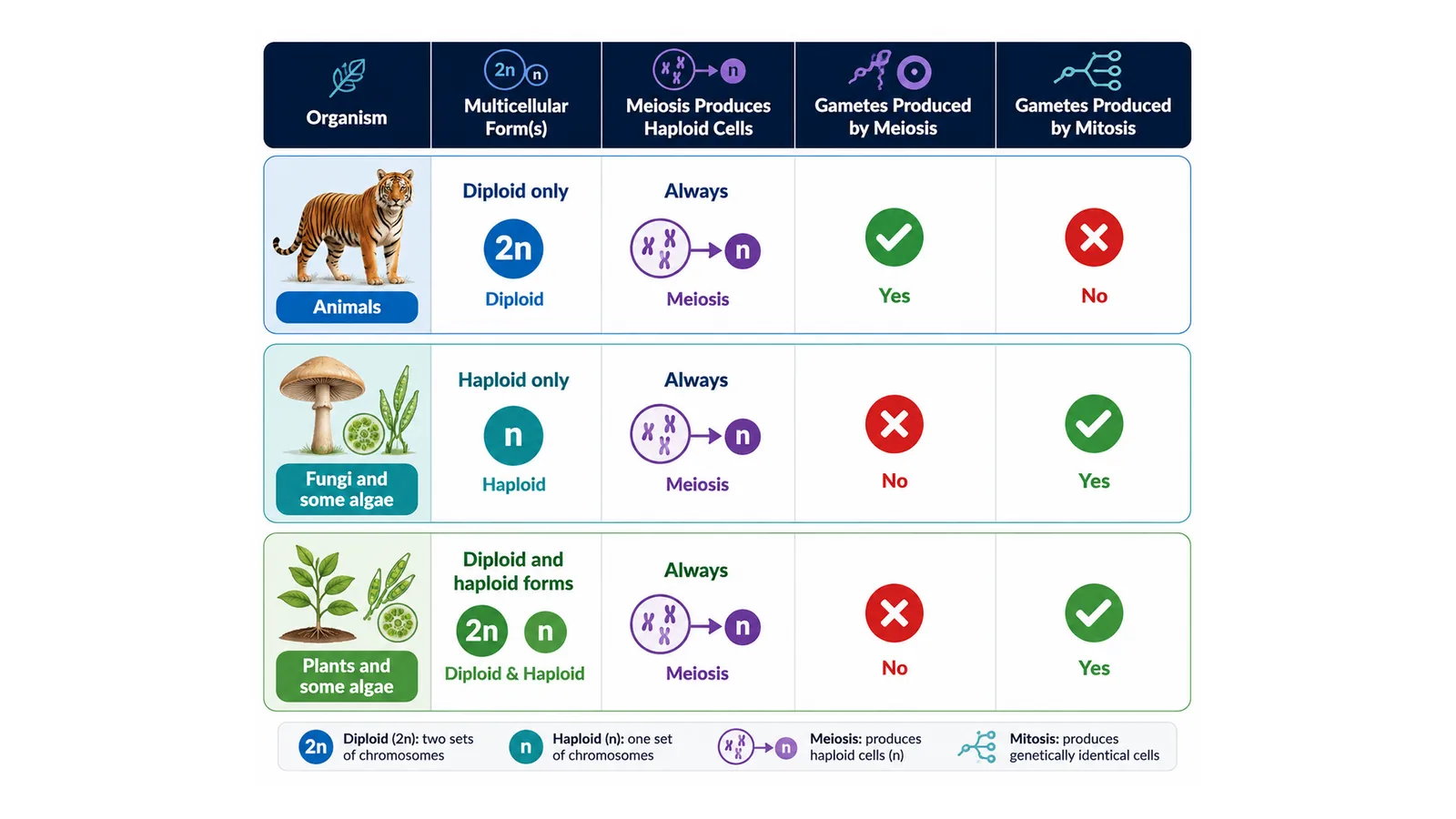
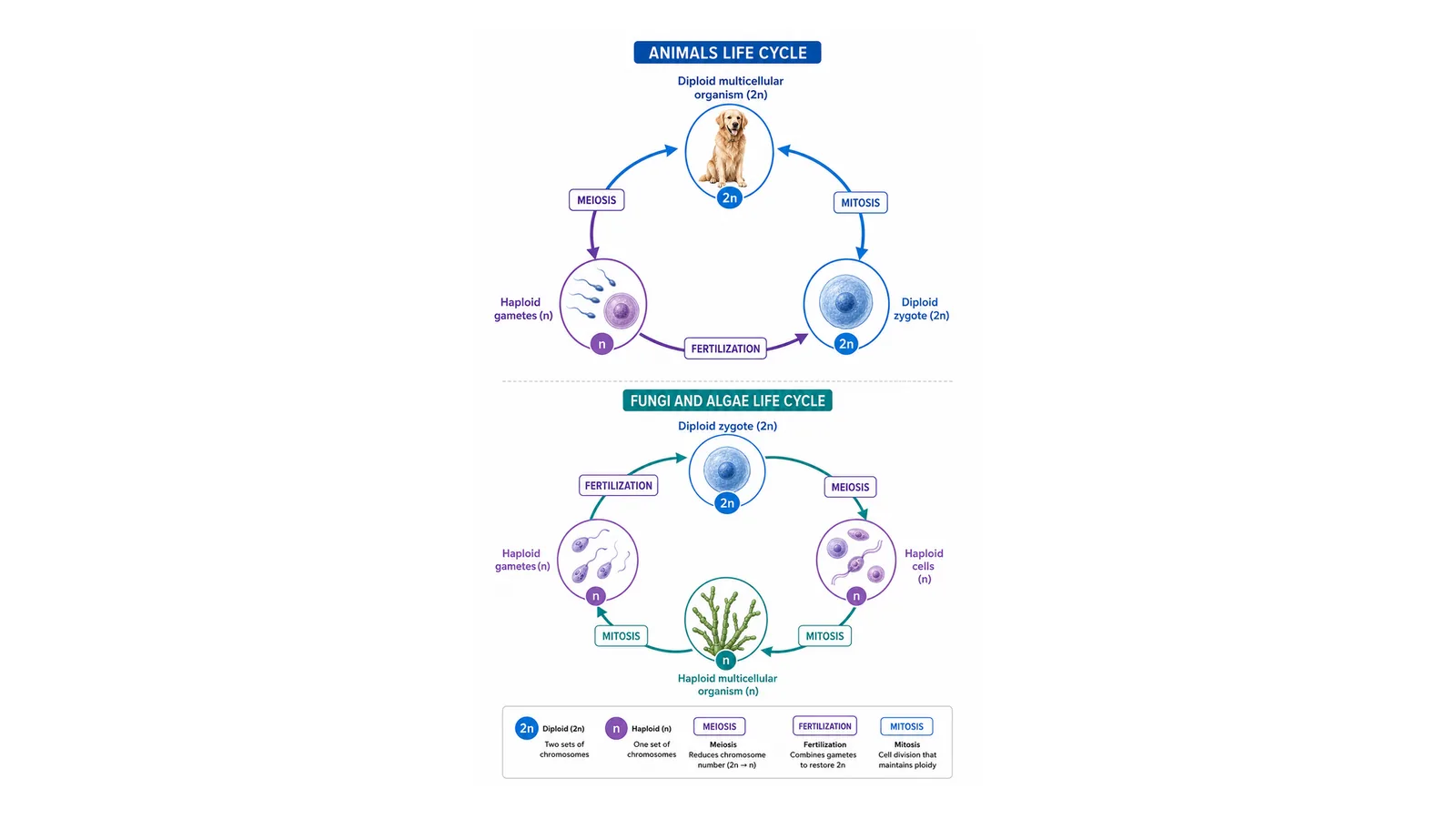
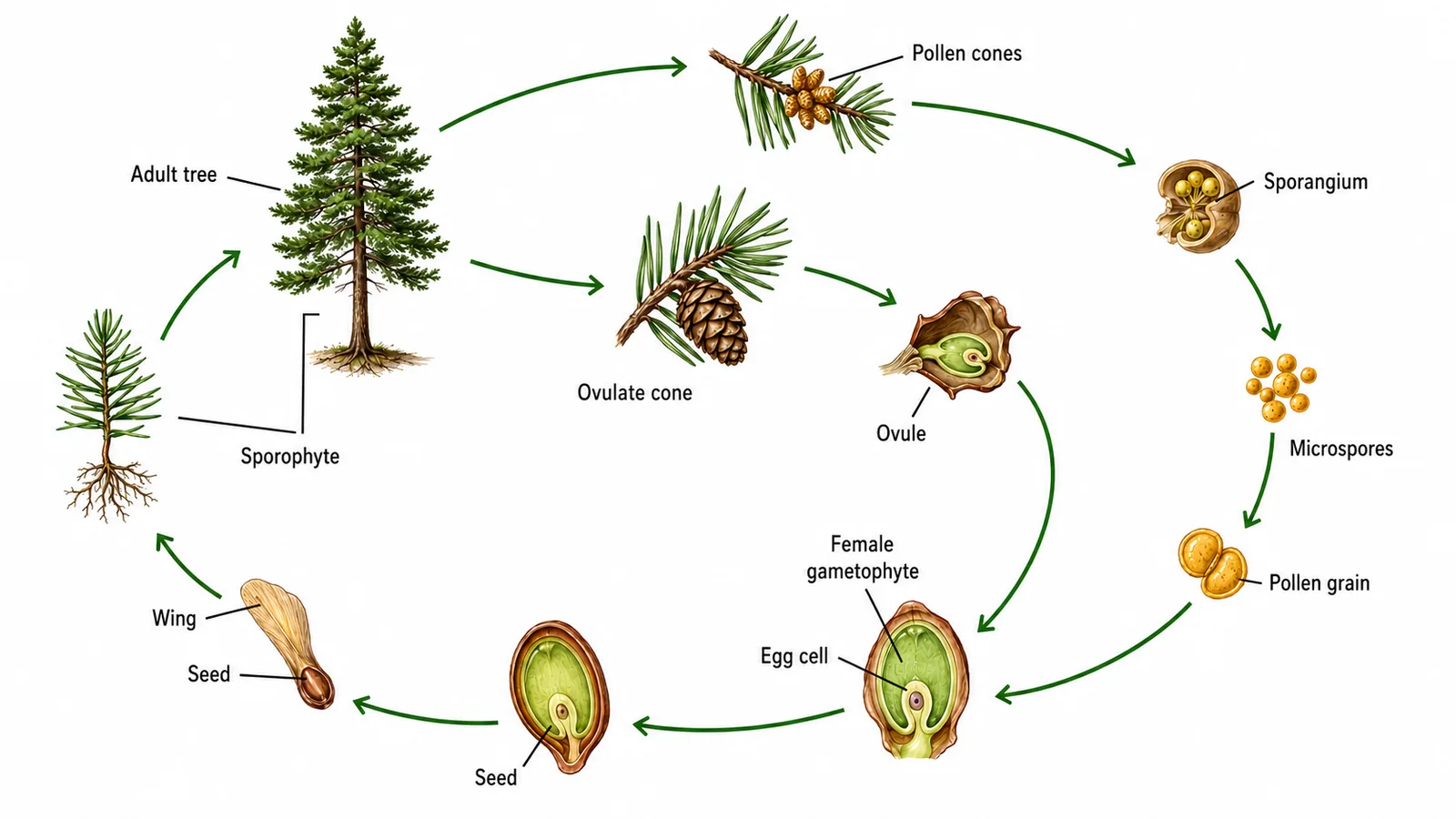
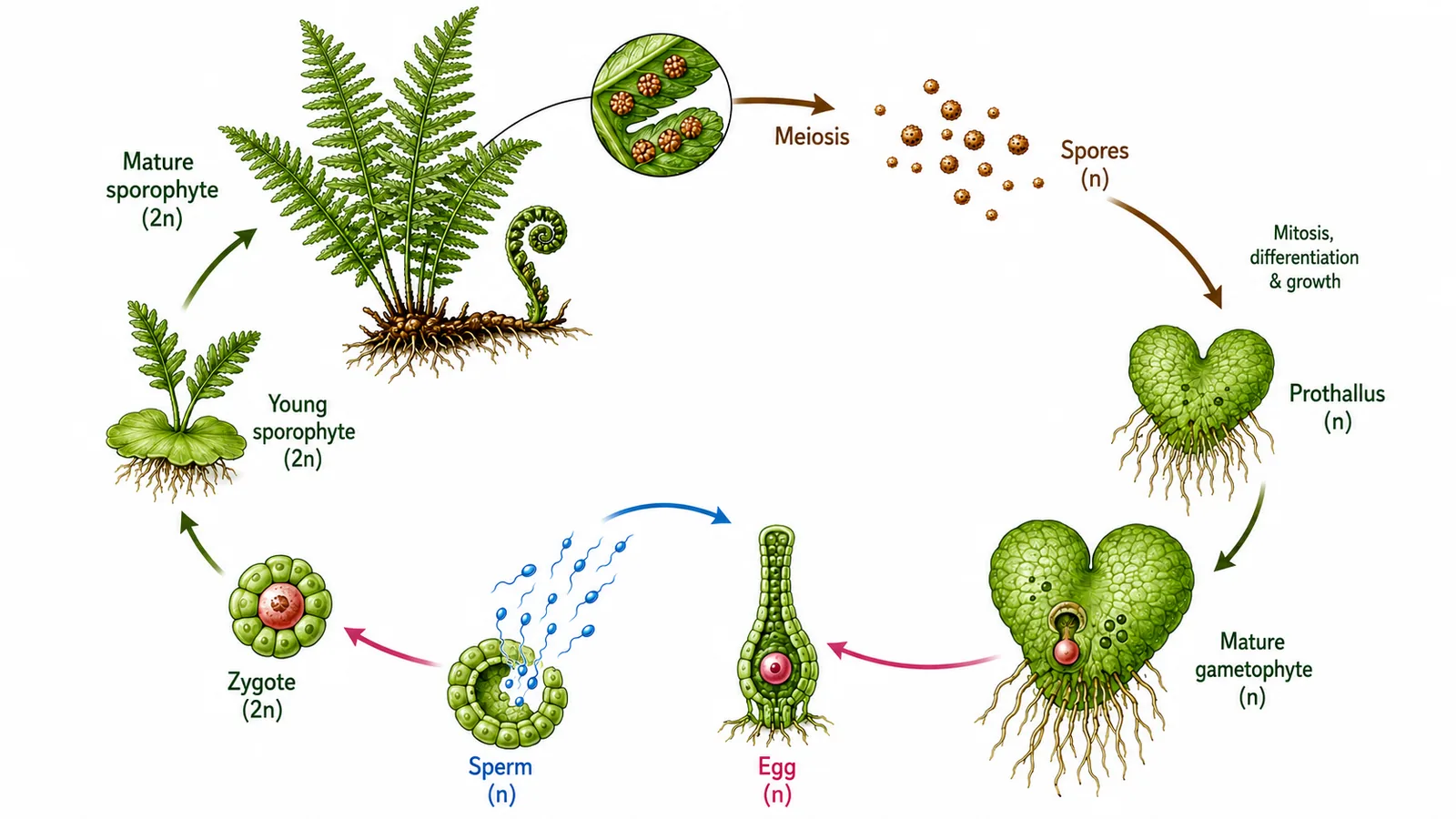
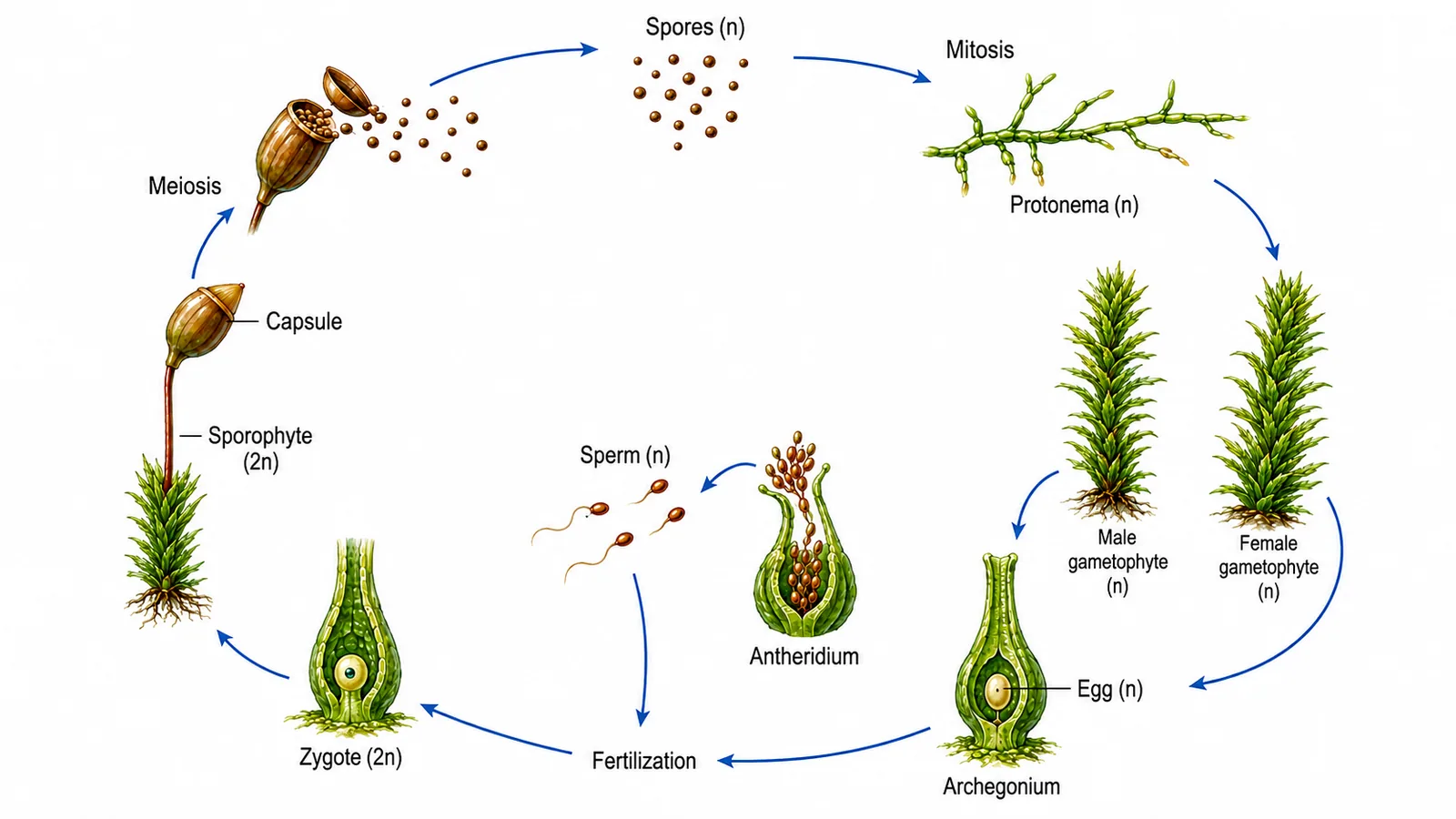
all plants alternate generations
in mosses the gametophyte dominates,and in ferns, gymnosperms and angiosperms the sporophyte dominates.
Gametophytes in seed plants
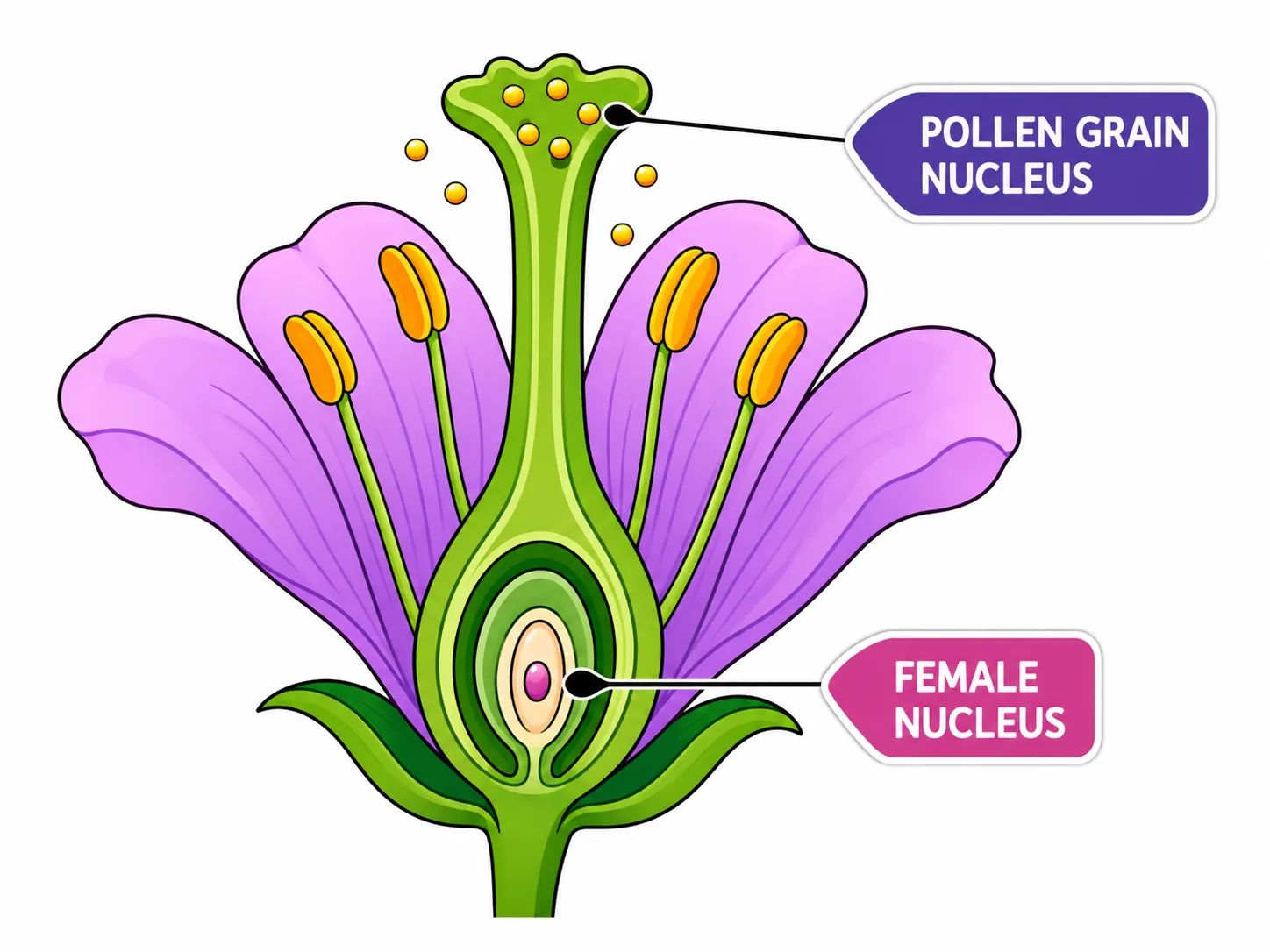
the pollen grain is the male gametophyte and the embryo sac is the female gametophyte.
Vegetative reproduction
runners, tubers, bulbs and cuttings.
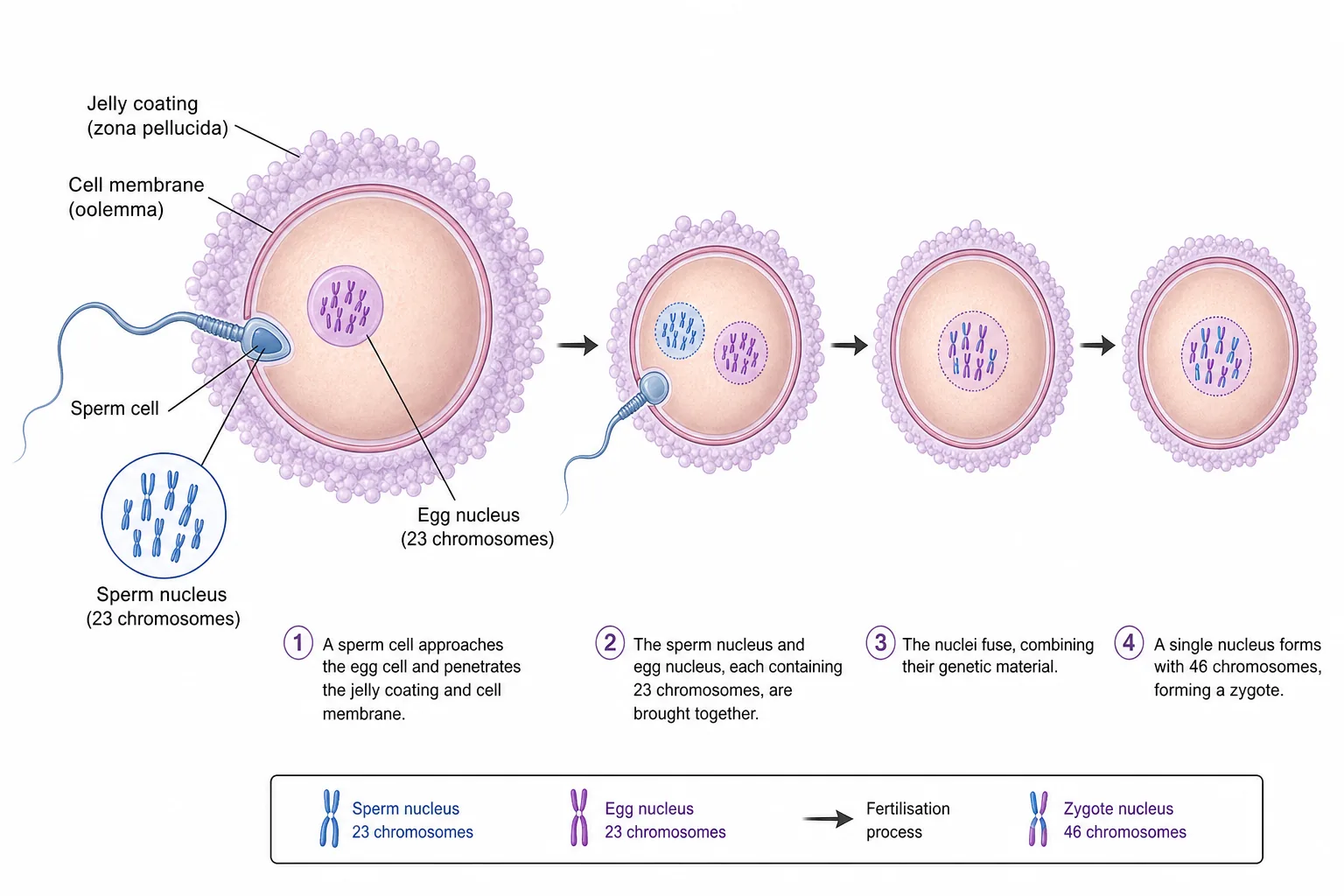
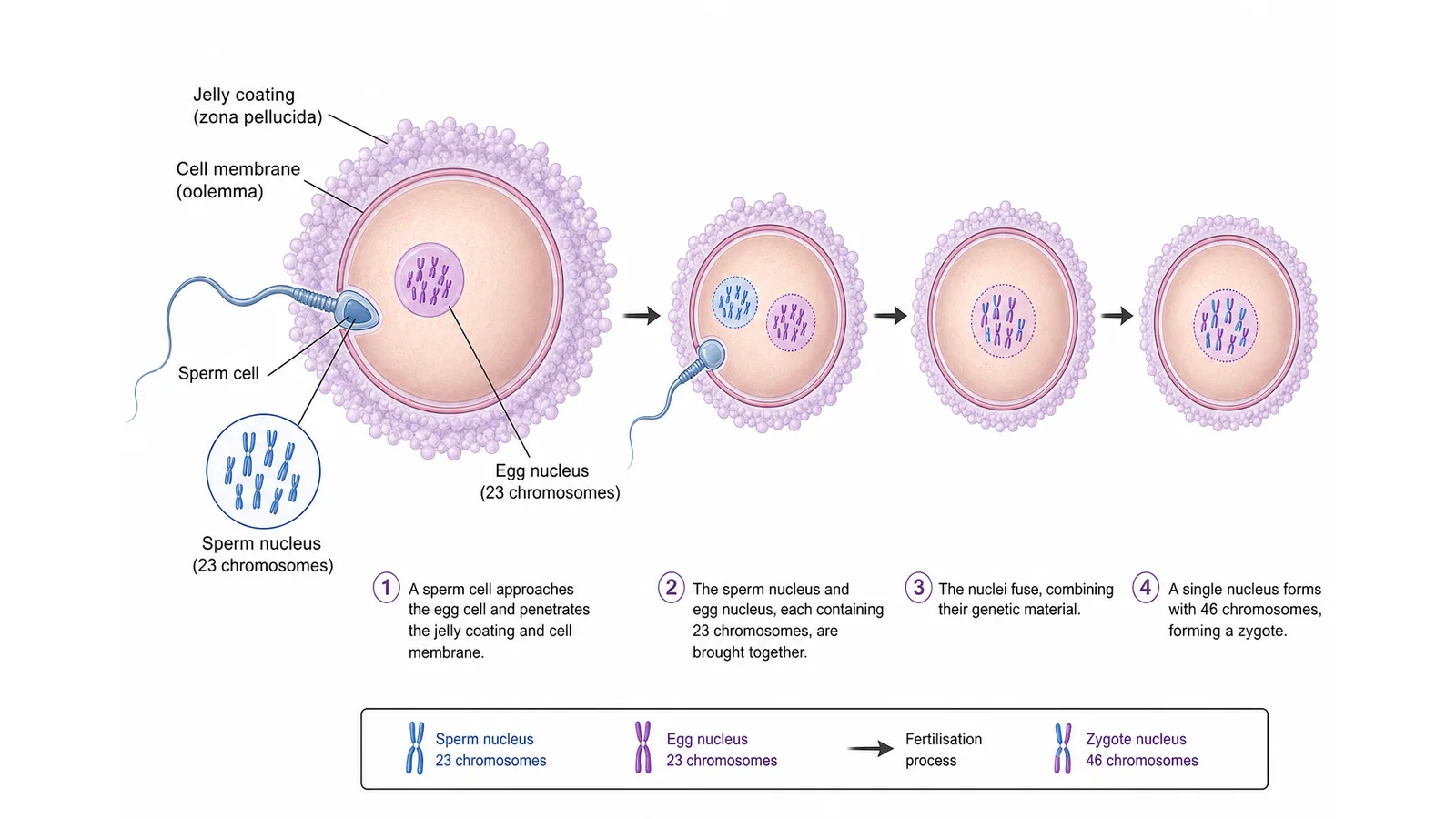
Double fertilisation
in angiosperms one sperm fertilises the egg to make the zygote and another fuses with two polar nuclei to make triploid endosperm.
◀ Previous10 / 10
1Plant structure and function2Plant structure and function3Plant structure and function4Plant structure and function5Plant structure and function6Plant structure and function7Plant structure and function8Plant structure and function9Plant structure and function10Plant structure and function11Plant structure and function12Plant structure and function13Plant structure and function14Plant structure and function15Plant structure and function16Plant structure and function17Plant structure and function18Plant structure and function19Plant structure and function20Plant structure and function21Plant structure and function22Plant structure and function23Plant structure and function24Plant structure and function25Plant structure and function26Plant structure and function27Plant structure and function








Plant structure and function

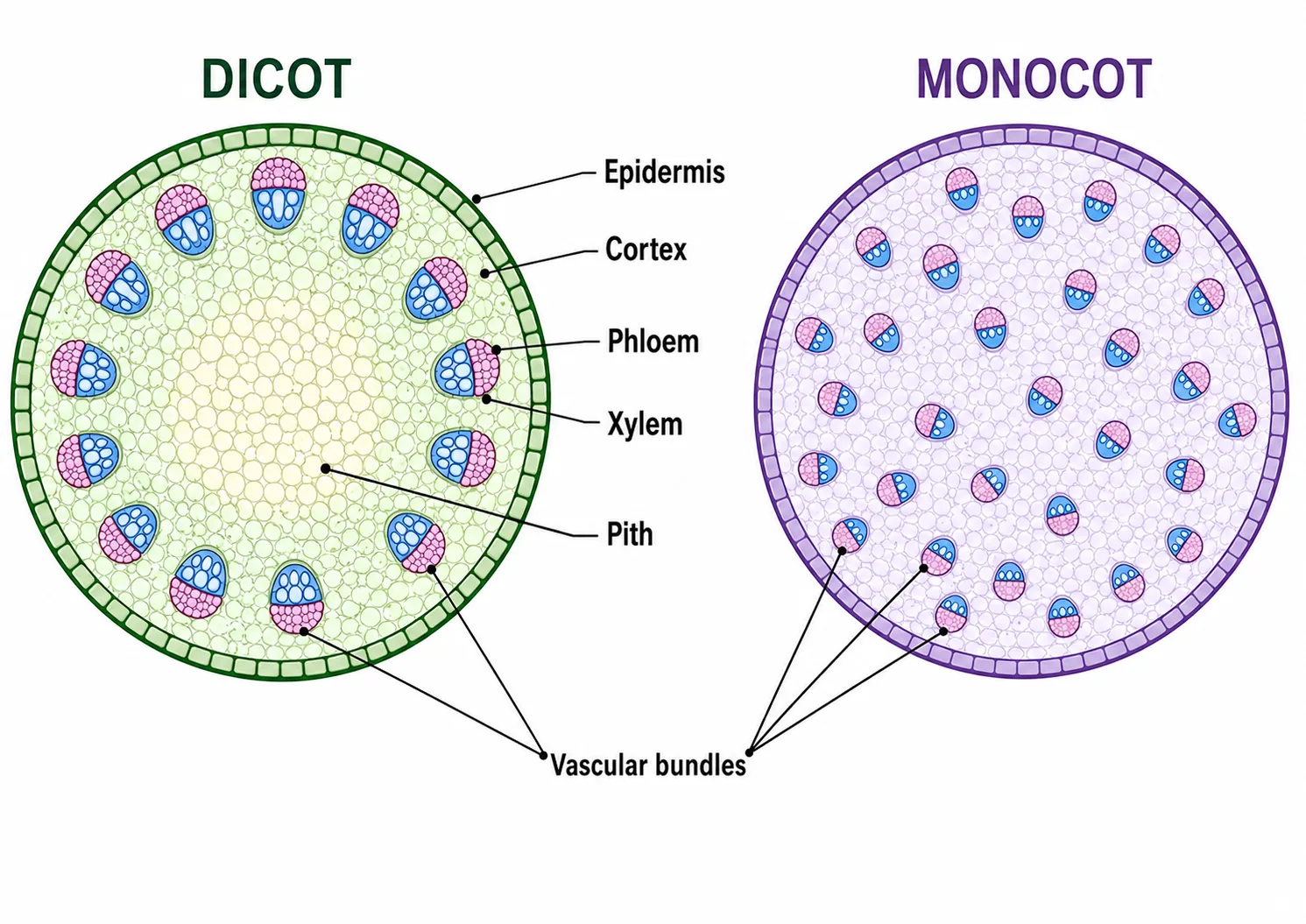
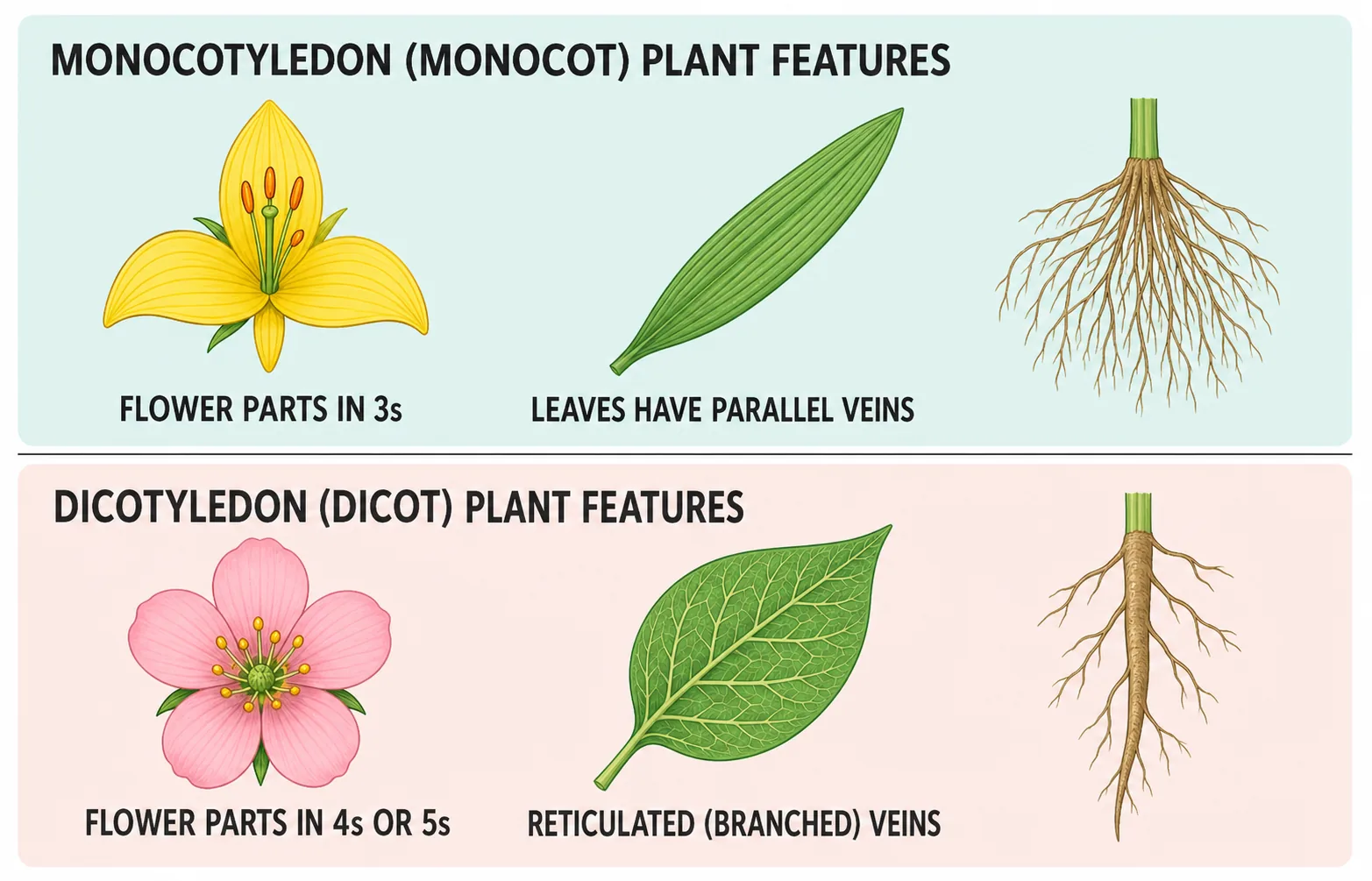
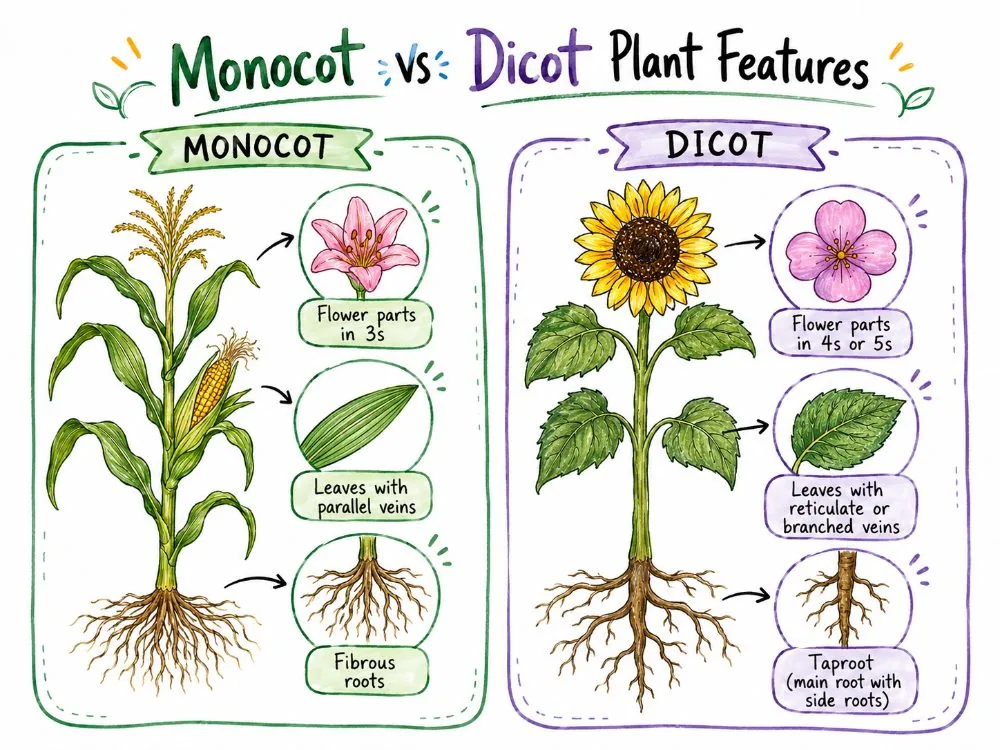
| Feature | Monocot | Dicot (eudicot) |
|---|---|---|
| Cotyledons | One | Two |
| Leaf veins | Parallel | Net-like |
| Flower parts | Multiples of 3 | Multiples of 4 or 5 |
| Vascular bundles in stem | Scattered | In a ring |
| Roots | Fibrous | Taproot |
◀ Previous26 / 27Next ▶
Plant structure and function
Examples
grasses and lilies are monocots
beans and oaks are dicots.
Water transport
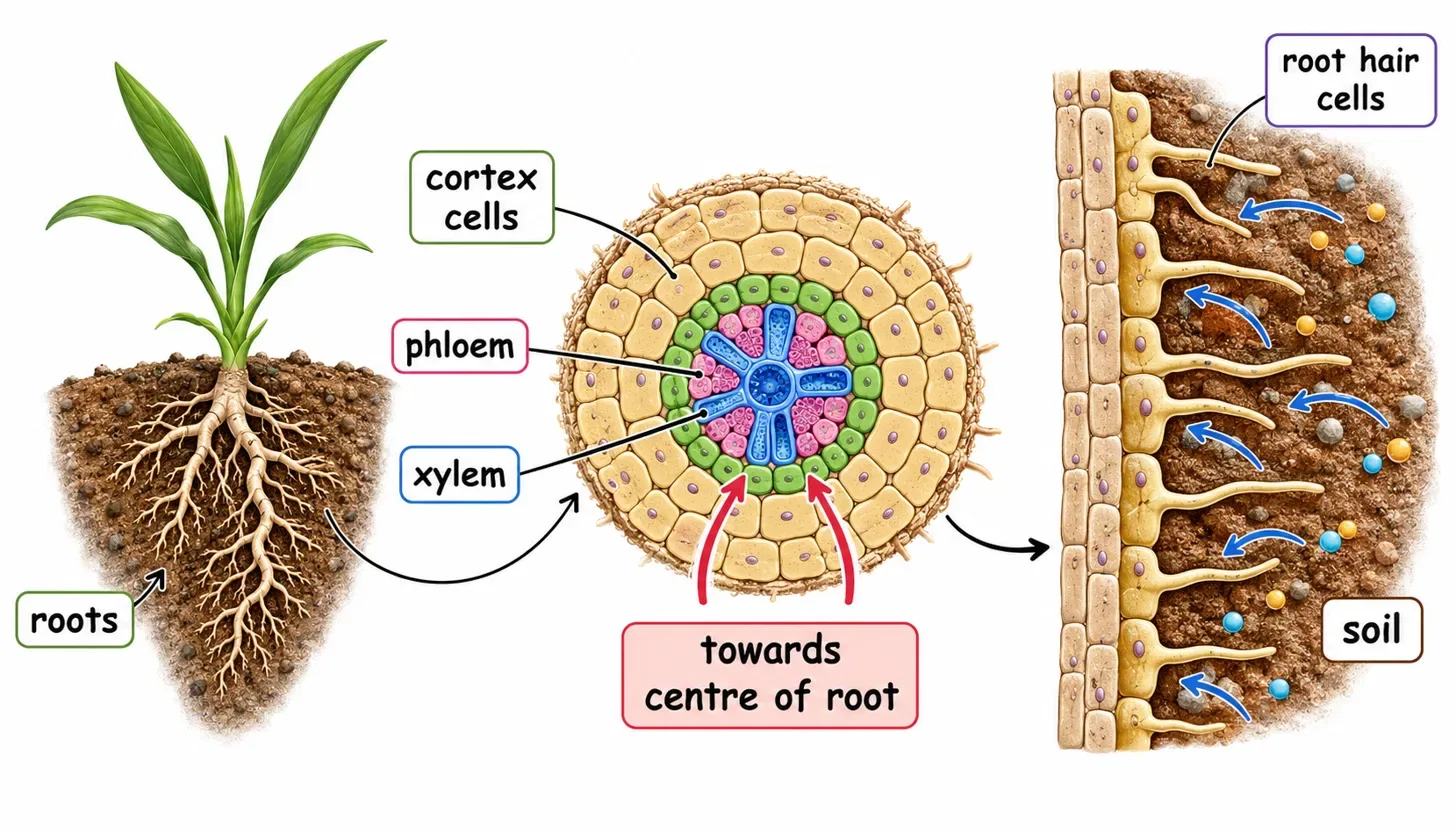
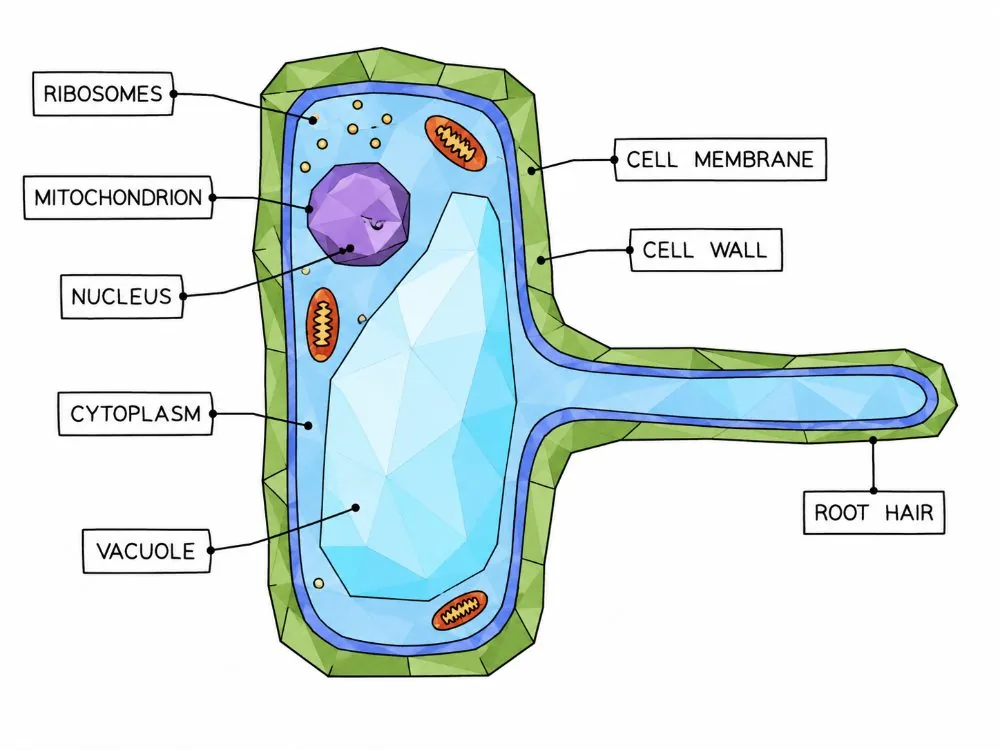
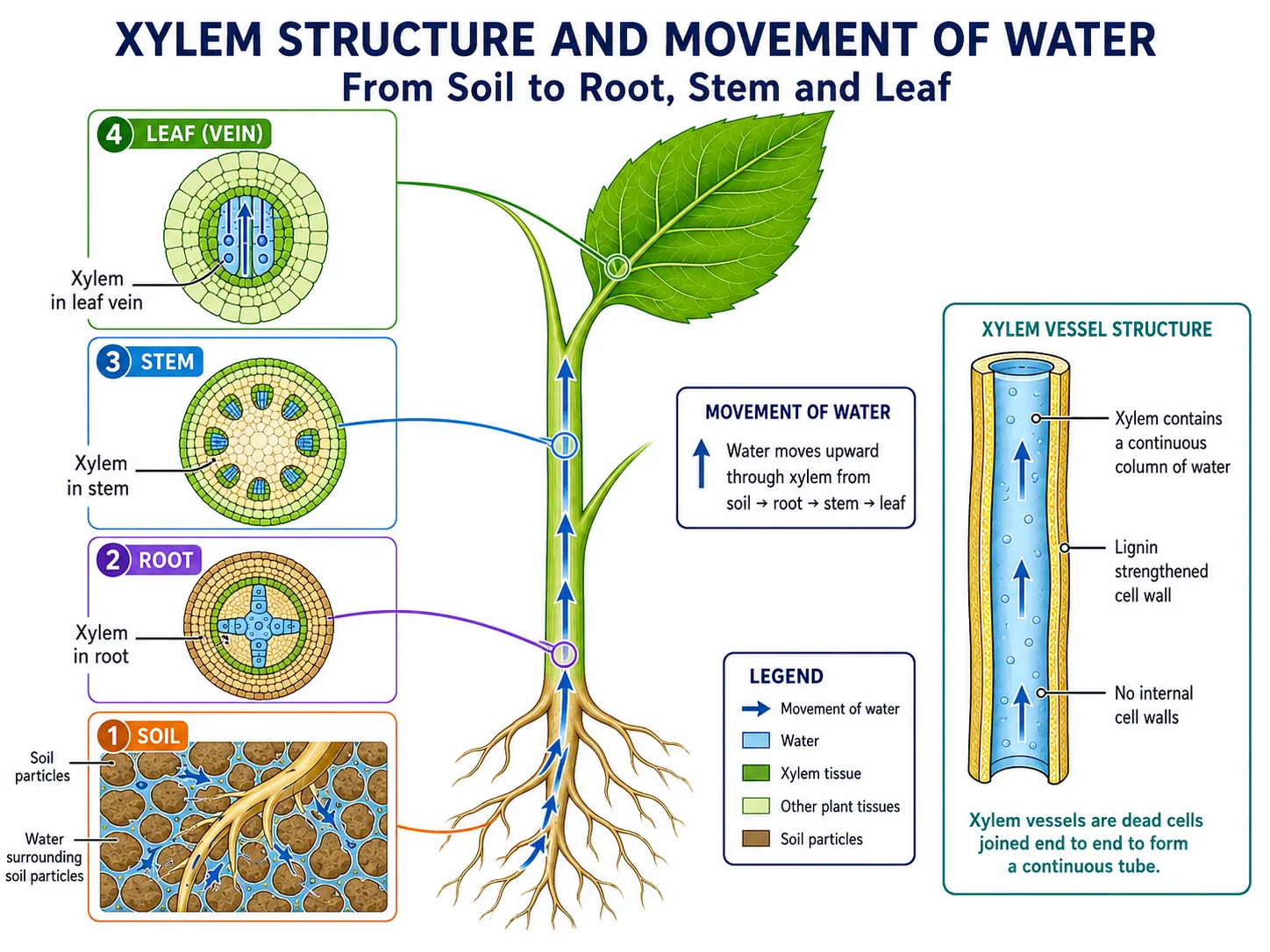
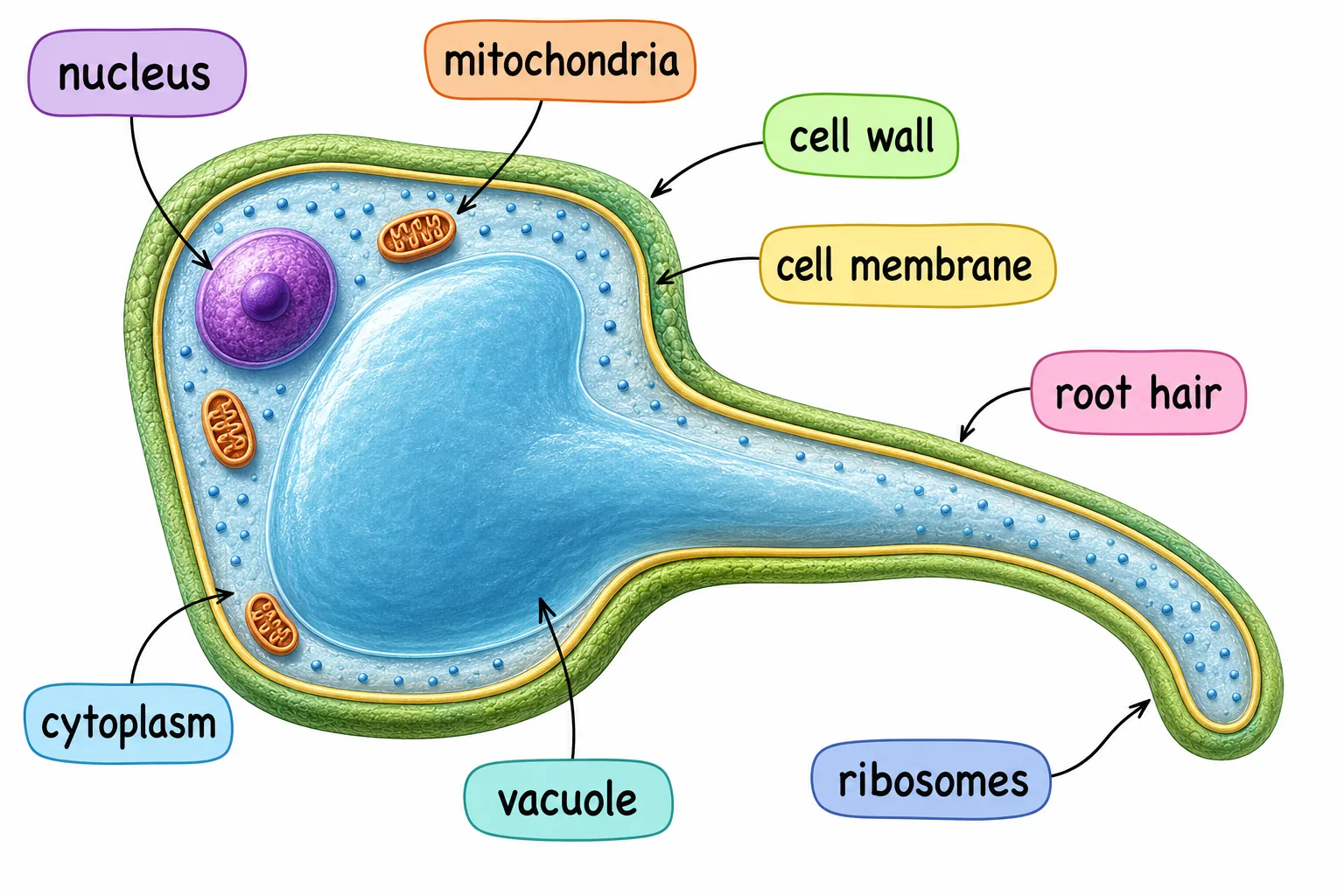
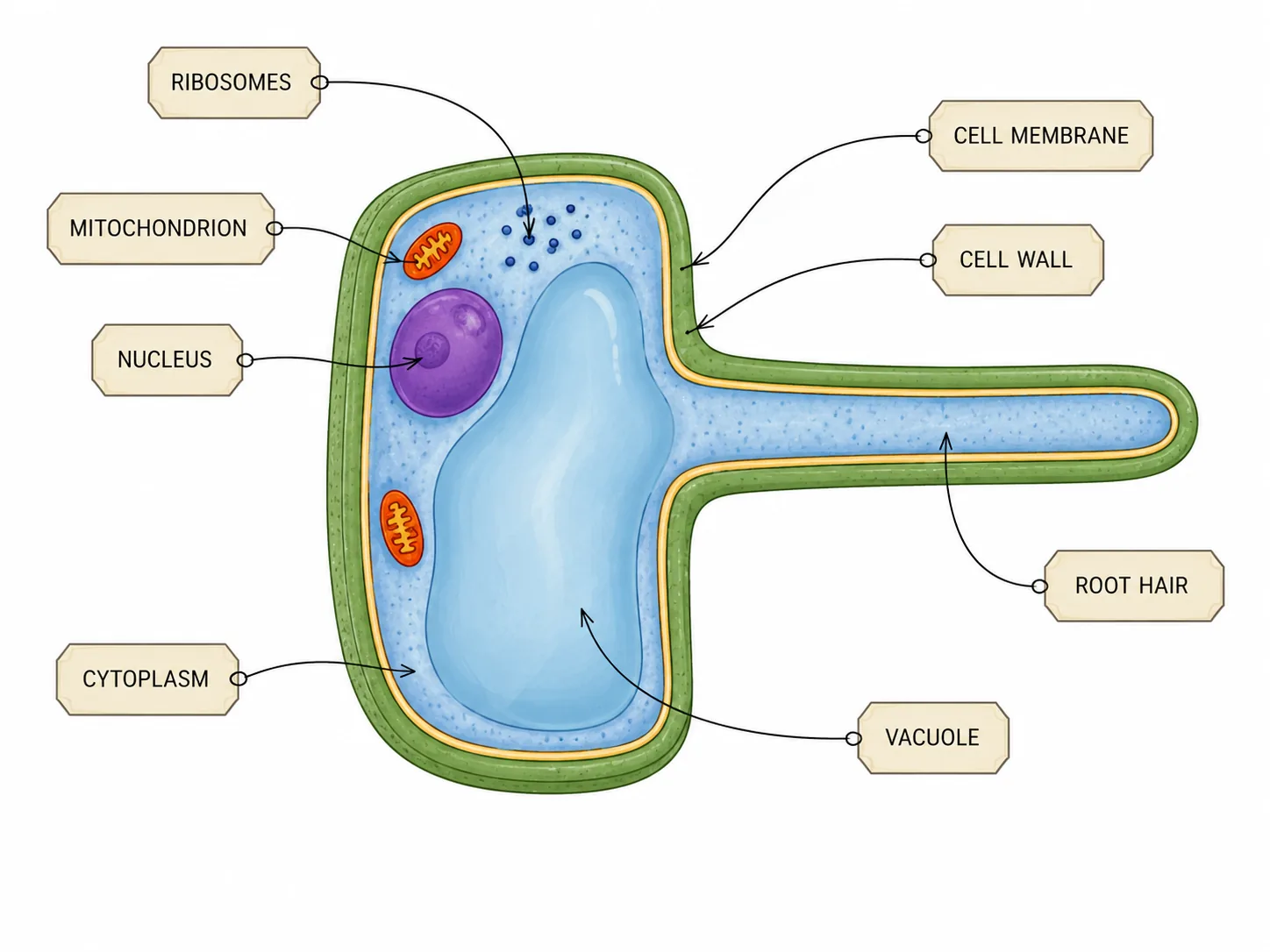
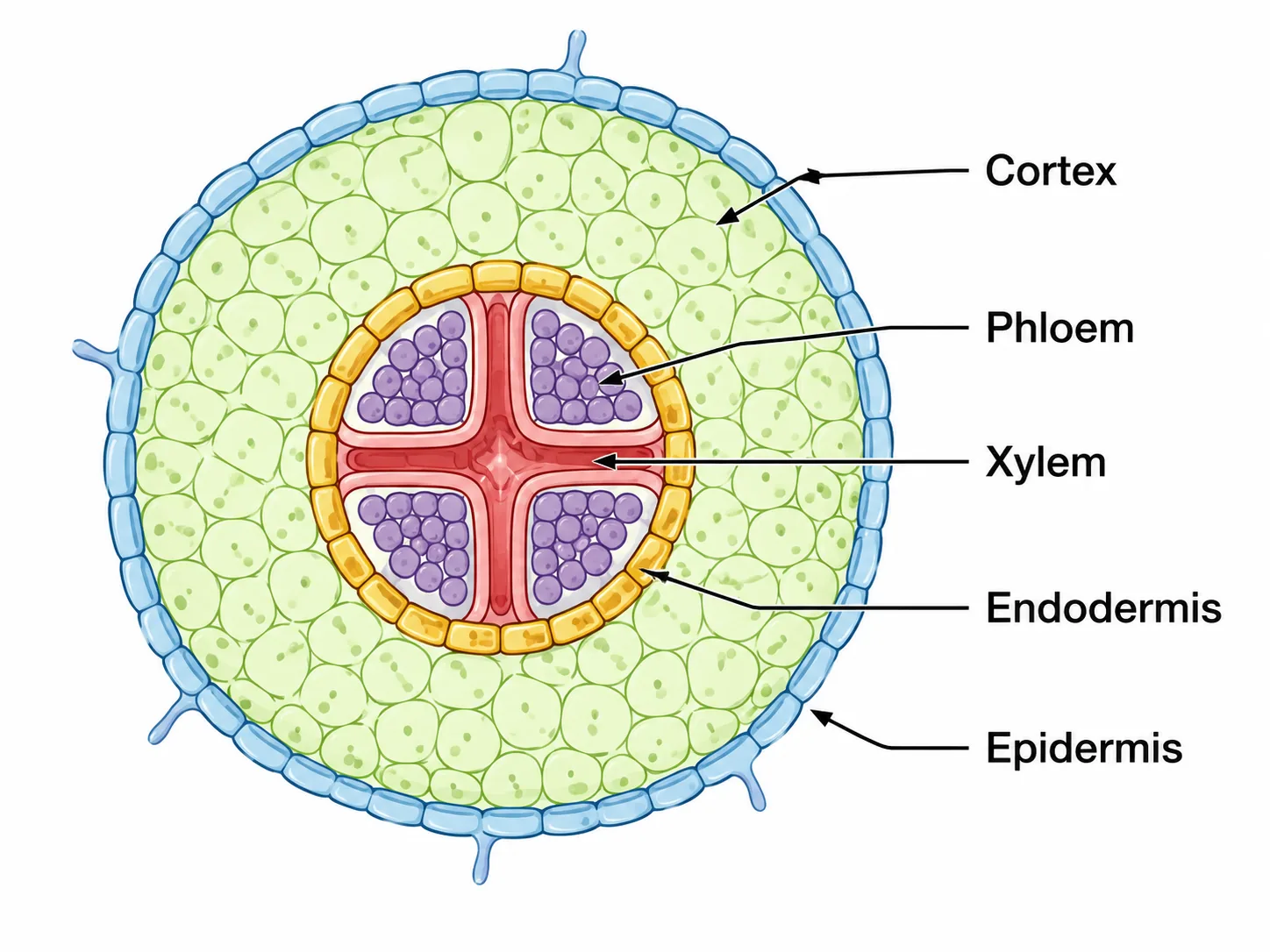
water enters root hairs by osmosis, crosses the cortex and endodermis and enters the xylem.
Transpiration pull
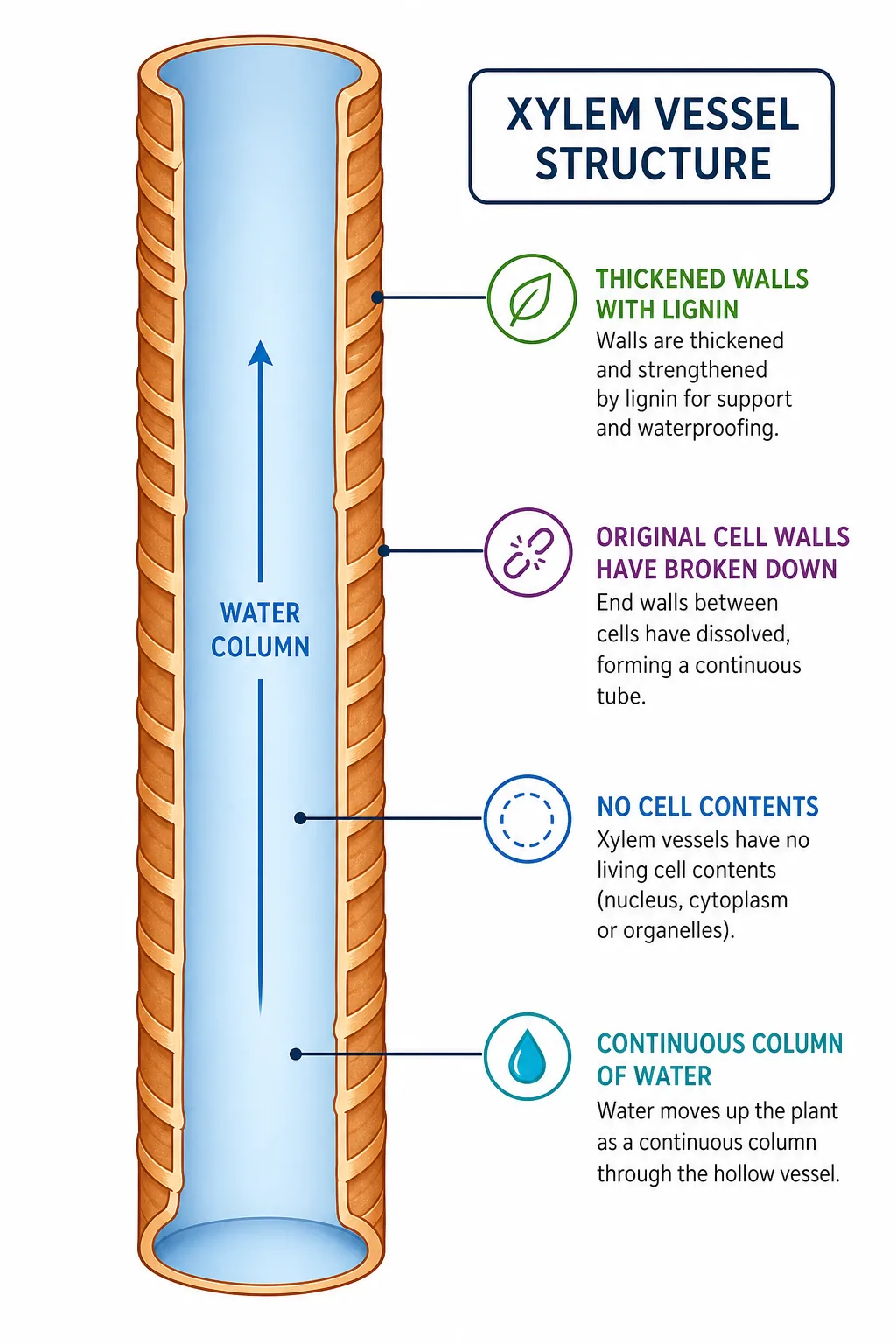
evaporation from leaves creates tension, and cohesion holds the water column together while adhesion to the xylem walls helps.
Root pressure
adds a small push, and transpiration increases with heat, wind, light and low humidity.
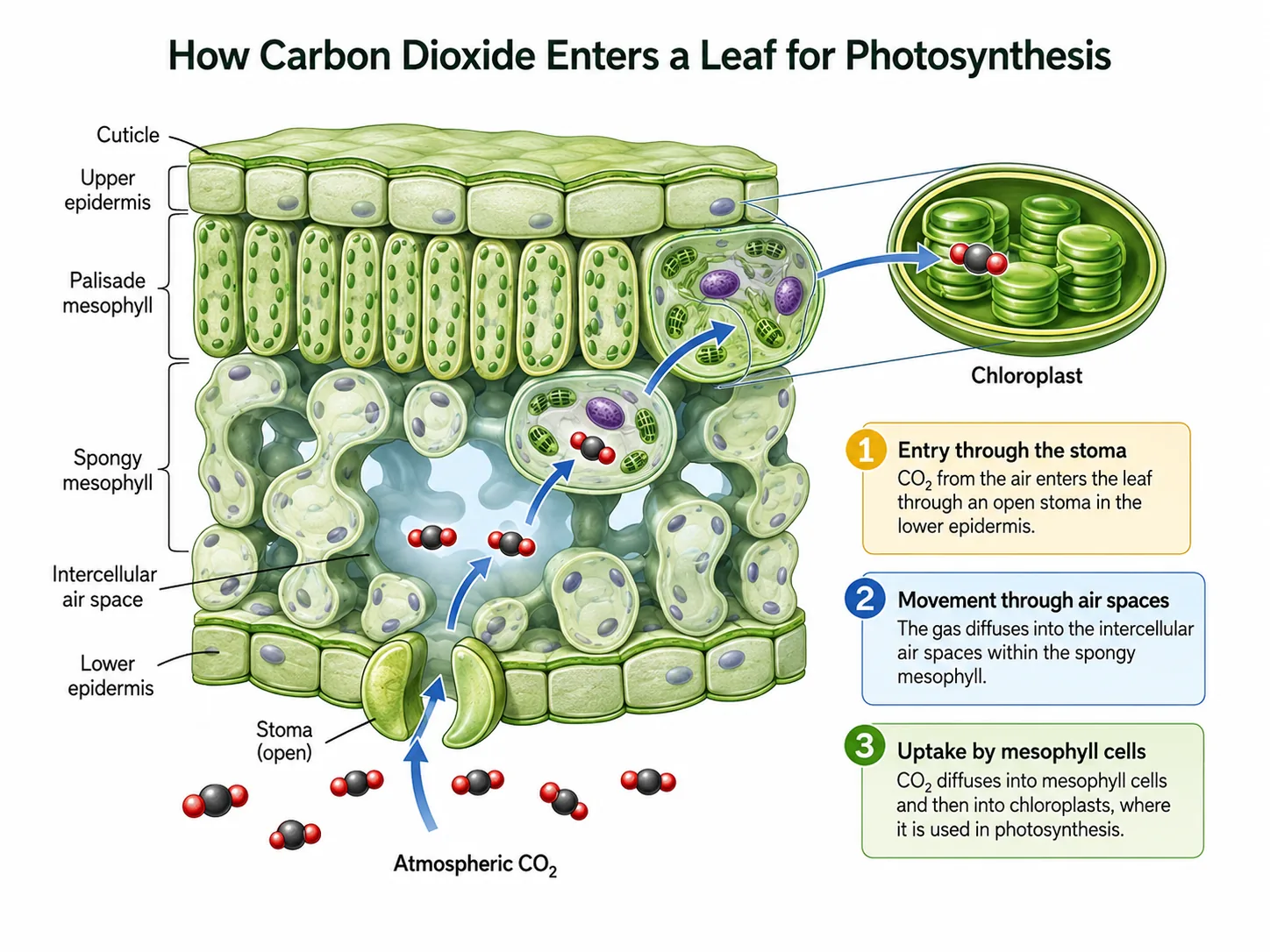
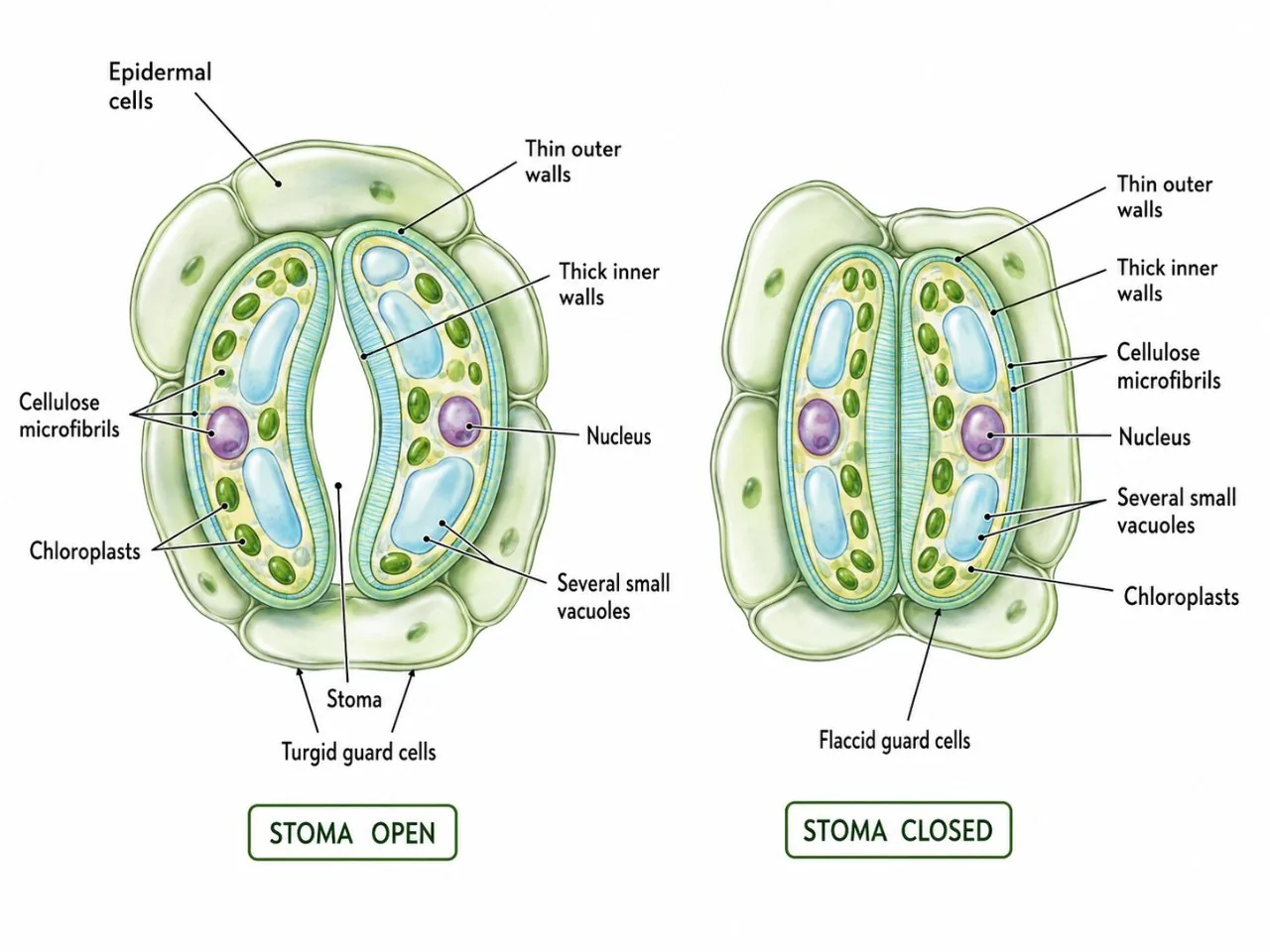
Stomata
pores in the leaf epidermis opened and closed by guard cells for gas exchange.
◀ Previous27 / 27
1Plant hormones and tropisms2Plant hormones and tropisms3Plant hormones and tropisms4Plant hormones and tropisms5Plant hormones and tropisms

Plant hormones and tropisms
 ⤢ Enlarge
Plant hormones and tropisms
Phototropism
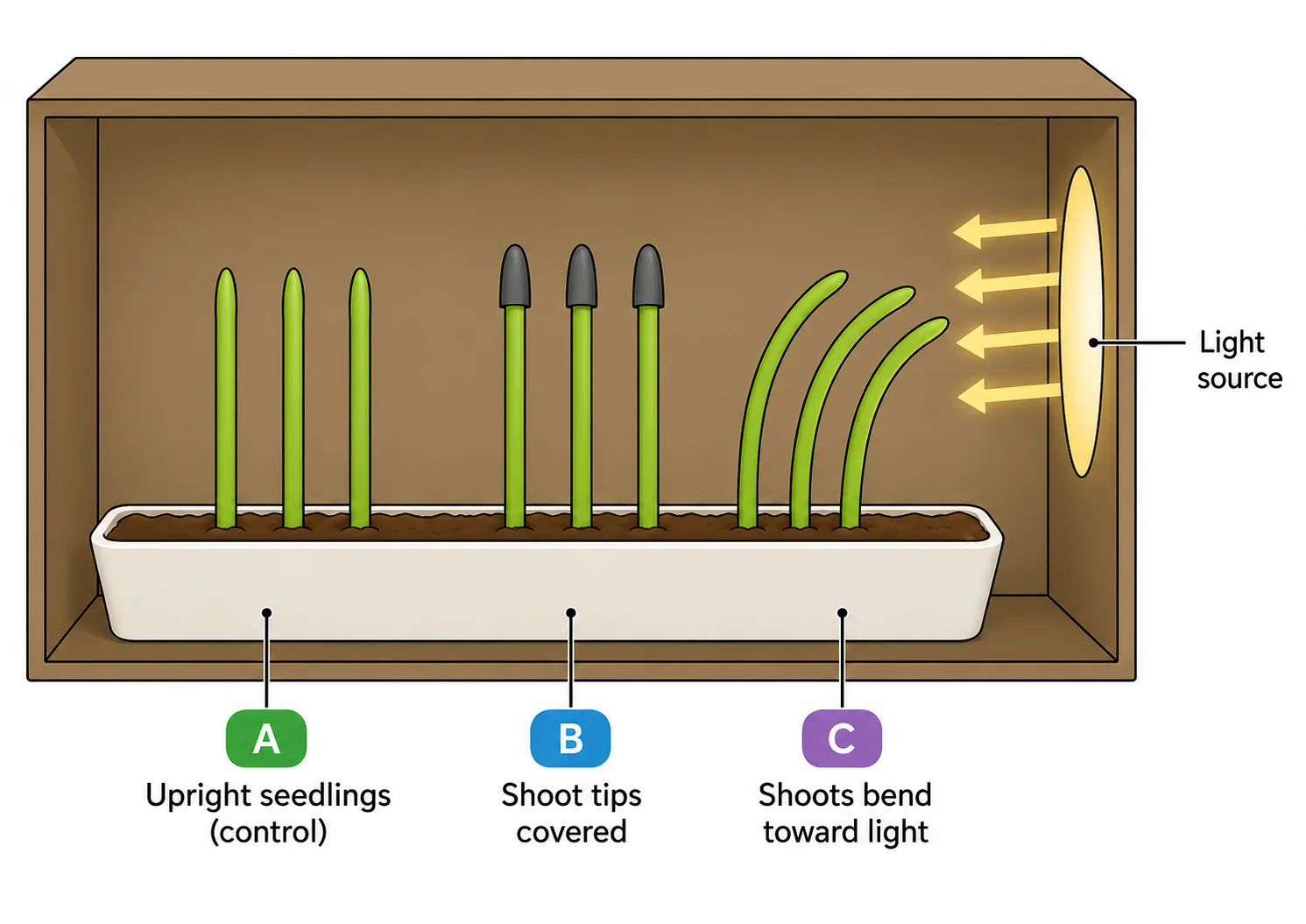
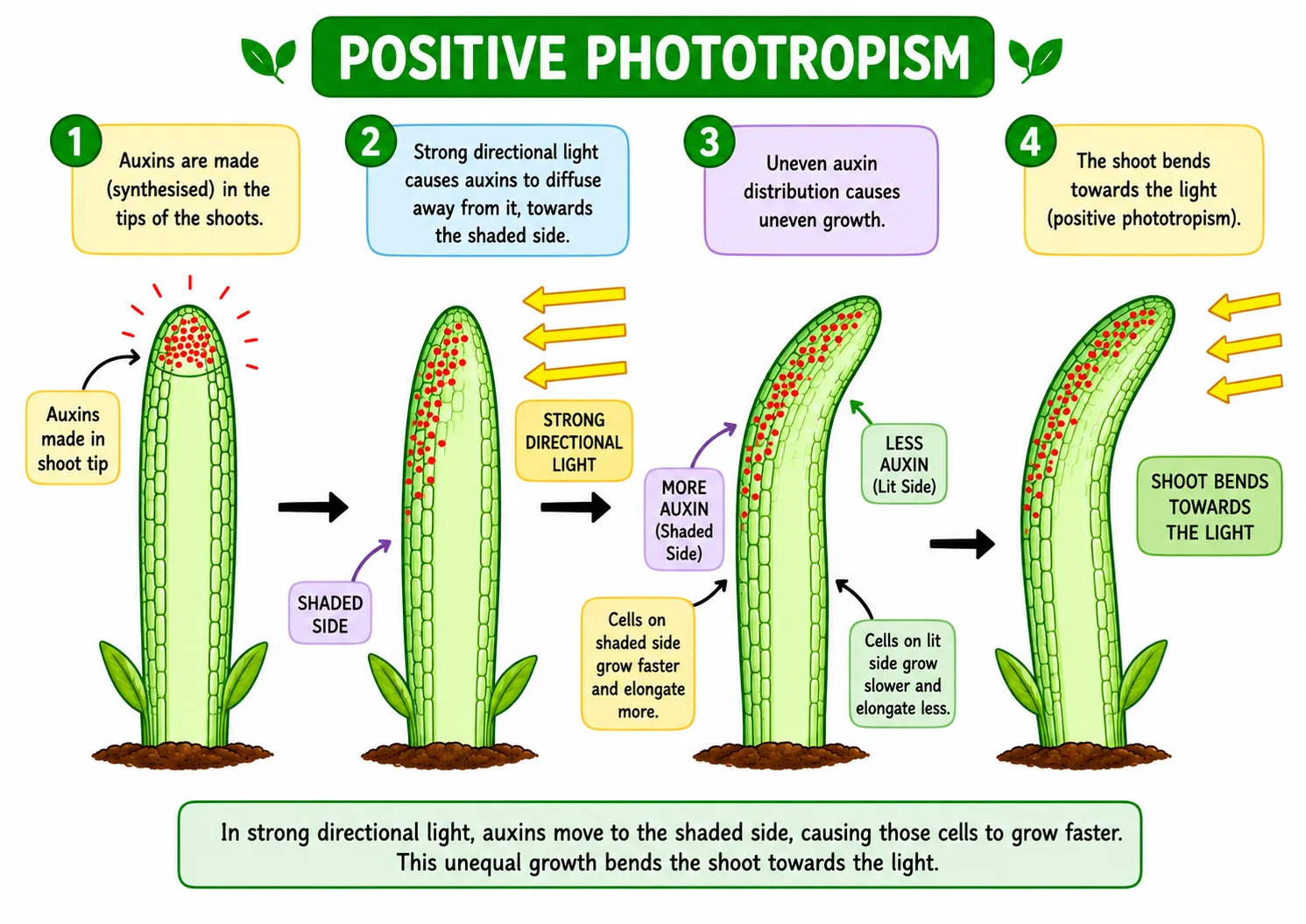
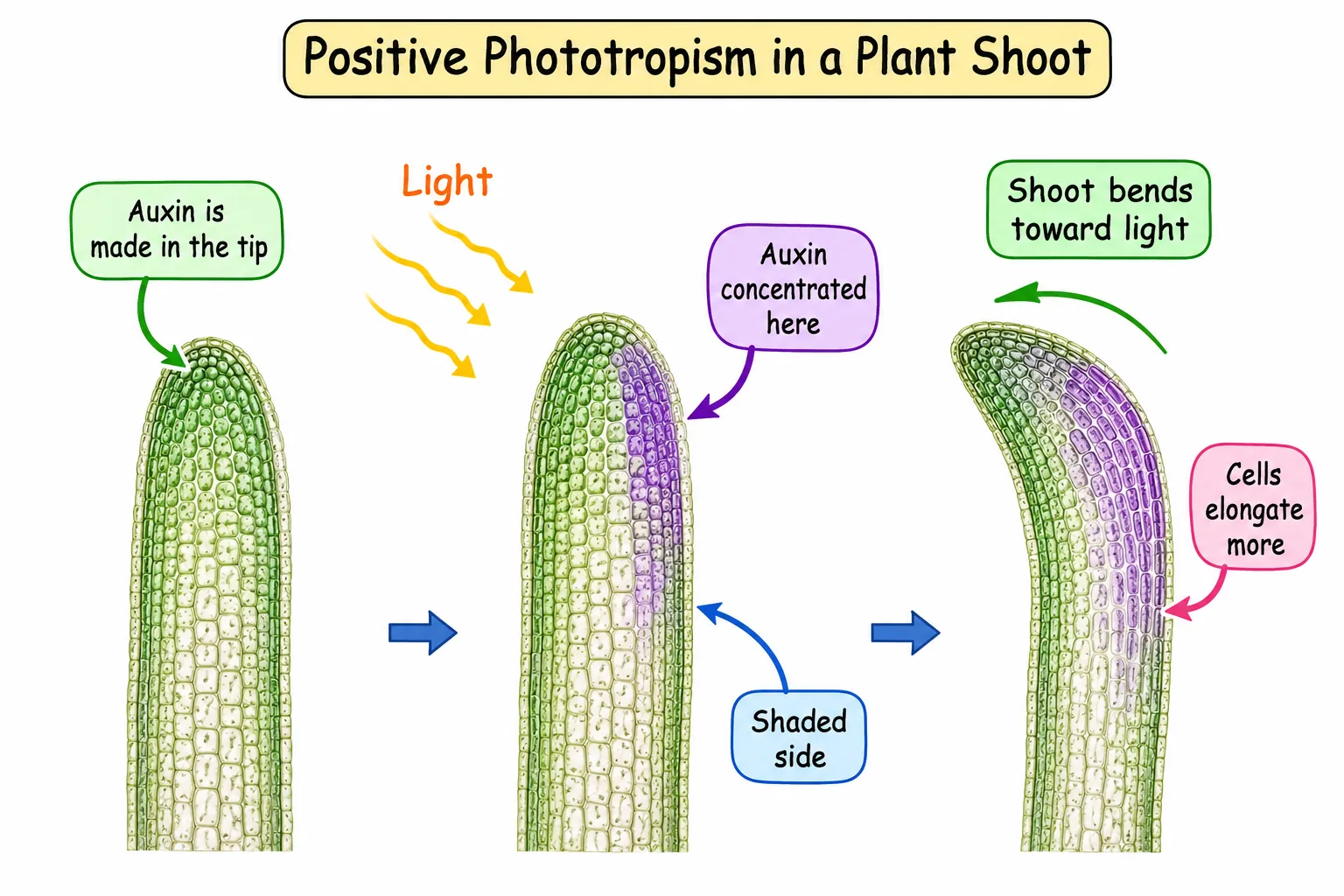
light from one side makes auxin move to the shaded side of the shoot tip, so shaded cells elongate more and the shoot bends towards the light.
| Hormone | Main effects |
|---|---|
| Auxin | Cell elongation, phototropism, apical dominance, root formation |
| Gibberellins | Stem elongation, seed germination |
| Cytokinins | Cell division, delay of leaf ageing |
| Abscisic acid | Closes stomata in drought, seed dormancy |
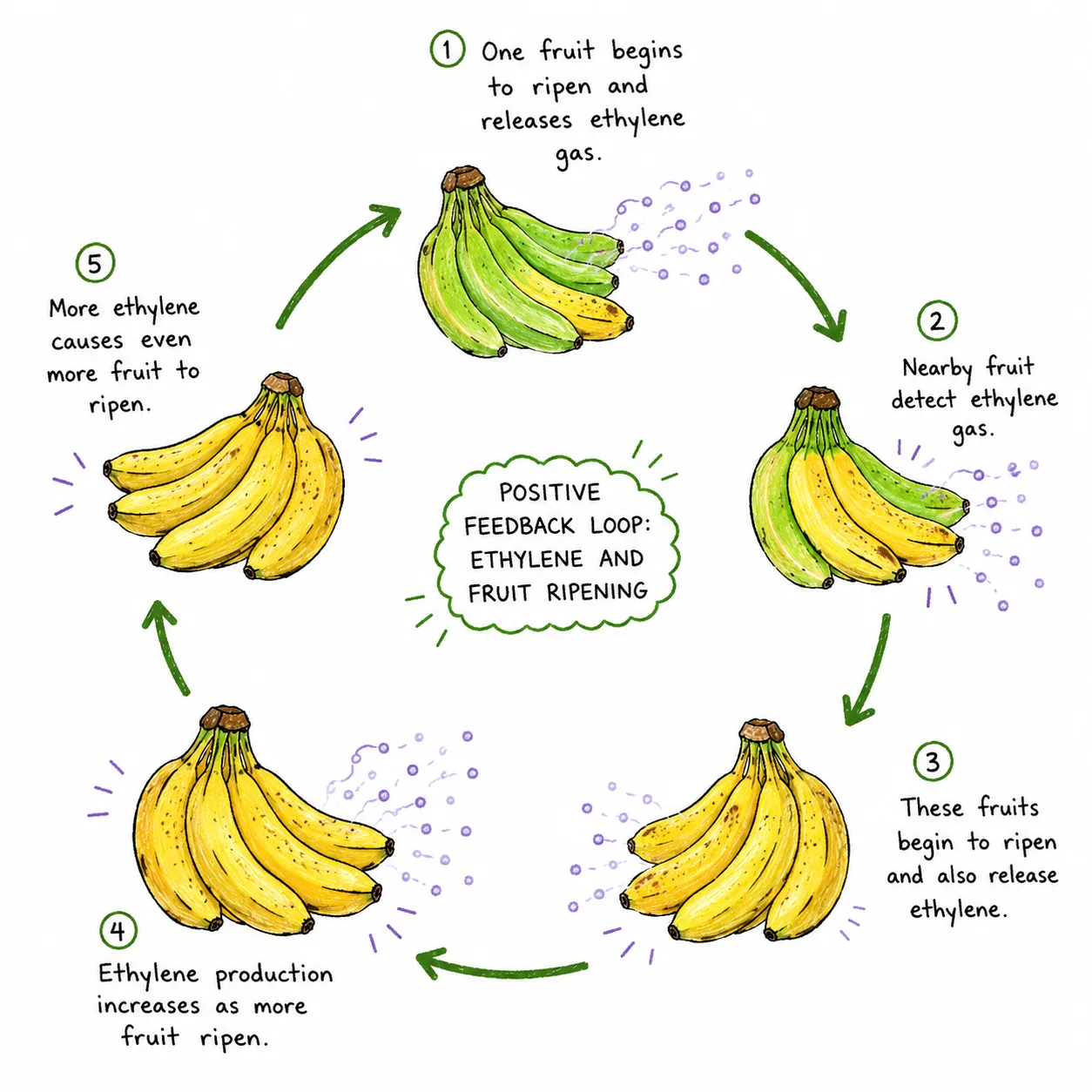
| Ethylene | Fruit ripening, leaf abscission |
◀ Previous5 / 5
1Worked examples2Worked examples3Worked examples4Worked examples5Worked examples6Worked examples7Worked examples8Worked examples9Worked examples

Worked examples
 ⤢ Enlarge
Worked examples
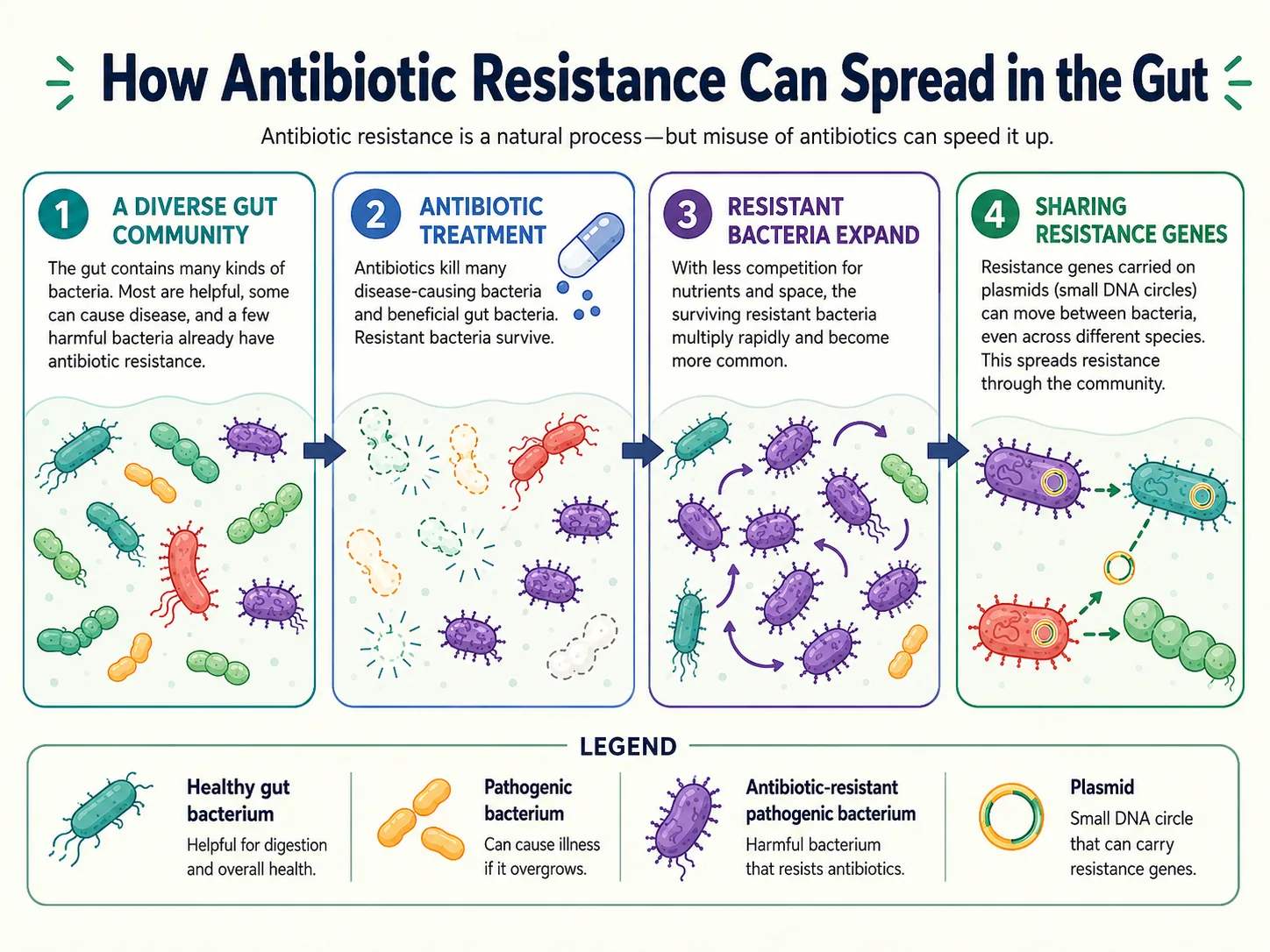
Worked example 1. Explain why antibiotic overuse produces resistant bacteria. [3]
◀ Previous5 / 9Next ▶
Worked examples
Worked examples
Random mutations give a few cells resistance.
The antibiotic kills susceptible cells and resistant cells survive and divide.
The resistance allele becomes more frequent: directional selection.
Worked example 2. In a population 4% show a recessive trait. Find the frequency of carriers. [2]
q
2
◀ Previous6 / 9Next ▶
Worked examples
1
= 0.04
so q = 0.2 and p = 0.8.
2
2pq = 2 × 0.8 × 0.2 = 0.32.
3
Worked example 3. Which rank is the most specific, and how should a species name be written? [2]
4
Species is the most specific rank.
5
A binomial: genus with a capital and species in lower case, both italicised, for example Felis catus.
6
Worked example 4. A methanogen lives in a cow’s gut. Which domain does it belong to? [1]
◀ Previous7 / 9Next ▶
Worked examples
Worked examples
Archaea.
Worked example 5. Explain why a shoot bends towards a window. [3]
Auxin moves to the shaded side of the shoot tip.
It stimulates cell elongation there.
The shaded side grows longer and the shoot curves towards the light.
Worked example 6. Name one difference between ferns and mosses. [1]
◀ Previous8 / 9Next ▶
Worked examples
Worked examples
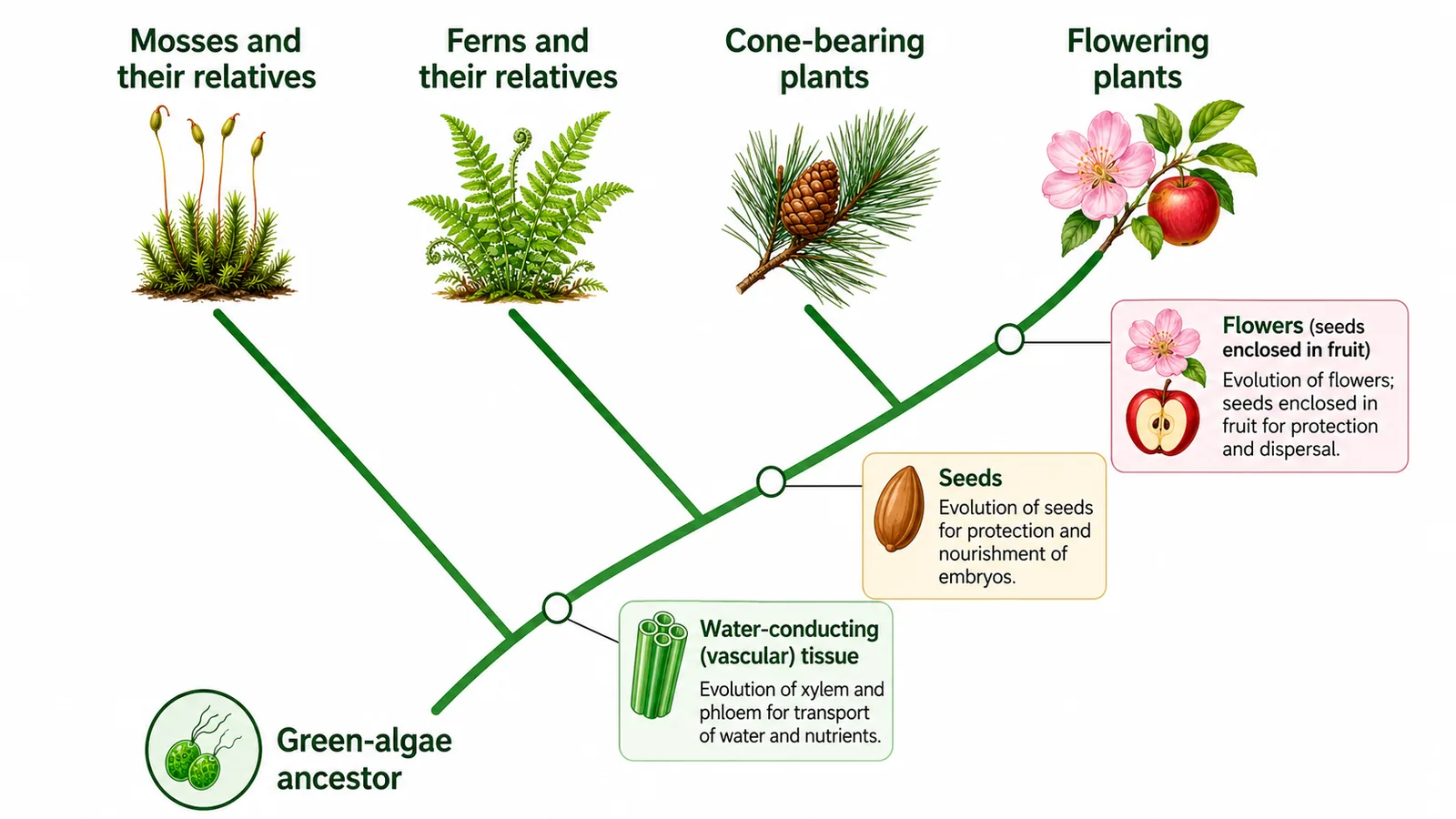
Ferns have vascular tissue (xylem and phloem)
mosses do not.
◀ Previous9 / 9
Key terms
| Term | Meaning |
|---|---|
| Adaptation | An inherited trait that increases fitness in an environment |
| Analogous structures | Structures with similar function but separate origin |
| Shared derived character | A new trait shared by a group and its common ancestor |
| Coelom | A body cavity fully lined by mesoderm |
| Double fertilisation | Two fertilisation events producing zygote and endosperm |
| Stomata | Leaf pores controlled by guard cells |
1Avoid these mistakes2Avoid these mistakes