Curriculum
EST II Biology
1. Molecules & Cells
0/15
-
McGraw-Hill SAT Biology — Chapter 5: Understanding Molecular and Cellular Biology
 Preview
-
1.1 Chemistry of Life
Preview
-
1.1 Chemistry of Life (SAT Biology) - Check yourself
 Preview
-
1.2 Cell Structure & Organelles
Preview
-
1.2 Cell Structure & Organelles (SAT Biology) - Check yourself
Preview
-
1.3 Membrane Transport
Preview
-
1.3 Membrane Transport (SAT Biology) - Check yourself
Preview
-
1.4 Enzymes & Metabolism
Preview
-
1.4 Enzymes & Metabolism (SAT Biology) - Check yourself
Preview
-
1.5 Cellular Respiration
Preview
-
1.5 Cellular Respiration (SAT Biology) - Check yourself
Preview
-
1.6 Photosynthesis
Preview
-
1.6 Photosynthesis (SAT Biology) - Check yourself
Preview
-
1.7 Cell Division: Mitosis & Meiosis
Preview
-
1.7 Cell Division: Mitosis & Meiosis (SAT Biology) - Check yourself
Preview
2. Genetics & Biotechnology
0/7
3. Evolution & Diversity
0/7
4. Organisms: Structure & Function
0/15
5. Ecology
0/5
6. Laboratory Skills
0/2
SAT Biology — Full Book Tests and Strategy
0/8
1.6 Photosynthesis
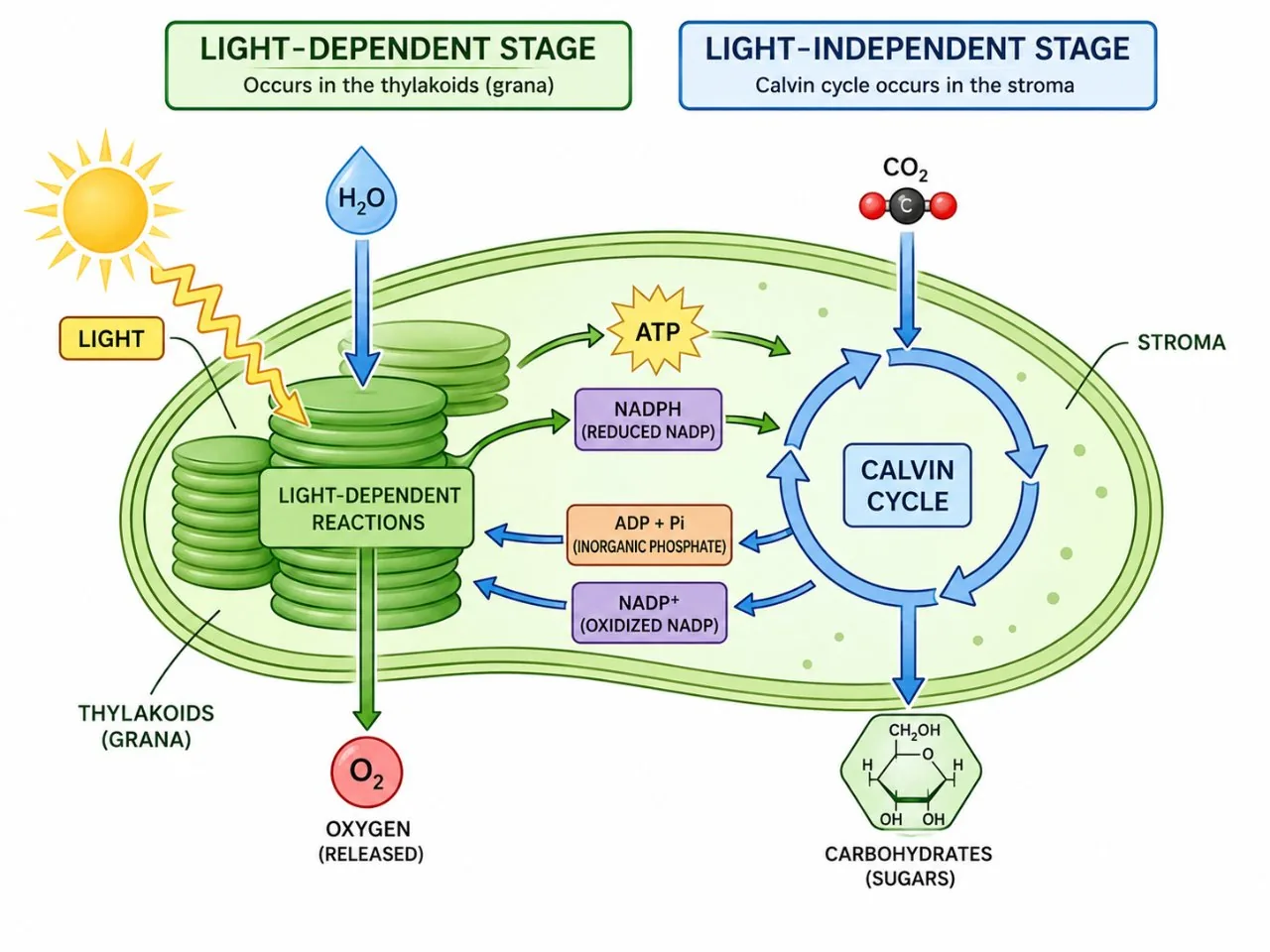
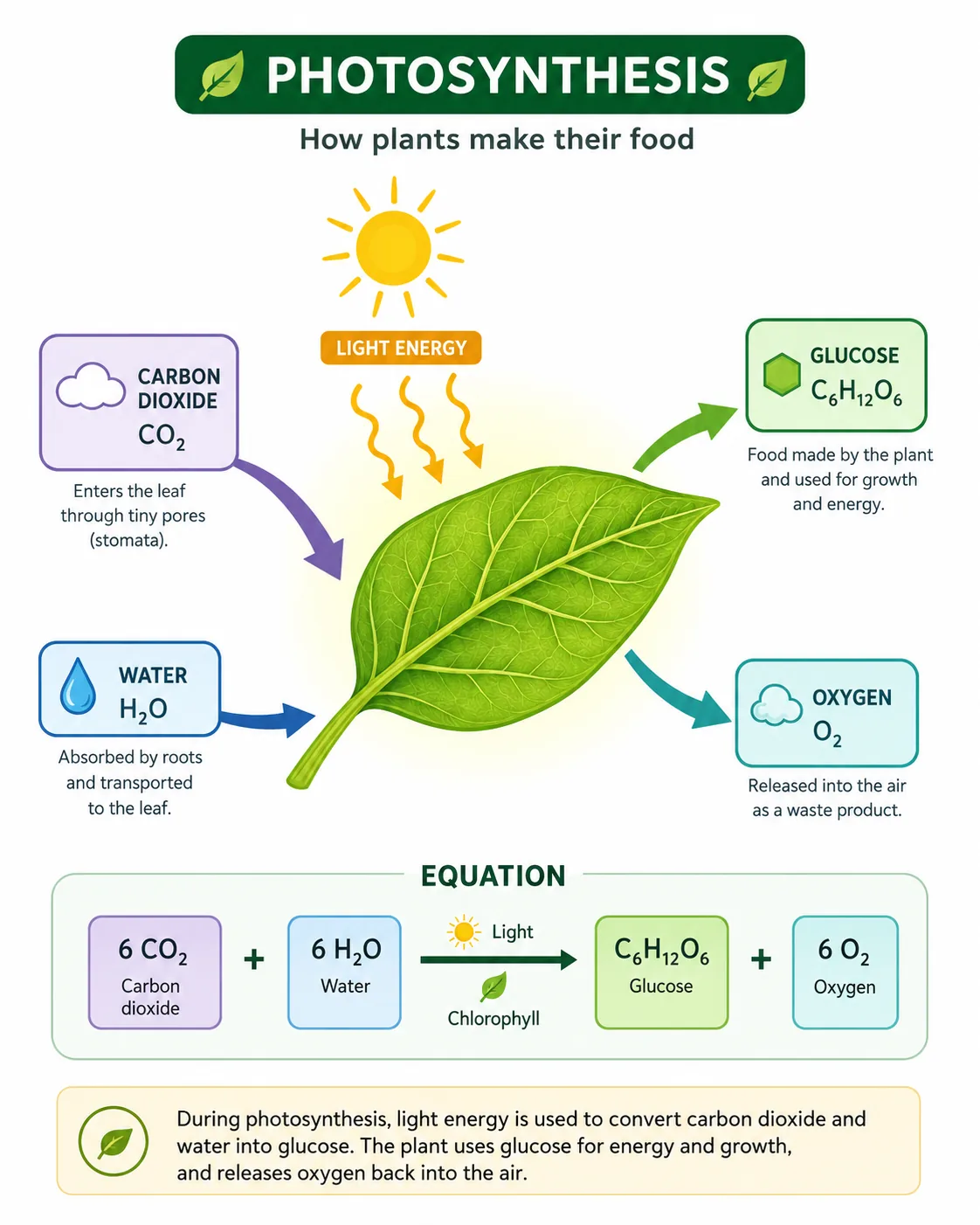
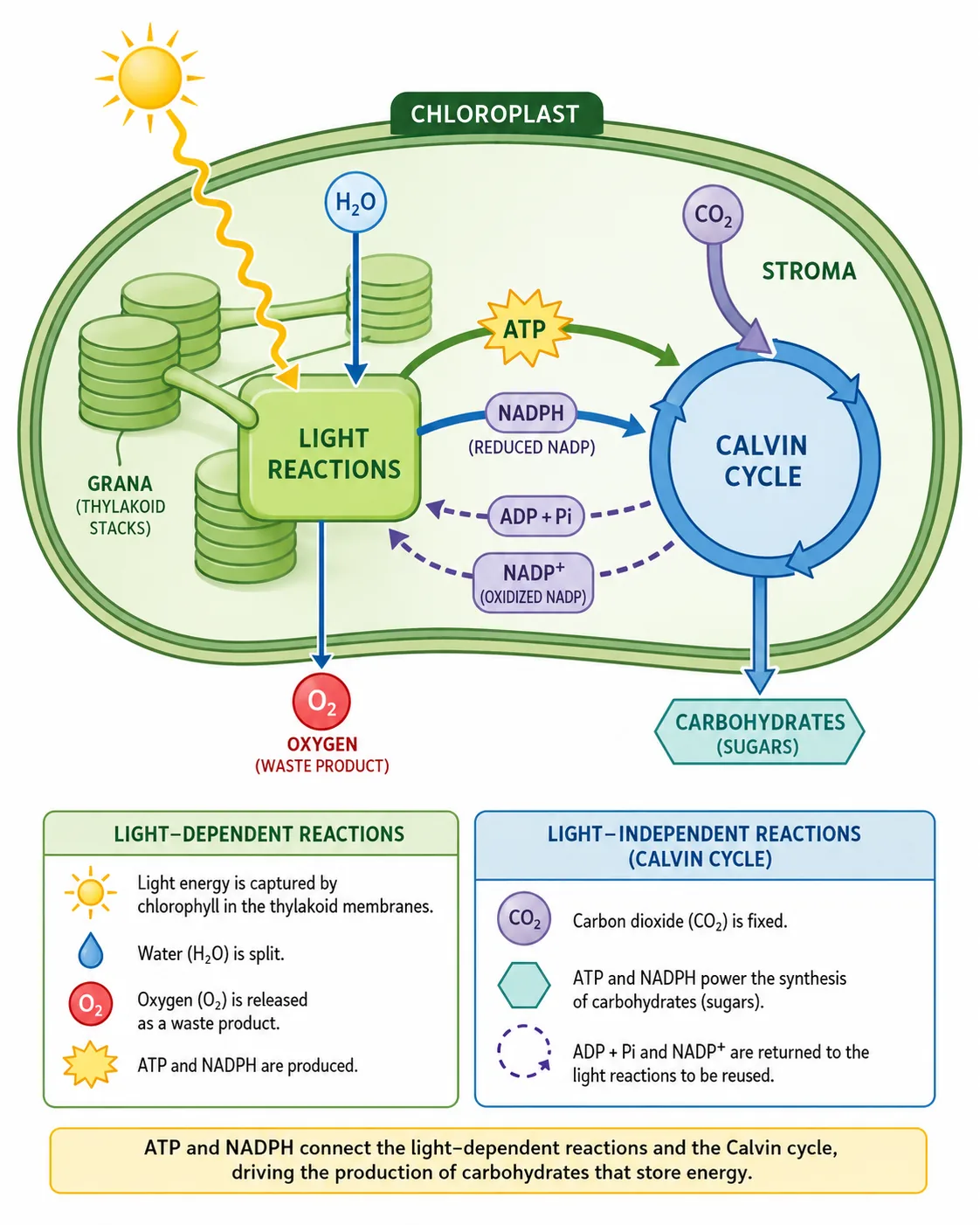
Write the overall equation for photosynthesis and identify the source of the O2.

 ⤢ Enlarge
 ⤢ Enlarge
 ⤢ Enlarge
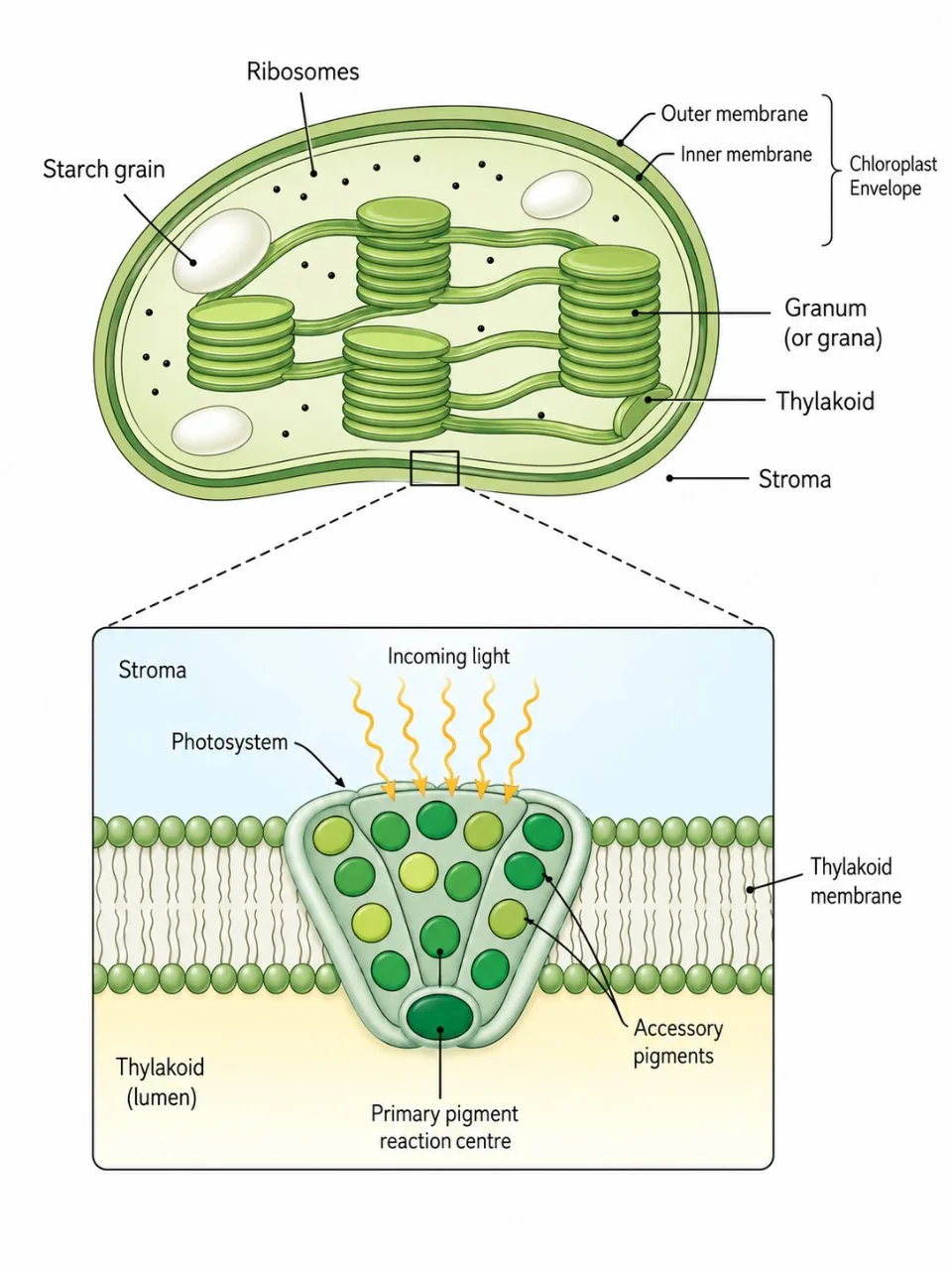
Photosynthesis
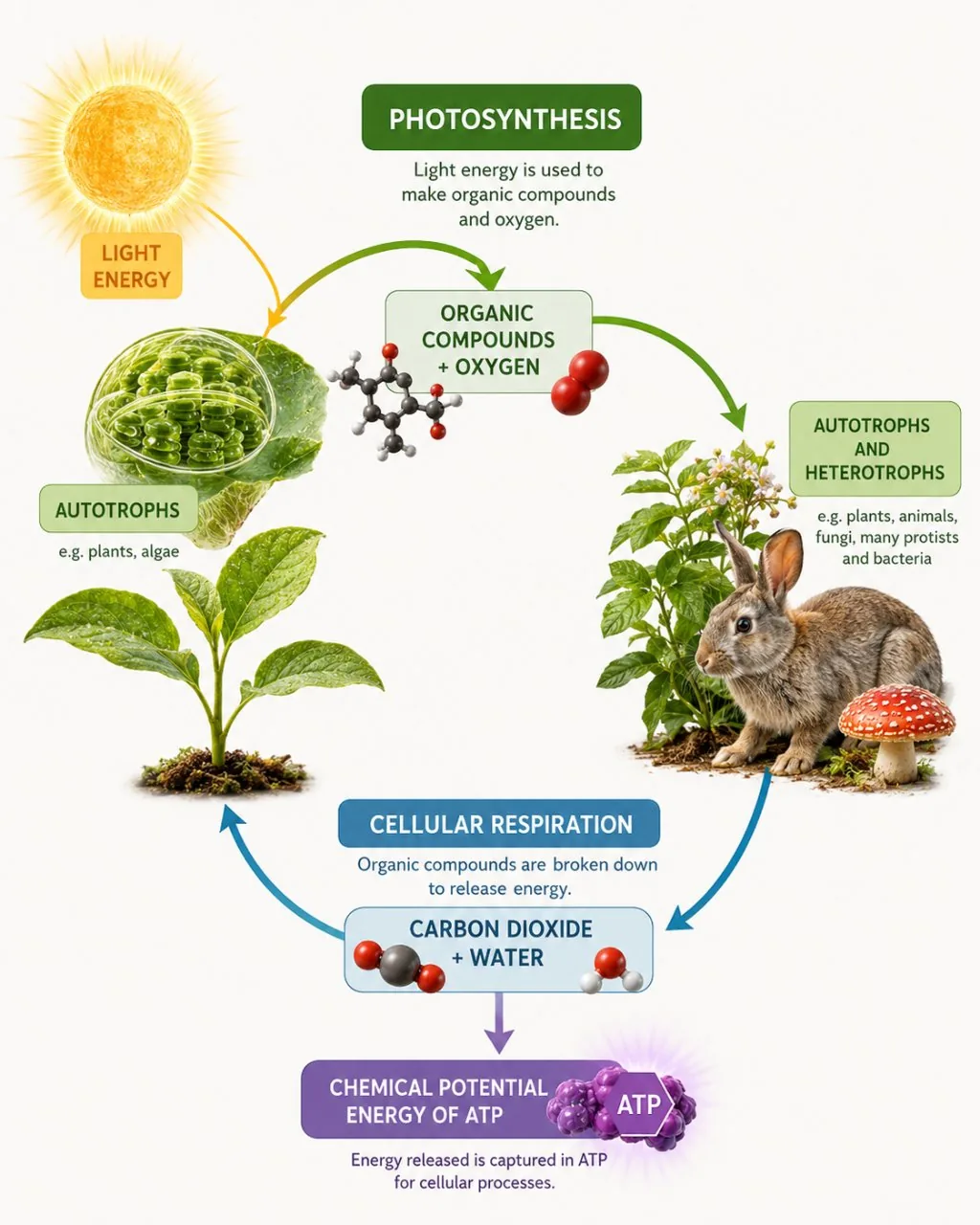
The process by which autotrophs use light energy to convert CO2 and water into glucose and oxygen.
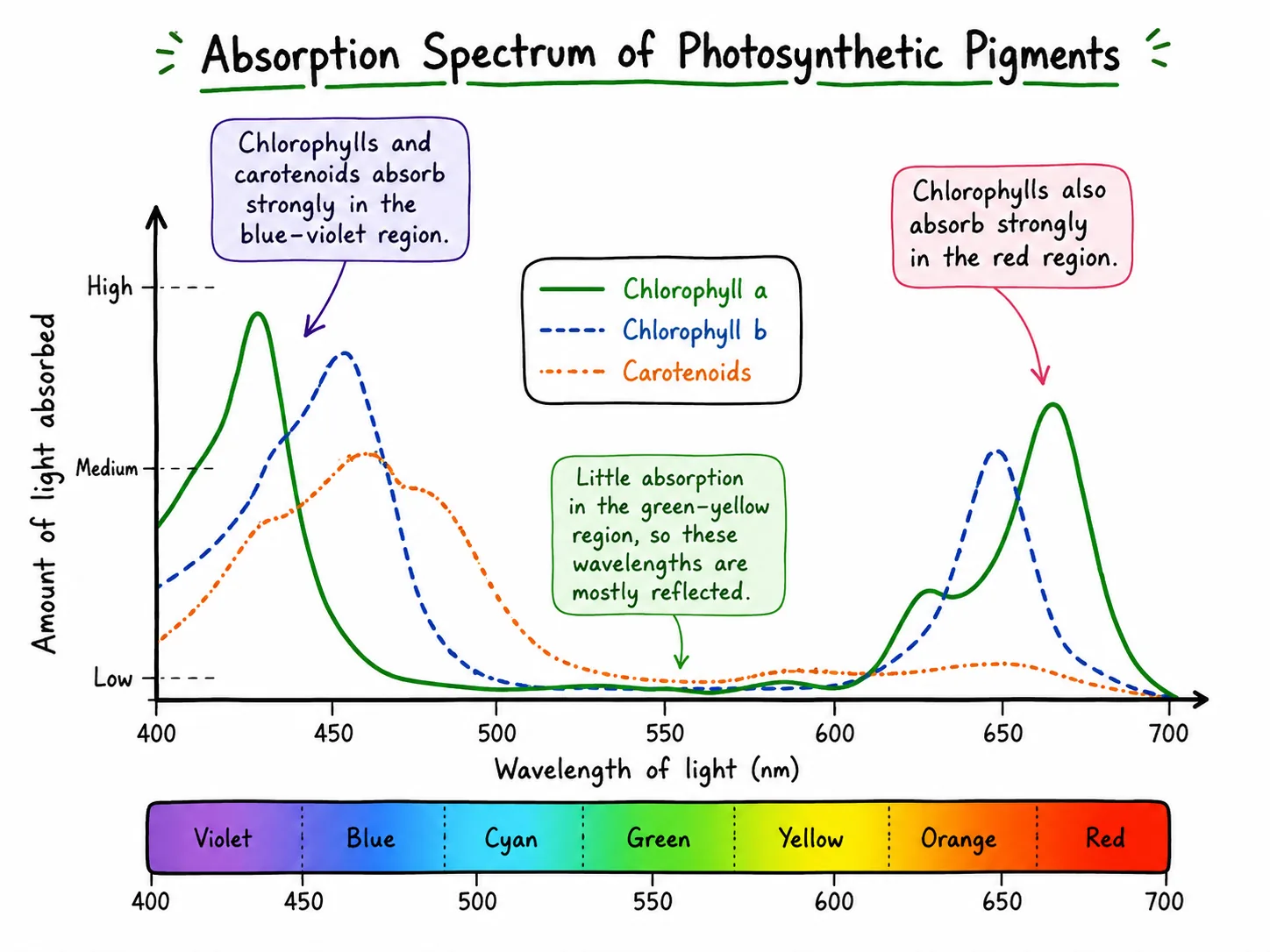
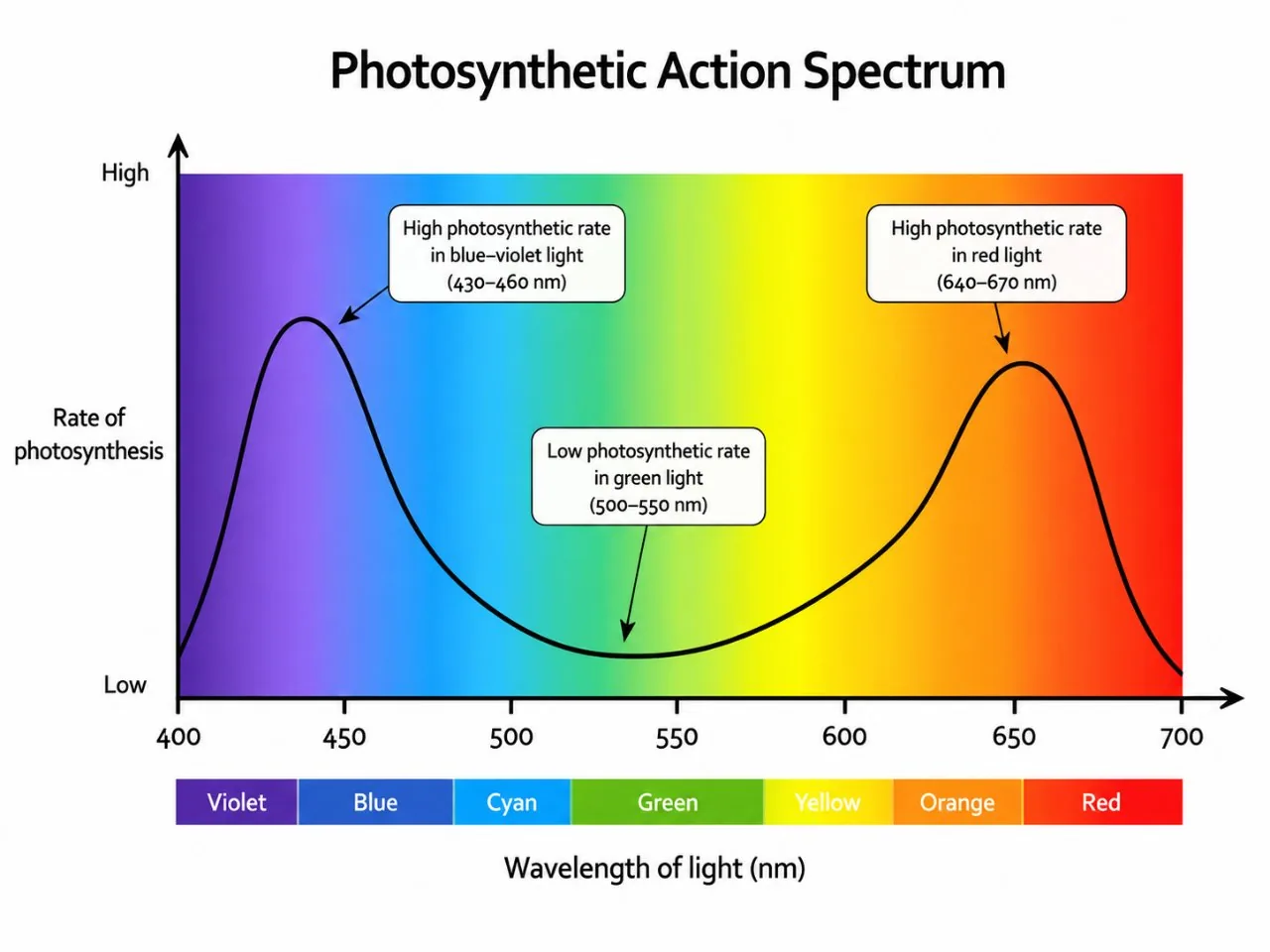
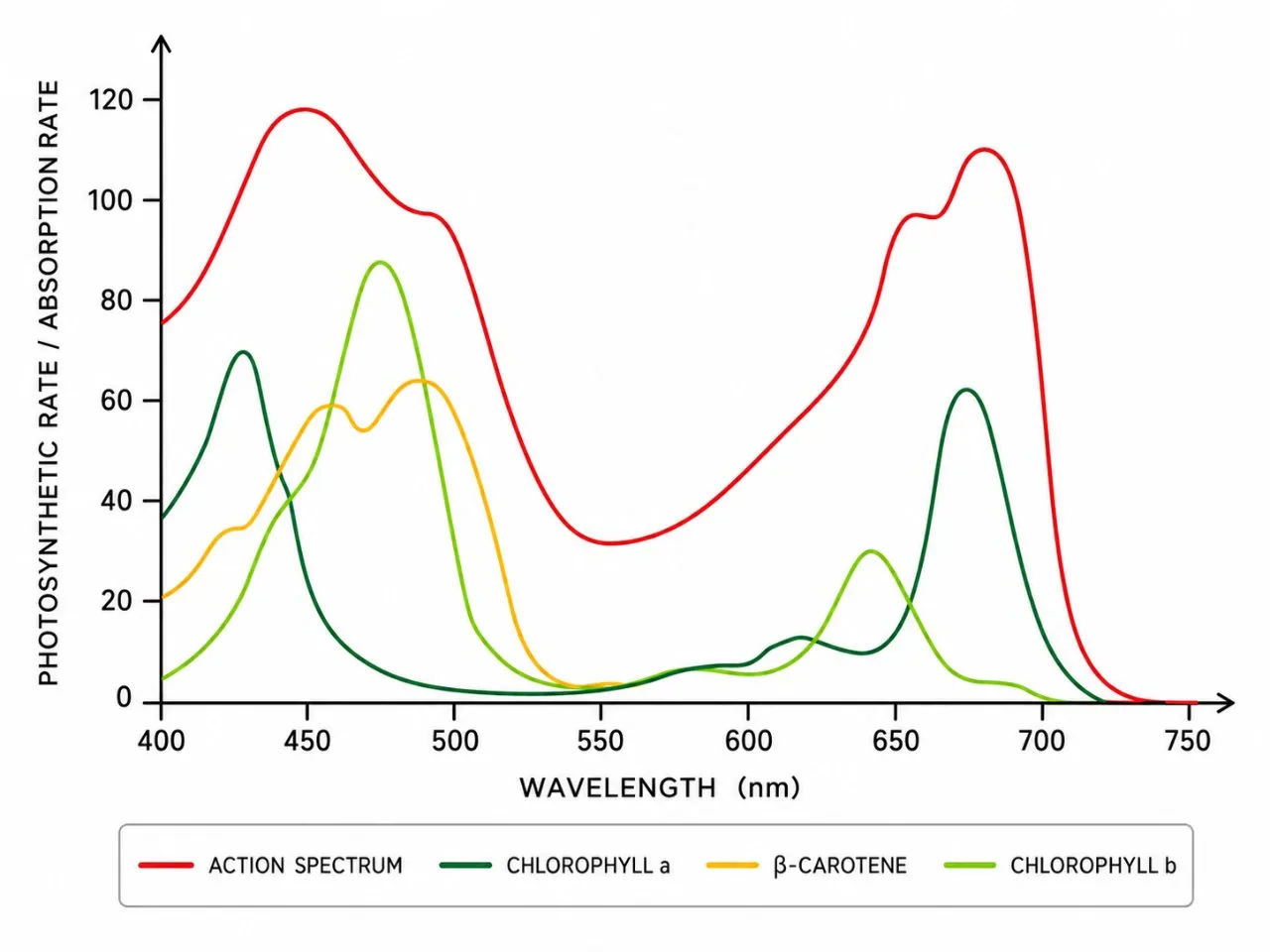
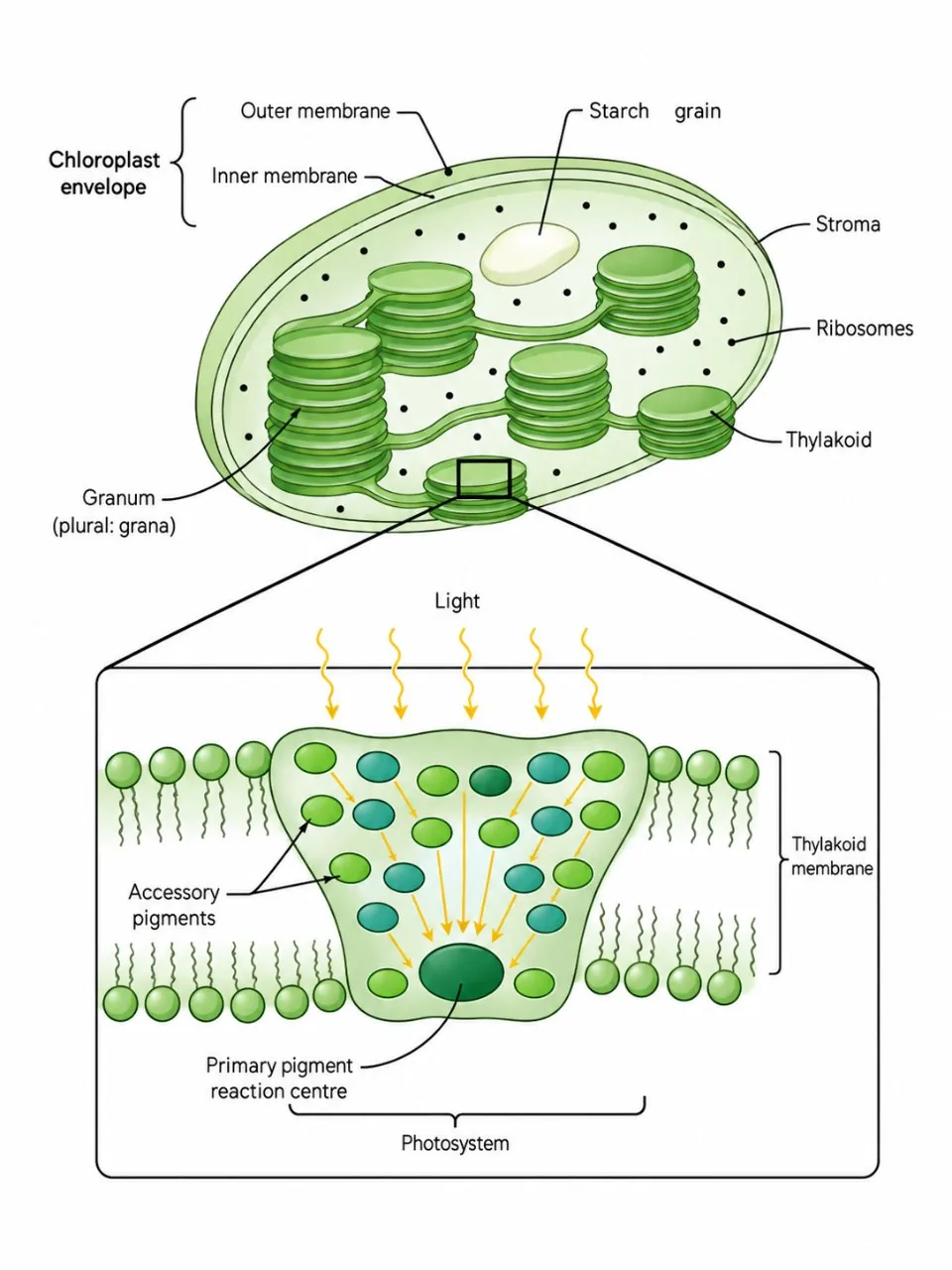
Chlorophyll
The green pigment in chloroplasts that absorbs mainly red and blue light and reflects green.
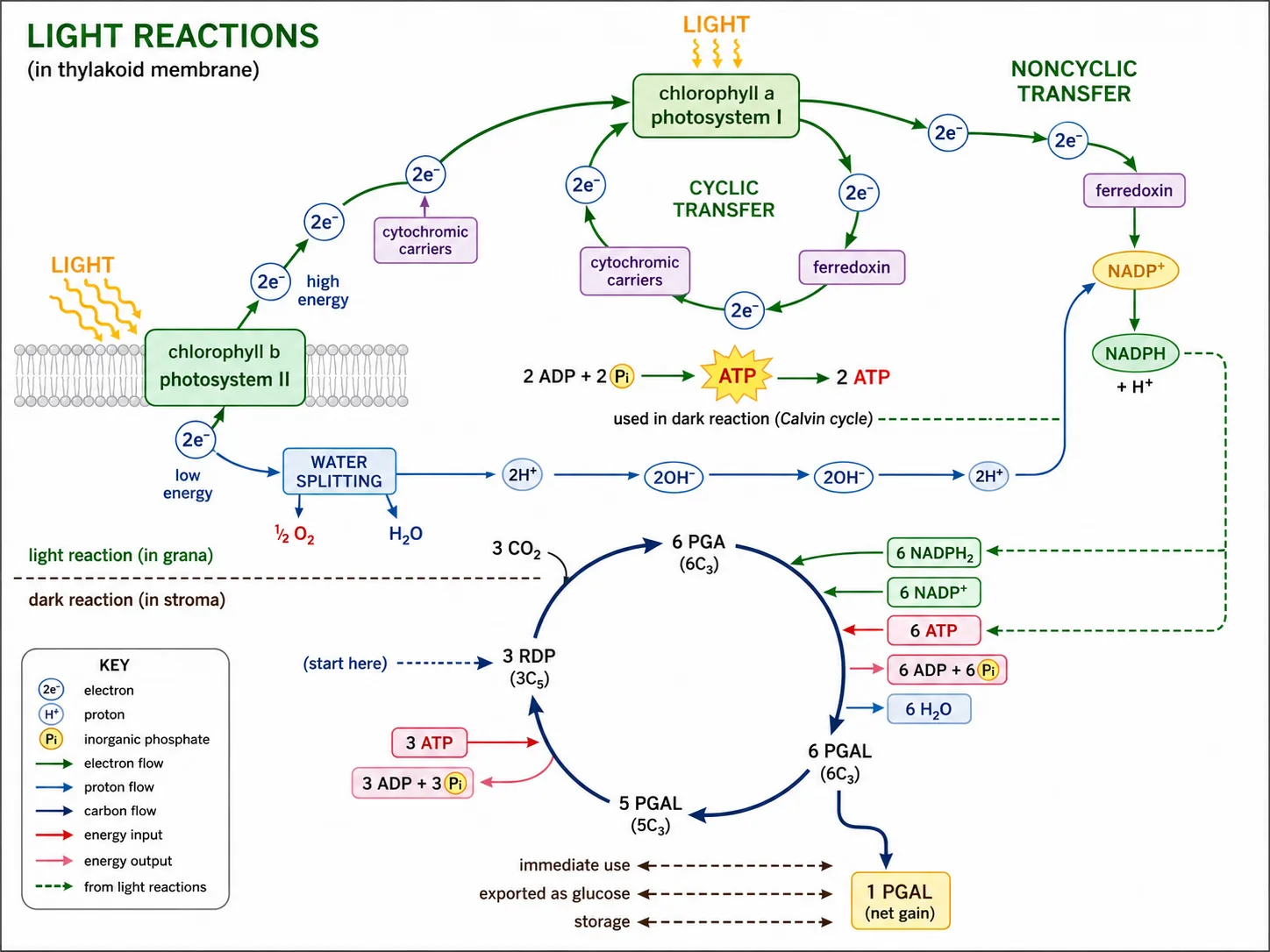
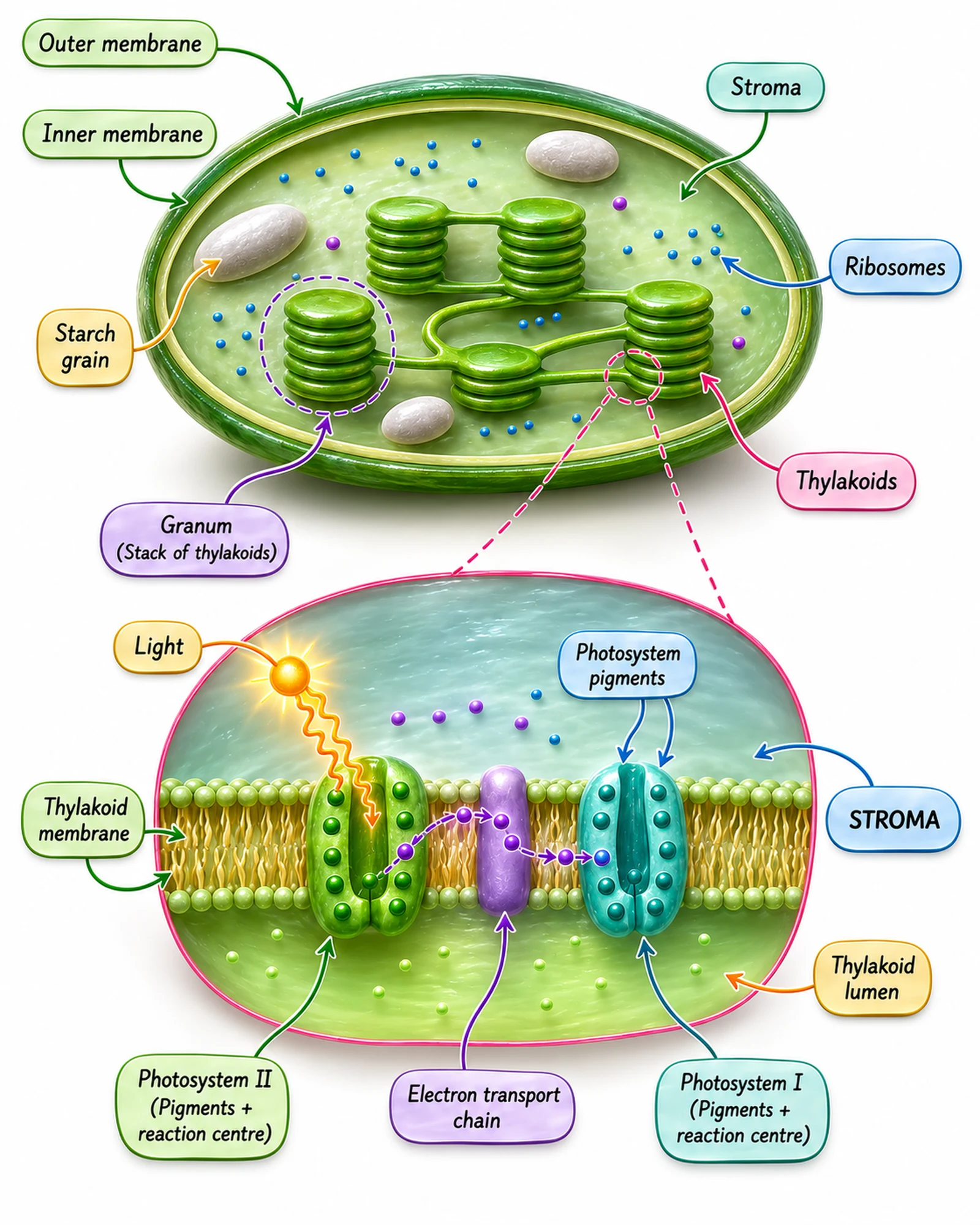
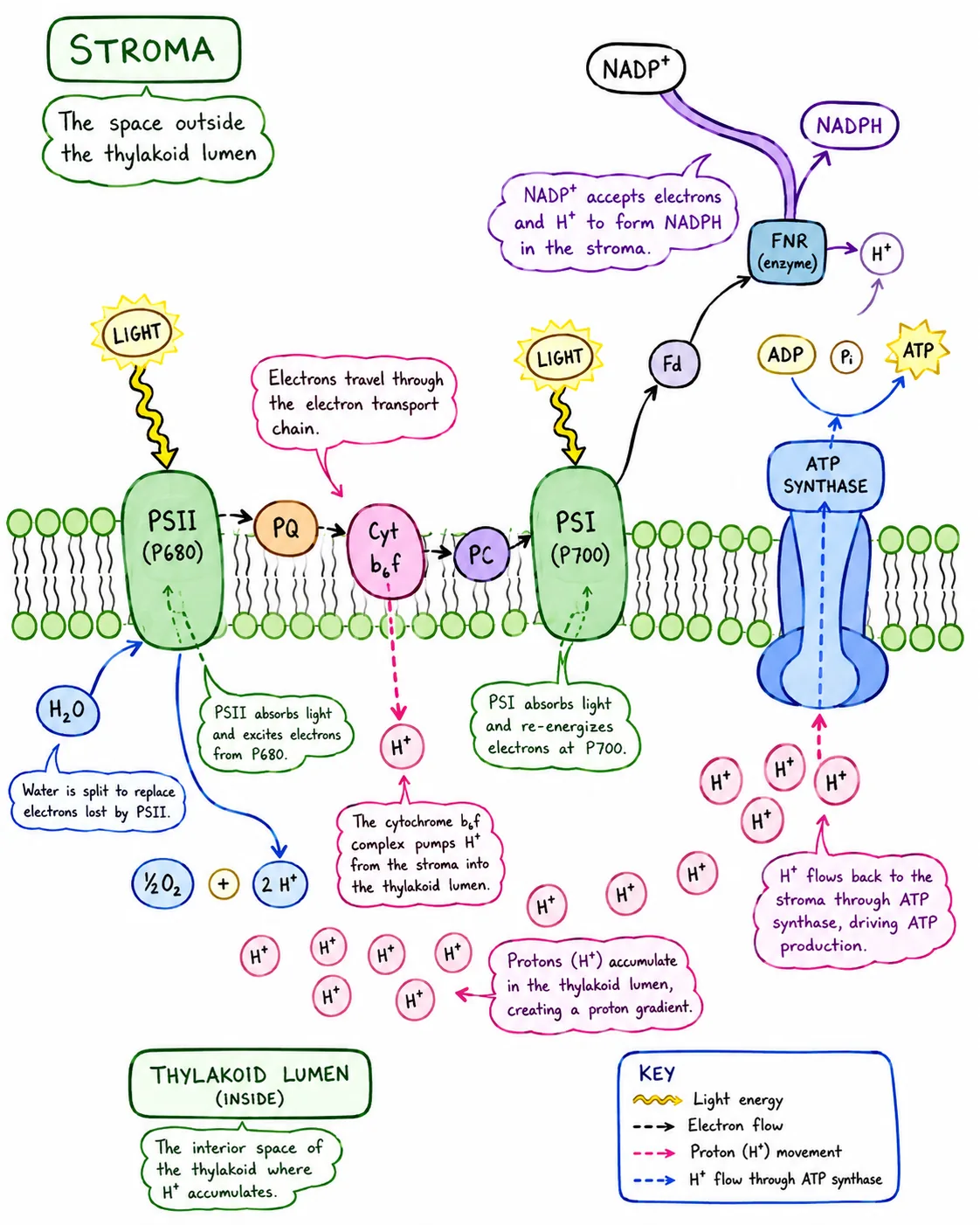
Thylakoid
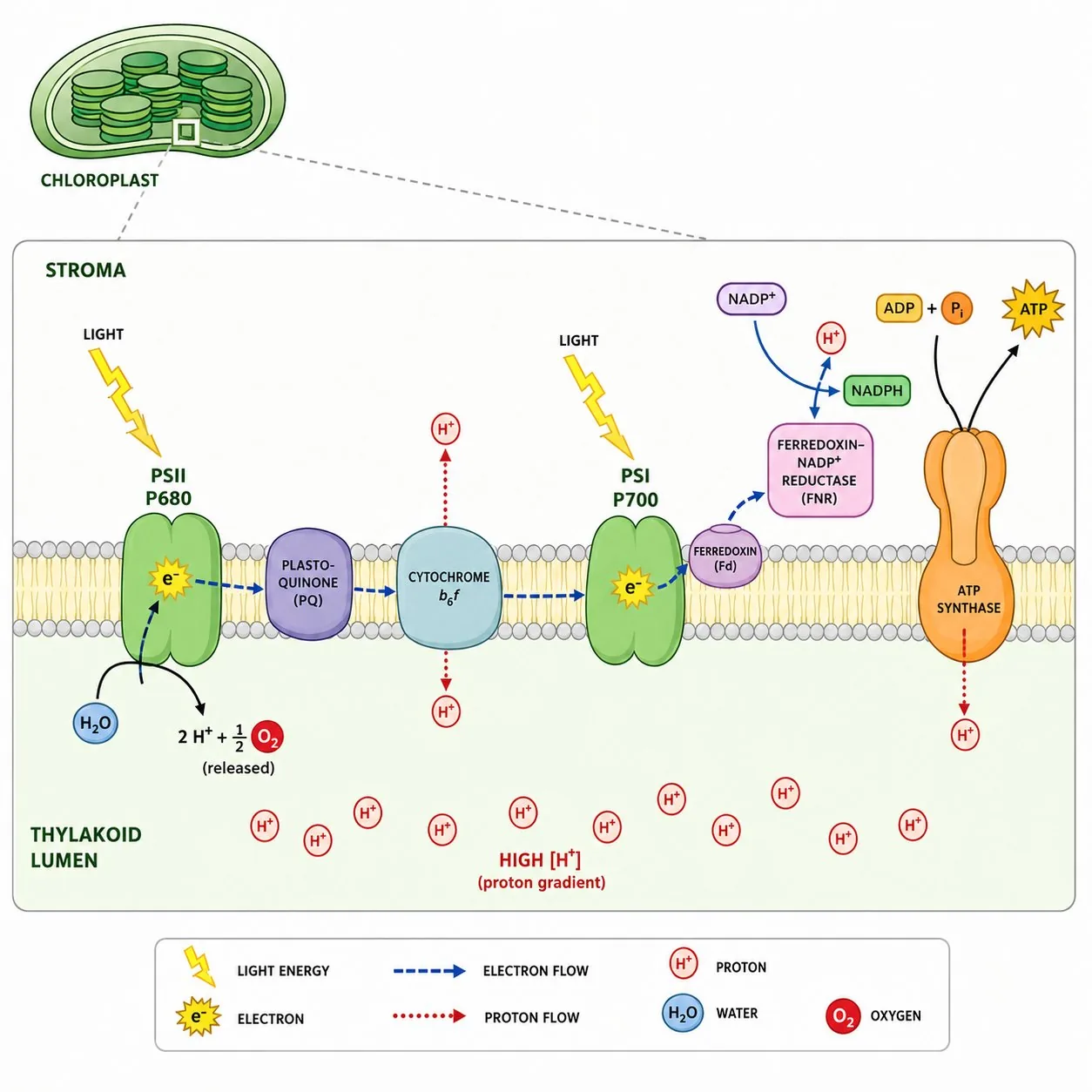
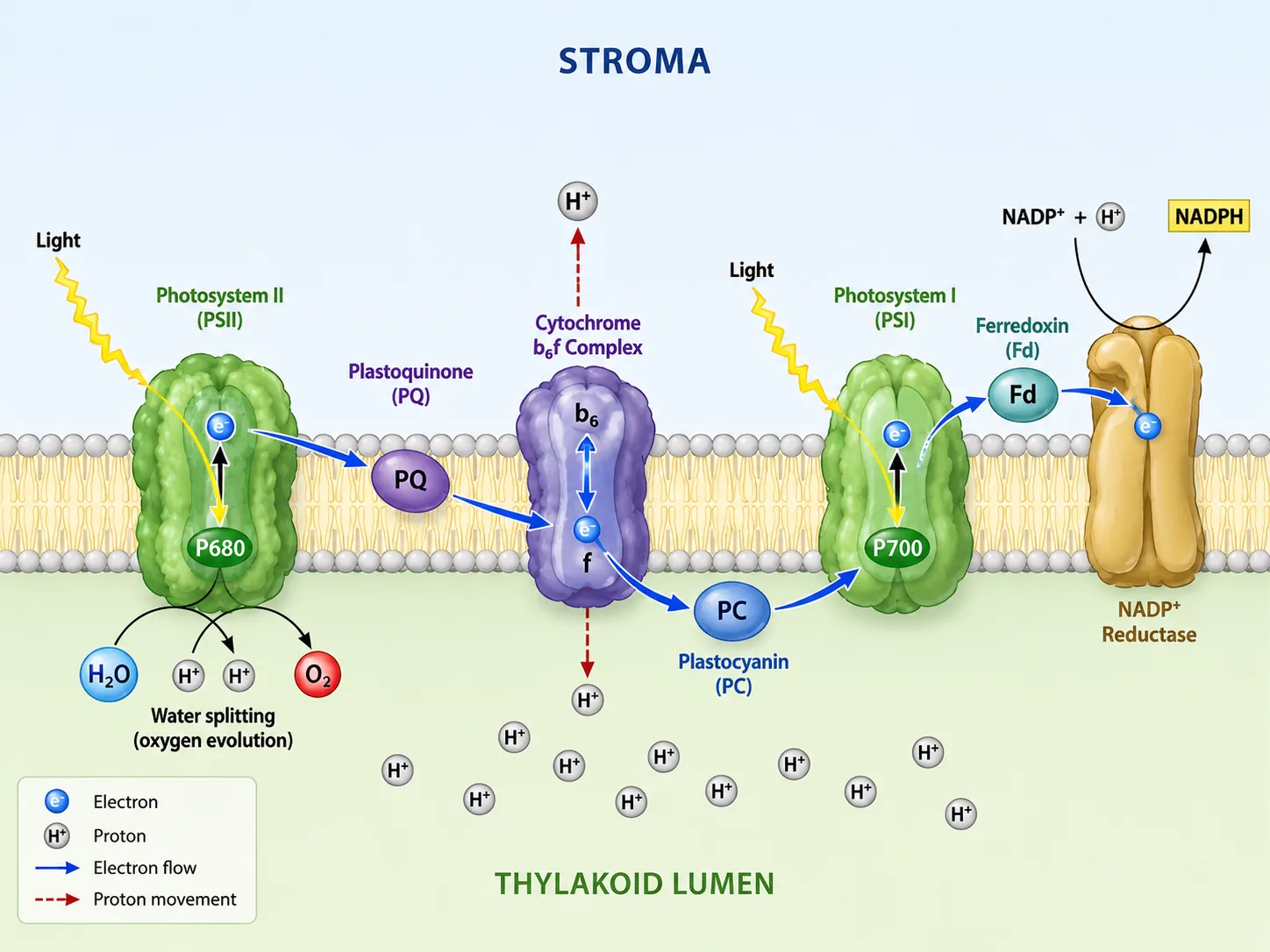
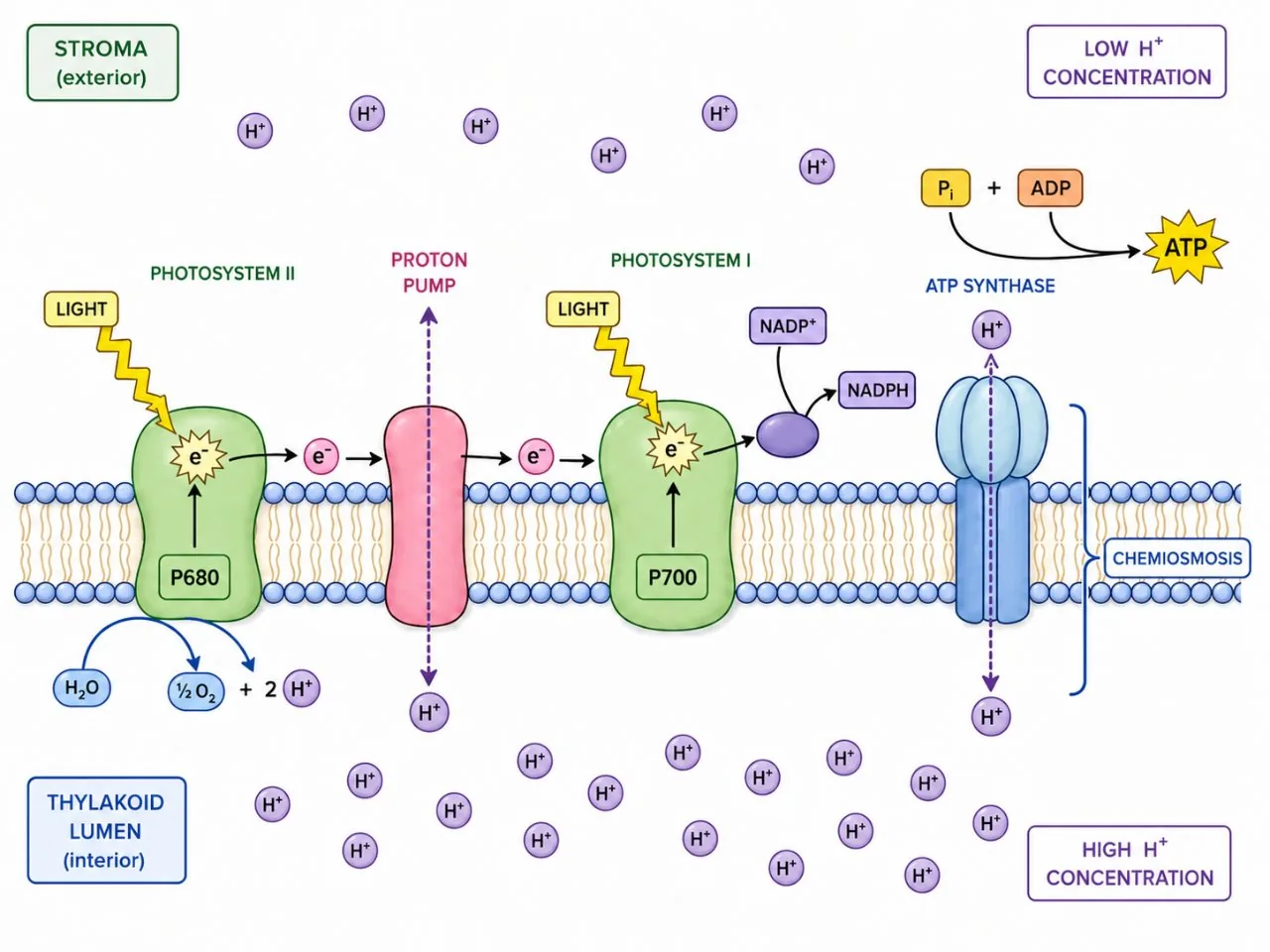
A flattened membrane sac inside the chloroplast where the light-dependent reactions occur.
Stroma
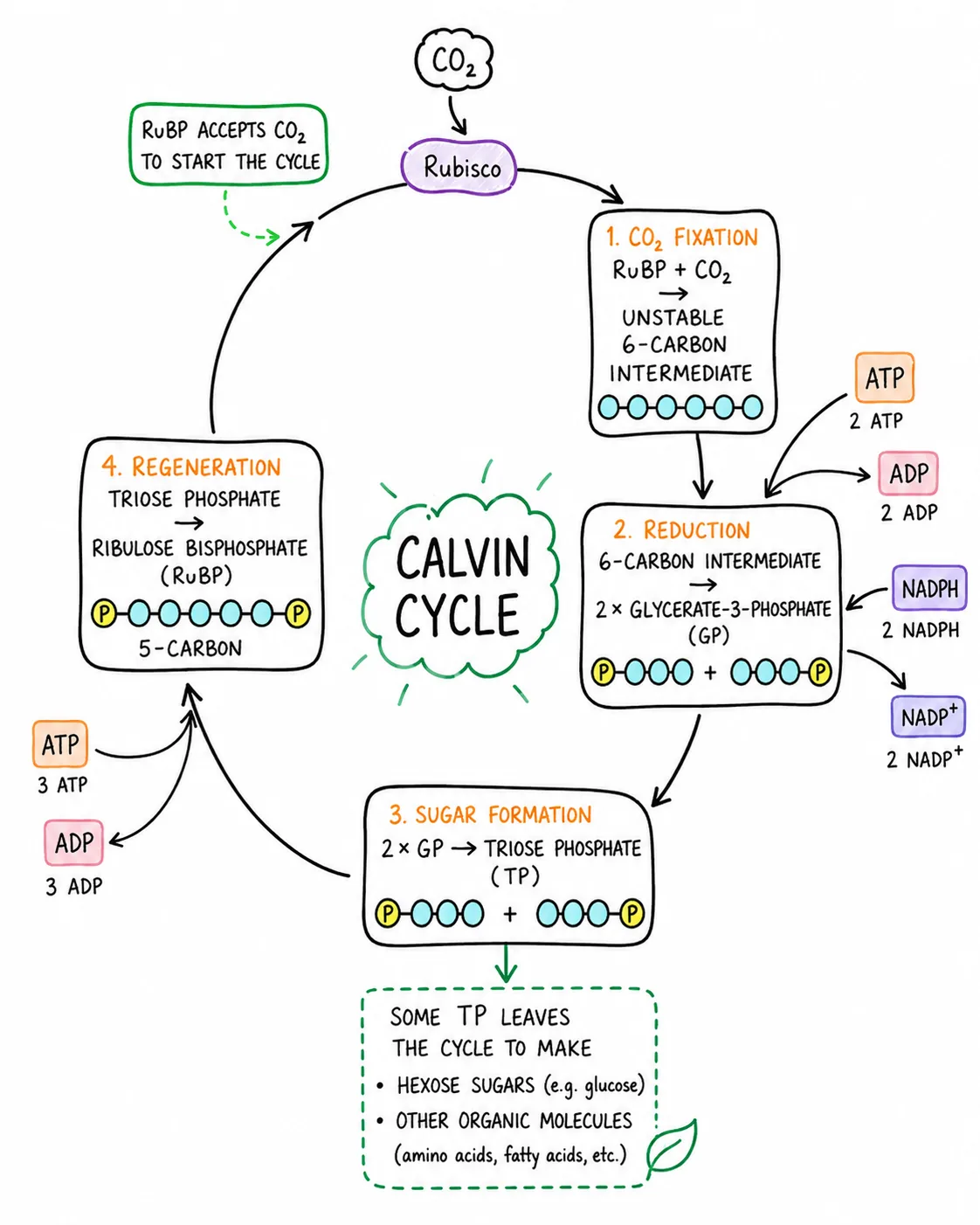
The fluid surrounding the thylakoids in which the Calvin cycle takes place.
Photosystem
A cluster of pigments and proteins in the thylakoid membrane that captures light energy (Photosystems I and II).
Photolysis
The splitting of water by light-driven reactions, releasing O2, H+ and electrons.
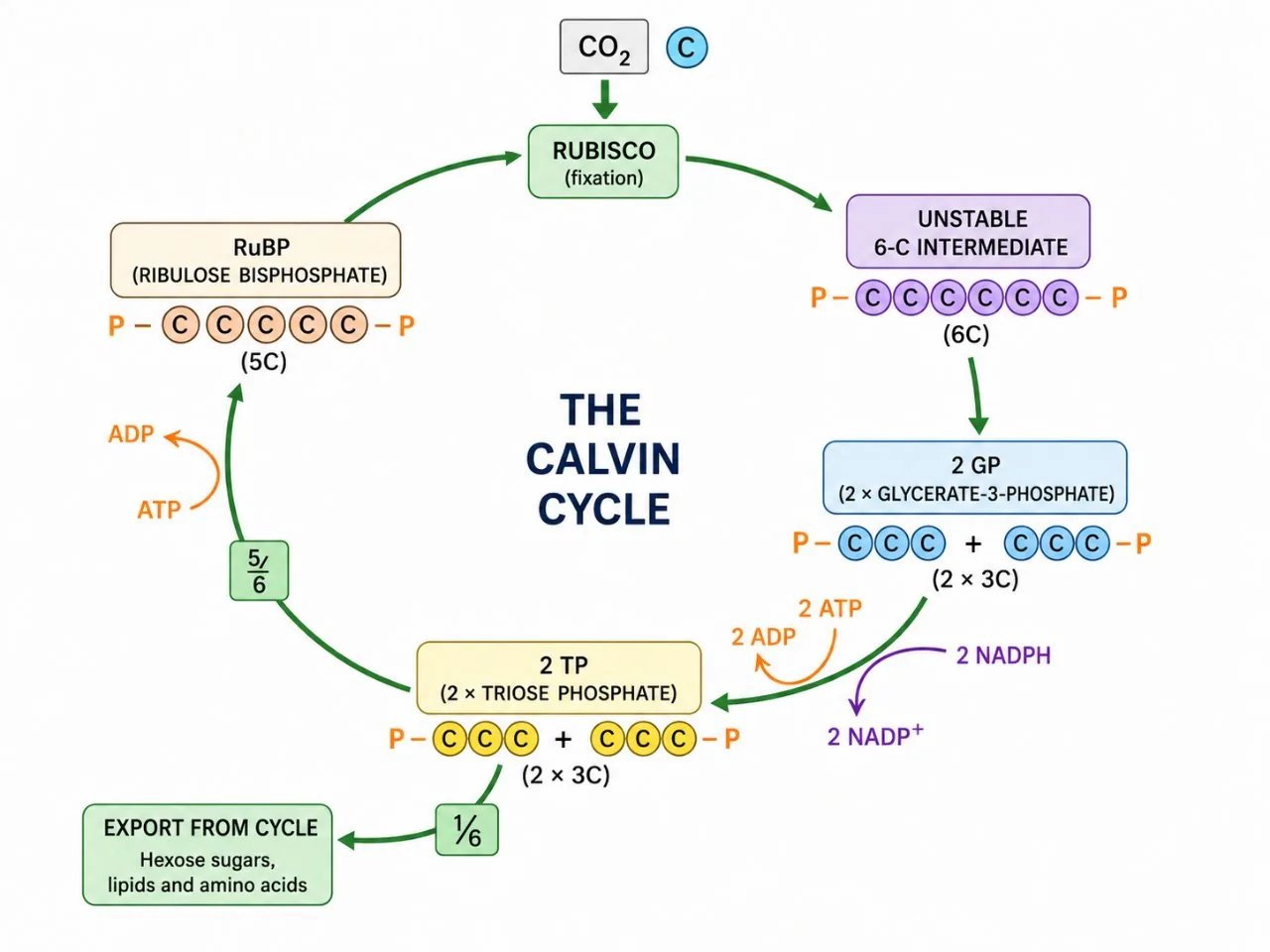
Calvin cycle
The light-independent reactions that use ATP and NADPH to fix CO2 into sugar.
Rubisco
The enzyme that attaches CO2 to RuBP in the first step of the Calvin cycle.
Stomata
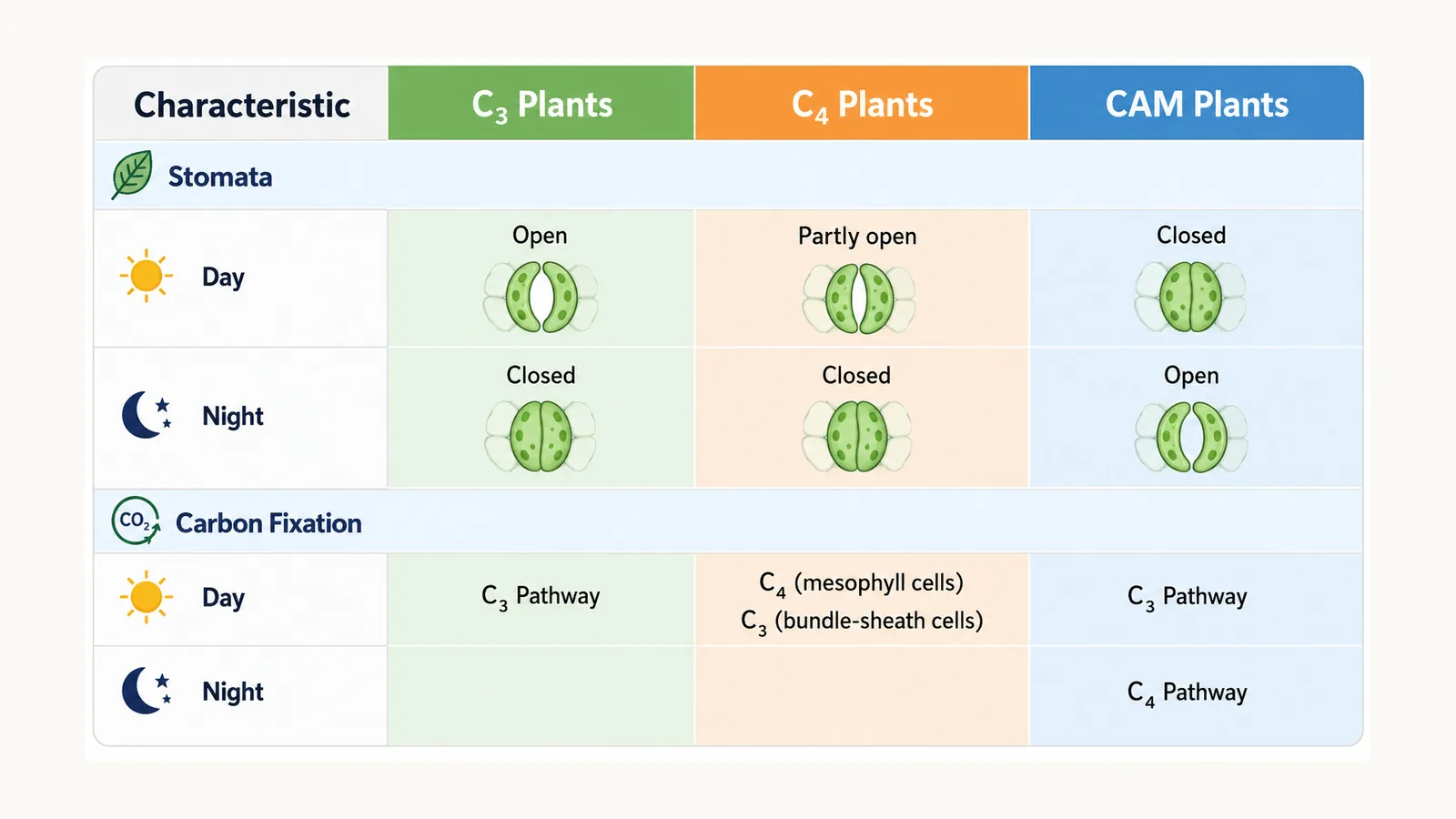
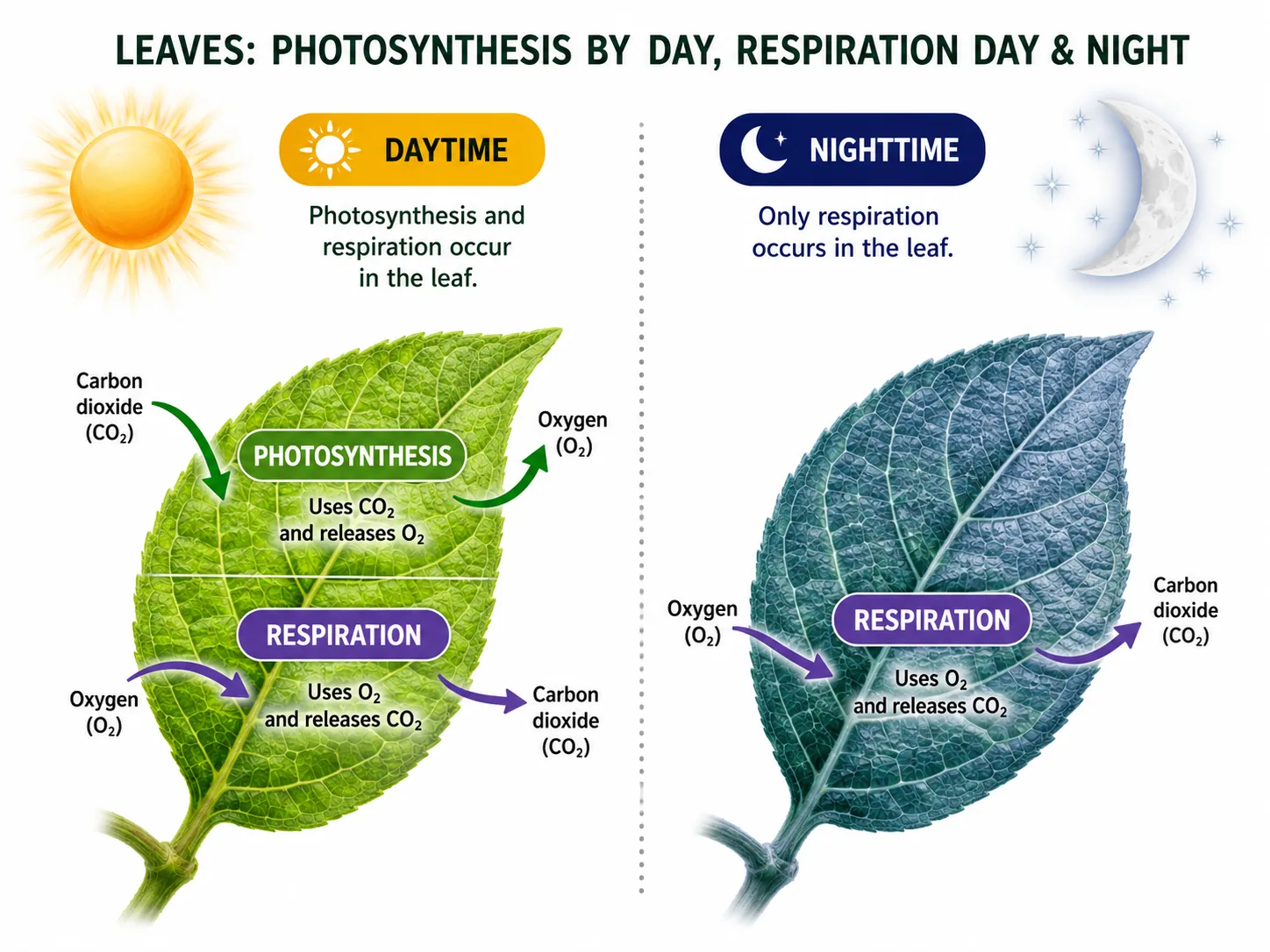
Pores in the leaf epidermis, controlled by guard cells, through which CO2 enters and O2 and water vapour leave.
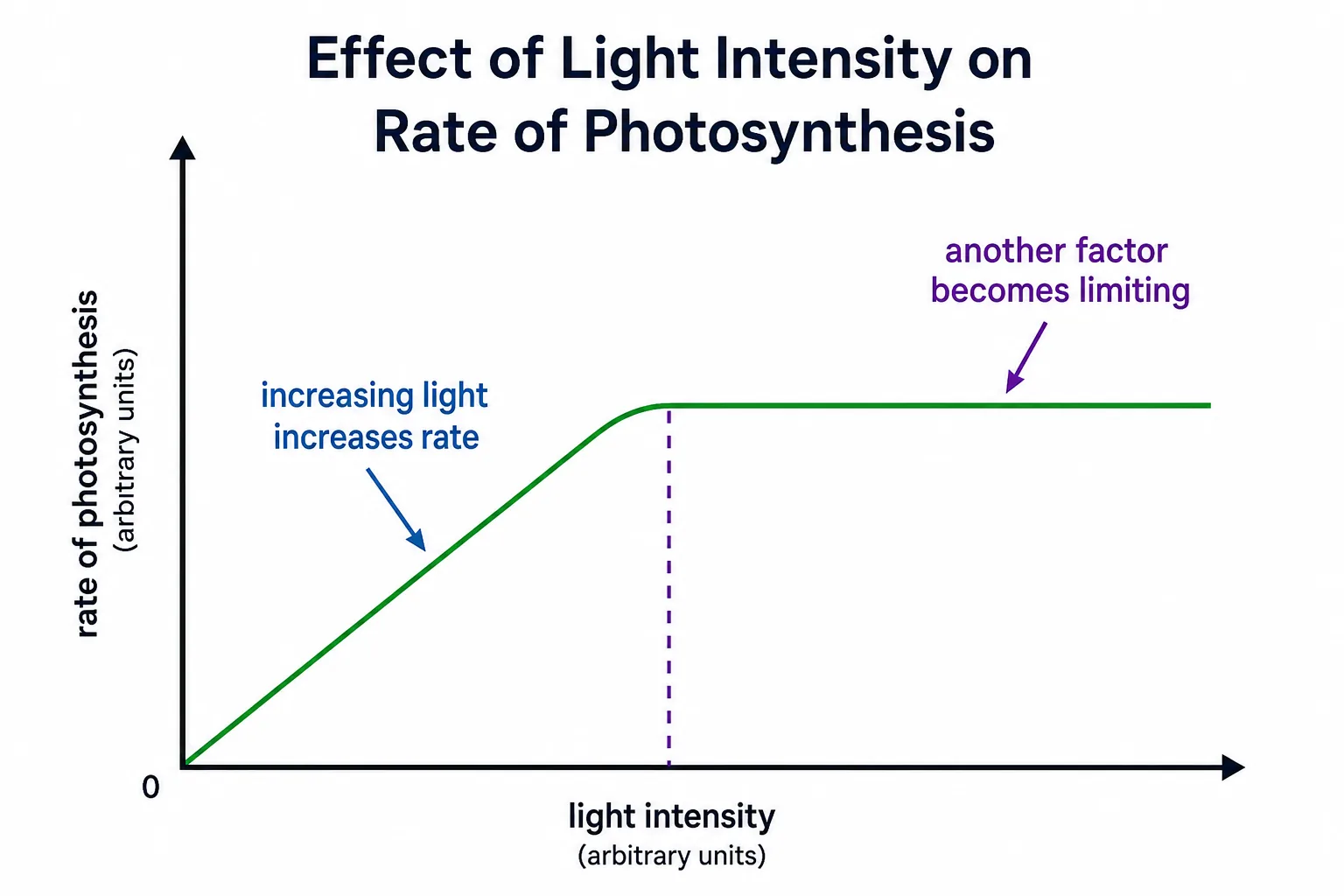
Limiting factor
The factor in shortest supply that restricts the rate of a process such as photosynthesis.
| Feature | Light-dependent reactions | Calvin cycle |
|---|---|---|
| Location | Thylakoid membranes | Stroma |
| Inputs | Light, H2O, ADP, NADP+ | CO2, ATP, NADPH |
| Outputs | O2, ATP, NADPH | G3P (makes glucose), ADP, NADP+ |
| Needs light directly? | Yes | No, but depends on products of the light reactions |
| Key molecules | Chlorophyll, photosystems, ATP synthase | Rubisco, RuBP |
| Type | Adaptation | Where CO2 is fixed first | Examples |
|---|---|---|---|
| C3 | None special; photorespiration in hot, dry weather | Calvin cycle directly (rubisco) | Wheat, rice, soybeans |
| C4 | Spatial separation; PEP carboxylase concentrates CO2 in bundle-sheath cells | Mesophyll cells into 4-C compound | Corn, sugarcane |
| CAM | Temporal separation; stomata open at night | At night into organic acids | Cacti, pineapple, succulents |