Curriculum
EST II Biology
1. Molecules & Cells
0/15
-
McGraw-Hill SAT Biology — Chapter 5: Understanding Molecular and Cellular Biology
 Preview
-
1.1 Chemistry of Life
Preview
-
1.1 Chemistry of Life (SAT Biology) - Check yourself
 Preview
-
1.2 Cell Structure & Organelles
Preview
-
1.2 Cell Structure & Organelles (SAT Biology) - Check yourself
Preview
-
1.3 Membrane Transport
Preview
-
1.3 Membrane Transport (SAT Biology) - Check yourself
Preview
-
1.4 Enzymes & Metabolism
Preview
-
1.4 Enzymes & Metabolism (SAT Biology) - Check yourself
Preview
-
1.5 Cellular Respiration
Preview
-
1.5 Cellular Respiration (SAT Biology) - Check yourself
Preview
-
1.6 Photosynthesis
Preview
-
1.6 Photosynthesis (SAT Biology) - Check yourself
Preview
-
1.7 Cell Division: Mitosis & Meiosis
Preview
-
1.7 Cell Division: Mitosis & Meiosis (SAT Biology) - Check yourself
Preview
2. Genetics & Biotechnology
0/7
3. Evolution & Diversity
0/7
4. Organisms: Structure & Function
0/15
5. Ecology
0/5
6. Laboratory Skills
0/2
SAT Biology — Full Book Tests and Strategy
0/8
1.5 Cellular Respiration
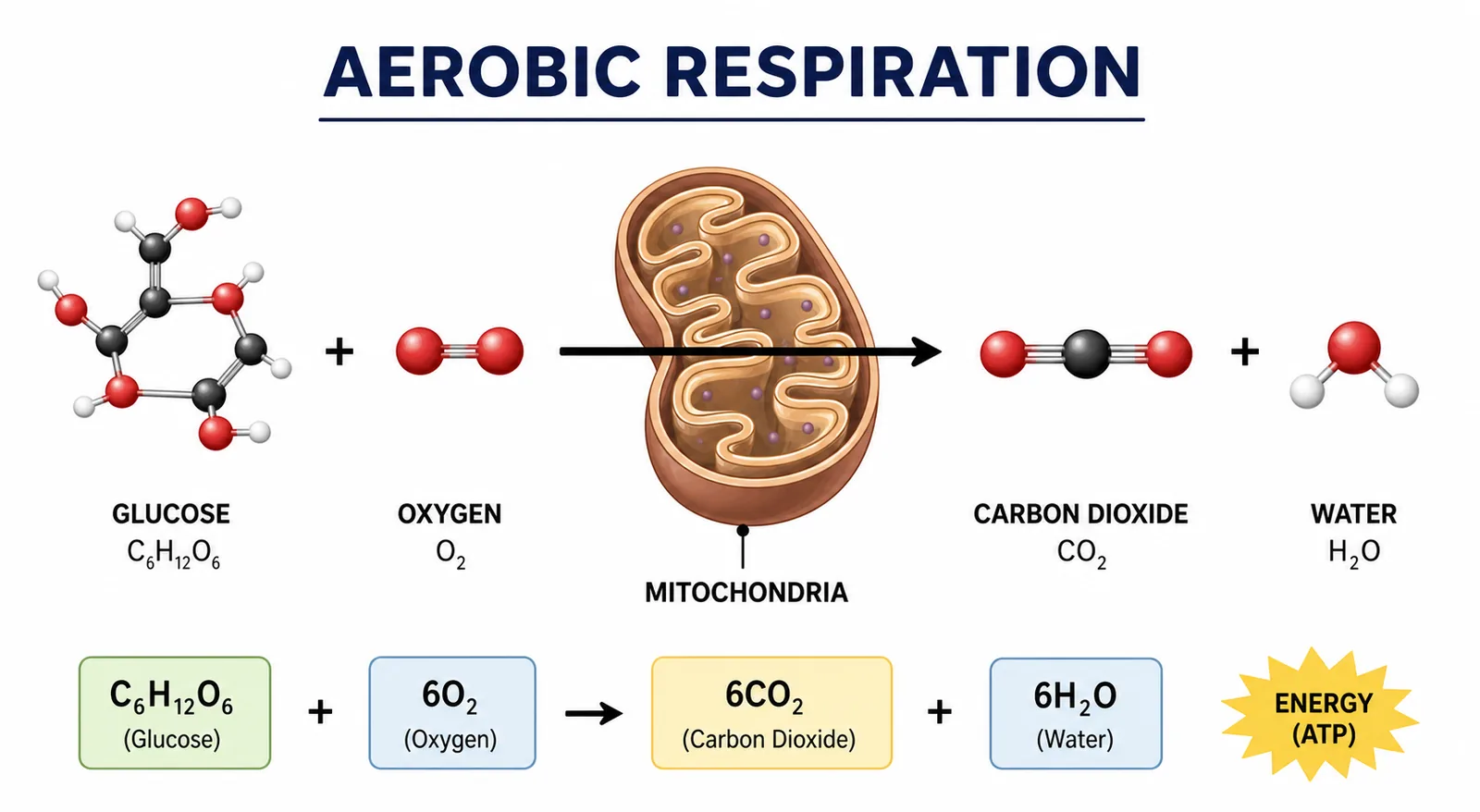
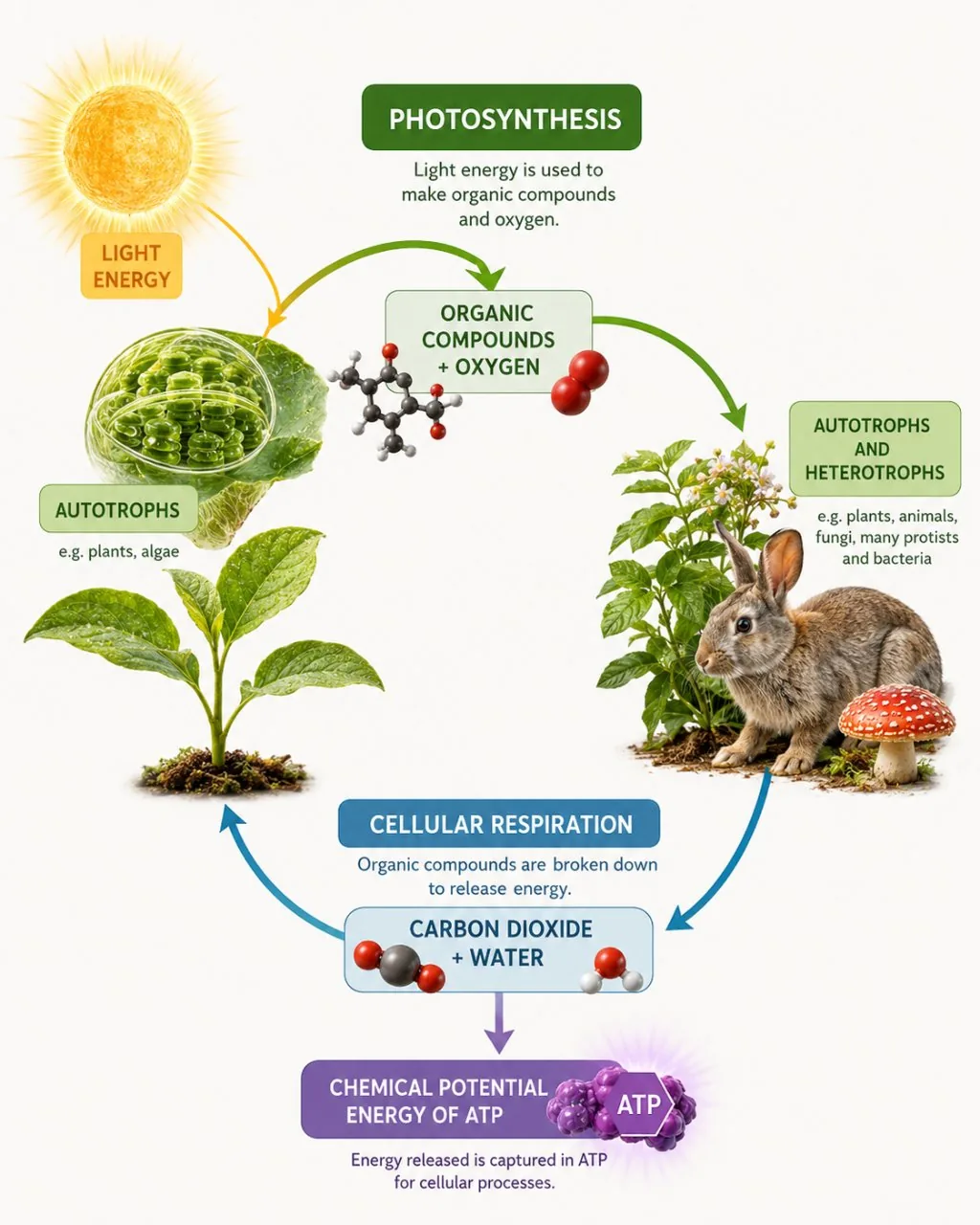
Write the overall equation for aerobic respiration.





 ⤢ Enlarge


 ⤢ Enlarge
Cellular respiration
The process that breaks down glucose and other fuels to release energy stored as ATP.
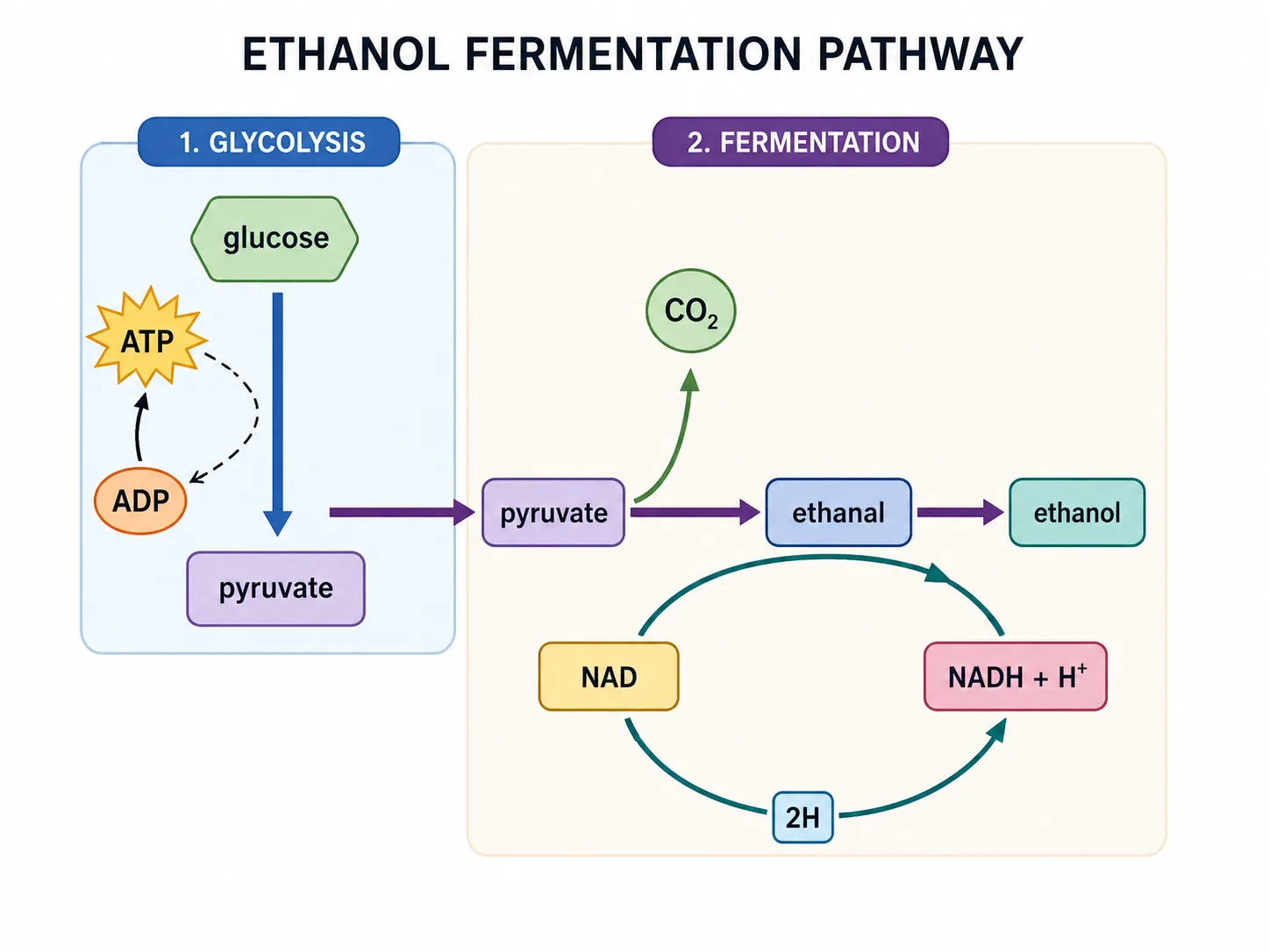
Glycolysis
The cytoplasmic pathway that splits one glucose into two pyruvate, making a net 2 ATP and 2 NADH.
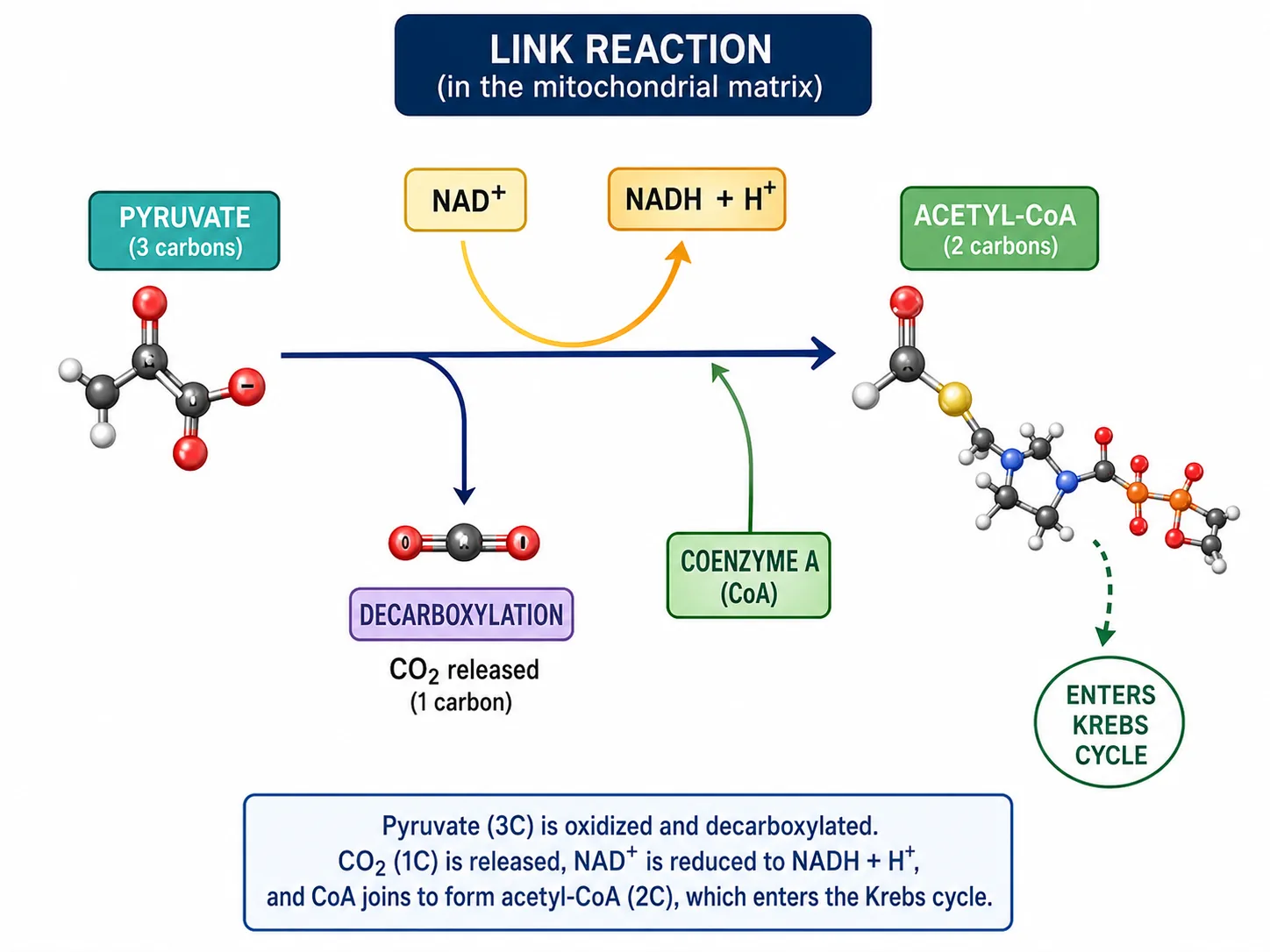
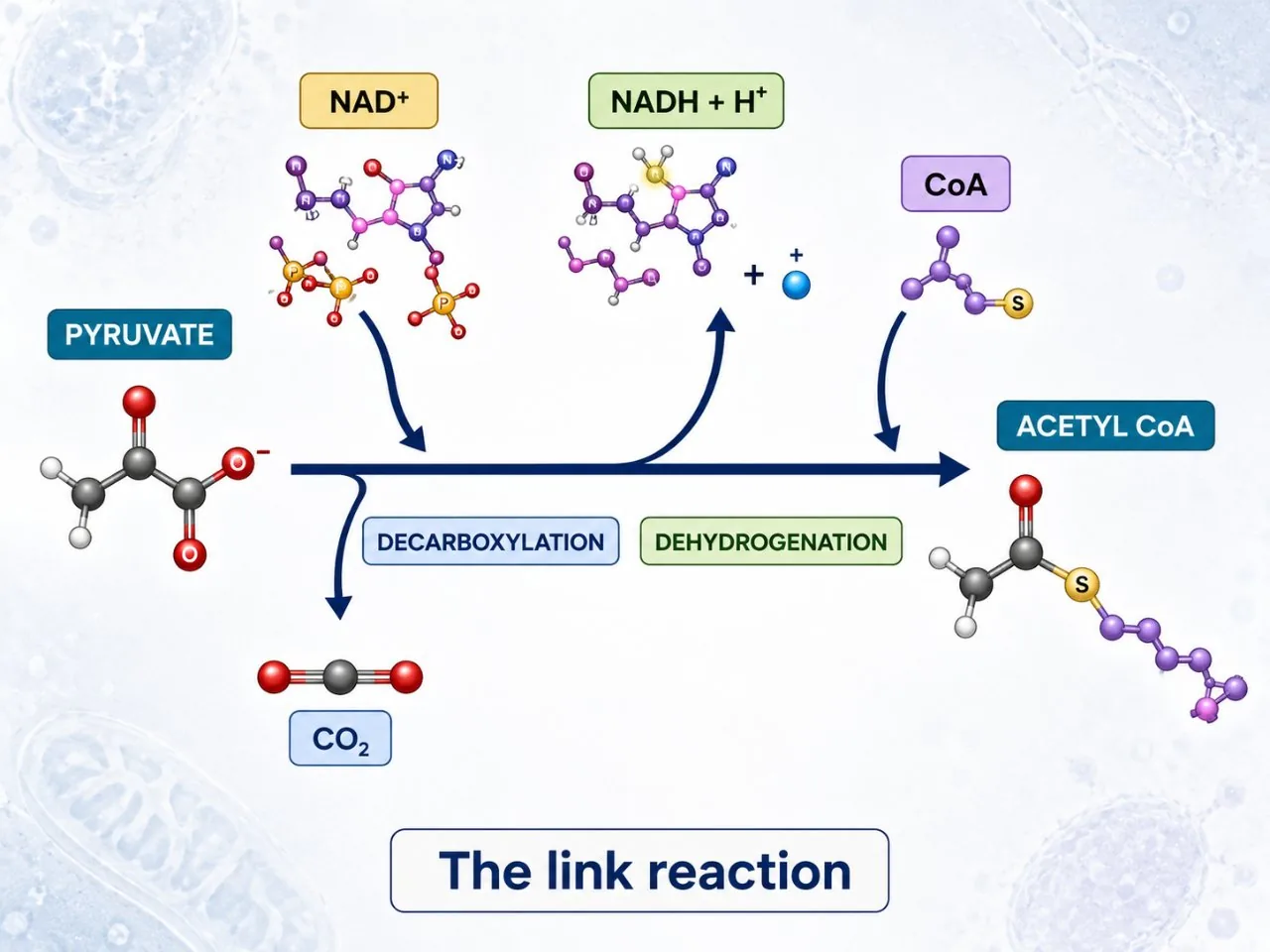
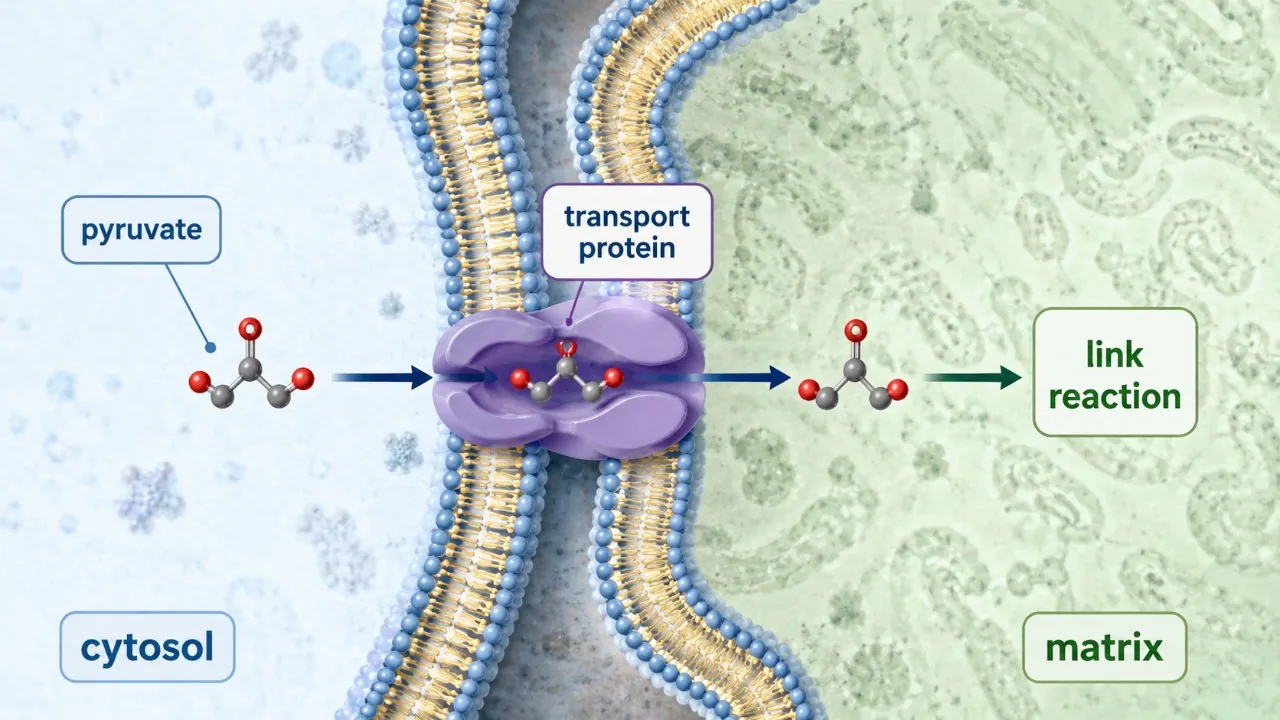
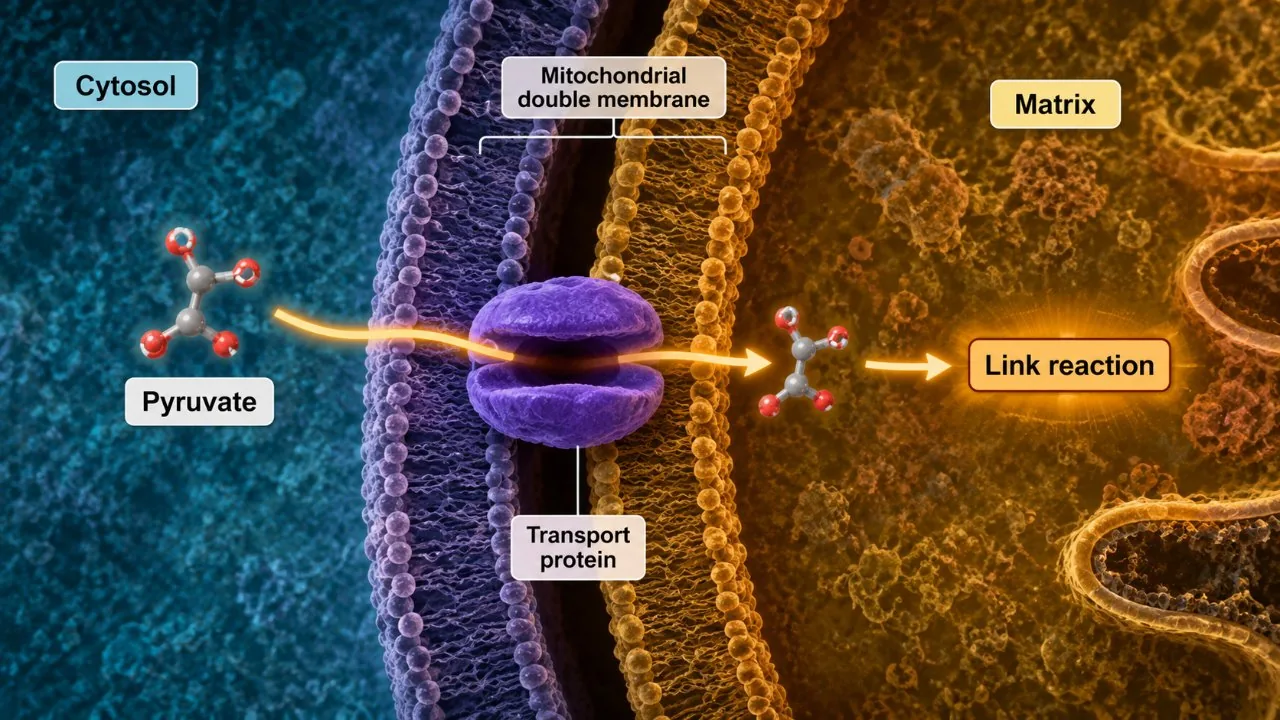
Pyruvate oxidation
The conversion of pyruvate to acetyl-CoA in the mitochondrial matrix, releasing CO2 and making NADH.
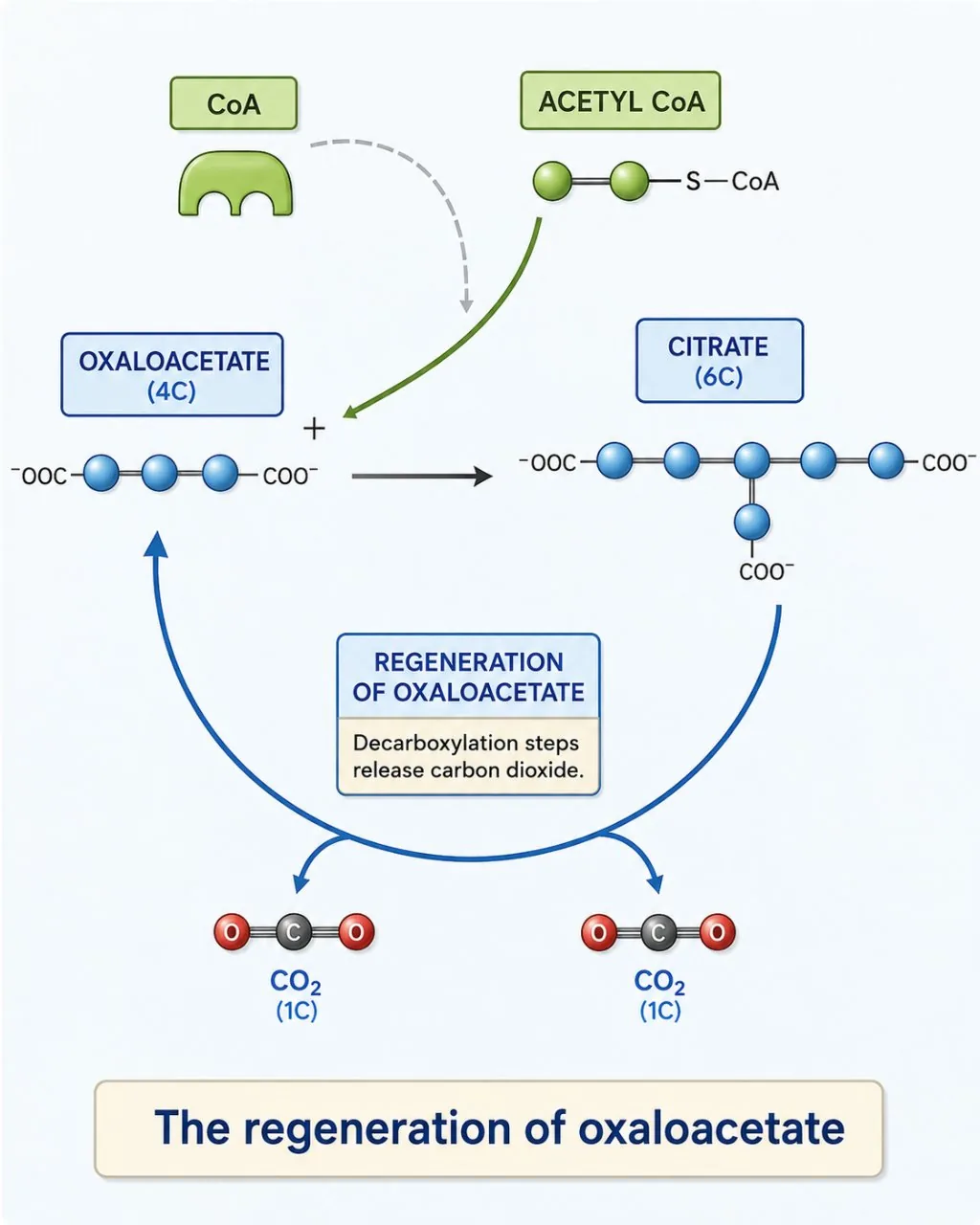
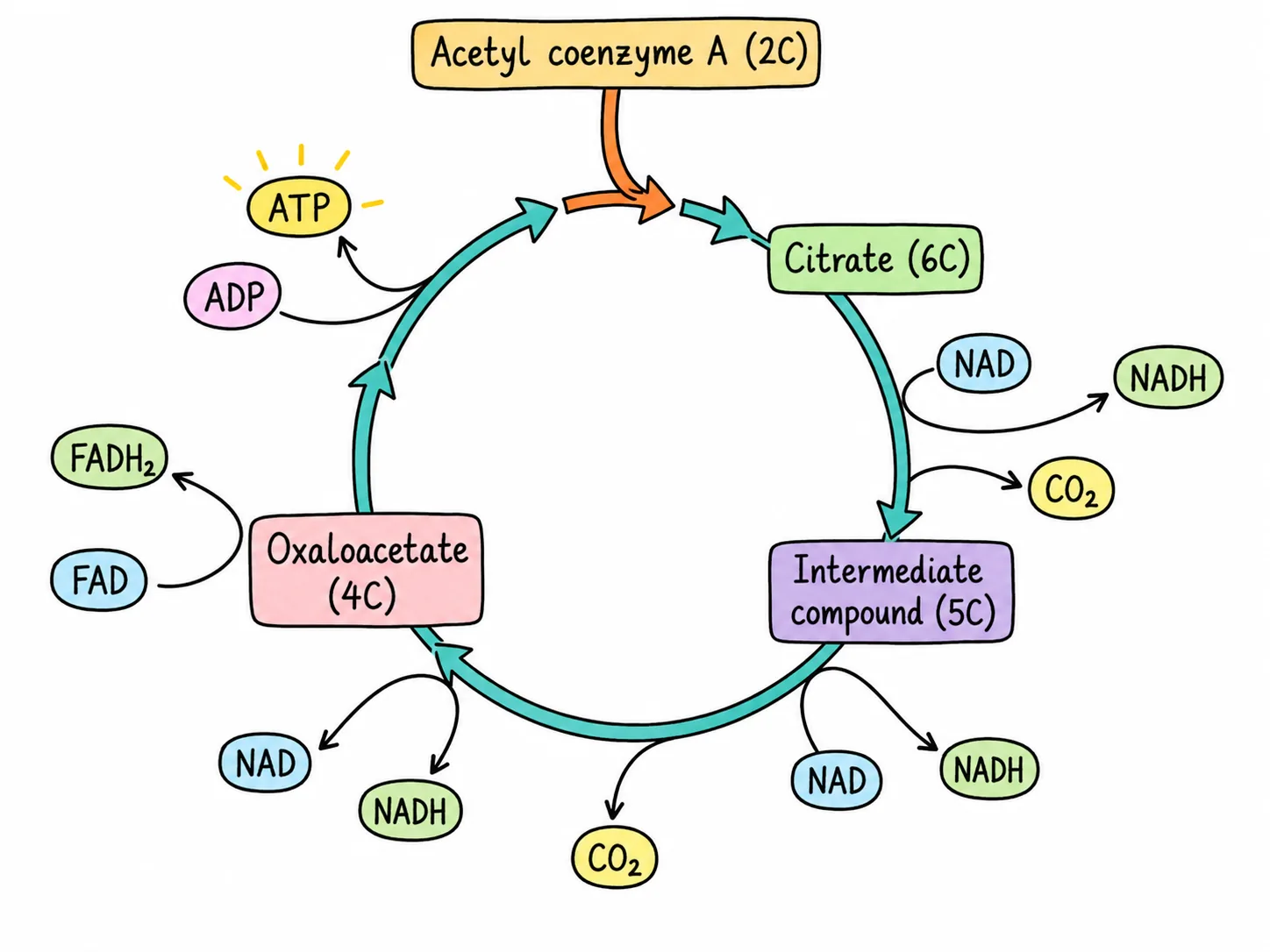
Krebs cycle
A cycle of reactions in the mitochondrial matrix that oxidizes acetyl-CoA to CO2, producing NADH, FADH2 and ATP.
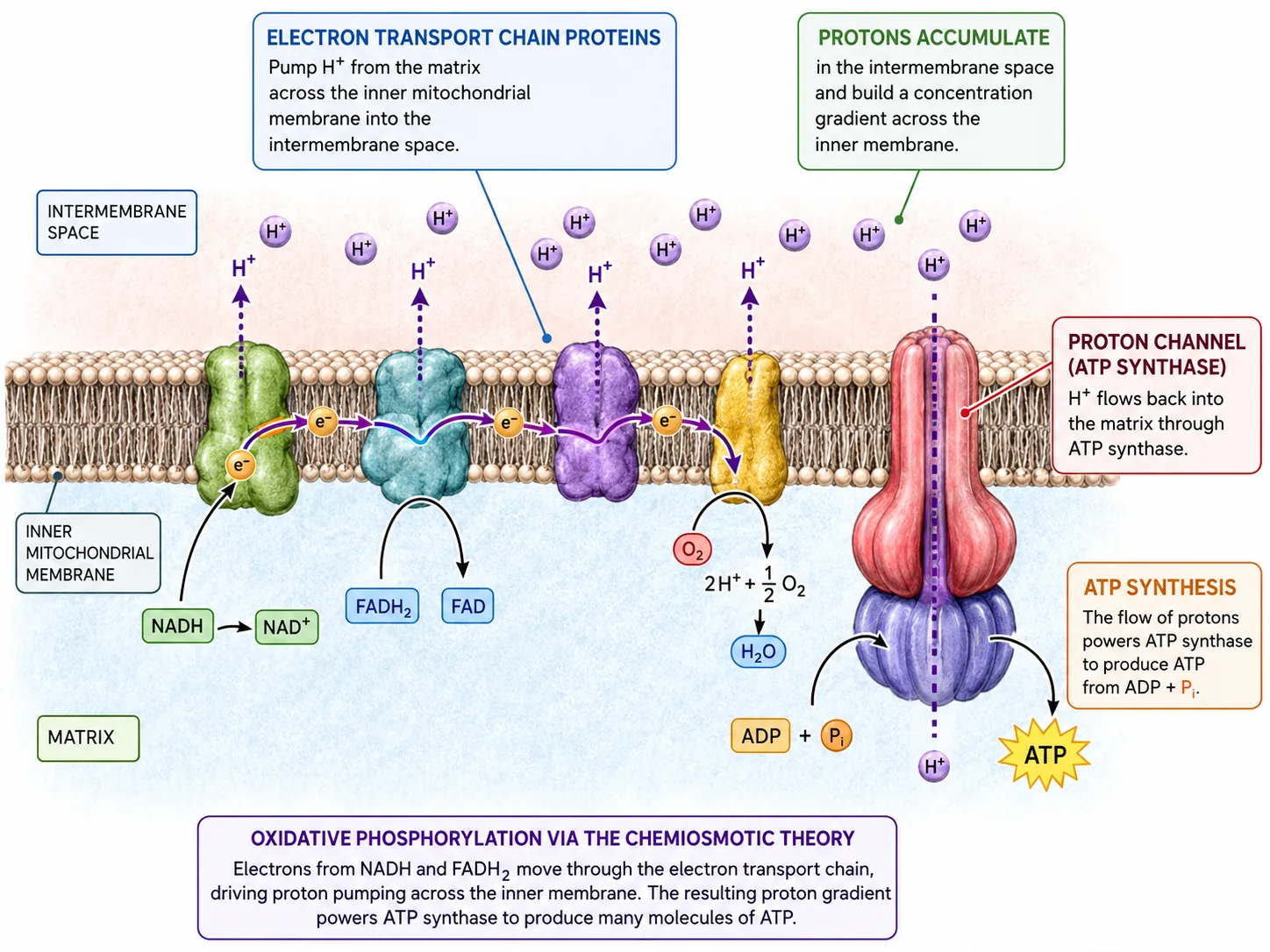
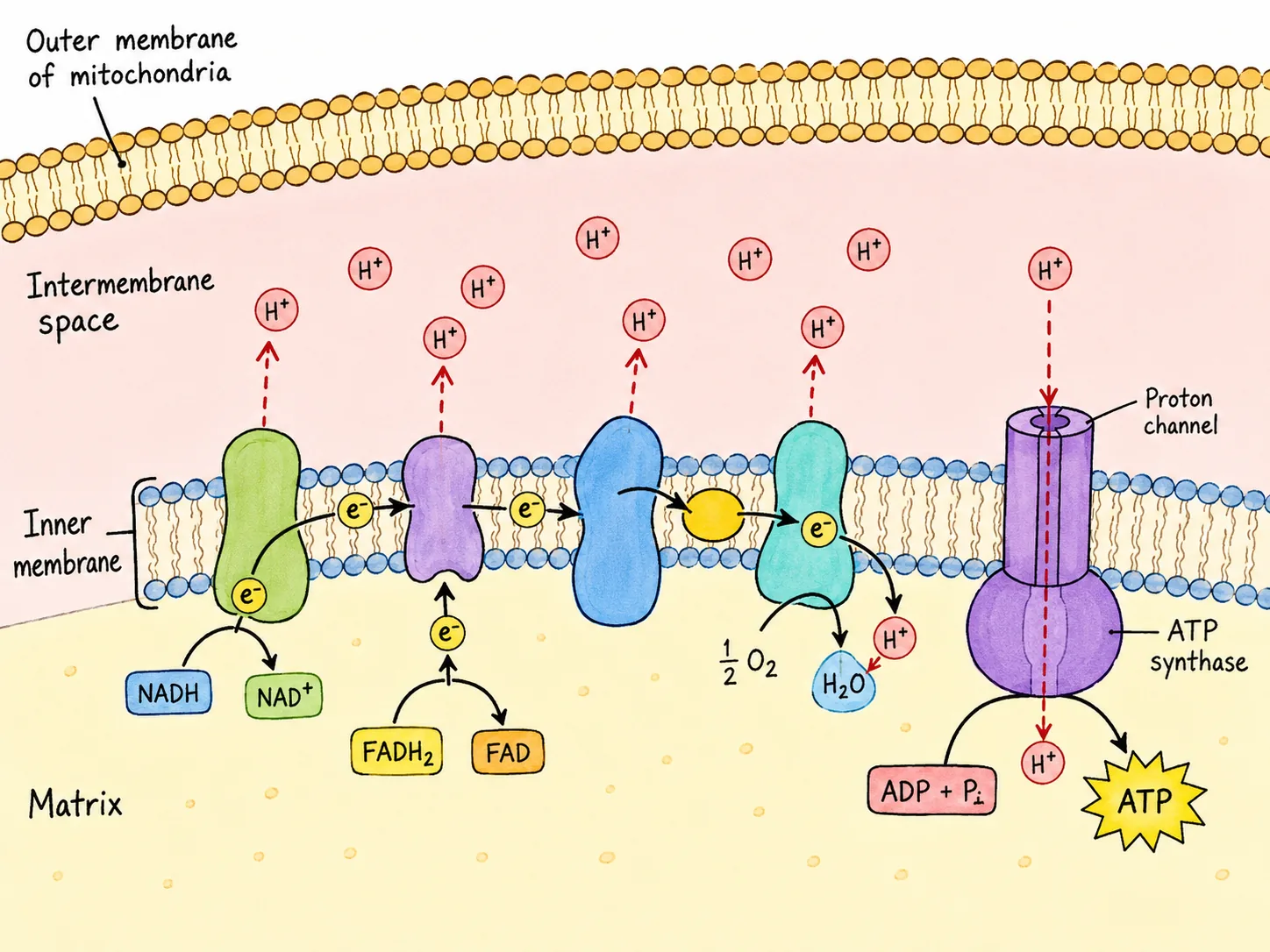
Electron transport chain
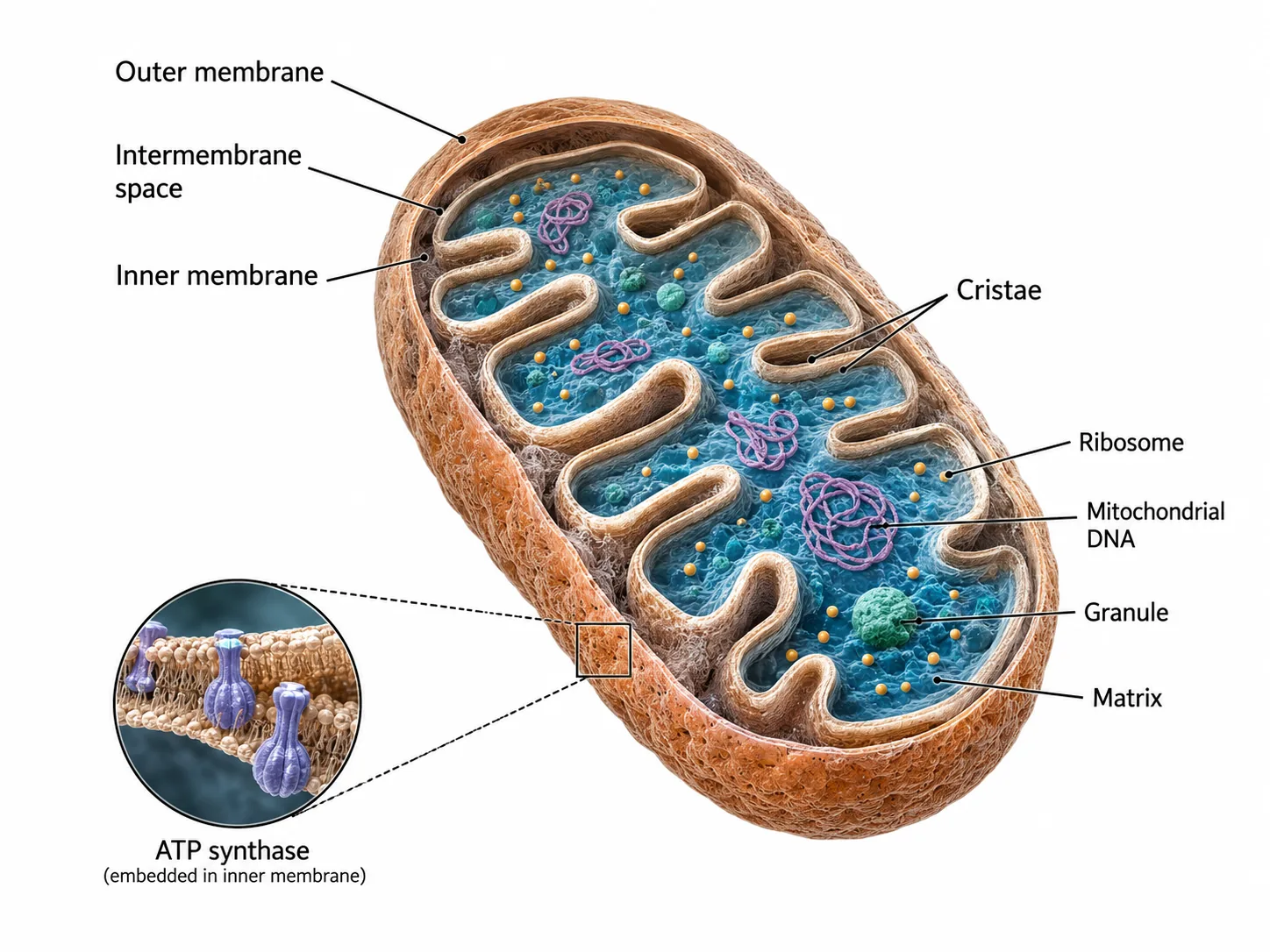
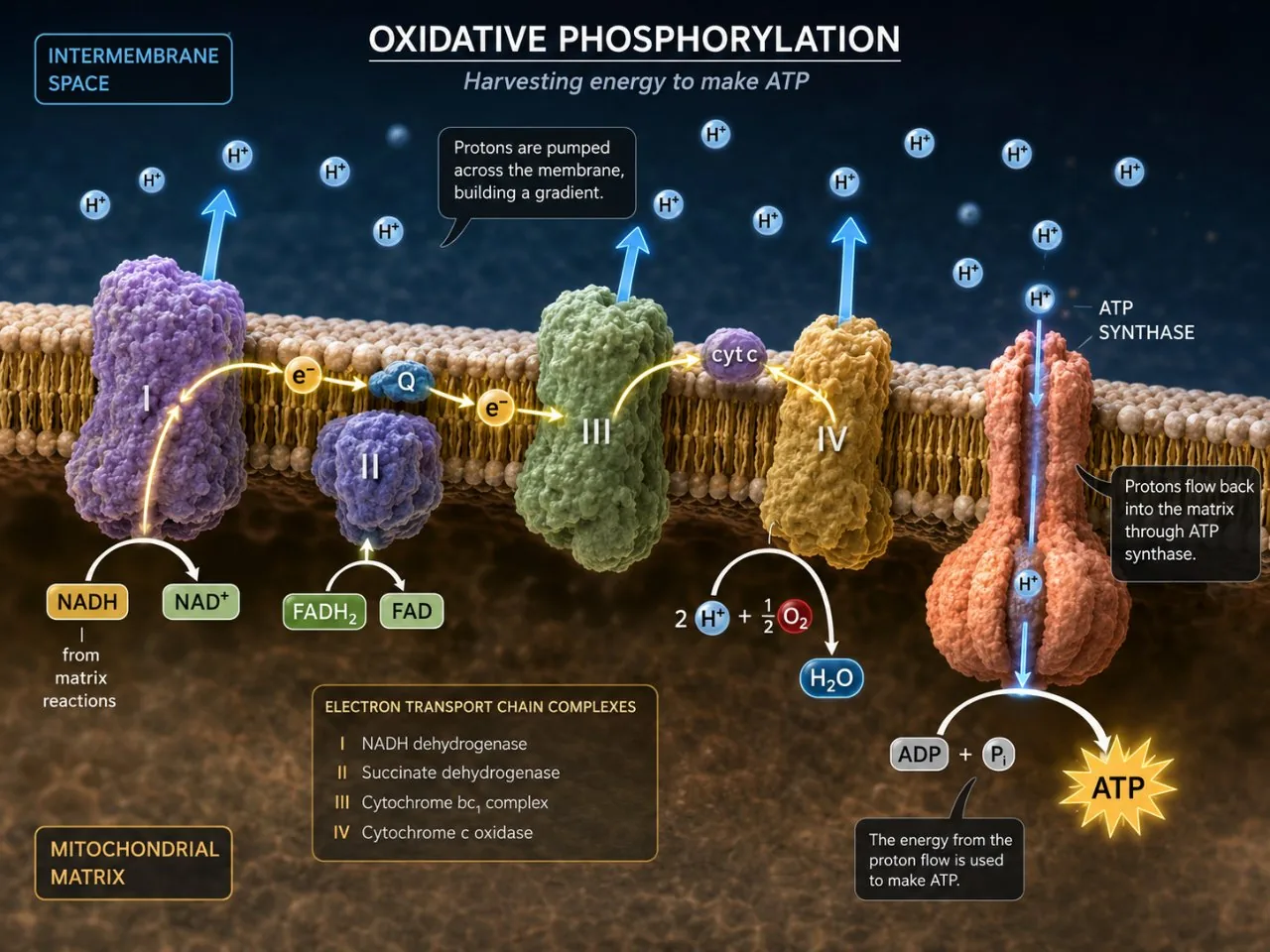
A series of proteins in the inner mitochondrial membrane that pass electrons to oxygen while pumping H+ ions.
Chemiosmosis
ATP production powered by H+ ions flowing down their gradient through ATP synthase.
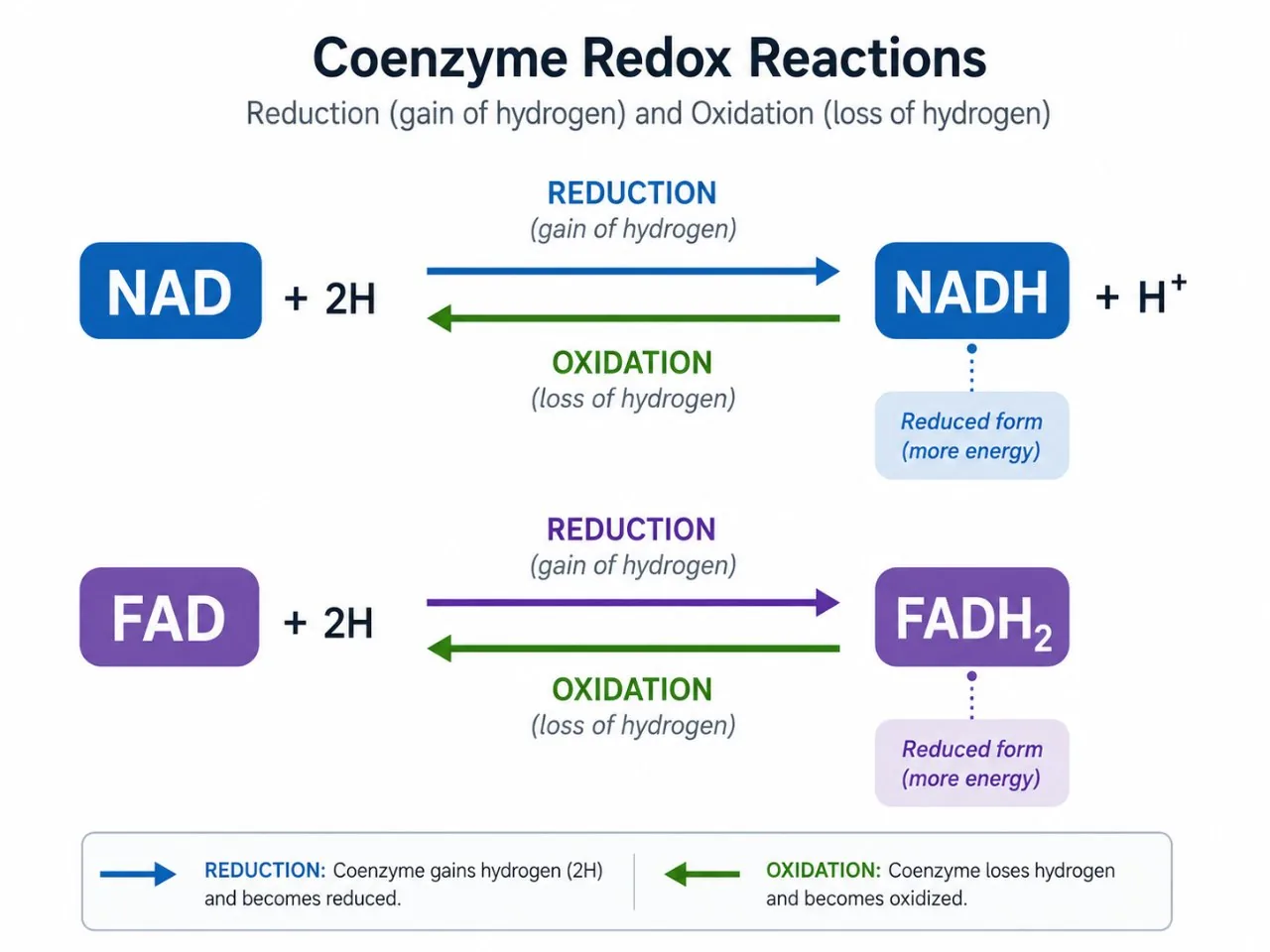
NAD+
An electron-carrying coenzyme that is reduced to NADH when it accepts electrons and hydrogen.
Oxidative phosphorylation
ATP synthesis driven by the electron transport chain and chemiosmosis.
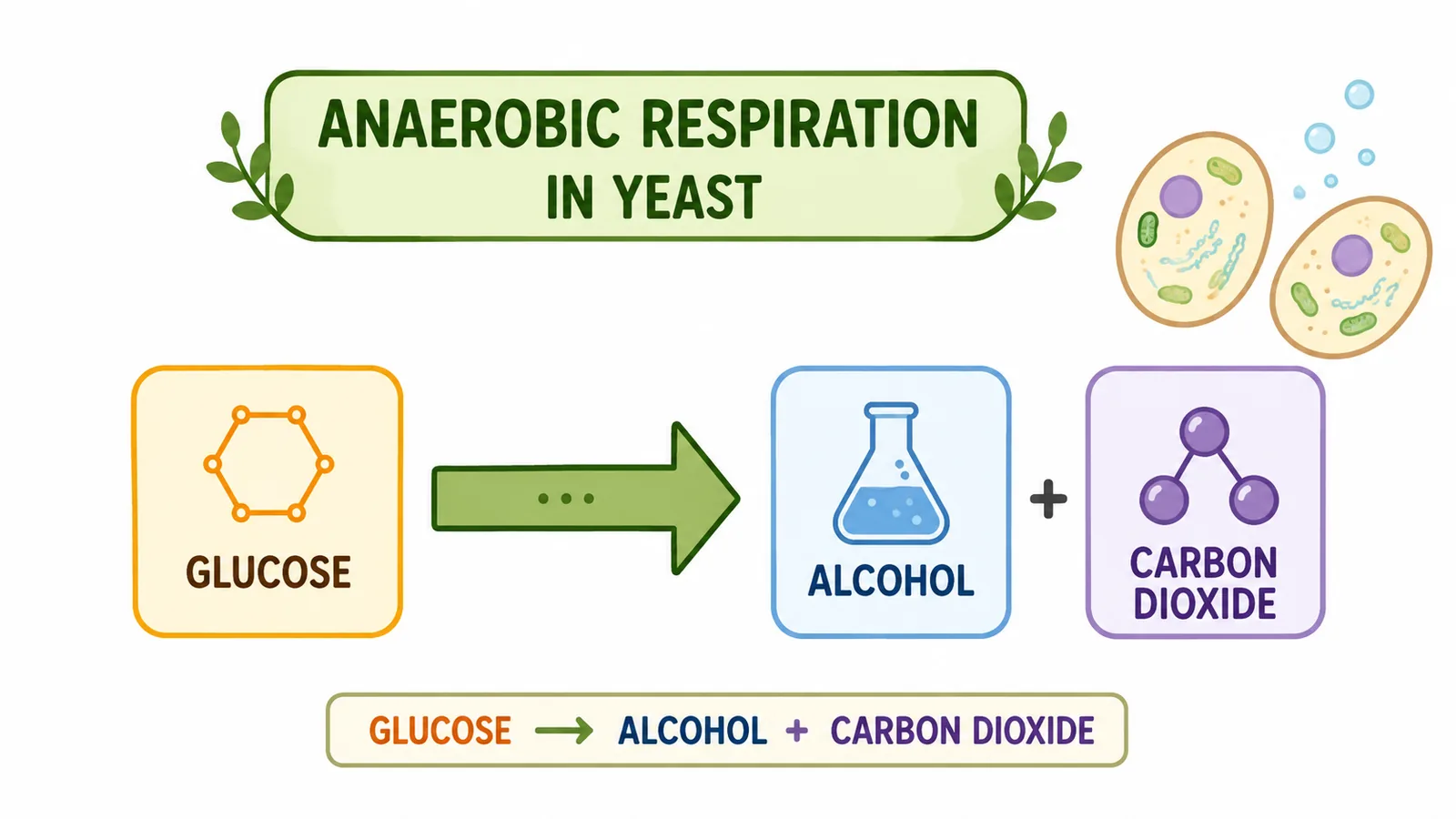
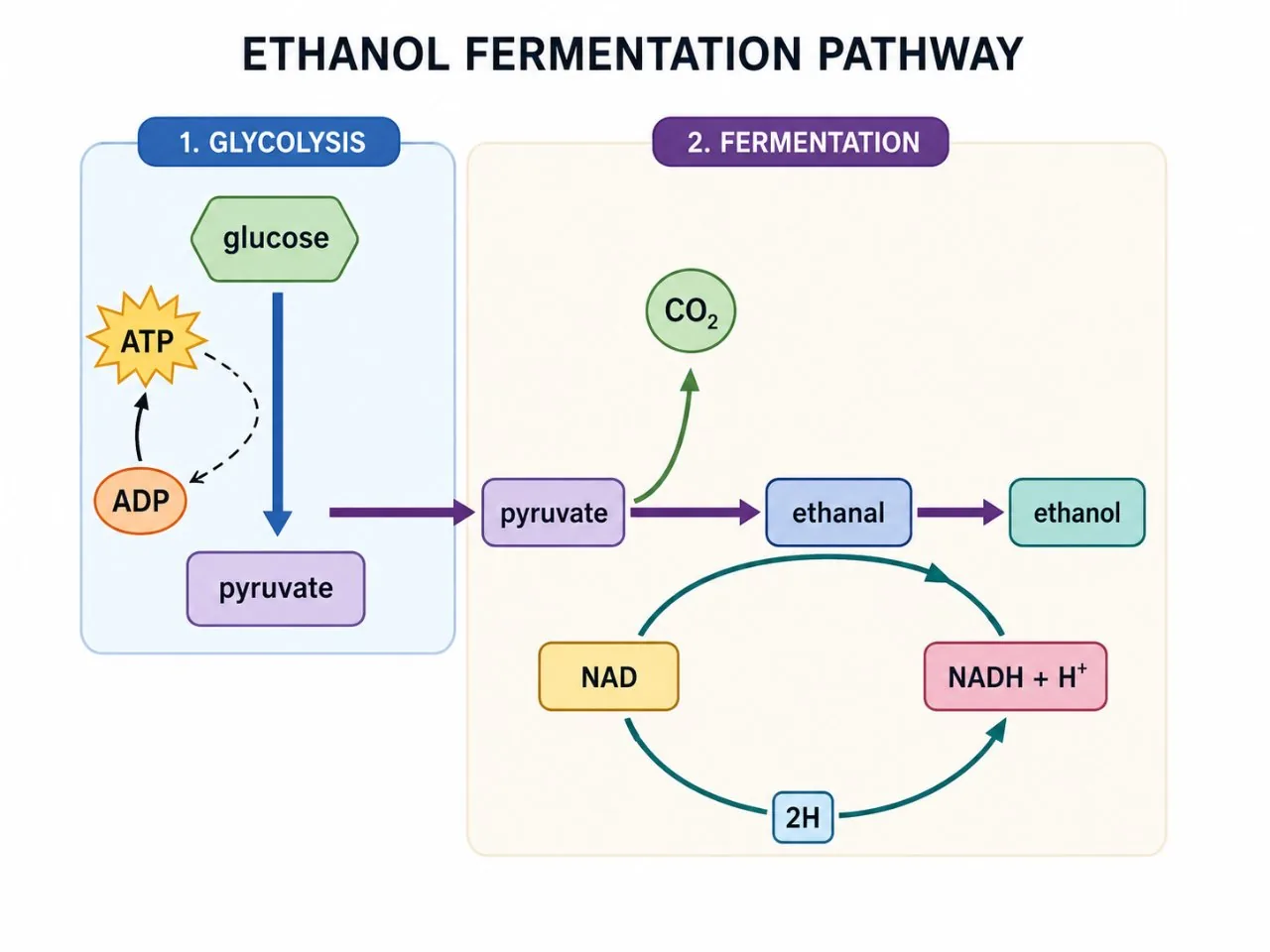
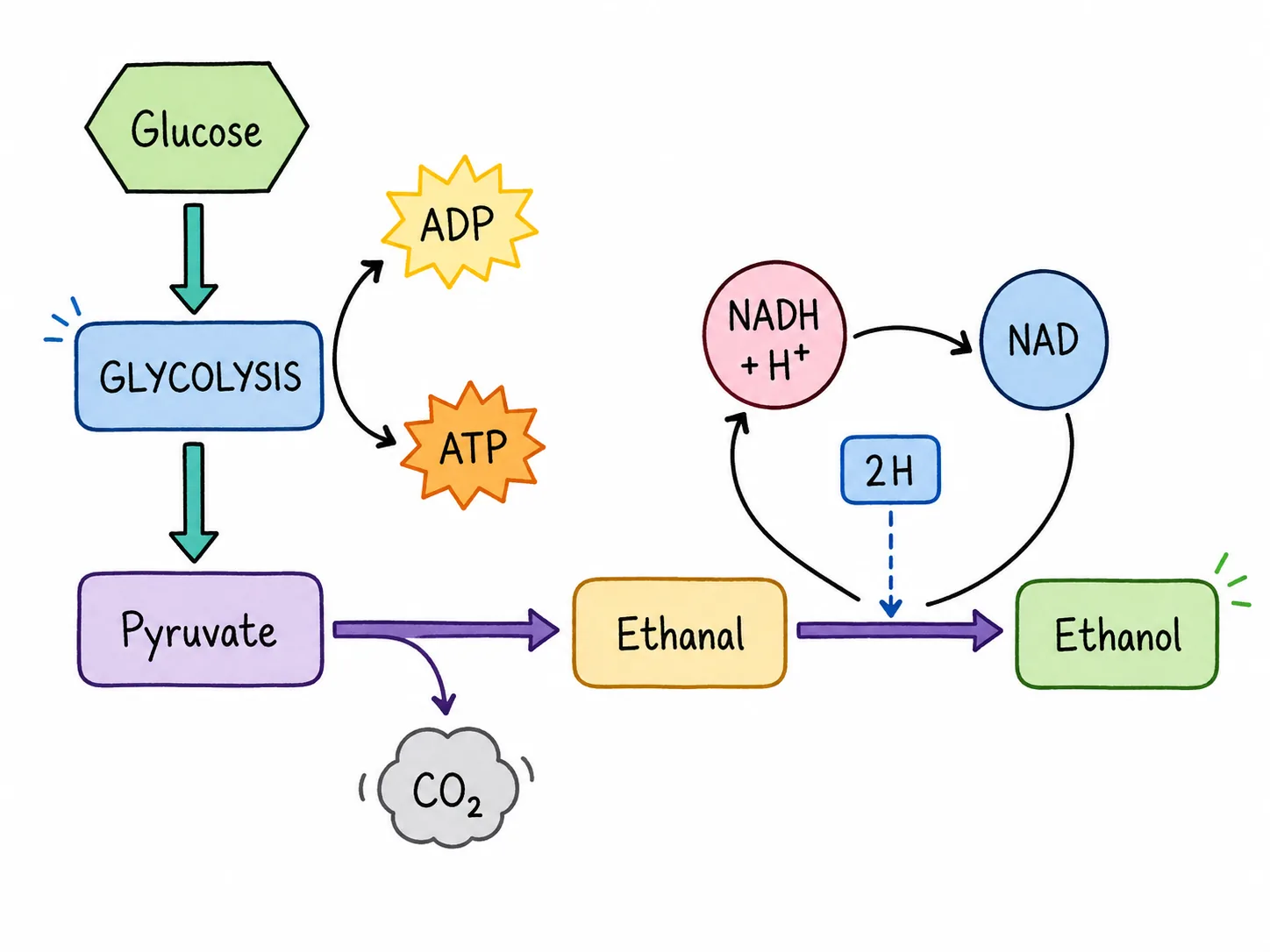
Fermentation
An anaerobic pathway that regenerates NAD+ so glycolysis can continue without oxygen.
Final electron acceptor
The molecule that receives electrons at the end of the chain; oxygen in aerobic respiration, forming water.
| Stage | Location | Inputs | Outputs | ATP made |
|---|---|---|---|---|
| Glycolysis | Cytoplasm | Glucose, 2 NAD+, 2 ATP | 2 pyruvate, 2 NADH | Net 2 (substrate-level) |
| Pyruvate oxidation | Mitochondrial matrix | 2 pyruvate | 2 acetyl-CoA, 2 CO2, 2 NADH | 0 |
| Krebs cycle (2 turns) | Mitochondrial matrix | 2 acetyl-CoA | 4 CO2, 6 NADH, 2 FADH2 | 2 (substrate-level) |
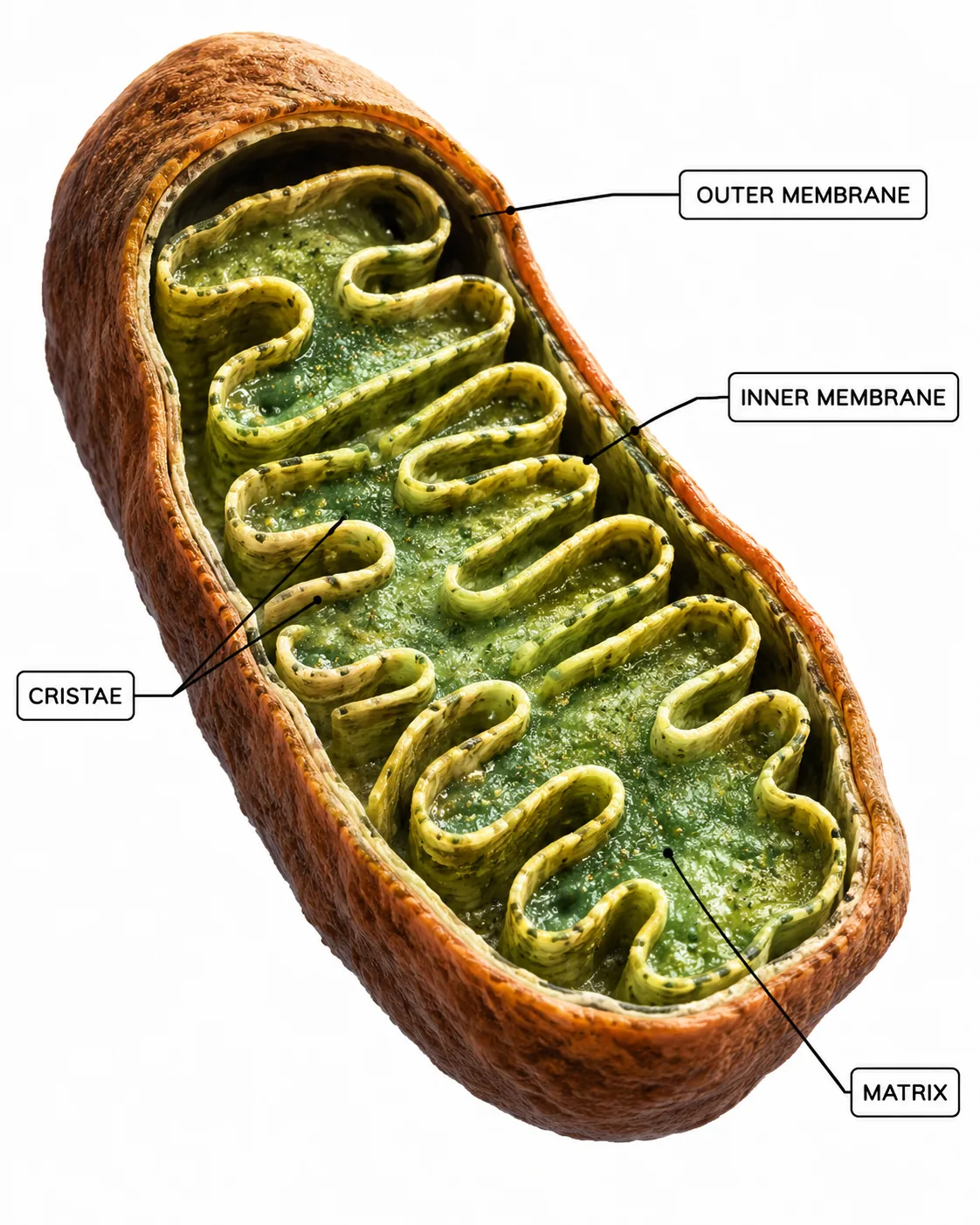
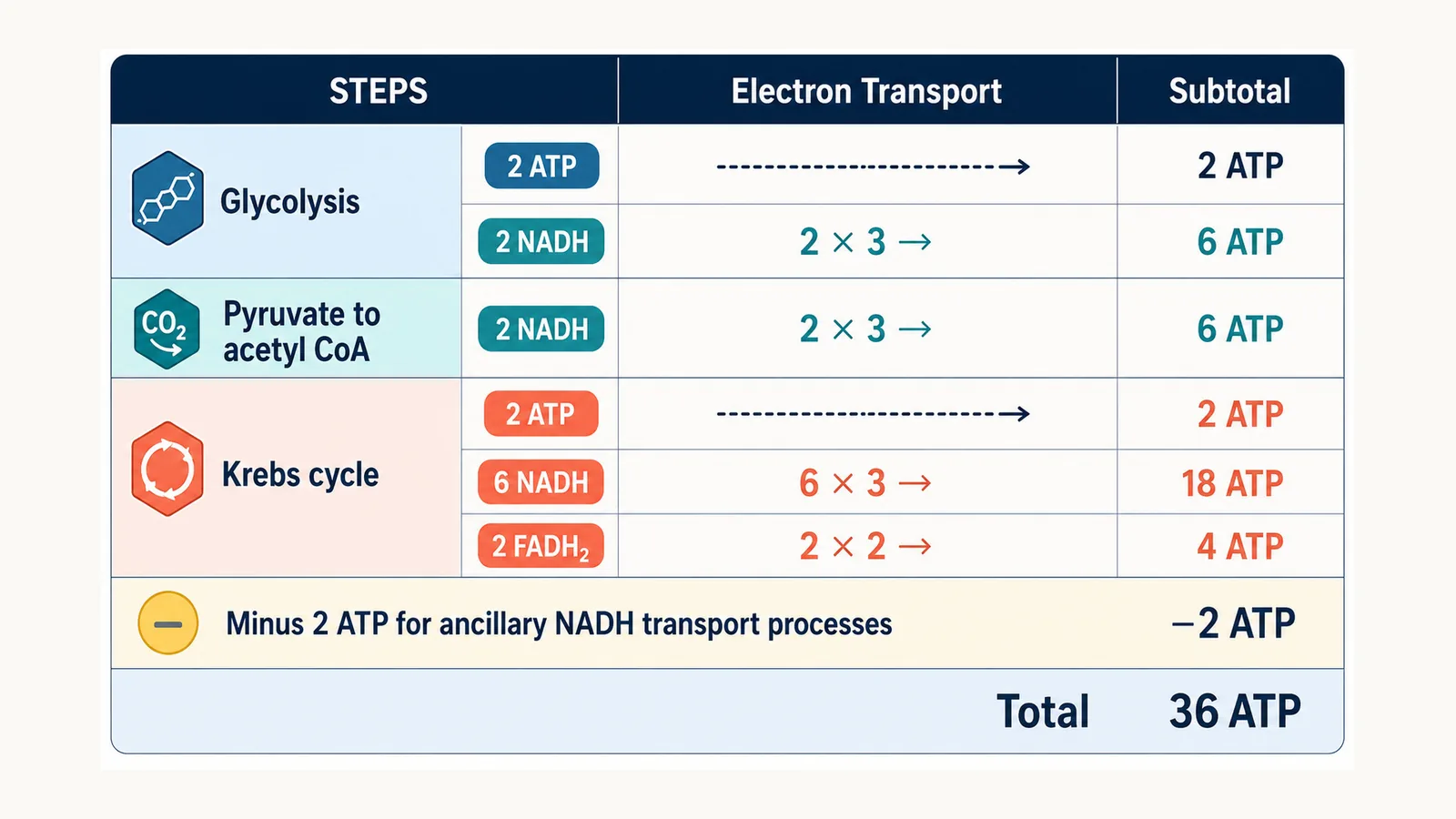
| Electron transport + chemiosmosis | Inner membrane (cristae) | 10 NADH, 2 FADH2, O2 | H2O, NAD+, FAD | About 26–34 |
Textbook totals are about 36–38 ATP per glucose; modern estimates are about 30–32.
| Feature | Aerobic | Alcoholic fermentation | Lactic acid fermentation |
|---|---|---|---|
| Oxygen needed | Yes | No | No |
| End products | CO2 + H2O | Ethanol + CO2 | Lactate |
| ATP per glucose | About 30–38 | 2 | 2 |
| Organisms | Most eukaryotes | Yeast, some bacteria | Muscle cells, some bacteria (yogurt) |