Curriculum
EST II Biology
1. Molecules & Cells
0/15
-
McGraw-Hill SAT Biology — Chapter 5: Understanding Molecular and Cellular Biology
 Preview
-
1.1 Chemistry of Life
Preview
-
1.1 Chemistry of Life (SAT Biology) - Check yourself
 Preview
-
1.2 Cell Structure & Organelles
Preview
-
1.2 Cell Structure & Organelles (SAT Biology) - Check yourself
Preview
-
1.3 Membrane Transport
Preview
-
1.3 Membrane Transport (SAT Biology) - Check yourself
Preview
-
1.4 Enzymes & Metabolism
Preview
-
1.4 Enzymes & Metabolism (SAT Biology) - Check yourself
Preview
-
1.5 Cellular Respiration
Preview
-
1.5 Cellular Respiration (SAT Biology) - Check yourself
Preview
-
1.6 Photosynthesis
Preview
-
1.6 Photosynthesis (SAT Biology) - Check yourself
Preview
-
1.7 Cell Division: Mitosis & Meiosis
Preview
-
1.7 Cell Division: Mitosis & Meiosis (SAT Biology) - Check yourself
Preview
2. Genetics & Biotechnology
0/7
3. Evolution & Diversity
0/7
4. Organisms: Structure & Function
0/15
5. Ecology
0/5
6. Laboratory Skills
0/2
SAT Biology — Full Book Tests and Strategy
0/8
1.3 Membrane Transport
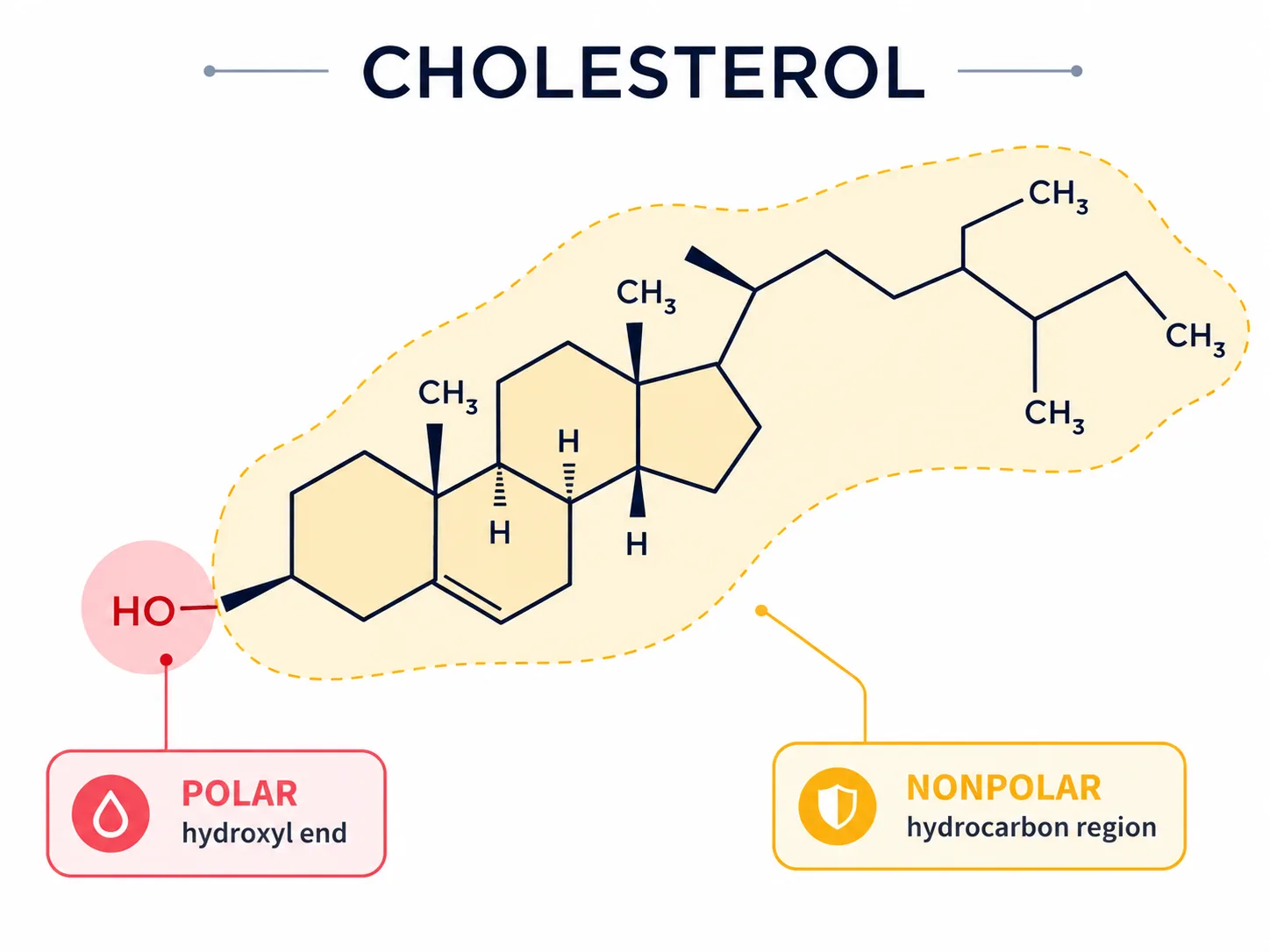
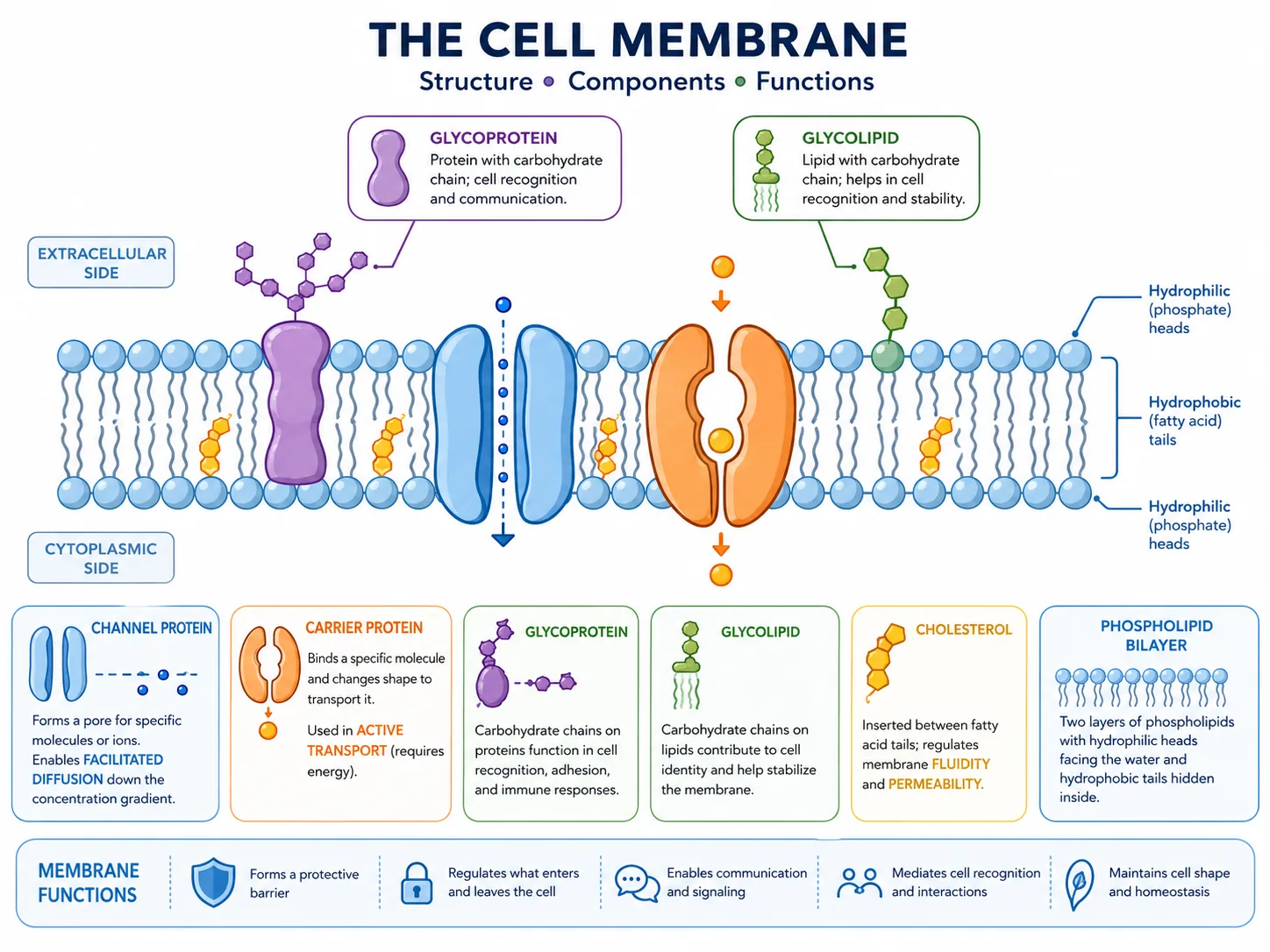
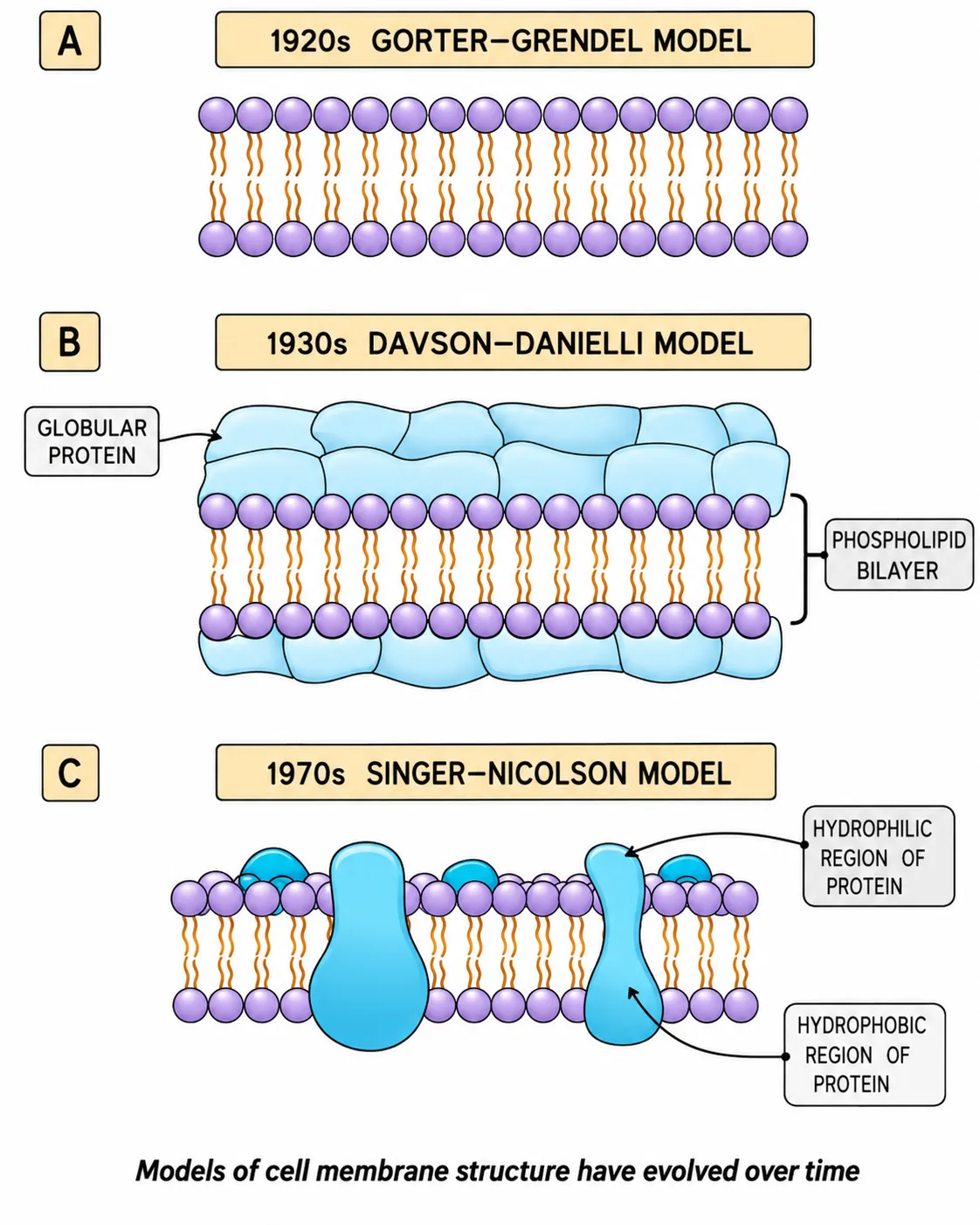
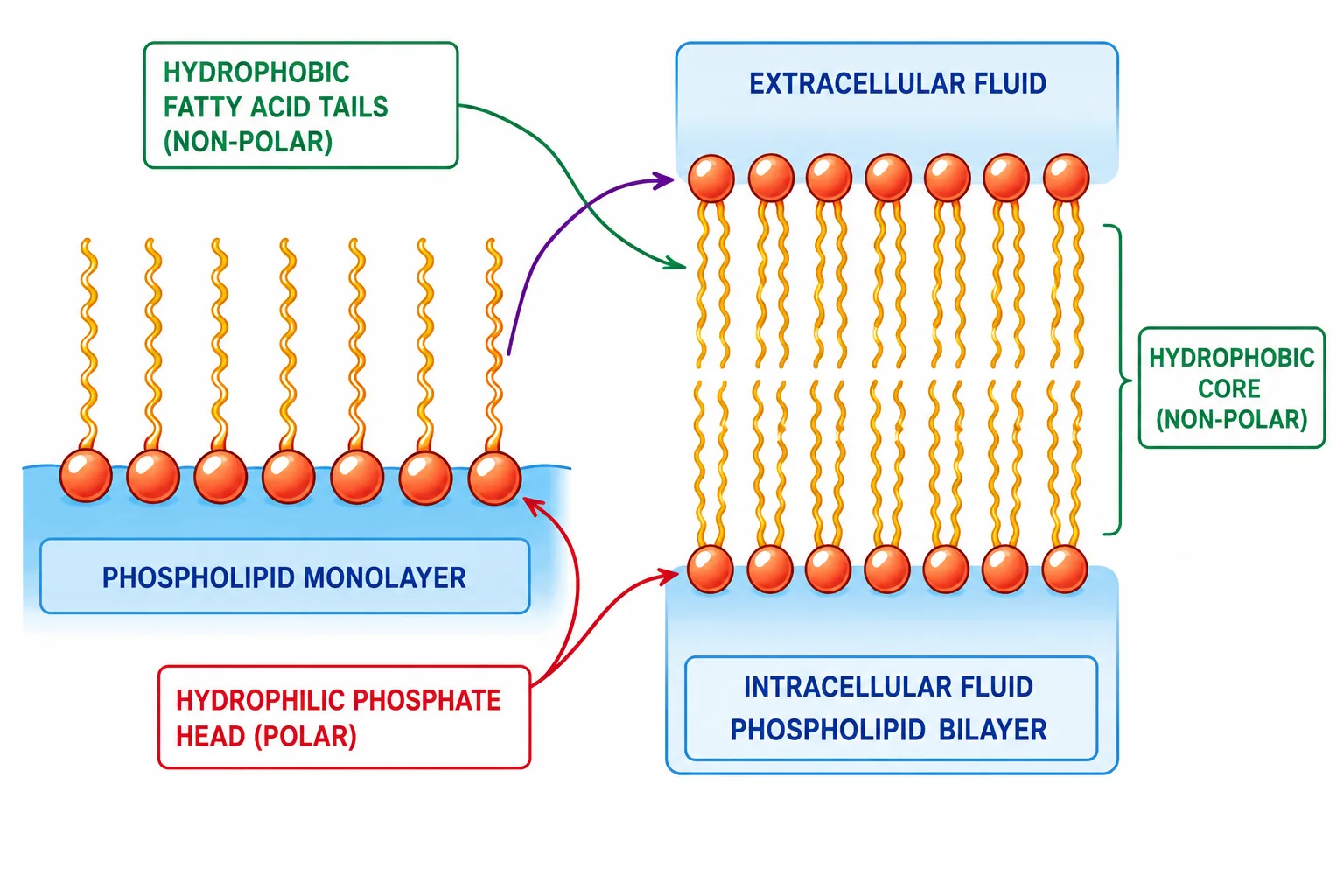
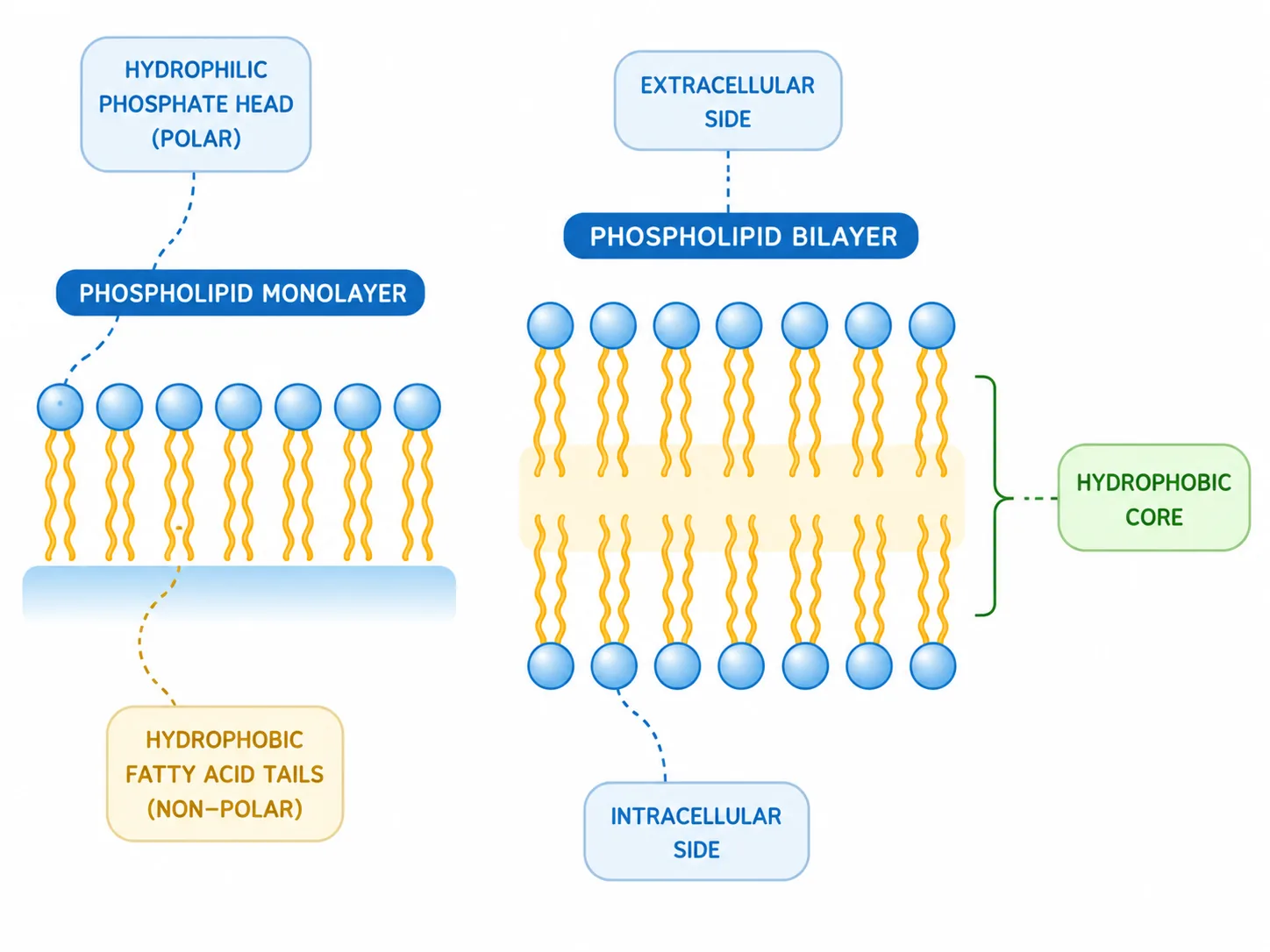
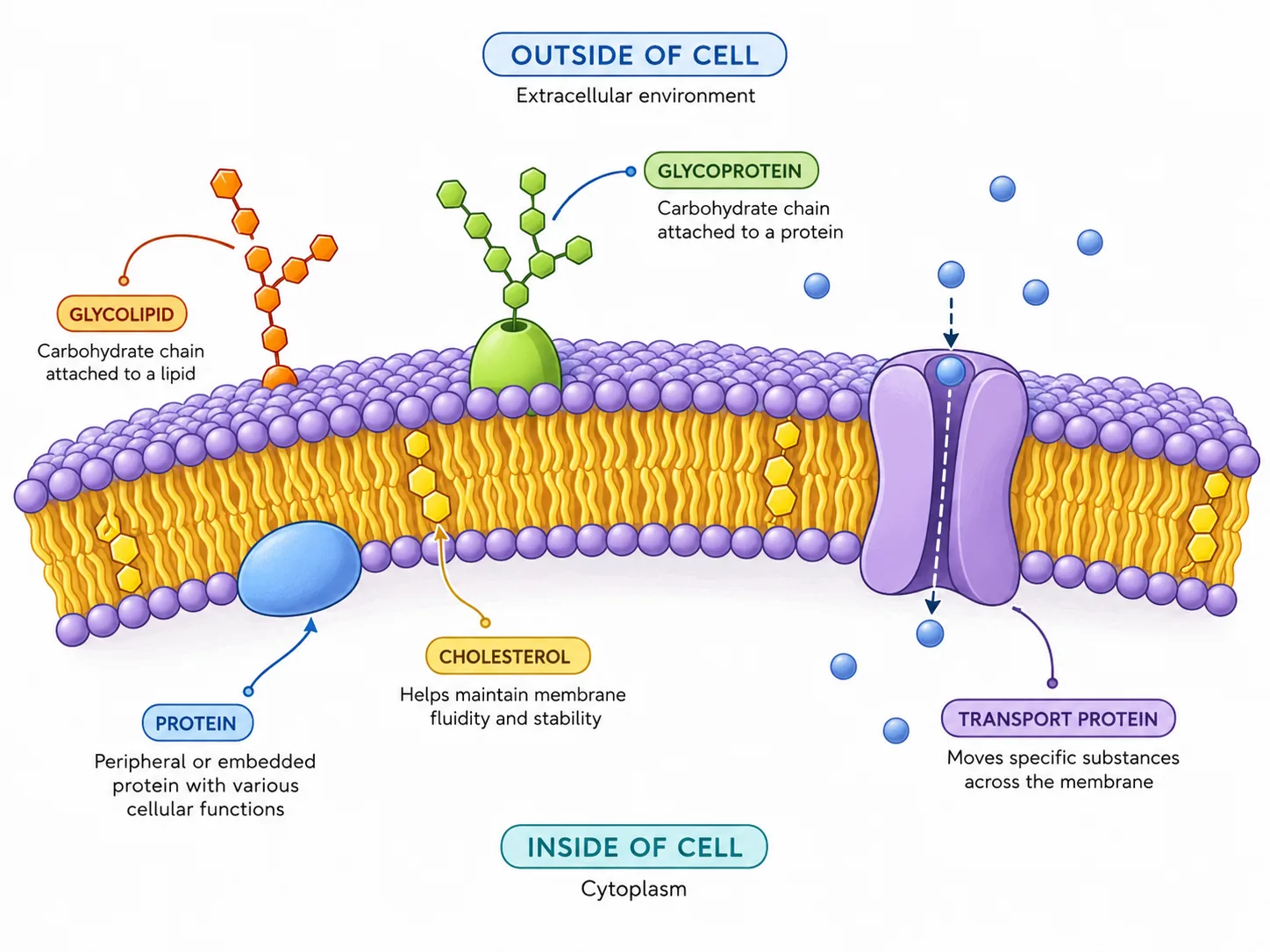
Describe the structure of the plasma membrane using the fluid mosaic model.





 ⤢ Enlarge







 ⤢ Enlarge

 ⤢ Enlarge

 ⤢ Enlarge

 ⤢ Enlarge
Fluid mosaic model
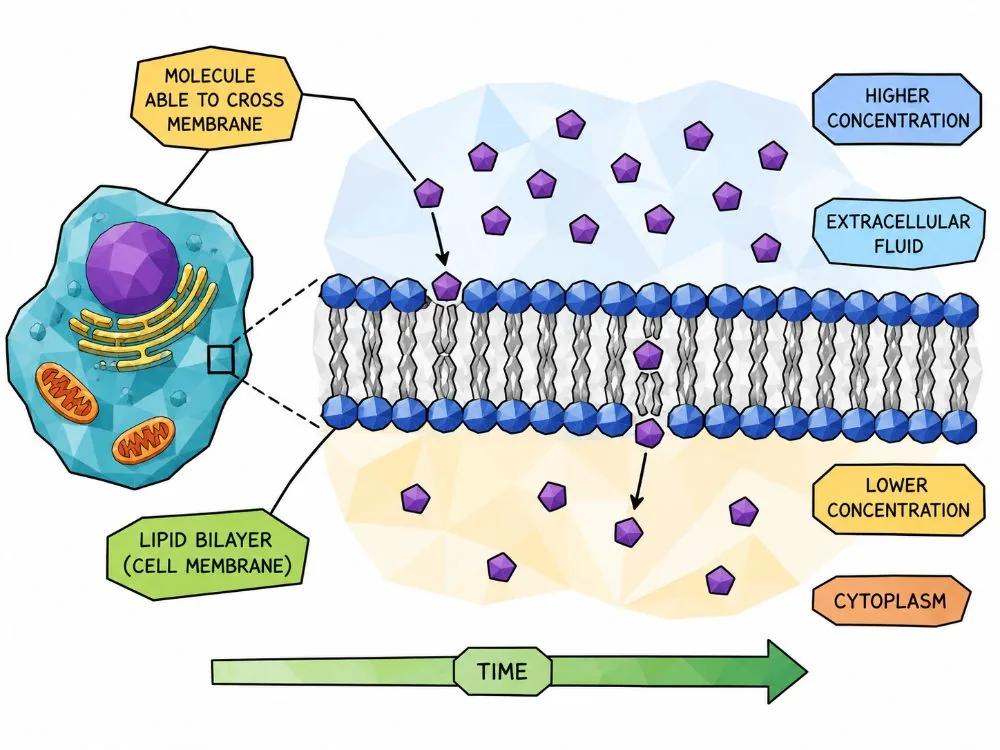
The model of the membrane as a fluid phospholipid bilayer with proteins floating in or on it like tiles in a mosaic.
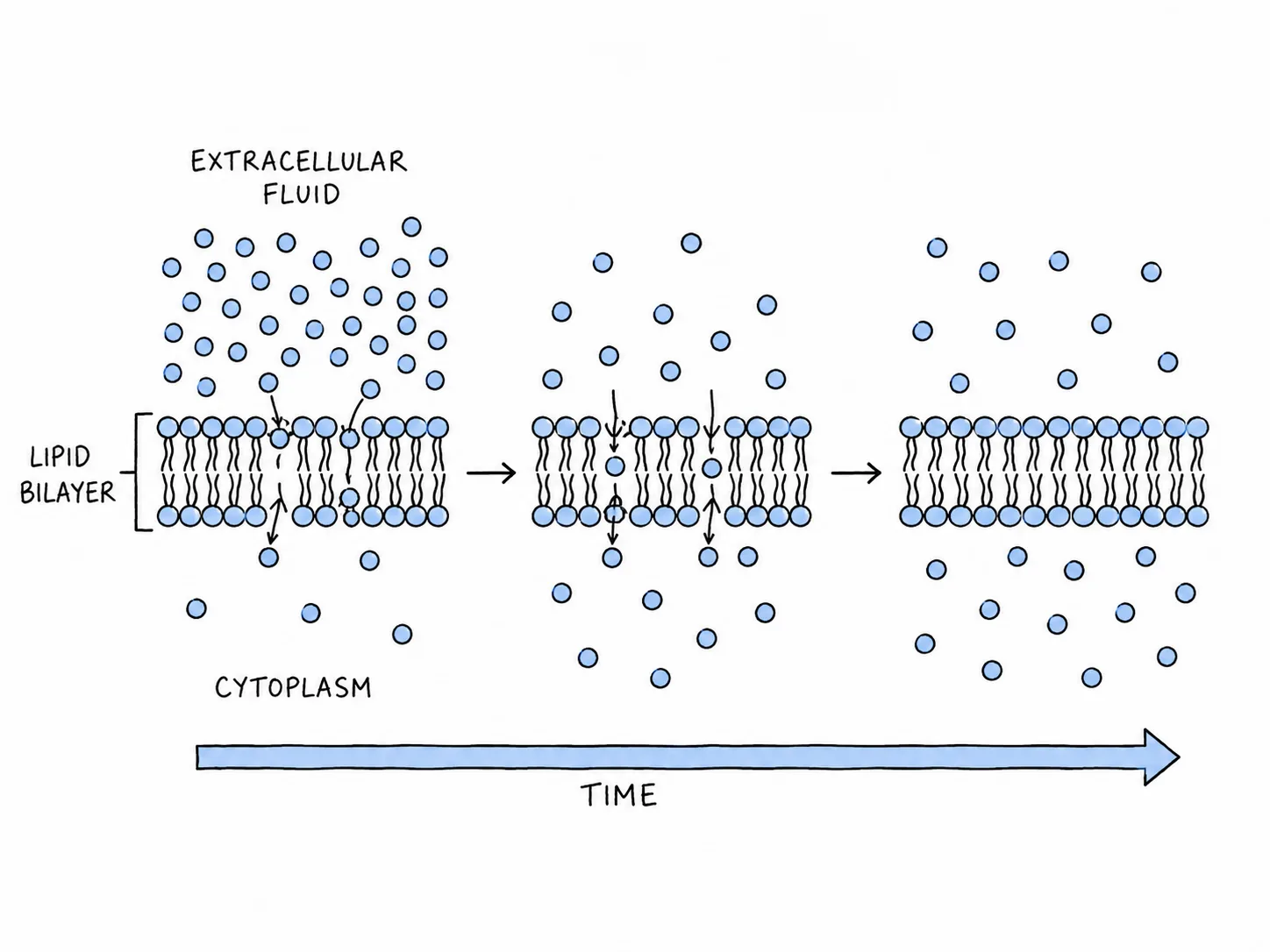
Selective permeability
The property of a membrane that lets some substances cross easily while restricting others.
Diffusion
Net movement of particles from a region of higher concentration to lower concentration, requiring no energy input.
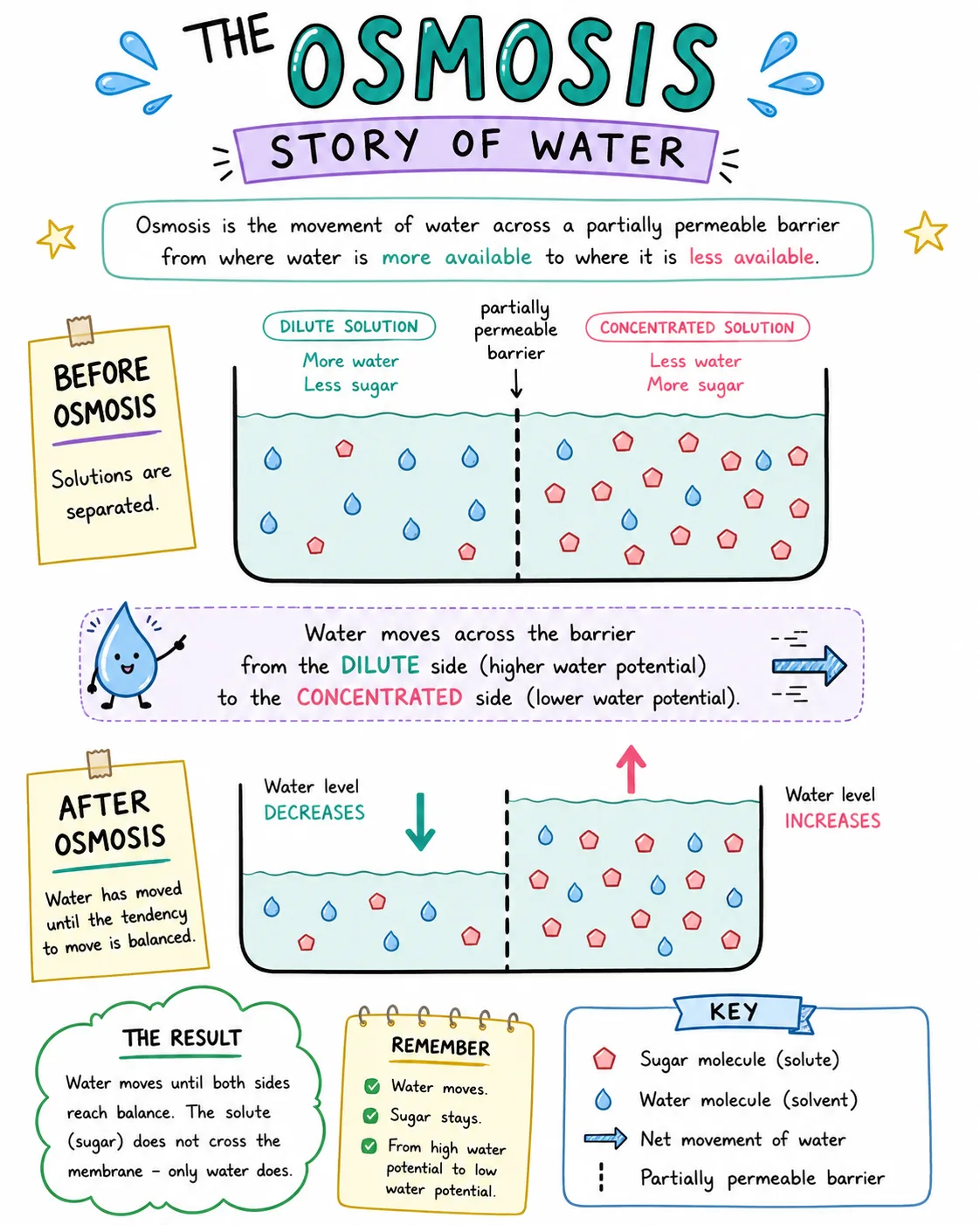
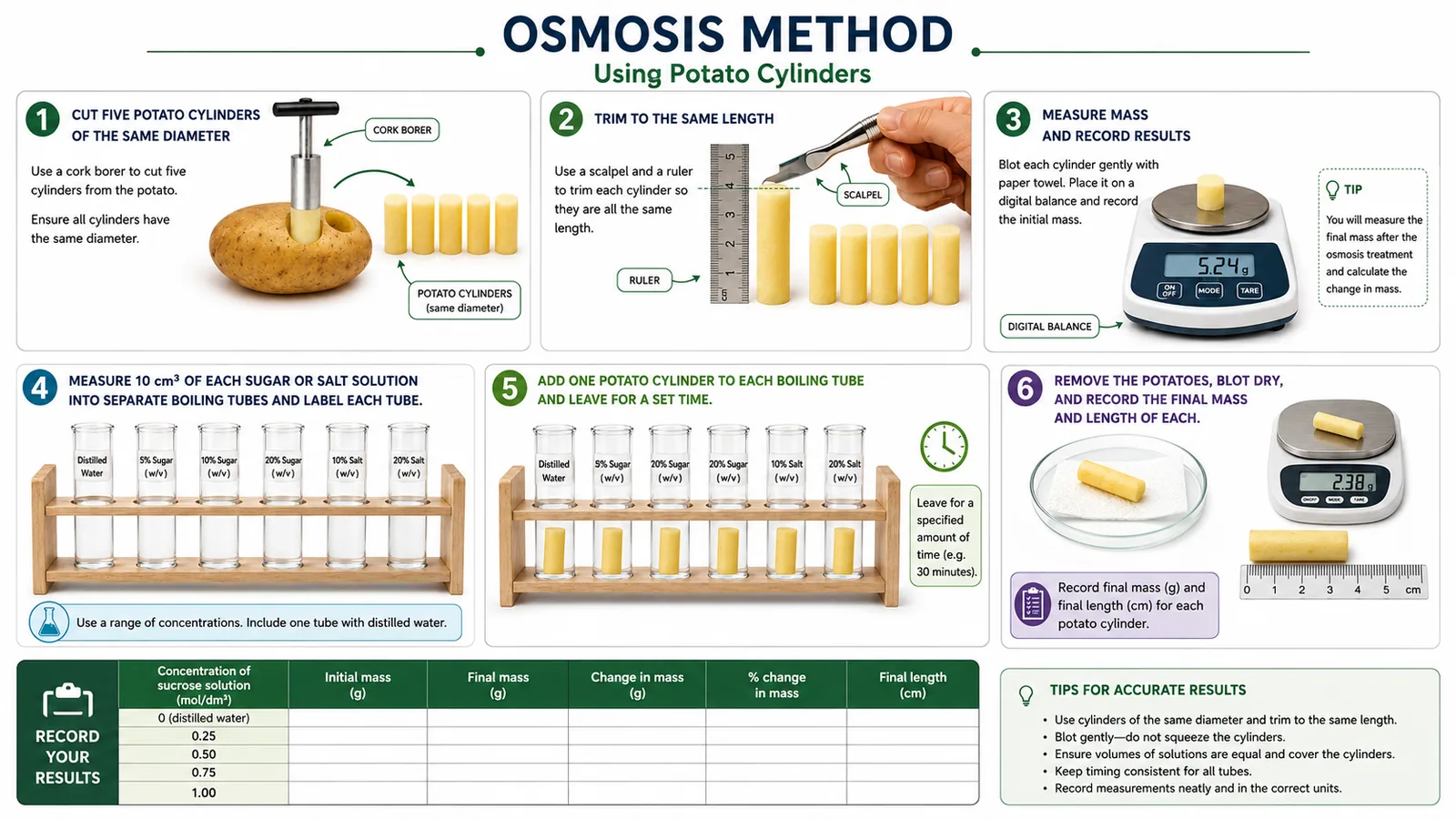
Osmosis
Diffusion of water across a selectively permeable membrane from a region of lower solute concentration to higher solute concentration.
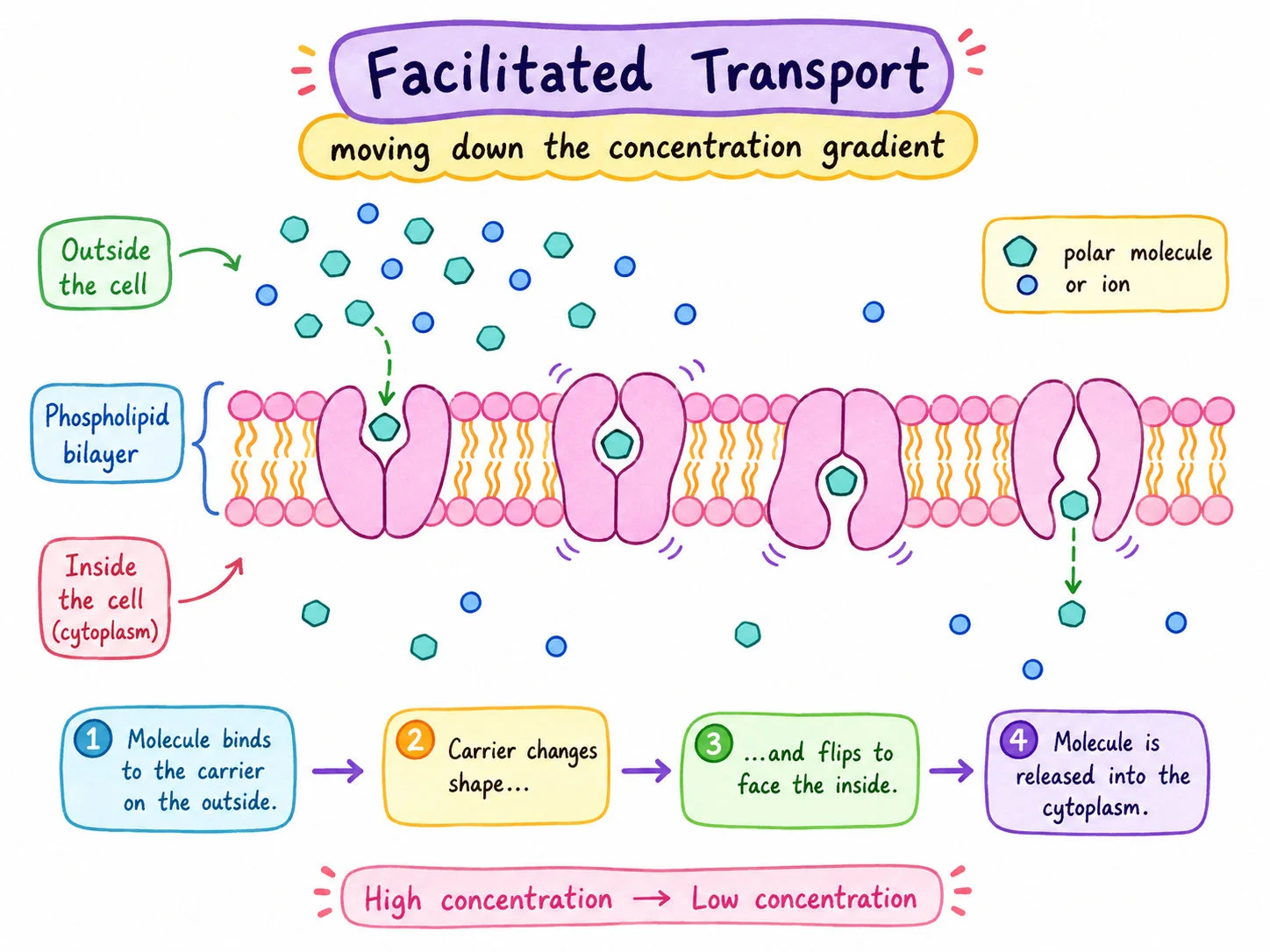
Facilitated diffusion
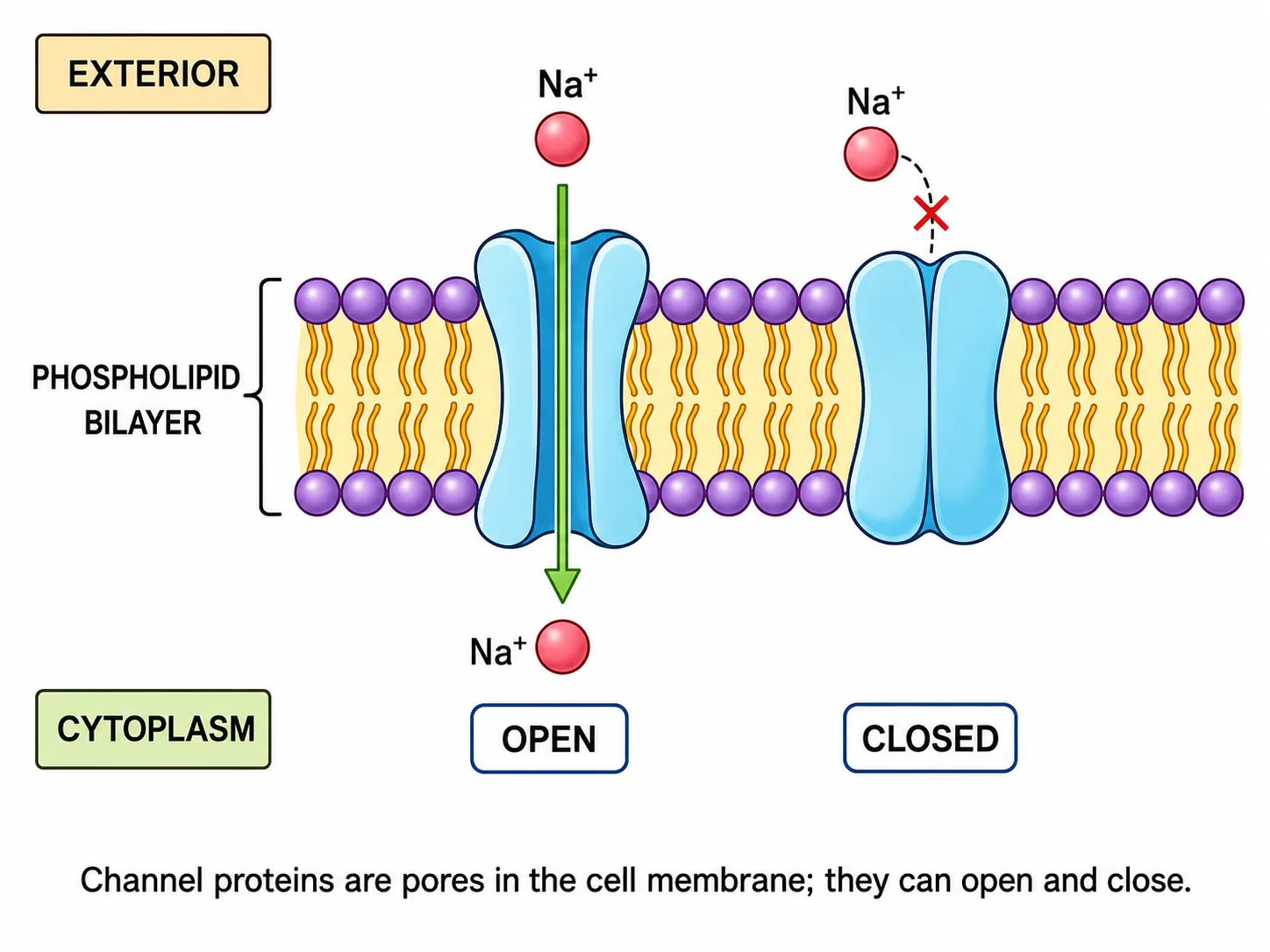
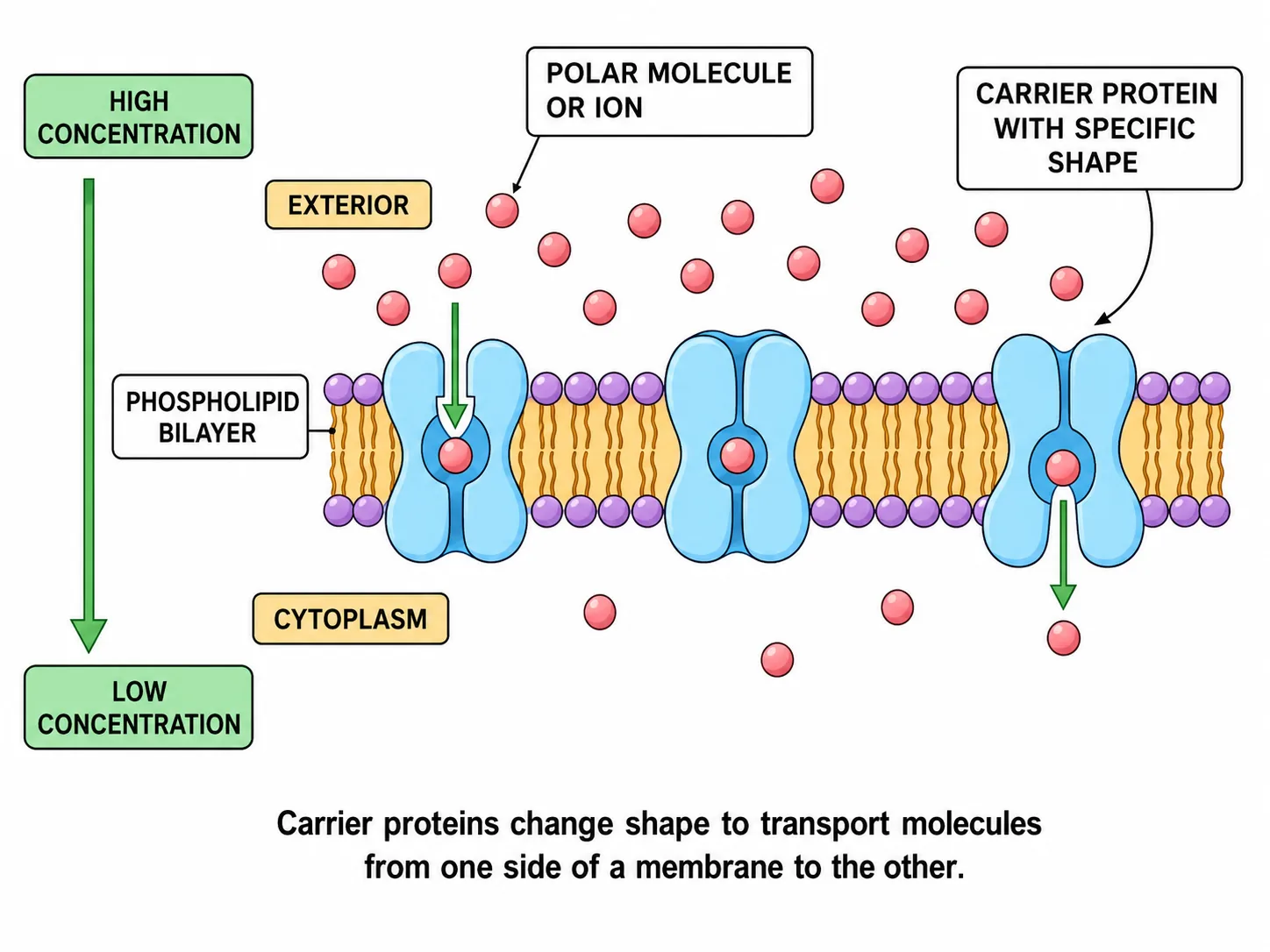
Passive movement of substances down their concentration gradient through channel or carrier proteins.
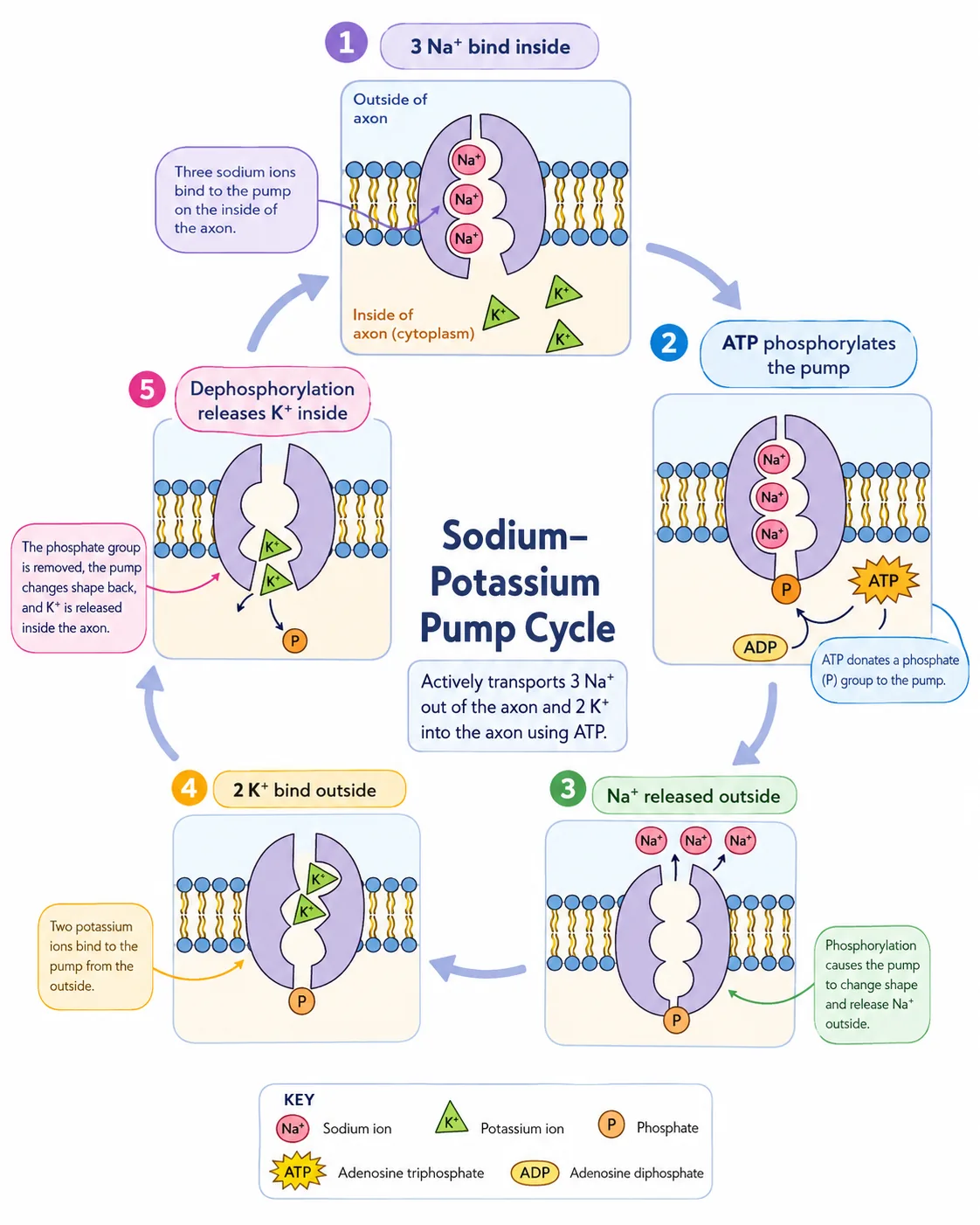
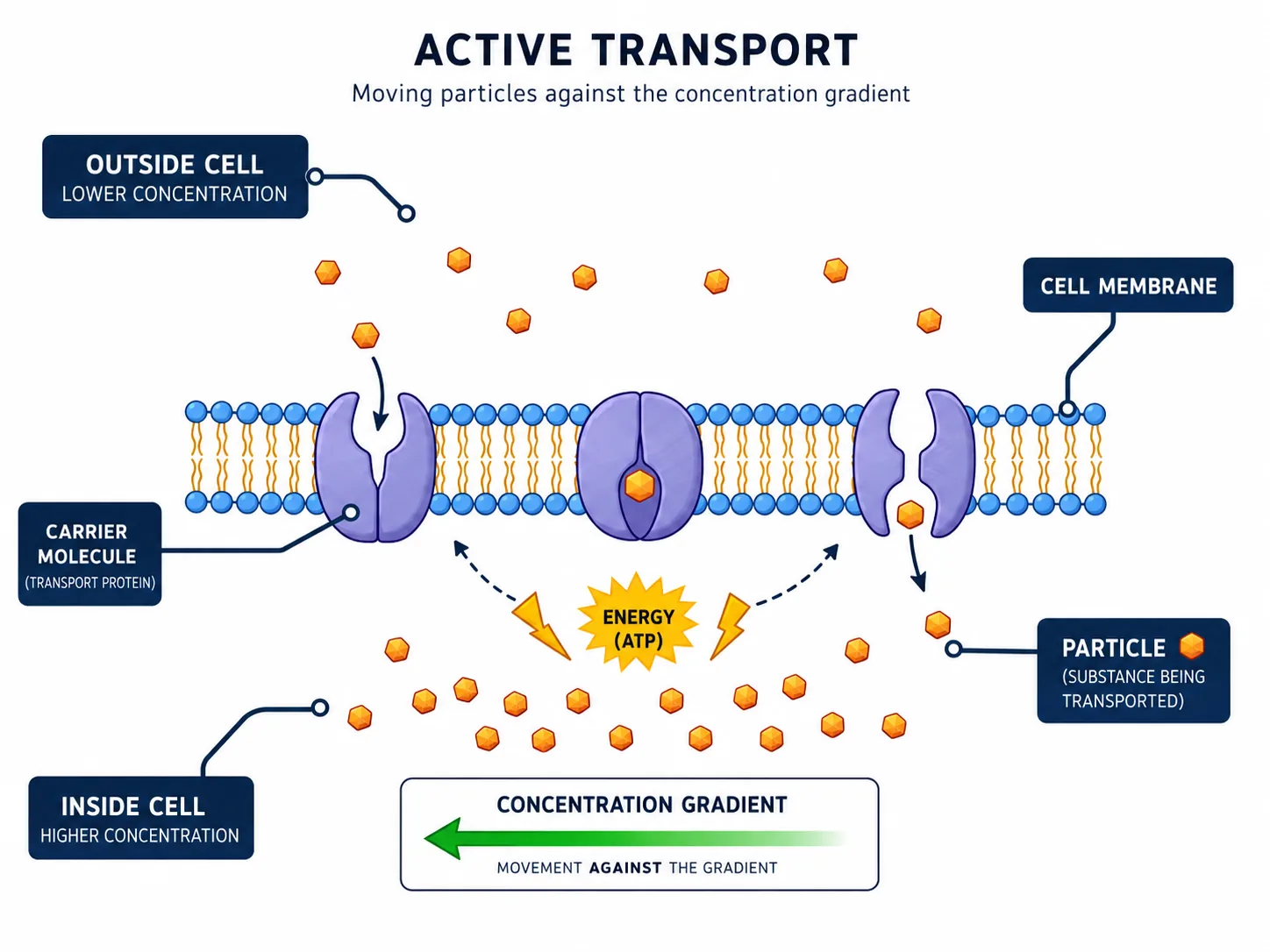
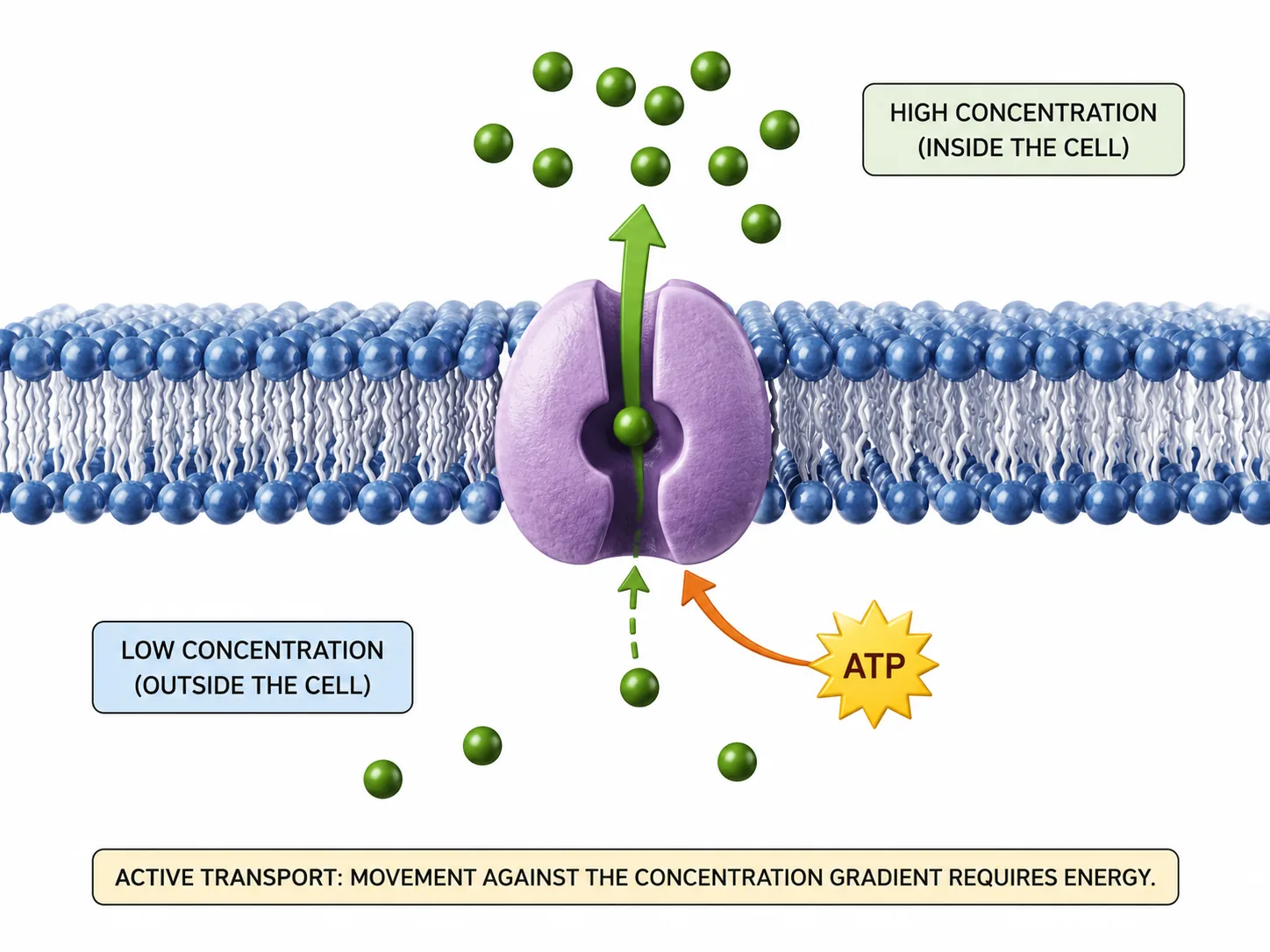
Active transport
Movement of substances against their concentration gradient using energy, usually from ATP.
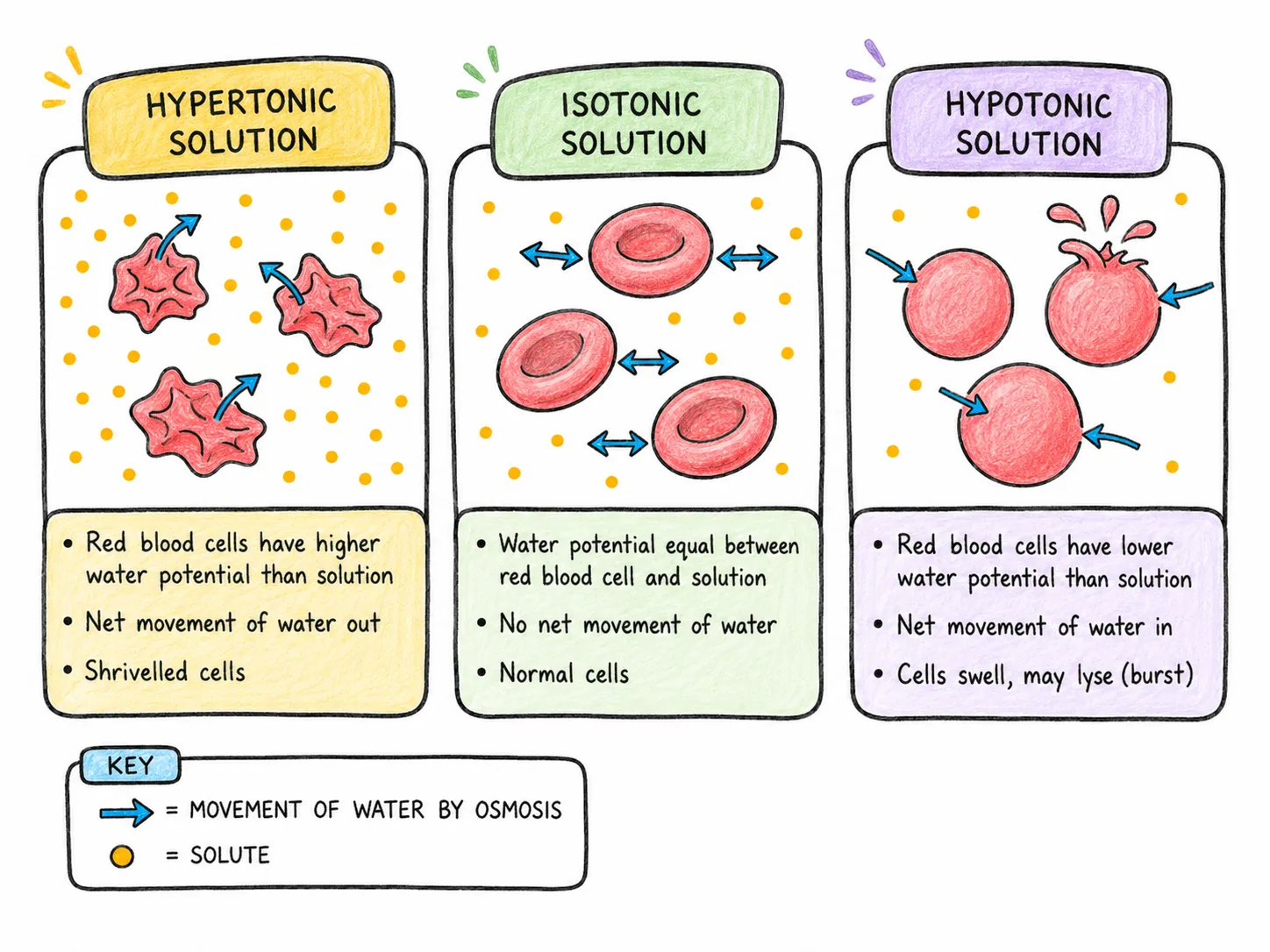
Hypertonic
Describes a solution with a higher solute concentration than the cell, causing the cell to lose water.
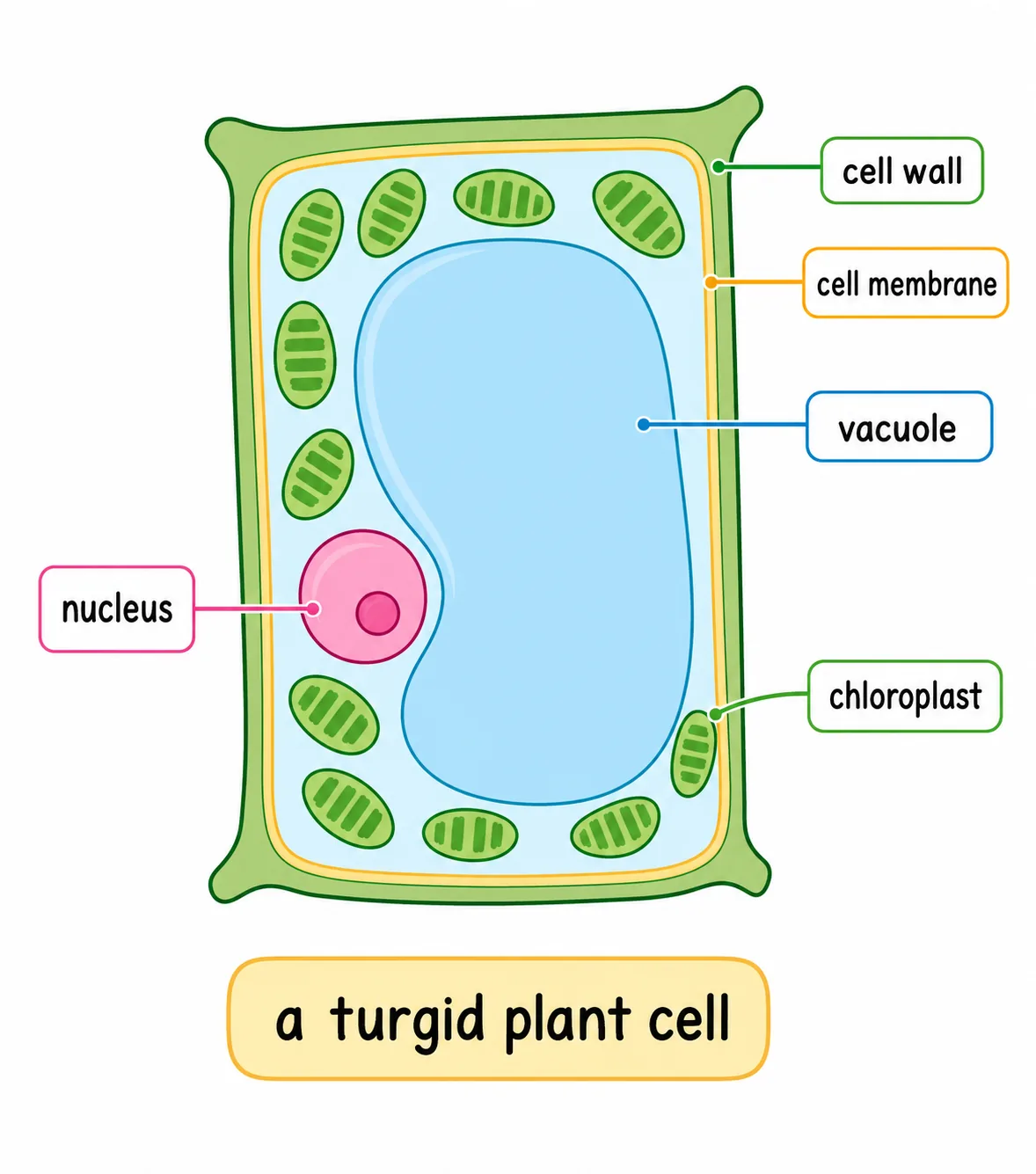
Hypotonic
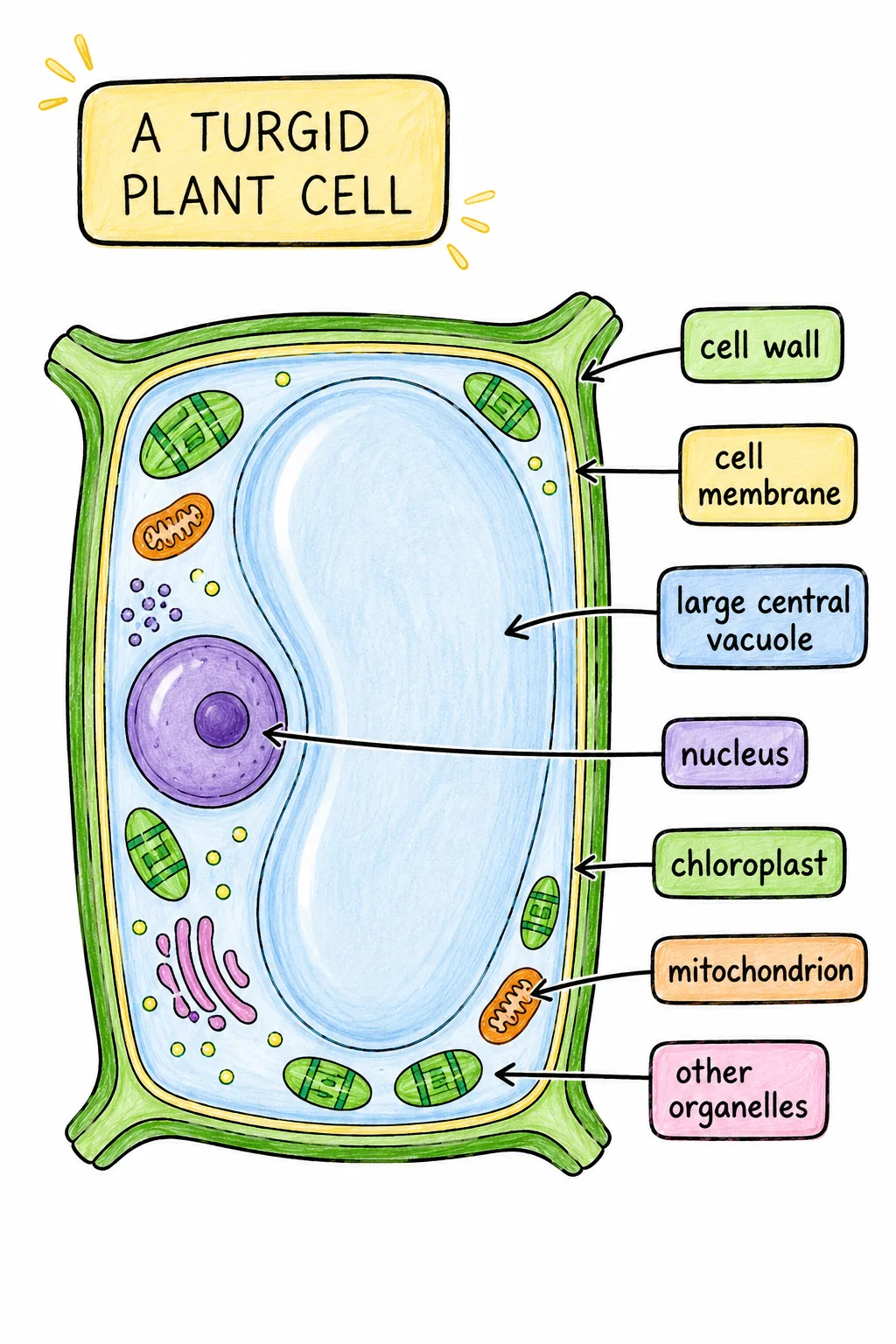
Describes a solution with a lower solute concentration than the cell, causing the cell to gain water.
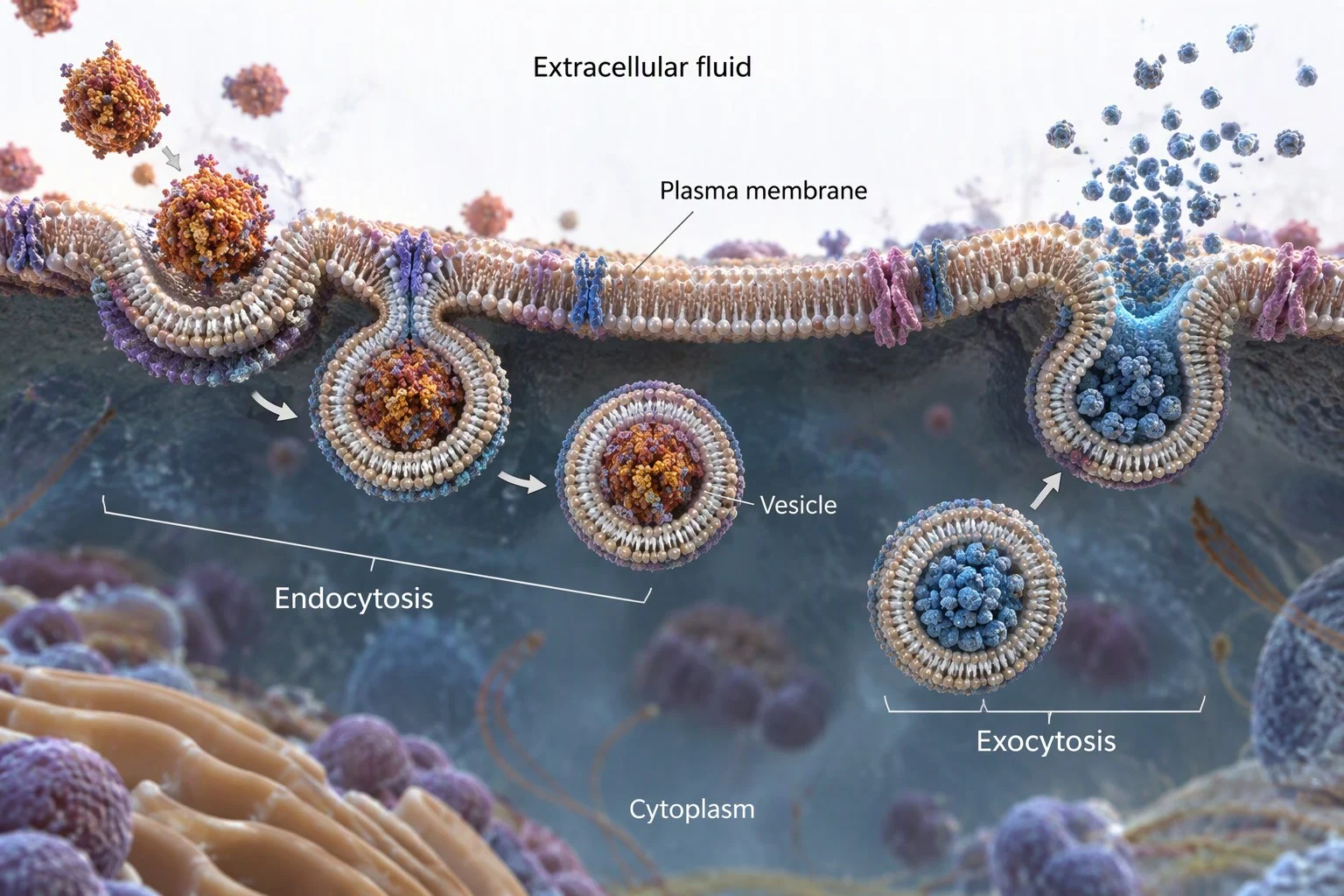
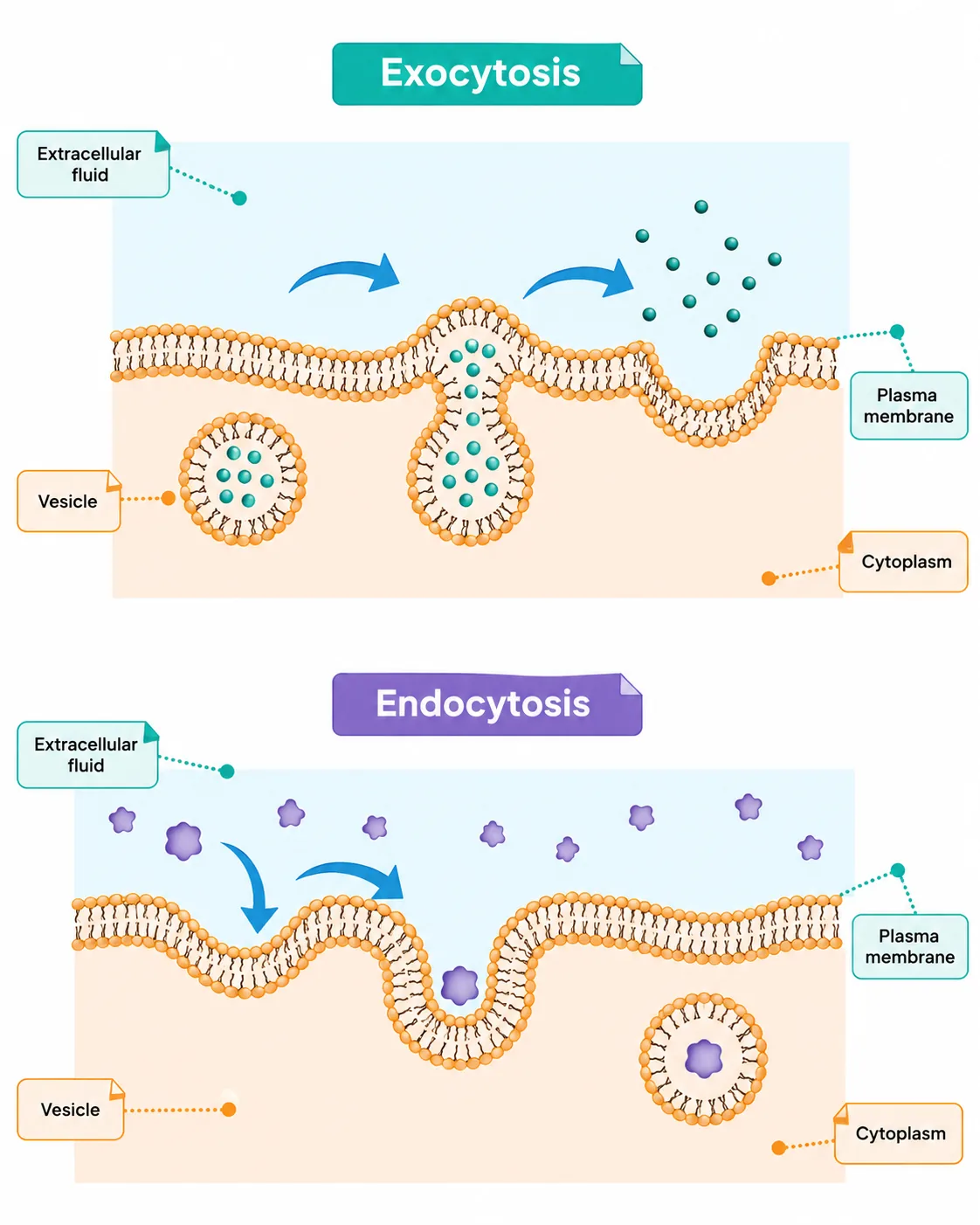
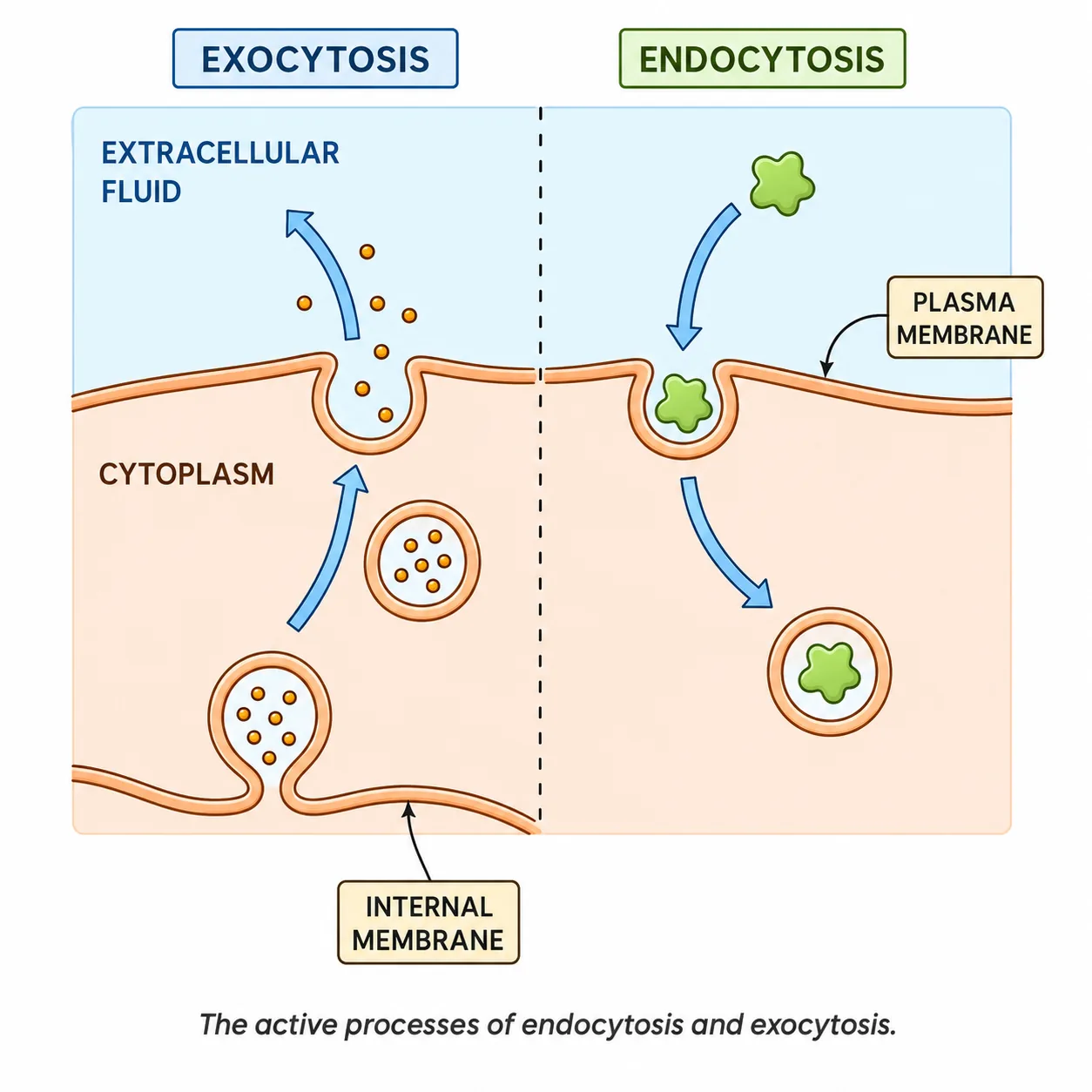
Endocytosis
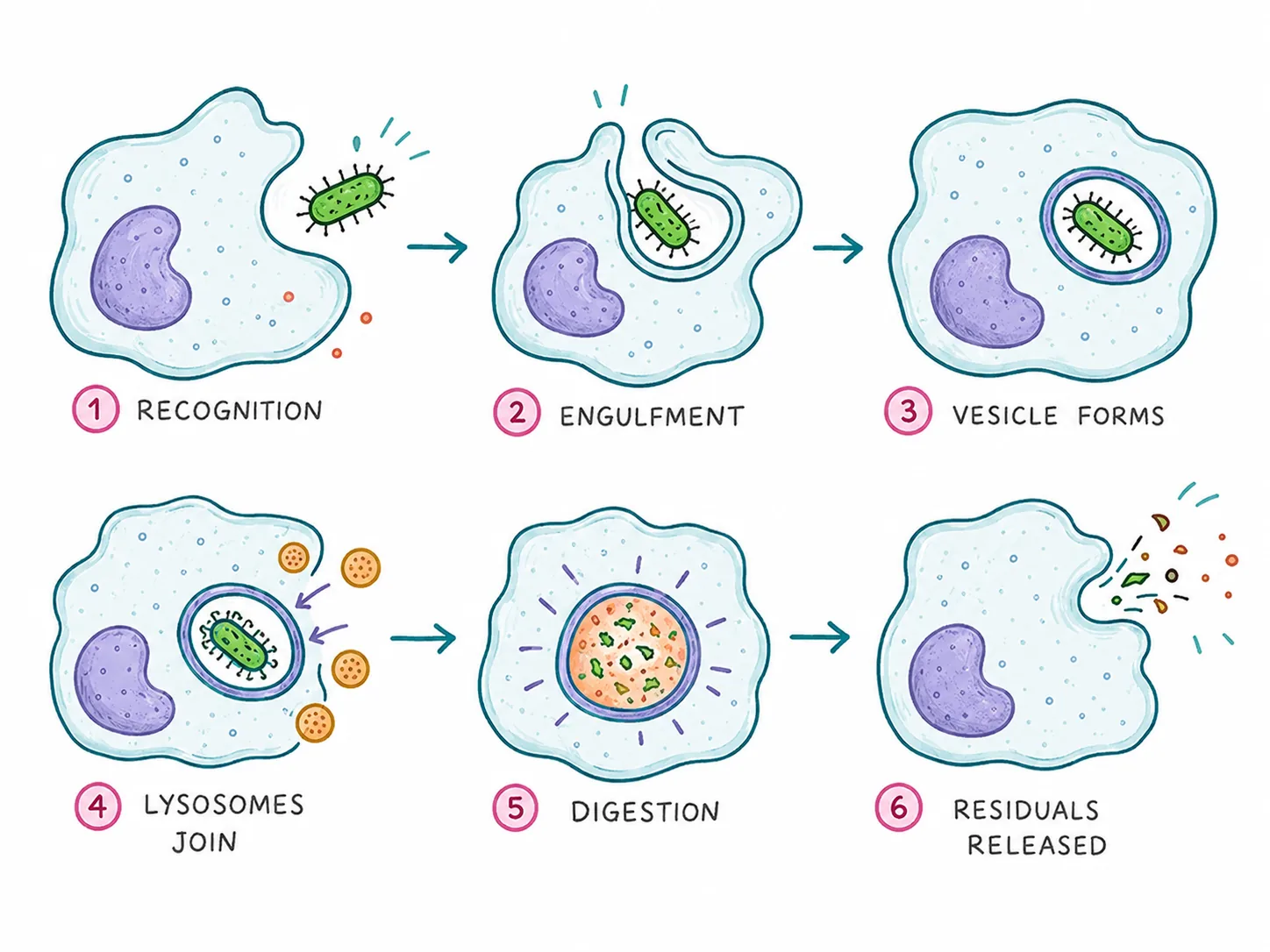
Uptake of large particles or fluid by folding the plasma membrane inward to form a vesicle.
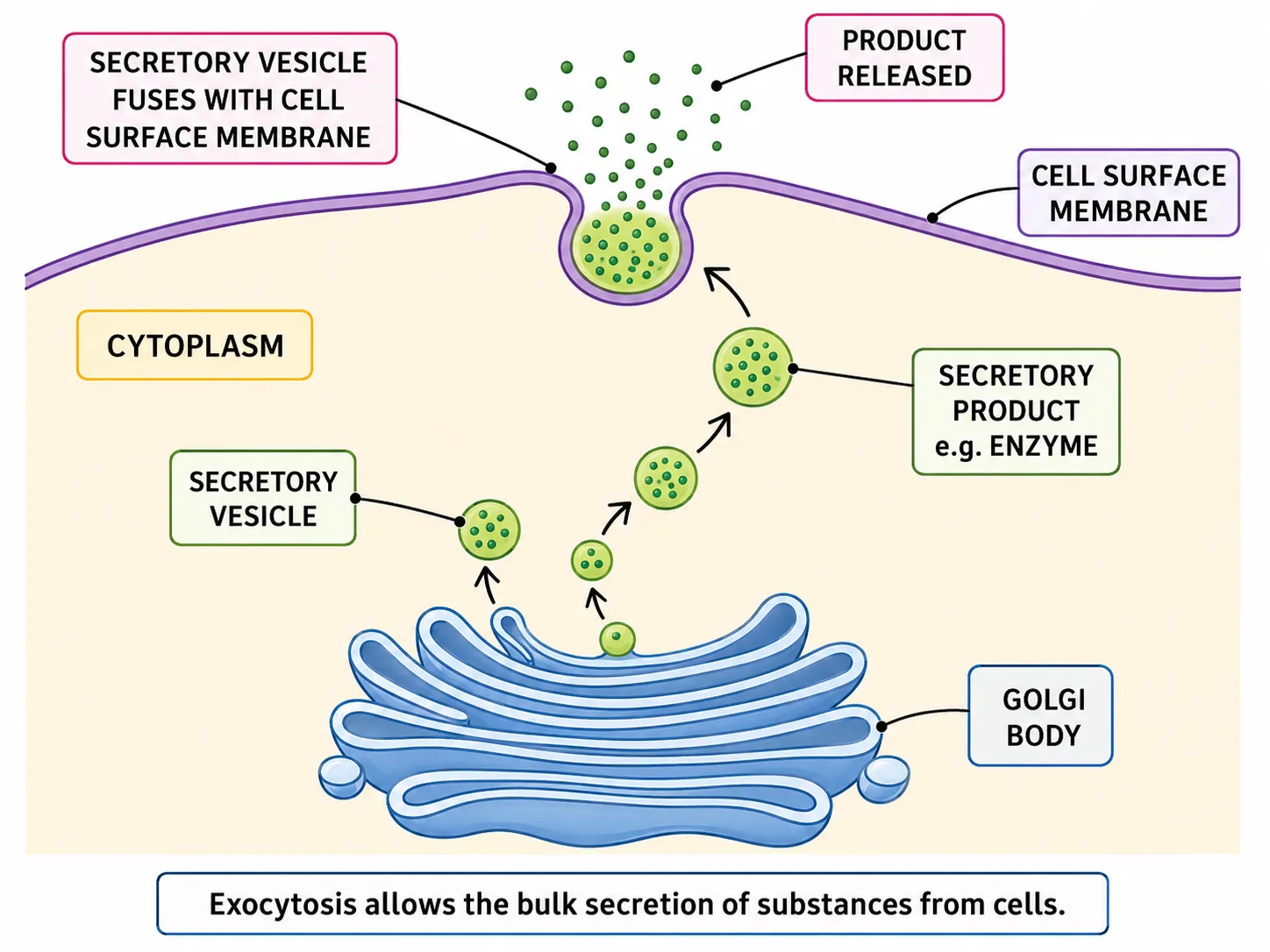
Exocytosis
Release of materials from a cell when a vesicle fuses with the plasma membrane.
| Type | Energy needed? | Direction | Protein needed? | Example |
|---|---|---|---|---|
| Simple diffusion | No | Down gradient | No | O2 and CO2 crossing alveolar cells |
| Osmosis | No | Water toward higher solute | Sometimes (aquaporins) | Water entering root hair cells |
| Facilitated diffusion | No | Down gradient | Yes (channel/carrier) | Glucose via GLUT transporters |
| Active transport | Yes (ATP) | Against gradient | Yes (pump) | Na+/K+ pump |
| Endo/exocytosis | Yes | Bulk in/out | Vesicles | Phagocytosis by white blood cells; neurotransmitter release |
| Solution | Water movement | Animal cell | Plant cell |
|---|---|---|---|
| Hypotonic | Into cell | Swells, may burst (lysis) | Turgid (firm) — ideal |
| Isotonic | No net movement | Normal — ideal | Flaccid (limp) |
| Hypertonic | Out of cell | Shrivels (crenation) | Plasmolyzed: membrane pulls from wall |