Curriculum
EST II Biology
1. Molecules & Cells
0/15
2. Genetics & Biotechnology
0/7
-
McGraw-Hill SAT Biology — Chapter 6: Understanding Genetics
 Preview
-
2.1 Mendelian Genetics
Preview
-
2.1 Mendelian Genetics (SAT Biology) - Check yourself
 Preview
-
2.2 Molecular Genetics: DNA to Protein
Preview
-
2.2 Molecular Genetics: DNA to Protein (SAT Biology) - Check yourself
Preview
-
2.3 Biotechnology
Preview
-
2.3 Biotechnology (SAT Biology) - Check yourself
Preview
3. Evolution & Diversity
0/7
4. Organisms: Structure & Function
0/15
5. Ecology
0/5
6. Laboratory Skills
0/2
SAT Biology — Full Book Tests and Strategy
0/8
2.3 Biotechnology
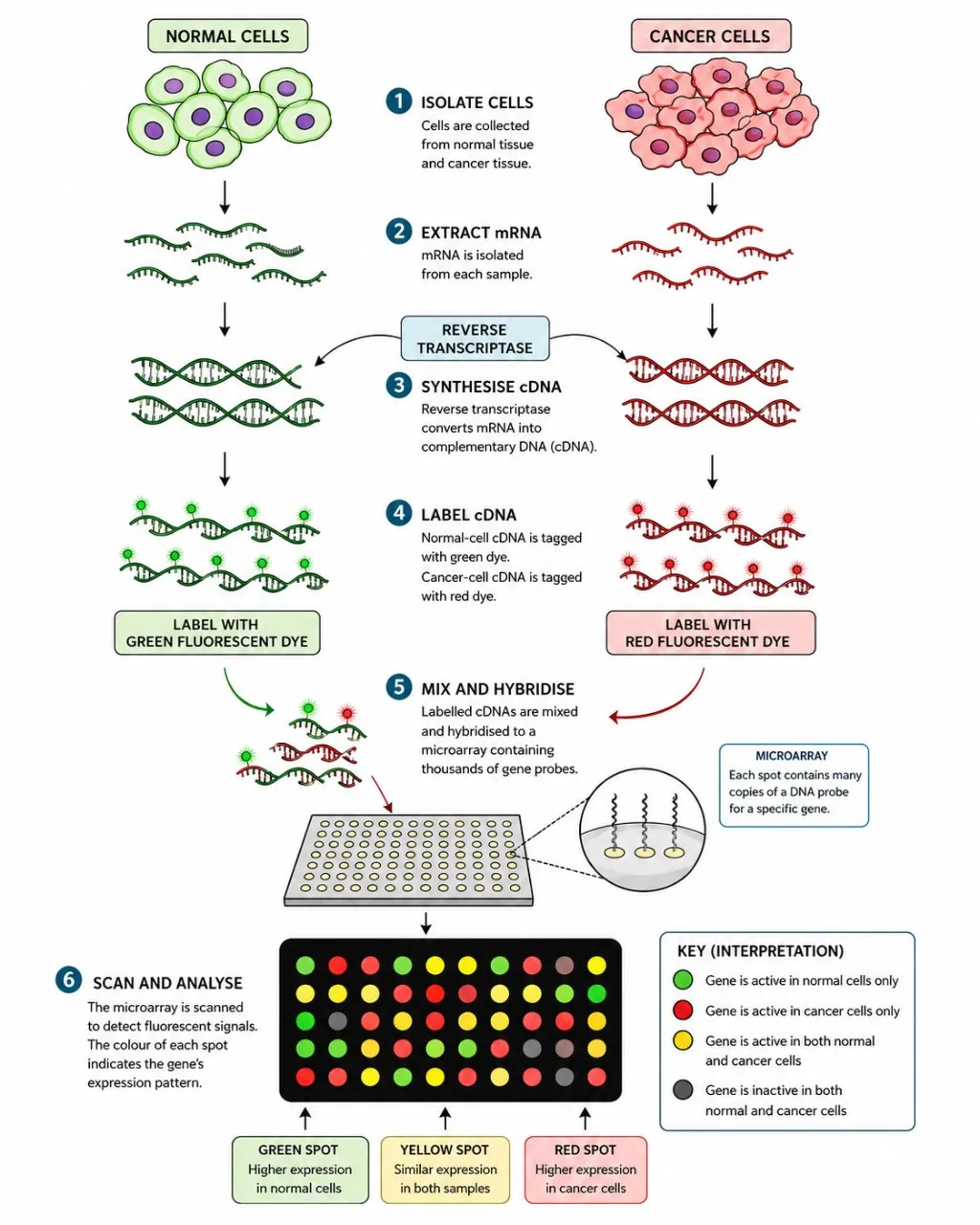
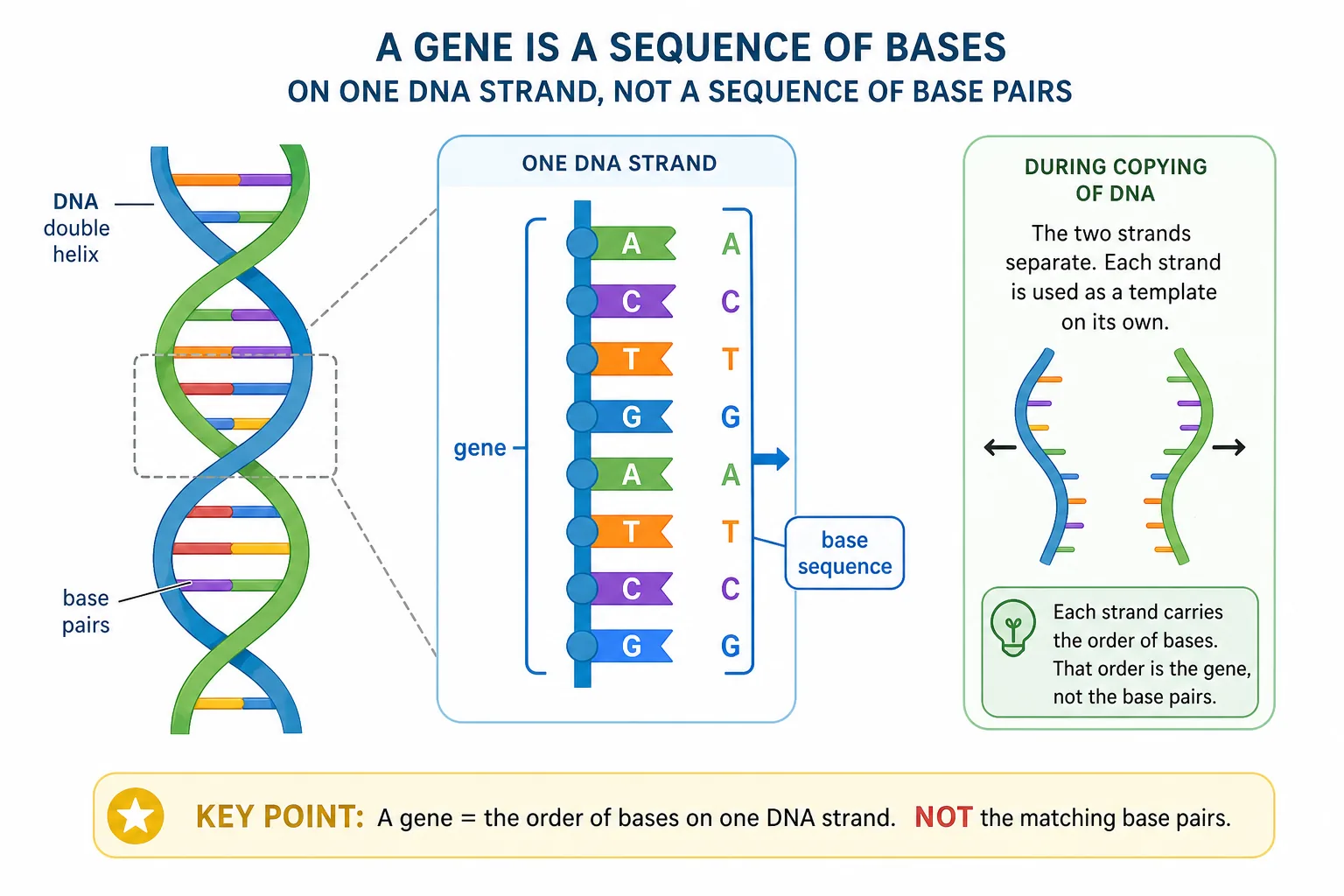
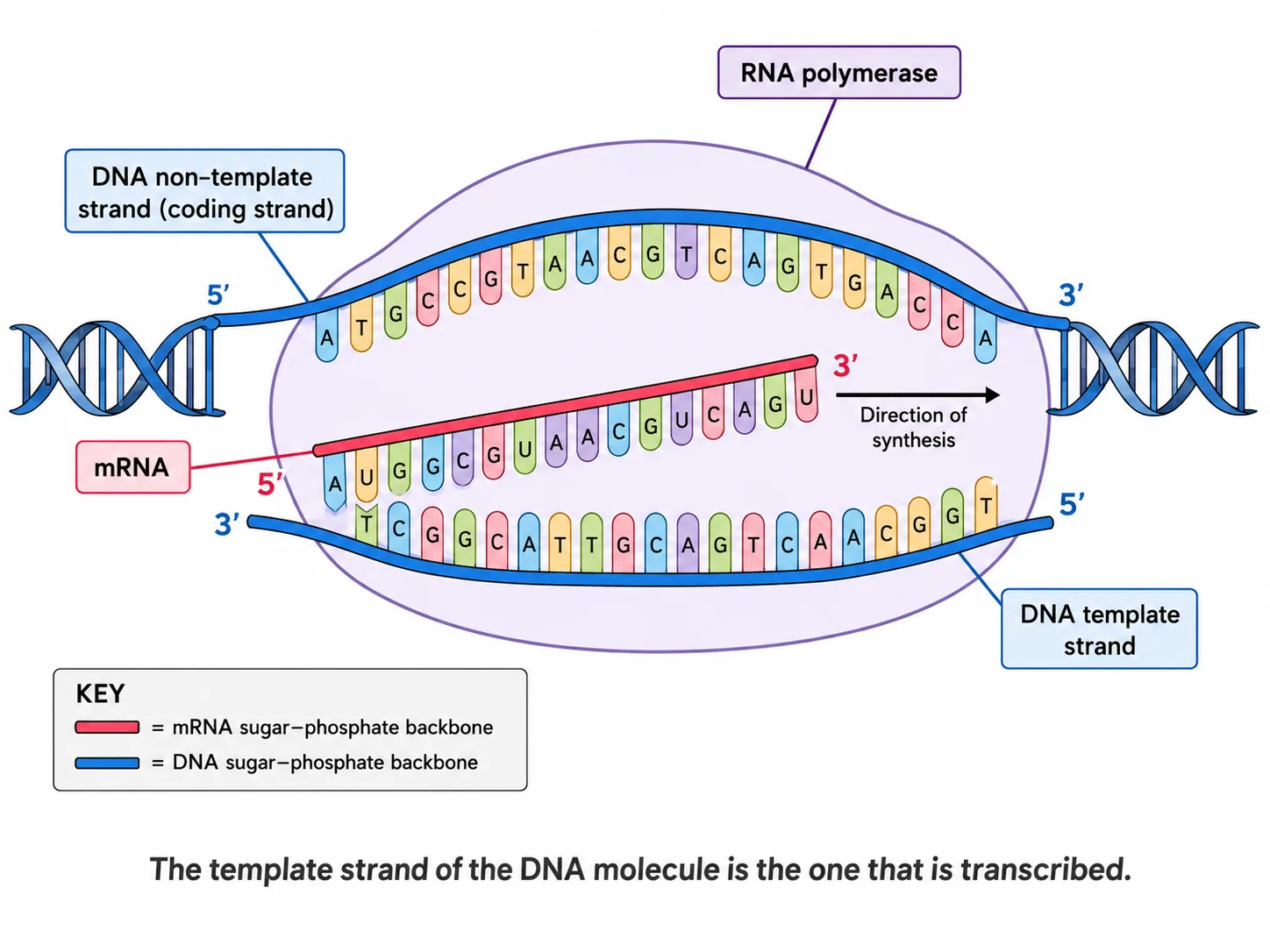
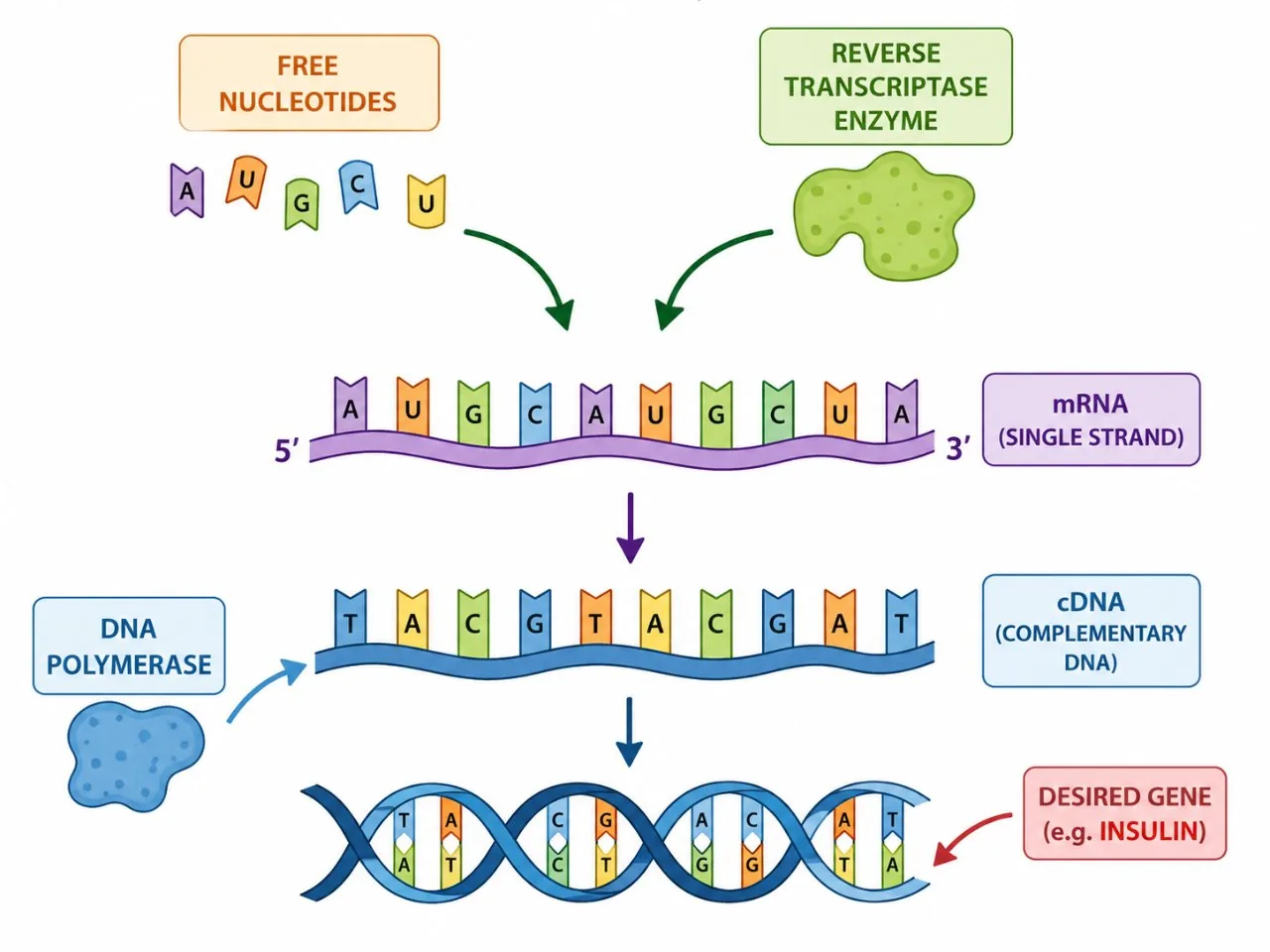
Describe how recombinant DNA is made and inserted into bacteria.
 ⤢ Enlarge


 ⤢ Enlarge




 ⤢ Enlarge
Recombinant DNA
DNA formed by joining DNA from two different sources.
Restriction enzyme
A bacterial enzyme that cuts DNA at a specific recognition sequence, often leaving sticky ends.
Sticky ends
Short single-stranded overhangs left by some restriction enzymes that can base-pair with matching ends.
DNA ligase
An enzyme that seals the sugar-phosphate backbone to join DNA fragments.
Plasmid
A small circular DNA molecule in bacteria, used as a vector to carry genes into cells.
Transformation
Uptake of foreign DNA by a cell, such as a bacterium taking up a plasmid.
PCR
Polymerase chain reaction: a method that makes millions of copies of a specific DNA segment.
Gel electrophoresis
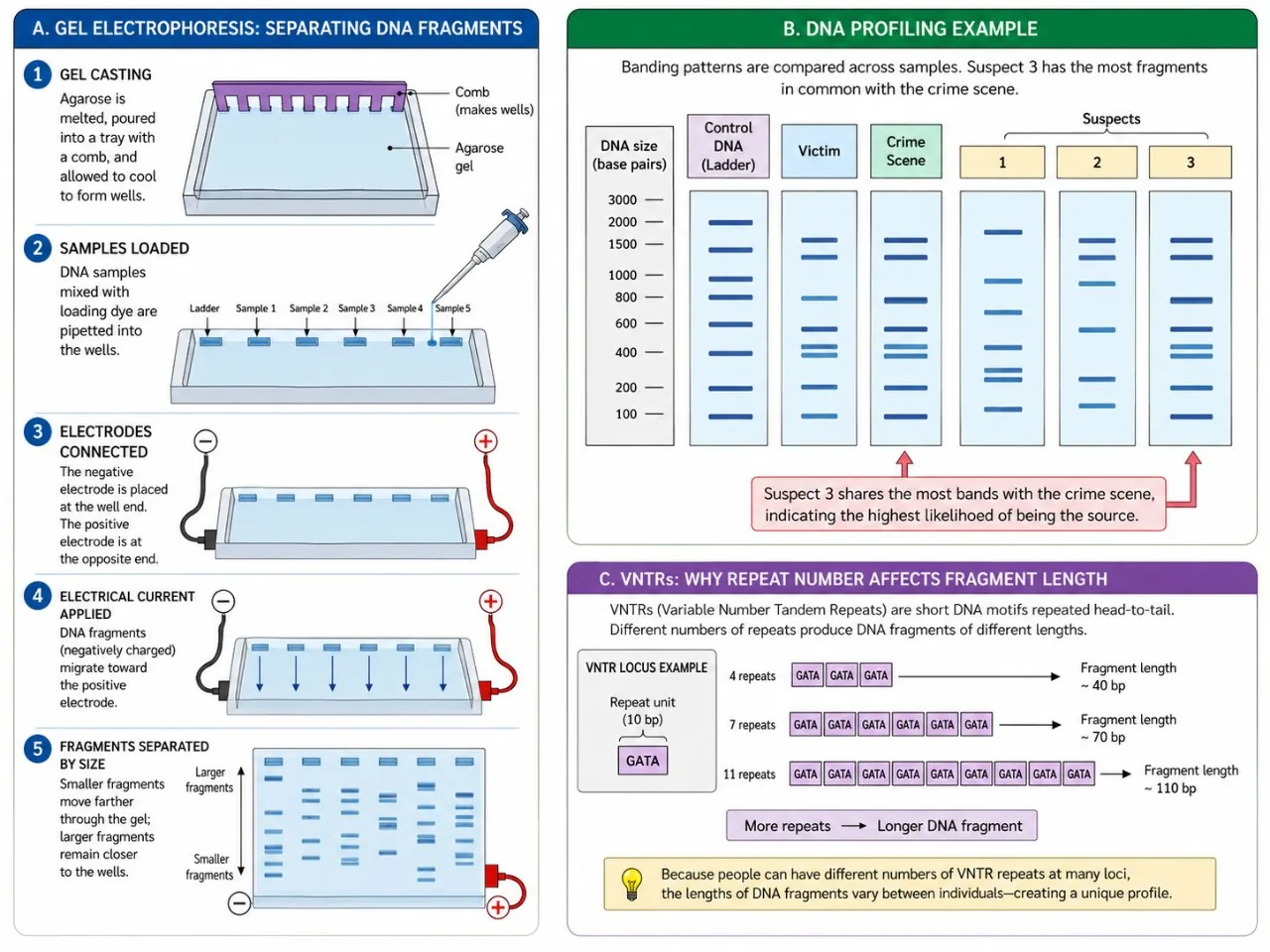
A technique that separates DNA fragments by size using an electric field through a gel.
CRISPR-Cas9
A gene-editing system in which a guide RNA directs the Cas9 enzyme to cut a chosen DNA sequence.
GMO
A genetically modified organism whose DNA has been altered by genetic engineering.
| Tool | What it does | Typical use |
|---|---|---|
| Restriction enzymes | Cut DNA at specific sequences (e.g. EcoRI at GAATTC) | Preparing gene and vector for cloning |
| DNA ligase | Joins DNA fragments | Inserting gene into plasmid |
| PCR (Taq polymerase) | Amplifies target DNA | Forensics, diagnosis, research |
| Gel electrophoresis | Separates fragments by size | DNA fingerprinting, checking PCR products |
| DNA sequencing | Reads base order | Genome projects, identifying mutations |
| CRISPR-Cas9 | Cuts DNA at a guided target | Gene knockout or correction |
| Field | Example |
|---|---|
| Medicine | Human insulin made by recombinant bacteria; gene therapy; vaccines |
| Agriculture | Bt crops resistant to insects; herbicide-tolerant soybeans; Golden Rice (vitamin A) |
| Forensics | DNA profiling using STRs to match suspects to evidence |
| Environment | Bioremediation with microbes that break down oil or toxins |
| Research | Knockout mice; stem cells; cloning (Dolly the sheep by nuclear transfer) |