Curriculum
Course: EST II Biology
Login

Curriculum

EST II Biology

Text lesson

4.3 Excretion & Homeostasis

Define homeostasis and explain negative and positive feedback.
1Key ideas2Key ideas3Key ideas4Key ideas5Key ideas6Key ideas7Key ideas8Key ideas9Key ideas10Key ideas11Key ideas12Key ideas13Key ideas14Key ideas15Key ideas16Key ideas17Key ideas18Key ideas19Key ideas20Key ideas21Key ideas22Key ideas23Key ideas24Key ideas25Key ideas26Key ideas27Key ideas28Key ideas29Key ideas30Key ideas31Key ideas32Key ideas33Key ideas34Key ideas35Key ideas36Key ideas37Key ideas38Key ideas39Key ideas40Key ideas41Key ideas42Key ideas43Key ideas44Key ideas45Key ideas46Key ideas47Key ideas48Key ideas49Key ideas
Key ideas
1 / 49Next ▶
Key ideas
◀ Previous2 / 49Next ▶
Key ideas
◀ Previous3 / 49Next ▶
Key ideas
◀ Previous4 / 49Next ▶
Key ideas
◀ Previous5 / 49Next ▶
Key ideas
◀ Previous6 / 49Next ▶
Key ideas
◀ Previous7 / 49Next ▶
Key ideas
◀ Previous8 / 49Next ▶
Key ideas
◀ Previous9 / 49Next ▶
Key ideas
◀ Previous10 / 49Next ▶
Key ideas
◀ Previous11 / 49Next ▶
Key ideas
◀ Previous12 / 49Next ▶
Key ideas
◀ Previous13 / 49Next ▶
Key ideas
◀ Previous14 / 49Next ▶
Key ideas
◀ Previous15 / 49Next ▶
Key ideas
◀ Previous16 / 49Next ▶
Key ideas
◀ Previous17 / 49Next ▶
Key ideas
◀ Previous18 / 49Next ▶
Key ideas
◀ Previous19 / 49Next ▶
Key ideas
◀ Previous20 / 49Next ▶
Key ideas
◀ Previous21 / 49Next ▶
Key ideas
◀ Previous22 / 49Next ▶
Key ideas
◀ Previous23 / 49Next ▶
Key ideas
◀ Previous24 / 49Next ▶
Key ideas
◀ Previous25 / 49Next ▶
Key ideas
◀ Previous26 / 49Next ▶
Key ideas
◀ Previous27 / 49Next ▶
Key ideas
◀ Previous28 / 49Next ▶
Key ideas
◀ Previous29 / 49Next ▶
Key ideas
◀ Previous30 / 49Next ▶
Key ideas
◀ Previous31 / 49Next ▶
Key ideas
◀ Previous32 / 49Next ▶
Key ideas
◀ Previous33 / 49Next ▶
Key ideas
" loading= - Dr Khaled Dabour Academy⤢ Enlarge
Key ideas
Kidneys filter about 180 L of plasma per day but produce only about 1.5 L of urine.
Glucose in the urine indicates diabetes mellitus (reabsorption capacity exceeded).
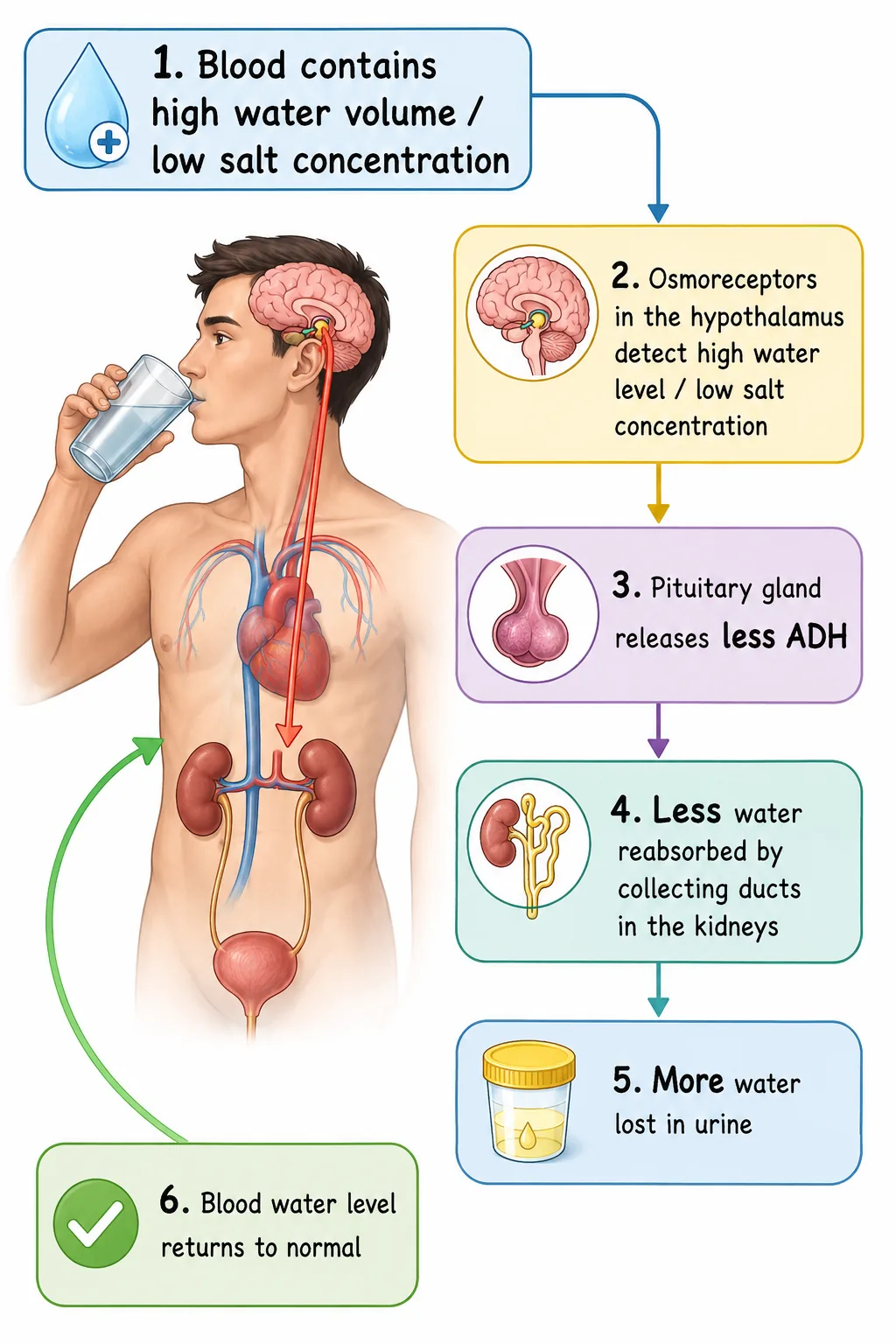
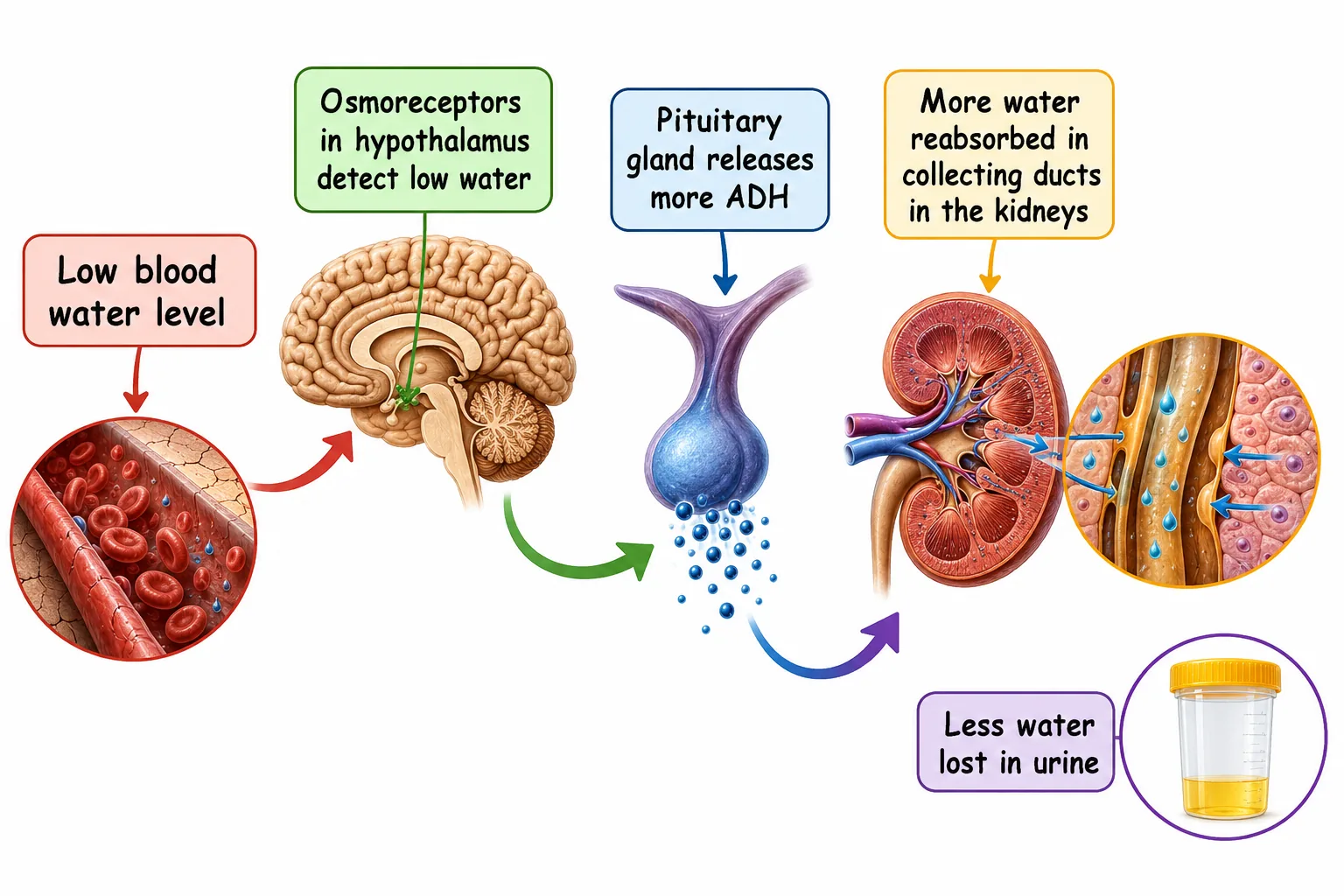
Dehydration → hypothalamus detects high blood osmolarity → posterior pituitary releases ADH → concentrated urine.
Alcohol and caffeine inhibit ADH, producing dilute urine.
Aldosterone (adrenal cortex) increases Na
+
◀ Previous34 / 49Next ▶
Key ideas
1

reabsorption, raising blood volume and pressure.
2

Normal human core temperature is about 37 °C

blood glucose is about 90 mg/100 mL.
3

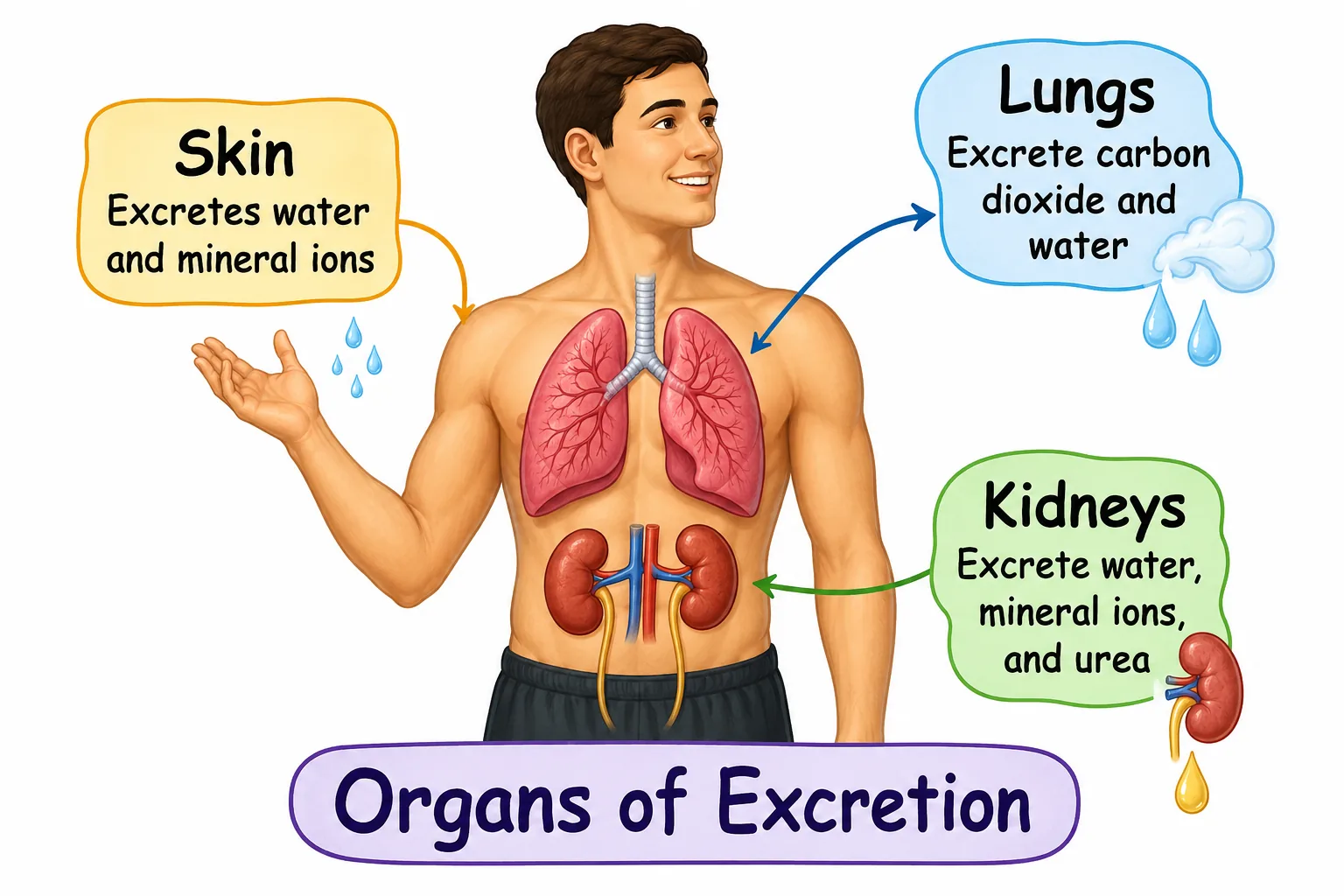
Other excretory organs
4

lungs (CO
5

2
6

), skin (sweat), liver (bile pigments).
◀ Previous35 / 49Next ▶
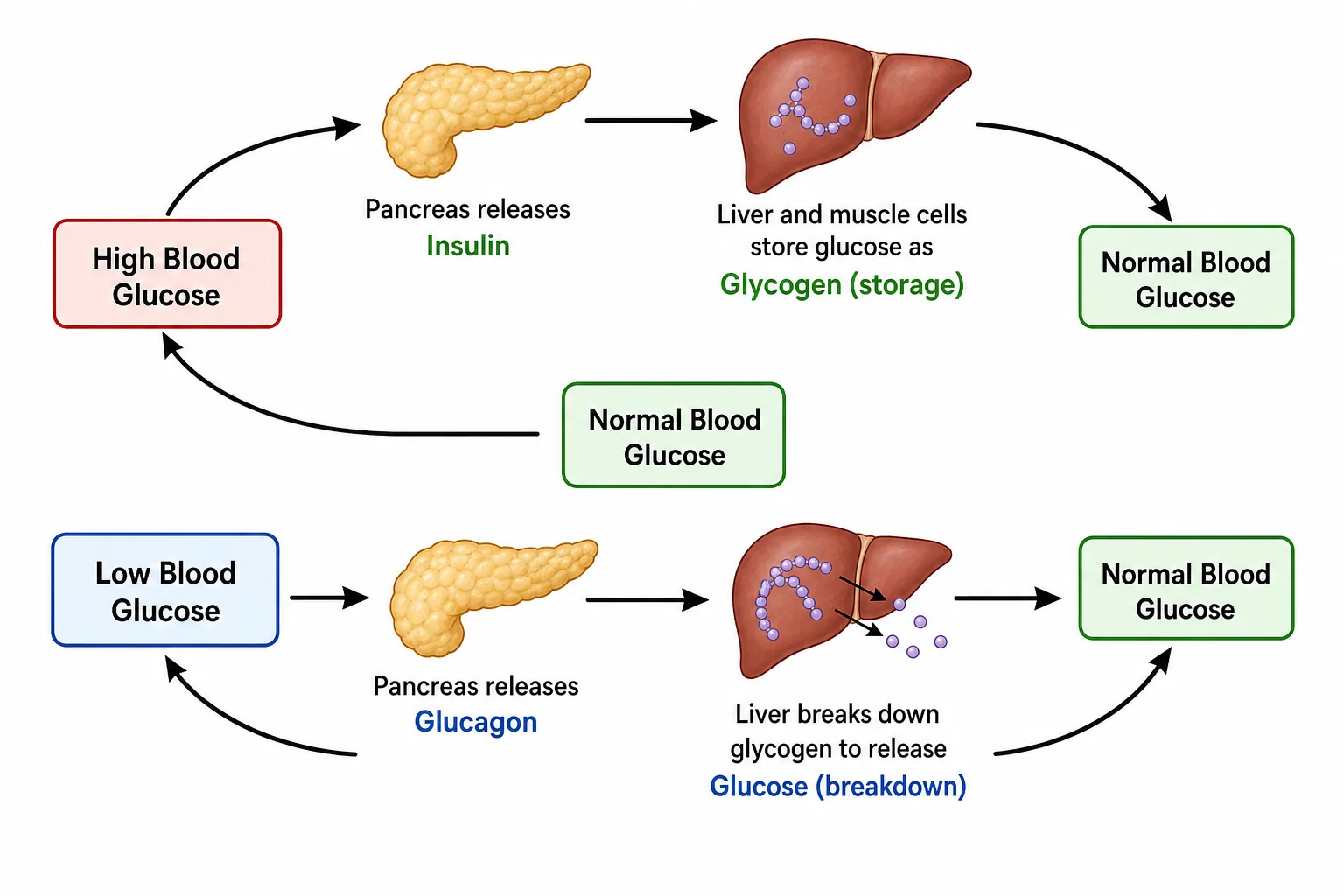
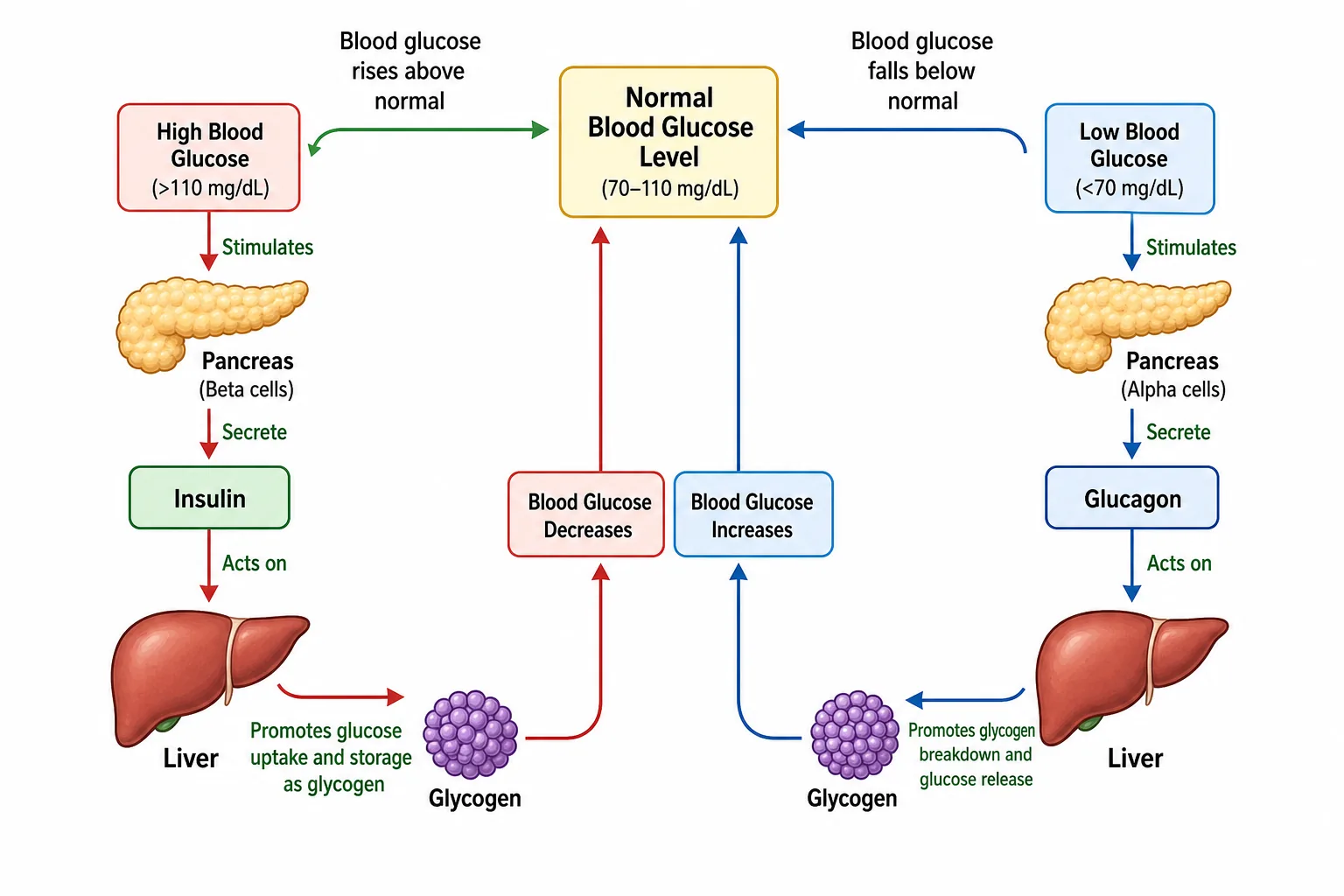
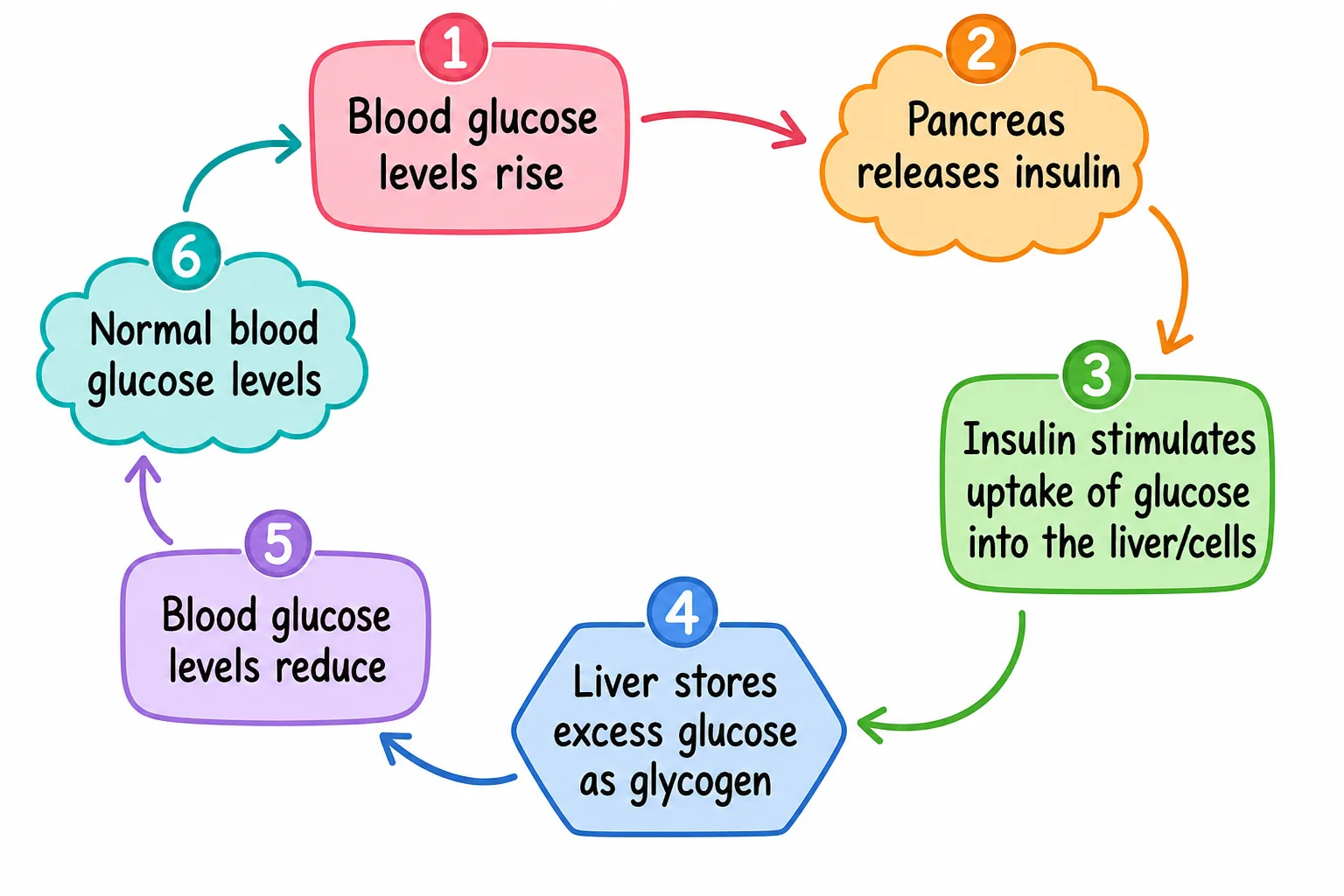
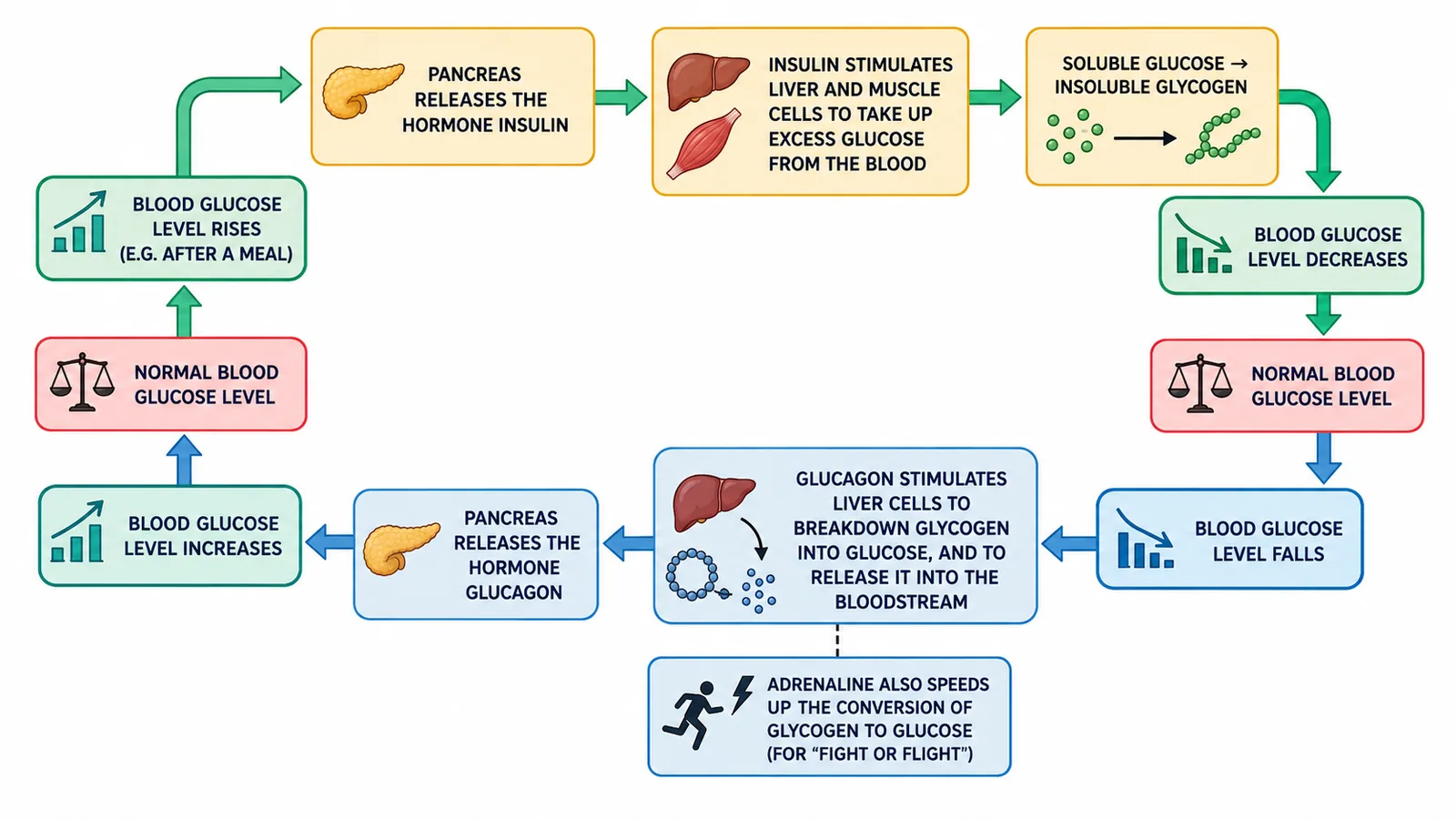
Insulin glucagon blood glucose control
Key ideas
Insulin glucagon blood glucose control" loading= - Dr Khaled Dabour Academy⤢ Enlarge
1

Excretory structures in other animals
2

contractile vacuoles (protists), flame cells (flatworms), nephridia (earthworms), Malpighian tubules (insects).
◀ Previous36 / 49Next ▶
Insulin glucagon blood glucose control
Key ideas
◀ Previous37 / 49Next ▶
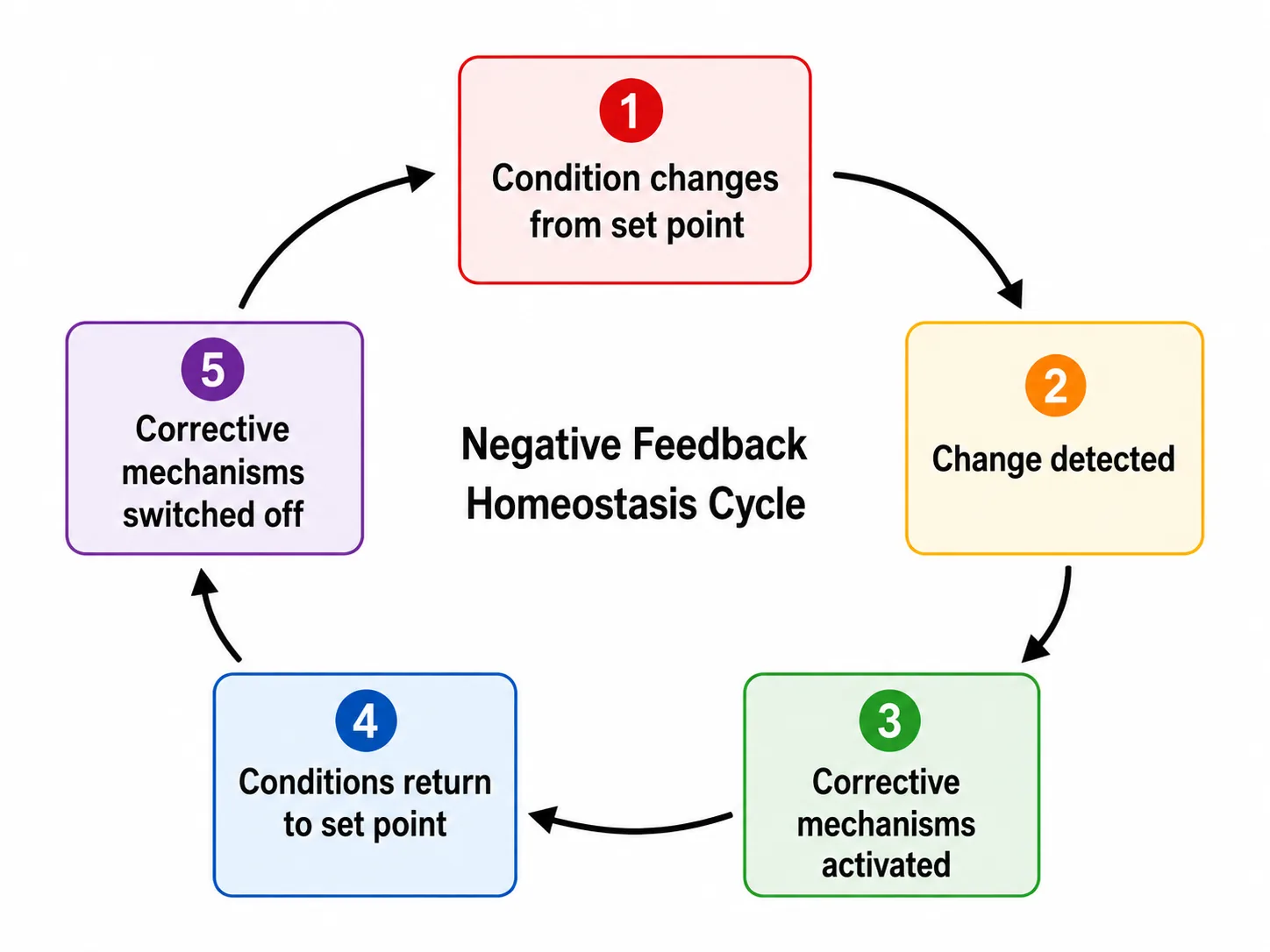
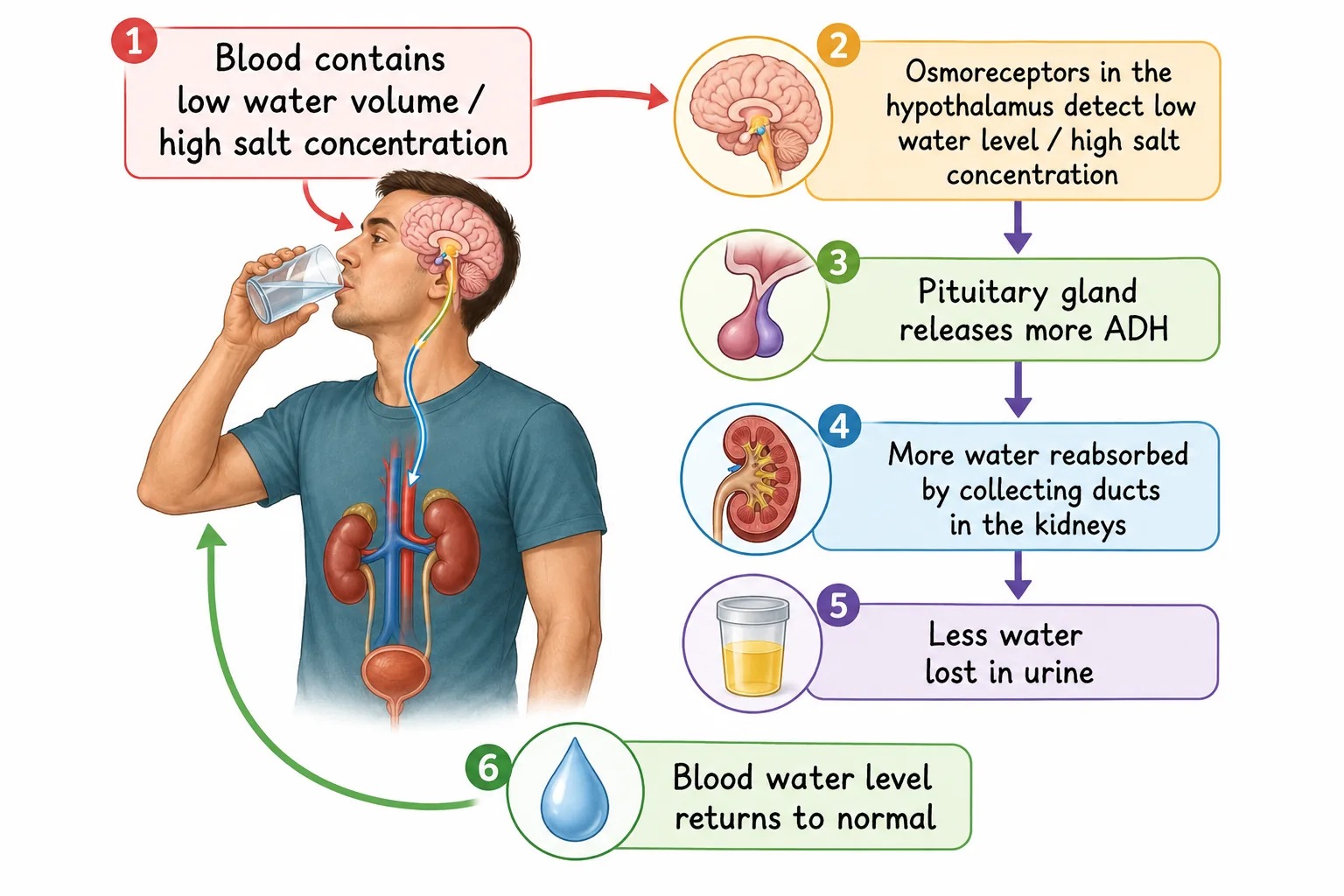
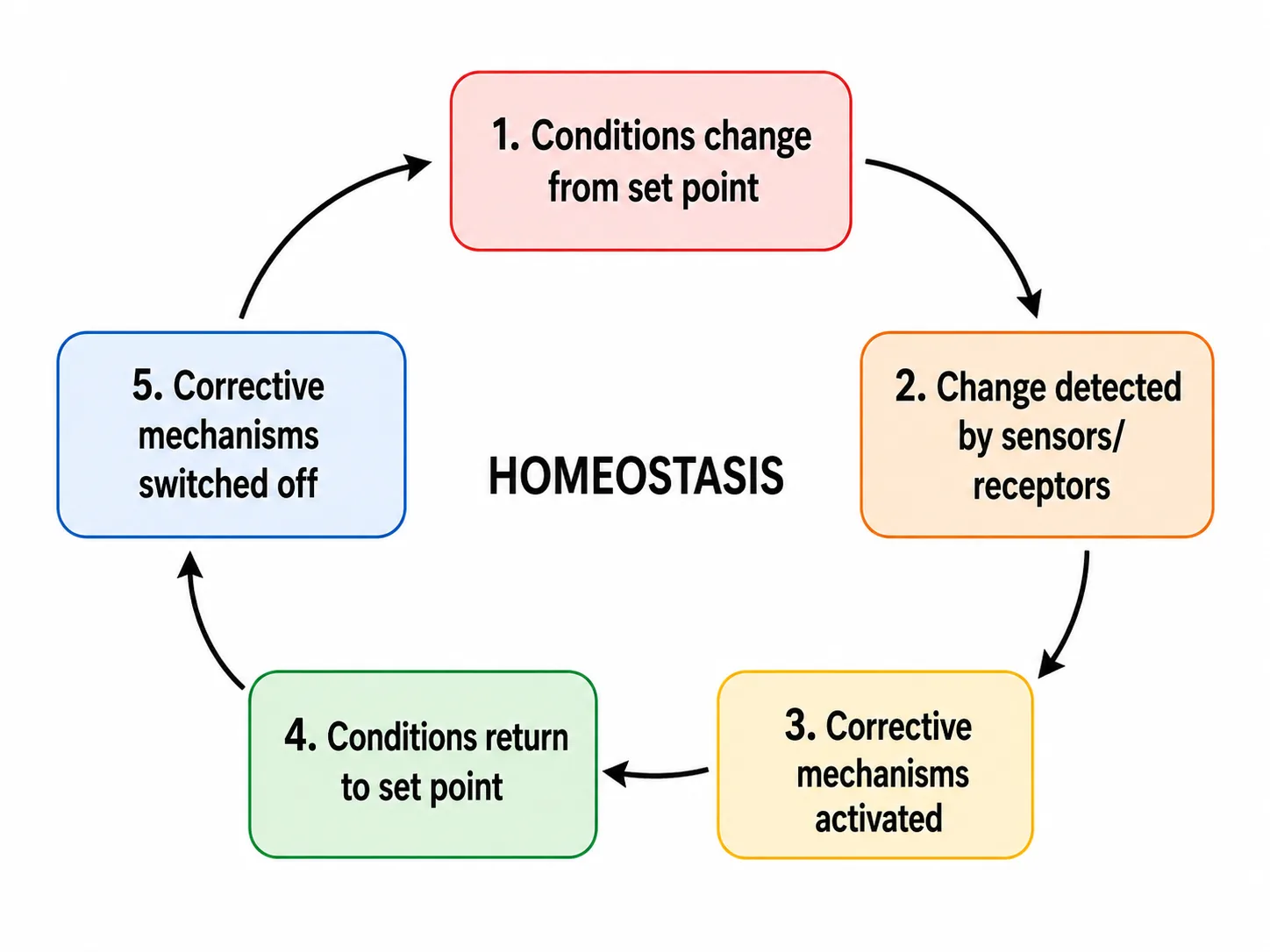
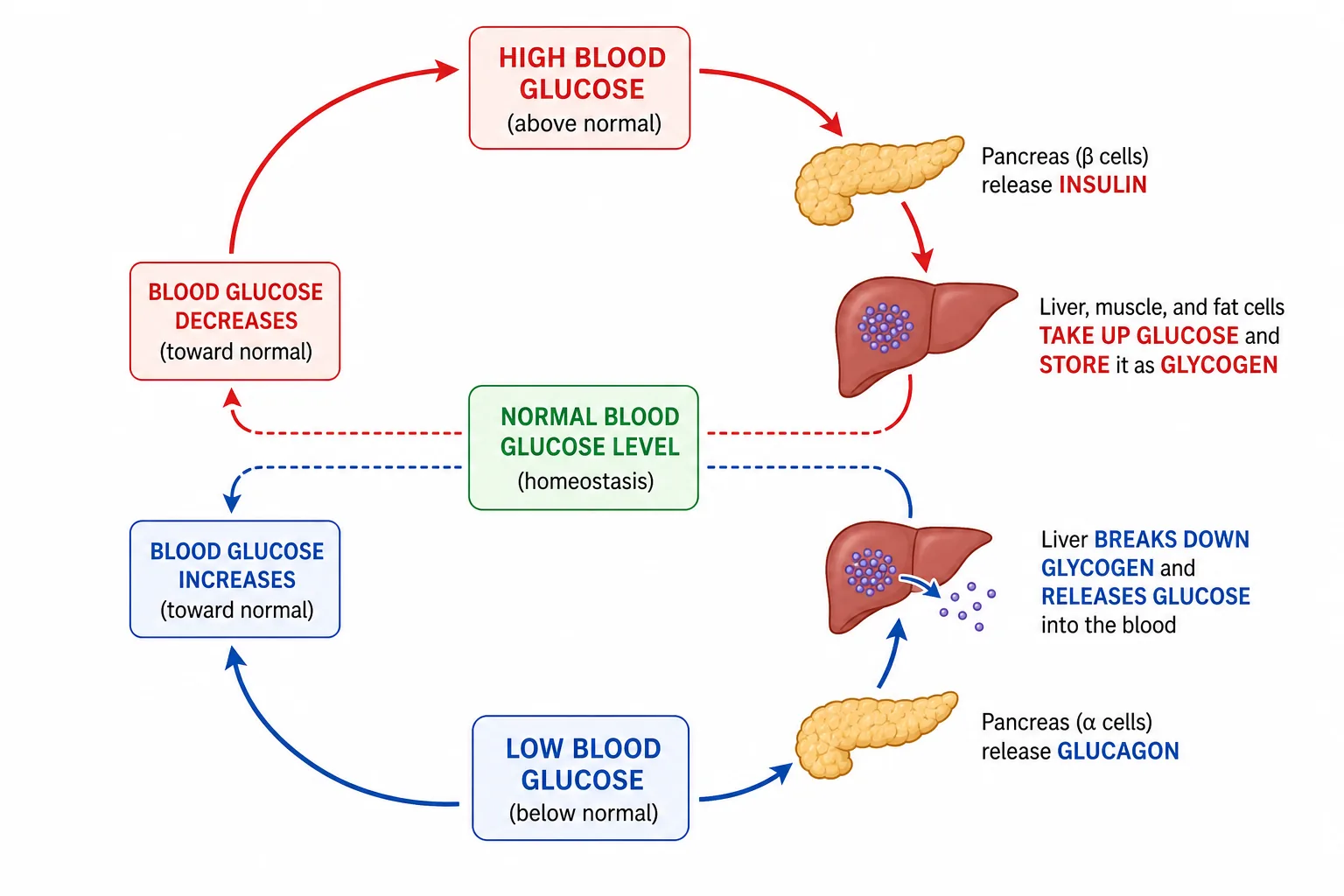
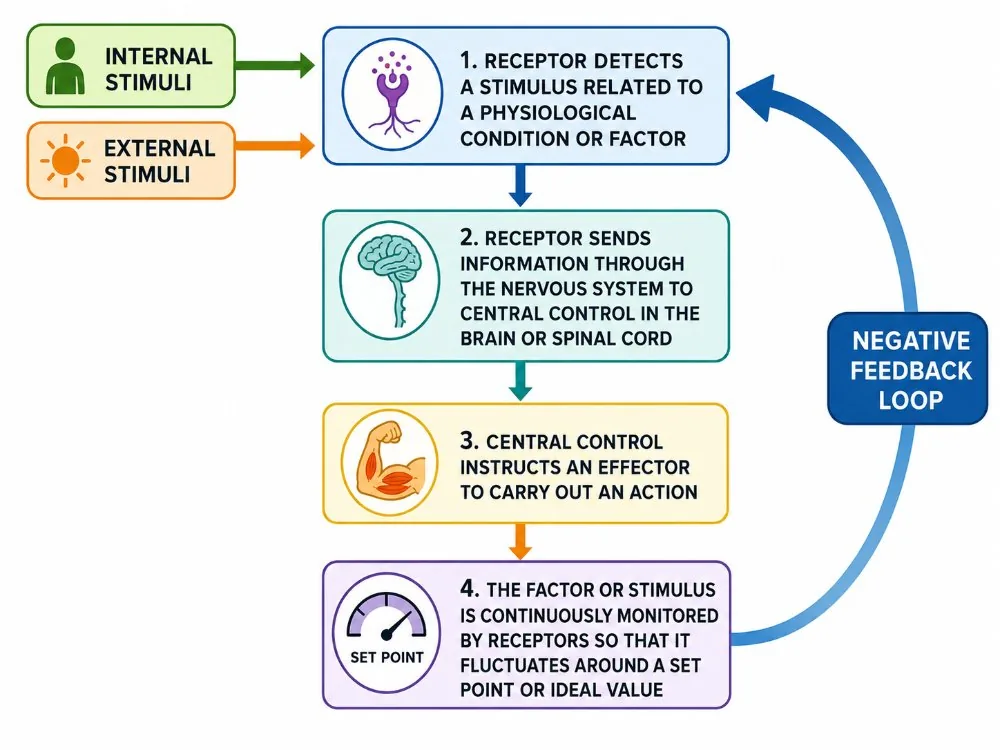
Homeostasis negative feedback cycle
Key ideas
◀ Previous38 / 49Next ▶
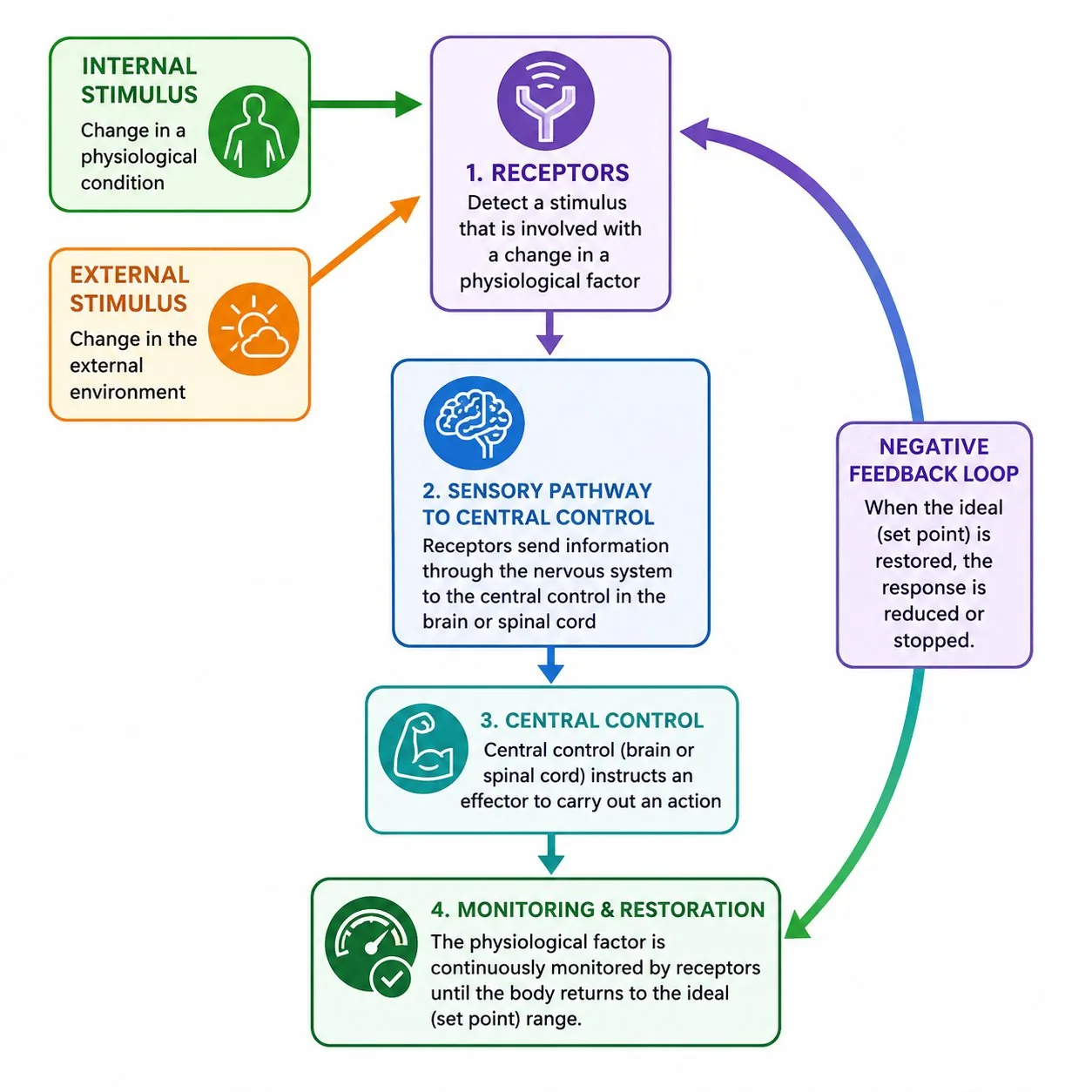
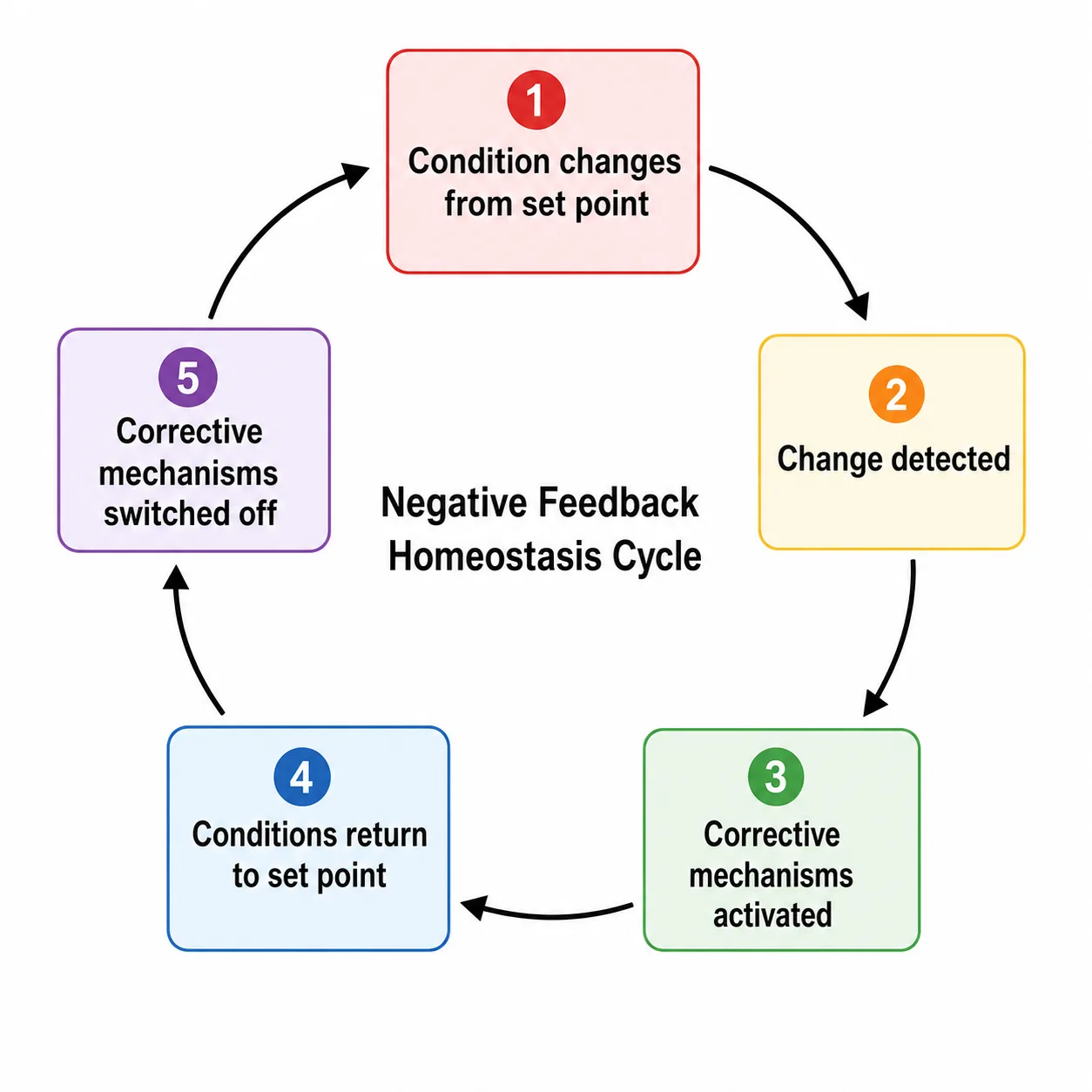
Negative feedback loop stages
Key ideas
◀ Previous39 / 49Next ▶
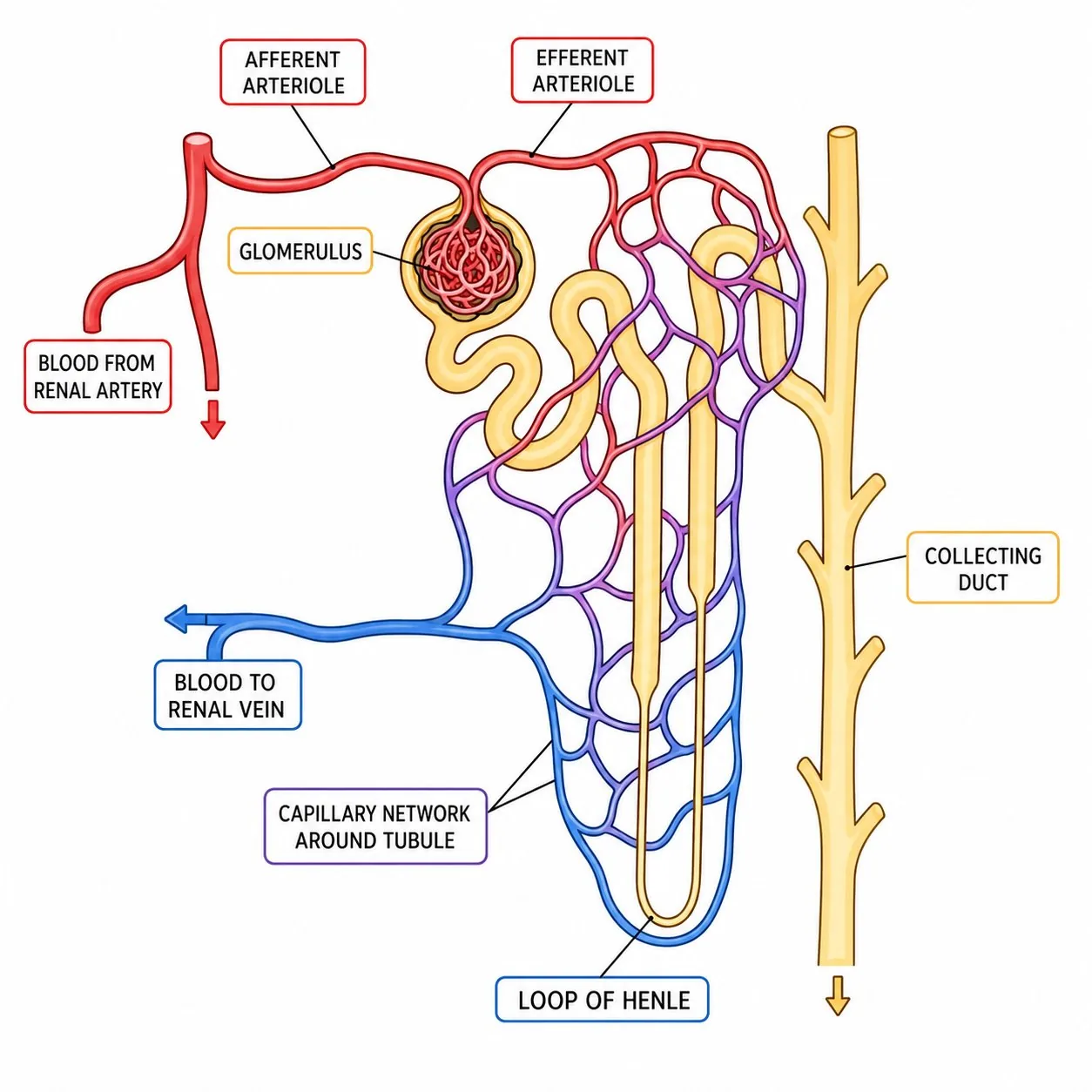
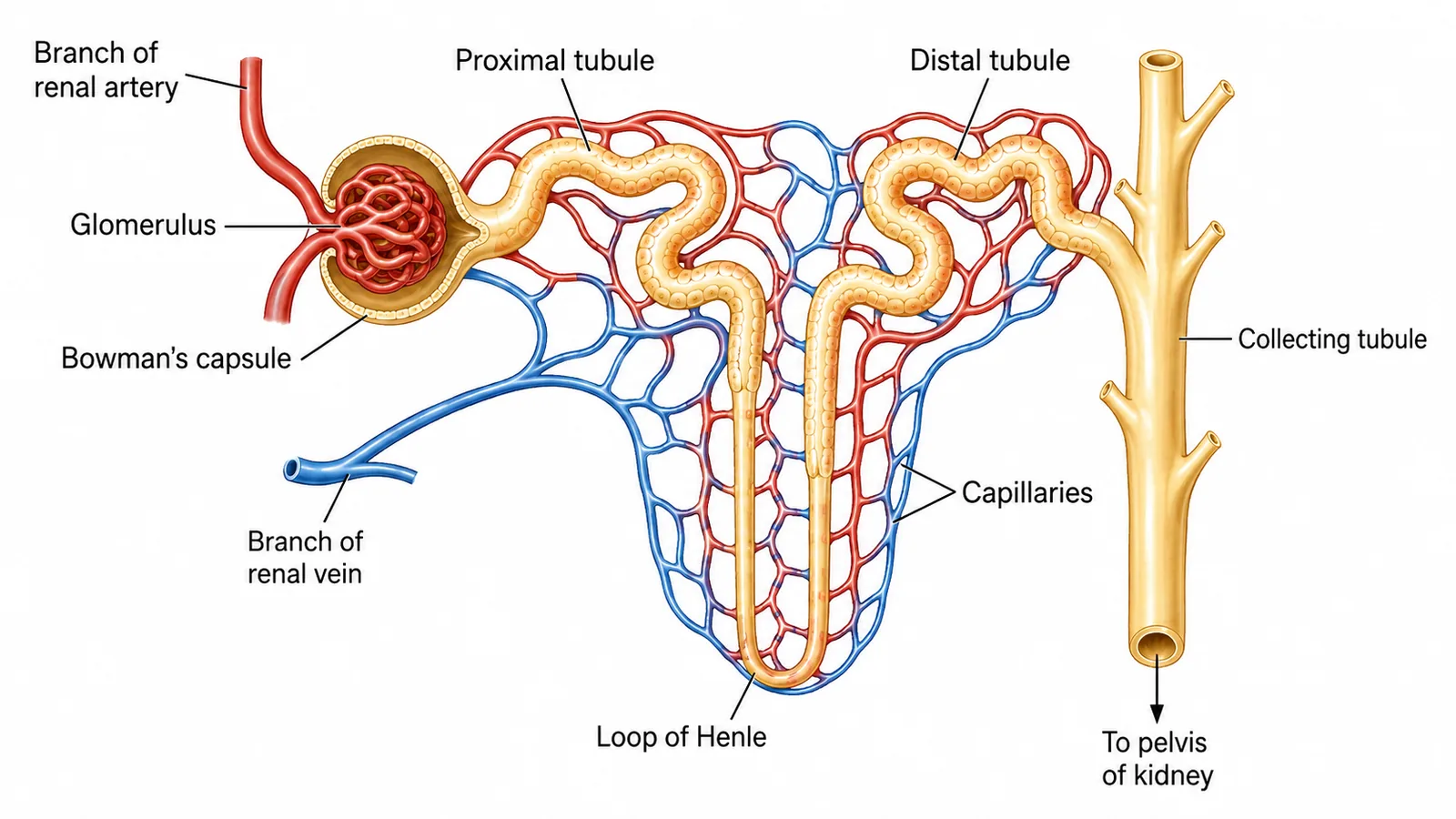
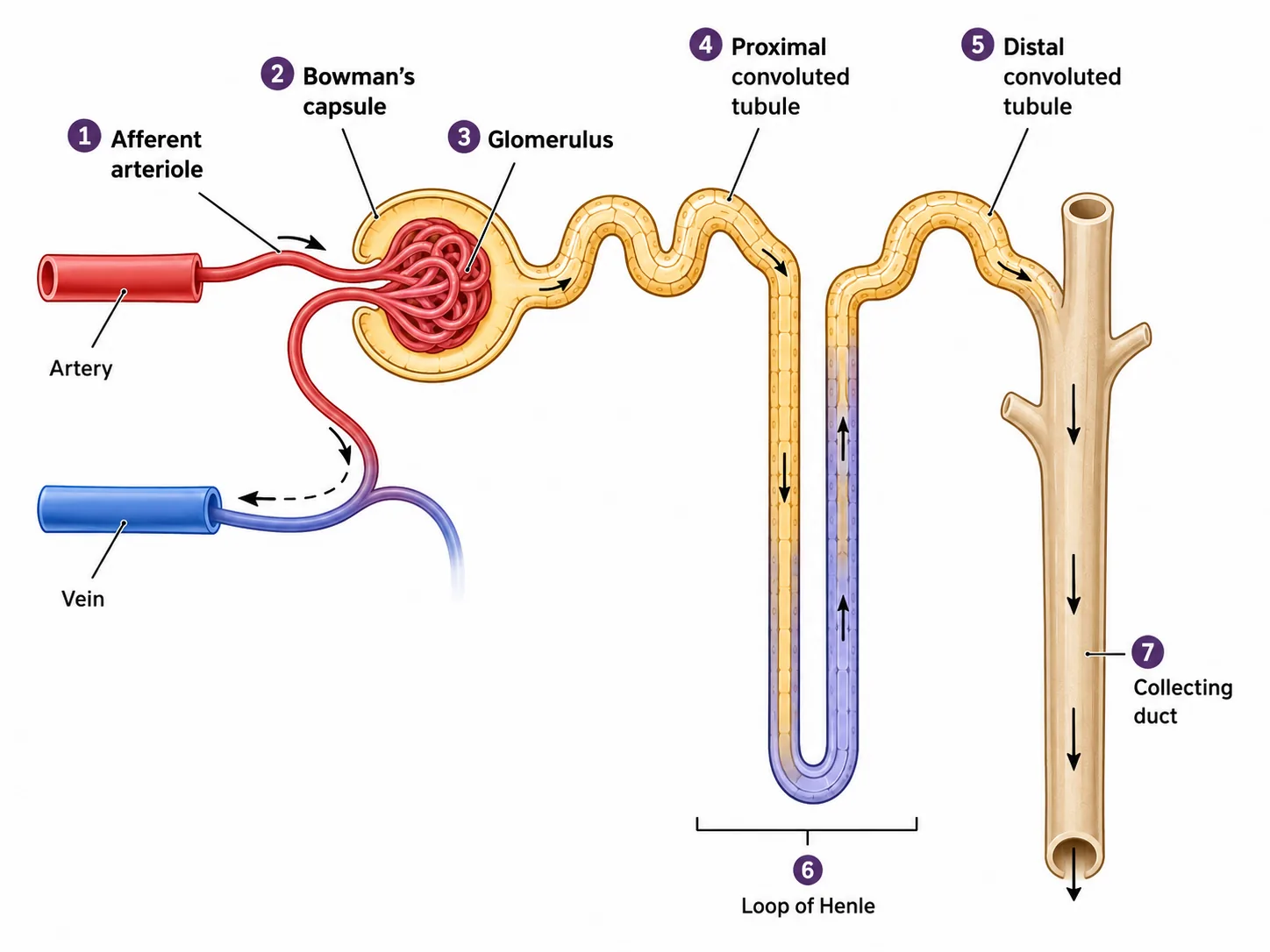
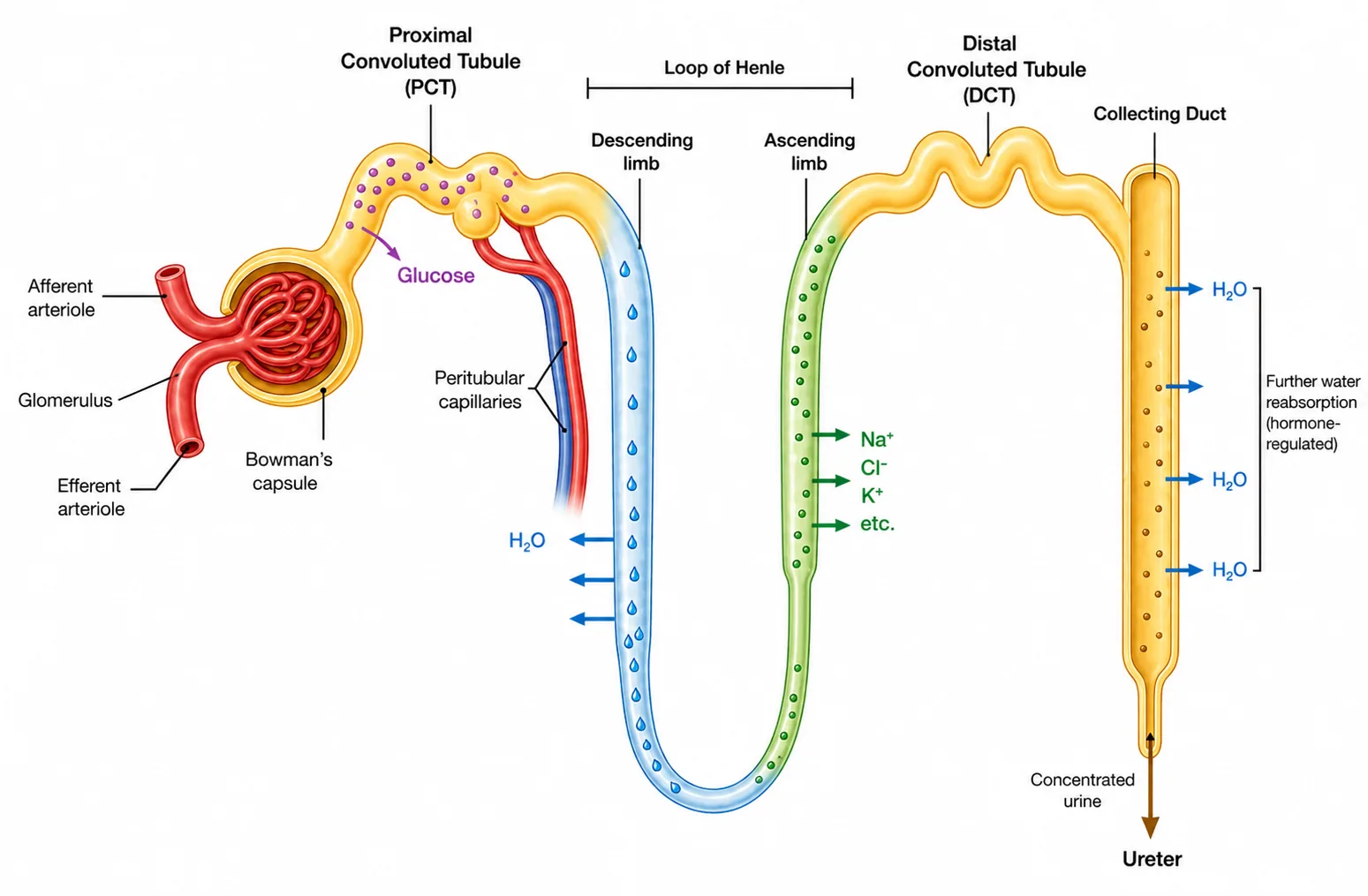
Nephron with blood supply
Key ideas
◀ Previous40 / 49Next ▶
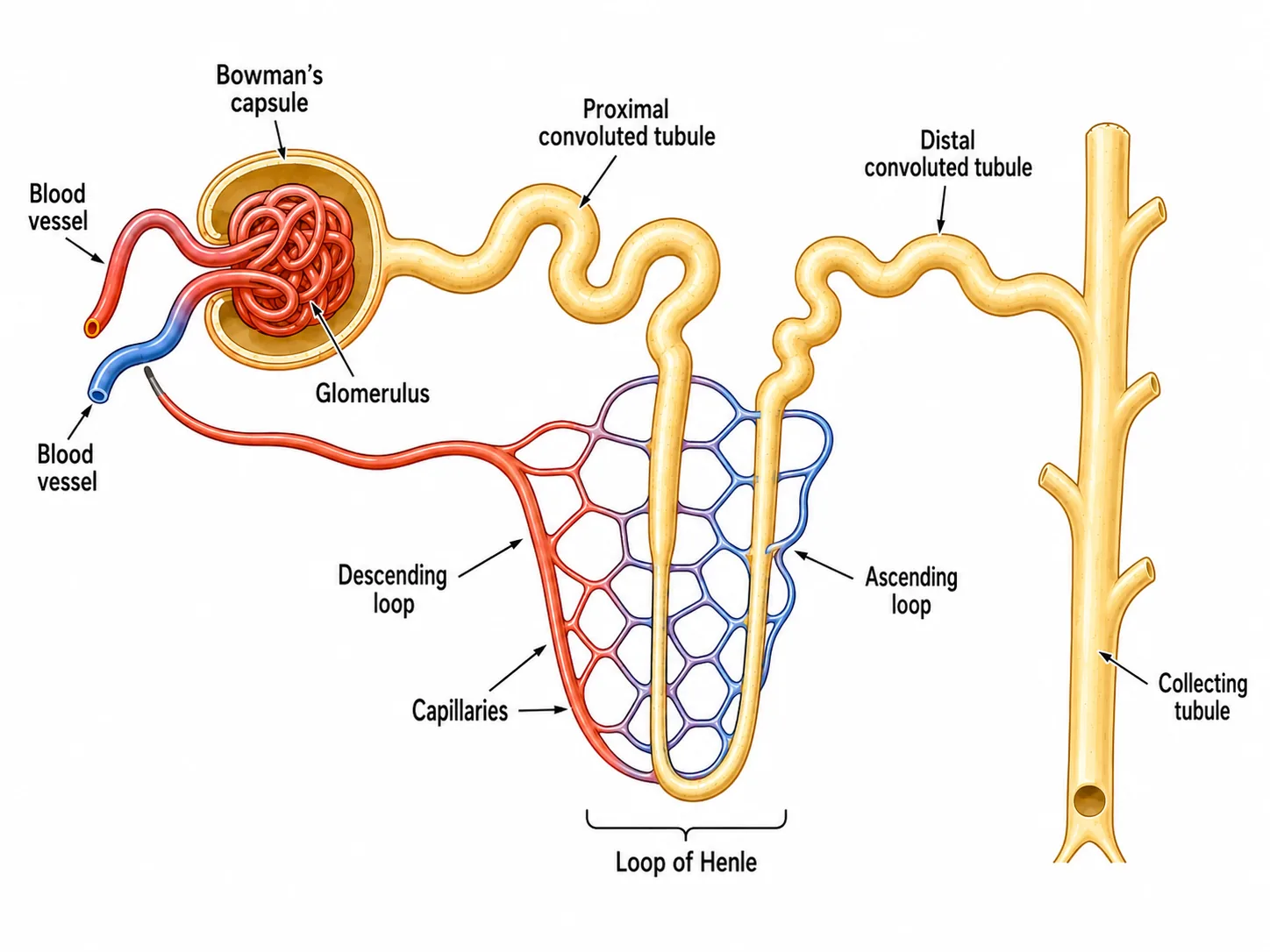
Nephron with capillaries
Key ideas
◀ Previous41 / 49Next ▶
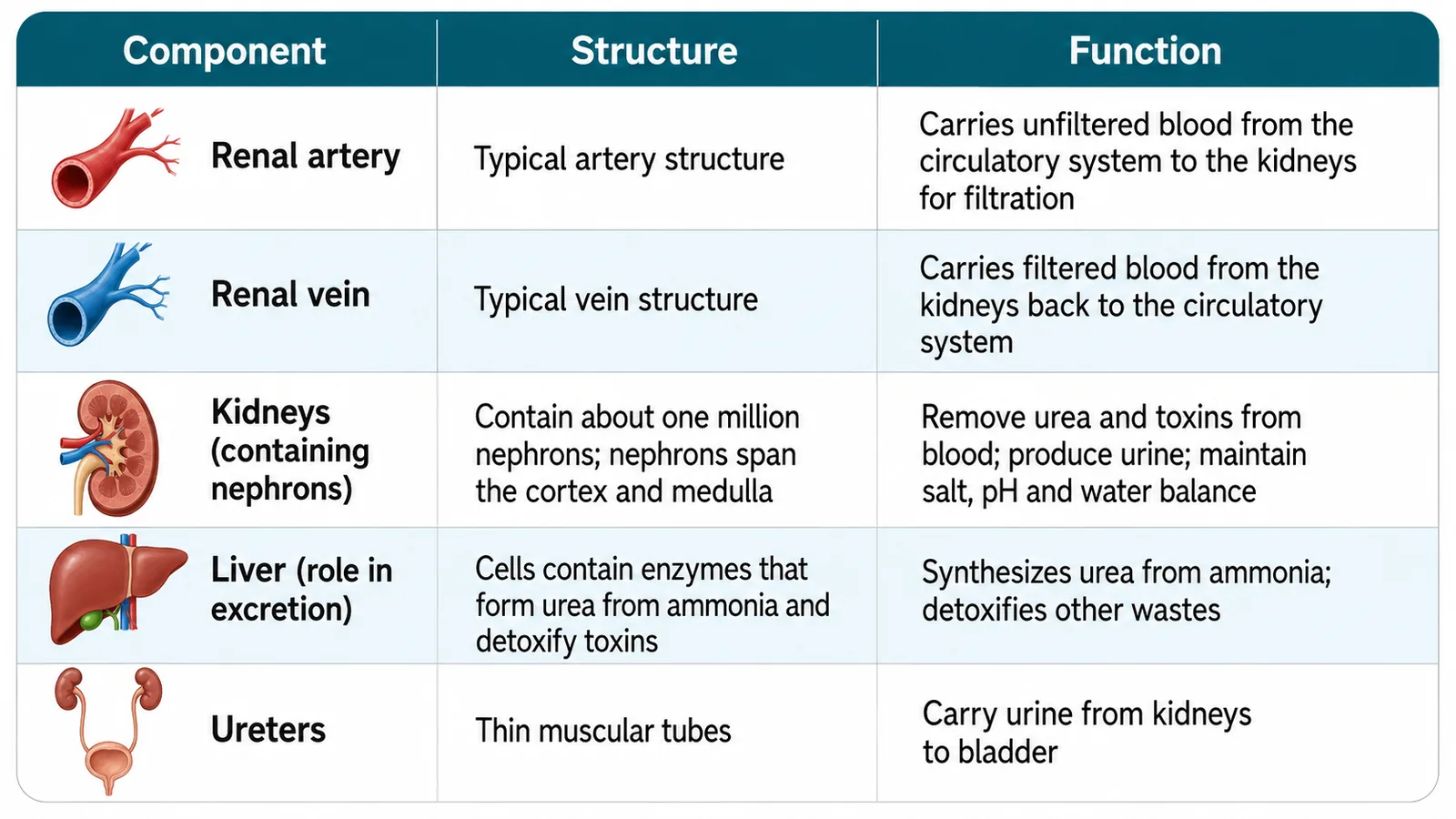
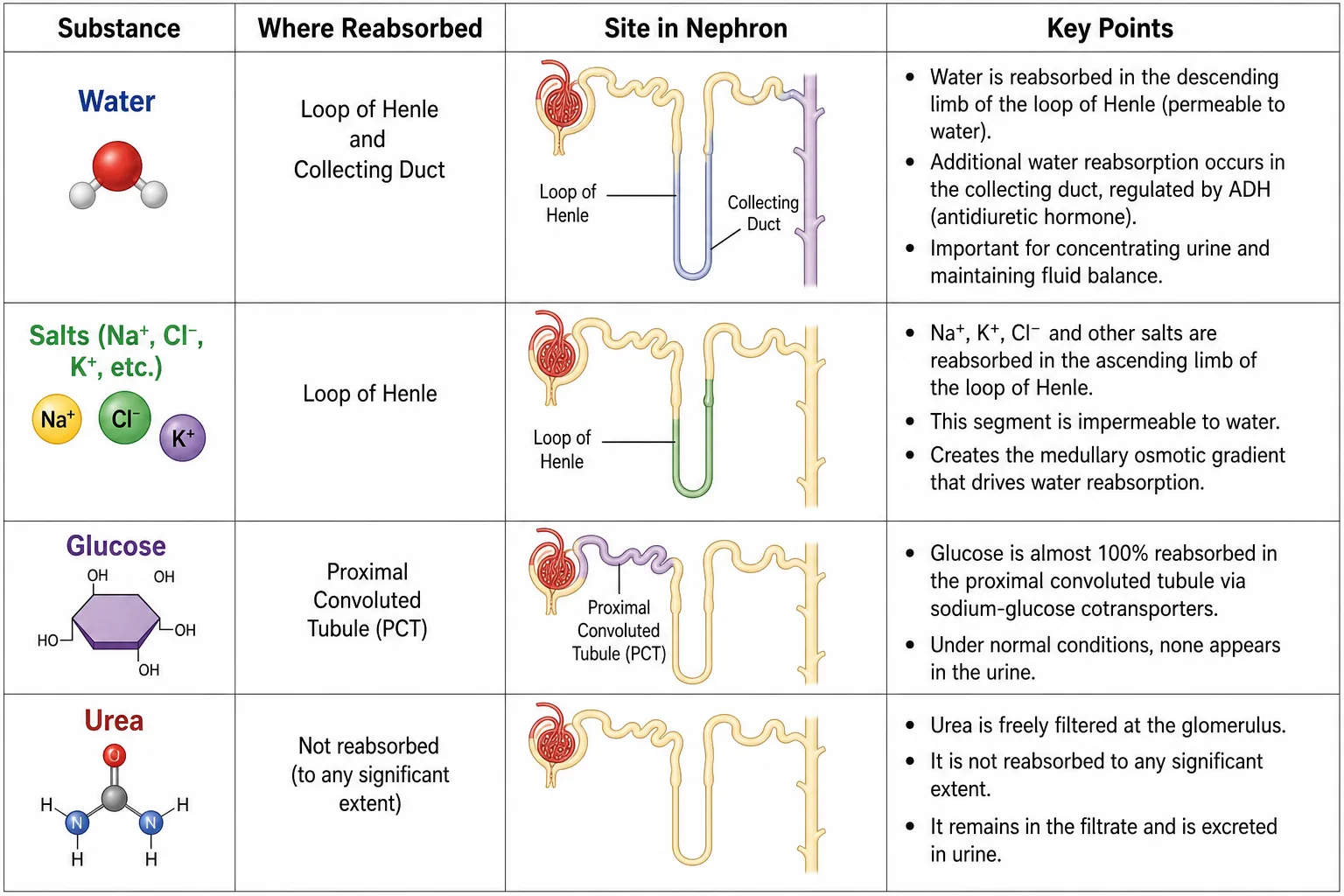
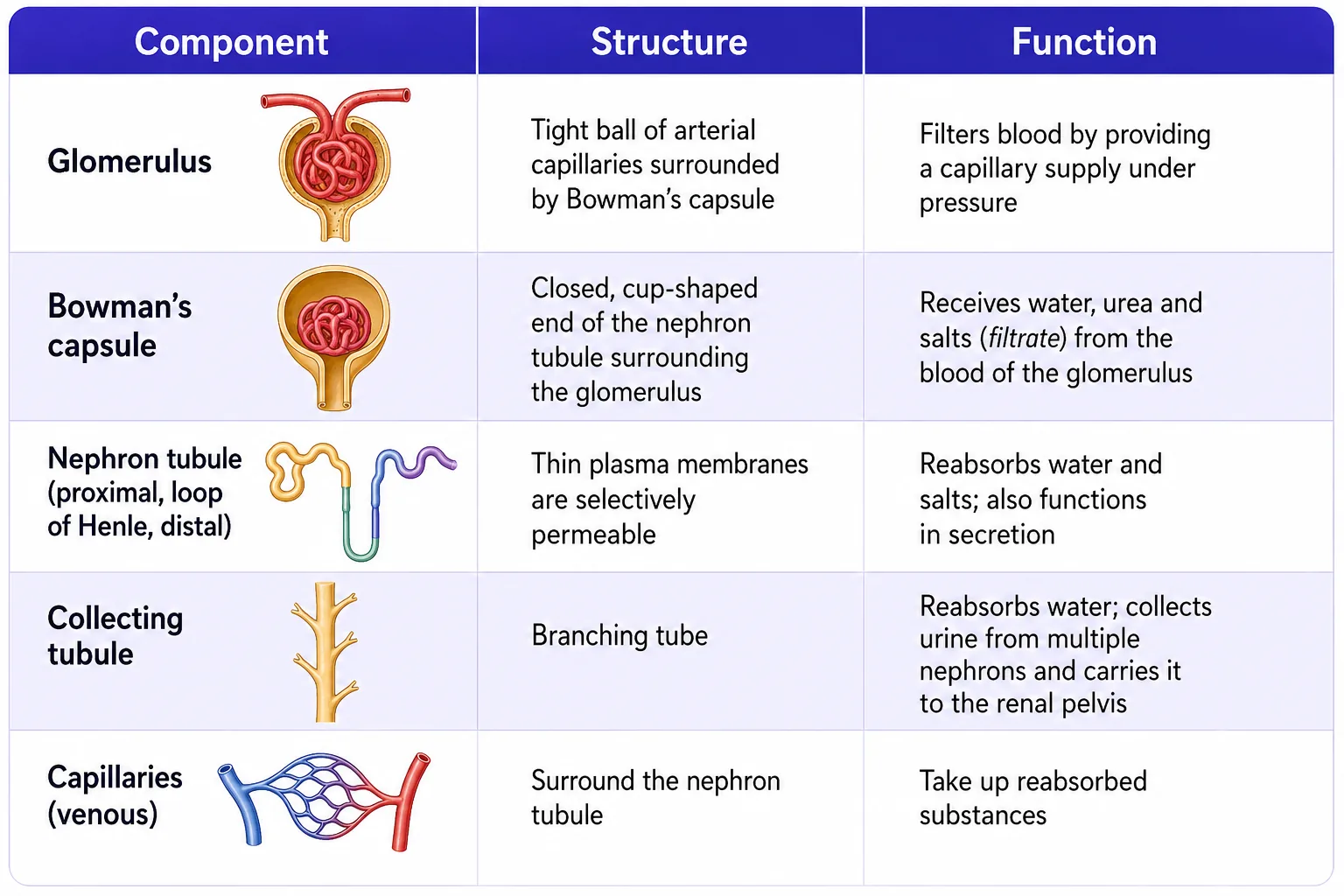
Nephron parts structure function table
Key ideas
◀ Previous42 / 49Next ▶
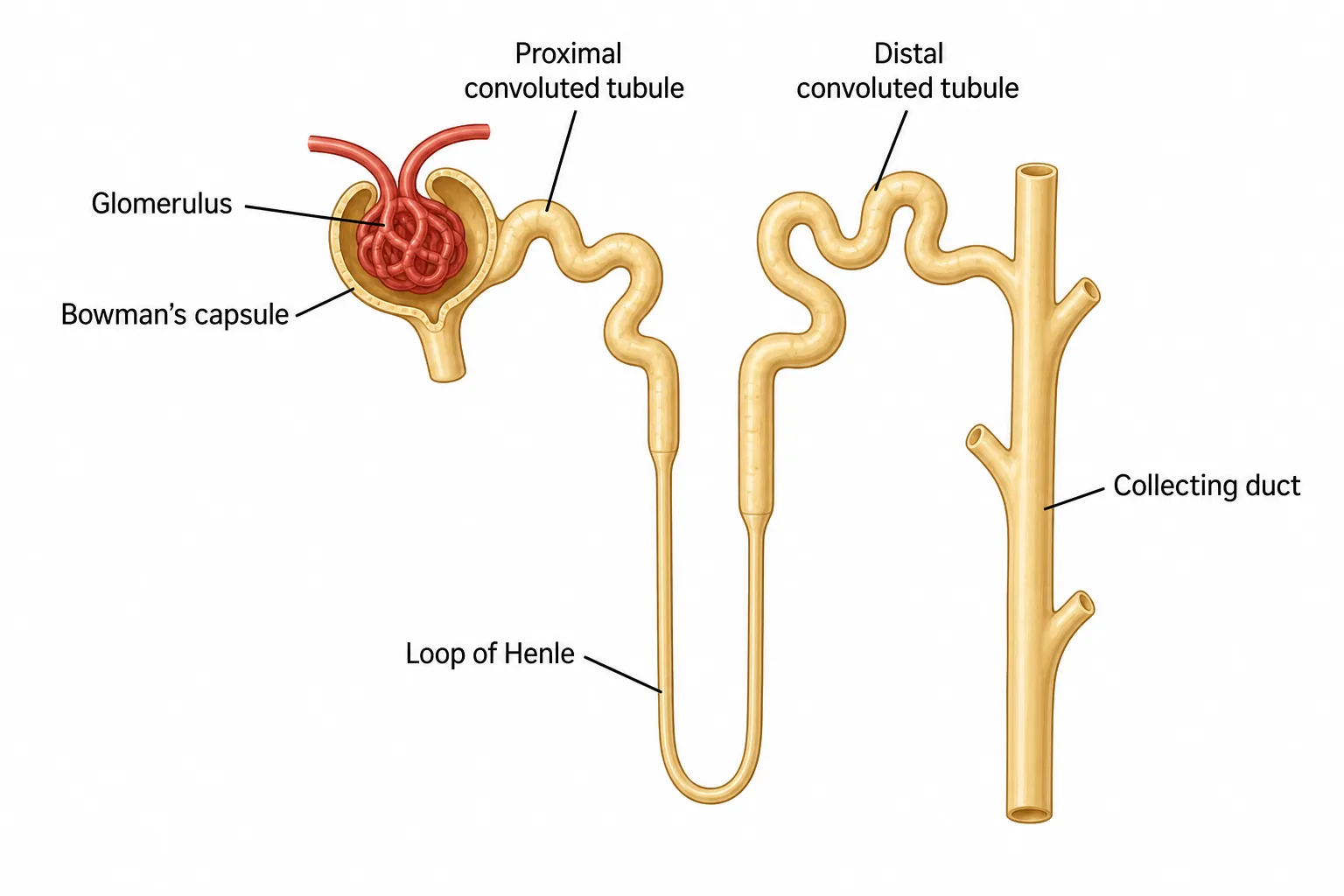
Nephron numbered parts
Key ideas
◀ Previous43 / 49Next ▶
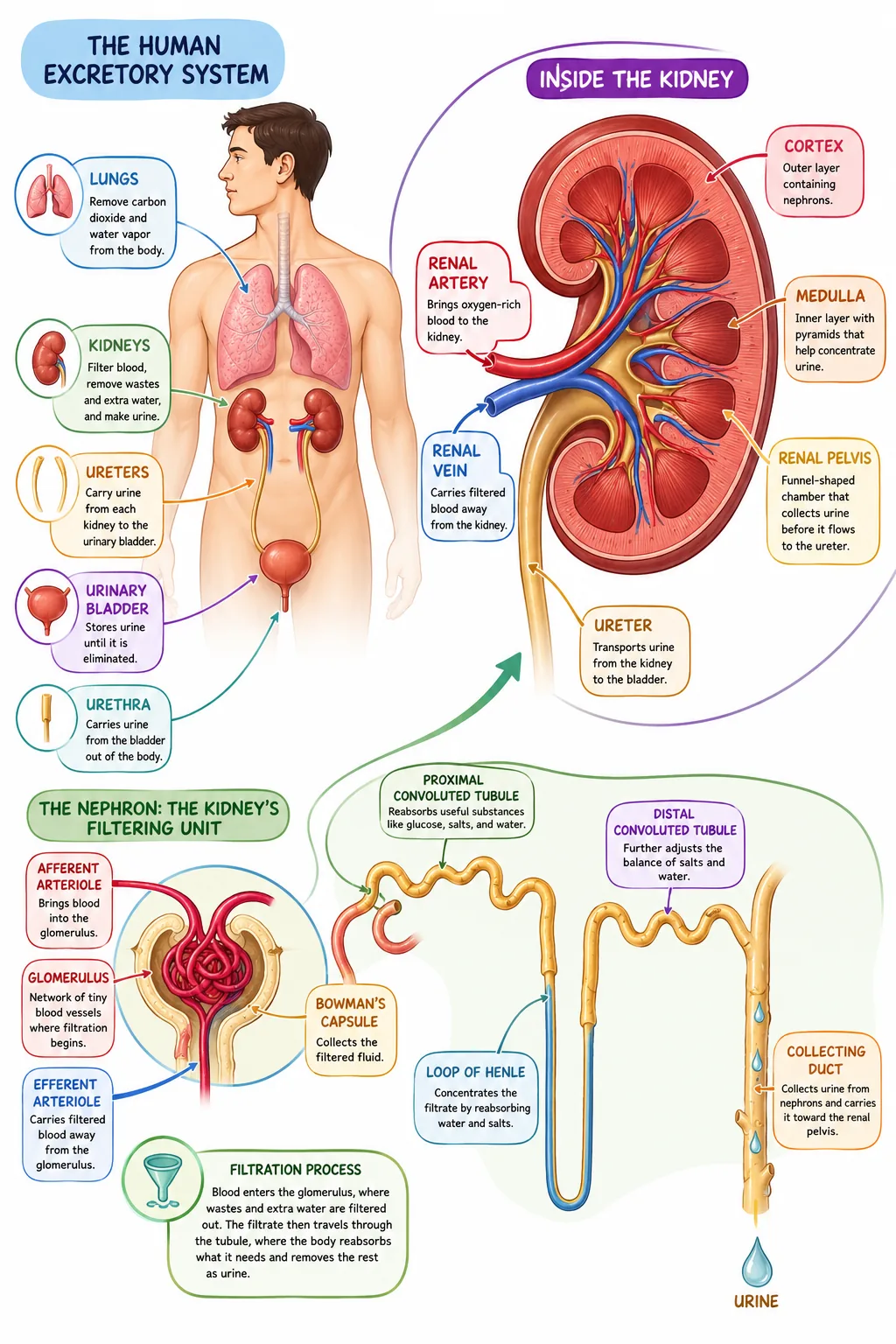
Excretory system kidney and nephron
Key ideas
◀ Previous44 / 49Next ▶
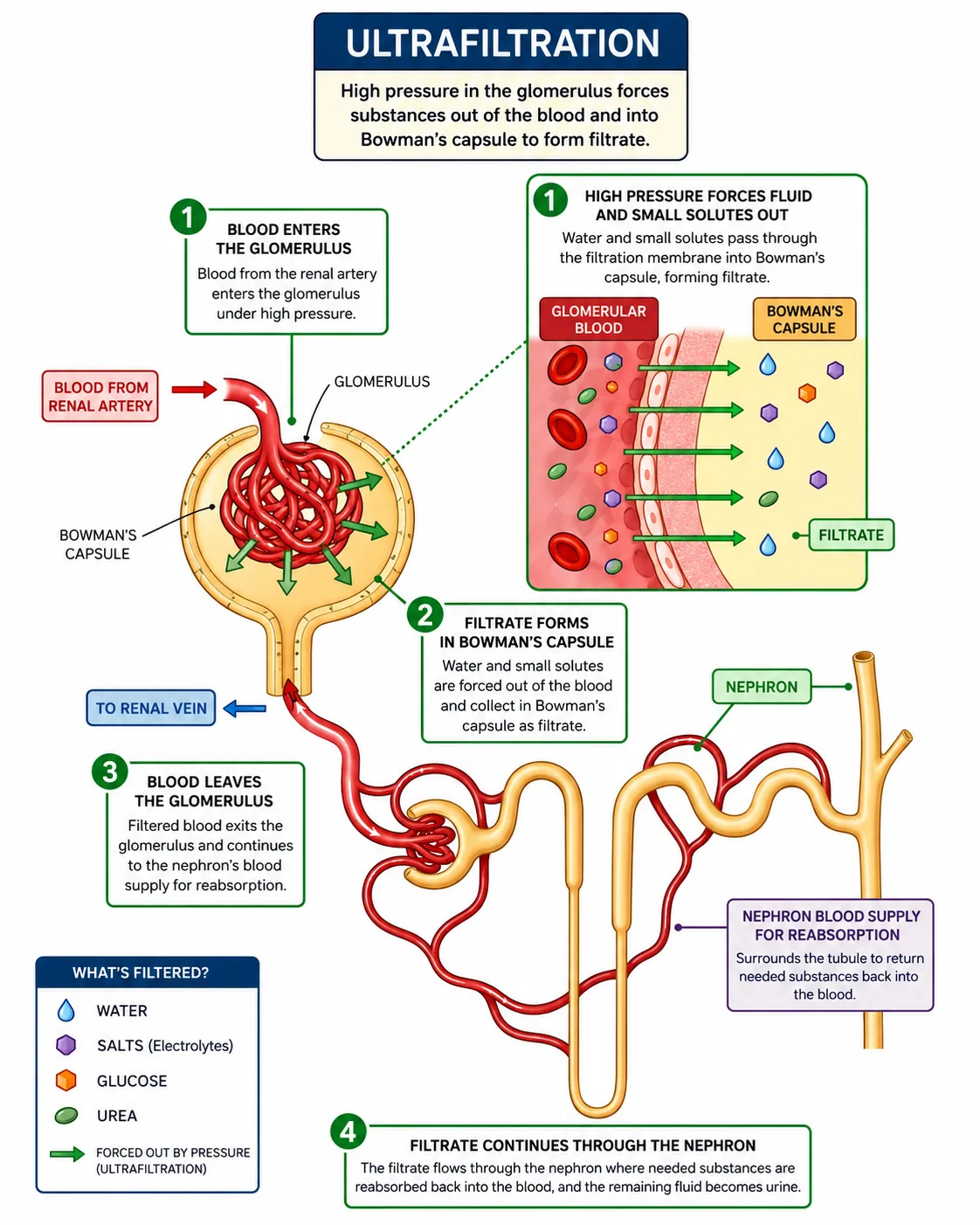
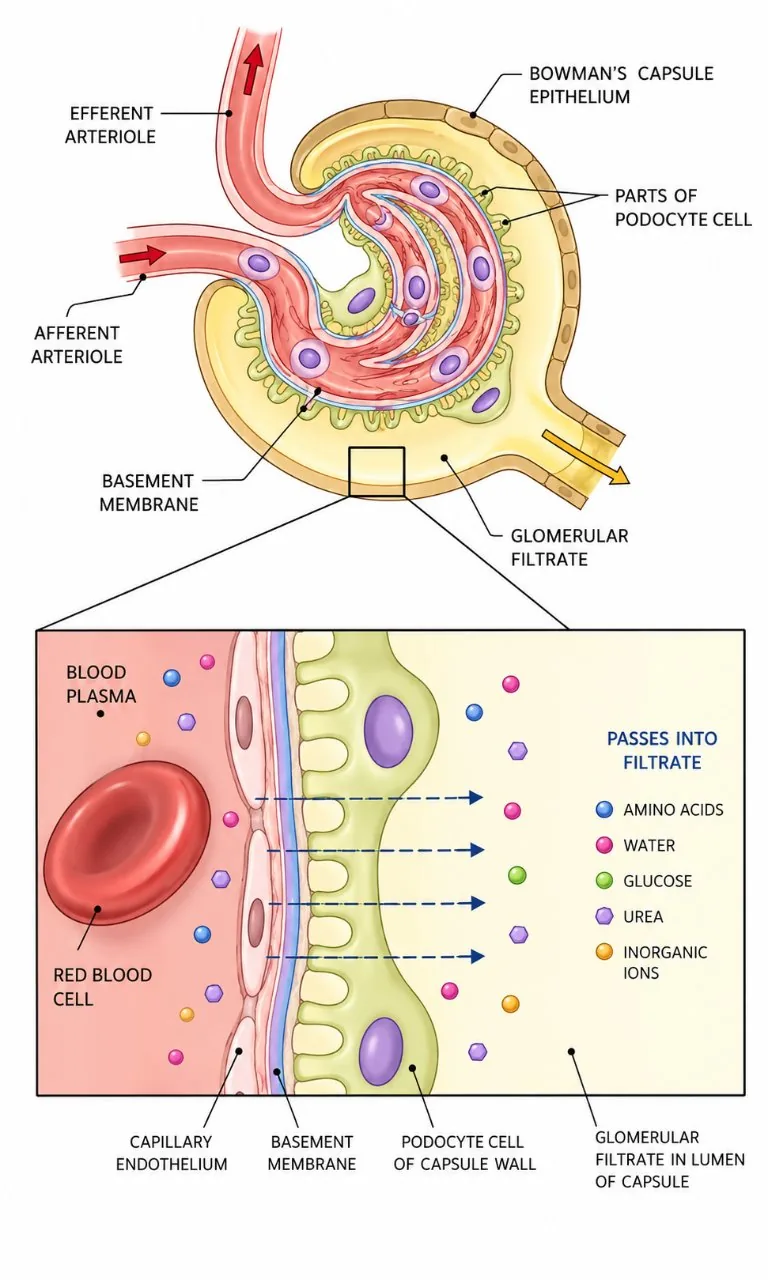
Glomerular filtration in Bowman capsule
Key ideas
◀ Previous45 / 49Next ▶
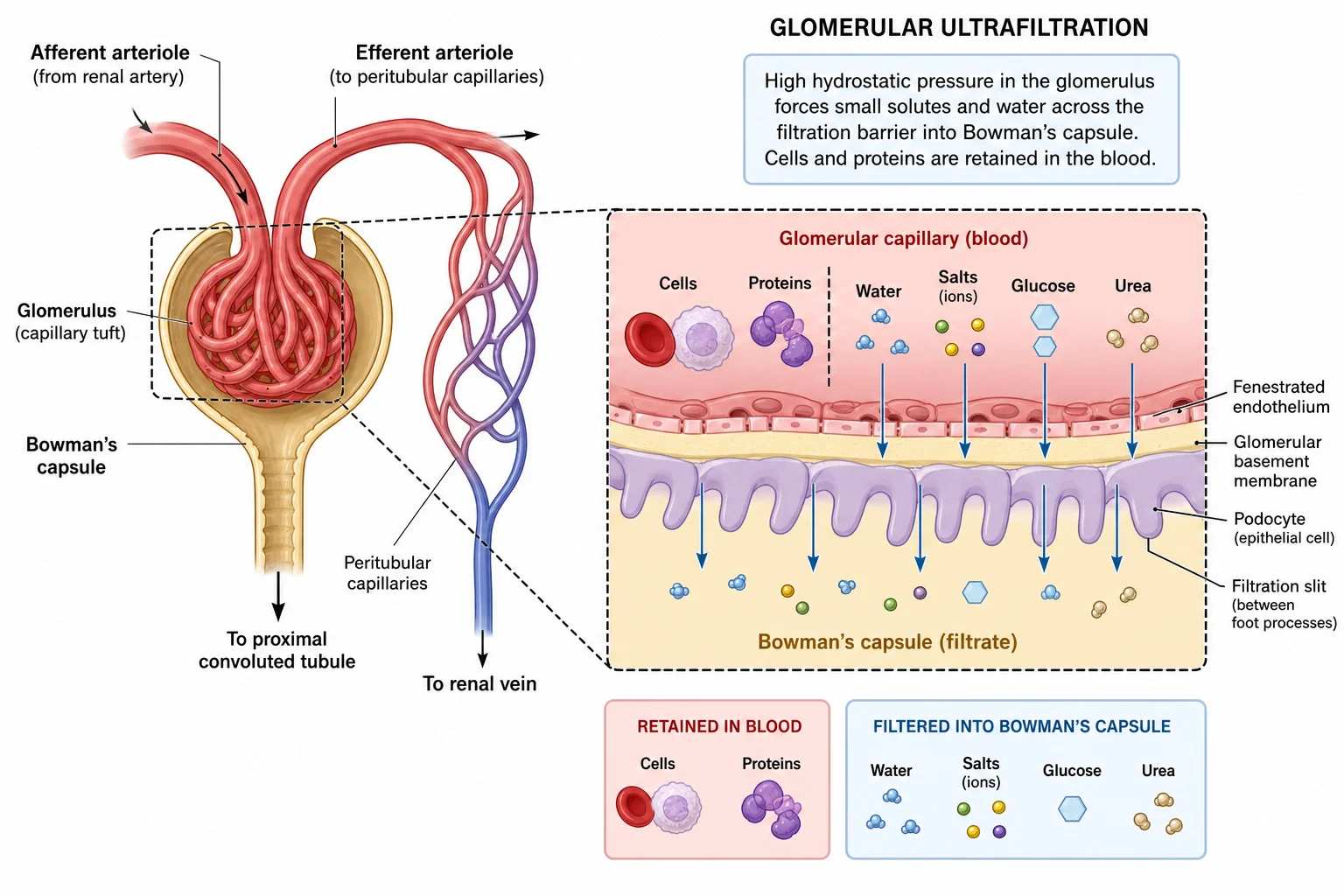
Ultrafiltration across glomerulus
Key ideas
◀ Previous46 / 49Next ▶
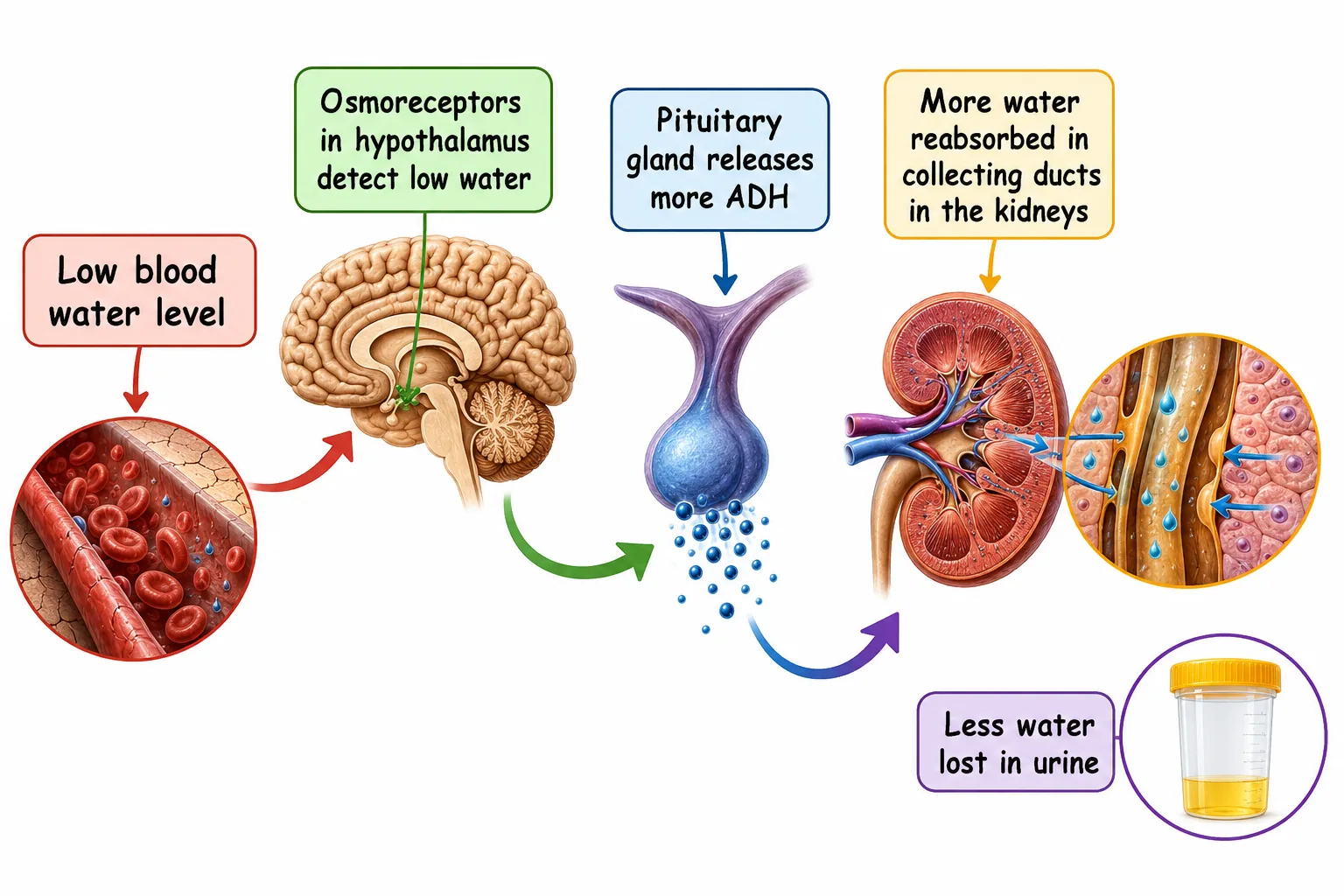
ADH response to low blood water
Key ideas
◀ Previous47 / 49Next ▶
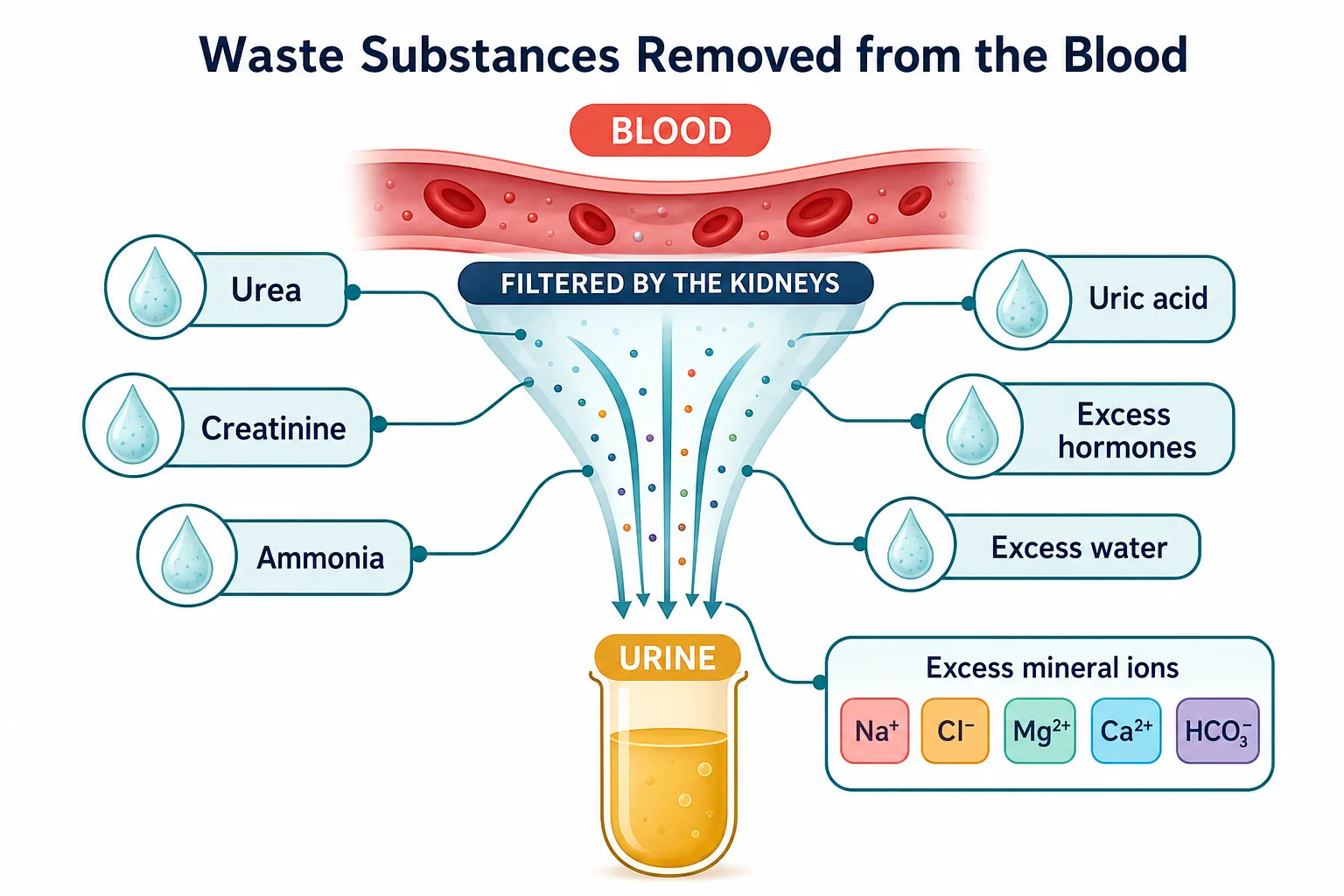
Waste substances removed from blood
Key ideas
◀ Previous48 / 49Next ▶
Blood glucose rise insulin cycle
Key ideas
◀ Previous49 / 49
1Essential knowledge2Essential knowledge3Essential knowledge4Essential knowledge5Essential knowledge
Essential knowledge
1 / 5Next ▶
Essential knowledge
◀ Previous2 / 5Next ▶
Essential knowledge
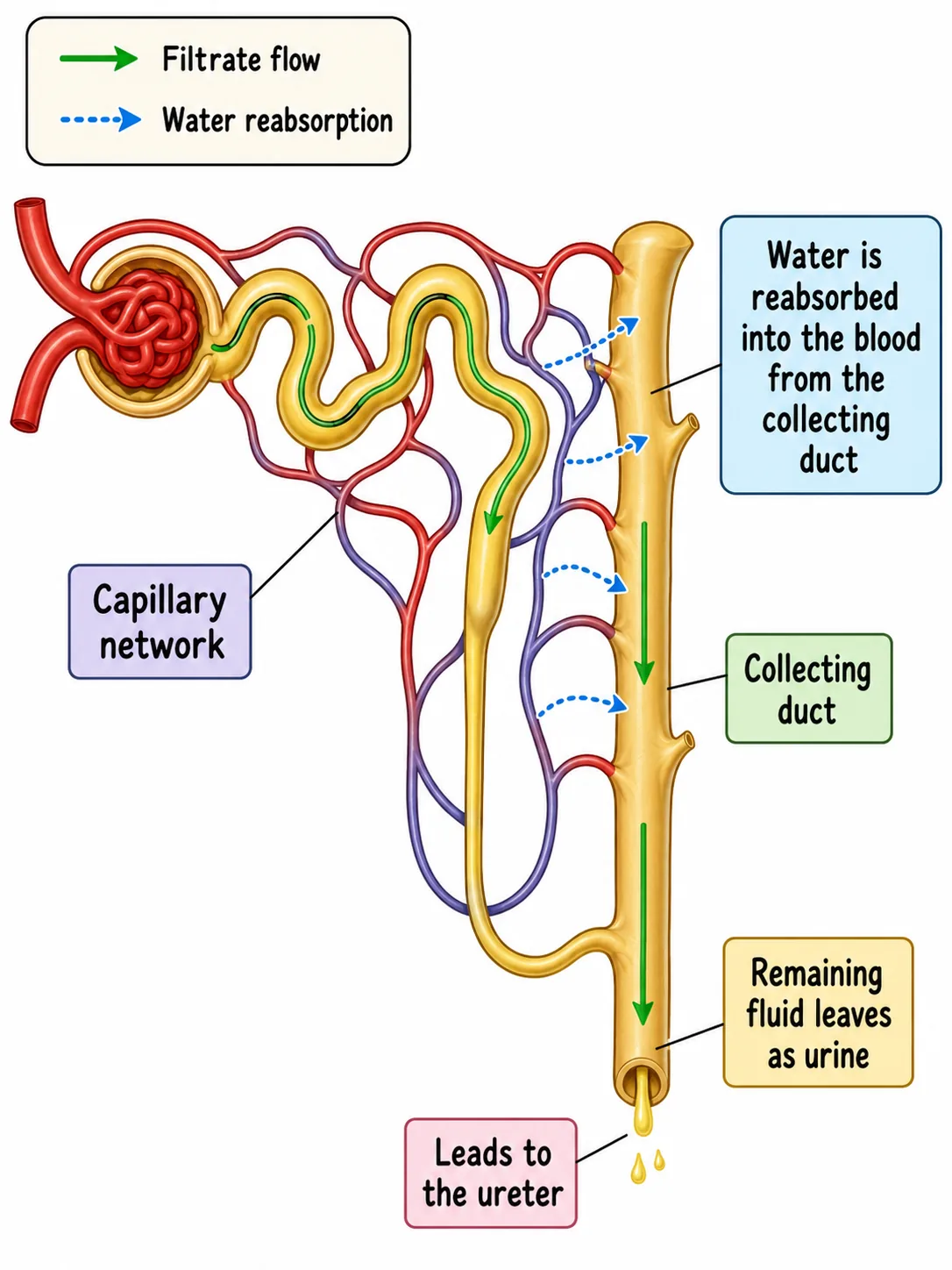
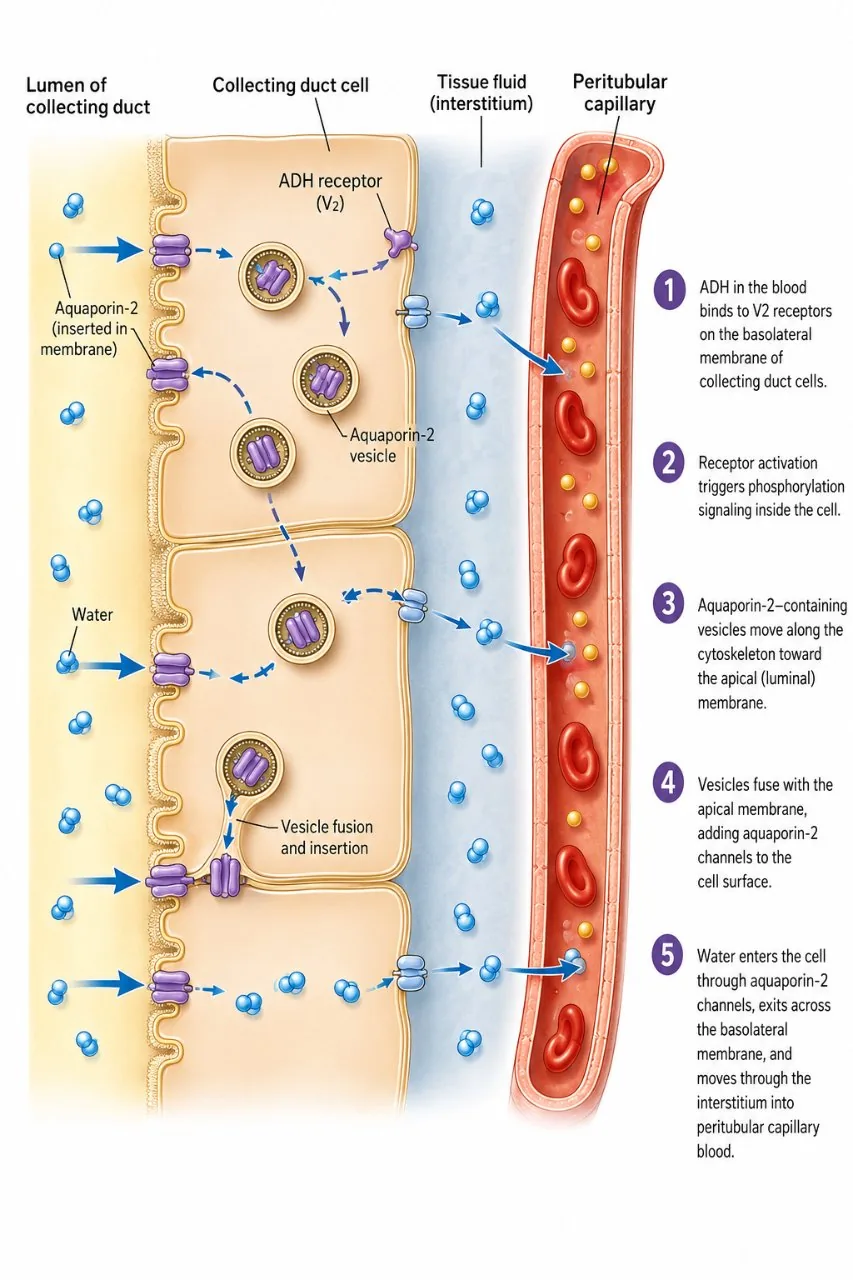
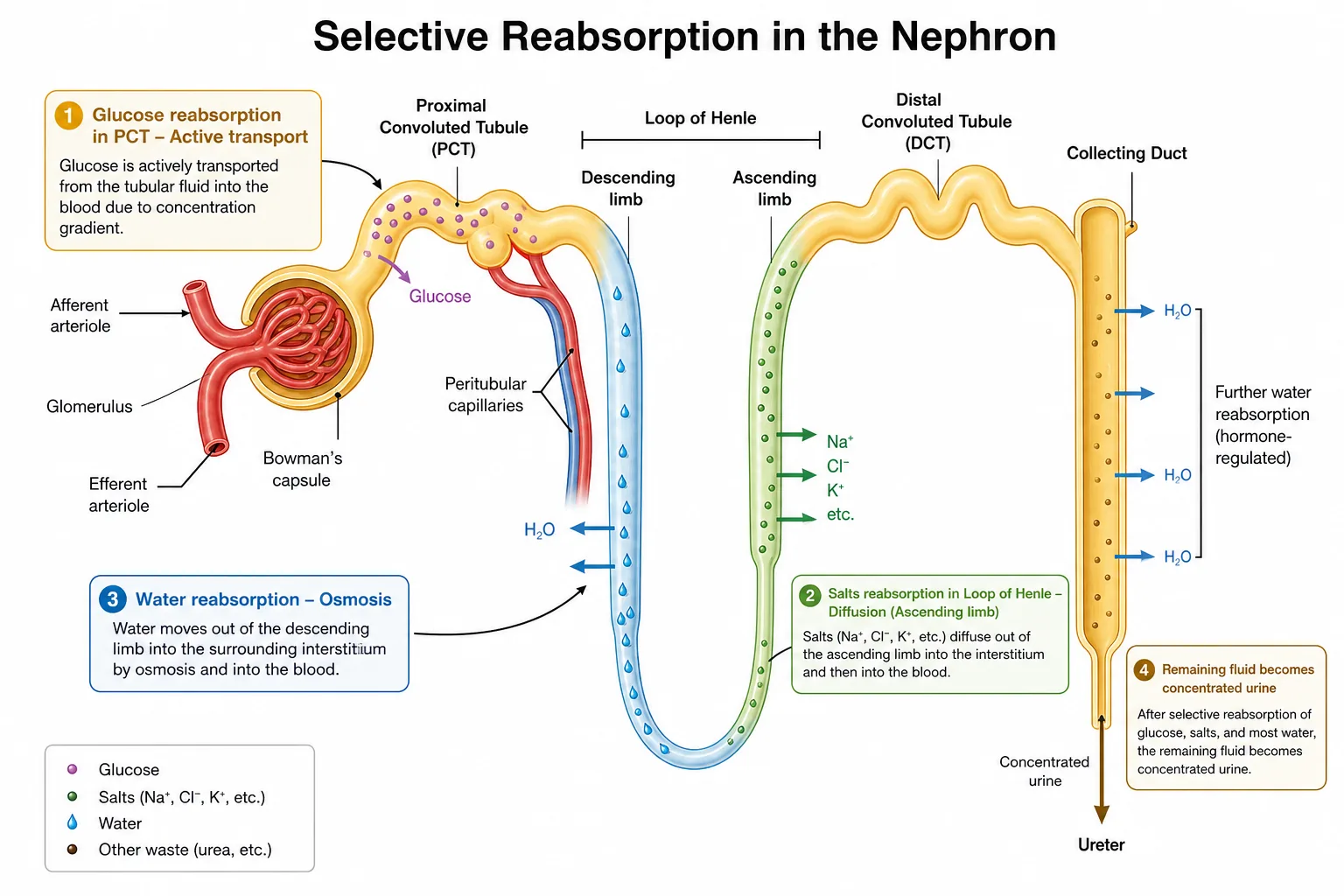
Nephron: water reabsorption in collecting duct" loading= - Dr Khaled Dabour Academy⤢ Enlarge
Essential knowledge
Feedback loops
a receptor detects change, a control center (often the hypothalamus) compares it to a set point, and effectors respond. Negative feedback returns the variable to the set point

positive feedback drives a process to completion (childbirth contractions, blood clotting).
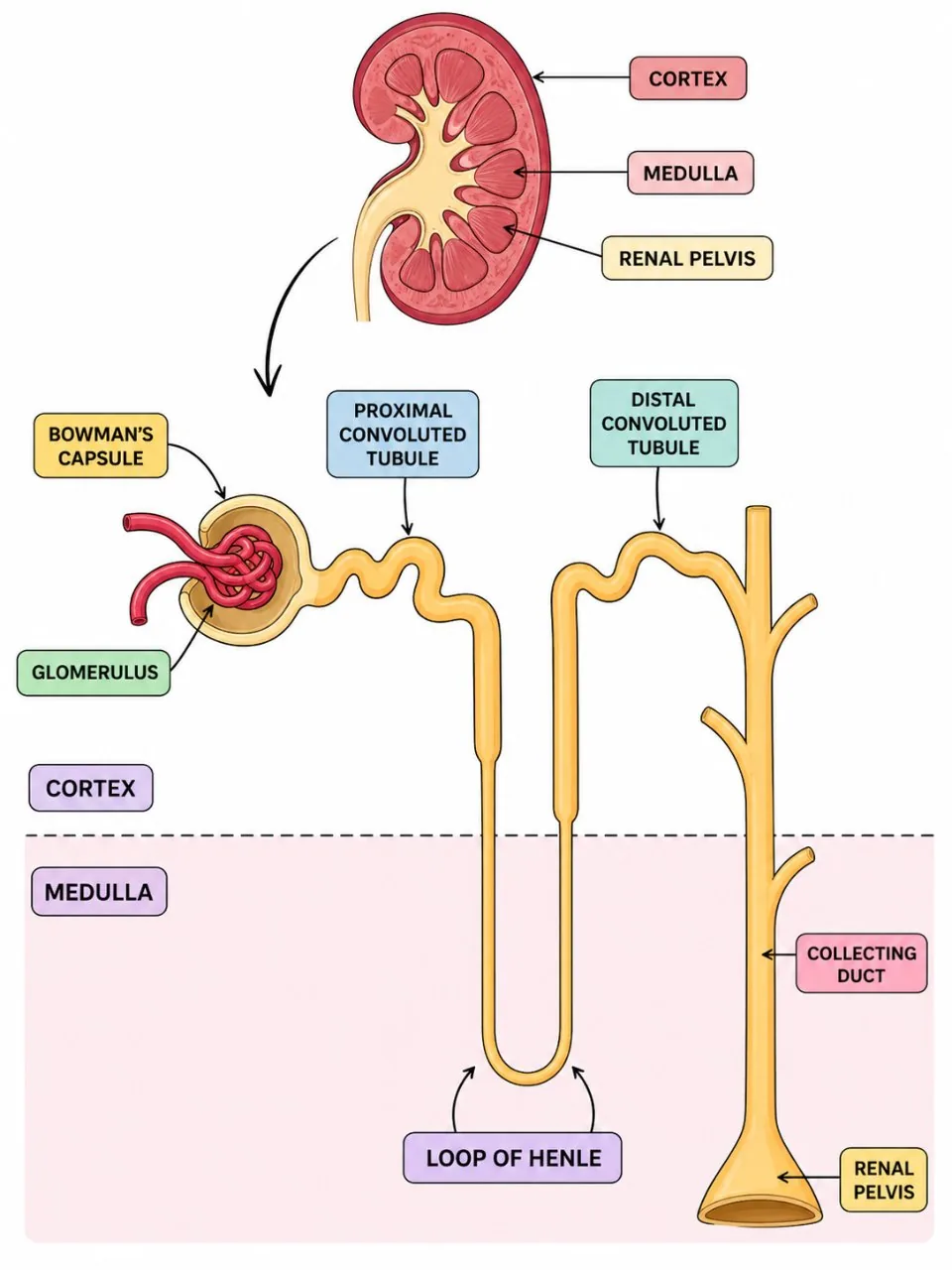
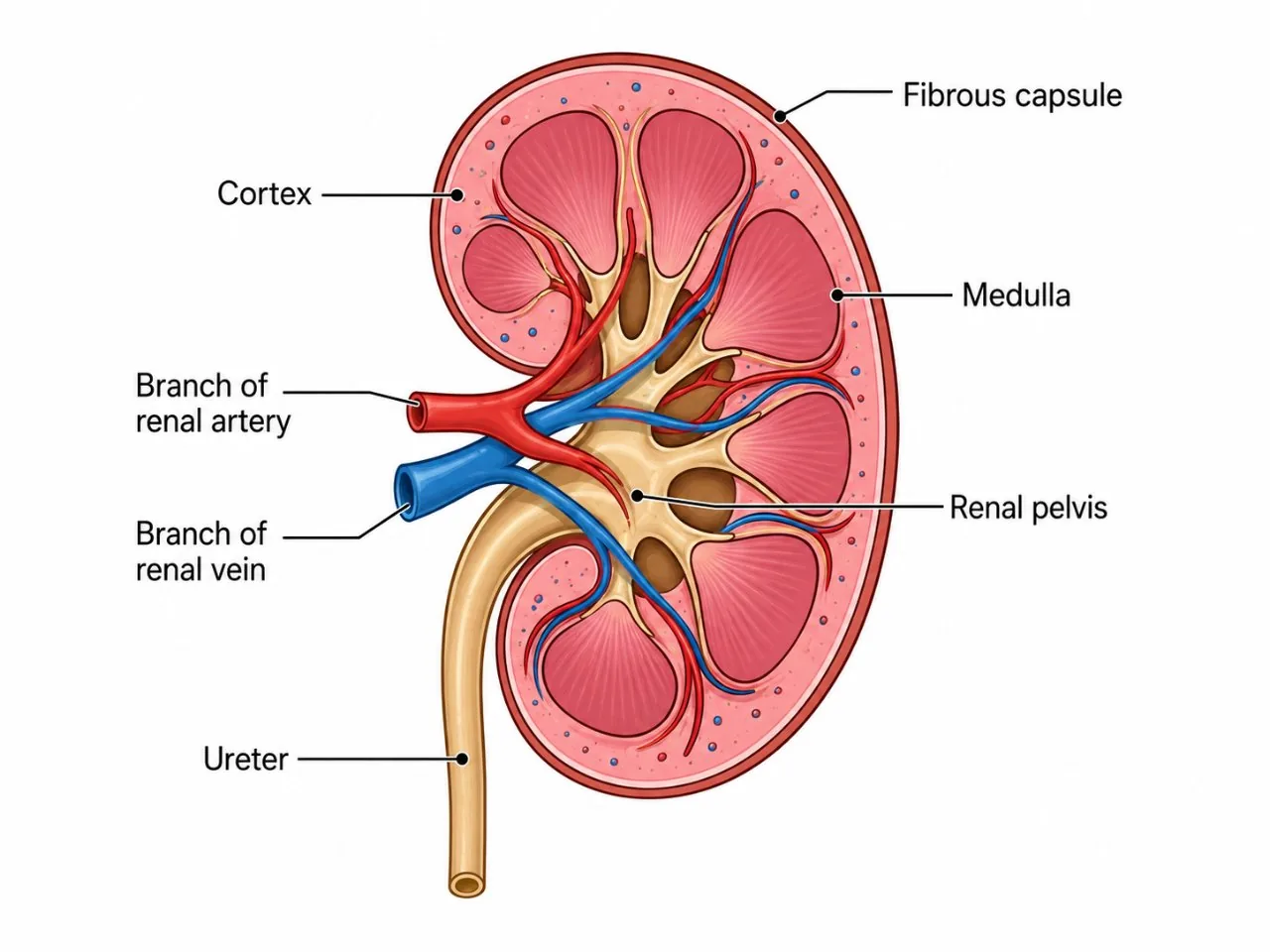
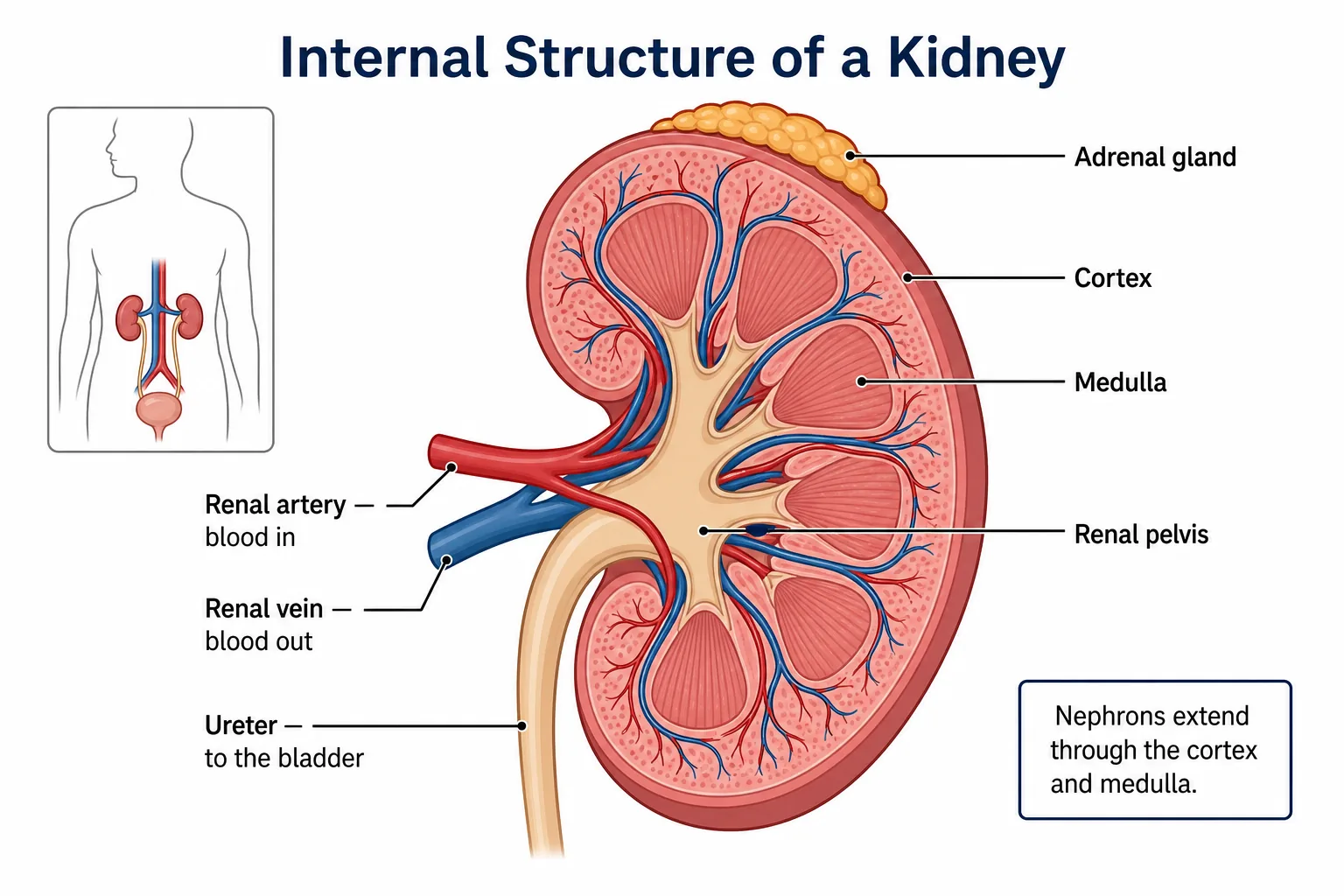
Kidney anatomy
outer cortex, inner medulla and renal pelvis

each kidney contains about a million nephrons. The renal artery brings blood inthe renal vein takes filtered blood away.
Urine formation
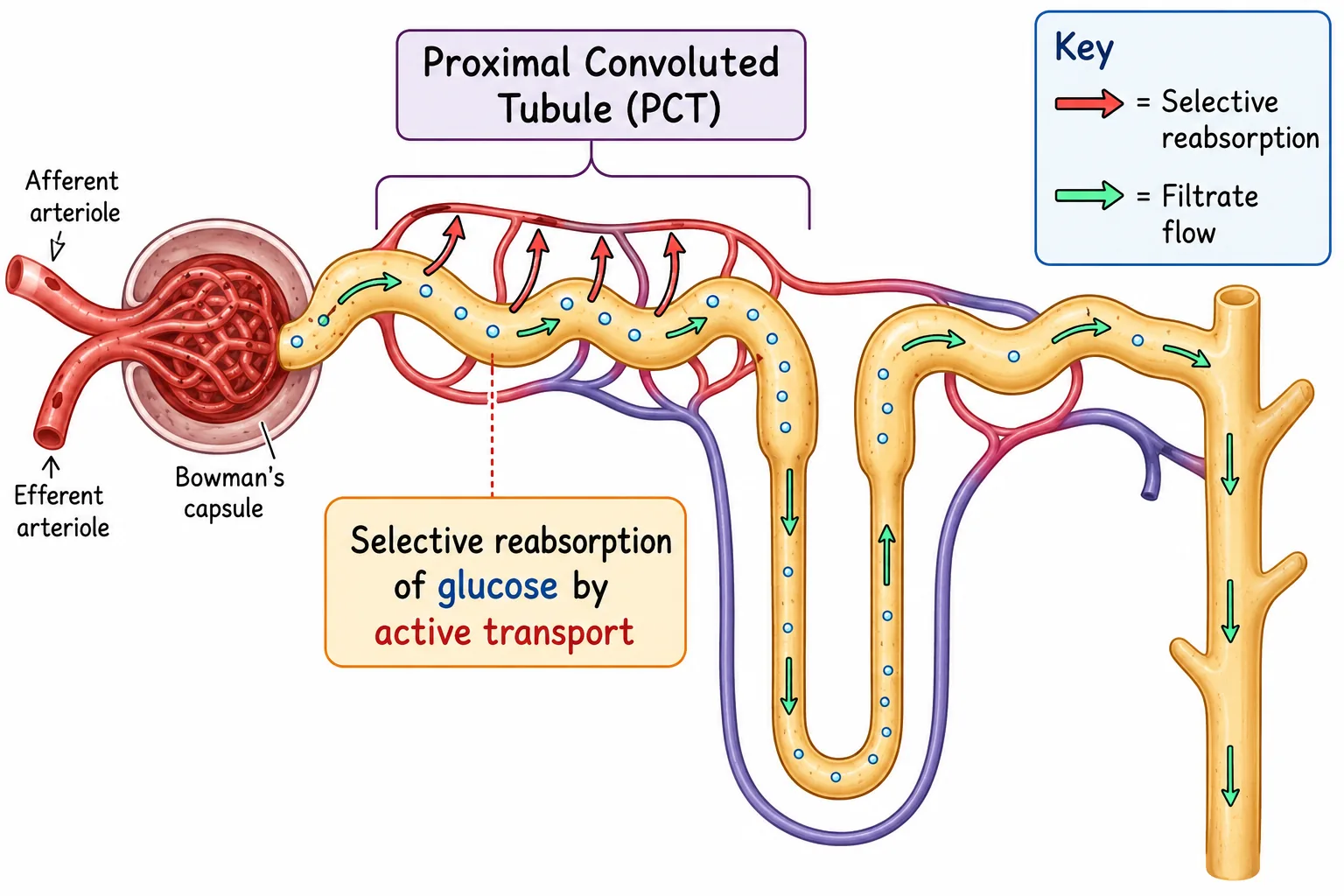
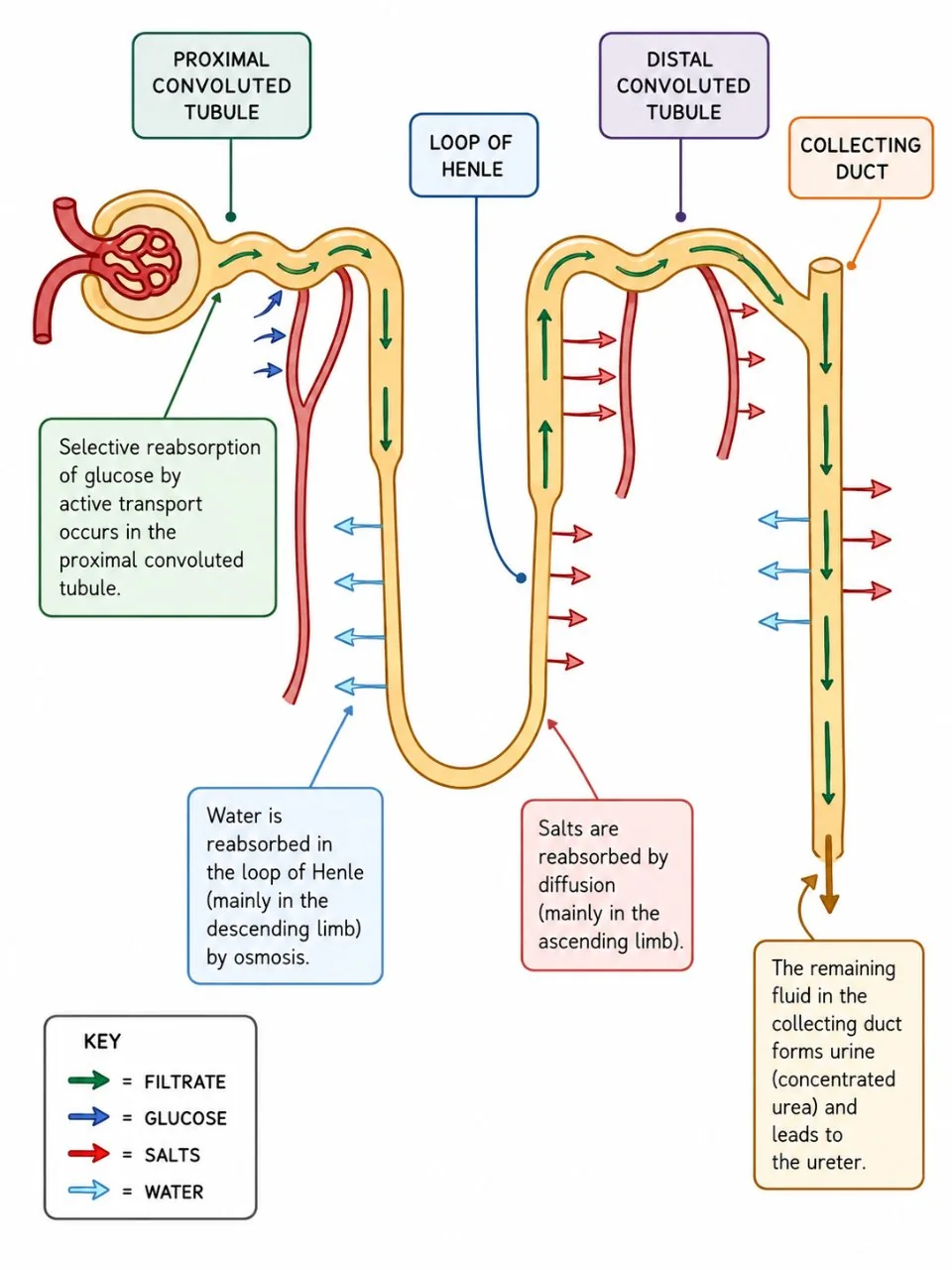
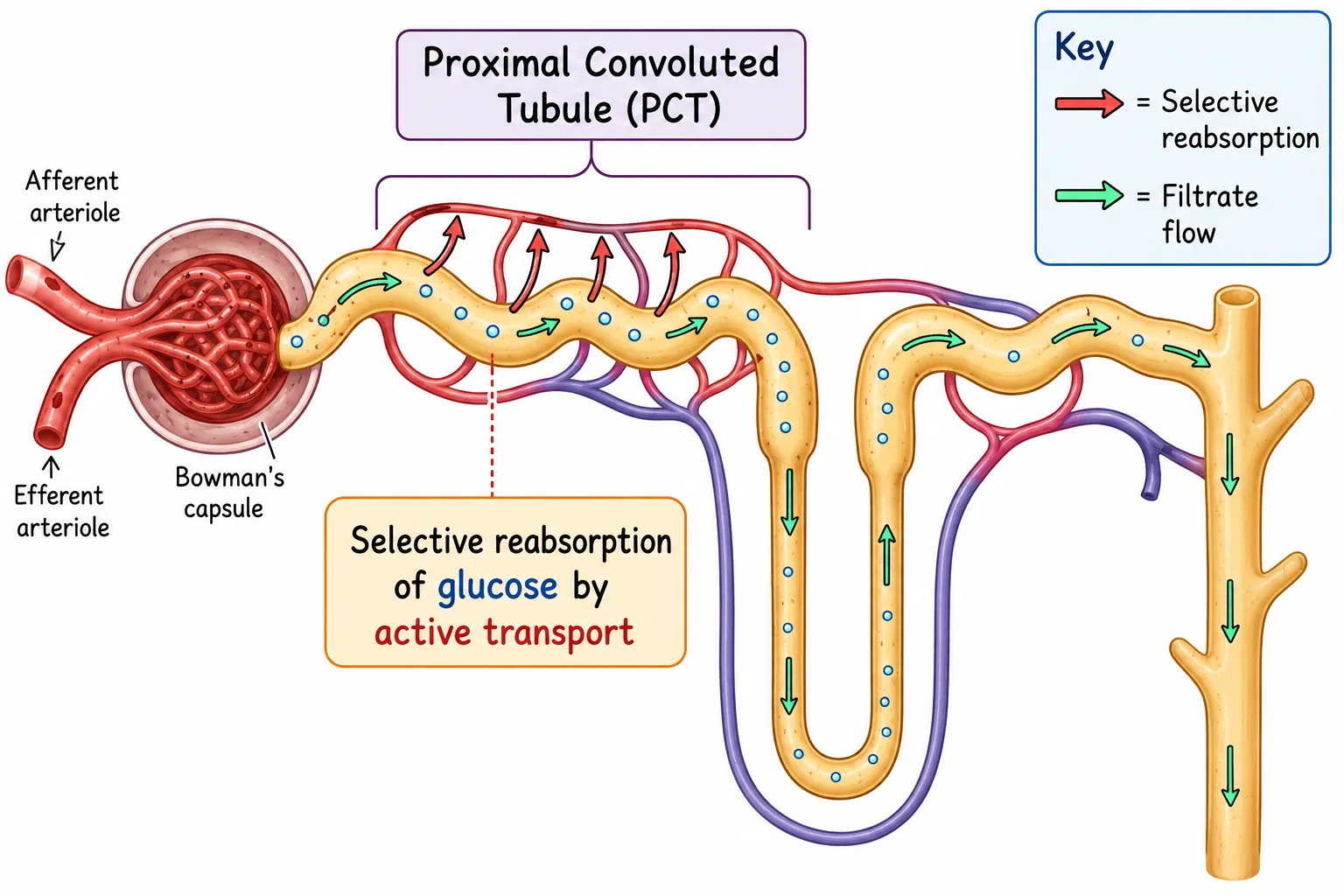
filtration (nonselective, by pressure), selective reabsorption (active transport of glucose and Na
◀ Previous3 / 5Next ▶
Essential knowledge
1

+
2

, water following by osmosis), and secretion (H
3

, K
4

, drugs added to the filtrate). Longer loops of Henle (desert mammals) make more concentrated urine.
5

Water balance
6

when water is low, ADH increases aquaporins in the collecting duct so more water is reabsorbed. When water is high, less ADH is released and dilute urine results. The renin-angiotensin-aldosterone system raises blood pressure.
◀ Previous4 / 5Next ▶
Essential knowledge
1

Blood glucose
2

when glucose rises, beta cells of the pancreatic islets release insulin, causing cells to take up glucose and the liver to store glycogen. When glucose falls, alpha cells release glucagon, causing glycogen breakdown. Type 1 diabetes: no insulin produced

Type 2: cells resist insulin.
3

Thermoregulation
4

endotherms (birds, mammals) generate metabolic heat

ectotherms rely on external heat and behavior. When hot: vasodilation of skin arterioles, sweating. When cold: vasoconstriction, shivering, hair erection, increased metabolism (thyroxine).
5

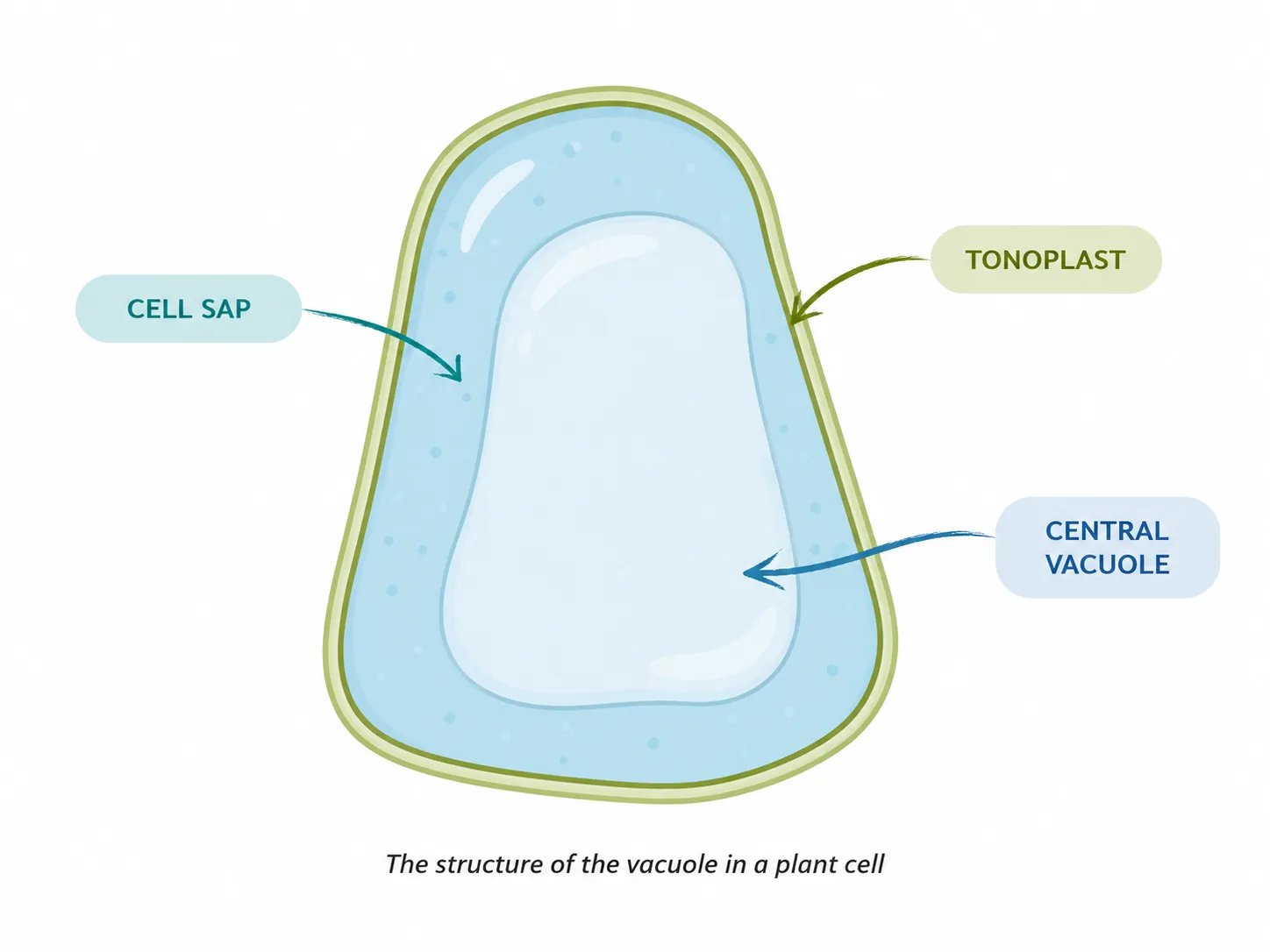
Osmoregulation in other organisms
6

freshwater fish gain water

so they produce large amounts of dilute urine and actively absorb salt at gillsmarine fish lose waterso they drink seawater and excrete salt. Plant cells rely on turgor and contractile vacuoles remove water from freshwater protists.
◀ Previous5 / 5
1Process & sequence2Process & sequence3Process & sequence4Process & sequence
Process & sequence
Process & sequence
1
Blood enters the kidney via the renal artery.
2
High pressure in the glomerulus forces filtrate into Bowman’s capsule.
3
Useful substances are reabsorbed in the proximal tubule.
1 / 4Next ▶
Process & sequence
1

4
2

Loop of Henle builds a salt gradient in the medulla.
3

5
4

Distal tubule and collecting duct adjust salt and water under hormonal control.
5

6
6

Urine drains to the ureter, bladder and out through the urethra.
◀ Previous2 / 4Next ▶
Process & sequence
Process & sequence
Negative feedback: water balance — write these steps in this order

each step is a marking point.
Blood becomes too concentrated
Hypothalamus osmoreceptors detect
Pituitary releases ADH
Collecting ducts reabsorb water
Blood concentration returns to normal
◀ Previous3 / 4Next ▶
Process & sequence
Process & sequence
ADH release decreases
◀ Previous4 / 4
1Worked examples2Worked examples3Worked examples4Worked examples5A person runs a marathon on a hot day without drinking. Expl
Worked examples
1 / 5Next ▶
Worked examples
◀ Previous2 / 5Next ▶
Worked examples
◀ Previous3 / 5Next ▶
Worked examples
◀ Previous4 / 5Next ▶
A person runs a marathon on a hot day without drinking. Explain how their urine changes.
Internal Structure of a Kidney" loading= - Dr Khaled Dabour Academy⤢ Enlarge
A person runs a marathon on a hot day without drinking. Explain how their urine changes.
Sweating reduces blood water content and increases plasma concentration.

Osmoreceptors in the hypothalamus detect this and the posterior pituitary releases more ADH.ADH makes collecting ducts more permeable, so more water is reabsorbed into the blood.Urine becomes smaller in volume, darker and more concentrated.This is negative feedback.
Proteins are too large to pass through the filtration barrier of the glomerulus and Bowman’s capsule

so they stay in the blood.Protein in urine suggests damage to the glomerulus.
◀ Previous5 / 5
1Summary2Summary3Summary
Summary
Summary
1
Homeostasis is mainly maintained by
negative feedback
.
2
The
1 / 3Next ▶
Summary
1

nephron
2

filters, reabsorbs and secretes.
3

3
4

ADH
5

controls water reabsorption.
6

4
◀ Previous2 / 3Next ▶
Summary
1

Nitrogenous waste form depends on
2

water availability
3

5
4

hypothalamus
5

is the main homeostatic control center.
◀ Previous3 / 3
1Check yourself2Check yourself3Check yourself4Check yourself5Check yourself6Check yourself7Check yourself
Check yourself
Check yourself
Q1. Which substance is normally filtered but completely reabsorbed?
A. Urea
B. Glucose
C. Protein
D. Red blood cells
Show answer
1 / 7Next ▶
Check yourself
1

B. Glucose passes into filtrate but is fully reabsorbed in the proximal tubule.
2

Q2. Birds excrete nitrogen mainly as:
3

A. ammonia
4

B. urea
5

C. uric acid
6

D. amino acids
◀ Previous2 / 7Next ▶
Check yourself
Check yourself
C. Uric acid is insoluble and conserves water, ideal for shelled eggs and flight.
Q3. Which is an example of positive feedback?
1
A. Oxytocin increasing contractions during labor
2
B. Insulin lowering blood glucose
◀ Previous3 / 7Next ▶
Check yourself
Check yourself
3
C. Sweating when hot
4
D. ADH release when dehydrated
A. Contractions stimulate more oxytocin, amplifying the response.
Q4. ADH acts mainly on the:
◀ Previous4 / 7Next ▶
Check yourself
1

A. glomerulus
2

B. Bowman’s capsule
3

C. ureter
4

D. collecting duct
5

D. ADH increases water permeability of the collecting duct.
6

Q5. A freshwater fish tends to:
◀ Previous5 / 7Next ▶
Check yourself
1

A. drink large amounts of water
2

B. produce dilute urine in large volume
3

C. excrete salt at its gills
4

D. lose water by osmosis
5

B. It gains water by osmosis

so it excretes large volumes of dilute urine.
6

Q6. Urea is produced in the:
◀ Previous6 / 7Next ▶
Check yourself
Check yourself
A. kidney
B. bladder
C. liver
D. pancreas
C. The liver deaminates amino acids and converts ammonia to urea.
◀ Previous7 / 7

Homeostasis

Maintenance of a stable internal environment despite external changes.

Negative feedback

A control mechanism in which a change triggers a response that reverses the change.

Positive feedback

A mechanism that amplifies a change, e.g. oxytocin in childbirth.

Excretion

Removal of metabolic wastes such as urea, CO2 and excess water and salts.

Nephron

The functional unit of the kidney that filters blood and forms urine.

Glomerulus

A knot of capillaries in Bowman’s capsule where blood is filtered under pressure.

Urea

A nitrogenous waste made in the liver from ammonia produced by amino acid breakdown.

ADH (antidiuretic hormone)

A pituitary hormone that makes collecting ducts more permeable to water.

Osmoregulation

Control of water and solute balance in the body.

Thermoregulation

Control of body temperature.

Nitrogenous wastes
Waste Toxicity Water needed Animals
Ammonia Very high A lot Most aquatic animals, bony fish
Urea Moderate Moderate Mammals, amphibians, sharks
Uric acid Low Very little Birds, reptiles, insects

Uric acid suits animals developing in shelled eggs or living in dry habitats.

Regions of the nephron
Region Process What moves
Glomerulus / Bowman’s capsule Filtration Water, glucose, salts, urea (not cells or large proteins)
Proximal tubule Reabsorption All glucose and amino acids, most salt and water
Loop of Henle Concentration gradient Water out of descending limb, salt out of ascending limb
Distal tubule Secretion / fine tuning H+, K+ secreted; Na+ reabsorbed (aldosterone)
Collecting duct Water reabsorption Water, under ADH control
Command terms
Identify / Describe (FRQ)
A short, specific statement; describing requires relevant characteristics, not a single word.
Explain / Justify (FRQ)
Give the cause-and-effect reasoning or evidence; a restated fact does not score.
Calculate
Show setup, substitution and the answer with units.
Predict
State the expected outcome; add a reason only if asked to justify.
MCQ technique
Read every option; eliminate distractors that are true statements but do not answer the question; watch for NOT/EXCEPT.

Keywords the mark scheme looks for in this lesson

Keywords the mark scheme looks for in this lesson
Homeostasis · Negative feedback · Positive feedback · Excretion · Nephron · Glomerulus · Urea · ADH (antidiuretic hormone) · Osmoregulation · Thermoregulation
Learn each definition in the Key words tab exactly; a missing keyword in a definition usually loses the mark.

How to get full marks (examiner guidance)

1

Answer exactly what is asked; extra correct material does not earn credit, and contradictory statements can cancel credit (AP FRQ).
2

Use precise vocabulary (e.g. “active site”, “concentration gradient”, “allele”), never “it/stuff/things”.
3

Show units and working in calculations.
4

In MCQs, predict the answer before reading the options, then eliminate.
Accepted payment methods