Curriculum
Course: EST II Biology
Login

Curriculum

EST II Biology

Text lesson

4.5 The Immune System

Describe nonspecific defenses of the body.

1Key ideas2Key ideas
Key ideas
oom heavy dna pani light" loading= - Dr Khaled Dabour Academy⤢ Enlarge
Key ideas
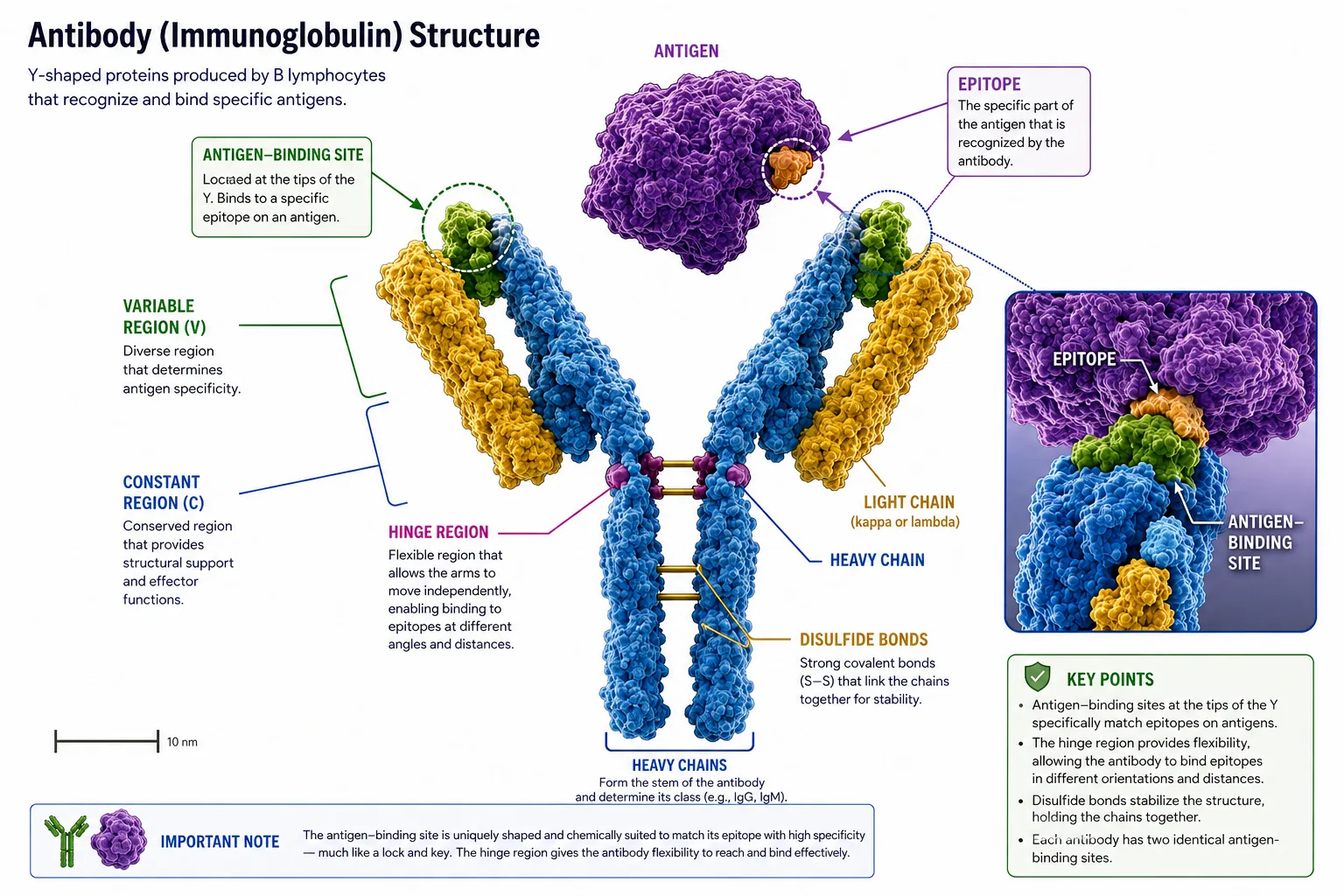
Antibodies have two heavy and two light chains

variable regions bind antigen.
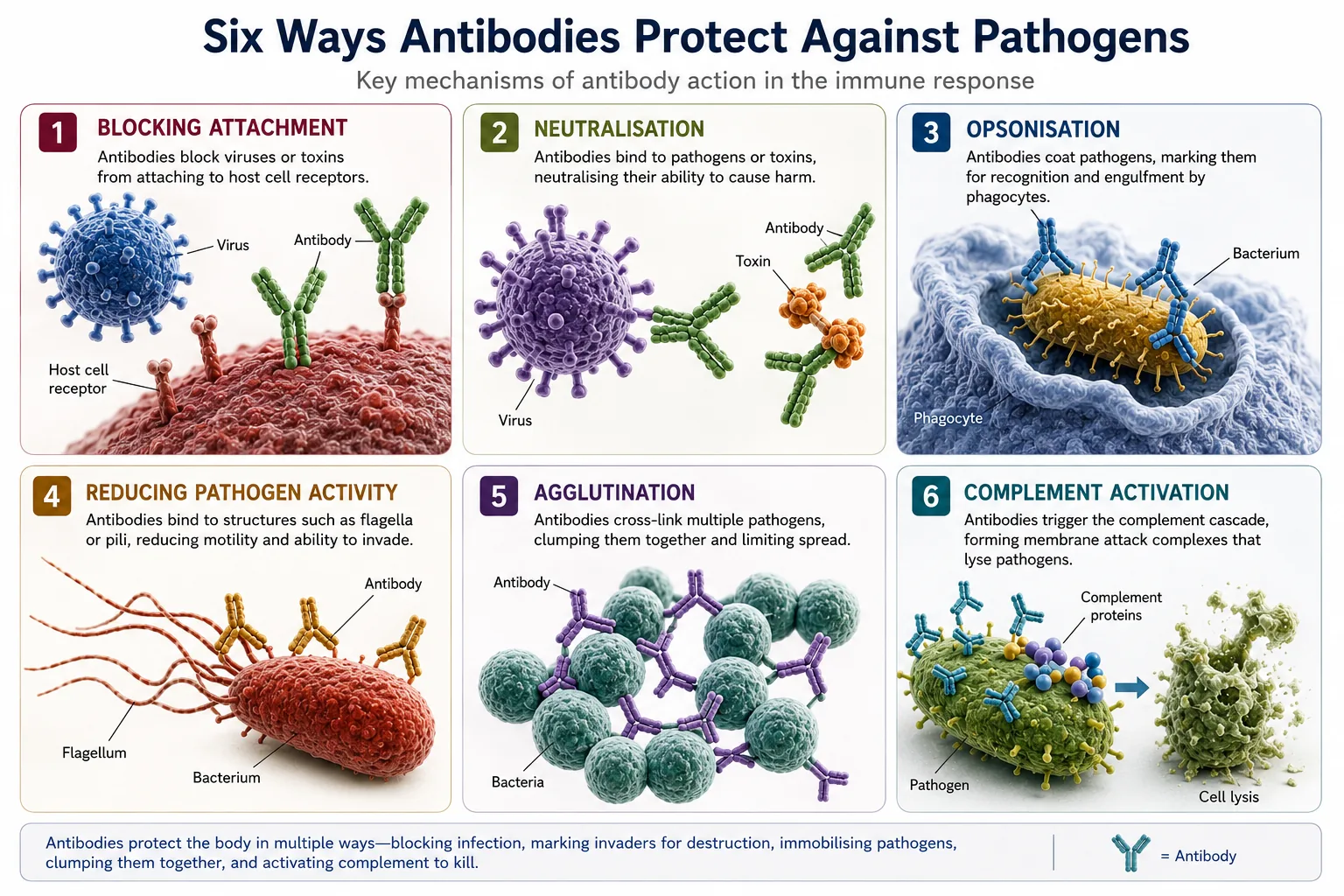
Antibodies neutralize, agglutinate (clump) and tag pathogens for phagocytosis.
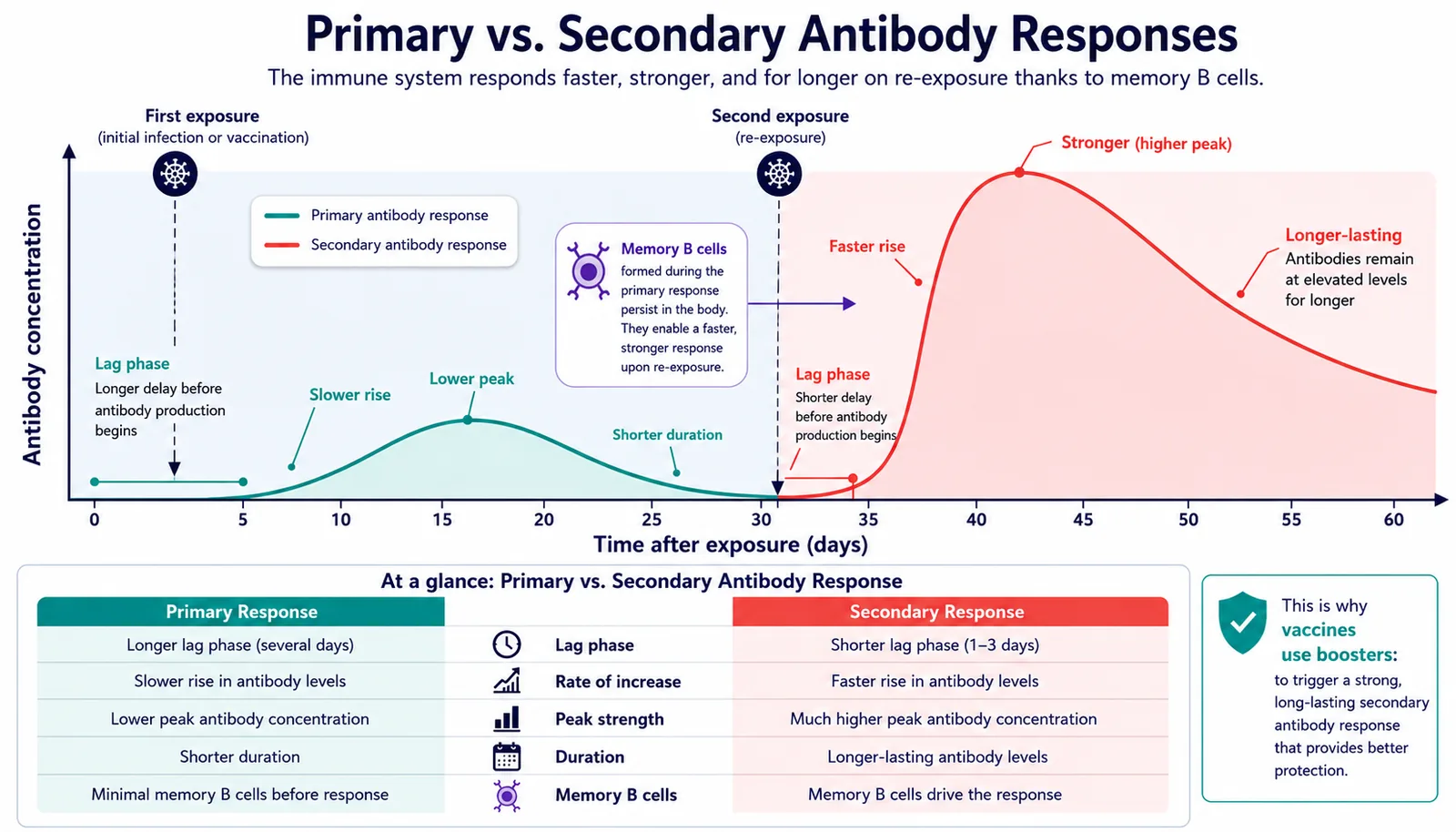
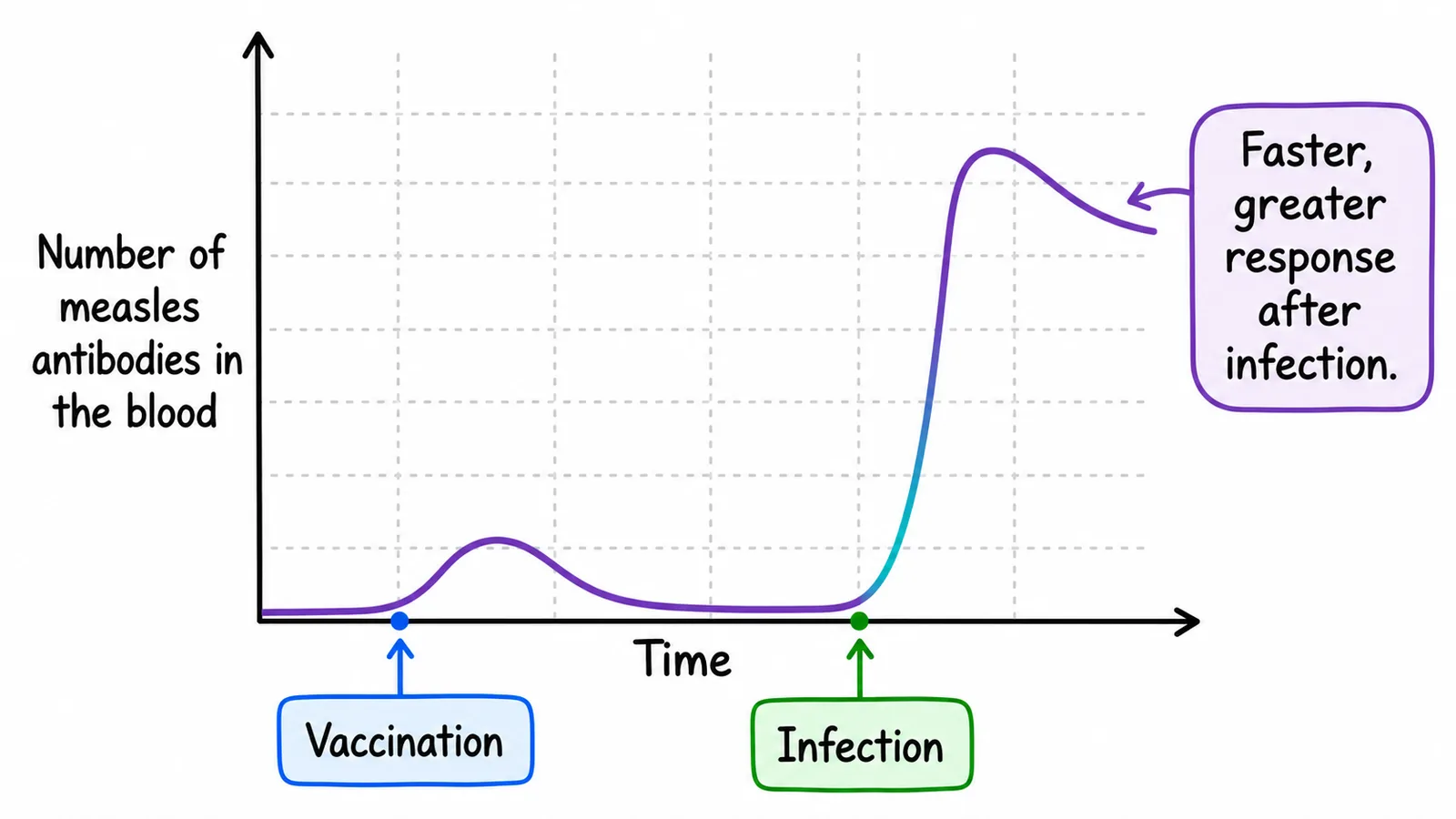
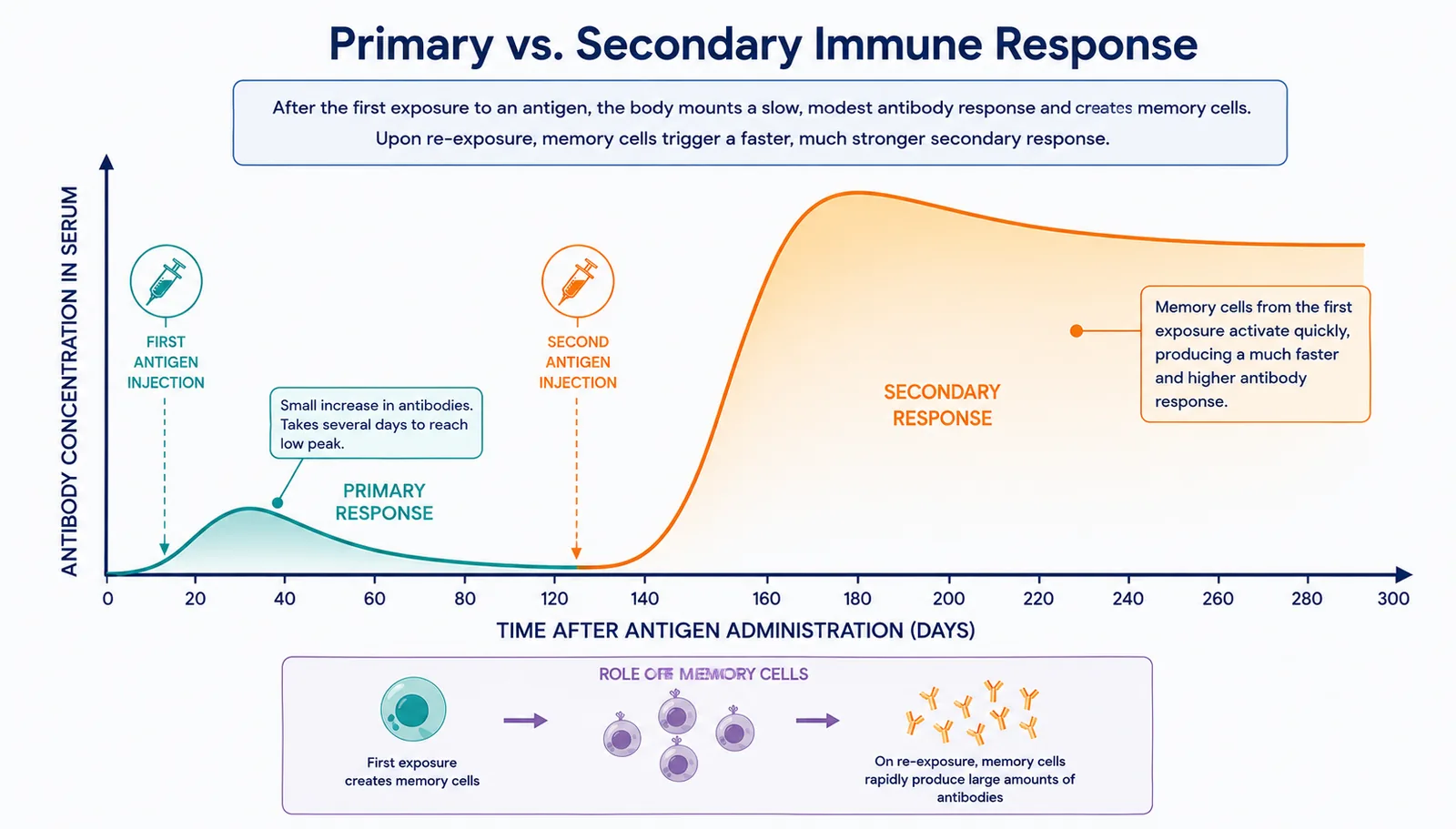
The secondary response is faster, larger and longer-lasting than the primary response.
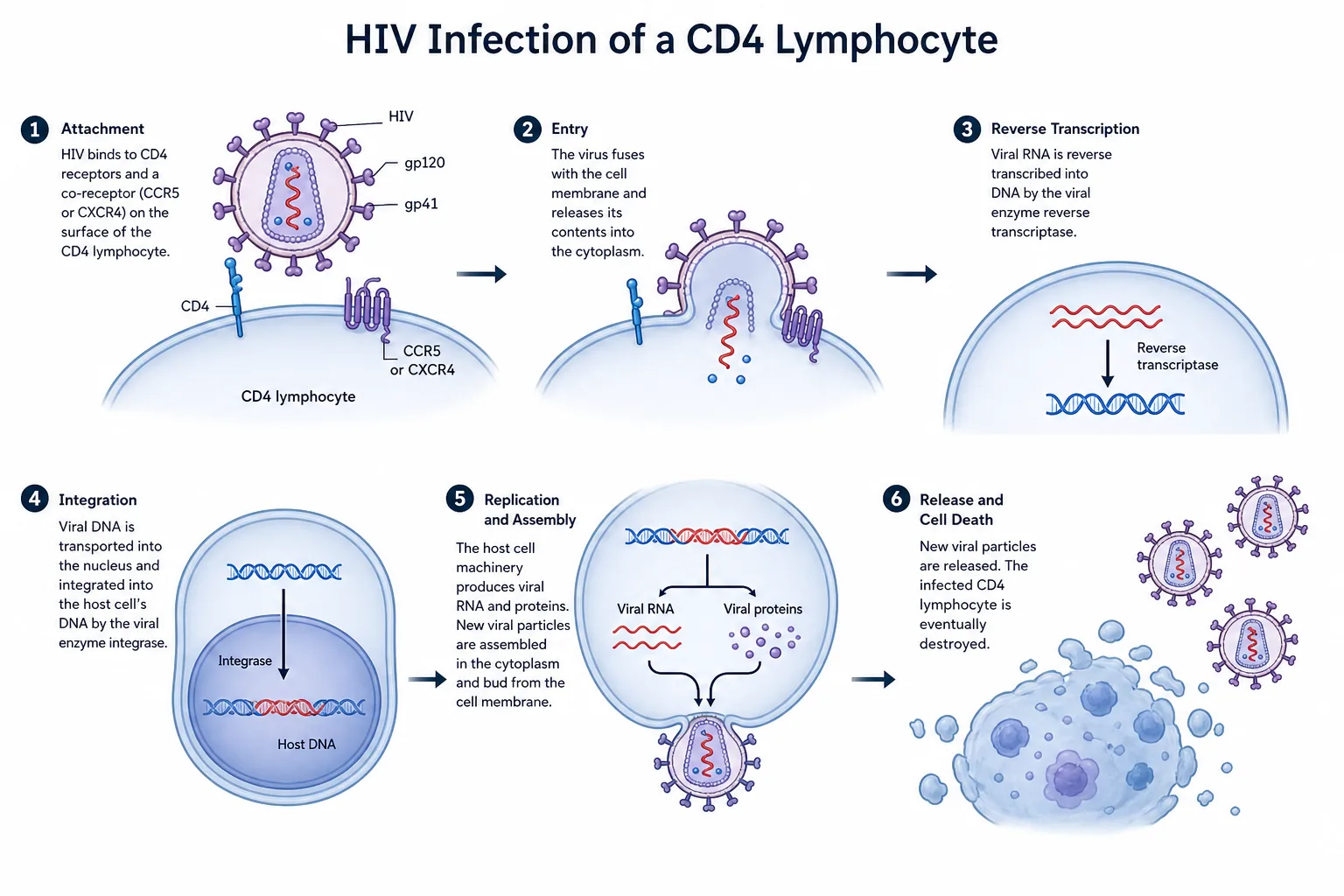
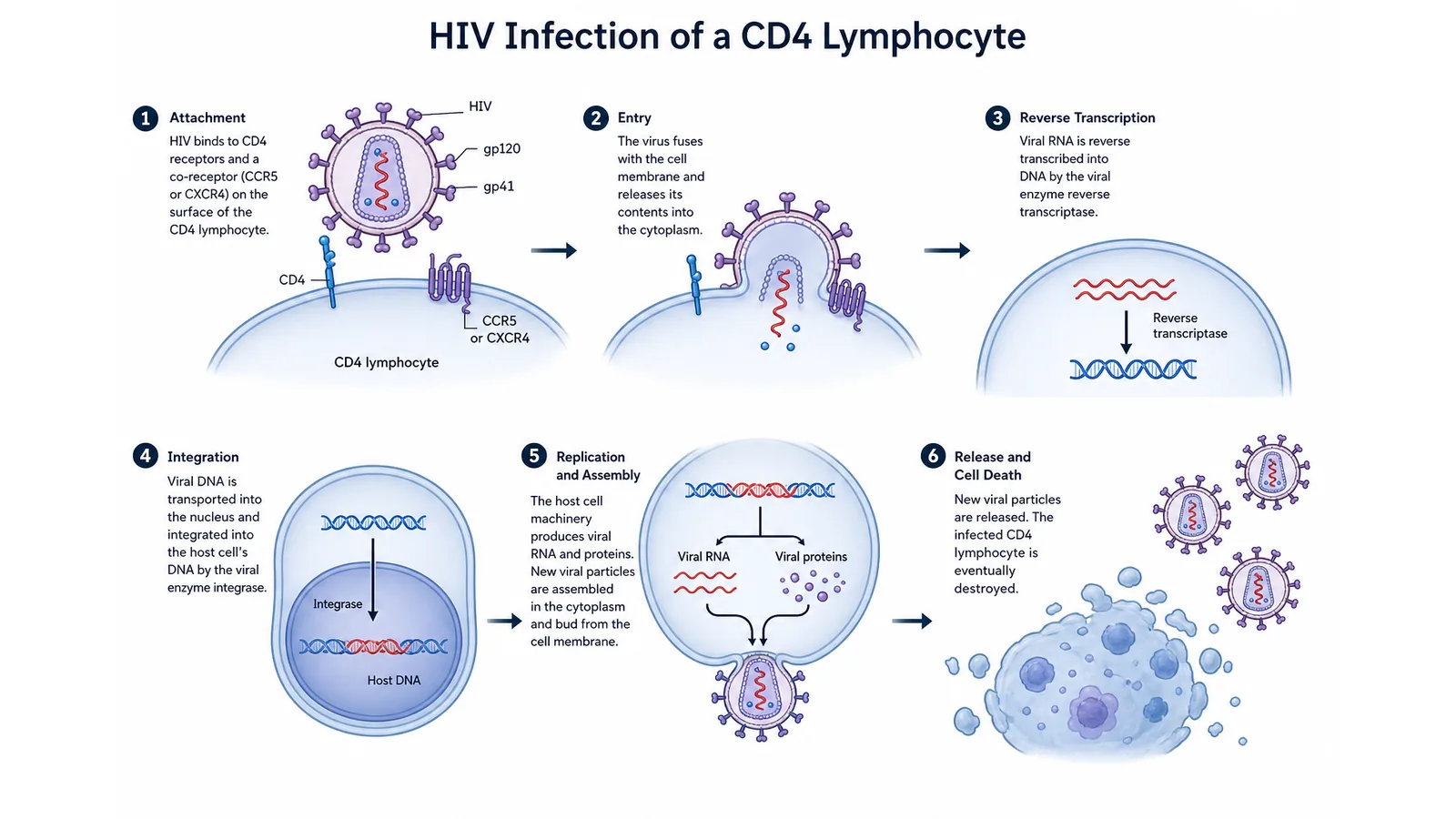
HIV infects helper T cells (CD4), weakening both humoral and cell-mediated immunity.
Antibiotics kill bacteria but do not affect viruses.
ABO blood groups
1 / 2Next ▶
Key ideas
1

type O is the universal donor for red cells

type AB is the universal recipient.
2

Allergies are overreactions to harmless antigens

autoimmune diseases attack self (e.g. type 1 diabetes).
3

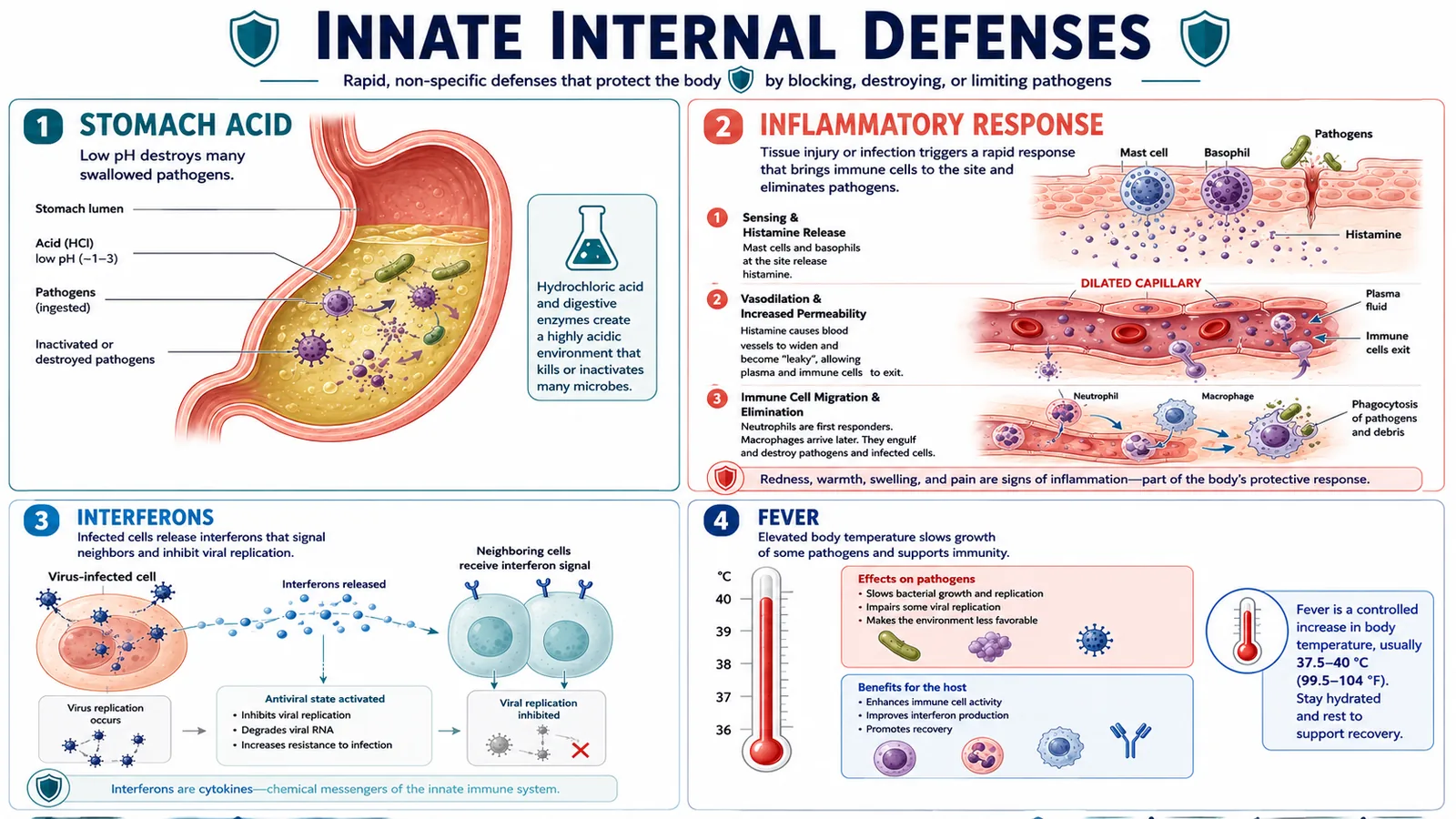
Fever raises body temperature

which slows pathogen growth and speeds defenses.
◀ Previous2 / 2
1Essential knowledge2Essential knowledge3Essential knowledge4Essential knowledge5Essential knowledge6Essential knowledge7Essential knowledge8Essential knowledge9Essential knowledge10Essential knowledge11Essential knowledge12Essential knowledge13Essential knowledge14Essential knowledge15Essential knowledge
Essential knowledge
1 / 15Next ▶
Essential knowledge
◀ Previous2 / 15Next ▶
Essential knowledge
◀ Previous3 / 15Next ▶
Essential knowledge
◀ Previous4 / 15Next ▶
Essential knowledge
◀ Previous5 / 15Next ▶
Essential knowledge
◀ Previous6 / 15Next ▶
Essential knowledge
◀ Previous7 / 15Next ▶
Essential knowledge
◀ Previous8 / 15Next ▶
Essential knowledge
◀ Previous9 / 15Next ▶
Essential knowledge
◀ Previous10 / 15Next ▶
Essential knowledge
◀ Previous11 / 15Next ▶
Essential knowledge
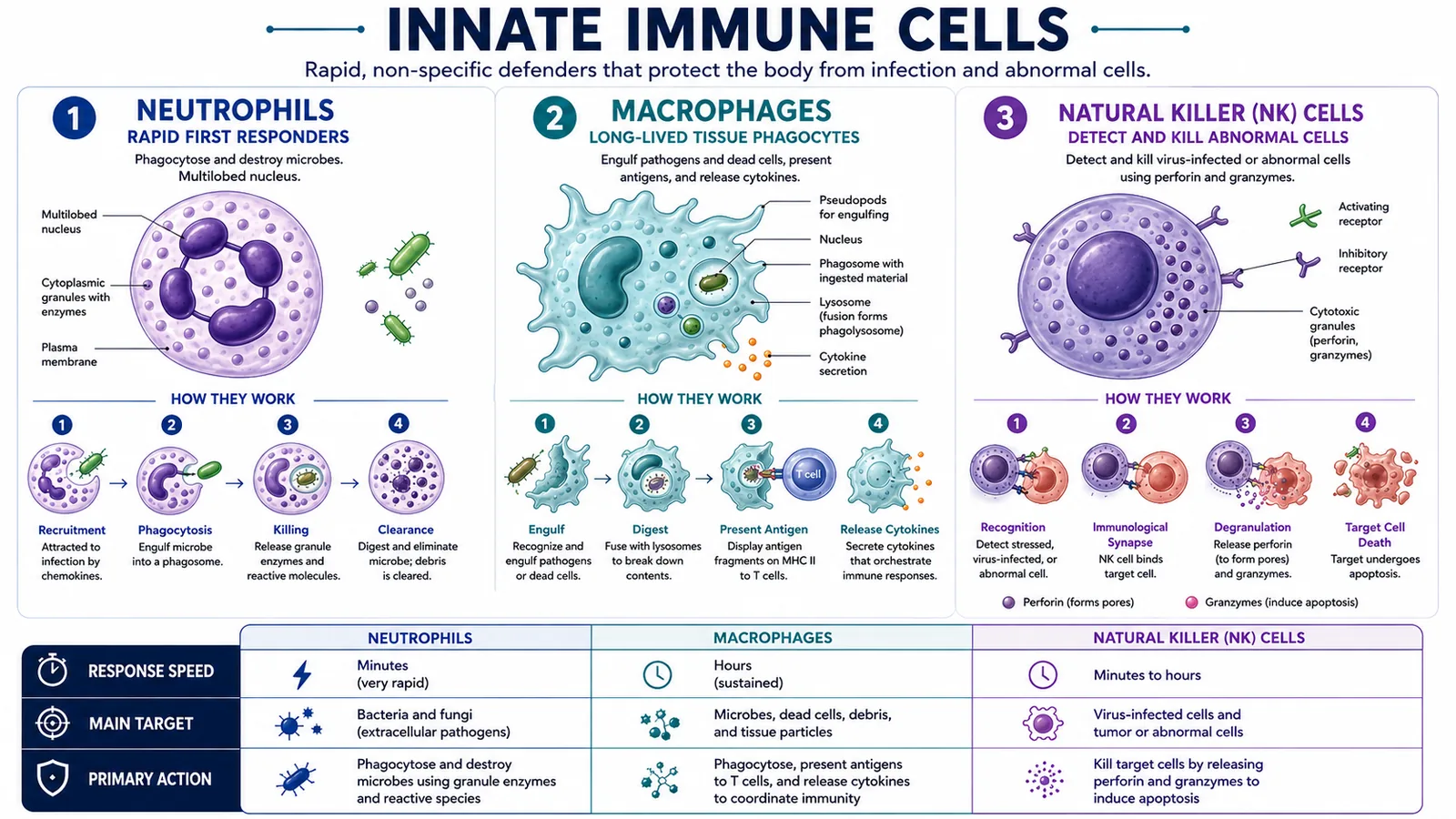
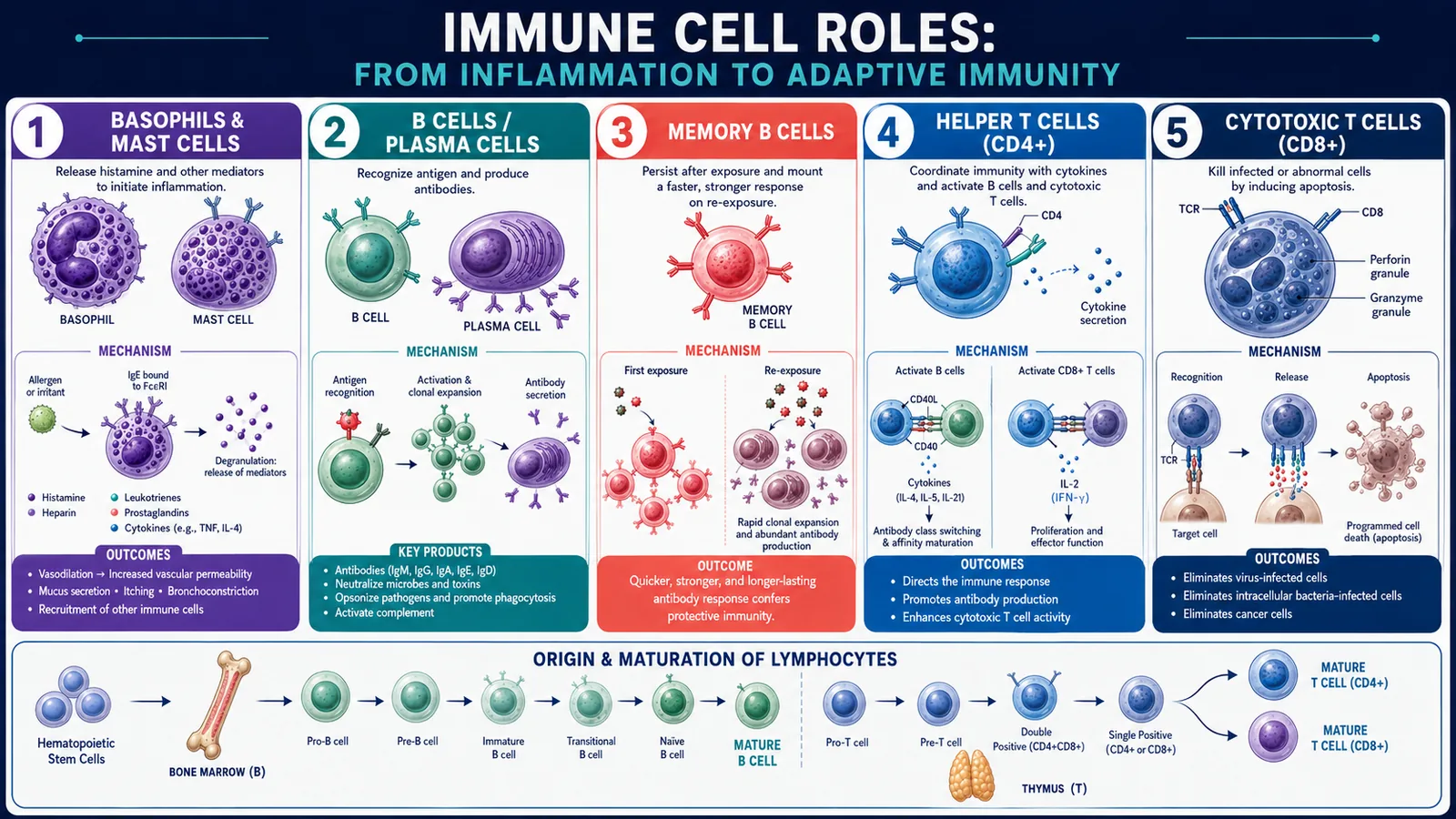
innate immune cells landscape" loading= - Dr Khaled Dabour Academy⤢ Enlarge
1

Innate defenses
2

act immediately against any invader: skin and mucous membranes block entry, cilia sweep mucus, lysozyme digests bacterial walls, and stomach acid kills microbes. Neutrophils and macrophages engulf invaders

natural killer cells destroy virus-infected cellsinterferons warn neighboring cells.
3

Inflammation
4

damaged cells and mast cells release histamine, causing vasodilation and leaky capillaries

phagocytes move to the site. Pus contains dead white cells and bacteria.
5

Humoral response
6

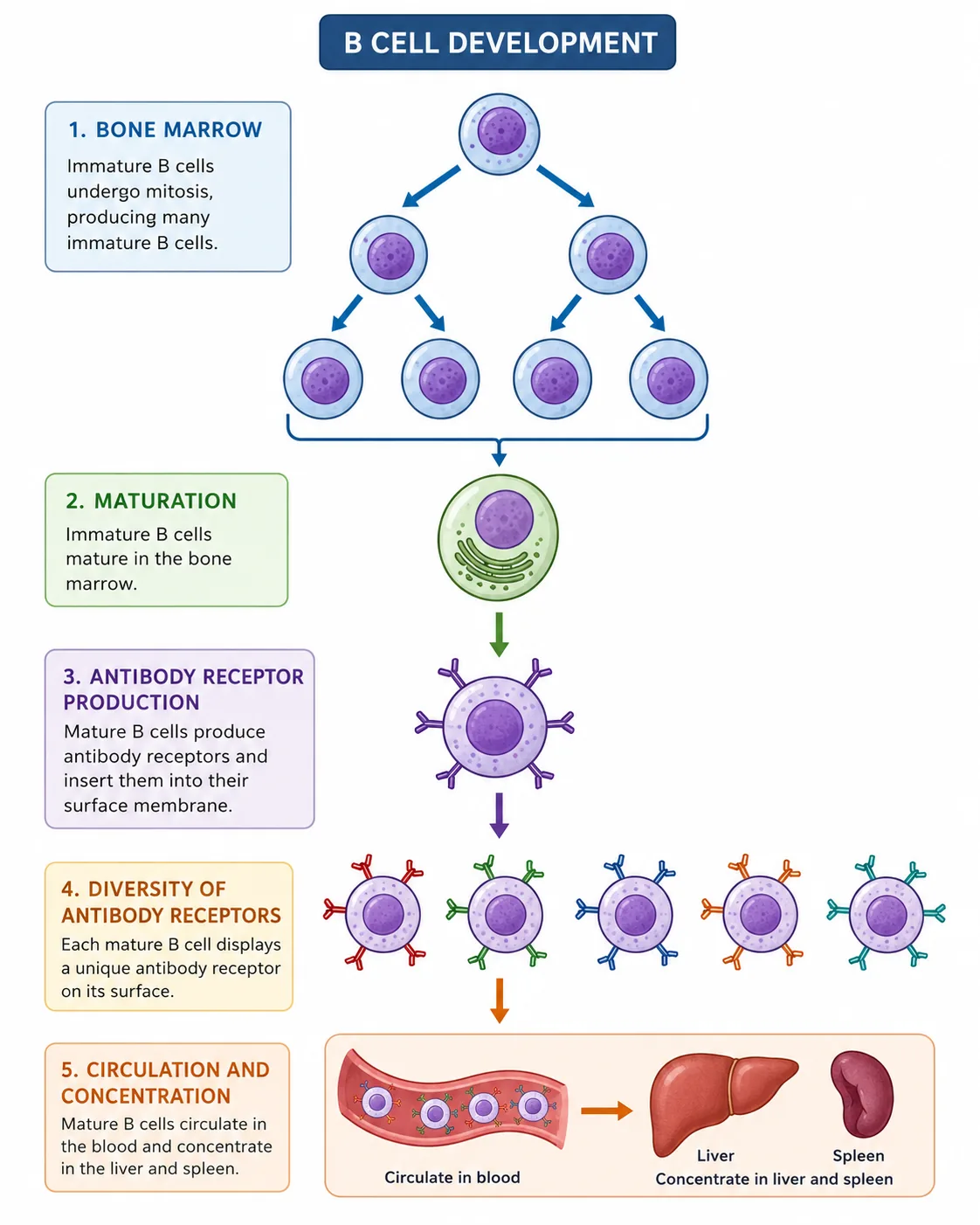
each B cell has a unique receptor. When a B cell binds its antigen and receives help from a helper T cell, it undergoes clonal selection and expansion, producing plasma cells that secrete antibodies into blood and lymph.
◀ Previous12 / 15Next ▶
Essential knowledge
Essential knowledge
Cell-mediated response
cytotoxic T cells recognize antigens on MHC I of infected or cancer cells and kill them with perforin. Helper T cells coordinate both responses. Transplant rejection is largely T-cell mediated.
Self vs non-self
lymphocytes that react strongly to self are eliminated during development. Failure leads to autoimmunity (multiple sclerosis, rheumatoid arthritis).
Immunological memory
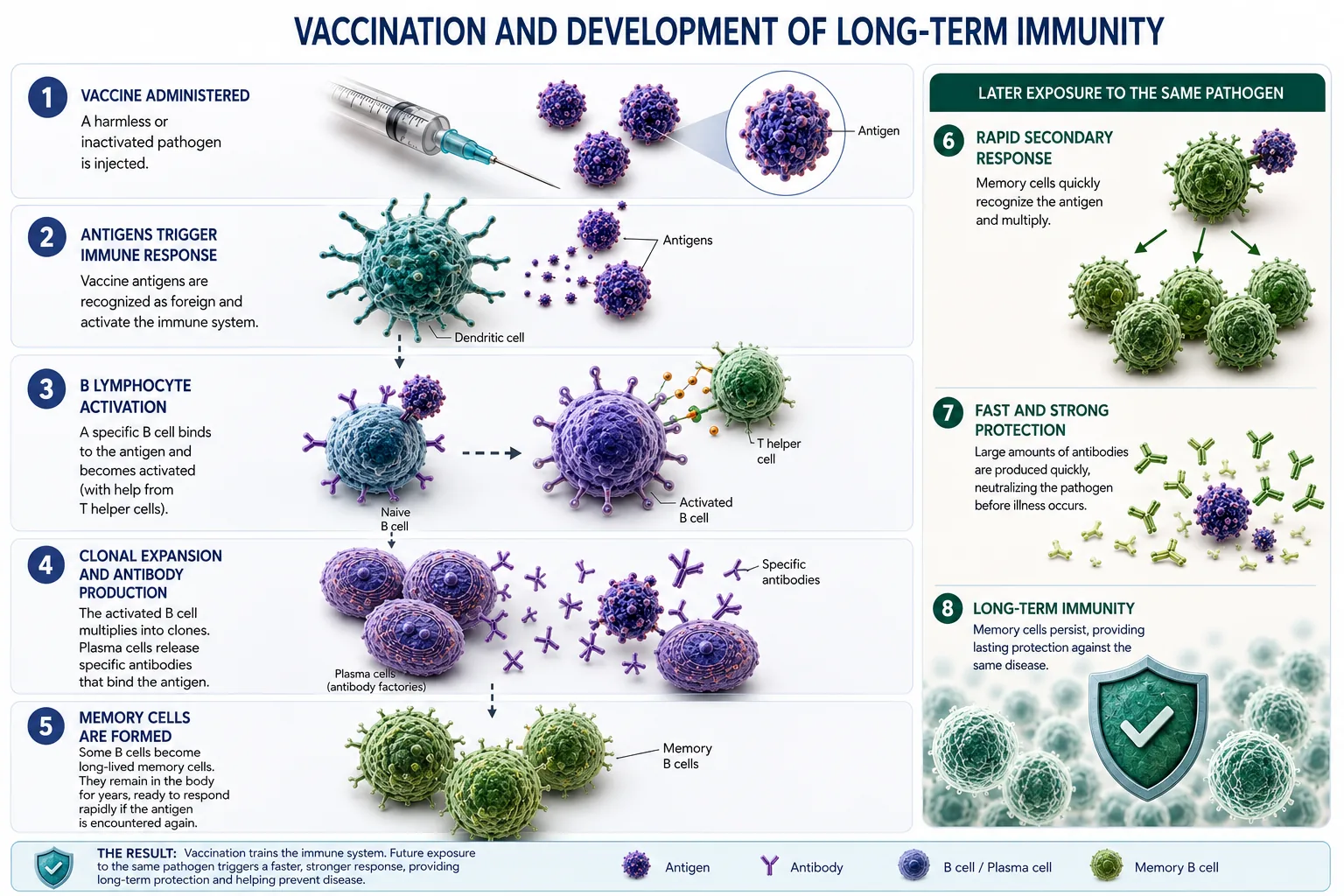
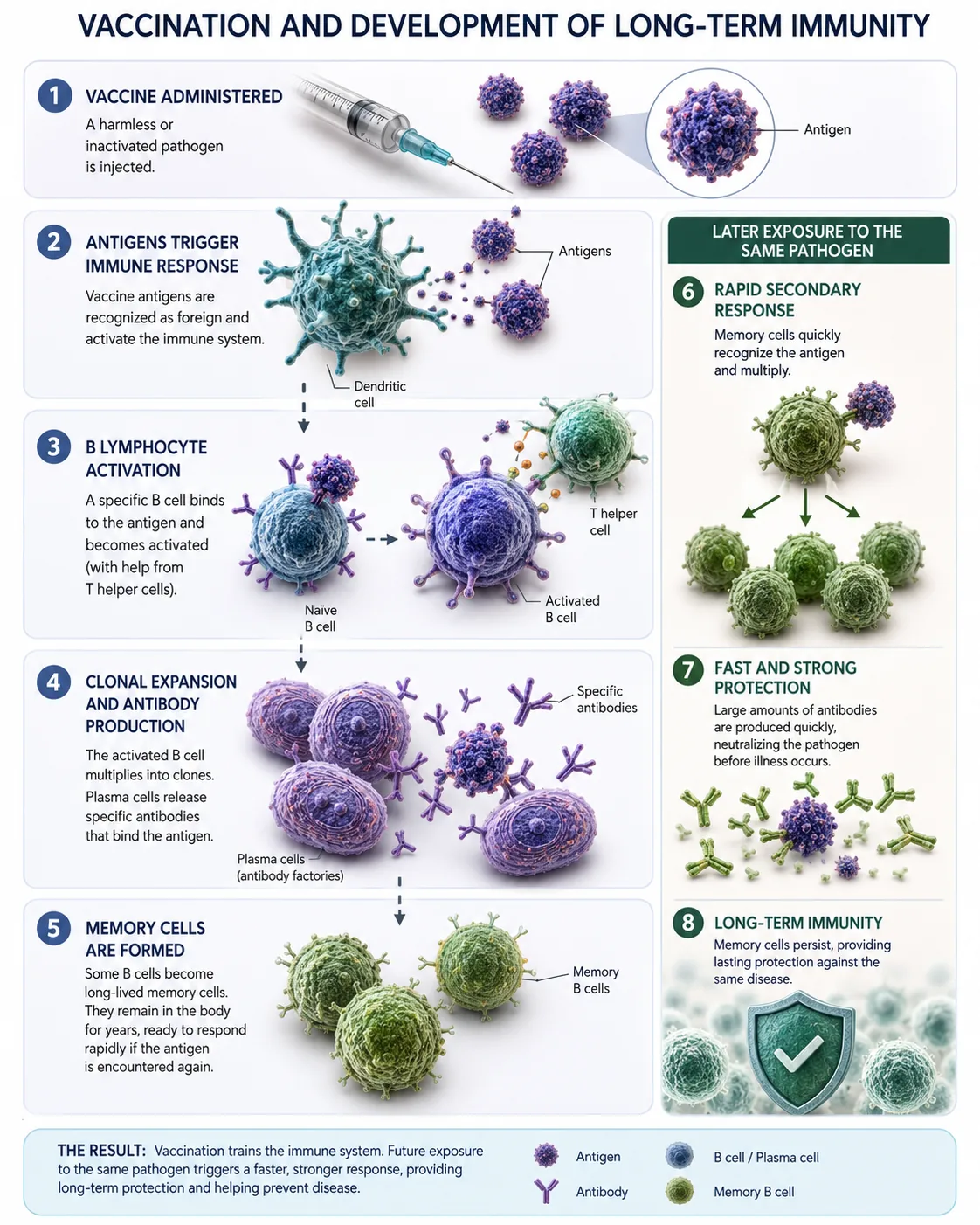
after first exposure, memory B and T cells persist. On second exposure, antibody levels rise sooner and much higher. Vaccines exploit this

herd immunity protects those who cannot be vaccinated.
◀ Previous13 / 15Next ▶
Essential knowledge
Essential knowledge
Blood types
red cells carry A, B, both or no antigens

plasma carries antibodies against absent antigens. Mismatched transfusion causes agglutination. Rh incompatibility can harm a second Rh+ fetus of an Rh- mother.
Pathogens
viruses are nonliving particles of nucleic acid and a protein coat that replicate inside host cells (lytic or lysogenic cycles)

bacteria are cells, some release toxins. Lymphatic organs include lymph nodes, spleen, thymus, tonsils and bone marrow.
Sebum from the sebaceous glands keeps skin pH low

which slows the growth of microorganisms.
Goblet cells in mucous membranes release mucus that traps microorganisms and particles before cilia move it away.
◀ Previous14 / 15Next ▶
Essential knowledge
1

Platelets plug damaged blood vessels and release clotting factors that start a chemical cascade.
2

Thrombin turns soluble fibrinogen into insoluble fibrin

which forms a mesh that traps platelets and blood cells.
3

Innate responses stay the same throughout life and react the same way to any non-self antigen.
4

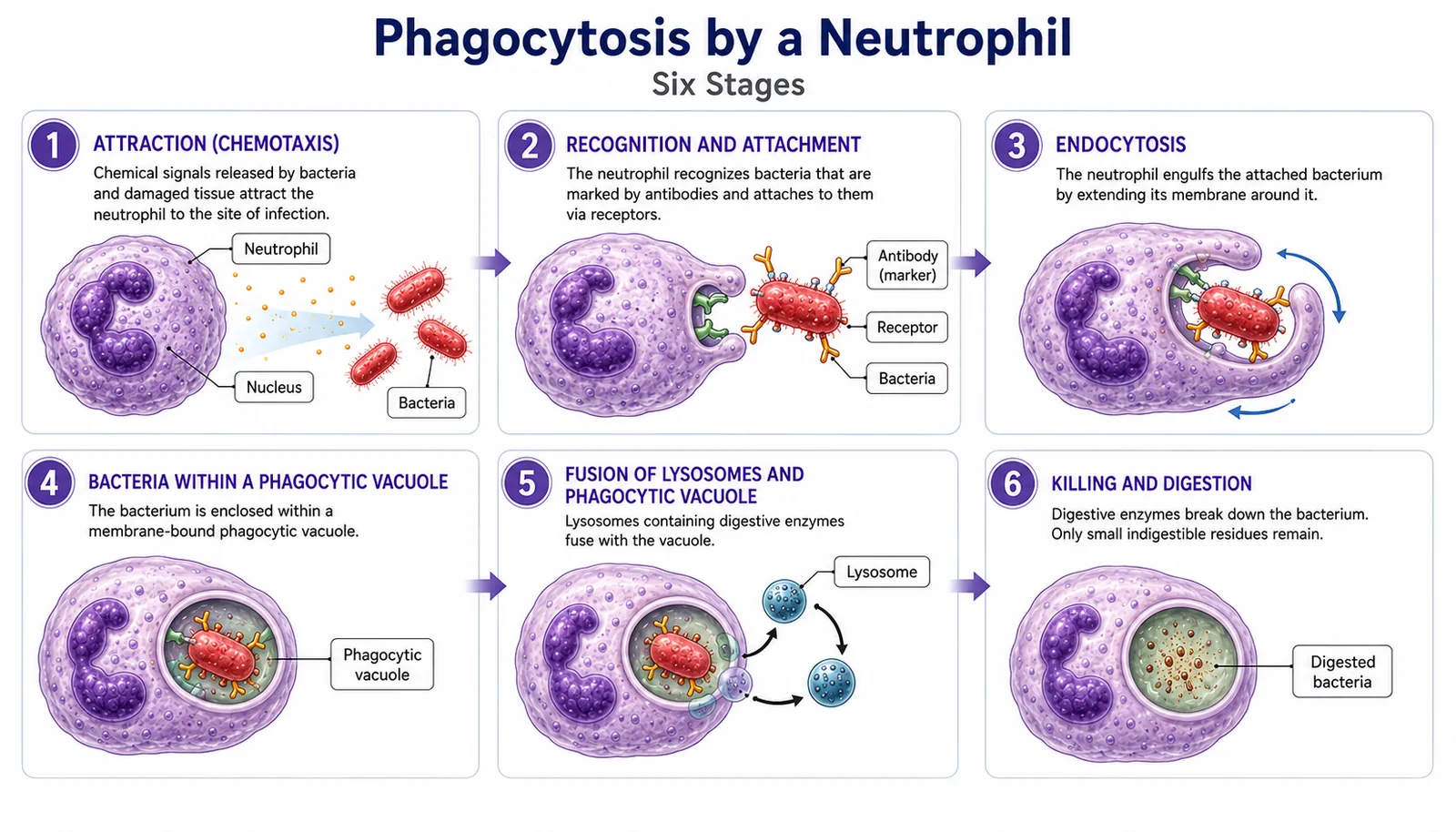
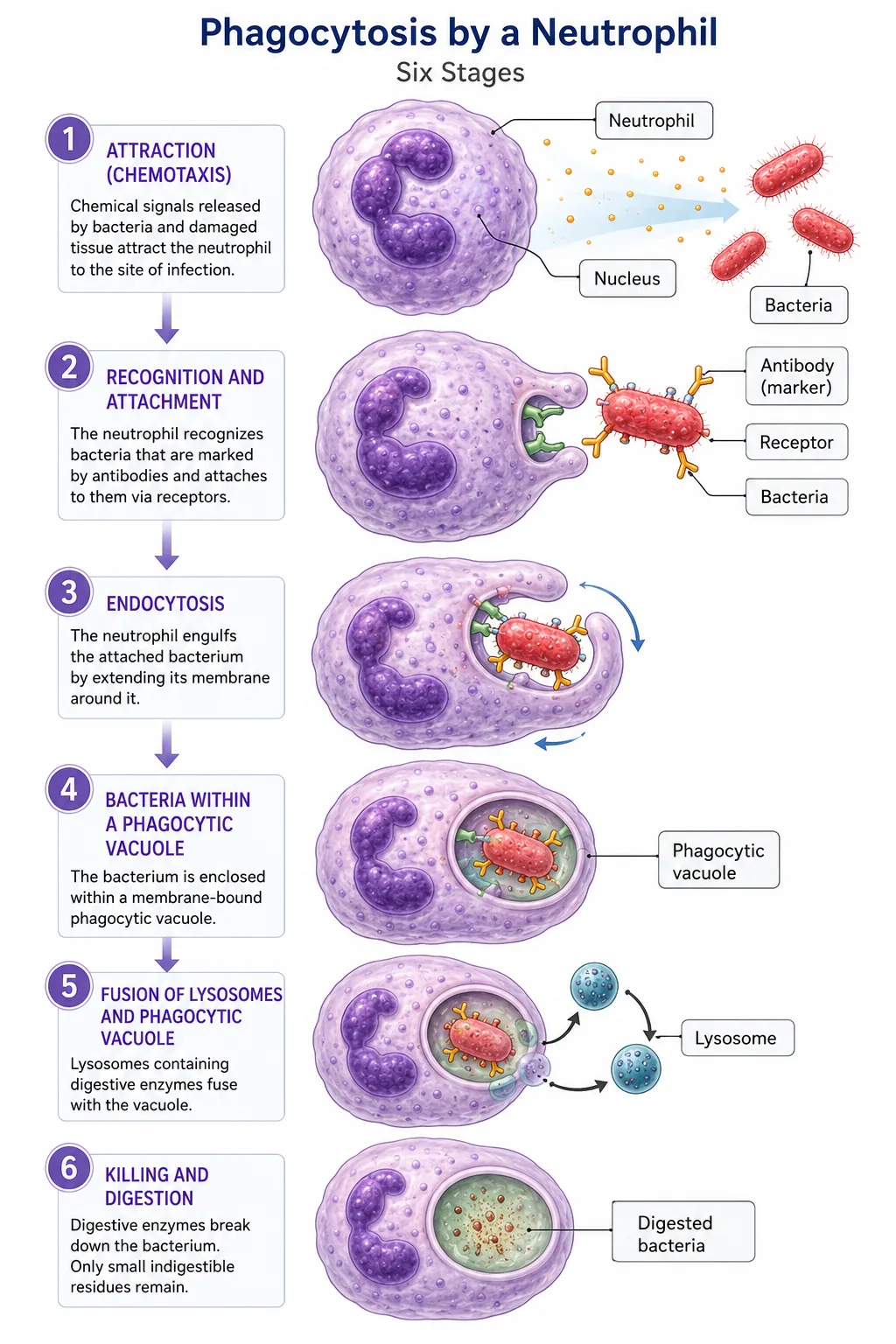
Phagocytes move to an infection by amoeboid movement, engulf pathogens, and digest them with enzymes from lysosomes.
◀ Previous15 / 15
1Process & sequence2Process & sequence3Process & sequence4Process & sequence
Process & sequence
1

1
2

Pathogen breaches barriers and enters tissues.
3

2
4

Macrophages engulf it and present antigen on MHC proteins.
5

3
6

Helper T cells recognize the antigen and release cytokines.
1 / 4Next ▶
Process & sequence
Process & sequence
4
B cells with matching receptors divide (clonal selection) into plasma cells and memory cells.
5
Plasma cells secrete antibodies

cytotoxic T cells kill infected cells.
6
Pathogen is cleared

memory cells remain for future protection.
◀ Previous2 / 4Next ▶
Process & sequence
1

Specific immune response — write these steps in this order

each step is a marking point.
2

Antigen enters body
3

Macrophage presents antigen
4

Helper T cell activated
5

B and T cells cloned
6

Antibodies and killer cells act
◀ Previous3 / 4Next ▶
Process & sequence
Process & sequence
Memory cells remain
◀ Previous4 / 4
Worked examples
Worked examples
A graph shows antibody levels after two exposures to the same antigen 4 weeks apart. Describe and explain the difference.
After the first exposure there is a lag of about a week and a low peak of antibody: naive B cells must be selected and cloned.

After the second exposure antibody rises within days to a far higher and more sustained level because memory B cells rapidly divide into plasma cells.This is the secondary response.
Type A plasma contains anti-B antibodies.

Donated type B red cells carry B antigens,so the antibodies bind them, causing agglutination and destruction of the donated cells,which can block vessels and be fatal.
1Summary2Summary3Summary4Summary5Summary6Summary
Summary
1 / 6Next ▶
Summary
◀ Previous2 / 6Next ▶
Summary
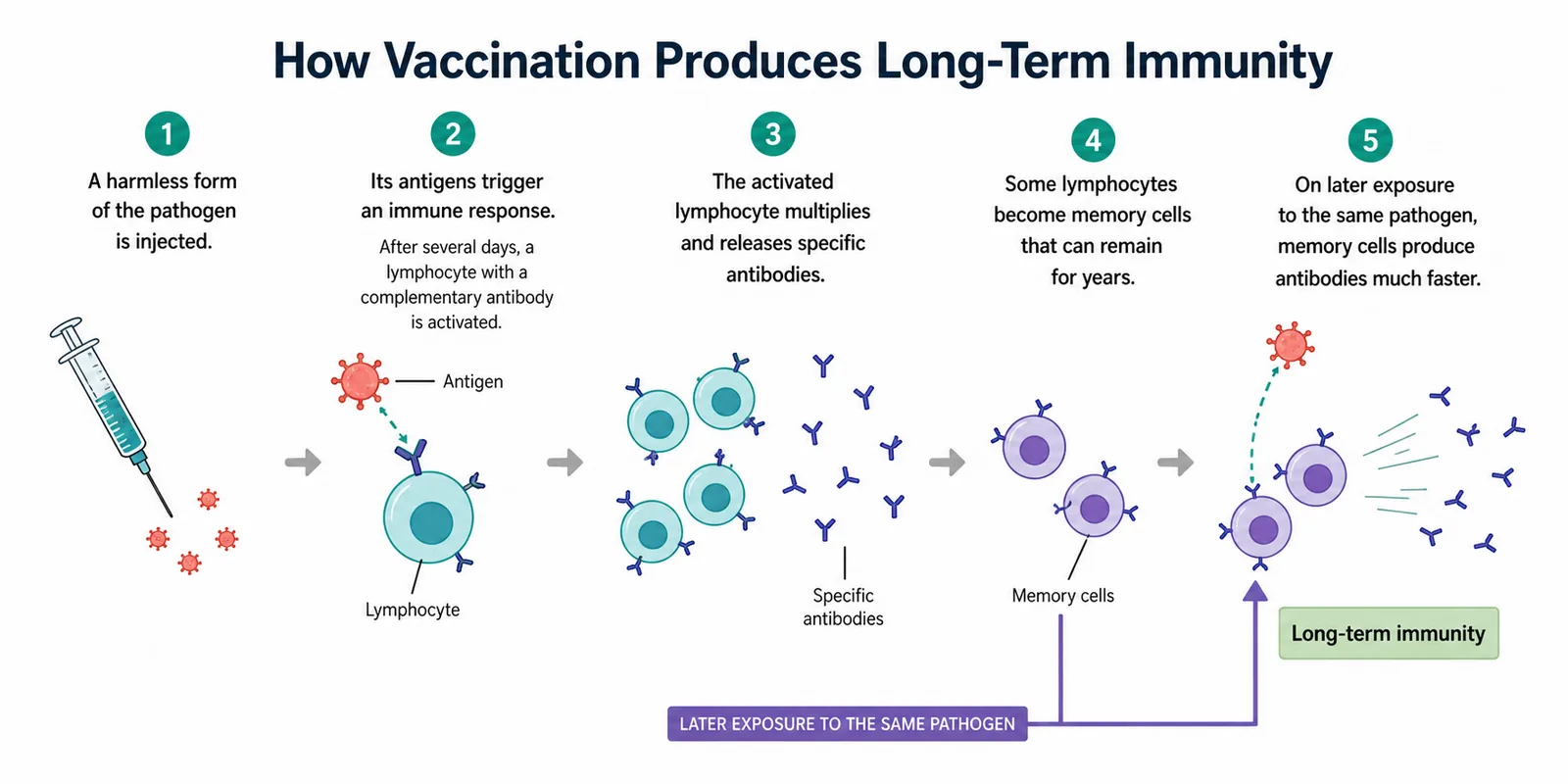
Vaccination produces long-term immunity (memory cells)" loading= - Dr Khaled Dabour Academy⤢ Enlarge
Summary
1
Defenses are
nonspecific
or
specific
.
◀ Previous3 / 6Next ▶
Summary
1

2
2

B cells give
3

humoral immunity
4

using antibodies.
5

3
6

T cells give
◀ Previous4 / 6Next ▶
Summary
Summary
cell-mediated immunity
4
Memory cells
explain long-term immunity and vaccination.
5
Viruses are not treated by
◀ Previous5 / 6Next ▶
Summary
Summary
antibiotics
◀ Previous6 / 6
1Check yourself2Check yourself3Check yourself4Check yourself5Check yourself6Check yourself7Check yourself8Check yourself9Check yourself10Check yourself11Check yourself12Check yourself13Check yourself14Check yourself15Check yourself16Check yourself
Check yourself
1 / 16Next ▶
Check yourself
◀ Previous2 / 16Next ▶
Check yourself
◀ Previous3 / 16Next ▶
Check yourself
◀ Previous4 / 16Next ▶
Check yourself
◀ Previous5 / 16Next ▶
Check yourself
◀ Previous6 / 16Next ▶
Check yourself
◀ Previous7 / 16Next ▶
Check yourself
◀ Previous8 / 16Next ▶
Check yourself
◀ Previous9 / 16Next ▶
Check yourself
partial periodic table" loading= - Dr Khaled Dabour Academy⤢ Enlarge
1

Q1. Which cells produce antibodies?
2

1
3

A. Plasma cells
4

2
5

B. Cytotoxic T cells
6

3
◀ Previous10 / 16Next ▶
Check yourself
Check yourself
C. Macrophages
4
D. Red blood cells
Show answer
A. Plasma cells, derived from activated B cells, secrete antibodies.
Q2. HIV mainly attacks:
◀ Previous11 / 16Next ▶
Check yourself
Check yourself
A. red blood cells
B. B cells
C. helper T cells
D. platelets
C. HIV infects CD4 helper T cells, crippling immune coordination.
Q3. Receiving antivenom after a snakebite is:
◀ Previous12 / 16Next ▶
Check yourself
1

A. natural active immunity
2

B. artificial active immunity
3

C. natural passive immunity
4

D. artificial passive immunity
5

D. Ready-made antibodies are injected

no memory cells are formed.
6

Q4. Which is a nonspecific defense?
◀ Previous13 / 16Next ▶
Check yourself
1

A. Antibody production
2

B. Stomach acid
3

C. Memory B cells
4

D. Clonal selection
5

B. Stomach acid kills many microbes regardless of type.
6

Q5. The secondary immune response is faster because of:
◀ Previous14 / 16Next ▶
Check yourself
Check yourself
A. memory cells
B. histamine
C. interferon
D. fever
A. Memory cells from the first exposure respond rapidly.
Q6. A universal red-cell donor has blood type:
◀ Previous15 / 16Next ▶
Check yourself
1

A. A
2

B. AB
3

C. O
4

D. B
5

C. Type O red cells have no A or B antigens.
◀ Previous16 / 16

Pathogen

A disease-causing organism or agent such as a bacterium, virus, fungus or protist.

Antigen

A molecule, usually on a pathogen surface, that triggers a specific immune response.

Antibody

A Y-shaped protein made by plasma cells that binds a specific antigen.

Phagocytosis

Engulfing and digesting particles or cells by white blood cells such as macrophages.

B lymphocyte

A white blood cell maturing in bone marrow that produces antibodies (humoral immunity).

T lymphocyte

A white blood cell maturing in the thymus that coordinates or carries out cell-mediated immunity.

Memory cell

A long-lived lymphocyte that enables a faster, stronger secondary response.

Vaccine

A preparation of weakened, killed or partial pathogen that induces immunity without disease.

Inflammation

A nonspecific response with redness, heat, swelling and pain caused by histamine and increased blood flow.

MHC

Major histocompatibility complex proteins that display antigen fragments to T cells.

Lines of defense
Line Type Examples
First Nonspecific barriers Skin, mucus, cilia, stomach acid, lysozyme in tears
Second Nonspecific internal Phagocytes, inflammation, fever, interferons, complement
Third Specific (adaptive) B cells and antibodies, T cells, memory cells
Types of immunity
Type How obtained Memory cells? Example
Natural active Infection Yes Recovering from chickenpox
Artificial active Vaccination Yes Measles vaccine
Natural passive Antibodies from mother No Via placenta or breast milk
Artificial passive Injected antibodies No Antivenom

Passive immunity is immediate but short-lived.

Command terms
Identify / Describe (FRQ)
A short, specific statement; describing requires relevant characteristics, not a single word.
Explain / Justify (FRQ)
Give the cause-and-effect reasoning or evidence; a restated fact does not score.
Calculate
Show setup, substitution and the answer with units.
Predict
State the expected outcome; add a reason only if asked to justify.
MCQ technique
Read every option; eliminate distractors that are true statements but do not answer the question; watch for NOT/EXCEPT.

Keywords the mark scheme looks for in this lesson

Keywords the mark scheme looks for in this lesson
Pathogen · Antigen · Antibody · Phagocytosis · B lymphocyte · T lymphocyte · Memory cell · Vaccine · Inflammation · MHC
Learn each definition in the Key words tab exactly; a missing keyword in a definition usually loses the mark.

How to get full marks (examiner guidance)

1

Answer exactly what is asked; extra correct material does not earn credit, and contradictory statements can cancel credit (AP FRQ).
2

Use precise vocabulary (e.g. “active site”, “concentration gradient”, “allele”), never “it/stuff/things”.
3

Show units and working in calculations.
4

In MCQs, predict the answer before reading the options, then eliminate.
Accepted payment methods