Curriculum
EST II Biology
1. Molecules & Cells
0/15
2. Genetics & Biotechnology
0/7
3. Evolution & Diversity
0/7
4. Organisms: Structure & Function
0/15
-
McGraw-Hill SAT Biology — Chapter 8: Understanding Organismal Biology
 Preview
-
4.1 Human Digestion & Nutrition
Preview
-
4.1 Human Digestion & Nutrition (SAT Biology) - Check yourself
 Preview
-
4.2 Circulation & Respiration
Preview
-
4.2 Circulation & Respiration (SAT Biology) - Check yourself
Preview
-
4.3 Excretion & Homeostasis
Preview
-
4.3 Excretion & Homeostasis (SAT Biology) - Check yourself
Preview
-
4.4 Nervous & Endocrine Systems
Preview
-
4.4 Nervous & Endocrine Systems (SAT Biology) - Check yourself
Preview
-
4.5 The Immune System
Preview
-
4.5 The Immune System (SAT Biology) - Check yourself
Preview
-
4.6 Reproduction & Development
Preview
-
4.6 Reproduction & Development (SAT Biology) - Check yourself
Preview
-
4.7 Animal Behavior
Preview
-
4.7 Animal Behavior (SAT Biology) - Check yourself
Preview
5. Ecology
0/5
6. Laboratory Skills
0/2
SAT Biology — Full Book Tests and Strategy
0/8
4.4 Nervous & Endocrine Systems
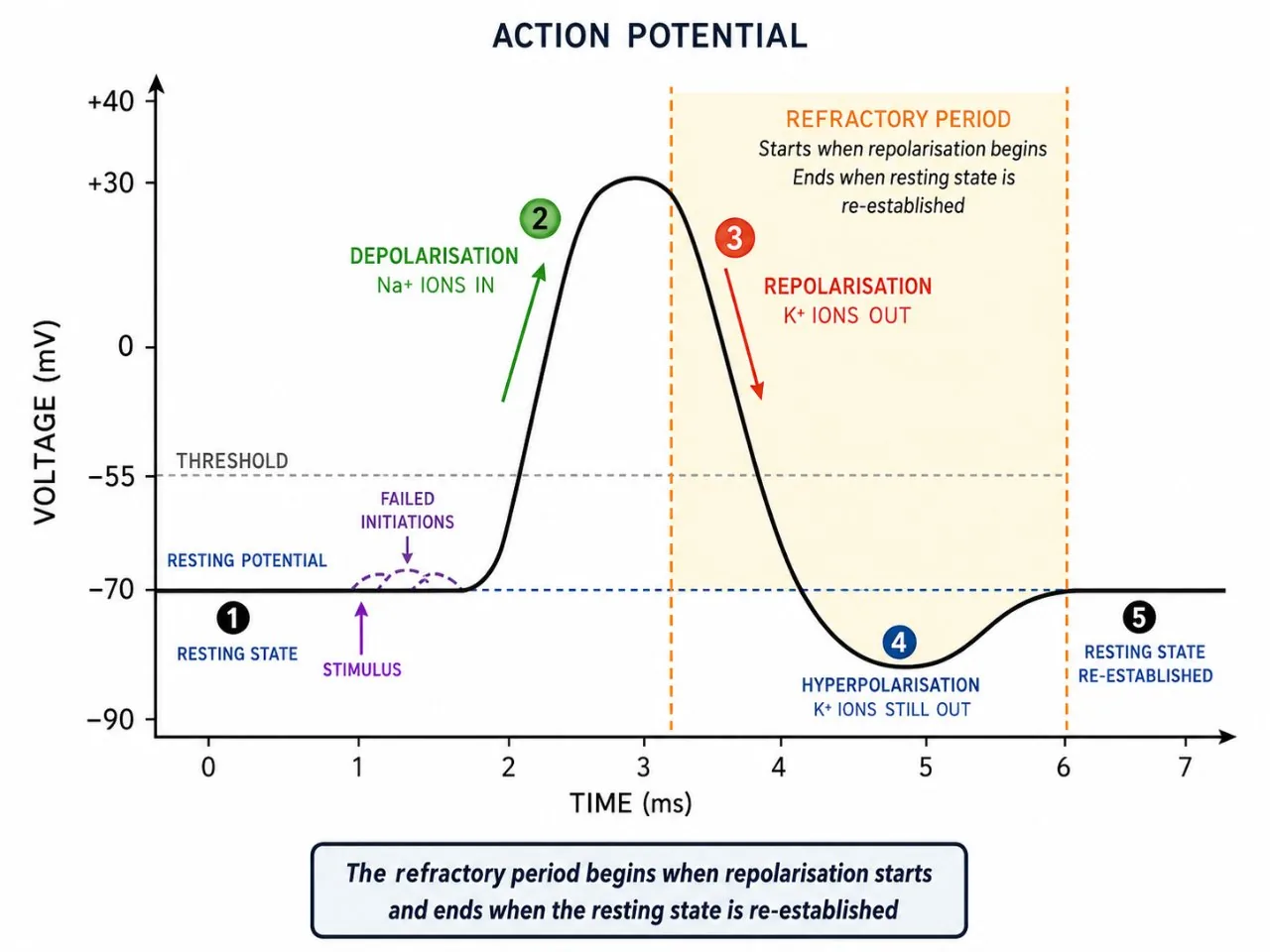
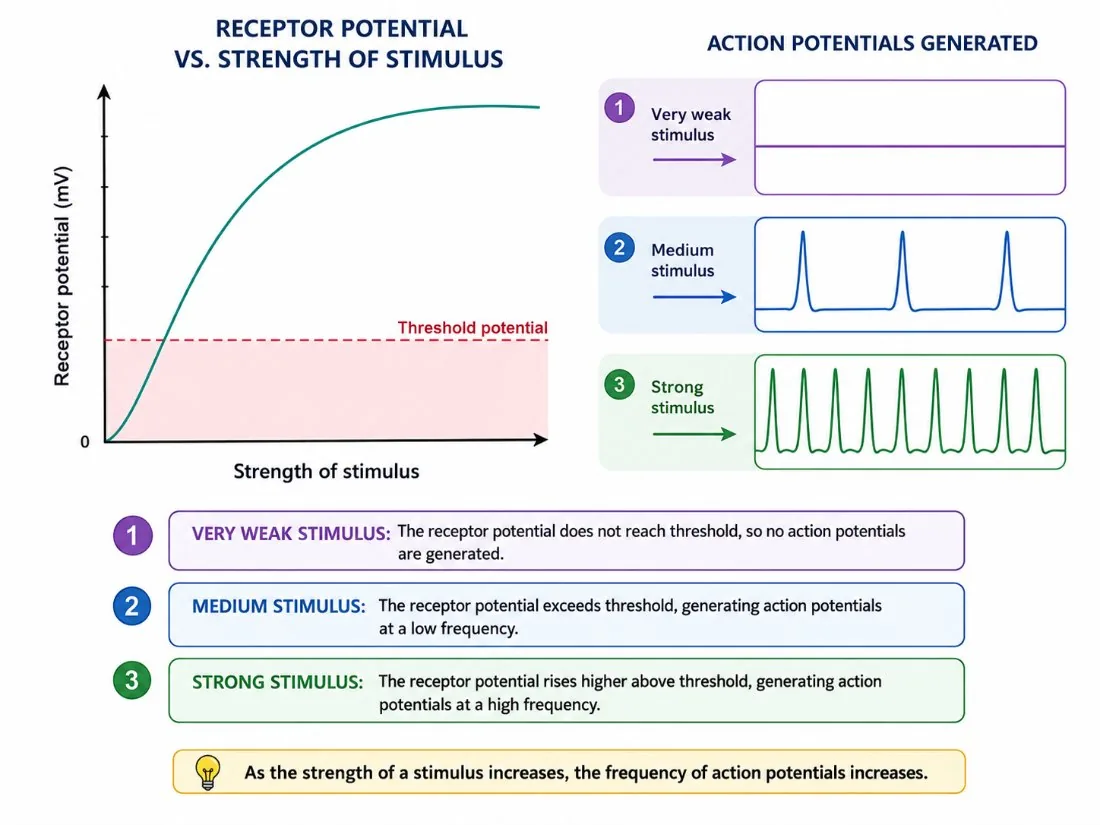
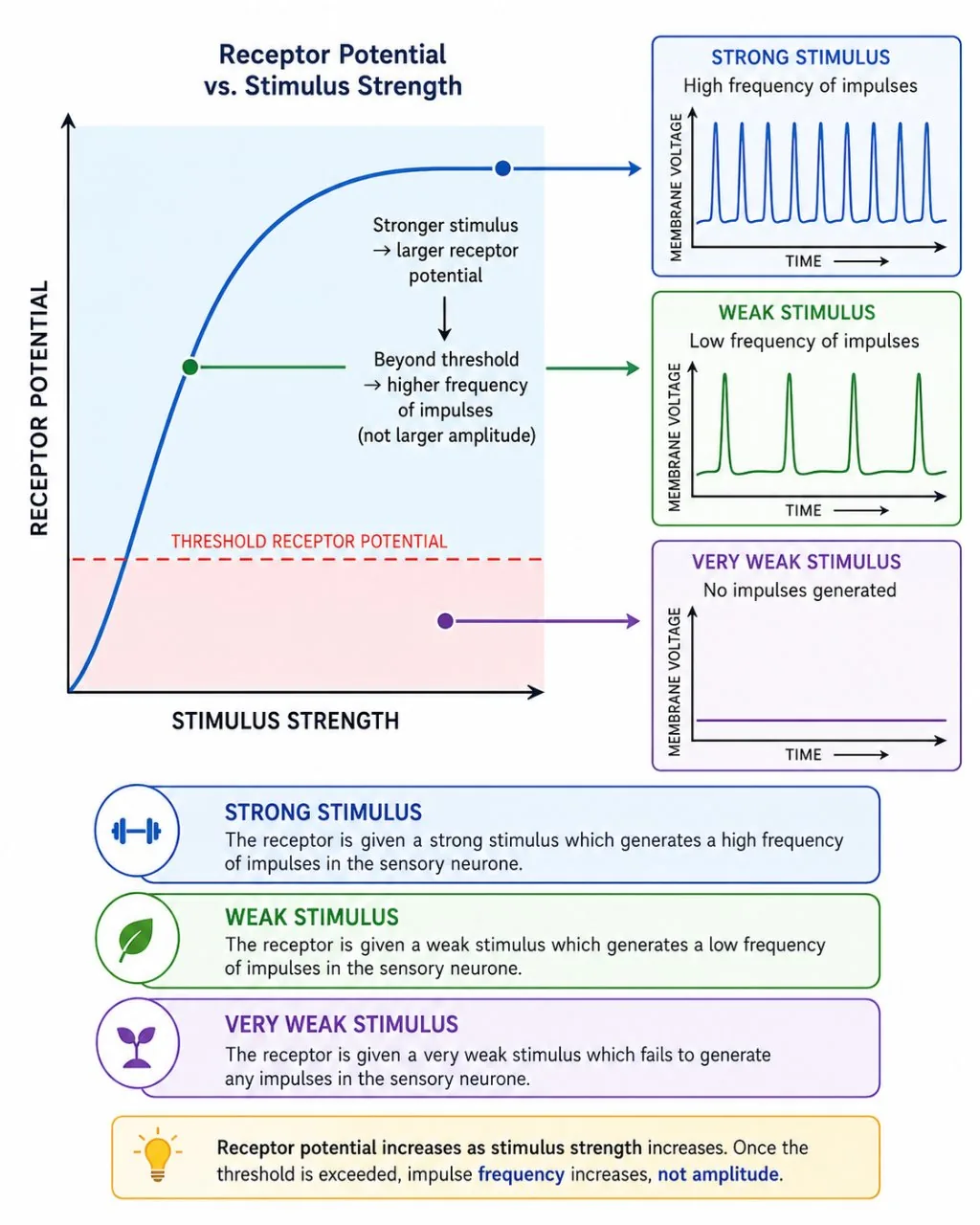
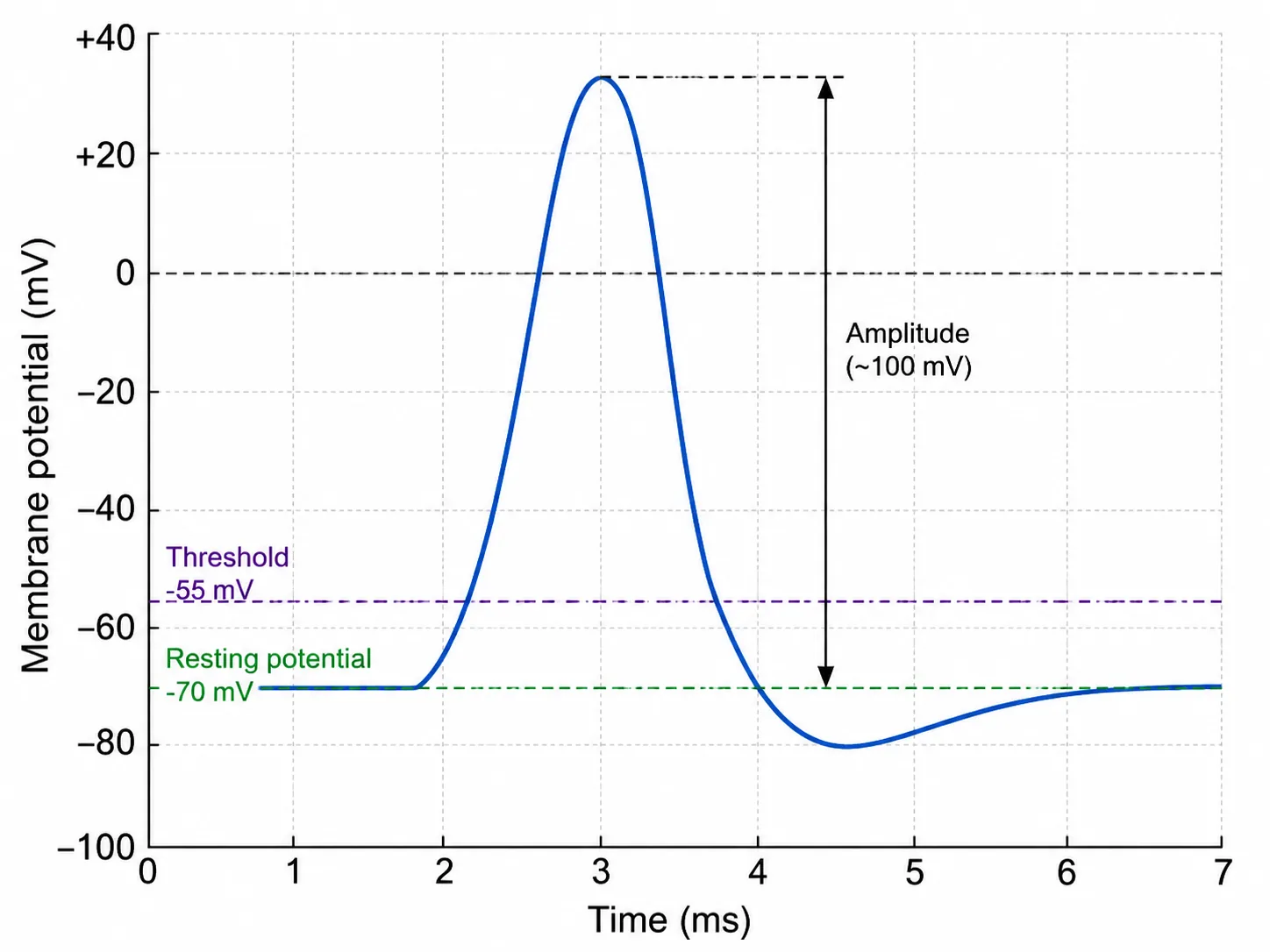
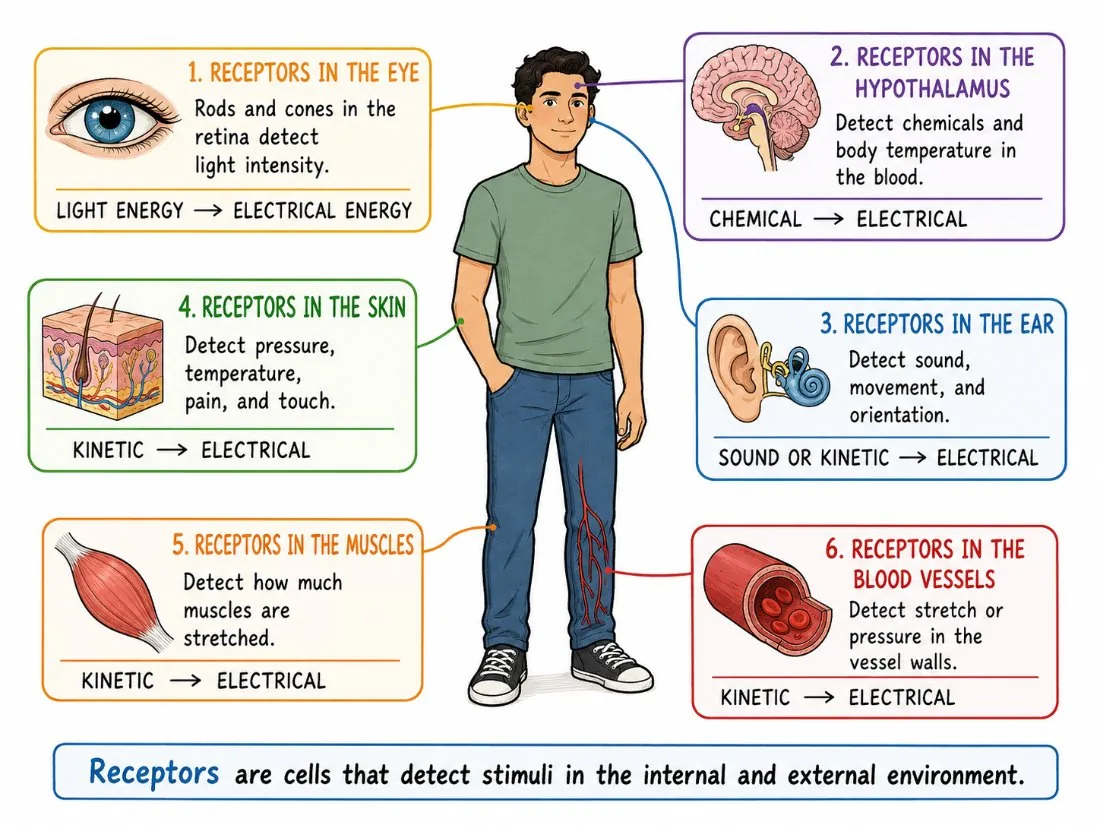
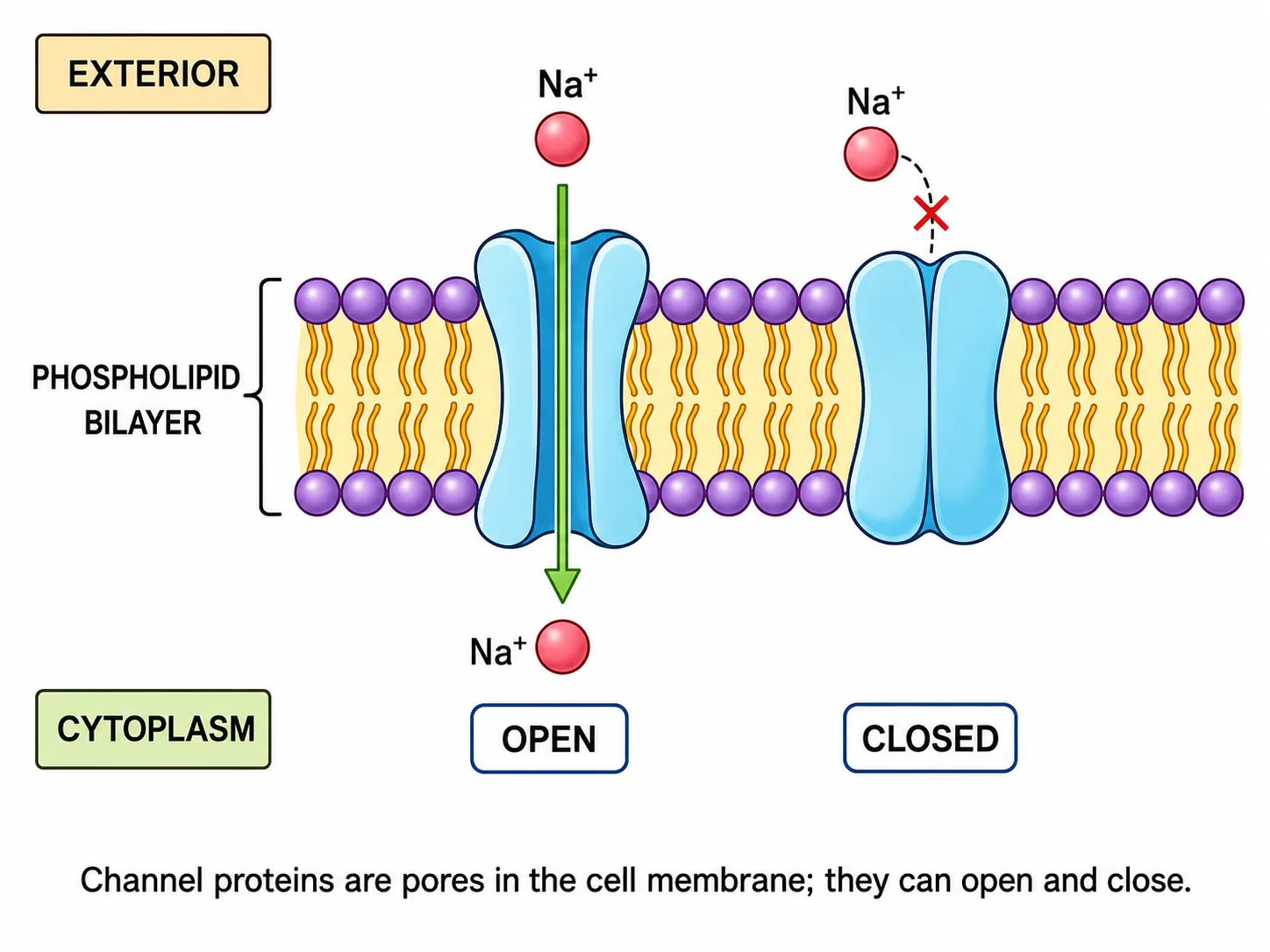
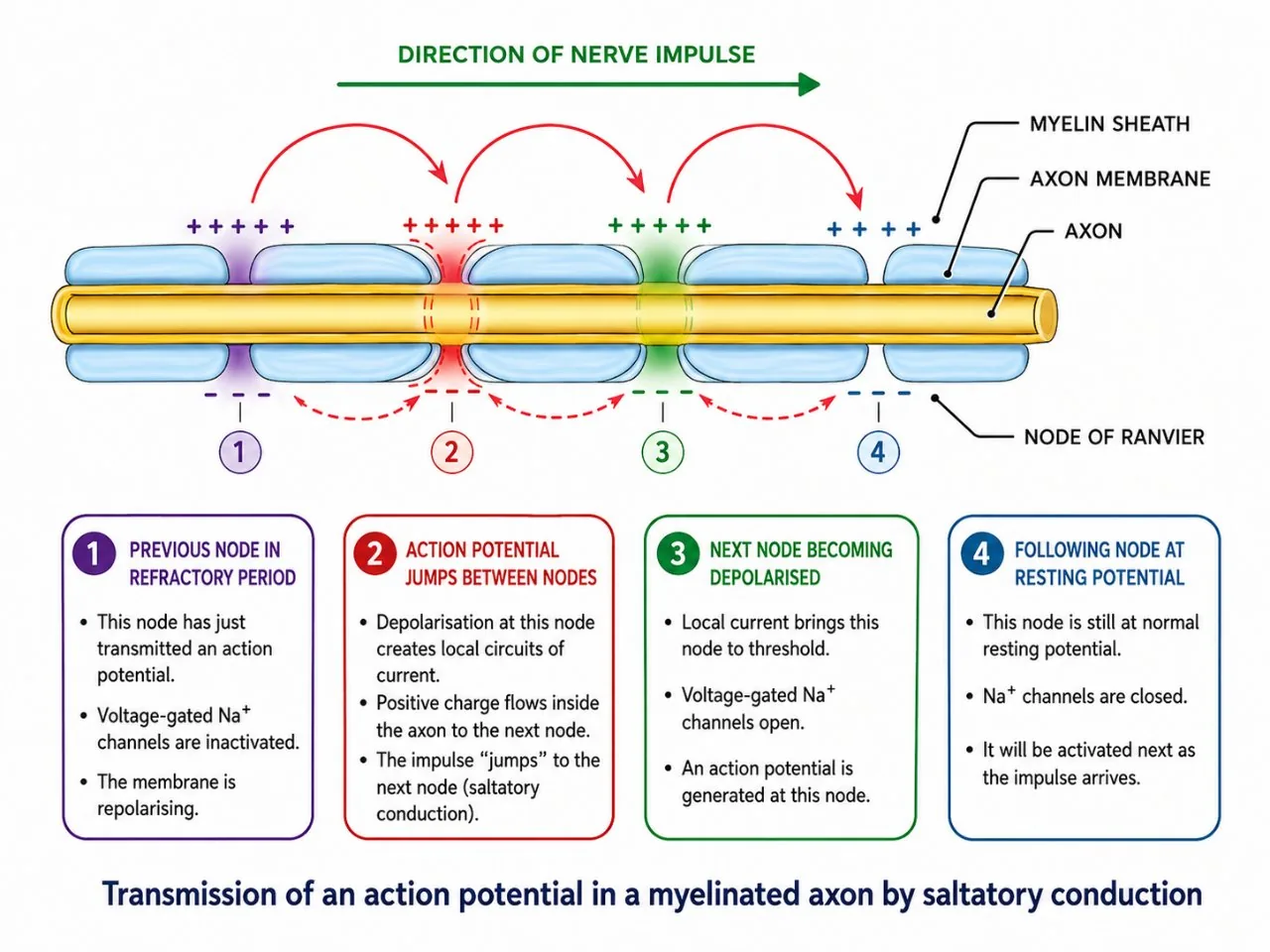
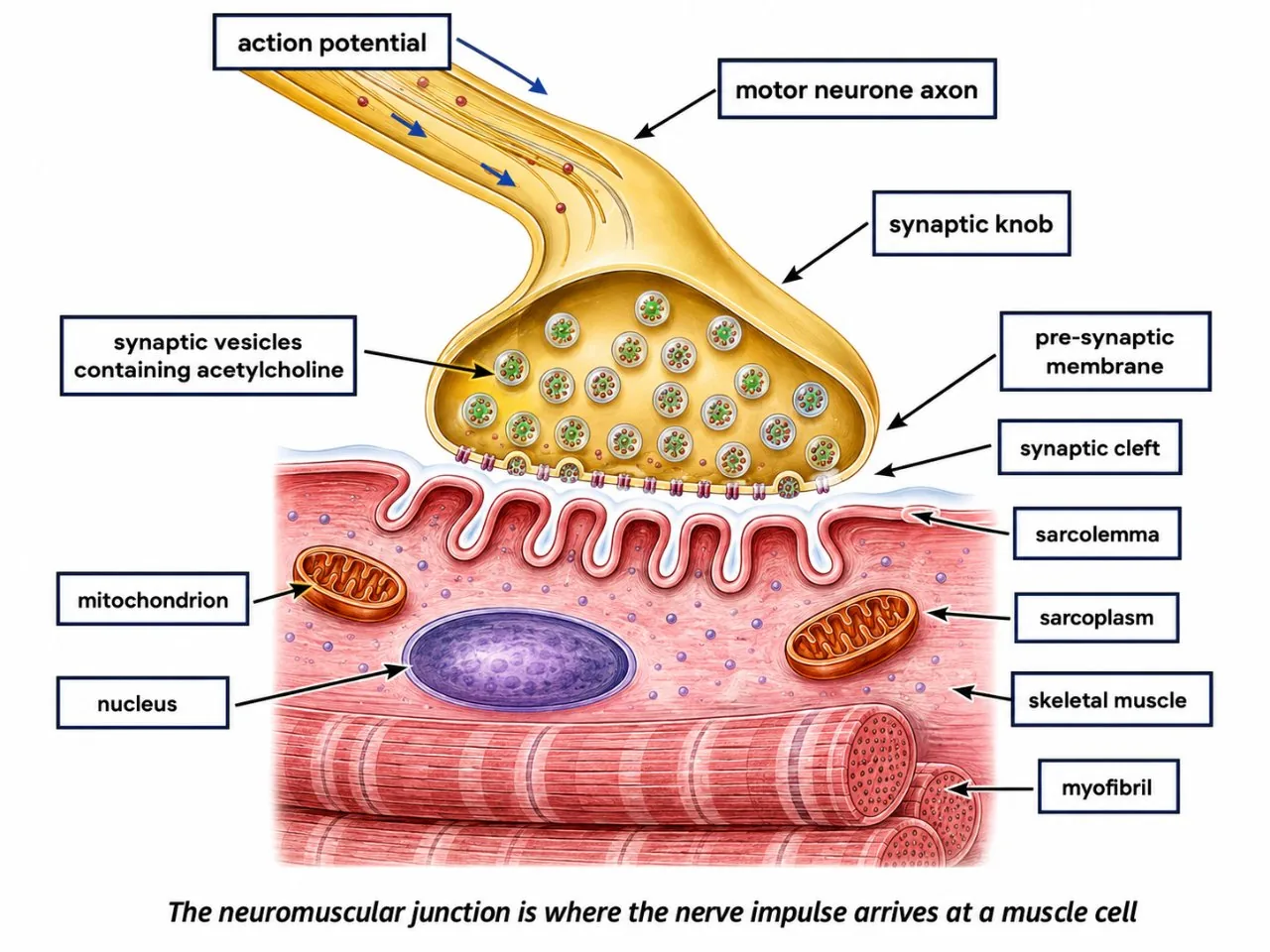
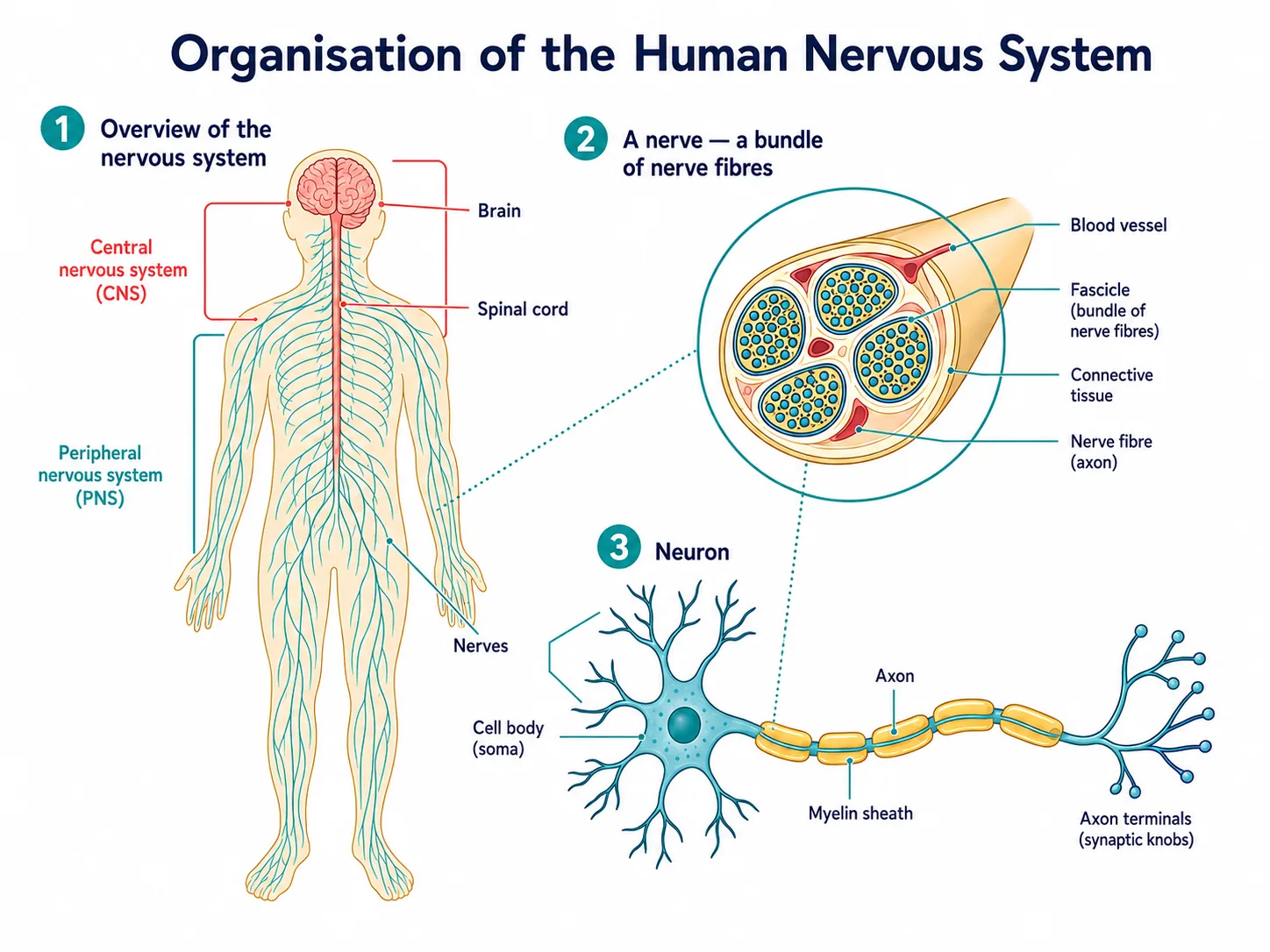
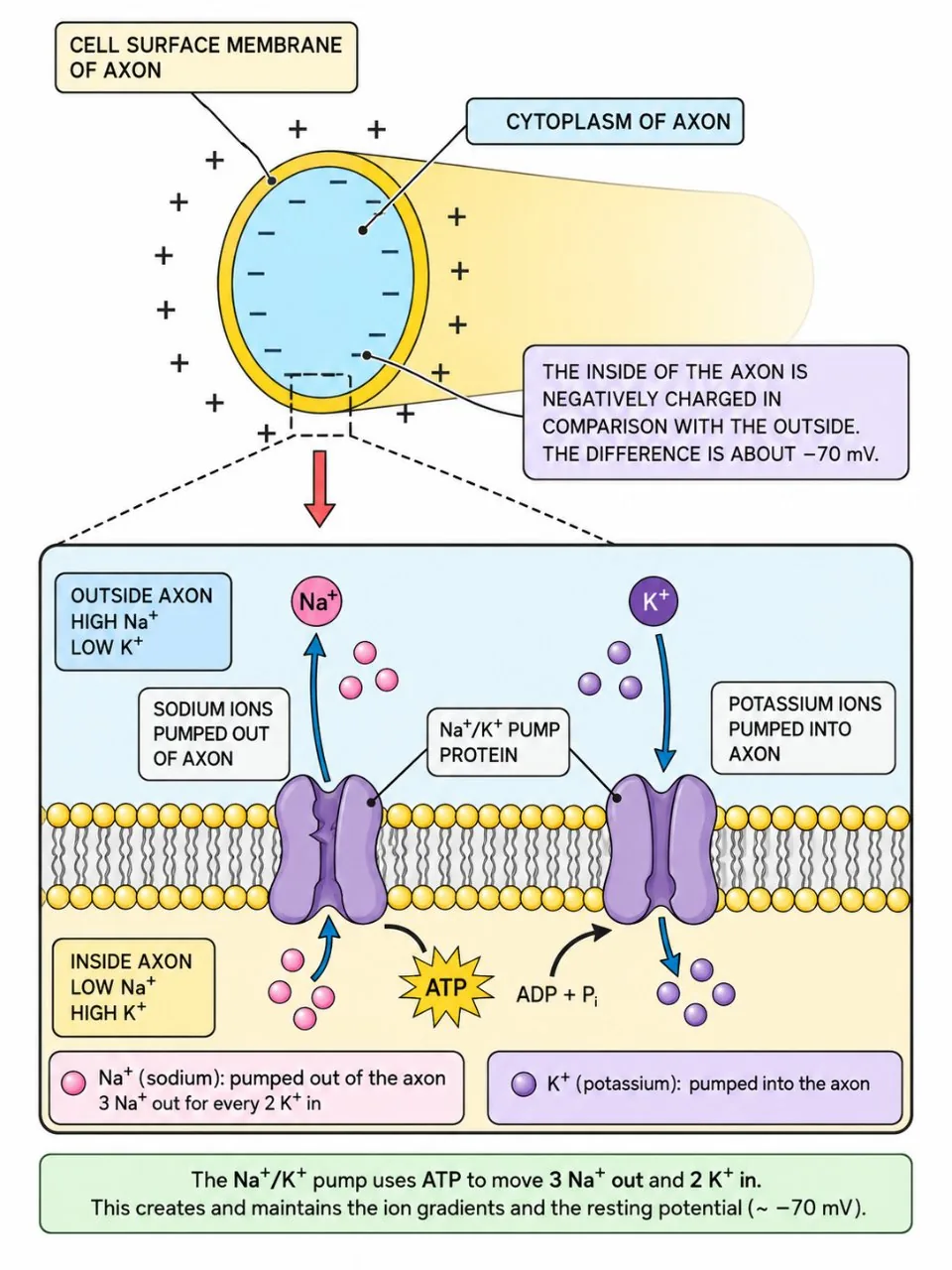
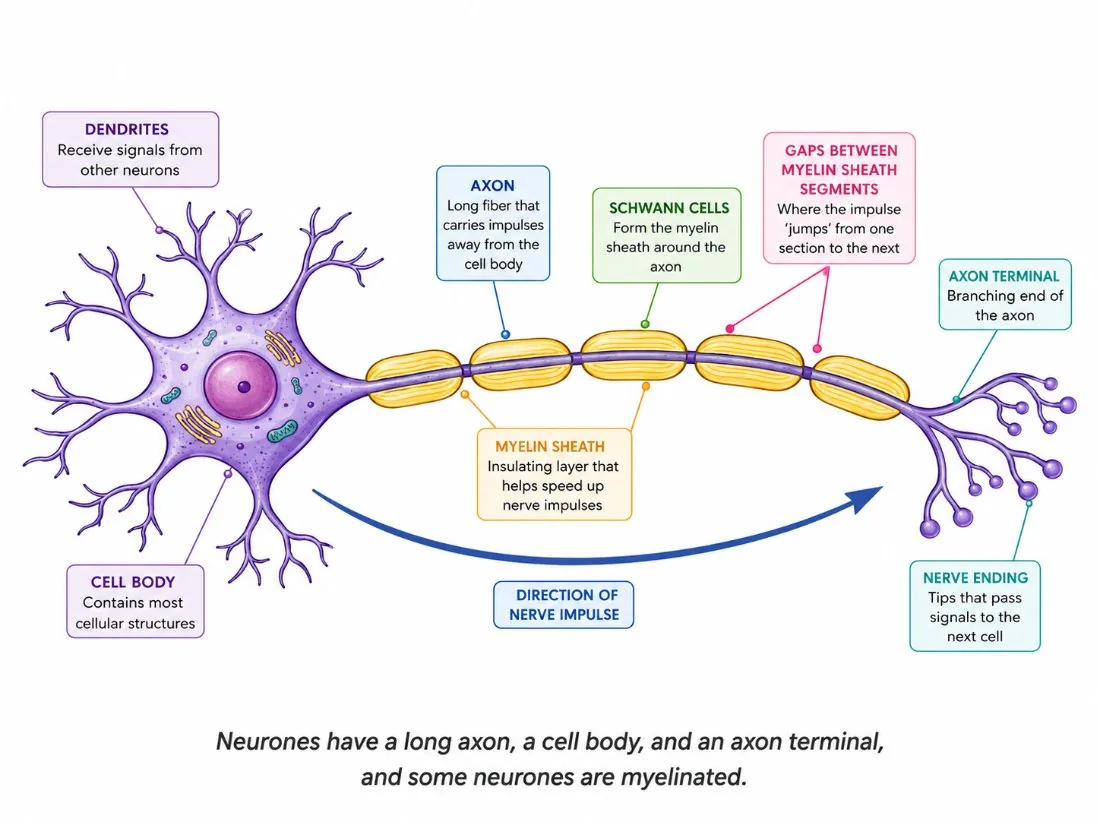
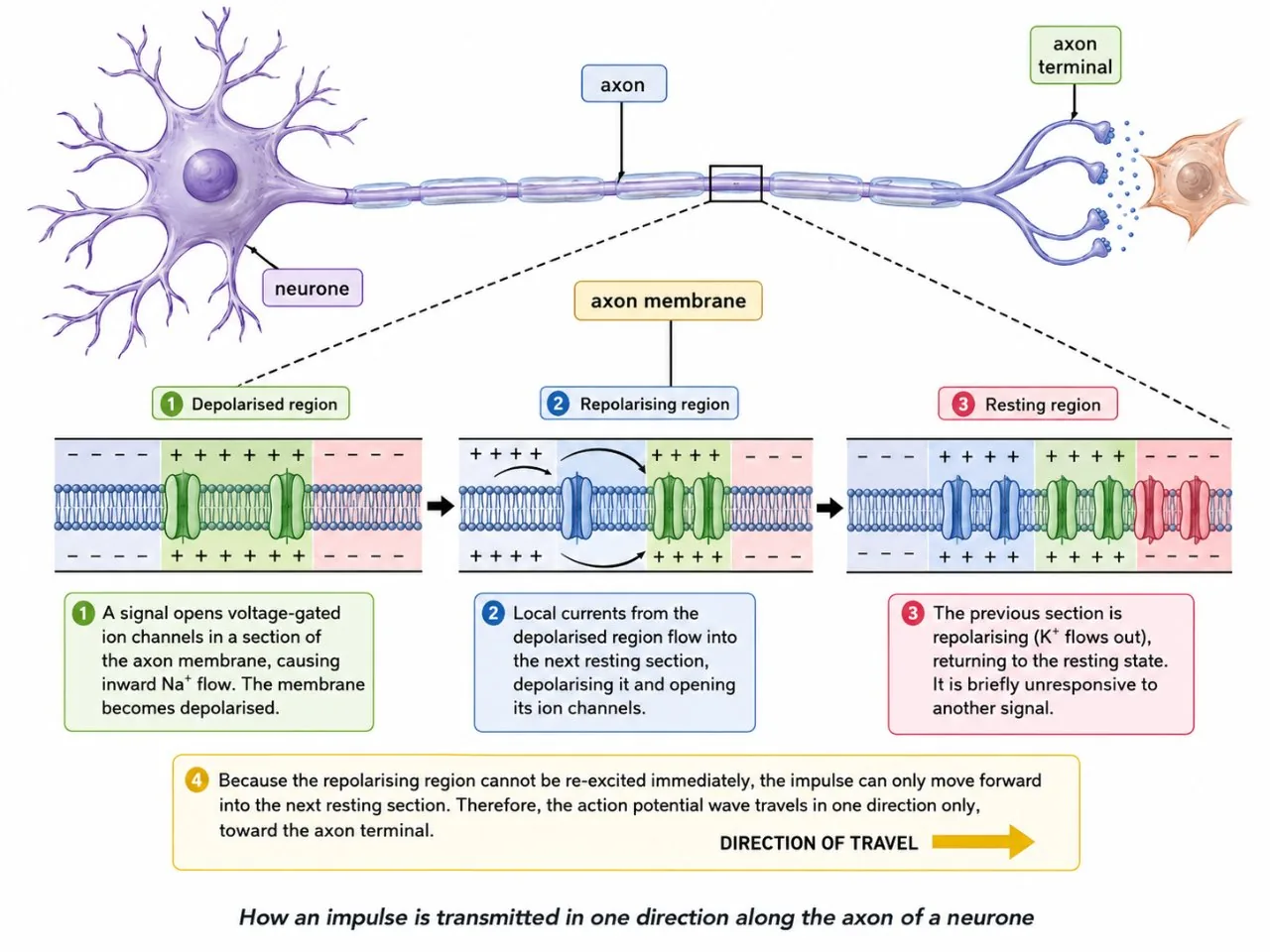
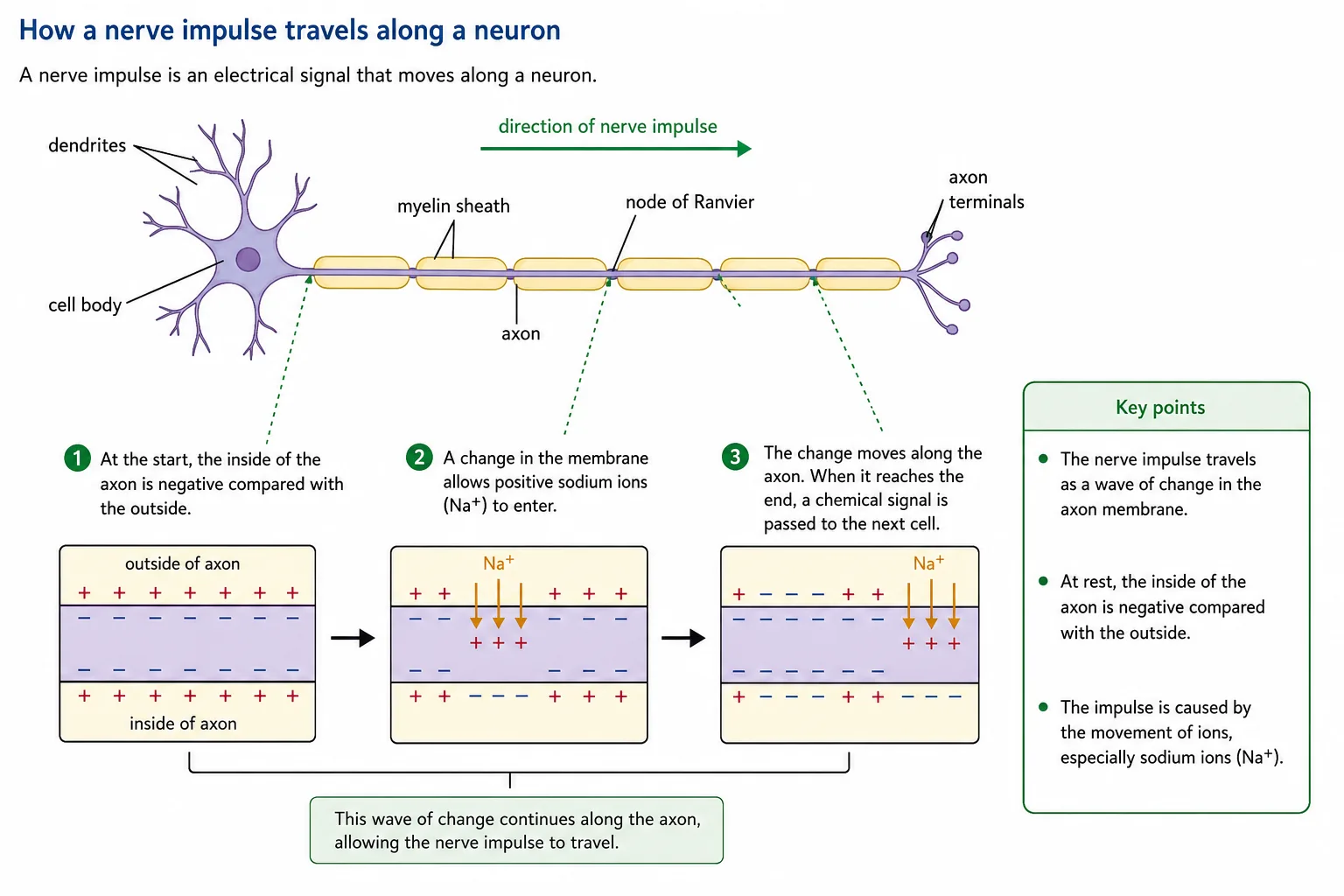
Describe neuron structure and the generation of an action potential.
 ⤢ Enlarge




 ⤢ Enlarge
 ⤢ Enlarge



 ⤢ Enlarge
Neuron
A nerve cell that transmits electrical impulses.
Resting potential
The voltage across a neuron’s membrane at rest, about -70 mV, inside negative.
Action potential
A rapid, all-or-none reversal of membrane potential that travels along an axon.
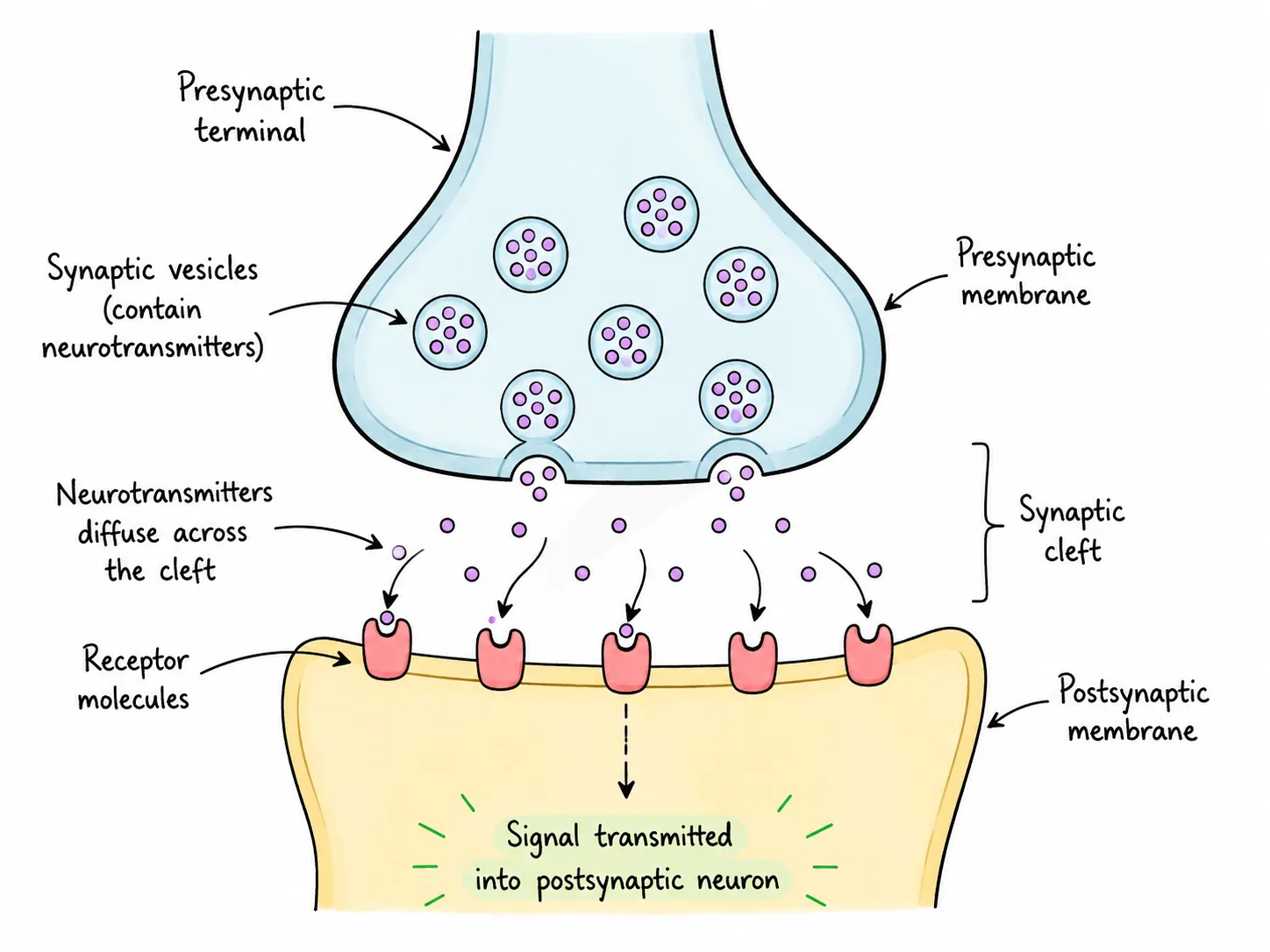
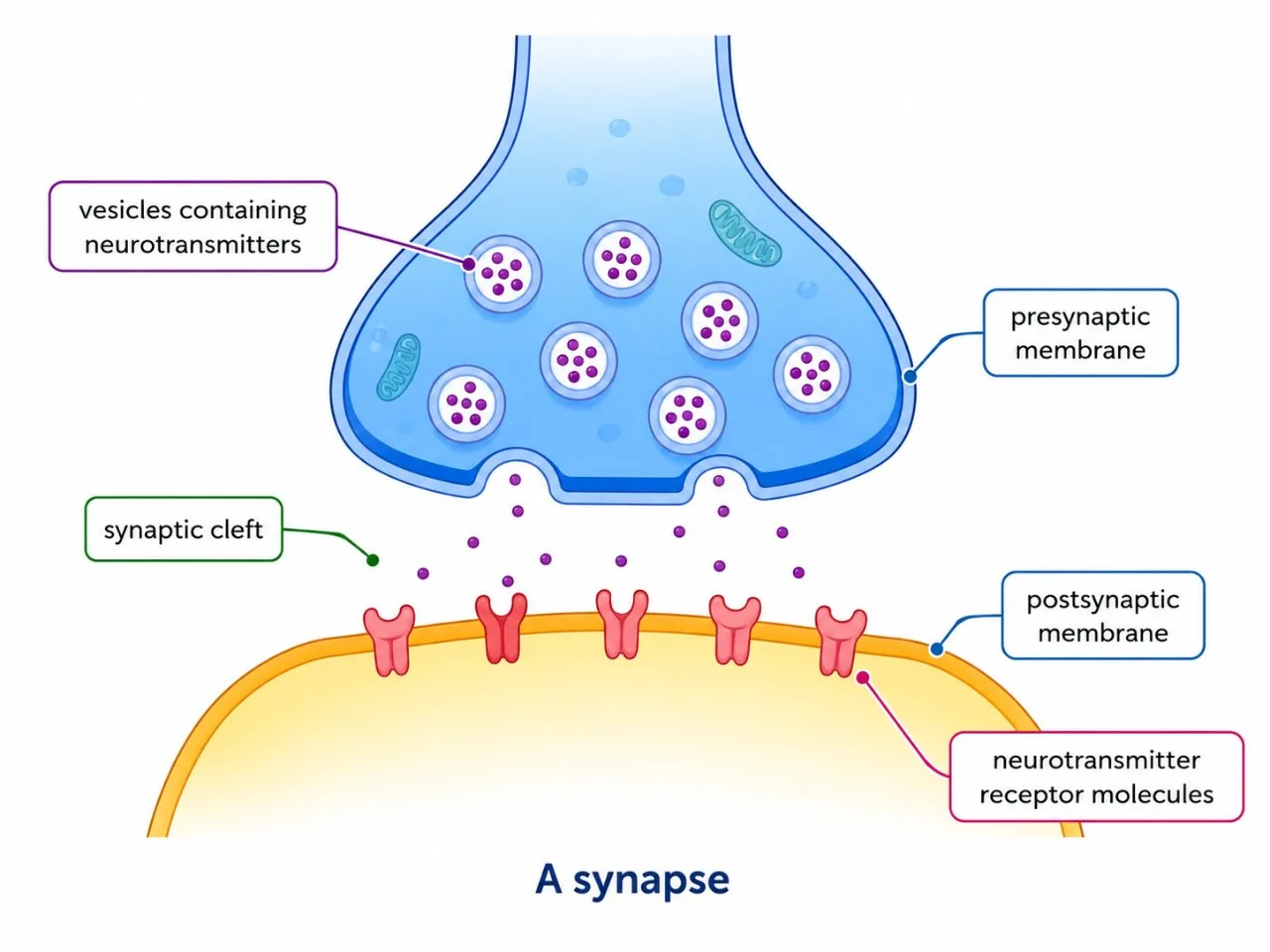
Synapse
A junction between neurons where neurotransmitters carry the signal across a gap.
Neurotransmitter
A chemical, such as acetylcholine, released from a presynaptic neuron to signal the next cell.
Myelin sheath
Fatty insulation made by Schwann cells that speeds impulse conduction.
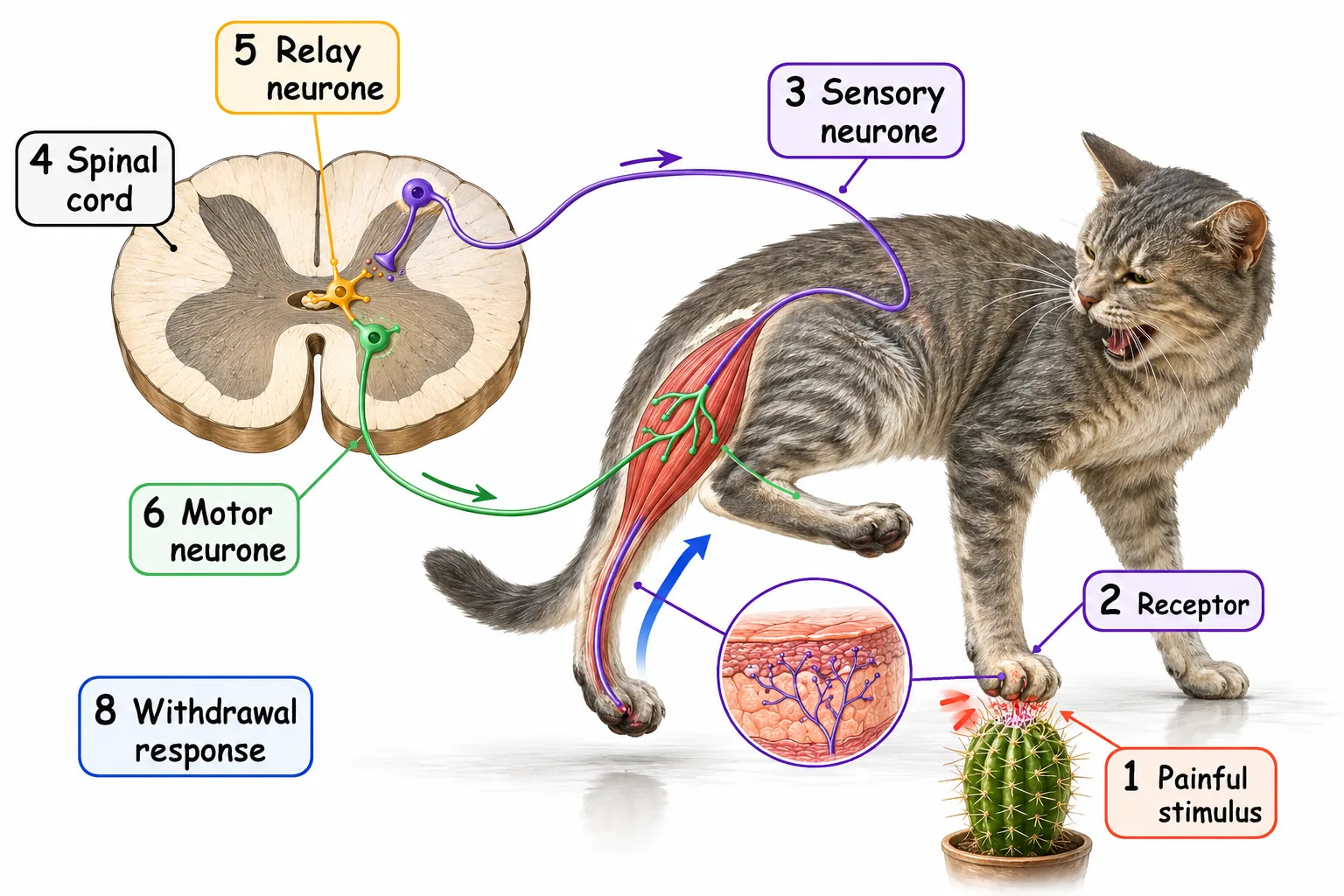
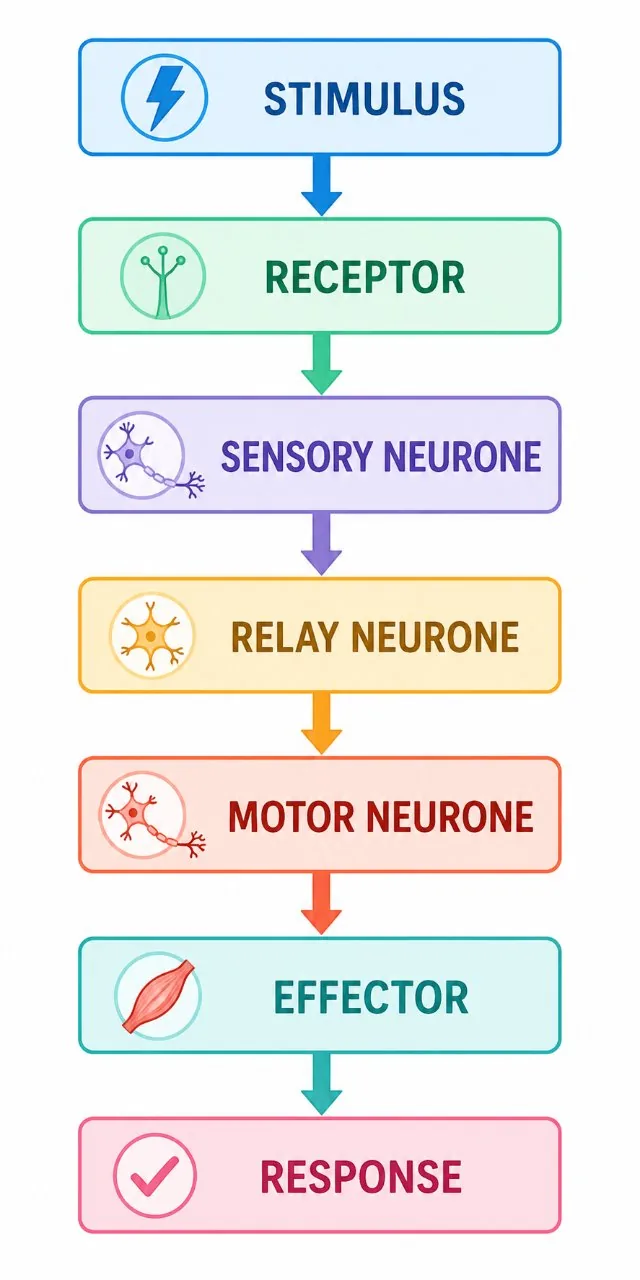
Reflex arc
A rapid, automatic pathway: receptor, sensory neuron, interneuron, motor neuron, effector.
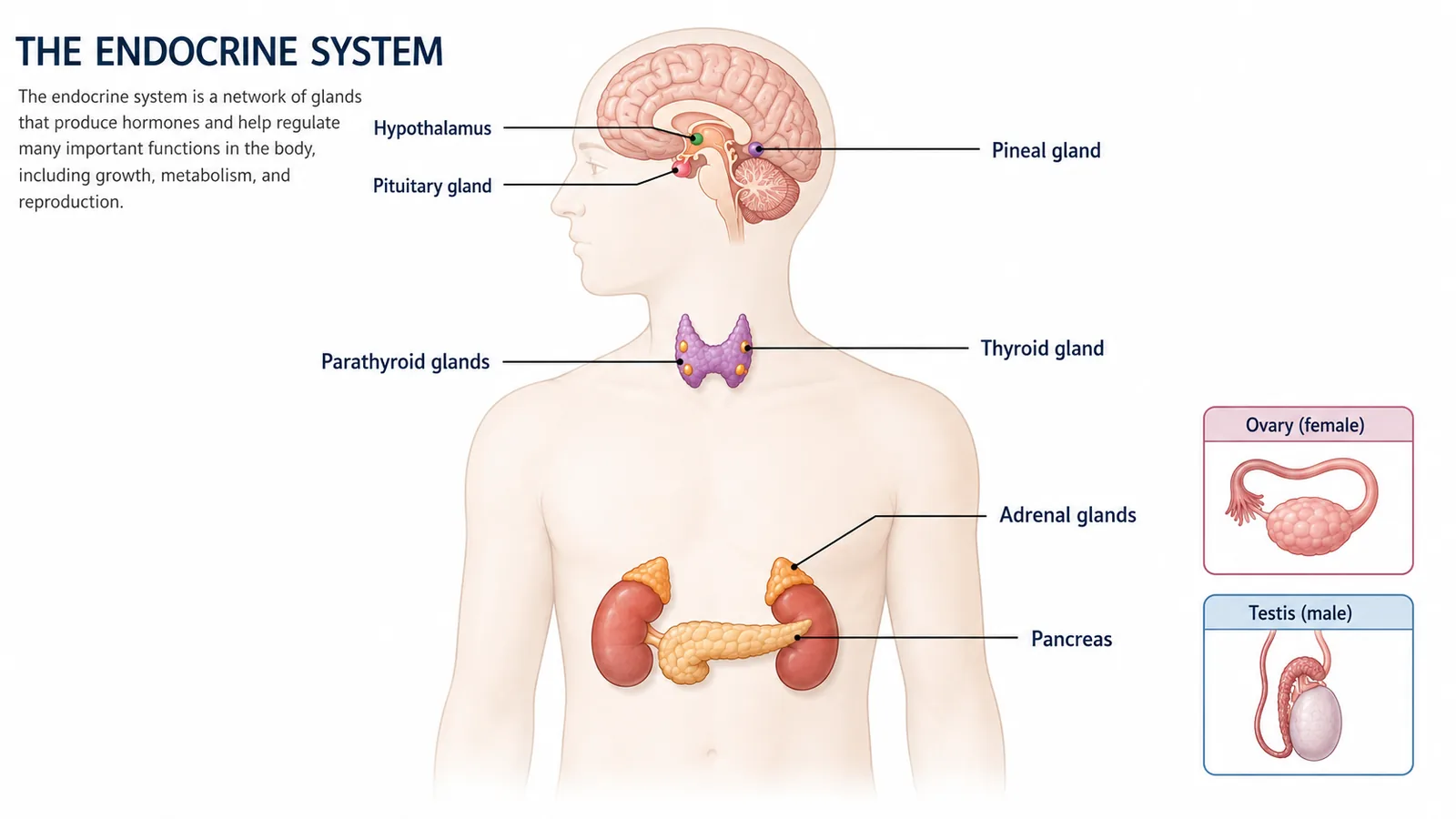
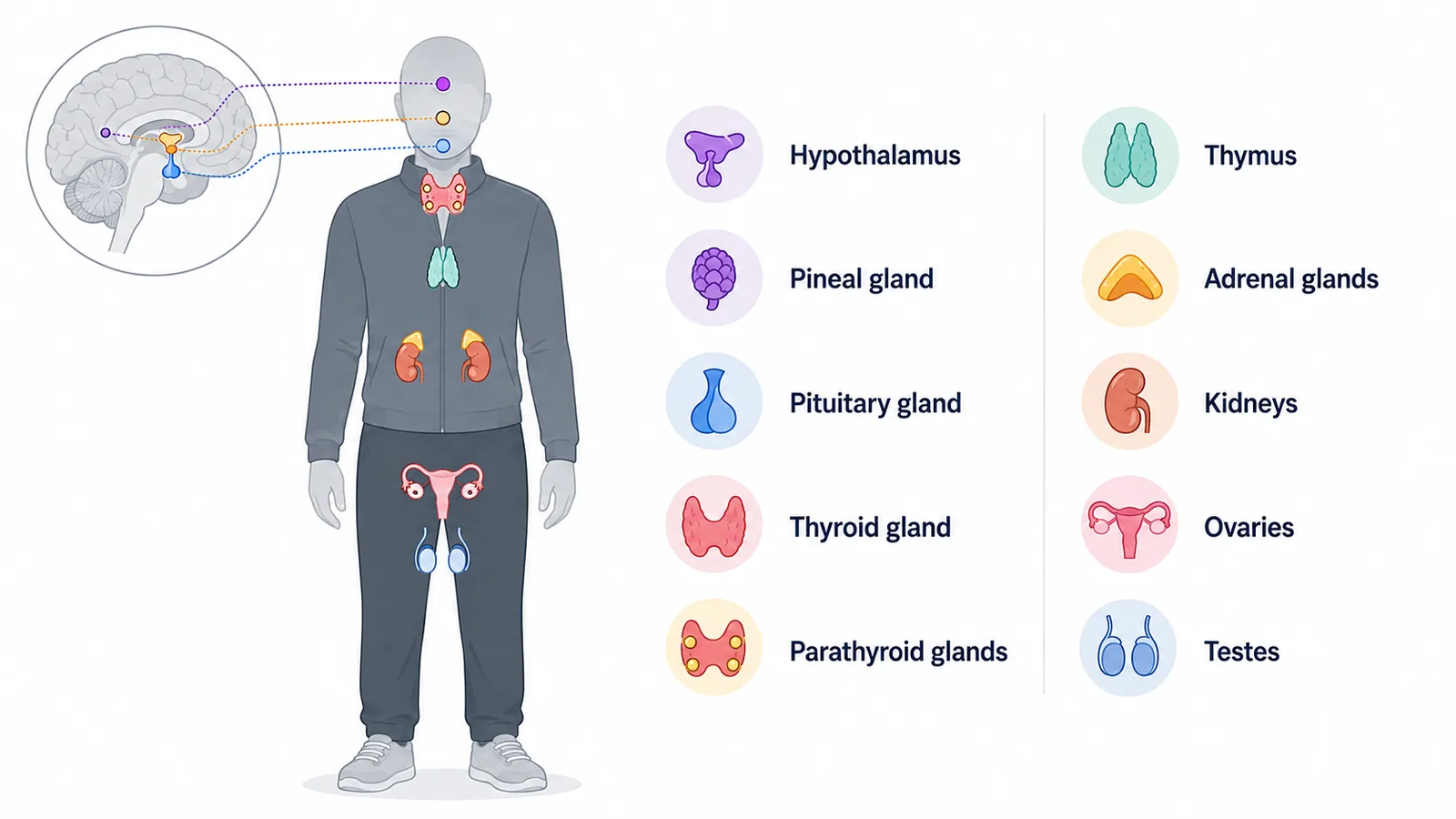
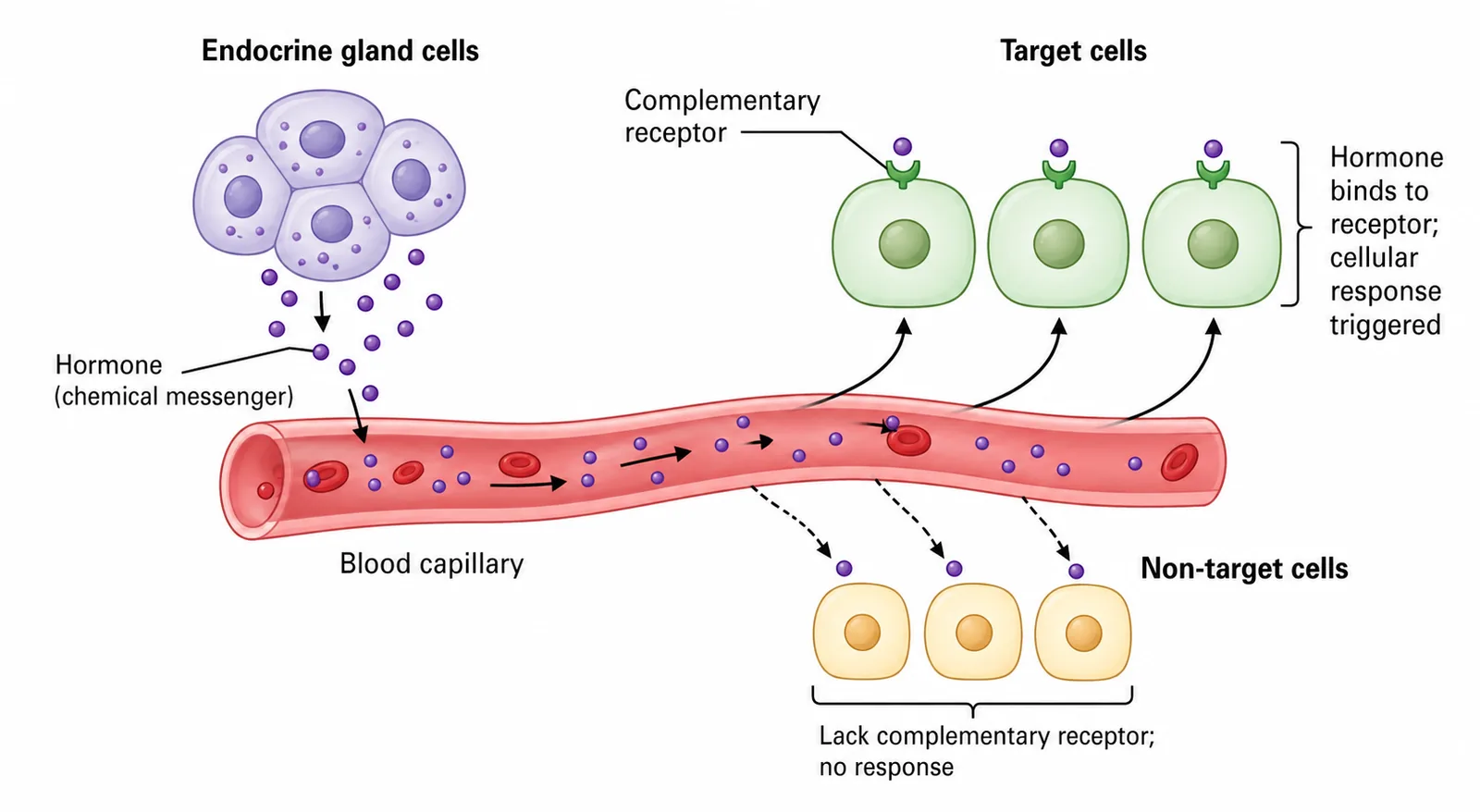
Hormone
A chemical messenger secreted by a gland into the blood that acts on target cells.
Target cell
A cell with specific receptors for a particular hormone.
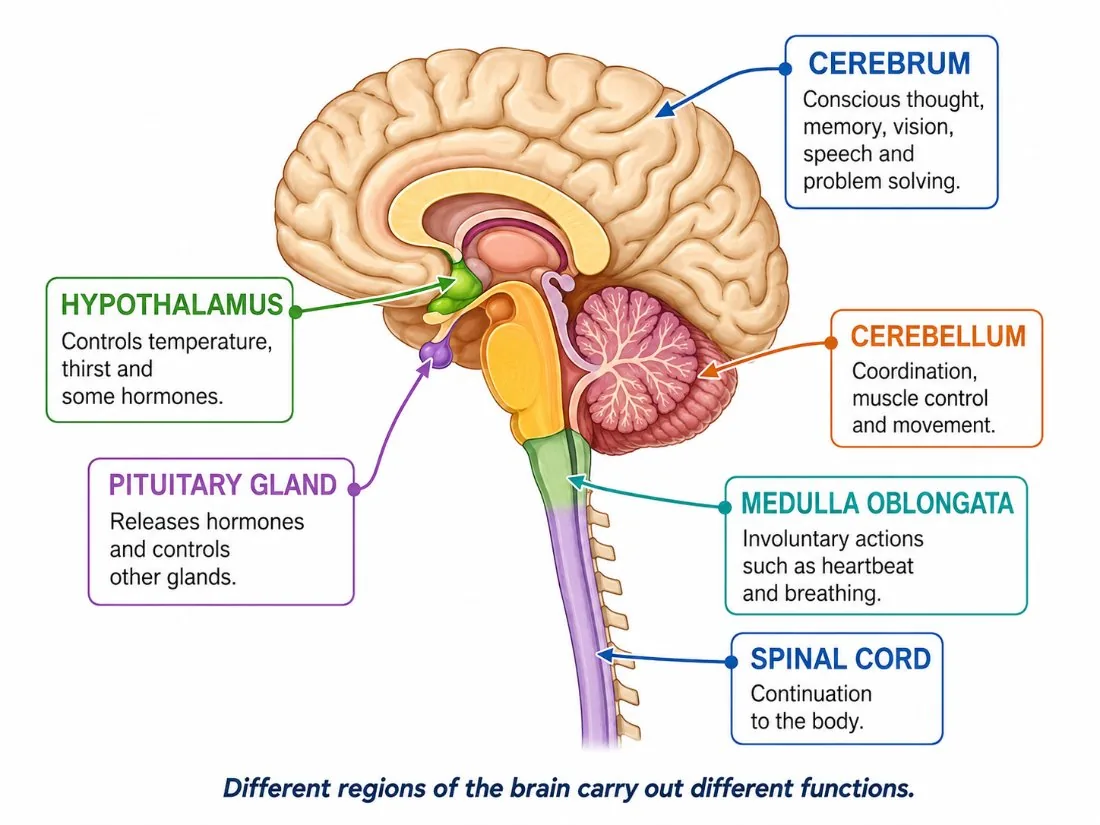
Hypothalamus
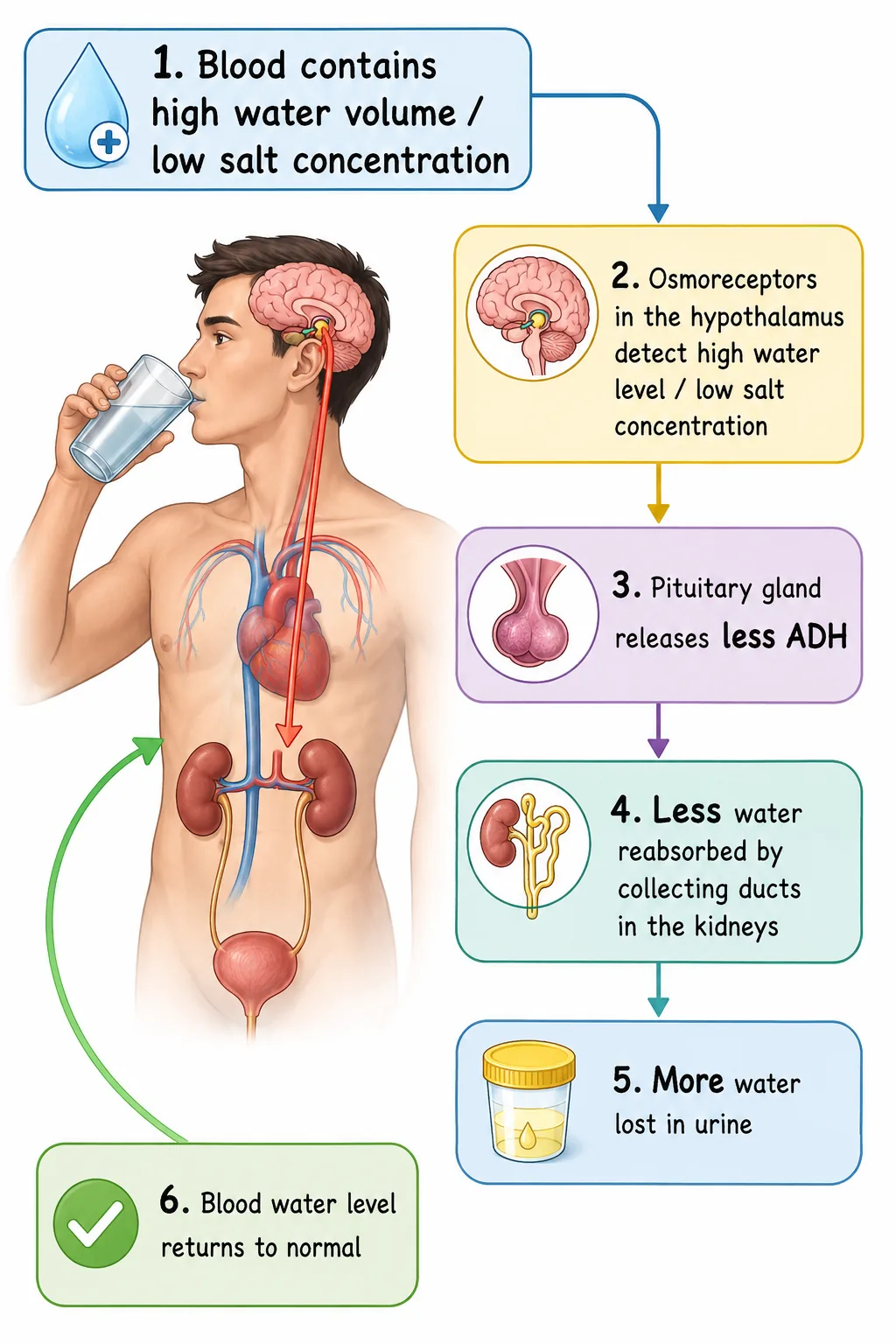
Brain region linking the nervous and endocrine systems by controlling the pituitary.
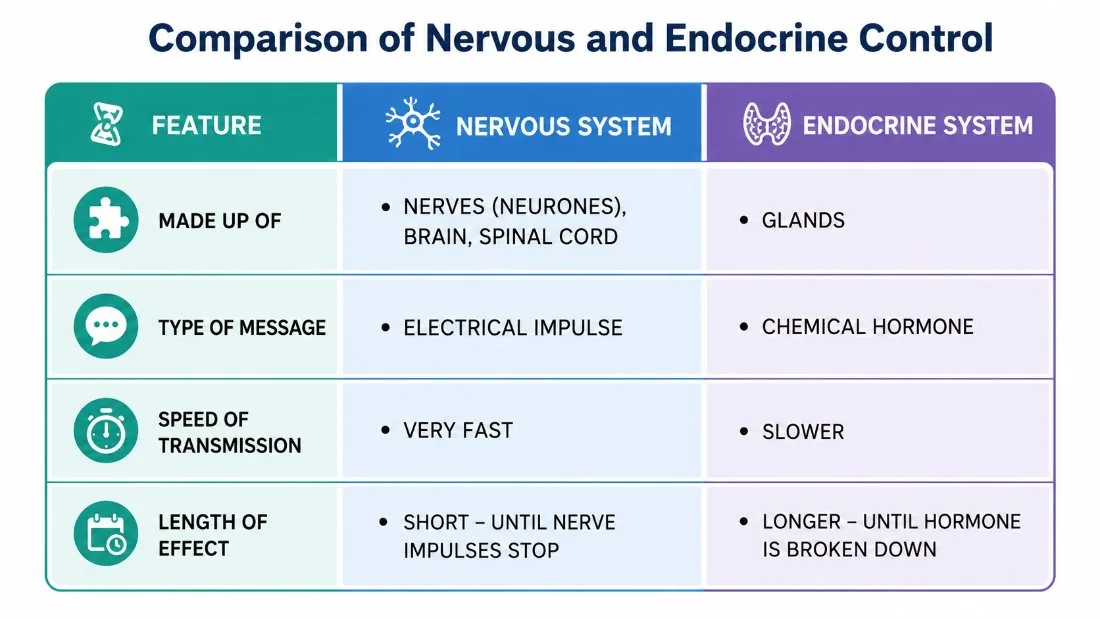
| Feature | Nervous | Endocrine |
|---|---|---|
| Signal | Electrical impulse + neurotransmitter | Hormone in blood |
| Speed | Very fast (milliseconds) | Slower (seconds to hours) |
| Duration | Short | Long-lasting |
| Target | Specific cells via neurons | Any cell with receptors |
| Gland | Hormone | Effect |
|---|---|---|
| Anterior pituitary | GH, TSH, ACTH, FSH, LH, prolactin | Growth; control other glands |
| Posterior pituitary | ADH, oxytocin (made in hypothalamus) | Water retention; contractions, milk ejection |
| Thyroid | Thyroxine; calcitonin | Metabolic rate; lowers blood Ca2+ |
| Parathyroid | Parathyroid hormone | Raises blood Ca2+ |
| Adrenal | Adrenaline (medulla); cortisol, aldosterone (cortex) | Fight or flight; stress, glucose; Na+ retention |
| Pancreatic islets | Insulin, glucagon | Lower / raise blood glucose |