Curriculum
EST II Biology
1. Molecules & Cells
0/15
2. Genetics & Biotechnology
0/7
3. Evolution & Diversity
0/7
4. Organisms: Structure & Function
0/15
-
McGraw-Hill SAT Biology — Chapter 8: Understanding Organismal Biology
 Preview
-
4.1 Human Digestion & Nutrition
Preview
-
4.1 Human Digestion & Nutrition (SAT Biology) - Check yourself
 Preview
-
4.2 Circulation & Respiration
Preview
-
4.2 Circulation & Respiration (SAT Biology) - Check yourself
Preview
-
4.3 Excretion & Homeostasis
Preview
-
4.3 Excretion & Homeostasis (SAT Biology) - Check yourself
Preview
-
4.4 Nervous & Endocrine Systems
Preview
-
4.4 Nervous & Endocrine Systems (SAT Biology) - Check yourself
Preview
-
4.5 The Immune System
Preview
-
4.5 The Immune System (SAT Biology) - Check yourself
Preview
-
4.6 Reproduction & Development
Preview
-
4.6 Reproduction & Development (SAT Biology) - Check yourself
Preview
-
4.7 Animal Behavior
Preview
-
4.7 Animal Behavior (SAT Biology) - Check yourself
Preview
5. Ecology
0/5
6. Laboratory Skills
0/2
SAT Biology — Full Book Tests and Strategy
0/8
Text lesson
4.6 Reproduction & Development
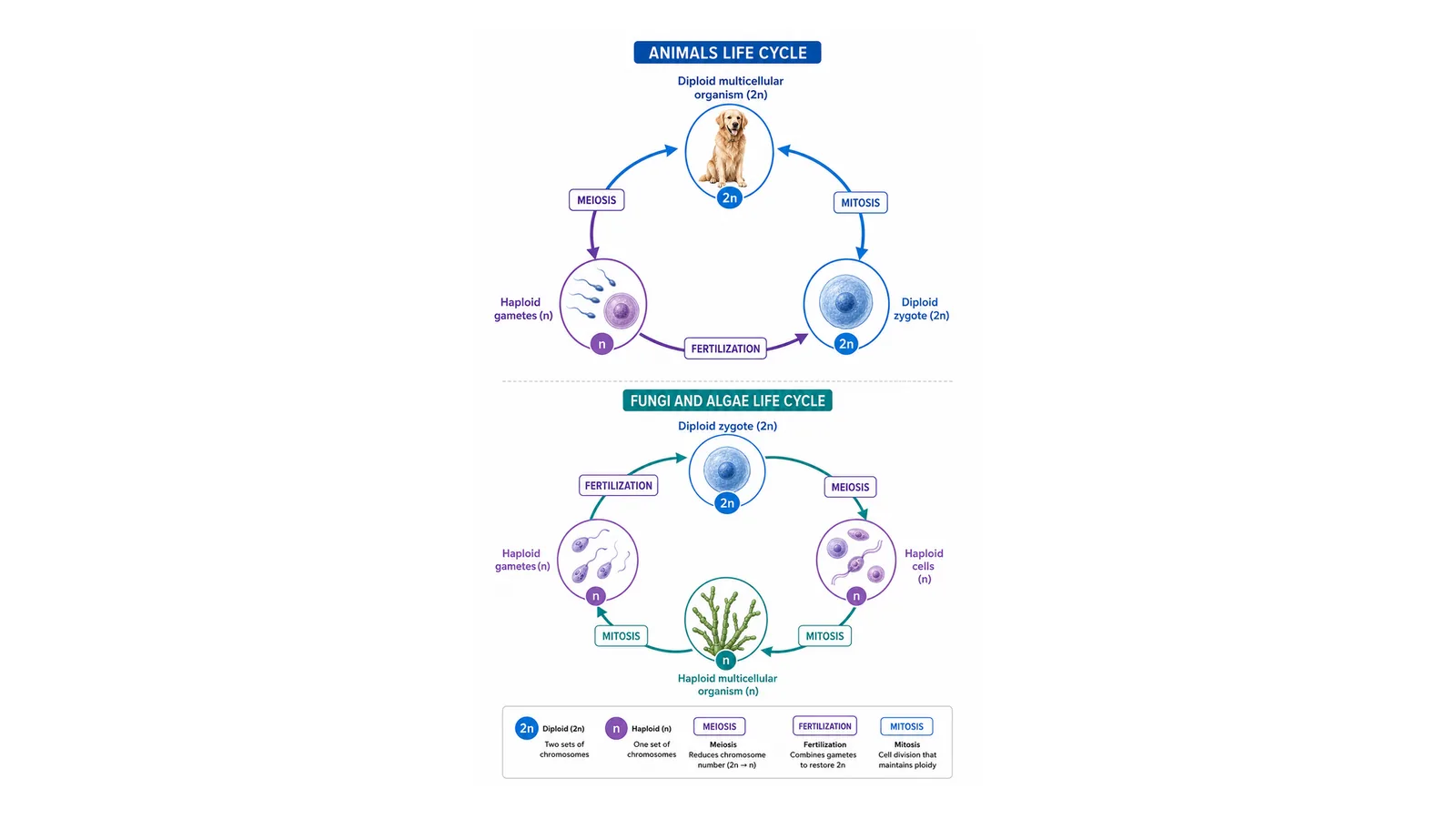
Compare asexual and sexual reproduction.
1Key ideas2Key ideas3Key ideas4Key ideas
Key ideas
 ⤢ Enlarge
Key ideas
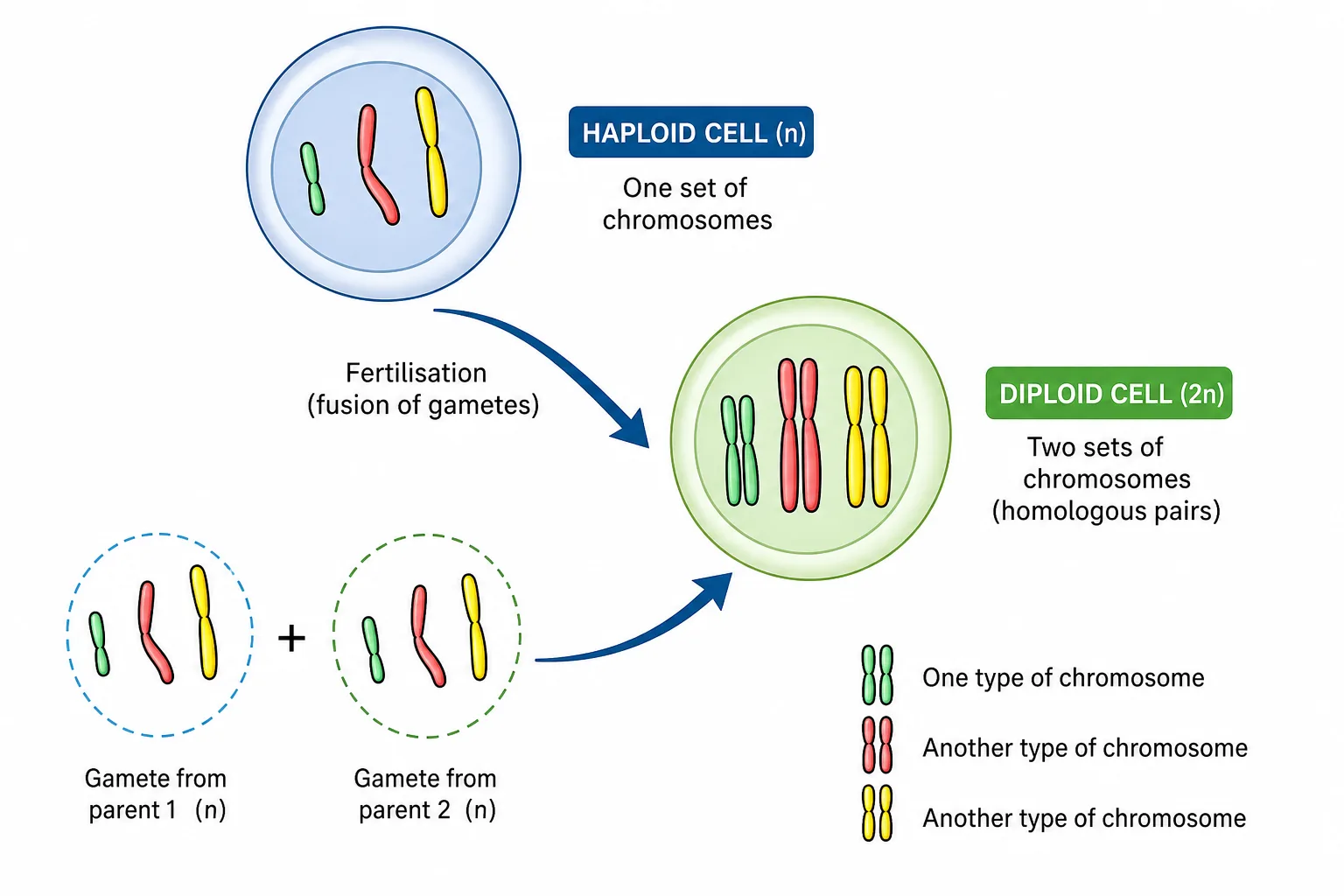
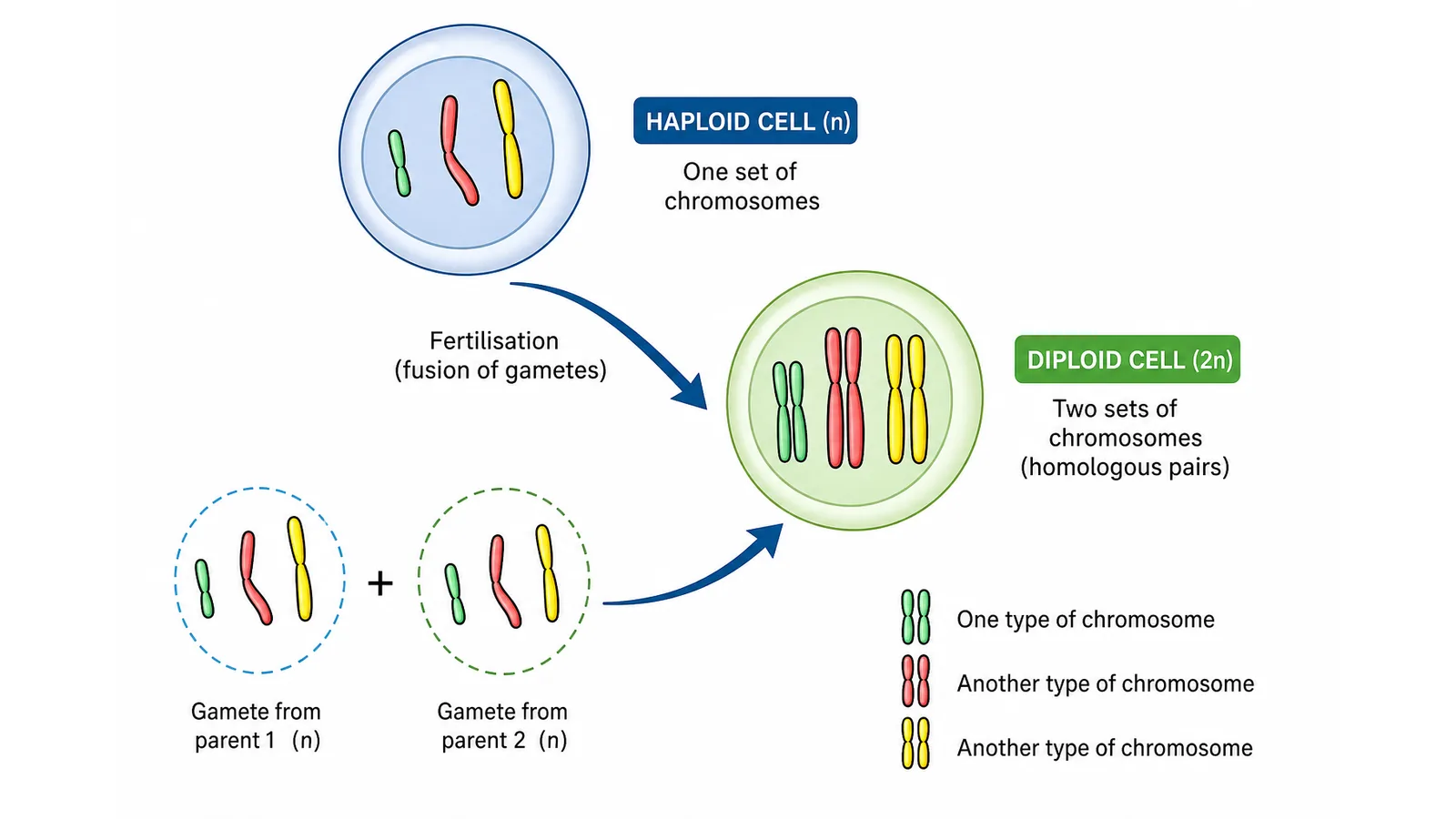
Human somatic cells have 46 chromosomes (2n)
gametes have 23 (n).
FSH stimulates follicle growth
LH surge (about day 14) triggers ovulation.
Corpus luteum secretes progesterone, maintaining the uterine lining.
hCG from the embryo maintains the corpus luteum
it is detected by pregnancy tests.
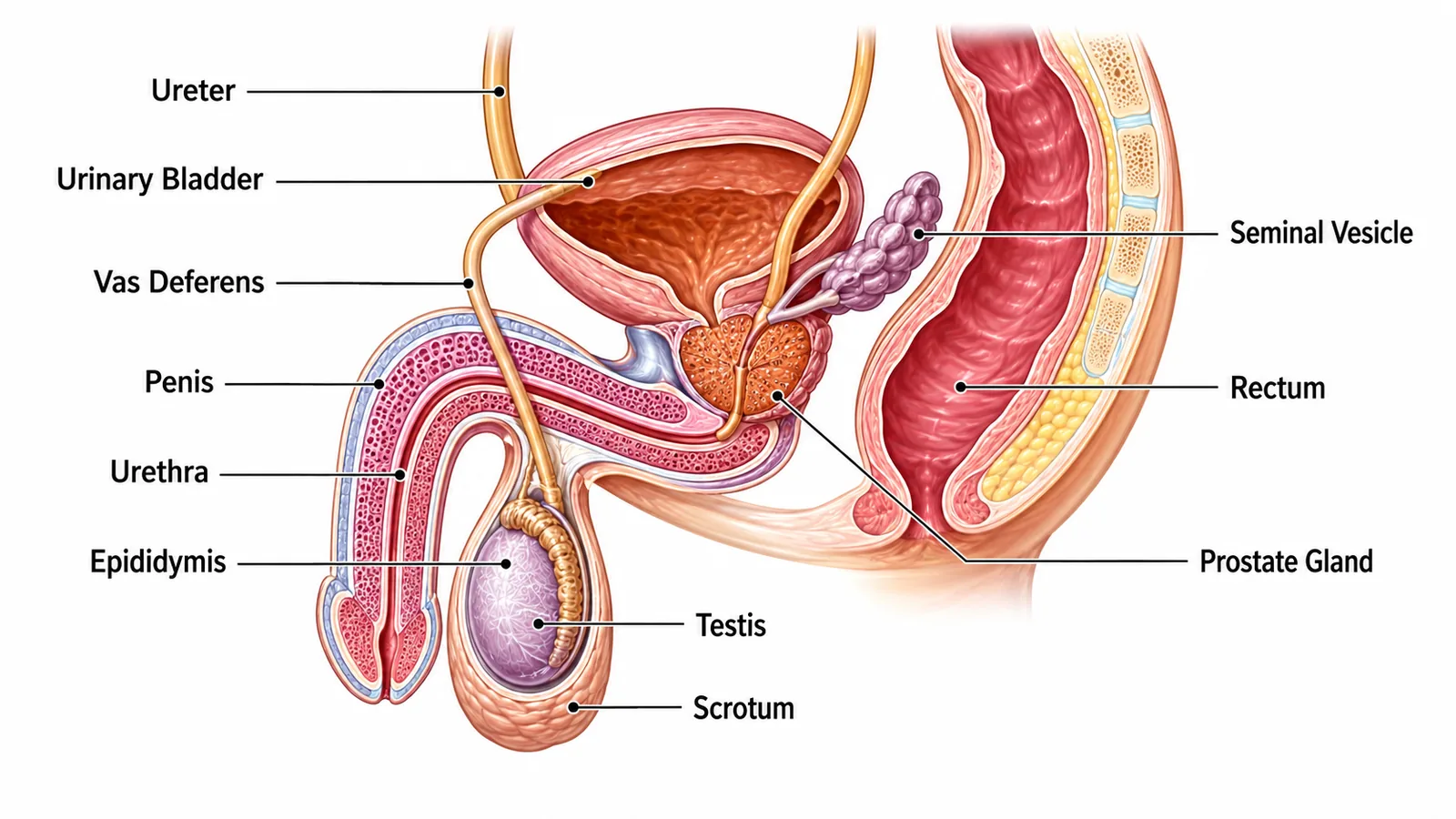
Sperm path
seminiferous tubules → epididymis → vas deferens → ejaculatory duct → urethra.
1 / 4Next ▶
Key ideas
1
Testosterone is made by interstitial (Leydig) cells
Sertoli cells nourish developing sperm.
2
Amniotic egg membranes
3
amnion, chorion, yolk sac, allantois.
4
Frogs show external fertilization and metamorphosis
mammals show internal fertilization and internal development.
5
Endoderm gives rise to the lining of the digestive and breathing passages, and to the liver, pancreas and thyroid.
6
Ectoderm gives rise to the skin’s outer layer, hair, nails, the eye lens and the nervous system.
◀ Previous2 / 4Next ▶
Key ideas
Key ideas
Mesoderm forms the heart, gonads and dermis, as well as muscle, bone, blood and kidneys.
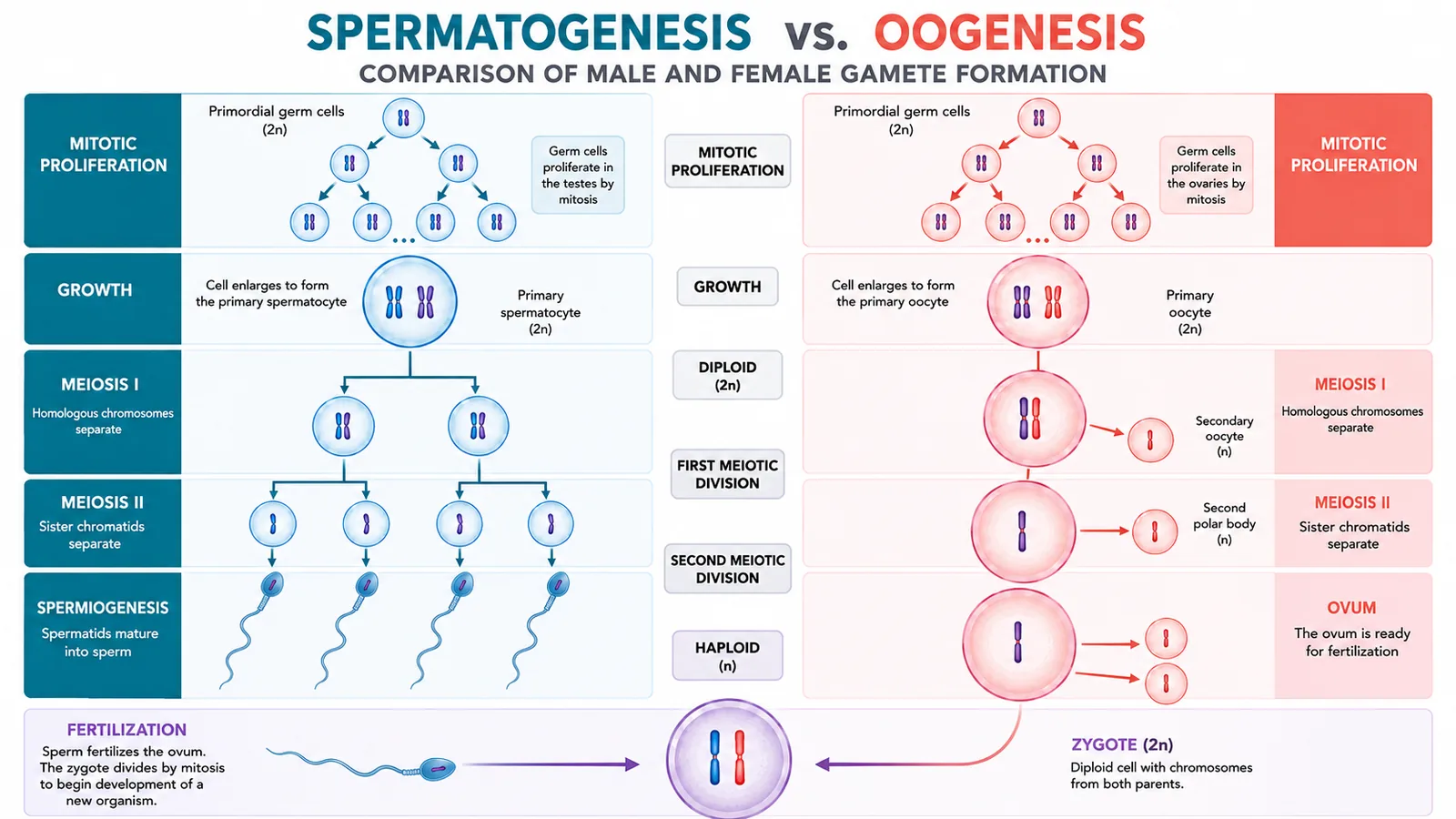
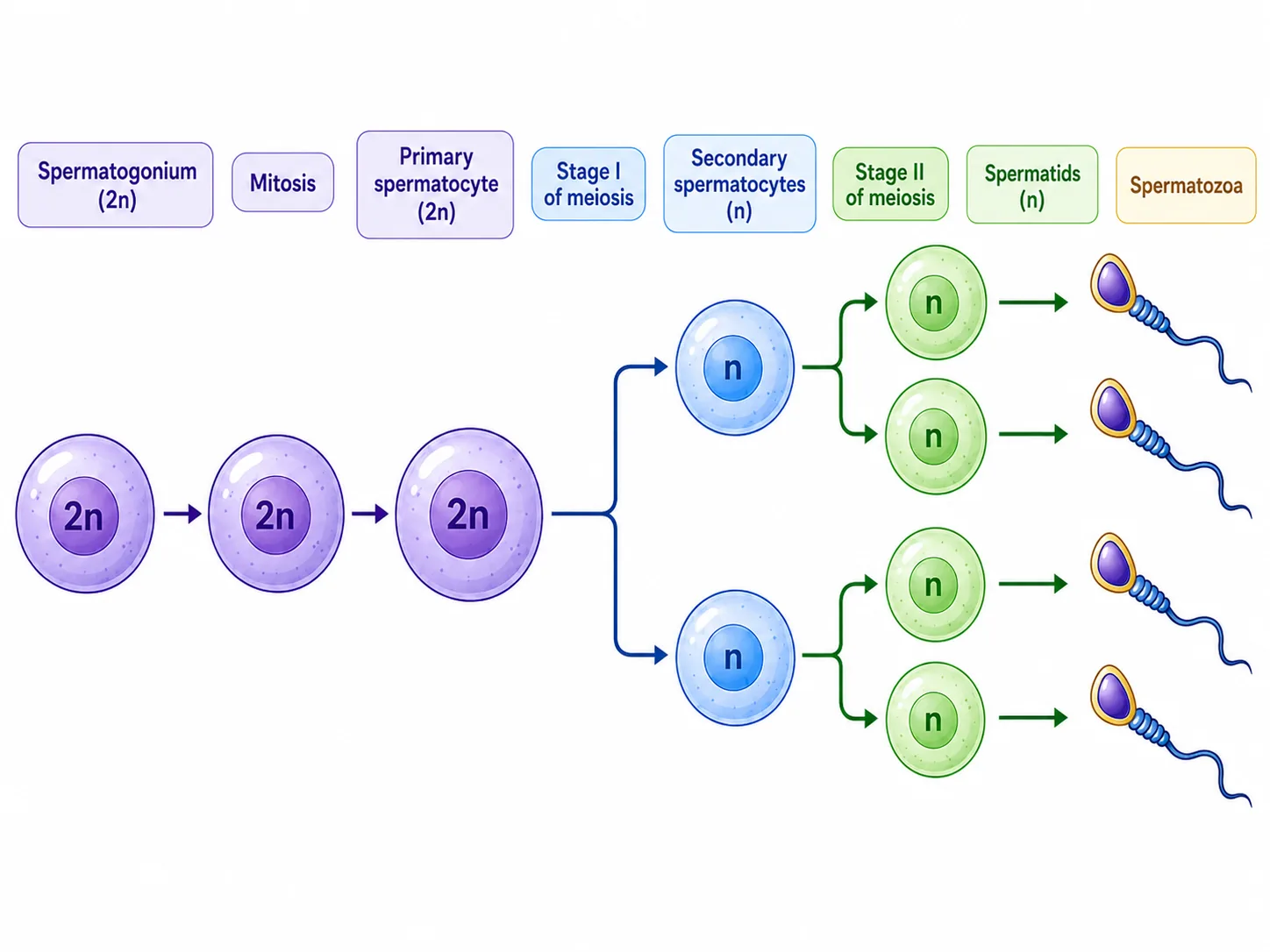
Each meiosis in spermatogenesis produces four sperm.
Females form all the eggs they will ever have before birth
while males make sperm continuously from puberty.
A fertilised egg implants in the uterine lining around day 7, and the placenta starts to work by day 28.
Identical twins usually result from a split between day 4 and day 9, and late splitting may produce conjoined twins.
Non-identical twins can be of different sexes and are genetically no more alike than ordinary siblings.
◀ Previous3 / 4Next ▶
Key ideas
Key ideas
An unfertilised egg survives only about 24 hours after ovulation
while sperm can survive 3 to 5 days inside the female.
Once one sperm enters, the egg membrane seals at once, blocking all other sperm.
◀ Previous4 / 4
1Essential knowledge2Essential knowledge3Essential knowledge4Essential knowledge5Essential knowledge6Essential knowledge7Essential knowledge8Essential knowledge9Essential knowledge10Essential knowledge11Essential knowledge12Essential knowledge13Essential knowledge14Essential knowledge15Essential knowledge16Essential knowledge17Essential knowledge






Essential knowledge
 ⤢ Enlarge
1
1
2
Asexual vs sexual
3
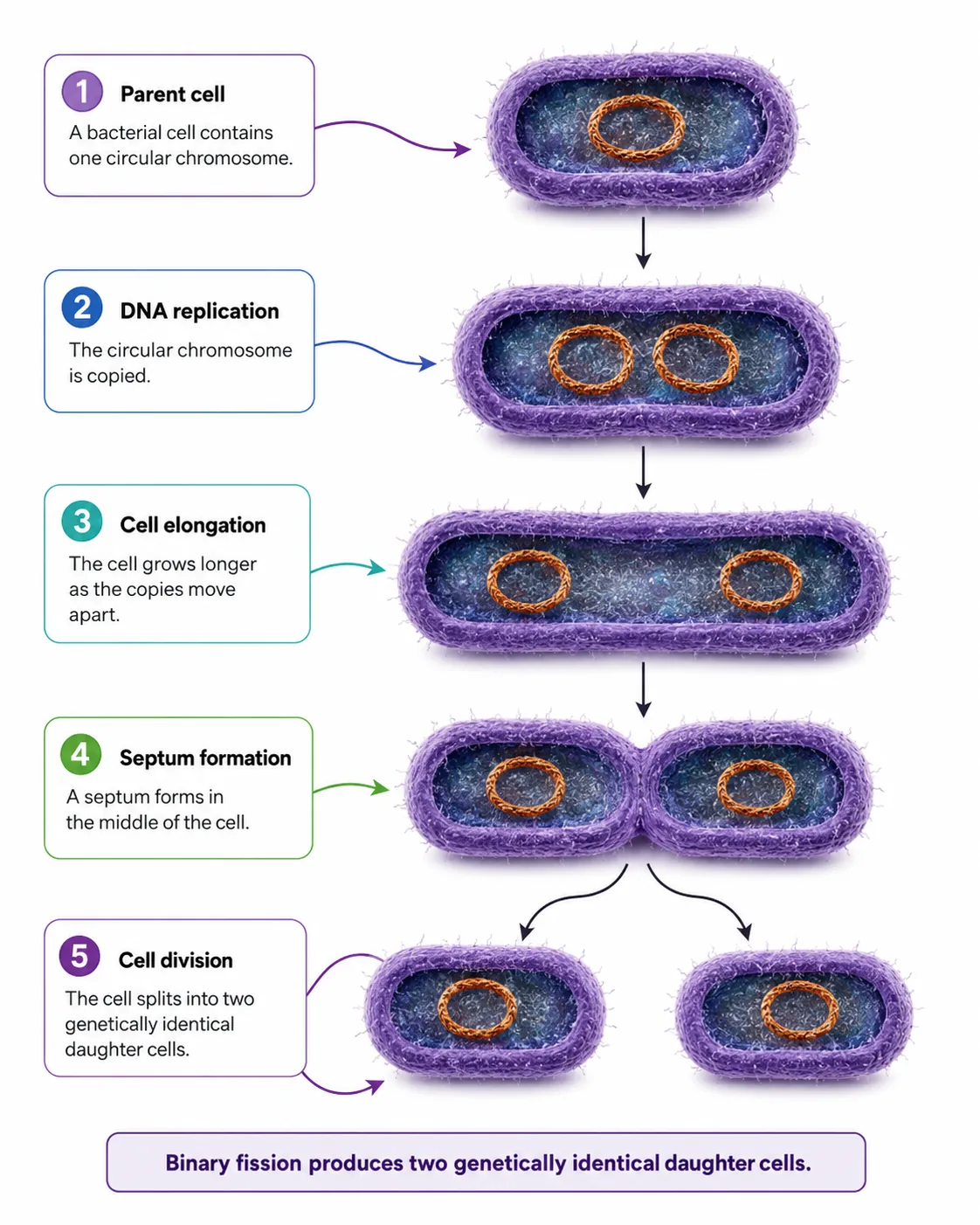
asexual reproduction (binary fission, budding in hydra, fragmentation, parthenogenesis, vegetative propagation) gives genetically identical offspring quickly. Sexual reproduction produces variation through crossing over, independent assortment and random fertilization, helping populations adapt.
4
2
5
Male system
6
testes in the scrotum (cooler temperature) make sperm
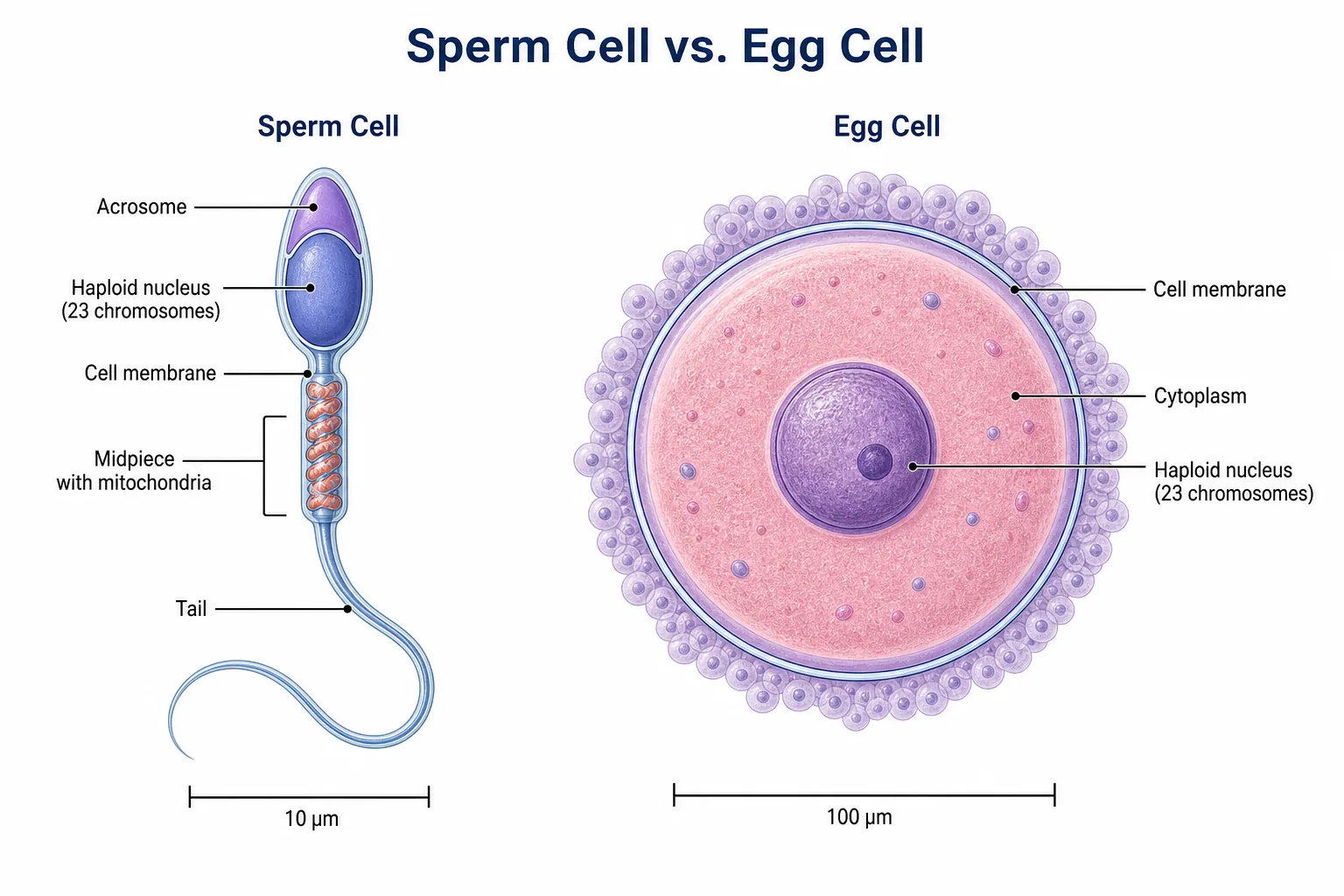
accessory glands (seminal vesicles, prostate, bulbourethral) add fluid with fructose and alkaline buffers to form semen. A sperm has a head with acrosome and nucleus, a midpiece full of mitochondria, and a flagellum.
◀ Previous13 / 17Next ▶
Essential knowledge
1
3
2
Female system
3
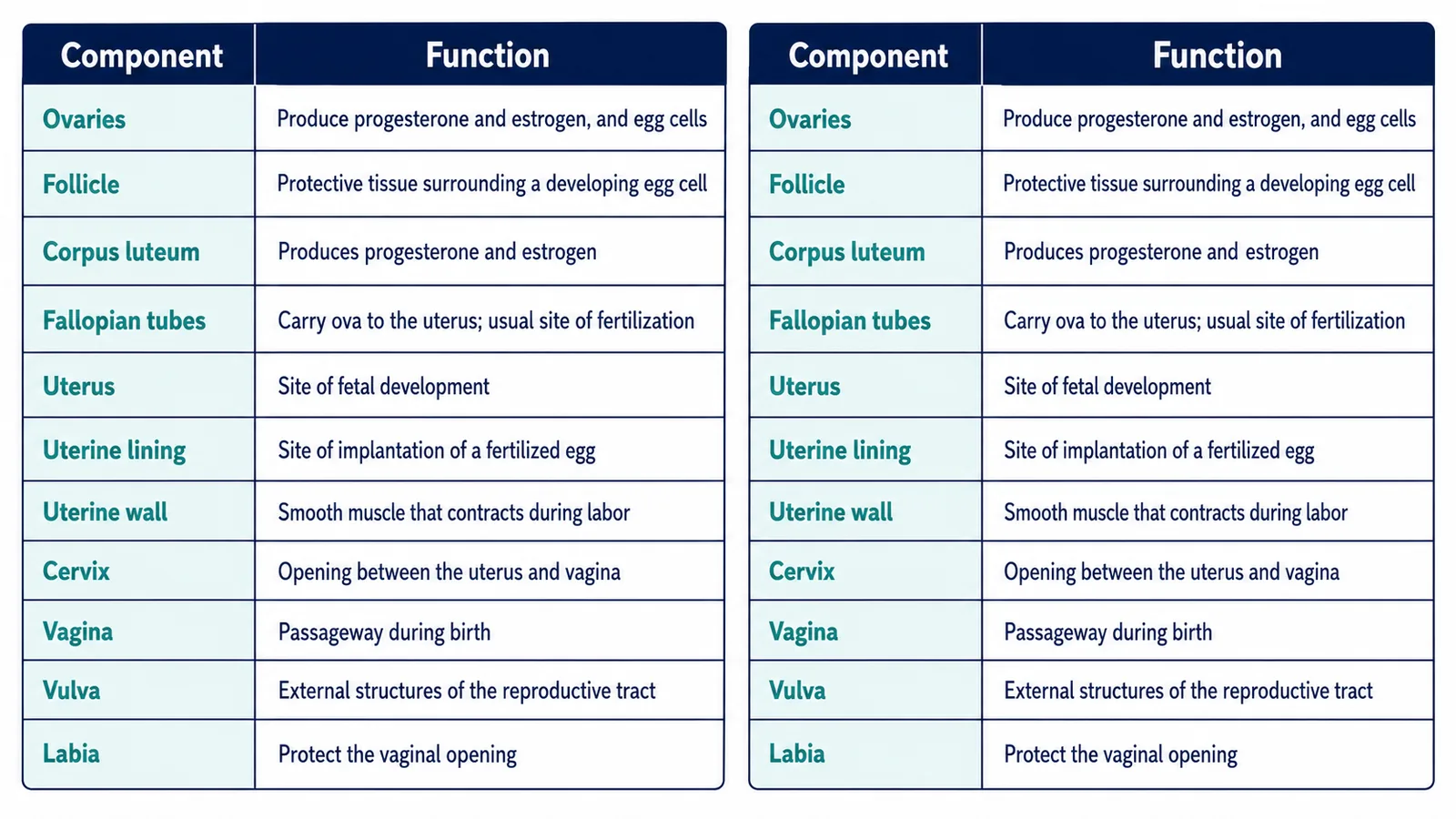
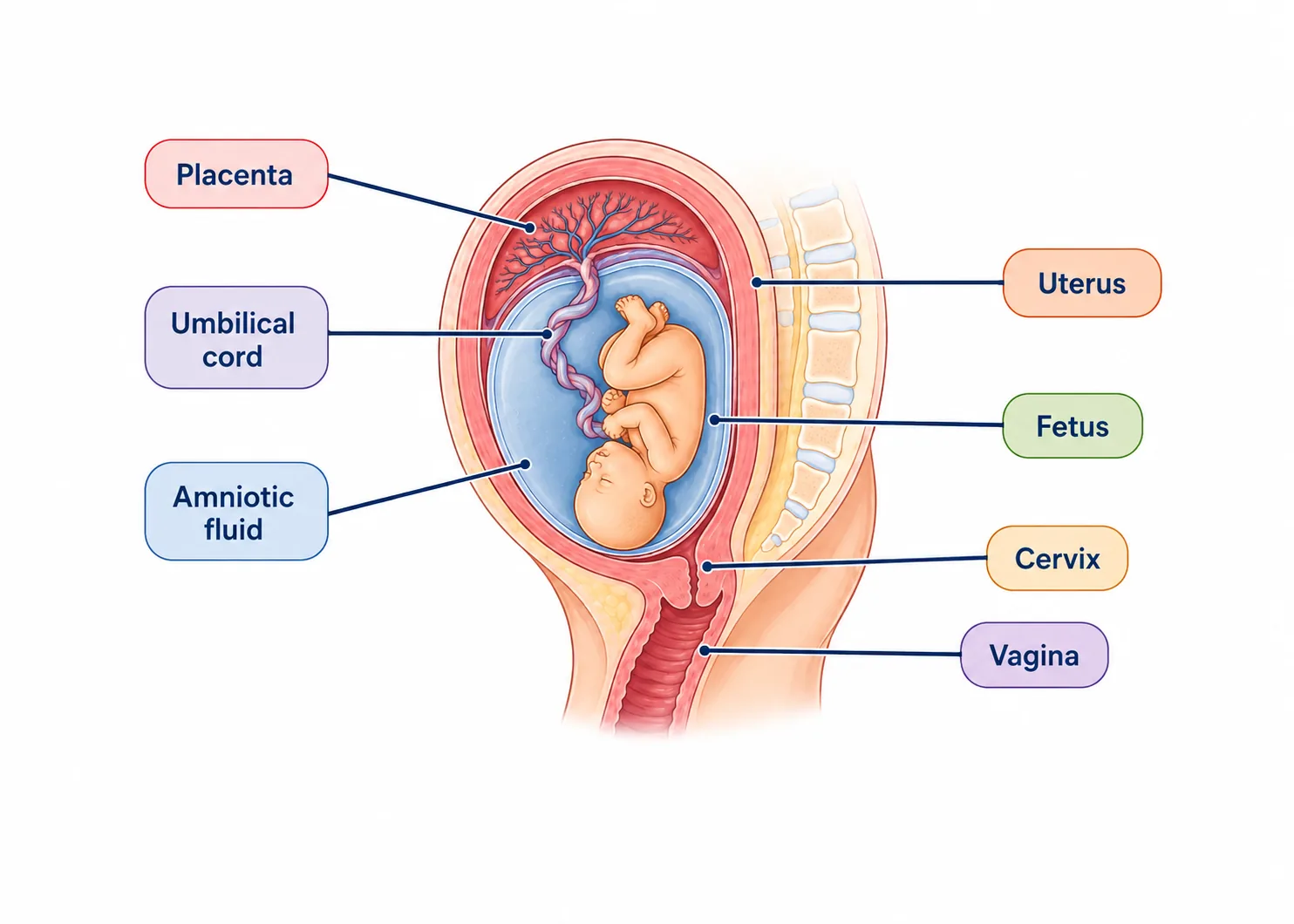
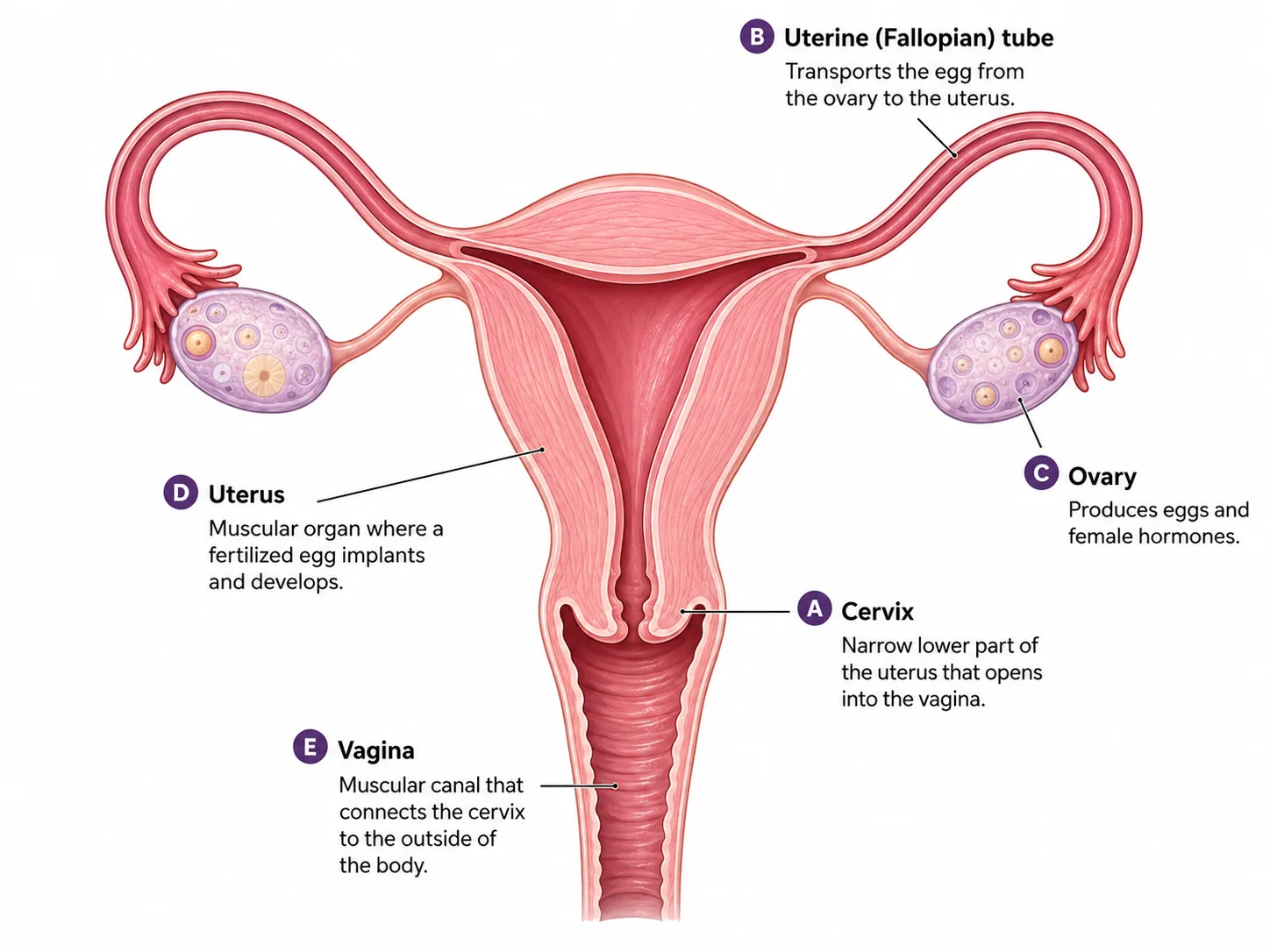
ovaries hold follicles
the oviduct (Fallopian tube) is the usual site of fertilizationthe uterus receives the embryothe cervix and vagina form the birth canal.
4
4
5
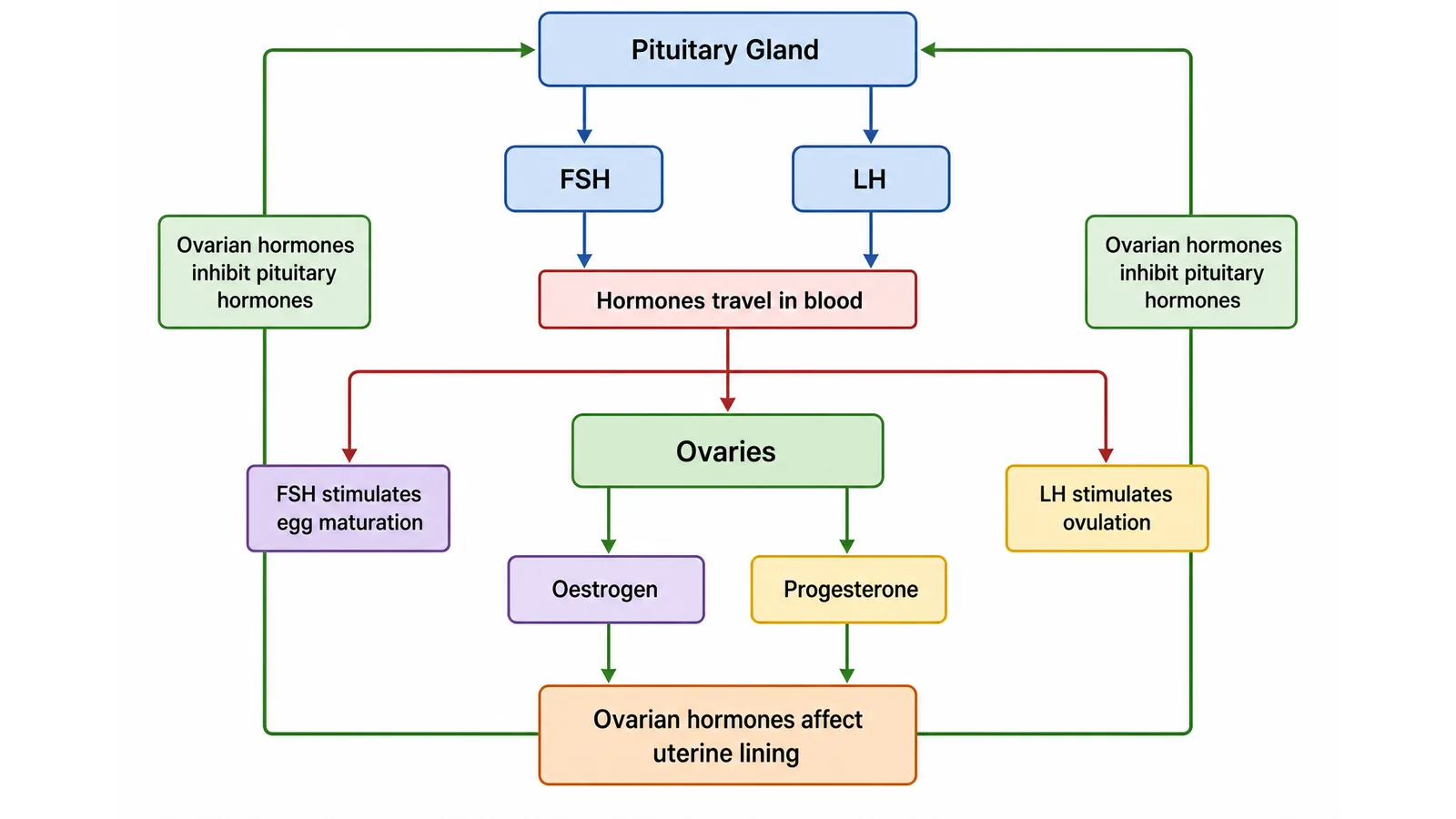
(about 28 days): follicular phase (FSH → follicle grows → estrogen rises, lining thickens)
ovulation (LH surge)luteal phase (corpus luteum makes progesterone and estrogen).
6
Without pregnancy the corpus luteum degenerates, hormones fall, and menstruation occurs.
◀ Previous14 / 17Next ▶
Essential knowledge
Essential knowledge
High estrogen and progesterone inhibit FSH and LH, the basis of hormonal contraception.
(negative feedback)
5
Early development
cleavage increases cell number while cell size decreases. The mammalian blastocyst has an inner cell mass (becomes the embryo
source of embryonic stem cells) and a trophoblast (forms part of the placenta). Gastrulation creates the archenteron (primitive gut).
6
Organogenesis
◀ Previous15 / 17Next ▶
Essential knowledge
1
the notochord induces overlying ectoderm to form the neural tube. Somites (mesoderm) form vertebrae and muscles. Spemann’s experiments showed induction by the dorsal lip of the blastopore.
2
7
3
Pregnancy and birth
4
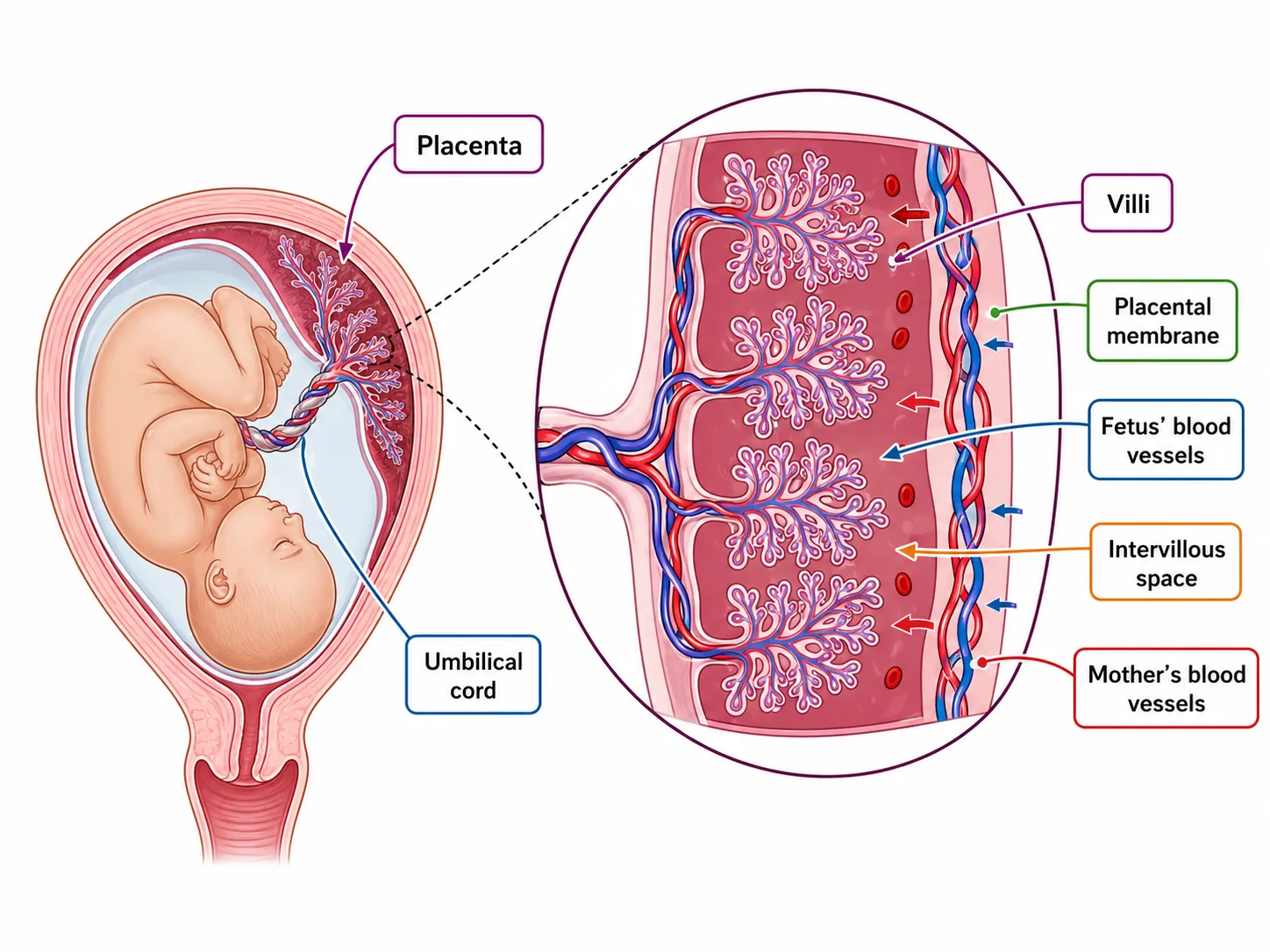
the placenta allows diffusion of O
5
, nutrients and antibodies to the fetus and wastes back, without mixing blood. Birth is driven by positive feedback from oxytocin. Lactation is stimulated by prolactin.
6
8
◀ Previous16 / 17Next ▶
Essential knowledge
Essential knowledge
Other organisms
animals with external fertilization (fish, amphibians) release many gametes in water
reptiles and birds use internal fertilization and shelled amniotic eggs. Twins are identical (one zygote splits) or fraternal (two eggs fertilized).
◀ Previous17 / 17
1Process & sequence2Process & sequence3Process & sequence4Process & sequence
Worked examples
1
Explain why progesterone levels fall at the end of a cycle when no pregnancy occurs, and what follows.
2
Without an embryo there is no hCG
so the corpus luteum degenerates about 10-14 days after ovulation.Progesterone and estrogen fall, so the endometrium is no longer maintained and is shed (menstruation).Low hormone levels remove negative feedback, so FSH rises and a new cycle begins.
3
The midpiece mitochondria produce ATP by aerobic respiration to power the flagellum
so the sperm can swim to the egg.
1Summary2Summary3Summary
Summary
 ⤢ Enlarge
Summary
1
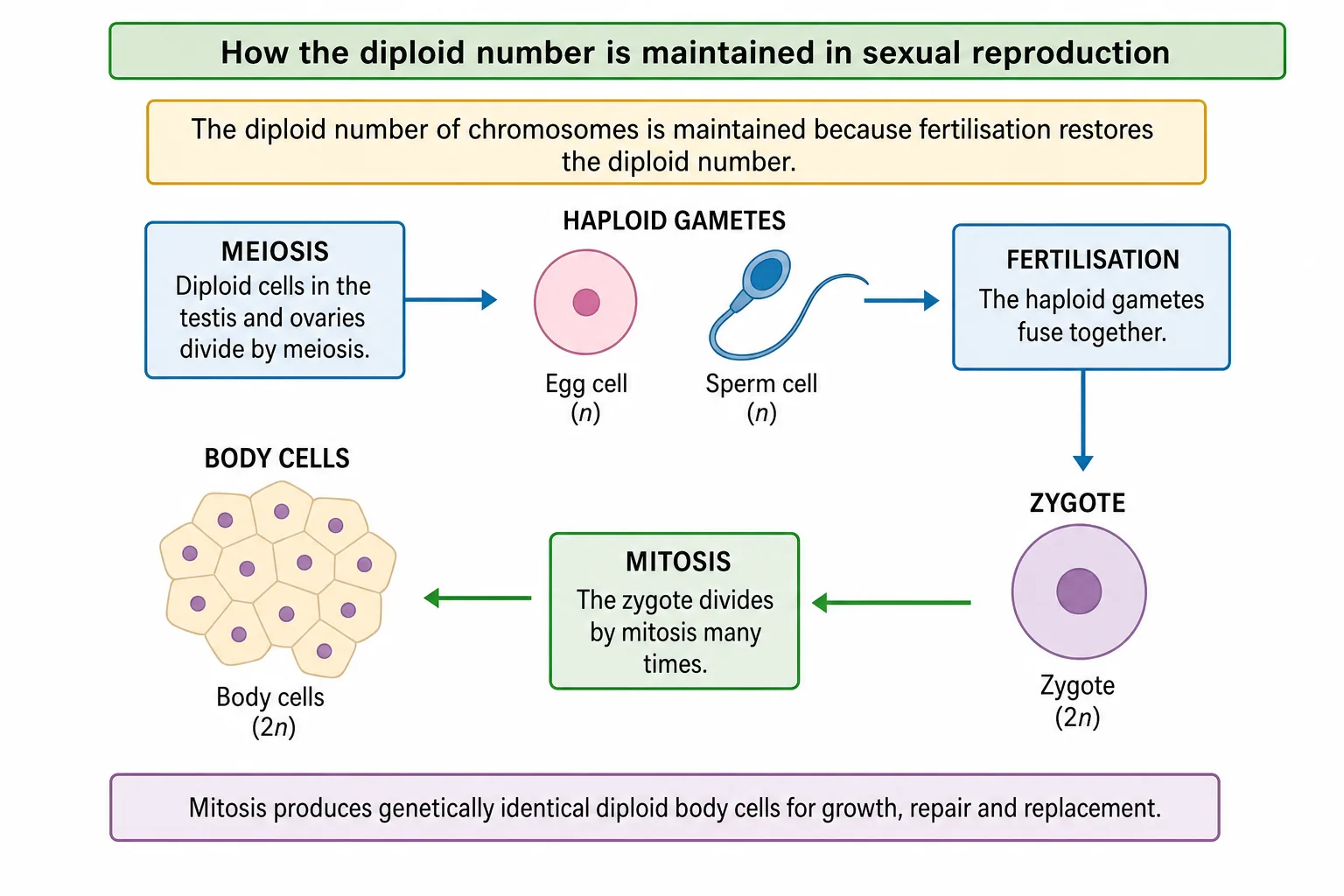
Sexual reproduction mixes genes via
meiosis and fertilization
.
2
The
1 / 3Next ▶
Summary
Summary
menstrual cycle
is controlled by FSH, LH, estrogen and progesterone.
3
Early development:
cleavage, blastula, gastrula
4
◀ Previous2 / 3Next ▶
Summary
1
Three
2
germ layers
3
form all tissues.
4
5
5
Cells specialize through
6
differential gene expression
◀ Previous3 / 3
1Check yourself2Check yourself3Check yourself4Check yourself5Check yourself6Check yourself7Check yourself8Check yourself9Check yourself10Check yourself11Check yourself12Check yourself13Check yourself14Check yourself15Check yourself16Check yourself

Check yourself
 ⤢ Enlarge
Check yourself
Q1. Which germ layer forms the nervous system?
A. Endoderm
B. Mesoderm
C. Ectoderm
D. Trophoblast
Show answer
◀ Previous10 / 16Next ▶
Check yourself
Check yourself
C. The neural tube forms from ectoderm.
Q2. Ovulation is triggered by a surge in:
A. LH
B. progesterone
C. prolactin
D. oxytocin
◀ Previous11 / 16Next ▶
Check yourself
1
A. A mid-cycle LH surge causes the follicle to release the egg.
2
Q3. Fertilization in humans usually occurs in the:
3
A. uterus
4
B. ovary
5
C. vagina
6
D. oviduct
◀ Previous12 / 16Next ▶
Check yourself
1
D. Sperm meet the egg in the Fallopian tube (oviduct).
2
Q4. Oogenesis differs from spermatogenesis because it:
3
1
4
A. uses mitosis only
5
2
6
B. produces one large egg and polar bodies
◀ Previous13 / 16Next ▶
Check yourself
Check yourself
3
C. produces four eggs per meiosis
4
D. occurs continuously from puberty
B. Unequal cytoplasmic division yields one egg and small polar bodies.
Q5. Pregnancy tests detect:
◀ Previous14 / 16Next ▶
Check yourself
1
A. FSH
2
B. estrogen
3
C. hCG
4
D. testosterone
5
C. hCG is made by the embryo’s trophoblast after implantation.
6
Q6. Muscle and bone are derived from:
◀ Previous15 / 16Next ▶
Check yourself
Check yourself
A. mesoderm
B. ectoderm
C. endoderm
D. the yolk sac
A. Mesoderm forms muscle, bone, blood and kidneys.
◀ Previous16 / 16
Gametogenesis
Production of haploid gametes by meiosis: spermatogenesis and oogenesis.
Fertilization
Fusion of haploid sperm and egg nuclei to form a diploid zygote.
Zygote
The single diploid cell formed at fertilization.
Cleavage
Rapid mitotic divisions of the zygote without growth.
Blastula
A hollow ball of cells formed after cleavage (blastocyst in mammals).
Gastrulation
Movement of cells that forms three germ layers: ectoderm, mesoderm, endoderm.
Neurulation
Formation of the neural tube from ectoderm, the start of the nervous system.
Placenta
An organ formed from fetal and maternal tissue for exchange between mother and fetus.
Differentiation
Process by which cells become specialized through selective gene expression.
Induction
When one group of cells influences the development of neighboring cells.
| Germ layer | Main derivatives |
|---|---|
| Ectoderm | Skin epidermis, nervous system, eye lens, hair, nails |
| Mesoderm | Muscle, bone, blood, heart, kidneys, gonads, dermis |
| Endoderm | Lining of gut and respiratory tract, liver, pancreas, thyroid |
| Feature | Spermatogenesis | Oogenesis |
|---|---|---|
| Location | Seminiferous tubules of testes | Ovaries |
| Products per meiosis | 4 sperm | 1 egg + 3 polar bodies (typically 2-3) |
| Timing | Continuous from puberty | Begins before birth, pauses; one egg per cycle |
| Cytoplasm | Minimal | Unequal division gives egg most cytoplasm |
Command terms
Identify / Describe (FRQ)
A short, specific statement; describing requires relevant characteristics, not a single word.
Explain / Justify (FRQ)
Give the cause-and-effect reasoning or evidence; a restated fact does not score.
Calculate
Show setup, substitution and the answer with units.
Predict
State the expected outcome; add a reason only if asked to justify.
MCQ technique
Read every option; eliminate distractors that are true statements but do not answer the question; watch for NOT/EXCEPT.
Keywords the mark scheme looks for in this lesson
Keywords the mark scheme looks for in this lesson
Gametogenesis · Fertilization · Zygote · Cleavage · Blastula · Gastrulation · Neurulation · Placenta · Differentiation · Induction
Learn each definition in the Key words tab exactly; a missing keyword in a definition usually loses the mark.
How to get full marks (examiner guidance)
1
Answer exactly what is asked; extra correct material does not earn credit, and contradictory statements can cancel credit (AP FRQ).
2
Use precise vocabulary (e.g. “active site”, “concentration gradient”, “allele”), never “it/stuff/things”.
3
Show units and working in calculations.
4
In MCQs, predict the answer before reading the options, then eliminate.