4.3Electricity and Magnetism
What is a species — Question Bank (Cambridge) — Cambridge IGCSE Physics 0625 Revision Notes & Topical Questions
5 min read Lesson 34 of 65 Unit quiz
Cambridge Past Paper Bank
4.3 What is a species
6 Multiple-Choice Questions with Official Mark Schemes
Question 1
0610/21_Winter_2024_Q3
Question 2
0610/12_Spring_2022_Q2
Question 3
0610/12_Summer_2021_Q2
Question 4
0610/13_Winter_2018_Q2
Question 5
0610/12_Winter_2017_Q2
Question 6
0610/12_Winter_2025_Q3
Cambridge Lower Secondary Stage 7
4.3 What is a species – Complete Question Bank & Mark Scheme
Total Questions6 Questions with Verified Solutions & Past Paper Mark Schemes
Multiple Choice Questions (Exam Practice)
Question 1
Paper Ref: 0610/21_Winter_2024_Q3
Paper Ref: 0610/21_Winter_2024_Q3
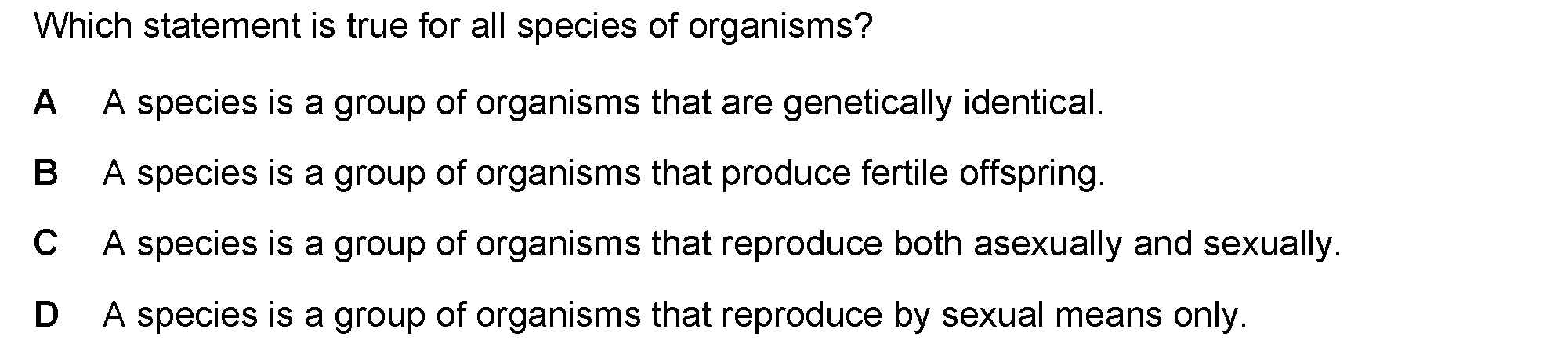
Which statement is true for all species of organisms?
A
B
Cc
D
A species is a group of organisms that are genetically identical.
A species is a group of organisms that produce fertile offspring.
A species is a group of organisms that reproduce both asexually and sexually.
A species is a group of organisms that reproduce by sexual means only.
A
B
Cc
D
A species is a group of organisms that are genetically identical.
A species is a group of organisms that produce fertile offspring.
A species is a group of organisms that reproduce both asexually and sexually.
A species is a group of organisms that reproduce by sexual means only.
Options:
A
B
C
D
Correct Key: B
A
B
C
D
Correct Key: B
Question 2
Paper Ref: 0610/12_Spring_2022_Q2
Paper Ref: 0610/12_Spring_2022_Q2
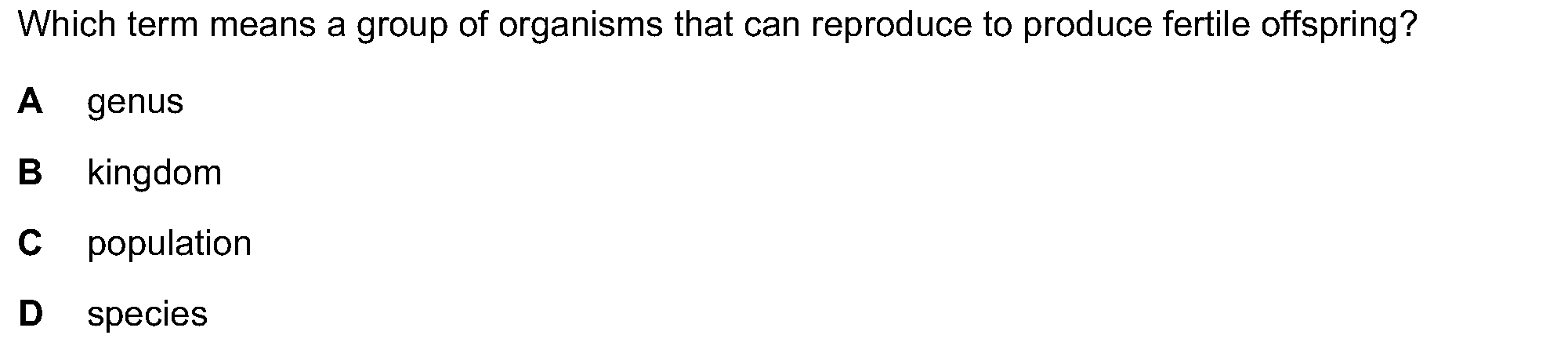
Which term means a group of organisms that can reproduce to produce fertile offspring?
A genus
B- kingdom
C population
D
species
A genus
B- kingdom
C population
D
species
Options:
A
B
C
D
Correct Key: D
A
B
C
D
Correct Key: D
Question 3
Paper Ref: 0610/12_Summer_2021_Q2
Paper Ref: 0610/12_Summer_2021_Q2
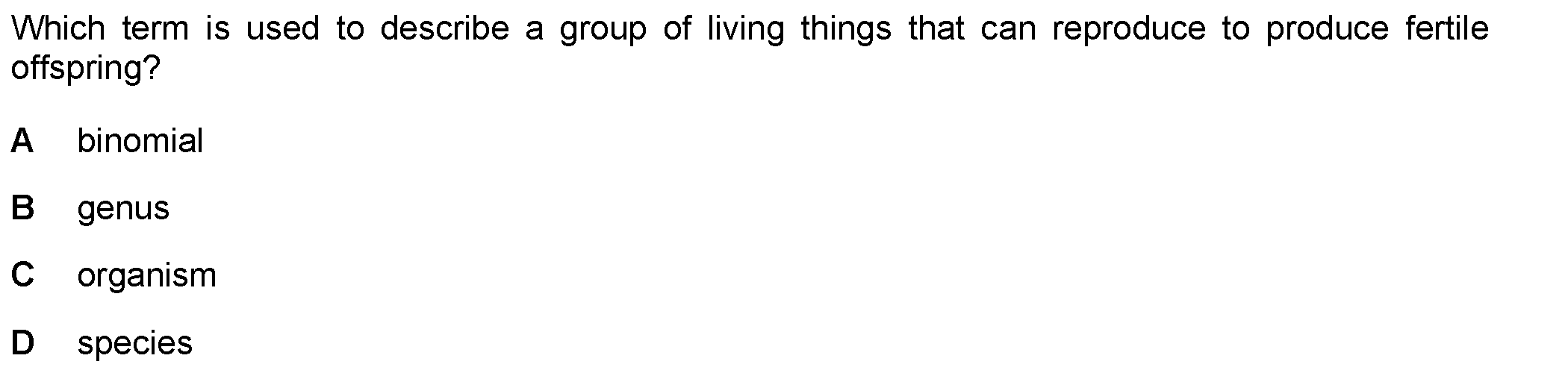
Which term is used to describe a group of living things that can reproduce to produce fertile
offspring?
A binomial
B genus
C organism
D
species
offspring?
A binomial
B genus
C organism
D
species
Options:
A
B
C
D
Correct Key: D
A
B
C
D
Correct Key: D
Question 4
Paper Ref: 0610/13_Winter_2018_Q2
Paper Ref: 0610/13_Winter_2018_Q2
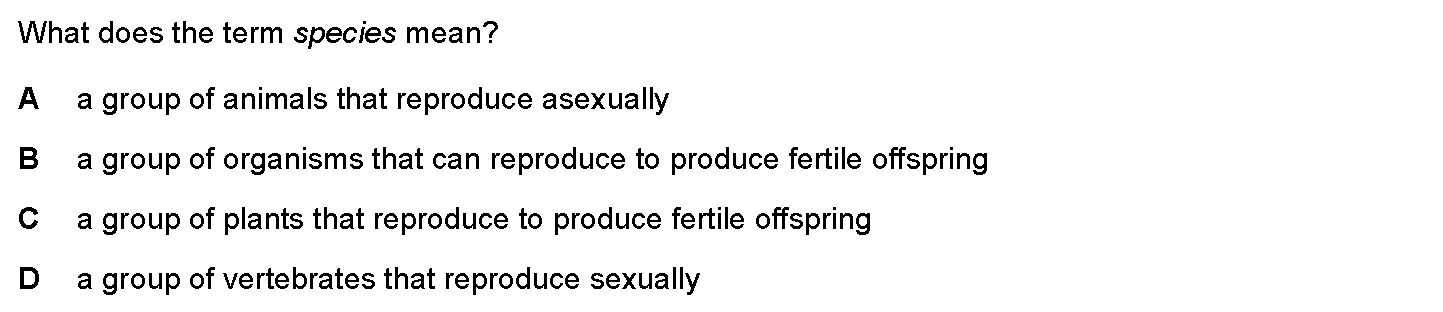
What does the term species mean?
A
B
c
D
a group of animals that reproduce asexually
a group of organisms that can reproduce to produce fertile offspring
a group of plants that reproduce to produce fertile offspring
a group of vertebrates that reproduce sexually
A
B
c
D
a group of animals that reproduce asexually
a group of organisms that can reproduce to produce fertile offspring
a group of plants that reproduce to produce fertile offspring
a group of vertebrates that reproduce sexually
Options:
A
B
C
D
Correct Key: B
A
B
C
D
Correct Key: B
Question 5
Paper Ref: 0610/12_Winter_2017_Q2
Paper Ref: 0610/12_Winter_2017_Q2
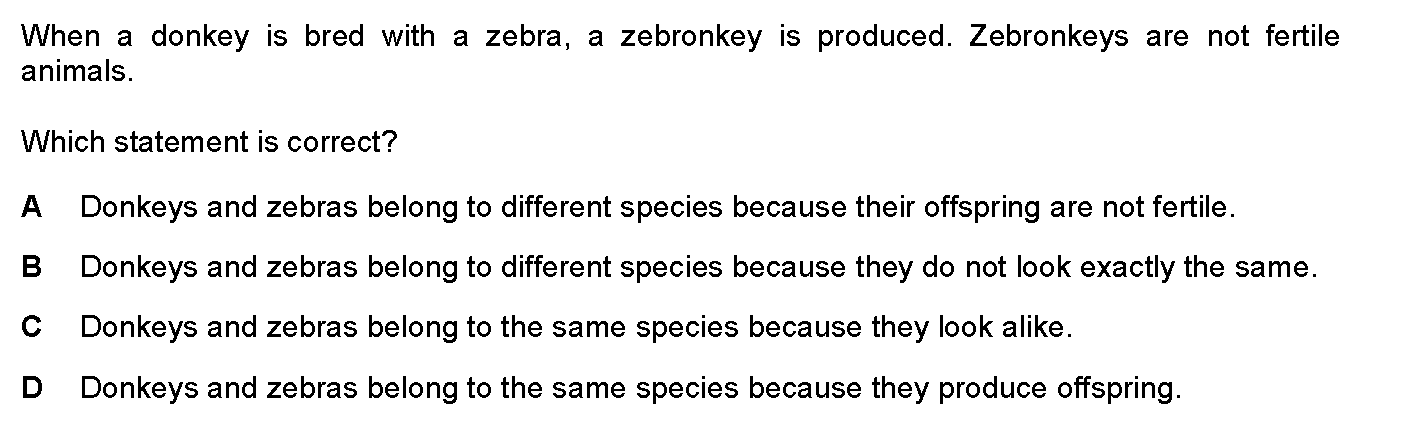
When a donkey is bred with a zebra, a zebronkey is produced. Zebronkeys are not fertile
animals.
Which statement is correct?
A
B
c
D
Donkeys and zebras belong to different species because their offspring are not fertile.
Donkeys and zebras belong to different species because they do not look exactly the same.
Donkeys and zebras belong to the same species because they look alike.
Donkeys and zebras belong to the same species because they produce offspring.
Options:
A
B
C
D
Correct Key: A
A
B
C
D
Correct Key: A
Question 6
Paper Ref: 0610/12_Winter_2025_Q3
Paper Ref: 0610/12_Winter_2025_Q3
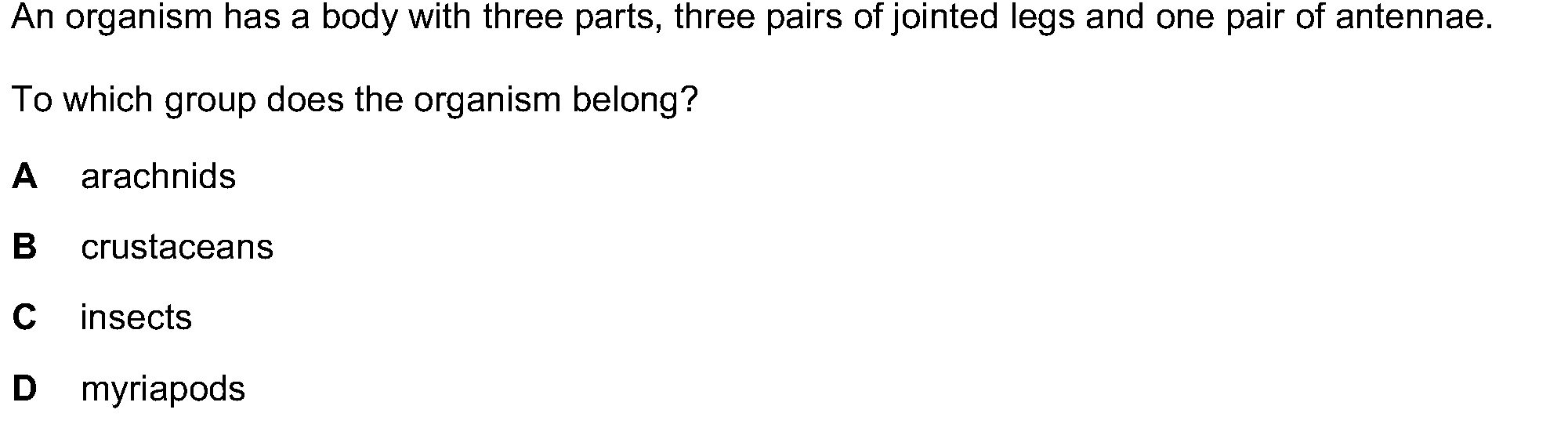
An organism has a body with three parts, three pairs of jointed legs and one pair of antennae.
To which group does the organism belong?
A arachnids
B crustaceans
C_ insects
D
myriapods
To which group does the organism belong?
A arachnids
B crustaceans
C_ insects
D
myriapods
Options:
A
B
C
D
Correct Key: C
A
B
C
D
Correct Key: C
Structured Questions Mark Scheme & Answers
•1•.• • • •[•S•P• •S•7• •P•1• • •·• • •Q•2• • •·• • •S•p•e•c•i•m•e•n• • •·• • •L•o•w•e•r• •S•e•c• •0•8•9•3•]• • • • • • •T•h•e• •b•u•t•t•e•r•f•l•i•e•s• •b•r•e•e•d• •t•o•g•e•t•h•e•r• •a•n•d• •a•l•l• •t•h•e•i•r• •1• •m•o•r•e• •t•h•a•n• •o•n•e• •b•o•x• •t•i•c•k•e•d• •=• •0• •m•a•r•k•s• •o•f•f•s•p•r•i•n•g• •a•r•e• •f•e•m•a•l•e•.• •••c•c•e•p•t• •a•n•y• •i•n•d•i•c•a•t•i•o•n• •o•f• •t•h•e• •c•o•r•r•e•c•t• •a•n•s•w•e•r•,• •e•.•g•.• •c•i•r•c•l•i•n•g• •o•r• •u•n•d•e•r•l•i•n•i•n•g• •b•u•t• •t•i•c•k•i•n•g• •t•a•k•e•s• •T•h•e• •b•u•t•t•e•r•f•l•i•e•s• •b•r•e•e•d• •t•o•g•e•t•h•e•r• •b•u•t• •d•o• •n•o•t• •p•r•o•d•u•c•e• •p•r•e•c•e•d•e•n•c•e• •o•f•f•s•p•r•i•n•g•.• •T•h•e• •b•u•t•t•e•r•f•l•i•e•s• •b•r•e•e•d• •t•o•g•e•t•h•e•r• •a•n•d• •p•r•o•d•u•c•e• •f•e•r•t•i•l•e• •o•f•f•s•p•r•i•n•g•.• •• •T•h•e• •b•u•t•t•e•r•f•l•i•e•s• •b•r•e•e•d• •t•o•g•e•t•h•e•r• •a•n•d• •p•r•o•d•u•c•e• •o•f•f•s•p•r•i•n•g• •t•h•a•t• •a•r•e• •n•o•t• •f•e•r•t•i•l•e•.•
•2•.• • • •[•P•R•I• •2•0•0•9••• •P•1• • •·• • •Q•1•4• • •P•a•r•t• •(•a•)• • •·• • •2•0•0•9• • •·• • •P•r•i•m•a•r•y• •0•8•4•6•]• • • • • • •(•n•o• •p•u•b•l•i•s•h•e•d• •m•a•r•k• •s•c•h•e•m•e• •f•o•r• •t•h•i•s• •p•a•p•e•r•)•
•3•.• • • •[•P•R•I• •2•0•0•9••• •P•1• • •·• • •Q•1•4• • •P•a•r•t• •(•b•)• • •·• • •2•0•0•9• • •·• • •P•r•i•m•a•r•y• •0•8•4•6•]• • • • • • •(•n•o• •p•u•b•l•i•s•h•e•d• •m•a•r•k• •s•c•h•e•m•e• •f•o•r• •t•h•i•s• •p•a•p•e•r•)•
•4•.• • • •[•P•R•I• •2•0•1•4••• •P•1• • •·• • •Q•1•2• • •P•a•r•t• •(•a•)• • •·• • •2•0•1•4• • •·• • •P•r•i•m•a•r•y• •0•8•4•6•]• • • • • • •(•n•o• •p•u•b•l•i•s•h•e•d• •m•a•r•k• •s•c•h•e•m•e• •f•o•r• •t•h•i•s• •p•a•p•e•r•)•
•5•.• • • •[•P•R•I• •2•0•1•4••• •P•1• • •·• • •Q•1•2• • •P•a•r•t• •(•b•)• • •·• • •2•0•1•4• • •·• • •P•r•i•m•a•r•y• •0•8•4•6•]• • • • • • •(•n•o• •p•u•b•l•i•s•h•e•d• •m•a•r•k• •s•c•h•e•m•e• •f•o•r• •t•h•i•s• •p•a•p•e•r•)•
•6•.• • • •[•P•R•I• •2•0•1•4••• •P•1• • •·• • •Q•1•2• • •P•a•r•t• •(•c•)• • •·• • •2•0•1•4• • •·• • •P•r•i•m•a•r•y• •0•8•4•6•]• • • • • • •(•n•o• •p•u•b•l•i•s•h•e•d• •m•a•r•k• •s•c•h•e•m•e• •f•o•r• •t•h•i•s• •p•a•p•e•r•)•
•7•.• • • •[•P•R•I• •2•0•1•4••• •P•1• • •·• • •Q•1•2• • •P•a•r•t• •(•d•)• • •·• • •2•0•1•4• • •·• • •P•r•i•m•a•r•y• •0•8•4•6•]• • • • • • •(•n•o• •p•u•b•l•i•s•h•e•d• •m•a•r•k• •s•c•h•e•m•e• •f•o•r• •t•h•i•s• •p•a•p•e•r•)•
•8•.• • • •[•P•R•I• •2•0•1•4•B• •P•2• • •·• • •Q•8• • •P•a•r•t• •(•a•)• • •·• • •2•0•1•4• • •·• • •P•r•i•m•a•r•y• •0•8•4•6•]• • • • • • •(•n•o• •p•u•b•l•i•s•h•e•d• •m•a•r•k• •s•c•h•e•m•e• •f•o•r• •t•h•i•s• •p•a•p•e•r•)•
Last updated:
\n