4.1Electricity and Magnetism
The Sonoran Desert — Question Bank (Cambridge) — Cambridge IGCSE Physics 0625 Revision Notes & Topical Questions
10 min read Lesson 3 of 65 Unit quiz
Cambridge Past Paper Bank
4.1 The Sonoran Desert
12 Multiple-Choice Questions with Official Mark Schemes
Question 1
0610/22_Winter_2022_Q35
Question 2
0610/12_Summer_2021_Q37
Question 3
0610/13_Winter_2025_Q34
Question 4
0610/21_Summer_2025_Q8
Question 5
5129/12_Winter_2020_Q11
Question 6
0610/12_Winter_2023_Q40
Question 7
0610/22_Summer_2013_Q34
Question 8
5129/11_Winter_2023_Q13
Question 9
0610/12_Spring_2020_Q35
Question 10
0610/23_Winter_2010_Q36
Question 11
0610/22_Winter_2010_Q35
Question 12
0610/21_Winter_2010_Q33
Cambridge Lower Secondary Stage 8
4.1 The Sonoran Desert – Complete Question Bank & Mark Scheme
Total Questions12 Questions with Verified Solutions & Past Paper Mark Schemes
Multiple Choice Questions (Exam Practice)
Question 1
Paper Ref: 0610/22_Winter_2022_Q35
Paper Ref: 0610/22_Winter_2022_Q35
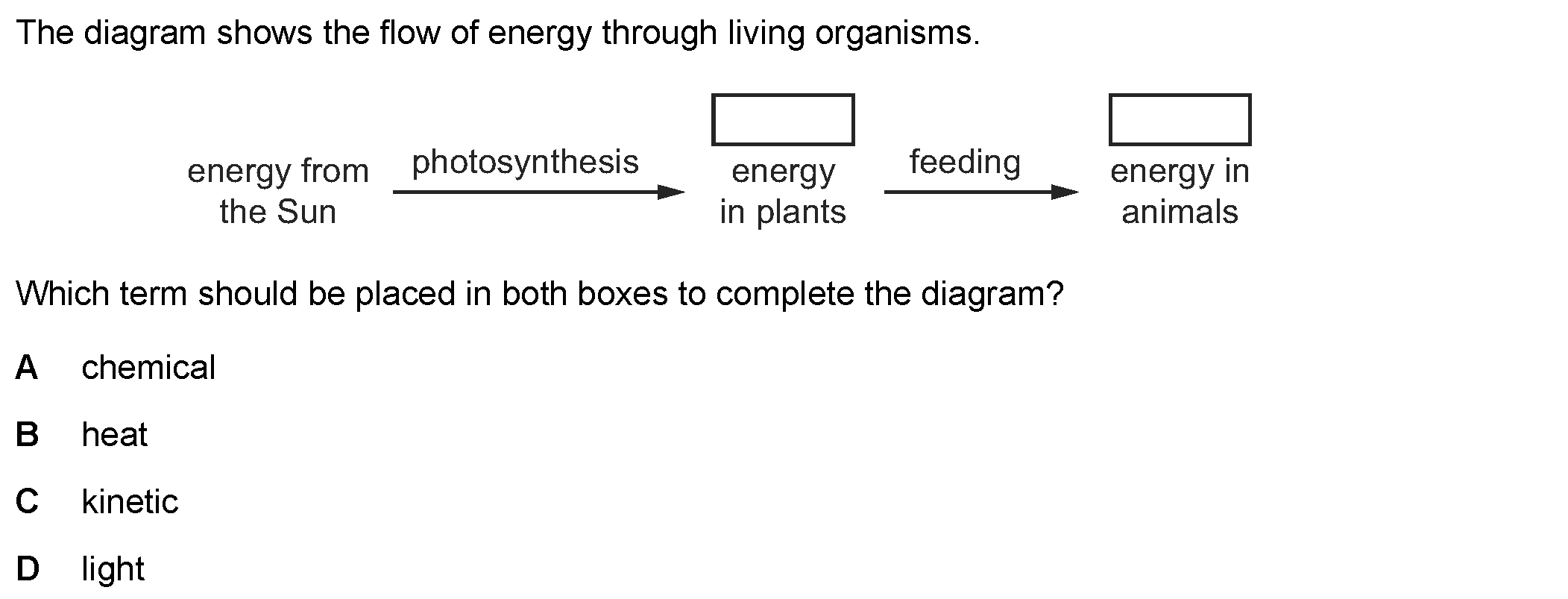
The diagram shows the flow of energy through living organisms.
[|
energy from Photosynthesis energy __ feeding energy In
the Sun in plants animals
Which term should be placed in both boxes to complete the diagram?
chemical
B_ heat
C kinetic
D light
[|
energy from Photosynthesis energy __ feeding energy In
the Sun in plants animals
Which term should be placed in both boxes to complete the diagram?
chemical
B_ heat
C kinetic
D light
Options:
A
B
C
D
Correct Key: A
A
B
C
D
Correct Key: A
Question 2
Paper Ref: 0610/12_Summer_2021_Q37
Paper Ref: 0610/12_Summer_2021_Q37
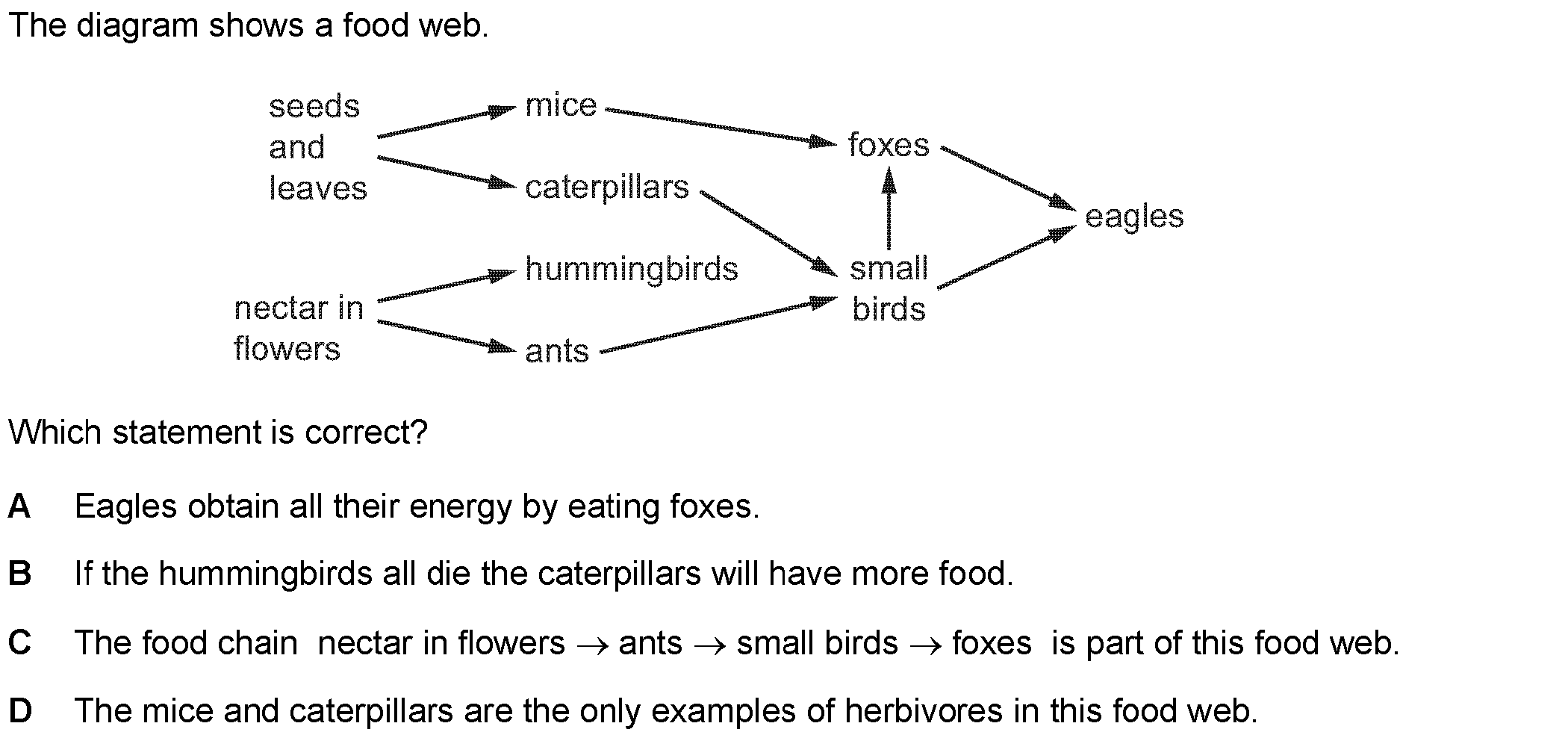
The diagram shows a food web.
seeds mice
and —_7 oe foxes
leaves caterpillars Pw
rw eagles
_™ hummingbirds small_
nectar in ee birds
flowers —* ants
Which statement is correct?
A Eagles obtain all their energy by eating foxes.
If the hummingbirds all die the caterpillars will have more food.
The food chain nectar in flowers — ants + small birds — foxes is part of this food web.
0 OO DW
The mice and caterpillars are the only examples of herbivores in this food web.
Options:
A
B
C
D
Correct Key: C
A
B
C
D
Correct Key: C
Question 3
Paper Ref: 0610/13_Winter_2025_Q34
Paper Ref: 0610/13_Winter_2025_Q34
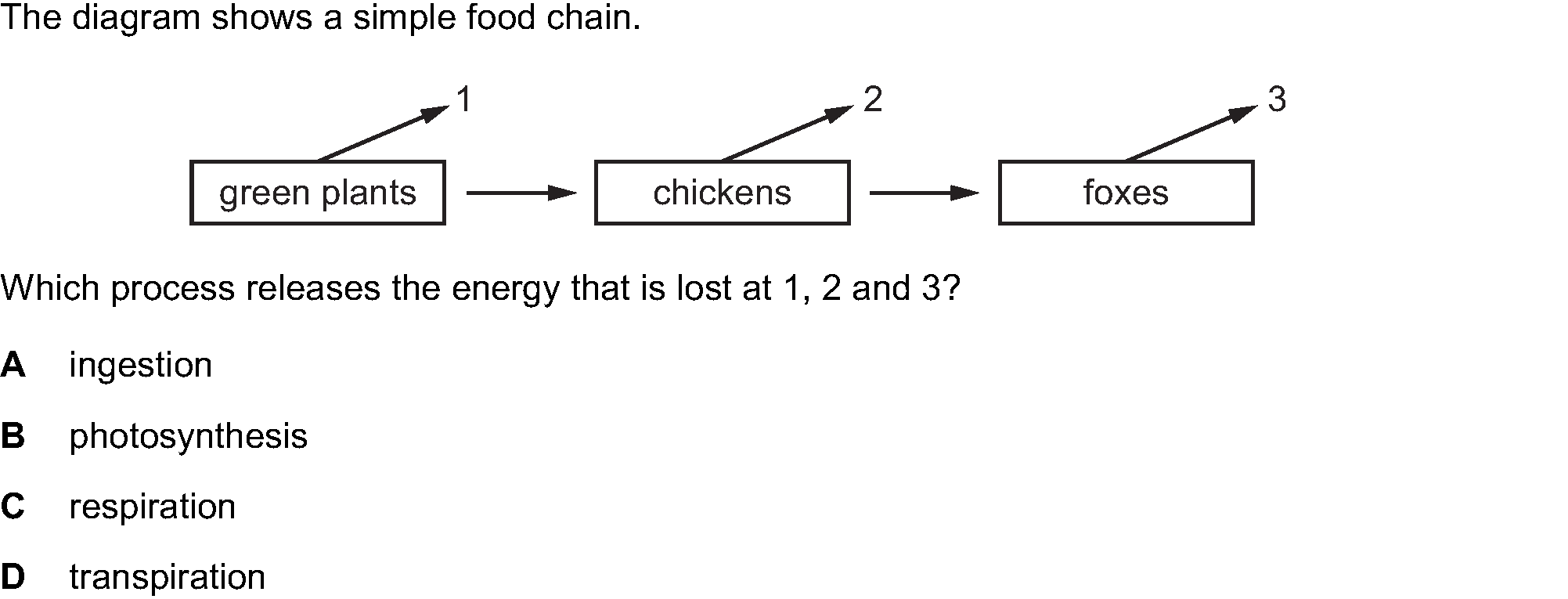
The diagram shows a simple food chain.
1 2 3
Which process releases the energy that is lost at 1, 2 and 3?
A ingestion
B photosynthesis
oO
respiration
Oo
transpiration
1 2 3
Which process releases the energy that is lost at 1, 2 and 3?
A ingestion
B photosynthesis
oO
respiration
Oo
transpiration
Options:
A
B
C
D
Correct Key: C
A
B
C
D
Correct Key: C
Question 4
Paper Ref: 0610/21_Summer_2025_Q8
Paper Ref: 0610/21_Summer_2025_Q8
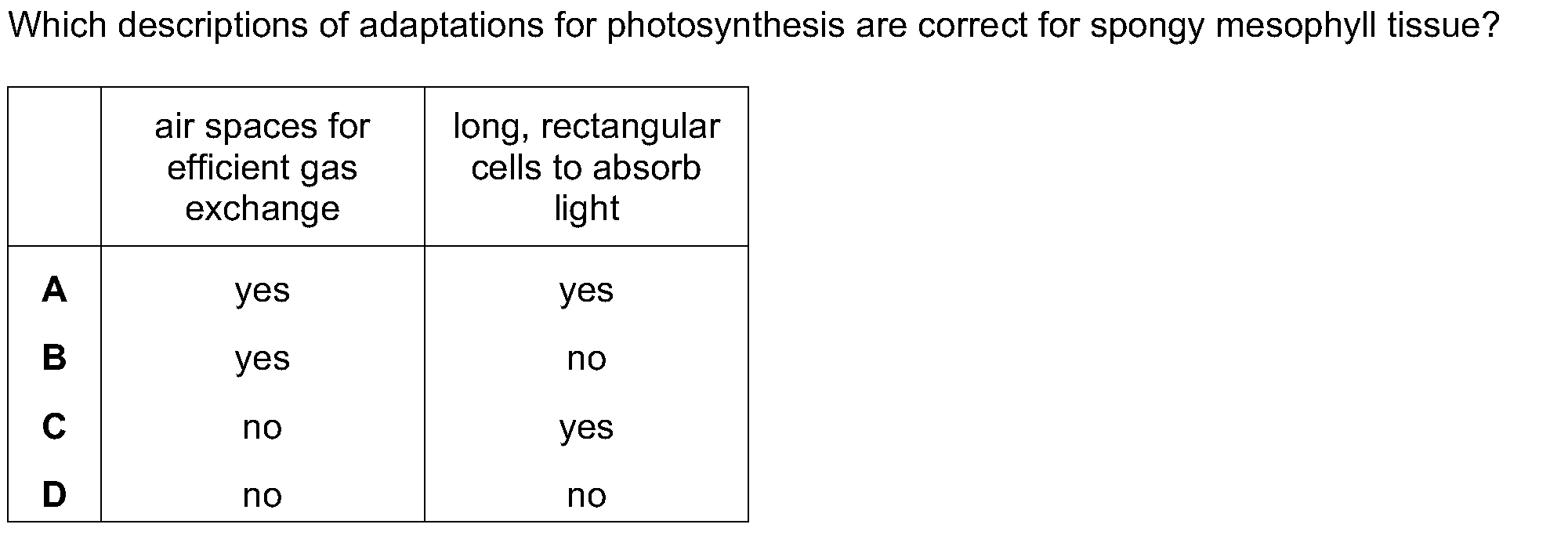
Which descriptions of adaptations for photosynthesis are correct for soongy mesophyll tissue?
air spaces for long, rectangular
efficient gas cells to absorb
exchange light
A yes yes
B yes no
Cc no yes
D no no
air spaces for long, rectangular
efficient gas cells to absorb
exchange light
A yes yes
B yes no
Cc no yes
D no no
Options:
A
B
C
D
Correct Key: B
A
B
C
D
Correct Key: B
Question 5
Paper Ref: 5129/12_Winter_2020_Q11
Paper Ref: 5129/12_Winter_2020_Q11
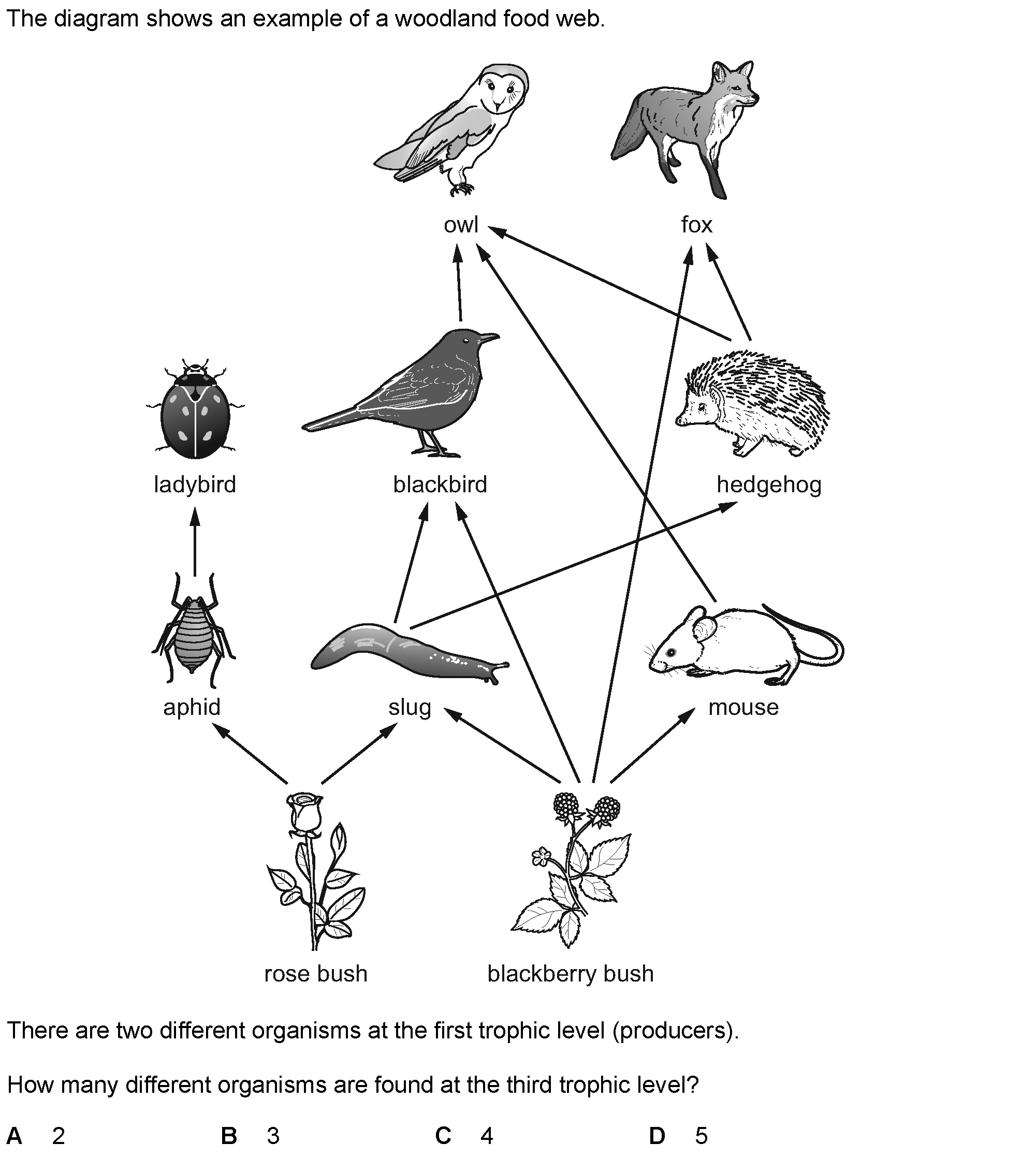
The diagram shows an example of a woodland food web.
NG
blackbird
ladybird
rose bush blackberry bush
There are two different organisms at the first trophic level (producers).
How many different organisms are found at the third trophic level?
A 2 B 3 C 4 D 5
NG
blackbird
ladybird
rose bush blackberry bush
There are two different organisms at the first trophic level (producers).
How many different organisms are found at the third trophic level?
A 2 B 3 C 4 D 5
Options:
A
B
C
D
Correct Key: C
A
B
C
D
Correct Key: C
Question 6
Paper Ref: 0610/12_Winter_2023_Q40
Paper Ref: 0610/12_Winter_2023_Q40
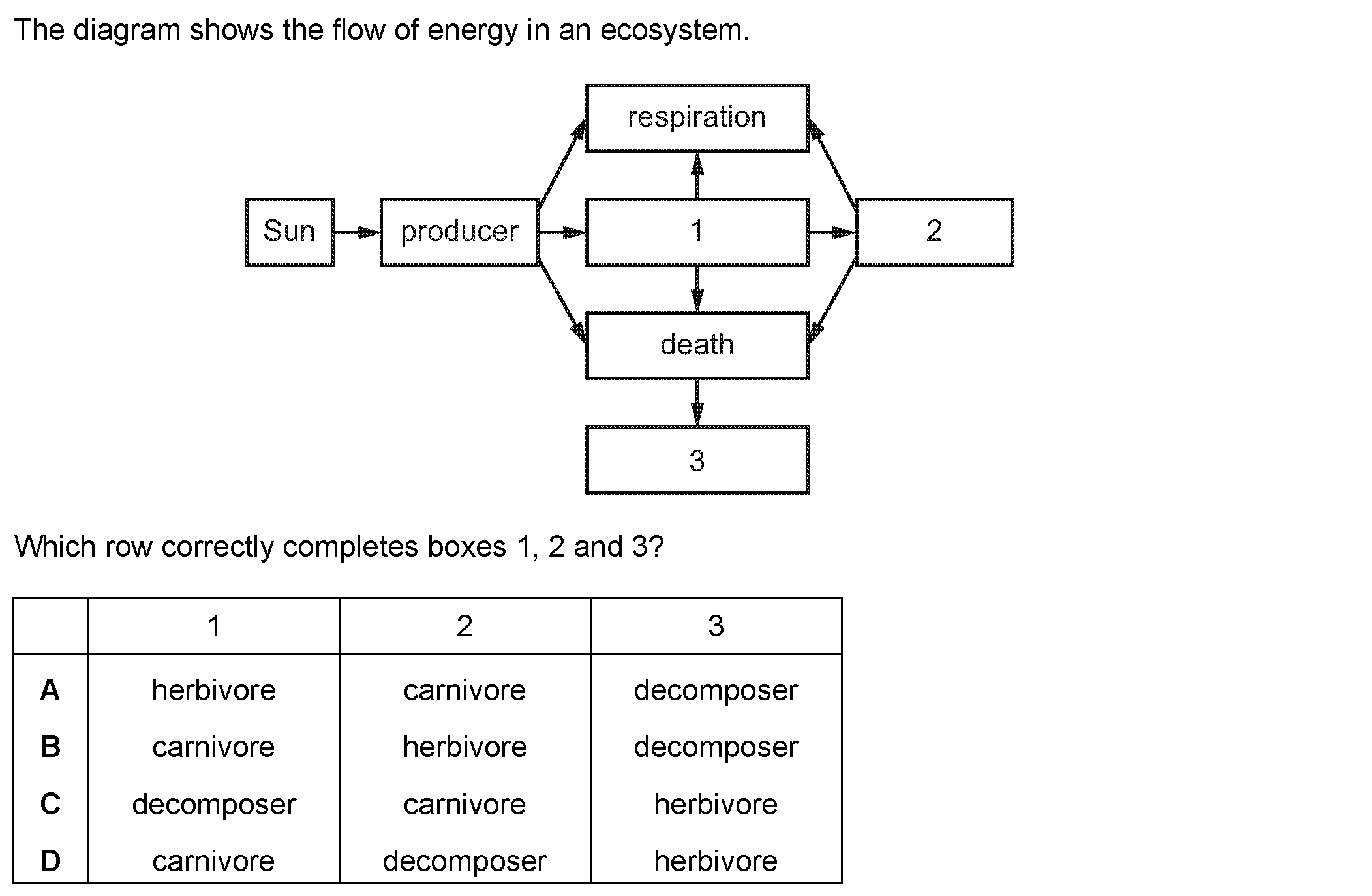
The diagram shows the flow of energy in an ecosystem.
(>)
herbivore carnivore decomposer
carnivore herbivore decomposer
decomposer carnivore herbivore
carnivore decomposer herbivore
(>)
herbivore carnivore decomposer
carnivore herbivore decomposer
decomposer carnivore herbivore
carnivore decomposer herbivore
Options:
A
B
C
D
Correct Key: A
A
B
C
D
Correct Key: A
Question 7
Paper Ref: 0610/22_Summer_2013_Q34
Paper Ref: 0610/22_Summer_2013_Q34
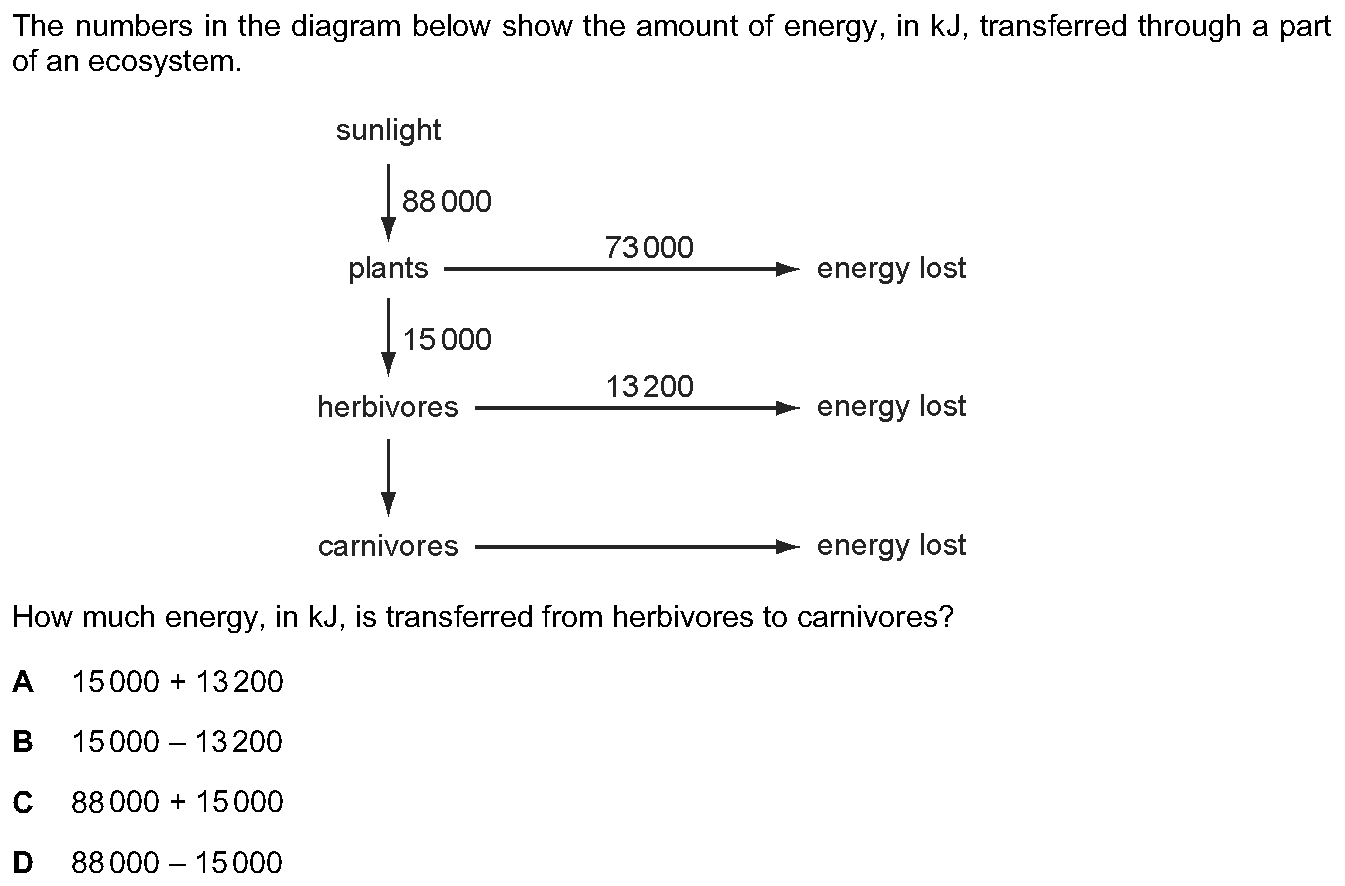
The numbers in the diagram below show the amount of energy, in kJ, transferred through a part
of an ecosystem.
sunlight
| 88 000
plants 000 >= energy lost
| 15000
herbivores —_ 13200 >=, energy lost
carnivores ———————————>. energy lost
How much energy, in kJ, is transferred from herbivores to carnivores?
A 15000 + 13200
B 15000 – 13200
C 88000 + 15000
D 88000 – 15000
of an ecosystem.
sunlight
| 88 000
plants 000 >= energy lost
| 15000
herbivores —_ 13200 >=, energy lost
carnivores ———————————>. energy lost
How much energy, in kJ, is transferred from herbivores to carnivores?
A 15000 + 13200
B 15000 – 13200
C 88000 + 15000
D 88000 – 15000
Options:
A
B
C
D
Correct Key: B
A
B
C
D
Correct Key: B
Question 8
Paper Ref: 5129/11_Winter_2023_Q13
Paper Ref: 5129/11_Winter_2023_Q13
What is the source of energy for a food chain?
A
B
Cc
D
photosynthesis
plants
respiration
the Sun
A
B
Cc
D
photosynthesis
plants
respiration
the Sun
Options:
A
B
C
D
Correct Key: D
A
B
C
D
Correct Key: D
Question 9
Paper Ref: 0610/12_Spring_2020_Q35
Paper Ref: 0610/12_Spring_2020_Q35
What is the principal source of energy for living organisms?
A
B
Cc
D
herbivores
plants
photosynthesis
the Sun
A
B
Cc
D
herbivores
plants
photosynthesis
the Sun
Options:
A
B
C
D
Correct Key: D
A
B
C
D
Correct Key: D
Question 10
Paper Ref: 0610/23_Winter_2010_Q36
Paper Ref: 0610/23_Winter_2010_Q36
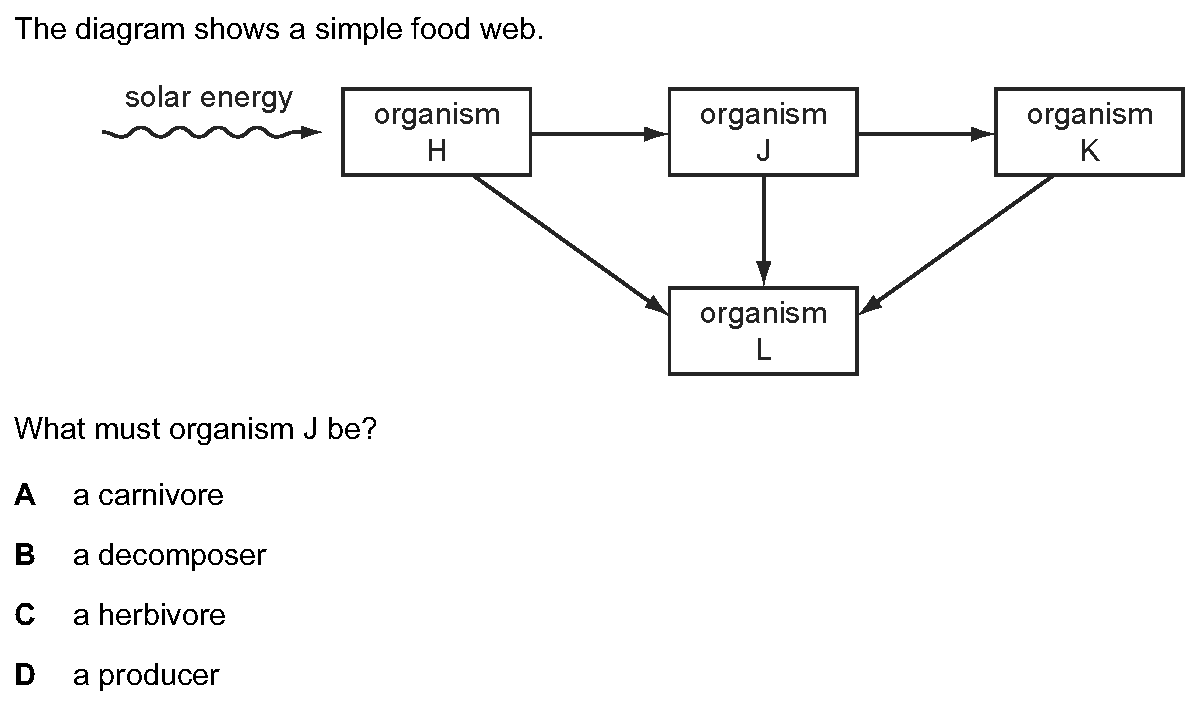
The diagram shows a simple food web.
solar energy
organism
NN Nl Ne
H
organism
J
organism
L
organism
K
What must organism J be?
a carnivore
B adecomposer
Cc aherbivore
D aproducer
solar energy
organism
NN Nl Ne
H
organism
J
organism
L
organism
K
What must organism J be?
a carnivore
B adecomposer
Cc aherbivore
D aproducer
Options:
A
B
C
D
Correct Key: C
A
B
C
D
Correct Key: C
Question 11
Paper Ref: 0610/22_Winter_2010_Q35
Paper Ref: 0610/22_Winter_2010_Q35
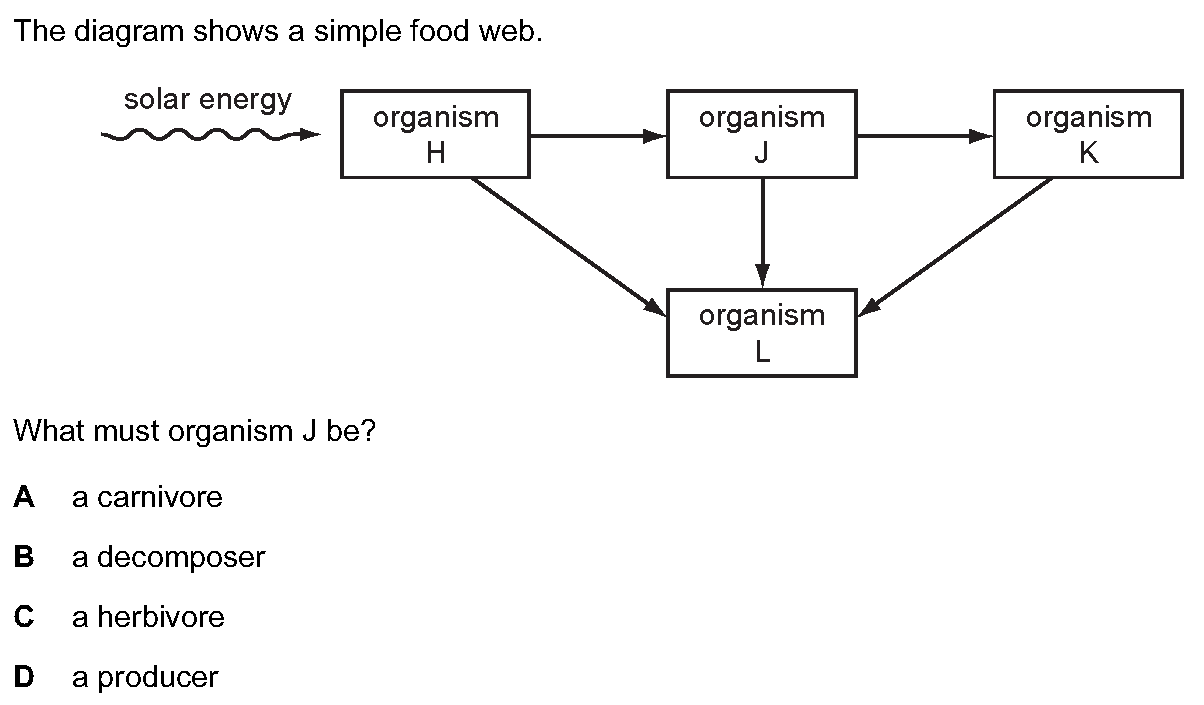
The diagram shows a simple food web.
solar energy
organism
NN Na ce
H
organism
J
organism
L
organism
K
What must organism J be?
a carnivore
B adecomposer
Cc aherbivore
D aproducer
solar energy
organism
NN Na ce
H
organism
J
organism
L
organism
K
What must organism J be?
a carnivore
B adecomposer
Cc aherbivore
D aproducer
Options:
A
B
C
D
Correct Key: C
A
B
C
D
Correct Key: C
Question 12
Paper Ref: 0610/21_Winter_2010_Q33
Paper Ref: 0610/21_Winter_2010_Q33
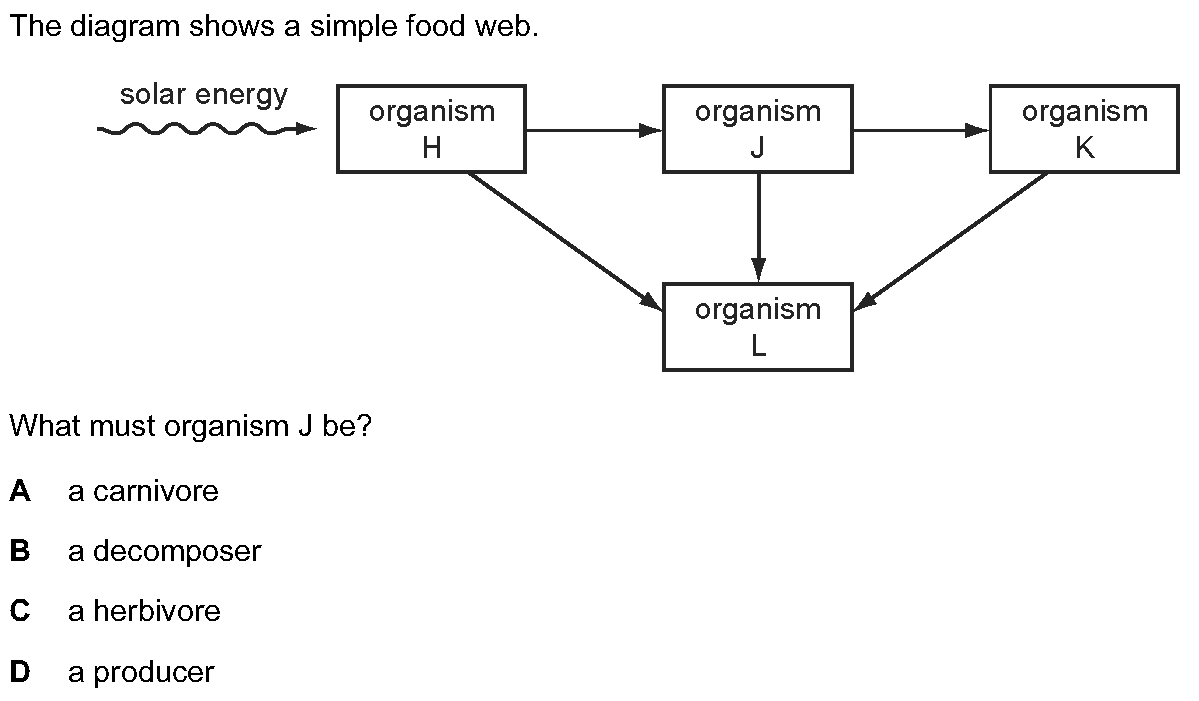
The diagram shows a simple food web.
solar energy
organism
APP
H
organism
J
organism
L
organism
K
What must organism J be?
a carnivore
B adecomposer
Cc aherbivore
D aproducer
solar energy
organism
APP
H
organism
J
organism
L
organism
K
What must organism J be?
a carnivore
B adecomposer
Cc aherbivore
D aproducer
Options:
A
B
C
D
Correct Key: C
A
B
C
D
Correct Key: C
Structured Questions Mark Scheme & Answers
•1•.• • • •[•S•P• •S•8• •P•2• • •·• • •Q•4• • •P•a•r•t• •(•a•)• • •·• • •S•p•e•c•i•m•e•n• • •·• • •L•o•w•e•r• •S•e•c• •0•8•9•3•]• • • • • • •i•d•e•a• •o•f• •g•r•o•u•p•s• •o•f• •l•i•v•i•n•g• •o•r•g•a•n•i•s•m•s• •i•n•t•e•r•a•c•t•i•n•g• •w•i•t•h• •t•h•e•i•r• •1• •••c•c•e•p•t• •l•i•v•i•n•g• •t•h•i•n•g•s• •a•n•d• •t•h•e•i•r• •s•u•r•r•o•u•n•d•i•n•g• •e•n•v•i•r•o•n•m•e•n•t• •••c•c•e•p•t• •a•n• •a•n•s•w•e•r• •t•h•a•t• •i•n•c•l•u•d•e•s• •a•n• •e•x•a•m•p•l•e• •e•.•g•.• •t•h•e• •i•n•h•a•b•i•t•a•n•t•s• •o•f• •a• •t•r•o•p•i•c•a•l• •r•a•i•n• •f•o•r•e•s•t• •a•n•y• •t•w•o• •f•r•o•m• •2• •f•e•w•e•r• •c•o•m•p•e•t•i•t•o•r•s• •••c•c•e•p•t• •n•o• •c•o•m•p•e•t•i•t•o•r•s• •f•e•w•e•r• •p•r•e•d•a•t•o•r•s• •a•b•u•n•d•a•n•c•e• •o•f• •f•o•o•d• •••c•c•e•p•t• •n•o• •p•r•e•d•a•t•o•r•s• •l•o•t•s• •o•f• •p•l•a•c•e•s• •t•o• •b•r•e•e•d• •m•o•r•e• •s•u•i•t•a•b•l•e• •h•a•b•i•t•a•t•s• •m•o•r•e• •s•h•e•l•t•e•r• •s•u•i•t•a•b•l•e• •c•l•i•m•a•t•e• •/• •f•a•v•o•u•r•a•b•l•e• •c•l•i•m•a•t•e• •f•e•w•e•r• •d•i•s•e•a•s•e•s• •m•a•y• •e•a•t• •a•l•l• •t•h•e• •p•l•a•n•t•s• •i•d•e•a• •/• •o•u•t•c•o•m•p•e•t•e• •o•t•h•e•r• •s•p•e•c•i•e•s• •/• •1• •••c•c•e•p•t• •e•a•t• •l•o•t•s• •o•f• •p•l•a•n•t•s• •i•n•t•r•o•d•u•c•e• •d•i•s•e•a•s•e• •/• •d•e•s•t•r•o•y• •h•a•b•i•t•a•t•s• •/• •a•f•f•e•c•t• •f•o•o•d• •c•h•a•i•n•s• •o•r• •f•o•o•d• •w•e•b•s• •D•o• •n•o•t• •a•c•c•e•p•t• •e•a•t•s• •o•t•h•e•r• •a•n•i•m•a•l•s•
•2•.• • • •[•S•P• •S•8• •P•2• • •·• • •Q•4• • •P•a•r•t• •(•b•)• • •·• • •S•p•e•c•i•m•e•n• • •·• • •L•o•w•e•r• •S•e•c• •0•8•9•3•]• • • • • • •a•n•y• •o•n•e• •f•r•o•m• •1• •c•o•u•n•t•i•n•g• •t•h•e• •n•u•m•b•e•r• •o•f• •f•o•x•e•s• •d•e•s•c•r•i•p•t•i•o•n• •o•f• •s•u•i•t•a•b•l•e• •s•a•m•p•l•i•n•g• •t•e•c•h•n•i•q•u•e• •e•x•a•m•p•l•e•s• •m•a•y• •i•n•c•l•u•d•e• •s•e•t•t•i•n•g• •c•a•m•e•r•a•s• •t•o• •s•a•m•p•l•e• •d•i•f•f•e•r•e•n•t• •a•r•e•a• •/• •(•h•u•m•a•n•e•)• •t•r•a•p•s• •t•o• •s•a•m•p•l•e• •d•i•f•f•e•r•e•n•t• •a•r•e•a•s• •i•d•e•a• •o•f• •a•n• •o•r•g•a•n•i•s•m• •t•h•a•t• •o•u•t•c•o•m•p•e•t•e•s• •a• •(•n•a•t•i•v•e•)• •o•r•g•a•n•i•s•m• •1• •••c•c•e•p•t• •s•p•e•c•i•e•s•,• •a•n•i•m•a•l• •o•r• •p•l•a•n•t• •f•o•r• •o•r•g•a•n•i•s•m• •a•n•y• •o•n•e• •f•r•o•m• •1• •i•d•e•a• •t•h•a•t• •t•h•e• •m•a•p• •s•h•o•w•s• •a• •p•a•t•t•e•r•n• •o•f• •s•p•r•e•a•d• •(•f•r•o•m• •t•h•e• •S•o•u•t•h•)• •a•c•r•o•s•s• •m•o•s•t• •o•f• •••u•s•t•r•a•l•i•a• •f•o•x•e•s• •a•r•e• •f•o•u•n•d• •i•n• •a•r•e•a•s• •t•h•e•y• •w•e•r•e• •n•o•t• •i•n•t•r•o•d•u•c•e•d• •©• •U•C•L•E•S• •2•0•2•0• •P•a•g•e• •5• •o•f• •1•0• •S•8•/•0•2• •S•c•i•e•n•c•e• •S•t•a•g•e• •8• •P•a•p•e•r• •2• •M•a•r•k• •S•c•h•e•m•e• •F•r•o•m• •2•0•2•0•
•3•.• • • •[•S•P• •S•8• •P•2• • •·• • •Q•4• • •P•a•r•t• •(•b•)• • •·• • •S•p•e•c•i•m•e•n• • •·• • •L•o•w•e•r• •S•e•c• •0•8•9•3•]• • • • • • •a•n•y• •o•n•e• •f•r•o•m• •1• •c•o•u•n•t•i•n•g• •t•h•e• •n•u•m•b•e•r• •o•f• •f•o•x•e•s• •d•e•s•c•r•i•p•t•i•o•n• •o•f• •s•u•i•t•a•b•l•e• •s•a•m•p•l•i•n•g• •t•e•c•h•n•i•q•u•e• •e•x•a•m•p•l•e•s• •m•a•y• •i•n•c•l•u•d•e• •s•e•t•t•i•n•g• •c•a•m•e•r•a•s• •t•o• •s•a•m•p•l•e• •d•i•f•f•e•r•e•n•t• •a•r•e•a• •/• •(•h•u•m•a•n•e•)• •t•r•a•p•s• •t•o• •s•a•m•p•l•e• •d•i•f•f•e•r•e•n•t• •a•r•e•a•s• •i•d•e•a• •o•f• •a•n• •o•r•g•a•n•i•s•m• •t•h•a•t• •o•u•t•c•o•m•p•e•t•e•s• •a• •(•n•a•t•i•v•e•)• •o•r•g•a•n•i•s•m• •1• •••c•c•e•p•t• •s•p•e•c•i•e•s•,• •a•n•i•m•a•l• •o•r• •p•l•a•n•t• •f•o•r• •o•r•g•a•n•i•s•m• •a•n•y• •o•n•e• •f•r•o•m• •1• •i•d•e•a• •t•h•a•t• •t•h•e• •m•a•p• •s•h•o•w•s• •a• •p•a•t•t•e•r•n• •o•f• •s•p•r•e•a•d• •(•f•r•o•m• •t•h•e• •S•o•u•t•h•)• •a•c•r•o•s•s• •m•o•s•t• •o•f• •••u•s•t•r•a•l•i•a• •f•o•x•e•s• •a•r•e• •f•o•u•n•d• •i•n• •a•r•e•a•s• •t•h•e•y• •w•e•r•e• •n•o•t• •i•n•t•r•o•d•u•c•e•d• •©• •U•C•L•E•S• •2•0•2•0• •P•a•g•e• •5• •o•f• •1•0• •S•8•/•0•2• •S•c•i•e•n•c•e• •S•t•a•g•e• •8• •P•a•p•e•r• •2• •M•a•r•k• •S•c•h•e•m•e• •F•r•o•m• •2•0•2•0•
•4•.• • • •[•P•R•I• •2•0•0•8••• •P•1• • •·• • •Q•1• • •P•a•r•t• •(•a•)• • •·• • •2•0•0•8• • •·• • •P•r•i•m•a•r•y• •0•8•4•6•]• • • • • • •(•n•o• •p•u•b•l•i•s•h•e•d• •m•a•r•k• •s•c•h•e•m•e• •f•o•r• •t•h•i•s• •p•a•p•e•r•)•
•5•.• • • •[•P•R•I• •2•0•0•8••• •P•1• • •·• • •Q•1• • •P•a•r•t• •(•b•)• • •·• • •2•0•0•8• • •·• • •P•r•i•m•a•r•y• •0•8•4•6•]• • • • • • •(•n•o• •p•u•b•l•i•s•h•e•d• •m•a•r•k• •s•c•h•e•m•e• •f•o•r• •t•h•i•s• •p•a•p•e•r•)•
•6•.• • • •[•P•R•I• •2•0•0•8••• •P•1• • •·• • •Q•1• • •P•a•r•t• •(•c•)• • •·• • •2•0•0•8• • •·• • •P•r•i•m•a•r•y• •0•8•4•6•]• • • • • • •(•n•o• •p•u•b•l•i•s•h•e•d• •m•a•r•k• •s•c•h•e•m•e• •f•o•r• •t•h•i•s• •p•a•p•e•r•)•
•7•.• • • •[•P•R•I• •2•0•1•0••• •P•1• • •·• • •Q•1• • •·• • •2•0•1•0• • •·• • •P•r•i•m•a•r•y• •0•8•4•6•]• • • • • • •(•n•o• •p•u•b•l•i•s•h•e•d• •m•a•r•k• •s•c•h•e•m•e• •f•o•r• •t•h•i•s• •p•a•p•e•r•)•
•8•.• • • •[•P•R•I• •2•0•1•0••• •P•1• • •·• • •Q•1• • •·• • •2•0•1•0• • •·• • •P•r•i•m•a•r•y• •0•8•4•6•]• • • • • • •(•n•o• •p•u•b•l•i•s•h•e•d• •m•a•r•k• •s•c•h•e•m•e• •f•o•r• •t•h•i•s• •p•a•p•e•r•)•
Last updated:
\n