4.4Electricity and Magnetism
Using keys — Question Bank (Cambridge) — Cambridge IGCSE Physics 0625 Revision Notes & Topical Questions
5 min read Lesson 45 of 65 Unit quiz
Cambridge Past Paper Bank
4.4 Using keys
5 Multiple-Choice Questions with Official Mark Schemes
Question 1
0610/13_Summer_2022_Q3
Question 2
0610/23_Winter_2010_Q8
Question 3
0610/13_Winter_2023_Q3
Question 4
0610/22_Summer_2024_Q2
Question 5
0610/12_Spring_2023_Q2
Cambridge Lower Secondary Stage 7
4.4 Using keys – Complete Question Bank & Mark Scheme
Total Questions5 Questions with Verified Solutions & Past Paper Mark Schemes
Multiple Choice Questions (Exam Practice)
Question 1
Paper Ref: 0610/13_Summer_2022_Q3
Paper Ref: 0610/13_Summer_2022_Q3
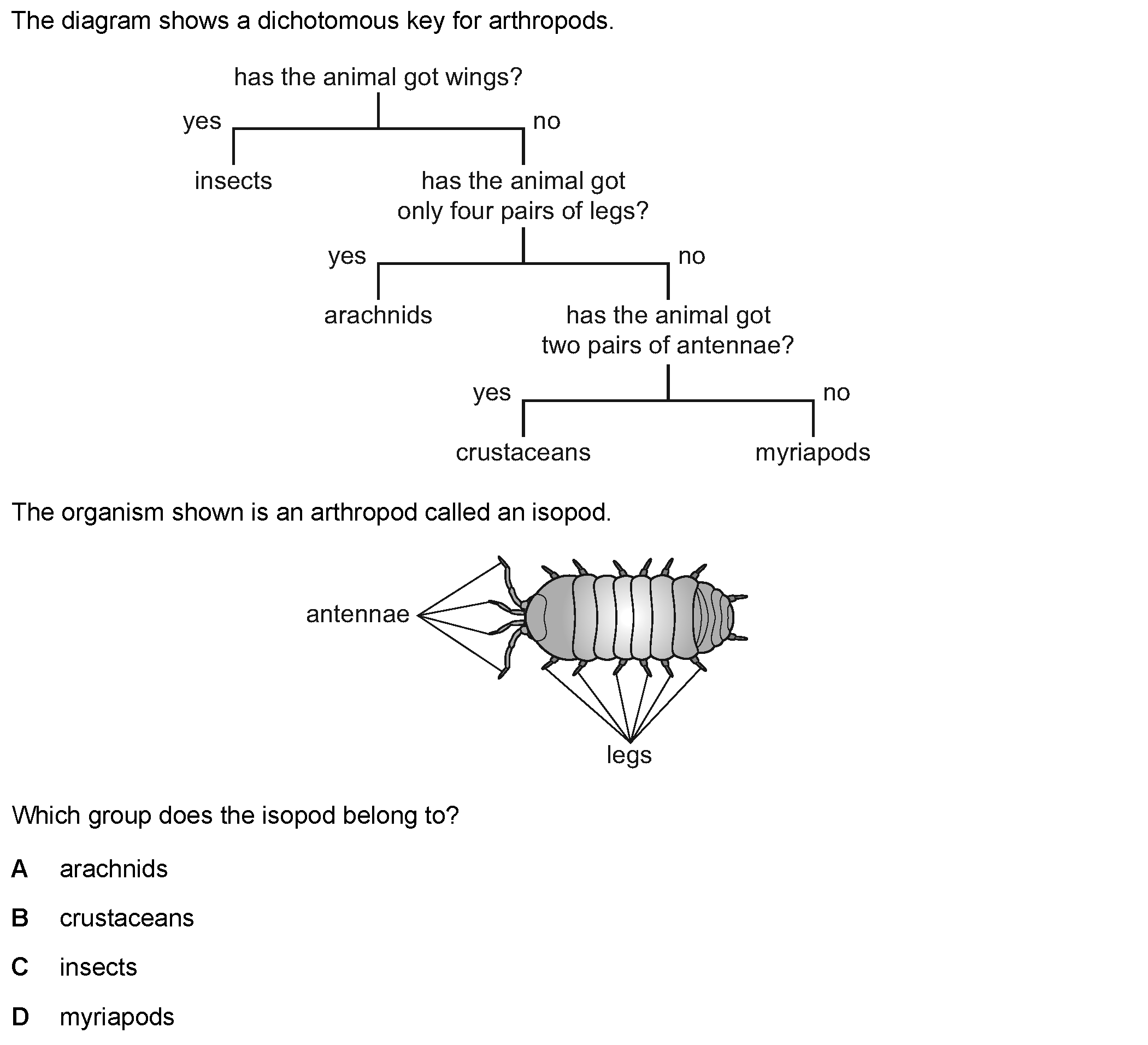
The diagram shows a dichotomous key for arthropods.
has the animal got wings?
yes no
insects has the animal got
only four pairs of legs?
yes no
arachnids has the animal got
two pairs of antennae?
yes pF no
crustaceans myriapods
The organism shown is an arthropod called an isopod.
antennae
legs
Which group does the isopod belong to?
arachnids
crustaceans
insects
0 0O wD FY
myriapods
Options:
A
B
C
D
Correct Key: B
A
B
C
D
Correct Key: B
Question 2
Paper Ref: 0610/23_Winter_2010_Q8
Paper Ref: 0610/23_Winter_2010_Q8
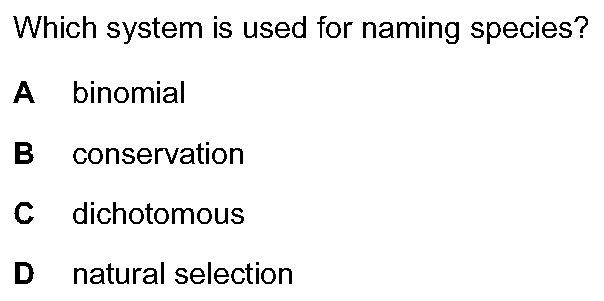
Which system is used for naming species?
oo BD
binomial
conservation
dichotomous
natural selection
oo BD
binomial
conservation
dichotomous
natural selection
Options:
A
B
C
D
Correct Key: A
A
B
C
D
Correct Key: A
Question 3
Paper Ref: 0610/13_Winter_2023_Q3
Paper Ref: 0610/13_Winter_2023_Q3
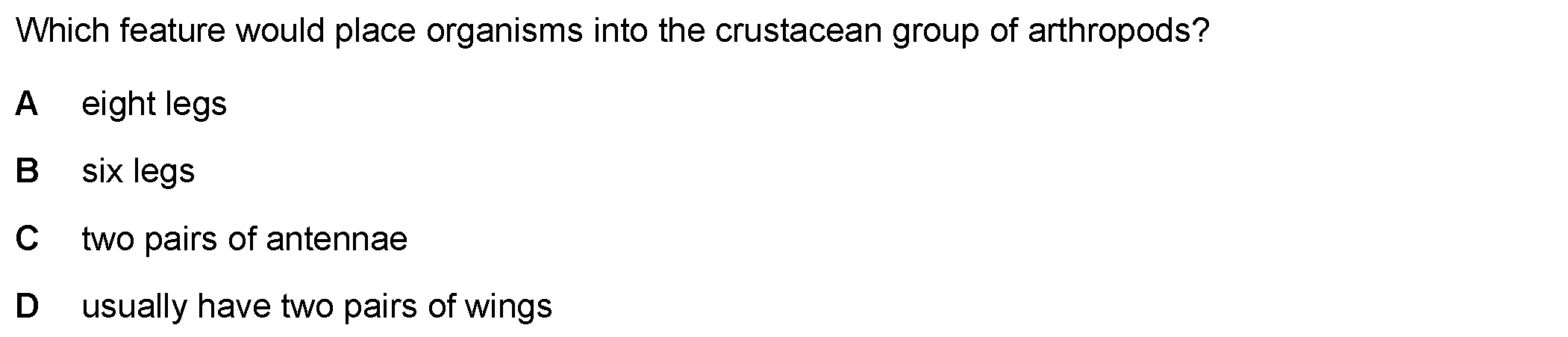
Which feature would place organisms into the crustacean group of arthropods?
A eight legs
B six legs
C_ two pairs of antennae
D
usually have two pairs of wings
A eight legs
B six legs
C_ two pairs of antennae
D
usually have two pairs of wings
Options:
A
B
C
D
Correct Key: C
A
B
C
D
Correct Key: C
Question 4
Paper Ref: 0610/22_Summer_2024_Q2
Paper Ref: 0610/22_Summer_2024_Q2
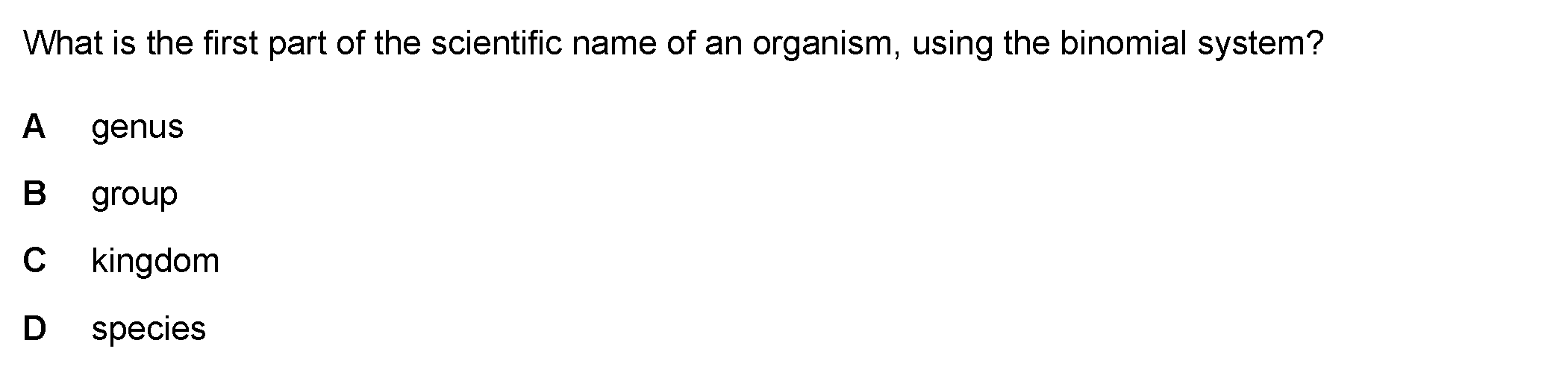
What is the first part of the scientific name of an organism, using the binomial system?
A genus
B group
C kingdom
D_ species
A genus
B group
C kingdom
D_ species
Options:
A
B
C
D
Correct Key: A
A
B
C
D
Correct Key: A
Question 5
Paper Ref: 0610/12_Spring_2023_Q2
Paper Ref: 0610/12_Spring_2023_Q2
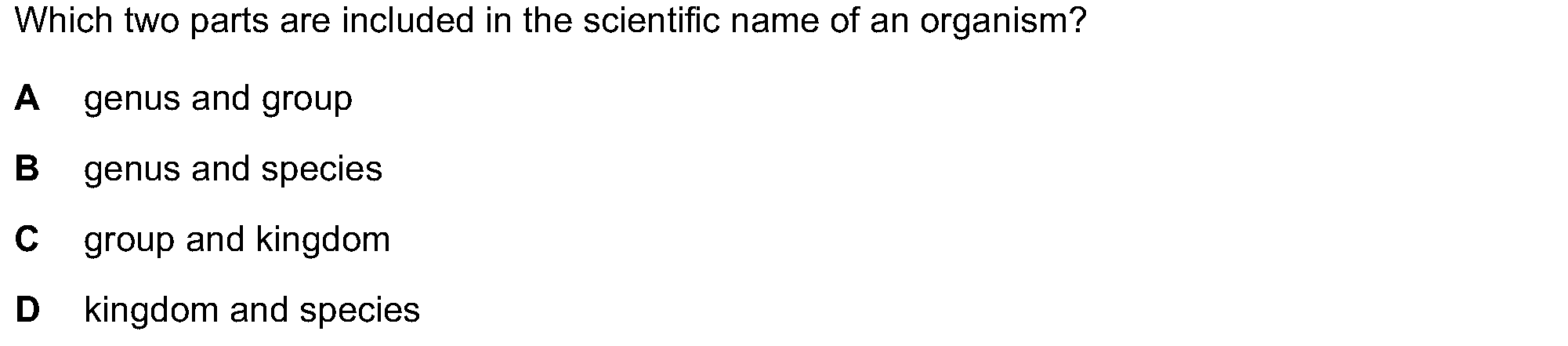
Which two parts are included in the scientific name of an organism?
A
B
Cc
D
genus and group
genus and species
group and kingdom
kingdom and species
A
B
Cc
D
genus and group
genus and species
group and kingdom
kingdom and species
Options:
A
B
C
D
Correct Key: B
A
B
C
D
Correct Key: B
Structured Questions Mark Scheme & Answers
•1•.• • • •[•S•P• •S•7• •P•2• • •·• • •Q•7• • •P•a•r•t• •(•a•)• • •·• • •S•p•e•c•i•m•e•n• • •·• • •L•o•w•e•r• •S•e•c• •0•8•9•3•]• • • • • • ••• •–• •a•d•e•l•i•e• •(•p•e•n•g•u•i•n•)• •2• •a•l•l• •f•o•u•r• •c•o•r•r•e•c•t• •=• •2• •m•a•r•k•s• •B• •–• •e•m•p•e•r•o•r• •(•p•e•n•g•u•i•n•)• •C• •–• •c•h•i•n•s•t•r•a•p• •(•p•e•n•g•u•i•n•)• •t•w•o• •o•r• •t•h•r•e•e• •c•o•r•r•e•c•t• •=• •1• •m•a•r•k• •D• •–• •a•f•r•i•c•a•n• •(•p•e•n•g•u•i•n•)• •o•n•e• •c•o•r•r•e•c•t• •=• •0• •m•a•r•k•s•
•2•.• • • •[•S•P• •S•7• •P•2• • •·• • •Q•7• • •P•a•r•t• •(•a•)• • •·• • •S•p•e•c•i•m•e•n• • •·• • •L•o•w•e•r• •S•e•c• •0•8•9•3•]• • • • • • ••• •–• •a•d•e•l•i•e• •(•p•e•n•g•u•i•n•)• •2• •a•l•l• •f•o•u•r• •c•o•r•r•e•c•t• •=• •2• •m•a•r•k•s• •B• •–• •e•m•p•e•r•o•r• •(•p•e•n•g•u•i•n•)• •C• •–• •c•h•i•n•s•t•r•a•p• •(•p•e•n•g•u•i•n•)• •t•w•o• •o•r• •t•h•r•e•e• •c•o•r•r•e•c•t• •=• •1• •m•a•r•k• •D• •–• •a•f•r•i•c•a•n• •(•p•e•n•g•u•i•n•)• •o•n•e• •c•o•r•r•e•c•t• •=• •0• •m•a•r•k•s•
•3•.• • • •[•S•P• •S•7• •P•2• • •·• • •Q•7• • •P•a•r•t• •(•a•)• • •·• • •S•p•e•c•i•m•e•n• • •·• • •L•o•w•e•r• •S•e•c• •0•8•9•3•]• • • • • • ••• •–• •a•d•e•l•i•e• •(•p•e•n•g•u•i•n•)• •2• •a•l•l• •f•o•u•r• •c•o•r•r•e•c•t• •=• •2• •m•a•r•k•s• •B• •–• •e•m•p•e•r•o•r• •(•p•e•n•g•u•i•n•)• •C• •–• •c•h•i•n•s•t•r•a•p• •(•p•e•n•g•u•i•n•)• •t•w•o• •o•r• •t•h•r•e•e• •c•o•r•r•e•c•t• •=• •1• •m•a•r•k• •D• •–• •a•f•r•i•c•a•n• •(•p•e•n•g•u•i•n•)• •o•n•e• •c•o•r•r•e•c•t• •=• •0• •m•a•r•k•s•
•4•.• • • •[•S•P• •S•7• •P•2• • •·• • •Q•7• • •P•a•r•t• •(•b•)• • •·• • •S•p•e•c•i•m•e•n• • •·• • •L•o•w•e•r• •S•e•c• •0•8•9•3•]• • • • • • •h•o•w• •m•a•n•y• •e•g•g•s• •d•o• •t•h•e•y• •l•a•y• •e•a•c•h• •b•r•e•e•d•i•n•g• •s•e•a•s•o•n•?• •/• •t•h•e•y• •1• •••c•c•e•p•t• •(•d•o•e•s• •i•t• •h•a•v•e•)• •a•n• •o•r•a•n•g•e• •g•l•o•w• •o•n• •i•t•s• •l•a•y• •o•n•e• •e•g•g• •e•a•c•h• •b•r•e•e•d•i•n•g• •s•e•a•s•o•n• •/• •t•h•e•y• •l•a•y• •t•w•o• •e•g•g•s• •e•a•c•h• •c•h•e•e•k•s• •b•r•e•e•d•i•n•g• •s•e•a•s•o•n•
•5•.• • • •[•S•P• •S•7• •P•2• • •·• • •Q•7• • •P•a•r•t• •(•c•)• • •·• • •S•p•e•c•i•m•e•n• • •·• • •L•o•w•e•r• •S•e•c• •0•8•9•3•]• • • • • • •m•e•t•r•e• •r•u•l•e•r• •/• •t•a•p•e• •m•e•a•s•u•r•e• •1•
•6•.• • • •[•P•R•I• •2•0•0•8•C• •P•1• • •·• • •Q•1• • •·• • •2•0•0•8• • •·• • •P•r•i•m•a•r•y• •0•8•4•6•]• • • • • • •(•n•o• •p•u•b•l•i•s•h•e•d• •m•a•r•k• •s•c•h•e•m•e• •f•o•r• •t•h•i•s• •p•a•p•e•r•)•
•7•.• • • •[•P•R•I• •2•0•0•9••• •P•1• • •·• • •Q•1•1• • •·• • •2•0•0•9• • •·• • •P•r•i•m•a•r•y• •0•8•4•6•]• • • • • • •(•n•o• •p•u•b•l•i•s•h•e•d• •m•a•r•k• •s•c•h•e•m•e• •f•o•r• •t•h•i•s• •p•a•p•e•r•)•
•8•.• • • •[•P•R•I• •2•0•0•9••• •P•1• • •·• • •Q•1•1• • •·• • •2•0•0•9• • •·• • •P•r•i•m•a•r•y• •0•8•4•6•]• • • • • • •(•n•o• •p•u•b•l•i•s•h•e•d• •m•a•r•k• •s•c•h•e•m•e• •f•o•r• •t•h•i•s• •p•a•p•e•r•)•
Last updated:
\n