9.3Electricity and Magnetism
Resistance — Question Bank (Cambridge) — Cambridge IGCSE Physics 0625 Revision Notes & Topical Questions
10 min read Lesson 19 of 65 Unit quiz
Cambridge Past Paper Bank
9.3 Resistance
12 Multiple-Choice Questions with Official Mark Schemes
Question 1
5129/12_Summer_2024_Q37
Question 2
5129/12_Summer_2022_Q36
Question 3
5129/12_Summer_2021_Q37
Question 4
5129/12_Winter_2024_Q35
Question 5
5129/12_Winter_2025_Q40
Question 6
5129/11_Winter_2020_Q36

Question 7
5129/11_Summer_2025_Q35
Question 8
5129/11_Summer_2023_Q37
Question 9
5129/12_Summer_2025_Q39
Question 10
5129/11_Winter_2024_Q37
Question 11
5129/11_Summer_2024_Q36

Question 12
5129/11_Summer_2023_Q35

Cambridge Lower Secondary Stage 9
9.3 Resistance – Complete Question Bank & Mark Scheme
Total Questions12 Questions with Verified Solutions & Past Paper Mark Schemes
Multiple Choice Questions (Exam Practice)
Question 1
Paper Ref: 5129/12_Summer_2024_Q37
Paper Ref: 5129/12_Summer_2024_Q37
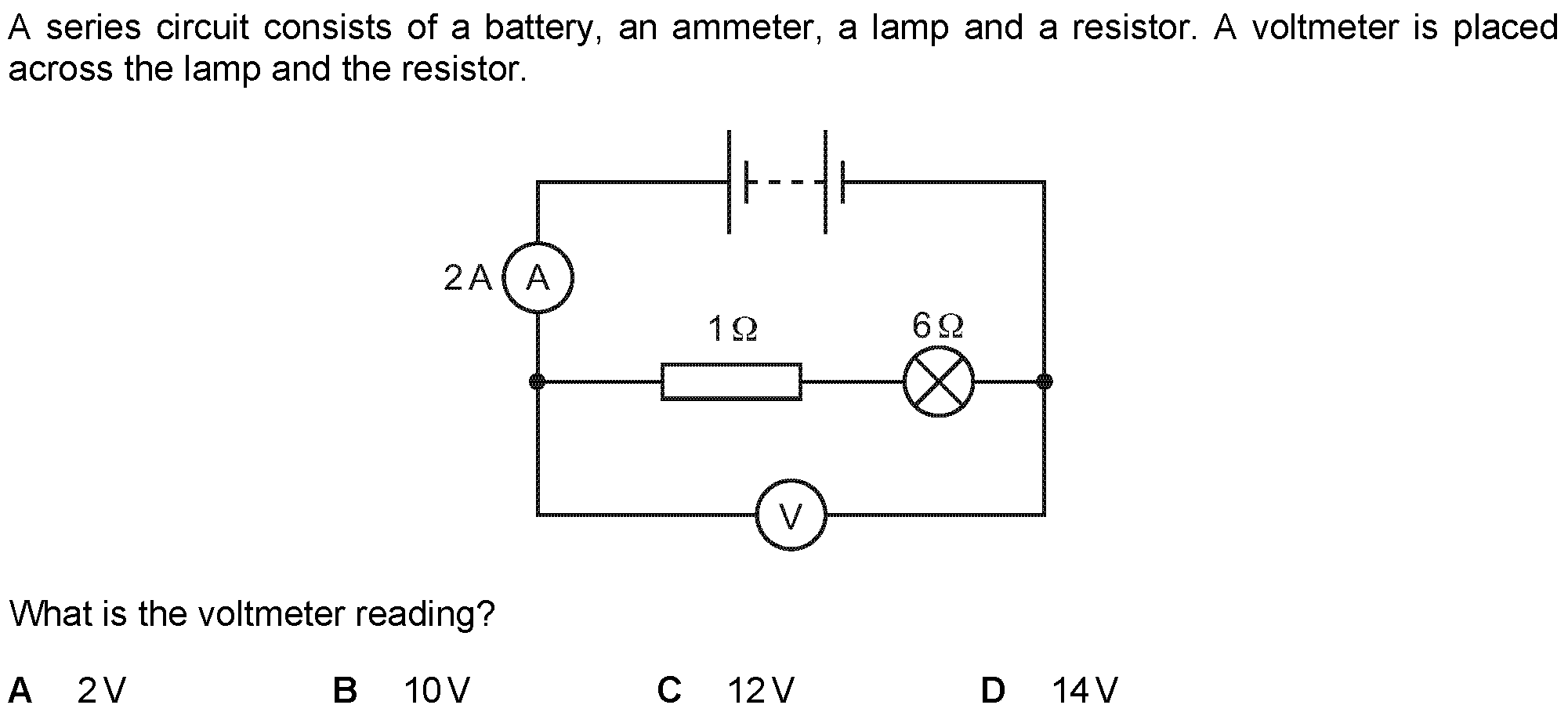
A series circuit consists of a battery, an ammeter, a lamp and a resistor. A voltmeter is placed
across the lamp and the resistor.
What is the voltmeter reading?
A 2V B 10V C 12V D 14V
across the lamp and the resistor.
What is the voltmeter reading?
A 2V B 10V C 12V D 14V
Options:
A
B
C
D
Correct Key: D
A
B
C
D
Correct Key: D
Question 2
Paper Ref: 5129/12_Summer_2022_Q36
Paper Ref: 5129/12_Summer_2022_Q36
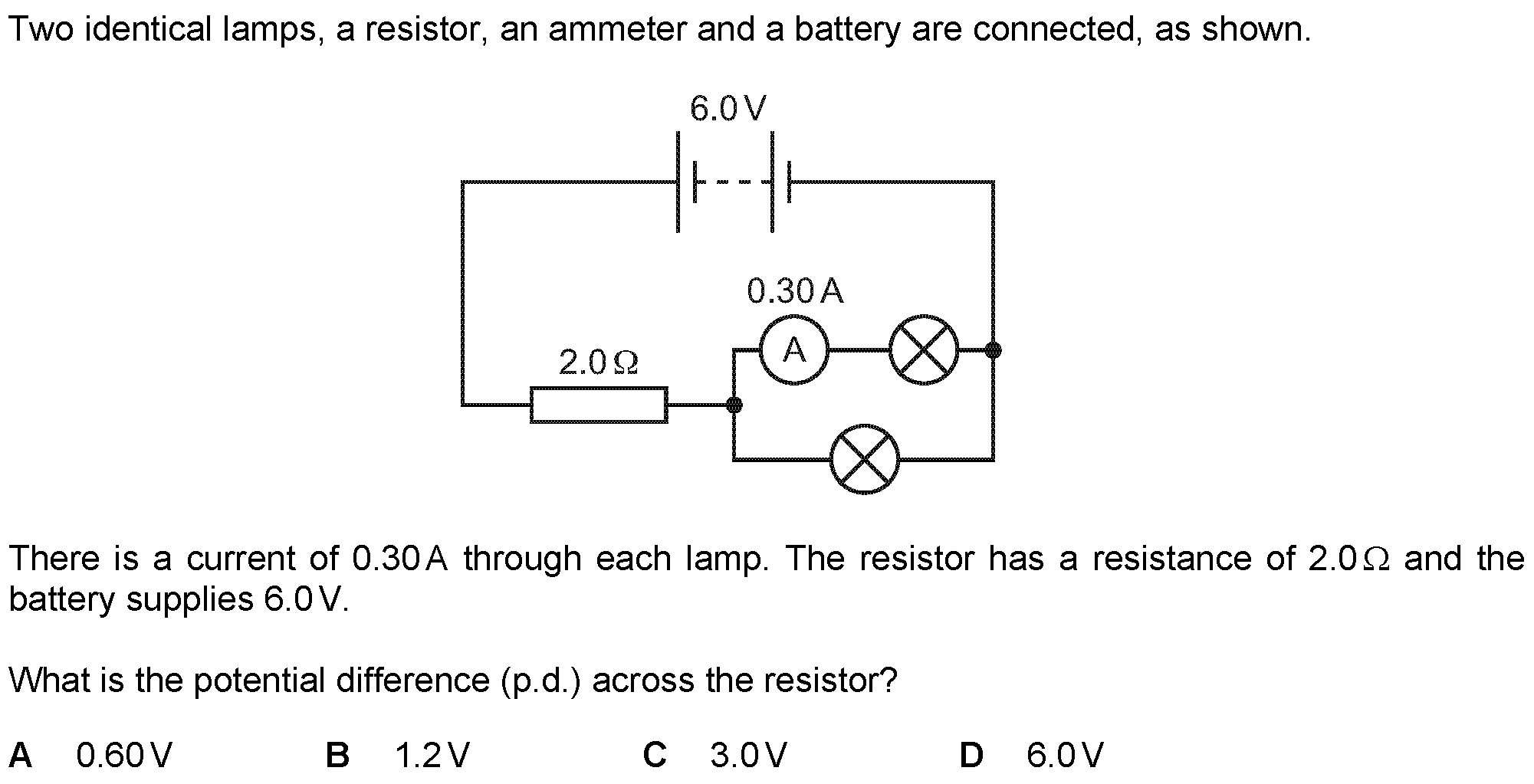
Two identical lamps, a resistor, an ammeter and a battery are connected, as shown.
6.0V
There is a current of 0.30A through each lamp. The resistor has a resistance of 2.00 and the
battery supplies 6.0V.
What is the potential difference (p.d.) across the resistor?
A 0.60V B 1.2V C 3.0V D 60V
6.0V
There is a current of 0.30A through each lamp. The resistor has a resistance of 2.00 and the
battery supplies 6.0V.
What is the potential difference (p.d.) across the resistor?
A 0.60V B 1.2V C 3.0V D 60V
Options:
A
B
C
D
Correct Key: B
A
B
C
D
Correct Key: B
Question 3
Paper Ref: 5129/12_Summer_2021_Q37
Paper Ref: 5129/12_Summer_2021_Q37
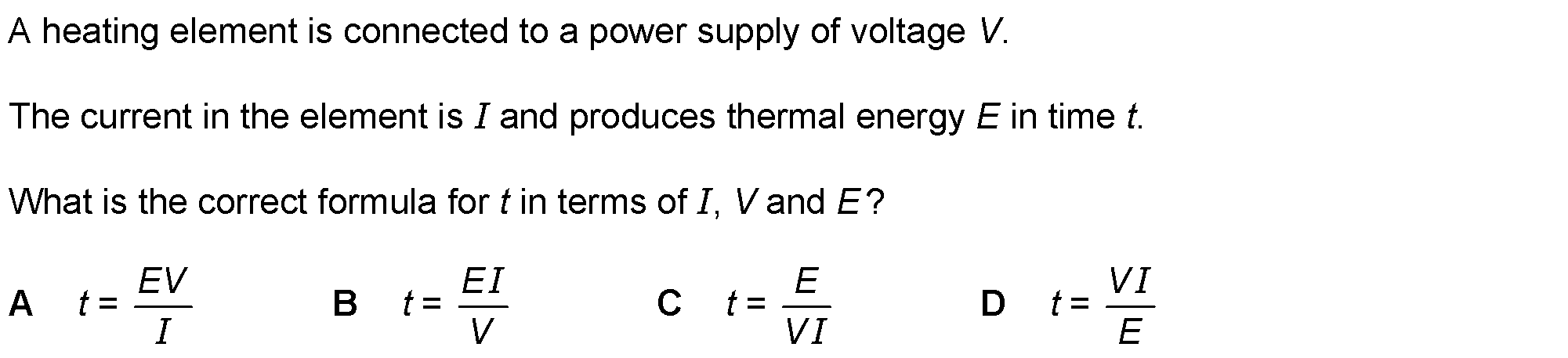
A heating element is connected to a power supply of voltage V.
The current in the element is J and produces thermal energy E in time ¢.
What is the correct formula for fin terms of J, Vand E?
I V VI E
The current in the element is J and produces thermal energy E in time ¢.
What is the correct formula for fin terms of J, Vand E?
I V VI E
Options:
A
B
C
D
Correct Key: C
A
B
C
D
Correct Key: C
Question 4
Paper Ref: 5129/12_Winter_2024_Q35
Paper Ref: 5129/12_Winter_2024_Q35
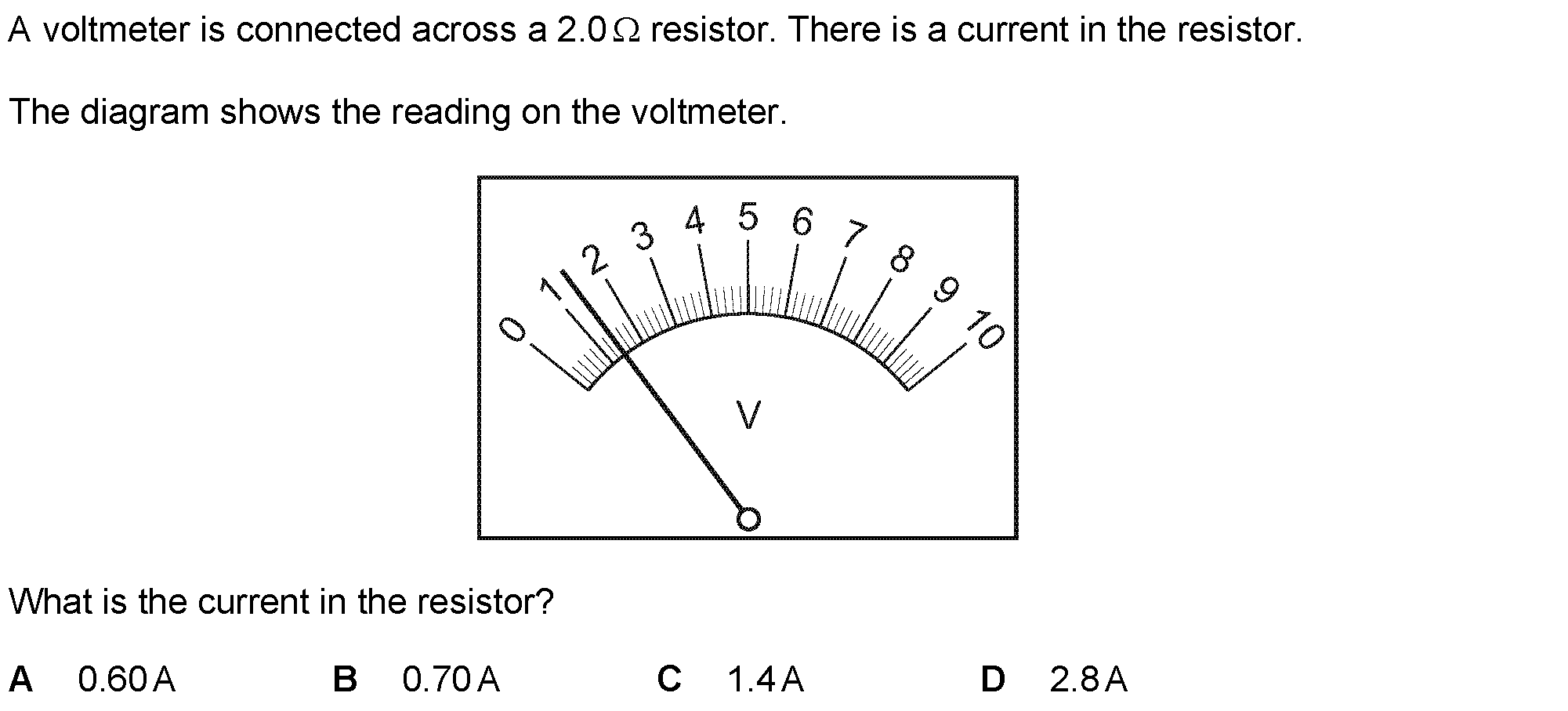
A voltmeter is connected across a 2.0Q resistor. There is a current in the resistor.
The diagram shows the reading on the voltmeter.
What is the current in the resistor?
A 060A B 0.70A C 1.4A D 28A
The diagram shows the reading on the voltmeter.
What is the current in the resistor?
A 060A B 0.70A C 1.4A D 28A
Options:
A
B
C
D
Correct Key: B
A
B
C
D
Correct Key: B
Question 5
Paper Ref: 5129/12_Winter_2025_Q40
Paper Ref: 5129/12_Winter_2025_Q40
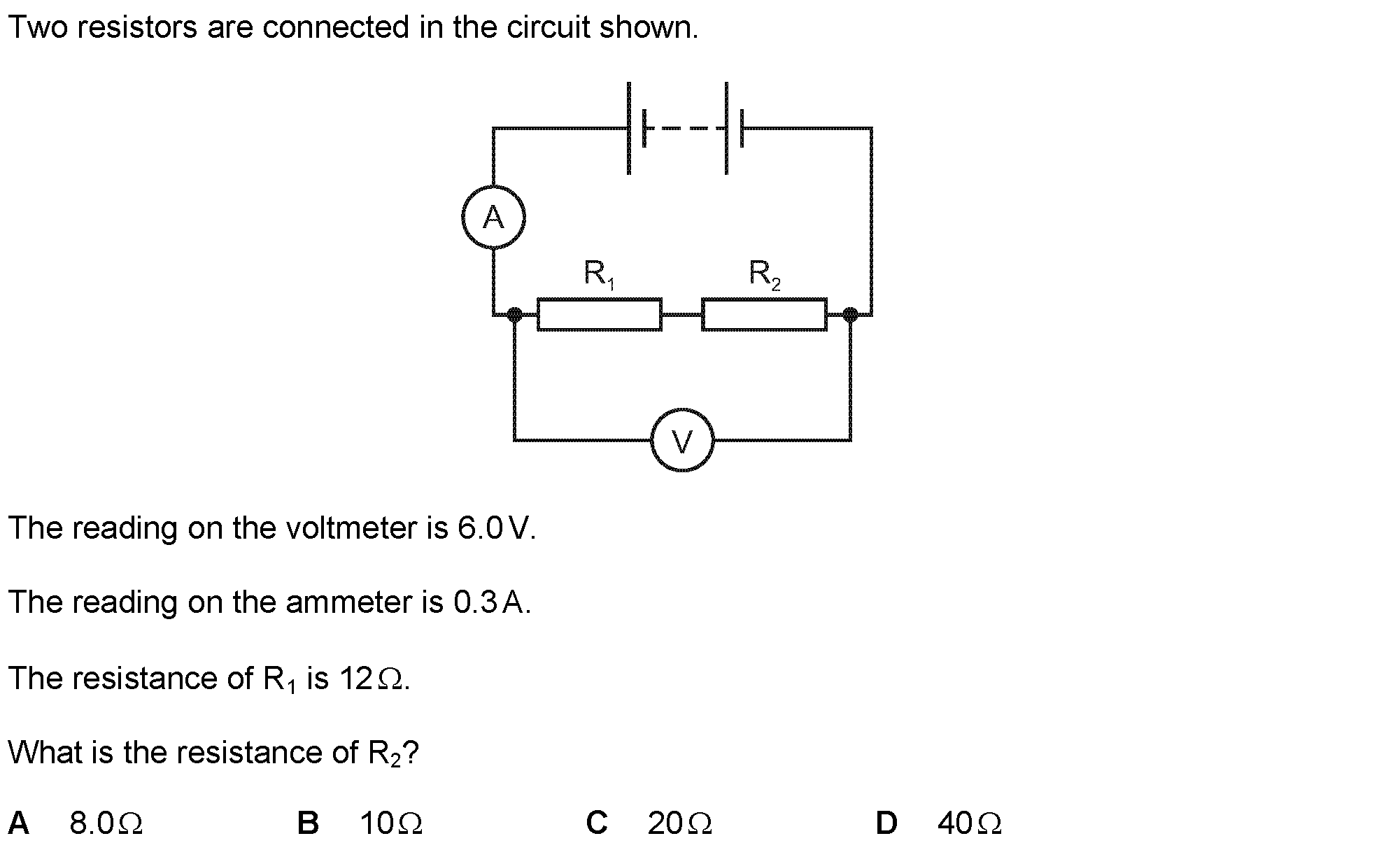
Two resistors are connected in the circuit shown.
The reading on the voltmeter is 6.0 V.
The reading on the ammeter is 0.3A.
The resistance of R, is 12.
What is the resistance of R2?
A 80Q B 100 C 202 D 400
The reading on the voltmeter is 6.0 V.
The reading on the ammeter is 0.3A.
The resistance of R, is 12.
What is the resistance of R2?
A 80Q B 100 C 202 D 400
Options:
A
B
C
D
Correct Key: A
A
B
C
D
Correct Key: A
Question 6
Paper Ref: 5129/11_Winter_2020_Q36
Paper Ref: 5129/11_Winter_2020_Q36
A 6.0V electrical heater is switched on and transfers 360 J of electrical energy to thermal energy
in a time of 2.0 minutes.
What was the current in the heater?
A 0.033A B O5A C 2.0A D 30A
in a time of 2.0 minutes.
What was the current in the heater?
A 0.033A B O5A C 2.0A D 30A
Options:
A
B
C
D
Correct Key: B
A
B
C
D
Correct Key: B
Question 7
Paper Ref: 5129/11_Summer_2025_Q35
Paper Ref: 5129/11_Summer_2025_Q35
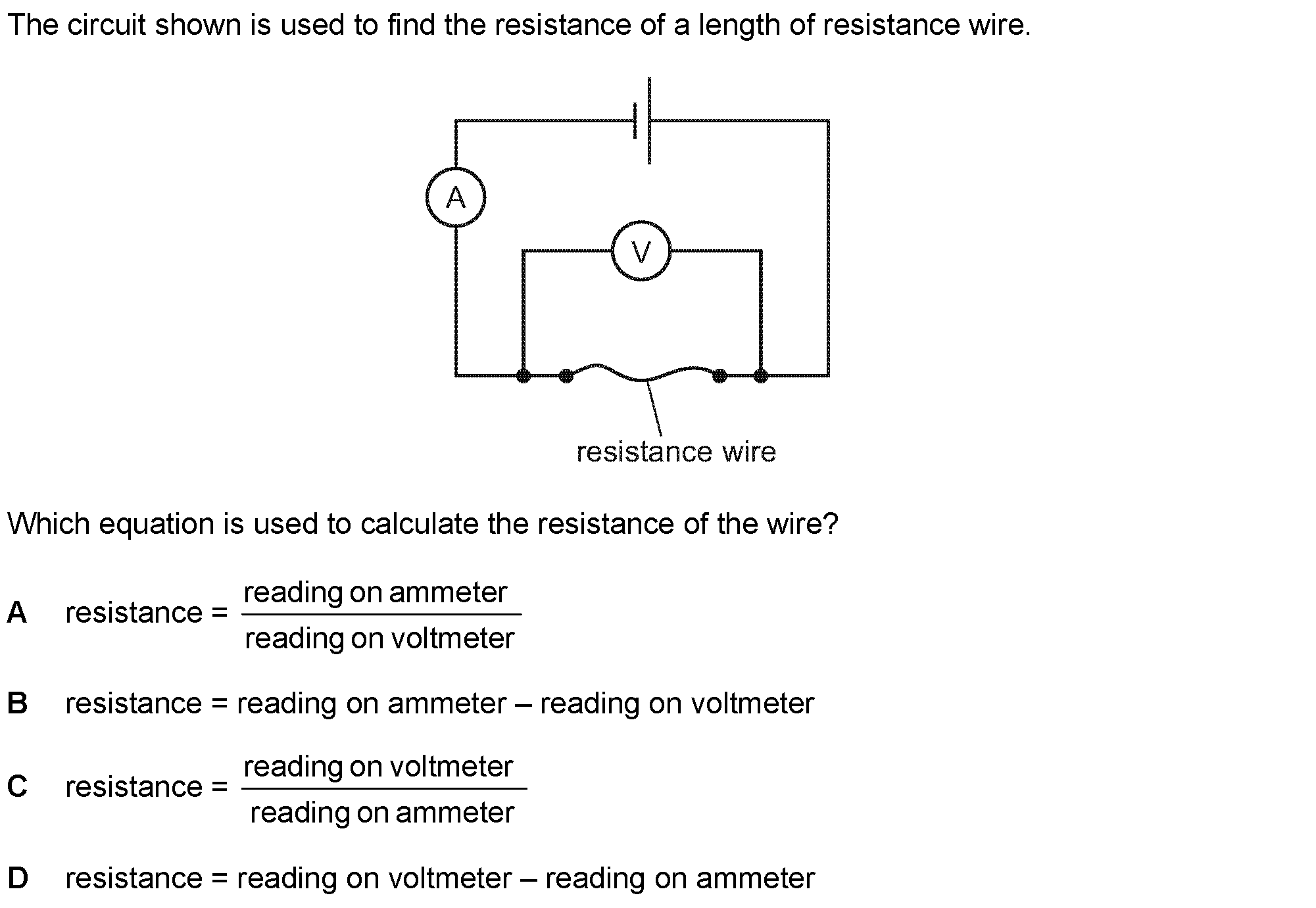
The circuit shown is used to find the resistance of a length of resistance wire.
resistance wire
Which equation is used to calculate the resistance of the wire?
. reading on ammeter
A_ resistance = ——_—H—____
reading on voltmeter
B resistance = reading on ammeter — reading on voltmeter
. reading on voltmeter
C_ resistance = ————~—————_——_-
reading on ammeter
D_ resistance = reading on voltmeter — reading on ammeter
Options:
A
B
C
D
Correct Key: C
A
B
C
D
Correct Key: C
Question 8
Paper Ref: 5129/11_Summer_2023_Q37
Paper Ref: 5129/11_Summer_2023_Q37
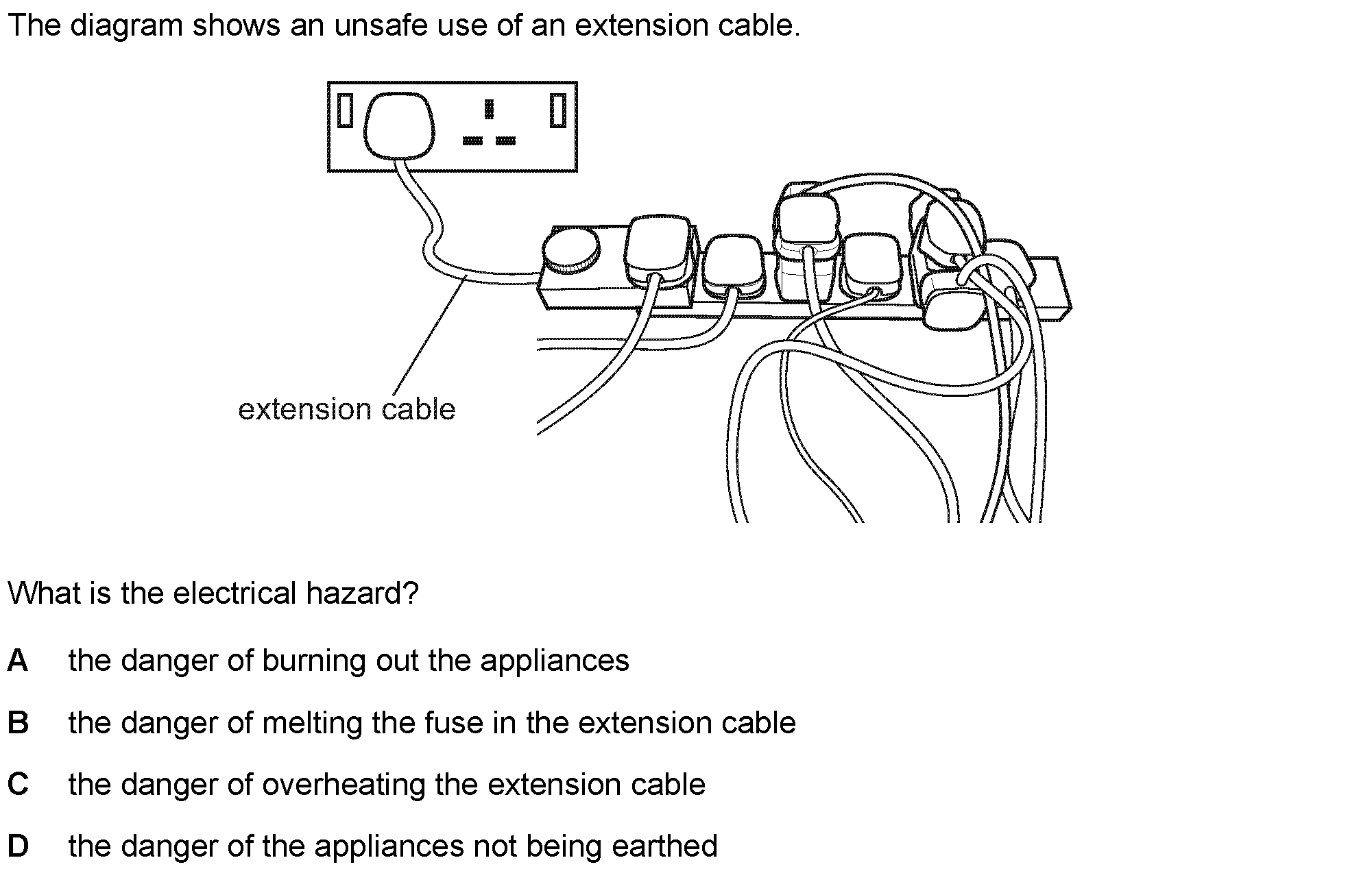
The diagram shows an unsafe use of an extension cable.
eae on
5 fae
extension cable
What is the electrical hazard?
>
the danger of burning out the appliances
B_ the danger of melting the fuse in the extension cable
C the danger of overheating the extension cable
D
the danger of the appliances not being earthed
eae on
5 fae
extension cable
What is the electrical hazard?
>
the danger of burning out the appliances
B_ the danger of melting the fuse in the extension cable
C the danger of overheating the extension cable
D
the danger of the appliances not being earthed
Options:
A
B
C
D
Correct Key: C
A
B
C
D
Correct Key: C
Question 9
Paper Ref: 5129/12_Summer_2025_Q39
Paper Ref: 5129/12_Summer_2025_Q39
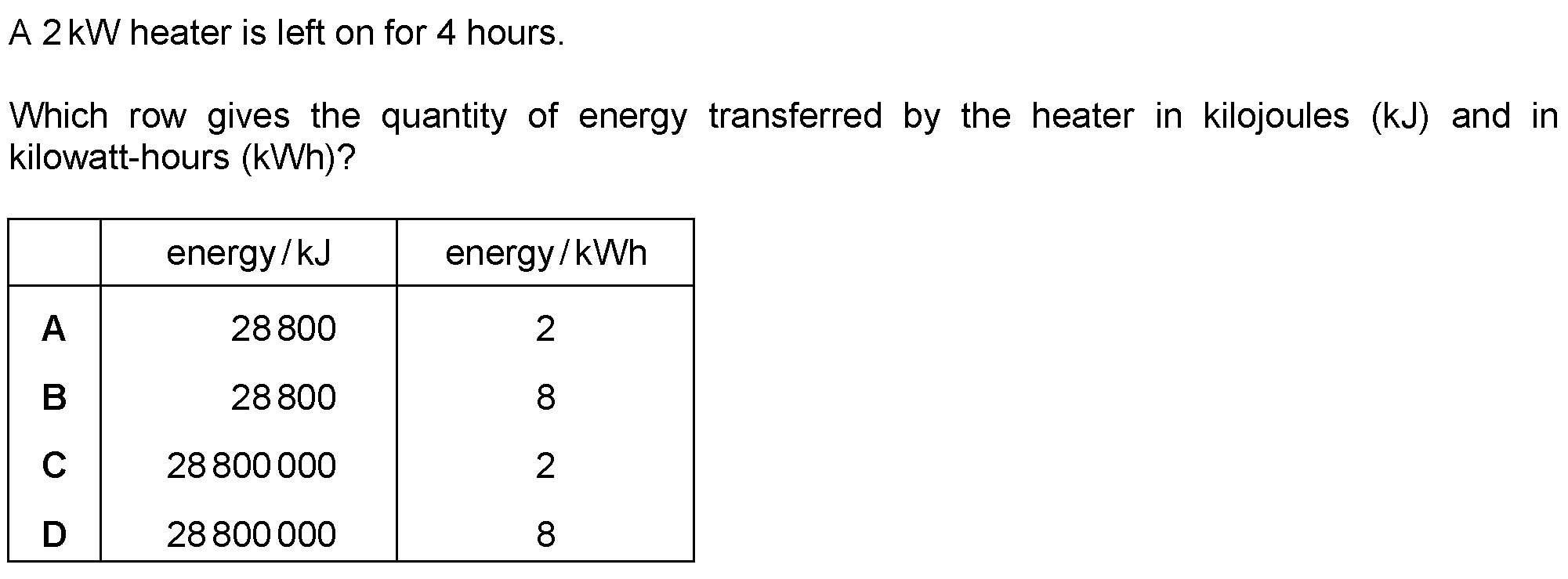
A 2kW heater is left on for 4 hours.
Which row gives the quantity of energy transferred by the heater in kilojoules (kJ) and in
kilowatt-hours (kWh)?
— energy/kJ energy /kWh
28 800
28 800
28 800 000
28 800 000
Which row gives the quantity of energy transferred by the heater in kilojoules (kJ) and in
kilowatt-hours (kWh)?
— energy/kJ energy /kWh
28 800
28 800
28 800 000
28 800 000
Options:
A
B
C
D
Correct Key: B
A
B
C
D
Correct Key: B
Question 10
Paper Ref: 5129/11_Winter_2024_Q37
Paper Ref: 5129/11_Winter_2024_Q37
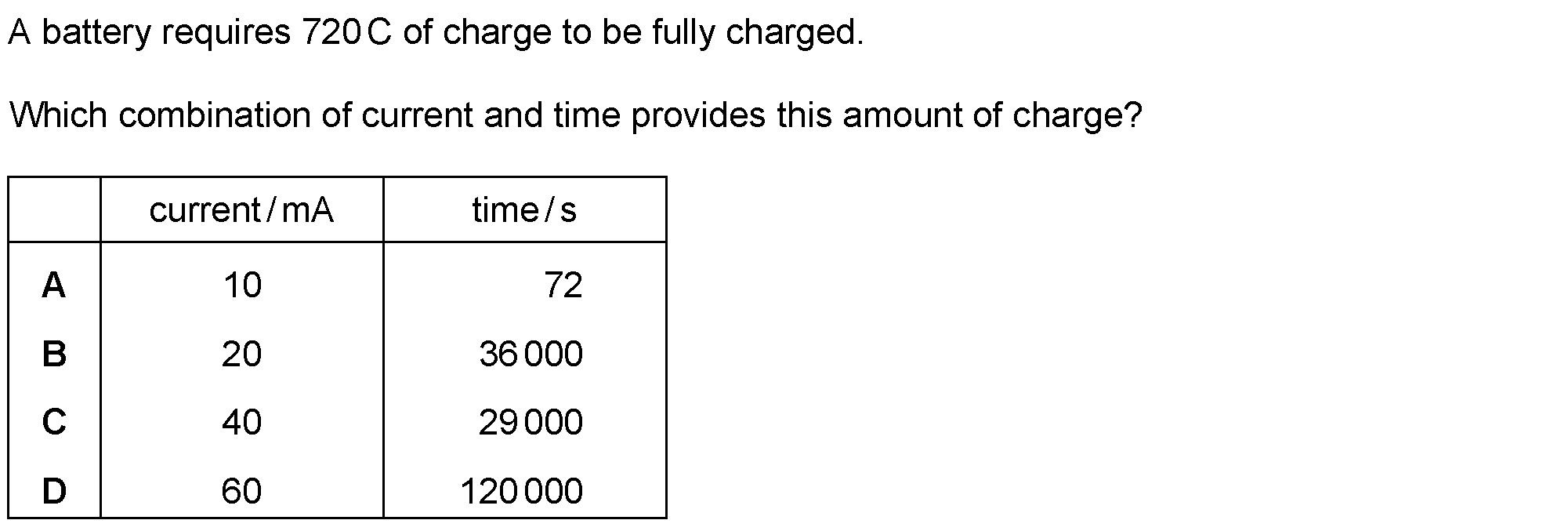
A battery requires 720C of charge to be fully charged.
Which combination of current and time provides this amount of charge?
[ evrentima [tele
A 10 72
36 000
29000
120000
Which combination of current and time provides this amount of charge?
[ evrentima [tele
A 10 72
36 000
29000
120000
Options:
A
B
C
D
Correct Key: B
A
B
C
D
Correct Key: B
Question 11
Paper Ref: 5129/11_Summer_2024_Q36
Paper Ref: 5129/11_Summer_2024_Q36
A charge of 20C passes through a resistor in a time of 50s.
What is the current in the resistor?
A 04A B 04V C 1000A D 1000V
What is the current in the resistor?
A 04A B 04V C 1000A D 1000V
Options:
A
B
C
D
Correct Key: A
A
B
C
D
Correct Key: A
Question 12
Paper Ref: 5129/11_Summer_2023_Q35
Paper Ref: 5129/11_Summer_2023_Q35
There is a current of 2.0A in a lamp when it has 12 V across it.
What is the resistance of the lamp?
A 6.0 B 100 C 14 D 240
What is the resistance of the lamp?
A 6.0 B 100 C 14 D 240
Options:
A
B
C
D
Correct Key: A
A
B
C
D
Correct Key: A
Structured Questions Mark Scheme & Answers
•1•.• • • •[•C•P• •M•a•y• •2•0•2•4• •P•2• • •·• • •Q•1•0• • •·• • •2•0•2•4• • •·• • •L•o•w•e•r• •S•e•c• •0•8•9•3•]• • • • • • •2• •0•.•5•4• •w•i•t•h• •o•r• •w•i•t•h•o•u•t• •w•o•r•k•i•n•g• •=• •2• •m•a•r•k•s• •e•q•u•a•t•i•o•n• •o•r• •e•v•i•d•e•n•c•e• •o•f• •e•q•u•a•t•i•o•n•,• •e•.•g•.• •c•o•r•r•e•c•t• •s•u•b•s•t•i•t•u•t•i•o•n• •=• •1• •m•a•r•k• •(•r•e•s•i•s•t•a•n•c•e• •=•)• •v•o•l•t•a•g•e• •÷• •c•u•r•r•e•n•t• •o•r• •2•.•7• •÷• •5•.•0• •••c•c•e•p•t• •V• •÷• ••• •o•r• •V• •÷• •I• •o•r• •V• •÷• •C• •(•r•e•s•i•s•t•a•n•c•e• •=•)• •0•.•5•4• •(•Ω•)•
•2•.• • • •[•C•P• •O•c•t•o•b•e•r• •2•0•2•5• •P•2• • •·• • •Q•1•1• • •P•a•r•t• •(•a•)• • •·• • •2•0•2•5• • •·• • •L•o•w•e•r• •S•e•c• •0•8•9•3•]• • • • • • •3• •9•6• •Ω• •w•i•t•h• •o•r• •w•i•t•h•o•u•t• •w•o•r•k•i•n•g• •=• •3• •m•a•r•k•s• •9•6• •w•i•t•h• •o•r• •w•i•t•h•o•u•t• •w•o•r•k•i•n•g• •=• •2• •m•a•r•k•s• •c•o•r•r•e•c•t• •e•q•u•a•t•i•o•n• •o•r• •e•v•i•d•e•n•c•e• •o•f• •c•o•r•r•e•c•t• •s•u•b•s•t•i•t•u•t•i•o•n• •i•n•t•o• •e•q•u•a•t•i•o•n• •=• •1• •m•a•r•k• •c•o•r•r•e•c•t• •u•n•i•t• •=• •1• •m•a•r•k• •v•o•l•t•a•g•e• •V• •r•e•s•i•s•t•a•n•c•e• •=• •••c•c•e•p•t• •R• •=• •c•u•r•r•e•n•t• •I• •2•4• •••c•c•e•p•t• •R• •=• •0•.•2•5• •(•r•e•s•i•s•t•a•n•c•e• •=•)• •9•6• •Ω• •••c•c•e•p•t• •o•h•m•s•
•3•.• • • •[•C•P• •O•c•t•o•b•e•r• •2•0•2•5• •P•2• • •·• • •Q•1•1• • •P•a•r•t• •(•b•)• • •·• • •2•0•2•5• • •·• • •L•o•w•e•r• •S•e•c• •0•8•9•3•]• • • • • • •(•c•u•r•r•e•n•t•)• •d•e•c•r•e•a•s•e•s• •1• •••c•c•e•p•t• •s•m•a•l•l•e•r• •••c•c•e•p•t• •l•e•s•s• •I•g•n•o•r•e• •w•e•a•k•e•r• •o•r• •s•l•o•w•e•r• •c•u•r•r•e•n•t•
•4•.• • • •[•C•P• •M•a•r•c•h• •2•0•2•6• •P•2• • •·• • •Q•7• • •P•a•r•t• •(•a•)• • •·• • •2•0•2•6• • •·• • •L•o•w•e•r• •S•e•c• •0•8•9•3•]• • • • • • •2• •3• •w•i•t•h• •o•r• •w•i•t•h•o•u•t• •w•o•r•k•i•n•g•s• •=• •2• •m•a•r•k•s• •s•e•r•i•e•s• •b•r•i•g•h•t•n•e•s•s• •c•u•r•r•e•n•t• •v•o•l•t•a•g•e• •r•e•s•i•s•t•a•n•c•e• •c•i•r•c•u•i•t• •o•f• •l•a•m•p• •i•n• •a•m•p•s• •i•n• •v•o•l•t•s• •i•n• •o•h•m•s• •c•o•r•r•e•c•t• •f•o•r•m•u•l•a• •o•r• •c•o•r•r•e•c•t• •s•u•b•s•t•i•t•u•t•i•o•n• •=• •1• •m•a•r•k• •X• •b•r•i•g•h•t• •3• •1•2• •(•4•)• •••c•c•e•p•t• •c•o•r•r•e•c•t• •a•n•s•w•e•r• •i•n• •a•n•s•w•e•r• •s•p•a•c•e•,• •b•u•t• •a•n•s•w•e•r• •i•n• •t•a•b•l•e• •t•a•k•e•s• •p•r•e•c•e•d•e•n•c•e• •Y• •d•i•m• •2• •6• •3• •r•e•s•i•s•t•a•n•c•e• •=• •v•o•l•t•a•g•e• •÷• •c•u•r•r•e•n•t• •o•r• •r•e•s•i•s•t•a•n•c•e• •=• •6•/•2•
•5•.• • • •[•P•T• •S•9• •2•0•2•6• •P•2• • •·• • •Q•5• • •P•a•r•t• •(•c•)• • •·• • •2•0•2•6• • •·• • •L•o•w•e•r• •S•e•c• •0•8•9•3•]• • • • • • •3• •4•0• •Ω• •w•i•t•h• •o•r• •w•i•t•h•o•u•t• •w•o•r•k•i•n•g• •=• •3• •m•a•r•k•s• •4•0• •w•i•t•h• •o•r• •w•i•t•h•o•u•t• •w•o•r•k•i•n•g• •=• •2• •m•a•r•k•s• •c•o•r•r•e•c•t• •e•q•u•a•t•i•o•n• •o•r• •s•u•b•s•t•i•t•u•t•i•o•n• •=• •1• •m•a•r•k• •c•o•r•r•e•c•t• •u•n•i•t• •=• •1• •m•a•r•k• •(•r•e•s•i•s•t•a•n•c•e• •=•)• •v•o•l•t•a•g•e• •÷• •c•u•r•r•e•n•t• •o•r• •(•r•e•s•i•s•t•a•n•c•e• •=•)• •1•2• •÷• •0•.•3• •••c•c•e•p•t• •(•r•e•s•i•s•t•a•n•c•e• •=•)• •V• •÷• •I• •4•0• •Ω•
•6•.• • • •[•S•P• •S•9• •P•2• • •·• • •Q•1•0• • •P•a•r•t• •(•a•)• • •·• • •S•p•e•c•i•m•e•n• • •·• • •L•o•w•e•r• •S•e•c• •0•8•9•3•]• • • • • • •r•e•s•i•s•t•a•n•c•e• •=• •3• •2• •e•a•c•h• •c•o•r•r•e•c•t• •a•n•s•w•e•r• •=• •1• •m•a•r•k• •o•h•m•s• •/• •Ω•
•7•.• • • •[•C•P• •O•c•t•o•b•e•r• •2•0•2•4• •P•1• • •·• • •Q•7• • •P•a•r•t• •(•c•)• • •·• • •2•0•2•4• • •·• • •L•o•w•e•r• •S•e•c• •0•8•9•3•]• • • • • • •2• •e•a•c•h• •c•o•r•r•e•c•t• •a•n•s•w•e•r• •=• •1• •m•a•r•k• •c•o•r•r•e•c•t• •l•a•b•e•l•s• •a•n•d• •s•c•a•l•e• •f•o•r• •x•-•a•x•i•s• •••c•c•e•p•t• •l•e•n•g•t•h• •i•n• •c•m• •a•n•d• •s•c•a•l•e• •o•f• •1•c•m• •o•n• •g•r•a•p•h• •f•o•r• •5• •c•m• •l•e•n•g•t•h• •a•l•l• •p•o•i•n•t•s• •p•l•o•t•t•e•d• •c•o•r•r•e•c•t•l•y• •••c•c•e•p•t• •t•o•l•e•r•a•n•c•e• •o•f• •±• •h•a•l•f• •a• •s•m•a•l•l• •s•q•u•a•r•e• •••c•c•e•p•t• •o•n•e• •e•r•r•o•r• •i•n• •p•l•o•t•t•i•n•g• •I•g•n•o•r•e• •p•l•o•t• •f•o•r• •2•0• •c•m• •r•e•s•i•s•t•a•n•c•e• •I•g•n•o•r•e• •a•n•y• •l•i•n•e• •o•f• •b•e•s•t• •f•i•t•
•8•.• • • •[•P•R•I• •2•0•0•7••• •P•1• • •·• • •Q•1•1• • •P•a•r•t• •(•b•)• • •·• • •2•0•0•7• • •·• • •P•r•i•m•a•r•y• •0•8•4•6•]• • • • • • •(•n•o• •p•u•b•l•i•s•h•e•d• •m•a•r•k• •s•c•h•e•m•e• •f•o•r• •t•h•i•s• •p•a•p•e•r•)•
Last updated:
\n