4.3Electricity and Magnetism
Intruders in an ecosystem — Question Bank (Cambridge) — Cambridge IGCSE Physics 0625 Revision Notes & Topical Questions
15 min read Lesson 33 of 65 Unit quiz
Cambridge Past Paper Bank
4.3 Intruders in an ecosystem
8 Multiple-Choice Questions with Official Mark Schemes
Question 1
0610/21_Summer_2019_Q37
Question 2
0610/11_Summer_2026_Q39
Question 3
0610/12_Spring_2024_Q37
Question 4
0610/21_Summer_2025_Q38
Question 5
0610/23_Winter_2023_Q38
Question 6
0610/13_Summer_2021_Q40
Question 7
0610/21_Winter_2017_Q36
Question 8
0610/22_Winter_2021_Q39
Cambridge Lower Secondary Stage 8
4.3 Intruders in an ecosystem – Complete Question Bank & Mark Scheme
Total Questions8 Questions with Verified Solutions & Past Paper Mark Schemes
Multiple Choice Questions (Exam Practice)
Question 1
Paper Ref: 0610/21_Summer_2019_Q37
Paper Ref: 0610/21_Summer_2019_Q37
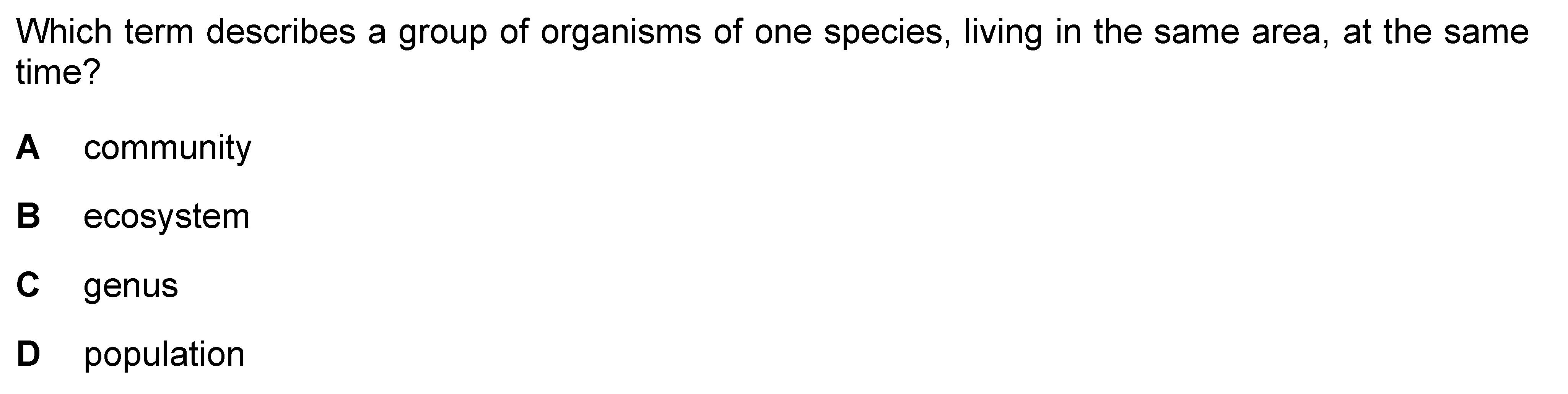
Which term describes a group of organisms of one species, living in the same area, at the same
time?
A community
B ecosystem
C genus
D
population
time?
A community
B ecosystem
C genus
D
population
Options:
A
B
C
D
Correct Key: D
A
B
C
D
Correct Key: D
Question 2
Paper Ref: 0610/11_Summer_2026_Q39
Paper Ref: 0610/11_Summer_2026_Q39
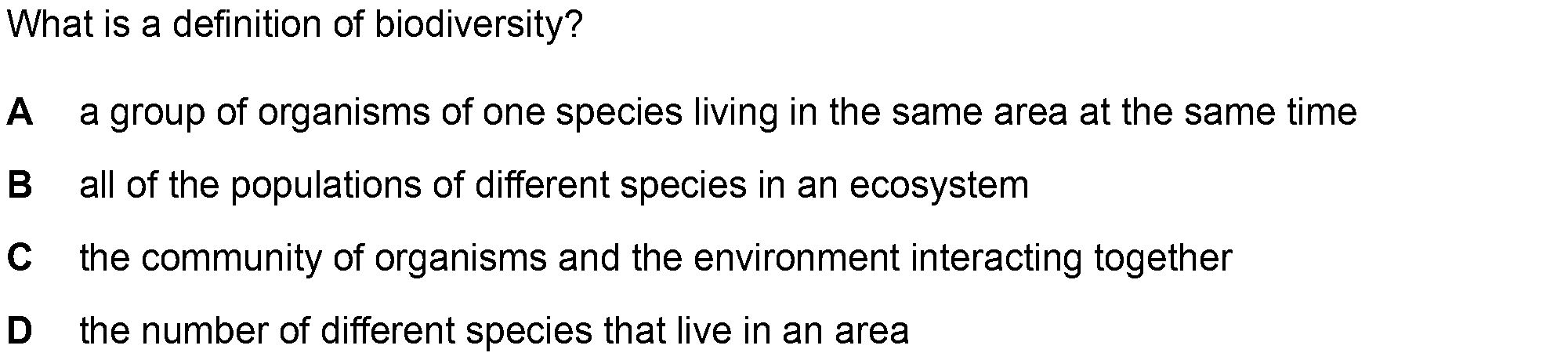
What is a definition of biodiversity?
A agroup of organisms of one species living in the same area at the same time
B all of the populations of different species in an ecosystem
C the community of organisms and the environment interacting together
D the number of different species that live in an area
A agroup of organisms of one species living in the same area at the same time
B all of the populations of different species in an ecosystem
C the community of organisms and the environment interacting together
D the number of different species that live in an area
Options:
A
B
C
D
Correct Key: D
A
B
C
D
Correct Key: D
Question 3
Paper Ref: 0610/12_Spring_2024_Q37
Paper Ref: 0610/12_Spring_2024_Q37
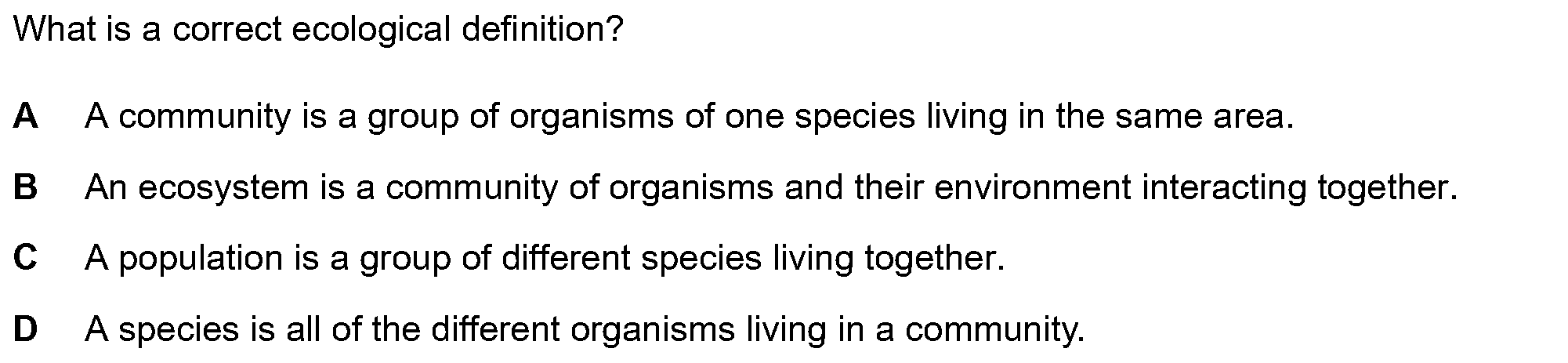
What is a correct ecological definition?
A Acommunity is a group of organisms of one species living in the same area.
An ecosystem is a community of organisms and their environment interacting together.
A population is a group of different species living together.
oO Oo WW
A species is all of the different organisms living in a community.
A Acommunity is a group of organisms of one species living in the same area.
An ecosystem is a community of organisms and their environment interacting together.
A population is a group of different species living together.
oO Oo WW
A species is all of the different organisms living in a community.
Options:
A
B
C
D
Correct Key: B
A
B
C
D
Correct Key: B
Question 4
Paper Ref: 0610/21_Summer_2025_Q38
Paper Ref: 0610/21_Summer_2025_Q38
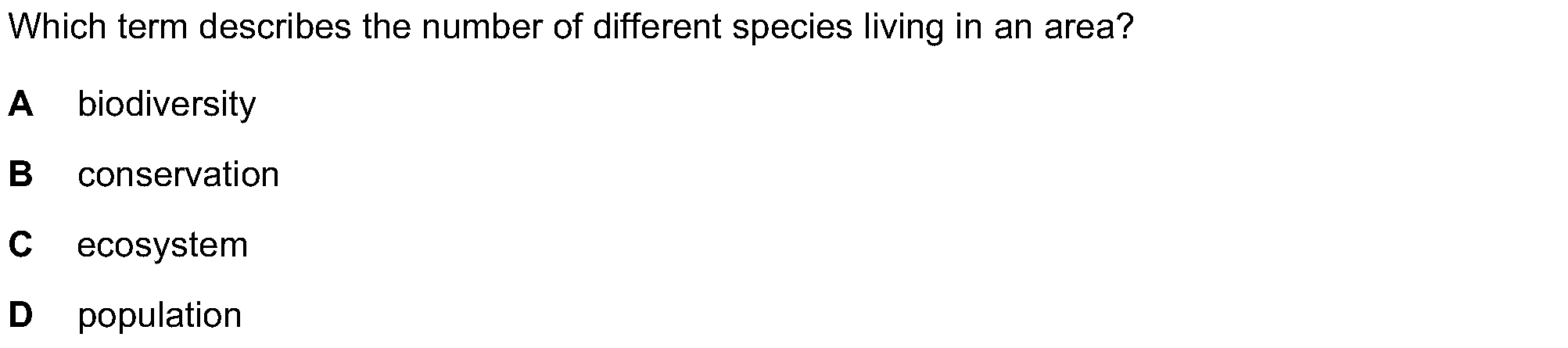
Which term describes the number of different species living in an area?
A _ biodiversity
B-conservation
C ecosystem
D
population
A _ biodiversity
B-conservation
C ecosystem
D
population
Options:
A
B
C
D
Correct Key: A
A
B
C
D
Correct Key: A
Question 5
Paper Ref: 0610/23_Winter_2023_Q38
Paper Ref: 0610/23_Winter_2023_Q38
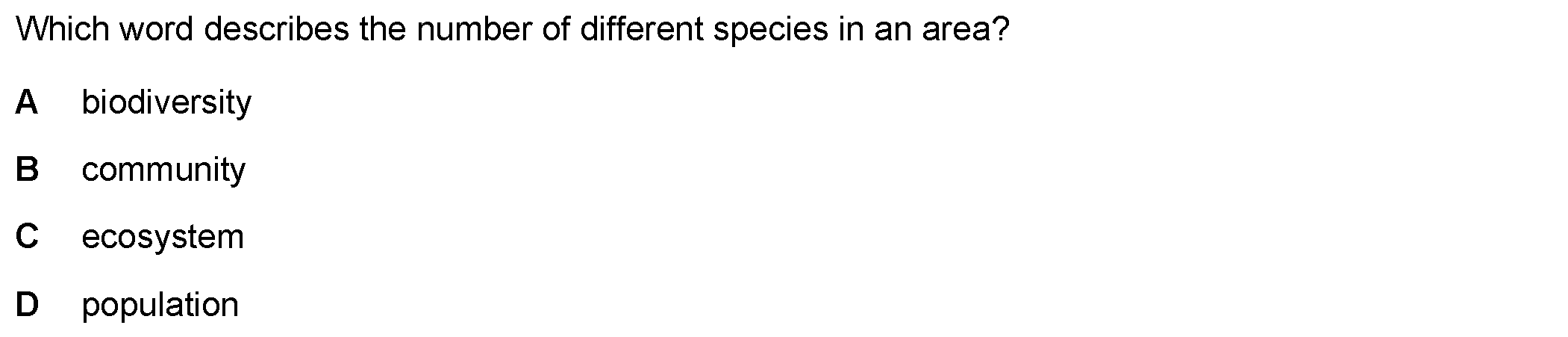
Which word describes the number of different species in an area?
0 OO WW
biodiversity
community
ecosystem
population
0 OO WW
biodiversity
community
ecosystem
population
Options:
A
B
C
D
Correct Key: A
A
B
C
D
Correct Key: A
Question 6
Paper Ref: 0610/13_Summer_2021_Q40
Paper Ref: 0610/13_Summer_2021_Q40
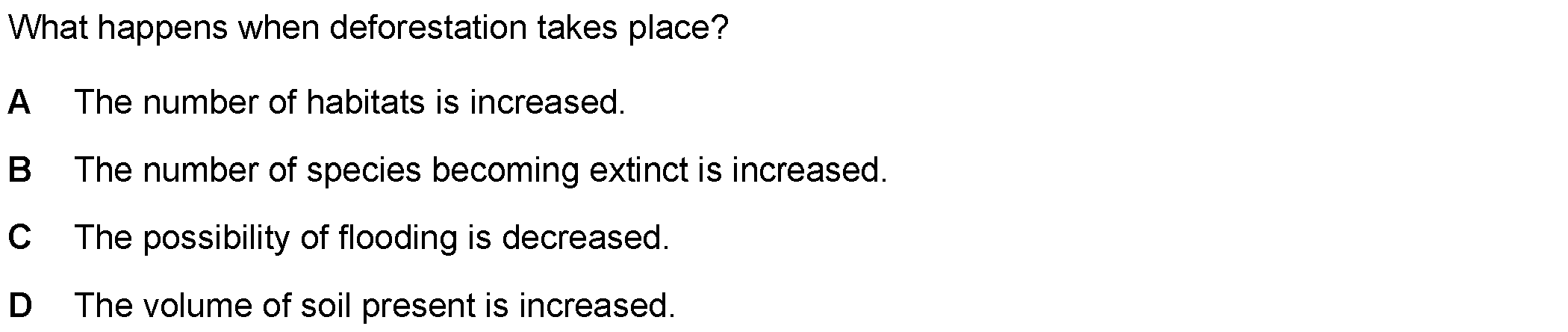
What happens when deforestation takes place?
A
B
Cc
D
The number of habitats is increased.
The number of species becoming extinct is increased.
The possibility of flooding is decreased.
The volume of soil present is increased.
A
B
Cc
D
The number of habitats is increased.
The number of species becoming extinct is increased.
The possibility of flooding is decreased.
The volume of soil present is increased.
Options:
A
B
C
D
Correct Key: B
A
B
C
D
Correct Key: B
Question 7
Paper Ref: 0610/21_Winter_2017_Q36
Paper Ref: 0610/21_Winter_2017_Q36
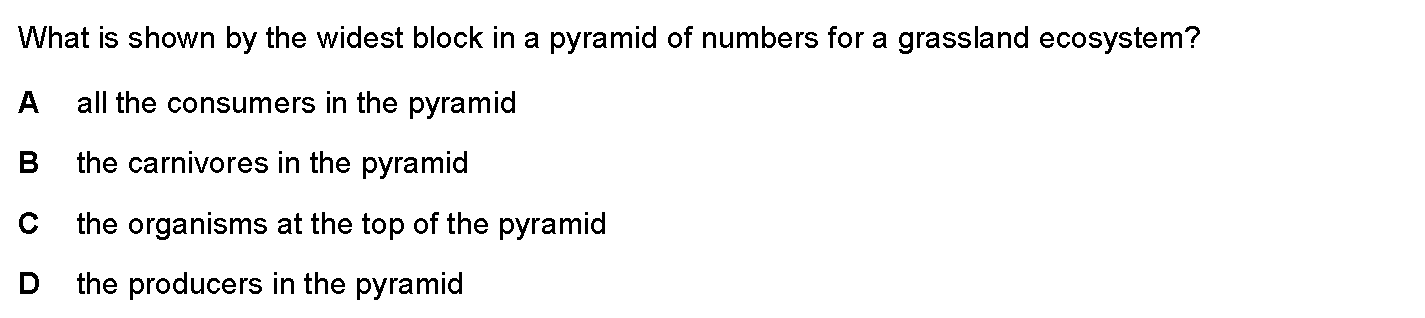
What is shown by the widest block in a pyramid of numbers for a grassland ecosystem?
A all the consumers in the pyramid
B the carnivores in the pyramid
C_ the organisms at the top of the pyramid
D
the producers in the pyramid
A all the consumers in the pyramid
B the carnivores in the pyramid
C_ the organisms at the top of the pyramid
D
the producers in the pyramid
Options:
A
B
C
D
Correct Key: D
A
B
C
D
Correct Key: D
Question 8
Paper Ref: 0610/22_Winter_2021_Q39
Paper Ref: 0610/22_Winter_2021_Q39
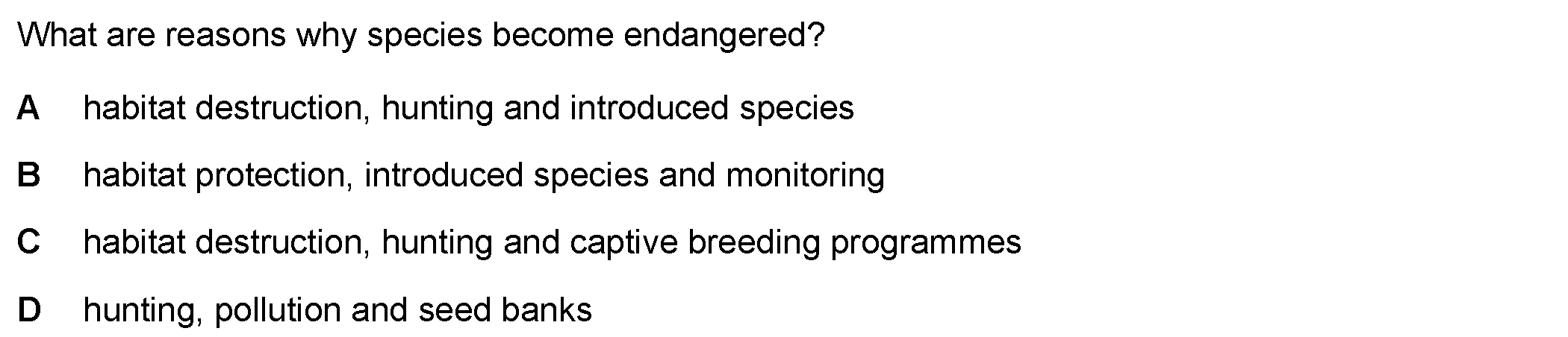
What are reasons why species become endangered?
A
B
Cc
D
habitat destruction, hunting and introduced species
habitat protection, introduced species and monitoring
habitat destruction, hunting and captive breeding programmes
hunting, pollution and seed banks
A
B
Cc
D
habitat destruction, hunting and introduced species
habitat protection, introduced species and monitoring
habitat destruction, hunting and captive breeding programmes
hunting, pollution and seed banks
Options:
A
B
C
D
Correct Key: A
A
B
C
D
Correct Key: A
Structured Questions Mark Scheme & Answers
•1•.• • • •[•S•P• •S•8• •P•1• • •·• • •Q•7• • •P•a•r•t• •(•a•)• • •·• • •S•p•e•c•i•m•e•n• • •·• • •L•o•w•e•r• •S•e•c• •0•8•9•3•]• • • • • • •a•n•y• •t•w•o• •f•r•o•m• •2• •y•e•s• •o•r• •n•o• •o•n•l•y• •=• •0• •m•a•r•k•s• •y•e•s• •(•e•v•i•d•e•n•c•e• •s•h•o•w•s• •t•h•a•t•)• •i•g•u•a•n•o•d•o•n•s• •l•i•v•e•d• •i•n• •l•u•s•h• •••c•c•e•p•t• •m•a•y•b•e• •w•i•t•h• •o•n•e• •r•e•a•s•o•n• •f•o•r• •y•e•s• •a•n•d• •o•n•e• •v•e•g•e•t•a•t•i•o•n• •w•h•i•c•h• •g•r•e•w• •i•n• •w•a•r•m• •c•o•n•d•i•t•i•o•n•s• •r•e•a•s•o•n• •f•o•r• •n•o• •y•e•s• •(•e•v•i•d•e•n•c•e• •s•h•o•w•s• •t•h•a•t•)• •m•a•m•m•o•t•h•s• •h•a•d• •t•h•i•c•k• •w•o•o•l•l•y• •c•o•v•e•r•i•n•g• •s•h•o•w•i•n•g• •a•d•a•p•t•a•t•i•o•n•s• •t•o• •c•o•l•d• •c•o•n•d•i•t•i•o•n•s• •n•o• •b•e•c•a•u•s•e• •(•i•d•e•a• •o•f•)• •o•n•e• •i•s• •i•n• •w•i•n•t•e•r• •a•n•d• •o•n•e• •i•s• •i•n• •s•u•m•m•e•r• •n•o• •b•e•c•a•u•s•e• •n•o• •e•v•i•d•e•n•c•e• •f•o•r• •w•h•a•t• •h•a•p•p•e•n•s• •i•n• •b•e•t•w•e•e•n•
•2•.• • • •[•S•P• •S•8• •P•1• • •·• • •Q•7• • •P•a•r•t• •(•b•)• • •·• • •S•p•e•c•i•m•e•n• • •·• • •L•o•w•e•r• •S•e•c• •0•8•9•3•]• • • • • • •a•n•y• •o•n•e• •f•r•o•m• •1• •y•e•s• •o•r• •n•o• •o•n•l•y• •=• •0• •m•a•r•k•s• •y•e•s• •b•e•c•a•u•s•e• •(•e•v•i•d•e•n•c•e• •s•h•o•w•s• •t•h•a•t•)• •a•l•m•o•s•t• •1•2•0• •m•i•l•l•i•o•n• •y•e•a•r•s• •b•e•t•w•e•e•n• •h•o•t• •a•n•d• •c•o•l•d• •c•o•n•d•i•t•i•o•n•s• •y•e•s• •b•e•c•a•u•s•e• •(•e•v•i•d•e•n•c•e• •s•h•o•w•s• •t•h•a•t•)• •a•l•m•o•s•t• •1•2•0• •m•i•l•l•i•o•n• •y•e•a•r•s• •b•e•t•w•e•e•n• •i•g•u•a•n•o•d•o•n• •a•n•d• •m•a•m•m•o•t•h• •c•o•n•d•i•t•i•o•n•s• •y•e•s• •b•e•c•a•u•s•e• •E•u•r•o•p•e• •i•s• •n•o•w• •w•a•r•m•e•r• •t•h•a•n• •i•t• •w•a•s• •4•0•0•0• •y•e•a•r•s• •a•g•o• •w•h•e•n• •m•a•m•m•o•t•h•s• •e•x•i•s•t•e•d• •n•o• •b•e•c•a•u•s•e• •y•o•u• •c•a•n•n•o•t• •t•e•l•l• •h•o•w• •l•o•n•g• •e•i•t•h•e•r• •i•g•u•a•n•o•d•o•n• •o•r• •m•a•m•m•o•t•h• •l•i•v•e•d• •o•n• •E•a•r•t•h• •n•o• •b•e•c•a•u•s•e• •t•h•e•r•e• •i•s• •n•o• •e•v•i•d•e•n•c•e• •f•o•r• •t•i•m•e• •b•e•t•w•e•e•n• •4•0•0•0• •y•e•a•r•s• •a•n•d• •1•2•0• •m•i•l•l•i•o•n• •y•e•a•r•s• •a•g•o• •©• •U•C•L•E•S• •2•0•2•0• •P•a•g•e• •8• •o•f• •1•2• •S•8•/•0•1• •S•c•i•e•n•c•e• •S•t•a•g•e• •8• •P•a•p•e•r• •1• •M•a•r•k• •S•c•h•e•m•e• •F•r•o•m• •2•0•2•0•
•3•.• • • •[•C•P• •M•a•y• •2•0•2•4• •P•2• • •·• • •Q•9• • •P•a•r•t• •(•a•)• • •·• • •2•0•2•4• • •·• • •L•o•w•e•r• •S•e•c• •0•8•9•3•]• • • • • • •1• •m•o•r•e• •t•h•a•n• •o•n•e• •b•o•x• •t•i•c•k•e•d• •=• •0• •e•n•v•i•r•o•n•m•e•n•t•a•l• •c•h•a•n•g•e• •••c•c•e•p•t• •a•n•y• •i•n•d•i•c•a•t•i•o•n• •o•f• •t•h•e• •c•o•r•r•e•c•t• •a•n•s•w•e•r•,• •e•.•g•.• •c•i•r•c•l•i•n•g• •o•r• •u•n•d•e•r•l•i•n•i•n•g•,• •b•u•t• •t•i•c•k•i•n•g• •t•a•k•e•s• •p•r•e•c•e•d•e•n•c•e•
•4•.• • • •[•C•P• •M•a•y• •2•0•2•4• •P•2• • •·• • •Q•9• • •P•a•r•t• •(•b•)• • •·• • •2•0•2•4• • •·• • •L•o•w•e•r• •S•e•c• •0•8•9•3•]• • • • • • •m•a•m•m•a•l•s• •1• •(•i•d•e•a• •t•h•a•t•)• •c•o•r•a•l• •h•a•s• •a• •h•i•g•h•(•e•r•)• •p•e•r•c•e•n•t•a•g•e• •o•f• •l•o•w• •c•o•n•s•e•r•v•a•t•i•o•n• •1• •••c•c•e•p•t• •c•o•r•a•l• •h•a•s• •l•e•s•s• •m•e•d•i•u•m• •c•o•n•s•e•r•v•a•t•i•o•n• •(•c•o•m•p•a•r•e•d• •t•o• •b•i•r•d•s•)• •o•r• •b•i•r•d•s• •h•a•v•e• •m•o•r•e• •m•e•d•i•u•m• •c•o•n•s•e•r•v•a•t•i•o•n• •••c•c•e•p•t• •o•r•a• •••c•c•e•p•t• •d•a•t•a• •u•s•e•d• •f•r•o•m• •g•r•a•p•h•,• •e•.•g•.• •h•i•g•h• •a•n•d• •m•e•d•i•u•m• •i•s• •a•p•p•r•o•x•i•m•a•t•e•l•y• •5•5•%• •f•o•r• •b•i•r•d•s• •b•u•t• •3•5•%• •f•o•r• •c•o•r•a•l•
•5•.• • • •[•C•P• •O•c•t•o•b•e•r• •2•0•2•4• •P•1• • •·• • •Q•9• • •P•a•r•t• •(•a•)• • •·• • •2•0•2•4• • •·• • •L•o•w•e•r• •S•e•c• •0•8•9•3•]• • • • • • •p•o•p•u•l•a•t•i•o•n• •d•e•c•r•e•a•s•e•s• •1• •••c•c•e•p•t• •e•x•t•i•n•c•t•i•o•n• •N•o•t•e• •w•i•l•l• •n•o•t• •s•u•r•v•i•v•e• •i•s• •n•o•t• •s•u•f•f•i•c•i•e•n•t•
•6•.• • • •[•C•P• •O•c•t•o•b•e•r• •2•0•2•4• •P•1• • •·• • •Q•9• • •P•a•r•t• •(•b•)• • •·• • •2•0•2•4• • •·• • •L•o•w•e•r• •S•e•c• •0•8•9•3•]• • • • • • •a•n•y• •t•h•r•e•e• •f•r•o•m• •3• •e•a•c•h• •c•o•r•r•e•c•t• •a•n•s•w•e•r• •=• •1• •m•a•r•k• •••c•c•e•p•t• •e•c•f• •f•r•o•m• •(•a•)• •l•e•s•s• •f•o•o•d• •l•e•s•s• •h•a•b•i•t•a•t• •••c•c•e•p•t• •d•e•f•o•r•e•s•t•a•t•i•o•n• •o•r• •l•a•c•k• •o•f• •s•h•e•l•t•e•r• •n•o•n•-•n•a•t•i•v•e• •s•p•e•c•i•e•s• •o•r• •i•n•c•r•e•a•s•e•d• •c•o•m•p•e•t•i•t•i•o•n• •••c•c•e•p•t• •(•i•d•e•a• •o•f•)• •l•o•w•e•r• •r•e•p•r•o•d•u•c•t•i•o•n• •r•a•t•e• •••c•c•e•p•t• •(•i•d•e•a• •o•f•)• •i•n•c•r•e•a•s•e•d• •p•r•e•d•a•t•i•o•n• •••c•c•e•p•t• •m•i•g•r•a•t•i•o•n• •••c•c•e•p•t• •d•i•s•e•a•s•e• •N•o•t•e• •u•n•q•u•a•l•i•f•i•e•d• •p•o•l•l•u•t•i•o•n• •i•s• •n•o•t• •s•u•f•f•i•c•i•e•n•t•
•7•.• • • •[•C•P• •O•c•t•o•b•e•r• •2•0•2•4• •P•2• • •·• • •Q•6• • •·• • •2•0•2•4• • •·• • •L•o•w•e•r• •S•e•c• •0•8•9•3•]• • • • • • •a•n•y• •t•w•o• •f•r•o•m• •2• •e•a•c•h• •c•o•r•r•e•c•t• •a•n•s•w•e•r• •=• •1• •m•a•r•k• •(•i•n•c•r•e•a•s•e•d•)• •h•u•n•t•i•n•g• •••c•c•e•p•t• •i•d•e•a• •o•f• •h•u•n•t•i•n•g• •f•o•r• •t•h•e• •s•k•i•n• •o•r• •k•i•l•l•e•d• •f•o•r• •h•o•r•n•s• •o•r• •p•r•e•d•a•t•i•o•n• •o•r• •p•o•a•c•h•i•n•g• •(•i•n•c•r•e•a•s•e•d•)• •d•i•s•e•a•s•e• •l•a•c•k• •o•f• •f•o•o•d• •o•r• •l•a•c•k• •o•f• •w•a•t•e•r• •••c•c•e•p•t• •i•n•s•u•f•f•i•c•i•e•n•t• •n•u•t•r•i•e•n•t•s• •c•l•i•m•a•t•e• •c•h•a•n•g•e• •••c•c•e•p•t• •e•x•a•m•p•l•e•s• •o•f• •c•l•i•m•a•t•e• •c•h•a•n•g•e•,• •e•.•g•.• •e•x•t•r•e•m•e• •w•e•a•t•h•e•r• •o•r• •g•l•o•b•a•l• •w•a•r•m•i•n•g• •(•i•n•c•r•e•a•s•e•d•)• •c•o•m•p•e•t•i•t•i•o•n• •l•o•s•s• •o•f• •h•a•b•i•t•a•t• •••c•c•e•p•t• •d•e•f•o•r•e•s•t•a•t•i•o•n• •o•r• •p•o•l•l•u•t•i•o•n• •f•o•r• •l•o•s•s• •o•f• •h•a•b•i•t•a•t• •••c•c•e•p•t• •d•e•a•t•h• •r•a•t•e• •i•s• •l•a•r•g•e•r• •t•h•a•n• •r•e•p•r•o•d•u•c•t•i•o•n• •r•a•t•e• •a•s• •a•n• •e•x•t•r•a• •m•a•r•k•i•n•g• •p•o•i•n•t• •N•o•t•e• •e•n•v•i•r•o•n•m•e•n•t•a•l• •c•h•a•n•g•e• •u•n•q•u•a•l•i•f•i•e•d• •i•s• •n•o•t• •s•u•f•f•i•c•i•e•n•t• •(•i•d•e•a• •o•f•)• •i•n•c•r•e•a•s•e• •i•n• •c•o•n•s•e•r•v•a•t•i•o•n• •w•o•r•k• •i•f• •l•i•n•k•e•d• •t•o• •i•n•c•r•e•a•s•e• •••c•c•e•p•t• •p•u•t• •i•n•t•o• •r•e•s•e•r•v•e•s• •(•i•n• •p•o•p•u•l•a•t•i•o•n•)•
•8•.• • • •[•C•P• •M•a•y• •2•0•2•5• •P•1• • •·• • •Q•9• • •P•a•r•t• •(•a•)• • •·• • •2•0•2•5• • •·• • •L•o•w•e•r• •S•e•c• •0•8•9•3•]• • • • • • •n•o• •m•o•r•e• •l•e•f•t• •a•l•i•v•e• •1• •••c•c•e•p•t• •z•e•r•o• •p•o•p•u•l•a•t•i•o•n• •o•r• •s•p•e•c•i•e•s• •c•o•m•p•l•e•t•e•l•y• •e•r•a•d•i•c•a•t•e•d• •o•r• •n•o• •m•o•r•e• •l•e•f•t• •(•o•n• •E•a•r•t•h•)• •o•r• •s•p•e•c•i•e•s• •n•o• •l•o•n•g•e•r• •e•x•i•s•t•s•
Last updated:
\n