4.4Electricity and Magnetism
Bioaccumulation — Question Bank (Cambridge) — Cambridge IGCSE Physics 0625 Revision Notes & Topical Questions
15 min read Lesson 44 of 65 Unit quiz
Cambridge Past Paper Bank
4.4 Bioaccumulation
3 Multiple-Choice Questions with Official Mark Schemes
Question 1
0610/11_Summer_2018_Q40

Question 2
0610/11_Winter_2020_Q40
Question 3
0610/21_Winter_2018_Q40
Cambridge Lower Secondary Stage 8
4.4 Bioaccumulation – Complete Question Bank & Mark Scheme
Total Questions3 Questions with Verified Solutions & Past Paper Mark Schemes
Multiple Choice Questions (Exam Practice)
Question 1
Paper Ref: 0610/11_Summer_2018_Q40
Paper Ref: 0610/11_Summer_2018_Q40
What is a negative impact to an ecosystem of large-scale monoculture?
A
B
c
D
Crops need harvesting at the same time.
Monocultures produce less food.
Monocultures produce more food.
The genetic variation of organisms is reduced.
A
B
c
D
Crops need harvesting at the same time.
Monocultures produce less food.
Monocultures produce more food.
The genetic variation of organisms is reduced.
Options:
A
B
C
D
Correct Key: D
A
B
C
D
Correct Key: D
Question 2
Paper Ref: 0610/11_Winter_2020_Q40
Paper Ref: 0610/11_Winter_2020_Q40
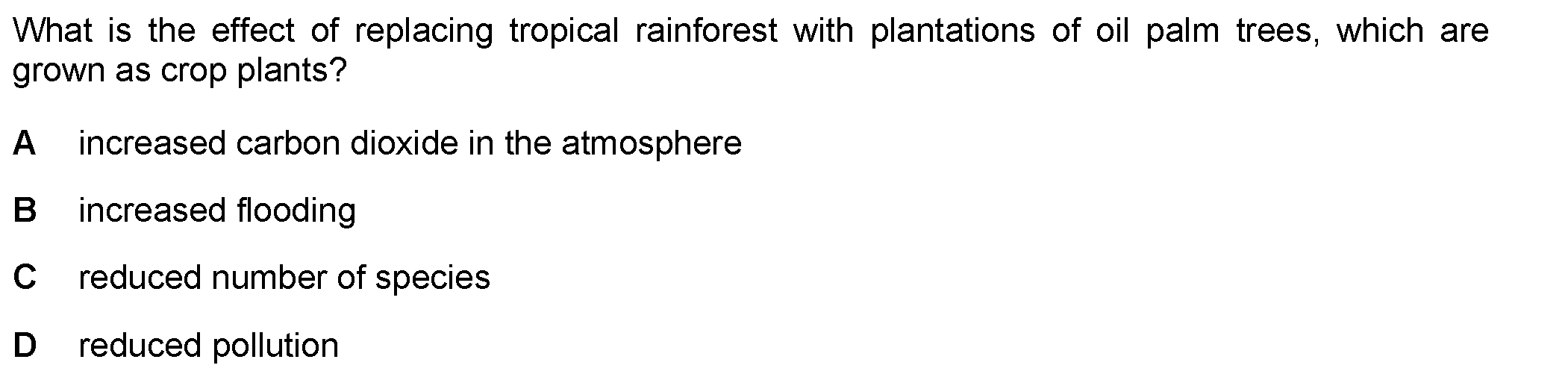
What is the effect of replacing tropical rainforest with plantations of oil palm trees, which are
grown as crop plants?
A increased carbon dioxide in the atmosphere
B increased flooding
C reduced number of species
D
reduced pollution
grown as crop plants?
A increased carbon dioxide in the atmosphere
B increased flooding
C reduced number of species
D
reduced pollution
Options:
A
B
C
D
Correct Key: C
A
B
C
D
Correct Key: C
Question 3
Paper Ref: 0610/21_Winter_2018_Q40
Paper Ref: 0610/21_Winter_2018_Q40
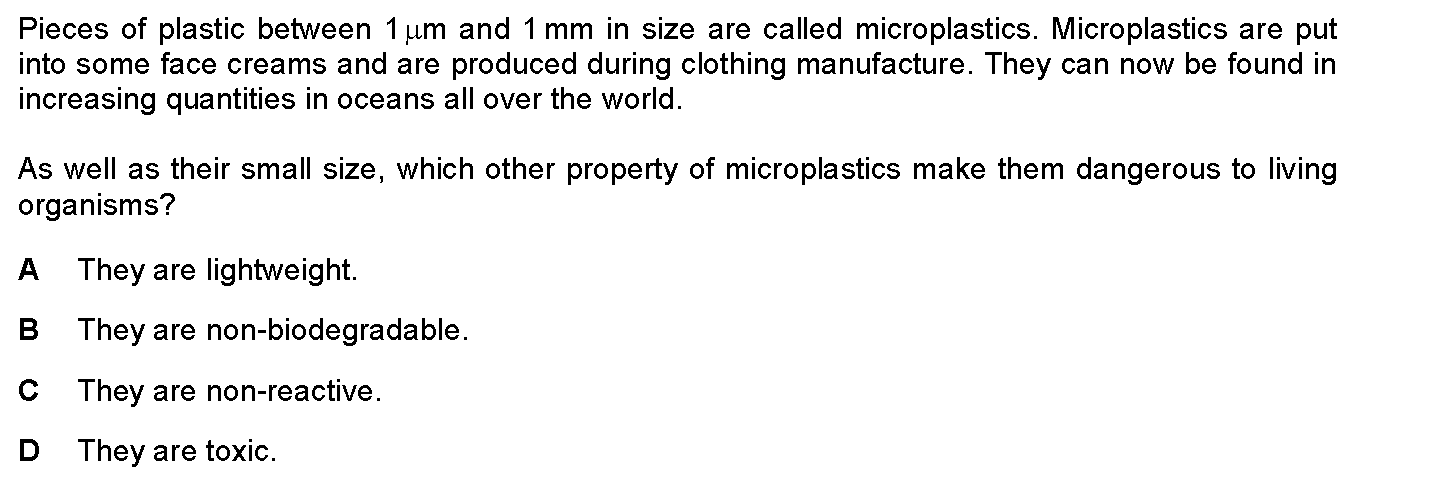
Pieces of plastic between 1um and 1mm in size are called microplastics. Microplastics are put
into some face creams and are produced during clothing manufacture. They can now be found in
increasing quantities in oceans all over the world.
As well as their small size, which other property of microplastics make them dangerous to living
organisms?
A They are lightweight.
B_ They are non-biodegradable.
Cc They are non-reactive.
D
They are toxic.
Options:
A
B
C
D
Correct Key: B
A
B
C
D
Correct Key: B
Structured Questions Mark Scheme & Answers
•1•.• • • •[•C•P• •M•a•y• •2•0•2•5• •P•1• • •·• • •Q•9• • •P•a•r•t• •(•b•)• • •·• • •2•0•2•5• • •·• • •L•o•w•e•r• •S•e•c• •0•8•9•3•]• • • • • • •a•n•y• •t•w•o• •f•r•o•m• •2• •e•a•c•h• •c•o•r•r•e•c•t• •a•n•s•w•e•r• •=• •1• •m•a•r•k• •c•h•a•n•g•e• •i•n• •e•n•v•i•r•o•n•m•e•n•t•a•l• •c•o•n•d•i•t•i•o•n•s• •••c•c•e•p•t• •e•x•a•m•p•l•e•s• •o•f• •e•n•v•i•r•o•n•m•e•n•t•a•l• •c•h•a•n•g•e•s• •e•.•g•.• •g•l•o•b•a•l• •w•a•r•m•i•n•g•,• •r•i•s•i•n•g• •s•e•a• •l•e•v•e•l•s•,• •v•o•l•c•a•n•i•c• •e•r•u•p•t•i•o•n•,• •c•l•i•m•a•t•e• •c•h•a•n•g•e•,• •p•o•l•l•u•t•i•o•n• •(•i•d•e•a• •o•f• •n•e•w• •o•r• •e•x•t•r•a•)• •p•r•e•d•a•t•o•r•s• •(•i•d•e•a• •o•f• •n•e•w•)• •d•i•s•e•a•s•e• •l•a•c•k• •o•f• •h•a•b•i•t•a•t• •o•r• •c•h•a•n•g•e• •i•n• •h•a•b•i•t•a•t• •••c•c•e•p•t• •e•x•a•m•p•l•e•s•,• •e•.•g•.• •d•e•f•o•r•e•s•t•a•t•i•o•n• •h•u•n•t•e•r•s• •••c•c•e•p•t• •(•o•v•e•r•)• •h•u•n•t•i•n•g• •l•a•c•k• •o•f• •f•o•o•d• •••c•c•e•p•t• •i•n•t•r•o•d•u•c•t•i•o•n• •o•f• •i•n•v•a•s•i•v•e• •s•p•e•c•i•e•s• •o•r• •(•i•n•c•r•e•a•s•e•d•)• •c•o•m•p•e•t•i•t•i•o•n• •••c•c•e•p•t• •d•e•a•t•h• •r•a•t•e• •i•s• •g•r•e•a•t•e•r• •t•h•a•n• •r•e•p•r•o•d•u•c•t•i•o•n• •r•a•t•e• •/• •u•n•a•b•l•e• •t•o• •p•r•o•d•u•c•e• •e•n•o•u•g•h• •o•f•f•s•p•r•i•n•g• •/• •n•o• •r•e•p•r•o•d•u•c•t•i•o•n•
•2•.• • • •[•C•P• •O•c•t•o•b•e•r• •2•0•2•5• •P•2• • •·• • •Q•5• • •P•a•r•t• •(•a•)• • •·• • •2•0•2•5• • •·• • •L•o•w•e•r• •S•e•c• •0•8•9•3•]• • • • • • •C• •1• •••c•c•e•p•t• •a•n•y• •i•n•d•i•c•a•t•i•o•n• •o•f• •t•h•e• •c•o•r•r•e•c•t• •a•n•s•w•e•r•,• •e•.•g•.• •c•i•r•c•l•i•n•g•,• •t•i•c•k•i•n•g• •o•r• •u•n•d•e•r•l•i•n•i•n•g•,• •b•u•t• •a•n•s•w•e•r• •o•n• •a•n•s•w•e•r• •l•i•n•e• •t•a•k•e•s• •p•r•e•c•e•d•e•n•c•e• •3•0• •(•%•)• •1• •••c•c•e•p•t• •a•n•y• •v•a•l•u•e• •b•e•t•w•e•e•n• •2•9• •a•n•d• •3•1•
•3•.• • • •[•C•P• •O•c•t•o•b•e•r• •2•0•2•5• •P•2• • •·• • •Q•5• • •P•a•r•t• •(•b•)• • •·• • •2•0•2•5• • •·• • •L•o•w•e•r• •S•e•c• •0•8•9•3•]• • • • • • •a•n•y• •o•n•e• •f•r•o•m• •1• •s•e•a•s• •d•r•i•e•d• •u•p• •••c•c•e•p•t• •s•e•a• •l•e•v•e•l•s• •f•a•l•l• •••c•c•e•p•t• •p•o•s•s•i•b•l•e• •i•c•e•-•a•g•e• •o•r• •s•e•a• •f•r•e•e•z•e•s• •••c•c•e•p•t• •c•o•n•c•e•n•t•r•a•t•i•o•n• •o•f• •s•a•l•t•s• •c•h•a•n•g•e•d• •••c•c•e•p•t• •u•n•d•e•r•w•a•t•e•r• •v•o•l•c•a•n•o• •r•i•s•e• •i•n• •s•e•a• •t•e•m•p•e•r•a•t•u•r•e• •o•r• •f•a•l•l• •i•n• •s•e•a• •t•e•m•p•e•r•a•t•u•r•e• •N•o•t•e• •i•n•c•r•e•a•s•e• •i•n• •g•l•o•b•a•l• •t•e•m•p•e•r•a•t•u•r•e• •i•s• •n•o•t• •s•u•f•f•i•c•i•e•n•t• •m•u•s•t• •r•e•f•e•r• •t•o• •t•h•e• •t•e•m•p•e•r•a•t•u•r•e• •o•f• •t•h•e• •s•e•a•s• •o•r• •o•c•e•a•n•s• •I•g•n•o•r•e• •c•l•i•m•a•t•e• •c•h•a•n•g•e• •o•r• •r•i•s•e• •i•n• •s•e•a• •l•e•v•e•l• •o•r• •f•l•o•o•d•i•n•g•
•4•.• • • •[•C•P• •O•c•t•o•b•e•r• •2•0•2•5• •P•2• • •·• • •Q•1•3• • •·• • •2•0•2•5• • •·• • •L•o•w•e•r• •S•e•c• •0•8•9•3•]• • • • • • •a•n•y• •t•w•o• •f•r•o•m• •2• •e•a•c•h• •c•o•r•r•e•c•t• •a•n•s•w•e•r• •=• •1• •m•a•r•k• •••c•c•e•p•t• •e•n•v•i•r•o•n•m•e•n•t•a•l• •c•h•a•n•g•e• •f•o•r• •1• •m•a•r•k• •(•i•d•e•a• •o•f•)• •i•n•c•r•e•a•s•e•d• •s•e•a• •l•e•v•e•l•s• •(•d•u•e• •t•o• •g•l•o•b•a•l• •w•a•r•m•i•n•g•)• •o•r• •I•g•n•o•r•e• •i•s•l•a•n•d• •s•i•n•k•s• •i•n•t•o• •o•c•e•a•n•s• •f•l•o•o•d•i•n•g• •(•i•n•c•r•e•a•s•e•d• •s•e•a• •l•e•v•e•l• •c•a•u•s•e•s•)• •a•n•i•m•a•l• •t•o• •d•r•o•w•n• •I•g•n•o•r•e• •a•n•i•m•a•l•s• •c•a•n•n•o•t• •s•w•i•m• •(•i•d•e•a• •o•f•)• •r•e•d•u•c•e•d• •s•i•z•e• •o•f• •h•a•b•i•t•a•t• •••c•c•e•p•t• •n•o•t• •e•n•o•u•g•h• •s•p•a•c•e• •o•n• •i•s•l•a•n•d• •o•r• •h•a•b•i•t•a•t• •d•e•s•t•r•u•c•t•i•o•n• •o•r• •n•o• •h•a•b•i•t•a•t• •o•r• •h•a•b•i•t•a•t• •l•o•s•s• •(•i•n•t•r•o•d•u•c•t•i•o•n• •o•f•)• •a• •n•e•w• •p•r•e•d•a•t•o•r• •••c•c•e•p•t• •(•i•d•e•a• •o•f• •n•e•w•)• •p•r•e•d•a•t•i•o•n• •I•g•n•o•r•e• •h•u•n•t•e•d• •b•y• •h•u•m•a•n•s• •(•i•d•e•a• •o•f•)• •r•e•d•u•c•e•d• •f•o•o•d• •••c•c•e•p•t• •n•o• •f•o•o•d• •(•s•o•u•r•c•e•)• •o•r• •i•n•c•r•e•a•s•e•d• •c•o•m•p•e•t•i•t•i•o•n• •f•o•r• •f•o•o•d• •(•i•d•e•a• •o•f•)• •n•e•w• •d•i•s•e•a•s•e• •••c•c•e•p•t• •d•i•s•e•a•s•e• •I•g•n•o•r•e• •o•v•e•r• •p•o•p•u•l•a•t•i•o•n• •I•g•n•o•r•e• •c•l•i•m•a•t•e• •c•h•a•n•g•e• •o•r• •g•l•o•b•a•l• •w•a•r•m•i•n•g•
•5•.• • • •[•P•T• •S•8• •2•0•2•5• •P•1• • •·• • •Q•9• • •P•a•r•t• •(•b•)• • •·• • •2•0•2•5• • •·• • •L•o•w•e•r• •S•e•c• •0•8•9•3•]• • • • • • •d•e•c•r•e•a•s•e•s• •1• •I•g•n•o•r•e• •t•h•e•y• •b•e•c•o•m•e• •e•x•t•i•n•c•t• •o•r• •t•h•e•y• •d•i•e• •o•f•f• •(•i•d•e•a• •t•h•a•t•)• •f•a•r•m•e•r•s• •w•h•o• •k•e•e•p• •a•n•i•m•a•l•s• •u•s•e• •e•v•i•d•e•n•c•e• •t•o• •s•h•o•w• •1• •••c•c•e•p•t• •o•r•a• •t•h•e• •h•a•r•m• •t•h•a•t• •e•a•g•l•e•s• •c•a•u•s•e• •t•o• •t•h•e•i•r• •a•n•i•m•a•l•s• •o•r• •(•i•d•e•a• •t•h•a•t•)• •f•a•r•m•e•r•s• •w•h•o• •g•r•o•w• •f•r•u•i•t• •u•s•e• •e•v•i•d•e•n•c•e• •t•h•a•t• •s•h•o•w•s• •e•a•g•l•e•s• •a•r•e• •h•e•l•p•f•u•l• •i•n• •r•e•d•u•c•i•n•g• •c•r•o•p• •l•o•s•s•e•s• •••c•c•e•p•t• •o•r•a• •••c•c•e•p•t• •(•i•d•e•a• •t•h•a•t•)• •f•a•r•m•e•r•s• •a•r•e• •b•i•a•s•e•d• •t•o• •e•v•i•d•e•n•c•e• •t•h•a•t• •s•u•i•t•s• •t•h•e•m• •©• •U•C•L•E•S• •2•0•2•5• •P•a•g•e• •1•0• •o•f• •1•4• •S•8•/•0•1• •S•c•i•e•n•c•e• •S•t•a•g•e• •8• •P•a•p•e•r• •1• •M•a•r•k• •S•c•h•e•m•e• •2•0•2•5•
•6•.• • • •[•P•T• •S•9• •2•0•2•5• •P•1• • •·• • •Q•1• • •P•a•r•t• •(•a•)• • •·• • •2•0•2•5• • •·• • •L•o•w•e•r• •S•e•c• •0•8•9•3•]• • • • • • •2• •e•a•c•h• •c•o•r•r•e•c•t• •a•n•s•w•e•r• •=• •1• •m•a•r•k• •(•p•r•e•d•i•c•t•i•o•n•)• •d•e•c•r•e•a•s•e•s• •(•e•x•p•l•a•n•a•t•i•o•n•)• •l•e•s•s• •f•o•o•d• •f•o•r• •p•u•f•f•i•n•s• •o•r• •p•u•f•f•i•n•s• •s•t•a•r•v•e• •••c•c•e•p•t• •(•i•d•e•a• •t•h•a•t•)• •p•u•f•f•i•n•s• •m•i•g•r•a•t•e• •t•o• •w•h•e•r•e• •t•h•e• •w•a•t•e•r• •i•s• •c•o•l•d•e•r• •I•g•n•o•r•e• •p•u•f•f•i•n•s• •d•i•e• •••c•c•e•p•t• •p•o•p•u•l•a•t•i•o•n• •s•t•a•y•s• •t•h•e• •s•a•m•e• •b•e•c•a•u•s•e• •t•h•e• •p•u•f•f•i•n•s• •f•i•n•d• •a• •n•e•w• •f•o•o•d• •s•o•u•r•c•e• •=• •2• •m•a•r•k•s•
•7•.• • • •[•P•T• •S•9• •2•0•2•5• •P•1• • •·• • •Q•1• • •P•a•r•t• •(•b•)• • •·• • •2•0•2•5• • •·• • •L•o•w•e•r• •S•e•c• •0•8•9•3•]• • • • • • •(•p•o•p•u•l•a•t•i•o•n•)• •d•e•c•r•e•a•s•e•s• •b•e•c•a•u•s•e• •p•r•e•d•a•t•o•r•s• •e•a•t• •p•u•f•f•i•n•s• •o•r• •1• •d•e•c•r•e•a•s•e•s• •b•e•c•a•u•s•e• •p•r•e•d•a•t•o•r•s• •e•a•t• •e•g•g•s• •©• •U•C•L•E•S• •2•0•2•5• •P•a•g•e• •3• •o•f• •1•4• •S•9•/•0•1• •S•c•i•e•n•c•e• •S•t•a•g•e• •9• •P•a•p•e•r• •1• •M•a•r•k• •S•c•h•e•m•e• •2•0•2•5•
•8•.• • • •[•P•T• •S•9• •2•0•2•5• •P•2• • •·• • •Q•4• • •P•a•r•t• •(•a•)• • •·• • •2•0•2•5• • •·• • •L•o•w•e•r• •S•e•c• •0•8•9•3•]• • • • • • •1• •m•o•r•e• •t•h•a•n• •o•n•e• •a•n•s•w•e•r• •c•i•r•c•l•e•d• •=• •0• •m•a•r•k•s• •l•e•s•s• •r•a•i•n• •••c•c•e•p•t• •a•n•y• •i•n•d•i•c•a•t•i•o•n• •o•f• •t•h•e• •c•o•r•r•e•c•t• •a•n•s•w•e•r•,• •e•.•g•.• •t•i•c•k•i•n•g• •o•r• •u•n•d•e•r•l•i•n•i•n•g•,• •b•u•t• •c•i•r•c•l•i•n•g• •t•a•k•e•s• •p•r•e•c•e•d•e•n•c•e•
Last updated:
\n