1.1Motion, Forces and Energy
Plant cells — Question Bank (Cambridge) — Cambridge IGCSE Physics 0625 Revision Notes & Topical Questions
5 min read Lesson 4 of 91 Unit quiz
Cambridge Past Paper Bank
1.1 Plant cells
8 Multiple-Choice Questions with Official Mark Schemes
Question 1
5129/12_Winter_2023_Q1
Question 2
0610/11_Summer_2024_Q5
Question 3
0610/12_Winter_2020_Q3
Question 4
0610/21_Summer_2024_Q3
Question 5
0610/23_Winter_2016_Q5
Question 6
0610/22_Summer_2024_Q4
Question 7
0610/23_Winter_2020_Q4
Question 8
5129/12_Summer_2021_Q1
Cambridge Lower Secondary Stage 7
1.1 Plant cells – Complete Question Bank & Mark Scheme
Total Questions8 Questions with Verified Solutions & Past Paper Mark Schemes
Multiple Choice Questions (Exam Practice)
Question 1
Paper Ref: 5129/12_Winter_2023_Q1
Paper Ref: 5129/12_Winter_2023_Q1
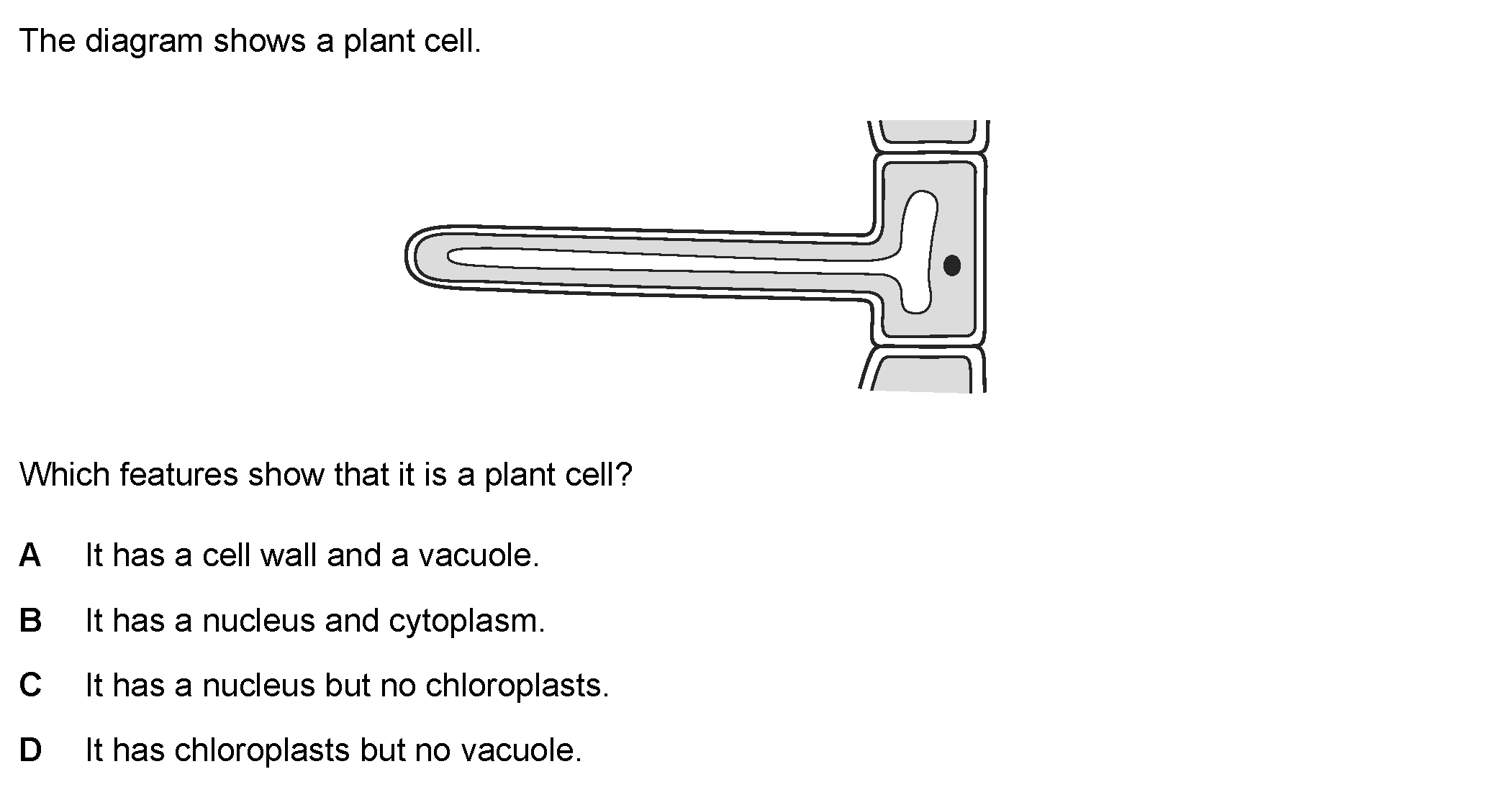
The diagram shows a plant cell.
Which features show that it is a plant cell?
A It has a cell wall and a vacuole.
It has a nucleus and cytoplasm.
It has a nucleus but no chloroplasts.
0 OO DW
It has chloroplasts but no vacuole.
Which features show that it is a plant cell?
A It has a cell wall and a vacuole.
It has a nucleus and cytoplasm.
It has a nucleus but no chloroplasts.
0 OO DW
It has chloroplasts but no vacuole.
Options:
A
B
C
D
Correct Key: C
A
B
C
D
Correct Key: C
Question 2
Paper Ref: 0610/11_Summer_2024_Q5
Paper Ref: 0610/11_Summer_2024_Q5
Some of the structures found in cells are listed:
e cytoplasm
e cell membrane
e — cell wall
e chloroplast.
How many of these structures are found in the cells of all living organisms?
A 1 B 2 C 3 D 4
e cytoplasm
e cell membrane
e — cell wall
e chloroplast.
How many of these structures are found in the cells of all living organisms?
A 1 B 2 C 3 D 4
Options:
A
B
C
D
Correct Key: A
A
B
C
D
Correct Key: A
Question 3
Paper Ref: 0610/12_Winter_2020_Q3
Paper Ref: 0610/12_Winter_2020_Q3
The list shows some of the structures contained in cells.
* cytoplasm
. cell membrane
. cell wall
* chloroplast
How many of these structures are found in the cells of all living organisms?
A 1 B 2 C 3 D 4
* cytoplasm
. cell membrane
. cell wall
* chloroplast
How many of these structures are found in the cells of all living organisms?
A 1 B 2 C 3 D 4
Options:
A
B
C
D
Correct Key: B
A
B
C
D
Correct Key: B
Question 4
Paper Ref: 0610/21_Summer_2024_Q3
Paper Ref: 0610/21_Summer_2024_Q3
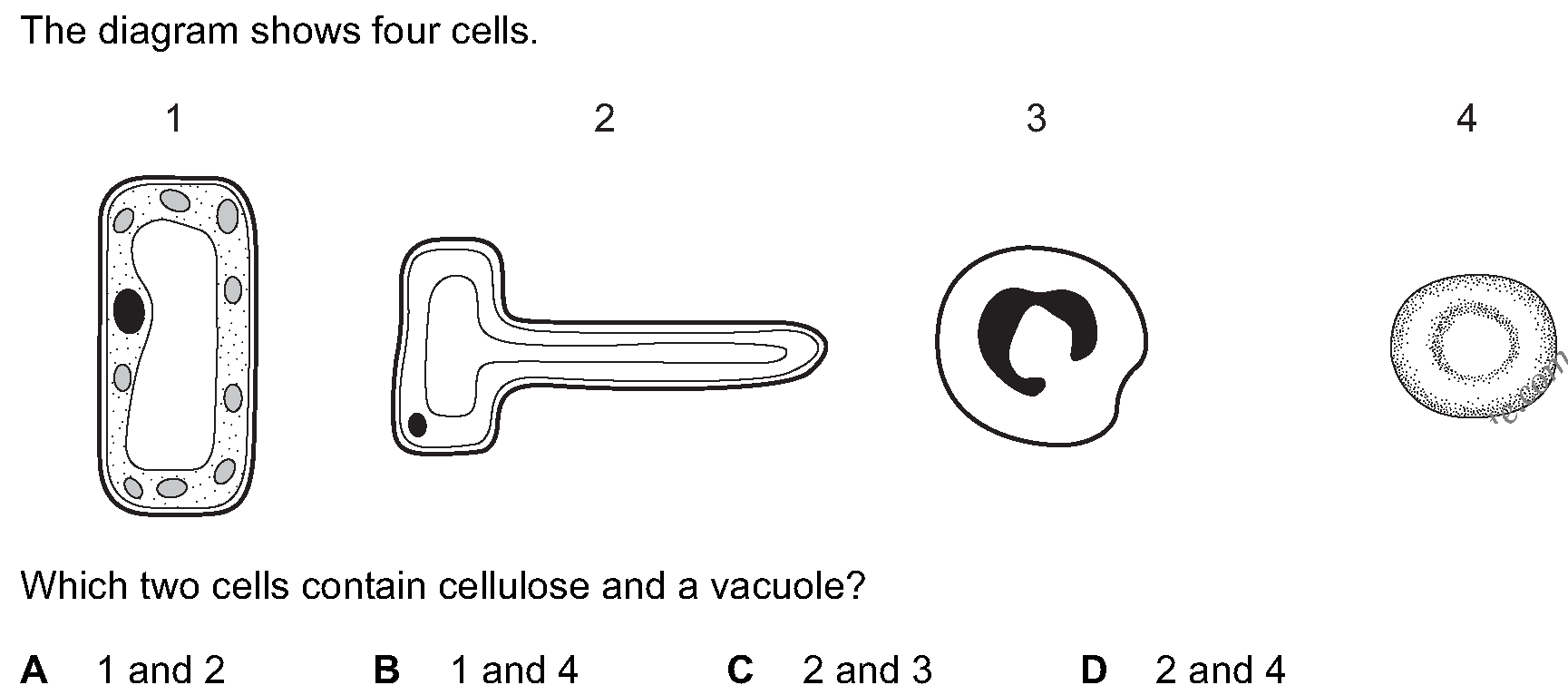
The diagram shows four cells.
Which two cells contain cellulose and a vacuole?
A 1and2 B iand4 C 2and3 D 2and4
Which two cells contain cellulose and a vacuole?
A 1and2 B iand4 C 2and3 D 2and4
Options:
A
B
C
D
Correct Key: B
A
B
C
D
Correct Key: B
Question 5
Paper Ref: 0610/23_Winter_2016_Q5
Paper Ref: 0610/23_Winter_2016_Q5
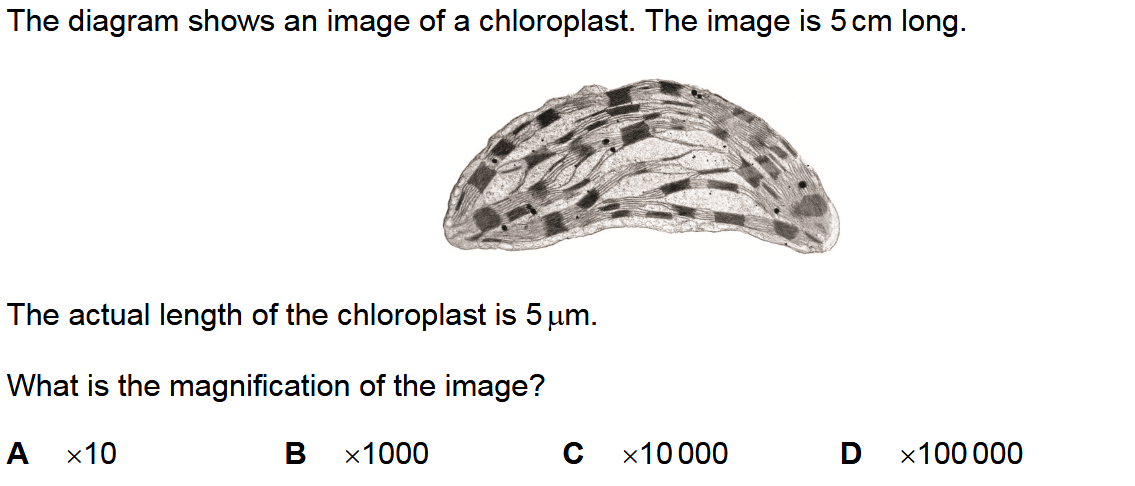
The diagram shows an image of a chloroplast. The image is 5cm long.
The actual length of the chloroplast is 5 um.
What is the magnification of the image?
A x10 B x1000 Cc ~x10000 D x100000
The actual length of the chloroplast is 5 um.
What is the magnification of the image?
A x10 B x1000 Cc ~x10000 D x100000
Options:
A
B
C
D
Correct Key: C
A
B
C
D
Correct Key: C
Question 6
Paper Ref: 0610/22_Summer_2024_Q4
Paper Ref: 0610/22_Summer_2024_Q4
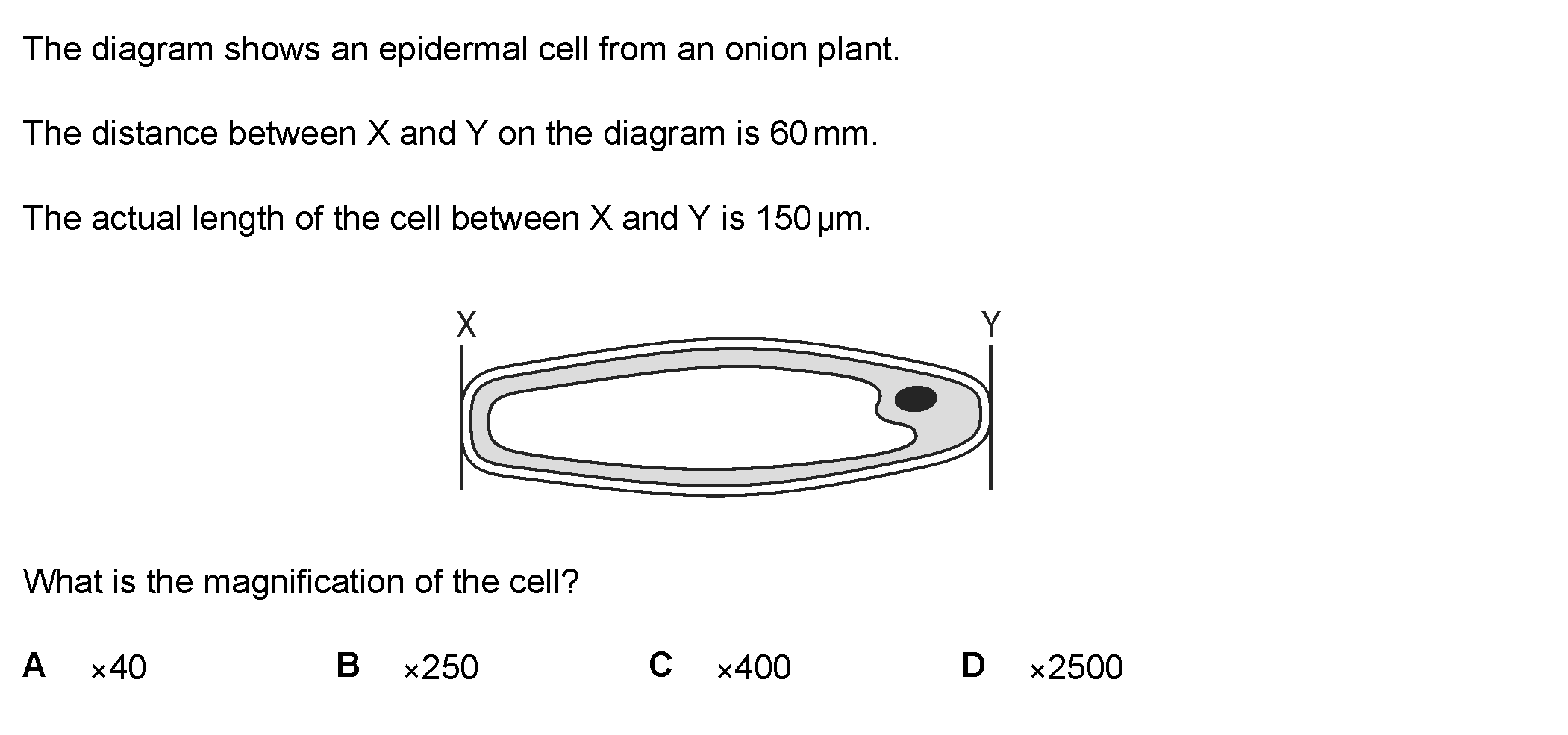
The diagram shows an epidermal cell from an onion plant.
The distance between X and Y on the diagram is 60mm.
The actual length of the cell between X and Y is 150um.
X Y
What is the magnification of the cell?
A x40 B x250 C x400 D x2500
The distance between X and Y on the diagram is 60mm.
The actual length of the cell between X and Y is 150um.
X Y
What is the magnification of the cell?
A x40 B x250 C x400 D x2500
Options:
A
B
C
D
Correct Key: C
A
B
C
D
Correct Key: C
Question 7
Paper Ref: 0610/23_Winter_2020_Q4
Paper Ref: 0610/23_Winter_2020_Q4
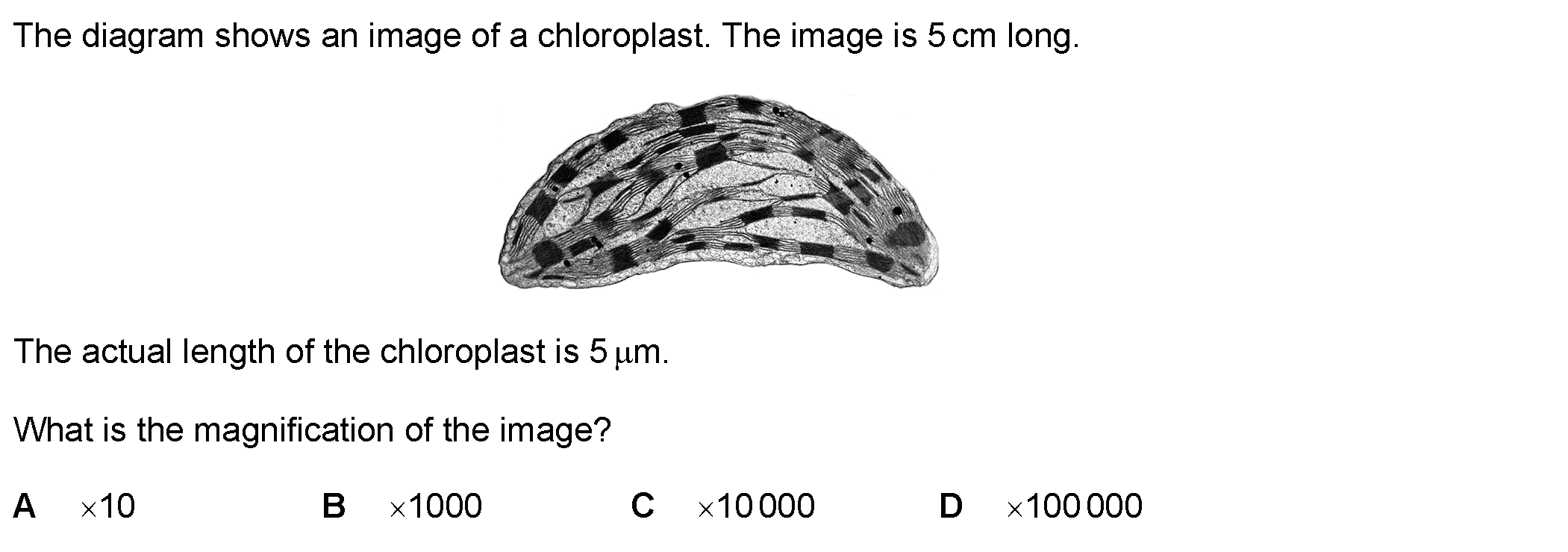
The diagram shows an image of a chloroplast. The image is 5cm long.
The actual length of the chloroplast is 5 um.
What is the magnification of the image?
A x10 B x1000 C x10000 D x100000
The actual length of the chloroplast is 5 um.
What is the magnification of the image?
A x10 B x1000 C x10000 D x100000
Options:
A
B
C
D
Correct Key: C
A
B
C
D
Correct Key: C
Question 8
Paper Ref: 5129/12_Summer_2021_Q1
Paper Ref: 5129/12_Summer_2021_Q1
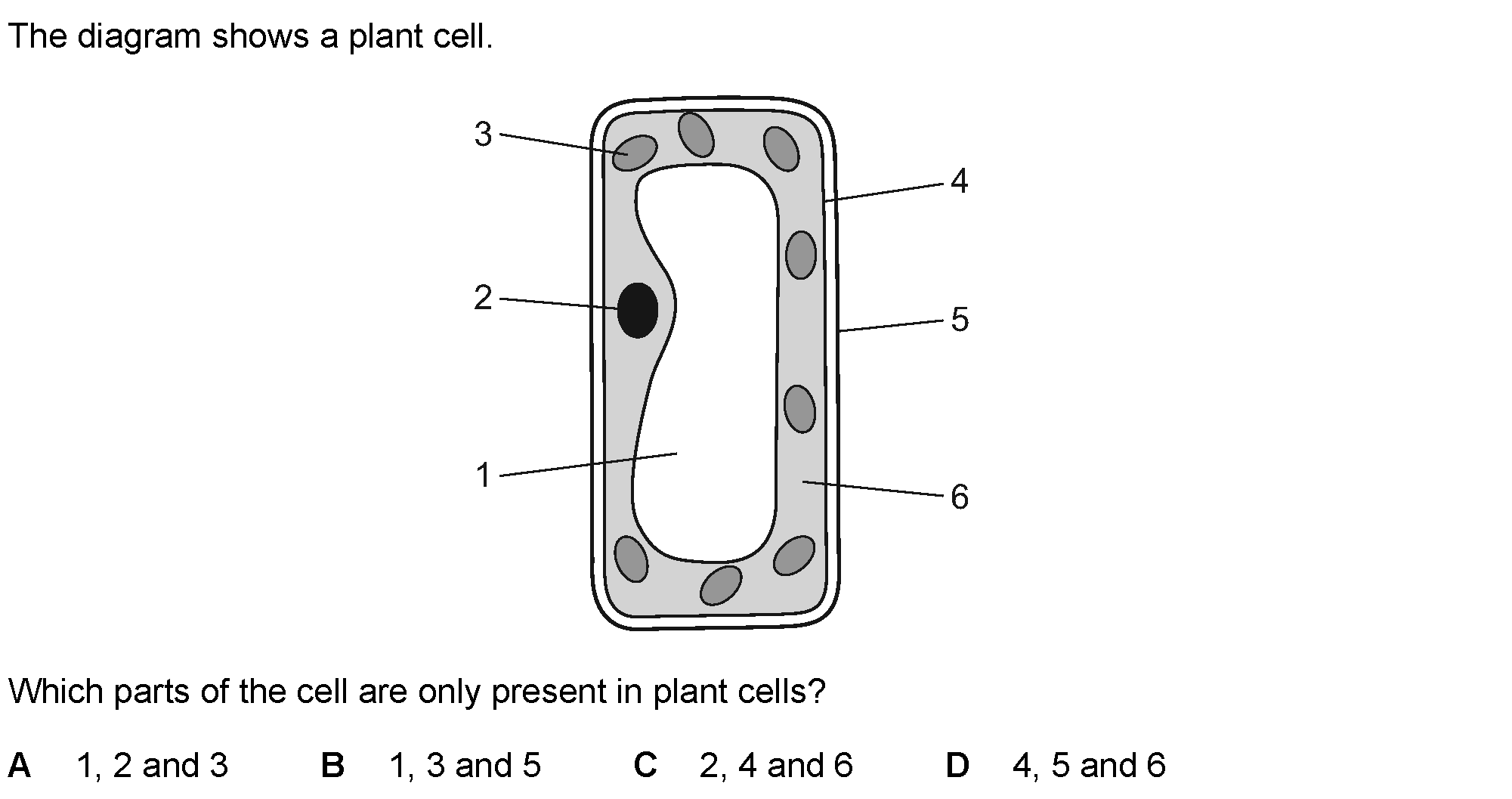
The diagram shows a plant cell.
Which parts of the cell are only present in plant cells?
A 1,2and3 B 1,3and5 C 2,4and6 D 4 5and6
Which parts of the cell are only present in plant cells?
A 1,2and3 B 1,3and5 C 2,4and6 D 4 5and6
Options:
A
B
C
D
Correct Key: B
A
B
C
D
Correct Key: B
Structured Questions Mark Scheme & Answers
•1•.• • • •[•P•R•I• •2•0•1•9•B• •P•2• • •·• • •Q•1•5• • •P•a•r•t• •(•a•)• • •·• • •2•0•1•9• • •·• • •P•r•i•m•a•r•y• •0•8•4•6•]• • • • • • •p•u•m•p• •b•l•o•o•d• •(•a•r•o•u•n•d• •t•h•e• •b•o•d•y•)• •1• •••s•s•e•m•b•l•e•d• •b•y• •N•.•S•.• •b•o•n•e•(•s•)• •1• •l•u•n•g•(•s•)• •1•
•2•.• • • •[•P•R•I• •2•0•1•9•B• •P•2• • •·• • •Q•1•5• • •P•a•r•t• •(•c•)• • •·• • •2•0•1•9• • •·• • •P•r•i•m•a•r•y• •0•8•4•6•]• • • • • • •p•u•m•p• •b•l•o•o•d• •(•a•r•o•u•n•d• •t•h•e• •b•o•d•y•)• •1• •••s•s•e•m•b•l•e•d• •b•y• •N•.•S•.• •b•o•n•e•(•s•)• •1• •l•u•n•g•(•s•)• •1•
•3•.• • • •[•P•T• •S•7• •2•0•2•5• •P•1• • •·• • •Q•1• • •P•a•r•t• •(•a•)• • •·• • •2•0•2•5• • •·• • •L•o•w•e•r• •S•e•c• •0•8•9•3•]• • • • • • •c•e•l•l• •s•t•r•u•c•t•u•r•e• •f•u•n•c•t•i•o•n• •3• •a•l•l• •f•i•v•e• •c•o•r•r•e•c•t• •=• •3• •m•a•r•k•s• •t•h•r•e•e• •o•r• •f•o•u•r• •c•o•r•r•e•c•t• •=• •2• •m•a•r•k•s• •c•h•l•o•r•o•p•l•a•s•t• •t•h•e• •c•o•n•t•r•o•l• •c•e•n•t•r•e• •f•o•r• •a• •c•e•l•l• •o•n•e• •o•r• •t•w•o• •c•o•r•r•e•c•t• •=• •1• •m•a•r•k• •c•y•t•o•p•l•a•s•m• •w•h•e•r•e• •e•n•e•r•g•y• •i•s• •r•e•l•e•a•s•e•d• •N•o•t•e• •i•f• •t•w•o• •l•i•n•e•s• •f•r•o•m• •o•n•e• •c•e•l•l• •s•t•r•u•c•t•u•r•e• •a•n•d• •o•n•e• •l•i•n•e• •i•s• •i•n•c•o•r•r•e•c•t• •=• •0• •m•a•r•k•s• •f•o•r• •t•h•a•t• •c•e•l•l• •s•t•r•u•c•t•u•r•e• •c•o•n•t•a•i•n•s• •t•h•e• •g•r•e•e•n• •p•i•g•m•e•n•t• •n•u•c•l•e•u•s• •n•e•e•d•e•d• •f•o•r• •p•h•o•t•o•s•y•n•t•h•e•s•i•s• •h•e•l•p•s• •k•e•e•p• •t•h•e• •c•e•l•l• •f•r•o•m• •m•i•t•o•c•h•o•n•d•r•i•o•n• •c•o•l•l•a•p•s•i•n•g• •a•n•d• •s•h•r•i•n•k•i•n•g• •w•h•e•r•e• •c•h•e•m•i•c•a•l• •r•e•a•c•t•i•o•n•s• •s•a•p• •v•a•c•u•o•l•e• •h•a•p•p•e•n•
•4•.• • • •[•P•T• •S•9• •2•0•2•5• •P•1• • •·• • •Q•5• • •P•a•r•t• •(•a•)• • •·• • •2•0•2•5• • •·• • •L•o•w•e•r• •S•e•c• •0•8•9•3•]• • • • • • •3• •e•a•c•h• •c•o•r•r•e•c•t• •a•n•s•w•e•r• •=• •1• •m•a•r•k• •(•••)• •c•h•r•o•m•o•s•o•m•e• •(•B•)• •D•N••• •••c•c•e•p•t• •d•e•o•x•y•r•i•b•o•n•u•c•l•e•i•c• •a•c•i•d• •(•C•)• •g•e•n•e•
•5•.• • • •[•P•T• •S•9• •2•0•2•5• •P•1• • •·• • •Q•5• • •P•a•r•t• •(•b•)• • •·• • •2•0•2•5• • •·• • •L•o•w•e•r• •S•e•c• •0•8•9•3•]• • • • • • •g•e•n•e• •1• •••c•c•e•p•t• •C•,• •b•u•t• •n•a•m•e• •t•a•k•e•s• •p•r•e•c•e•d•e•n•c•e• •©• •U•C•L•E•S• •2•0•2•5• •P•a•g•e• •6• •o•f• •1•4• •S•9•/•0•1• •S•c•i•e•n•c•e• •S•t•a•g•e• •9• •P•a•p•e•r• •1• •M•a•r•k• •S•c•h•e•m•e• •2•0•2•5•
•6•.• • • •[•P•T• •S•7• •2•0•1•2• •P•1• • •·• • •Q•1•0• • •·• • •2•0•1•2• • •·• • •L•o•w•e•r• •S•e•c• •s•o•u•r•c•e• •a•d•d•i•t•i•o•n•]• • • • • • •N•o• •m•a•t•c•h•i•n•g• •m•a•r•k•-•s•c•h•e•m•e• •e•n•t•r•y• •w•a•s• •f•o•u•n•d• •i•n• •M•a•r•k•_•S•c•h•e•m•e•s•.•d•o•c•x•.•
•7•.• • • •[•P•T• •S•7• •2•0•1•2• •P•2• • •·• • •Q•7• • •·• • •2•0•1•2• • •·• • •L•o•w•e•r• •S•e•c• •s•o•u•r•c•e• •a•d•d•i•t•i•o•n•]• • • • • • •N•o• •m•a•t•c•h•i•n•g• •m•a•r•k•-•s•c•h•e•m•e• •e•n•t•r•y• •w•a•s• •f•o•u•n•d• •i•n• •M•a•r•k•_•S•c•h•e•m•e•s•.•d•o•c•x•.•
•8•.• • • •[•P•T• •S•7• •2•0•1•8• •P•1• • •·• • •Q•7• • •·• • •2•0•1•8• • •·• • •L•o•w•e•r• •S•e•c• •s•o•u•r•c•e• •a•d•d•i•t•i•o•n•]• • • • • • •N•o• •m•a•t•c•h•i•n•g• •m•a•r•k•-•s•c•h•e•m•e• •e•n•t•r•y• •w•a•s• •f•o•u•n•d• •i•n• •M•a•r•k•_•S•c•h•e•m•e•s•.•d•o•c•x•.•
Last updated:
Cambridge 9700 AS Biology
Core Formula
Magnification Triangle & Unit Conversion
Formula: M = I / A ⇔ A = I / M ⇔ I = M × A
Units: 1 mm = 1,000 μm = 1,000,000 nm.
Rule: Convert Image size (ruler mm) to μm by ×1,000 before dividing by Actual size.