7.3Motion, Forces and Energy
Variation — Question Bank (Cambridge) — Cambridge IGCSE Physics 0625 Revision Notes & Topical Questions
5 min read Lesson 72 of 91 Unit quiz
Cambridge Past Paper Bank
7.3 Variation
8 Multiple-Choice Questions with Official Mark Schemes
Question 1
0610/12_Winter_2024_Q38
Question 2
0610/13_Winter_2019_Q33
Question 3
0610/22_Spring_2026_Q32
Question 4
0610/21_Summer_2019_Q35
Question 5
0610/22_Spring_2025_Q33
Question 6
0610/22_Winter_2023_Q34
Question 7
0610/12_Winter_2022_Q35
Question 8
0610/12_Spring_2022_Q36
Cambridge Lower Secondary Stage 9
7.3 Variation – Complete Question Bank & Mark Scheme
Total Questions8 Questions with Verified Solutions & Past Paper Mark Schemes
Multiple Choice Questions (Exam Practice)
Question 1
Paper Ref: 0610/12_Winter_2024_Q38
Paper Ref: 0610/12_Winter_2024_Q38
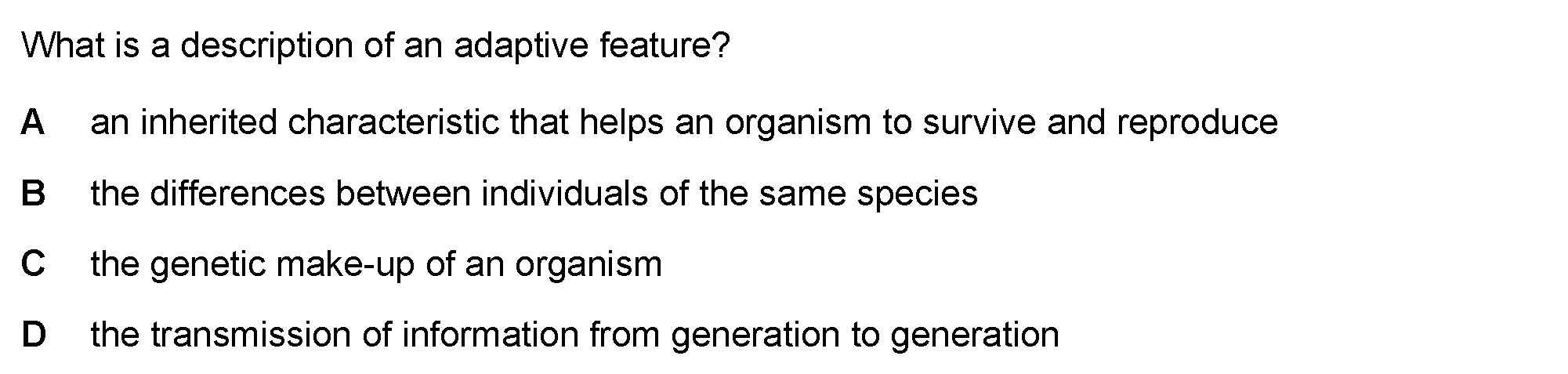
What is a description of an adaptive feature?
A
B
Cc
D
an inherited characteristic that helps an organism to survive and reproduce
the differences between individuals of the same species
the genetic make-up of an organism
the transmission of information from generation to generation
A
B
Cc
D
an inherited characteristic that helps an organism to survive and reproduce
the differences between individuals of the same species
the genetic make-up of an organism
the transmission of information from generation to generation
Options:
A
B
C
D
Correct Key: A
A
B
C
D
Correct Key: A
Question 2
Paper Ref: 0610/13_Winter_2019_Q33
Paper Ref: 0610/13_Winter_2019_Q33
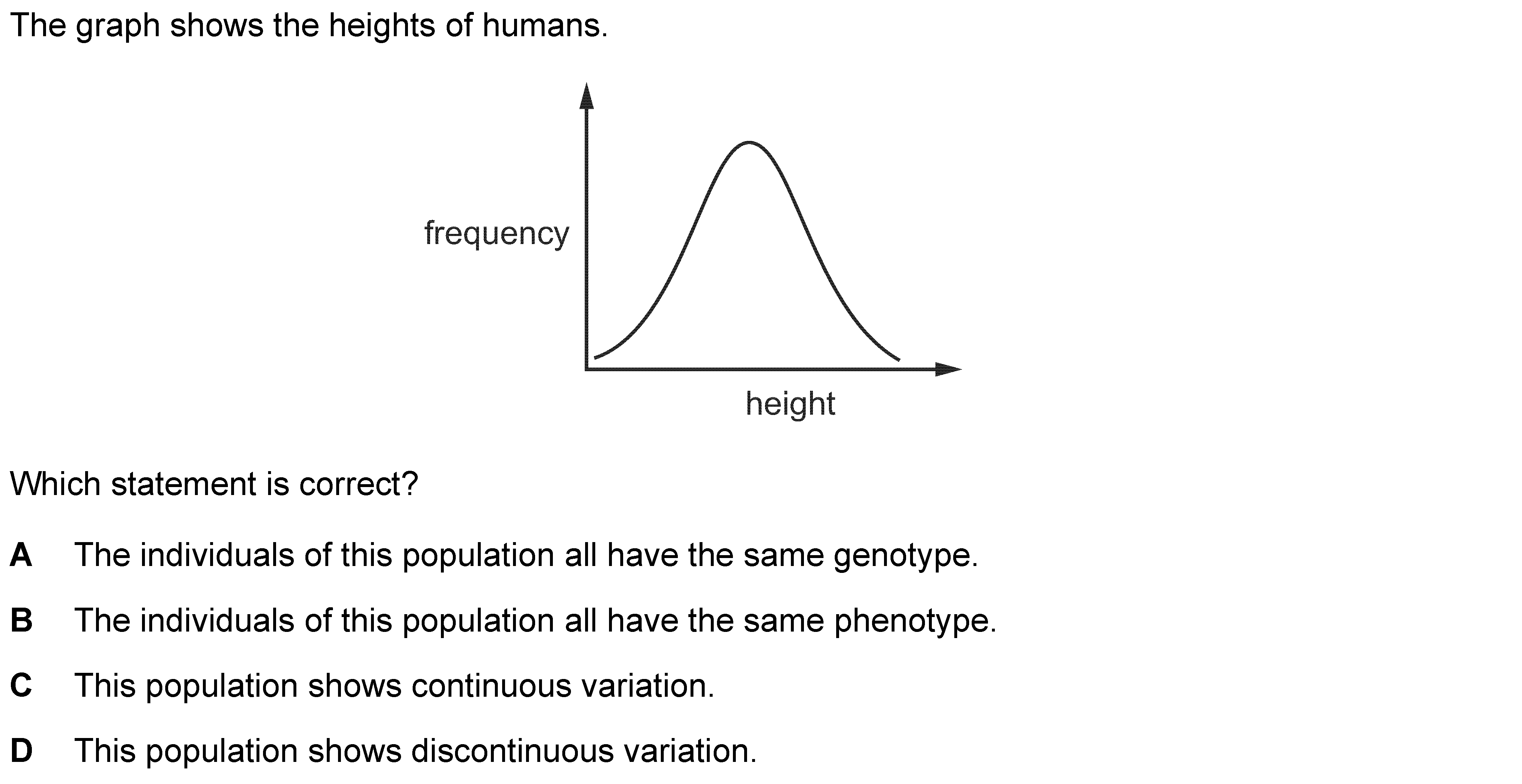
The graph shows the heights of humans.
frequency
height
Which statement is correct?
A The individuals of this population all have the same genotype.
The individuals of this population all have the same phenotype.
This population shows continuous variation.
0 OO DW
This population shows discontinuous variation.
frequency
height
Which statement is correct?
A The individuals of this population all have the same genotype.
The individuals of this population all have the same phenotype.
This population shows continuous variation.
0 OO DW
This population shows discontinuous variation.
Options:
A
B
C
D
Correct Key: C
A
B
C
D
Correct Key: C
Question 3
Paper Ref: 0610/22_Spring_2026_Q32
Paper Ref: 0610/22_Spring_2026_Q32
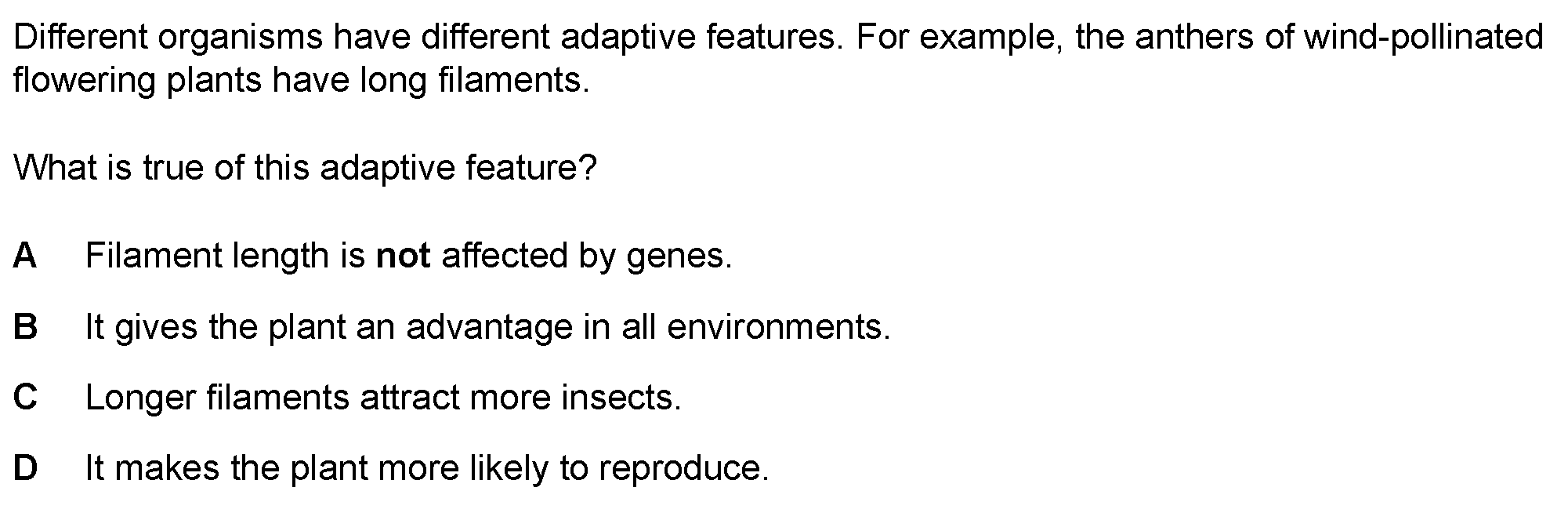
Different organisms have different adaptive features. For example, the anthers of wind-pollinated
flowering plants have long filaments.
What is true of this adaptive feature?
Filament length is not affected by genes.
B It gives the plant an advantage in all environments.
C Longer filaments attract more insects.
D_ It makes the plant more likely to reproduce.
flowering plants have long filaments.
What is true of this adaptive feature?
Filament length is not affected by genes.
B It gives the plant an advantage in all environments.
C Longer filaments attract more insects.
D_ It makes the plant more likely to reproduce.
Options:
A
B
C
D
Correct Key: D
A
B
C
D
Correct Key: D
Question 4
Paper Ref: 0610/21_Summer_2019_Q35
Paper Ref: 0610/21_Summer_2019_Q35
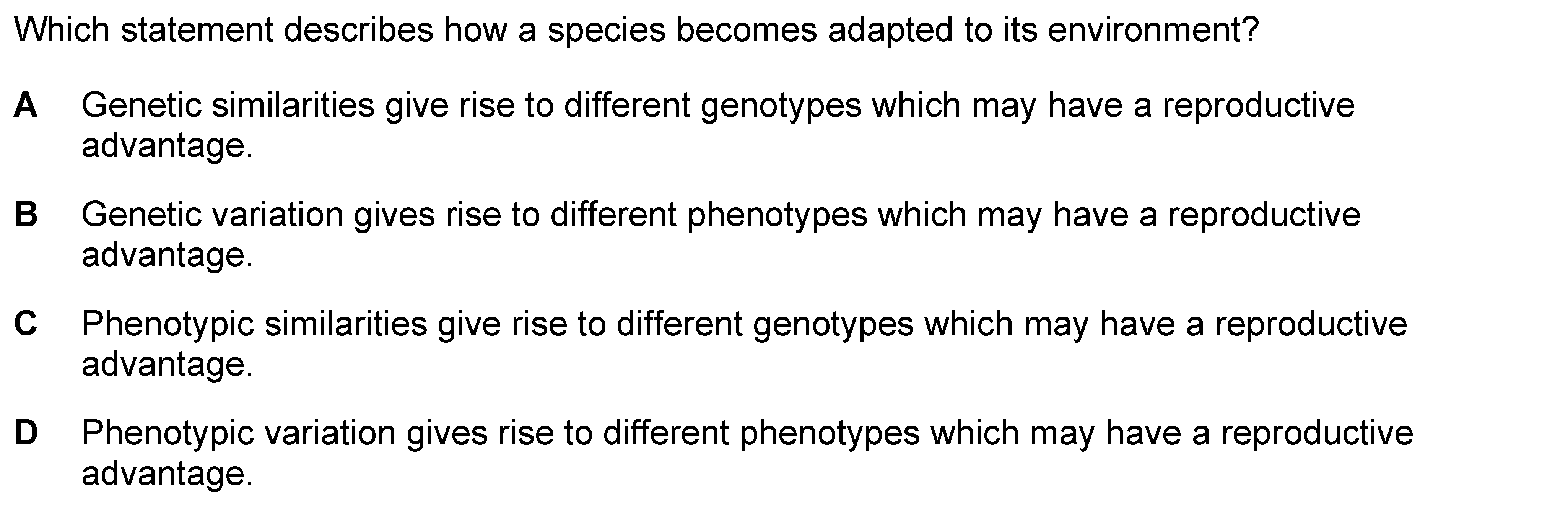
Which statement describes how a species becomes adapted to its environment?
A
B
Genetic similarities give rise to different genotypes which may have a reproductive
advantage.
Genetic variation gives rise to different phenotypes which may have a reproductive
advantage.
Phenotypic similarities give rise to different genotypes which may have a reproductive
advantage.
Phenotypic variation gives rise to different phenotypes which may have a reproductive
advantage.
Options:
A
B
C
D
Correct Key: B
A
B
C
D
Correct Key: B
Question 5
Paper Ref: 0610/22_Spring_2025_Q33
Paper Ref: 0610/22_Spring_2025_Q33
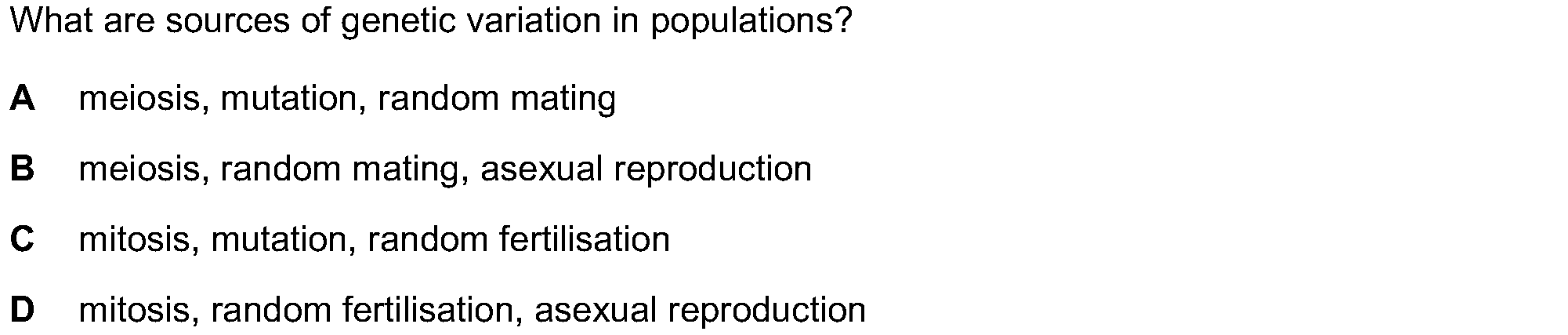
What are sources of genetic variation in populations?
A
B
Cc
D
meiosis, mutation, random mating
meiosis, random mating, asexual reproduction
mitosis, mutation, random fertilisation
mitosis, random fertilisation, asexual reproduction
A
B
Cc
D
meiosis, mutation, random mating
meiosis, random mating, asexual reproduction
mitosis, mutation, random fertilisation
mitosis, random fertilisation, asexual reproduction
Options:
A
B
C
D
Correct Key: A
A
B
C
D
Correct Key: A
Question 6
Paper Ref: 0610/22_Winter_2023_Q34
Paper Ref: 0610/22_Winter_2023_Q34
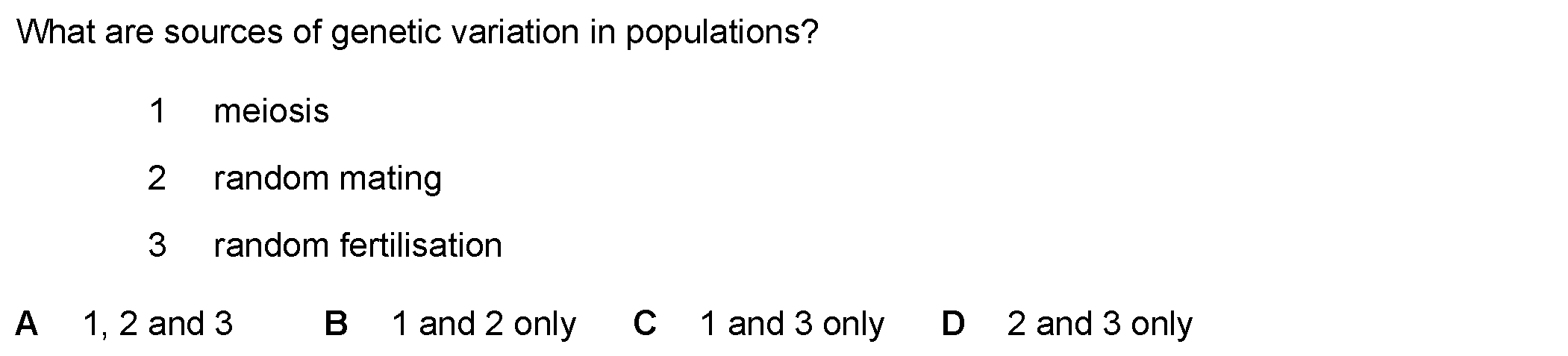
What are sources of genetic variation in populations?
1 meiosis
2 random mating
3 random fertilisation
A 1,2and3 B 1and2Z2only C 1and3only D 2and3only
1 meiosis
2 random mating
3 random fertilisation
A 1,2and3 B 1and2Z2only C 1and3only D 2and3only
Options:
A
B
C
D
Correct Key: A
A
B
C
D
Correct Key: A
Question 7
Paper Ref: 0610/12_Winter_2022_Q35
Paper Ref: 0610/12_Winter_2022_Q35
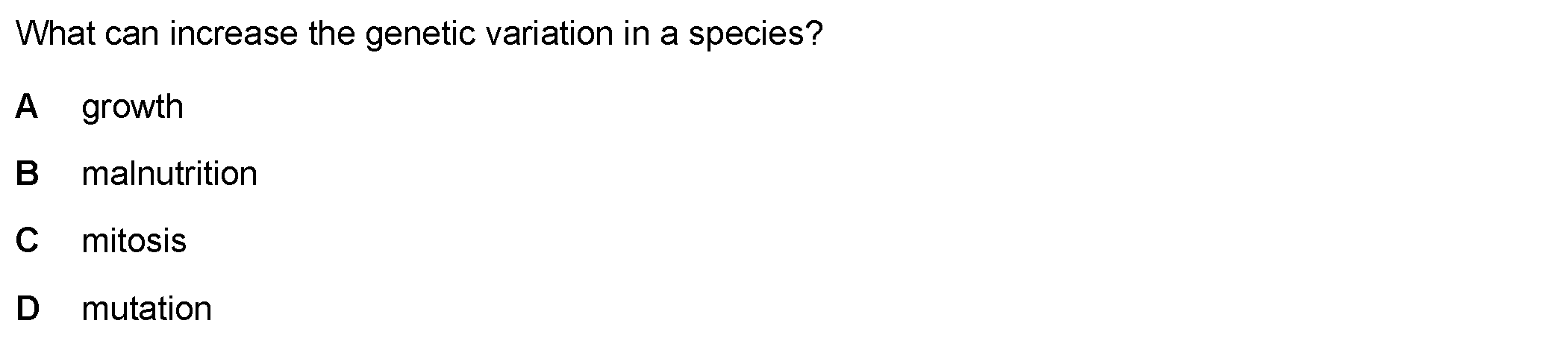
What can increase the genetic variation in a species?
A
B
Cc
D
growth
malnutrition
mitosis
mutation
A
B
Cc
D
growth
malnutrition
mitosis
mutation
Options:
A
B
C
D
Correct Key: D
A
B
C
D
Correct Key: D
Question 8
Paper Ref: 0610/12_Spring_2022_Q36
Paper Ref: 0610/12_Spring_2022_Q36
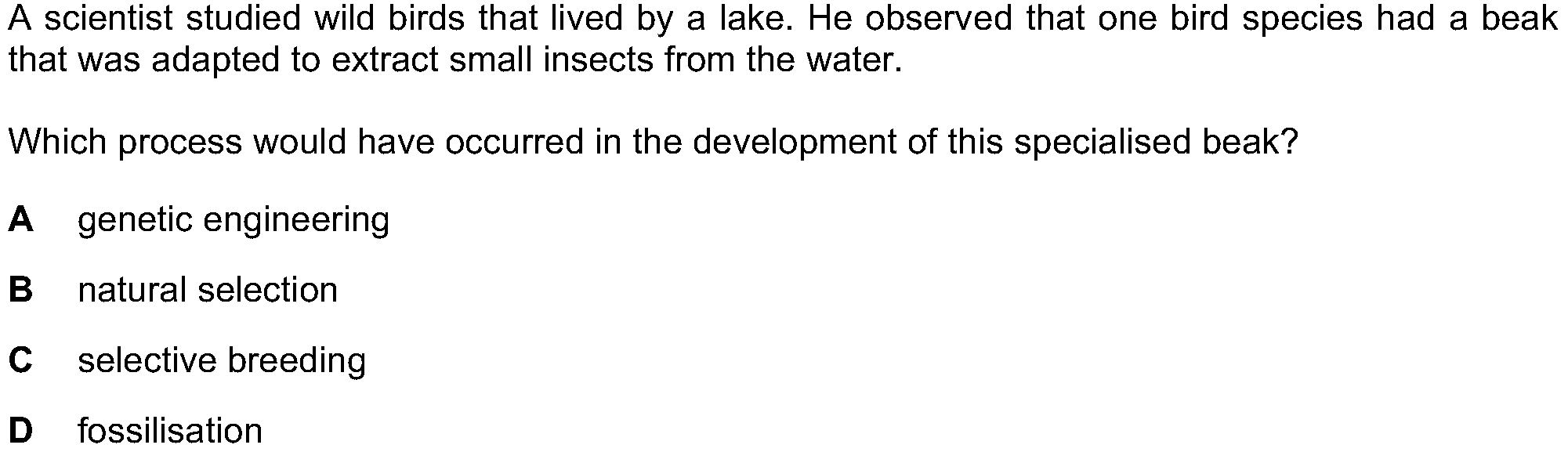
A scientist studied wild birds that lived by a lake. He observed that one bird species had a beak
that was adapted to extract small insects from the water.
Which process would have occurred in the development of this specialised beak?
A_ genetic engineering
Bnatural selection
C selective breeding
D
fossilisation
that was adapted to extract small insects from the water.
Which process would have occurred in the development of this specialised beak?
A_ genetic engineering
Bnatural selection
C selective breeding
D
fossilisation
Options:
A
B
C
D
Correct Key: B
A
B
C
D
Correct Key: B
Structured Questions Mark Scheme & Answers
•1•.• • • •[•C•P• •O•c•t•o•b•e•r• •2•0•2•5• •P•1• • •·• • •Q•9• • •P•a•r•t• •(•a•)• • •·• • •2•0•2•5• • •·• • •L•o•w•e•r• •S•e•c• •0•8•9•3•]• • • • • • •2• •e•a•c•h• •c•o•r•r•e•c•t• •a•n•s•w•e•r• •=• •1• •m•a•r•k• •d•i•f•f•e•r•e•n•t• •s•i•z•e•s• •(•o•n•l•y•)• •o•n•e• •h•a•s• •s•p•o•t•s• •i•n• •t•h•e• •d•a•r•k• •e•d•g•e• •o•f• •t•h•e• •w•i•n•g•s• •••c•c•e•p•t• •p•a•t•t•e•r•n• •(•o•n• •w•i•n•g•s•)• •o•r• •p•a•t•t•e•r•n•s• •(•o•n• •b•u•t•t•e•r•f•l•y•)• •o•r• •w•h•i•t•e• •s•p•o•t•s• •o•n• •w•i•n•g•s• •••c•c•e•p•t• •o•t•h•e•r• •e•x•a•m•p•l•e•s• •o•f• •v•a•r•i•a•t•i•o•n• •t•h•a•t• •c•a•n• •b•e• •s•e•e•n• •i•n• •t•h•e• •d•i•a•g•r•a•m•s• •e•.•g•.• •s•h•a•p•e• •o•f• •b•o•d•y• •I•g•n•o•r•e• •c•o•l•o•u•r• •d•i•f•f•e•r•e•n•c•e•s• •g•e•n•e•s• •o•r• •g•e•n•e•t•i•c•s• •1• •••c•c•e•p•t• •c•h•r•o•m•o•s•o•m•e•s• •o•r• •D•N••• •o•r• •m•u•t•a•t•i•o•n•
•2•.• • • •[•P•T• •S•7• •2•0•1•8• •P•2• • •·• • •Q•8• • •·• • •2•0•1•8• • •·• • •L•o•w•e•r• •S•e•c• •s•o•u•r•c•e• •a•d•d•i•t•i•o•n•]• • • • • • •N•o• •m•a•t•c•h•i•n•g• •m•a•r•k•-•s•c•h•e•m•e• •e•n•t•r•y• •w•a•s• •f•o•u•n•d• •i•n• •M•a•r•k•_•S•c•h•e•m•e•s•.•d•o•c•x•.•
•3•.• • • •[•P•T• •S•7• •2•0•1•8• •P•2• • •·• • •Q•8• • •·• • •2•0•1•8• • •·• • •L•o•w•e•r• •S•e•c• •s•o•u•r•c•e• •a•d•d•i•t•i•o•n•]• • • • • • •N•o• •m•a•t•c•h•i•n•g• •m•a•r•k•-•s•c•h•e•m•e• •e•n•t•r•y• •w•a•s• •f•o•u•n•d• •i•n• •M•a•r•k•_•S•c•h•e•m•e•s•.•d•o•c•x•.•
Last updated:
\n