7.2Motion, Forces and Energy
Gametes and inheritance — Question Bank (Cambridge) — Cambridge IGCSE Physics 0625 Revision Notes & Topical Questions
10 min read Lesson 67 of 91 Unit quiz
Cambridge Past Paper Bank
7.2 Gametes and inheritance
19 Multiple-Choice Questions with Official Mark Schemes
Question 1
0610/12_Winter_2023_Q31
Question 2
0610/13_Summer_2017_Q27
Question 3
0610/11_Summer_2023_Q31
Question 4
0610/22_Spring_2021_Q34
Question 5
0610/22_Winter_2017_Q28
Question 6
0610/11_Summer_2025_Q29
Question 7
0610/11_Summer_2018_Q32
Question 8
0610/12_Summer_2022_Q32
Question 9
0610/13_Summer_2026_Q27
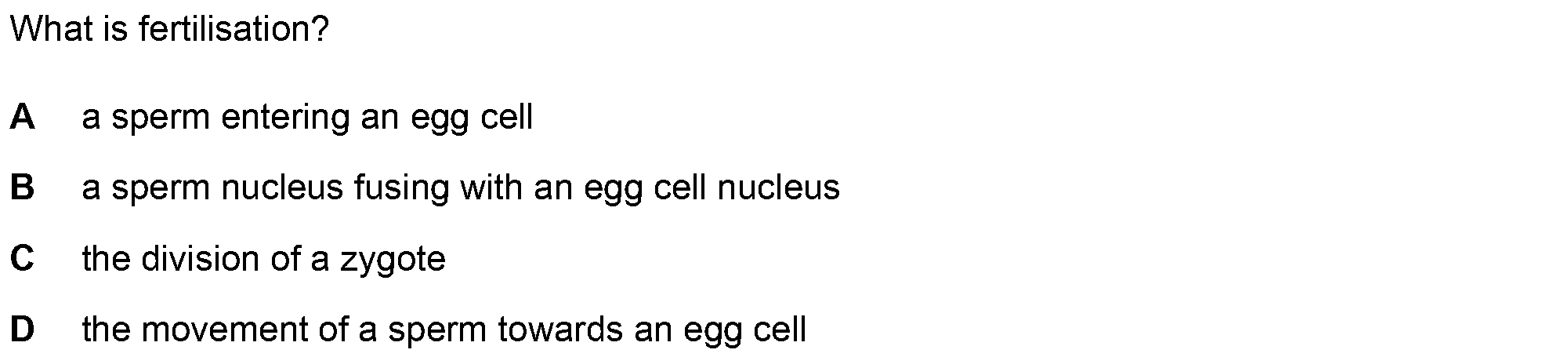
Question 10
0610/11_Summer_2020_Q27
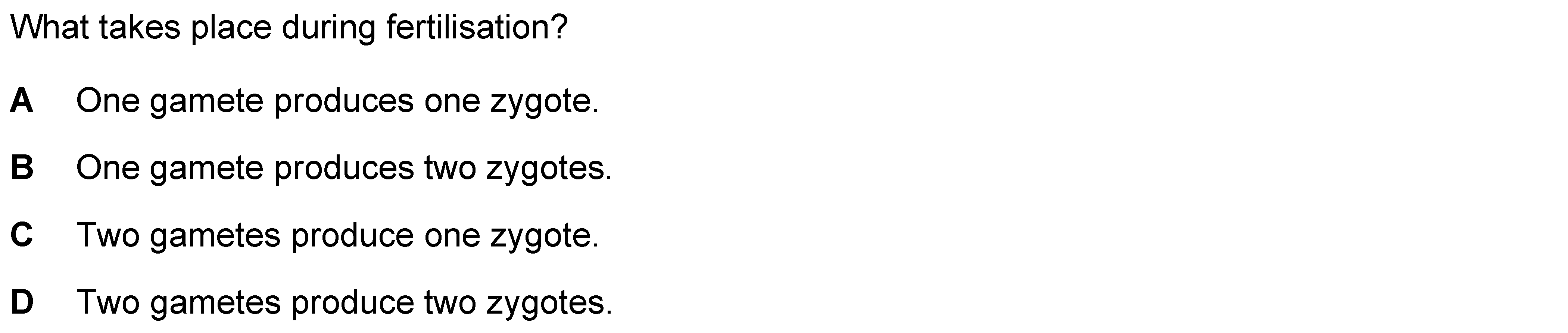
Question 11
0610/13_Summer_2018_Q29
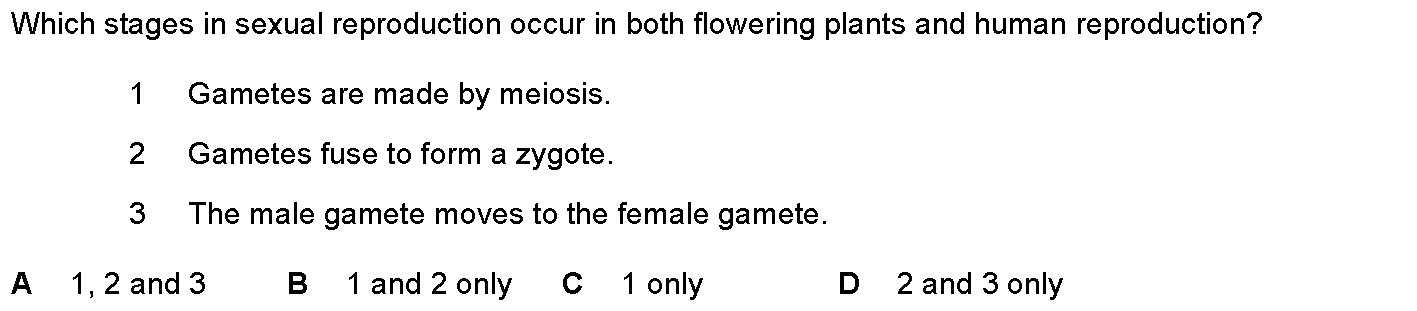
Question 12
0610/12_Winter_2022_Q30
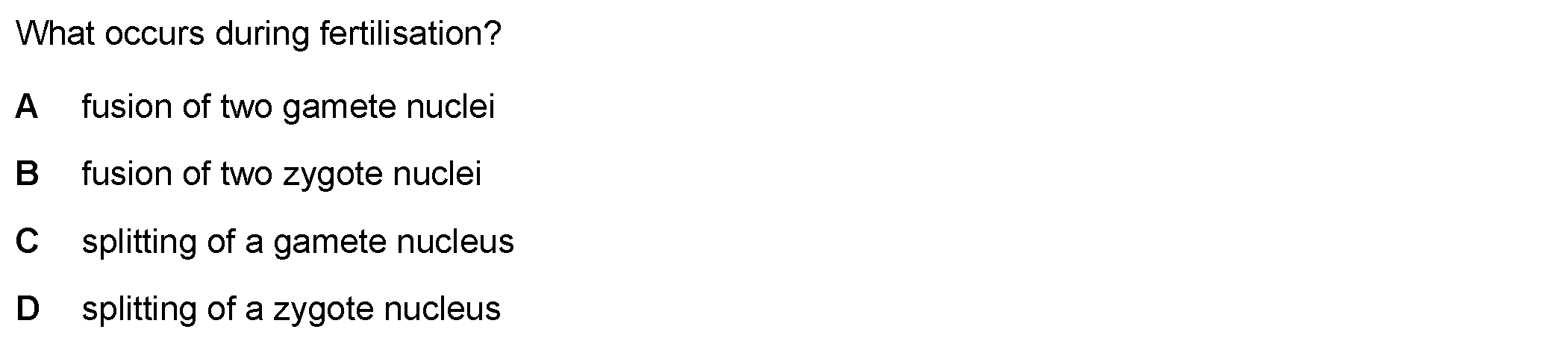
Question 13
0610/23_Summer_2016_Q30
Question 14
0610/21_Winter_2025_Q27
Question 15
5129/12_Summer_2023_Q10
Question 16
0610/22_Summer_2026_Q38
Question 17
0610/22_Summer_2020_Q28
Question 18
0610/22_Winter_2019_Q30
Question 19
0610/12_Spring_2021_Q29
Cambridge Lower Secondary Stage 9
7.2 Gametes and inheritance – Complete Question Bank & Mark Scheme
Total Questions19 Questions with Verified Solutions & Past Paper Mark Schemes
Multiple Choice Questions (Exam Practice)
Question 1
Paper Ref: 0610/12_Winter_2023_Q31
Paper Ref: 0610/12_Winter_2023_Q31
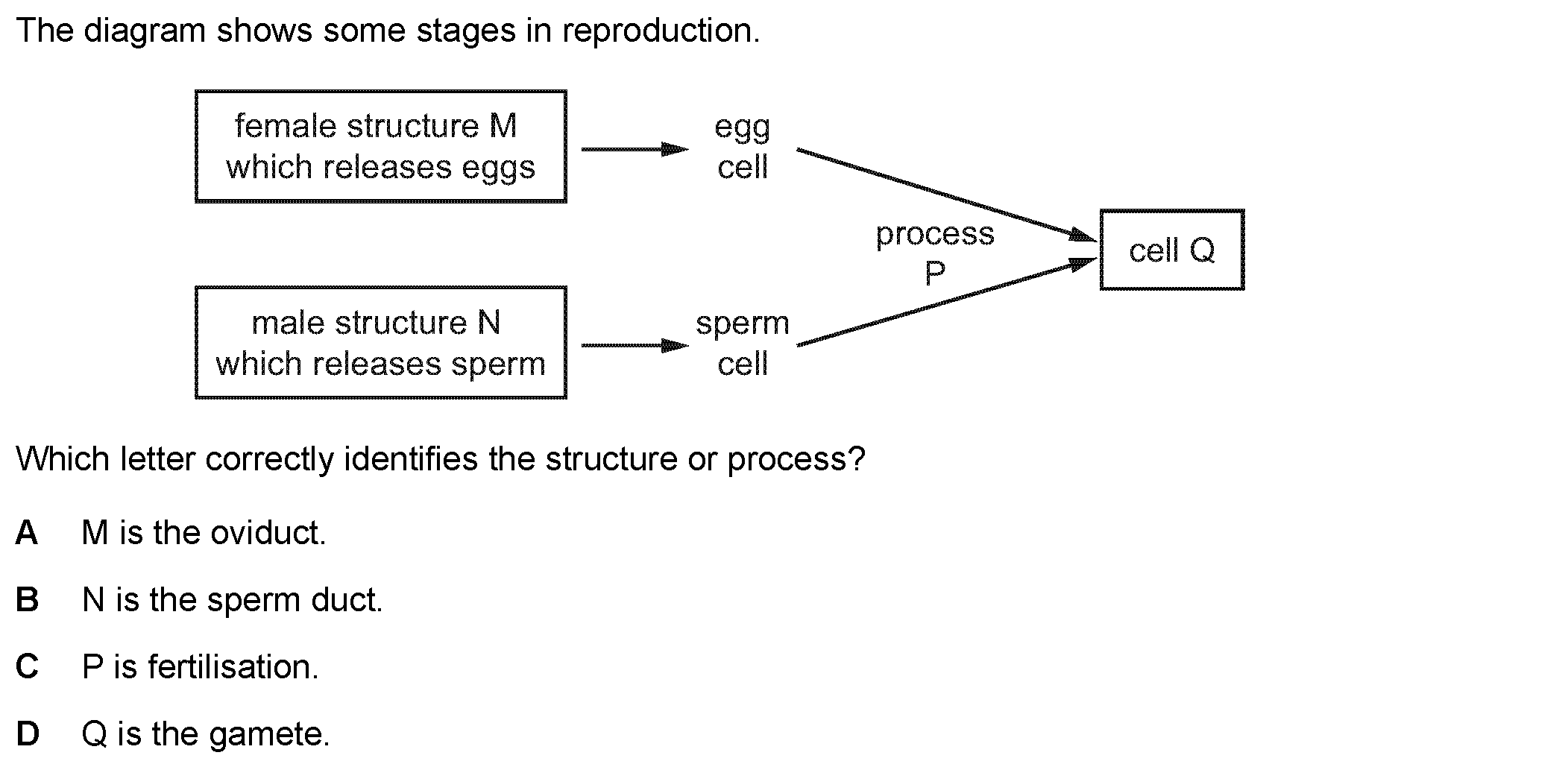
The diagram shows some stages in reproduction.
female structure M egg
: lI
which releases eggs cell ee
process
P
male structure N sperm 7
: eel
which releases sperm cell
Which letter correctly identifies the structure or process?
M is the oviduct.
B- Nis the sperm duct.
C_ Pis fertilisation.
D Qis the gamete.
female structure M egg
: lI
which releases eggs cell ee
process
P
male structure N sperm 7
: eel
which releases sperm cell
Which letter correctly identifies the structure or process?
M is the oviduct.
B- Nis the sperm duct.
C_ Pis fertilisation.
D Qis the gamete.
Options:
A
B
C
D
Correct Key: C
A
B
C
D
Correct Key: C
Question 2
Paper Ref: 0610/13_Summer_2017_Q27
Paper Ref: 0610/13_Summer_2017_Q27
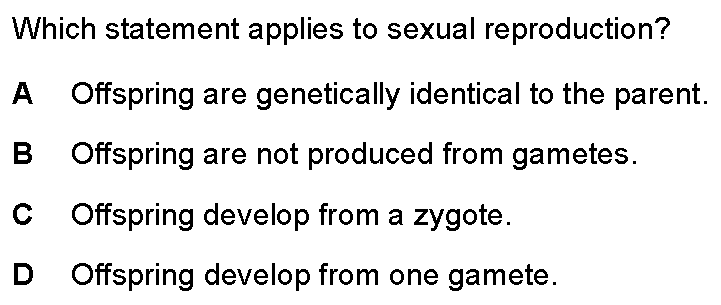
Which statement applies to sexual reproduction?
A
B
c
D
Offspring are genetically identical to the parent.
Offspring are not produced from gametes.
Offspring develop from a zygote.
Offspring develop from one gamete.
A
B
c
D
Offspring are genetically identical to the parent.
Offspring are not produced from gametes.
Offspring develop from a zygote.
Offspring develop from one gamete.
Options:
A
B
C
D
Correct Key: C
A
B
C
D
Correct Key: C
Question 3
Paper Ref: 0610/11_Summer_2023_Q31
Paper Ref: 0610/11_Summer_2023_Q31
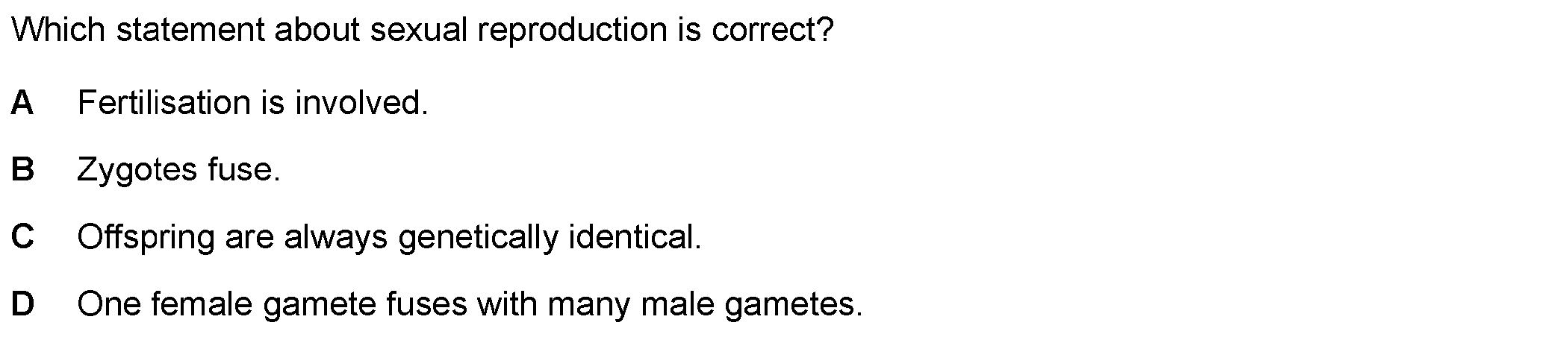
Which statement about sexual reproduction is correct?
A
B
Cc
D
Fertilisation is involved.
Zygotes fuse.
Offspring are always genetically identical.
One female gamete fuses with many male gametes.
A
B
Cc
D
Fertilisation is involved.
Zygotes fuse.
Offspring are always genetically identical.
One female gamete fuses with many male gametes.
Options:
A
B
C
D
Correct Key: A
A
B
C
D
Correct Key: A
Question 4
Paper Ref: 0610/22_Spring_2021_Q34
Paper Ref: 0610/22_Spring_2021_Q34
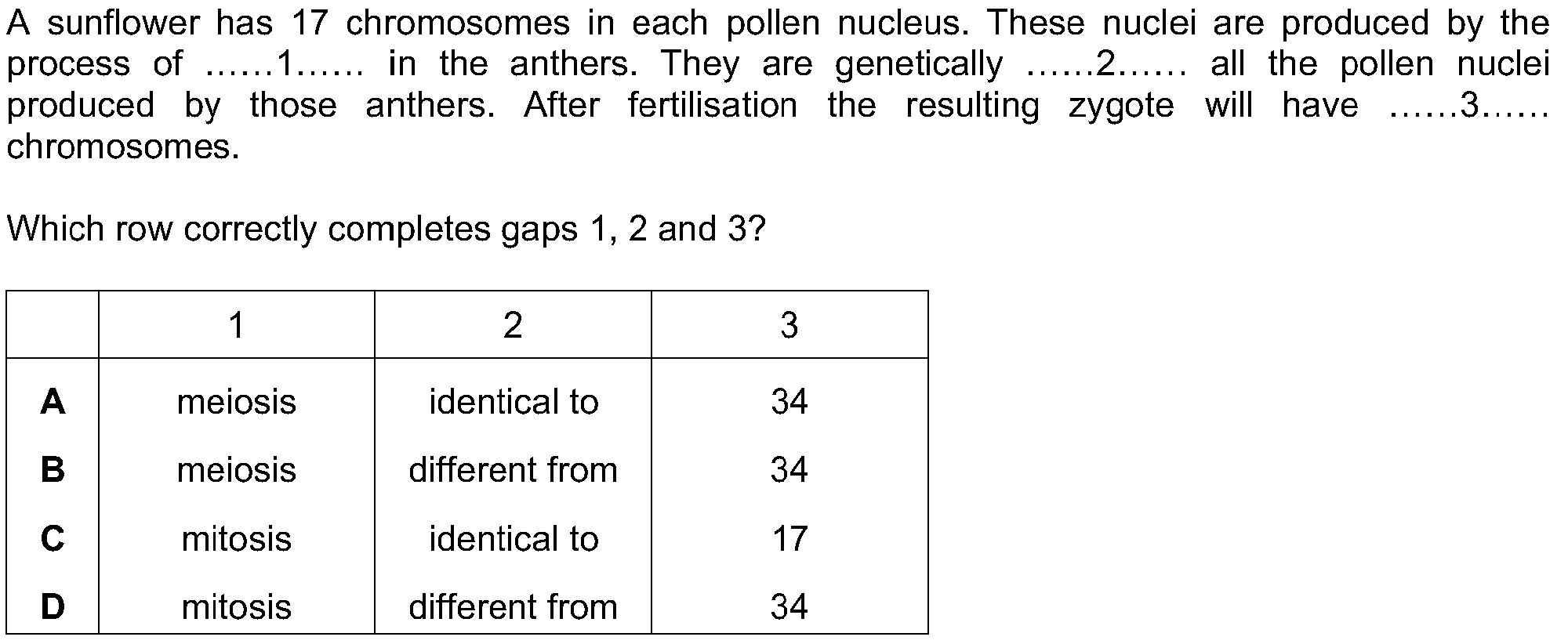
A sunflower has 17 chromosomes in each pollen nucleus. These nuclei are produced by the
process of …… To. in the anthers. They are genetically …… Qos. all the pollen nuclei
produced by those anthers. After fertilisation the resulting zygote will have …… Soe.
chromosomes.
Which row correctly completes gaps 1, 2 and 3?
1 2 3
A meiosis identical to 34
B meiosis different from 34
Cc mitosis identical to 17
D mitosis different from 34
Options:
A
B
C
D
Correct Key: B
A
B
C
D
Correct Key: B
Question 5
Paper Ref: 0610/22_Winter_2017_Q28
Paper Ref: 0610/22_Winter_2017_Q28
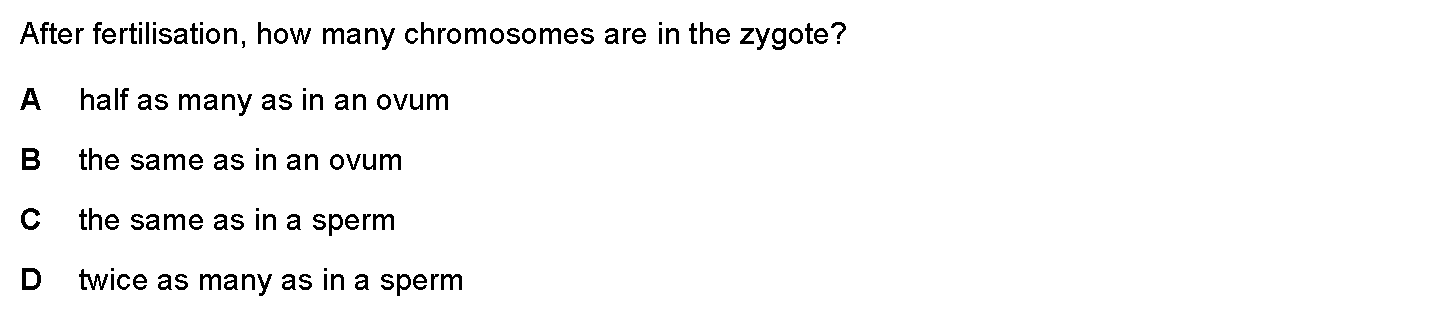
After fertilisation, how many chromosomes are in the zygote?
A half as many as in an ovum
B_ the same as in an ovum
C the same as ina sperm
D
twice as many as ina sperm
A half as many as in an ovum
B_ the same as in an ovum
C the same as ina sperm
D
twice as many as ina sperm
Options:
A
B
C
D
Correct Key: D
A
B
C
D
Correct Key: D
Question 6
Paper Ref: 0610/11_Summer_2025_Q29
Paper Ref: 0610/11_Summer_2025_Q29
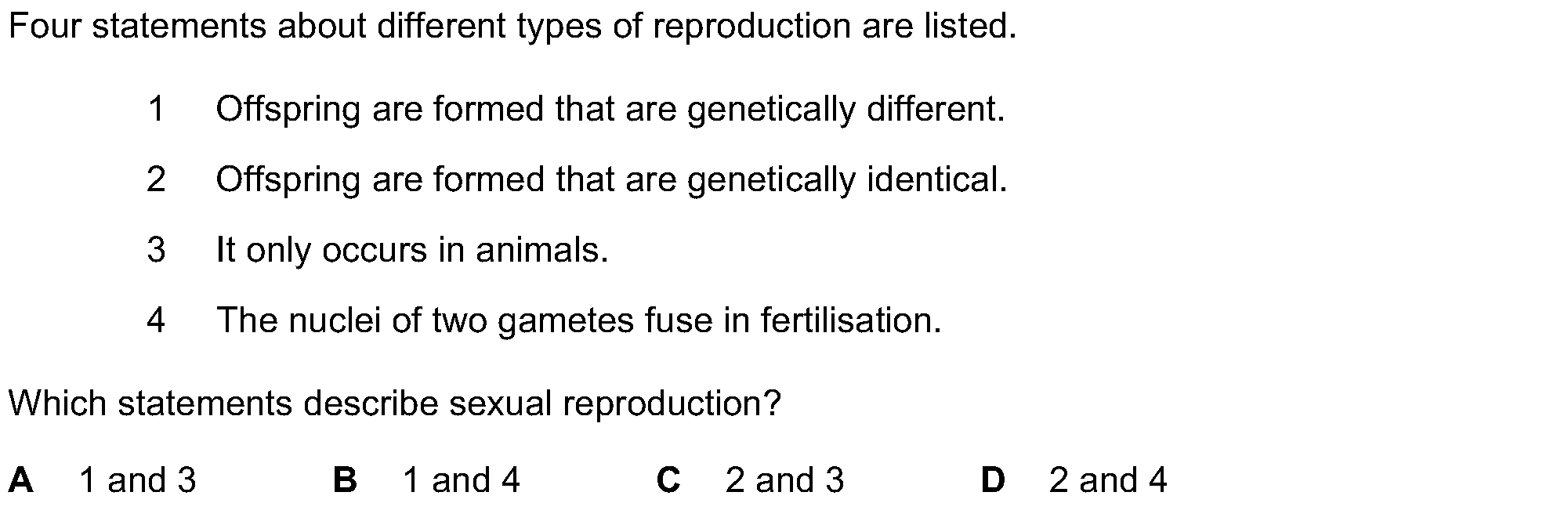
Four statements about different types of reproduction are listed.
1 Offspring are formed that are genetically different.
2 Offspring are formed that are genetically identical.
3 It only occurs in animals.
4 The nuclei of two gametes fuse in fertilisation.
Which statements describe sexual reproduction?
A iand3 B iand4 C 2and3 D 2and4
1 Offspring are formed that are genetically different.
2 Offspring are formed that are genetically identical.
3 It only occurs in animals.
4 The nuclei of two gametes fuse in fertilisation.
Which statements describe sexual reproduction?
A iand3 B iand4 C 2and3 D 2and4
Options:
A
B
C
D
Correct Key: B
A
B
C
D
Correct Key: B
Question 7
Paper Ref: 0610/11_Summer_2018_Q32
Paper Ref: 0610/11_Summer_2018_Q32
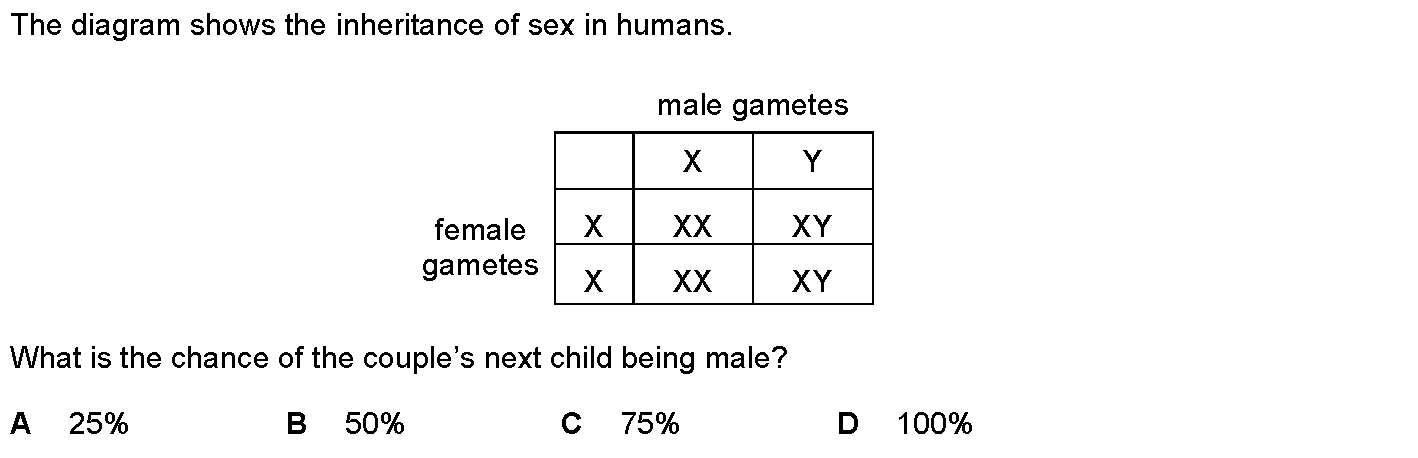
The diagram shows the inheritance of sex in humans.
female
gametes
What is the chance of the couple’s next child being male?
A 25% B 50%
male gametes
xX Y
X XX XY
X XX XY
C 75%
D
100%
female
gametes
What is the chance of the couple’s next child being male?
A 25% B 50%
male gametes
xX Y
X XX XY
X XX XY
C 75%
D
100%
Options:
A
B
C
D
Correct Key: B
A
B
C
D
Correct Key: B
Question 8
Paper Ref: 0610/12_Summer_2022_Q32
Paper Ref: 0610/12_Summer_2022_Q32
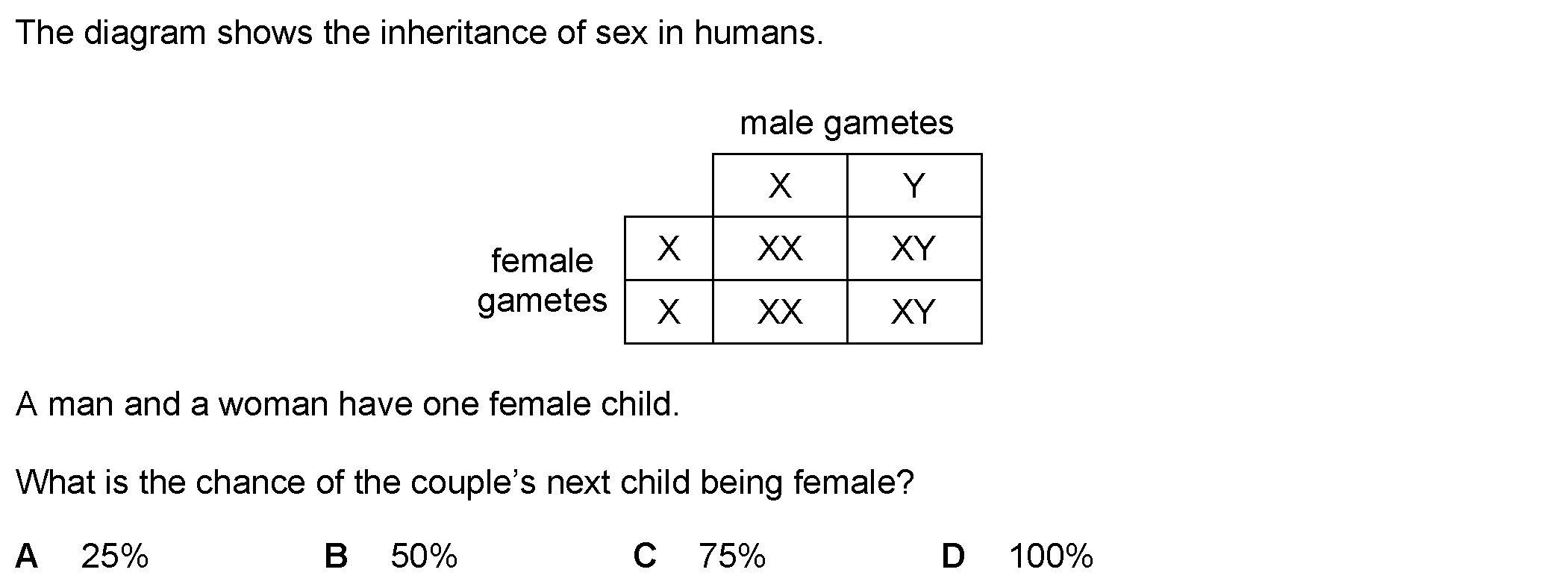
The diagram shows the inheritance of sex in humans.
male gametes
female
gametes
A man and a woman have one female child.
What is the chance of the couple’s next child being female?
A 25% B 50% C 75% D 100%
male gametes
female
gametes
A man and a woman have one female child.
What is the chance of the couple’s next child being female?
A 25% B 50% C 75% D 100%
Options:
A
B
C
D
Correct Key: B
A
B
C
D
Correct Key: B
Question 9
Paper Ref: 0610/13_Summer_2026_Q27
Paper Ref: 0610/13_Summer_2026_Q27
What is fertilisation?
A asperm entering an egg cell
a sperm nucleus fusing with an egg cell nucleus
the division of a zygote
oO ©} W
the movement of a sperm towards an egg cell
A asperm entering an egg cell
a sperm nucleus fusing with an egg cell nucleus
the division of a zygote
oO ©} W
the movement of a sperm towards an egg cell
Options:
A
B
C
D
Correct Key: B
A
B
C
D
Correct Key: B
Question 10
Paper Ref: 0610/11_Summer_2020_Q27
Paper Ref: 0610/11_Summer_2020_Q27
What takes place during fertilisation?
A
B
C
D
One gamete produces one zygote.
One gamete produces two zygotes.
Two gametes produce one zygote.
Two gametes produce two zygotes.
A
B
C
D
One gamete produces one zygote.
One gamete produces two zygotes.
Two gametes produce one zygote.
Two gametes produce two zygotes.
Options:
A
B
C
D
Correct Key: C
A
B
C
D
Correct Key: C
Question 11
Paper Ref: 0610/13_Summer_2018_Q29
Paper Ref: 0610/13_Summer_2018_Q29
Which stages in sexual reproduction occur in both flowering plants and human reproduction?
1 Gametes are made by meiosis.
2 Gametes fuse to form a zygote.
3 The male gamete moves to the female gamete.
A 1,2and3 B tand2only C 1 only D 2and3only
1 Gametes are made by meiosis.
2 Gametes fuse to form a zygote.
3 The male gamete moves to the female gamete.
A 1,2and3 B tand2only C 1 only D 2and3only
Options:
A
B
C
D
Correct Key: A
A
B
C
D
Correct Key: A
Question 12
Paper Ref: 0610/12_Winter_2022_Q30
Paper Ref: 0610/12_Winter_2022_Q30
What occurs during fertilisation?
A
B
Cc
D
fusion of two gamete nuclei
fusion of two zygote nuclei
splitting of a gamete nucleus
splitting of a zygote nucleus
A
B
Cc
D
fusion of two gamete nuclei
fusion of two zygote nuclei
splitting of a gamete nucleus
splitting of a zygote nucleus
Options:
A
B
C
D
Correct Key: A
A
B
C
D
Correct Key: A
Question 13
Paper Ref: 0610/23_Summer_2016_Q30
Paper Ref: 0610/23_Summer_2016_Q30
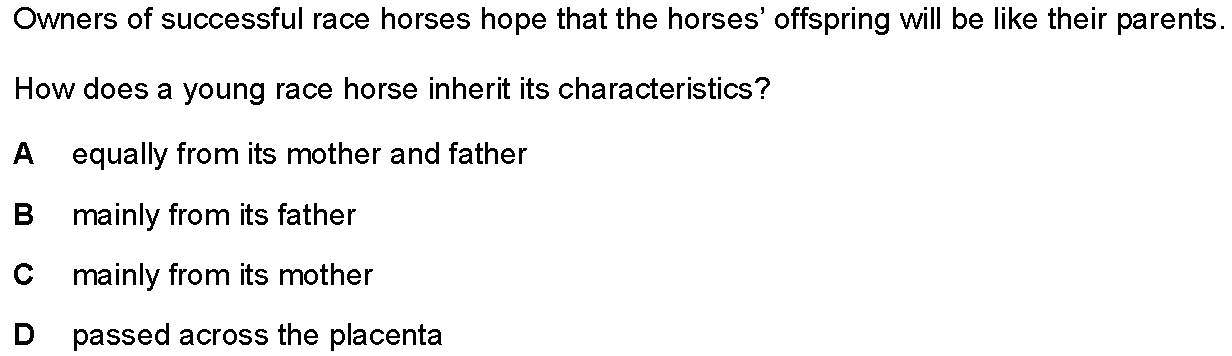
Owners of successful race horses hope that the horses’ offspring will be like their parents.
How does a young race horse inherit its characteristics?
A equally from its mother and father
B_ mainly from its father
C mainly from its mother
D
passed across the placenta
How does a young race horse inherit its characteristics?
A equally from its mother and father
B_ mainly from its father
C mainly from its mother
D
passed across the placenta
Options:
A
B
C
D
Correct Key: A
A
B
C
D
Correct Key: A
Question 14
Paper Ref: 0610/21_Winter_2025_Q27
Paper Ref: 0610/21_Winter_2025_Q27
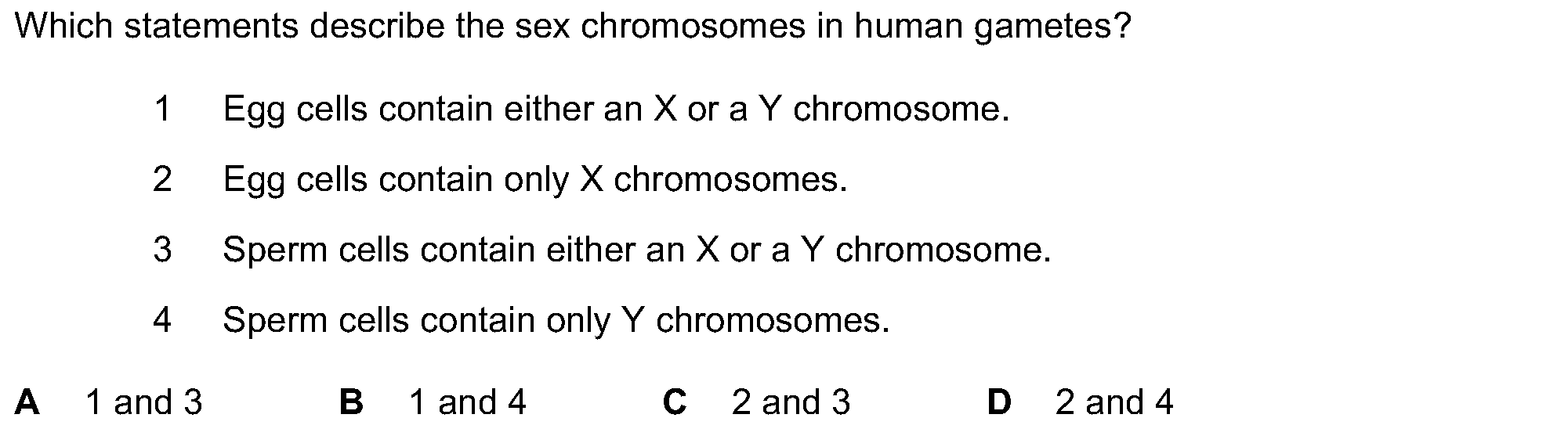
Which statements describe the sex chromosomes in human gametes?
A
1
2
3
4
1 and 3
Egg cells contain either an X or a Y chromosome.
Egg cells contain only X chromosomes.
Sperm cells contain either an X or a Y chromosome.
Sperm cells contain only Y chromosomes.
B iand4 C 2and3 D 2and4
A
1
2
3
4
1 and 3
Egg cells contain either an X or a Y chromosome.
Egg cells contain only X chromosomes.
Sperm cells contain either an X or a Y chromosome.
Sperm cells contain only Y chromosomes.
B iand4 C 2and3 D 2and4
Options:
A
B
C
D
Correct Key: C
A
B
C
D
Correct Key: C
Question 15
Paper Ref: 5129/12_Summer_2023_Q10
Paper Ref: 5129/12_Summer_2023_Q10
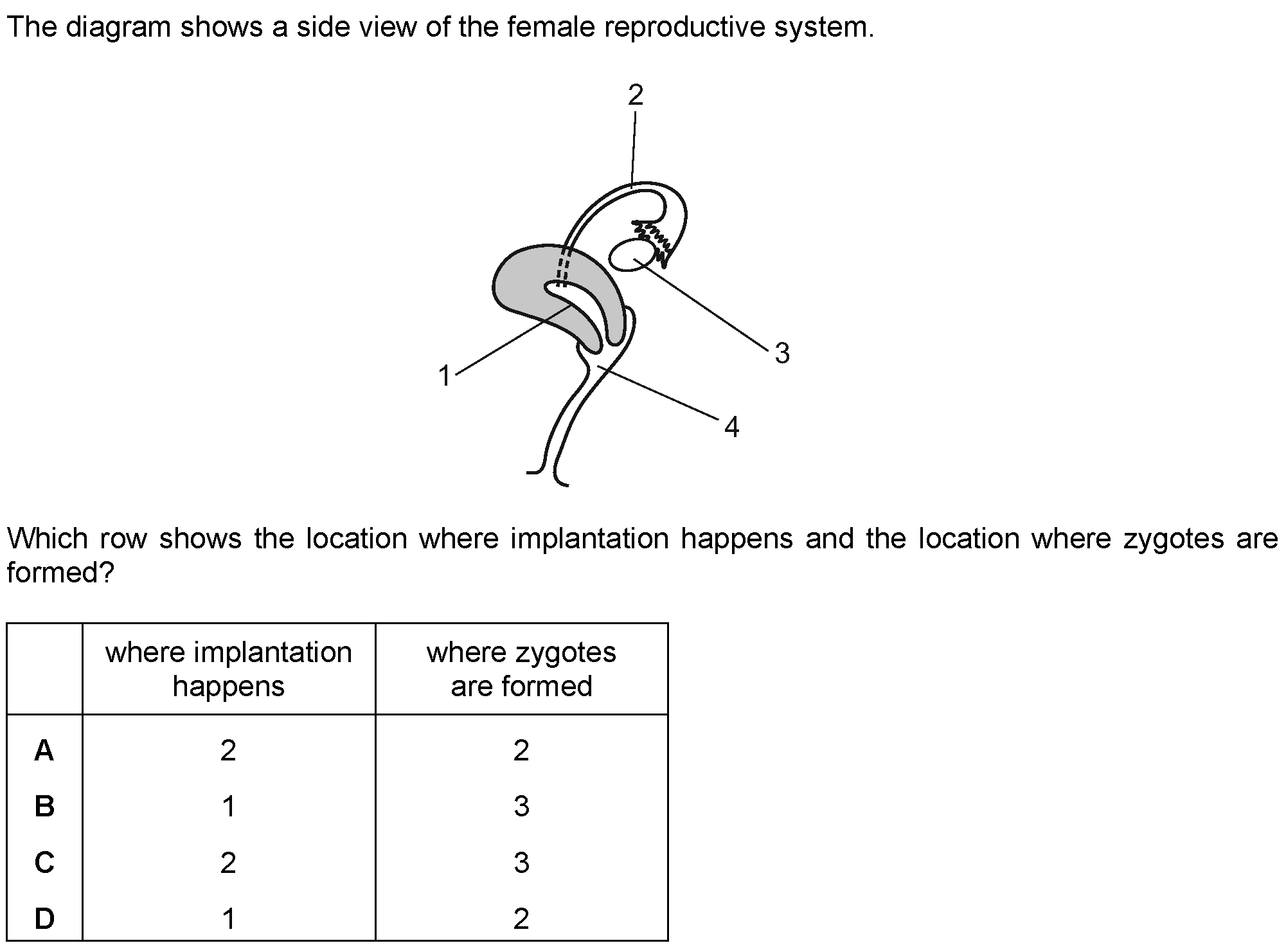
The diagram shows a side view of the female reproductive system.
Which row shows the location where implantation happens and the location where zygotes are
formed?
where implantation where zygotes
happens are formed
2 2
1 3
2 3
1 2
Which row shows the location where implantation happens and the location where zygotes are
formed?
where implantation where zygotes
happens are formed
2 2
1 3
2 3
1 2
Options:
A
B
C
D
Correct Key: D
A
B
C
D
Correct Key: D
Question 16
Paper Ref: 0610/22_Summer_2026_Q38
Paper Ref: 0610/22_Summer_2026_Q38
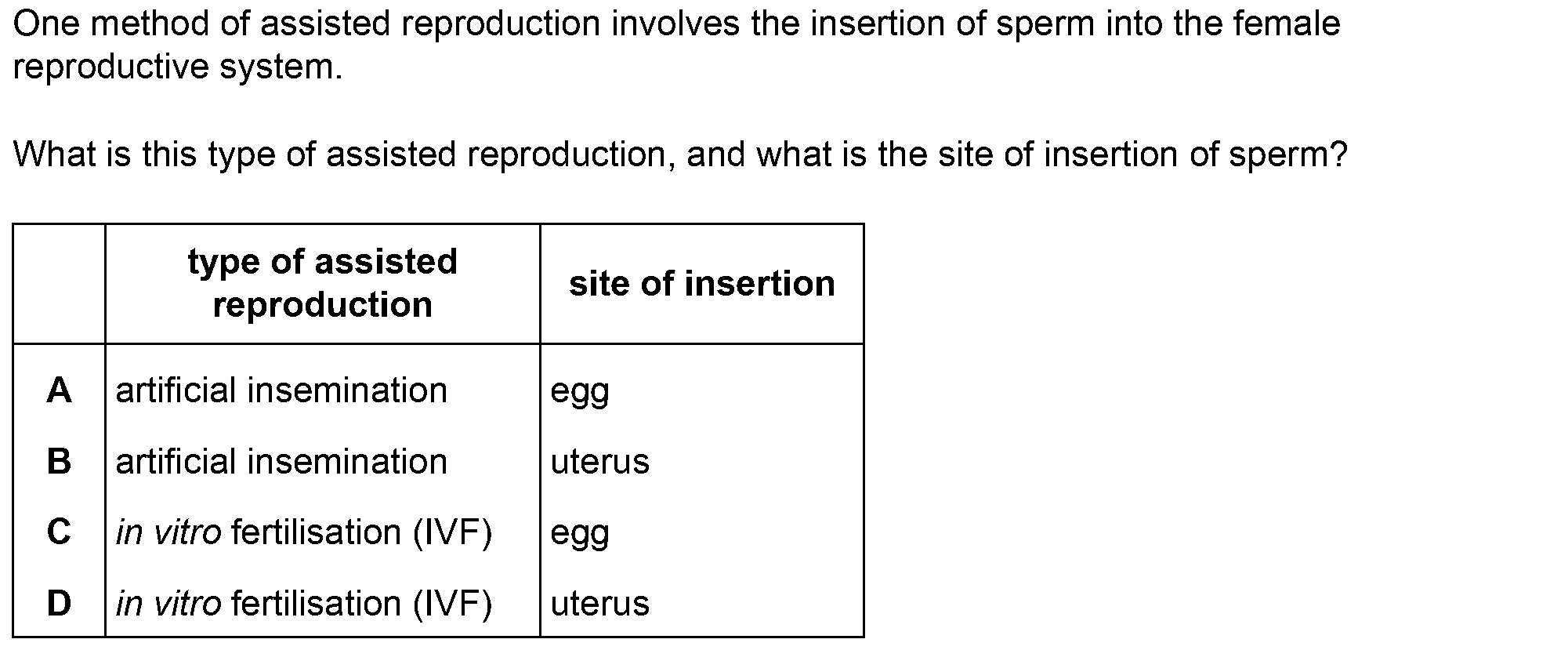
One method of assisted reproduction involves the insertion of sperm into the female
reproductive system.
What is this type of assisted reproduction, and what is the site of insertion of sperm?
type of assisted site of insertion
reproduction
artificial insemination
artificial insemination
in vitro fertilisation (IVF)
in vitro fertilisation (IVF)
reproductive system.
What is this type of assisted reproduction, and what is the site of insertion of sperm?
type of assisted site of insertion
reproduction
artificial insemination
artificial insemination
in vitro fertilisation (IVF)
in vitro fertilisation (IVF)
Options:
A
B
C
D
Correct Key: B
A
B
C
D
Correct Key: B
Question 17
Paper Ref: 0610/22_Summer_2020_Q28
Paper Ref: 0610/22_Summer_2020_Q28
In a comparison between the processes of artificial insemination (Al) and in vitro fertilisation
(IVF), which statement applies to IVF only?
A Human egg cells are harvested from the ovary.
B Donated sperm cells are used to fertilise the egg cells.
C Childless couples are given the opportunity to have a child of their own.
D
Fertilisation occurs inside the body of the female.
(IVF), which statement applies to IVF only?
A Human egg cells are harvested from the ovary.
B Donated sperm cells are used to fertilise the egg cells.
C Childless couples are given the opportunity to have a child of their own.
D
Fertilisation occurs inside the body of the female.
Options:
A
B
C
D
Correct Key: A
A
B
C
D
Correct Key: A
Question 18
Paper Ref: 0610/22_Winter_2019_Q30
Paper Ref: 0610/22_Winter_2019_Q30
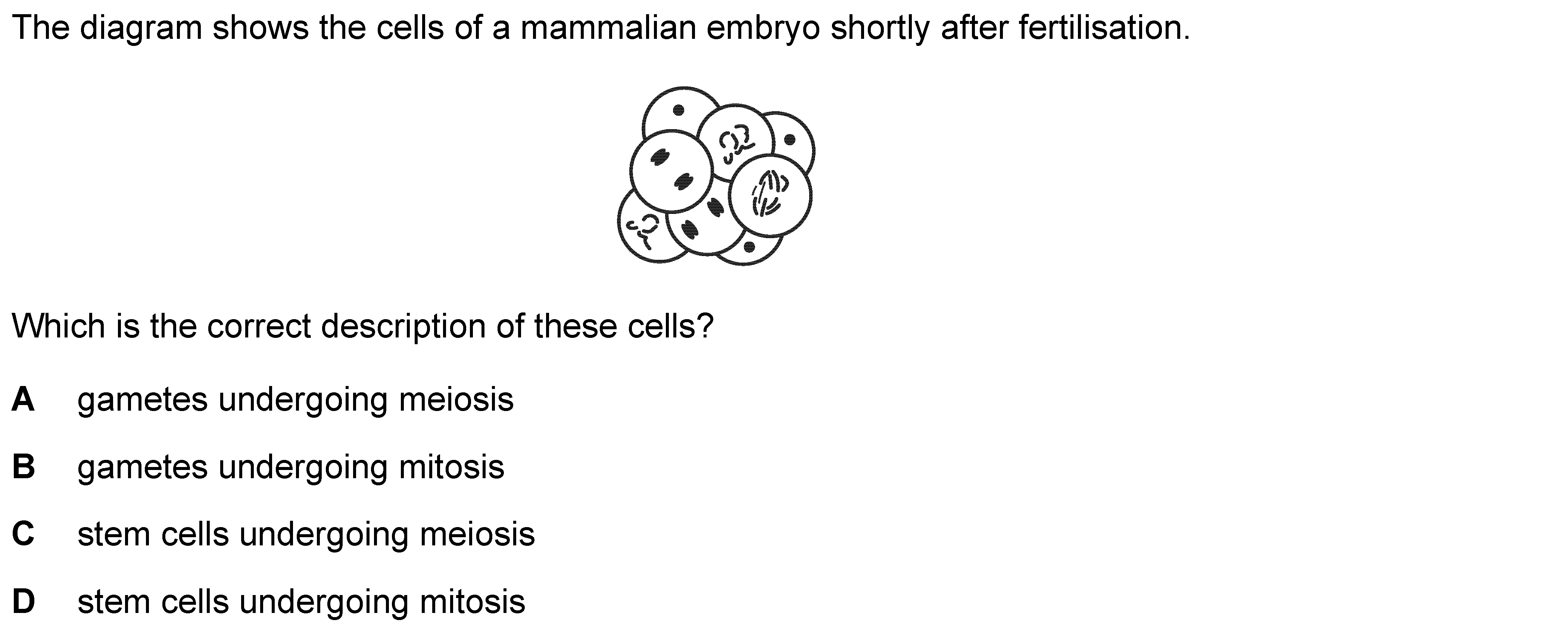
The diagram shows the cells of a mammalian embryo shortly after fertilisation.
Which is the correct description of these cells?
A gametes undergoing meiosis
B gametes undergoing mitosis
C stem cells undergoing meiosis
D
stem cells undergoing mitosis
Which is the correct description of these cells?
A gametes undergoing meiosis
B gametes undergoing mitosis
C stem cells undergoing meiosis
D
stem cells undergoing mitosis
Options:
A
B
C
D
Correct Key: D
A
B
C
D
Correct Key: D
Question 19
Paper Ref: 0610/12_Spring_2021_Q29
Paper Ref: 0610/12_Spring_2021_Q29
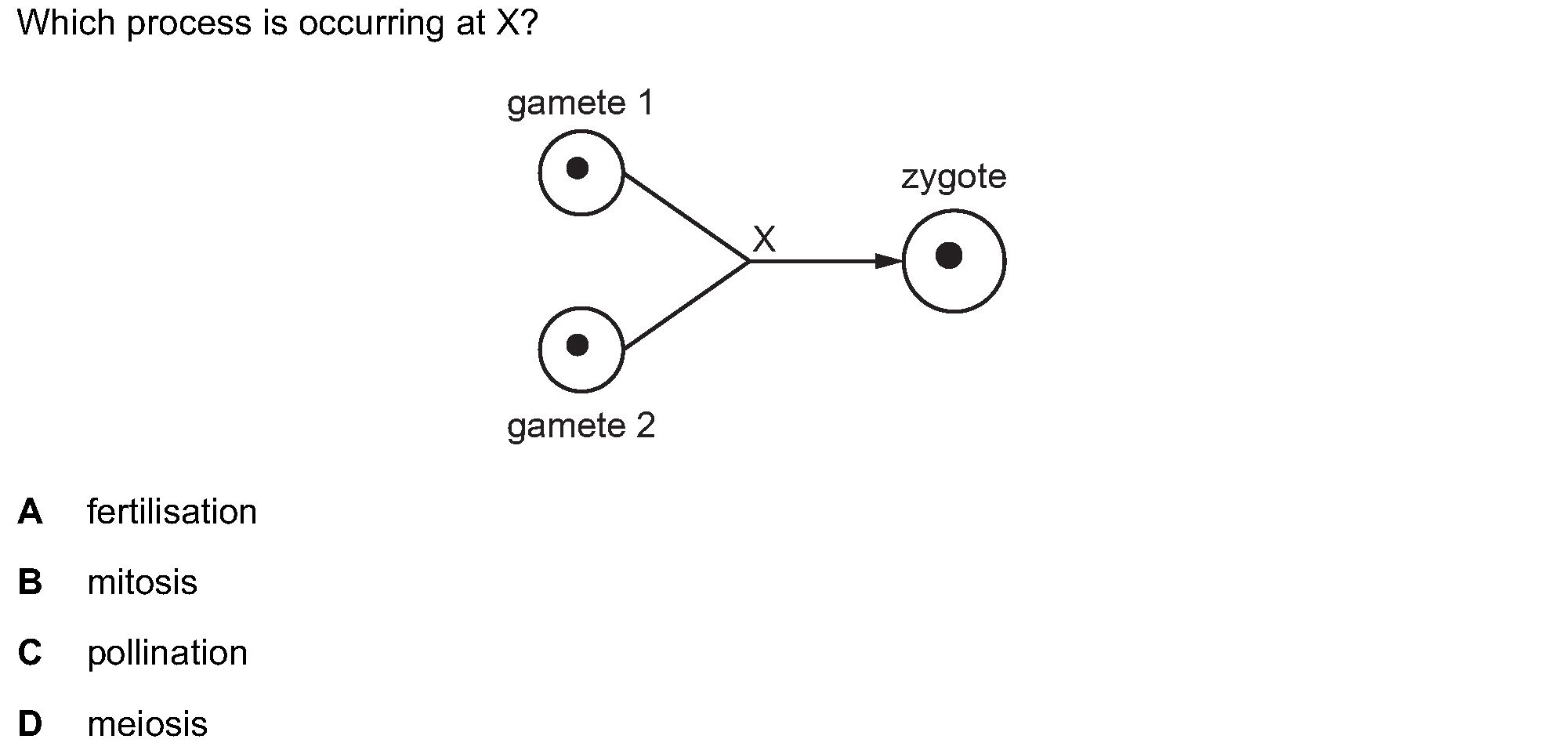
Which process is occurring at X?
gamete 1
gamete 2
A fertilisation
B_ mitosis
C pollination
D_ meiosis
zygote
gamete 1
gamete 2
A fertilisation
B_ mitosis
C pollination
D_ meiosis
zygote
Options:
A
B
C
D
Correct Key: A
A
B
C
D
Correct Key: A
Structured Questions Mark Scheme & Answers
•1•.• • • •[•P•R•I• •2•0•0•7•B• •P•2• • •·• • •Q•3• • •P•a•r•t• •(•b•)• • •·• • •2•0•0•7• • •·• • •P•r•i•m•a•r•y• •0•8•4•6•]• • • • • • •(•n•o• •p•u•b•l•i•s•h•e•d• •m•a•r•k• •s•c•h•e•m•e• •f•o•r• •t•h•i•s• •p•a•p•e•r•)•
•2•.• • • •[•P•R•I• •2•0•0•7•B• •P•2• • •·• • •Q•3• • •P•a•r•t• •(•d•)• • •·• • •2•0•0•7• • •·• • •P•r•i•m•a•r•y• •0•8•4•6•]• • • • • • •(•n•o• •p•u•b•l•i•s•h•e•d• •m•a•r•k• •s•c•h•e•m•e• •f•o•r• •t•h•i•s• •p•a•p•e•r•)•
•3•.• • • •[•P•R•I• •2•0•0•7•D• •P•2• • •·• • •Q•5• • •P•a•r•t• •(•a•)• • •·• • •2•0•0•7• • •·• • •P•r•i•m•a•r•y• •0•8•4•6•]• • • • • • •(•n•o• •p•u•b•l•i•s•h•e•d• •m•a•r•k• •s•c•h•e•m•e• •f•o•r• •t•h•i•s• •p•a•p•e•r•)•
•4•.• • • •[•P•R•I• •2•0•0•7•D• •P•2• • •·• • •Q•5• • •P•a•r•t• •(•b•)• • •·• • •2•0•0•7• • •·• • •P•r•i•m•a•r•y• •0•8•4•6•]• • • • • • •(•n•o• •p•u•b•l•i•s•h•e•d• •m•a•r•k• •s•c•h•e•m•e• •f•o•r• •t•h•i•s• •p•a•p•e•r•)•
•5•.• • • •[•P•R•I• •2•0•0•7•D• •P•2• • •·• • •Q•5• • •P•a•r•t• •(•c•)• • •·• • •2•0•0•7• • •·• • •P•r•i•m•a•r•y• •0•8•4•6•]• • • • • • •(•n•o• •p•u•b•l•i•s•h•e•d• •m•a•r•k• •s•c•h•e•m•e• •f•o•r• •t•h•i•s• •p•a•p•e•r•)•
•6•.• • • •[•P•R•I• •2•0•0•7•D• •P•2• • •·• • •Q•5• • •P•a•r•t• •(•d•)• • •·• • •2•0•0•7• • •·• • •P•r•i•m•a•r•y• •0•8•4•6•]• • • • • • •(•n•o• •p•u•b•l•i•s•h•e•d• •m•a•r•k• •s•c•h•e•m•e• •f•o•r• •t•h•i•s• •p•a•p•e•r•)•
•7•.• • • •[•P•R•I• •2•0•0•7•D• •P•2• • •·• • •Q•5• • •P•a•r•t• •(•e•)• • •·• • •2•0•0•7• • •·• • •P•r•i•m•a•r•y• •0•8•4•6•]• • • • • • •(•n•o• •p•u•b•l•i•s•h•e•d• •m•a•r•k• •s•c•h•e•m•e• •f•o•r• •t•h•i•s• •p•a•p•e•r•)•
•8•.• • • •[•P•R•I• •2•0•0•7•D• •P•2• • •·• • •Q•5• • •P•a•r•t• •(•e•)• • •·• • •2•0•0•7• • •·• • •P•r•i•m•a•r•y• •0•8•4•6•]• • • • • • •(•n•o• •p•u•b•l•i•s•h•e•d• •m•a•r•k• •s•c•h•e•m•e• •f•o•r• •t•h•i•s• •p•a•p•e•r•)•
Last updated:
\n