5.2Motion, Forces and Energy
Comparing metals and nonmetals — Question Bank (Cambridge) — Cambridge IGCSE Physics 0625 Revision Notes & Topical Questions
15 min read Lesson 48 of 91 Unit quiz
Cambridge Past Paper Bank
5.2 Comparing metals and nonmetals
7 Multiple-Choice Questions with Official Mark Schemes
Question 1
0620/12_Winter_2021_Q25
Question 2
0620/22_Summer_2009_Q29
Question 3
5129/12_Summer_2025_Q24
Question 4
0620/23_Winter_2011_Q29
Question 5
0620/13_Winter_2024_Q28
Question 6
5129/11_Winter_2024_Q24
Question 7
0620/21_Summer_2025_Q23
Cambridge Lower Secondary Stage 7
5.2 Comparing metals and nonmetals – Complete Question Bank & Mark Scheme
Total Questions7 Questions with Verified Solutions & Past Paper Mark Schemes
Multiple Choice Questions (Exam Practice)
Question 1
Paper Ref: 0620/12_Winter_2021_Q25
Paper Ref: 0620/12_Winter_2021_Q25
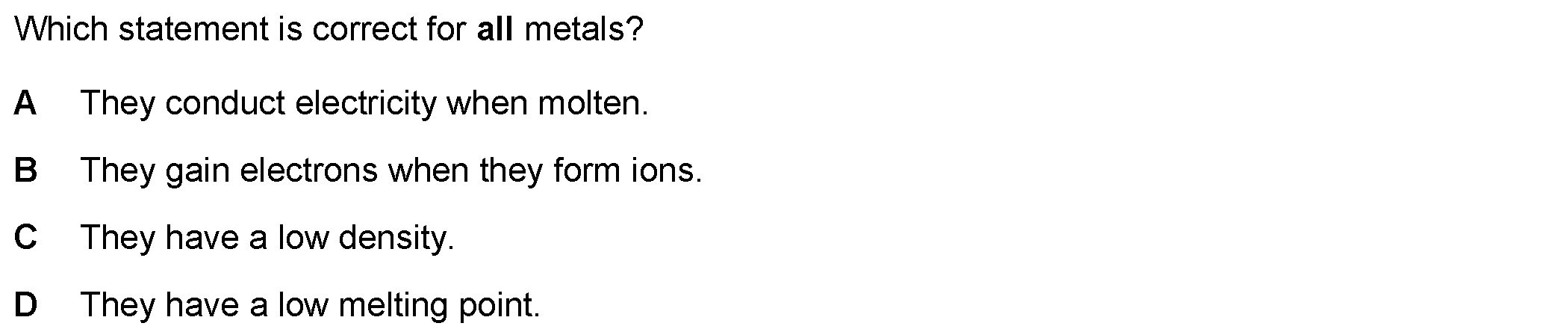
Which statement is correct for all metals?
A They conduct electricity when molten.
They gain electrons when they form ions.
They have a low density.
0 OO DW
They have a low melting point.
A They conduct electricity when molten.
They gain electrons when they form ions.
They have a low density.
0 OO DW
They have a low melting point.
Options:
A
B
C
D
Correct Key: A
A
B
C
D
Correct Key: A
Question 2
Paper Ref: 0620/22_Summer_2009_Q29
Paper Ref: 0620/22_Summer_2009_Q29
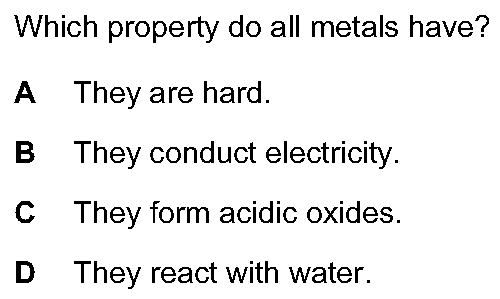
Which property do all metals have?
oo BD
They are hard.
They conduct electricity.
They form acidic oxides.
They react with water.
oo BD
They are hard.
They conduct electricity.
They form acidic oxides.
They react with water.
Options:
A
B
C
D
Correct Key: B
A
B
C
D
Correct Key: B
Question 3
Paper Ref: 5129/12_Summer_2025_Q24
Paper Ref: 5129/12_Summer_2025_Q24
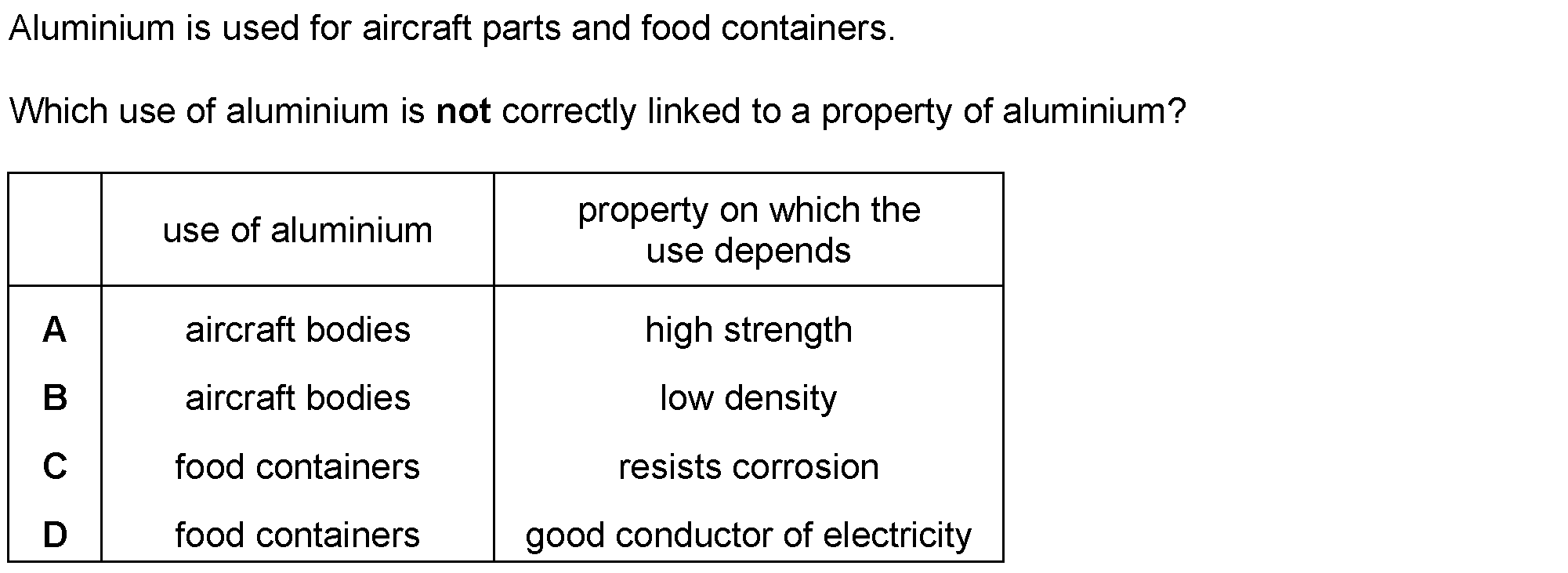
Aluminium is used for aircraft parts and food containers.
Which use of aluminium is not correctly linked to a property of aluminium?
use of aluminium property on which the
use depends
aircraft bodies high strength
aircraft bodies low density
food containers resists corrosion
food containers good conductor of electricity
Which use of aluminium is not correctly linked to a property of aluminium?
use of aluminium property on which the
use depends
aircraft bodies high strength
aircraft bodies low density
food containers resists corrosion
food containers good conductor of electricity
Options:
A
B
C
D
Correct Key: D
A
B
C
D
Correct Key: D
Question 4
Paper Ref: 0620/23_Winter_2011_Q29
Paper Ref: 0620/23_Winter_2011_Q29
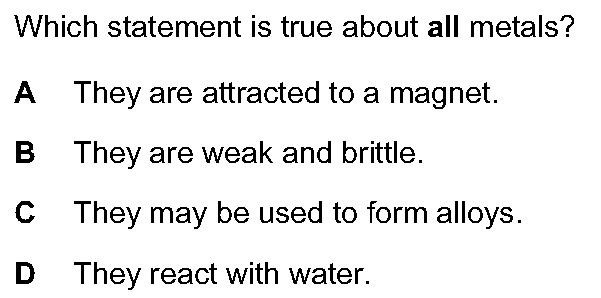
Which statement is true about all metals?
oa DB
They are attracted to a magnet.
They are weak and brittle.
They may be used to form alloys.
They react with water.
oa DB
They are attracted to a magnet.
They are weak and brittle.
They may be used to form alloys.
They react with water.
Options:
A
B
C
D
Correct Key: C
A
B
C
D
Correct Key: C
Question 5
Paper Ref: 0620/13_Winter_2024_Q28
Paper Ref: 0620/13_Winter_2024_Q28
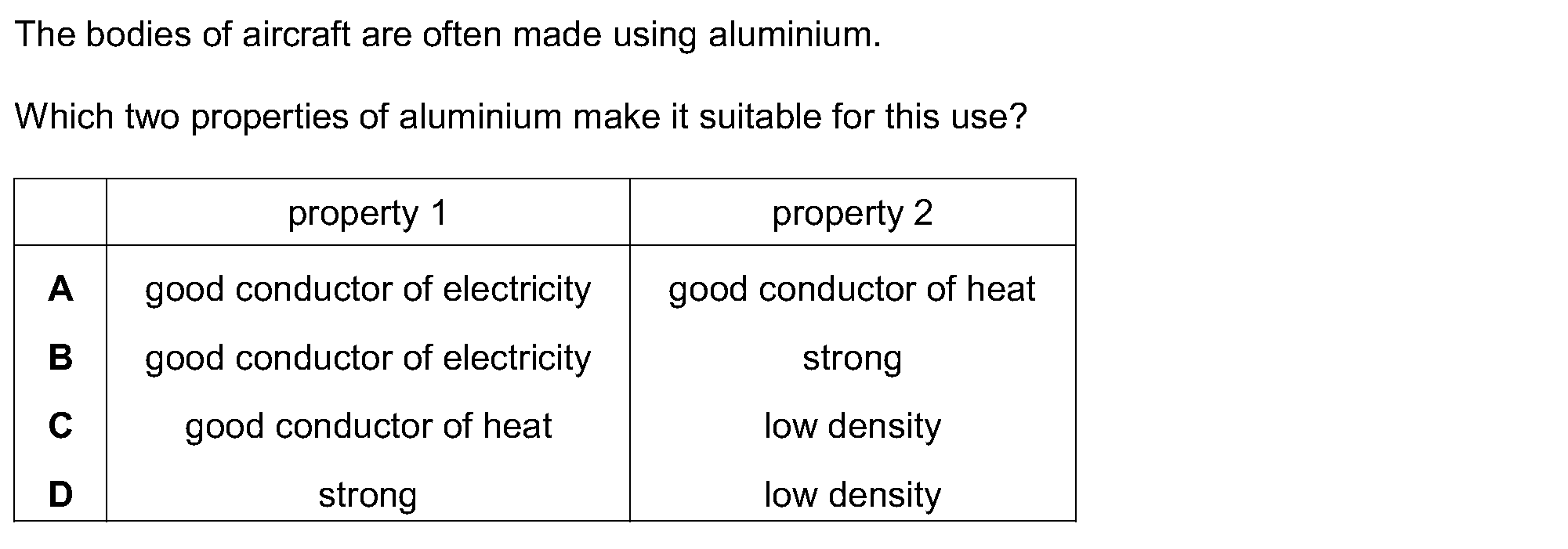
The bodies of aircraft are often made using aluminium.
Which two properties of aluminium make it suitable for this use?
property 1
property 2
00 WwW YP
good conductor of electricity
good conductor of electricity
good conductor of heat
strong
good conductor of heat
strong
low density
low density
Which two properties of aluminium make it suitable for this use?
property 1
property 2
00 WwW YP
good conductor of electricity
good conductor of electricity
good conductor of heat
strong
good conductor of heat
strong
low density
low density
Options:
A
B
C
D
Correct Key: D
A
B
C
D
Correct Key: D
Question 6
Paper Ref: 5129/11_Winter_2024_Q24
Paper Ref: 5129/11_Winter_2024_Q24
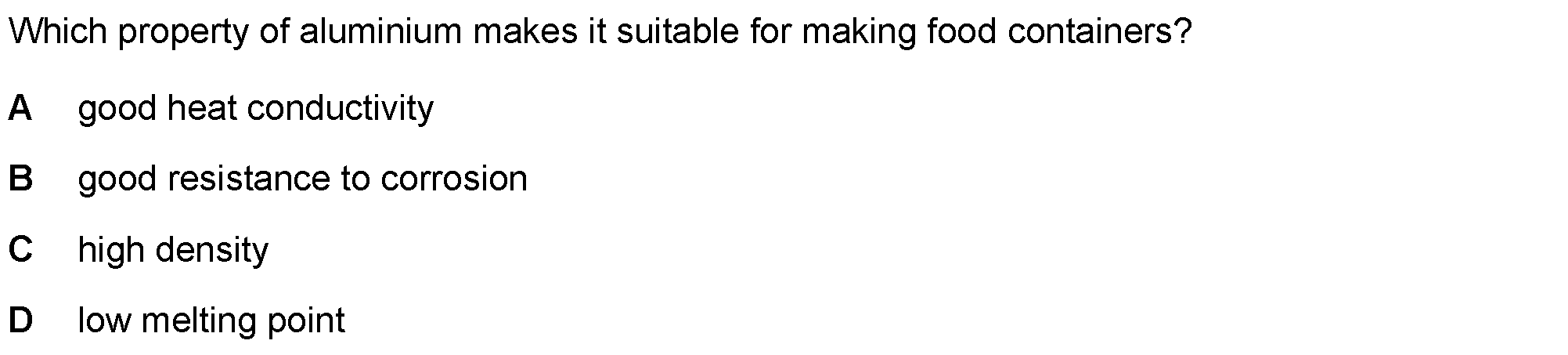
Which property of aluminium makes it suitable for making food containers?
A good heat conductivity
B_ good resistance to corrosion
C high density
D
low melting point
A good heat conductivity
B_ good resistance to corrosion
C high density
D
low melting point
Options:
A
B
C
D
Correct Key: B
A
B
C
D
Correct Key: B
Question 7
Paper Ref: 0620/21_Summer_2025_Q23
Paper Ref: 0620/21_Summer_2025_Q23
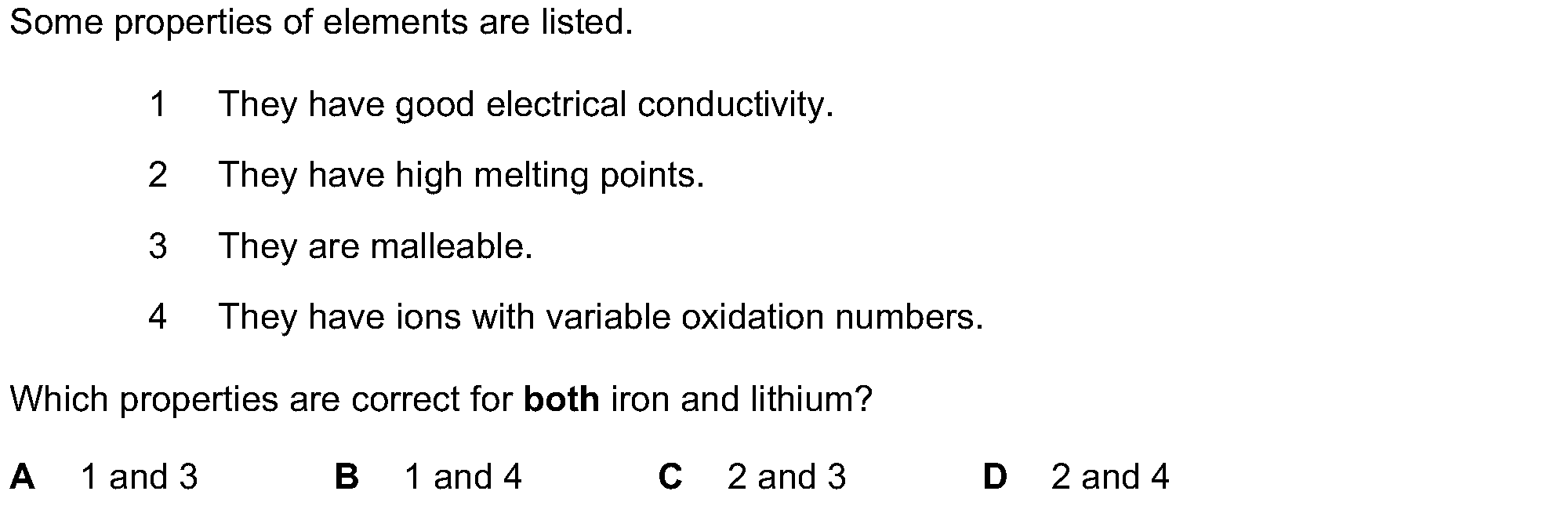
Some properties of elements are listed.
1
2
3
4
They have good electrical conductivity.
They have high melting points.
They are malleable.
They have ions with variable oxidation numbers.
Which properties are correct for both iron and lithium?
A iand3
B iand4 C 2and3
D 2and4
1
2
3
4
They have good electrical conductivity.
They have high melting points.
They are malleable.
They have ions with variable oxidation numbers.
Which properties are correct for both iron and lithium?
A iand3
B iand4 C 2and3
D 2and4
Options:
A
B
C
D
Correct Key: A
A
B
C
D
Correct Key: A
Structured Questions Mark Scheme & Answers
•1•.• • • •[•P•R•I• •2•0•1•8•C• •P•1• • •·• • •Q•1•2• • •P•a•r•t• •(•a•)• • •·• • •2•0•1•8• • •·• • •P•r•i•m•a•r•y• •0•8•4•6•]• • • • • • •f•r•o•m• •t•o•p• •t•o• •b•o•t•t•o•m• •3• •e•a•c•h• •c•o•r•r•e•c•t•l•y• •l•a•b•e•l•l•e•d• •a•p•p•a•r•a•t•u•s• •=• •1• •m•a•r•k• •f•i•l•t•e•r• •p•a•p•e•r• •/• •f•i•l•t•e•r•i•n•g• •p•a•p•e•r• •D•o• •n•o•t• •a•c•c•e•p•t• •j•u•s•t• •p•a•p•e•r• •/• •j•u•s•t• •f•i•l•t•e•r• •(•f•i•l•t•e•r•)• •f•u•n•n•e•l• •b•e•a•k•e•r• •c•h•a•l•k• •(•a•n•d• •w•a•t•e•r•)• •1• •D•o• •n•o•t• •a•c•c•e•p•t• •i•r•o•n• •s•u•l•p•h•a•t•e• •/• •m•a•g•n•e•s•i•u•m• •s•u•l•p•h•a•t•e• •i•r•o•n• •s•u•l•f•a•t•e• •a•n•d• •m•a•g•n•e•s•i•u•m• •s•u•l•f•a•t•e• •(•s•o•l•u•t•i•o•n• •a•n•d• •w•a•t•e•r•)• •1• •••c•c•e•p•t• •i•r•o•n• •a•n•d• •m•a•g•n•e•s•i•u•m• •s•u•l•f•a•t•e• •/• •m•a•g•n•e•s•i•u•m• •a•n•d• •i•r•o•n• •s•u•l•f•a•t•e• •D•o• •n•o•t• •a•c•c•e•p•t• •c•h•a•l•k• •1•1•3•/•3•8•4• •©• •U•C•L•E•S• •2•0•1•8• •P•a•g•e• •9• •o•f• •1•2•
•2•.• • • •[•P•R•I• •2•0•1•8•C• •P•1• • •·• • •Q•1•2• • •P•a•r•t• •(•b•)• • •·• • •2•0•1•8• • •·• • •P•r•i•m•a•r•y• •0•8•4•6•]• • • • • • •f•r•o•m• •t•o•p• •t•o• •b•o•t•t•o•m• •3• •e•a•c•h• •c•o•r•r•e•c•t•l•y• •l•a•b•e•l•l•e•d• •a•p•p•a•r•a•t•u•s• •=• •1• •m•a•r•k• •f•i•l•t•e•r• •p•a•p•e•r• •/• •f•i•l•t•e•r•i•n•g• •p•a•p•e•r• •D•o• •n•o•t• •a•c•c•e•p•t• •j•u•s•t• •p•a•p•e•r• •/• •j•u•s•t• •f•i•l•t•e•r• •(•f•i•l•t•e•r•)• •f•u•n•n•e•l• •b•e•a•k•e•r• •c•h•a•l•k• •(•a•n•d• •w•a•t•e•r•)• •1• •D•o• •n•o•t• •a•c•c•e•p•t• •i•r•o•n• •s•u•l•p•h•a•t•e• •/• •m•a•g•n•e•s•i•u•m• •s•u•l•p•h•a•t•e• •i•r•o•n• •s•u•l•f•a•t•e• •a•n•d• •m•a•g•n•e•s•i•u•m• •s•u•l•f•a•t•e• •(•s•o•l•u•t•i•o•n• •a•n•d• •w•a•t•e•r•)• •1• •••c•c•e•p•t• •i•r•o•n• •a•n•d• •m•a•g•n•e•s•i•u•m• •s•u•l•f•a•t•e• •/• •m•a•g•n•e•s•i•u•m• •a•n•d• •i•r•o•n• •s•u•l•f•a•t•e• •D•o• •n•o•t• •a•c•c•e•p•t• •c•h•a•l•k• •1•1•3•/•3•8•4• •©• •U•C•L•E•S• •2•0•1•8• •P•a•g•e• •9• •o•f• •1•2•
•3•.• • • •[•P•R•I• •2•0•1•8•C• •P•1• • •·• • •Q•1•2• • •P•a•r•t• •(•b•)• • •·• • •2•0•1•8• • •·• • •P•r•i•m•a•r•y• •0•8•4•6•]• • • • • • •f•r•o•m• •t•o•p• •t•o• •b•o•t•t•o•m• •3• •e•a•c•h• •c•o•r•r•e•c•t•l•y• •l•a•b•e•l•l•e•d• •a•p•p•a•r•a•t•u•s• •=• •1• •m•a•r•k• •f•i•l•t•e•r• •p•a•p•e•r• •/• •f•i•l•t•e•r•i•n•g• •p•a•p•e•r• •D•o• •n•o•t• •a•c•c•e•p•t• •j•u•s•t• •p•a•p•e•r• •/• •j•u•s•t• •f•i•l•t•e•r• •(•f•i•l•t•e•r•)• •f•u•n•n•e•l• •b•e•a•k•e•r• •c•h•a•l•k• •(•a•n•d• •w•a•t•e•r•)• •1• •D•o• •n•o•t• •a•c•c•e•p•t• •i•r•o•n• •s•u•l•p•h•a•t•e• •/• •m•a•g•n•e•s•i•u•m• •s•u•l•p•h•a•t•e• •i•r•o•n• •s•u•l•f•a•t•e• •a•n•d• •m•a•g•n•e•s•i•u•m• •s•u•l•f•a•t•e• •(•s•o•l•u•t•i•o•n• •a•n•d• •w•a•t•e•r•)• •1• •••c•c•e•p•t• •i•r•o•n• •a•n•d• •m•a•g•n•e•s•i•u•m• •s•u•l•f•a•t•e• •/• •m•a•g•n•e•s•i•u•m• •a•n•d• •i•r•o•n• •s•u•l•f•a•t•e• •D•o• •n•o•t• •a•c•c•e•p•t• •c•h•a•l•k• •1•1•3•/•3•8•4• •©• •U•C•L•E•S• •2•0•1•8• •P•a•g•e• •9• •o•f• •1•2•
•4•.• • • •[•P•R•I• •2•0•1•8•C• •P•1• • •·• • •Q•1•2• • •P•a•r•t• •(•c•)• • •·• • •2•0•1•8• • •·• • •P•r•i•m•a•r•y• •0•8•4•6•]• • • • • • •f•r•o•m• •t•o•p• •t•o• •b•o•t•t•o•m• •3• •e•a•c•h• •c•o•r•r•e•c•t•l•y• •l•a•b•e•l•l•e•d• •a•p•p•a•r•a•t•u•s• •=• •1• •m•a•r•k• •f•i•l•t•e•r• •p•a•p•e•r• •/• •f•i•l•t•e•r•i•n•g• •p•a•p•e•r• •D•o• •n•o•t• •a•c•c•e•p•t• •j•u•s•t• •p•a•p•e•r• •/• •j•u•s•t• •f•i•l•t•e•r• •(•f•i•l•t•e•r•)• •f•u•n•n•e•l• •b•e•a•k•e•r• •c•h•a•l•k• •(•a•n•d• •w•a•t•e•r•)• •1• •D•o• •n•o•t• •a•c•c•e•p•t• •i•r•o•n• •s•u•l•p•h•a•t•e• •/• •m•a•g•n•e•s•i•u•m• •s•u•l•p•h•a•t•e• •i•r•o•n• •s•u•l•f•a•t•e• •a•n•d• •m•a•g•n•e•s•i•u•m• •s•u•l•f•a•t•e• •(•s•o•l•u•t•i•o•n• •a•n•d• •w•a•t•e•r•)• •1• •••c•c•e•p•t• •i•r•o•n• •a•n•d• •m•a•g•n•e•s•i•u•m• •s•u•l•f•a•t•e• •/• •m•a•g•n•e•s•i•u•m• •a•n•d• •i•r•o•n• •s•u•l•f•a•t•e• •D•o• •n•o•t• •a•c•c•e•p•t• •c•h•a•l•k• •1•1•3•/•3•8•4• •©• •U•C•L•E•S• •2•0•1•8• •P•a•g•e• •9• •o•f• •1•2•
•5•.• • • •[•P•R•I• •2•0•1•9••• •P•1• • •·• • •Q•2•0• • •P•a•r•t• •(•a•)• • •·• • •2•0•1•9• • •·• • •P•r•i•m•a•r•y• •0•8•4•6•]• • • • • • •c•h•a•l•k• •a•n•d• •g•a•s•o•l•i•n•e• •1• •b•o•t•h• •s•u•b•s•t•a•n•c•e•s• •i•n• •e•i•t•h•e•r• •o•r•d•e•r• •=• •1• •m•a•r•k• •a•n•y• •o•t•h•e•r• •s•u•b•s•t•a•n•c•e•s• •=• •0• •m•a•r•k•s• •g•a•s•o•l•i•n•e• •f•l•o•a•t•i•n•g• •o•n• •t•o•p• •o•f• •t•h•e• •w•a•t•e•r• •1• •••c•c•e•p•t• •w•a•t•e•r• •f•l•o•a•t•i•n•g• •o•n• •g•a•s•o•l•i•n•e• •/• •t•w•o• •l•i•q•u•i•d•s• •/• •t•w•o• •l•a•y•e•r•s• •3•6•/•3•8•4•
•6•.• • • •[•P•R•I• •2•0•1•9••• •P•1• • •·• • •Q•2•0• • •P•a•r•t• •(•b•)• • •·• • •2•0•1•9• • •·• • •P•r•i•m•a•r•y• •0•8•4•6•]• • • • • • •c•h•a•l•k• •a•n•d• •g•a•s•o•l•i•n•e• •1• •b•o•t•h• •s•u•b•s•t•a•n•c•e•s• •i•n• •e•i•t•h•e•r• •o•r•d•e•r• •=• •1• •m•a•r•k• •a•n•y• •o•t•h•e•r• •s•u•b•s•t•a•n•c•e•s• •=• •0• •m•a•r•k•s• •g•a•s•o•l•i•n•e• •f•l•o•a•t•i•n•g• •o•n• •t•o•p• •o•f• •t•h•e• •w•a•t•e•r• •1• •••c•c•e•p•t• •w•a•t•e•r• •f•l•o•a•t•i•n•g• •o•n• •g•a•s•o•l•i•n•e• •/• •t•w•o• •l•i•q•u•i•d•s• •/• •t•w•o• •l•a•y•e•r•s• •3•6•/•3•8•4•
•7•.• • • •[•P•R•I• •2•0•1•9•D• •P•2• • •·• • •Q•8• • •P•a•r•t• •(•a•)• • •·• • •2•0•1•9• • •·• • •P•r•i•m•a•r•y• •0•8•4•6•]• • • • • • •c•h•a•l•k• •a•n•d• •g•a•s•o•l•i•n•e• •1• •b•o•t•h• •s•u•b•s•t•a•n•c•e•s• •m•u•s•t• •b•e• •g•i•v•e•n•,• •e•i•t•h•e•r• •o•r•d•e•r• •••s•s•e•m•b•l•e•d• •b•y• •N•.•S•.• •a•n•y• •e•x•t•r•a• •s•u•b•s•t•a•n•c•e•s• •=• •0• •m•a•r•k•s• •t•h•e•y• •d•i•s•s•o•l•v•e• •(•i•n• •w•a•t•e•r•)• •/• •t•h•e•y• •a•r•e• •s•o•l•u•b•l•e• •1• •g•a•s•o•l•i•n•e• •f•l•o•a•t•i•n•g• •o•n• •t•o•p• •o•f• •t•h•e• •w•a•t•e•r• •1• •••c•c•e•p•t• •e•x•a•m•p•l•e• •o•f• •g•a•s•o•l•i•n•e• •a•n•d• •w•a•t•e•r• •b•e•i•n•g• •s•e•p•a•r•a•t•e• •e•.•g•.• •w•a•t•e•r• •f•l•o•a•t•i•n•g• •o•n• •g•a•s•o•l•i•n•e• •/• •t•w•o• •l•a•y•e•r•s• •6•7•/•3•8•4•
•8•.• • • •[•P•R•I• •2•0•1•9•D• •P•2• • •·• • •Q•8• • •P•a•r•t• •(•c•)• • •·• • •2•0•1•9• • •·• • •P•r•i•m•a•r•y• •0•8•4•6•]• • • • • • •c•h•a•l•k• •a•n•d• •g•a•s•o•l•i•n•e• •1• •b•o•t•h• •s•u•b•s•t•a•n•c•e•s• •m•u•s•t• •b•e• •g•i•v•e•n•,• •e•i•t•h•e•r• •o•r•d•e•r• •••s•s•e•m•b•l•e•d• •b•y• •N•.•S•.• •a•n•y• •e•x•t•r•a• •s•u•b•s•t•a•n•c•e•s• •=• •0• •m•a•r•k•s• •t•h•e•y• •d•i•s•s•o•l•v•e• •(•i•n• •w•a•t•e•r•)• •/• •t•h•e•y• •a•r•e• •s•o•l•u•b•l•e• •1• •g•a•s•o•l•i•n•e• •f•l•o•a•t•i•n•g• •o•n• •t•o•p• •o•f• •t•h•e• •w•a•t•e•r• •1• •••c•c•e•p•t• •e•x•a•m•p•l•e• •o•f• •g•a•s•o•l•i•n•e• •a•n•d• •w•a•t•e•r• •b•e•i•n•g• •s•e•p•a•r•a•t•e• •e•.•g•.• •w•a•t•e•r• •f•l•o•a•t•i•n•g• •o•n• •g•a•s•o•l•i•n•e• •/• •t•w•o• •l•a•y•e•r•s• •6•7•/•3•8•4•
Last updated:
\n