5.1Motion, Forces and Energy
Metals and nonmetals — Question Bank (Cambridge) — Cambridge IGCSE Physics 0625 Revision Notes & Topical Questions
5 min read Lesson 43 of 91 Unit quiz
Cambridge Past Paper Bank
5.1 Metals and nonmetals
3 Multiple-Choice Questions with Official Mark Schemes
Question 1
0620/23_Summer_2012_Q22
Question 2
0620/23_Winter_2010_Q29
Question 3
0620/12_Winter_2022_Q24

Cambridge Lower Secondary Stage 7
5.1 Metals and nonmetals – Complete Question Bank & Mark Scheme
Total Questions3 Questions with Verified Solutions & Past Paper Mark Schemes
Multiple Choice Questions (Exam Practice)
Question 1
Paper Ref: 0620/23_Summer_2012_Q22
Paper Ref: 0620/23_Summer_2012_Q22
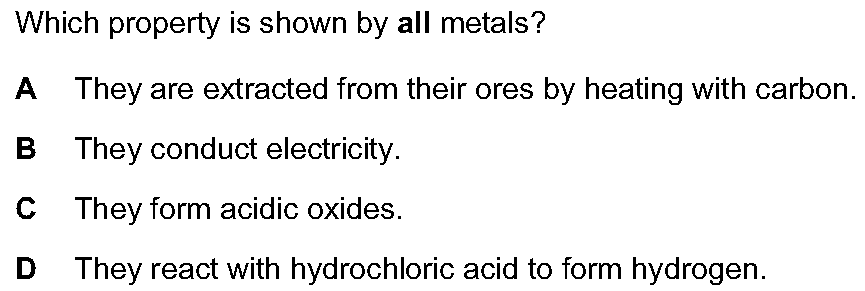
Which property is shown by all metals?
oO W
They are extracted from their ores by heating with carbon.
They conduct electricity.
They form acidic oxides.
They react with hydrochloric acid to form hydrogen.
oO W
They are extracted from their ores by heating with carbon.
They conduct electricity.
They form acidic oxides.
They react with hydrochloric acid to form hydrogen.
Options:
A
B
C
D
Correct Key: B
A
B
C
D
Correct Key: B
Question 2
Paper Ref: 0620/23_Winter_2010_Q29
Paper Ref: 0620/23_Winter_2010_Q29
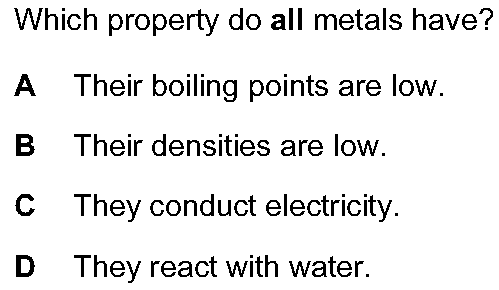
Which property do all metals have?
oa DB
Their boiling points are low.
Their densities are low.
They conduct electricity.
They react with water.
oa DB
Their boiling points are low.
Their densities are low.
They conduct electricity.
They react with water.
Options:
A
B
C
D
Correct Key: C
A
B
C
D
Correct Key: C
Question 3
Paper Ref: 0620/12_Winter_2022_Q24
Paper Ref: 0620/12_Winter_2022_Q24
Which property is correct for all metals?
A
B
Cc
D
They are good conductors of electricity.
They are hard.
They have high melting points.
They react with dilute acids.
A
B
Cc
D
They are good conductors of electricity.
They are hard.
They have high melting points.
They react with dilute acids.
Options:
A
B
C
D
Correct Key: A
A
B
C
D
Correct Key: A
Structured Questions Mark Scheme & Answers
•1•.• • • •[•S•P• •S•7• •P•2• • •·• • •Q•5• • •·• • •S•p•e•c•i•m•e•n• • •·• • •L•o•w•e•r• •S•e•c• •0•8•9•3•]• • • • • • •a•n•y• •t•h•r•e•e• •f•r•o•m• •3• •e•a•c•h• •c•o•r•r•e•c•t• •a•n•s•w•e•r• •=• •1• •m•a•r•k• •h•a•r•d• •s•t•r•o•n•g• •s•h•i•n•y• •s•o•n•o•r•o•u•s• •m•a•l•l•e•a•b•l•e• •d•u•c•t•i•l•e• •h•i•g•h• •m•e•l•t•i•n•g• •p•o•i•n•t• •h•i•g•h• •b•o•i•l•i•n•g• •p•o•i•n•t• •(•g•o•o•d•)• •t•h•e•r•m•a•l• •c•o•n•d•u•c•t•o•r• •/• •h•e•a•t• •c•o•n•d•u•c•t•o•r• •••c•c•e•p•t• •h•i•g•h• •d•e•n•s•i•t•y•
•2•.• • • •[•P•R•I• •2•0•0•8••• •P•1• • •·• • •Q•6• • •·• • •2•0•0•8• • •·• • •P•r•i•m•a•r•y• •0•8•4•6•]• • • • • • •(•n•o• •p•u•b•l•i•s•h•e•d• •m•a•r•k• •s•c•h•e•m•e• •f•o•r• •t•h•i•s• •p•a•p•e•r•)•
•3•.• • • •[•P•R•I• •2•0•1•4•B• •P•2• • •·• • •Q•1•4• • •P•a•r•t• •(•a•)• • •·• • •2•0•1•4• • •·• • •P•r•i•m•a•r•y• •0•8•4•6•]• • • • • • •(•n•o• •p•u•b•l•i•s•h•e•d• •m•a•r•k• •s•c•h•e•m•e• •f•o•r• •t•h•i•s• •p•a•p•e•r•)•
•4•.• • • •[•P•R•I• •2•0•1•4•B• •P•2• • •·• • •Q•1•4• • •P•a•r•t• •(•b•)• • •·• • •2•0•1•4• • •·• • •P•r•i•m•a•r•y• •0•8•4•6•]• • • • • • •(•n•o• •p•u•b•l•i•s•h•e•d• •m•a•r•k• •s•c•h•e•m•e• •f•o•r• •t•h•i•s• •p•a•p•e•r•)•
•5•.• • • •[•P•R•I• •2•0•1•7•B• •P•2• • •·• • •Q•1•5• • •·• • •2•0•1•7• • •·• • •P•r•i•m•a•r•y• •0•8•4•6•]• • • • • • •s•i•e•v•e• •t•h•e• •m•i•x•t•u•r•e• •2• •e•a•c•h• •c•o•r•r•e•c•t• •a•n•s•w•e•r• •=• •1• •m•a•r•k• •l•u•m•p•s• •w•i•l•l• •n•o•t• •g•o• •t•h•r•o•u•g•h• •t•h•e• •s•i•e•v•e• •/• •p•o•w•d•e•r• •o•r• •s•a•l•t• •a•n•d• •s•t•e•e•l• •I•g•n•o•r•e• •p•i•c•k• •t•h•e• •c•o•p•p•e•r• •o•u•t• •(•a•s• •c•o•p•p•e•r• •i•s• •i•n• •g•o•e•s• •t•h•r•o•u•g•h• •t•h•e• •s•i•e•v•e• •l•u•m•p•s•)•/• •u•s•e• •a• •m•a•g•n•e•t• •/• •a•d•d• •w•a•t•e•r• •/• •f•i•l•t•e•r• •/• •s•t•i•r• •D•o• •n•o•t• •a•c•c•e•p•t• •f•u•n•n•e•l•
•6•.• • • •[•P•R•I• •2•0•1•7•C• •P•1• • •·• • •Q•9• • •P•a•r•t• •(•a•)• • •·• • •2•0•1•7• • •·• • •P•r•i•m•a•r•y• •0•8•4•6•]• • • • • • •d•o•e•s• •i•t• •c•o•n•d•u•c•t• •e•l•e•c•t•r•i•c•i•t•y•?• •1• •••c•c•e•p•t• •g•r•o•u•p• ••• •c•o•n•d•u•c•t• •e•l•e•c•t•r•i•c•i•t•y• •/• •g•r•o•u•p• •B• •d•o•e•s• •n•o•t• •c•o•n•d•u•c•t• •e•l•e•c•t•r•i•c•i•t•y• •••s•s•e•m•b•l•e•d• •b•y• •N•.•S•.• •s•o•l•i•d•,• •l•i•q•u•i•d• •o•r• •g•a•s• •(•a•t• •r•o•o•m• •t•e•m•p•e•r•a•t•u•r•e•)• •1• •••c•c•e•p•t• •g•r•o•u•p• •C• •a•r•e• •s•o•l•i•d•s• •/• •g•r•o•u•p• •D• •a•r•e• •l•i•q•u•i•d•s• •a•n•d• •g•a•s•e•s•
•7•.• • • •[•P•R•I• •2•0•1•7•C• •P•1• • •·• • •Q•9• • •P•a•r•t• •(•a•)• • •·• • •2•0•1•7• • •·• • •P•r•i•m•a•r•y• •0•8•4•6•]• • • • • • •d•o•e•s• •i•t• •c•o•n•d•u•c•t• •e•l•e•c•t•r•i•c•i•t•y•?• •1• •••c•c•e•p•t• •g•r•o•u•p• ••• •c•o•n•d•u•c•t• •e•l•e•c•t•r•i•c•i•t•y• •/• •g•r•o•u•p• •B• •d•o•e•s• •n•o•t• •c•o•n•d•u•c•t• •e•l•e•c•t•r•i•c•i•t•y• •••s•s•e•m•b•l•e•d• •b•y• •N•.•S•.• •s•o•l•i•d•,• •l•i•q•u•i•d• •o•r• •g•a•s• •(•a•t• •r•o•o•m• •t•e•m•p•e•r•a•t•u•r•e•)• •1• •••c•c•e•p•t• •g•r•o•u•p• •C• •a•r•e• •s•o•l•i•d•s• •/• •g•r•o•u•p• •D• •a•r•e• •l•i•q•u•i•d•s• •a•n•d• •g•a•s•e•s•
•8•.• • • •[•P•R•I• •2•0•1•7•C• •P•1• • •·• • •Q•9• • •P•a•r•t• •(•b•)• • •·• • •2•0•1•7• • •·• • •P•r•i•m•a•r•y• •0•8•4•6•]• • • • • • •d•o•e•s• •i•t• •c•o•n•d•u•c•t• •e•l•e•c•t•r•i•c•i•t•y•?• •1• •••c•c•e•p•t• •g•r•o•u•p• ••• •c•o•n•d•u•c•t• •e•l•e•c•t•r•i•c•i•t•y• •/• •g•r•o•u•p• •B• •d•o•e•s• •n•o•t• •c•o•n•d•u•c•t• •e•l•e•c•t•r•i•c•i•t•y• •••s•s•e•m•b•l•e•d• •b•y• •N•.•S•.• •s•o•l•i•d•,• •l•i•q•u•i•d• •o•r• •g•a•s• •(•a•t• •r•o•o•m• •t•e•m•p•e•r•a•t•u•r•e•)• •1• •••c•c•e•p•t• •g•r•o•u•p• •C• •a•r•e• •s•o•l•i•d•s• •/• •g•r•o•u•p• •D• •a•r•e• •l•i•q•u•i•d•s• •a•n•d• •g•a•s•e•s•
Last updated:
\n