1.3Motion, Forces and Energy
Specialised cells — Question Bank (Cambridge) — Cambridge IGCSE Physics 0625 Revision Notes & Topical Questions
10 min read Lesson 21 of 91 Unit quiz
Cambridge Past Paper Bank
1.3 Specialised cells
7 Multiple-Choice Questions with Official Mark Schemes
Question 1
0610/23_Summer_2013_Q11
Question 2
5129/12_Winter_2020_Q1
Question 3
0610/11_Summer_2026_Q2
Question 4
0610/12_Spring_2024_Q4
Question 5
5129/12_Winter_2021_Q1
Question 6
0610/21_Winter_2017_Q11
Question 7
0610/12_Spring_2025_Q4
Cambridge Lower Secondary Stage 7
1.3 Specialised cells – Complete Question Bank & Mark Scheme
Total Questions7 Questions with Verified Solutions & Past Paper Mark Schemes
Multiple Choice Questions (Exam Practice)
Question 1
Paper Ref: 0610/23_Summer_2013_Q11
Paper Ref: 0610/23_Summer_2013_Q11
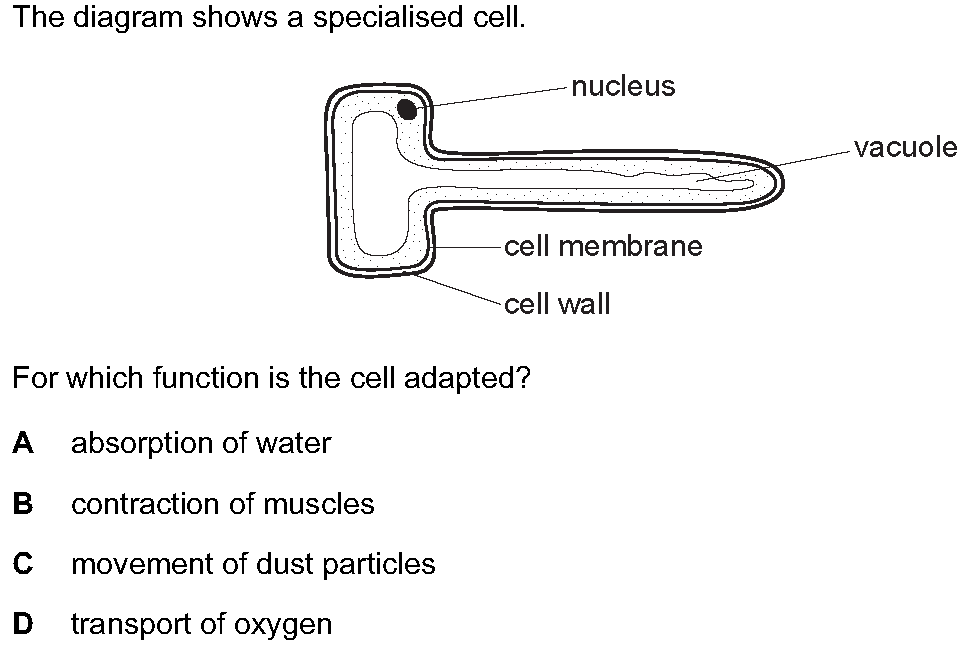
The diagram shows a specialised cell.
nucleus
cell membrane
cell wall
For which function is the cell adapted?
oo BD
absorption of water
contraction of muscles
movement of dust particles
transport of oxygen
nucleus
cell membrane
cell wall
For which function is the cell adapted?
oo BD
absorption of water
contraction of muscles
movement of dust particles
transport of oxygen
Options:
A
B
C
D
Correct Key: A
A
B
C
D
Correct Key: A
Question 2
Paper Ref: 5129/12_Winter_2020_Q1
Paper Ref: 5129/12_Winter_2020_Q1
Which cell structure is found in plant cells but not in animal cells?
A cell membrane
B-cell wall
C cytoplasm
D
nucleus
A cell membrane
B-cell wall
C cytoplasm
D
nucleus
Options:
A
B
C
D
Correct Key: B
A
B
C
D
Correct Key: B
Question 3
Paper Ref: 0610/11_Summer_2026_Q2
Paper Ref: 0610/11_Summer_2026_Q2
Which specialised cells move mucus?
A
B
Cc
D
ciliated cells
neurones
white blood cells
root hair cells
A
B
Cc
D
ciliated cells
neurones
white blood cells
root hair cells
Options:
A
B
C
D
Correct Key: A
A
B
C
D
Correct Key: A
Question 4
Paper Ref: 0610/12_Spring_2024_Q4
Paper Ref: 0610/12_Spring_2024_Q4
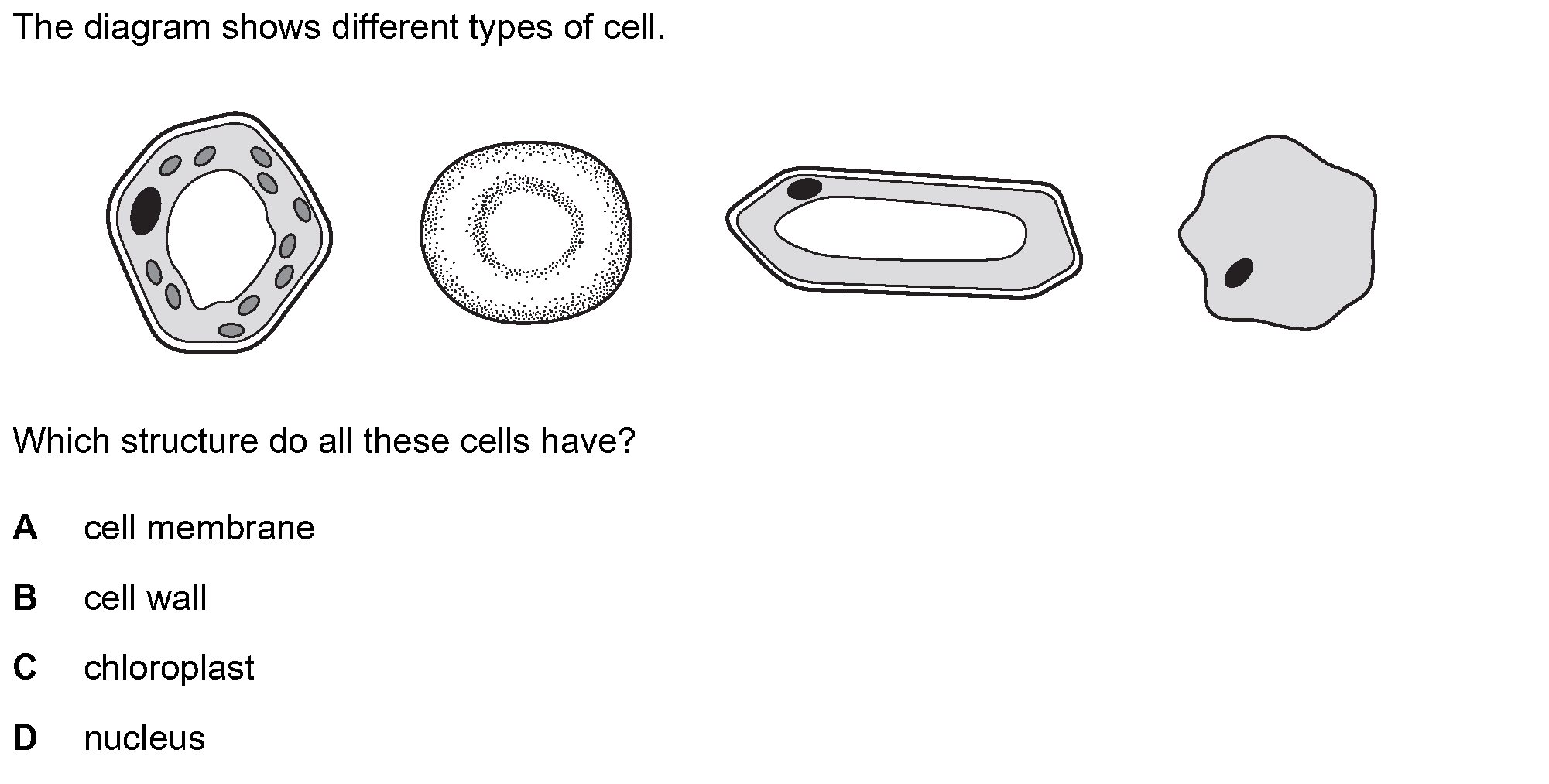
The diagram shows different types of cell.
Which structure do all these cells have?
A cell membrane
B cell wall
C_ chloroplast
D
nucleus
Which structure do all these cells have?
A cell membrane
B cell wall
C_ chloroplast
D
nucleus
Options:
A
B
C
D
Correct Key: A
A
B
C
D
Correct Key: A
Question 5
Paper Ref: 5129/12_Winter_2021_Q1
Paper Ref: 5129/12_Winter_2021_Q1
Which structure is not found in an animal cell?
A cell wall
B-cell membrane
C cytoplasm
D
nucleus
A cell wall
B-cell membrane
C cytoplasm
D
nucleus
Options:
A
B
C
D
Correct Key: A
A
B
C
D
Correct Key: A
Question 6
Paper Ref: 0610/21_Winter_2017_Q11
Paper Ref: 0610/21_Winter_2017_Q11
Which structure would be found in large numbers in cells that have a high energy requirement?
A chloroplast
B_ endoplasmic reticulum
C large vacuole
D
mitochondrion
A chloroplast
B_ endoplasmic reticulum
C large vacuole
D
mitochondrion
Options:
A
B
C
D
Correct Key: D
A
B
C
D
Correct Key: D
Question 7
Paper Ref: 0610/12_Spring_2025_Q4
Paper Ref: 0610/12_Spring_2025_Q4
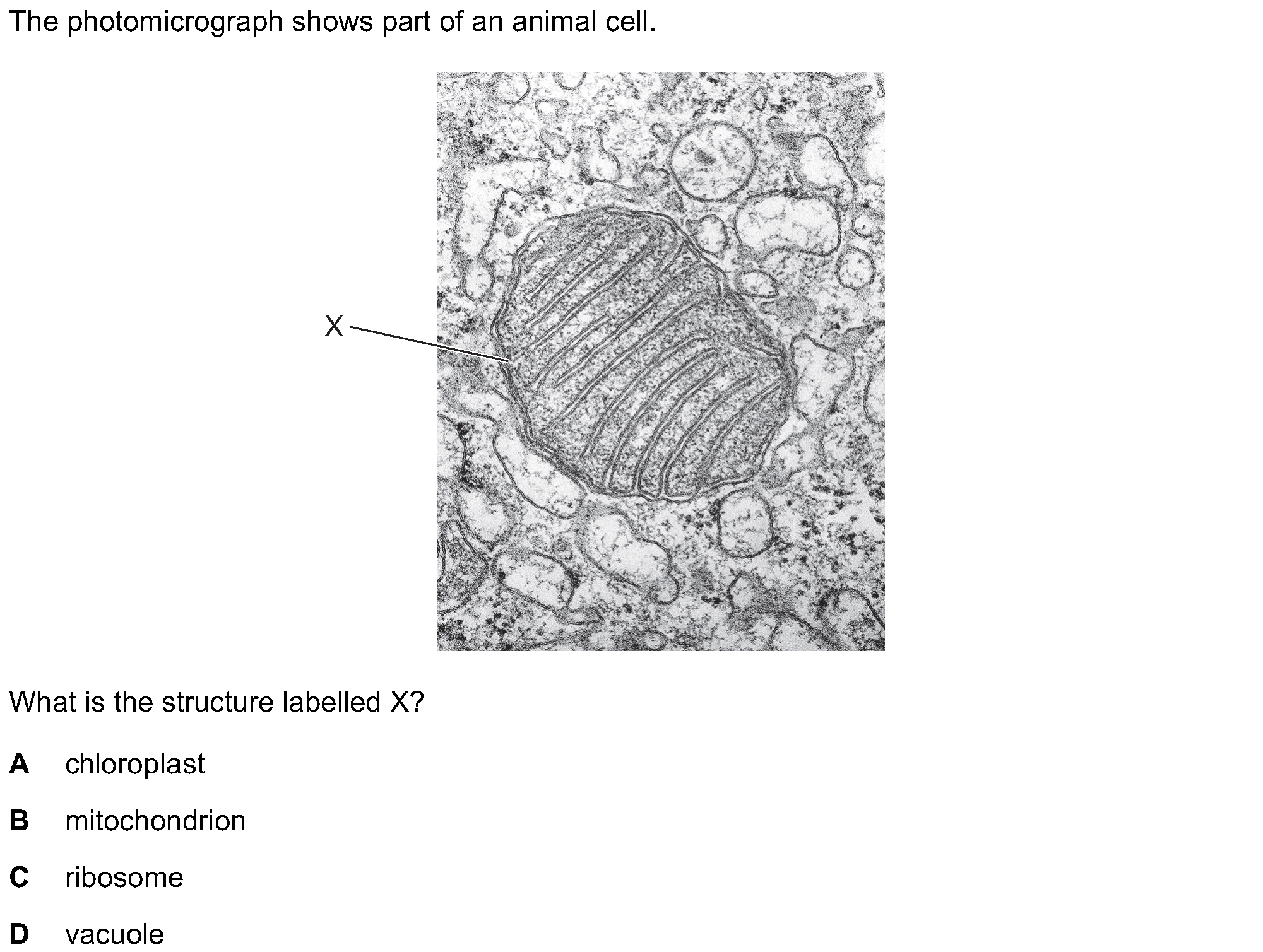
The photomicrograph shows part of an animal cell.
What is the structure labelled X?
A chloroplast
B mitochondrion
C ribosome
D
vacuole
What is the structure labelled X?
A chloroplast
B mitochondrion
C ribosome
D
vacuole
Options:
A
B
C
D
Correct Key: B
A
B
C
D
Correct Key: B
Structured Questions Mark Scheme & Answers
•1•.• • • •[•S•P• •S•7• •P•1• • •·• • •Q•1• • •P•a•r•t• •(•a•)• • •·• • •S•p•e•c•i•m•e•n• • •·• • •L•o•w•e•r• •S•e•c• •0•8•9•3•]• • • • • • ••• •–• •c•e•l•l• •m•e•m•b•r•a•n•e• •3• •e•a•c•h• •c•o•r•r•e•c•t• •a•n•s•w•e•r• •=• •1• •m•a•r•k• •B• •–• •c•y•t•o•p•l•a•s•m• •C• •–• •n•u•c•l•e•u•s•
•2•.• • • •[•S•P• •S•7• •P•1• • •·• • •Q•1• • •P•a•r•t• •(•b•)• • •·• • •S•p•e•c•i•m•e•n• • •·• • •L•o•w•e•r• •S•e•c• •0•8•9•3•]• • • • • • •a•n•y• •t•w•o• •a•d•a•p•t•a•t•i•o•n•s• •a•n•d• •l•i•n•k•e•d• •e•x•p•l•a•n•a•t•i•o•n•s• •f•r•o•m• •4• •a•d•a•p•t•a•t•i•o•n• •=• •1• •m•a•r•k• •l•a•r•g•e• •s•u•r•f•a•c•e• •a•r•e•a• •o•r• •l•a•r•g•e• •s•u•r•f•a•c•e• •a•r•e•a• •:• •v•o•l•u•m•e• •r•a•t•i•o• •=• •l•i•n•k•e•d• •e•x•p•l•a•n•a•t•i•o•n• •=• •1• •m•a•r•k•
•3•.• • • •[•P•T• •S•7• •2•0•2•5• •P•2• • •·• • •Q•2• • •·• • •2•0•2•5• • •·• • •L•o•w•e•r• •S•e•c• •0•8•9•3•]• • • • • • •2• •e•a•c•h• •c•o•r•r•e•c•t• •a•n•s•w•e•r• •=• •1• •m•a•r•k• •c•a•n• •(•e•a•s•i•l•y•)• •g•o• •b•e•t•w•e•e•n• •s•o•i•l• •p•a•r•t•i•c•l•e•s• •••c•c•e•p•t• •(•i•d•e•a• •t•h•a•t•)• •p•l•a•n•t• •c•a•n• •a•b•s•o•r•b• •w•a•t•e•r• •f•r•o•m• •a• •i•n•c•r•e•a•s•e•s• •(•r•a•t•e• •o•f•)• •a•b•s•o•r•p•t•i•o•n• •o•f• •w•a•t•e•r• •o•r• •g•r•e•a•t•e•r• •a•r•e•a• •a•r•o•u•n•d• •t•h•e• •r•o•o•t• •i•n•c•r•e•a•s•e•s• •u•p•t•a•k•e• •o•f• •w•a•t•e•r• •••c•c•e•p•t• •(•i•d•e•a• •t•h•a•t•)• •i•n•c•r•e•a•s•e•s• •t•h•e• •a•b•s•o•r•p•t•i•o•n• •o•f• •m•i•n•e•r•a•l•s• •©• •U•C•L•E•S• •2•0•2•5• •P•a•g•e• •3• •o•f• •1•4• •S•7•/•0•2• •S•c•i•e•n•c•e• •S•t•a•g•e• •7• •P•a•p•e•r• •2• •M•a•r•k• •S•c•h•e•m•e• •2•0•2•5•
•4•.• • • •[•P•T• •S•7• •2•0•2•6• •P•1• • •·• • •Q•1•1• • •P•a•r•t• •(•a•)• • •·• • •2•0•2•6• • •·• • •L•o•w•e•r• •S•e•c• •0•8•9•3•]• • • • • • •3• •a•l•l• •f•o•u•r• •c•o•r•r•e•c•t• •=• •3• •m•a•r•k•s• •a•b•s•o•r•b•s• •w•a•t•e•r• •a•n•d• •c•i•l•i•a•t•e•d• •c•e•l•l•s• •m•i•n•e•r•a•l•s• •t•w•o• •o•r• •t•h•r•e•e• •c•o•r•r•e•c•t• •=• •2• •m•a•r•k•s• •o•n•e• •c•o•r•r•e•c•t• •=• •1• •m•a•r•k• •t•r•a•n•s•p•o•r•t•s• •o•x•y•g•e•n• •p•a•l•i•s•a•d•e• •c•e•l•l•s• •a•r•o•u•n•d• •t•h•e• •b•o•d•y• •I•f• •t•w•o• •l•i•n•e•s• •d•r•a•w•n• •f•r•o•m• •o•n•e• •s•p•e•c•i•a•l•i•s•e•d• •c•e•l•l• •t•o• •t•w•o• •m•a•i•n• •f•u•n•c•t•i•o•n•s•,• •t•h•a•t• •s•p•e•c•i•a•l•i•s•e•d• •c•e•l•l• •i•s• •i•n•c•o•r•r•e•c•t• •r•o•o•t• •h•a•i•r• •c•e•l•l•s• •p•h•o•t•o•s•y•n•t•h•e•s•i•s• •m•o•v•e•s• •m•u•c•u•s• •a•n•d• •r•e•d• •b•l•o•o•d• •c•e•l•l•s• •p•a•r•t•i•c•l•e•s• •o•u•t• •o•f• •a•i•r•w•a•y•s•
•5•.• • • •[•P•T• •S•7• •2•0•2•6• •P•1• • •·• • •Q•1•1• • •P•a•r•t• •(•b•)• • •·• • •2•0•2•6• • •·• • •L•o•w•e•r• •S•e•c• •0•8•9•3•]• • • • • • •a•n•y• •o•n•e• •f•r•o•m• •1• •t•h•i•n• •l•o•n•g• •b•r•a•n•c•h•e•d• •••c•c•e•p•t• •f•a•t•t•y• •s•h•e•a•t•h• •o•r• •m•y•e•l•i•n• •s•h•e•a•t•h• •©• •C•a•m•b•r•i•d•g•e• •U•n•i•v•e•r•s•i•t•y• •P•r•e•s•s• •&• •••s•s•e•s•s•m•e•n•t• •2•0•2•6• •P•a•g•e• •9• •o•f• •1•2• •S•7•/•0•1• •S•c•i•e•n•c•e• •S•t•a•g•e• •7• •P•a•p•e•r• •1• •M•a•r•k• •S•c•h•e•m•e• •2•0•2•6•
•6•.• • • •[•P•T• •S•7• •2•0•2•4• •P•1• • •·• • •Q•5• • •·• • •2•0•2•4• • •·• • •L•o•w•e•r• •S•e•c• •s•o•u•r•c•e• •a•d•d•i•t•i•o•n•]• • • • • • •N•o• •m•a•t•c•h•i•n•g• •m•a•r•k•-•s•c•h•e•m•e• •e•n•t•r•y• •w•a•s• •f•o•u•n•d• •i•n• •M•a•r•k•_•S•c•h•e•m•e•s•.•d•o•c•x•.•
•7•.• • • •[•C•P• •O•c•t•o•b•e•r• •2•0•2•5• •P•2• • •·• • •Q•9• • •P•a•r•t• •(•b•)• • •·• • •2•0•2•5• • •·• • •L•o•w•e•r• •S•e•c• •0•8•9•3•]• • • • • • •p•h•o•t•o•s•y•n•t•h•e•s•i•s• •1• •c•h•l•o•r•o•p•l•a•s•t• •1• •I•g•n•o•r•e• •c•h•l•o•r•o•p•h•y•l•l•
•8•.• • • •[•P•T• •S•7• •2•0•1•4• •P•1• • •·• • •Q•3• • •·• • •2•0•1•4• • •·• • •L•o•w•e•r• •S•e•c• •s•o•u•r•c•e• •a•d•d•i•t•i•o•n•]• • • • • • •N•o• •m•a•t•c•h•i•n•g• •m•a•r•k•-•s•c•h•e•m•e• •e•n•t•r•y• •w•a•s• •f•o•u•n•d• •i•n• •M•a•r•k•_•S•c•h•e•m•e•s•.•d•o•c•x•.•
Last updated:
Cambridge 9700 AS Biology
Core Formula
Magnification Triangle & Unit Conversion
Formula: M = I / A ⇔ A = I / M ⇔ I = M × A
Units: 1 mm = 1,000 μm = 1,000,000 nm.
Rule: Convert Image size (ruler mm) to μm by ×1,000 before dividing by Actual size.