7.4Motion, Forces and Energy
Microorganisms in food webs — Question Bank (Cambridge) — Cambridge IGCSE Physics 0625 Revision Notes & Topical Questions
5 min read Lesson 79 of 91 Unit quiz
Cambridge Past Paper Bank
7.4 Microorganisms in food webs
9 Multiple-Choice Questions with Official Mark Schemes
Question 1
0610/11_Summer_2018_Q36
Question 2
0610/22_Summer_2012_Q34
Question 3
0610/11_Summer_2023_Q36
Question 4
0610/13_Winter_2018_Q35
Question 5
5129/11_Winter_2024_Q13
Question 6
0610/13_Winter_2022_Q36
Question 7
5129/12_Winter_2021_Q12
Question 8
0610/22_Summer_2013_Q33
Question 9
0610/11_Winter_2017_Q37
Cambridge Lower Secondary Stage 7
7.4 Microorganisms in food webs – Complete Question Bank & Mark Scheme
Total Questions9 Questions with Verified Solutions & Past Paper Mark Schemes
Multiple Choice Questions (Exam Practice)
Question 1
Paper Ref: 0610/11_Summer_2018_Q36
Paper Ref: 0610/11_Summer_2018_Q36
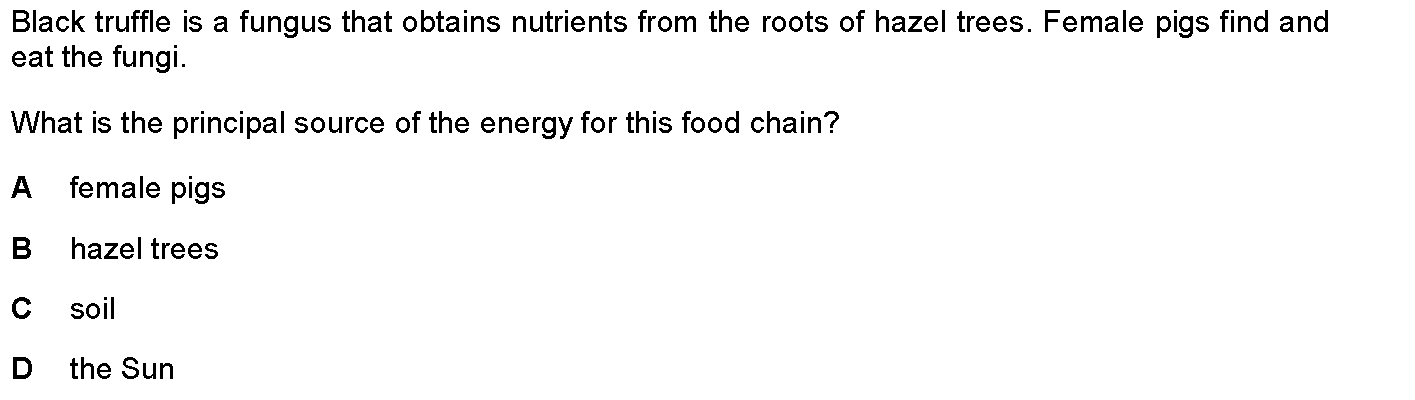
Black truffle is a fungus that obtains nutrients from the roots of hazel trees. Female pigs find and
eat the fungi.
What is the principal source of the energy for this food chain?
A female pigs
B hazel trees
C soil
D the Sun
eat the fungi.
What is the principal source of the energy for this food chain?
A female pigs
B hazel trees
C soil
D the Sun
Options:
A
B
C
D
Correct Key: D
A
B
C
D
Correct Key: D
Question 2
Paper Ref: 0610/22_Summer_2012_Q34
Paper Ref: 0610/22_Summer_2012_Q34
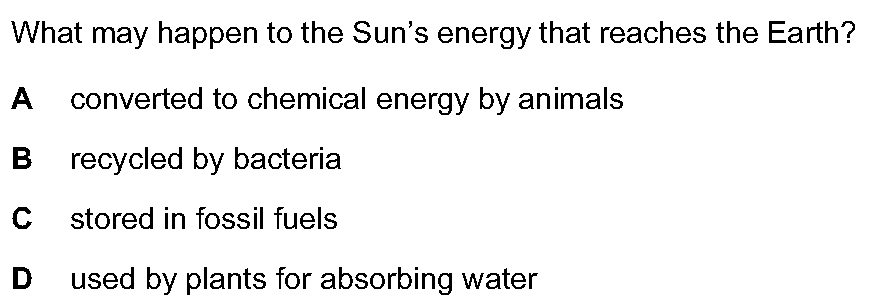
What may happen to the Sun’s energy that reaches the Earth?
A converted to chemical energy by animals
B recycled by bacteria
C _ stored in fossil fuels
D_ used by plants for absorbing water
A converted to chemical energy by animals
B recycled by bacteria
C _ stored in fossil fuels
D_ used by plants for absorbing water
Options:
A
B
C
D
Correct Key: C
A
B
C
D
Correct Key: C
Question 3
Paper Ref: 0610/11_Summer_2023_Q36
Paper Ref: 0610/11_Summer_2023_Q36
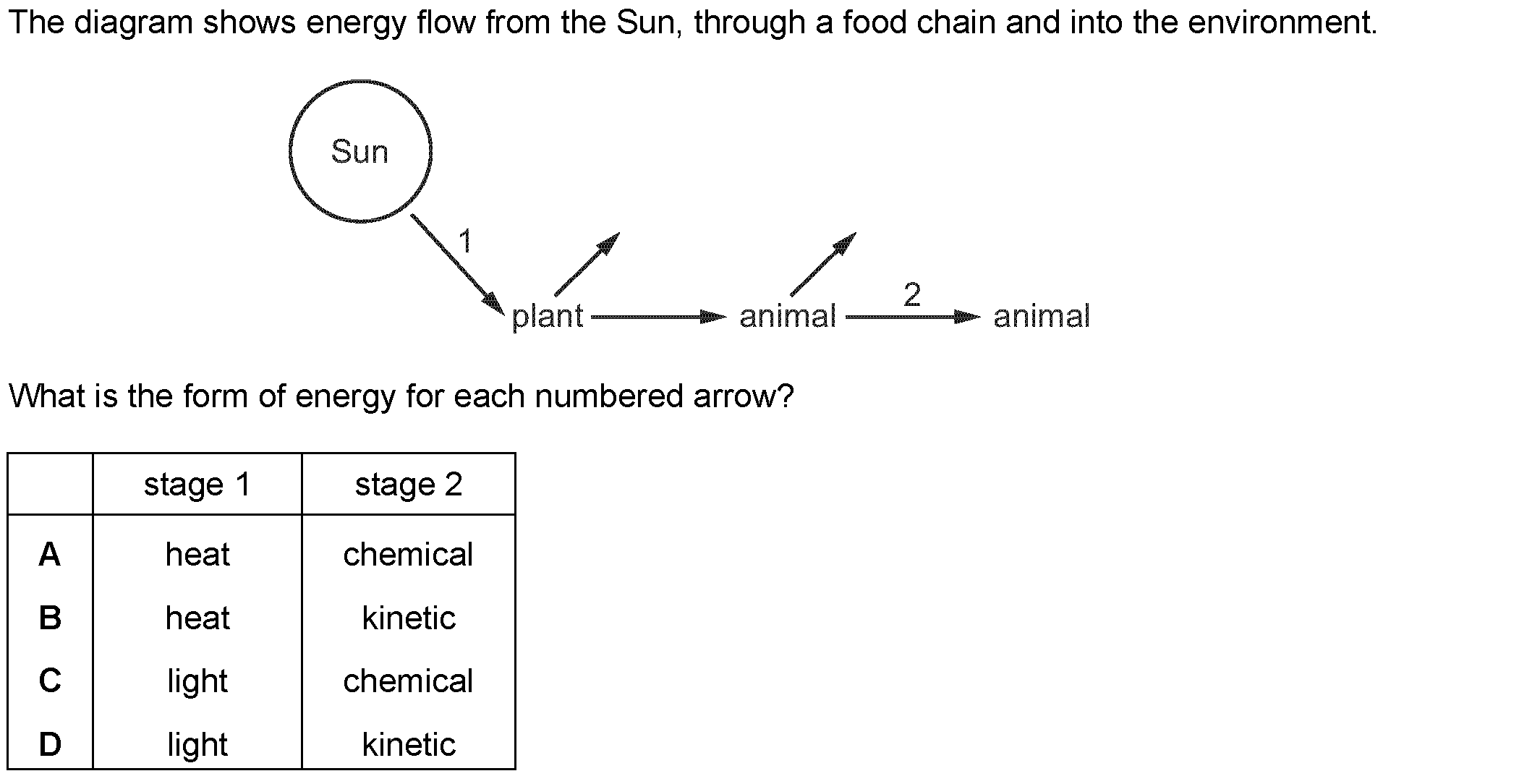
The diagram shows energy flow from the Sun, through a food chain and into the environment.
NZ plant ————–_ animal _2, animal
What is the form of energy for each numbered arrow?
ac
chemical
kinetic
chemical
kinetic
NZ plant ————–_ animal _2, animal
What is the form of energy for each numbered arrow?
ac
chemical
kinetic
chemical
kinetic
Options:
A
B
C
D
Correct Key: C
A
B
C
D
Correct Key: C
Question 4
Paper Ref: 0610/13_Winter_2018_Q35
Paper Ref: 0610/13_Winter_2018_Q35
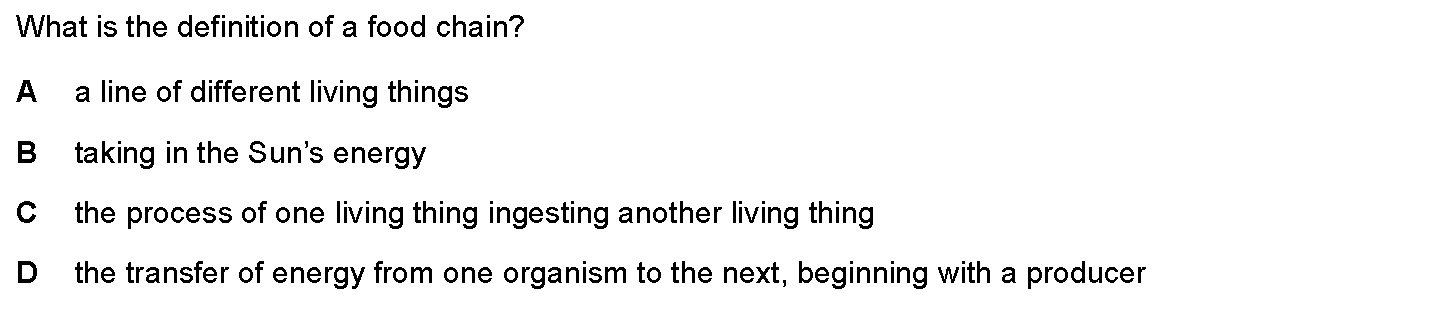
What is the definition of a food chain?
A aline of different living things
taking in the Sun’s energy
the process of one living thing ingesting another living thing
0 9 DW
the transfer of energy from one organism to the next, beginning with a producer
A aline of different living things
taking in the Sun’s energy
the process of one living thing ingesting another living thing
0 9 DW
the transfer of energy from one organism to the next, beginning with a producer
Options:
A
B
C
D
Correct Key: D
A
B
C
D
Correct Key: D
Question 5
Paper Ref: 5129/11_Winter_2024_Q13
Paper Ref: 5129/11_Winter_2024_Q13
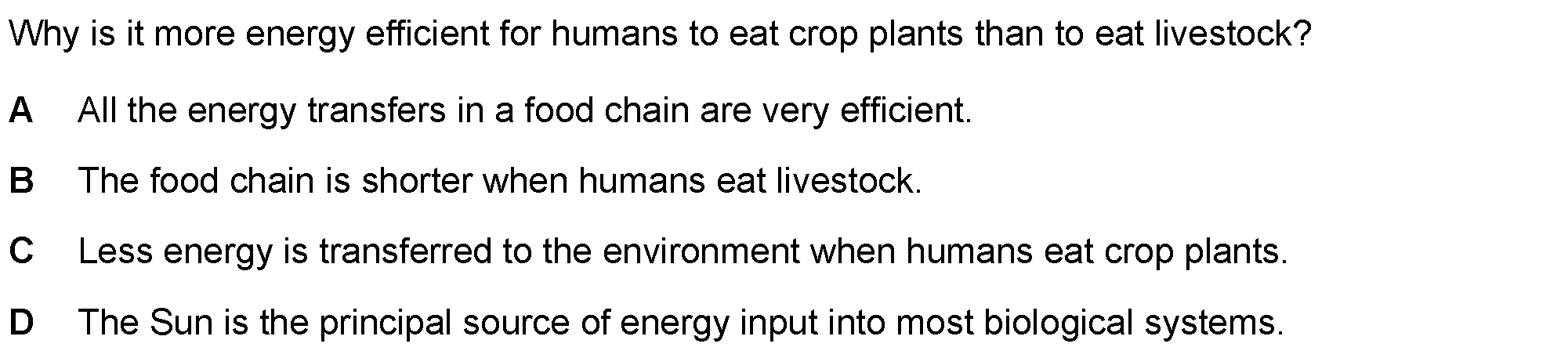
Why is it more energy efficient for humans to eat crop plants than to eat livestock?
A
B
Cc
D
All the energy transfers in a food chain are very efficient.
The food chain is shorter when humans eat livestock.
Less energy is transferred to the environment when humans eat crop plants.
The Sun is the principal source of energy input into most biological systems.
A
B
Cc
D
All the energy transfers in a food chain are very efficient.
The food chain is shorter when humans eat livestock.
Less energy is transferred to the environment when humans eat crop plants.
The Sun is the principal source of energy input into most biological systems.
Options:
A
B
C
D
Correct Key: C
A
B
C
D
Correct Key: C
Question 6
Paper Ref: 0610/13_Winter_2022_Q36
Paper Ref: 0610/13_Winter_2022_Q36
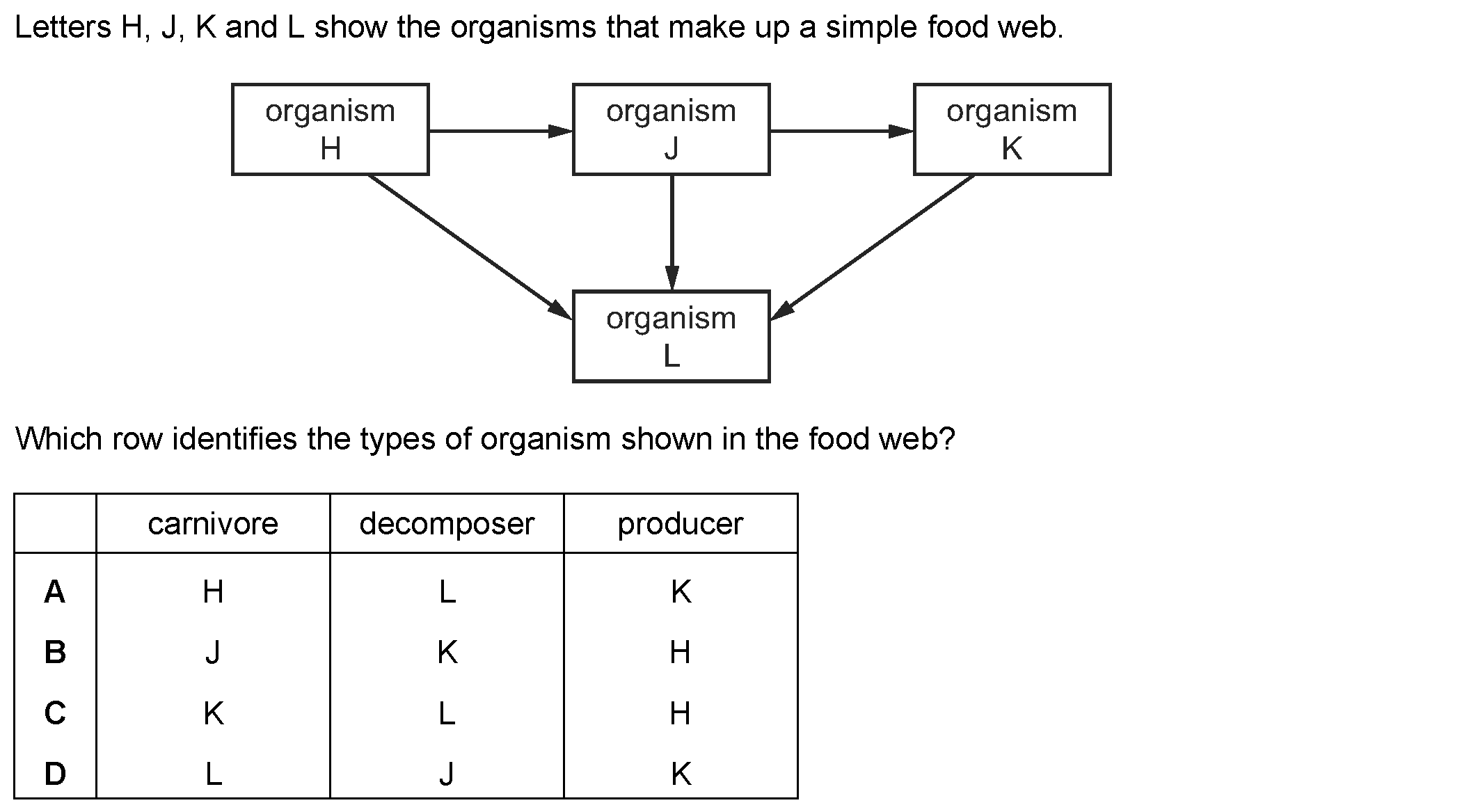
Letters H, J, K and L show the organisms that make up a simple food web.
organism
J
organism
L
Which row identifies the types of organism shown in the food web?
— carnivore decomposer producer
organism organism
D
L
L
H
H
K
organism
J
organism
L
Which row identifies the types of organism shown in the food web?
— carnivore decomposer producer
organism organism
D
L
L
H
H
K
Options:
A
B
C
D
Correct Key: C
A
B
C
D
Correct Key: C
Question 7
Paper Ref: 5129/12_Winter_2021_Q12
Paper Ref: 5129/12_Winter_2021_Q12
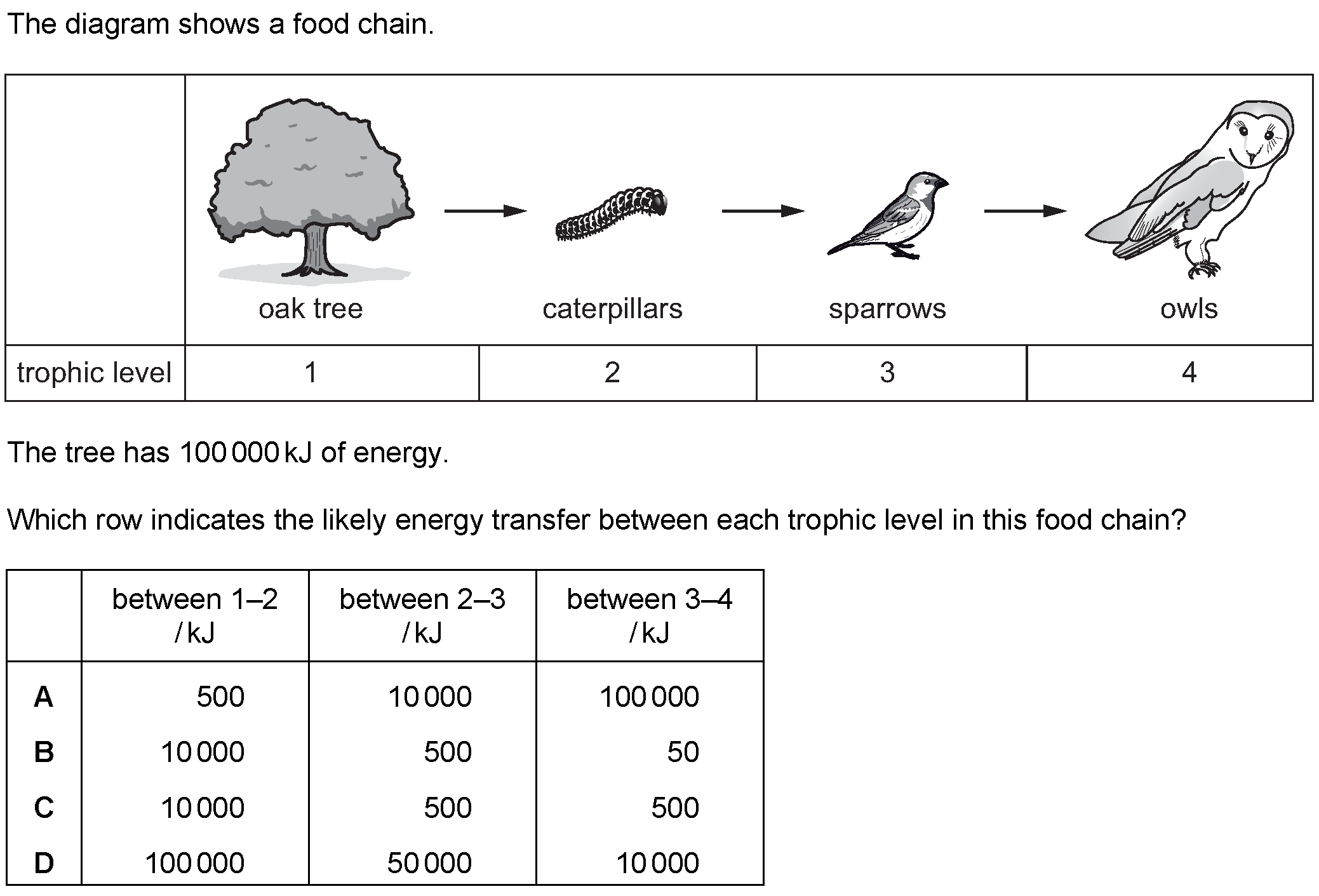
The diagram shows a food chain.
oak tree caterpillars sparrows
The tree has 100 000kJ of energy.
Which row indicates the likely energy transfer between each trophic level in this food chain?
between 1—2 between 2-3 between 3-4
/kJ /kJ /kJ
A
500 100 000
10000 50
10000
100 000
oak tree caterpillars sparrows
The tree has 100 000kJ of energy.
Which row indicates the likely energy transfer between each trophic level in this food chain?
between 1—2 between 2-3 between 3-4
/kJ /kJ /kJ
A
500 100 000
10000 50
10000
100 000
Options:
A
B
C
D
Correct Key: B
A
B
C
D
Correct Key: B
Question 8
Paper Ref: 0610/22_Summer_2013_Q33
Paper Ref: 0610/22_Summer_2013_Q33
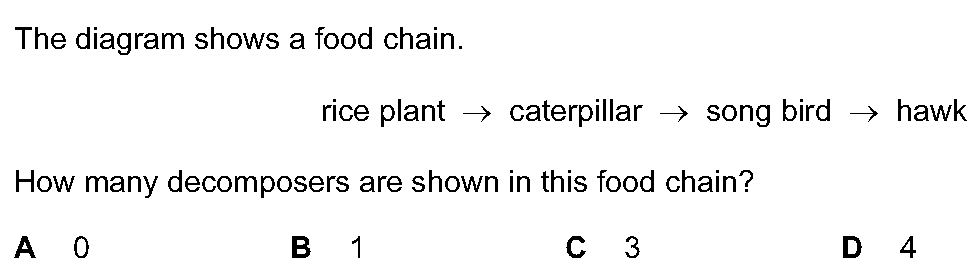
The diagram shows a food chain.
rice plant —> caterpillar > song bird > hawk
How many decomposers are shown in this food chain?
A 0 B 1 Cc 3 D 4
rice plant —> caterpillar > song bird > hawk
How many decomposers are shown in this food chain?
A 0 B 1 Cc 3 D 4
Options:
A
B
C
D
Correct Key: A
A
B
C
D
Correct Key: A
Question 9
Paper Ref: 0610/11_Winter_2017_Q37
Paper Ref: 0610/11_Winter_2017_Q37
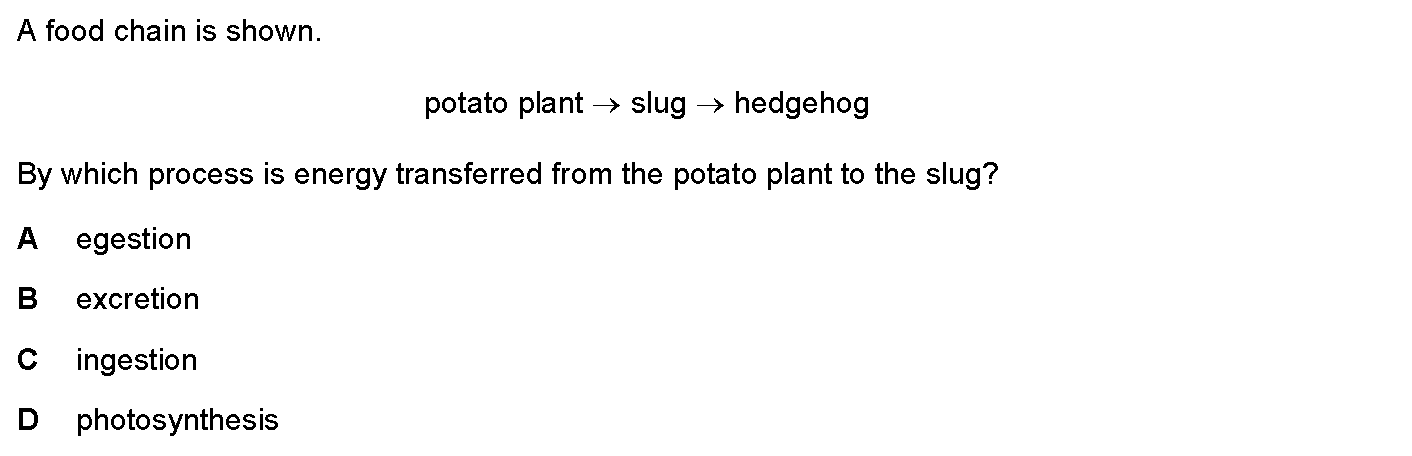
A food chain is shown.
potato plant > slug > hedgehog
By which process is energy transferred from the potato plant to the slug?
egestion
B_ excretion
C ingestion
D photosynthesis
potato plant > slug > hedgehog
By which process is energy transferred from the potato plant to the slug?
egestion
B_ excretion
C ingestion
D photosynthesis
Options:
A
B
C
D
Correct Key: C
A
B
C
D
Correct Key: C
Structured Questions Mark Scheme & Answers
•1•.• • • •[•P•R•I• •2•0•1•0••• •P•1• • •·• • •Q•7• • •P•a•r•t• •(•b•)• • •·• • •2•0•1•0• • •·• • •P•r•i•m•a•r•y• •0•8•4•6•]• • • • • • •(•n•o• •p•u•b•l•i•s•h•e•d• •m•a•r•k• •s•c•h•e•m•e• •f•o•r• •t•h•i•s• •p•a•p•e•r•)•
•2•.• • • •[•P•R•I• •2•0•1•0••• •P•1• • •·• • •Q•7• • •P•a•r•t• •(•c•)• • •·• • •2•0•1•0• • •·• • •P•r•i•m•a•r•y• •0•8•4•6•]• • • • • • •(•n•o• •p•u•b•l•i•s•h•e•d• •m•a•r•k• •s•c•h•e•m•e• •f•o•r• •t•h•i•s• •p•a•p•e•r•)•
•3•.• • • •[•P•R•I• •2•0•1•4••• •P•1• • •·• • •Q•9• • •P•a•r•t• •(•a•)• • •·• • •2•0•1•4• • •·• • •P•r•i•m•a•r•y• •0•8•4•6•]• • • • • • •(•n•o• •p•u•b•l•i•s•h•e•d• •m•a•r•k• •s•c•h•e•m•e• •f•o•r• •t•h•i•s• •p•a•p•e•r•)•
•4•.• • • •[•P•R•I• •2•0•1•4••• •P•1• • •·• • •Q•9• • •P•a•r•t• •(•b•)• • •·• • •2•0•1•4• • •·• • •P•r•i•m•a•r•y• •0•8•4•6•]• • • • • • •(•n•o• •p•u•b•l•i•s•h•e•d• •m•a•r•k• •s•c•h•e•m•e• •f•o•r• •t•h•i•s• •p•a•p•e•r•)•
•5•.• • • •[•P•R•I• •2•0•1•4•B• •P•2• • •·• • •Q•4• • •P•a•r•t• •(•a•)• • •·• • •2•0•1•4• • •·• • •P•r•i•m•a•r•y• •0•8•4•6•]• • • • • • •(•n•o• •p•u•b•l•i•s•h•e•d• •m•a•r•k• •s•c•h•e•m•e• •f•o•r• •t•h•i•s• •p•a•p•e•r•)•
•6•.• • • •[•P•R•I• •2•0•1•4•B• •P•2• • •·• • •Q•4• • •P•a•r•t• •(•b•)• • •·• • •2•0•1•4• • •·• • •P•r•i•m•a•r•y• •0•8•4•6•]• • • • • • •(•n•o• •p•u•b•l•i•s•h•e•d• •m•a•r•k• •s•c•h•e•m•e• •f•o•r• •t•h•i•s• •p•a•p•e•r•)•
•7•.• • • •[•P•R•I• •2•0•1•4•B• •P•2• • •·• • •Q•1•0• • •P•a•r•t• •(•a•)• • •·• • •2•0•1•4• • •·• • •P•r•i•m•a•r•y• •0•8•4•6•]• • • • • • •(•n•o• •p•u•b•l•i•s•h•e•d• •m•a•r•k• •s•c•h•e•m•e• •f•o•r• •t•h•i•s• •p•a•p•e•r•)•
•8•.• • • •[•P•R•I• •2•0•1•4•B• •P•2• • •·• • •Q•1•0• • •P•a•r•t• •(•b•)• • •·• • •2•0•1•4• • •·• • •P•r•i•m•a•r•y• •0•8•4•6•]• • • • • • •(•n•o• •p•u•b•l•i•s•h•e•d• •m•a•r•k• •s•c•h•e•m•e• •f•o•r• •t•h•i•s• •p•a•p•e•r•)•
Last updated:
\n