7.4Motion, Forces and Energy
Moving the body — Question Bank (Cambridge) — Cambridge IGCSE Physics 0625 Revision Notes & Topical Questions
10 min read Lesson 78 of 91 Unit quiz
Cambridge Past Paper Bank
7.4 Moving the body
6 Multiple-Choice Questions with Official Mark Schemes
Question 1
0610/21_Winter_2010_Q25
Question 2
0610/21_Winter_2014_Q23
Question 3
0610/23_Winter_2015_Q23
Question 4
0610/22_Winter_2014_Q21
Question 5
0610/21_Winter_2021_Q25
Question 6
0610/21_Summer_2023_Q25
Cambridge Lower Secondary Stage 8
7.4 Moving the body – Complete Question Bank & Mark Scheme
Total Questions6 Questions with Verified Solutions & Past Paper Mark Schemes
Multiple Choice Questions (Exam Practice)
Question 1
Paper Ref: 0610/21_Winter_2010_Q25
Paper Ref: 0610/21_Winter_2010_Q25
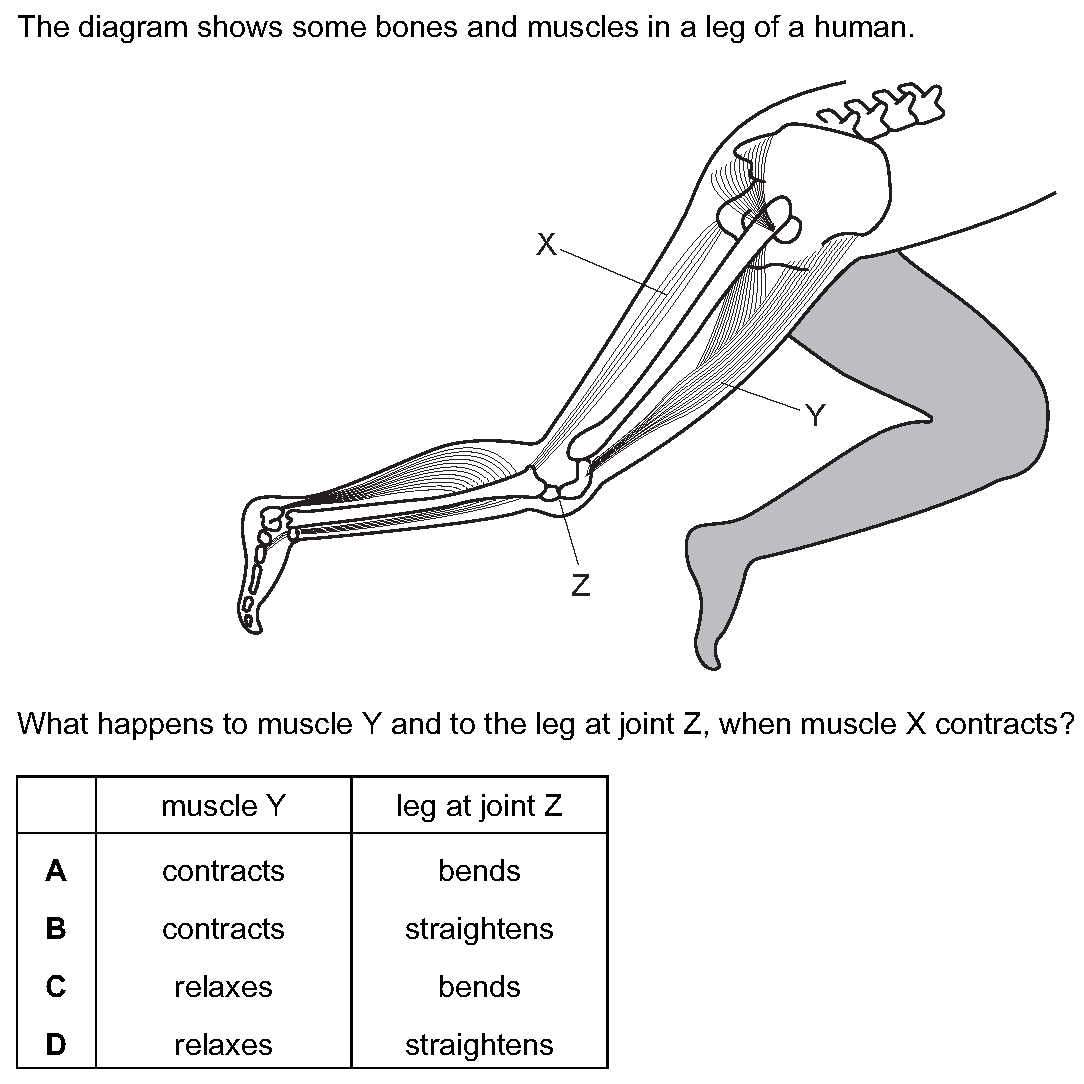
The diagram shows some bones and muscles in a leg of a human.
What happens to muscle Y and to the leg at joint Z, when muscle X contracts?
muscle Y leg at joint Z
A contracts bends
B contracts straightens
Cc relaxes bends
D relaxes straightens
What happens to muscle Y and to the leg at joint Z, when muscle X contracts?
muscle Y leg at joint Z
A contracts bends
B contracts straightens
Cc relaxes bends
D relaxes straightens
Options:
A
B
C
D
Correct Key: C
A
B
C
D
Correct Key: C
Question 2
Paper Ref: 0610/21_Winter_2014_Q23
Paper Ref: 0610/21_Winter_2014_Q23
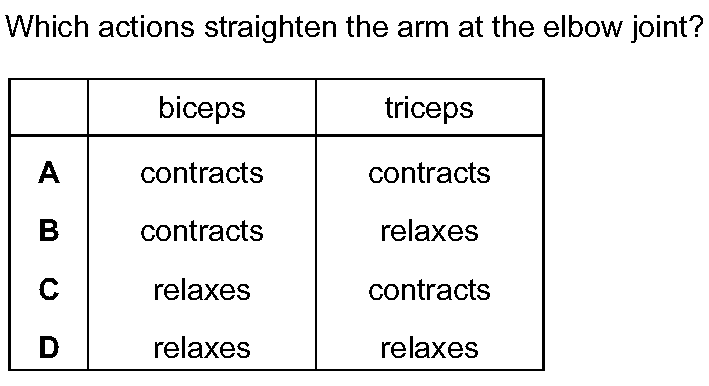
Which actions straighten the arm at the elbow joint?
biceps triceps
A contracts contracts
B contracts relaxes
c relaxes contracts
D relaxes relaxes
biceps triceps
A contracts contracts
B contracts relaxes
c relaxes contracts
D relaxes relaxes
Options:
A
B
C
D
Correct Key: C
A
B
C
D
Correct Key: C
Question 3
Paper Ref: 0610/23_Winter_2015_Q23
Paper Ref: 0610/23_Winter_2015_Q23
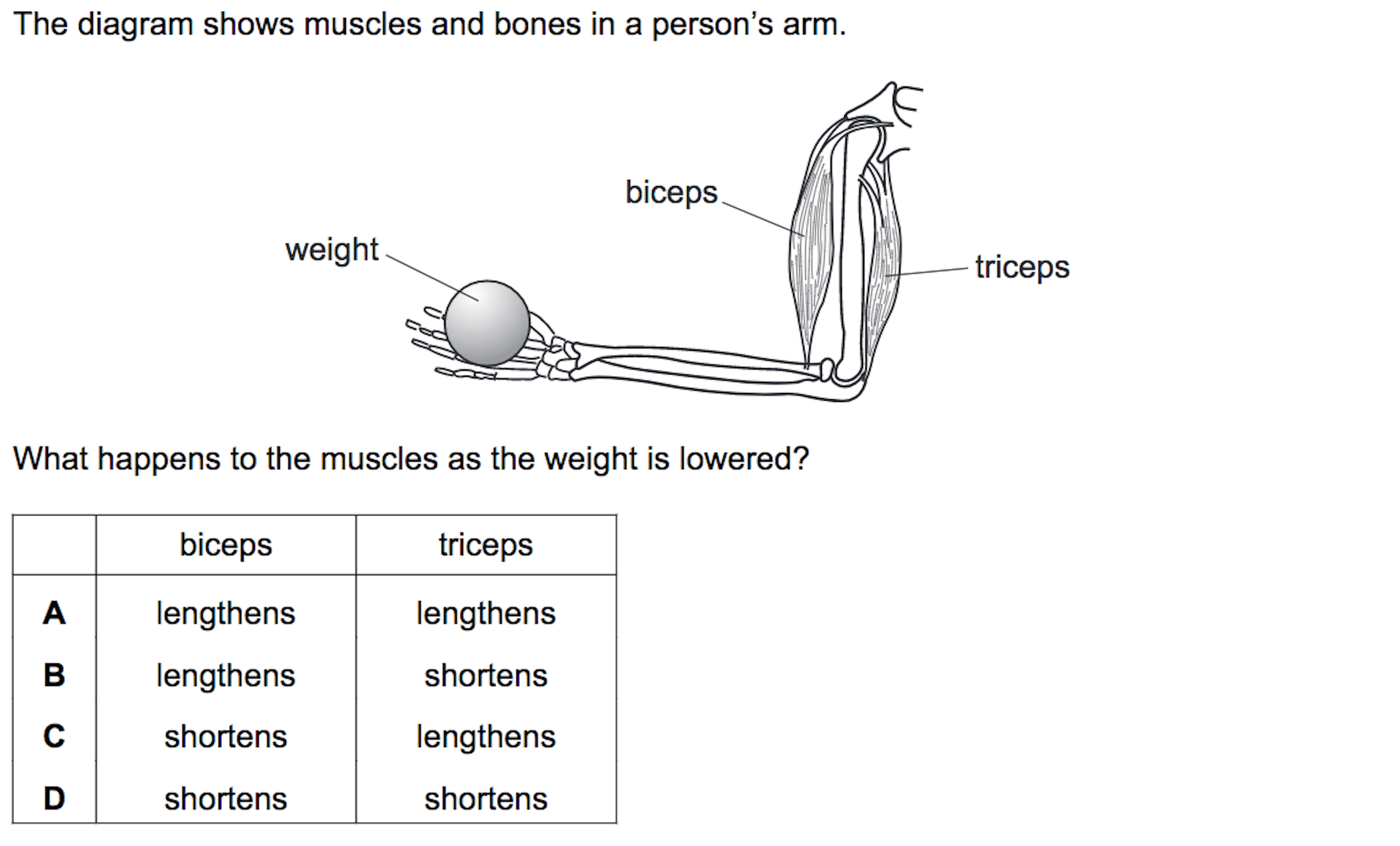
The diagram shows muscles and bones in a person’s arm.
triceps
triceps
lengthens lengthens
lengthens shortens
shortens lengthens
shortens shortens
triceps
triceps
lengthens lengthens
lengthens shortens
shortens lengthens
shortens shortens
Options:
A
B
C
D
Correct Key: B
A
B
C
D
Correct Key: B
Question 4
Paper Ref: 0610/22_Winter_2014_Q21
Paper Ref: 0610/22_Winter_2014_Q21
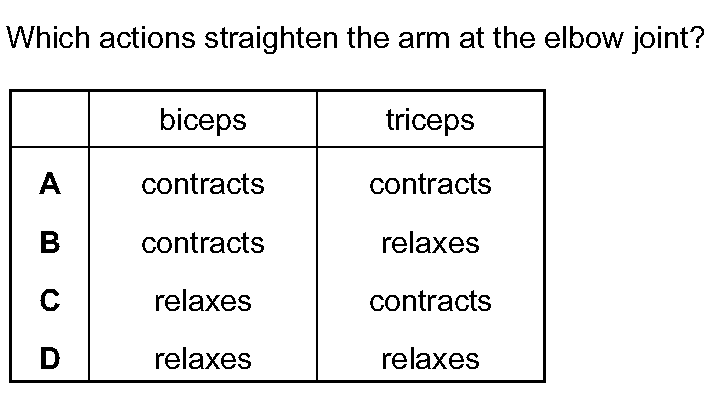
Which actions straighten the arm at the elbow joint?
biceps triceps
contracts contracts
contracts relaxes
relaxes contracts
relaxes relaxes
biceps triceps
contracts contracts
contracts relaxes
relaxes contracts
relaxes relaxes
Options:
A
B
C
D
Correct Key: C
A
B
C
D
Correct Key: C
Question 5
Paper Ref: 0610/21_Winter_2021_Q25
Paper Ref: 0610/21_Winter_2021_Q25
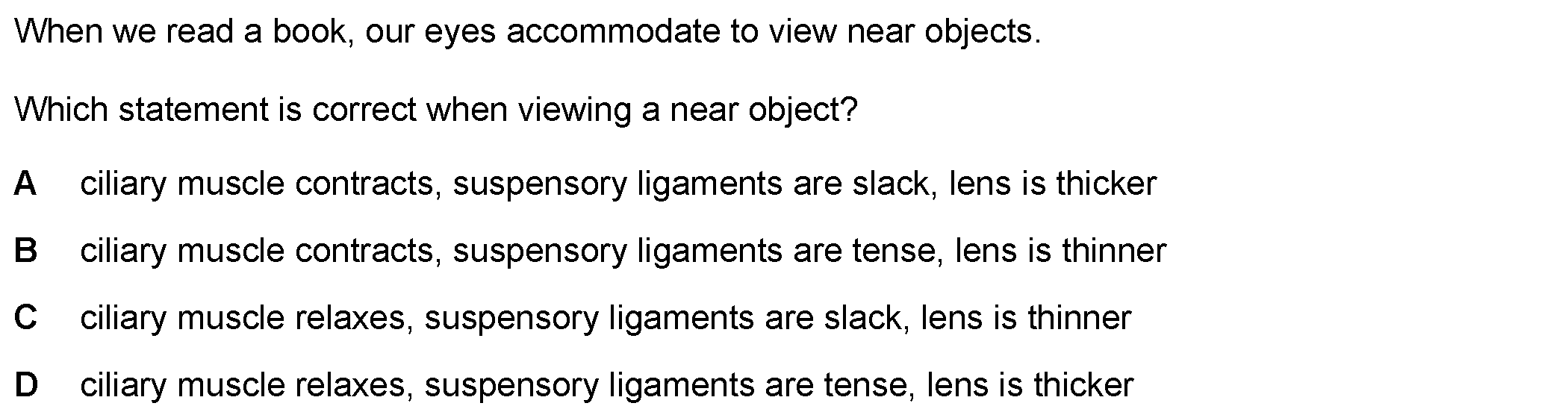
When we read a book, our eyes accommodate to view near objects.
Which statement is correct when viewing a near object?
A
B
Cc
D
ciliary muscle contracts, suspensory ligaments are slack, lens is thicker
ciliary muscle contracts, suspensory ligaments are tense, lens is thinner
ciliary muscle relaxes, suspensory ligaments are slack, lens is thinner
ciliary muscle relaxes, suspensory ligaments are tense, lens is thicker
Options:
A
B
C
D
Correct Key: A
A
B
C
D
Correct Key: A
Question 6
Paper Ref: 0610/21_Summer_2023_Q25
Paper Ref: 0610/21_Summer_2023_Q25
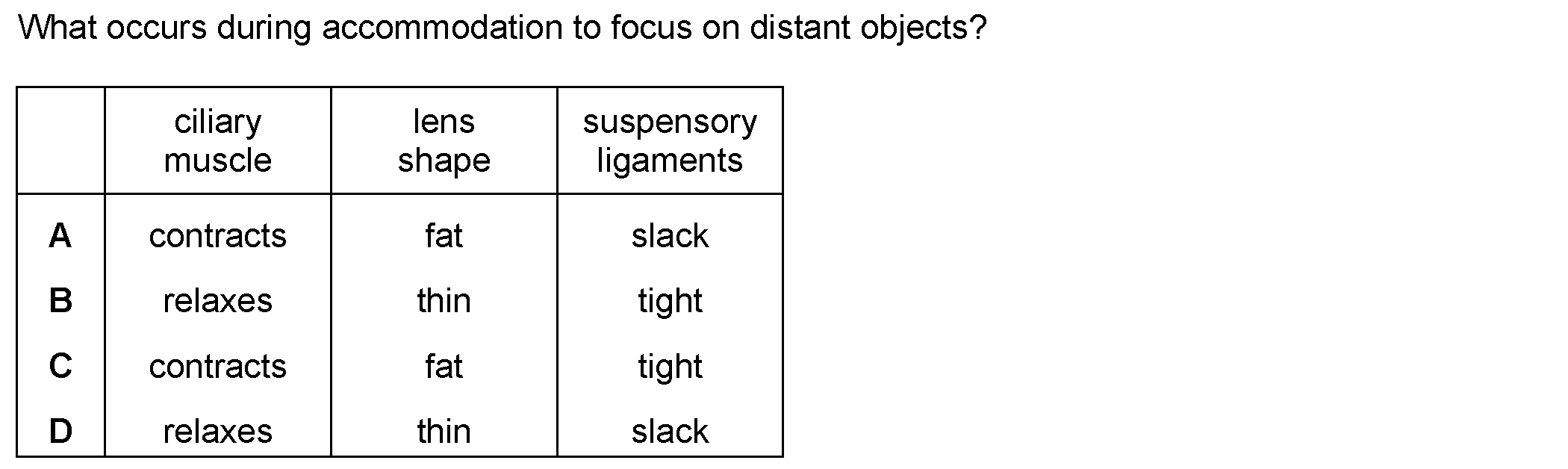
What occurs during accommodation to focus on distant objects?
ciliary lens suspensory
muscle shape ligaments
contracts
relaxes
contracts
relaxes
ciliary lens suspensory
muscle shape ligaments
contracts
relaxes
contracts
relaxes
Options:
A
B
C
D
Correct Key: B
A
B
C
D
Correct Key: B
Structured Questions Mark Scheme & Answers
•1•.• • • •[•P•R•I• •2•0•1•9•B• •P•2• • •·• • •Q•1•5• • •P•a•r•t• •(•b•)• • •·• • •2•0•1•9• • •·• • •P•r•i•m•a•r•y• •0•8•4•6•]• • • • • • •p•u•m•p• •b•l•o•o•d• •(•a•r•o•u•n•d• •t•h•e• •b•o•d•y•)• •1• •••s•s•e•m•b•l•e•d• •b•y• •N•.•S•.• •b•o•n•e•(•s•)• •1• •l•u•n•g•(•s•)• •1•
•2•.• • • •[•P•R•I• •2•0•1•9•C• •P•1• • •·• • •Q•9• • •P•a•r•t• •(•a•)• • •·• • •2•0•1•9• • •·• • •P•r•i•m•a•r•y• •0•8•4•6•]• • • • • • •b•r•a•i•n• •/• •e•y•e•(•s•)• •/• •e•a•r•(•s•)• •1• •••s•s•e•m•b•l•e•d• •b•y• •N•.•S•.• •c•o•r•r•e•c•t• •l•i•n•k• •w•i•t•h• •p•a•r•t• •(•a•)• •1• •(•t•h•e• •b•r•a•i•n•)• •c•o•n•t•r•o•l• •(•t•h•e• •b•o•d•y•)• •/• •c•o•o•r•d•i•n•a•t•e• •(•t•h•e• •b•o•d•y•)• •(•t•h•e• •e•y•e•)• •i•s• •u•s•e•d• •f•o•r• •s•i•g•h•t• •(•t•h•e• •e•a•r•)• •i•s• •u•s•e•d• •f•o•r• •h•e•a•r•i•n•g• •T•h•e• •s•k•e•l•e•t•o•n• •p•r•o•t•e•c•t•s•,• •m•o•v•e•s• •a•n•d• •s•u•p•p•o•r•t•(•s•)• •t•h•e• •b•o•d•y•.• •1• •I•g•n•o•r•e• •h•o•l•d•s• •(•u•p•)• •/• •s•h•a•p•e•s• •/• •m•a•i•n•t•a•i•n• •/• •9•(•c•)• •s•t•r•u•c•t•u•r•e•s• •/• •s•t•r•e•n•g•t•h•e•n•s• •T•o• •m•o•v•e• •t•h•e• •s•k•e•l•e•t•o•n• •t•h•e•r•e• •a•r•e• •m•u•s•c•l•e•(•s•)• •a•t•t•a•c•h•e•d• •t•o• •t•h•e• •b•o•n•e•s•.• •1• •5•5•/•3•8•4•
•3•.• • • •[•P•R•I• •2•0•1•9•C• •P•1• • •·• • •Q•9• • •P•a•r•t• •(•b•)• • •·• • •2•0•1•9• • •·• • •P•r•i•m•a•r•y• •0•8•4•6•]• • • • • • •b•r•a•i•n• •/• •e•y•e•(•s•)• •/• •e•a•r•(•s•)• •1• •••s•s•e•m•b•l•e•d• •b•y• •N•.•S•.• •c•o•r•r•e•c•t• •l•i•n•k• •w•i•t•h• •p•a•r•t• •(•a•)• •1• •(•t•h•e• •b•r•a•i•n•)• •c•o•n•t•r•o•l• •(•t•h•e• •b•o•d•y•)• •/• •c•o•o•r•d•i•n•a•t•e• •(•t•h•e• •b•o•d•y•)• •(•t•h•e• •e•y•e•)• •i•s• •u•s•e•d• •f•o•r• •s•i•g•h•t• •(•t•h•e• •e•a•r•)• •i•s• •u•s•e•d• •f•o•r• •h•e•a•r•i•n•g• •T•h•e• •s•k•e•l•e•t•o•n• •p•r•o•t•e•c•t•s•,• •m•o•v•e•s• •a•n•d• •s•u•p•p•o•r•t•(•s•)• •t•h•e• •b•o•d•y•.• •1• •I•g•n•o•r•e• •h•o•l•d•s• •(•u•p•)• •/• •s•h•a•p•e•s• •/• •m•a•i•n•t•a•i•n• •/• •9•(•c•)• •s•t•r•u•c•t•u•r•e•s• •/• •s•t•r•e•n•g•t•h•e•n•s• •T•o• •m•o•v•e• •t•h•e• •s•k•e•l•e•t•o•n• •t•h•e•r•e• •a•r•e• •m•u•s•c•l•e•(•s•)• •a•t•t•a•c•h•e•d• •t•o• •t•h•e• •b•o•n•e•s•.• •1• •5•5•/•3•8•4•
•4•.• • • •[•P•R•I• •2•0•1•9•C• •P•1• • •·• • •Q•9• • •P•a•r•t• •(•c•)• • •·• • •2•0•1•9• • •·• • •P•r•i•m•a•r•y• •0•8•4•6•]• • • • • • •b•r•a•i•n• •/• •e•y•e•(•s•)• •/• •e•a•r•(•s•)• •1• •••s•s•e•m•b•l•e•d• •b•y• •N•.•S•.• •c•o•r•r•e•c•t• •l•i•n•k• •w•i•t•h• •p•a•r•t• •(•a•)• •1• •(•t•h•e• •b•r•a•i•n•)• •c•o•n•t•r•o•l• •(•t•h•e• •b•o•d•y•)• •/• •c•o•o•r•d•i•n•a•t•e• •(•t•h•e• •b•o•d•y•)• •(•t•h•e• •e•y•e•)• •i•s• •u•s•e•d• •f•o•r• •s•i•g•h•t• •(•t•h•e• •e•a•r•)• •i•s• •u•s•e•d• •f•o•r• •h•e•a•r•i•n•g• •T•h•e• •s•k•e•l•e•t•o•n• •p•r•o•t•e•c•t•s•,• •m•o•v•e•s• •a•n•d• •s•u•p•p•o•r•t•(•s•)• •t•h•e• •b•o•d•y•.• •1• •I•g•n•o•r•e• •h•o•l•d•s• •(•u•p•)• •/• •s•h•a•p•e•s• •/• •m•a•i•n•t•a•i•n• •/• •9•(•c•)• •s•t•r•u•c•t•u•r•e•s• •/• •s•t•r•e•n•g•t•h•e•n•s• •T•o• •m•o•v•e• •t•h•e• •s•k•e•l•e•t•o•n• •t•h•e•r•e• •a•r•e• •m•u•s•c•l•e•(•s•)• •a•t•t•a•c•h•e•d• •t•o• •t•h•e• •b•o•n•e•s•.• •1• •5•5•/•3•8•4•
•5•.• • • •[•P•R•I• •2•0•1•9•C• •P•1• • •·• • •Q•9• • •P•a•r•t• •(•d•)• • •·• • •2•0•1•9• • •·• • •P•r•i•m•a•r•y• •0•8•4•6•]• • • • • • •b•r•a•i•n• •/• •e•y•e•(•s•)• •/• •e•a•r•(•s•)• •1• •••s•s•e•m•b•l•e•d• •b•y• •N•.•S•.• •c•o•r•r•e•c•t• •l•i•n•k• •w•i•t•h• •p•a•r•t• •(•a•)• •1• •(•t•h•e• •b•r•a•i•n•)• •c•o•n•t•r•o•l• •(•t•h•e• •b•o•d•y•)• •/• •c•o•o•r•d•i•n•a•t•e• •(•t•h•e• •b•o•d•y•)• •(•t•h•e• •e•y•e•)• •i•s• •u•s•e•d• •f•o•r• •s•i•g•h•t• •(•t•h•e• •e•a•r•)• •i•s• •u•s•e•d• •f•o•r• •h•e•a•r•i•n•g• •T•h•e• •s•k•e•l•e•t•o•n• •p•r•o•t•e•c•t•s•,• •m•o•v•e•s• •a•n•d• •s•u•p•p•o•r•t•(•s•)• •t•h•e• •b•o•d•y•.• •1• •I•g•n•o•r•e• •h•o•l•d•s• •(•u•p•)• •/• •s•h•a•p•e•s• •/• •m•a•i•n•t•a•i•n• •/• •9•(•c•)• •s•t•r•u•c•t•u•r•e•s• •/• •s•t•r•e•n•g•t•h•e•n•s• •T•o• •m•o•v•e• •t•h•e• •s•k•e•l•e•t•o•n• •t•h•e•r•e• •a•r•e• •m•u•s•c•l•e•(•s•)• •a•t•t•a•c•h•e•d• •t•o• •t•h•e• •b•o•n•e•s•.• •1• •5•5•/•3•8•4•
•6•.• • • •[•P•R•I• •2•0•0•8••• •P•1• • •·• • •Q•3• • •P•a•r•t• •(•b•)• • •·• • •2•0•0•8• • •·• • •P•r•i•m•a•r•y• •0•8•4•6•]• • • • • • •(•n•o• •p•u•b•l•i•s•h•e•d• •m•a•r•k• •s•c•h•e•m•e• •f•o•r• •t•h•i•s• •p•a•p•e•r•)•
•7•.• • • •[•P•R•I• •2•0•0•8••• •P•1• • •·• • •Q•3• • •P•a•r•t• •(•c•)• • •·• • •2•0•0•8• • •·• • •P•r•i•m•a•r•y• •0•8•4•6•]• • • • • • •(•n•o• •p•u•b•l•i•s•h•e•d• •m•a•r•k• •s•c•h•e•m•e• •f•o•r• •t•h•i•s• •p•a•p•e•r•)•
•8•.• • • •[•P•R•I• •2•0•0•9•C• •P•2• • •·• • •Q•3• • •P•a•r•t• •(•a•)• • •·• • •2•0•0•9• • •·• • •P•r•i•m•a•r•y• •0•8•4•6•]• • • • • • •(•n•o• •p•u•b•l•i•s•h•e•d• •m•a•r•k• •s•c•h•e•m•e• •f•o•r• •t•h•i•s• •p•a•p•e•r•)•
Last updated:
\n