1.4Motion, Forces and Energy
Climate change — Question Bank (Cambridge) — Cambridge IGCSE Physics 0625 Revision Notes & Topical Questions
10 min read Lesson 27 of 91 Unit quiz
Cambridge Past Paper Bank
1.4 Climate change
7 Multiple-Choice Questions with Official Mark Schemes
Question 1
0610/22_Spring_2026_Q38
Question 2
0610/22_Winter_2009_Q40
Question 3
0610/22_Summer_2024_Q38
Question 4
0610/21_Winter_2023_Q38
Question 5
0610/22_Winter_2025_Q39
Question 6
0610/22_Winter_2022_Q39
Question 7
0610/12_Winter_2022_Q40
Cambridge Lower Secondary Stage 9
1.4 Climate change – Complete Question Bank & Mark Scheme
Total Questions7 Questions with Verified Solutions & Past Paper Mark Schemes
Multiple Choice Questions (Exam Practice)
Question 1
Paper Ref: 0610/22_Spring_2026_Q38
Paper Ref: 0610/22_Spring_2026_Q38
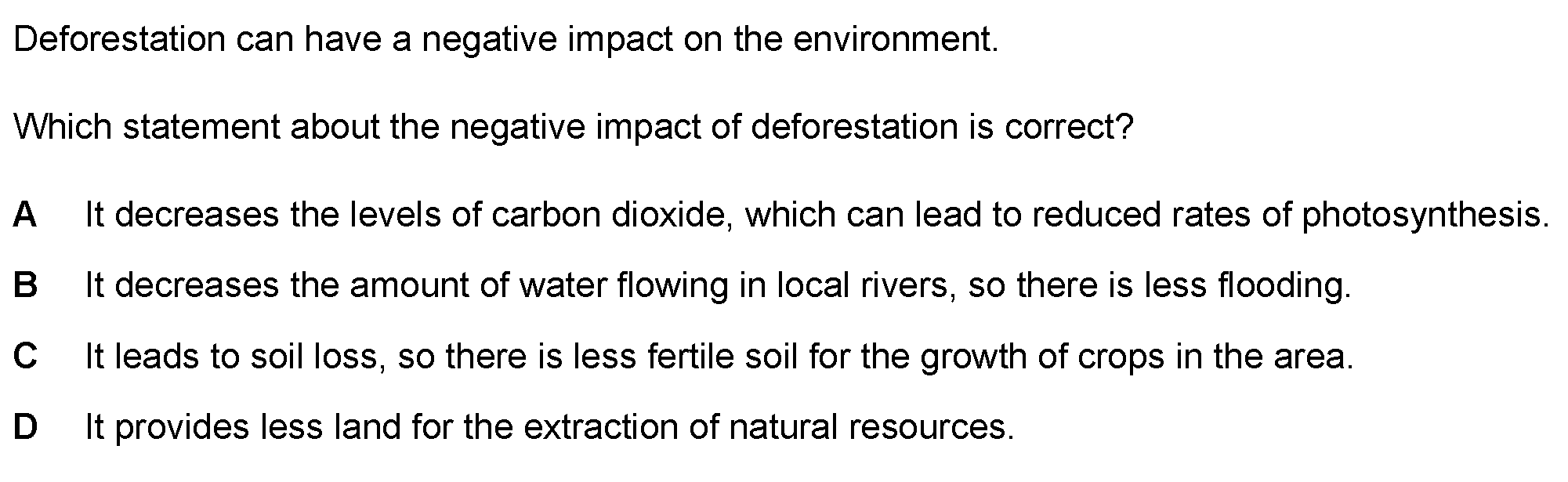
Deforestation can have a negative impact on the environment.
Which statement about the negative impact of deforestation is correct?
0 O WW
It decreases the levels of carbon dioxide, which can lead to reduced rates of photosynthesis.
It decreases the amount of water flowing in local rivers, so there is less flooding.
It leads to soil loss, so there is less fertile soil for the growth of crops in the area.
It provides less land for the extraction of natural resources.
Options:
A
B
C
D
Correct Key: C
A
B
C
D
Correct Key: C
Question 2
Paper Ref: 0610/22_Winter_2009_Q40
Paper Ref: 0610/22_Winter_2009_Q40
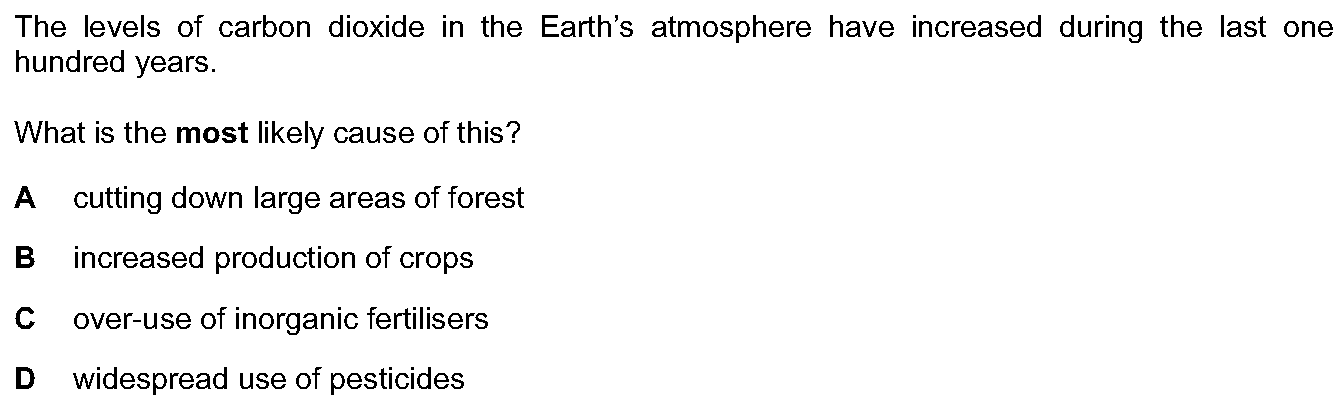
The levels of carbon dioxide in the Earth’s atmosphere have increased during the last one
hundred years.
What is the most likely cause of this?
cutting down large areas of forest
B increased production of crops
C_ over-use of inorganic fertilisers
D_ widespread use of pesticides
hundred years.
What is the most likely cause of this?
cutting down large areas of forest
B increased production of crops
C_ over-use of inorganic fertilisers
D_ widespread use of pesticides
Options:
A
B
C
D
Correct Key: A
A
B
C
D
Correct Key: A
Question 3
Paper Ref: 0610/22_Summer_2024_Q38
Paper Ref: 0610/22_Summer_2024_Q38
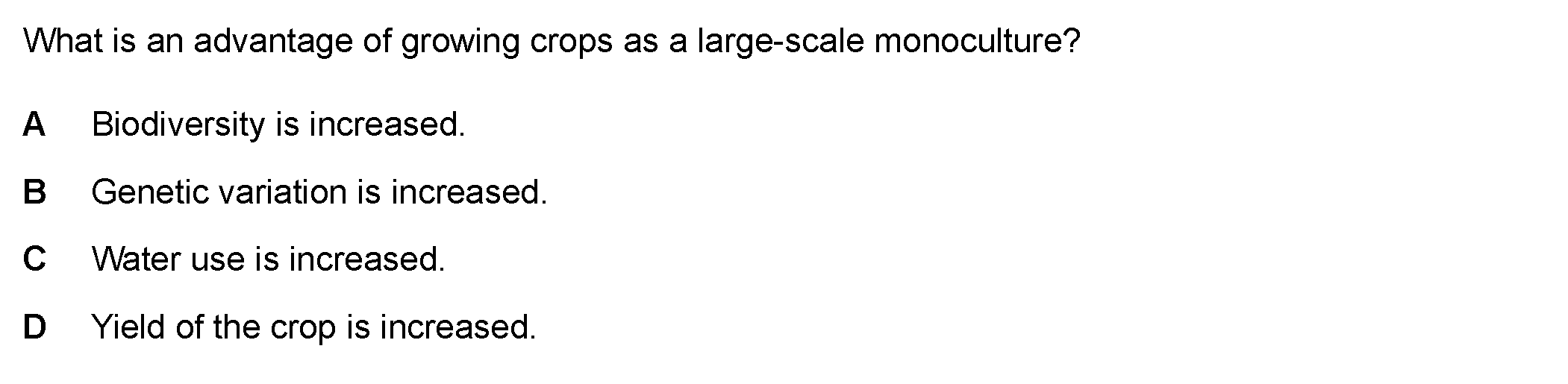
What is an advantage of growing crops as a large-scale monoculture?
A _ Biodiversity is increased.
Genetic variation is increased.
Water use is increased.
0 OO WW
Yield of the crop is increased.
A _ Biodiversity is increased.
Genetic variation is increased.
Water use is increased.
0 OO WW
Yield of the crop is increased.
Options:
A
B
C
D
Correct Key: D
A
B
C
D
Correct Key: D
Question 4
Paper Ref: 0610/21_Winter_2023_Q38
Paper Ref: 0610/21_Winter_2023_Q38
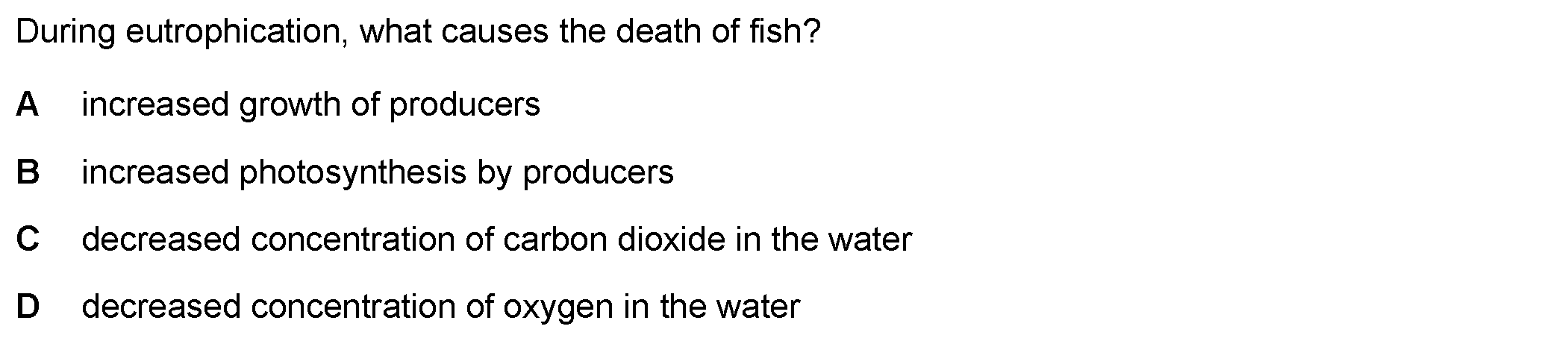
During eutrophication, what causes the death of fish?
A
B
Cc
D
increased growth of producers
increased photosynthesis by producers
decreased concentration of carbon dioxide in the water
decreased concentration of oxygen in the water
A
B
Cc
D
increased growth of producers
increased photosynthesis by producers
decreased concentration of carbon dioxide in the water
decreased concentration of oxygen in the water
Options:
A
B
C
D
Correct Key: D
A
B
C
D
Correct Key: D
Question 5
Paper Ref: 0610/22_Winter_2025_Q39
Paper Ref: 0610/22_Winter_2025_Q39
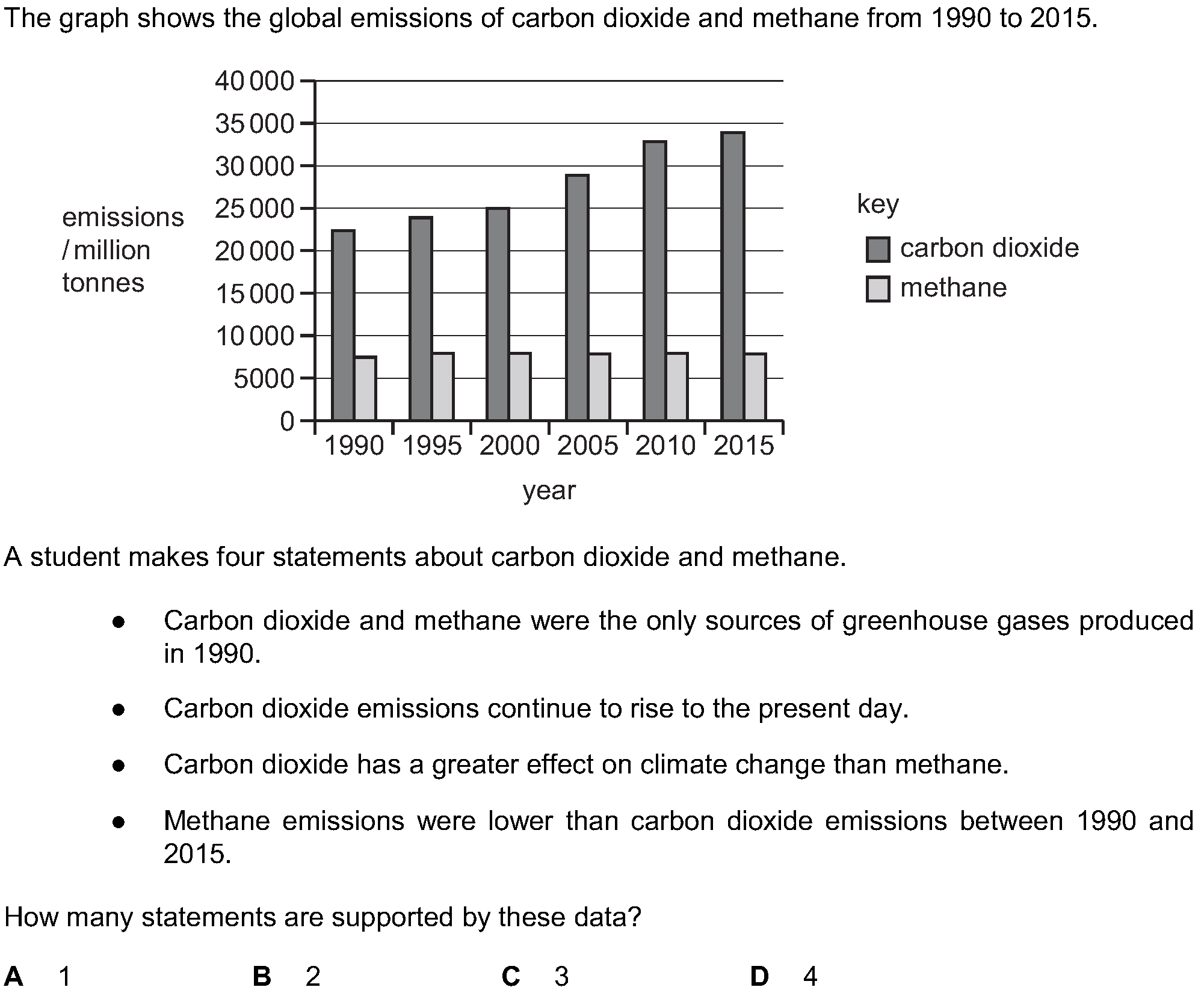
The graph shows the global emissions of carbon dioxide and methane from 1990 to 2015.
40000
35 000
30000
emissions 290900 key
/million 20000 fi carbon dioxide
tonnes 15000 1 methane
10000
5000
1990 1995 2000 2005 2010 2015
year
A student makes four statements about carbon dioxide and methane.
e Carbon dioxide and methane were the only sources of greenhouse gases produced
in 1990.
e Carbon dioxide emissions continue to rise to the present day.
e Carbon dioxide has a greater effect on climate change than methane.
e Methane emissions were lower than carbon dioxide emissions between 1990 and
2015.
How many statements are supported by these data?
A 1 B 2 Cc 3 D 4
Options:
A
B
C
D
Correct Key: A
A
B
C
D
Correct Key: A
Question 6
Paper Ref: 0610/22_Winter_2022_Q39
Paper Ref: 0610/22_Winter_2022_Q39
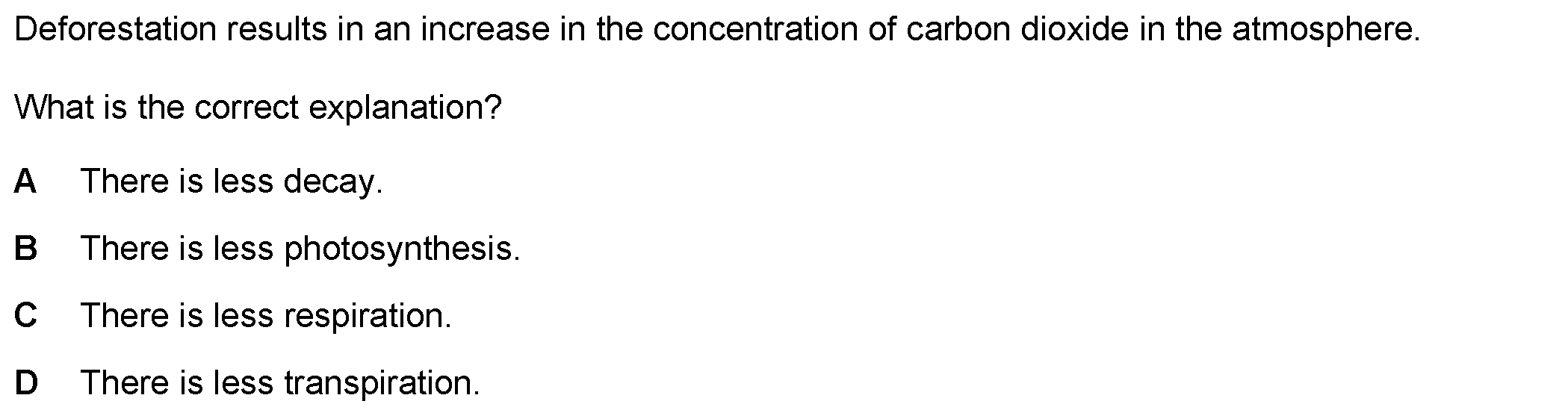
Deforestation results in an increase in the concentration of carbon dioxide in the atmosphere.
What is the correct explanation?
A There is less decay.
B_ There is less photosynthesis.
C_ There is less respiration.
D
There is less transpiration.
What is the correct explanation?
A There is less decay.
B_ There is less photosynthesis.
C_ There is less respiration.
D
There is less transpiration.
Options:
A
B
C
D
Correct Key: B
A
B
C
D
Correct Key: B
Question 7
Paper Ref: 0610/12_Winter_2022_Q40
Paper Ref: 0610/12_Winter_2022_Q40
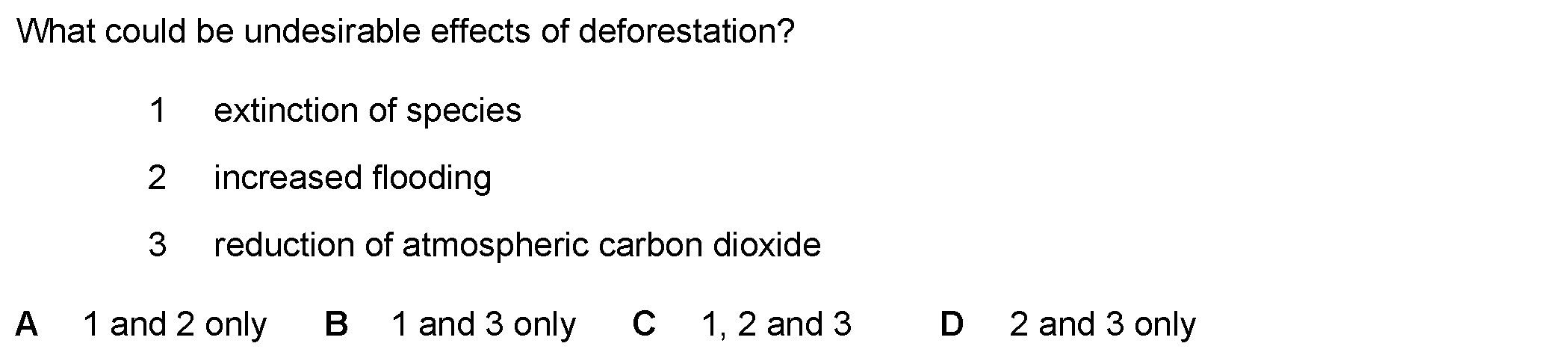
What could be undesirable effects of deforestation?
1 extinction of species
2 increased flooding
3 reduction of atmospheric carbon dioxide
A 1and2Zonly B 1and3only C 1,2and3 D 2and 3only
1 extinction of species
2 increased flooding
3 reduction of atmospheric carbon dioxide
A 1and2Zonly B 1and3only C 1,2and3 D 2and 3only
Options:
A
B
C
D
Correct Key: A
A
B
C
D
Correct Key: A
Structured Questions Mark Scheme & Answers
•1•.• • • •[•▍• •C•P• •O•c•t•o•b•e•r• •2•0•2•5• •P•1• • •·• • •Q•8• • •P•a•r•t• •(•b•)• • •·• • •2•0•2•5• • •·• • •L•o•w•e•r• •S•e•c• •0•8•9•3•]• • • • • • •a•n•y• •o•n•e• •f•r•o•m• •1• •s•e•a• •l•e•v•e•l• •c•h•a•n•g•e• •i•n•c•r•e•a•s•e•d• •g•l•o•b•a•l• •t•e•m•p•e•r•a•t•u•r•e• •••c•c•e•p•t• •h•e•a•t•i•n•g• •u•p• •t•h•e• •a•t•m•o•s•p•h•e•r•e• •o•r• •i•t• •w•i•l•l• •b•e• •w•a•r•m•e•r• •o•r• •i•n•c•r•e•a•s•i•n•g• •t•e•m•p•e•r•a•t•u•r•e• •o•r• •g•l•o•b•a•l• •w•a•r•m•i•n•g• •f•l•o•o•d•i•n•g• •d•r•o•u•g•h•t• •••c•c•e•p•t• •d•e•s•e•r•t•i•f•i•c•a•t•i•o•n• •(•i•d•e•a• •o•f•)• •e•x•t•r•e•m•e• •w•e•a•t•h•e•r• •e•v•e•n•t•s• •••c•c•e•p•t• •(•i•d•e•a• •o•f•)• •e•x•t•r•e•m•e• •w•e•a•t•h•e•r• •e•v•e•n•t•s•,• •e•.•g•.• •s•t•o•r•m•s• •o•r• •h•e•a•t•w•a•v•e•s• •••c•c•e•p•t• •u•n•e•x•p•e•c•t•e•d• •w•e•a•t•h•e•r• •e•v•e•n•t•s• •i•c•e• •c•a•p•s• •m•e•l•t•i•n•g• •o•r• •g•l•a•c•i•e•r•s• •m•e•l•t•i•n•g• •o•r• •p•o•l•a•r• •i•c•e• •m•e•l•t•i•n•g• •N•o•t•e• •i•c•e• •m•e•l•t•i•n•g• •i•s• •n•o•t• •s•u•f•f•i•c•i•e•n•t• •e•x•t•i•n•c•t•i•o•n• •(•o•f• •a•n•i•m•a•l•s• •a•n•d• •p•l•a•n•t•s•)• •o•r• •r•e•d•u•c•e• •b•i•o•d•i•v•e•r•s•i•t•y• •(•i•d•e•a• •o•f•)• •l•e•s•s• •f•o•o•d• •p•r•o•d•u•c•t•i•o•n• •N•o•t•e• •a•f•f•e•c•t•s• •t•h•e• •f•o•o•d• •c•h•a•i•n• •i•s• •n•o•t• •s•u•f•f•i•c•i•e•n•t• •(•i•d•e•a• •o•f•)• •l•o•s•s• •o•f• •h•a•b•i•t•a•t• •o•r• •c•h•a•n•g•e• •o•f• •h•a•b•i•t•a•t•
•2•.• • • •[•▍• •C•P• •O•c•t•o•b•e•r• •2•0•2•5• •P•2• • •·• • •Q•4• • •·• • •2•0•2•5• • •·• • •L•o•w•e•r• •S•e•c• •0•8•9•3•]• • • • • • •a•n•y• •f•o•u•r• •f•r•o•m• •4• •e•a•c•h• •c•o•r•r•e•c•t• •a•n•s•w•e•r• •=• •1• •m•a•r•k• •M•1• •(•i•d•e•a• •o•f•)• •d•u•s•t• •c•l•o•u•d• •M•2• •(•d•u•s•t•)• •o•b•s•c•u•r•e•d• •S•u•n• •o•r• •l•i•g•h•t• •(•s•o• •l•e•s•s• •p•h•o•t•o•s•y•n•t•h•e•s•i•s•)• •M•3• •r•e•d•u•c•e•d• •p•h•o•t•o•s•y•n•t•h•e•s•i•s• •M•4• •r•e•d•u•c•e•d• •s•u•p•p•l•y• •o•f• •o•x•y•g•e•n• •o•r• •a•m•o•u•n•t• •o•f• •o•x•y•g•e•n• •(•i•n• •a•i•r•)• •r•e•d•u•c•e•d• •M•5• •(•i•d•e•a• •t•h•a•t•)• •p•l•a•n•t•s• •d•i•e•d• •••c•c•e•p•t• •l•e•s•s• •p•r•o•d•u•c•e•r•s• •M•6• •(•i•d•e•a• •t•h•a•t•)• •l•e•s•s• •f•o•o•d• •f•o•r• •h•e•r•b•i•v•o•r•e•s• •s•o• •h•e•r•b•i•v•o•r•e•s• •d•i•e•d• •o•r• •••c•c•e•p•t• •n•o• •f•o•o•d• •o•r• •l•e•s•s• •f•o•o•d• •i•f• •M•6• •a•n•d• •M•7• •n•o•t• •l•e•s•s• •f•e•e•d•i•n•g• •o•n• •p•l•a•n•t•s• •a•w•a•r•d•e•d• •M•7• •(•i•d•e•a• •t•h•a•t•)• •l•e•s•s• •f•o•o•d• •f•o•r• •c•a•r•n•i•v•o•r•e•s• •s•o• •c•a•r•n•i•v•o•r•e•s• •d•i•e•d• •M•8• •m•o•r•e• •c•o•m•b•u•s•t•i•o•n• •••c•c•e•p•t• •w•i•l•d•f•i•r•e•s• •M•9• •r•e•l•e•a•s•e•s• •o•r• •m•o•r•e• •c•a•r•b•o•n• •d•i•o•x•i•d•e• •i•n• •t•h•e• •a•i•r• •o•r• •r•e•l•e•a•s•e•s• •o•r• •••c•c•e•p•t• •c•a•u•s•e•s• •l•a•r•g•e• •a•m•o•u•n•t• •o•f• •c•a•r•b•o•n• •d•i•o•x•i•d•e• •i•n• •m•o•r•e• •g•r•e•e•n•h•o•u•s•e• •g•a•s•e•s• •t•h•e• •a•i•r• •M•1•0• •c•l•i•m•a•t•e• •c•h•a•n•g•e• •o•r• •g•l•o•b•a•l• •c•o•o•l•i•n•g• •••c•c•e•p•t• •(•i•d•e•a• •o•f•)• •g•l•o•b•a•l• •t•e•m•p•e•r•a•t•u•r•e• •d•e•c•r•e•a•s•e• •/• •i•c•e•-•a•g•e• •M•1•1• •l•e•s•s• •h•a•b•i•t•a•t• •a•v•a•i•l•a•b•l•e• •••c•c•e•p•t• •l•e•s•s• •s•h•e•l•t•e•r•
•3•.• • • •[•▍• •P•T• •S•9• •2•0•2•5• •P•1• • •·• • •Q•8• • •·• • •2•0•2•5• • •·• • •L•o•w•e•r• •S•e•c• •0•8•9•3•]• • • • • • •2• •e•a•c•h• •c•o•r•r•e•c•t• •a•n•s•w•e•r• •=• •1• •m•a•r•k• •r•e•s•p•i•r•a•t•i•o•n• •D•o• •n•o•t• •a•c•c•e•p•t• •b•r•e•a•t•h•i•n•g• •o•r• •p•h•o•t•o•s•y•n•t•h•e•s•i•s• •d•e•c•o•m•p•o•s•i•t•i•o•n• •••c•c•e•p•t• •d•e•c•a•y•
•4•.• • • •[•▍• •C•P• •M•a•r•c•h• •2•0•2•6• •P•1• • •·• • •Q•8• • •·• • •2•0•2•6• • •·• • •L•o•w•e•r• •S•e•c• •0•8•9•3•]• • • • • • •2• •a•l•l• •f•o•u•r• •t•i•c•k•s• •c•o•r•r•e•c•t• •=• •2• •m•a•r•k•s• •r•e•l•e•a•s•e•s• •t•a•k•e•s• •i•n• •p•r•o•c•e•s•s• •c•a•r•b•o•n• •d•i•o•x•i•d•e• •c•a•r•b•o•n• •d•i•o•x•i•d•e• •t•w•o• •o•r• •t•h•r•e•e• •t•i•c•k•s• •c•o•r•r•e•c•t• •=• •1• •m•a•r•k• •c•o•m•b•u•s•t•i•o•n• •• •o•n•e• •t•i•c•k• •c•o•r•r•e•c•t• •=• •0• •m•a•r•k•s• •N•o•t•e• •i•f• •t•i•c•k•s• •i•n• •b•o•t•h• •c•o•l•u•m•n•s• •t•h•e•n• •t•h•e• •c•o•r•r•e•c•t• •t•i•c•k• •d•e•c•o•m•p•o•s•i•t•i•o•n• •• •w•i•l•l• •b•e• •c•o•n•s•i•d•e•r•e•d• •a•s• •i•n•c•o•r•r•e•c•t•.• •p•h•o•t•o•s•y•n•t•h•e•s•i•s• •• •I•g•n•o•r•e• •• •r•e•s•p•i•r•a•t•i•o•n• ••
•5•.• • • •[•▍• •P•T• •S•9• •2•0•2•6• •P•1• • •·• • •Q•7• • •P•a•r•t• •(•a•)• • •·• • •2•0•2•6• • •·• • •L•o•w•e•r• •S•e•c• •0•8•9•3•]• • • • • • •4• •e•a•c•h• •c•o•r•r•e•c•t• •a•n•s•w•e•r• •=• •1• •m•a•r•k• •(•c•o•m•b•u•s•t•i•o•n•)• •D• •(•p•h•o•t•o•s•y•n•t•h•e•s•i•s•)• •B• •(•r•e•s•p•i•r•a•t•i•o•n•)• ••• •(•a•n•d•)• •C• •••c•c•e•p•t• •i•n• •e•i•t•h•e•r• •o•r•d•e•r•
•6•.• • • •[•▍• •P•T• •S•9• •2•0•2•6• •P•1• • •·• • •Q•7• • •P•a•r•t• •(•b•)• • •·• • •2•0•2•6• • •·• • •L•o•w•e•r• •S•e•c• •0•8•9•3•]• • • • • • •c•a•r•b•o•n• •d•i•o•x•i•d•e• •1• •I•g•n•o•r•e• •w•a•t•e•r• •••c•c•e•p•t• •m•e•t•h•a•n•e• •©• •C•a•m•b•r•i•d•g•e• •U•n•i•v•e•r•s•i•t•y• •P•r•e•s•s• •&• •••s•s•e•s•s•m•e•n•t• •2•0•2•6• •P•a•g•e• •5• •o•f• •1•2• •S•9•/•0•1• •S•c•i•e•n•c•e• •S•t•a•g•e• •9• •P•a•p•e•r• •1• •M•a•r•k• •S•c•h•e•m•e• •2•0•2•6•
Last updated:
\n