Curriculum
OCR A Level Physics A H556
1. Development of Practical Skills in Physics
0/56
2. Foundations in Physics
0/29
-
2. Foundations in Physics
 Preview
-
1.1.1 Physical Quantities
Preview
-
1.1.1 Physical Quantities - Check yourself
 Preview
-
1.1.5 Resolving Vectors
Preview
-
1.1.5 Resolving Vectors - Check yourself
Preview
-
1.2.1 SI Units
Preview
-
1.2.1 SI Units - Check yourself
Preview
-
1.2.1 Sources of Uncertainty
Preview
-
1.2.1 Sources of Uncertainty - Check yourself
Preview
-
1.2.2 Homogeneity of Physical Equations and Powers of Ten
Preview
-
1.2.2 Homogeneity of Physical Equations and Powers of Ten - Check yourself
Preview
-
1.2.3 Determining Uncertainties from Graphs
Preview
-
1.2.3 Determining Uncertainties from Graphs - Check yourself
Preview
-
1.3.2 Calculating Uncertainties
Preview
-
1.3.2 Calculating Uncertainties - Check yourself
Preview
-
1.4.1 Scalars and Vectors
Preview
-
1.4.1 Scalars and Vectors - Check yourself
Preview
-
2.1.4 Labelling Graphs and Tables
Preview
-
2.1.4 Labelling Graphs and Tables - Check yourself
Preview
-
2.3.2 Combining Vectors
Preview
-
2.3.2 Combining Vectors - Check yourself
Preview
-
2.1.1 Physical Quantities
Preview
-
2.1.2 SI Units
Preview
-
2.1.3 Homogeneity of Physical Equations and Powers of Ten
Preview
-
2.2.1 Sources of Uncertainty
Preview
-
2.2.2 Calculating Uncertainties
Preview
-
2.2.3 Determining Uncertainties from Graphs
Preview
-
2.3.1 Scalars and Vectors
Preview
-
2.3.3 Resolving Vectors
Preview
3. Forces and Motion
0/108
4. Electrons, Waves and Photons
0/71
OCR H556 chapter questions and answers
0/2
Text lesson
1.1.1 Physical Quantities
1.1.1 Physical Quantities — AS PHYSICS 9702 notes: Distinguish base and derived quantities, write a quantity as a number times a unit, use SI prefixes and make sensible estimates.
What a physical quantity is
What a physical quantity is
Physical quantity
a property that can be measured and is written as a numerical magnitude multiplied by a unit.
1.8 on its own means nothing, whereas 1.8 m is a complete statement.
The unit gives the context the letter v could mean velocity (m s-1), volume (m3) or, as V, potential difference (V).
Symbols are italic and units are upright m for mass, kg for its unit.
A graph axis is labelled quantity / unit for example m / kg
because the quantity divided by its unit is a pure number.
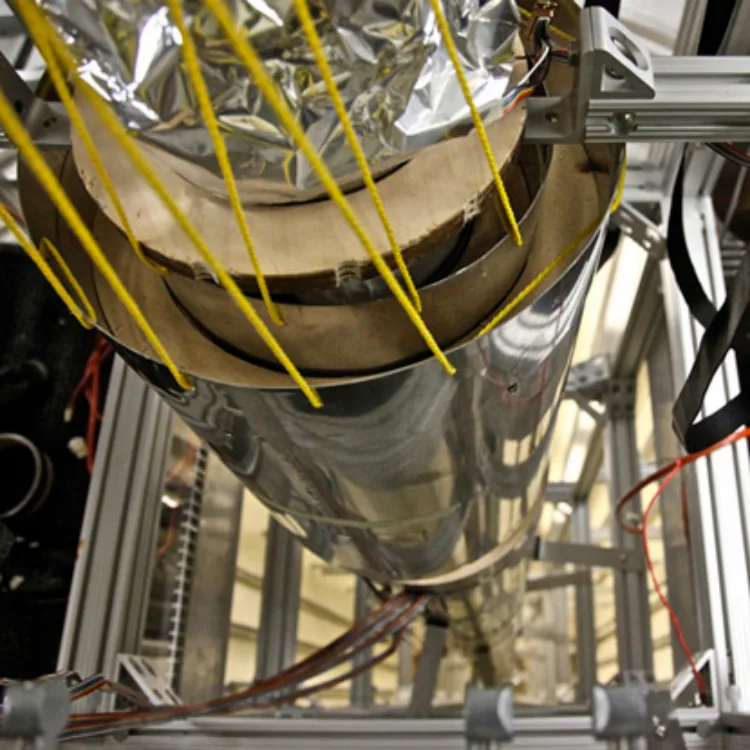
The second, the meter and the kilogram: An atomic clock uses the steady vibrations of cesium atoms, and the second is based on such clocks.
SI base quantities and units
| Base quantity | SI base unit | Symbol |
|---|---|---|
| Mass | kilogram | kg |
| Length | metre | m |
| Time | second | s |
| Electric current | ampere | A |
| Thermodynamic temperature | kelvin | K |
| Amount of substance | mole | mol |
Base and derived quantities
Base quantities
a small set of independent quantities from which all others are built.
The kilogram
is the only base unit that already carries a prefix.
Derived quantity
defined through an equation linking it to base quantities, for example speed = length ÷ time with unit m s-1.
Force comes from F = ma
so 1 newton (N) = 1 kg m s-2.
Special names such as newton, joule and watt
are for convenience and can always be reduced to base units.
SI prefixes
| Prefix | Symbol | Factor |
|---|---|---|
| pico | p | 10-12 |
| nano | n | 10-9 |
| micro | μ | 10-6 |
| milli | m | 10-3 |
| centi | c | 10-2 |
| deci | d | 10-1 |
| kilo | k | 103 |
| mega | M | 106 |
| giga | G | 109 |
| tera | T | 1012 |
Using prefixes and converting units
1
1 cm3 = (10-2 m)3 = 10-6 m3, not 10-2 m3.
2
Standard form a × 10n with 1 ≤ a <
10, used for very large or very small numbers.
3
To convert units multiply by conversion factors equal to one so that each unit cancels.
4
Always give a final answer with a unit and with significant figures that match the least precise data.
5
Keep intermediate values unrounded and round only the final answer.
1Orders of magnitude and estimation2Orders of magnitude and estimation3Orders of magnitude and estimation
Orders of magnitude and estimation
1
Order of magnitude
2
the power of ten closest to a number
so 3000 m is of order 10
3
3
4
m and 8000 m is closer to 10
5
4
6
m.
1 / 3Next ▶
Orders of magnitude and estimation
Estimates are made from remembered values
for example mass of a person about 70 kg and speed of a walking person 1 to 1.5 m s-1.
Estimating energy gained
use Ep = mgh with g ≈ 10 N kg-1, estimated mass and estimated height.
Mark schemes accept a range of values
so estimates need only be sensible.
Check data booklet values first
many constants are already given.
◀ Previous2 / 3Next ▶
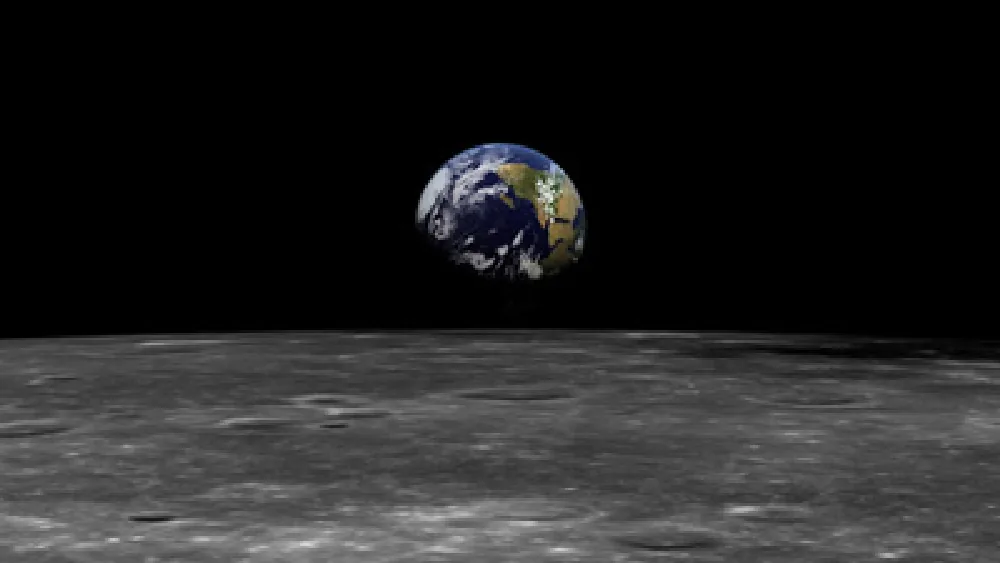
The range of physical quantities: The Earth-Moon distance looks enormous, yet it is only a small fraction of the distances to other celestial bodies.
Orders of magnitude and estimation
◀ Previous3 / 3
1Useful sizes to remember2Useful sizes to remember
Key terms
| Term | Meaning |
|---|---|
| Physical quantity | A measurable property written as a numerical magnitude times a unit. |
| Base quantity | One of the independent quantities from which other quantities are derived. |
| Derived quantity | A quantity defined through an equation involving base quantities. |
| SI unit | A unit of the international system of measurement. |
| Prefix | A symbol that multiplies a unit by a power of ten. |
| Standard form | A number written as a × 10n with 1 ≤ a < 10. |
| Order of magnitude | The power of ten closest to a number. |
| Estimate | An approximate value found from known sizes and simple calculation. |
1Avoid these mistakes2Avoid these mistakes