Curriculum
Chemistry 2e
Unit 1: Essential Ideas
0/14
-
Unit 1 overview: Essential Ideas
 Text lessonPreview
-
1.1 Chemistry in Context
Text lessonPreview
-
1.1 Chemistry in Context - Check yourself
 6 questionsPreview
-
1.2 Phases and Classification of Matter
Text lessonPreview
-
1.2 Phases and Classification of Matter - Check yourself
6 questionsPreview
-
1.3 Physical and Chemical Properties
Text lessonPreview
-
1.3 Physical and Chemical Properties - Check yourself
6 questionsPreview
-
1.4 Measurements
Text lessonPreview
-
1.4 Measurements - Check yourself
6 questionsPreview
-
1.5 Measurement Uncertainty, Accuracy, and Precision
Text lessonPreview
-
1.5 Measurement Uncertainty, Accuracy, and Precision - Check yourself
6 questionsPreview
-
1.6 Mathematical Treatment of Measurement Results
Text lessonPreview
-
1.6 Mathematical Treatment of Measurement Results - Check yourself
6 questionsPreview
-
Unit 1 review quiz: Essential Ideas
10 questionsPreview
Unit 2: Atoms, Molecules, and Ions
0/16
-
Unit 2 overview: Atoms, Molecules, and Ions
Text lessonPreview
-
2.1 Early Ideas in Atomic Theory
Text lessonPreview
-
2.1 Early Ideas in Atomic Theory - Check yourself
6 questionsPreview
-
2.2 Evolution of Atomic Theory
Text lessonPreview
-
2.2 Evolution of Atomic Theory - Check yourself
6 questionsPreview
-
2.3 Atomic Structure and Symbolism
Text lessonPreview
-
2.3 Atomic Structure and Symbolism - Check yourself
6 questionsPreview
-
2.4 Chemical Formulas
Text lessonPreview
-
2.4 Chemical Formulas - Check yourself
6 questionsPreview
-
2.5 The Periodic Table
Text lessonPreview
-
2.5 The Periodic Table - Check yourself
6 questionsPreview
-
2.6 Ionic and Molecular Compounds
Text lessonPreview
-
2.6 Ionic and Molecular Compounds - Check yourself
6 questionsPreview
-
2.7 Chemical Nomenclature
Text lessonPreview
-
2.7 Chemical Nomenclature - Check yourself
6 questionsPreview
-
Unit 2 review quiz: Atoms, Molecules, and Ions
10 questionsPreview
Unit 3: Composition of Substances and Solutions
0/10
-
Unit 3 overview: Composition of Substances and Solutions
Text lessonPreview
-
3.1 Formula Mass and the Mole Concept
Text lessonPreview
-
3.1 Formula Mass and the Mole Concept - Check yourself
6 questionsPreview
-
3.2 Determining Empirical and Molecular Formulas
Text lessonPreview
-
3.2 Determining Empirical and Molecular Formulas - Check yourself
6 questionsPreview
-
3.3 Molarity
Text lessonPreview
-
3.3 Molarity - Check yourself
6 questionsPreview
-
3.4 Other Units for Solution Concentrations
Text lessonPreview
-
3.4 Other Units for Solution Concentrations - Check yourself
6 questionsPreview
-
Unit 3 review quiz: Composition of Substances and Solutions
10 questionsPreview
Unit 4: Stoichiometry of Chemical Reactions
0/12
-
Unit 4 overview: Stoichiometry of Chemical Reactions
Text lessonPreview
-
4.1 Writing and Balancing Chemical Equations
Text lessonPreview
-
4.1 Writing and Balancing Chemical Equations - Check yourself
6 questionsPreview
-
4.2 Classifying Chemical Reactions
Text lessonPreview
-
4.2 Classifying Chemical Reactions - Check yourself
6 questionsPreview
-
4.3 Reaction Stoichiometry
Text lessonPreview
-
4.3 Reaction Stoichiometry - Check yourself
6 questionsPreview
-
4.4 Reaction Yields
Text lessonPreview
-
4.4 Reaction Yields - Check yourself
6 questionsPreview
-
4.5 Quantitative Chemical Analysis
Text lessonPreview
-
4.5 Quantitative Chemical Analysis - Check yourself
6 questionsPreview
-
Unit 4 review quiz: Stoichiometry of Chemical Reactions
10 questionsPreview
Unit 5: Thermochemistry
0/8
-
Unit 5 overview: Thermochemistry
Text lessonPreview
-
5.1 Energy Basics
Text lessonPreview
-
5.1 Energy Basics - Check yourself
6 questionsPreview
-
5.2 Calorimetry
Text lessonPreview
-
5.2 Calorimetry - Check yourself
7 questionsPreview
-
5.3 Enthalpy
Text lessonPreview
-
5.3 Enthalpy - Check yourself
6 questionsPreview
-
Unit 5 review quiz: Thermochemistry
10 questionsPreview
Unit 6: Electronic Structure and Periodic Properties of Elements
0/12
-
Unit 6 overview: Electronic Structure and Periodic Properties of Elements
Text lessonPreview
-
6.1 Electromagnetic Energy
Text lessonPreview
-
6.1 Electromagnetic Energy - Check yourself
6 questionsPreview
-
6.2 The Bohr Model
Text lessonPreview
-
6.2 The Bohr Model - Check yourself
6 questionsPreview
-
6.3 Development of Quantum Theory
Text lessonPreview
-
6.3 Development of Quantum Theory - Check yourself
6 questionsPreview
-
6.4 Electronic Structure of Atoms (Electron Configurations)
Text lessonPreview
-
6.4 Electronic Structure of Atoms (Electron Configurations) - Check yourself
6 questionsPreview
-
6.5 Periodic Variations in Element Properties
Text lessonPreview
-
6.5 Periodic Variations in Element Properties - Check yourself
6 questionsPreview
-
Unit 6 review quiz: Electronic Structure and Periodic Properties of Elements
10 questionsPreview
Unit 7: Chemical Bonding and Molecular Geometry
0/14
-
Unit 7 overview: Chemical Bonding and Molecular Geometry
Text lessonPreview
-
7.1 Ionic Bonding
Text lessonPreview
-
7.1 Ionic Bonding - Check yourself
6 questionsPreview
-
7.2 Covalent Bonding
Text lessonPreview
-
7.2 Covalent Bonding - Check yourself
6 questionsPreview
-
7.3 Lewis Symbols and Structures
Text lessonPreview
-
7.3 Lewis Symbols and Structures - Check yourself
6 questionsPreview
-
7.4 Formal Charges and Resonance
Text lessonPreview
-
7.4 Formal Charges and Resonance - Check yourself
6 questionsPreview
-
7.5 Strengths of Ionic and Covalent Bonds
Text lessonPreview
-
7.5 Strengths of Ionic and Covalent Bonds - Check yourself
6 questionsPreview
-
7.6 Molecular Structure and Polarity
Text lessonPreview
-
7.6 Molecular Structure and Polarity - Check yourself
6 questionsPreview
-
Unit 7 review quiz: Chemical Bonding and Molecular Geometry
10 questionsPreview
Unit 8: Advanced Theories of Covalent Bonding
0/10
-
Unit 8 overview: Advanced Theories of Covalent Bonding
Text lessonPreview
-
8.1 Valence Bond Theory
Text lessonPreview
-
8.1 Valence Bond Theory - Check yourself
6 questionsPreview
-
8.2 Hybrid Atomic Orbitals
Text lessonPreview
-
8.2 Hybrid Atomic Orbitals - Check yourself
6 questionsPreview
-
8.3 Multiple Bonds
Text lessonPreview
-
8.3 Multiple Bonds - Check yourself
6 questionsPreview
-
8.4 Molecular Orbital Theory
Text lessonPreview
-
8.4 Molecular Orbital Theory - Check yourself
6 questionsPreview
-
Unit 8 review quiz: Advanced Theories of Covalent Bonding
10 questionsPreview
Unit 9: Gases
0/23
-
Unit 9 overview: Gases
Text lessonPreview
-
9.1 Gas Pressure
Text lessonPreview
-
9.1 Gas Pressure - Check yourself
6 questionsPreview
-
9.2 Relating Pressure, Volume, Amount, and Temperature: The Ideal Gas Law
Text lessonPreview
-
9.2 Relating Pressure, Volume, Amount, and Temperature: The Ideal Gas Law - Check yourself
6 questionsPreview
-
9.3 Stoichiometry of Gaseous Substances, Mixtures, and Reactions
Text lessonPreview
-
9.3 Stoichiometry of Gaseous Substances, Mixtures, and Reactions - Check yourself
6 questionsPreview
-
9.3 Stoichiometry of Gaseous Substances, Mixtures, and Reactions
Text lessonPreview
-
9.3 Stoichiometry of Gaseous Substances, Mixtures, and Reactions - Check yourself
6 questionsPreview
-
9.4 Effusion and Diffusion of Gases
Text lessonPreview
-
9.4 Effusion and Diffusion of Gases - Check yourself
6 questionsPreview
-
9.4 Effusion and Diffusion of Gases
Text lessonPreview
-
9.4 Effusion and Diffusion of Gases - Check yourself
6 questionsPreview
-
Unit 9 review quiz: Gases
10 questionsPreview
-
9.5 The Kinetic-Molecular Theory
Text lessonPreview
-
9.5 The Kinetic-Molecular Theory - Check yourself
6 questionsPreview
-
9.5 The Kinetic-Molecular Theory
Text lessonPreview
-
9.5 The Kinetic-Molecular Theory - Check yourself
6 questionsPreview
-
9.6 Non-Ideal Gas Behavior
Text lessonPreview
-
9.6 Non-Ideal Gas Behavior - Check yourself
6 questionsPreview
-
9.6 Non-Ideal Gas Behavior
Text lessonPreview
-
9.6 Non-Ideal Gas Behavior - Check yourself
6 questionsPreview
-
Unit 9 review quiz: Gases
10 questionsPreview
Unit 10: Liquids and Solids
0/28
-
Unit 10 overview: Liquids and Solids
Text lessonPreview
-
10.1 Intermolecular Forces
Text lessonPreview
-
Unit 10 overview: Liquids and Solids
Text lessonPreview
-
10.1 Intermolecular Forces
Text lessonPreview
-
10.1 Intermolecular Forces - Check yourself
6 questionsPreview
-
10.1 Intermolecular Forces - Check yourself
6 questionsPreview
-
10.2 Properties of Liquids
Text lessonPreview
-
10.2 Properties of Liquids - Check yourself
6 questionsPreview
-
10.2 Properties of Liquids
Text lessonPreview
-
10.2 Properties of Liquids - Check yourself
6 questionsPreview
-
10.3 Phase Transitions
Text lessonPreview
-
10.3 Phase Transitions - Check yourself
6 questionsPreview
-
10.3 Phase Transitions
Text lessonPreview
-
10.3 Phase Transitions - Check yourself
6 questionsPreview
-
10.4 Phase Diagrams
Text lessonPreview
-
10.4 Phase Diagrams
Text lessonPreview
-
10.4 Phase Diagrams - Check yourself
6 questionsPreview
-
10.4 Phase Diagrams - Check yourself
6 questionsPreview
-
10.5 The Solid State of Matter
Text lessonPreview
-
10.5 The Solid State of Matter
Text lessonPreview
-
10.5 The Solid State of Matter - Check yourself
6 questionsPreview
-
10.5 The Solid State of Matter - Check yourself
6 questionsPreview
-
10.6 Lattice Structures in Crystalline Solids
Text lessonPreview
-
10.6 Lattice Structures in Crystalline Solids
Text lessonPreview
-
10.6 Lattice Structures in Crystalline Solids - Check yourself
6 questionsPreview
-
10.6 Lattice Structures in Crystalline Solids - Check yourself
6 questionsPreview
-
Unit 10 review quiz: Liquids and Solids
10 questionsPreview
-
Unit 10 review quiz: Liquids and Solids
10 questionsPreview
Unit 11: Solutions and Colloids
0/24
-
Unit 11 overview: Solutions and Colloids
Text lessonPreview
-
11.1 The Dissolution Process
Text lessonPreview
-
Unit 11 overview: Solutions and Colloids
Text lessonPreview
-
11.1 The Dissolution Process
Text lessonPreview
-
11.1 The Dissolution Process - Check yourself
6 questionsPreview
-
11.1 The Dissolution Process - Check yourself
6 questionsPreview
-
11.2 Electrolytes
Text lessonPreview
-
11.2 Electrolytes - Check yourself
6 questionsPreview
-
11.2 Electrolytes
Text lessonPreview
-
11.2 Electrolytes - Check yourself
6 questionsPreview
-
11.3 Solubility
Text lessonPreview
-
11.3 Solubility - Check yourself
6 questionsPreview
-
11.3 Solubility
Text lessonPreview
-
11.3 Solubility - Check yourself
6 questionsPreview
-
11.4 Colligative Properties
Text lessonPreview
-
11.4 Colligative Properties - Check yourself
6 questionsPreview
-
11.4 Colligative Properties
Text lessonPreview
-
11.4 Colligative Properties - Check yourself
6 questionsPreview
-
11.5 Colloids
Text lessonPreview
-
11.5 Colloids - Check yourself
6 questionsPreview
-
11.5 Colloids
Text lessonPreview
-
11.5 Colloids - Check yourself
6 questionsPreview
-
Unit 11 review quiz: Solutions and Colloids
10 questionsPreview
-
Unit 11 review quiz: Solutions and Colloids
10 questionsPreview
Unit 12: Kinetics
0/32
-
Unit 12 overview: Kinetics
Text lessonPreview
-
12.1 Chemical Reaction Rates
Text lessonPreview
-
12.1 Chemical Reaction Rates - Check yourself
6 questionsPreview
-
Unit 12 overview: Kinetics
Text lessonPreview
-
12.1 Chemical Reaction Rates
Text lessonPreview
-
12.1 Chemical Reaction Rates - Check yourself
6 questionsPreview
-
12.2 Factors Affecting Reaction Rates
Text lessonPreview
-
12.2 Factors Affecting Reaction Rates - Check yourself
6 questionsPreview
-
12.2 Factors Affecting Reaction Rates
Text lessonPreview
-
12.2 Factors Affecting Reaction Rates - Check yourself
6 questionsPreview
-
12.3 Rate Laws
Text lessonPreview
-
12.3 Rate Laws - Check yourself
6 questionsPreview
-
12.3 Rate Laws
Text lessonPreview
-
12.3 Rate Laws - Check yourself
6 questionsPreview
-
12.4 Integrated Rate Laws
Text lessonPreview
-
12.4 Integrated Rate Laws - Check yourself
6 questionsPreview
-
12.4 Integrated Rate Laws
Text lessonPreview
-
12.4 Integrated Rate Laws - Check yourself
6 questionsPreview
-
12.5 Collision Theory
Text lessonPreview
-
12.5 Collision Theory - Check yourself
6 questionsPreview
-
12.5 Collision Theory
Text lessonPreview
-
Unit 12 review quiz: Kinetics
10 questionsPreview
-
12.5 Collision Theory - Check yourself
6 questionsPreview
-
12.6 Reaction Mechanisms
Text lessonPreview
-
12.6 Reaction Mechanisms - Check yourself
6 questionsPreview
-
12.6 Reaction Mechanisms
Text lessonPreview
-
12.6 Reaction Mechanisms - Check yourself
6 questionsPreview
-
12.7 Catalysis
Text lessonPreview
-
12.7 Catalysis - Check yourself
6 questionsPreview
-
12.7 Catalysis
Text lessonPreview
-
12.7 Catalysis - Check yourself
6 questionsPreview
-
Unit 12 review quiz: Kinetics
10 questionsPreview
Unit 13: Fundamental Equilibrium Concepts
0/20
-
Unit 13 overview: Fundamental Equilibrium Concepts
Text lessonPreview
-
13.1 Chemical Equilibria
Text lessonPreview
-
13.1 Chemical Equilibria - Check yourself
6 questionsPreview
-
13.1 Chemical Equilibria
Text lessonPreview
-
13.1 Chemical Equilibria - Check yourself
6 questionsPreview
-
13.2 Equilibrium Constants
Text lessonPreview
-
13.2 Equilibrium Constants - Check yourself
6 questionsPreview
-
13.2 Equilibrium Constants
Text lessonPreview
-
Unit 13 overview: Fundamental Equilibrium Concepts
Text lessonPreview
-
13.2 Equilibrium Constants - Check yourself
6 questionsPreview
-
13.3 Shifting Equilibria: Le Châtelier’s Principle
Text lessonPreview
-
13.3 Shifting Equilibria: Le Châtelier’s Principle - Check yourself
6 questionsPreview
-
13.3 Shifting Equilibria: Le Châtelier’s Principle
Text lessonPreview
-
Unit 13 review quiz: Fundamental Equilibrium Concepts
10 questionsPreview
-
13.3 Shifting Equilibria: Le Châtelier’s Principle - Check yourself
6 questionsPreview
-
13.4 Equilibrium Calculations
Text lessonPreview
-
13.4 Equilibrium Calculations - Check yourself
6 questionsPreview
-
13.4 Equilibrium Calculations
Text lessonPreview
-
13.4 Equilibrium Calculations - Check yourself
6 questionsPreview
-
Unit 13 review quiz: Fundamental Equilibrium Concepts
10 questionsPreview
Unit 14: Acid-Base Equilibria
0/32
-
Unit 14 overview: Acid-Base Equilibria
Text lessonPreview
-
14.1 Brønsted-Lowry Acids and Bases
Text lessonPreview
-
14.1 Brønsted-Lowry Acids and Bases - Check yourself
6 questionsPreview
-
14.1 Brønsted-Lowry Acids and Bases
Text lessonPreview
-
14.1 Brønsted-Lowry Acids and Bases - Check yourself
6 questionsPreview
-
14.2 pH and pOH
Text lessonPreview
-
14.2 pH and pOH - Check yourself
6 questionsPreview
-
14.2 pH and pOH
Text lessonPreview
-
14.2 pH and pOH - Check yourself
6 questionsPreview
-
14.3 Relative Strengths of Acids and Bases
Text lessonPreview
-
14.3 Relative Strengths of Acids and Bases - Check yourself
6 questionsPreview
-
14.3 Relative Strengths of Acids and Bases
Text lessonPreview
-
14.3 Relative Strengths of Acids and Bases - Check yourself
6 questionsPreview
-
14.4 Hydrolysis of Salts
Text lessonPreview
-
14.4 Hydrolysis of Salts - Check yourself
6 questionsPreview
-
Unit 14 review quiz: Acid-Base Equilibria
10 questionsPreview
-
Unit 14 overview: Acid-Base Equilibria
Text lessonPreview
-
14.4 Hydrolysis of Salts
Text lessonPreview
-
14.4 Hydrolysis of Salts - Check yourself
6 questionsPreview
-
14.5 Polyprotic Acids
Text lessonPreview
-
14.5 Polyprotic Acids - Check yourself
6 questionsPreview
-
14.5 Polyprotic Acids
Text lessonPreview
-
14.5 Polyprotic Acids - Check yourself
6 questionsPreview
-
14.6 Buffers
Text lessonPreview
-
14.6 Buffers - Check yourself
6 questionsPreview
-
14.6 Buffers
Text lessonPreview
-
14.6 Buffers - Check yourself
6 questionsPreview
-
14.7 Acid-Base Titrations
Text lessonPreview
-
14.7 Acid-Base Titrations - Check yourself
6 questionsPreview
-
14.7 Acid-Base Titrations
Text lessonPreview
-
14.7 Acid-Base Titrations - Check yourself
6 questionsPreview
-
Unit 14 review quiz: Acid-Base Equilibria
10 questionsPreview
Unit 15: Equilibria of Other Reaction Classes
0/16
-
Unit 15 overview: Equilibria of Other Reaction Classes
Text lessonPreview
-
15.1 Precipitation and Dissolution
Text lessonPreview
-
15.1 Precipitation and Dissolution - Check yourself
6 questionsPreview
-
15.1 Precipitation and Dissolution
Text lessonPreview
-
15.1 Precipitation and Dissolution - Check yourself
6 questionsPreview
-
15.2 Lewis Acids and Bases
Text lessonPreview
-
15.2 Lewis Acids and Bases - Check yourself
6 questionsPreview
-
Unit 15 review quiz: Equilibria of Other Reaction Classes
10 questionsPreview
-
Unit 15 overview: Equilibria of Other Reaction Classes
Text lessonPreview
-
15.2 Lewis Acids and Bases
Text lessonPreview
-
15.2 Lewis Acids and Bases - Check yourself
6 questionsPreview
-
15.3 Coupled Equilibria
Text lessonPreview
-
15.3 Coupled Equilibria - Check yourself
6 questionsPreview
-
15.3 Coupled Equilibria
Text lessonPreview
-
15.3 Coupled Equilibria - Check yourself
6 questionsPreview
-
Unit 15 review quiz: Equilibria of Other Reaction Classes
10 questionsPreview
Unit 16: Thermodynamics
0/20
-
Unit 16 overview: Thermodynamics
Text lessonPreview
-
16.1 Spontaneity
Text lessonPreview
-
16.1 Spontaneity - Check yourself
6 questionsPreview
-
16.1 Spontaneity
Text lessonPreview
-
16.1 Spontaneity - Check yourself
6 questionsPreview
-
16.2 Entropy
Text lessonPreview
-
16.2 Entropy - Check yourself
6 questionsPreview
-
16.2 Entropy
Text lessonPreview
-
16.2 Entropy - Check yourself
6 questionsPreview
-
Unit 16 review quiz: Thermodynamics
10 questionsPreview
-
Unit 16 overview: Thermodynamics
Text lessonPreview
-
16.3 The Second and Third Laws of Thermodynamics
Text lessonPreview
-
16.3 The Second and Third Laws of Thermodynamics - Check yourself
6 questionsPreview
-
16.3 The Second and Third Laws of Thermodynamics
Text lessonPreview
-
16.3 The Second and Third Laws of Thermodynamics - Check yourself
6 questionsPreview
-
16.4 Free Energy
Text lessonPreview
-
16.4 Free Energy - Check yourself
6 questionsPreview
-
16.4 Free Energy
Text lessonPreview
-
16.4 Free Energy - Check yourself
6 questionsPreview
-
Unit 16 review quiz: Thermodynamics
10 questionsPreview
Unit 17: Electrochemistry
0/32
-
Unit 17 overview: Electrochemistry
Text lessonPreview
-
17.1 Review of Redox Chemistry
Text lessonPreview
-
17.1 Review of Redox Chemistry - Check yourself
6 questionsPreview
-
17.1 Review of Redox Chemistry
Text lessonPreview
-
17.1 Review of Redox Chemistry - Check yourself
6 questionsPreview
-
17.2 Galvanic Cells
Text lessonPreview
-
17.2 Galvanic Cells - Check yourself
6 questionsPreview
-
17.2 Galvanic Cells
Text lessonPreview
-
17.2 Galvanic Cells - Check yourself
6 questionsPreview
-
17.3 Electrode and Cell Potentials
Text lessonPreview
-
17.3 Electrode and Cell Potentials - Check yourself
6 questionsPreview
-
17.3 Electrode and Cell Potentials
Text lessonPreview
-
17.3 Electrode and Cell Potentials - Check yourself
6 questionsPreview
-
17.4 Potential, Free Energy, and Equilibrium
Text lessonPreview
-
17.4 Potential, Free Energy, and Equilibrium - Check yourself
6 questionsPreview
-
Unit 17 review quiz: Electrochemistry
10 questionsPreview
-
Unit 17 overview: Electrochemistry
Text lessonPreview
-
17.4 Potential, Free Energy, and Equilibrium
Text lessonPreview
-
17.4 Potential, Free Energy, and Equilibrium - Check yourself
6 questionsPreview
-
17.5 Batteries and Fuel Cells
Text lessonPreview
-
17.5 Batteries and Fuel Cells - Check yourself
6 questionsPreview
-
17.5 Batteries and Fuel Cells
Text lessonPreview
-
17.5 Batteries and Fuel Cells - Check yourself
6 questionsPreview
-
17.6 Corrosion
Text lessonPreview
-
17.6 Corrosion - Check yourself
6 questionsPreview
-
17.6 Corrosion
Text lessonPreview
-
17.6 Corrosion - Check yourself
6 questionsPreview
-
17.7 Electrolysis
Text lessonPreview
-
17.7 Electrolysis - Check yourself
6 questionsPreview
-
17.7 Electrolysis
Text lessonPreview
-
17.7 Electrolysis - Check yourself
6 questionsPreview
-
Unit 17 review quiz: Electrochemistry
10 questionsPreview
Unit 18: Representative Metals, Metalloids, and Nonmetals
0/52
-
Unit 18 overview: Representative Metals, Metalloids, and Nonmetals
Text lessonPreview
-
18.1 Periodicity
Text lessonPreview
-
18.1 Periodicity - Check yourself
6 questionsPreview
-
18.1 Periodicity
Text lessonPreview
-
18.1 Periodicity - Check yourself
6 questionsPreview
-
18.2 Occurrence and Preparation of the Representative Metals
Text lessonPreview
-
18.2 Occurrence and Preparation of the Representative Metals - Check yourself
6 questionsPreview
-
18.2 Occurrence and Preparation of the Representative Metals
Text lessonPreview
-
18.2 Occurrence and Preparation of the Representative Metals - Check yourself
6 questionsPreview
-
18.3 Structure and General Properties of the Metalloids
Text lessonPreview
-
18.3 Structure and General Properties of the Metalloids - Check yourself
6 questionsPreview
-
18.3 Structure and General Properties of the Metalloids
Text lessonPreview
-
18.3 Structure and General Properties of the Metalloids - Check yourself
6 questionsPreview
-
18.4 Structure and General Properties of the Nonmetals
Text lessonPreview
-
18.4 Structure and General Properties of the Nonmetals - Check yourself
6 questionsPreview
-
18.4 Structure and General Properties of the Nonmetals
Text lessonPreview
-
18.4 Structure and General Properties of the Nonmetals - Check yourself
6 questionsPreview
-
18.5 Occurrence, Preparation, and Compounds of Hydrogen
Text lessonPreview
-
18.5 Occurrence, Preparation, and Compounds of Hydrogen - Check yourself
6 questionsPreview
-
18.5 Occurrence, Preparation, and Compounds of Hydrogen
Text lessonPreview
-
18.5 Occurrence, Preparation, and Compounds of Hydrogen - Check yourself
6 questionsPreview
-
18.6 Occurrence, Preparation, and Properties of Carbonates
Text lessonPreview
-
18.6 Occurrence, Preparation, and Properties of Carbonates - Check yourself
6 questionsPreview
-
18.6 Occurrence, Preparation, and Properties of Carbonates
Text lessonPreview
-
18.6 Occurrence, Preparation, and Properties of Carbonates - Check yourself
6 questionsPreview
-
Unit 18 review quiz: Representative Metals, Metalloids, and Nonmetals
10 questionsPreview
-
Unit 18 overview: Representative Metals, Metalloids, and Nonmetals
Text lessonPreview
-
18.7 Occurrence, Preparation, and Properties of Nitrogen
Text lessonPreview
-
18.7 Occurrence, Preparation, and Properties of Nitrogen - Check yourself
6 questionsPreview
-
18.7 Occurrence, Preparation, and Properties of Nitrogen
Text lessonPreview
-
18.7 Occurrence, Preparation, and Properties of Nitrogen - Check yourself
6 questionsPreview
-
18.8 Occurrence, Preparation, and Properties of Phosphorus
Text lessonPreview
-
18.8 Occurrence, Preparation, and Properties of Phosphorus - Check yourself
6 questionsPreview
-
18.8 Occurrence, Preparation, and Properties of Phosphorus
Text lessonPreview
-
18.8 Occurrence, Preparation, and Properties of Phosphorus - Check yourself
6 questionsPreview
-
18.9 Occurrence, Preparation, and Compounds of Oxygen
Text lessonPreview
-
18.9 Occurrence, Preparation, and Compounds of Oxygen - Check yourself
6 questionsPreview
-
18.9 Occurrence, Preparation, and Compounds of Oxygen
Text lessonPreview
-
18.9 Occurrence, Preparation, and Compounds of Oxygen - Check yourself
6 questionsPreview
-
18.10 Occurrence, Preparation, and Properties of Sulfur
Text lessonPreview
-
18.10 Occurrence, Preparation, and Properties of Sulfur - Check yourself
6 questionsPreview
-
18.10 Occurrence, Preparation, and Properties of Sulfur
Text lessonPreview
-
18.10 Occurrence, Preparation, and Properties of Sulfur - Check yourself
6 questionsPreview
-
18.11 Occurrence, Preparation, and Properties of Halogens
Text lessonPreview
-
18.11 Occurrence, Preparation, and Properties of Halogens - Check yourself
6 questionsPreview
-
18.11 Occurrence, Preparation, and Properties of Halogens
Text lessonPreview
-
18.11 Occurrence, Preparation, and Properties of Halogens - Check yourself
6 questionsPreview
-
18.12 Occurrence, Preparation, and Properties of the Noble Gases
Text lessonPreview
-
18.12 Occurrence, Preparation, and Properties of the Noble Gases - Check yourself
6 questionsPreview
-
18.12 Occurrence, Preparation, and Properties of the Noble Gases
Text lessonPreview
-
18.12 Occurrence, Preparation, and Properties of the Noble Gases - Check yourself
6 questionsPreview
-
Unit 18 review quiz: Representative Metals, Metalloids, and Nonmetals
10 questionsPreview
Unit 19: Transition Metals and Coordination Chemistry
0/16
-
Unit 19 overview: Transition Metals and Coordination Chemistry
Text lessonPreview
-
19.1 Occurrence, Preparation, and Properties of Transition Metals and Their Compounds
Text lessonPreview
-
19.1 Occurrence, Preparation, and Properties of Transition Metals and Their Compounds - Check yourself
6 questionsPreview
-
19.1 Occurrence, Preparation, and Properties of Transition Metals and Their Compounds
Text lessonPreview
-
19.1 Occurrence, Preparation, and Properties of Transition Metals and Their Compounds - Check yourself
6 questionsPreview
-
19.2 Coordination Chemistry of Transition Metals
Text lessonPreview
-
19.2 Coordination Chemistry of Transition Metals - Check yourself
6 questionsPreview
-
Unit 19 review quiz: Transition Metals and Coordination Chemistry
10 questionsPreview
-
Unit 19 overview: Transition Metals and Coordination Chemistry
Text lessonPreview
-
19.2 Coordination Chemistry of Transition Metals
Text lessonPreview
-
19.2 Coordination Chemistry of Transition Metals - Check yourself
6 questionsPreview
-
19.3 Spectroscopic and Magnetic Properties of Coordination Compounds
Text lessonPreview
-
19.3 Spectroscopic and Magnetic Properties of Coordination Compounds - Check yourself
6 questionsPreview
-
19.3 Spectroscopic and Magnetic Properties of Coordination Compounds
Text lessonPreview
-
19.3 Spectroscopic and Magnetic Properties of Coordination Compounds - Check yourself
6 questionsPreview
-
Unit 19 review quiz: Transition Metals and Coordination Chemistry
10 questionsPreview
Unit 20: Organic Chemistry
0/20
-
Unit 20 overview: Organic Chemistry
Text lessonPreview
-
20.1 Hydrocarbons
Text lessonPreview
-
20.1 Hydrocarbons - Check yourself
6 questionsPreview
-
20.1 Hydrocarbons
Text lessonPreview
-
20.1 Hydrocarbons - Check yourself
6 questionsPreview
-
20.2 Alcohols and Ethers
Text lessonPreview
-
20.2 Alcohols and Ethers - Check yourself
6 questionsPreview
-
20.2 Alcohols and Ethers
Text lessonPreview
-
20.2 Alcohols and Ethers - Check yourself
6 questionsPreview
-
Unit 20 review quiz: Organic Chemistry
10 questionsPreview
-
Unit 20 overview: Organic Chemistry
Text lessonPreview
-
20.3 Aldehydes, Ketones, Carboxylic Acids, and Esters
Text lessonPreview
-
20.3 Aldehydes, Ketones, Carboxylic Acids, and Esters - Check yourself
6 questionsPreview
-
20.3 Aldehydes, Ketones, Carboxylic Acids, and Esters
Text lessonPreview
-
20.3 Aldehydes, Ketones, Carboxylic Acids, and Esters - Check yourself
6 questionsPreview
-
20.4 Amines and Amides
Text lessonPreview
-
20.4 Amines and Amides - Check yourself
6 questionsPreview
-
20.4 Amines and Amides
Text lessonPreview
-
20.4 Amines and Amides - Check yourself
6 questionsPreview
-
Unit 20 review quiz: Organic Chemistry
10 questionsPreview
Unit 21: Nuclear Chemistry
0/28
-
Unit 21 overview: Nuclear Chemistry
Text lessonPreview
-
21.1 Nuclear Structure and Stability
Text lessonPreview
-
21.1 Nuclear Structure and Stability - Check yourself
6 questionsPreview
-
21.1 Nuclear Structure and Stability
Text lessonPreview
-
21.1 Nuclear Structure and Stability - Check yourself
6 questionsPreview
-
21.2 Nuclear Equations
Text lessonPreview
-
21.2 Nuclear Equations - Check yourself
6 questionsPreview
-
21.2 Nuclear Equations
Text lessonPreview
-
21.2 Nuclear Equations - Check yourself
6 questionsPreview
-
21.3 Radioactive Decay
Text lessonPreview
-
21.3 Radioactive Decay - Check yourself
6 questionsPreview
-
21.3 Radioactive Decay
Text lessonPreview
-
21.3 Radioactive Decay - Check yourself
6 questionsPreview
-
Unit 21 review quiz: Nuclear Chemistry
10 questionsPreview
-
Unit 21 overview: Nuclear Chemistry
Text lessonPreview
-
21.4 Transmutation and Nuclear Energy
Text lessonPreview
-
21.4 Transmutation and Nuclear Energy - Check yourself
6 questionsPreview
-
21.4 Transmutation and Nuclear Energy
Text lessonPreview
-
21.4 Transmutation and Nuclear Energy - Check yourself
6 questionsPreview
-
21.5 Uses of Radioisotopes
Text lessonPreview
-
21.5 Uses of Radioisotopes - Check yourself
6 questionsPreview
-
21.5 Uses of Radioisotopes
Text lessonPreview
-
21.5 Uses of Radioisotopes - Check yourself
6 questionsPreview
-
21.6 Biological Effects of Radiation
Text lessonPreview
-
21.6 Biological Effects of Radiation - Check yourself
6 questionsPreview
-
21.6 Biological Effects of Radiation
Text lessonPreview
-
21.6 Biological Effects of Radiation - Check yourself
6 questionsPreview
-
Unit 21 review quiz: Nuclear Chemistry
10 questionsPreview
Text lesson
7.1 Ionic Bonding
7.1 Ionic Bonding — CHEMISTRY notes: You will be able to explain how cations, anions and ionic compounds form, and predict the charge and electron configuration of common metal and nonmetal ions.
1Cations, anions and ionic compounds2Cations, anions and ionic compounds
Cations, anions and ionic compounds
Cations, anions and ionic compounds
An ion is an atom or molecule that carries an electrical charge. A cation is a positive ion that forms when a neutral atom loses one or more electrons from its valence shell. An anion is a negative ion that forms when a neutral atom gains one or more electrons in its valence shell.
An ionic compound, also called a salt, is made of ions.
Its cations and anions are held together by ionic bonds
which are the electrostatic attractions between oppositely charged ions.
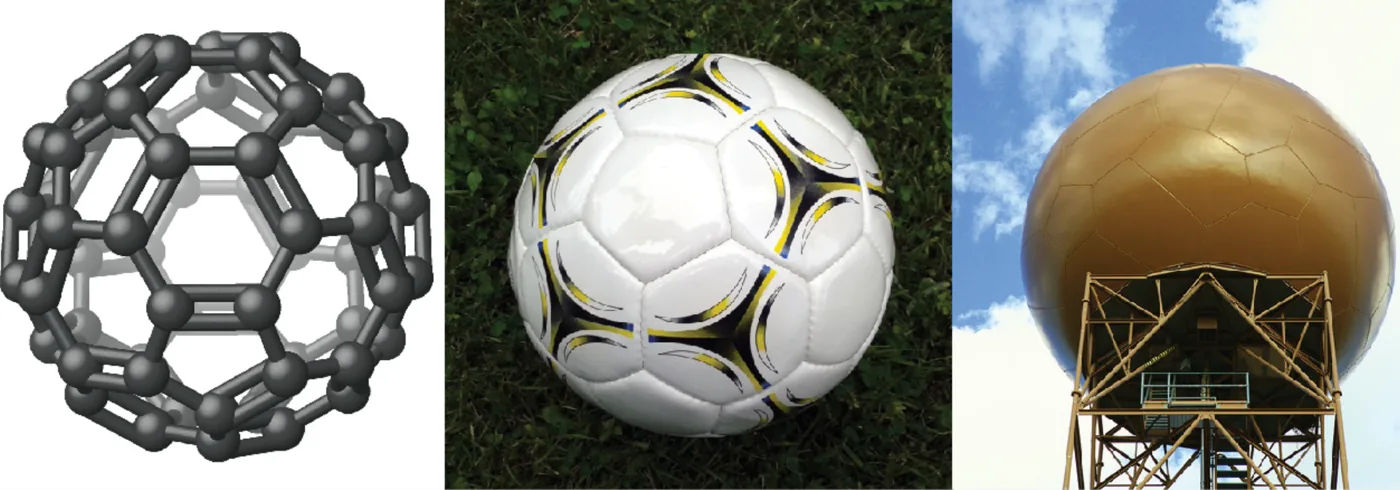
This chapter opens with buckminsterfullerene, a form of carbon in which 60 atoms form one stable cage of hexagons and pentagons.
Its discovery showed that bonding theory explains how individual atoms join into more complex structures, and the same idea applies to ionic bonding.
1 / 2Next ▶
Three images show the C60 molecule, a soccer ball with the same hexagon and pentagon pattern, and a geodesic dome built from similar geometric shapes. Image: OpenStax, Chemistry 2e, CC BY 4.0.
Cations, anions and ionic compounds
◀ Previous2 / 2
Properties of ionic compounds
Properties of ionic compounds
Ionic solids have a crystalline structure
which means their ions are arranged in a repeating pattern. They tend to be rigid and brittle, and they have high melting and boiling points. These properties show that ionic bonds are very strongbecause a large amount of energy is needed to separate the ions.
Solid ionic compounds are poor conductors of electricity. Their strong bonds keep the ions fixed in place
so the ions cannot move freely to carry charge. Most ionic solids dissolve readily in water. Once an ionic compound is dissolved or melted, its ions can move freely, and the liquid becomes an excellent conductor of electricity and heat.
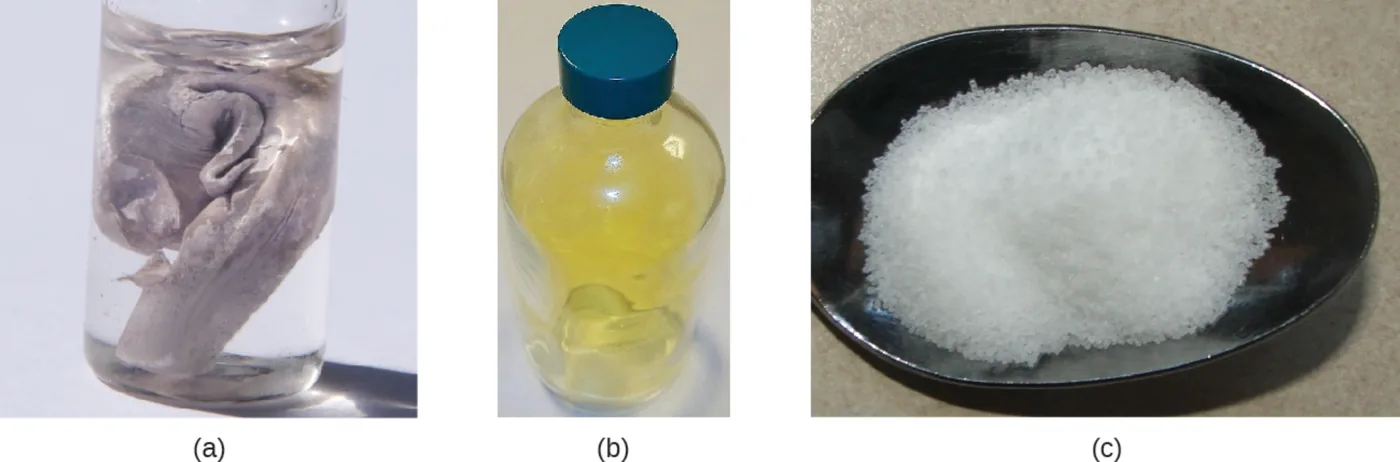
Three stages are shown: sodium metal stored under mineral oil, pale yellow-green chlorine gas, and white sodium chloride crystals formed when the two elements react. Image: OpenStax, Chemistry 2e, CC BY 4.0.
Ions compared with their parent elements
 ⤢ Enlarge
Ions compared with their parent elements
Neutral atoms and their ions can have very different properties. Sodium is a soft, silvery-white metal that burns vigorously in air and reacts explosively with water. Chlorine is a yellow-green gas, Cl2, that is extremely corrosive to most metals and very poisonous to animals and plants.
When sodium and chlorine react vigorously, they form white crystals of sodium chloride, common table salt
which contains Na+ cations and Cl− anions. The compound is essential to life and simply dissolves in waterwhile its parent elements are dangerous. A compound can therefore have properties that are entirely different from the elements that form it.
1The formation of ionic compounds2The formation of ionic compounds3The formation of ionic compounds
The formation of ionic compounds
1
A binary ionic compound contains just two elements: a metal
which forms the cations, and a nonmetalwhich forms the anions.
2
Sodium chloride, NaCl, is an example.
3
Many metals have low ionization potentials
so they lose electrons easilythese metals lie on the left of a period or near the bottom of a group.
4
Nonmetals have high electron affinities and readily gain the electrons lost by metal atoms, filling their valence shells.
5
Nonmetals are found in the upper-right corner of the periodic table.
6
All substances are electrically neutral
so the total positive charge of the cations must equal the total negative charge of the anions.
1 / 3Next ▶
The formation of ionic compounds
1
The formula of an ionic compound gives the simplest whole-number ratio of ions that achieves this balance.
2
For example, aluminum oxide, Al2O3, contains two Al3+ cations for every three O2− anions
because 2(+3) + 3(−2) = 0.
3
An ionic formula does not describe the physical arrangement of the ions.
4
There is no single bond between one sodium ion and one chloride ion
so calling NaCl a molecule is incorrect.
5
The electrostatic forces between ions act equally in all directions
so each ion is attracted to all the nearby ions of opposite charge.
6
The ions therefore pack into a tightly bound, three-dimensional lattice.
◀ Previous2 / 3Next ▶
Sodium ions (small spheres) and chloride ions (large spheres) arranged in a lattice, where each ion is surrounded by six ions of opposite charge. Image: OpenStax, Chemistry 2e, CC BY 4.0.
The formation of ionic compounds
 ⤢ Enlarge
The formation of ionic compounds
In sodium chloride, equal numbers of Na+ and Cl− ions alternate in a regular arrangement.
The lattice is held together by strong electrostatic attraction. Separating one mole of solid NaCl into gaseous Na+ and Cl− ions requires 769 kJ of energy
which shows how strongly the ions are bound.
◀ Previous3 / 3
1Electronic structures of cations2Electronic structures of cations3Electronic structures of cations
Electronic structures of cations
1
When a main group atom forms a cation, it tends to lose all of its valence electrons
so that it takes the electron configuration of the noble gas before it in the periodic table.
2
For groups 1 (the alkali metals) and 2 (the alkaline earth metals), the group number equals the number of valence electrons,
so the charge of the cation equals the group number.
3
For example, calcium is in group 2 and has 20 electrons with the configuration 1s22s22p63s23p64s2.
4
When it loses both 4s electrons, it forms Ca2+
which has 18 electrons and the configuration 1s22s22p63s23p6.
5
Ca2+ is therefore isoelectronic with the noble gas argon.
6
For groups 13 to 17, the group number exceeds the number of valence electrons by 10
because full d subshells in atoms of the fourth and later periods must be counted. The charge of a cation formed by losing all valence electrons is therefore the group number minus 10. For example, aluminum is in group 13 and forms Al3+.
1 / 3Next ▶
Electronic structures of cations
Electronic structures of cations
Elements near the bottom of the groups are exceptions.
Besides the expected ions Tl3+, Sn4+, Pb4+ and Bi5+, these atoms can lose only some of their valence electrons and form Tl+, Sn2+, Pb2+ and Bi3+.
This is explained by the inert pair effect: the s electron pair of heavy atoms in groups 13, 14 and 15 has relatively low energy,
so it is often not lost.
Mercury, in group 12, behaves unusually. Besides the expected monatomic ion Hg2+, it forms the diatomic ion Hg22+
which is made of two mercury atoms joined by an Hg–Hg bond.
Transition and inner transition metals behave differently from main group elements.
Most transition metal cations have 2+ or 3+ charges.
◀ Previous2 / 3Next ▶
Electronic structures of cations
Electronic structures of cations
They form when the outermost s electrons are lost first, sometimes followed by one or two d electrons from the next-to-outermost shell.
Although the d orbitals are the last to fill when electron configurations are built up, the outermost s electrons are the first to be lost on ionization.
Iron, [Ar]3d64s2, forms Fe2+ by losing its two 4s electrons
giving [Ar]3d6.
It forms Fe3+ by losing its 4s electrons and one 3d electron
giving [Ar]3d5.
Inner transition metals usually form 3+ ions by losing their outermost s electrons and one d or f electron.
◀ Previous3 / 3
Electronic structures of anions
1
Most monatomic anions form when a neutral nonmetal atom gains enough electrons to completely fill its outer s and p orbitals
which gives it the electron configuration of the next noble gas.
2
The charge of such an anion is therefore equal to the number of electrons the atom must gain.
3
For example, oxygen has the configuration 1s22s22p4.
4
It gains two electrons to reach the configuration of neon, 1s22s22p6
which gives the oxide ion, O2−.
1Example 1: Electron configurations of essential trace elemen2Example 1: Electron configurations of essential trace elemen3Example 2: Electron configurations of essential trace elemen
Example 1: Electron configurations of essential trace element cations
1
Chromium and zinc are essential trace elements that the body requires as Cr3+ and Zn2+. Write the electron configurations of these two cations.
2
Solution: First write the configurations of the neutral atoms.
3
Zinc (30 electrons) is [Ar]3d104s2.
4
Chromium (24 electrons) is [Ar]3d54s1.
5
Remove electrons from the highest-energy orbitals first.
6
Zinc is in group 12 and forms a 2+ ion
so it loses only the two 4s electrons: Zn2+ is [Ar]3d10, with 28 electrons.
1 / 3Next ▶
Example 1: Electron configurations of essential trace element cations
Example 1: Electron configurations of essential trace element cations
Chromium is a transition metal
so it loses its 4s electron first and then two 3d electrons: Cr3+ is [Ar]3d3, with 21 electrons.
Check your learning: Potassium and magnesium are required in the diet. Write the electron configurations of the ions these elements form. Answer: K+ is [Ar] and Mg2+ is [Ne].
◀ Previous2 / 3Next ▶
Example 2: Electron configurations of essential trace element anions
1
Selenium and iodine are essential trace elements that form anions. Write the electron configurations of these anions.
2
Solution: Selenium (34 electrons) gains two electrons to form Se2−
which is [Ar]3d104s24p6, with 36 electrons, the same as krypton. Iodine (53 electrons) gains one electron to form I−which is [Kr]4d105s25p6, with 54 electrons, the same as xenon.
3
Check your learning: Write the electron configurations of a phosphorus atom and its negative ion, and give the charge on the anion. Answer: The phosphorus atom is 1s22s22p63s23p3, or [Ne]3s23p3.
4
The phosphide ion gains three electrons to reach [Ne]3s23p6
which is [Ar].
5
Its charge is 3−, written P3−.
◀ Previous3 / 3
Key terms
| Term | Meaning |
|---|---|
| Ion | An atom or molecule that carries an electrical charge. |
| Cation | A positively charged ion formed when a neutral atom loses one or more valence electrons. |
| Anion | A negatively charged ion formed when a neutral atom gains one or more valence electrons. |
| Ionic compound | A compound made of cations and anions, also called a salt. |
| Ionic bond | The electrostatic attraction between oppositely charged cations and anions. |
| Binary ionic compound | An ionic compound made of only two elements, a metal and a nonmetal. |
| Lattice | A tightly bound, regular three-dimensional arrangement of ions in a solid ionic compound. |
| Isoelectronic | Describes two species that have the same number of electrons and the same electron configuration, such as Ca2+ and Ar. |
| Ionization potential | The energy needed to remove an electron from an atom. Metals with low values lose electrons easily. |
| Electron affinity | A measure of how readily an atom gains an electron. Nonmetals have high values. |
| Inert pair effect | The tendency of the s electron pair of heavy atoms in groups 13 to 15 to remain unlost, so that ions with lower charges form. |
| Diatomic ion | An ion made of two atoms bonded together, such as Hg22+. |
| Transition metal | A metal in groups 3 to 12 whose ions usually form by losing outer s electrons first, then d electrons. |
| Inner transition metal | A metal from the f-block of the periodic table that usually forms 3+ ions. |
| Salt | Another name for an ionic compound, such as table salt, NaCl. |
1Avoid these mistakes2Avoid these mistakes3Avoid these mistakes
Avoid these mistakes
1Avoid this
Calling NaCl a molecule. Ionic compounds form lattices, and the formula only gives the simplest ratio of ions.Avoid this
2Avoid this
Writing a formula that is not electrically balanced, such as AlO instead of AlAvoid this
OAvoid this
3Avoid this
1 / 3Next ▶
Avoid these mistakes
. The total positive and negative charges must be equal.Avoid this
Giving a cation the group number as its charge for groups 13 to 17. The charge is the group number minus 10, so aluminum forms AlAvoid this
3+Avoid this
.Avoid this
4Avoid this
Removing 3d electrons before 4s electrons when writing a transition metal ion. Iron(II) is [Ar]3dAvoid this
◀ Previous2 / 3Next ▶
Avoid these mistakes
6Avoid this
, not [Ar]3dAvoid this
4sAvoid this
5Avoid this
Confusing the charge of an anion with the number of electrons it has lost. An anion’s charge is negative and equals the number of electrons it gained.Avoid this
Assuming that solid ionic compounds conduct electricity. Only molten or dissolved ionic compounds conduct, because their ions can move freely.Avoid this
◀ Previous3 / 3